
Did you know that a significant share of long-haul business class seats never sell at their full published price? Industry revenue patterns show that many are filled through corporate contracts, mileage redemptions, operational moves, or targeted upgrade offers. That’s why, a few days before departure, you might receive an email inviting you to upgrade to a business class flight, sometimes for a fraction of the original fare.
This isn’t generosity. It’s revenue management. Once departure approaches, unsold premium seats lose value, which is why airlines discount them. Understanding this logic is the first step in learning how to upgrade to business class intelligently.
If you’ve ever wondered how to get business class upgrades, timing and structure matter more than luck. Offers tend to appear when premium demand softens, and availability shifts quickly in the final booking window.
Before we go further, let’s set realistic expectations:
- Complimentary upgrades are rare, especially on long-haul routes.
- Paid upgrade offers are common and often strategically priced.
- In some cases, booking business class outright is the smarter financial move.
Once you see how the system works, upgrading stops feeling unpredictable and starts looking like a calculated opportunity.
Read in this post:
How Much Does It Cost to Upgrade to Business Class?
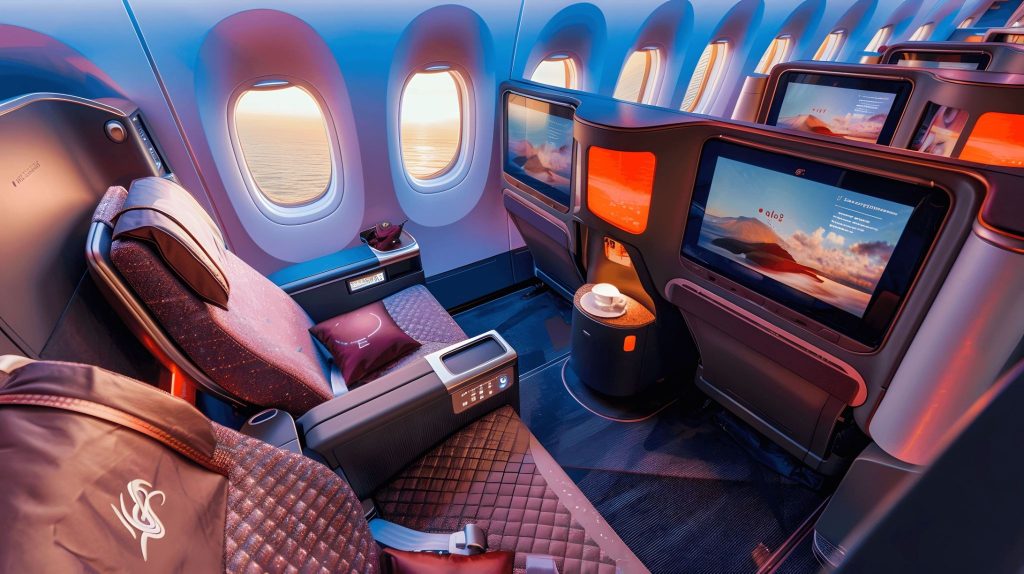
If you’re asking how much does it cost to upgrade to business class, the honest answer is: it depends, but not randomly. The business class upgrade cost is shaped by route length, cabin demand, booking class, and timing. A short domestic hop may cost a few hundred dollars. A transatlantic overnight with lie-flat seats can range from several hundred to well over $1,500 each way.
For shorter routes, upgrades tend to be more accessible because the onboard cost difference for airlines is lower. On long-haul flights, the gap widens significantly. Moving from economy to a fully flat bed, lounge access, premium dining, and priority services represents a real product shift — and pricing reflects that.
Still wondering how much is a business class upgrade in practical terms? Let’s break it down in ways that actually help decision-making.
A Practical Rule of Thumb (Ballpark Guidance)
Experienced travelers often use a simple benchmark:
- Around $100 per flight hour to move from economy to long-haul business
- Around $75 per flight hour to upgrade from premium economy
These are very rough reference points, not fixed rules. A $500 upgrade on a 10-hour overnight flight may feel entirely reasonable. The same $500 on a daytime 7-hour flight might not.
Adjust your calculation based on:
- Overnight vs daytime departure
- Flight length
- Seat type (angled vs true lie-flat)
- Your need to be productive on arrival
- Personal comfort factors
Most importantly, weigh the opportunity cost to you. For some travelers, $500 is discretionary. For others, it represents a meaningful monthly expense. That’s why generic “is this upgrade worth it?” discussions rarely provide useful answers. Only you can assess what that comfort is worth relative to your priorities.
Fixed-Price Upgrade Offers
An airline upgrade offer at a fixed price is the most straightforward path to a premium seat. These are non-negotiable cash offers to move to a higher cabin for a set fee, often delivered by email or displayed in the airline app or during check-in. Confirmation is immediate if inventory is available.
Carriers such as Lufthansa, TAP Air Portugal, SWISS International Air Lines, Air France, KLM, and Aer Lingus regularly use this model.
Pricing varies by route and original fare class. On European short- to mid-haul segments, you might see figures in the $400–$1,000 range per leg. Long-haul fixed upgrades can exceed $1,800 depending on demand.
That said, there are attractive exceptions. Aer Lingus, for example, has been known to offer long-haul upgrades in the $400–$500 range each way on select US routes when premium demand is softer. Air France and KLM also periodically release competitive fixed offers on transatlantic flights when availability allows.
Upgrade Bidding Systems
Many airlines now use airline upgrade bidding platforms. If eligible, you’ll receive an invitation by email or see a prompt when managing your booking. You then submit an upgrade bid business class offer within a defined minimum–maximum range.
Standard rules usually apply:
- You must hold a confirmed ticket.
- Bids are per passenger and per segment.
- Payment details are collected upfront but charged only if accepted.
- Accepted bids are typically nonrefundable.
- Lounge access and baggage benefits generally apply once upgraded.
For example, if your itinerary includes Los Angeles to New York and New York to Frankfurt, each segment requires its own bid. Two travelers on the same booking means the bid is doubled. Most carriers close bidding 48–72 hours before departure. Airlines such as Air Canada, Air New Zealand, Lufthansa, Singapore Airlines, and Aer Lingus participate in this model.
Vital Tip: Winning bids often land at roughly 20–40% of the price gap between your economy ticket and a full business fare. Minimum bids rarely succeed on popular routes, but slightly stronger offers meaningfully improve the odds.
Read also: How Early You Should Book Business Class
Is It Cheaper to Upgrade at the Airport?
Short answer: sometimes, but usually not. The reality is that an airport business class upgrade is unpredictable and often costs the same or more than earlier online offers. Upgrading at the airport depends on three core variables: load factor, your original fare class, and the airline’s internal policy.
It Depends on Load Factor
The most decisive factor is how full the premium cabin is. If business class is lightly booked close to departure, the airline may discount remaining seats to generate incremental revenue. In these cases, upgrade prompts can appear at self-service kiosks or at the check-in counter.
However, if the cabin is close to full, (especially on routes to major financial centers or popular leisure destinations) last-minute prices may increase. Airlines know they can sell those seats at a premium.
This is why many travelers report seeing better offers via email or in-app several days before departure than at the airport itself. By check-in, inventory is tighter and pricing becomes more defensive.
It Depends on Your Fare Class
Not all economy tickets are equally upgrade-eligible. Deeply discounted fare classes may:
- Restrict mileage upgrades
- Increase cash upgrade prices
- Limit eligibility entirely
Higher fare buckets, especially flexible or premium economy tickets, often receive more favorable upgrade pricing.
In practical terms, someone holding a flexible premium economy ticket may see a far lower business class add-on than someone flying on the cheapest economy fare.
It Depends on Airline Policy
Many major carriers allow paid upgrades at the airport on a space-available basis. They include Delta Air Lines, United Airlines, American Airlines, Lufthansa, Air Canada, and TAP Air Portugal. On US carriers, elite members may receive complimentary domestic upgrades or use mileage-based instruments.
Airport upgrades are not guaranteed to be cheaper than earlier digital offers. In fact, they are often aligned with the remaining fare difference between cabins. Some airlines charge a fixed airport fee; others dynamically price the upgrade based on demand.
Should You Check In Early for Upgrade Business Class?
If you plan to try at the airport, it helps to check in early for upgrade business class inquiries. Being among the first at the counter can improve your chances if space exists.
There are rare instances where upgrades are offered after boarding. This is uncommon, but if business seats remain empty, a discreet inquiry with the cabin crew may result in a last-minute paid offer. These situations are the exception, not the rule.
The Bottom Line: Airport upgrades are opportunistic. They can occasionally be reasonable, especially when demand is soft. But more often, the strongest pricing appears in the days leading up to departure, when airlines actively manage unsold premium inventory. If comfort matters and you see a competitive online offer before travel day, waiting for the airport rarely guarantees a better outcome, and sometimes closes the opportunity entirely.
Next in the series: When Business Class Long-Haul Flights Cost Cheaper
Last-Minute Business Class Upgrades: Do They Work?
A last minute business class upgrade can work, but only when the premium cabin still has unsold seats. These offers typically appear 24–72 hours before departure via app or email and are often more structured and confirmable than gate upgrades.
The Overbooked Economy Factor
One reason upgrades appear late is simple cabin balancing. Airlines frequently oversell the economy, anticipating no-shows. If too many passengers check in, they may shift eligible travelers forward — sometimes through discounted paid offers, sometimes through operational moves.
Elite Passengers are Prioritized
When upgrades are limited, frequent flyers with status move to the front of the line. On US carriers especially, elite members are automatically waitlisted for complimentary or mileage-based upgrades. If you do not hold status, you’re competing for whatever inventory remains after priority lists are clear.
Operational Upgrades vs Paid Offers
It’s important to distinguish between operational upgrades and paid ones.
- Operational upgrades are airline-initiated moves, typically to solve an oversold cabin issue. They are not purchased and are rarely something you can request.
- Paid last-minute offers, on the other hand, are targeted pricing decisions. Airlines may discount remaining seats close to departure to avoid flying them empty. These digital offers are generally more transparent and can be confirmed before arriving at the airport.
However, pricing can move in both directions. An upgrade priced at $1,000 two days before departure might drop slightly or surge if demand strengthens. Waiting for a better number can sometimes eliminate the option entirely.
The Realistic Approach: Last-minute upgrades sometimes present value, particularly on long-haul routes with softer premium demand. But they should only be pursued if you are fully comfortable flying in your originally booked cabin. Treat them as a bonus opportunity, not a guaranteed outcome.
Next in the series: Airbus A350 vs Boeing 787 Business Class: Which Aircraft Offers Better Comfort?
Can You Get Upgraded to Business Class for Free?
If you’re wondering whether it’s possible to get upgraded to business class for free, the honest answer is: yes but rarely. A free business class upgrade is typically reserved for high-tier frequent flyers and usually happens when operational needs align with loyalty priority. For most travelers, complimentary long-haul upgrades are the exception, not the norm.
Elite Status Priority
Do airlines upgrade frequent flyers first? Yes. Status is the single most important factor.
Who gets upgraded first on flights?
Airlines prioritize passengers in this order:
- Highest elite tier members
- Mid-tier elites
- Co-branded credit card holders (in some programs)
- Everyone else
- Carriers within alliances such as Star Alliance, oneworld, and SkyTeam extend certain benefits across member airlines, which can slightly improve upgrade positioning.
- Solo travelers are easier to upgrade than couples or families, especially when only one seat is available.
- Flying during lower-demand periods (midweek departures, late-night flights) may increase availability, but it does not override status priority.
Loyalty Points and Miles
You can also use miles to upgrade to business class, though this is not technically “free.” You’re exchanging loyalty currency.
Programs vary by airline, but as a general benchmark, an economy → business class upgrade on a long-haul route typically costs around 25,000–50,000 miles one way, depending on distance and season.
In traditional distance-based programs, you usually earn about 100% of the miles flown (sometimes less on deeply discounted fares). For example, a New York–London round trip covers roughly 7,000 flown miles, meaning you would earn about 7,000 miles per journey. Reaching 35,000 miles purely through economy flying could therefore require approximately five transatlantic round trips.
Mileage upgrades are structured and predictable, but they remain subject to upgrade eligibility and award inventory availability.
The Realistic View: Free upgrades happen, primarily for loyal, high-status passengers when inventory allows. For everyone else, relying on chance is not a strategy. If comfort matters, plan for a paid or mileage-based upgrade and consider any complimentary move a welcome surprise.
Next in the series: New Business Class 2026: What Changes and Why It Matters
How Airlines Decide Who Gets Upgraded
If you’ve ever wondered how airlines choose upgrade passengers, the answer isn’t random. Most carriers operate from a structured upgrade priority list airlines follow internally.
Priority typically begins with the elite status tier, then considers the fare class originally purchased. Higher fare buckets are generally placed ahead of deeply discounted tickets. Corporate contracts can also influence positioning, as airlines protect high-value business relationships.
After that, timing matters. Passengers who request upgrades earlier may rank ahead of late entries in waitlisted systems. In bidding programs, the amount offered becomes a deciding factor once eligibility rules are met.
In short, upgrades follow a hierarchy built on loyalty value, revenue protection, and timing, not luck.
Next in the series: Pay Less for Business Class in 2026 [Without Chasing Myths]
Airline-Specific Business Class Upgrade Rules
Qatar Airways Business Class Upgrade
A Qatar Airways business class upgrade is typically available through Qmiles, fixed cash offers, or targeted bidding invitations. The Qatar business class upgrade cost varies significantly by route and inventory.
On lower-demand sectors, upgrades to Qsuite have been seen around $500–$800 when availability is strong. On peak dates or high-demand long-haul routes, pricing can rise into the thousands. Qmiles can also be used for upgrades, subject to award inventory.
Emirates Business Class Upgrade
An Emirates business class upgrade can be secured using Skywards miles, cash offers, or airport availability when seats remain open.
From New York (JFK) to Dubai, upgrading from Premium Economy to Business often requires around 55,000 Skywards miles one way. From Los Angeles, it may require roughly 65,500 miles. Emirates allows miles-plus-cash combinations, but taxes remain payable separately.
British Airways Business Class Upgrade
A British Airways business class upgrade is frequently the best value when moving from World Traveller Plus (premium economy) to Club World.
Cash upgrades on transatlantic routes often range from $800–$2,000 from premium economy, and $1,000–$3,000+ from economy. Many travelers ask how many Avios for business class upgrade: typically 20,000–30,000 Avios one way from premium economy to business, depending on distance and season. Upgrades are limited to one cabin step and require award availability.
Aer Lingus Business Class Upgrade Cost
The Aer Lingus business class upgrade cost typically falls between $300 and $1,500+ per segment, depending on route and demand.
Aer Lingus uses both fixed-price offers and its “Upgrade Yourself” bidding platform. Competitive long-haul upgrade offers occasionally appear on US–Ireland routes when premium demand is moderate. Avios can also be used where eligible, though availability determines success more than price alone.
Next in the series: Average Business Class Ticket Price: Comparing Airlines, Trends, and Smart Picks
When It’s Smarter to Book Business Class From the Start
The cost to upgrade often approaches or even exceeds the price of available discounted business class tickets, especially on competitive long-haul routes. When upgrade offers climb into four figures, compare them against current business class fare deals.
This is where securing cheap business class tickets from the outset can be the more rational move. With AranGrant’s personalized fare monitoring, 24/7 expert support, and flexible booking options, travelers can lock in premium comfort with clarity and fly with complete peace of mind.