



Flying is one of the safest ways to travel—backed by advanced technology, strict global standards, and highly trained crews. Still, a recent Harris Poll shows 88% of Americans feel some level of fear in the air. So if you’ve ever felt uneasy on a flight, you’re far from alone. But how to overcome fear of flying turbulence, manage rising anxiety before a trip, and feel calmer in the air overall?
For many, simply knowing the facts about aviation safety brings peace of mind. Others turn to courses, books, or supportive communities, while those with stronger anxiety may seek professional guidance.
When worry eases, business class lets you fully enjoy what you paid for: priority check-in and security, lounge access, quieter cabins, lie-flat beds, elevated dining, attentive service, and space to rest or work—arriving calm and refreshed.
This article offers clear, practical guidance from professional pilots and experienced mental health specialists. Whether you’re seeking reassuring facts, simple tips to ease flight anxiety, or a structured course, our goal is the same: to replace worry with comfort—so you can fully enjoy the perks of premium travel.
Read in this post:
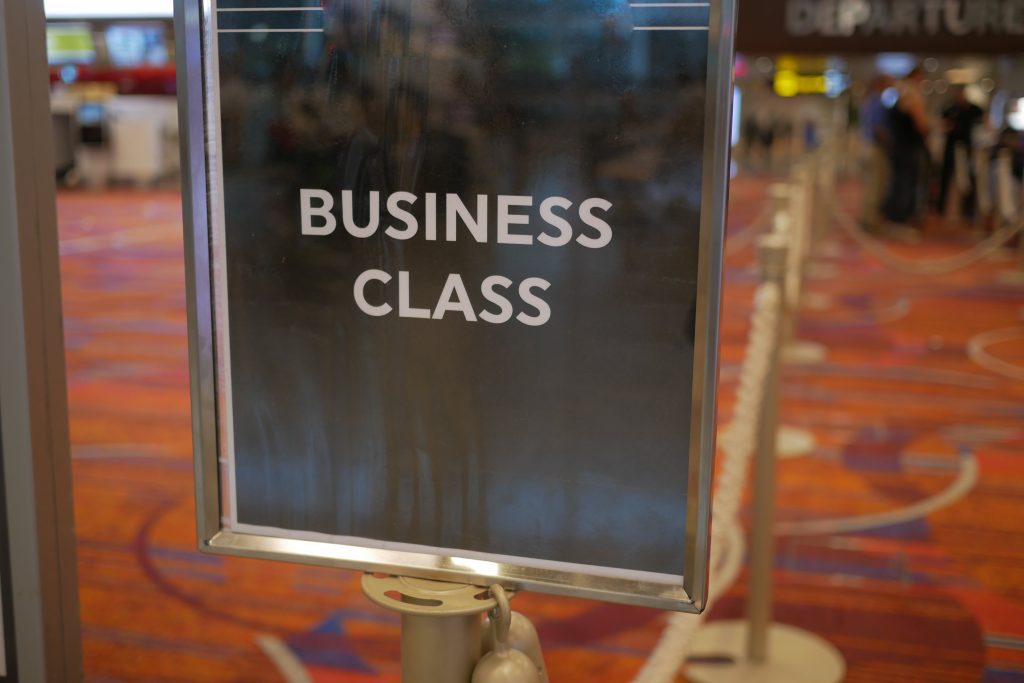
Fight Your Fears with the Facts of Aviation Safety
Flying feels uncertain for many travelers, but the reality is this: modern aviation is built on layers of safeguards, redundancies, and training that make it one of the safest forms of transportation in the world.
Here are the facts that matter:
- Flight controls are protected by redundancy: Commercial aircraft are designed with multiple hydraulic and electrical systems. For a complete loss of control, several independent systems would have to fail simultaneously—a scenario engineers have made virtually impossible. Even in turbulence, aircraft remain stable, which is why flight attendants often continue chatting calmly once they’re seated.
- Aircraft structures are built to endure: Wings and tail fins are stress-tested far beyond the forces they will ever encounter in flight. Passenger jets are designed to withstand extreme turbulence and weather. There has never been a case of a modern airliner losing a wing in normal operation.
- Fires are rare—and quickly contained: Every aircraft has multiple detection systems, fire suppression equipment, and crew training to handle potential onboard fires. In addition, oxygen levels in certain compartments make it difficult for flames to spread unchecked.
- Mid-air collisions are prevented by advanced systems: All modern planes are equipped with TCAS (Traffic Collision Avoidance System), which automatically alerts and directs pilots if another aircraft is too close. Air traffic control adds another layer of monitoring, maintaining strict separation standards between flights.
- Other scenarios are well-rehearsed: Pilots train rigorously for unlikely events—engine failure, decompression, gear malfunctions, and more. Simulators prepare them for virtually every emergency, so they know exactly how to respond.
The bottom line? Statistically, air travel is far safer than driving, cycling, or even crossing the street. With the facts above and the world’s safest airlines in mind, you can swap anxiety for confidence—relax, sip a glass of wine, and enjoy the journey.
Still Anxious? Proven Tools from Aviation, Mental Health Professionals, and Smart Travelers
The following tips are effective, but their impact depends on your personality and mindset. Choose the ones that feel most helpful for you.
Build Trust Through Firsthand Pilot Guidance
Sometimes the best way to overcome fear is to replace mystery with knowledge. Content strategist Sam Silverman shares how flying with her best friend—a licensed pilot—transformed her perspective. From pre-boarding checks to listening in on cockpit communications, experiencing the crew’s professionalism firsthand helped her shift from dread to genuine delight in the air.
— Sam Silverman, Content Strategist
Ease Anxiety with a Pre-Flight Pilot Visit
Professional pilots know how reassuring a simple conversation can be. Captain Steve of American Airlines suggests telling the crew you’re a nervous flyer and asking if you may briefly visit the cockpit before takeoff. Flight attendants and pilots are glad to explain the route, walk you through key details, and put your mind at ease with their calm confidence.
— Captain Steve, American Airlines Pilot
Train Your Mind Through Gradual Exposure and Consistent Practice
British entrepreneur Matthew Barton overcame his fear of flying by treating it as a skill to train. His method combines several practical strategies:
1. Start small. Book shorter flights first, then gradually build up to longer journeys. Once airborne, the initial fear often fades into relief and even pride at completing the flight.
2. Ask for support. Let the crew know you’re a nervous flyer. They’ll often check in and offer extra reassurance, especially in premium cabins where attentive service is part of the experience.
3. Use distractions. Keep yourself busy with films, music, or books so that your mind is engaged. Fear may pull your focus back, but training yourself to redirect attention builds resilience over time.
4. Stay motivated. Write down what you’re looking forward to at your destination—a special meal, a landmark visit—to remind yourself of the reward waiting ahead.
5. Keep up momentum. After a successful trip, don’t let months or years pass before flying again. Barton aims to fly at least quarterly, ideally monthly, until air travel feels as routine as boarding a bus.
— Matthew Barton, Entrepreneur
Release Anxiety with the “Water-Bottle” Technique
With more than two decades in the cockpit, Sean Wallace, a Jetstar pilot since the airline’s launch, has seen countless nervous flyers find comfort in a simple visualization exercise. Buy a bottle of water at the airport and take a few sips. Each time you feel anxious—whether waiting at the gate or mid-flight—imagine channeling that stress into the bottle. When you land, pour the water out and symbolically leave the fear behind. It’s a small ritual, but many travelers find it surprisingly powerful.
— Sean Wallace, Jetstar Pilot
Commit to the Flight and Accept the Anxiety
According to psychologist Martin Seif, co-founder of the Anxiety and Depression Association of America (ADAA), one of the most effective ways to quiet pre-flight nerves is to make a firm decision: “I’m committed to going on this flight—no matter what.” This mindset reduces anticipatory anxiety by eliminating the inner debate about whether you’ll back out. Seif also advises expecting and accepting that some anxiety will be present. The more you resist it, the stronger it grows. Instead of battling to calm down, stand by your choice to fly and simply let the time pass—the discomfort will ease as you move forward with your journey.
— Martin Seif, Psychologist & Co-Founder, ADAA
Set Yourself Up for a Calm Travel Day
Dr. Nathan Carroll recommends reducing stress before you even get to the airport. Start preparing early so your travel day feels unhurried. If the airport is far from home, consider staying at a nearby hotel to avoid a long, tiring drive. Once in the air, remind yourself of simple truths: you’ve flown before and always landed safely, and your pilots have logged hundreds of training hours for moments just like this. By leaning on rational facts, you quiet the emotion-driven part of your brain and allow calm to take hold.
— Dr. Nathan Carroll, Chief Resident of Psychiatry, Jersey Shore University Medical Center
Consider Medical Support for Severe Anxiety
For travelers with intense flight anxiety, Dr. Lokesh Shahani recommends discussing options with your primary care doctor. In some cases, short-term use of anti-anxiety medications such as diazepam or alprazolam can be both safe and effective. These medicines help prevent the mind from spiraling into anxious thought patterns, allowing you to experience the flight in a calmer, more controlled way.
— Dr. Lokesh Shahani, Psychiatrist, UTHealth Houston
Build a Toolbox of Coping Strategies
Brooke Rogers cautions against relying on a single solution—whether it’s medication or alcohol—to manage flight anxiety. Dependence can become a problem, especially if circumstances change, such as traveling with children or forgetting medication at home. While medication can be a helpful tool for some travelers, Rogers encourages building a broader set of coping strategies. That way, you’re not left without support if one option isn’t available, and you’ll feel more confident in handling anxiety from multiple angles.
— Brooke Rogers, Psychologist, Boston Medical Center
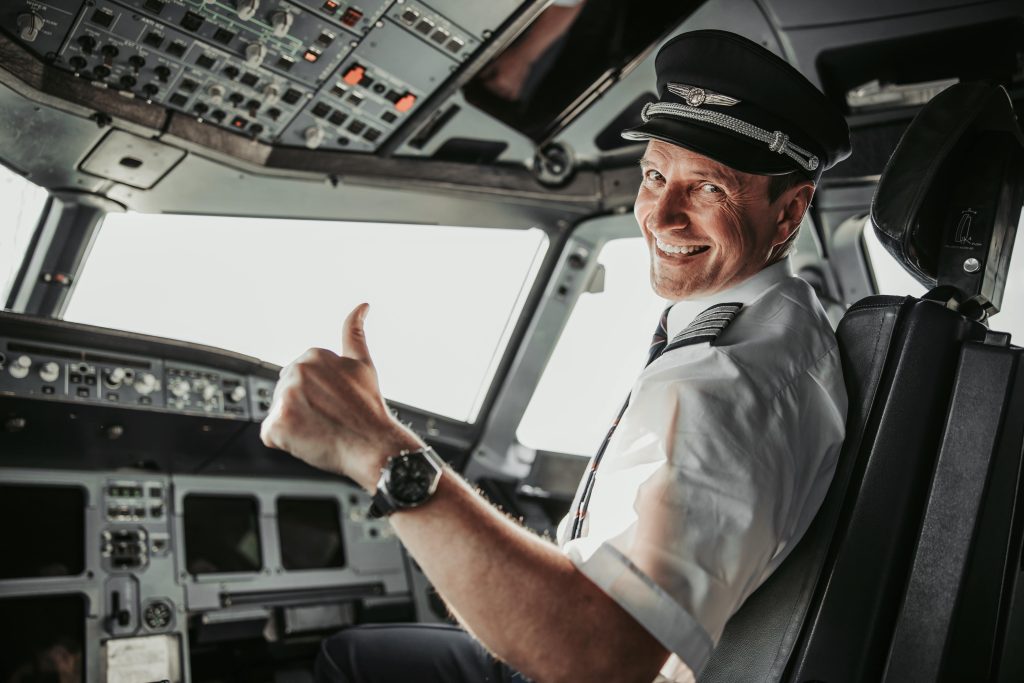
Overcoming Fear of Flying Made Easier with Business Class Perks
Business class isn’t just bigger seats and better meals—it’s about creating a journey where stress fades away. Here are the lesser-known perks that make it happen.
1. Lounges with Relaxation Zones and Spas
Many premium lounges go beyond food and drinks to offer spaces designed to calm the mind and body.
- Qatar Airways Al Mourjan Business Lounge (Doha) features quiet rooms with recliners, ideal for pre-flight rest.
- Emirates Business Class Lounge (Dubai) includes a full spa offering massages, facials, and showers before boarding.
- Thai Airways Royal Orchid Spa (Bangkok): business class travelers receive a complimentary 30-minute massage.
2. Stress-Free Transfers with Chauffeur Service
For many travelers, the stress of getting to and from the airport can rival the flight itself. Select airlines ease this burden with complimentary chauffeur-drive service for business class passengers.
- Turkish Airlines offers Exclusive Drive chauffeur-driven transfers, helping business travelers move seamlessly between home, hotel, and the airport. The service is available on routes between major US and Canadian gateways.
- Etihad Airways provides a luxury chauffeur service in Abu Dhabi and other major destinations, ensuring a smooth door-to-door experience.
- Emirates includes complimentary chauffeur-drive service in over 70 cities worldwide, allowing passengers to begin and end their journey in complete comfort.
3. Meet & Greet Services for a Seamless Airport Experience
Navigating busy airports can be one of the most stressful parts of flying. That’s why many airlines offer Meet & Greet services. This is personalized assistance that guides you smoothly through check-in, security, immigration, and boarding. While typically available for business class as an add-on, some frequent flyer statuses and premium fares may unlock these services on a complimentary basis.
- Etihad Airways (Abu Dhabi): You can book the airline’s Meet & Assist service, with staff escorting you through fast-track immigration and baggage claim. Elite-status passengers may access it as part of their benefits.
- Qatar Airways (Doha): The Al Maha Services team assists with immigration and transfers, offering lounge access and boarding guidance. Complimentary inclusion depends on your fare type and frequent flyer tier.
- Emirates (Dubai): Business class passengers enjoy fast-track lanes and lounge escorts by default, while full Marhaba Meet & Greet can be booked separately. Skywards elite members may receive complimentary upgrades.
- Turkish Airlines (Istanbul): Passengers using the Exclusive Drive chauffeur service are often met at the terminal by dedicated staff who assist with check-in and security, functioning like a Meet & Greet.
- Air France (Paris CDG): In business class, SkyPriority Meet & Assist can be arranged, with some benefits included for Flying Blue elite members.
4. Priority Services That Take the Stress Out of Airports
From long security lines to chaotic boarding, the airport experience can often be more stressful than the flight itself. Business Class priority services are designed to remove that friction, giving travelers more calm and control from the moment they arrive at the terminal.
Qatar Airways (Doha), Singapore Airlines (worldwide), All Nippon Airways (Tokyo), and Turkish Airlines (Istanbul) are frequently praised by business class travelers for their dedicated terminals or check-in areas, priority security lanes, and consistently smooth ground services.
5. In-Air Relaxation Features That Go Beyond the Seat
Lie-flat beds are a hallmark of business class. But many airlines take comfort a step further with thoughtful design touches and wellness-focused technology that help ease stress mid-flight.
- Emirates A380 Business Class: Seats come with built-in massage functions, perfect for melting away tension during long journeys.
- Finnair: Business travelers are provided with Marimekko-designed pillows and duvets, crafted specifically to promote deeper relaxation.
- Virgin Atlantic Upper Class: A stylish onboard social lounge lets passengers stretch, chat, or simply enjoy a change of scenery away from their seat.
All the tips above work well if your nerves don’t get in the way of booking a flight. But if anxiety sometimes dictates whether you travel at all, it may be time for a more structured approach. The following programs offer step-by-step strategies guided by experts to help you regain control and feel secure in the air.
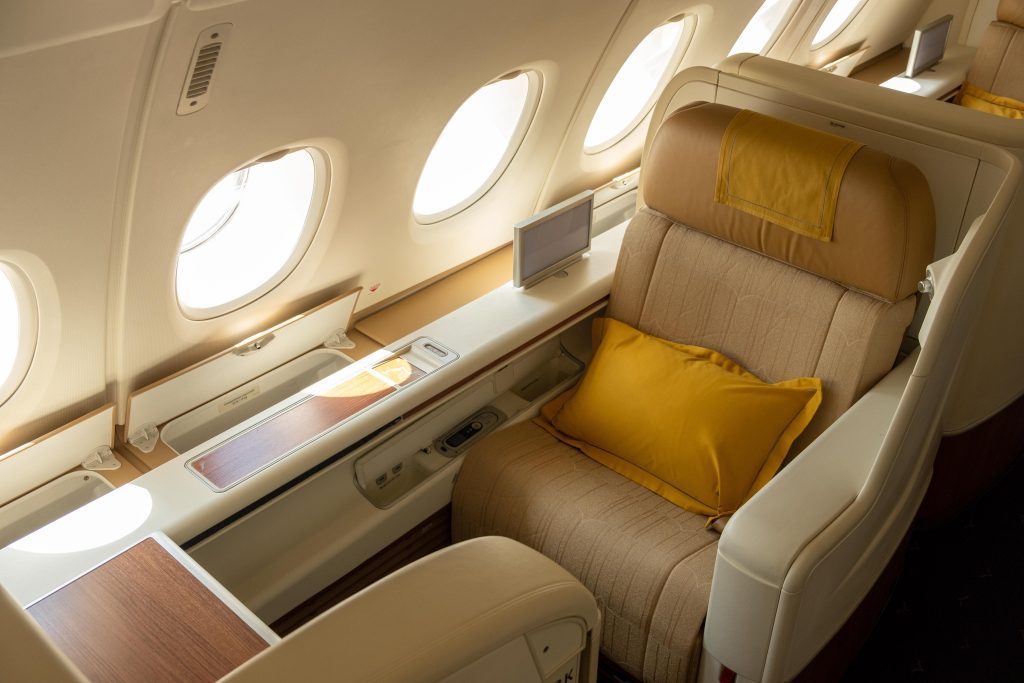
Next-Level Help: How to Overcome Fear of Flying with Expert Courses
British Airways (BA): Flying With Confidence Premium Options
Flying With Confidence is one of the world’s longest-running fear-of-flying programs. Alongside its flagship UK seminars, British Airways offers tailored formats that suit premium travelers who want flexibility, discretion, or international access. The Premium and Private courses are conducted at London Heathrow, while the online program can be accessed globally.
- Premium course: A small-group, in-depth option designed for travelers who prefer more personal attention than the standard seminar. Led by BA pilots and psychologists, it combines expert aviation insight with practical anxiety-management tools. The format allows for more interaction, reassurance, and direct answers to personal concerns.
- Private course: An entirely bespoke session, scheduled around your availability and tailored to your individual triggers. Delivered one-to-one by a BA pilot and a specialist therapist, this course is ideal if you value privacy or want fast results before an important journey.
- Online course: For those outside the UK, the online option brings the program to you. It includes video lessons from BA pilots and psychologists, practical breathing and grounding techniques, and the ability to revisit sessions at your own pace.
“Name it to tame it. Instead of vague panic, identify the fear: ‘I’m afraid turbulence means the plane is unsafe.’ Once named, a pilot can answer it with facts: turbulence is normal, wings are built to flex, and the aircraft is never in danger. Specific fears can be calmed — unspoken ones cannot.”
— British Airways, Flying With Confidence
Lovefly’s Method
This is a long-standing fear-of-flying program with Virgin Atlantic roots, trusted by nervous travelers since 1997. Lovefly blends aviation expertise with therapeutic tools, creating confidence where fear once lived.
How Premium Flyers Can Use Lovefly
- Courses and workshops: Join structured programs led by pilots, psychologists, and coaches. You’ll learn what really happens in the cockpit, why turbulence is safe, and how to break anxious thought patterns. For those who prefer discretion, online courses let you practice privately, at your own pace.
- One-to-one coaching: For travelers who value tailored solutions, Lovefly offers personal sessions — ideal before an important long-haul business trip or luxury holiday.
- Community support: Access a private network of fellow travelers, podcasts, and expert Q&As. Even premium flyers benefit from knowing they’re not alone.
- Resources for families: If you travel with children, “Little Loveflyers” helps younger passengers manage anxiety, making family journeys smoother.
“You can’t control turbulence, but you can control your breath. A simple 4-2-6 rhythm — in through the nose, hold, out through the mouth — tells your body it’s safe.”
— Lovefly
The SOAR Method
The SOAR Method is created by airline captain and psychotherapist Tom Bunn. It focuses on conditioning the nervous system with automatic calm responses and rewiring the panic cycle. It’s more therapy-like and structured as a lifelong toolset.
Why It Works for Premium Travelers
Time and peace of mind matter. SOAR doesn’t just manage anxiety — it removes it. You’ve invested in comfort. The program helps you enjoy the calm, privacy, and rest that premium cabins promise. It bridges logic and emotion. Statistics alone rarely quiet panic. SOAR retrains the body to respond with calm automatically.
The Approach
- Pilot insights, simplified: Practical explanations of turbulence, safety systems, and flight decisions — so the science matches what you feel.
- Conditioned calm: Through conditioning, your body learns to associate flying with relaxation instead of fear.
- Flight visualization: You mentally walk through each stage — boarding, champagne welcome, cruising, and landing — while pairing it with control and tranquility.
- Reframing turbulence: Bumps become “airborne road noise” — safe, expected, and manageable. Premium cabin privacy makes it easier to anchor this mindset.
- Trusted voices: Pilot recordings explain what’s happening in real time. For many, it feels like having a captain seated beside them.
The Outcome
Travelers who complete SOAR often shift from dreading takeoff to looking forward to the journey. Instead of gripping the armrest, you settle back, sip your welcome drink, and let the flight itself become part of the luxury experience.
Ways to Learn the SOAR Method
- “SOAR: The Breakthrough Treatment for Fear of Flying, a book by Tom Bunn: The flagship book explaining the psychology of panic and step-by-step exercises like the “10-Second Solution.” The book helps to start easily and is widely available.
- Online courses or app (most practical and popular): SOAR Online Programs, via SOAR website, include video lessons, guided exercises, pilot explanations, “flying-soon” options, and even sessions with Captain Tom. With the app (currently iOS only), you can rehearse techniques seamlessly — whether waiting at the airport or settling in onboard.
- Personal Coaching with Tom Bunn: You can have a phone consultation with Tom Bunn himself. That’s the best way to get tailored support for individuals with severe phobias or those who haven’t succeeded with self-guided methods.
“When fear strikes, give it just 10 seconds. Focus on a safe anchor — a hand you trust, a calm memory, a reassuring voice — and the panic cycle breaks.”
— Tom Bunn, SOAR
Final Thoughts
For travelers with more serious fears, professional guidance can be essential. Brooke Rogers, psychologist at Boston Medical Center, notes that stronger fears often appear as panic attacks—peaking within about ten minutes and marked by shortness of breath, a racing heart, sweating, trembling, or the feeling of losing control or even dying. At that point, additional support such as psychotherapy, cognitive-behavioral therapy, or medication may be needed.
Jennifer Dragonette, a California-based psychologist, often recommends exposure therapy—starting slowly with photos of planes, then videos, and even virtual reality simulations of being on board.
Wherever you fall on the spectrum—from mild unease to full panic—there are effective tools and therapies to help. And once fear is under control, affordable business class flights offer the calm, space, and attentive care that can make flying not just safe, but genuinely rewarding.