
What to expect from the airline industry in 2026? If you’re a frequent US air traveler, especially flying premium economy, business, or first class, staying informed is essential. From new entry regulations and enhanced premium services to technological advancements and updated luggage policies, 2026 is already bringing notable changes to air travel.
This article provides a comprehensive overview of industry trends and forecasts for the year ahead. Use our table of contents below for easy navigation, and click the arrow in the right corner to return to key sections effortlessly.
Looking for affordable premium flights? AranGrant is your trusted flight booking partner, offering a seamless phone-to-book service that saves you time by curating the best travel options. Now, let’s dive into air travel news and trends in the airline industry for 2026! This year, the flight industry is undergoing major transformations across multiple sectors:
Read in this article:

Business Class Demand Shifts and Other Changes for 2026
In 2026, premium air travel improves through operational consistency. Airlines are moving beyond pilot projects and headline features, integrating AI, biometrics, connectivity, and fleet planning into systems designed to reduce friction and stabilize the travel experience when conditions change.
- Fleet modernization is becoming more intentional, with aircraft and cabin density matched to route-specific demand.
- Business class expansion favors long, thinner routes and premium-heavy aircraft where demand supports it.
- Pricing models shift toward continuous, demand-aware structures that better reflect timing and flexibility.
- Biometric processing and CT-enabled security mature into reliable infrastructure.
- In-flight connectivity becomes more predictable as fleet-wide rollouts replace isolated trials.
For premium travelers, 2026 delivers quieter gains: clearer communication during disruptions, smoother security flows, more rational pricing, and journeys that feel calmer and more controlled (even when they are not perfect).
Booking Window Insights
Booking timing matters in business class, but not in the way most travelers expect. Unlike economy, where prices swing sharply, premium fares tend to move in narrower ranges. The biggest advantage comes not from chasing a “perfect day,” but from understanding when inventory is still open and flexible pricing hasn’t tightened yet.
Across recent booking patterns (2023–2025), several stable signals stand out:
- Early planners (3–5 months out) often see the most consistent value. Lower fare buckets are still available, and competition across airlines keeps pricing rational.
- Mid-range windows (1–3 months) remain active, but pricing becomes less predictable, especially on high-demand routes.
- Last-minute bookings rarely offer meaningful savings in business class. Prices may not spike dramatically, but they also don’t drop in a reliable way.
Lounge Access Changes 2026
Crowding is now a frequent issue, especially at major hubs. With more travelers entering via credit cards and memberships, lounges can:
- fill up during peak periods
- pause entry altogether
- give priority to premium cabin passengers and elite members
Even if you’re eligible, access isn’t always assured.
Learn more: Lounge Access Guide for 2026
Loyalty Program Shifts in 2026
Upgrading to business class with miles is still possible but more selective:
- Dynamic pricing dominates: Upgrade costs now vary by demand, not fixed charts.
- Fare class matters: Basic economy rarely qualifies. Standard fares are the entry point.
- Fewer upgrade seats: Strong premium demand means more seats are sold, not upgraded.
- Partners offer better chances: Alliance airlines often have more availability and steadier pricing.
- Earning is tighter, redemption more targeted: Points are harder to accumulate, but better opportunities appear on select international routes.
- Cash + miles is standard: Most upgrades now require both.
Learn more: How to Upgrade to Business Class
Airline Industry Digital Transformation and Other Tech Advancements
In 2026, air travel feels better not because cabins look different, but because systems finally learn to prevent problems instead of explaining them.
AI becomes operational infrastructure, not an experiment
By 2026, global passenger traffic is projected to reach 10.2 billion journeys, up 3.9% year over year. At that scale, airlines and airports can no longer treat artificial intelligence (AI) as a series of isolated pilots. What’s emerging instead is AI as operational infrastructure, quietly embedded into the systems that keep premium travel predictable, resilient, and increasingly personalized.
Across major airport hubs, AI is already reshaping passenger flow management, airside maintenance planning, cybersecurity monitoring, lost-baggage recovery, and both on-site and virtual customer support. The next step, expected to define 2026, is the shift from narrow tools to integrated, agent-based AI systems. They will be capable of anticipating disruptions, coordinating ground operations, supporting biometric processing, and adjusting schedules in near real time.
Airlines move from tools to AI ecosystems
Several global carriers entered this transition phase in 2025, laying the groundwork for deeper adoption in 2026.
- Singapore Airlines began using OpenAI technology to improve customer service workflows, internal efficiency, and staff productivity.
- Air New Zealand rolled out ChatGPT Enterprise access to more than 3,500 employees, focusing on faster decision-making and more consistent service outcomes.
- Emirates implemented ChatGPT Enterprise across its group to address complex commercial questions, optimize operations, and elevate the customer experience.
- Virgin Atlantic expanded its use of OpenAI by deploying Codex, an autonomous software engineering agent) to accelerate software development. The airline also launched an AI-powered Concierge to reflect the airline’s service tone. The Concierge already supports trip planning, bookings, loyalty management, and onboard queries. In 2026, Virgin Atlantic plans to introduce real-time voice interaction and more advanced agentic flows to handle complex changes and multi-step requests more naturally.
- At United Airlines, generative AI is used to deliver clearer, itinerary-specific communication during delays or cancellations. By analyzing real-time operational data, United replaces generic alerts with updates that explain what’s happening, what options are available, and what to expect next. This reduces uncertainty when communication matters most.
In 2026 these implementations are expected to evolve into a customer-facing orchestration. AI won’t just answer questions, but will actively coordinate rebooking, loyalty adjustments, and service recovery with minimal friction.
AI extends beyond airlines to airspace and aircraft:
- Airports Authority of India has committed significant funding to AI-driven air traffic control (ATC) automation. If rolled out on schedule, 2026 will mark one of the first large-scale integrations of AI into national ATC infrastructure, aimed at improving safety, throughput, and delay management.
- Aviation technology developers are increasingly embedding AI computing directly into aircraft systems, supporting real-time safety monitoring, predictive decision support, and early steps toward higher levels of autonomy.
Partnerships between airlines and cloud providers are maturing
Air France-KLM, working with Google Cloud, has already deployed generative AI to analyze operational data, improve passenger services, and predict maintenance needs. For 2026, the emphasis is shifting from analysis to foresight—using AI not just to explain what happened, but to anticipate where pressure will build across fleets and networks.
2026 outlook: AI will not radically change how premium cabins look. However, it will increasingly determine how calmly a journey unfolds when something goes wrong. The airlines mentioned above are best positioned to lead this shift. Their advantage will not lie in novelty, but in consistency: faster disruption recovery, clearer communication, and fewer moments where premium travelers are left waiting without answers.
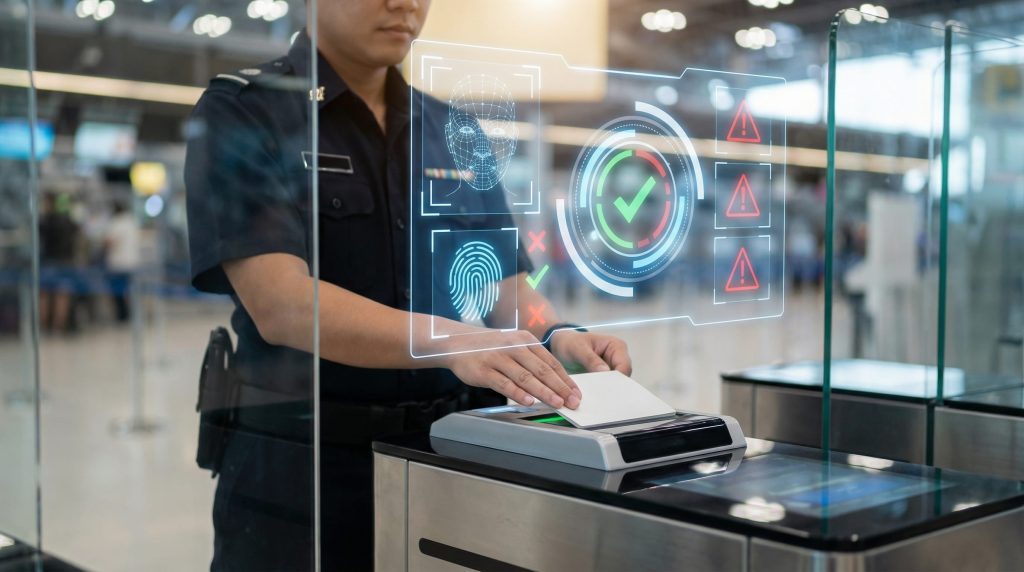
Biometrics: from pilot programs to core travel infrastructure
By early 2026, facial recognition has shifted from selective trials to embedded infrastructure across global air travel. With passenger volumes continuing to rise, biometric identity verification is now used well beyond boarding (covering check-in, bag drop, security screening, lounge access, and disruption handling). What was once framed as “paperless travel” is now treated as an operational necessity. This helps airports and airlines manage throughput, staffing pressure, and peak-period congestion with greater predictability.
European Union’s Entry/Exit System (EES) postponed
Originally scheduled to become fully operational across EU borders in April 2026, the system has now been postponed to September 2026, following concerns about potential disruption during peak summer travel. Rather than a setback, the delay reflects a cautious approach to deploying biometric border controls at scale, allowing airports, airlines, and border authorities additional time to stabilize procedures and prepare travelers.
As a result, 2026 has become a transition year for EES rather than a hard switch. Airlines serving the Schengen Area are increasingly focused on passenger readiness and expectation-setting, while airports continue phased testing and staff training. For long-haul travelers entering Europe from the US, biometric border checks are beginning to influence airport flows and arrival planning. But full enforcement is now expected in September 2026, outside the busiest travel season.
2026 perspective: Biometric travel has not eliminated the need for passports or documents. But it has quietly reduced how often travelers need to present them. For premium passengers, the value lies not in novelty, but in fewer interruptions, clearer flows, and less uncertainty as journeys move across borders.
CT security scanners: from rollout to routine use
By early 2026, the rollout of CT security scanners has shifted from rapid expansion to operational consolidation. While major airports in the UK, Europe, and Australia have largely installed next-generation scanners, regulators have taken a more cautious approach to changing security rules. Despite the technology’s ability to support larger liquid allowances, the European Union’s 100 ml restriction remains largely in place, as authorities focus on standardizing image quality, staff training, and detection reliability across airports.
2026 functions as a transition year: security screening is more stable and efficient than in 2025, but passengers should not yet expect universal relaxation of hand-luggage liquid limits.
In-Flight Connectivity enters the consistency phase
By 2026, the conversation around in-flight Wi-Fi has shifted away from promises of a sudden “revolution” toward evidence of steady, fleet-by-fleet rollout. Starlink-powered connectivity is no longer confined to test flights or select routes. Airlines are integrating it gradually, prioritizing coverage, stability, and operational reliability over headline speeds. Concrete launches (such as KLM introducing free Wi-Fi on short-haul flights) signal that high-quality connectivity is moving beyond pilots and into everyday service.
Expectations for 2026 are pragmatic: the onboard experience improves through consistency, as more aircraft are equipped and performance becomes predictable across routes and cabin loads. This shift is already visible at airlines such as KLM, Lufthansa Group, United Airlines, and Delta Air Lines. Their fleet-wide rollouts and long-term supplier agreements make 2026 the point at which in-flight Wi-Fi becomes consistently reliable.
Airlines adopt continuous, AI-driven pricing
In 2026, airline pricing is no longer built around fixed fare ladders, but around continuous, demand-aware pricing systems. Instead of publishing static business-class fares, airlines now use advanced analytics and AI to adjust prices in real time, based on factors such as booking lead time, route demand, seasonality, remaining cabin inventory, and market conditions. The goal is no longer to sell the same product at one price, but to match each offer more precisely to how and when a traveler is booking.
For premium travelers in 2026, this shift brings quieter but meaningful advantages. Pricing becomes smoother and more flexible, with fewer abrupt jumps and more variation tied to timing rather than arbitrary fare buckets. Business-class tickets are increasingly bundled dynamically (combining seat type, flexibility, lounge access, or baggage in ways that reflect individual travel patterns). In practice, this means better access to fairly priced premium seats when booking early or traveling off-peak, and fewer situations where availability exists but pricing feels disconnected from value.
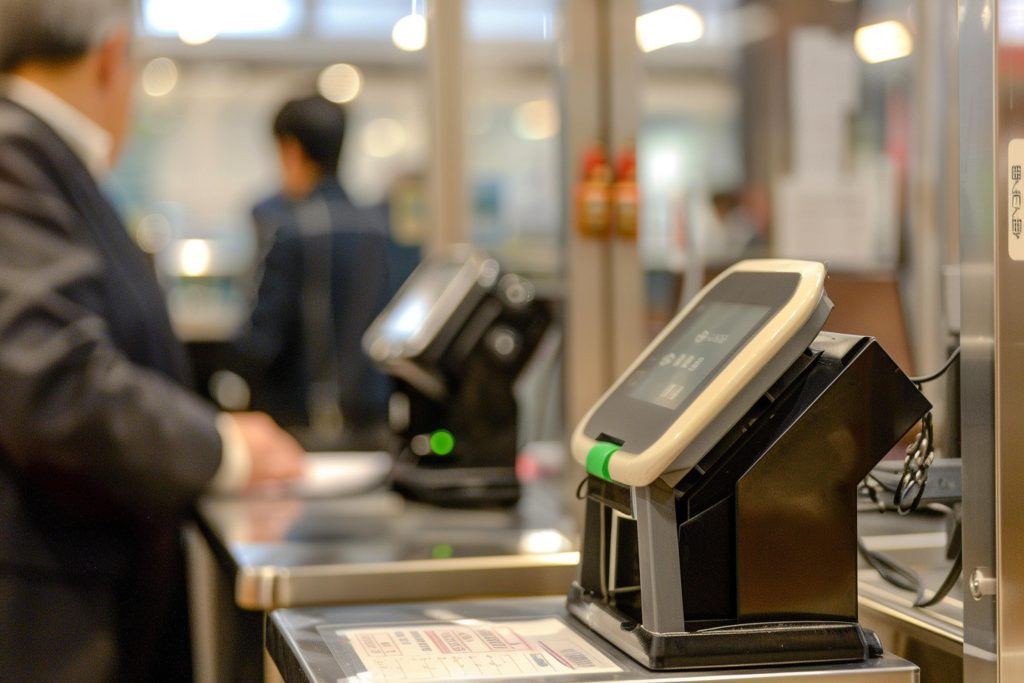
New Travel Policies and Regulatory Updates
REAL ID Enforcement
Beginning May 7, 2025, the TSA enforced REAL ID requirements at airport security checkpoints across the US. To board a domestic flight, travelers must present a REAL ID-compliant driver’s license or identification card or use an alternative form of acceptable identification, such as a passport.
To check if your current ID is REAL ID-compliant, look for a star in the upper corner of your driver’s license or identification card. If your ID is not compliant, you’ll need to obtain a REAL ID from your state’s Department of Motor Vehicles. For more details on eligibility and application steps, visit the official DHS website or use their REAL ID compliance tool.
Travelers who are not yet compliant can still fly by paying a $45 TSA ConfirmID fee, which allows access to an alternative identity verification process at security checkpoints. The ConfirmID option became available on February 1 and remains valid for 10 days of travel.
Department of Transportation (DOT) Refund Rules
In 2024, the DOT introduced new regulations strengthening passenger rights for flight cancellations and significant schedule changes. These rules require airlines to automatically issue cash refunds for canceled or significantly altered flights—without passengers needing to request them. Additionally, airlines must refund fees for services, such as checked baggage, if they are not provided.
Consumer protection rules remain under active debate, with airline lobbying influencing how some policies are applied. The U.S. Department of Transportation has paused enforcement of certain refund provisions (such as those tied to flight number changes and specific delay scenarios) until mid-2026. Review current refund rules before booking.
Visa Updates and Entry Requirements: What’s Changing?
United Kingdom Electronic Travel Authorization (ETA)
By early 2026, the United Kingdom Electronic Travel Authorisation (ETA) has moved from initial rollout to active, mandatory use for most visa-exempt travelers, including US citizens. What was previously announced with staggered start dates is now fully in effect, meaning travelers can no longer rely on informal grace periods or airline discretion when transiting or entering the UK.
Several details have also been clarified and adjusted:
- Scope is broader: ETA is now required not only for entry, but also for airside transit through the UK, closing a loophole that caused confusion in early 2025.
- Fee updated: The ETA fee has increased from earlier estimates (£10) to £16 (~$20), reflecting final pricing after rollout.
- Validity clarified: ETA is valid for two years or until the passport expires (whichever comes first), allowing multiple stays of up to six months each (not a single six-month window).
- Processing stabilized: Decisions are typically issued within three business days, with most approvals arriving faster once systems matured.
- Airline enforcement tightened: Airlines now routinely verify ETA status before boarding, making it a true pre-travel requirement.
New Visa-Free Destinations
Bolivia has officially dropped visa requirements for citizens of the US and several other countries, allowing Americans to enter visa-free for up to 90 days for tourism or business purposes. This change took effect on December 1, 2025 and represents a reversal of previous requirements that once made Bolivian travel more cumbersome for US passport holders.
Similarly, Uzbekistan has introduced a visa-free regime for US citizens starting January 1, 2026, permitting visa-free stays of up to 30 days for tourism and business. Previously, entry without a visa was limited by age or required an e-visa. Under the new policy, all US passport holders can enter Uzbekistan without a visa for short stays.

US Travelers Required to Pay ETIAS Fee for Europe
As of early 2026, the European Travel Information and Authorisation System (ETIAS) has not yet entered enforcement. Earlier expectations that ETIAS would become operational in mid-2025 have been revised following delays to the EU’s Entry/Exit System (EES), which ETIAS depends on technically and legally.
Key details:
- Citizens from visa-exempt countries, including the US, will be required to obtain an ETIAS authorization before traveling to Schengen Area countries.
- Applicants must complete an online form, providing personal and passport information. A €7 fee applies to individuals aged 18 to 70; those under 18 or over 70 are exempt.
- Once approved, the ETIAS authorization is valid for three years or until the associated passport expires, whichever comes first.
The most important update is timing clarity:
- ETIAS is now expected to be enforced in late 2026, not earlier in the year.
- No exact launch date has been confirmed as of early 2026.
- When enforcement begins, it will apply across 30 European countries, covering the Schengen Area and associated states.
For comprehensive information and application procedures, visit the official ETIAS website.
New Carry-On Luggage Rules
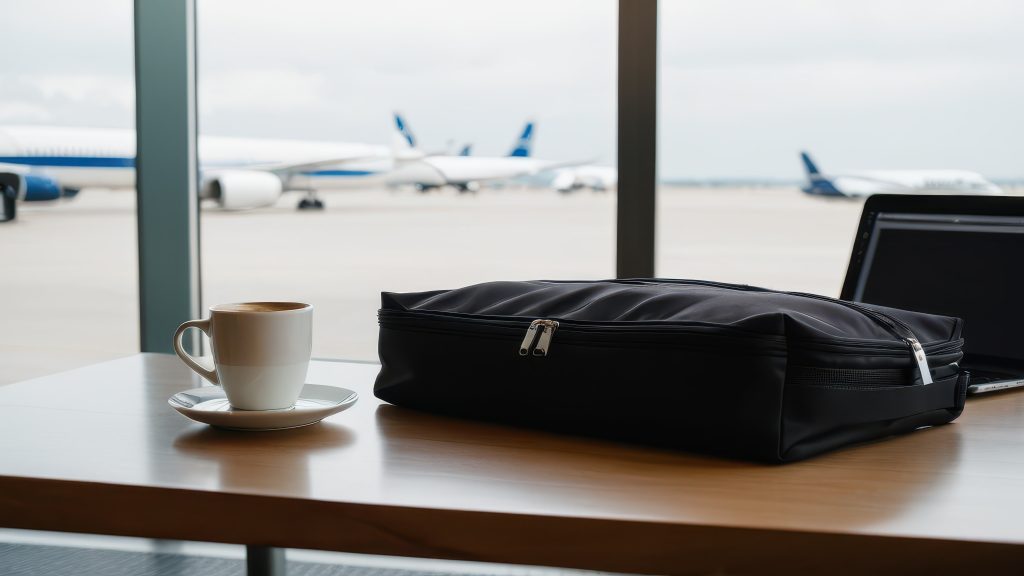
For premium travelers, the biggest change to carry-on luggage in 2026 is not new published rules, but far stricter and more consistent enforcement. Across the industry, airlines are aligning around a practical carry-on size of 22 × 14 × 9 inches, with wheels and handles included. Under this standard, many bags that previously passed informal checks may now be considered oversized, even if they were accepted in the past.
Enforcement has also become less predictable at the gate. Airlines such as American Airlines have reduced the use of physical sizers to speed boarding, increasing reliance on gate-agent judgment. At the same time, tighter cabin layouts and a growing share of regional aircraft mean that overhead bin space is less forgiving. In practice, whether a bag physically fits matters more than cabin class or brand loyalty.
For premium travelers, the risk is not the fee. It’s the disruption. Unexpected gate-checks break the flow of travel, delay exits, and separate passengers from essential items mid-journey. As a result, the most effective approach in 2026 is proactive: measure existing luggage carefully, including all external components, and verify carry-on limits for each airline before departure. Major international and US carriers maintain distinct definitions and enforcement thresholds, even within premium cabins.
For premium travelers in 2026: With the industry converging on a universal size expectation, investing in luggage clearly designed to meet the 22 × 14 × 9 standard has become a practical choice. This will help to preserve speed, predictability, and control from curb to cabin.
Aircraft Fleet Modernization: Key Upgrades for US travelers
Fleet modernization in 2026 is less about headline-grabbing cabins and more about where airlines choose to deploy premium capacity. US carriers are moving away from a one-size-fits-all widebody strategy. Instead, they are aligning aircraft types, cabin density, and product quality with specific demand profiles. Narrowbody long-range aircraft, premium-heavy widebodies, and quieter cabin layouts are becoming tools to make business class viable on routes that were previously too thin (or too expensive) to justify. This shift is visible across major airlines.
- American Airlines is using long-range narrowbodies to bring a true business class experience to competitive transcontinental and selective long-haul markets.
- United Airlines is taking the opposite approach, concentrating premium seats on fewer aircraft to create calmer, more controlled cabins on its longest routes.
- British Airways and Delta Air Lines are focusing on consistency, reducing the gap between “best case” and “worst case” aircraft rather than chasing novelty.
For US travelers, the benefit in 2026 is not dramatic reinvention, but predictability: fewer surprise downgrades in cabin quality, better alignment between route length and seat design, and premium intentionally placed products.
Premium Route Competition
The most meaningful route changes in 2026 are not about sheer expansion, but about how airlines are reshaping long-haul connectivity around premium demand. Rather than flooding major hubs with more frequency, carriers are opening “long, thin” routes—secondary European cities, premium leisure destinations, and strategic Middle Eastern gateways—where business class demand is steady but historically underserved. US airlines are central to this shift:
- United Airlines continues to push premium-heavy aircraft into secondary European markets, improving availability and often pricing for business class travelers.
- American Airlines is strengthening its long-haul network from core hubs with routes that favor shoulder-season premium travel.
- Delta Air Lines is blending premium leisure expansion with strategic long-term bets, signaling where it sees sustained high-end demand beyond traditional business corridors.
- Alaska Airlines is quietly entering long-haul markets, introducing new competition on routes that historically lacked choice for West Coast travelers.
For premium flyers, these changes matter because they reduce reliance on connections, open new nonstop options, and often come with aircraft configured specifically for long-haul comfort rather than legacy layouts.
Must-read for business class travelers in early 2026: For a route-by-route, aircraft-specific breakdown of new cabins launching this year, see our detailed guide to new business class products and fleets.
Latest Monthly Updates
- March 2026 US Premium Flight Briefing: March offers a brief window of flexibility before summer pressure builds. There are solid demand, steady pricing, and better chances to secure premium seats early on key international routes.
- April 2026 US Premium Flight Briefing: Demand stays strong, but availability tightens as airlines slow capacity growth. Pricing is trending upward, and long-haul routing is becoming less efficient ahead of summer.
We hope this 2026 airline industry overview helps you make informed travel decisions. For a comfortable and stress-free journey, book an affordable premium class flight with AranGrant. Safe and enjoyable travels in 2026!