What matters most in business class? Do travelers care more about the seat or the food? Is privacy a deciding factor or just a nice extra?
To answer these questions, we look beyond opinions and marketing language. This article draws on independent passenger research and long-running industry studies, complemented by how frequent, high-profile travelers describe their own flying priorities.
The most widely cited insights come from large-scale surveys conducted by Skytrax, IATA, and J.D. Power. We also consider customer research published by leading airlines such as Emirates, Qatar Airways, and Singapore Airlines. Together, these studies reflect millions of passenger responses collected over many years.
Read in this post:
The Core Drivers of Business Class Satisfaction
When the data is broken down by business class satisfaction categories, the same priorities appear consistently:
- Seat comfort and sleep quality: including lie-flat capability, seat dimensions, bed length, and mattress support
- Privacy and personal space: most notably direct aisle access and seat shielding or doors
- Cabin calm: influenced by noise levels, lighting, and how passengers move through the cabin
- Catering, service, and onboard amenities clearly matter, but across surveys they rarely outweigh seat comfort and privacy in overall satisfaction scores.
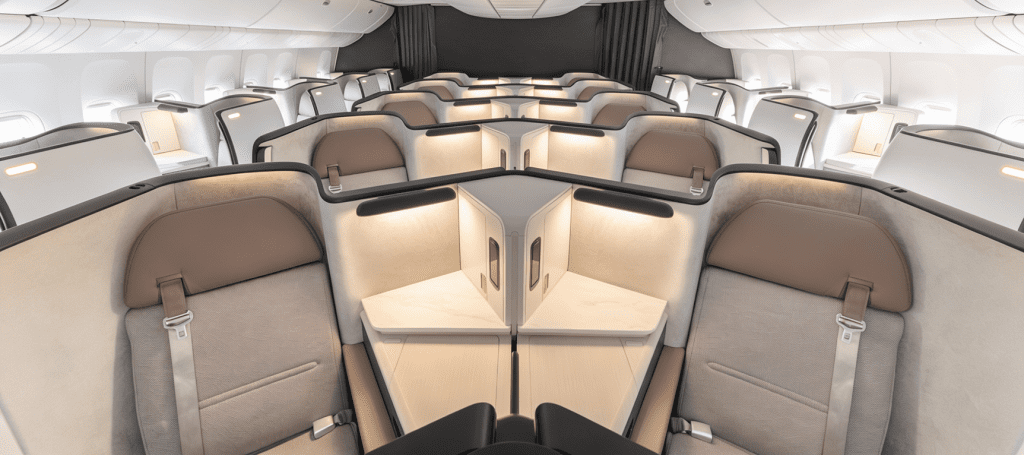
This hierarchy is also reflected in how business class cabins have evolved. Over the past decade, the most requested improvements have focused on better sleep ergonomics, increased privacy, quieter cabins, and reduced visual clutter. As a result, privacy doors became common, 1-2-1 layouts turned into the standard, and carefully tuned mood lighting replaced harsher cabin environments.
In other words, modern business class design closely follows what travelers have been asking for all along — rest, space, and calm.
Seat Comfort That Makes Long Flights Manageable
The ability to sleep well depends on far more than the seat’s maximum recline. Bed length, footwell design, and how the seat supports the body once fully flat all play a role. A seat that looks generous when upright can feel restrictive at night if the footwell narrows sharply or forces the legs into an angled position. This is especially noticeable for taller travelers or those who tend to change positions while sleeping.
Surface design matters just as much. Some seats create a continuous, level sleeping platform, while others introduce subtle slopes or pressure points around the hips and shoulders. Over the course of a long flight, these small inconsistencies add up. Rest becomes fragmented, and the promise of arriving refreshed starts to fade.
Which Cabins Get Seat Comfort Right and Which Don’t
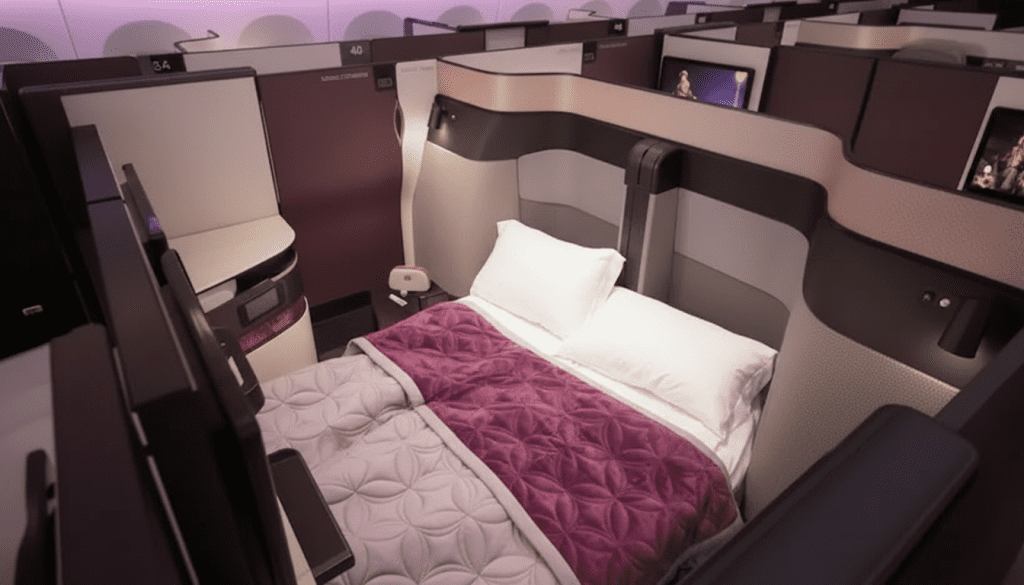
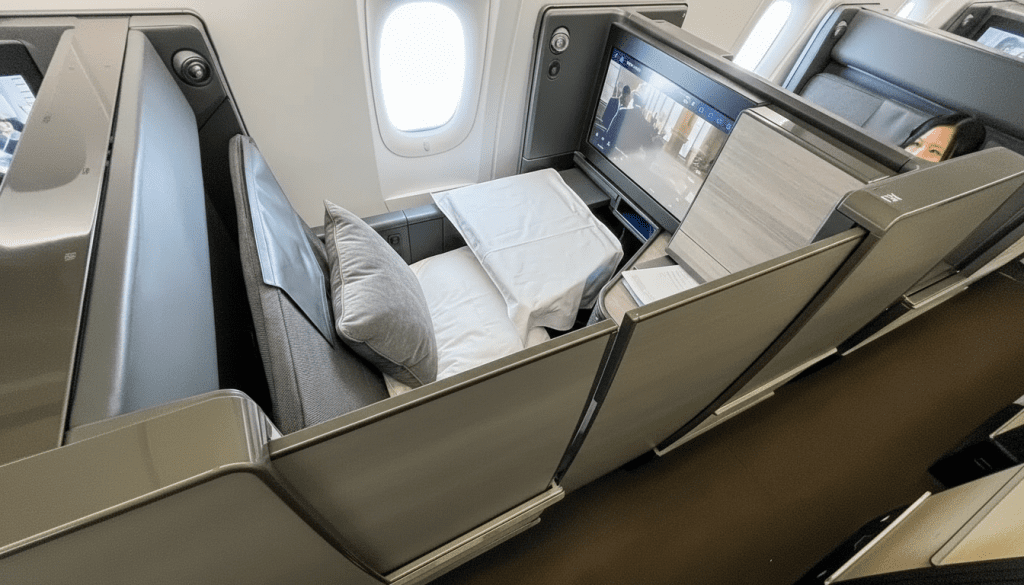
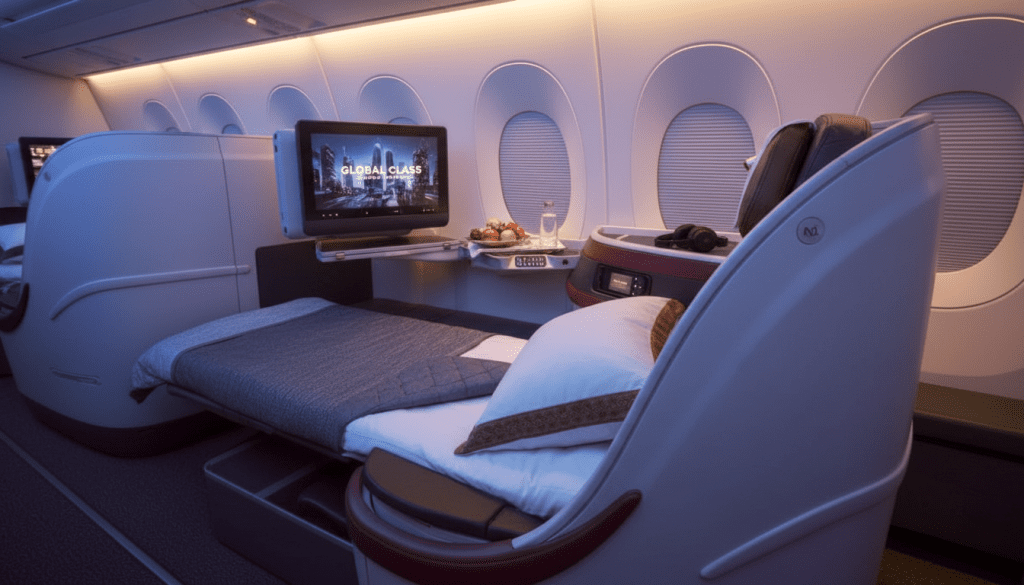
- Good: Qatar Airways’ Qsuite, Singapore Airlines’ long-haul Business Class, Japan Airlines’ Sky Suite, and ANA’ The Room align closely with the core principles outlined above. They offer fully flat, usable sleeping surfaces, well-proportioned footwells, minimal compromise in body positioning, and require little adjustment once the seat is in bed mode.
- Average: Emirates’ new Business Class (A350 and selected retrofits) and Air France’ new Business Class are often rated “very good”. However, they tend to fall short of the top tier when sleep quality is examined more closely.
- Below average: Cabins that frequently rank lower include British Airways’ Club Suite, United Airlines’ Polaris (earlier 787 configurations), and American Airlines’ 787 Business Class. While they meet technical requirements such as lie-flat seats and premium materials, they often compromise on foot space and natural sleeping posture. This limits real overnight comfort.
A perspective from a frequent flyer: Despite his controversial reputation, Elon Musk is also one of the most frequent long-haul travelers in the public eye. He says that long flights are only tolerable if he can sleep properly and reset quickly between time zones. Notably, this marks a shift from his earlier “no-sleep” bravado. Musk has since said that sleeping fewer than six hours a night leads to what he describes as “brain pain” and noticeably reduces his productivity. To manage this, he reportedly naps even on short trips. The takeaway is simple: for people who fly often and work immediately after landing, sleep isn’t a perk of business class — it’s the point.
Privacy Features Travelers Appreciate Most
Privacy in business class is often reduced to a single feature: doors. In reality, privacy is a combination of layout decisions that determine how exposed a passenger feels once the flight settles into cruise mode.
Direct aisle access is the foundation. It removes the need to step over another passenger and limits unnecessary interaction, especially on overnight flights. Just as importantly, it reduces cabin movement around the seat. Fewer people passing close by means fewer disruptions, even when the cabin isn’t quiet.
Seat positioning matters as much as access. Window seats angled toward the aircraft wall tend to feel more secluded than center seats facing the aisle, even in the same cabin. In some layouts, center seats offer physical separation but little visual privacy, leaving passengers more aware of activity around them than expected.
Privacy doors add another layer, but they are not a universal solution. Some doors block sightlines effectively while doing little to reduce noise. Others create a stronger sense of enclosure but narrow the usable space once the seat is flat. For many travelers, partial shielding combined with thoughtful seat placement delivers a better balance than a fully enclosed shell.
Which Cabins Get Privacy Right and Which Don’t
Good
Qatar Airways’ Qsuite, ANA’ The Room, Japan Airlines’ Sky Suite, and Singapore Airlines’ long-haul Business Class combine:
- direct aisle access
- effective visual shielding
- thoughtful seat orientation
- usable personal space.
Privacy is achieved through layout and proportion, without introducing new trade-offs.
Average
Newer business class cabins from Emirates and Air France represent a clear step forward from older designs. However, they tend to introduce compromises that limit how private the space feels in practice, often through tighter proportions or inconsistent shielding.
Below Average
British Airways’ Club Suite, United Airlines’ Polaris (earlier 787 configurations), and American Airlines’ 787 Business Class meet formal privacy requirements on paper. But they struggle to deliver a consistently secluded experience once the cabin is in use.
Where this shows up in real travel habits: Bill Gates has often described flights as one of the few places where sustained, uninterrupted thinking is still possible. But only when conditions allow it. Gates travels with a substantial bag of books and treats long flights as focused thinking time. His ability to read and reflect in the air depends on minimal noise and limited disruption. So, if you value concentration as much as rest, privacy isn’t about isolation for its own sake. It’s about protecting attention.
Small Details That Make Business Class Feel Calm
Calm in business class rarely comes from one headline feature. It’s usually the result of many small decisions that reduce friction over the course of the flight.
- Lighting is one of the most noticeable factors. Gradual transitions between meal service, rest, and wake-up periods help the body adjust, especially on overnight routes. Harsh or poorly timed lighting keeps the cabin alert when it should be winding down. Individual light controls matter just as much. A reading light that illuminates the seat without spilling into the aisle makes rest easier for everyone nearby.
- Noise works the same way. It’s not just engine sound, but secondary noise that disrupts rest: seat motors, galley activity, and constant foot traffic past the seat. Cabins with enclosed or well-buffered galleys tend to feel calmer, even when the aircraft itself isn’t especially quiet.
- Storage and control placement also play a role. When essentials are easy to reach, passengers move less and adjust their seats less often. Screens that dim properly at night and controls that respond quietly prevent small interruptions from turning into repeated distractions.
Which Cabins Feel Calm and Which Don’t
- Good: Cathay Pacific’s Aria Suite, EVA Air’s Royal Laurel Class, SWISS’ long-haul Business Class, and Finnair’s AirLounge tend to score well because little interrupts the passenger once the flight is underway. This effect is reinforced on routes operated by the Airbus A350 and A380. Both are known for lower cabin noise and smoother ride characteristics in business class.
- Average: Delta Air Lines’ Delta One Suites and Turkish Airlines’ long-haul Business Class are modern and competitive. However, they introduce small, recurring irritations (brighter cabins, busier service flow, or more aisle movement) that accumulate over time.
- Below average: Lufthansa’s pre-Allegris long-haul Business Class, TAP Air Portugal’s older A330 and A321LR cabins, and LATAM Airlines’ older 787 Business Class often struggle with ongoing noise, movement, and visual distractions, which makes sustained rest harder to maintain.
Why quiet becomes a priority: Barack Obama has often emphasized the importance of quiet, respectful environments while traveling, particularly on long journeys. For him, calm wasn’t about comfort alone, but about preserving focus and a sense of dignity in transit. Since leaving office, his travel choices have reflected that priority. Many of his trips have centered on low-key, secluded destinations where noise, crowds, and constant attention are kept to a minimum.
How Food Supports the Experience
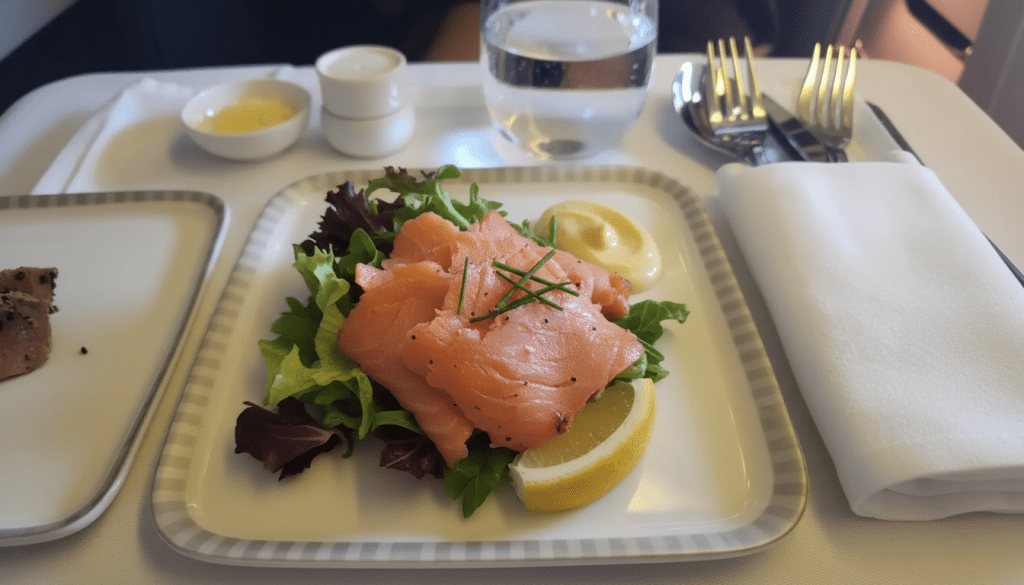
The biggest factor is timing. Meals that align with a passenger’s body clock feel restorative, while rigid service schedules can disrupt rest on overnight flights. This is why flexible dining options often matter more than menu complexity. Being able to eat lightly, skip a course, or dine later helps travelers manage sleep and arrive feeling better.
Presentation and portioning also matter at altitude. Smaller, well-balanced meals are more satisfying than elaborate multi-course services that feel heavy in the air. Think clear flavors, simple plating, and thoughtful pacing. Meal consistency is another overlooked element, creating comfort when well-executed and predictable.
Which Airlines Get Catering Right and Which Don’t
- Good: Japan Airlines’ long-haul Business Class, SWISS’ long-haul Business Class, EVA Air’ Royal Laurel Class, Finnair’ AirLounge, and Singapore Airlines’ long-haul Business Class tend to get food right in context (flexible, well timed, and proportionate to the flight).
- Average: Turkish Airlines’ and Air France’ long-haul Business Class offer strong catering, but presentation or service pacing can work against rest.
- Below average: Lufthansa’ pre-Allegris Business Class, American Airlines’ long-haul Business Class, and TAP Air Portugal’ older long-haul cabins are generally adequate, but rarely memorable.
Secondary Amenities That Still Shape the Experience
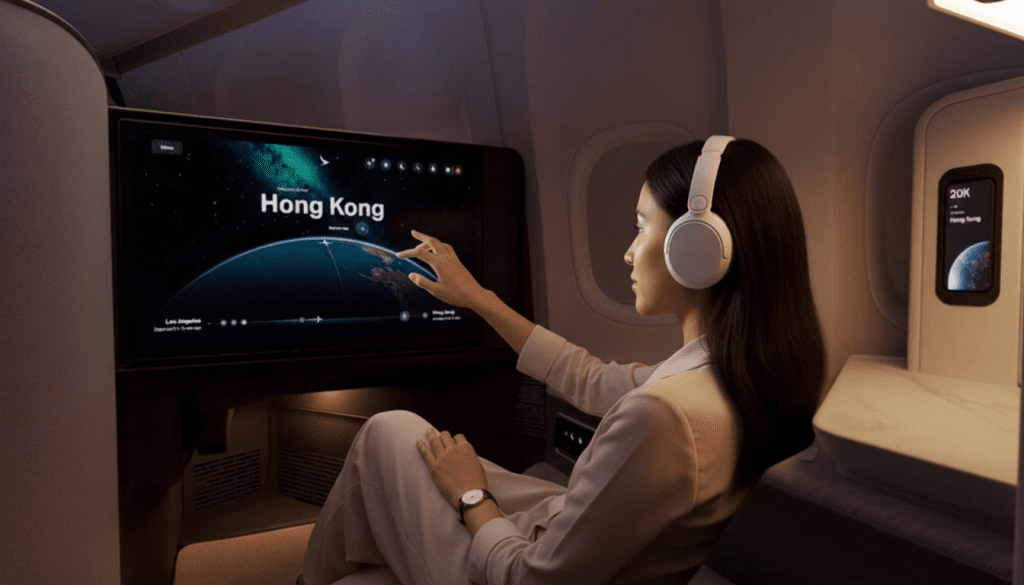
In-flight entertainment: Screen size and content depth matter less than usability: fast response, intuitive navigation, and screens that dim properly at night. Cathay Pacific consistently ranks highly thanks to responsive systems, large high-resolution displays, and thoughtfully curated content libraries.
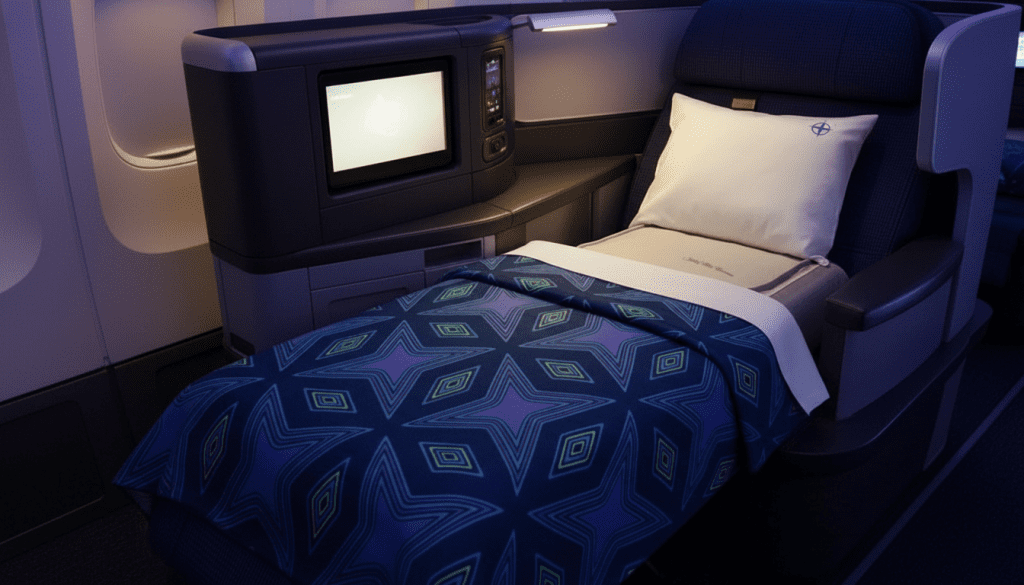
Bedding can’t fix poor seat geometry, but it can significantly improve rest when the seat itself is well designed. United Airlines stands out for its business class bedding developed in partnership with Saks Fifth Avenue. This bedding adds noticeable comfort through better materials and layering, especially on overnight flights.
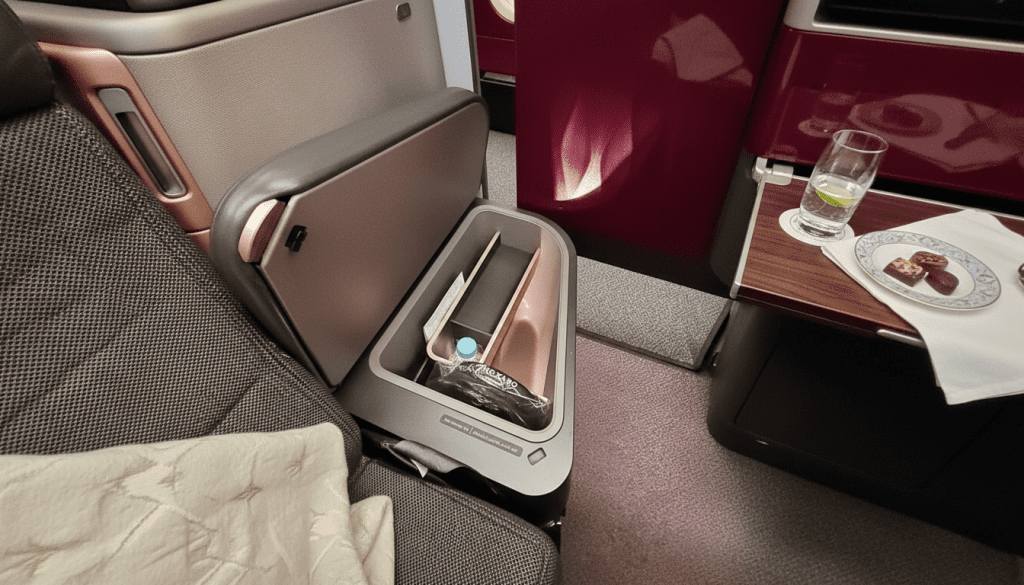
Personal storage is often underestimated until it’s missing. When essentials (headphones, water, phone, reading glasses) have a dedicated place, passengers move less and interrupt themselves less. Qatar Airways’ Qsuite handles this particularly well, offering clearly defined, easy-to-reach storage that keeps the space organized throughout the flight.
Read also: What Airline Has the Best Business Class
The Final Value That Matters Most, Yet Is Often Overlooked
None of the elements above fully matter without one final value worth emphasizing: consistency. When service and product quality vary, expectations become uncertain. A flight can feel effortless one day and quietly frustrating the next (often on the same route).
The most consistent business class products in 2026 are widely considered to be Qatar Airways, Singapore Airlines, ANA, and Cathay Pacific. These airlines are not only known for strong cabin design and service standards, but also for delivering a reliably similar experience across fleets and routes. This is a key reason they consistently rank among the world’s top business class airlines in Skytrax surveys.
Why consistency outweighs everything else: Anna Wintour has often described how she manages an intense, repetitive travel schedule through strict routines. She prioritizes predictability: exercising regularly, staying hydrated, and sticking to familiar habits no matter where she is. That mindset carries over to how she approaches flying. Predictable service, minimal friction, and no surprises matter more to her than novelty. Consistency reduces mental load, helps limit jet lag, and allows her to arrive focused.