
People often associate business class with champagne and multi-course meals. On overnight long-haul flights, however, its real purpose is sleep. Yet, even in business class, not every lie-flat seat delivers the same rest. Some cabins feel private and quiet, while others leave you exposed to aisle traffic and constant movement.
The difference usually comes down to design. Seat placement, cabin density, and bed geometry shape how well a seat actually works overnight. These details often matter far more than the service or branding around the cabin.
In 2026, airlines continue refining business class cabins with sliding doors, new staggered layouts, and designs built around ultra-long-haul flying. For travelers who regularly book overnight flights and prioritize rest over status, this guide will be especially useful. We will explore how cabin layout, seat design, and privacy features come together to determine how comfortable a business class seat really is overnight.
Read in this post:
What Actually Makes a Business Class Seat “The Best”?
The difference between an average lie-flat seat and one that delivers real rest usually comes down to a handful of cabin design choices. This is how you can evaluate them:
Sleep Performance
Start with sleep performance. Assess it based on bed length, shoulder width, and footwell size. For example, an 80-inch seat sounds generous, yet if the footwell narrows near your knees, you may need to bend one leg when you turn onto your side.
Shoulder width matters just as much. If the shell curves inward, your elbow presses against the wall when you shift, forcing you to resettle. A mattress pad may somewhat improve both situations, but it doesn’t beat adequate length and width of the seat when it comes to proper rest.
Privacy
Privacy starts with what separates you from the aisle. Some suites include sliding doors that remove the aisle from view and reduce exposure to passing traffic and noise. Without a door, separation depends on seat angle and wall height. If the seat faces away from the aisle and a console sits between you and the walkway, passing traffic stays outside your immediate view.
Cabin Density
In a 1-1-1 layout, three passengers share a row. In a 1-2-1 layout, four passengers share the same cross-section of the aisle. One additional seat means one additional person standing up or passing by. The more passengers there are in your section of the aisle, the more movement and noise you are likely to notice.
Some layouts reduce that exposure even with higher seat counts. For example, Apex-style cabins position the window seat behind a console, which adds a layer of separation between you and your neighbor.
Storage and Workspace
If your glasses, headphones, phone, and passport fit inside a side compartment, you can access them without having to stand and open the overhead bin.
Workspace size affects how comfortably you use the seat before sleeping. A larger surface allows you to keep a laptop, a drink, and a notebook on the table at the same time. Smaller tables require you to put items away before using others.
Storage and workspace do not determine sleep quality directly, but they shape how functional and comfortable your space feels throughout the flight.
Best Seat Positions
Window seats usually provide the most privacy. In many reverse herringbone layouts, they angle away from the aisle and place the console between you and passing traffic. This position reduces movement in your field of view and typically works best for sleep.
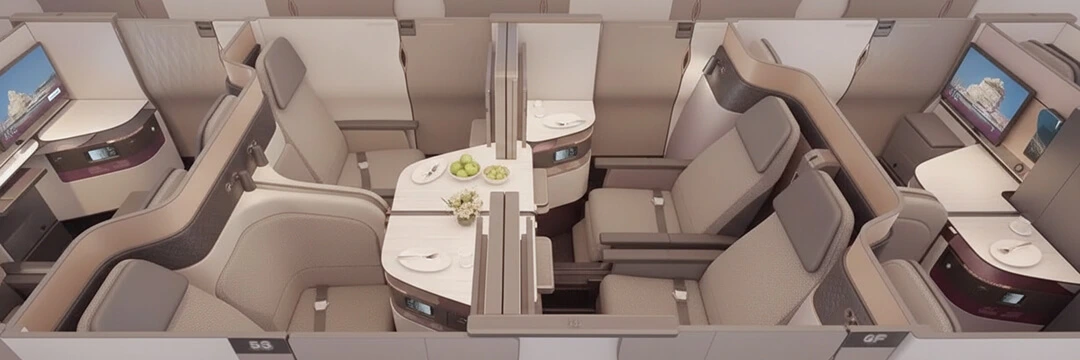
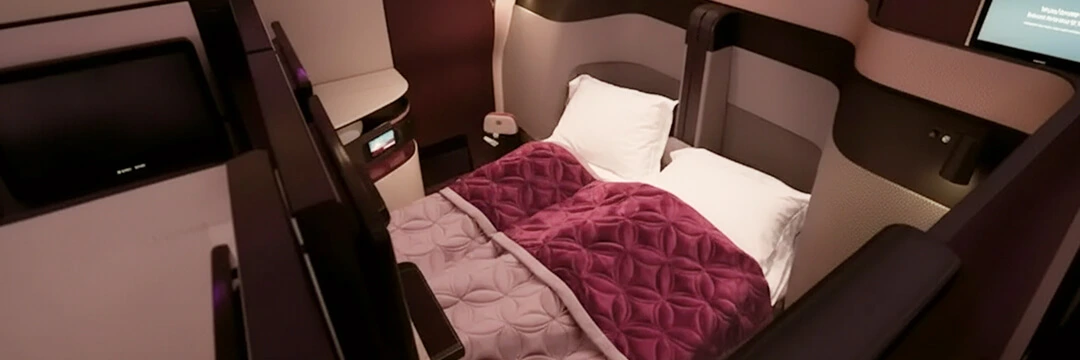
Center seats suit travelers flying together. Many cabins include movable dividers that allow conversation, and some products, such as Qatar Airways Qsuite, even convert select center seats into double beds.
In staggered cabins, position matters more. Some seats sit close to the aisle, while others place the console between you and foot traffic. The latter seats usually provide noticeably more privacy.
When deciding on a seat, do not rely on promotional photos. Compare the airline’s seat map with independent cabin photos of the exact aircraft type. Marketing images often highlight the most private row, not the entire cabin.
Next in this series: When Business Class Costs Almost the Same as Economy (And Why)
Best Business Class Seats for Sleep (2026 Ranking)
The cabins below offer the strongest sleep performance currently available on long-haul routes from the U.S. in 2026, based on bed geometry, width, and privacy.
Qatar Airways Qsuite
- Seat layout: Qsuite uses a 1-2-1 configuration.
- Bed length: The bed measures approximately 80 inches when fully flat.
- Width: Seat width is just over 21 inches. The footwell is relatively squared rather than sharply tapered, allowing both legs to extend more naturally when lying on your side.
- Privacy type: Each suite includes a sliding door that blocks direct visibility from the aisle once closed.
- Best routes: From the U.S., you can consistently see Qsuite on routes such as New York (JFK), Washington (IAD), Chicago (ORD), and Los Angeles (LAX) to Doha (DOH).
- Typical fare range (long-haul U.S. departure): Round-trip fares generally range from $4,000 to $7,500, if booked in advance.
- Booking difficulty: Moderate. Qsuite appears frequently, but some Boeing 777 aircraft still operate older cabins.
- Best for: Couples seeking a convertible double bed, tall travelers who need a straighter footwell, and solo passengers prioritizing privacy.
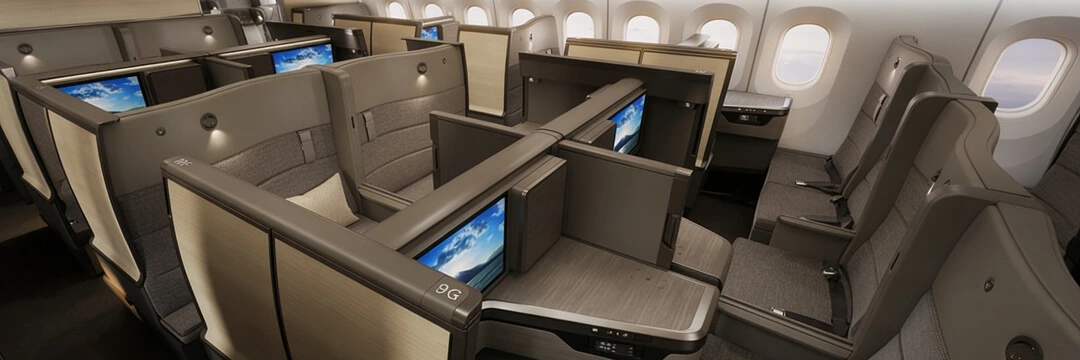
ANA The Room
- Seat layout: ANA’s “The Room” uses a 1-2-1 configuration with alternating forward- and rear-facing enclosed suites.
- Bed length: The bed measures between 78 and 80 inches, with minor variation between forward-facing and rear-facing rows.
- Width: At approximately 38 inches at its widest point, it is one of the broadest business class seats currently in service.
- Privacy type: Each seat includes a sliding door.
- Best routes: The Room operates on Boeing 777-300ER aircraft on routes such as New York (JFK) and Chicago (ORD) to Tokyo (Haneda).
- Typical fare range (long-haul U.S. departure): Round-trip fares for nonstop flights typically range from roughly $5,200 to $15,000, depending on how close your departure date is.
- Booking difficulty: Hard. Only specific 777-300ER aircraft feature this cabin, and you would need to verify the aircraft type before booking.
- Best for: Travelers over 6 ft tall and side sleepers who value shoulder width as much as bed length.
Next in the series: How Early You Should Book Business Class
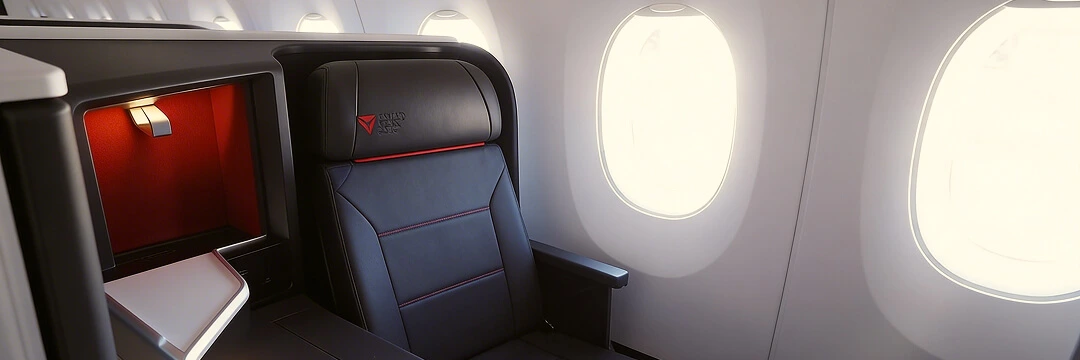
Delta One Suite (A350)
- Seat layout: Delta One Suite on the Airbus A350-900 uses a 1-2-1 reverse herringbone configuration.
- Bed length: The bed measures approximately 78 inches when fully extended.
- Width: Seat width is about 21 inches. The footwell narrows slightly toward the end, so you might need to angle one leg inward when lying on your side.
- Privacy type: Each seat includes a sliding door.
- Best routes: Delta deploys the A350-900 from Atlanta (ATL) to Seoul (ICN), Johannesburg (JNB), Cape Town (CPT), Tokyo (HND), and Los Angeles (LAX) to Sydney (SYD), Melbourne (MEL), Brisbane (BNE), and Auckland (AKL).
- Typical fare range (long-haul U.S. departure): Round-trip fares generally range from the low-$7,000s to mid-$14,000s.
- Booking difficulty: Moderate. The A350 consistently features this suite, but other aircraft on the same routes may operate older Delta One seats without doors.
- Best for: Solo travelers seeking enclosed privacy on nonstop routes from major US hubs.
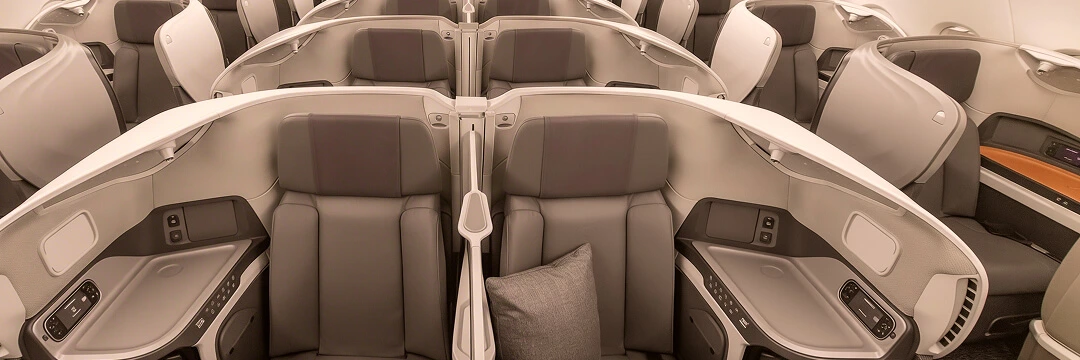
Singapore Airlines A380 Business Class
- Seat layout: The Airbus A380 uses a 1-2-1 forward-facing configuration with wide, fixed-shell seats.
- Bed length: The bed extends to approximately 76 inches when deployed.
- Width: The bed measures about 30 inches wide.
- Privacy type: The seat does not include a sliding door. Privacy relies on shell height and spacing between rows rather than full enclosure.
- Best routes: Singapore Airlines does not operate the A380 on nonstop routes between the U.S. and Singapore. The aircraft primarily flies between Singapore (SIN) and destinations such as London (LHR), Frankfurt (FRA), Sydney (SYD), Zurich (ZRH), and select Asian cities. U.S. travelers can connect in Singapore or another international hub to fly on this aircraft.
- Typical fare range (long-haul U.S. departure): Round-trip fares originating in the U.S. generally start at roughly $8,000 and may increase to $13,000-$14,000, depending on route.
- Booking difficulty: Hard. Securing a seat on the A380 requires confirming that a specific long-haul segment operates on this aircraft.
- Best for: Travelers who prioritize a broad and stable sleeping surface over a full enclosure and who are comfortable with an itinerary that has at least one layover.
Japan Airlines (Apex Suite)
- Seat layout: The Apex Suite appears in a 2-2-2 or 2-3-2 configuration while still providing direct aisle access through an offset side passage at each seat.
- Bed length: The bed measures approximately 74 inches when fully flat.
- Width: The seat is about 25.5 inches wide.
- Privacy type: Privacy comes from the seat’s deep shell and offset aisle access, which positions you slightly away from the main aisle. Window seats add a wide console that separates you further from foot traffic.
- Best routes: Aircraft featuring Apex frequently operate from Los Angeles (LAX), San Francisco (SFO), Chicago (ORD), and New York (JFK) to Tokyo.
- Typical fare range (long-haul U.S. departure): Round-trip fares generally range from $7,000 to $15,000, depending on season and departure point.
- Booking difficulty: Moderate. Japan Airlines operates multiple business class seat types across its fleet, so it is better to review the seat map before booking.
- Best for: Solo travelers who prefer a window seat and value being separated from the aisle.
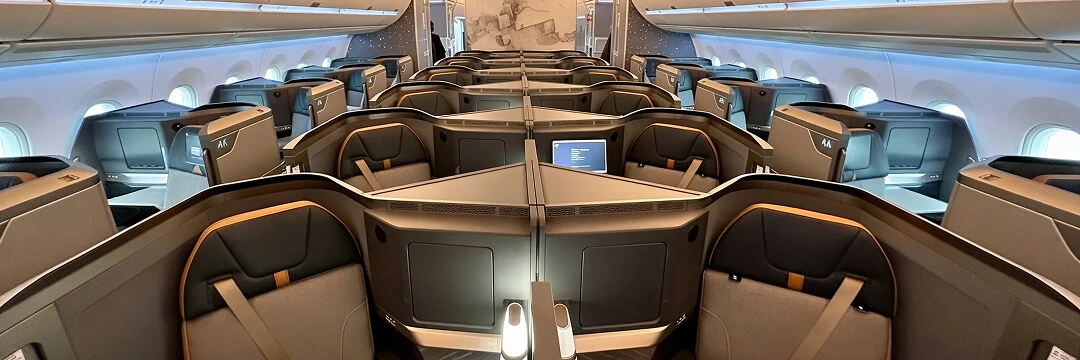
STARLUX Airlines (A350)
- Seat layout: STARLUX’s Airbus A350-900 uses a 1-2-1 reverse herringbone configuration.
- Bed length: The bed measures approximately 78 inches when fully flat.
- Width: Seat width is roughly 20 inches, with balanced footwell proportions that avoid sharp tapering at the knees.
- Privacy type: Each seat includes a sliding door that encloses the suite.
- Best routes: From the U.S., STARLUX operates A350-900 on routes from Los Angeles (LAX) and San Francisco (SFO) to Taipei (TPE).
- Typical fare range (long-haul U.S. departure): Round-trip fares typically range from $4,000 to $7,000.
- Booking difficulty: Easy to moderate. The STARLUX long-haul fleet centers on the A350, making this configuration relatively consistent across flights from the U.S.
- Best for: Travelers seeking a modern enclosed suite on transpacific routes.
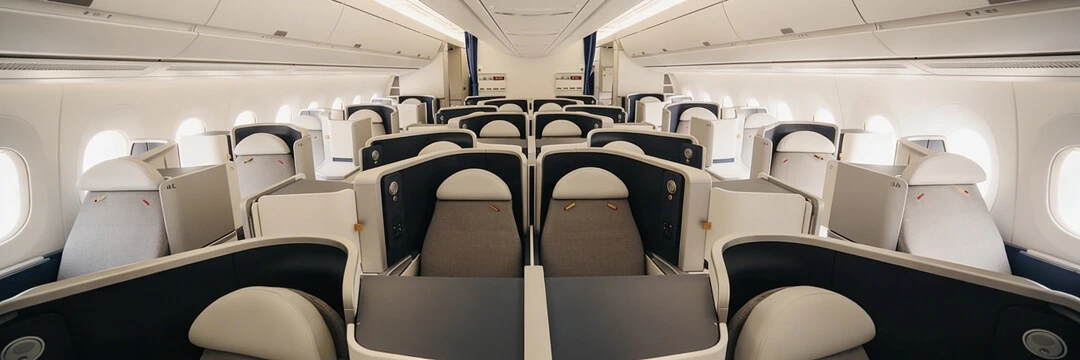
Air France (A350)
- Seat layout: Air France’s Airbus A350-900 has a 1-2-1 forward-facing business class configuration.
- Bed length: The bed measures approximately 78 inches when fully extended.
- Width: Seat width is close to 20 inches, with a footwell that avoids severe tapering.
- Privacy type: The seat relies on high side partitions and a staggered reverse-herringbone layout rather than sliding doors. While the cabin does not offer fully enclosed suites, the seat angles away from the aisle, which helps reduce direct exposure to foot traffic.
- Best routes: The A350-900 frequently operates from New York (JFK), Boston (BOS), and Miami (MIA) to Paris (CDG).
- Typical fare range (long-haul U.S. departure): Depending on the booking window, round-trip fares range from $4,100 to $7,000, with higher amounts close to departure.
- Booking difficulty: Moderate. However, because Air France operates multiple A350 business class configurations, it is best to confirm the specific aircraft layout before booking a ticket.
- Best for: Travelers seeking a modern forward-facing cabin and who value direct transatlantic routes.
Next in this series: Best Business Class Lounges: Global Leaders for 2026
Best Business Class Seats for Couples
For couples who want to share a sleeping surface rather than simply sit together, Qatar Airways’ Qsuite stands out. Its select center seats convert into a true double bed by lowering the partition into one continuous surface.
Other cabins offer partial solutions. ANA’s The Room and Delta One Suite allow you to lower the center divider for conversation, but each passenger still sleeps separately. If side-by-side sleeping matters most, Qsuite delivers the most complete solution here.
Next in this series: Best Business Class Food: 8 Airlines That Elevate Onboard Dining
Best Business Class Seats for Tall Travelers
For travelers over 6 ft, bed length alone does not determine comfort. Shoulder width and footwell shape matter just as much. ANA’s The Room provides the most shoulder space. The bed measures between 78 and 80 inches, and the 38-inch width allows your upper body to rest without pressing into the shell.
Qatar Airways Qsuite follows closely. The bed extends to about 80 inches, and the relatively squared footwell allows both legs to stretch with less taper at the knees. STARLUX’s A350 also maintains balanced proportions, with consistent width and a footwell that avoids sharp narrowing.
Next in this series: Airline Industry Trends 2026: What Awaits US Premium Travelers
Business Class Seat Types Explained (Quick Comparison)
Airlines use different names for their cabins, but most business class seats follow a small number of structural layouts. Understanding the geometry helps you predict privacy, footwell shape, and consistency across rows.
Reverse Herringbone
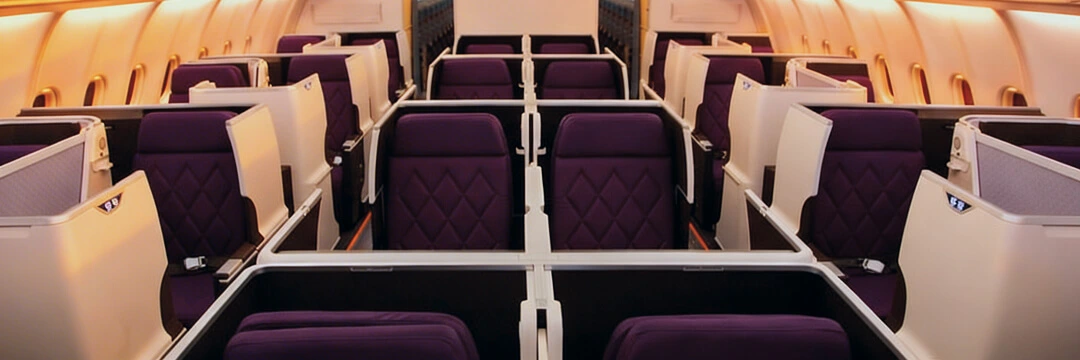
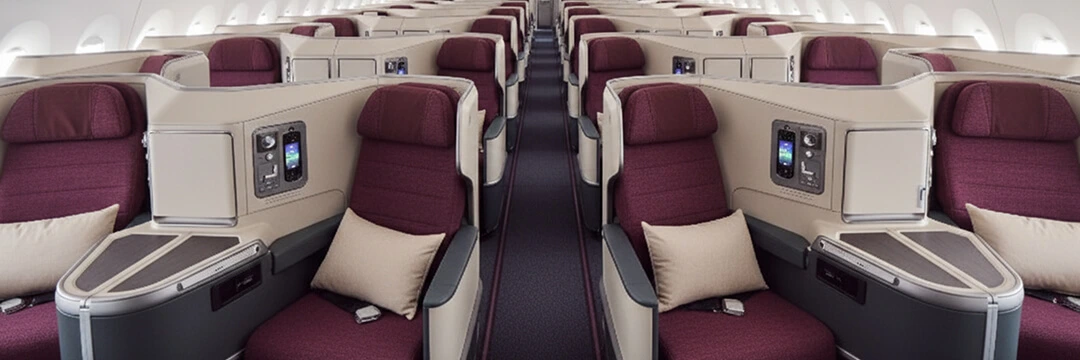
Seats angle away from the aisle in a 1-2-1 configuration, with window seats facing outward, and placing your head farther from foot traffic. This layout appears on products such as Delta One Suite on the A350, STARLUX’s A350, and in American Airlines’ 787 and 777 business class cabins.
Apex Suite
The Apex Suite appears dense on paper, often in 2-2-2 or 2-3-2 layouts, yet each seat provides direct aisle access through an offset side corridor. Window seats sit behind a wide console that positions the aisle farther from your head. Japan Airlines’ Sky Suite on the Boeing 777-300ER uses this design.
Staggered Layout
Staggered cabins alternate seat positions within the row. In some rows, the seat sits close to the aisle. In others, a console separates you from it. Privacy and footwell space vary by row selection. Some earlier Air France configurations follow this structure, as well as Lufthansa’s long-haul fleet.
Thompson Vantage XL
Thompson Vantage XL is a specific staggered platform produced by Thompson Aero Seating. It follows the same alternating structure, with clearly identifiable window-focused seats and aisle-adjacent seats. Delta’s A330-900neo and SAS’s A350 use this platform.
Safran Unity
Safran Unity is a forward-facing suite with a sliding door and a more symmetrical bed alignment within the shell. The sleeping surface forms a straighter rectangle compared to angled layouts. Japan Airlines uses this design on its Airbus A350-1000, while its 777-300ER fleet uses the Apex Suite.
Next in this series: Airbus A350 vs Boeing 787 Business Class: Which Aircraft Offers Better Comfort?
Which Routes Offer the Newest Business Class Seats in 2026?
In 2026, airlines can have different business class seats on the same route, so if you are looking for the newest cabin, it is best to always check the seatmap for your flight before purchasing a ticket.
Qatar Airways’ Qsuite
- Routes where new cabins fly
Qatar Airways deploys Qsuite on many long-haul flights from New York (JFK), Washington (IAD), Chicago (ORD), Los Angeles (LAX), and Boston (BOS) to Doha (DOH). - Which aircraft to look for
Airbus A350-1000 and select Boeing 777-300ER aircraft. - How to avoid older configurations
Avoid seat maps showing 2-2-2 layouts.
ANA’s The Room
- Routes where new cabins fly
ANA deploys The Room on select flights from New York (JFK) and Chicago (ORD) to Tokyo (Haneda). - Which aircraft to look for
Boeing 777-300ER with ANA’s updated 1-2-1 wide-suite configuration. - How to avoid older configurations
Boeing 787 aircraft do not feature The Room, so avoid these. Even within the 777 fleet, confirm the wide rectangular 1-2-1 seat map before booking.
Delta One Suite (A350)
- Routes where new cabins fly
Delta operates the A350-900 with Delta One Suites on flights from Atlanta (ATL) to Seoul (ICN), Tokyo (HND), and select European cities. Delta also uses the A350 on flights from Los Angeles (LAX) to Sydney (SYD) and other Pacific destinations. - Which aircraft to look for
Airbus A350-900. - How to avoid older configurations
Avoid Boeing 767 aircraft, as they use older Delta One seats without doors. Confirm the A350-900 and verify the 1-2-1 suite seat map before selecting your flight.
Singapore Airlines’ A380
- Routes where new cabins fly
Singapore Airlines operates the A380 from Singapore (SIN) to cities such as London (LHR), Frankfurt (FRA), Sydney (SYD), and Zurich (ZRH). U.S. travelers need to build their itineraries in a way that includes a layover in Singapore to fly this aircraft. - Which aircraft to look for
Airbus A380. - How to avoid older configurations
Confirm that your long-haul segment operates on A380.
Japan Airlines (Apex Suite)
- Routes where new cabins fly
Japan Airlines operates the Boeing 777-300ER with the Apex Suite on select flights from Los Angeles (LAX), San Francisco (SFO), Chicago (ORD), and New York (JFK) to Tokyo. - Which aircraft to look for
Boeing 777-300ER. - How to avoid older configurations
Don’t choose Boeing 787 aircraft, as they use a different Sky Suite configuration. Confirm the 2-2-2 or 2-3-2 layout with direct aisle access before booking.
STARLUX Airlines (A350)
- Routes where new cabins fly
Los Angeles (LAX) and San Francisco (SFO) to Taipei (TPE). - Which aircraft to look for
Airbus A350-900. - How to avoid older configurations
STARLUX uses only the A350-900 on its long-haul U.S. flights.
Air France (A350)
- Routes where new cabins fly
New York (JFK), Boston (BOS), and Miami (MIA) to Paris (CDG). - Which aircraft to look for
Airbus A350-900. - How to avoid older configurations
Choose flights scheduled on Airbus A350-900 and confirm the aircraft type in your reservation before departure.
Next in this series: The Real Priorities of Business Class Travelers
Final Verdict: Which Business Class Seat Is Truly the Best in 2026?
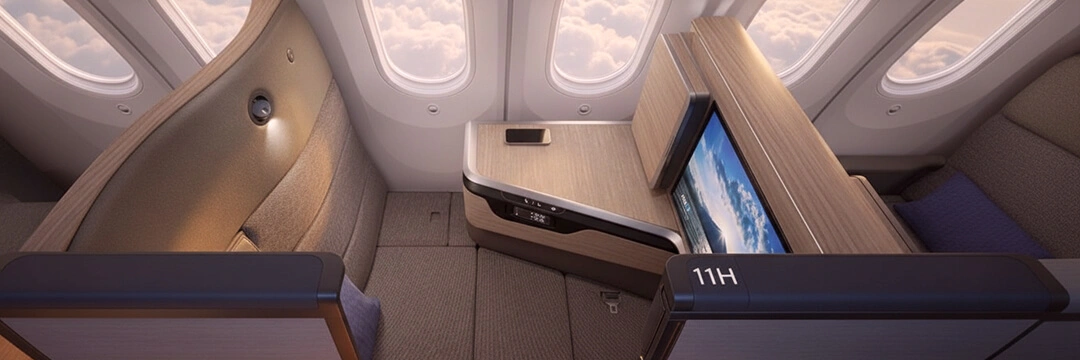
For travelers who prioritize sleeping space, ANA’s The Room offers the most generous proportions, particularly in shoulder width.
For those who value enclosure and separation from aisle traffic, Qatar Airways’ Qsuite will be the most fitting environment.
However, there is no universal winner when it comes to seats. Whether a seat is best for you depends on your priorities and how you like to spend your time in the air.