

Chapters:

Need help with your trip?
Our support team is available 24/7. Request a callback or call us directly at (833) 619-0908
Xi’an trips often start with the Terracotta Army, a dinner near the Bell Tower, and a quick scan of the city wall, yet many visitors still miss how much time the old center and outer sights demand.
That pace can work, but distances to the mausoleum, museum clusters, and palace park add transit time, and popular districts grow crowded as night falls. Simple point-to-point plans can leave little room for slower sites or unhurried meals.
This guide keeps the logistics visible from the start, so you can pair each landmark with the right neighborhood, transit mode, and meal stop without packing the days too tightly.
Useful things to know

Main language(s): Mandarin Chinese
你好 (nǐ hǎo) – Hello
请 (qǐng) – Please
谢谢 (xiè xie) – Thank you
你会说英语吗? (nǐ huì shuō yīng yǔ ma?) – Do you speak English?
多少钱? (duō shao qián?) – How much does it cost?

Currency: The local currency is the Chinese yuan (CNY, ¥).

Cash and cards: Cards and contactless are widely accepted, but carry about ¥200 to ¥300 ($28 to $42) for taxis and small shops.

Tipping: Tipping is not expected; round up only for very small taxi fares or keep loose change for exceptional help.

Traditional food: Biang biang noodles, roujiamo, yangrou paomo, liangpi

Water and coffee costs: Water about ¥3 to ¥5 ($0.40 to $0.70), bar espresso about ¥25 to ¥35 ($3.50 to $5).

Taxis and ride apps: Didi works here; use licensed taxis for airport trips if your app ride is not readily available.

Plug and voltage: Type A/C socket, 220V

Dining and shop opening hours: Breakfast runs about 7:00-9:00 am, lunch 11:30 am-1:30 pm, and dinner 6:00-8:30 pm. Many restaurants stay open later near busy night markets.

Emergency number: Call 110 for police, 120 for ambulance, 119 for fire.
Where to stay in Xi’an
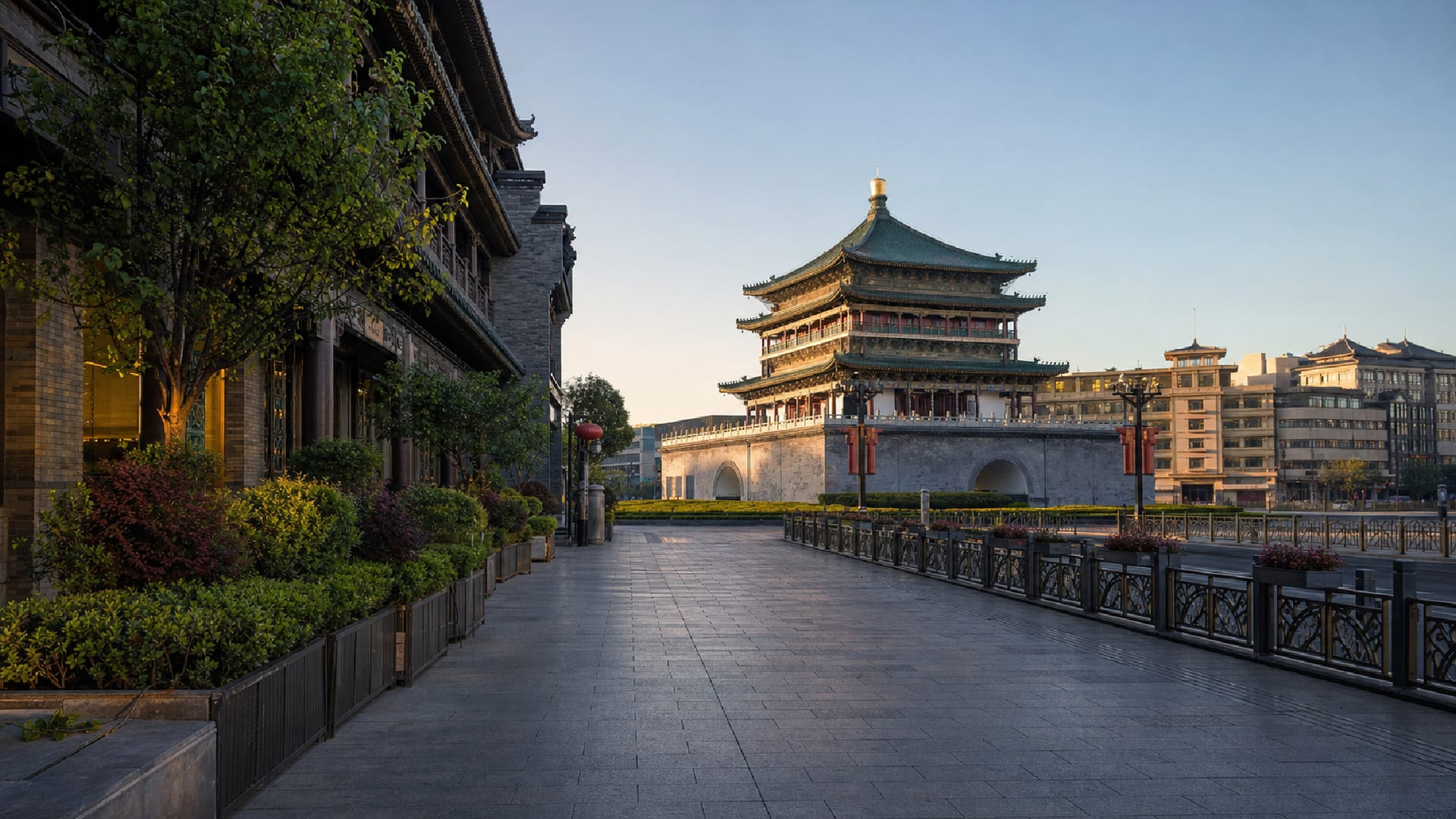
The Bell Tower District sits at Xi’an’s historic center, anchored by the Bell Tower and linked directly to the Muslim Quarter, main shopping streets, and several metro lines. It gives you the tightest mix of old-city landmarks, easy transit, and dining after dark.
Best for: First-time visits, short stays, and travelers who want walkable access to major sights
What to expect: Busy sidewalks, constant taxi and e-bike traffic, and a steady stream of visitors from morning through late evening.
Hotel prices: Usually about $60 to $180 per night for well-rated stays
Distance to major sights: 5 to 10 minutes on foot to the Bell Tower, about 10 to 15 minutes on foot to the Muslim Quarter
Quietness: Quietest early in the morning; evenings get lively and noisy near food streets and traffic arteries.
Main trade-off: Central rooms cost more, and the busiest blocks can feel crowded well past dinner.
Good to know: If you plan early starts, pick a hotel a block or two off the main roads so you are close to the sights without facing the noisiest traffic.
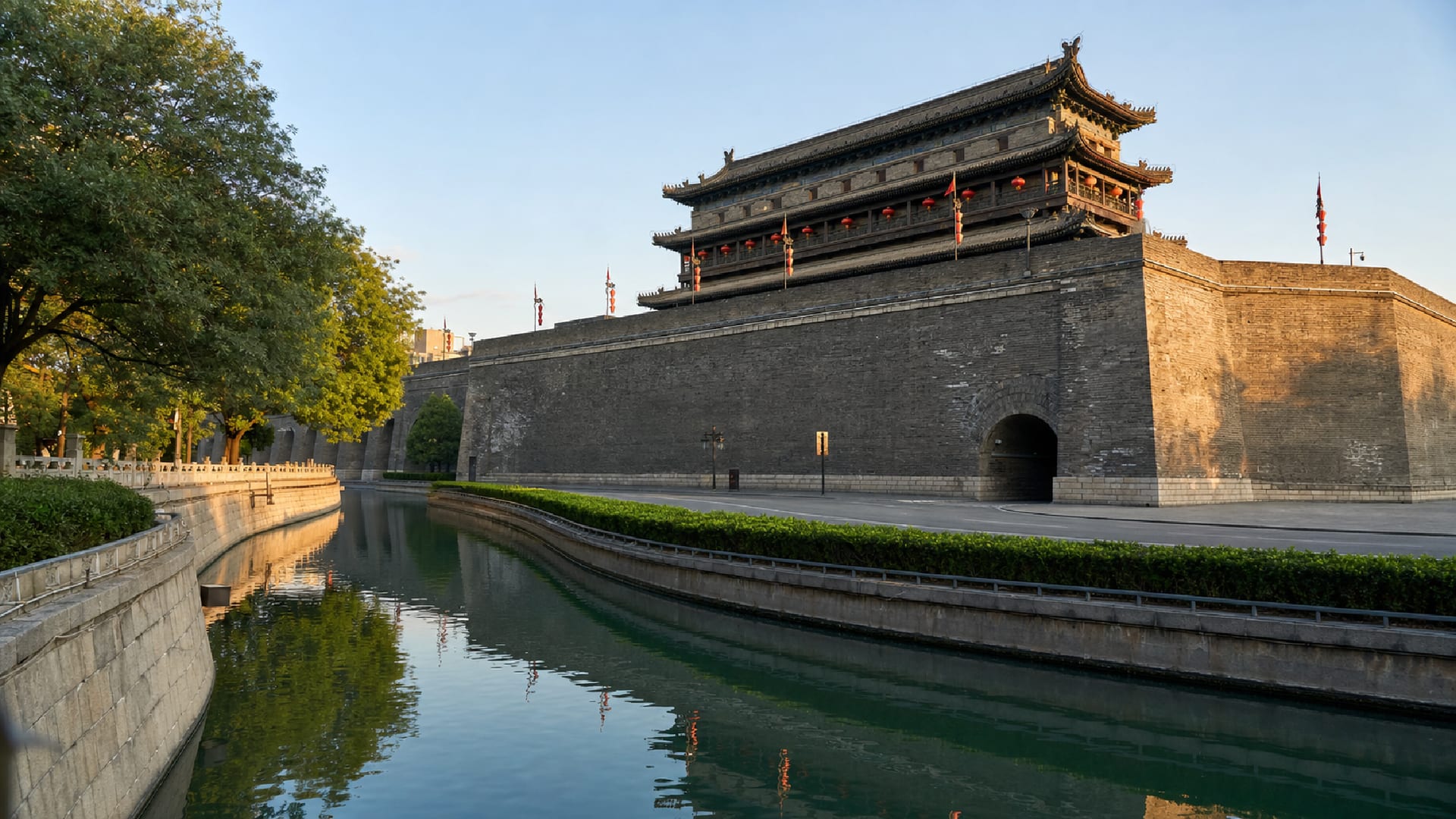
South Gate sits just outside the southern side of the old city wall, close to the moat, the gate towers, and a cluster of midrange hotels. It works well if you want easy access to the wall and a slightly less hectic base than the core around the Bell Tower.
Best for: Walking the city wall, central sightseeing, and travelers who want a slightly calmer old-city base
What to expect: Hotels, local restaurants, and steady but not overwhelming foot traffic, with more space than the busiest downtown blocks.
Hotel prices: Usually about $50 to $140 per night for well-rated stays
Distance to major sights: 5 to 15 minutes on foot to South Gate, about 10 to 20 minutes by transit to the Bell Tower
Quietness: Daytime stays active along the wall and streets, while evenings turn noticeably calmer once tour groups leave.
Main trade-off: You will usually rely on transit or a longer walk for late-night dining and the densest shopping streets.
Good to know: Choose a place near a metro stop if you want to avoid taxi delays when you head back after dinner.
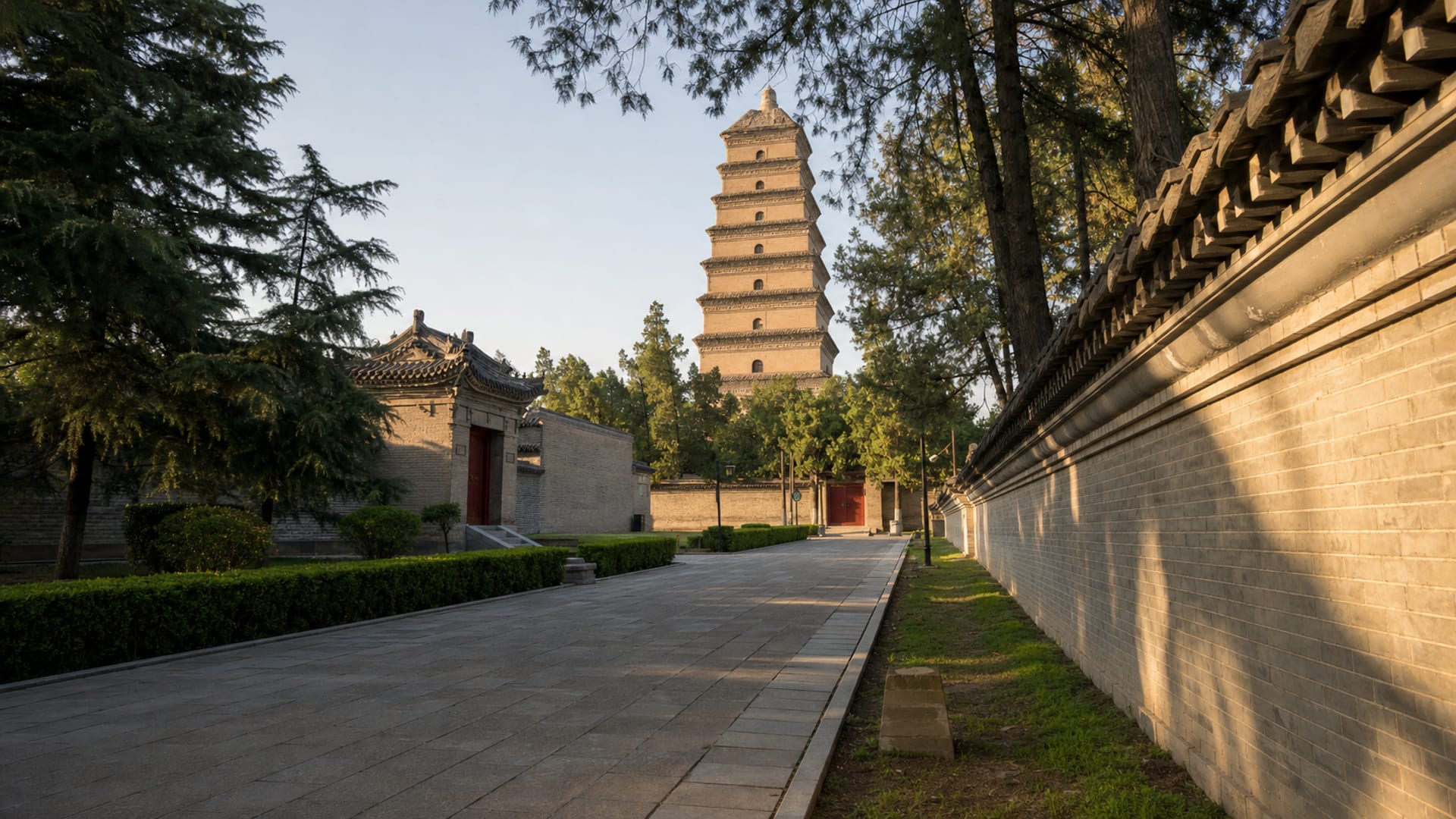
The Little Wild Goose Pagoda area sits in southern downtown Xi’an, near museum sites, local parks, and several large hotels. It suits travelers who want a more residential-feeling base with good access to the Shaanxi History Museum and the city wall by transit.
Best for: Museum visits, slower-paced evenings, and travelers who prefer a less packed downtown base
What to expect: Broader streets, hotel towers, and a mix of local diners and office traffic, with fewer late-night crowds than the old center.
Hotel prices: Usually about $55 to $160 per night for well-rated stays
Distance to major sights: 10 to 15 minutes by transit to the Shaanxi History Museum, about 15 to 20 minutes by transit to the Bell Tower
Quietness: Quieter at night than the old center, though main roads still carry traffic into the evening.
Main trade-off: You trade a more walkable historic core for a setting that is a bit farther from the most famous night market streets.
Good to know: Museum days work best here if you leave extra time for taxis or the metro during peak commuting hours.
Travelers usually avoid staying in Baqiao District, because it sits well east of the main sights and needs longer metro or taxi rides for evenings out. Huyi District, Chang’an District, Yanliang District, and Zhouzhi County are also less convenient, since they are far from the city center, have fewer visitor amenities, and make late-night travel back to central Xi’an more cumbersome.
Hotel deals
How to get around Xi’an efficiently
Xi’an’s airport has no direct metro stop, so the usual pattern is to pair the airport bus, taxi, or Didi with metro rides once you are downtown.

Train and metro
for longer distances
Xi’an Xianyang International Airport (SIA) has no direct metro station, so the closest rail option is the Airport Intercity Railway from the airport to the city rail network; plan about 25 to 35 minutes to central Xi’an, and fare policies vary by ticket type and distance, usually about $2 to $6 (¥15 to ¥45).

Bus
for convenience
Airport shuttle buses link Xi’an Xianyang International Airport (SIA) with Xi’an Railway Station, Beidajie, and other major stops, typically in about 45 to 70 minutes depending on traffic; a one-way ride is usually about $3 to $6 (¥20 to ¥40), and tickets are valid for a single trip. City buses cover Xi’an well once you are downtown, with fares usually about $0.30 to $0.60 (¥2 to ¥4), paid in cash or with a transit card.

Taxi
for convenience or late hours
Licensed taxis from Xi’an Xianyang International Airport (SIA) use the meter, with a common airport trip to central Xi’an costing about $18 to $30 (¥130 to ¥220) and taking roughly 45 to 70 minutes in normal traffic; late-night or long-distance trips cost more. You can queue at the official taxi rank, and most drivers accept cash and mobile payment, though it helps to have your destination written in Chinese.
*Prices are based on rates updated as of June 2026 and may change at the time of travel.
Use the airport bus for the lowest fare, a taxi or Didi for late arrivals or luggage, and the metro when you want to move across the old city without sitting in traffic.
Iconic landmarks
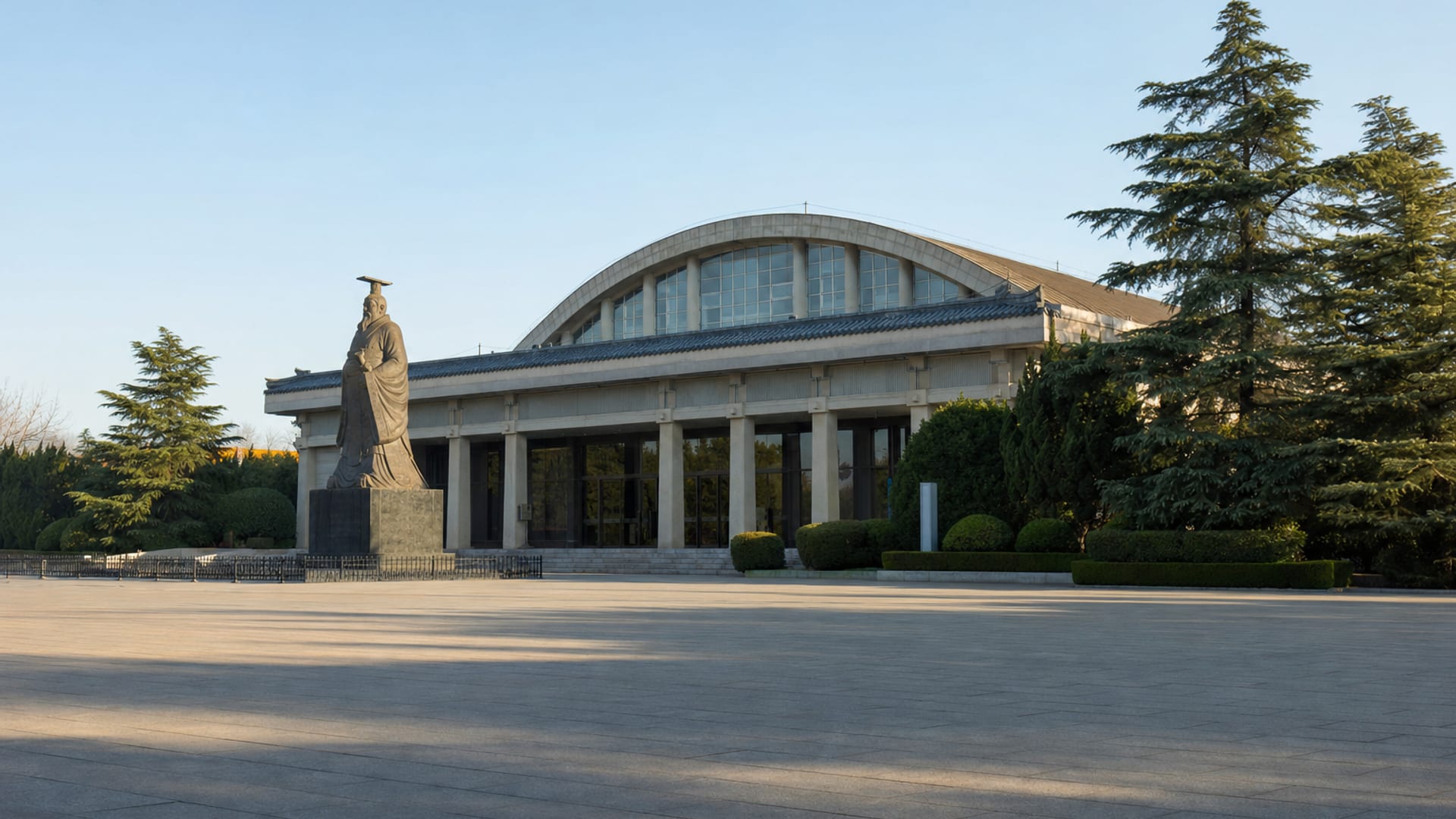
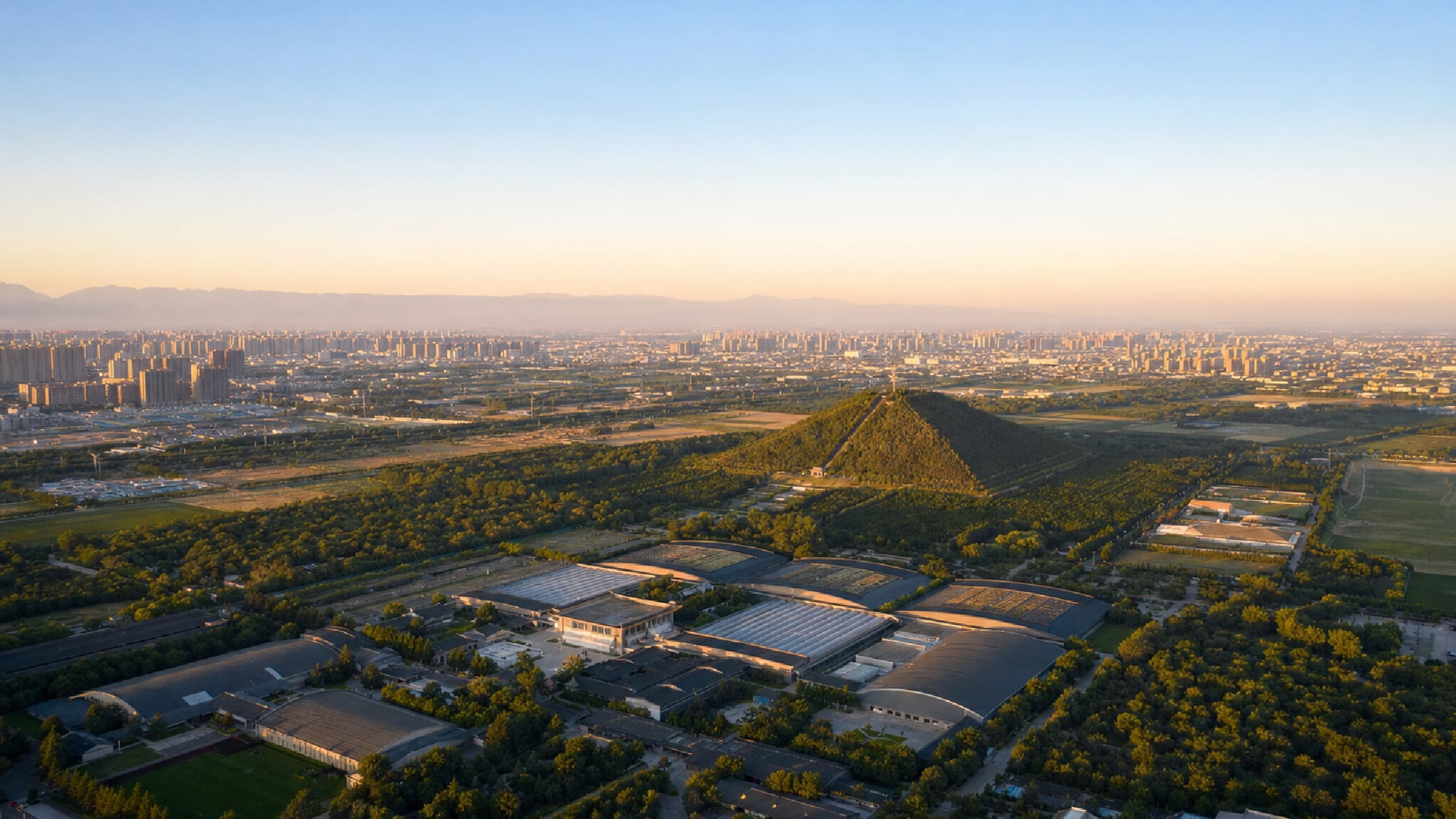
Mausoleum of the First Qin Emperor and the Terracotta Army
About 30 km east of Xi’an, this museum site pairs the First Qin Emperor’s burial complex with the Terracotta Army pits. The main excavation halls, the Bronze Chariot display, and on-site interpretation make it the city’s most essential historical stop.
Time needed: About 3 to 4 hours
Entry: Standard admission is about $23 (¥150), with reduced rates for some visitors and separate shuttle or audio guide fees on site. Visit the official site for details.
Tip: Arrive near opening time, then start at Pit 1 before the tour buses build up at midday.
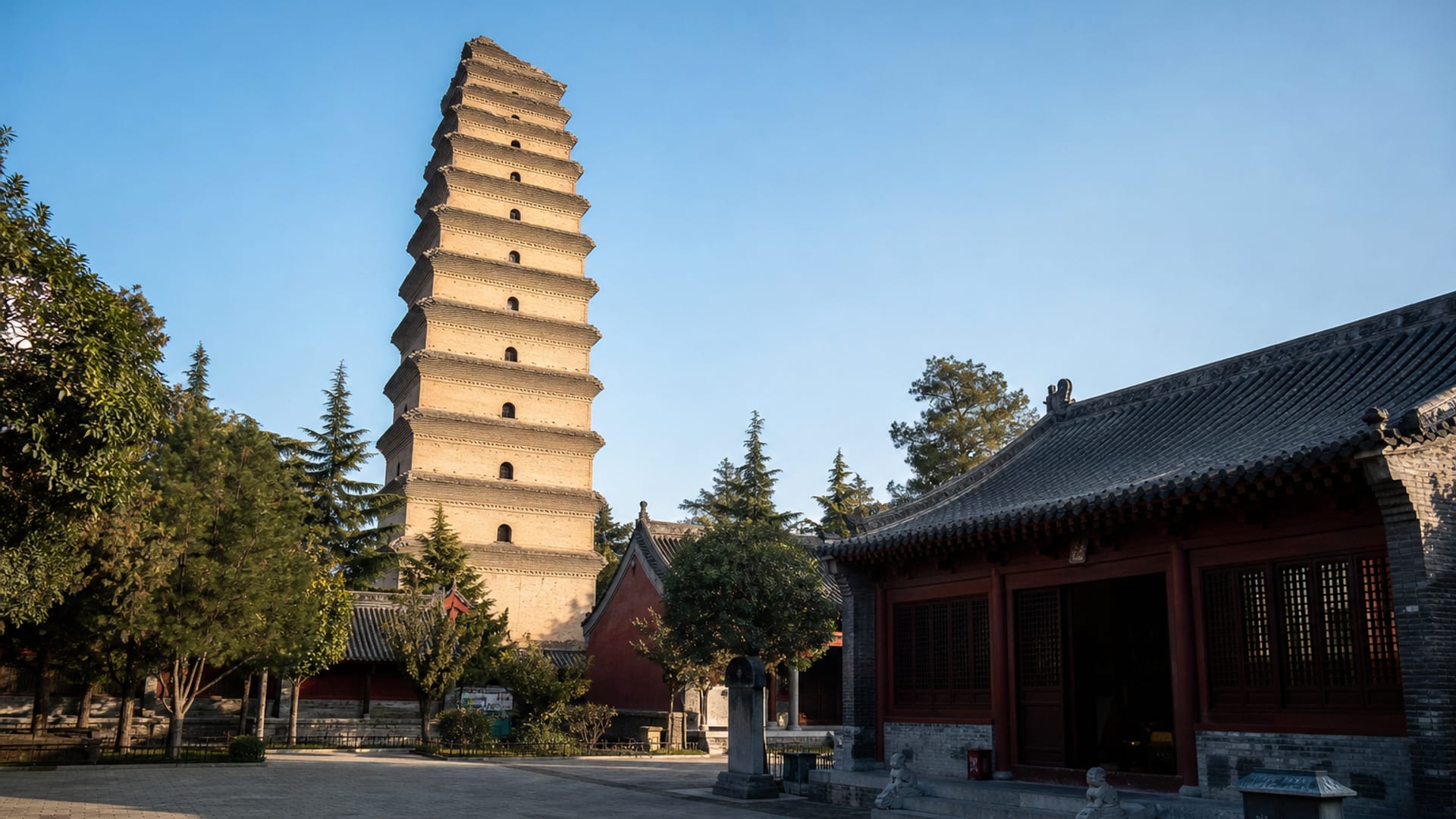
Small Wild Goose Pagoda and Jianfu Temple
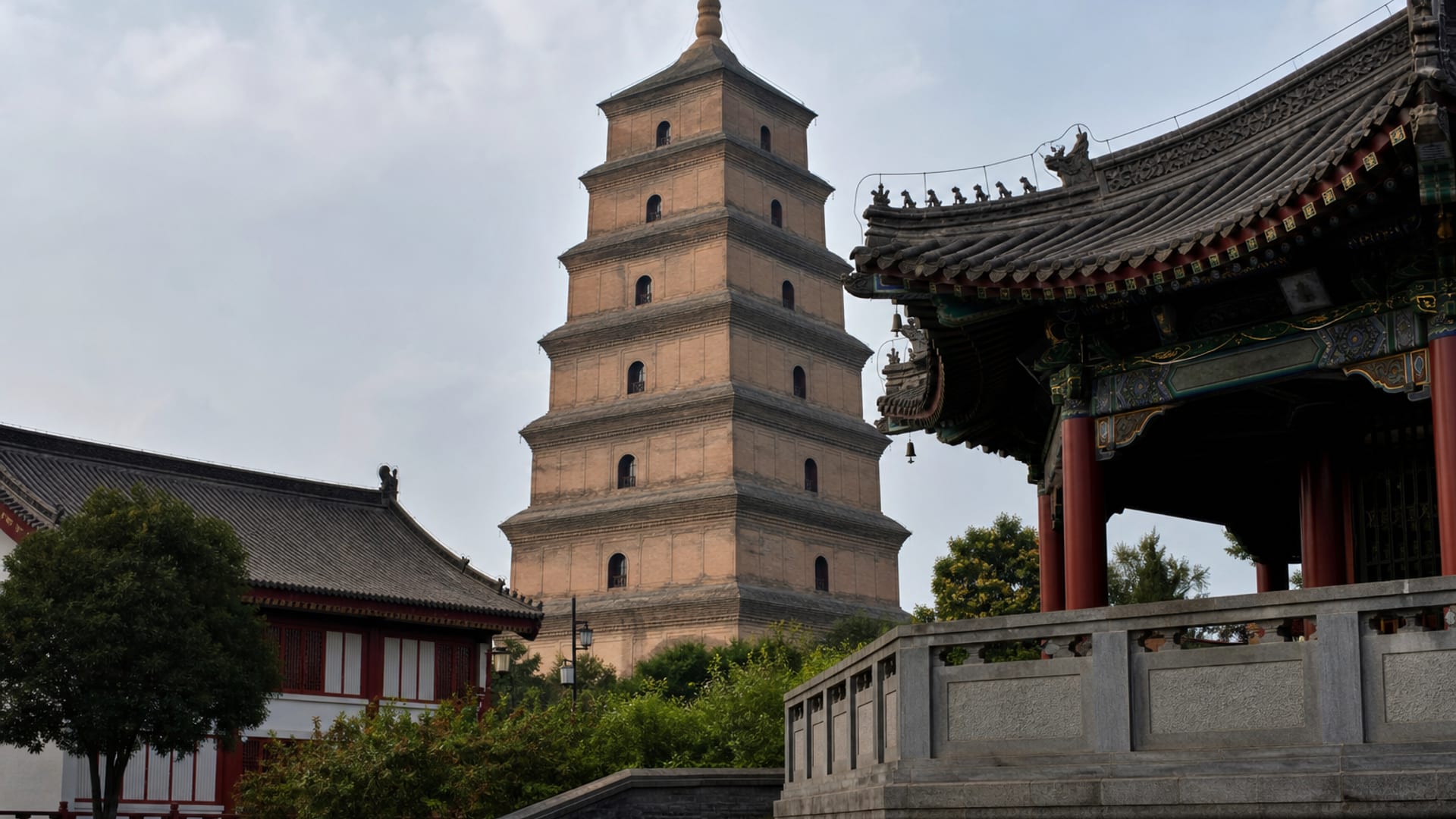
Inside central Xi’an, the Small Wild Goose Pagoda rises from the former Jianfu Temple grounds, a Tang-era Buddhist complex tied to scripture translation. The pagoda, museum halls, and courtyard paths give a compact look at the city’s Buddhist heritage.
Time needed: About 1 to 2 hours
Entry: Admission is free, with paid access only for temporary exhibitions or optional audio guides when offered at the gate.
Tip: Go in the morning for softer light and fewer groups, then climb the pagoda before the courtyard gets busy.
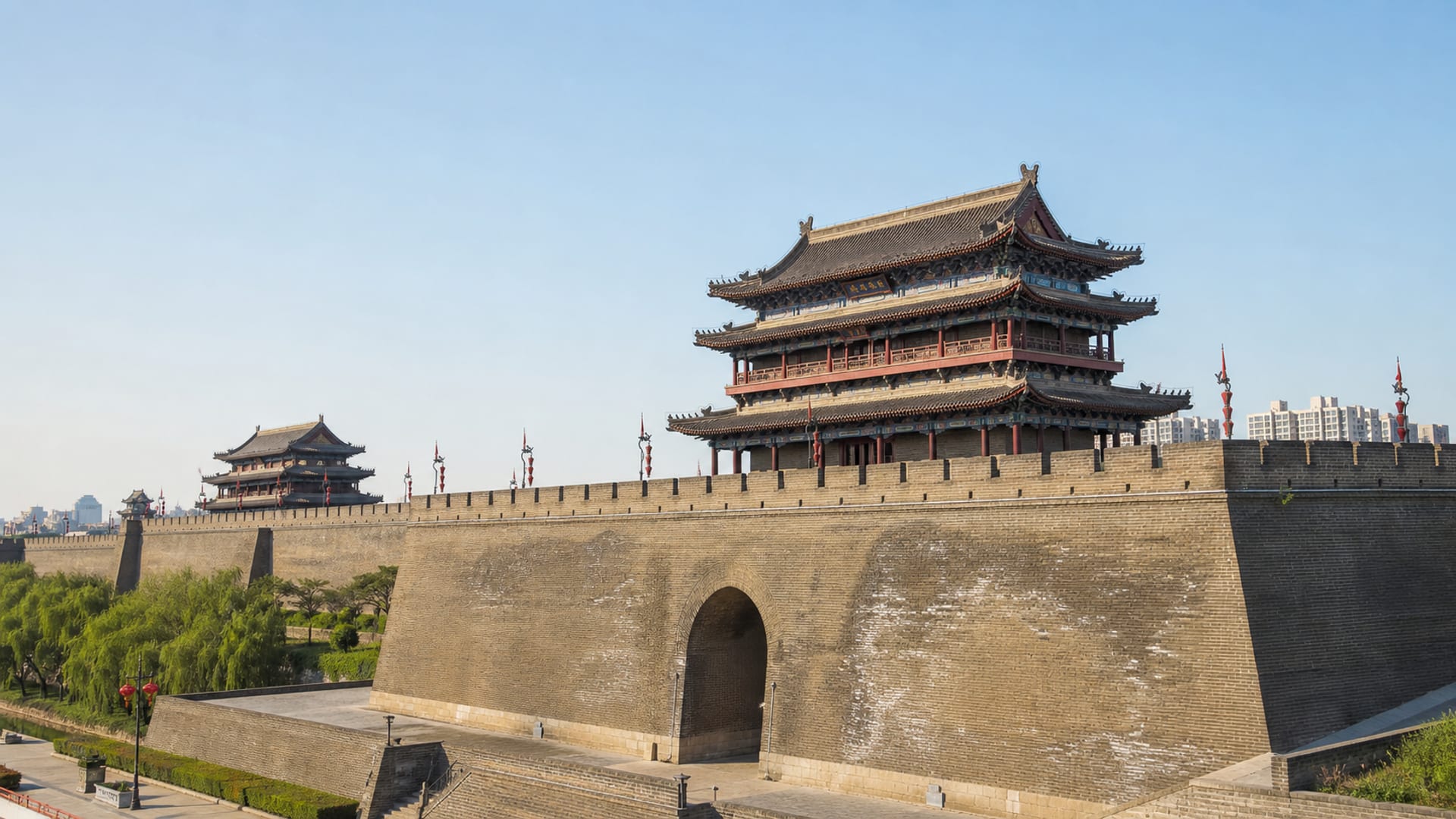
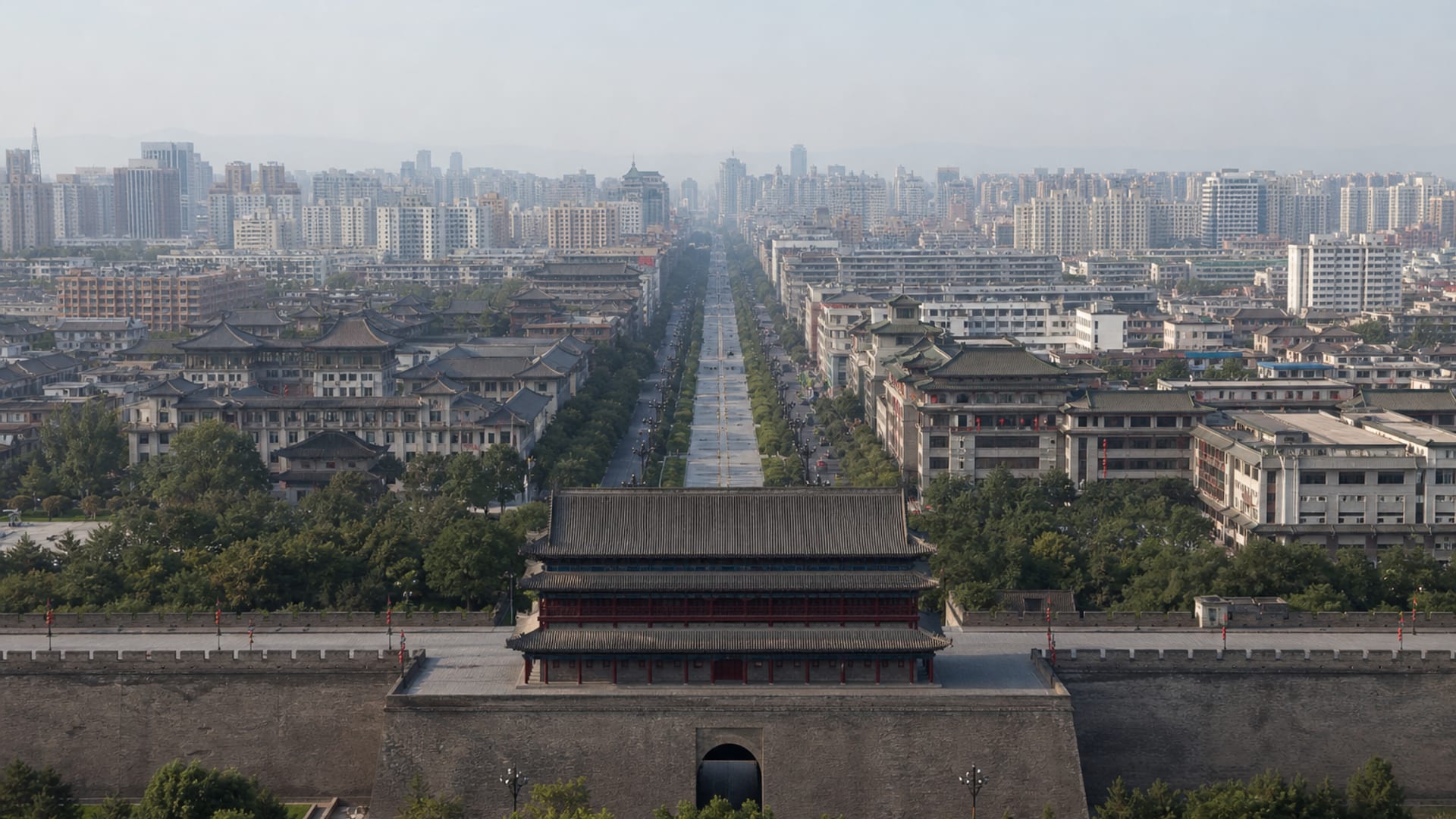
Xi'an City Wall
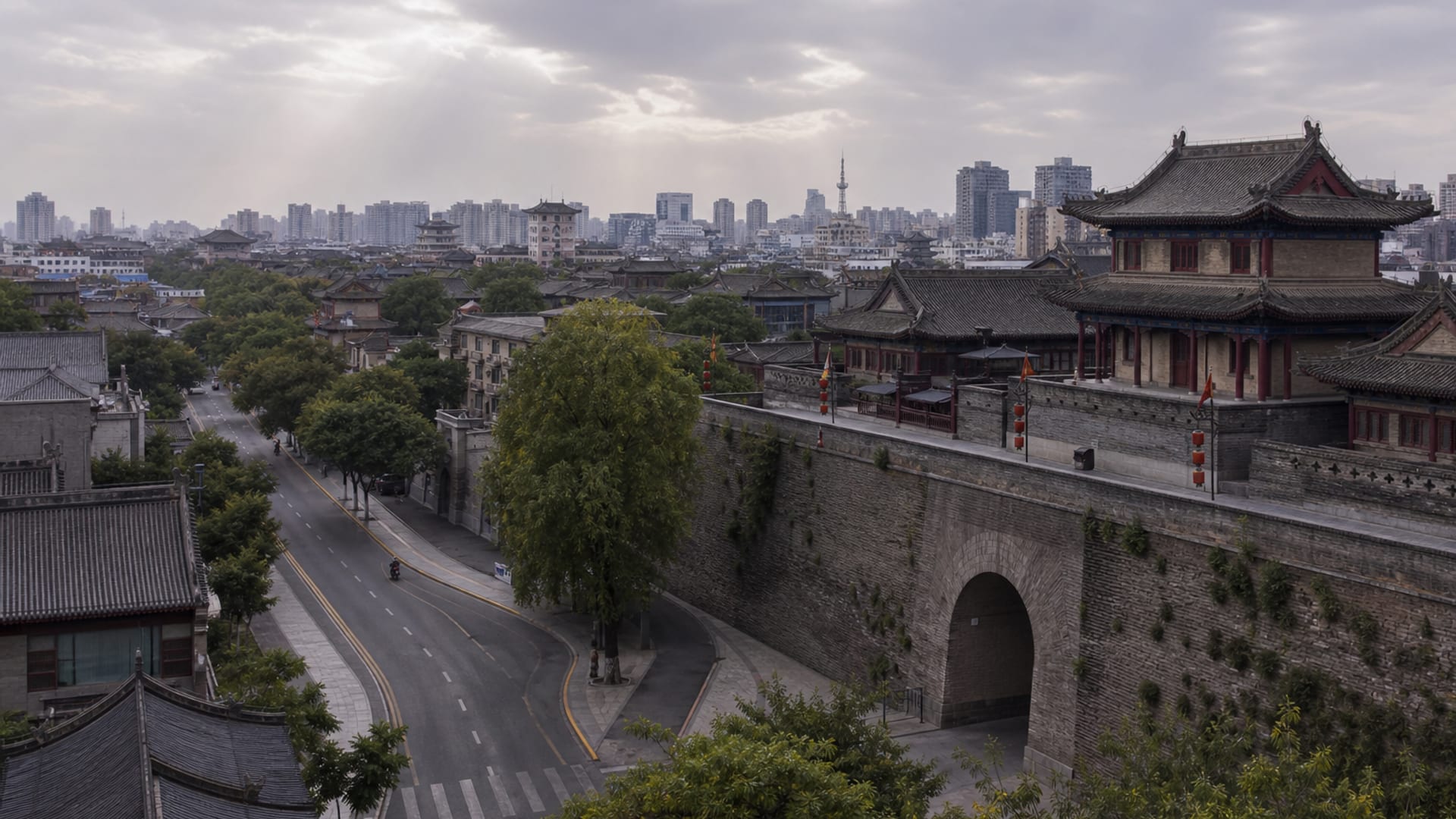
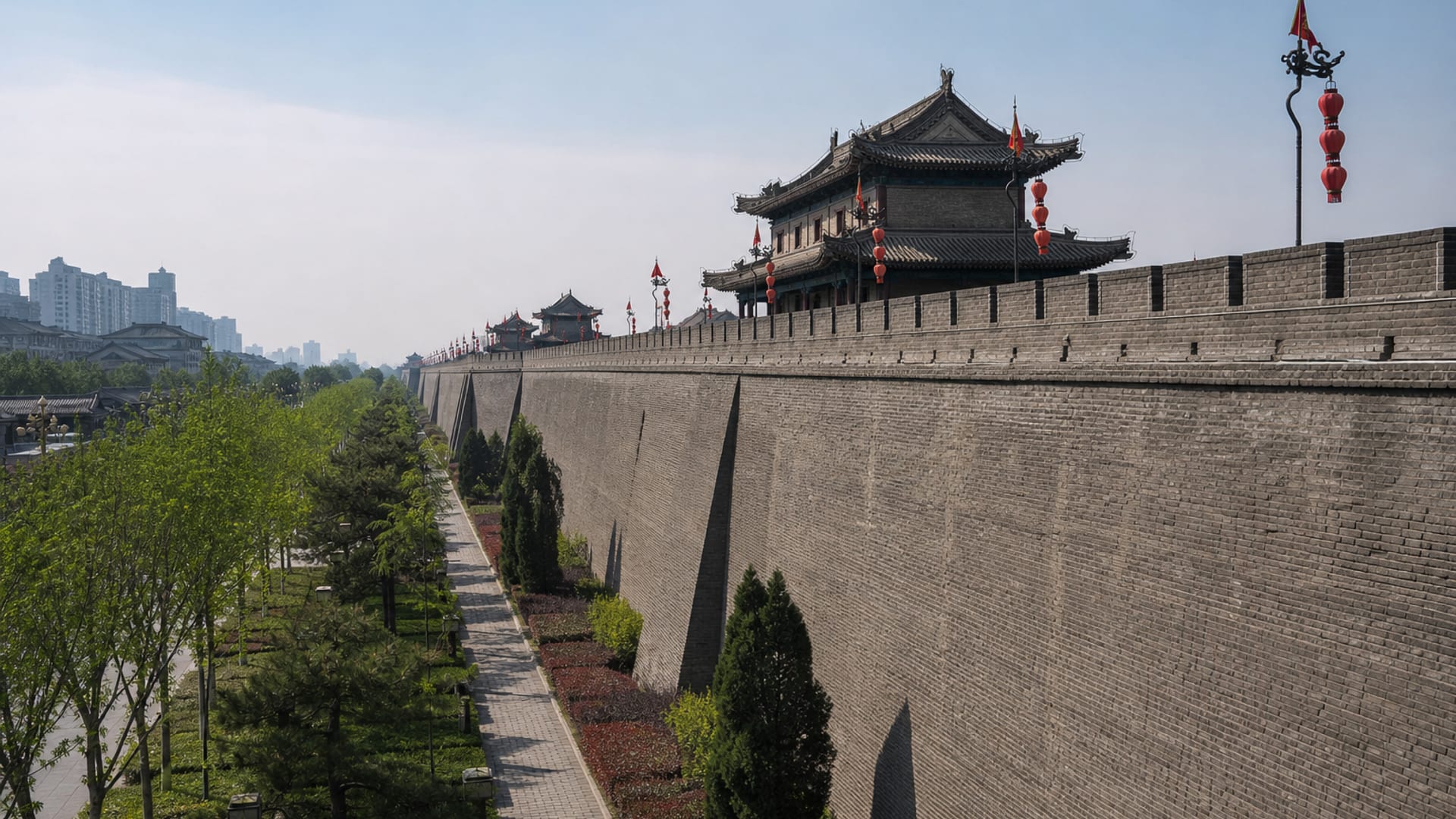
Encircling the old city center, the Xi’an City Wall is the largest and best preserved city wall in China. Walk or cycle along the ramparts for gate towers, moat views, and clear sightlines over the historic grid below.
Time needed: About 2 to 3 hours
Entry: Tickets cost about $10 to $15 (¥70 to ¥100), with bicycle rental and evening light-cycle options sold separately on the wall. Visit the official site for details.
Tip: Visit late afternoon for shade on the ramparts, then stay for the wall lights after sunset.
Overlooked sites worth visiting

Daming Palace National Heritage Park
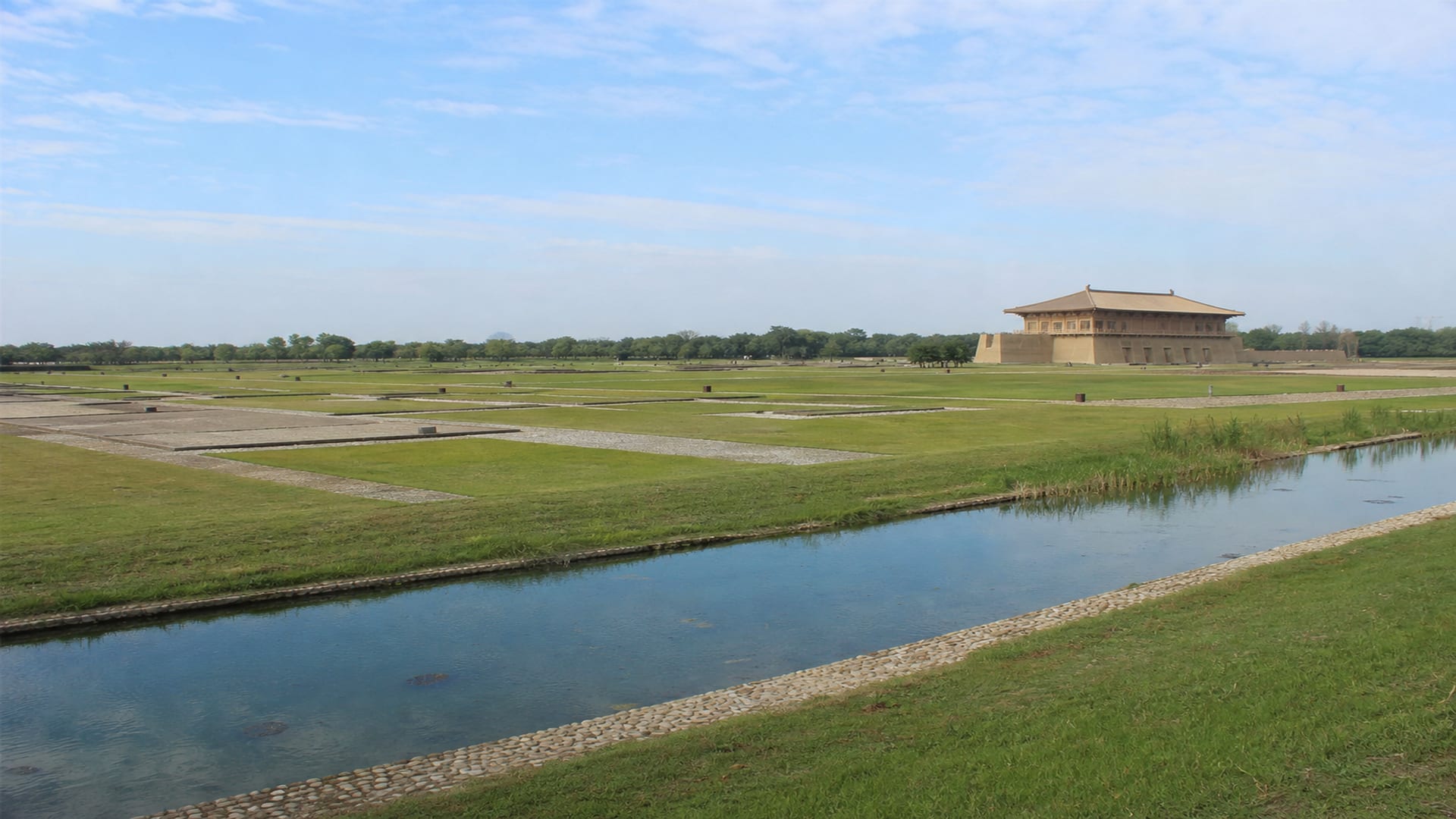
A vast former imperial complex with open lawns, lakes, and marked palace foundations. Rent a bike or walk the broad paths to trace the Tang capital’s ceremonial axis.
Time needed: About 2 to 3 hours
Entry: Park entry is typically free to enter the grounds, with separate charges for some on-site exhibition halls, guided tram rides, and seasonal light shows; expect about $0 to $9 (¥0 to ¥65), depending on what you use.
Tip: Go late afternoon for softer light on the lake and ruins.

Xi'an Stele Forest Museum
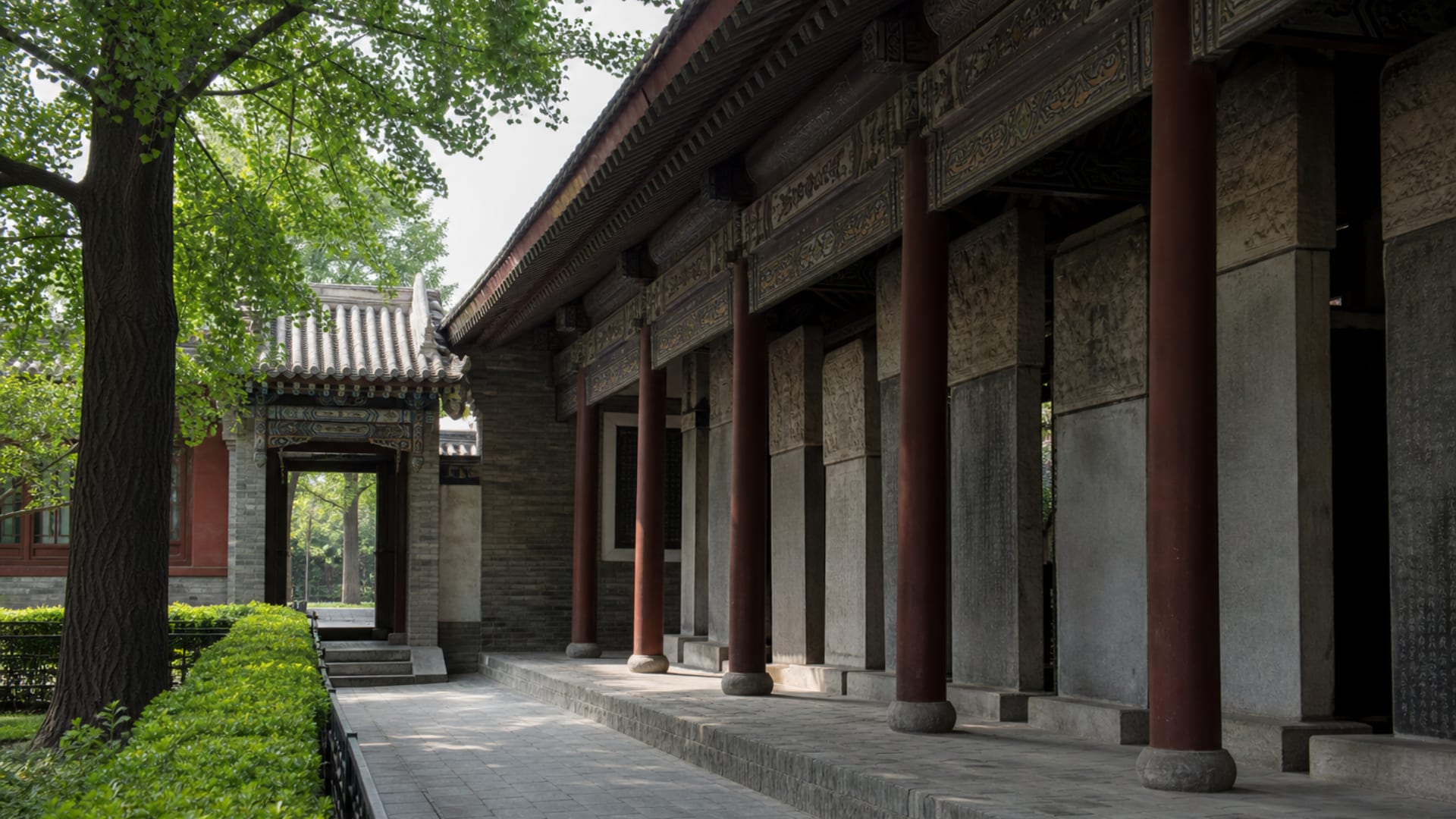
This compact museum houses one of China’s best collections of carved stone steles, calligraphy, and rubbings. The courtyards are quiet, and the displays reward slow viewing.
Time needed: About 1 to 2 hours
Entry: Standard admission is about $4 to $7 (¥30 to ¥50), with occasional separate charges for special exhibitions, audio guides, or rubbings; prices can change on holidays and for temporary displays. Visit the official site for details.
Tip: Visit early on a weekday to avoid school groups.
Traditional food
Xi’an’s table leans on wheat dishes, bold seasonings, lamb, and vinegar, with biang biang noodles, roujiamo, yangrou paomo, and liangpi giving the city its best-known flavors. Meals often arrive fast, hot, and built for casual counters rather than long tasting menus.
Biang biang noodles
Wide hand-pulled noodles with chili oil, vinegar, garlic, and vegetables, often finished with minced meat. Qin Yu Rou Jia Mo on Muslim Street is a well-known stop for a direct, satisfying bowl.
Roujiamo
Chopped meat tucked into a crisp flatbread, usually filled with pork or lamb and seasoned heavily. Tong Sheng Xiang is one of the city’s classic names for a neatly made version.
Yangrou paomo
Lamb soup with torn flatbread, served after you break the bread into the broth yourself. Lao Sun Jia gives the dish a traditional setting and a long local following.
Liangpi
Cold wheat or rice noodles tossed with vinegar, chili oil, cucumber, and garlic, ideal in warm weather. Jia San is widely cited for a clean, well-balanced plate.
Best time to visit Xi’an
Xi’an shifts clearly with the seasons: spring and autumn suit long sightseeing days, while summer brings heat and winter rewards visitors who do not mind colder walks on the wall.
Best for: City wall walks, museum visits, and early garden visits
What you get: Mild days about 46 to 77°F (8 to 25°C), with moderate crowds and some spring dust
Trade-offs: Rain and haze can interrupt views on a few days
Best for: Evening food walks, late museum visits, and palace park outings
What you get: Hot days about 70 to 91°F (21 to 33°C), with the heaviest tourist crowds and busy hotel demand
Trade-offs: Midday heat makes the Terracotta Army and open sites more tiring
Best for: Clear rampart views, relaxed walking, and longer outdoor days
What you get: Comfortable weather about 43 to 79°F (6 to 26°C), with strong visibility and steady visitor numbers
Trade-offs: Popular weeks can fill central hotels quickly
Best for: Quiet museums, lower hotel pressure, and colder city wall walks
What you get: Cold days about 19 to 44°F (-7 to 7°C), with lighter crowds and occasional dry air
Trade-offs: Outdoor visits need warmer layers and shorter breaks between stops
A realistic 5-day plan in Xi’an
A five-day stay in Xi’an works best when you separate the major north, south, and east-side sights instead of forcing them into one rushed loop. The plan below keeps arrival, the Qin imperial sites, museum-heavy days, wall time, and departure errands in a sequence that matches the city’s size.
Land at Xi’an Xianyang International Airport (SIA), then take the airport express bus or a taxi into the Bell Tower District in about 45 to 70 minutes. A bus seat usually costs about $4 to $6, while a taxi typically runs about $18 to $28 before late-night surcharges. Check into a hotel near the Bell Tower or a block south of it, where you can reach dinner on foot without adding much more transit. After you settle in, drink some water, walk a few minutes toward the Muslim Quarter, and keep dinner simple with noodles or dumplings near the main food streets so the evening stays short.
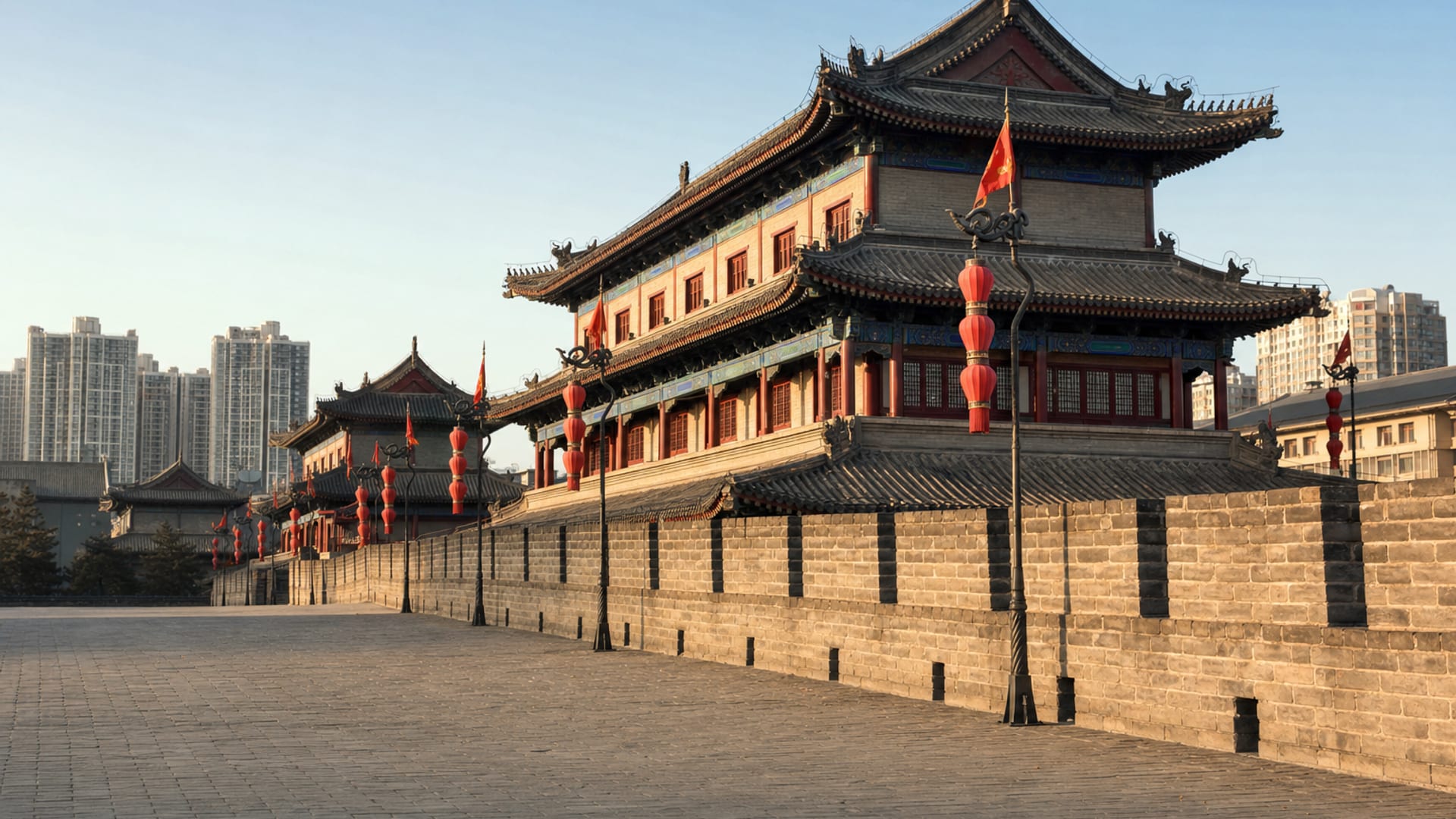
Start early at the Mausoleum of the First Qin Emperor and the Terracotta Army, about 1 to 1.5 hours from central Xi’an by tour coach or taxi depending on traffic. Plan roughly 3 to 4 hours on site, beginning with Pit 1 before the crowds thicken, then continue to the Bronze Chariot display and the other excavation halls. Return to the old city in the afternoon, then head to the Xi’an City Wall, which sits about 10 to 20 minutes from the Bell Tower area by taxi or metro. Finish with a walk or bike ride on the ramparts at sunset, then stay for the lit gate towers after dark.
Begin at the Shaanxi History Museum area by transit, then continue to the Small Wild Goose Pagoda and Jianfu Temple, which takes about 10 to 20 minutes by taxi or a short metro ride from the Little Wild Goose Pagoda area. Spend about 1 to 2 hours moving through the pagoda, temple courtyard, and museum halls, then break for lunch nearby before heading east across the city. In the afternoon, go to Daming Palace National Heritage Park, roughly 20 to 30 minutes away by taxi from central downtown, and wander the broad paths, lawns, and palace foundations for 2 to 3 hours. Stay late enough for the softer evening light over the ruins and water.
A quieter morning at the Xi’an Stele Forest Museum pairs well with a slower downtown pace, and the museum is about 10 to 15 minutes by taxi from the Bell Tower District or a short metro ride from South Gate. Spend 1 to 2 hours with the calligraphy steles and rubbings, then move south toward the old city wall if you want a second look at the ramparts from ground level. After that, return to the Bell Tower area for lunch and a relaxed walk through the side streets and shops near the Muslim Quarter, where you can sample snacks, browse small stores, and pause for tea before dinner. A late walk through South Gate works well if you want one more look at the wall towers without committing to a long evening out.
Before you leave Xi’an, start with one last stop that fits your schedule, either a short museum visit near the center or a final walk through the Xi’an City Wall area if you want one more view of the old grid. Then head to the Bell Tower District for shopping and last-minute gifts, where the main streets and nearby lanes offer souvenirs, tea, packaged snacks, and a final lunch without a long transfer. If your flight is later in the day, settle into a café in the Little Wild Goose Pagoda area or near South Gate, where you can sit down for coffee or tea, repack, and leave for Xi’an Xianyang International Airport (SIA) with enough margin for traffic.
Business-class flights from the US to Xi’an
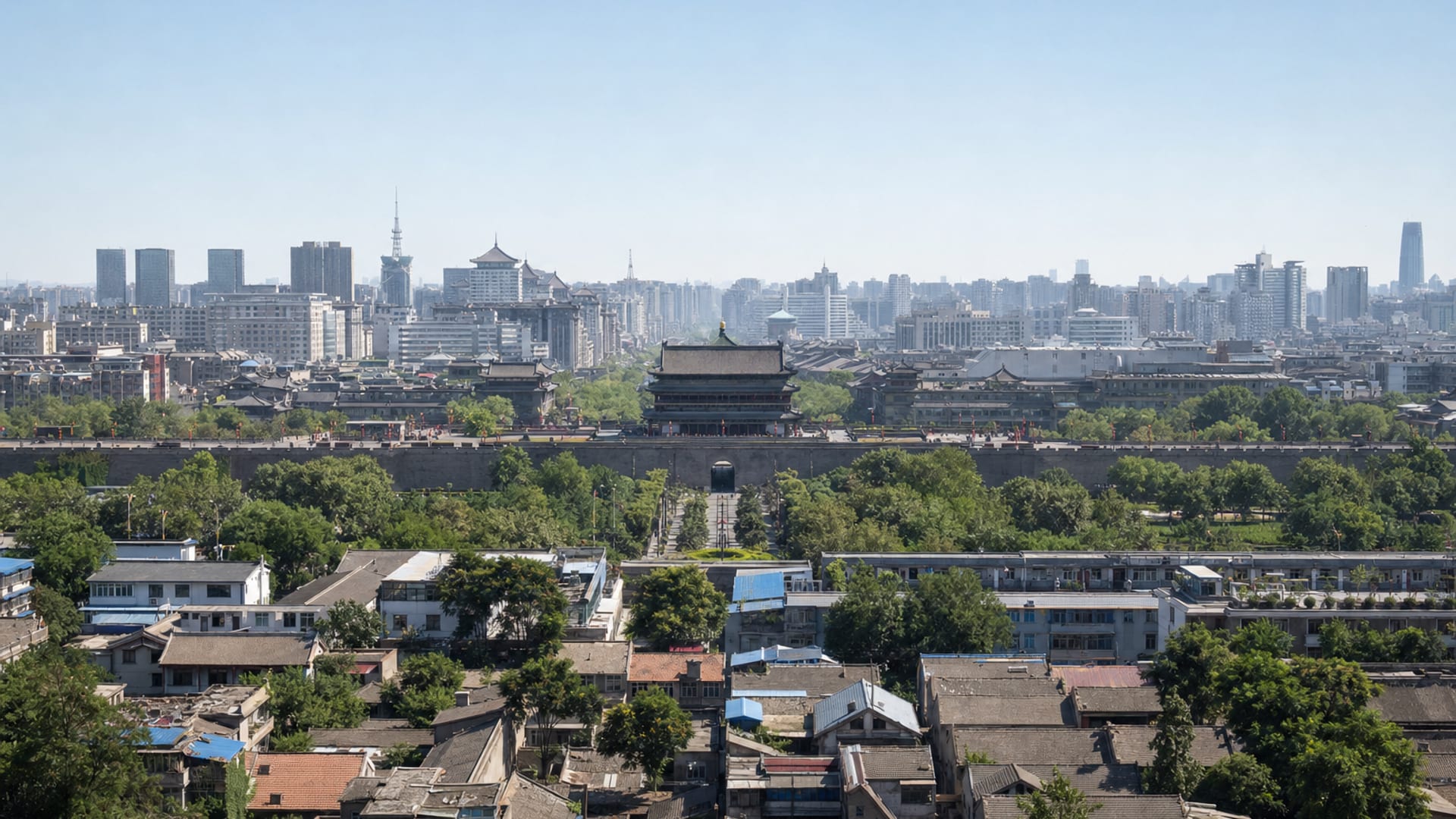
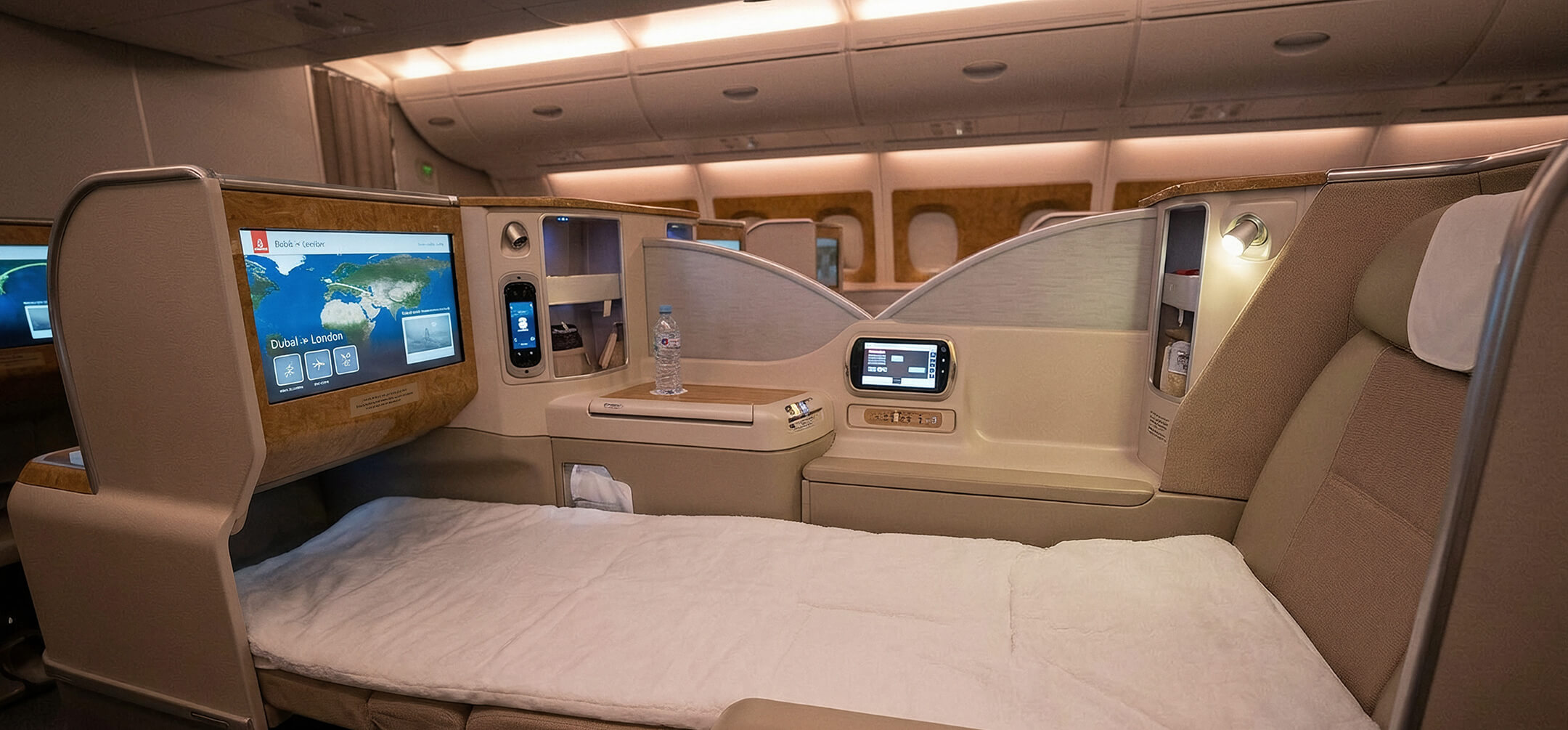
Long-haul flights to Xi’an usually route through one or two major Asian or Gulf hubs, so the best option depends on where you start and how much time you want to spend en route. The examples below show the main patterns from New York and Los Angeles.
From New York, carriers including China Eastern Airlines, Air China, Korean Air, Japan Airlines, Qatar Airways, and Emirates sell itineraries that usually take 17 to 27 hours with layovers in Beijing (PEK) or Doha (DOH). Round-trip fares usually start near $2,800 and can reach $5,800.
Los Angeles fares often start from $2,700, with many round-trip options landing between $2,700 and $5,400. One-stop itineraries via Shanghai (PVG), Seoul (ICN), or Doha (DOH) often price lower than through-ticket options, and the route list also includes China Eastern Airlines, Air China, Korean Air, Japan Airlines, Qatar Airways, and Emirates.
Xi’an feels different when you slow down
A deliberate Xi’an trip gives each district room to do its part, the Bell Tower District for arrival, South Gate for the wall, the Little Wild Goose Pagoda area for museums, and the east side for Daming Palace. With taxis, metro rides, and one or two well-timed meals, the city becomes easier to read. If you want help matching flights, neighborhoods, and day plans, the AranGrant experts can tailor the route around your dates and pace