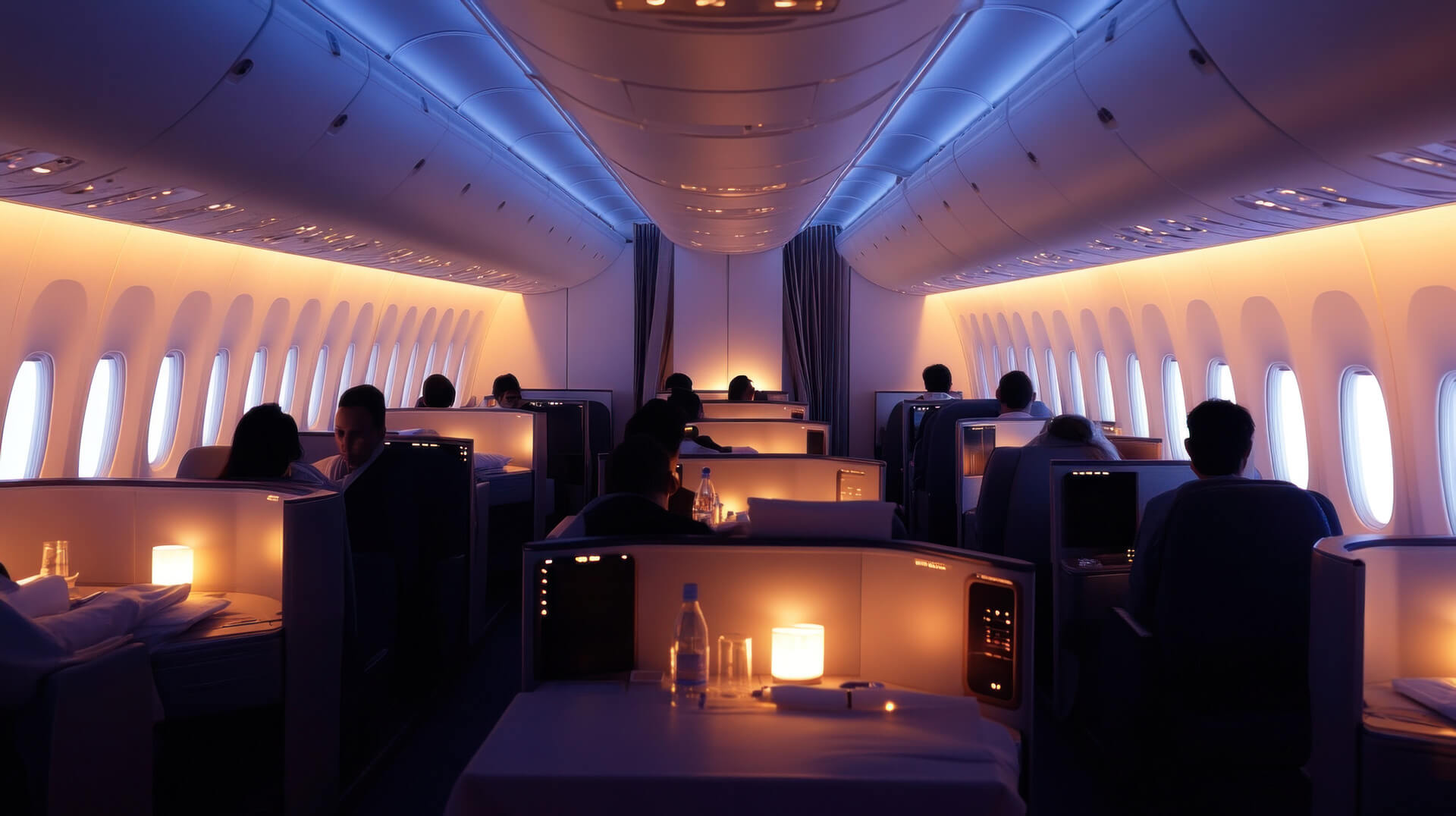



A long-haul flight gives you hours that you rarely experience in everyday life. You settle into your seat, the cabin quiets, and you feel the pace of the day shift. In that moment, the details of the journey begin to matter. The space you have, the level of noise, and the room to settle in all influence how comfortably you spend the hours ahead. On a long route, even seemingly small factors like lighter cabin pressure, better air filtration, and higher humidity help your body stay more at ease throughout the flight.
This is why comfort becomes an important part of planning a long trip. When the route stretches across oceans or through the night, the cabin you choose helps the entire journey feel smoother. It helps the trip feel more manageable from start to finish and allows you to begin your day in a more comfortable state when you land.
In this Blog Post:
Mental Comfort Over Status: In-Flight Rest and Clarity
Many travelers still think of business class as a gesture of status, yet on long-haul flights it becomes a practical decision. The comparison is simple. You weigh the benefit of real rest against the cost of arriving tired, unfocused, and mentally drained.
Economy seats make restful sleep difficult, and that lack of rest affects how you think and function the next day. Being awake for 20 hours or more affects cognitive performance in a way that mirrors driving under fatigue, which is why even a short stretch of poor sleep can influence how steady and clear you feel upon arrival. A 10-hour overnight flight can give you the equivalent of a full sleep cycle, and the ability to maintain that rhythm often determines how quickly you adjust to local time and how mild the effects of jet lag feel once you land.
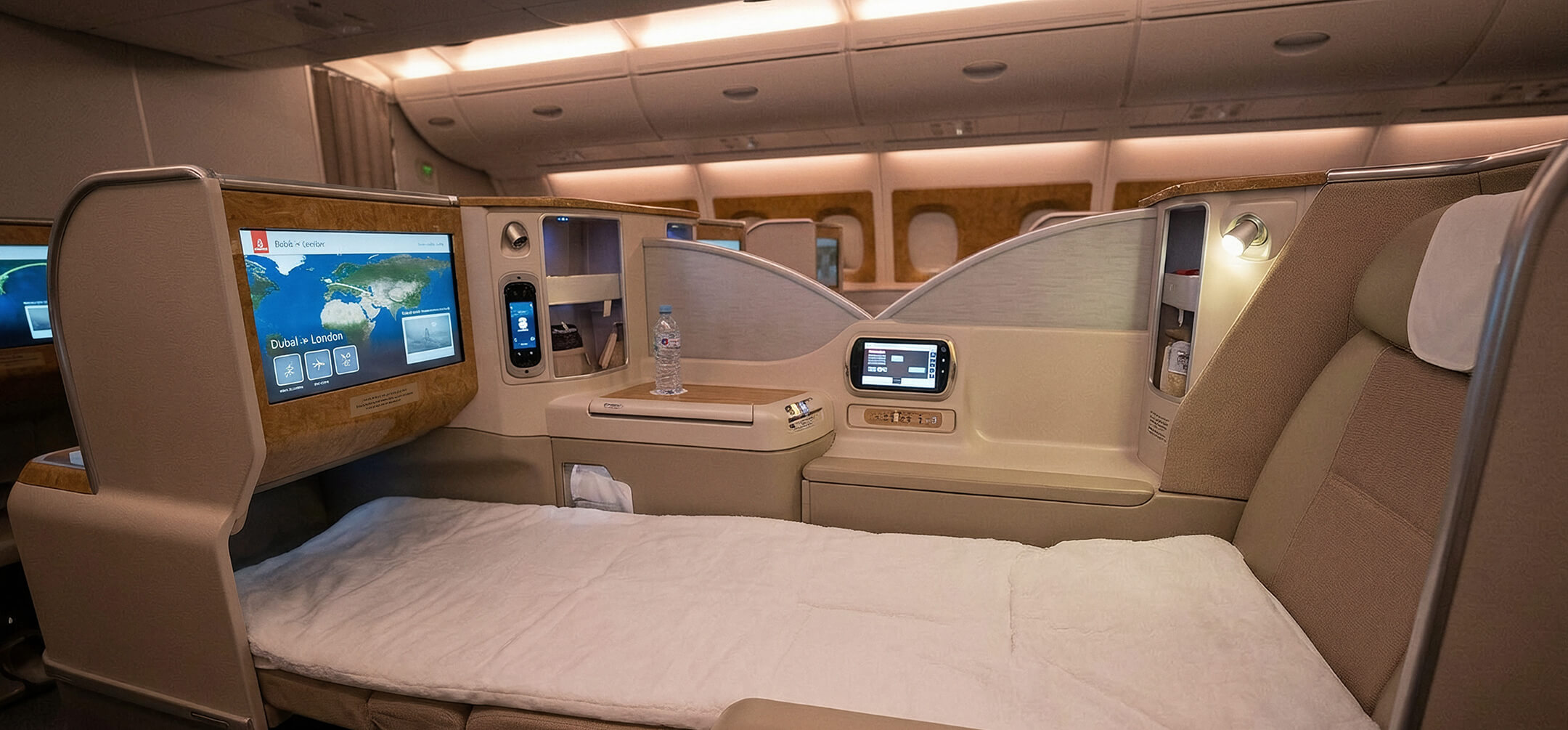
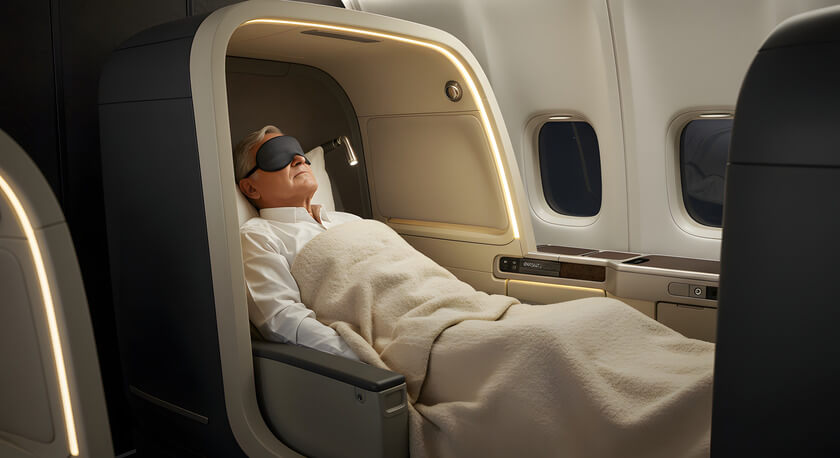
Business class changes the unpleasant outcomes of an economy flight. A flat bed, more privacy, and a quiet cabin help you settle into a deeper and restful sleep. With more space to work comfortably, you can stay productive during the hours you are awake instead of losing time to discomfort and distraction.
You arrive with a clearer mind, better concentration, and the ability to move into your day without needing to catch up on energy or urgent tasks. It’s comfort chosen with purpose, not for show.
Physical Comfort on Long Flights: How Business Class Helps
Long-haul flights place real demands not only on your mind, but on your body as well. Hours of limited movement, narrow seating, and upright sleeping positions can leave you with stiff joints, swollen legs, and a general sense of physical discomfort.
Business class helps you avoid much of this. A lie-flat bed allows your back to rest naturally. Extra space supports healthy blood circulation. The ability to stretch fully and move around the cabin prevents your muscles from tightening during the journey.
You feel the difference right away:
- Your body stays more relaxed during the trip.
- Your back and legs feel less strained.
- You adjust to long itineraries with less physical fatigue.
These benefits matter when you want to enjoy a full day with family, explore a new city, or have an important meeting waiting for you.
Value of Upgrading: A More Practical Perspective

When you look at a long-haul flight through the lens of what you gain rather than what you pay, the idea of value changes. A business-class ticket protects the hours you need for rest and recovery, and those hours shape how much you can do once you arrive.
This is why many travelers choose business class over economy for demanding trips or important visits. They want to begin the day able to manage what comes next, not spend multiple hours regaining their energy.
Seen this way, an upgrade becomes a practical part of planning the trip. It aligns the journey with the days you have ahead and supports the time and purpose of the trip you planned.
When You Need to Consider Upgrading Your Next Trip
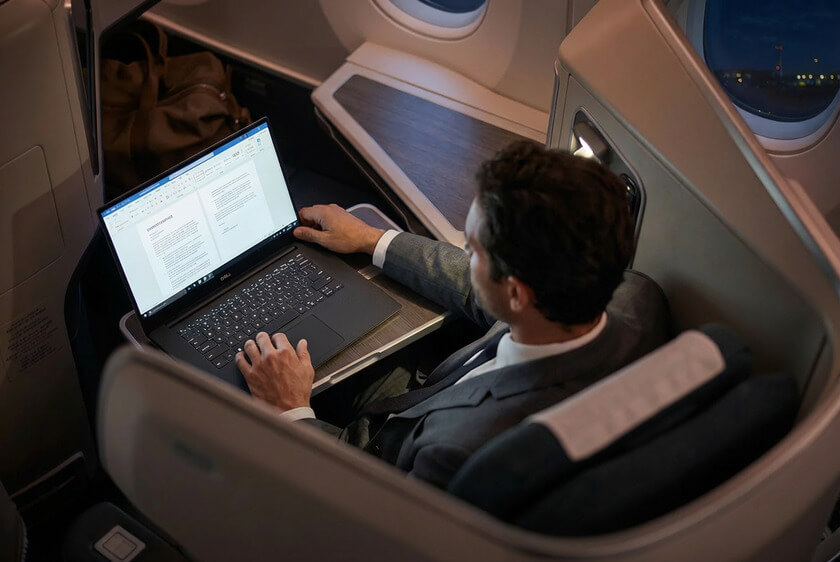
Choosing whether to upgrade to business class often comes down to understanding what you need from the journey. These questions can help you see when business class offers comfort that adds real value to your journey.
- What will you need to do after you land?
If your plans start soon after arrival, whether that means driving somewhere, connecting with family, or staying active through a full day, a more comfortable flight can help you begin those hours with steadier energy. - How long is the flight?
On routes that stretch overnight or span many hours, the difference between a lack of rest and real, proper sleep becomes more noticeable. The longer the flight, the more a comfortable cabin helps protect your energy and your ability to stay aligned with the local time zone. - Does your body need more support during travel?
If you experience back discomfort, stiffness, or swelling on long flights, the added space and natural resting position in business class can make the journey far more comfortable. - Is your schedule tight or flexible?
If your first hours are full, or if you have little room for delays or fatigue, business class helps you begin the day with more stability so you can move through your plans without feeling rushed or overextended.
Choosing Comfort with Confidence
Traveling feels considerably more comfortable when each part of the journey supports your well-being. On long routes, thinking about the value of upgrading can help you shape the trip in a way that feels smoother and more manageable from the moment you take your seat.
Not all business-class cabins are equal, and the differences, such as seat design, privacy level, sleeping angle, and noise control, can significantly influence how rested you feel. This is where having guidance matters. If you are considering flying in business class or if you are still not sure whether an upgrade is worth it for your next trip, AranGrant can help you compare cabins, review the available options, and choose the level of comfort that best matches the way you prefer to travel.