

Chapters:

Need help with your trip?
Our support team is available 24/7. Request a callback or call us directly at (833) 619-0908
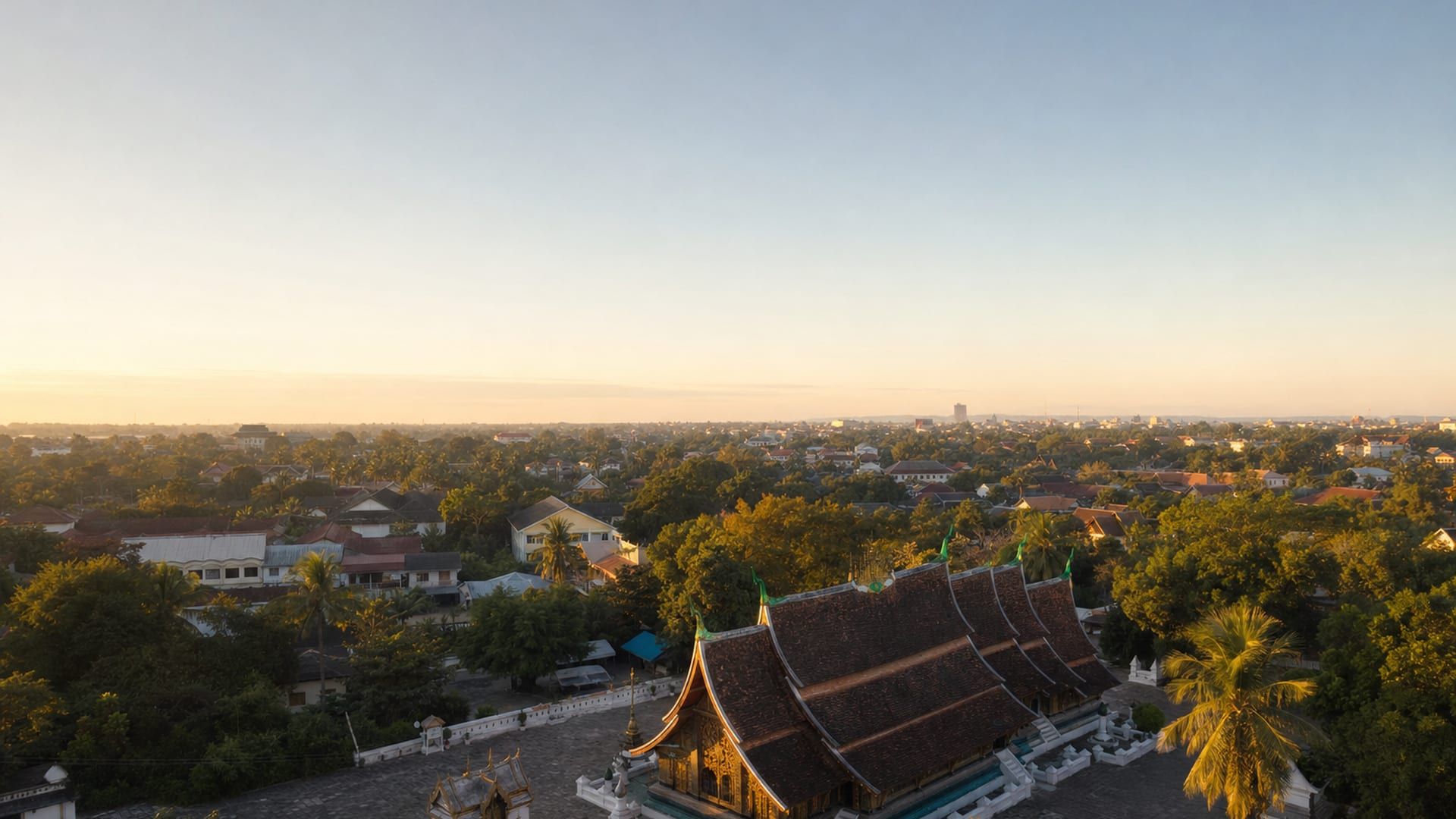
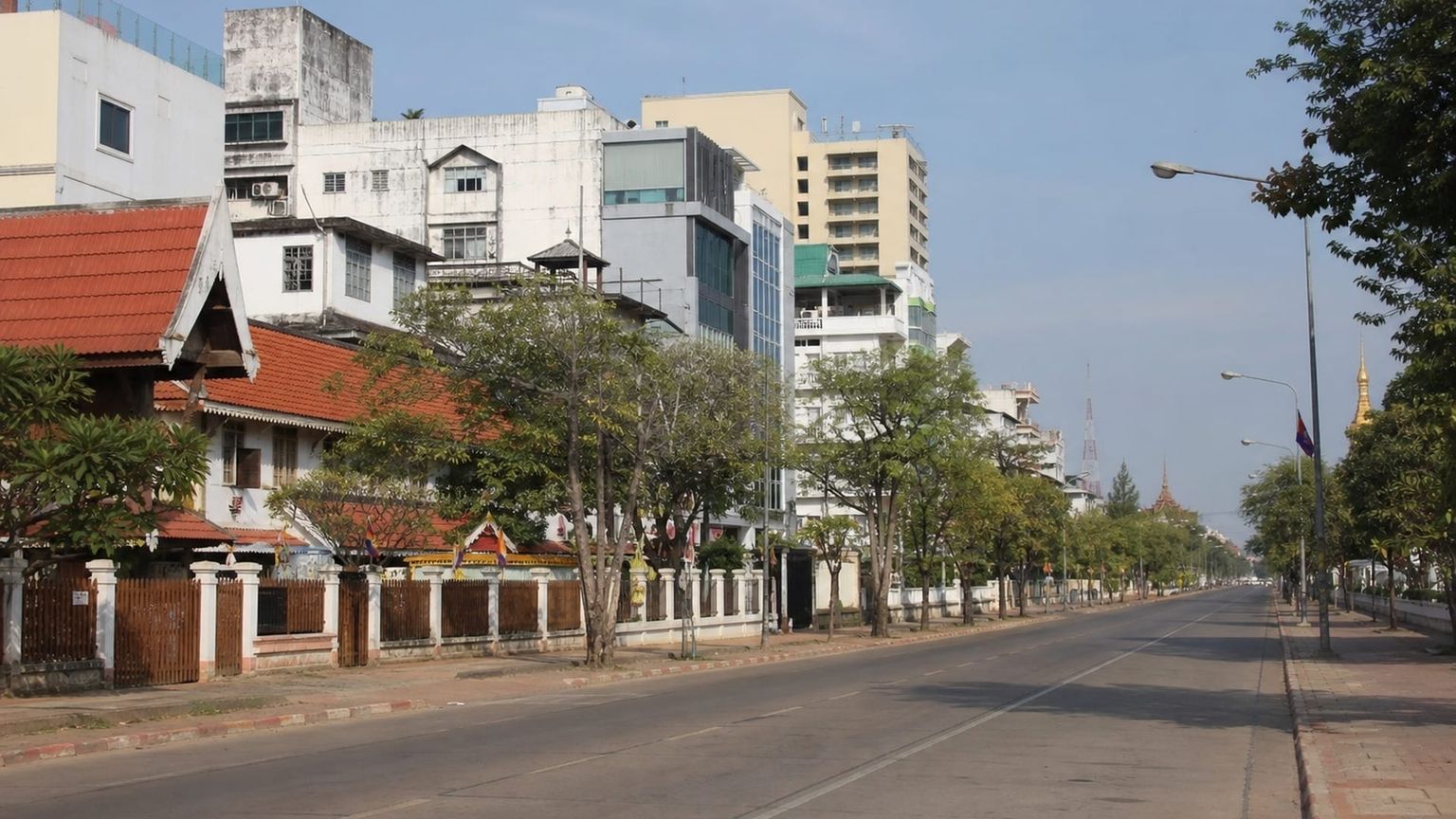
Vientiane rewards travelers who slow down enough to notice its spacing. Many first visits focus on Patuxai, Pha That Luang, and the riverfront, then miss how the city opens up through side streets, temple compounds, and quieter neighborhoods.
That approach can make the center seem thinner than it is. Distances are short, but heat, midday closures, and cross-town taxi hops shape what you can see in a day, while some of the best stops sit away from the busiest promenade.
This guide organizes Vientiane by neighborhood, transit, food, and season, then lays out five days that balance the main sights with quieter stops and an unhurried pace.
Useful things to know

Main language(s): Lao
sabaidee (sa-bai-dee) – hello/good morning
kaluna (ka-loo-na) – please
khop jai (khop jai) – thank you
khony hai phasa angkit bo? (khon-y hai pa-sa ang-kit bo) – Do you speak English?
tao dai? (tao dai) – How much does it cost?

Currency: The local currency is the Lao kip (LAK, ₭).

Cash and cards: Cards and contactless work at bigger hotels and some cafes, but carry about $20 to $40 (₭430,000 to ₭860,000) in cash.

Tipping: Round up small bills; tipping is not expected, but a little extra for good restaurant or tour help is appreciated.

Traditional food: laap, tam mak hoong, khao piak sen, sai oua

Water and coffee costs: Water ~₭10,000 ($0.50), bar espresso ~₭30,000 ($1.50).

Taxis and ride apps: Lao Taxi, InDrive, and sometimes Loca; confirm the fare before you ride.

Plug and voltage: Type A/C/F socket, 230V

Dining and shop opening hours: Breakfast is about 06:30-09:00, lunch 11:30-14:00, and dinner 18:00-21:00. Many places close briefly in the afternoon, and some markets wind down by 22:00.

Emergency number: Call 191 for police, 195 for fire, and 1195 for ambulance.
Where to stay in Vientiane
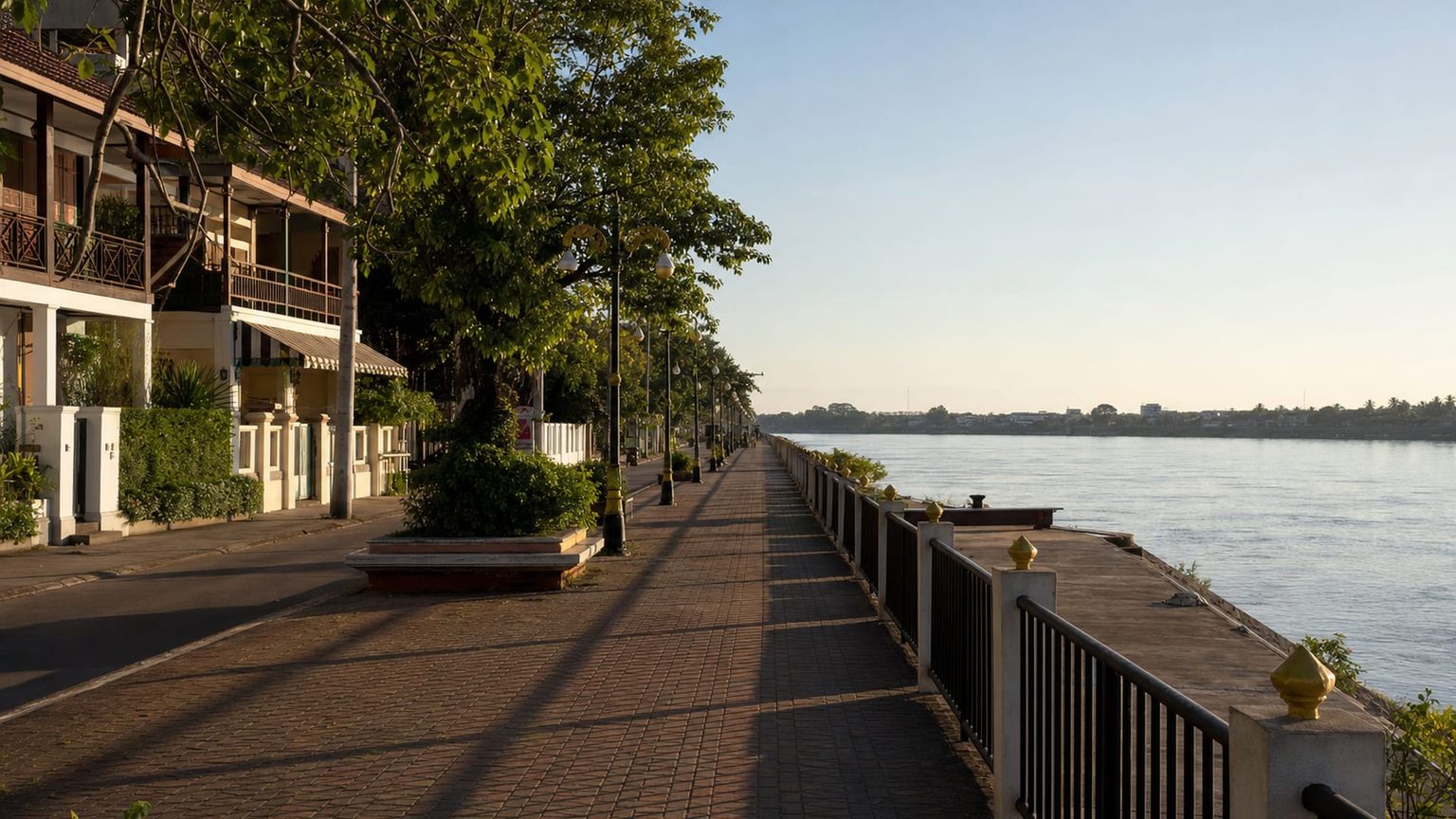
The riverfront strip along the Mekong and Chao Anouvong Park puts you near sunset walks, night markets, and easy taxi access across central Vientiane. It suits visitors who want the city’s best-known river views within a short ride of temples and cafes.
Best for: River views, evening walks, and travelers who want quick access to the night market
What to expect: Expect a busy waterfront in the evening, with joggers, food stalls, and more movement than on the side streets.
Hotel prices: Usually about $35 to $120 per night for well-rated stays
Distance to major sights: 5 to 10 minutes by taxi to Patuxai, about 10 to 15 minutes by tuk-tuk to Wat Si Saket
Quietness: Livelier after sunset, quieter in the morning and on inland streets
Main trade-off: You trade some nighttime noise and heavier foot traffic for easy access to the riverfront and central dining.
Good to know: If you plan to stay out late, choose an inland street rather than a room facing the promenade.
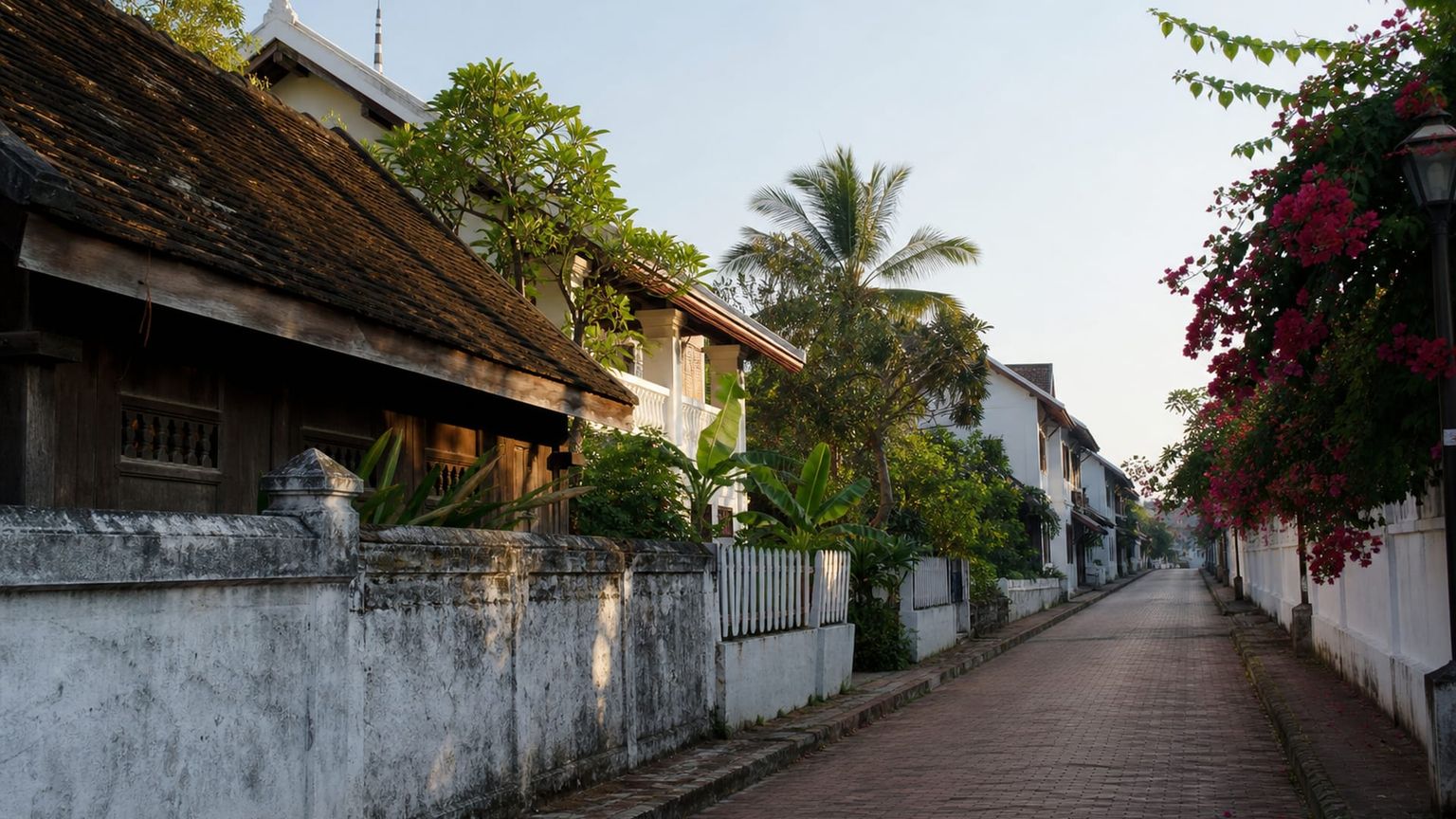
Ban Anou sits just west of the center, with guesthouses, local eateries, and quick access to the river road and downtown temples. It works well if you want a central base without paying riverfront prices.
Best for: Budget-conscious stays, local food, and easy access to central Vientiane
What to expect: Expect ordinary city streets, modest traffic, and a mix of small hotels and neighborhood shops rather than a tourist strip.
Hotel prices: Usually about $25 to $75 per night for well-rated stays
Distance to major sights: 10 to 15 minutes on foot to Wat Si Saket, about 10 minutes by tuk-tuk to Patuxai
Quietness: Calmer at night than the riverfront, with daytime traffic on the main roads
Main trade-off: You give up river views and some late-night dining options, and you may need short rides for most major sights.
Good to know: Check the exact street, because rooms on the busier roads get more traffic noise than the lanes behind them.
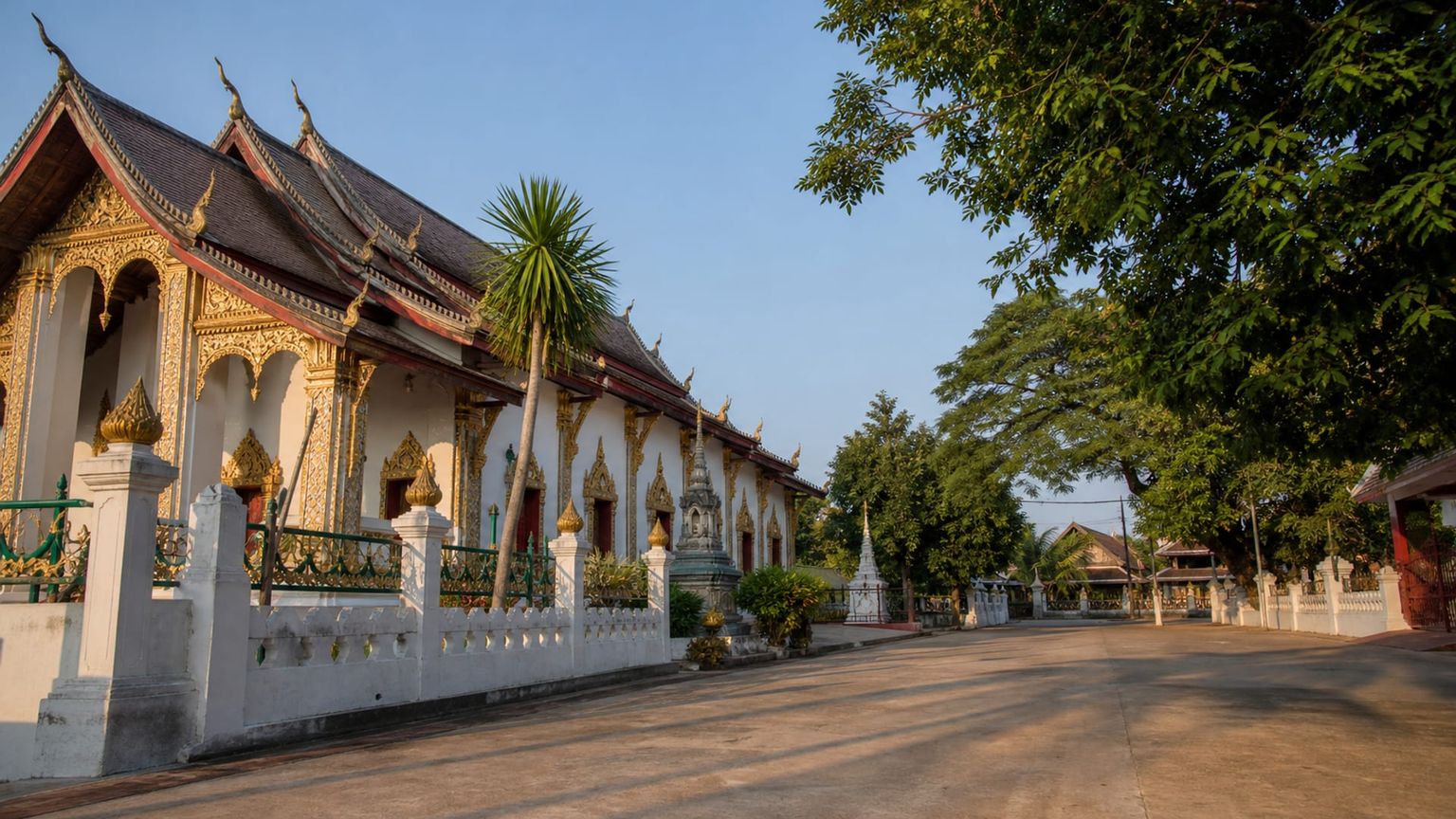
Watay covers the area around Wattay International Airport, on the western edge of Vientiane, where airport hotels and newer roads dominate. It suits very short stays, late arrivals, or early departures more than sightseeing.
Best for: Airport access, overnight stopovers, and very early flights
What to expect: Expect light pedestrian activity, taxi traffic, and a mostly hotel-focused area with limited street life after dark.
Hotel prices: Usually about $30 to $90 per night for well-rated stays
Distance to major sights: About 20 to 30 minutes by taxi to Patuxai, about 25 to 35 minutes to Wat Si Saket
Quietness: Quiet at night, with brief bursts of traffic around flight banks
Main trade-off: You spend more time reaching the riverfront and central sights, and the area offers fewer dining choices after dark.
Good to know: Plan dinner before returning, since late-night restaurant options thin out away from the airport road.
Travelers usually avoid Xaysetha and Sikhottabong if they want to walk to the Mekong riverfront, Talat Sao, and the main temple cluster, since both districts spread lodging farther from the compact center and can mean longer tuk-tuk rides for evening outings. Parts of Dongphosy near Wattay International Airport, along with outlying stretches of Hadxayfong and Sisattanak, are less convenient because they sit well outside the main tourist core and offer fewer visitor amenities after dark.
Hotel deals
How to get around Vientiane efficiently
Vientiane has no metro or suburban rail, so the city works best with walking for short central stretches, then tuk-tuks, taxis, or buses for longer links between temples, the riverfront, and the airport side of town.

Metro
for longer distances
Vientiane has no metro or suburban rail. Visitors usually rely on buses, tuk-tuks, or taxis for trips across the city, including the airport area.

Bus and tram
for convenience
City buses cover the main corridors, with fares of about $0.25 to $0.50, roughly 5,000 to 10,000 kip. Routes are limited, so service is best for set links such as the airport, the center, and larger road corridors; wait times can stretch to 20 to 40 minutes. Ask the driver or conductor before boarding, since some stops are informal and route signs can be sparse.

Taxi
for convenience or late hours
Licensed taxis and hotel cars usually use set fares rather than meters, while some private cabs may agree a price in advance. A ride from Vientiane (VTE) into the center often costs about $7 to $12, with short city trips near $3 to $6 and longer cross-city rides roughly $10 to $15. Confirm the fare before departure, and carry cash in kip or USD, since card payment is uncommon.
*Prices are based on rates updated as of June 2026 and may change at the time of travel.
Walking suits the riverfront and compact center, buses cover a few main corridors, and taxis or tuk-tuks make the most sense for temple pairs, cross-town rides, and airport transfers.
Iconic landmarks
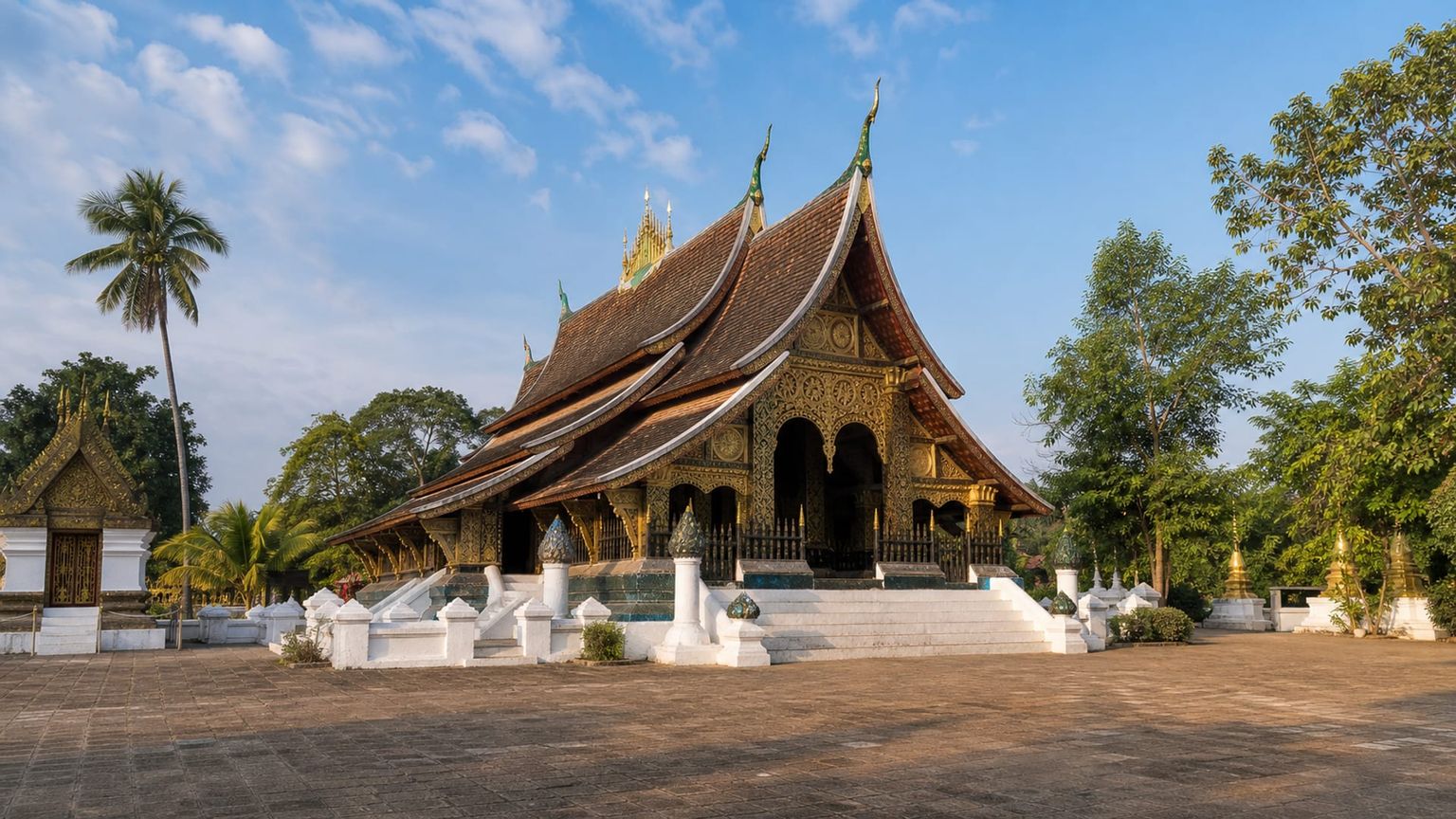
Wat Xieng Thong
Wat Xieng Thong sits in Luang Prabang, not Vientiane. Since it lies well outside the city, it is not included here, and a Vientiane guide should focus on sites such as the riverside temples and national monuments instead.
Time needed: About 1 hour
Entry: Free to access, with optional donations sometimes welcomed at temple entrances and small museum counters on site.
Tip: Visit in the early morning to see the courtyard before tour groups and midday heat.
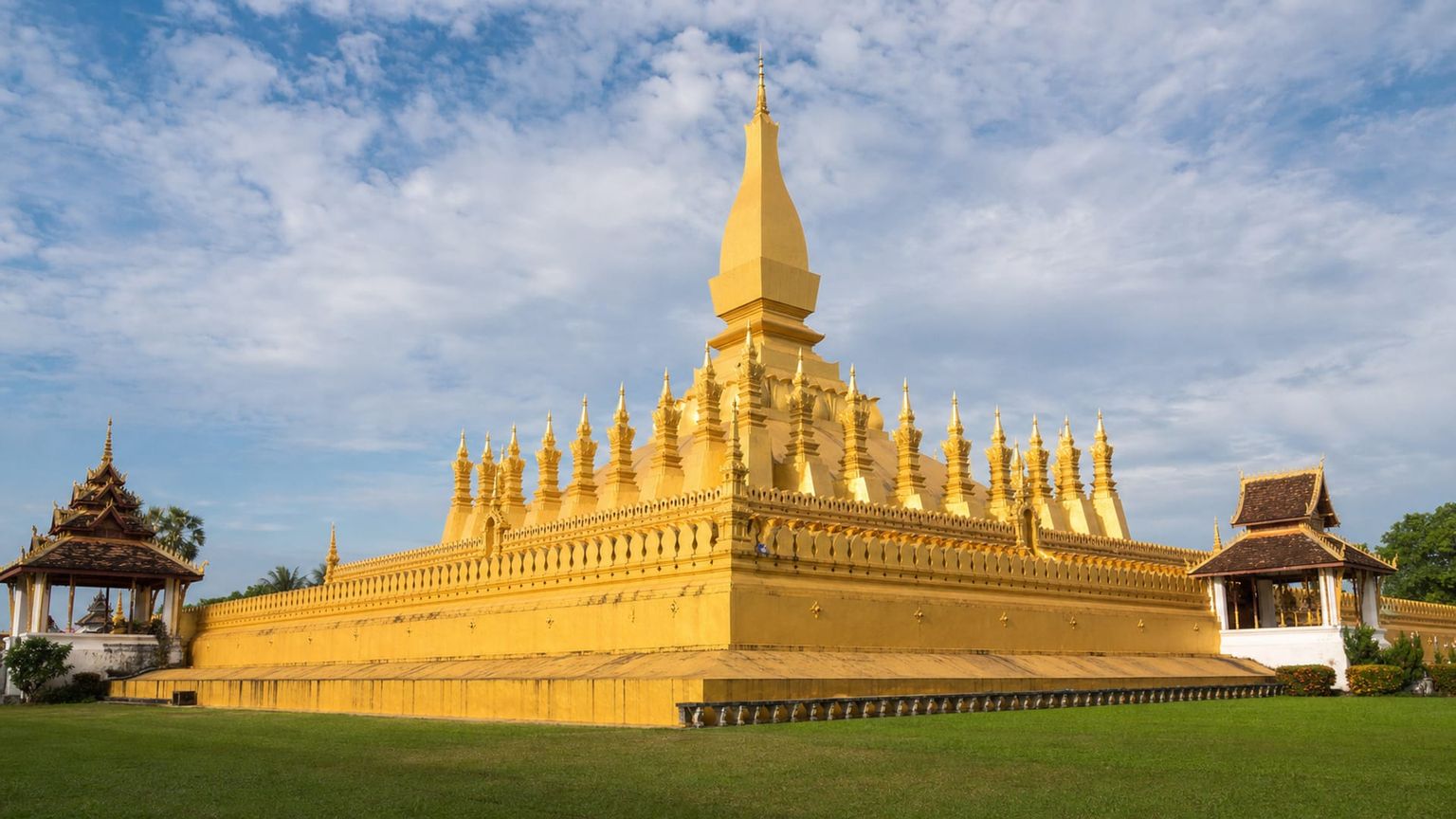
Pha That Luang
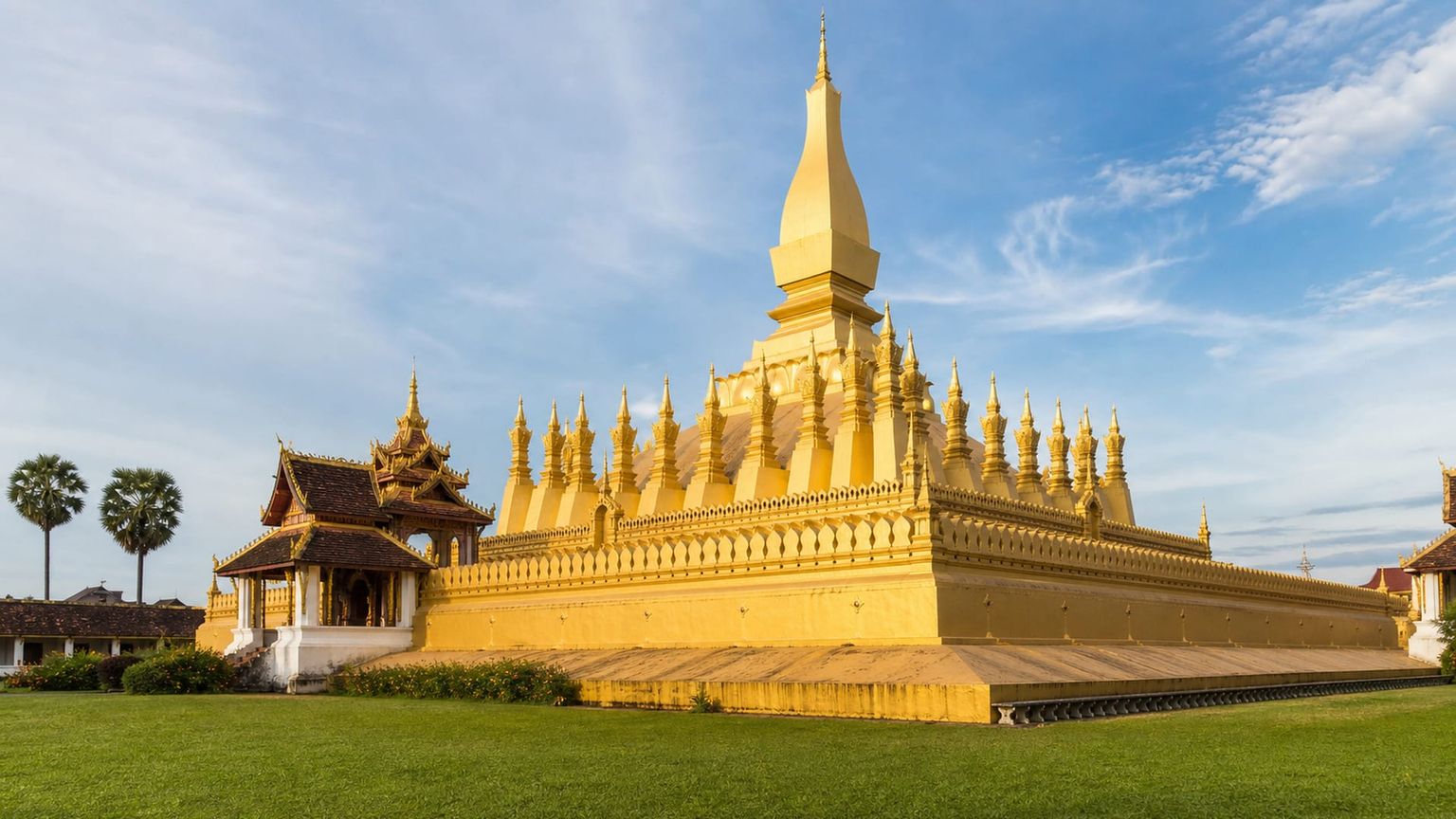
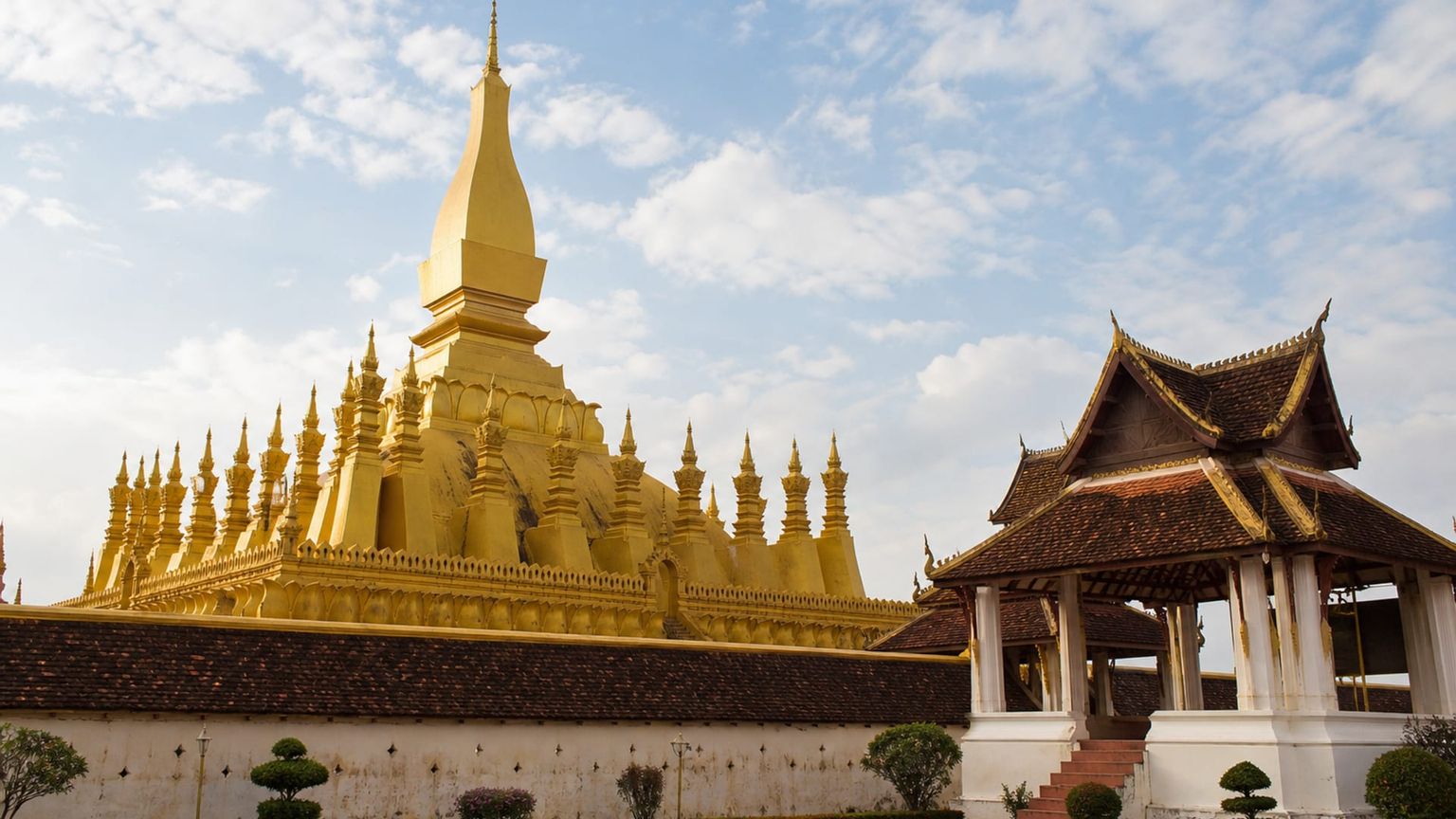
Vientiane’s gold-covered national stupa rises inside a walled temple compound northeast of the center. It draws pilgrims, saffron-robed monks, and evening light on the gilded surface, with murals and smaller stupas around the main shrine.
Time needed: About 1 to 2 hours
Entry: Entrance costs about $1 ($20,000 kip) for foreign visitors; local rates are lower, and cash is the easiest way to pay at the gate.
Tip: Visit near late afternoon for softer light, then stay for the quieter temple grounds after sunset.
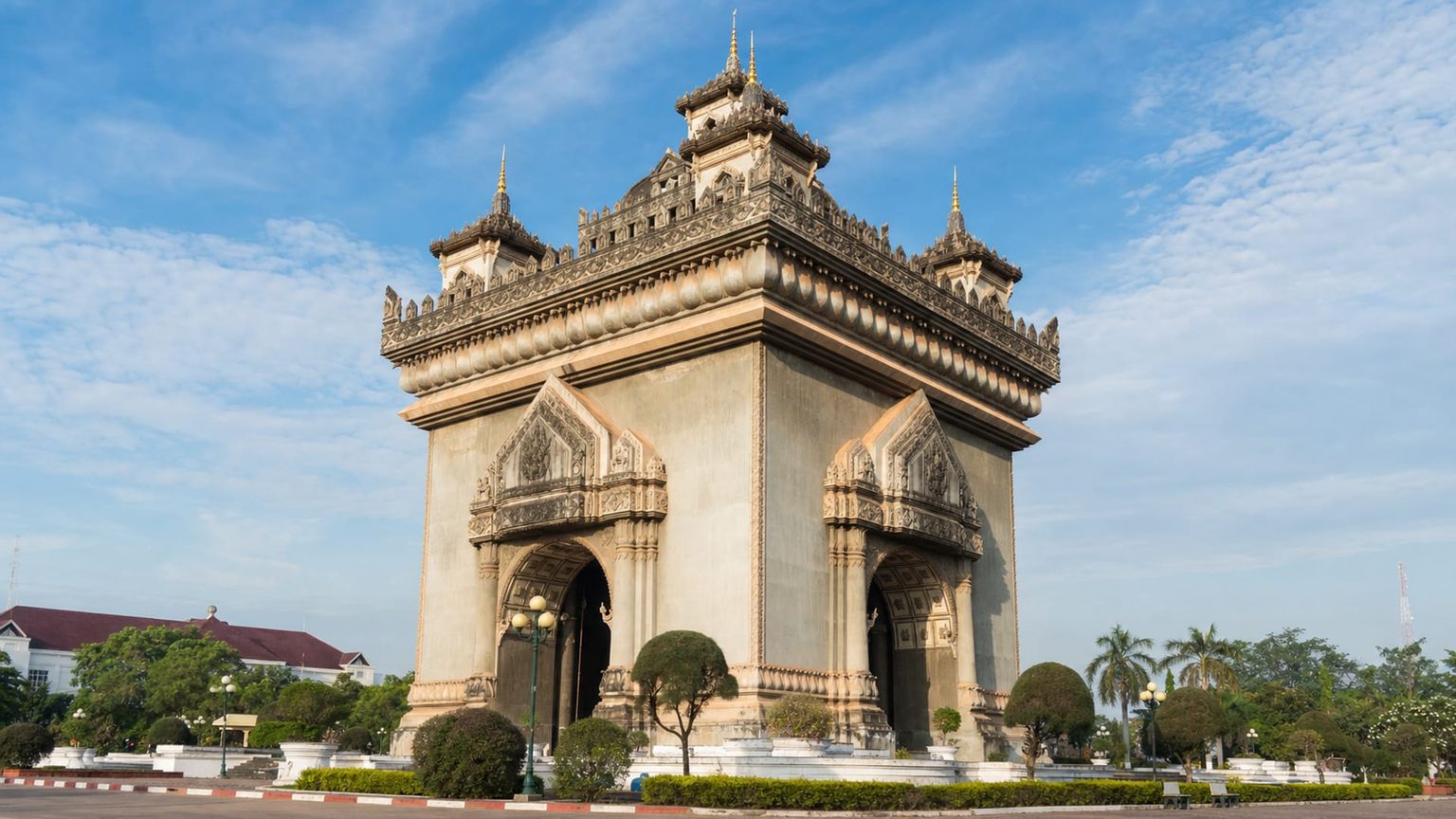
Patuxai
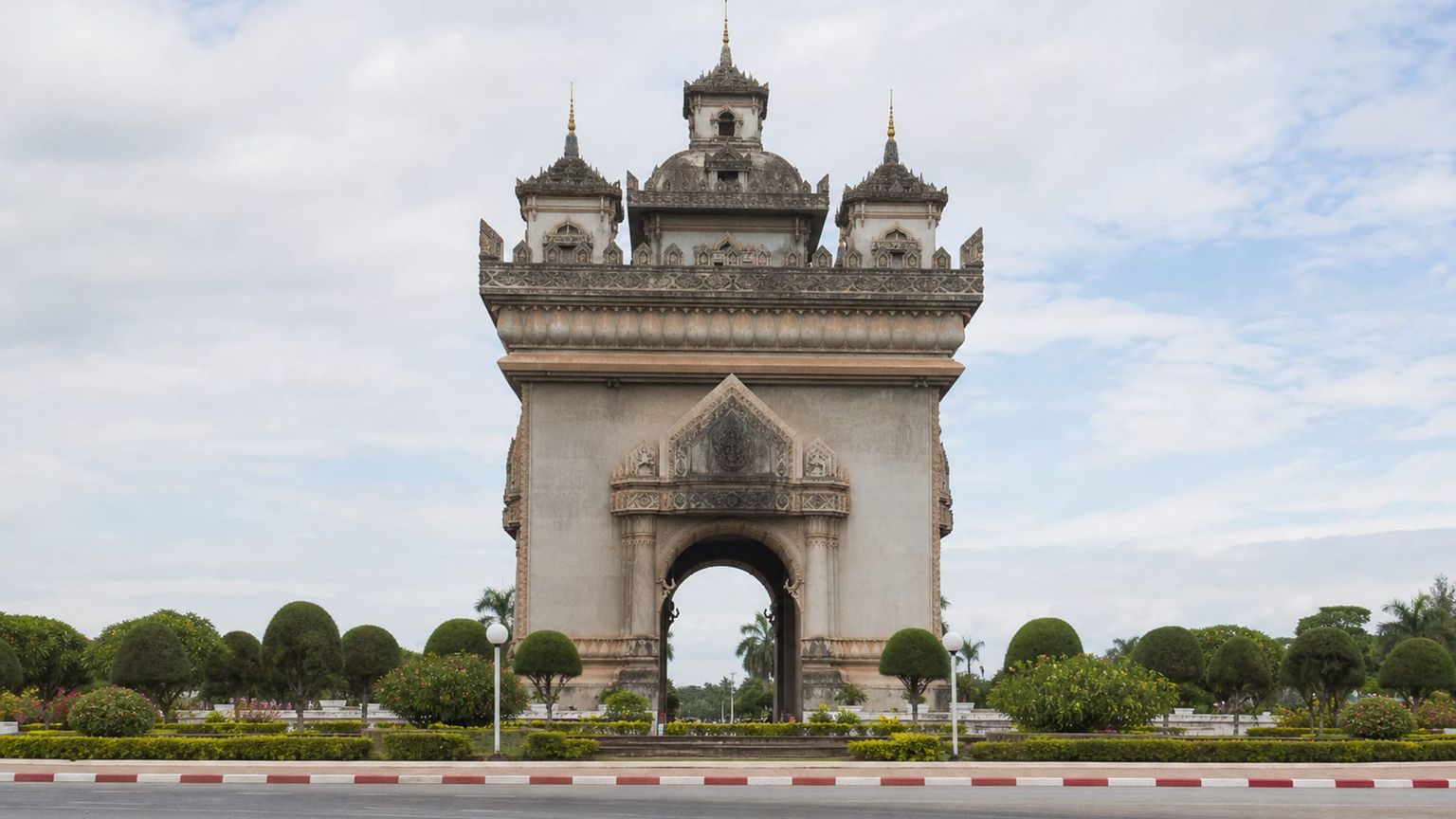
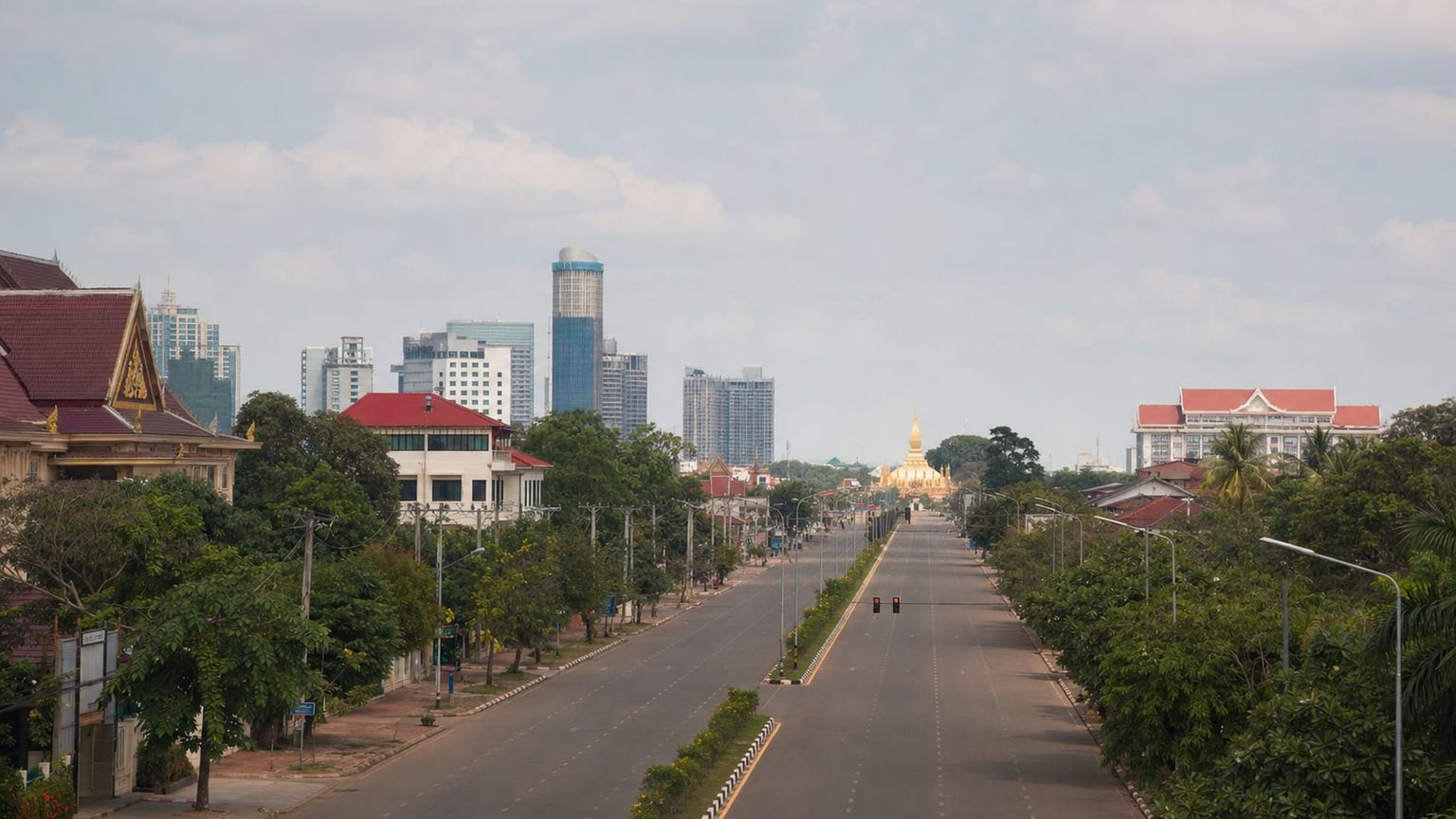
Patuxai stands on Lan Xang Avenue as Vientiane’s best-known monument, built as a war memorial and crowned with viewing terraces. Its arch details reference Laos, while the upper level gives broad city views and a clear axis toward the city center.
Time needed: About 1 to 2 hours
Entry: Entrance costs about $0.50 ($10,000 kip) to access the terraces, with extra small fees for the upper viewing level in some periods.
Tip: Go just before sunset, then use the stair climb to reach the upper terrace before the heat peaks.
Overlooked sites worth visiting

Wat Sok Pa Luang
Forest monastery on Vientiane’s edge with shaded grounds, a meditation hall, and a small herbal sauna. Visitors come for quiet temple walks and the daily sunset chant rather than big crowds.
Time needed: About 1 hour
Entry: Free to enter; donations are welcome. The herbal sauna and meditation sessions may ask for a small contribution, often a few dollars in kip, while the grounds and main temple areas have no admission fee.
Tip: Visit late afternoon for cooler paths and the chanting.

COPE Visitor Centre
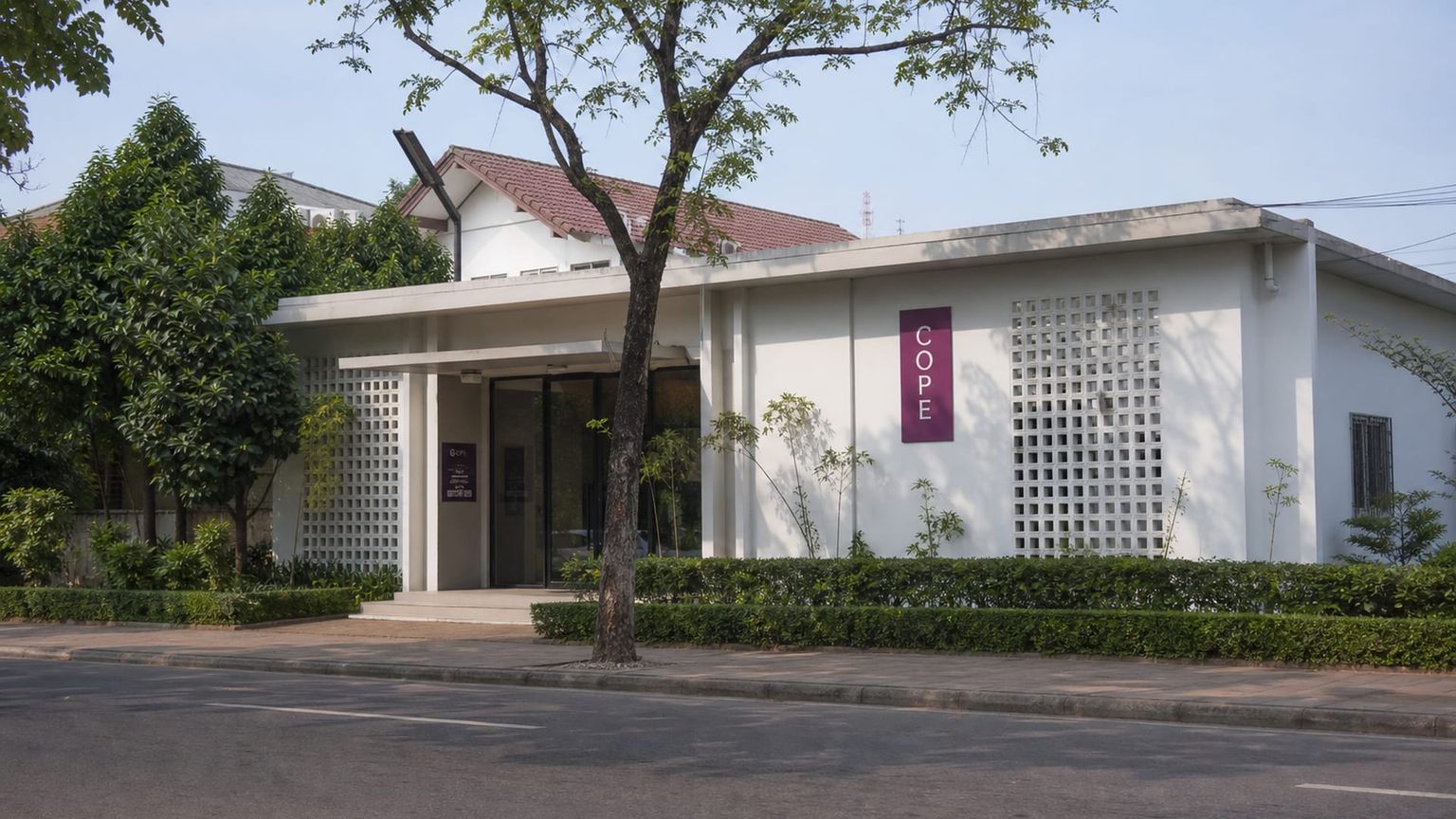
Small museum on prosthetic care and UXO education, with clear exhibits on how unexploded ordnance has affected Laos. The compact gallery gives context that many city itineraries miss.
Time needed: About 45 minutes
Entry: Free to enter, with donation boxes at the entrance. The center is open to individual visitors during daytime hours, and donations help support UXO survivor rehabilitation and public education work. Visit the official site for details.
Tip: Allow a short stop before lunch, then continue on foot.
Traditional food
Vientiane’s table leans on sticky rice, herbs, lime, chili, and grilled meat, with laap, tam mak hoong, khao piak sen, and sai oua anchoring everyday meals. Dining is casual, often early, and strongest where local kitchens serve quick plates after sunset.
Laap
Minced meat salad with lime, herbs, toasted rice, and chilies, usually served with sticky rice. At Kualao Restaurant, the kitchen gives it a polished city-dining setting without losing the dish’s sharp, fresh profile.
Tam mak hoong
Green papaya salad that mixes sour, salty, sweet, and hot flavors, often pounded to order. Lao Kitchen serves a version that shows how central the dish is to everyday Lao eating in Vientiane.
Khao piak sen
Rice noodle soup with a cloudy broth, herbs, and either chicken or pork, usually eaten as a late breakfast or light lunch. PVO Vietnamese Food, a long-running Vientiane favorite, serves a bowl that fits the city’s cross-border noodle culture.
Sai oua
Northern-style herbal sausage with lemongrass, kaffir lime leaf, and galangal, best eaten hot with sticky rice. Doi Ka Noi, one of Vientiane’s better-regarded Lao restaurants, is a strong place to try it in a sit-down meal.
Best time to visit Vientiane
Vientiane shifts more by heat and rain than by hard seasonal swings, so the best months are the dry, cooler stretch when temple walks and riverfront evenings feel easiest.
Best for: Cool mornings, dry days, and the most comfortable temple walking
What you get: About 68 to 88°F (20 to 31°C), with the biggest visitor flow in the dry season
Trade-offs: Evenings can feel busy near the riverfront and hotel rates often rise
Best for: Clear mornings and strong light for monuments and river views
What you get: About 77 to 97°F (25 to 36°C), with fewer travelers before the rains
Trade-offs: Afternoons turn hot quickly, so sightseeing needs an early start
Best for: Lush temple grounds and slower museum days in the wet season
What you get: About 75 to 89°F (24 to 32°C), with lighter crowds and regular rain showers
Trade-offs: Humidity climbs, and short downpours can interrupt outdoor plans
Best for: Greener scenery and a softer pace as the rains ease
What you get: About 72 to 86°F (22 to 30°C), with moderate crowds and improving weather
Trade-offs: Some streets still flood briefly after heavy rain
A realistic 5-day plan in Vientiane
The five-day plan starts with arrival and the riverfront, then builds through monuments, museums, and temple visits without stacking too many cross-town trips into one day. It leaves room for short rides, late afternoons, and one last central circuit before departure.
Land at Vientiane (VTE) and take a taxi into town, roughly 20 to 30 minutes to Mekong Riverside or Ban Anou, for about $8 to $12 ($160,000 to 240,000 kip). If you arrive after dark, check into a room on an inland street rather than facing the promenade, then settle in with water and a light Lao dinner near the river road, where you can keep the evening low-effort without losing access to the center.
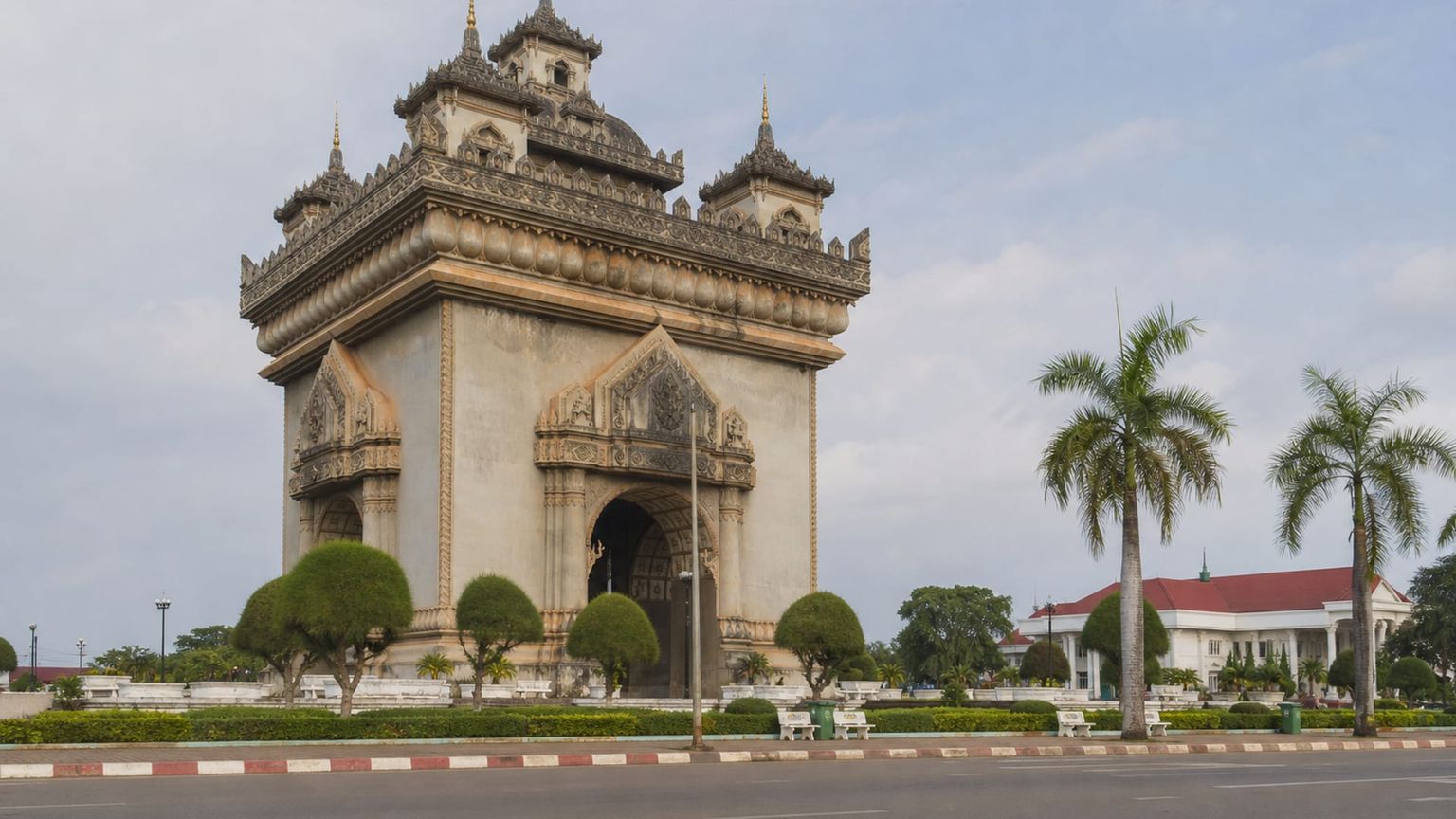
Start at Patuxai before the heat builds, then continue by tuk-tuk or taxi to Pha That Luang, which takes about 10 to 15 minutes, for a first look at Vientiane’s two best-known monuments. Patuxai’s terraces cost about $0.50 ($10,000 kip), while Pha That Luang charges about $1 ($20,000 kip) for foreign visitors, so carry small bills and plan about 1 to 2 hours at each stop. Finish with a relaxed dinner back near Mekong Riverside, where the night market and riverfront stalls are easiest to reach on foot.
Begin with COPE Visitor Centre, a short taxi ride from central Ban Anou, and spend about 45 minutes on its exhibits before lunch. From there, head to Wat Si Saket, then continue by taxi or tuk-tuk to Wat Sok Pa Luang for a late-afternoon visit, which works well because the monastery is on Vientiane’s edge and the chanting starts as the light softens. The movement is simple, about 10 to 15 minutes between central stops and a longer cross-town hop to the forest monastery, so you can fit the day around temple visits and still return to the riverfront for dinner.
Early light suits a slower temple day, so start at Wat Sok Pa Luang if you missed it, or revisit Wat Si Saket for a calmer look at the cloistered grounds before the city gets busy. Then ride to Pha That Luang for a second, less hurried stop, followed by Patuxai at sunset, which is about 10 to 15 minutes away by taxi and gives the clearest city views from the terrace. The day works best with short transfers and long pauses, especially if you want one final temple circuit without crossing the city more than necessary.
Before departure, make one last stop at COPE Visitor Centre if you want a final museum visit, then spend your remaining hours browsing around the central riverfront area or Ban Anou, where small shops and neighborhood cafes make an easy last circuit. If your flight leaves later in the day, a cafe in Ban Anou keeps you close to the center without committing to a long outing, and a taxi back to Vientiane (VTE) from downtown usually takes about 20 to 30 minutes, so you can leave after an unhurried lunch and still keep the transfer simple.
Business-class flights from the US to Vientiane
Flights to Vientiane usually come in through one-stop connections, so the most useful comparisons are the major hubs and the fare bands they open up. From both coasts of the United States, the itinerary choices are shaped more by layover city than by nonstop time.
From New York, Thai Airways, Korean Air, Qatar Airways, EVA Air, Singapore Airlines, and Cathay Pacific are the main names to look for, with typical total travel times of about 20 to 30 hours. Common layover points include BKK, ICN, DOH, TPE, SIN, and HKG; if you do not mind stopping, those routings can reduce the fare to roughly $2,300 to $4,200.
Los Angeles offers a somewhat shorter path, with Thai Airways, EVA Air, Korean Air, Singapore Airlines, Cathay Pacific, and Qatar Airways on the usual list and itineraries often landing in about 17 to 26 hours. One-stop options through TPE, ICN, or HKG often sit at the lower end of the price range, roughly $2,400 to $4,600.
Vientiane feels different when you slow down
A good Vientiane trip gives each district a clear role: Mekong Riverside for evenings, Ban Anou for an easier central base, Patuxai and Pha That Luang for the monument days, and Wat Sok Pa Luang for a quieter close. Taxis and tuk-tuks keep the distances manageable, while COPE Visitor Centre adds context that changes how the city reads. If you want help matching dates, neighborhoods, and flight timing, speak with AranGrant experts for a Vientiane plan built around the parts of the city you will actually use







