
In January, something subtle happens. There is no rush yet. No flowers on every corner. No crowded restaurants. Instead, there is time. Time to think and imagine a moment that does not have to arrive immediately.
For many couples, Valentine’s Day does not begin in February. It begins quietly, weeks earlier, with a decision made over coffee or during an unhurried evening at home. Not about where to go next week, but about where to go together later.
This is where travel enters the picture. Not as a last-minute escape, but as a gift meant to unfold slowly. For those beginning that conversation now, exploring our Valentine’s Day flight offers can be a gentle way to turn an idea into something real, without rushing the decision.
Read in this post:
A Few Facts You Might Not Expect
Studies have long shown that people remember experiences far longer than physical gifts. A trip carries anticipation before it happens, memory while it unfolds, and meaning long after it ends. When the journey is planned for spring, summer, or early fall, that anticipation stretches happiness over time.
Many couples choose to travel before or after Valentine’s Day to avoid crowds and inflated prices, while still framing the trip emotionally as “our Valentine’s getaway.” For travelers over forty, romance often begins even earlier, onboard. A quiet cabin. Shared space. Champagne poured without hurry. The ability to arrive rested. Sometimes the journey itself is a gift.
How We Conducted Our Analysis
The insights below are based on AranGrant’s anonymized January booking data for leisure trips, excluding child and primarily corporate fares. The goal was to identify when and where couples book romantic leisure trips as Valentine’s gifts. We also compared January purchasing patterns in 2025 and 2026 to understand how Valentine’s travel is actually planned.
The base cohort includes bookings that meet the following criteria:
- Two passengers
- Leisure travel only
- Domestic and international destinations
- Same-day and next-day departures excluded
- Booking dates between January 1 and February 14
Valentine’s Travel Is Chosen Months in Advance
What the data reveals is calm, not urgency. In 2025, 77 percent of Valentine-related bookings were made more than 60 days before departure. Early 2026 data shows a similar pattern, with 73.5 percent booked at the same distance from travel.
The average planning horizon is close to four months. This means that for premium travelers, Valentine’s Day is rarely about flying in February. It is about choosing the journey well ahead of time, often for late spring or early fall. The holiday becomes the emotional anchor, not the calendar constraint.
Key finding: Valentine’s trips are not February trips. The majority of departures lie far beyond the holiday itself, reinforcing travel as a future-focused gift rather than a date-specific escape.
January Is a Month of Intention
January does not behave like a month of impulse. Demand builds steadily throughout the month, with a few noticeable peaks in mid-January. There is no sharp surge at the end. Instead, bookings spread evenly, suggesting reflection, discussion, and comparison.
The days of the week tell a similar story. Fifty-nine percent of bookings occur Monday through Thursday. There is no weekend spike, no sign of rushed decisions made between errands.
Key finding: Valentine’s travel is not bought in a moment of emotion. It is chosen deliberately, often midweek, when attention is clearer and time feels less pressured.
Where Couples Choose to Go Together
When travel is planned months ahead, destination choices change. Romantic travel is no longer limited to familiar clichés. Here are the top countries on our list:
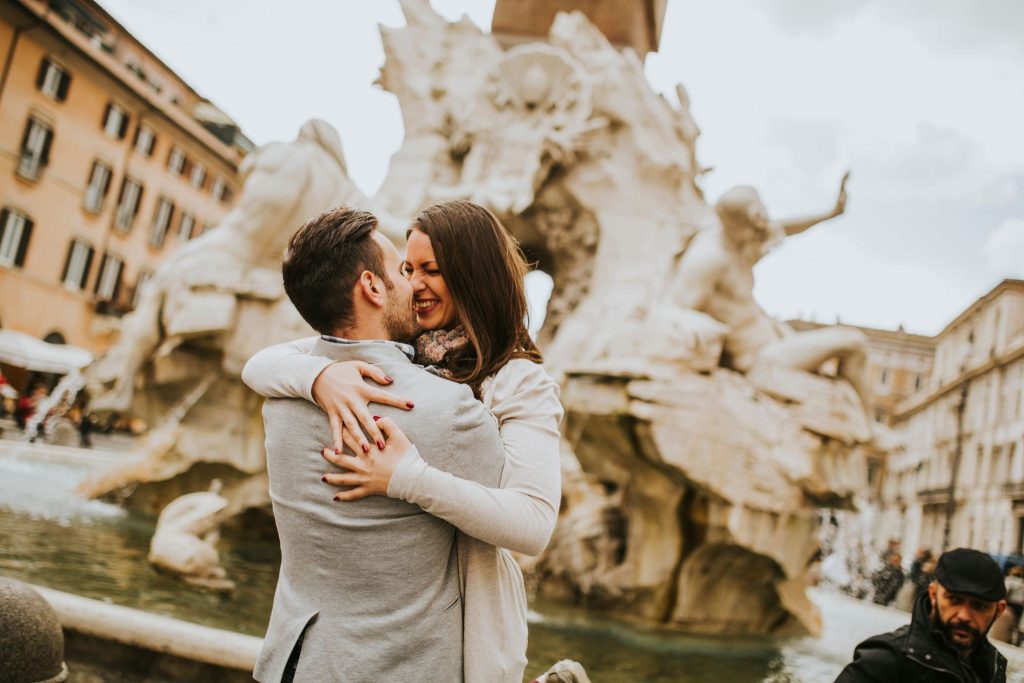
- Italy continues to stand out for its natural sense of intimacy. Walkable historic centers, long meals, regional traditions, and a pace that encourages presence make it ideal for couples who value connection over spectacle. Italy feels lived in, not staged.
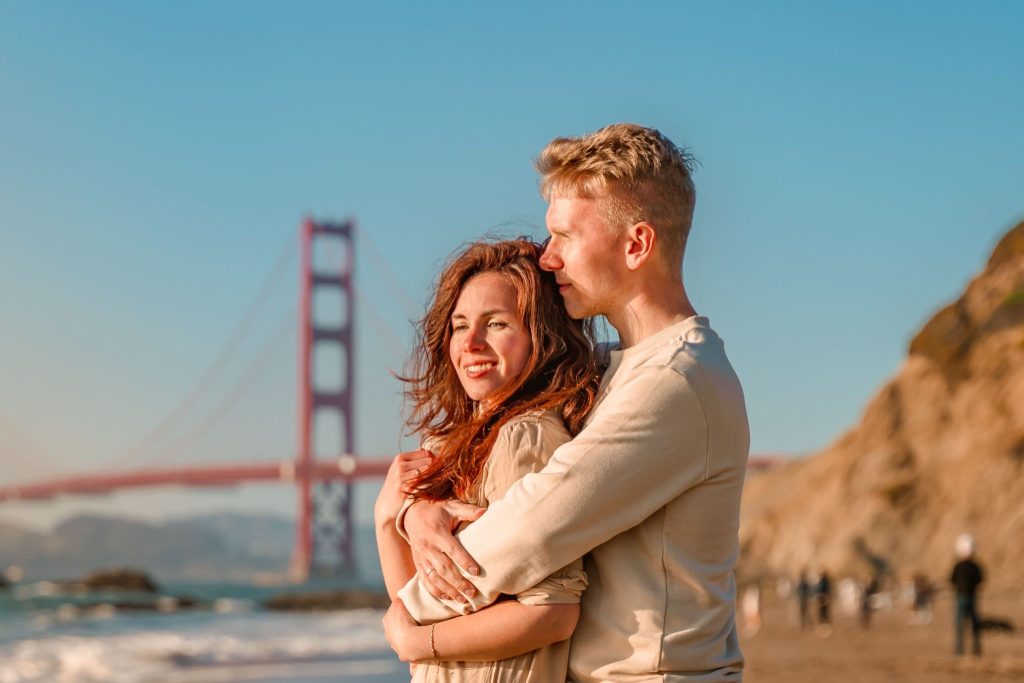
- Within the US, romantic travel often centers on atmosphere rather than distance. Cities such as New York, San Francisco, Charleston, Savannah, and Sedona are consistently cited across travel studies for couples seeking culture, dining, and a sense of place. Domestic trips also allow flexibility, which matters when travel is given as a gift.
- Spain offers warmth without excess. Late dinners, layered history, and a social rhythm that favors lingering conversations create space for connection. Its cities and coastal regions also align well with shoulder-season travel, fitting the pattern of delayed Valentine’s journeys.
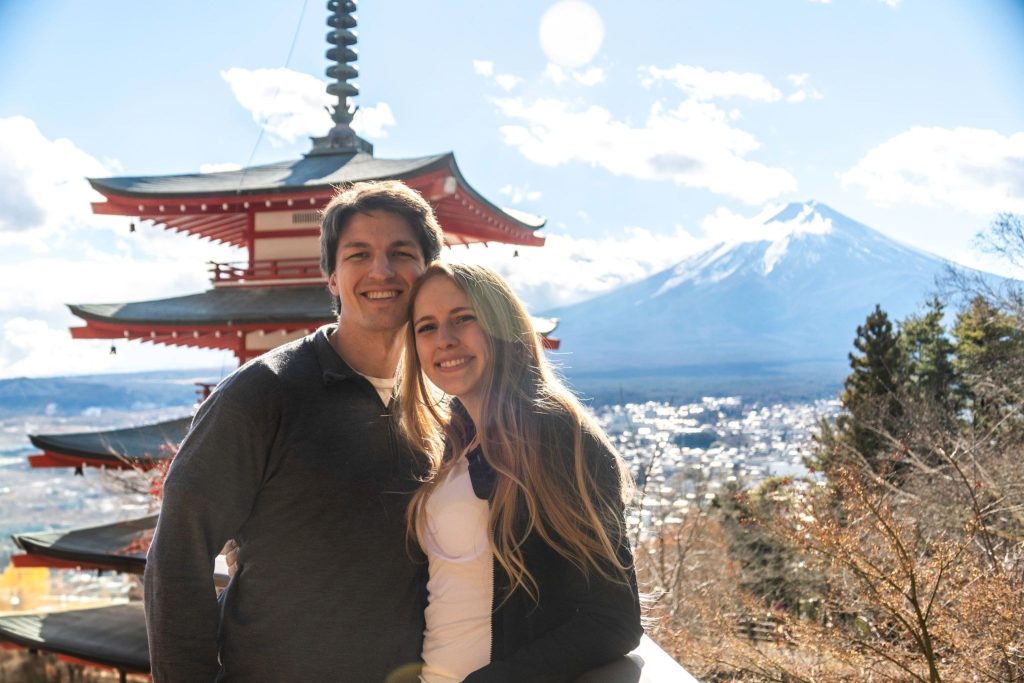
- Japan, with many bookings made well over 60 days in advance, reflects careful planning. Spring cherry blossom trips require foresight, but reward it with one of the most quietly moving travel experiences in the world. Beyond the visual beauty, Japan offers precision, calm, and respect for space, qualities that resonate deeply with premium travelers.
Key finding: Couples increasingly gravitate toward places that reward time, curiosity, and shared experience.

What Valentine’s Travel Really Represents
Taken together, the patterns form a clear picture:
- Valentine’s travel is planned, not rushed.
- January is a period of measured decision-making.
- Trips are often taken later, but emotionally framed as part of the holiday.
- Comfort, cultural depth, and shared experience matter more than timing.
How to Present a Trip as a Gift
Presenting a trip as a gift is less about surprise and more about intention. Unlike physical objects, travel carries uncertainty by nature. Dates may shift. Preferences matter. Energy levels change. The most successful travel gifts acknowledge this upfront, framing the journey as a shared decision, not as a fixed plan.
Many couples choose to present travel as an invitation, not a reveal. A printed itinerary outline, a handwritten note, or a simple card explaining the idea of the trip allows space for conversation. It signals care without pressure. “I chose this for us, but we’ll shape it together” is generous and doesn’t seem like a rigid booking.
For premium travelers, clarity matters. Including details such as cabin class, flexibility options, or the general season of travel reassures the recipient that the gift has been thought through. It turns excitement into trust.
How to Wrap a Trip as a Gift
Because travel is intangible, the goal is to make the idea feel real without overwhelming the moment. Many couples opt for something tactile and restrained:
- a book about the destination
- a small object tied to the culture
- a single photograph placed inside a simple envelope.
Luxury here comes from restraint. One thoughtful item often communicates more than elaborate packaging. A guidebook with a bookmark placed on a meaningful page, or a handwritten note explaining why the destination was chosen, grounds the gift emotionally.
Digital presentation can work just as well when done carefully. A clean PDF, a short message, or a saved calendar note for a future season can feel elegant if it respects tone and simplicity. What matters is not the format, but the message it carries.
The most successful travel gifts leave room for imagination. They do not attempt to define every detail. They suggest a journey and invite the recipient to step into it at their own pace.
A Thoughtful Way to Make the Gift Tangible
One quietly meaningful way to present a trip is to give it a form the couple can return to long after the journey begins.
Consider ordering a personalized book such as “Our Romantic Travel Itinerary”. Rather than a fixed plan, it becomes a shared companion for the journey. Inside, you can shape it as a living record of what you hope to experience together.
For example, you might include:
- A short opening note explaining why you chose this destination and what the trip represents to you both
- A few iconic places you’d love to visit, each with a small checkbox or space to mark the moment once it’s experienced
- Local dishes or drinks you want to try together, from one well-known classic to something unexpected
- Simple experiences, not attractions: a morning walk without plans, a café you’ll return to twice, a view you’ll pause for at sunset
- Blank pages for discoveries you didn’t plan: places found by accident, conversations, or moments worth remembering
What makes this especially meaningful is the invitation it creates. The book is not finished when it’s given. Leave room for your loved one to add their own ideas, notes, or drawings. Planning becomes shared, and the gift becomes collaborative.
To deepen the gesture, consider leaving the first few checkboxes unticked. Let them be filled in together, slowly, as the journey unfolds. Over time, the book becomes more than an itinerary. It becomes a quiet archive of anticipation, experience, and shared time.