


Flying can carry you across a continent before lunch, but speed removes the journey from the trip. A sleeper train restores that missing chapter, giving you an evening of dining, conversation, changing scenery, and private time before you wake in another city.
The appeal goes beyond nostalgia. For some travelers, an overnight train is simply practical. For others, it’s the reason for the trip. Either way, no two sleeper trains offer quite the same experience, and the differences are worth understanding before you decide whether one belongs in your itinerary or deserves to anchor it.
Read in this post:
What is a sleeper train and how does it work?
A sleeper train is an overnight train built with dedicated sleeping accommodations on board, ranging from simple bunks to private en-suite cabins. You board in the evening, sleep as the train covers hundreds of miles, and step off the next morning already at your destination.
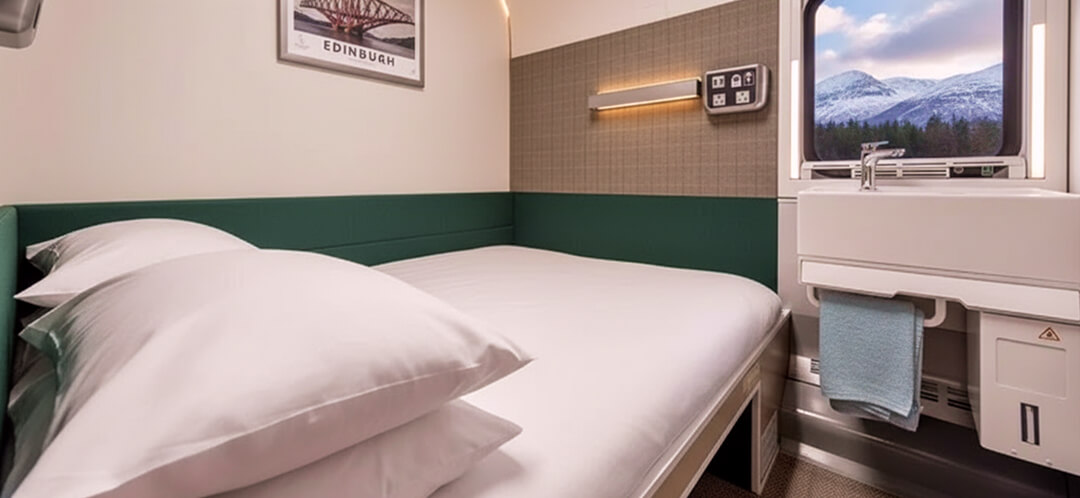
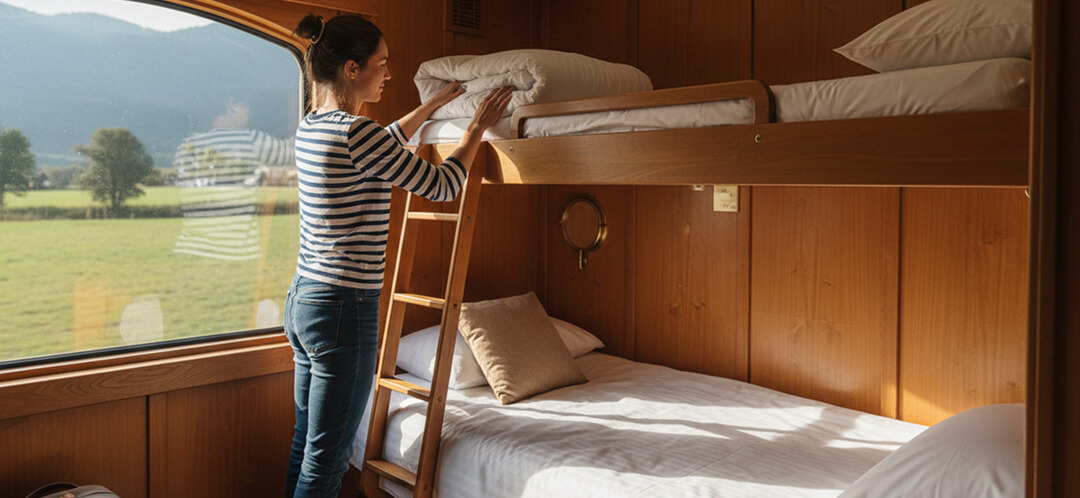
A daytime scenic train can carry you through dramatic scenery, but you disembark each evening and need a hotel room to continue the next day. A sleeper train removes that need entirely, since the accommodation and the transportation happen at the same time. Some sleeper trains offer only bunks in a shared compartment, while others provide a private cabin with a door that locks, a washbasin, and in the higher tiers, a full en-suite bathroom.
The practical advantage is simple. You travel while you sleep, so you don’t lose a working day or a vacation day to transit. On a route that takes eight to twelve hours by rail, you board after dinner and step off the next morning ready for the day, with the transit itself absorbed into hours you would have spent sleeping anyway. It’s a rare case where comfort and efficiency point in the same direction.
That efficiency is only half the story, though. The kind of sleeper train you choose shapes the experience as much as the destination does, and the gap between a standard service and a luxury one is larger than most first-time travelers assume.
What sets a luxury sleeper train apart from a standard overnight service
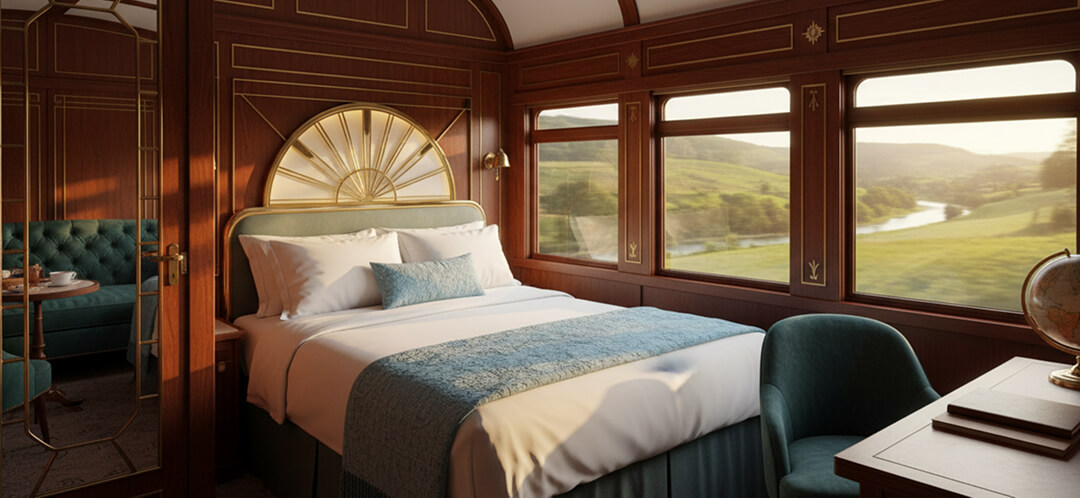
A luxury sleeper train turns the journey into the main experience. A standard sleeper concentrates on transportation and rest, while a luxury train adds formal dining, highly attentive cabin service, elaborate interiors, and a stronger sense of occasion.
Notable sleeper trains and routes
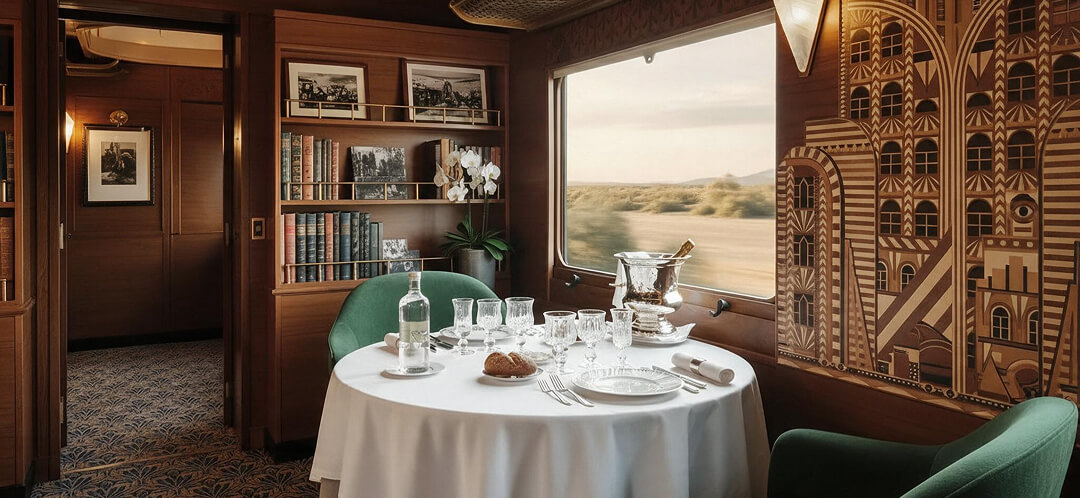
- The Venice Simplon-Orient-Express, operated by Belmond, is the clearest example of a luxury sleeper train. Its collection includes original 1920s and 1930s carriages restored with polished wood, marquetry, Art Deco details, and period furnishings. Historic Cabins include a washbasin but share restroom facilities at the end of the carriage. Suites and Grand Suites add private bathrooms and considerably more space.
On the classic Paris-to-Venice journey, Belmond currently displays fares from £3,885 ($5,170) and £3,530 ($4,750) for the London–Venice route for 2026 departures. The itinerary includes an overnight journey, steward service, and meals. Prices change by departure date and cabin category, so check the live booking page for exact prices. The train runs from mid-March through December each year.
- The Caledonian Sleeper serves a more practical purpose. It connects London with Edinburgh, Glasgow, Aberdeen, Inverness, and Fort William six nights a week.
You can book a reclining seat for about £54 ($73). Its en-suite Club Room costs from £270 ($365) for a solo traveler, while the more spacious Caledonian Double starts at £410 ($550) for a solo traveler, with both climbing past £500 ($670) in the higher price bands depending on the season. A private Classic Room without an en-suite bathroom costs less, generally starting at £210 ($280) for a solo traveler, but you share a toilet and shower at the end of the carriage instead of having one in your room.
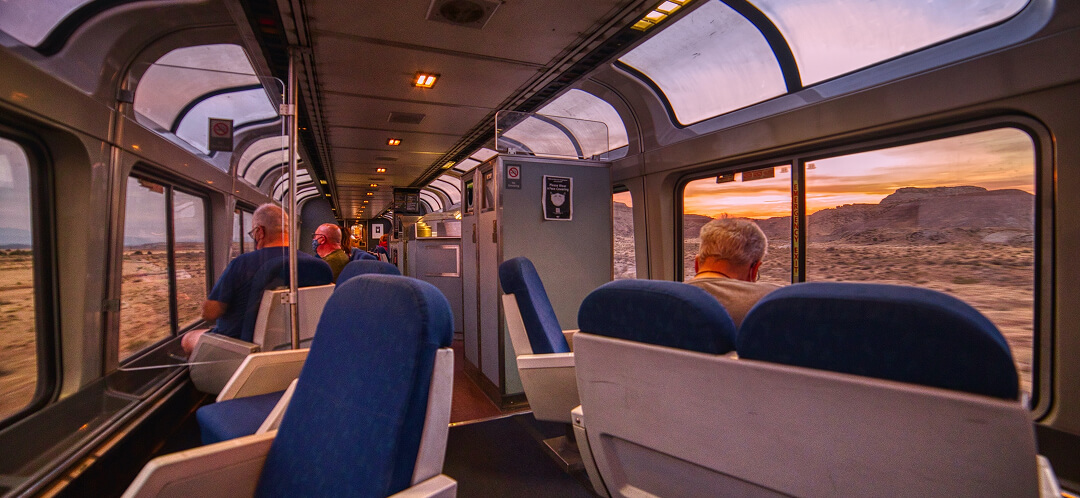
- Amtrak operates several overnight sleeper routes across the US, and each one is known for a different landscape. The California Zephyr crosses the Rockies and the Sierra Nevada between Chicago and Emeryville, California. The Coast Starlight follows the Pacific coastline between Los Angeles and Seattle.
Sleeping accommodations range from a roomette, a compact private cabin with two seats that convert into beds, to a larger bedroom with its own toilet and shower. On the full Chicago-to-Emeryville route, a roomette costs $700 to $1,400 one way, while a bedroom costs $1,600 to $2,600 one way. Every sleeping-car fare includes meals in the dining car, so the price covers both private accommodation and onboard dining.
The Caledonian Sleeper and Amtrak both provide private sleeping accommodations with beds, storage, and charging points. Higher cabin categories add private bathrooms: Caledonian Sleeper Club and Double rooms include an en-suite toilet and shower, and Amtrak Bedrooms include the same facilities. Breakfast is included for Caledonian Sleeper Club and Double guests, and Amtrak sleeping-car fares include meals in the dining car.
On a luxury train such as the Venice Simplon-Orient-Express, the fare covers multi-course meals in dedicated dining cars, restored period interiors, formal evening service, and attentive support from the cabin steward throughout the journey. The higher luxury fare buys atmosphere and occasion, not just a better mattress. Once you know what each tier actually includes, the next decision is which route makes the most of it.
Where to find the most scenic overnight train routes in Europe and beyond
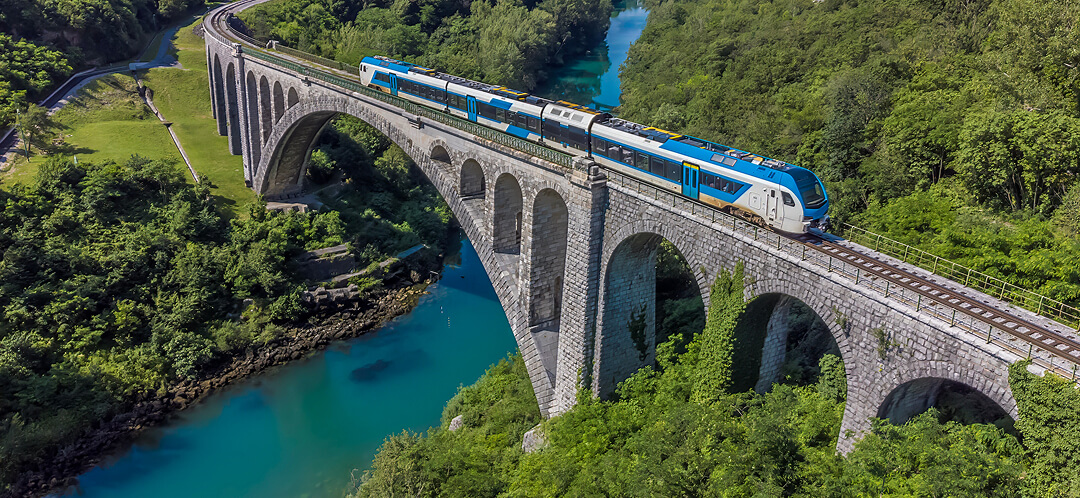
An overnight train in Europe often does double duty: useful transportation and a scenic payoff you only see after sunrise. The strongest routes pair a genuine city connection with a morning arrival worth waking up for.
The Caledonian Sleeper’s Highland route is one of the most accessible examples. The train departs London late in the evening, crosses Rannoch Moor in the middle of the night, and rolls into the Scottish Highlands right around dawn, so you wake up to mountains and glens instead of a hotel ceiling. Guests heading toward Fort William or Inverness get the added benefit of daylight for the final stretch, when the West Highland scenery is at its most dramatic.
The Venice Simplon-Orient-Express takes a different kind of scenic route. Its classic Paris-to-Venice journey crosses the Alps, and the mountain views through the Simplon Tunnel region are part of the draw. Other Venice Simplon-Orient-Express itineraries extend the same overnight formula to Vienna, Budapest, and Prague, each with its own multi-day structure built around one or more nights aboard the train.
These routes are part of a wider revival of traveling on overnight trains in Europe. New and restored services now connect more city centers overnight, giving travelers an alternative to short-haul flights and full-day rail journeys. The practical choice comes down to finding a route that matches your destination, schedule, and preferred cabin type.
Once you’ve picked a route, the next question is almost always the same one: what will it actually cost, and when should you book it?
What a sleeper train cabin costs and how far ahead to book
A ticket on a sleeper train costs from £54 ($73) to £3,530 ($4,750), depending on the tier. Here’s what that range looks like across a standard overnight service and a luxury one:
- Seated ticket, standard service: from £54 ($73) per person
- Private cabin, shared bathroom: from £210 ($280) per person traveling solo, or from £290 ($390) total for two sharing a cabin
- En-suite cabin, standard service: from £270 ($365) per person traveling solo, or from £360 ($485) total for two people sharing a cabin
- Luxury cabin with full dining: from £3,530 ($4,750) per person, for two travelers sharing a cabin
Booking timelines differ just as much as the fares do. Standard sleeper cabins are generally available to book three to six months in advance, as they operate frequently and offer rooms on many departure dates. A luxury train like the Venice Simplon-Orient-Express fills up faster on popular routes and peak-season dates, so booking six to twelve months in advance gives you the best selection of cabin types and travel dates, particularly for a signature route like Paris to Venice.
One detail catches first-time bookers off guard: luxury sleeper fares are quoted per person based on two travelers sharing a cabin, not per cabin. A solo traveler pays a supplement on top of that per-person rate, so it’s worth checking the solo fare directly.
If your itinerary includes a hotel stay before or after the train leg, AranGrant’s hotel search can help you line up the rest of the trip around your departure or arrival city. With the fare and the calendar sorted, a few practical questions are worth settling before you board.
Practical questions worth answering before you go
- Can you smoke on a sleeper train?
Smoking is not permitted on board any modern sleeper train, standard or luxury, including inside private cabins. This rule applies across the industry, so it’s not something to negotiate with an attendant once you’re underway, and it holds whether you’re in a shared bunk or a private suite with its own bathroom. - What is included in the fare?
What is included with your fare depends on the tier. Caledonian Sleeper Club and Double guests receive breakfast, served in the Club Car or delivered to the room. Classic Room guests can order room service, while seated passengers have an at-seat food and drink menu. On the Venice Simplon-Orient-Express, dining is central to the experience. Meal inclusions vary by route length, departure time, and service tier. A one-night journey may include dinner, breakfast, and lunch, while longer itineraries add more meals and may include afternoon tea or additional onboard dining. - Can solo travelers book an entire cabin?
Solo travelers can usually book a cabin entirely to themselves by paying a single supplement. That supplement is smaller than what most hotels usually charge for a comparable night. That makes traveling alone by sleeper train less of a financial penalty than sleeping alone in a hotel double room, and it’s worth factoring into any solo itinerary that already includes a hotel stay on either end. - What is the luggage allowance on a sleeper train?
Luggage allowances vary by operator, but most sleeper trains allow at least one large suitcase plus a smaller bag per passenger. Space inside cabins is limited, so larger bags are usually stored in designated luggage areas or at the end of the carriage. Passengers are typically advised to keep essential items (such as medication, toiletries, sleepwear, chargers, and a change of clothes) in a small overnight bag for easy access during the journey.
With those questions settled, the case for booking a sleeper train usually comes down to a simple comparison.
When the journey is worth building a trip around
A sleeper train deserves a central place in your itinerary when it offers more than transportation. The strongest journeys give you useful overnight movement, distinctive scenery, a comfortable private space, and an arrival that improves the next day.
The Caledonian Sleeper and a short flight to Scotland show how the choice works in practice. A low airfare can look better at first, but the total cost often rises once you include airport transfers, checked baggage fees, and a hotel night in London or Scotland. A private sleeper cabin can narrow the gap by combining travel and accommodation into one journey, taking you directly from central London to Scotland overnight.
The Venice Simplon-Orient-Express is not simply transportation between cities. Its restored carriages, formal meals, and structured service recreate a specific period of European rail travel, so the experience itself carries more value than the route.
The same philosophy can shape an Italian itinerary, where longer stays and fewer rushed transfers leave more time to experience each destination.
A worthwhile sleeper journey leaves you with more than a convenient arrival. It gives the hours between destinations a purpose of their own.
You might also like to read: The Art of Luxury Slow Travel in Italy.