

Chapters:

Need help with your trip?
Our support team is available 24/7. Request a callback or call us directly at (833) 619-0908
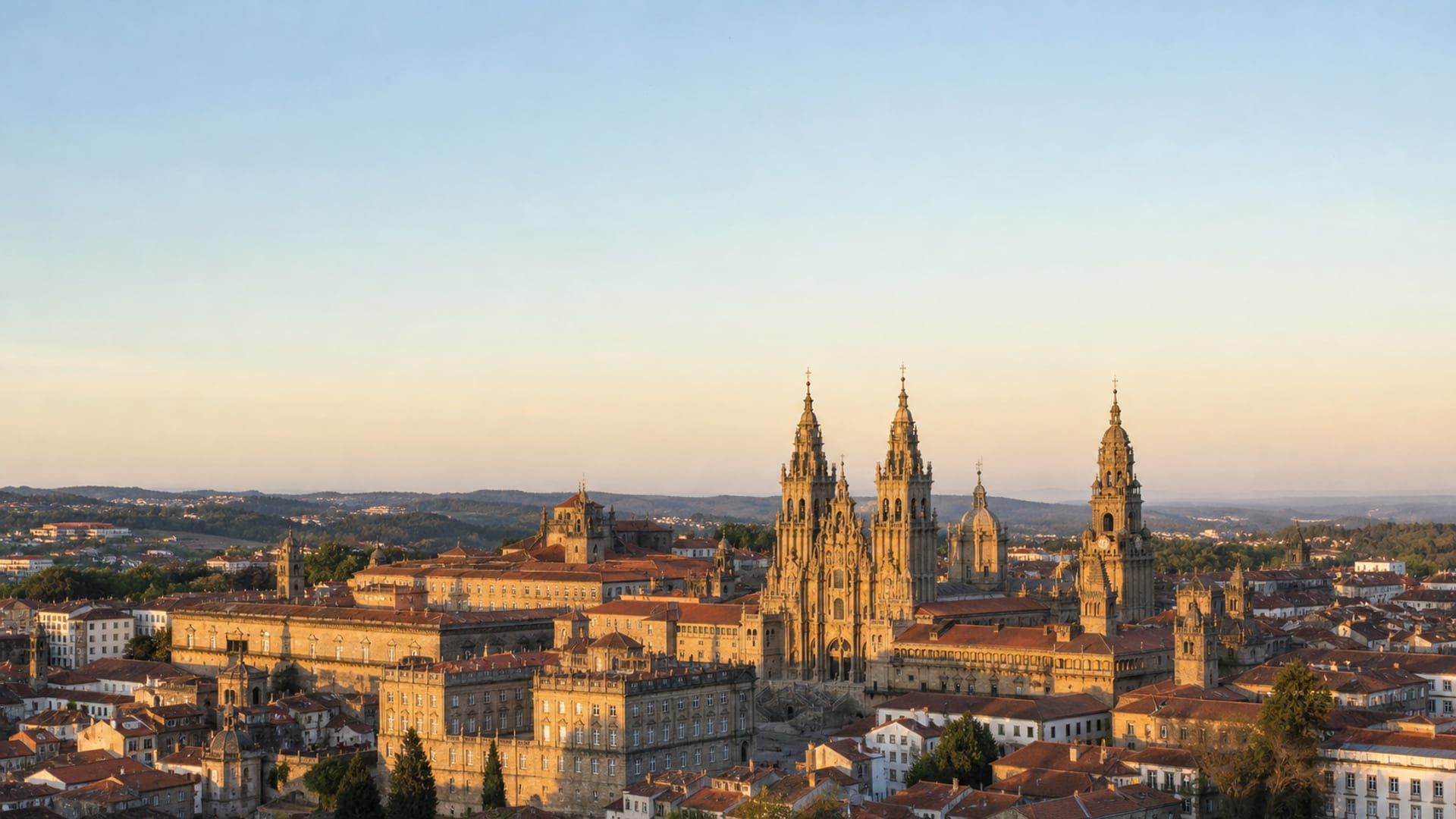
Santiago de Compostela is the capital of Galicia, a rainy region in the far northwest of Spain. The city grew around the shrine of Saint James the Apostle, whose remains, according to tradition, rest beneath its cathedral, and it has drawn pilgrims since the 9th century.
Today, Santiago is the final stop of the Camino de Santiago, a network of walking routes from across Europe. A record 530,987 pilgrims completed the walk in 2025, and most finish in Praza do Obradoiro, in front of the cathedral. The old town around it has been a UNESCO World Heritage Site since 1985.
Santiago is also a university city with granite streets, a busy food market, and restaurants serving Galician octopus and shellfish. This guide covers where to stay, how to get around, what to see, and how to plan five days in the city.
Useful things to know

Main language(s): Galician, Spanish
Bos días (bohs DEE-ahs) – Good morning
Por favor (pohr fah-VOR) – Please
Grazas (GRAH-thahs) – Thank you
Fala inglés? (FAH-lah een-GLEHS?) – Do you speak English?
Canto custa? (KAHN-toh KOOS-tah?) – How much does it cost?

Currency: Euro (EUR, €)

Cash and cards: Hotels, restaurants, and most shops accept cards and contactless payments. Carry €20 to €40 ($22 to $45) in cash for small bars and market stalls.

Tipping: Tips are optional in Spain. Leave 5% to 10% at restaurants for good service, and round up the bill at cafés and bars.

Traditional food: Pulpo a la gallega, pimientos de Padrón, caldo gallego, empanada gallega, lacón con grelos, and tarta de Santiago are the Galician dishes you will see most often in Santiago.

Water and coffee costs: A bottle of water costs €1 to €1.50 ($1.10 to $1.70), and an espresso costs €1.20 to €1.80 ($1.40 to $2).

Taxis and ride apps: Licensed taxis wait at ranks in the center, at train and bus stations, and at the airport. Cabify also operates in the city.

Plug and voltage: Type C/F socket, 230V

Dining and shop opening hours: Cafés serve breakfast from 8:00 am to 11:00 am. Restaurants serve lunch from 1:00 pm to 4:00 pm and dinner from 8:30 pm to 11:30 pm. Many shops close from 2:00 pm to 5:00 pm and on Sundays.

Emergency number: 112 for police, fire rescue, and medical emergencies
Where to stay in Santiago de Compostela
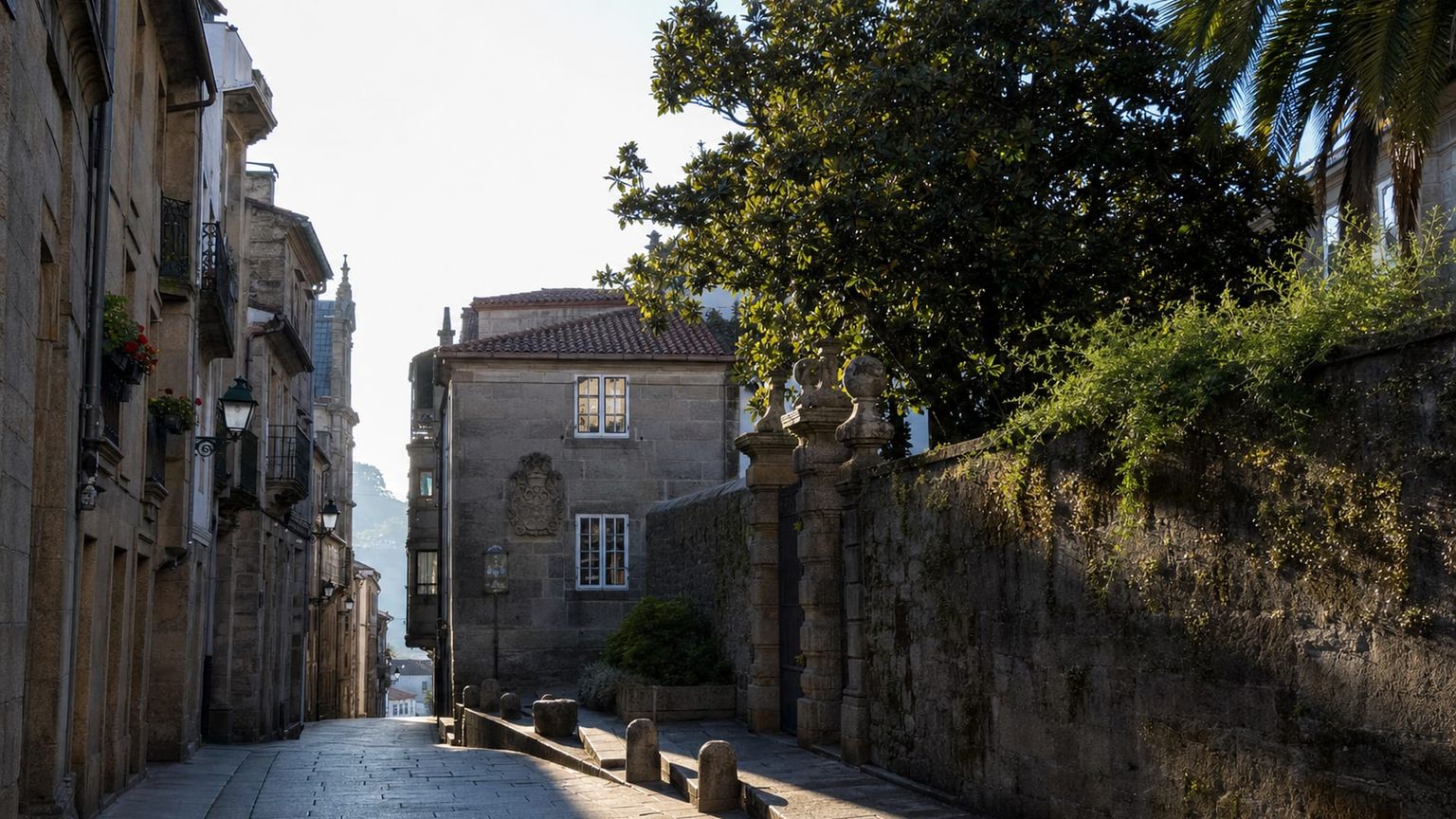
Casco histórico is Santiago’s medieval core, a UNESCO-listed maze of granite streets, stone arcades, and squares around the cathedral. Pilgrims finish the Camino in Praza do Obradoiro, and most of the city’s museums, churches, and traditional restaurants are a few minutes’ walk apart.
Best for: First-time visitors who want the cathedral, museums, and old-town restaurants within walking distance
What to expect: Pilgrims arriving throughout the day, tour groups near the cathedral, and busy tapas bars on Rúa do Franco in the evening
Hotel prices: Well-rated hotels in this area cost €120 to €250 ($135 to $280) per night.
Distance to major sights: A 10-minute walk to the cathedral and Praza do Obradoiro
Quietness: Squares and main streets stay busy until late evening. Rooms facing side streets or inner courtyards are quieter.
Main trade-off: Rooms in historic buildings are often smaller, and some have no elevator or only a narrow one.
Good to know: Only taxis, residents, and delivery vehicles can drive into the old town. Ask your hotel in advance for the nearest taxi drop-off point.
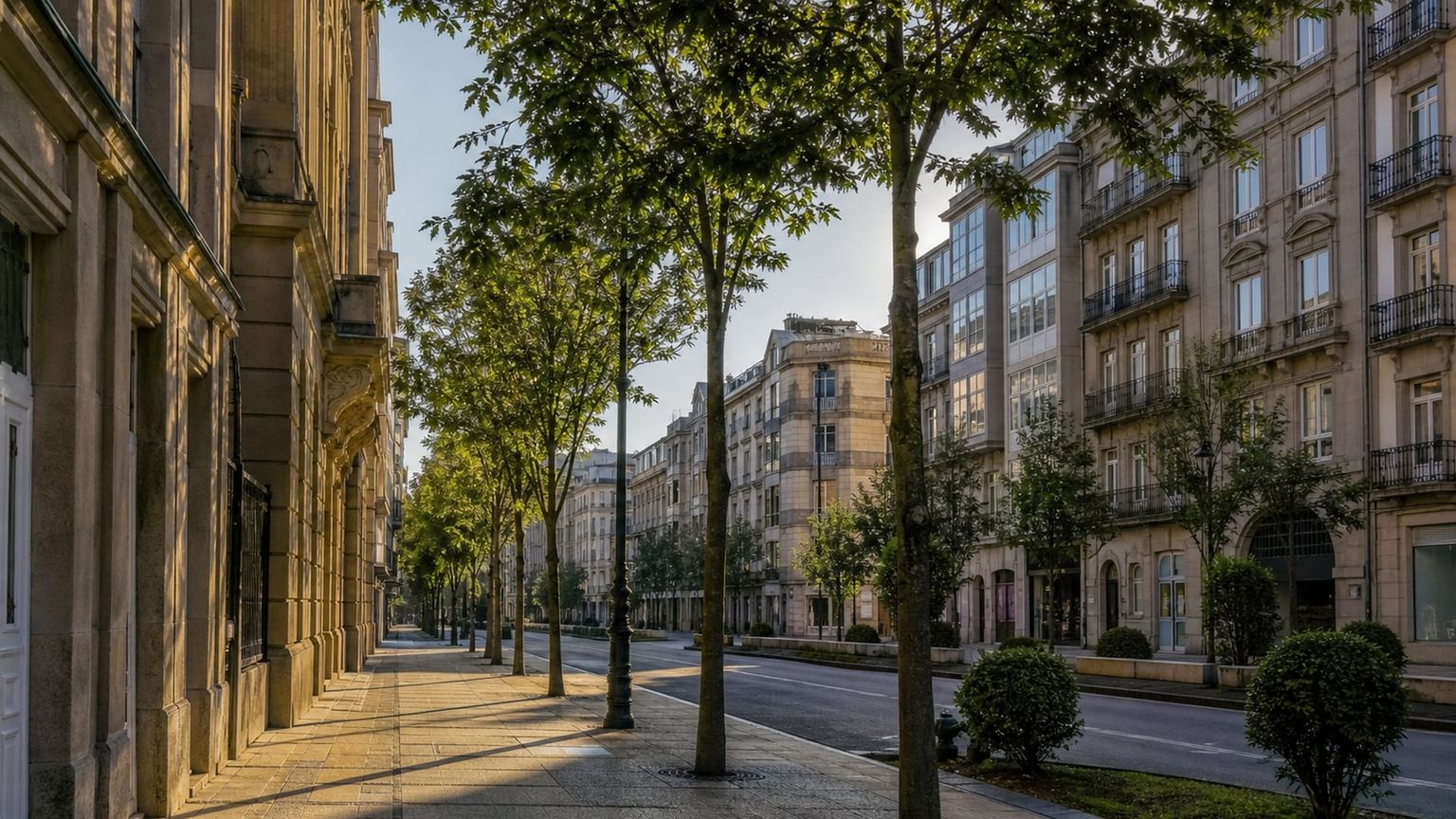
Ensanche, also called Zona Nova, is the modern district directly south of the old town, built between the 1950s and 1980s. Its wide streets hold most of Santiago’s shops, large hotels, and tapas bars, and the district extends from Praza de Galicia down toward the train station.
Best for: Travelers arriving by train or car who want larger rooms and shopping streets close to the old town
What to expect: Busy shops, offices, and cafés during the day, and locals and students filling the tapas bars around Praza Roxa at night
Hotel prices: Well-rated hotels in this area cost €90 to €200 ($100 to $225) per night.
Distance to major sights: A 10- to 15minute walk to the Cathedral of Santiago
Quietness: Most streets are quieter at night than the old town, except for the bar streets around Montero Ríos and Praza Roxa.
Main trade-off: The apartment blocks lack the old town’s character, and most sightseeing starts with an uphill walk.
Good to know: Santiago’s train station is at the southern end of Ensanche, so arriving by rail means a short taxi ride to your hotel.
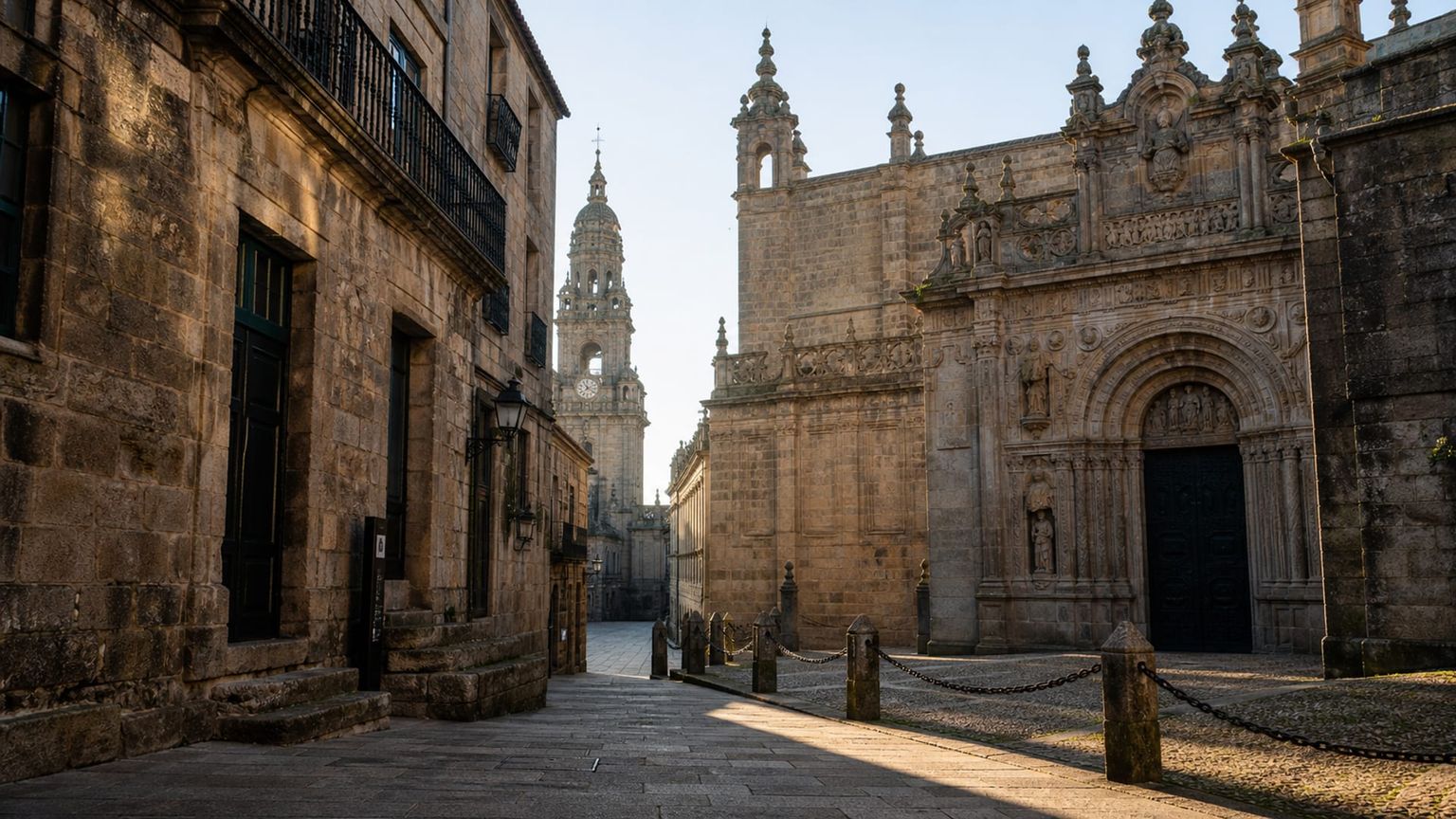
San Pedro is the neighborhood just northeast of the old town, built along Rúa de San Pedro, the street that pilgrims on the Camino Francés, del Norte, and Primitivo follow on their final stretch. Stone houses, small guesthouses, bakeries, and well-regarded restaurants line its streets.
Best for: Travelers who want a local neighborhood and the pilgrim atmosphere within walking distance of the cathedral
What to expect: Pilgrims arriving throughout the day, neighborhood shops, and restaurants such as O Dezaseis and Michelin-listed A Maceta
Hotel prices: Well-rated hotels in this area cost €80 to €150 ($90 to $170) per night, and most are small guesthouses.
Distance to major sights: A 10- to 15-minute walk to the Cathedral of Santiago
Quietness: Side streets are quiet at night, while the tapas bars near Porta do Camiño stay busy until late.
Main trade-off: San Pedro has few full-service hotels, so travelers who want a spa or concierge will find more options in the old town.
Good to know: Pilgrim numbers peak in summer, when the area’s small guesthouses fill quickly, so book early for June to September.
Avoid hotels near Santiago de Compostela Airport (SCQ) in Lavacolla, 7 miles (11 km) from the old town, with few restaurants nearby. Residential districts such as Conxo and Santa Marta also require a bus or taxi ride to reach the cathedral.
Hotel deals
Getting around Santiago de Compostela
Santiago has no metro or tram. City buses and taxis connect the old town with the airport and train station, and regional trains cover longer trips.

Train
for day trips and longer distances
Renfe trains reach A Coruña in 30 to 40 minutes for €6 to €10 ($7 to $11) and Vigo in about 1 hour for €7 to €15 ($8 to $17). Seven direct high-speed trains a day reach Madrid in 3 to 3.5 hours. Fares range from €25 to €100 ($28 to $112), depending on the train type and how early you book.

Bus
for the airport and outer neighborhoods
The city bus company, Tussa, charges €1 ($1.10) per ride; you can pay in cash on board. Line 6A connects Santiago de Compostela Airport (SCQ) with the city center for the same fare, and runs every 20–30 minutes. The journey takes about 30 minutes.

Taxi
for convenience or late hours
Taxis charge a fixed fare of €23 ($26) between the airport and the city center, and the ride takes 15 to 20 minutes. Licensed taxis can drive into the old town, which helps if you have luggage. Find one at a taxi rank near the old town or train station, or book by phone.
*Prices are based on rates updated as of October 2026 and may change at the time of travel.
Take bus 6A for an inexpensive airport transfer, book a taxi if you travel with heavy luggage or late at night, and use Renfe trains for day trips to Madrid, A Coruña, or Vigo.
Iconic places in Santiago de Compostela
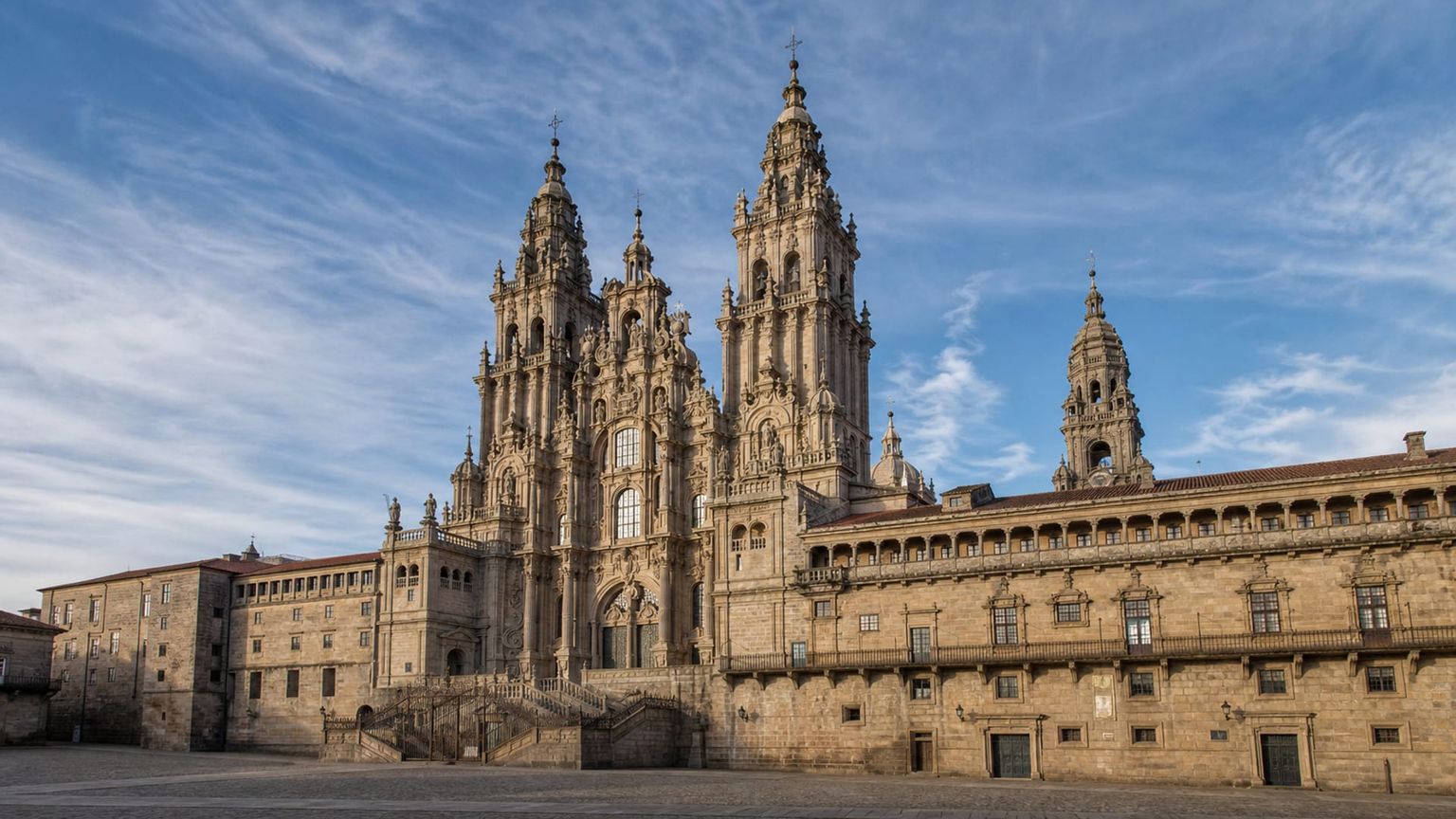
Santiago de Compostela Cathedral
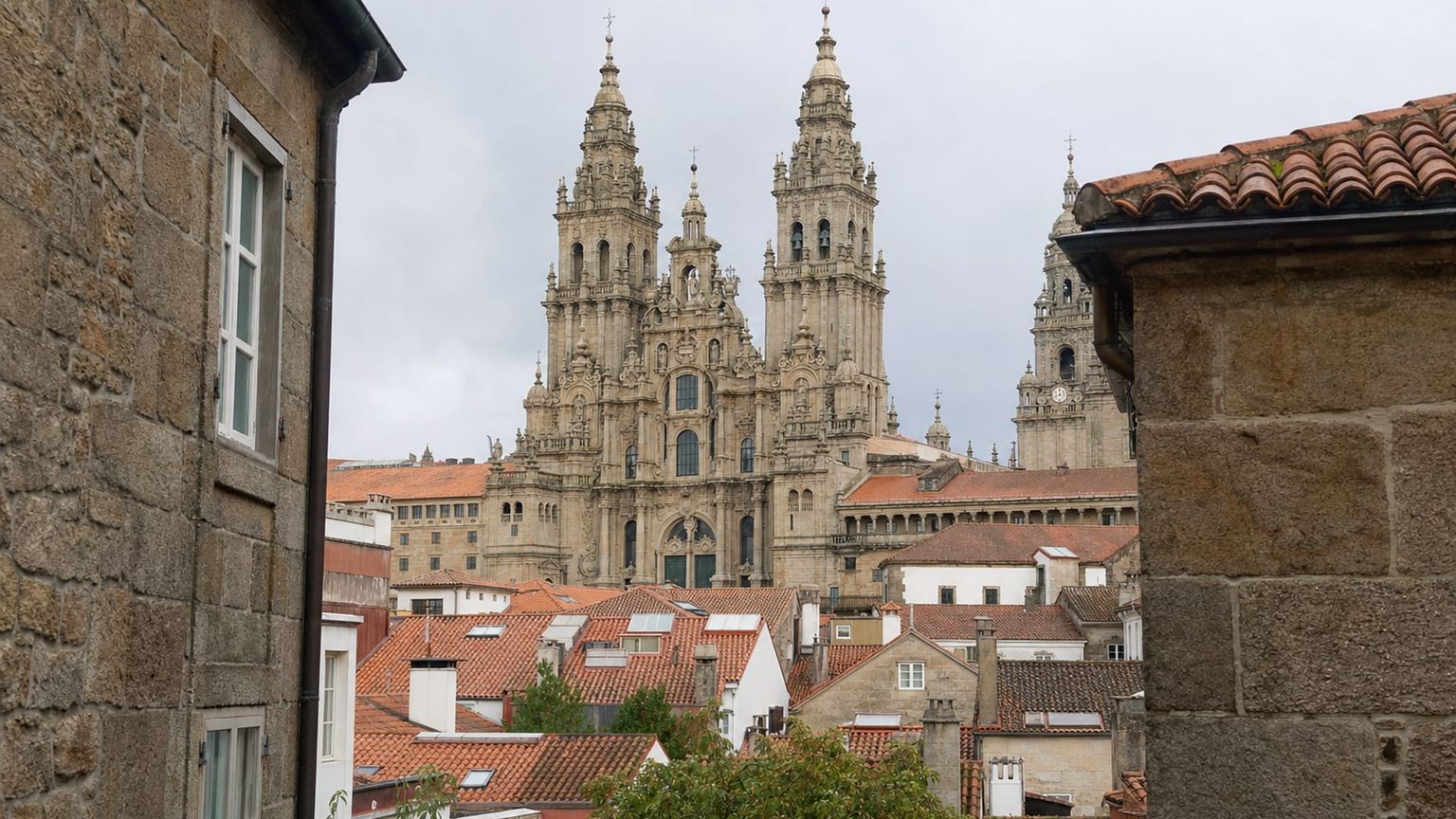
The Romanesque cathedral holds the tomb traditionally attributed to Saint James and marks the end of every Camino route. Inside, see the 12th-century Pórtico de la Gloria and the apostle’s crypt, then join a guided rooftop tour for views over the old town.
Time needed: About 2 to 3 hours
Entry: Free; open from 7:00 am to 9:00 pm. Museum tickets cost €9 ($10) and rooftop tours €15 ($17). Visit the official site for details.
Tip: Book the rooftop tour online in advance, since small-group slots sell out in summer.
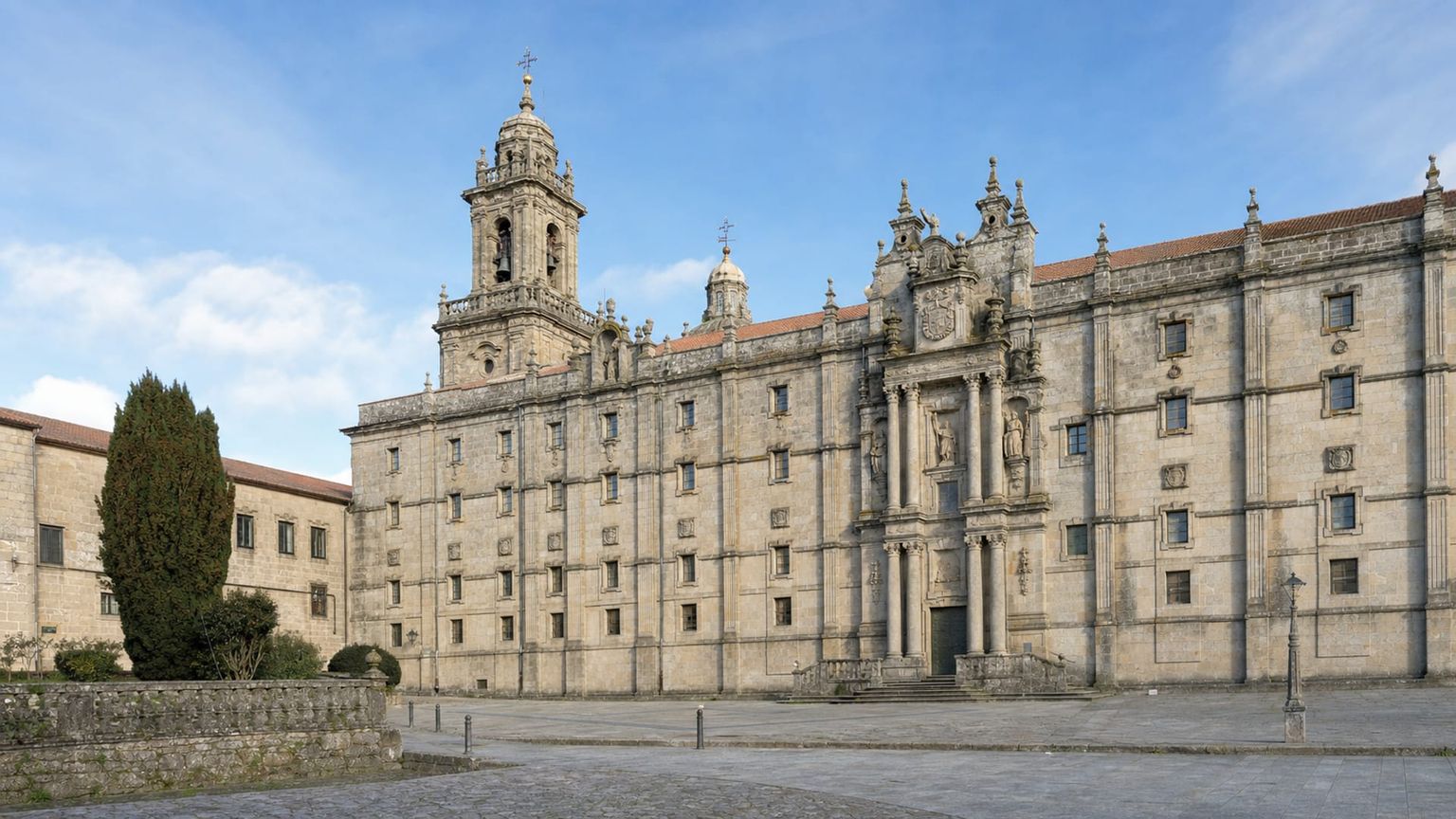
Monastery of San Martiño Pinario
Facing the cathedral’s north side, this former Benedictine monastery was the largest in Galicia and the second-largest in Spain after El Escorial. Since January 2026, it has housed the Diocesan Museum, which includes the church with its Baroque altarpiece and 17th-century choir stalls.
Time needed: About 1 to 2 hours
Entry: Museum admission costs €5 ($6). Entry is free with a Cathedral Museum ticket. Visit the official site for details.
Tip: The museum is closed on Sundays, so plan a weekday or Saturday morning visit.
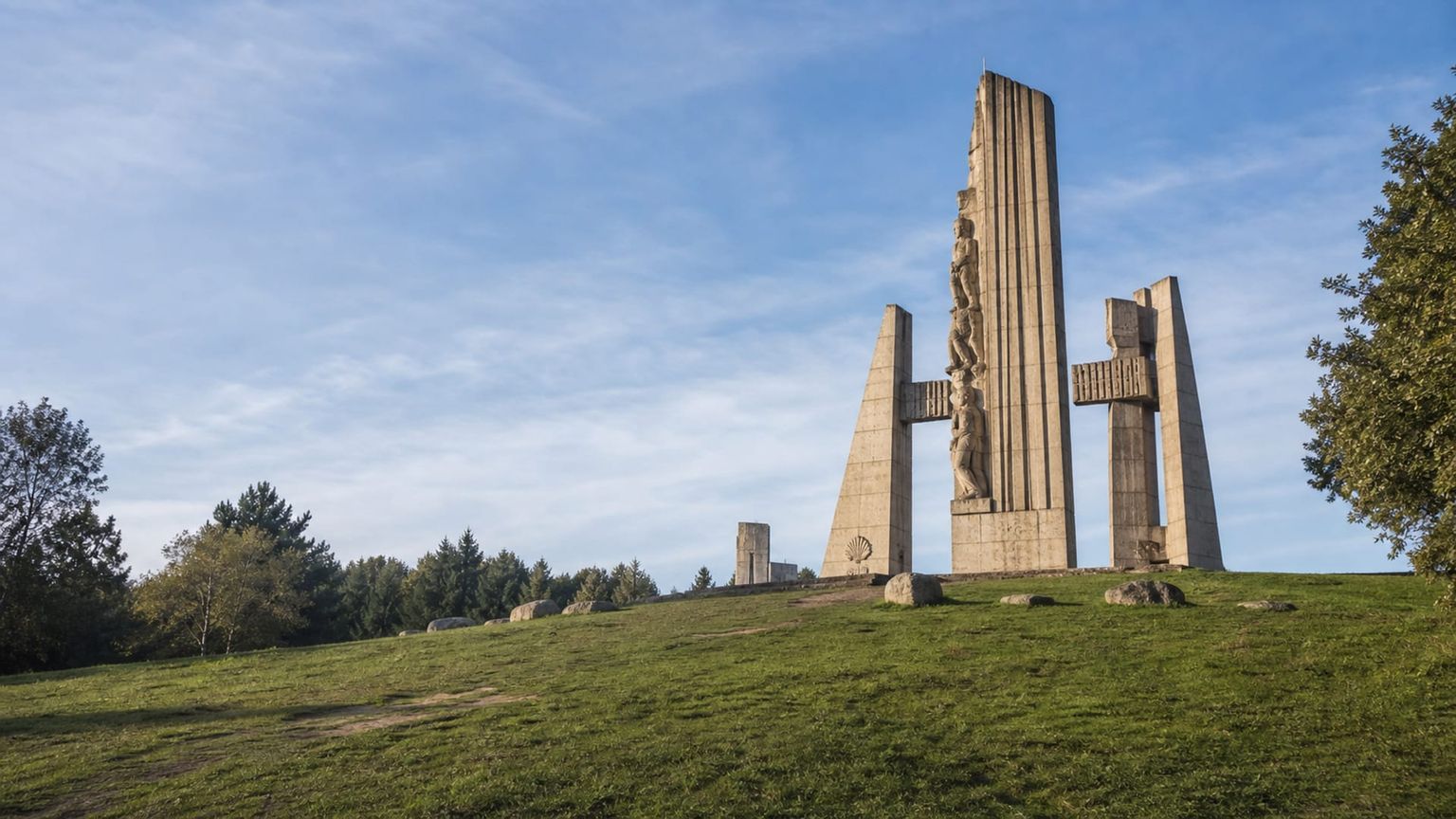
Monte do Gozo
This 1,250-foot (380-meter) hill, 3 miles (5 km) east of the cathedral, is where pilgrims on the Camino Francés traditionally caught their first sight of the cathedral towers. Two bronze pilgrim statues by José María Acuña point toward the city, and a monument marks the 1989 papal visit.
Time needed: 2 to 3 hours, including the walk back
Entry: Free and open at all hours
Tip: Take a taxi up and walk the last 3 miles (5 km) of the Camino back to the cathedral.
Overlooked places in Santiago de Compostela

Collegiate Church of Santa María a Real do Sar
Built in the 12th century beside the River Sar, this Romanesque church is famous for its leaning columns. Its cloister, with capitals carved by Maestro Mateo’s workshop, adjoins a small museum.
Time needed: 45 minutes to 1 hour
Entry: Tickets cost €2 ($2.25). Admission is free with a Cathedral Museum ticket. Visit the official site for details.
Tip: Go late afternoon for softer light over the old town.

Museo do Pobo Galego
The former convent of San Domingos de Bonaval houses this museum of Galician crafts, costumes, and seafaring life. Its highlight is Domingo de Andrade’s 17th-century triple spiral staircase.
Time needed: About 1 hour
Entry: Standard tickets cost €5 ($6). Admission is free on Sundays, and no booking is required. The museum is closed on Mondays. Visit the official site for details.
Tip: Poet Rosalía de Castro is buried in the church’s Pantheon of Illustrious Galicians.
What to eat in Santiago de Compostela
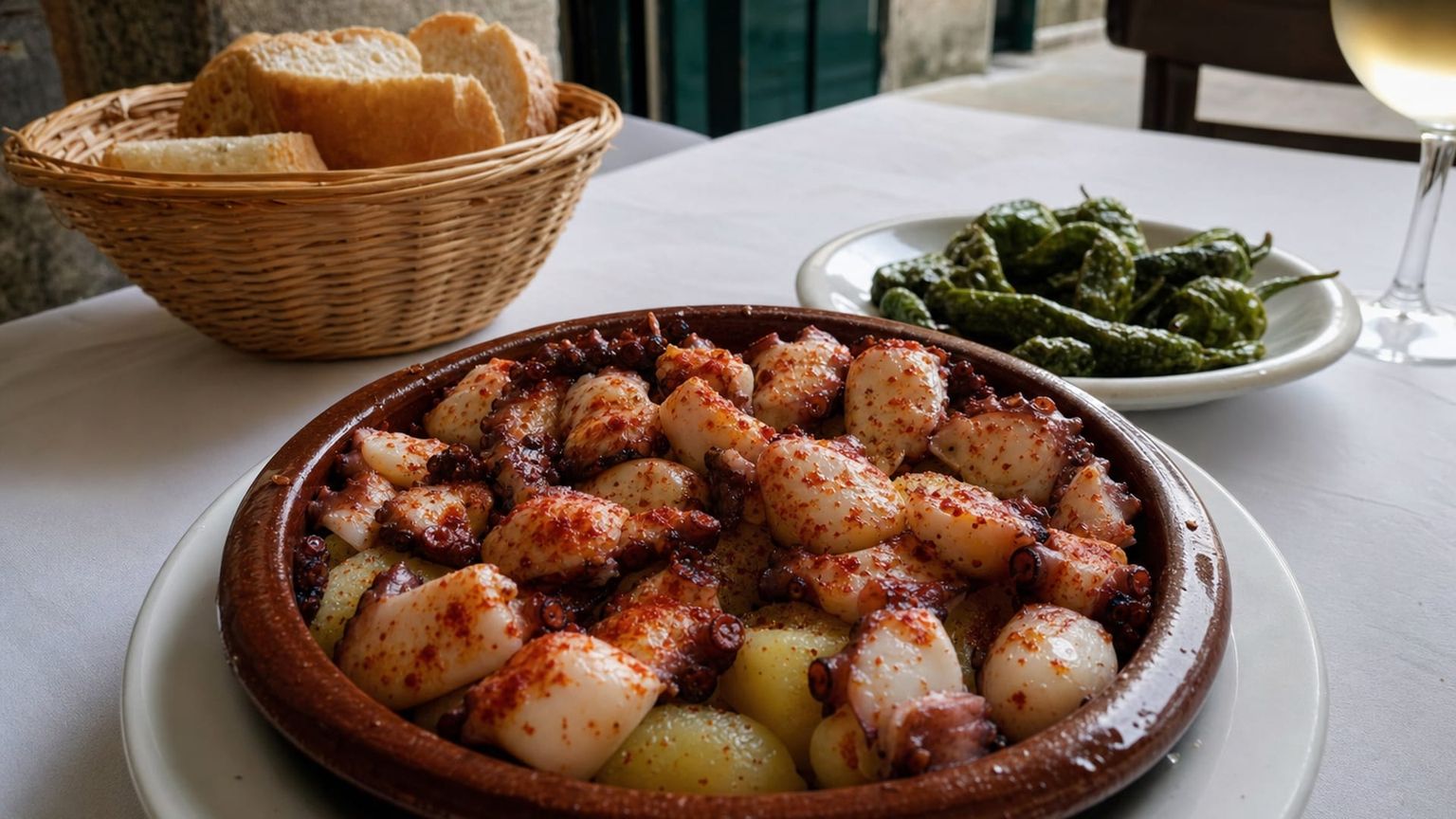
In Santiago, a meal often starts with octopus or Padrón peppers at a tapas bar and ends with a slice of almond cake. You will find these four dishes on menus across the old town.
Pulpo a la gallega
Boiled octopus is sliced onto a wooden plate and dressed with olive oil, coarse salt, and smoked paprika. O Gato Negro, a no-reservations tavern on Rúa da Raíña, has served it since 1922.
Tarta de Santiago
This dense cake of ground almonds, eggs, and sugar carries a powdered-sugar cross of Saint James. The cloistered nuns of San Paio de Antealtares bake a flourless version and sell it from a window behind the convent, for cash only.
Empanada gallega
This Galician pie wraps fillings such as tuna, cod, or pork in a golden, bread-like crust, and bars sell it by the slice. Entre Rúas, a small restaurant in an old-town alley, lists its homemade empanada among its signature dishes.
Lacón con grelos
This winter staple combines cured pork shoulder with turnip greens, potatoes, and chorizo, all simmered together. A Nave de Vidán serves it as part of its Galician cocido menu from December to March, when local greens are in season.
Best time to visit
Santiago looks different in every season, from busy, sunlit squares in July to misty, near-empty streets in January.
Best for: Walking the old town in mild weather before the summer pilgrim peak
What you get: Temperatures range from 45°F to 66°F (7°C to 19°C). Expect rain on about half the days, so pack a light waterproof jacket.
Trade-offs: Rain is frequent, especially in March and April.
Best for: Dry weather, long evenings, and the Feast of Saint James on July 25
What you get: Temperatures range from 55°F to 75°F (13°C to 24°C). July and August see rain on only 8 days a month, the fewest all year.
Trade-offs: Squares and cathedral lines are at their busiest, and hotel rates rise.
Best for: Warm September days, chestnut season, and thinner crowds than in summer
What you get: Temperatures range from 46°F to 73°F (8°C to 23°C). September feels like an extension of summer, with warm afternoons.
Trade-offs: Rain returns in October, while November is rainy more than half the month.
Best for: Quiet museums, uncrowded squares, and hearty winter cocido menus
What you get: Temperatures range from 41°F to 57°F (5°C to 14°C). Frost and snow are rare, so the old town is walkable all winter.
Trade-offs: Winter is the wettest season, with rain on 13–16 days each month.
A 5-day plan in Santiago de Compostela
Santiago’s old town is compact, but its sights are worth taking your time with. This plan gives each day a theme: the cathedral, the pilgrims’ route into the city, the market and parks, and a final morning for shopping and coffee.
Take a taxi from Santiago de Compostela Airport (SCQ) to your hotel and rest before heading out in the early evening. Walk to Praza do Obradoiro to watch pilgrims arrive in front of the cathedral, many of them celebrating on the granite paving. Continue to Praza da Quintana and sit on its wide steps as the light fades, then try your first tapas on Rúa do Franco or Rúa da Raíña, where many bars serve a free snack with each drink.
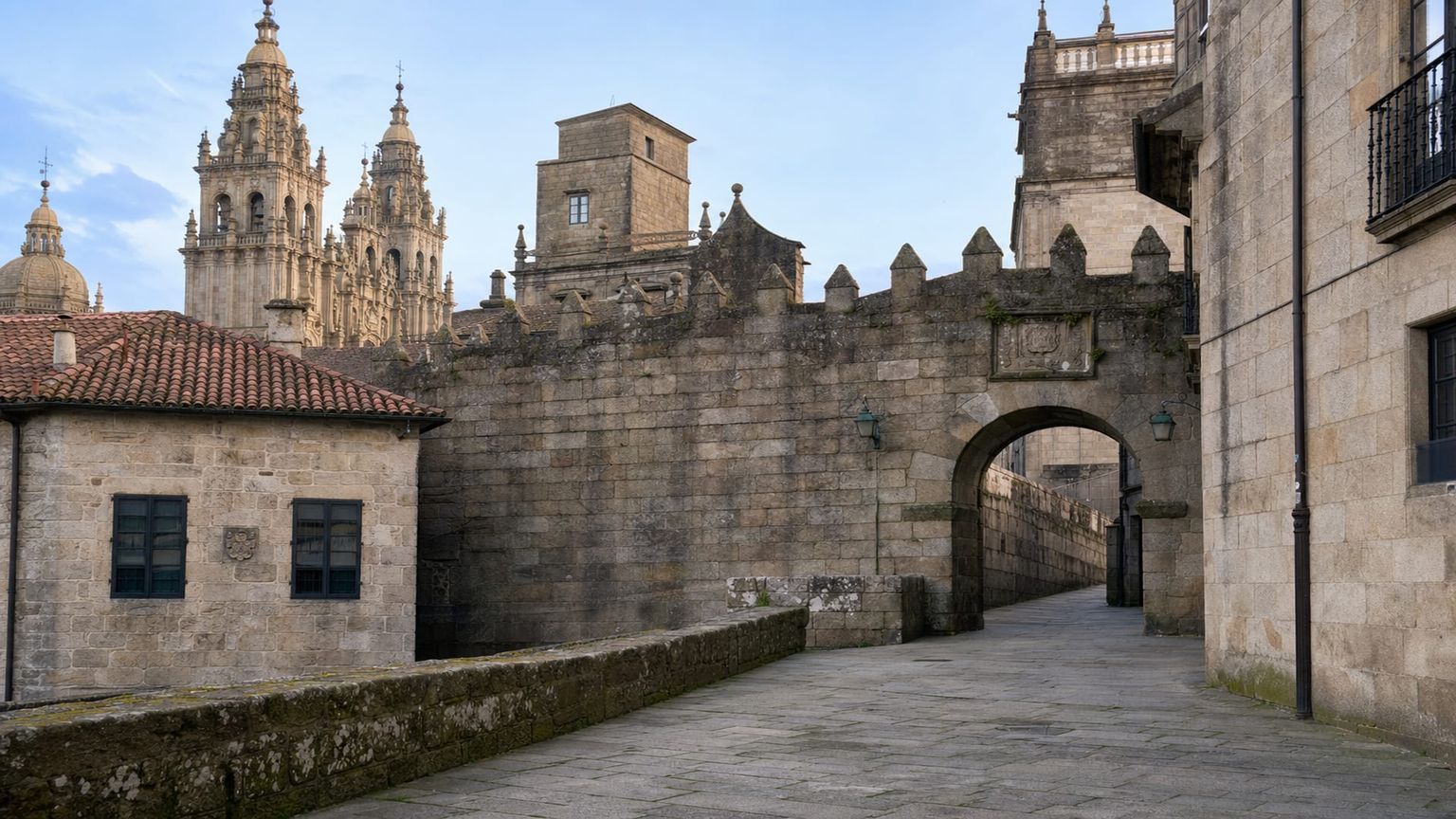
Start the day at Santiago de Compostela Cathedral with a morning slot for the Pórtico de la Gloria, the 12th-century carved entrance by Maestro Mateo. Then explore the nave and descend to the apostle’s crypt. If you booked the rooftop tour, climb the stepped granite roofs before lunch near Praza da Inmaculada. In the afternoon, cross to San Martiño Pinario for its gilded altarpiece and choir stalls, and end the day in the four courtyards of the Hostal dos Reis Católicos.
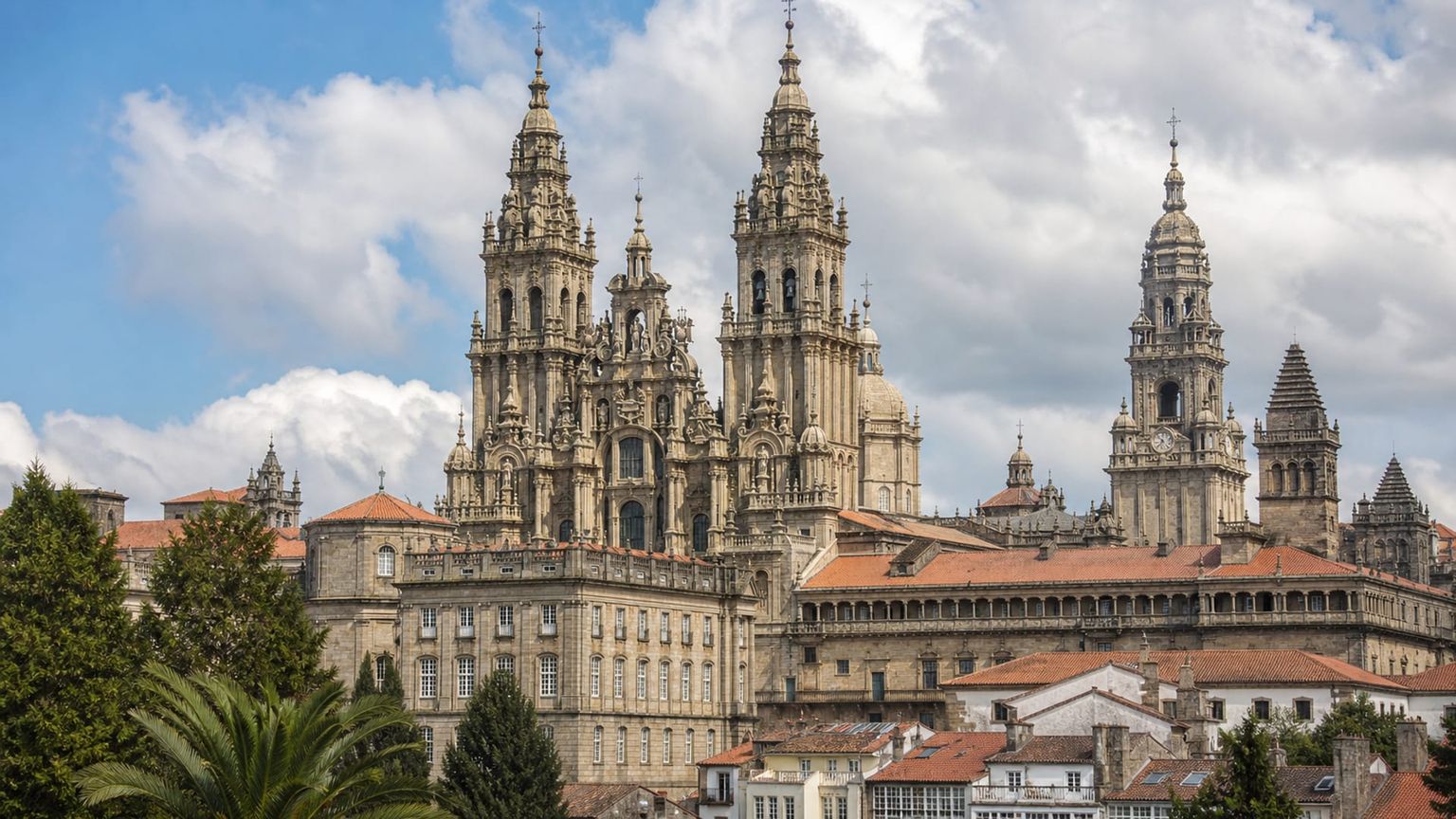
Take a taxi to Monte do Gozo in the morning, see the pilgrim statues, then follow the yellow Camino arrows downhill into the city, as pilgrims have done for centuries. The route enters the old town along Rúa de San Pedro, lined with bakeries and small bars. Stop for lunch in San Pedro, then spend the afternoon at the Museo do Pobo Galego and on the terraces of Parque de Bonaval, which overlook the cathedral towers.
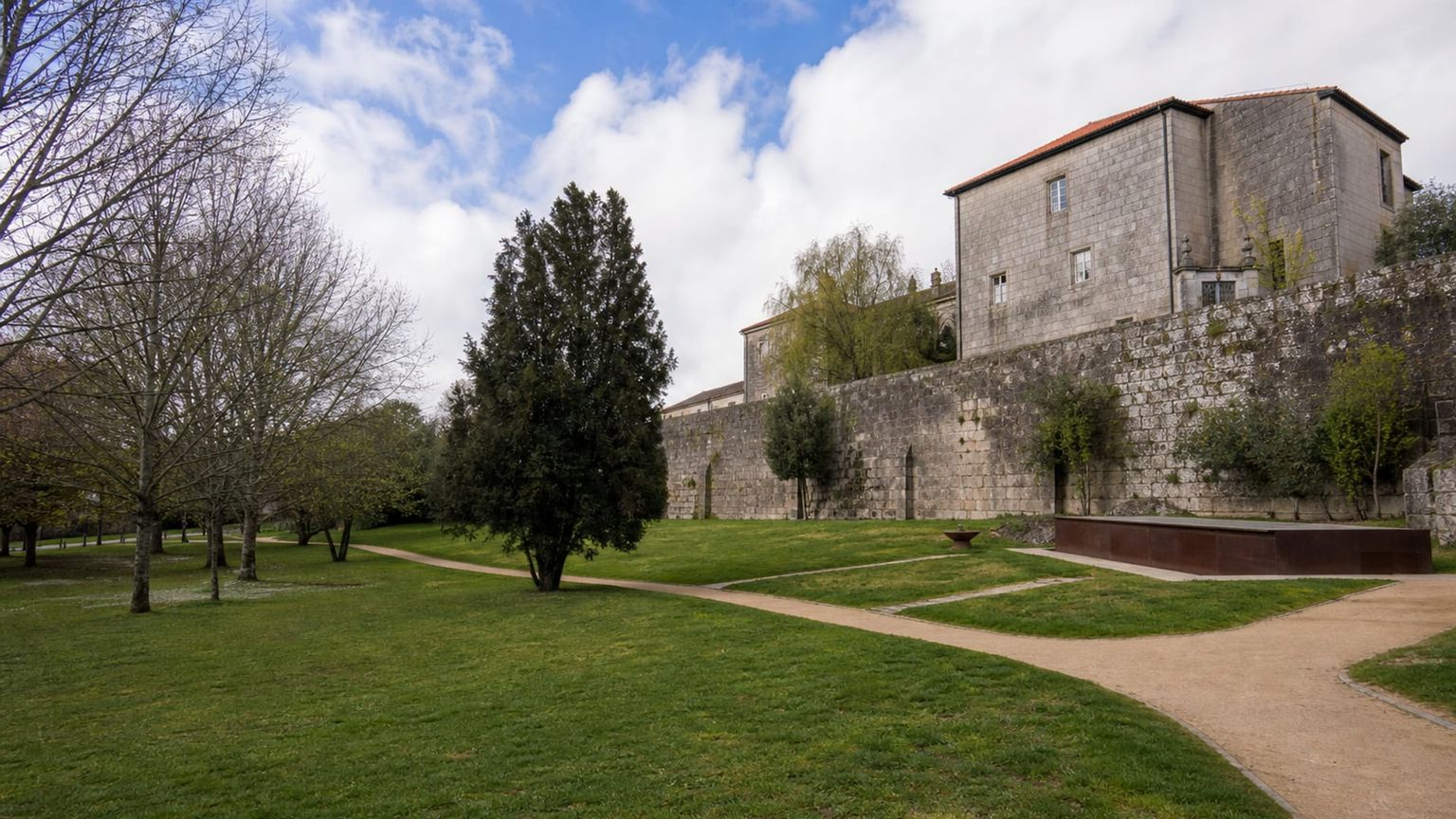
Reach the Mercado de Abastos, the city’s second most visited site after the cathedral, by mid-morning, when the stalls are busiest. Look for the local women outside selling cheese, eggs, and Padrón peppers, then buy shellfish at a stall and have Marisco Manía cook it on the spot. In the afternoon, walk the Paseo dos Leóns in Alameda Park for classic views of the cathedral, then head southeast to the Collegiate Church of Santa María a Real do Sar. Finish with wine and tapas back in the old town.

Spend your last morning under the stone arcades of Rúa do Vilar and Rúa Nova, browsing small shops and bakeries. Pick up a tarta de Santiago to take home, then have a final coffee at Café Casino on Rúa do Vilar or Café Literarios on Praza da Quintana. Collect your bags and take a taxi to the airport with time to spare.
Business-class flights from the US to Santiago de Compostela
Business-class trips from the US to Santiago de Compostela (SCQ) include at least one stop, most often in Madrid (MAD), with Dublin (DUB) and London (LHR) as other options.
New York (JFK) to Santiago de Compostela (SCQ)
Iberia and American Airlines operate flights to Santiago de Compostela (SCQ) via Madrid (MAD), with the shortest trips taking about 10 hours. Business-class round-trip tickets on this route cost $5,200 to $7,000. Aer Lingus flights from New York (JFK) to Santiago de Compostela (SCQ) via Dublin (DUB) start at $4,500, but with the short Dublin (DUB) to Santiago (SCQ) leg in economy instead of business class.
Los Angeles (LAX) to Santiago de Compostela (SCQ)
Iberia, American Airlines, and British Airways connect to Santiago de Compostela via Madrid (MAD), with extra stops in London (LHR), New York (JFK), or Bilbao (BIO) on some itineraries. Trips take 18 hours on average; business-class round-trip tickets start at $4,800 and can exceed $8,500.
Santiago de Compostela is more than a pilgrimage stop
Most visitors come for the cathedral, but Santiago also offers a busy food market, a university-town tapas scene, and quiet hillside parks. Giving each day one focus, from the cathedral to the Camino route, the market, and Alameda Park, leaves room for long lunches and an unhurried hour on the steps of Praza da Quintana. When your dates are set, AranGrant travel experts can find business-class flights to Santiago de Compostela and a hotel in the old town or Ensanche that suits your plans.