

Chapters:

Need help with your trip?
Our support team is available 24/7. Request a callback or call us directly at (833) 619-0908
Rotterdam trips often start with the same loop, the Markthal, the Cube Houses, the Erasmus Bridge, then a quick jump to another photo stop. Travelers often miss how much time the city gives up to crossings, tram transfers, and river distance.
That sequence can work, but it compresses the center into short visits and leaves the quieter districts, the waterfront, and Kinderdijk for later, when energy and daylight are thinner.
This guide sets out the city in a more even order, with a base, transport, food stops, and day trips arranged so each day has a clear purpose.
Useful things to know
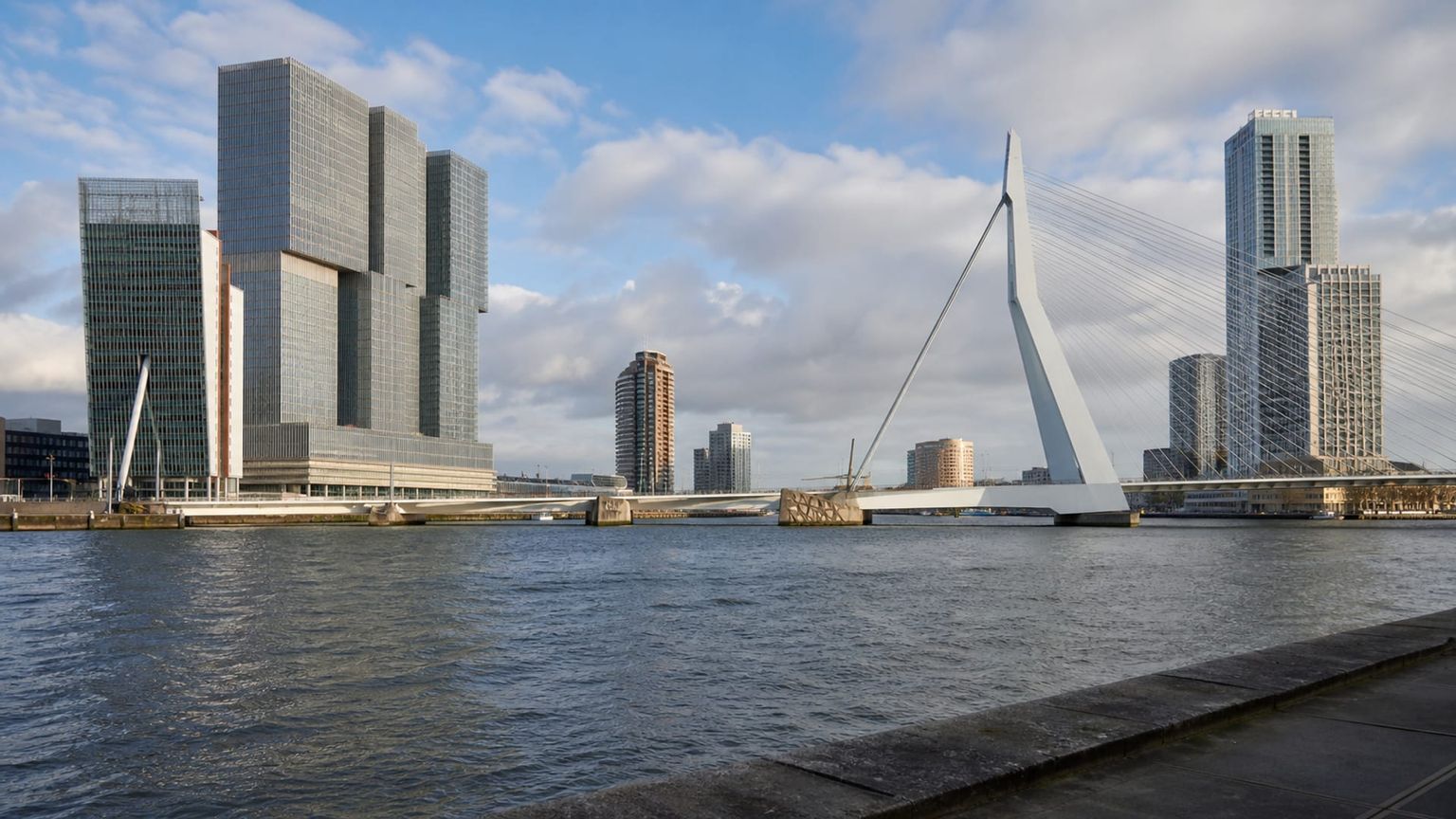

Main language(s): Dutch
Hallo (HAH-loh) – Hello
Alstublieft (AHL-stu-blieft) – Please
Dank u wel (dahng oo vel) – Thank you
Spreekt u Engels? (spreekt oo ENG-uhls) – Do you speak English?
Hoeveel kost het? (hoo-vale kost ut) – How much does it cost?

Currency: The local currency is the euro (EUR, €).

Cash and cards: Cards and contactless are widely accepted; carry about €20 to €40 ($22 to $43) in cash for small purchases.

Tipping: Round up small bills; add about 5-10% in restaurants if service is good.

Traditional food: Herring, bitterballen, kapsalon, stroopwafels

Water and coffee costs: Water ~€2 ($2), bar espresso ~€3 ($3).

Taxis and ride apps: Uber and Bolt operate here; availability can thin late at night.

Plug and voltage: Type C/F socket, 230V

Dining and shop opening hours: Breakfast is about 07:00-10:00, lunch 12:00-14:00, and dinner 18:00-21:00. Many kitchens close between lunch and dinner.

Emergency number: Call 112 for police, fire, or ambulance.
Where to stay in Rotterdam
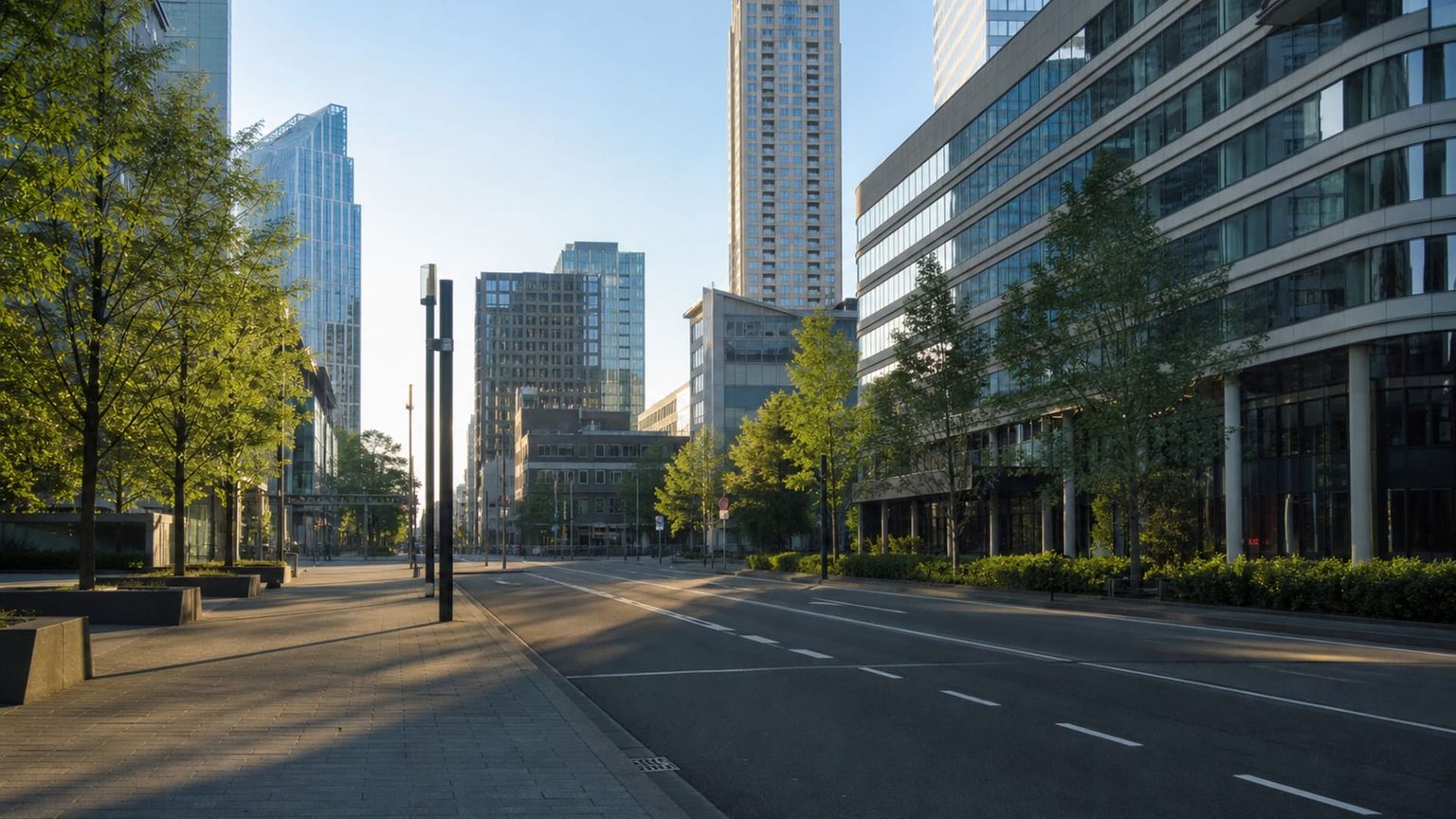
Rotterdam’s core stretches around Coolsingel, Beurs, and the central shopping streets, with the main rail hub at its edge. Staying here puts you closest to museums, the Markthal, and easy tram and metro access across the city.
Best for: First-time visits, shopping, and easy transit access
What to expect: Busy daytime sidewalks, office workers at lunch, and steady evening traffic near restaurants and bars.
Hotel prices: Usually about €150 to €280 (~$165 to ~$308) per night for well-rated stays
Distance to major sights: 5 to 15 minutes on foot to Markthal, about 10 minutes by tram to the Maritime Museum
Quietness: Lively by day and early evening, then quieter on side streets after retail hours.
Main trade-off: This is the most convenient base, but room rates run higher and some blocks near the main roads feel busy late.
Good to know: Pick a hotel a block or two off the busiest streets if you want easier sleep without giving up central access.
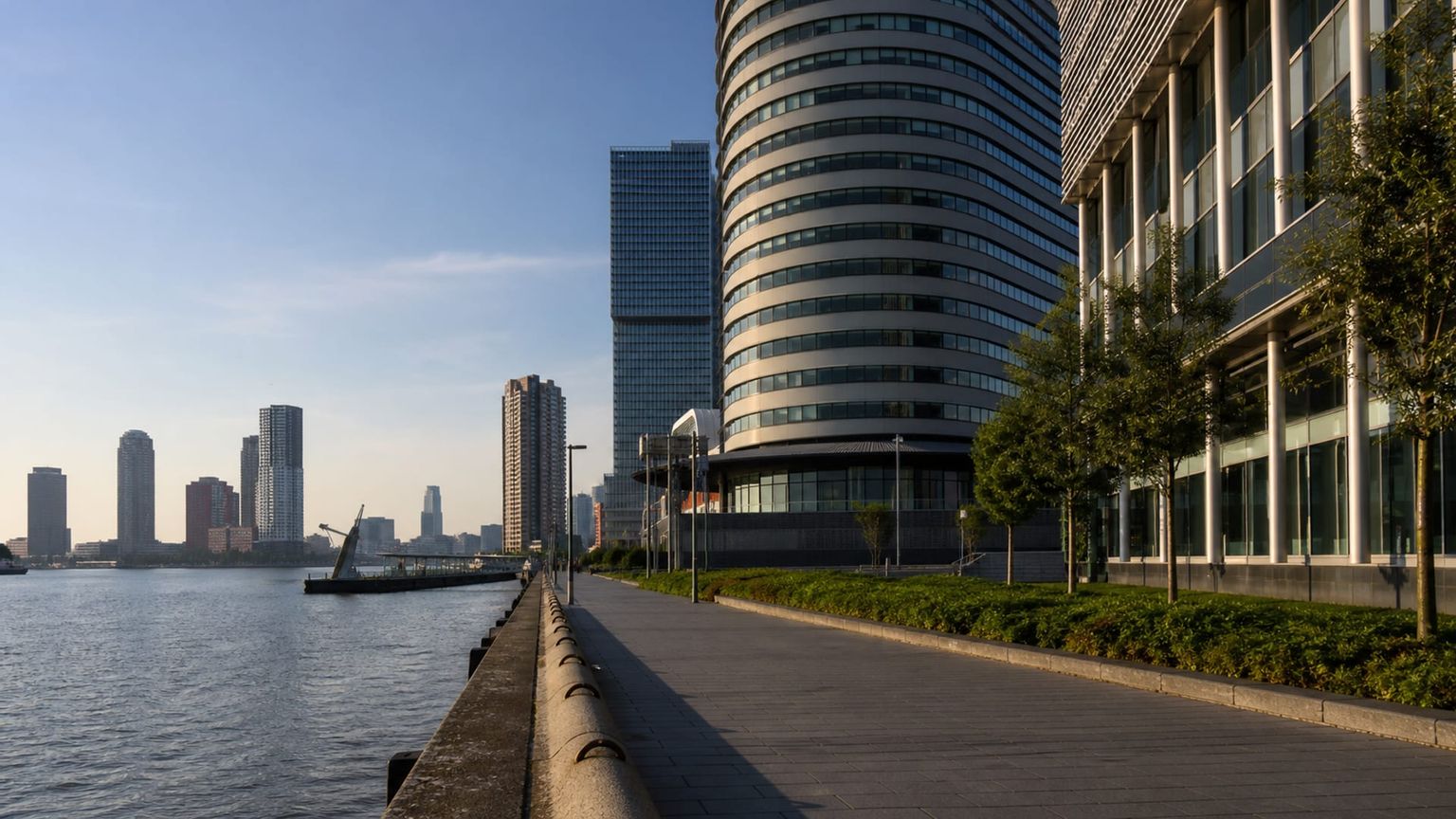
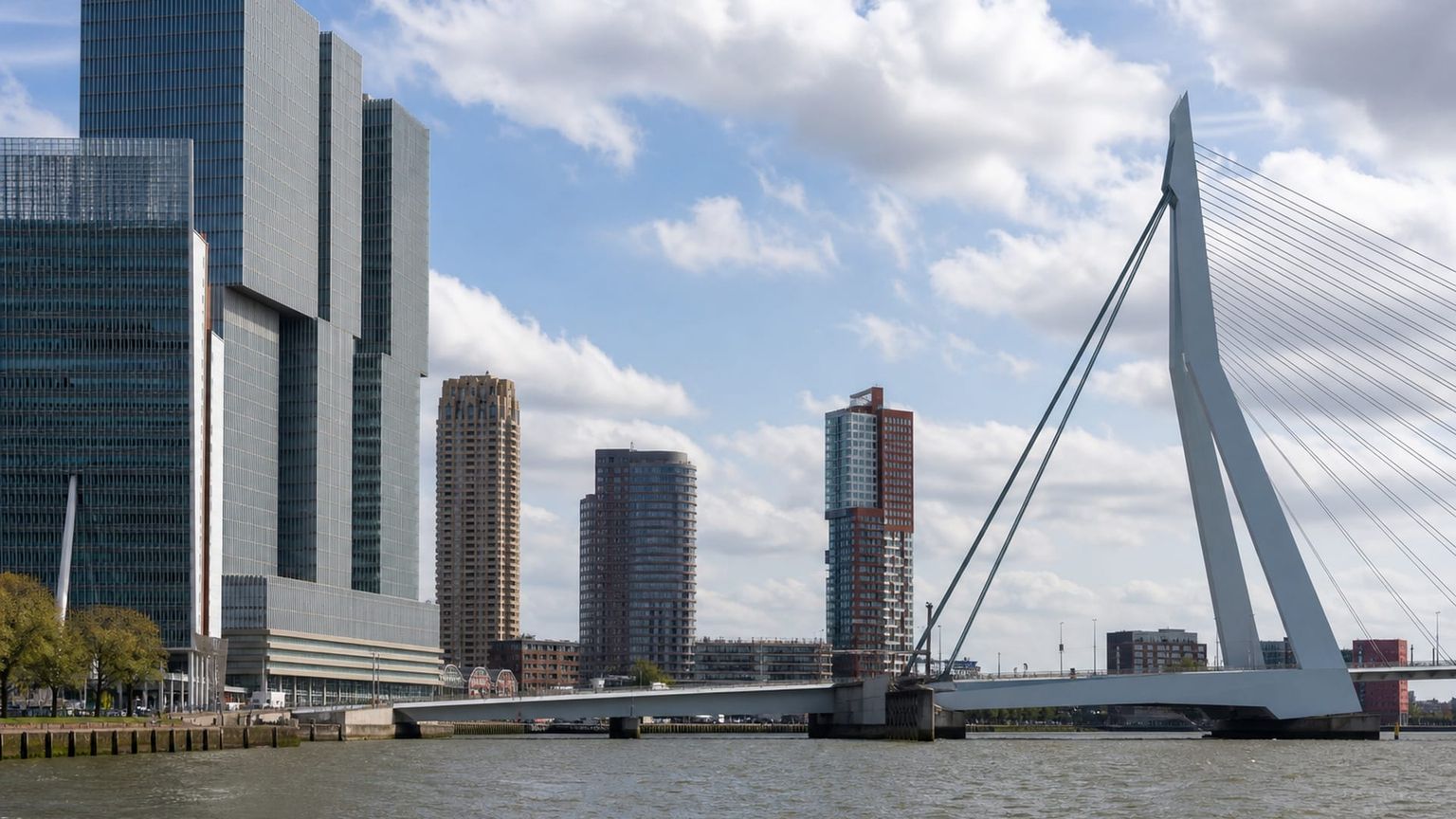
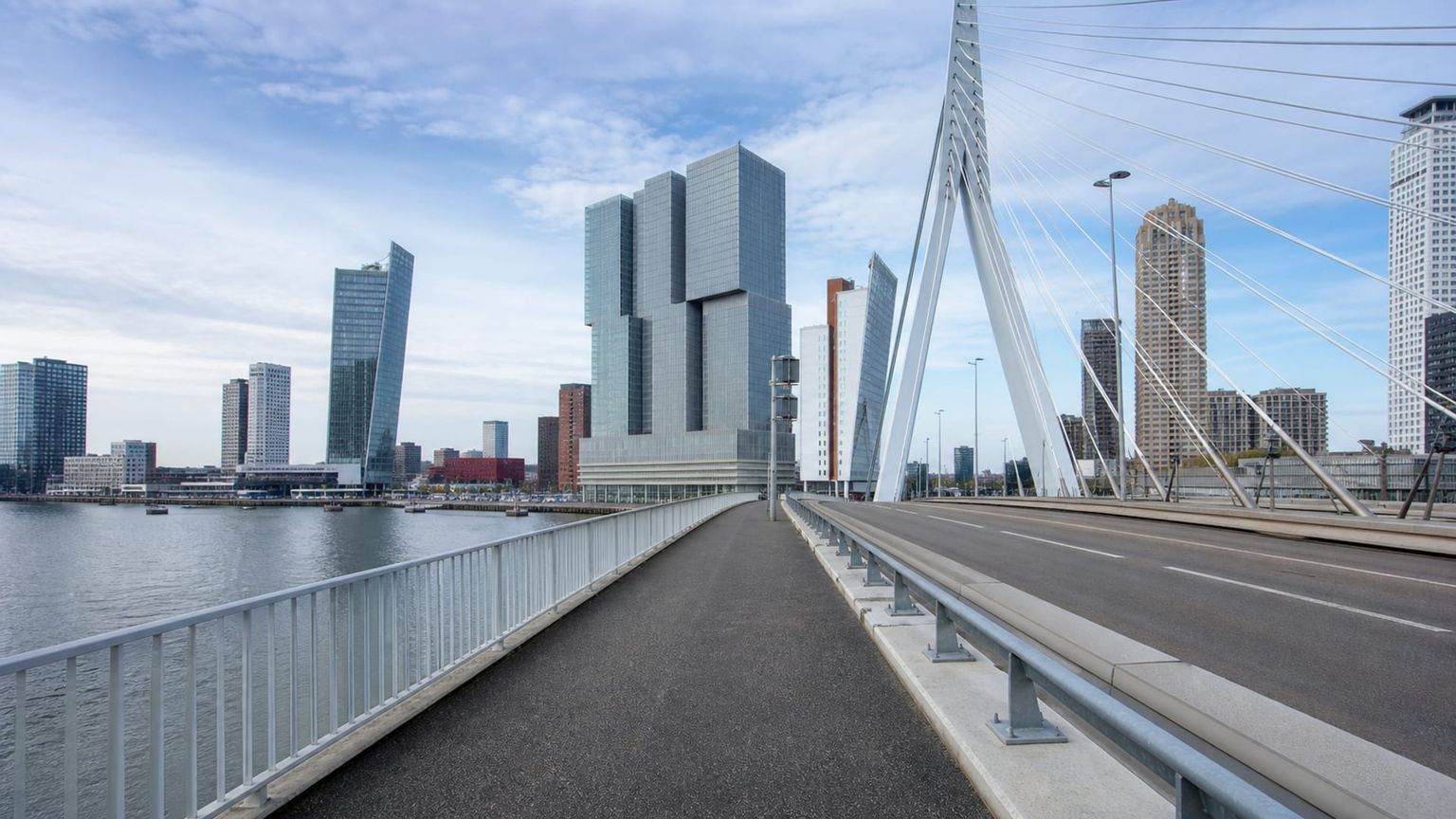
Kop van Zuid sits on the south bank along the Maas, built around former docklands, high-rise hotels, and the Erasmus Bridge approach. It suits travelers who want skyline views, waterfront walks, and quick access into the center by tram or on foot.
Best for: Waterfront stays, modern hotels, and conference trips
What to expect: Open quays, hotel lobbies, and a calmer street scene than the northern center, with more activity near the bridge and attractions.
Hotel prices: Usually about €140 to €260 (~$154 to ~$286) per night for well-rated stays
Distance to major sights: 10 to 20 minutes on foot to the Erasmus Bridge, about 15 minutes by tram to the Markthal
Quietness: Quieter at night than the center, though bridge-adjacent streets and hotel areas stay active.
Main trade-off: You get views and newer hotels, but evening dining choices are thinner than in the city centre.
Good to know: If you plan late dinners in the old center, check tram frequency after midnight before booking.
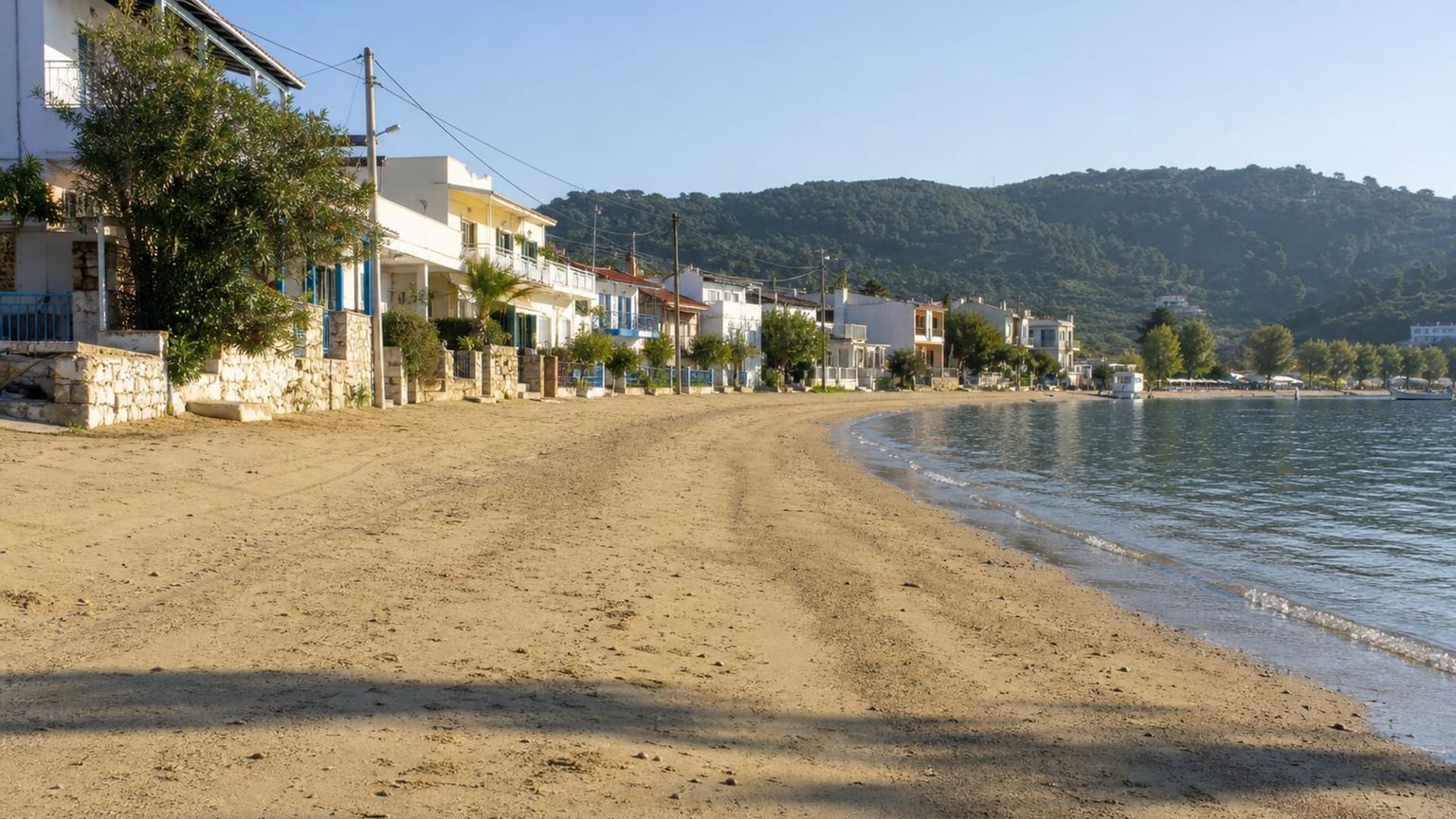
Delfshaven is Rotterdam’s historic canal district, with narrow streets, old warehouses, and harbor edges that survived the wartime destruction. It gives you a more residential base with character, while still staying within easy reach of the center by tram.
Best for: Quieter stays, historic streets, and travelers who prefer a local neighborhood feel
What to expect: Canals, smaller cafés, and a slower street scene, with modest evening activity around restaurant clusters and the waterfront.
Hotel prices: Usually about €120 to €220 (~$132 to ~$242) per night for well-rated stays
Distance to major sights: About 15 minutes by tram to Rotterdam Centraal, roughly 20 minutes by tram to the Markthal
Quietness: Calmer than the center during the day and noticeably quieter after dinner, except on weekends near busy cafés.
Main trade-off: You trade some walkable central convenience for a neighborhood that is farther from the main sights.
Good to know: Late-night transit is less frequent than in the core, so plan your return before the evening thins out.
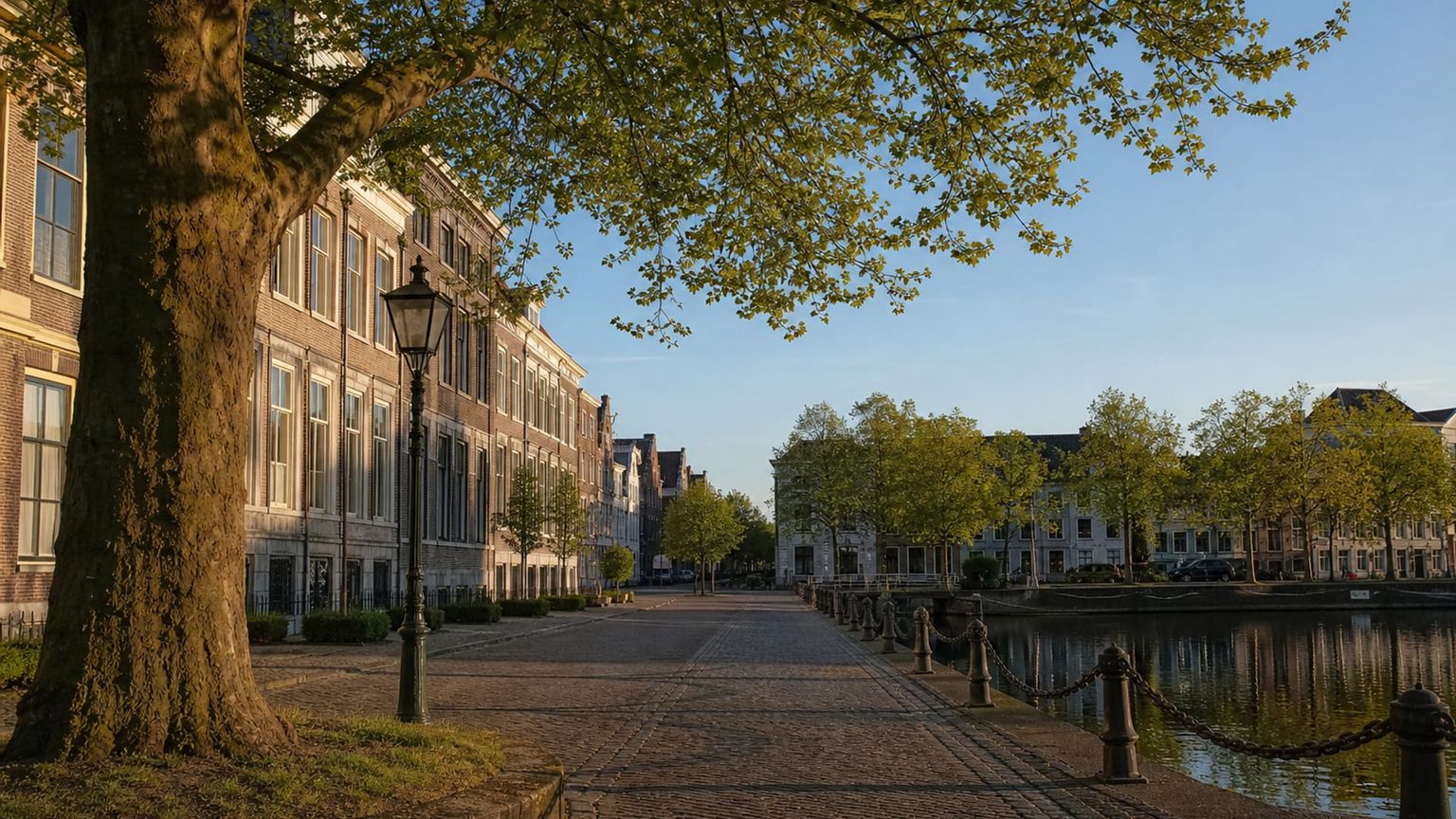
Scheepvaartkwartier sits west of the center along the river, with broad avenues, elegant prewar buildings, and access to the Euromast and the waterfront. It works well if you want an upscale residential setting close to museums, parks, and the river promenades.
Best for: Couples, quieter evenings, and access to riverside walks
What to expect: Tree-lined streets, upscale apartments, and relaxed evening foot traffic, with more movement around dining streets than on the residential blocks.
Hotel prices: Usually about €160 to €300 (~$176 to ~$330) per night for well-rated stays
Distance to major sights: About 10 minutes on foot to the Euromast, roughly 15 minutes by tram to the Markthal
Quietness: Peaceful in the day and usually quiet at night, with only short bursts of activity near restaurants and river paths.
Main trade-off: Hotels can cost more here, and you will rely more on trams or taxis for late returns.
Good to know: If you want to stay near the river, reserve early, since the best-located properties are fewer than in the center.
Travelers usually avoid Pernis and Rozenburg, because they sit far from Rotterdam’s main sights and have limited visitor amenities. Spaanse Polder, North Rotterdam around Rotterdam The Hague Airport (RTM), and Europoort are also less convenient, since they are industrial or office-heavy areas with few hotel choices and awkward evening travel to the center.
Hotel deals
How to get around Rotterdam efficiently
Rotterdam’s RET network makes short tram, metro, and bus hops the most efficient way to link the center, the south bank, and the airport side.

Metro
for longer distances
Rotterdam has a compact metro network, with RET lines linking Rotterdam The Hague Airport area RTM to the city center via Schiedam and Beurs, plus easy transfers to the rail hub at Rotterdam Centraal. A 1-hour RET ticket costs about $5 (€4.80), and day passes cost about $9 (€8.50); trains typically run every few minutes in the peak and every 10 to 15 minutes off-peak. Use contactless payment, an OVpay card, or an OV-chipkaart, then check the fare rules before changing between metro, tram, and bus.

Bus and tram
for convenience
Trams do much of the short-hop work in Rotterdam, with frequent lines serving Rotterdam Centraal, the shopping core, Delfshaven, Kop van Zuid, and the riverside districts; buses fill gaps to places the tram does not reach. A 1-hour RET ticket costs about $5 (€4.80), and a 2-hour or day ticket can be worth choosing if you plan several hops; many stops use real-time displays and you board through the front door on many vehicles. Validate before travel with contactless payment or an OV-chipkaart, then check the route number and direction, since the same line often runs both ways through the center.

Taxi
for convenience or late hours
Licensed Rotterdam taxis use metered fares, not set citywide flat rates, so a ride from Rotterdam The Hague Airport RTM to the center usually lands at about $35 to $50 (€33 to €47), while shorter inner-city trips often cost about $12 to $25 (€11 to €23) depending on traffic and time of day. Hail one at a rank, book through a taxi app, or ask your hotel to call an approved cab; most take cards and contactless payment, though it is worth confirming before you start. Ask for the meter to be on at departure, then keep an eye on the route if you are heading across the river or into the port districts.
*Prices are based on rates updated as of June 2026 and may change at the time of travel.
Use the metro for faster cross-city moves, trams for the center and river districts, and taxis or ride apps when you are returning late or crossing into less connected areas.
Iconic landmarks
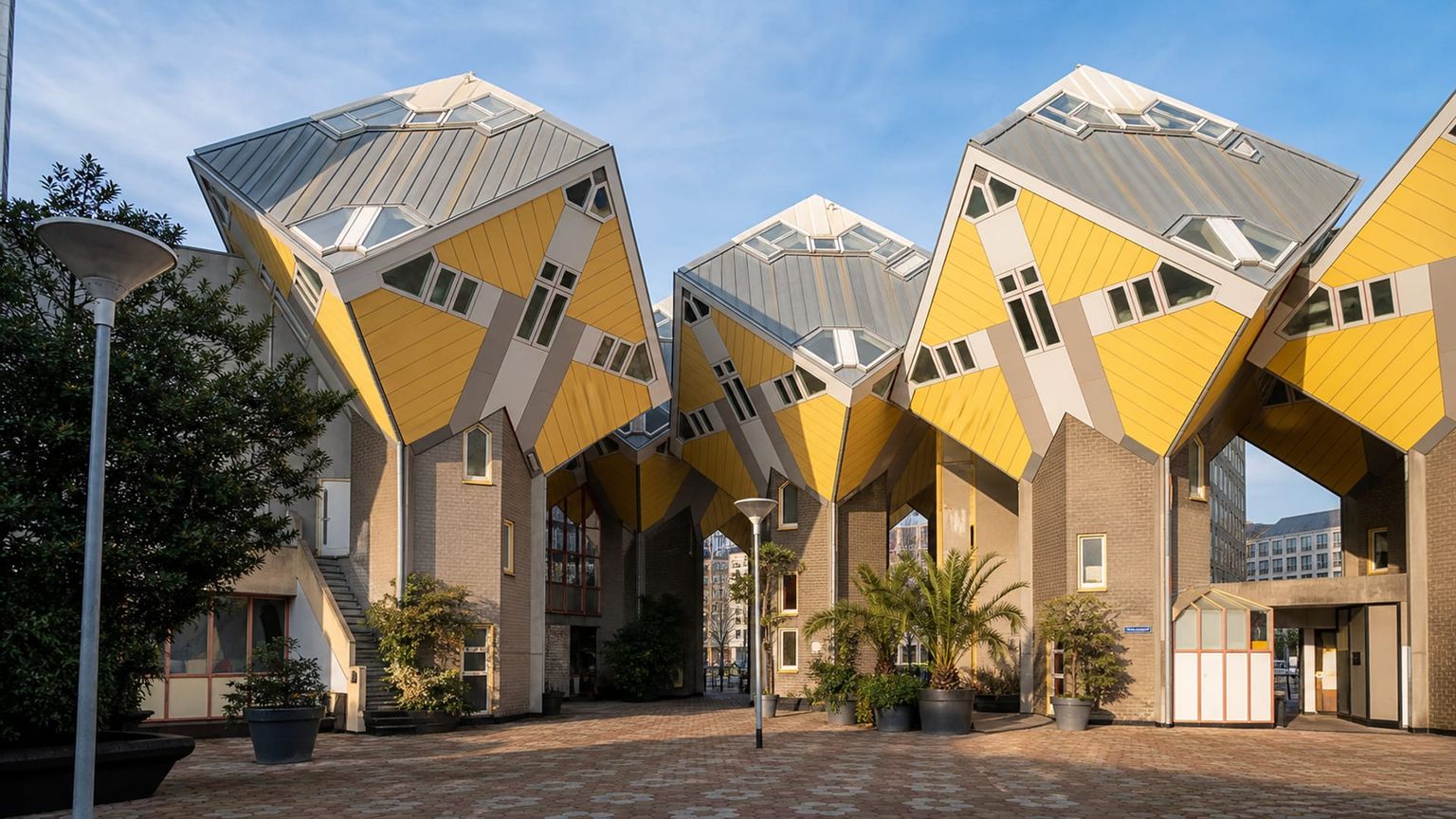
Cube Houses
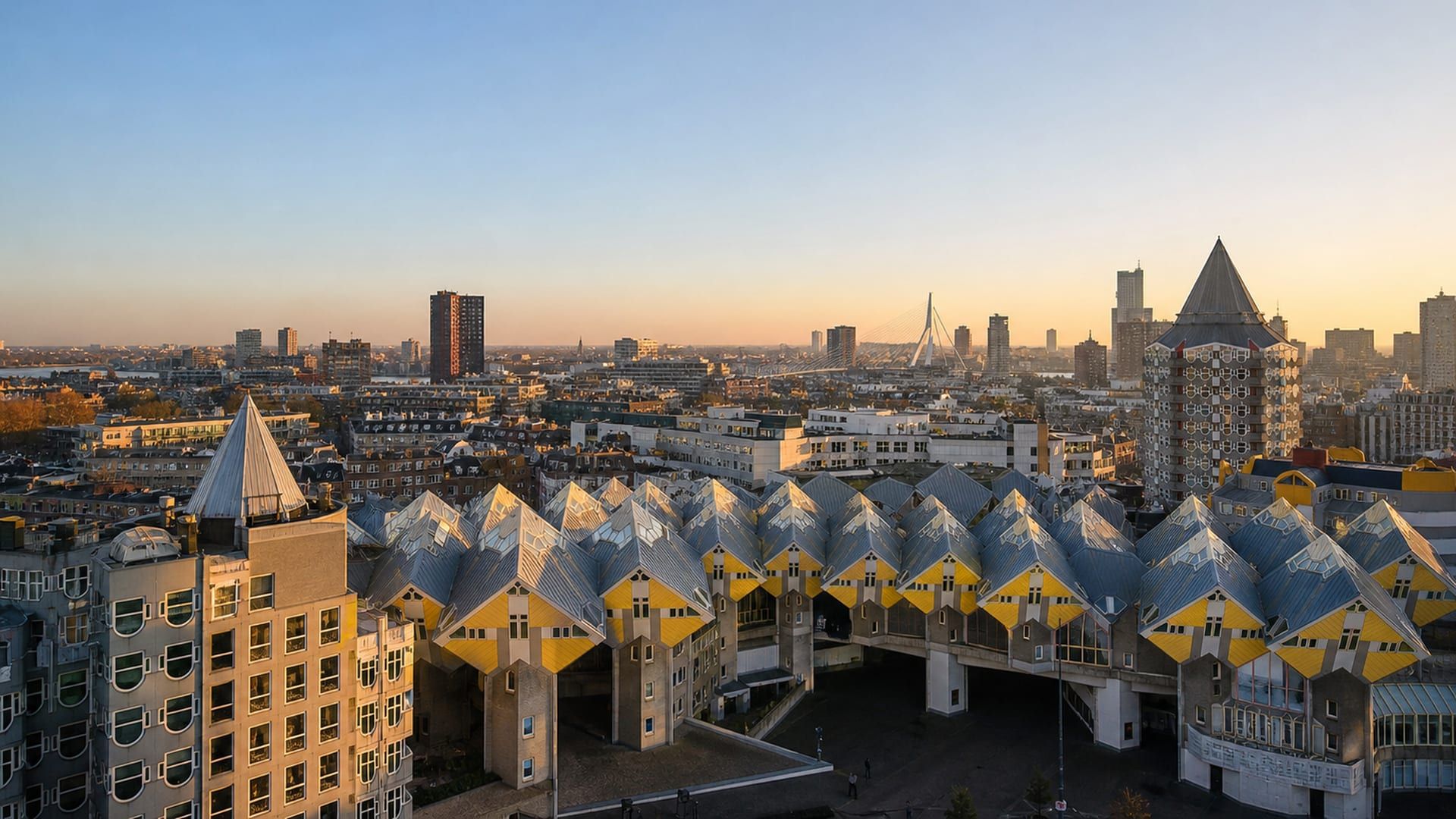
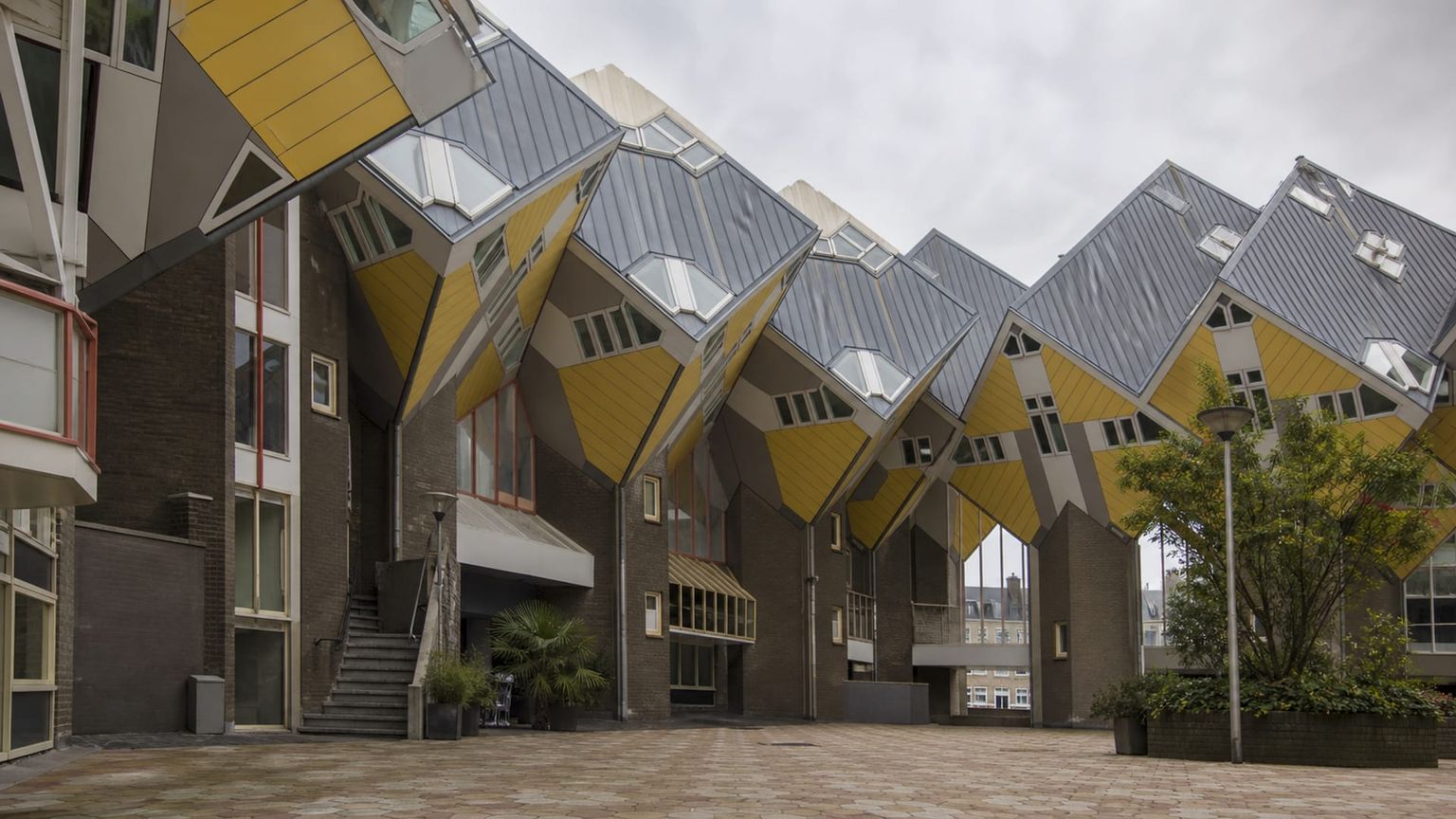
Piet Blom’s tilted yellow houses create one of Rotterdam’s most photographed streets. One model home is open as the Kijk-Kubus, where you can see how the angled rooms are fitted into the cube shape.
Time needed: About 45 minutes
Entry: Entry to the street is free; Kijk-Kubus model home tickets cost $4 ($4). Visit the official site for details.
Tip: Visit late morning for brighter photos and fewer tour groups at the crossings.
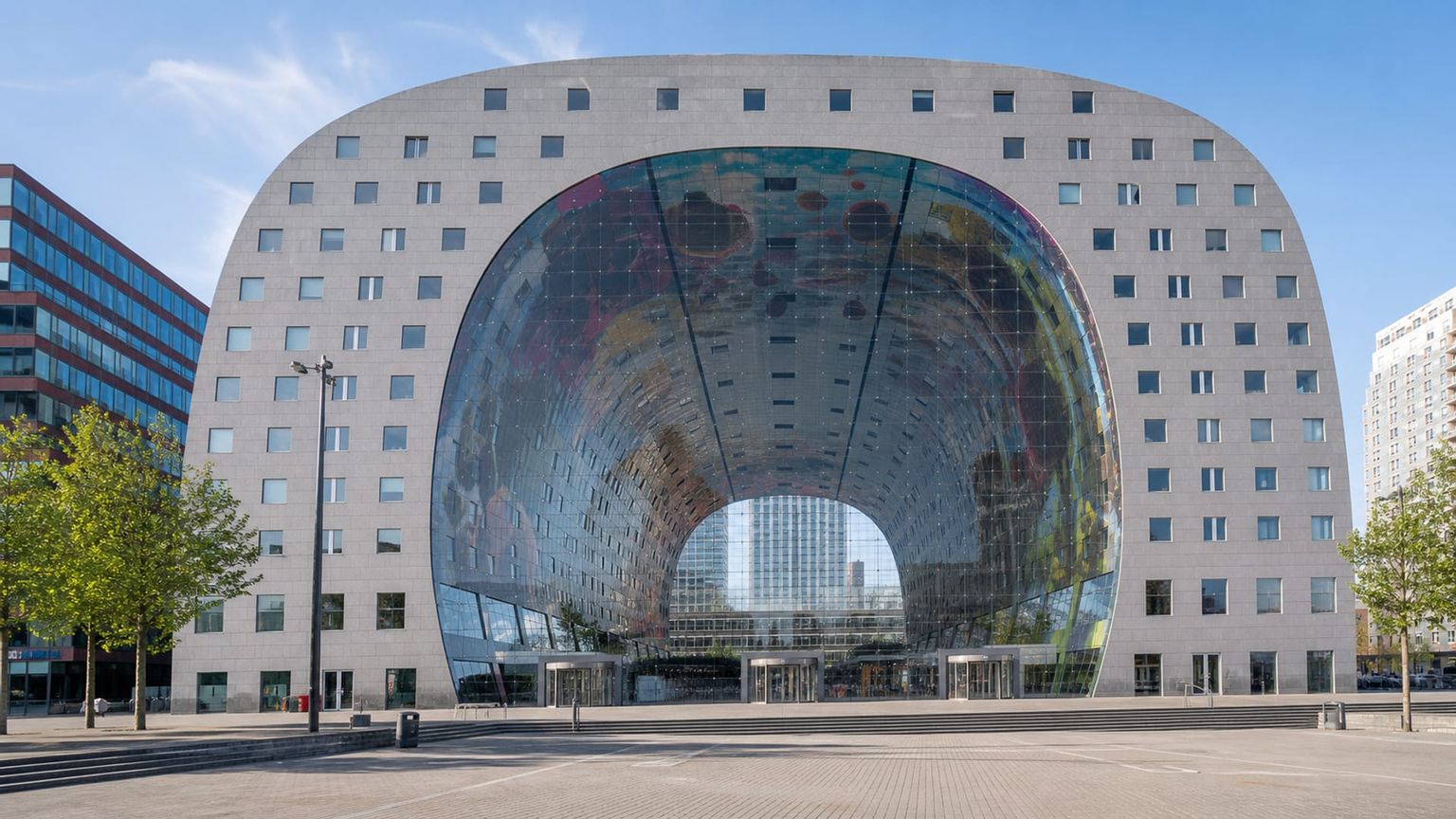
Market Hall
This curved market hall pairs food stalls with a ceiling covered in a giant artwork of fruit, flowers, and insects. Its arch also holds apartments, making it one of Rotterdam’s clearest examples of new urban architecture.
Time needed: About 1 hour
Entry: Free to enter; food, drinks, and retail purchases are priced separately. Visit the official site for details.
Tip: Go before lunch if you want a quieter walk through the stalls and better ceiling views.
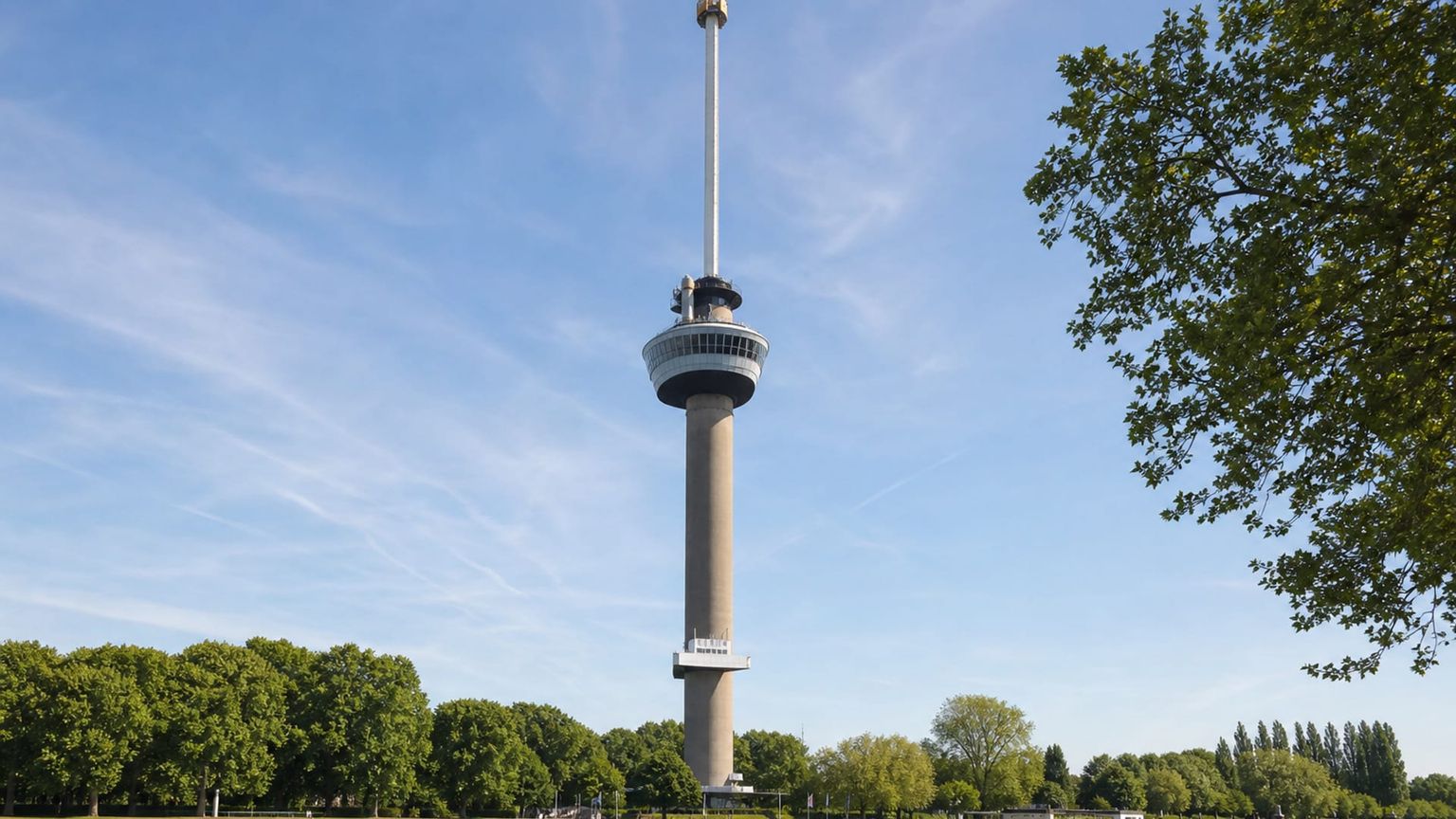
Euromast
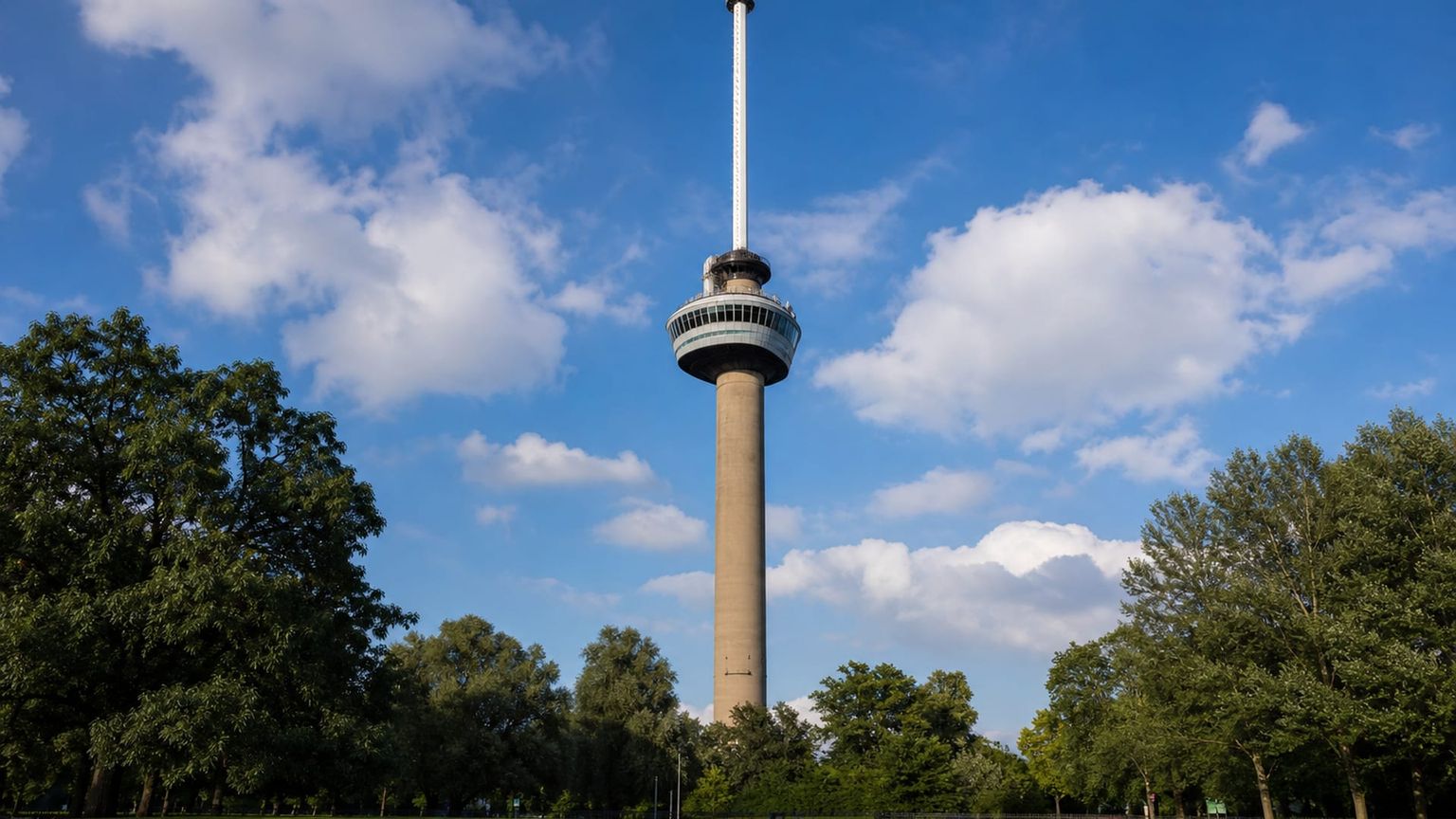
Built in 1960, the Euromast gives Rotterdam’s sharpest city panorama from its observation deck and rotating lift. On clear days, the view reaches the harbor, bridges, and the Maas River corridor.
Time needed: About 1 hour
Entry: Observation deck tickets cost $14 to $18 ($15 to €17). Visit the official site for details.
Tip: Go near sunset for longer visibility and a better look at the bridges and harbor.
Overlooked sites worth visiting

Kinderdijk windmill area
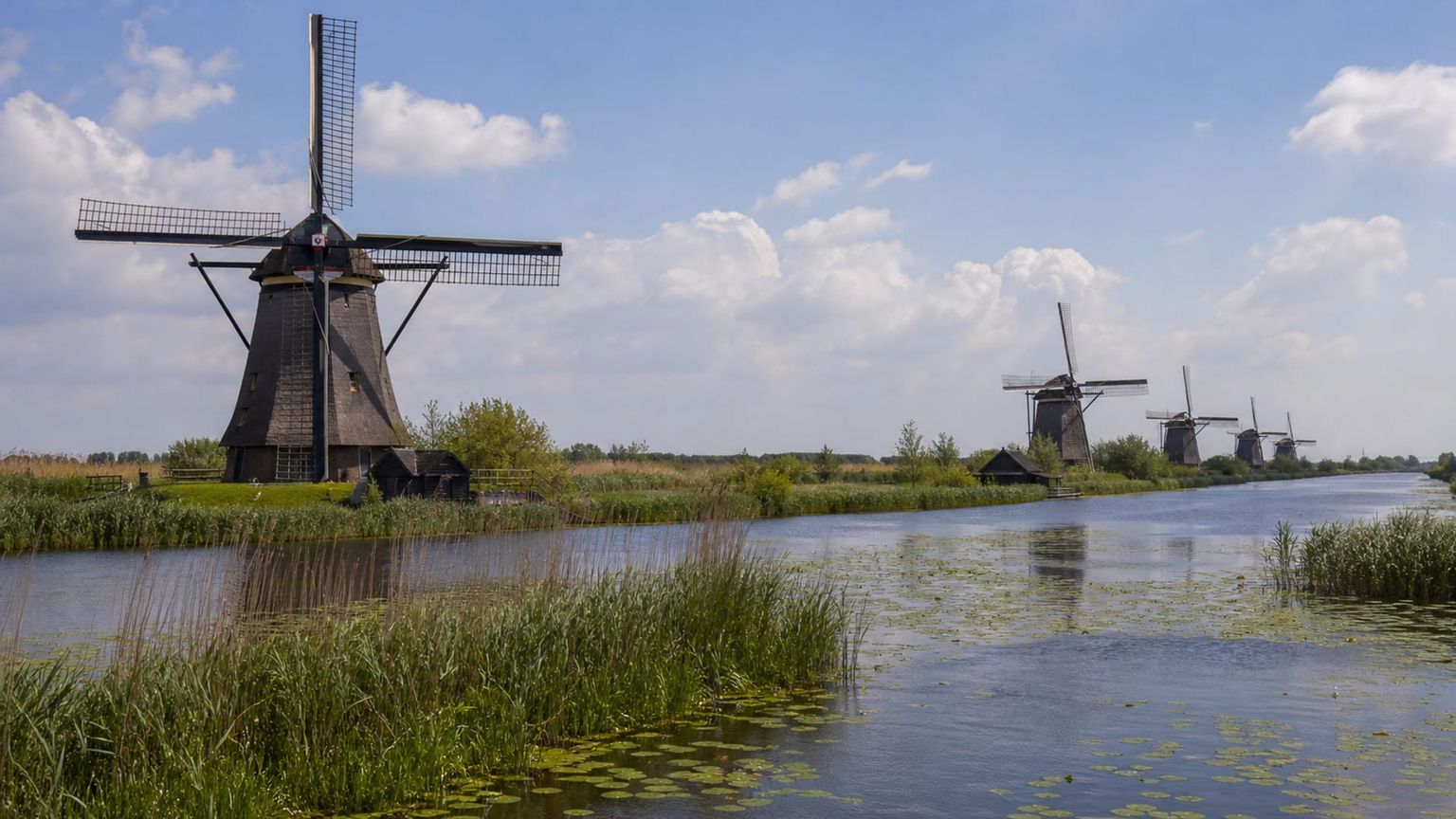
A cluster of 18th-century windmills lines canals and open polder here, with footpaths, cycle routes, and water views. It sits about 25 km from Rotterdam center, so the pace stays unhurried.
Time needed: About 2 to 3 hours
Entry: Free to walk the outer paths. The paid museum and boat options typically cost about $10 to $22 (€9 to €20), depending on season and what you add on site; cycling hire adds extra.
Tip: Go early for clearer views and fewer cyclists.

Museum Rotterdam '40-'45 NU
This small museum uses a single street setting, wartime objects, and films to explain Rotterdam under occupation and the 1940 bombing. It is compact, but the material is specific and well curated.
Time needed: About 45 minutes to 1 hour
Entry: Standard admission usually costs about $14 to $16 (€13 to €15) for adults, with reduced rates for children, students, and some city card holders; special exhibitions can carry a separate fee on top. Visit the official site for details.
Tip: Pair it with a walk along nearby Coolsingel.
Traditional food
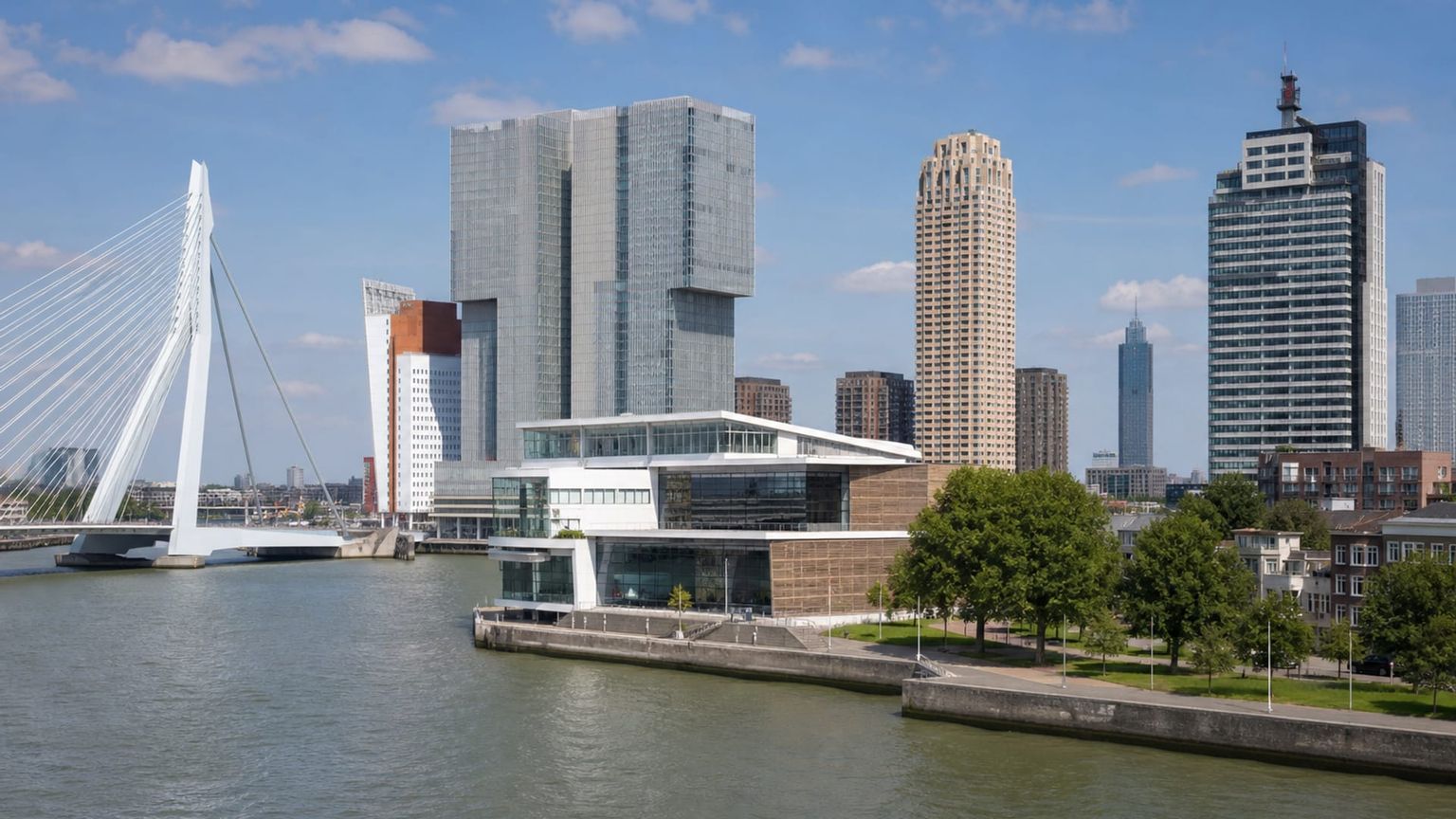
Rotterdam cooks with Dutch staples, North Sea fish, and fried snacks that pair well with beer or coffee. Herring, bitterballen, kapsalon, and stroopwafels show up everywhere from market counters to simple cafés.
Herring
Fresh herring is the simplest Rotterdam bite, usually served with onion and pickles. Schmidt Zeevis is a strong canonical stop for seafood in the city.
Bitterballen
These crisp, rich croquettes work well as a bar snack or a quick lunch plate. Café Van Zanten serves a classic version in the center.
Kapsalon
Kapsalon layers fries, meat, cheese, salad, and sauces into one late-night Rotterdam staple. The original-style setting at Shoarma Gözde is a practical reference point for the dish.
Stroopwafels
Thin waffles filled with syrup give you a sweet finish after a market stop or coffee break. Markthal vendors sell fresh versions, and the hall is the best-known place to try them.
Best time to visit Rotterdam
Rotterdam changes more in light, wind, and rain than in temperature, so spring and early autumn tend to suit long walks, while winter works best for museum-heavy days.
Best for: Harbor walks, terrace lunches, and city photography
What you get: About 45 to 63°F (7 to 17°C), with moderate crowds and changeable weather
Trade-offs: Rain and wind can interrupt longer outdoor plans
Best for: Bridge crossings, riverfront dinners, and day trips
What you get: About 59 to 73°F (15 to 23°C), with the heaviest visitor traffic and long daylight
Trade-offs: Popular sights and transit can be busier at peak hours
Best for: Museum days, market visits, and calmer waterfront walks
What you get: About 48 to 65°F (9 to 18°C), with lighter crowds after the first weeks of September
Trade-offs: Shorter days arrive quickly by late October
Best for: Indoor architecture stops and café time between cold spells
What you get: About 34 to 44°F (1 to 7°C), with the quietest sightseeing conditions
Trade-offs: Cold rain and gray skies limit comfort on open promenades
A realistic 5-day plan in Rotterdam
The five-day plan keeps the center, the river, and the day trip in a workable order. It starts with easy orientation, then builds toward the city’s best-known architecture, quieter historic streets, and a final day that leaves room for shopping or one last museum.
Land at Rotterdam The Hague Airport (RTM), then take tram 33 or bus 33 into the city centre in about 20 to 25 minutes for roughly €3 to €5 ($3 to $5). Check into a hotel near Coolsingel, Beurs, or the Markthal, then keep the first evening close by with water, a short walk, and an easy dinner in the Markthal so you can settle in without crossing the city after dark.
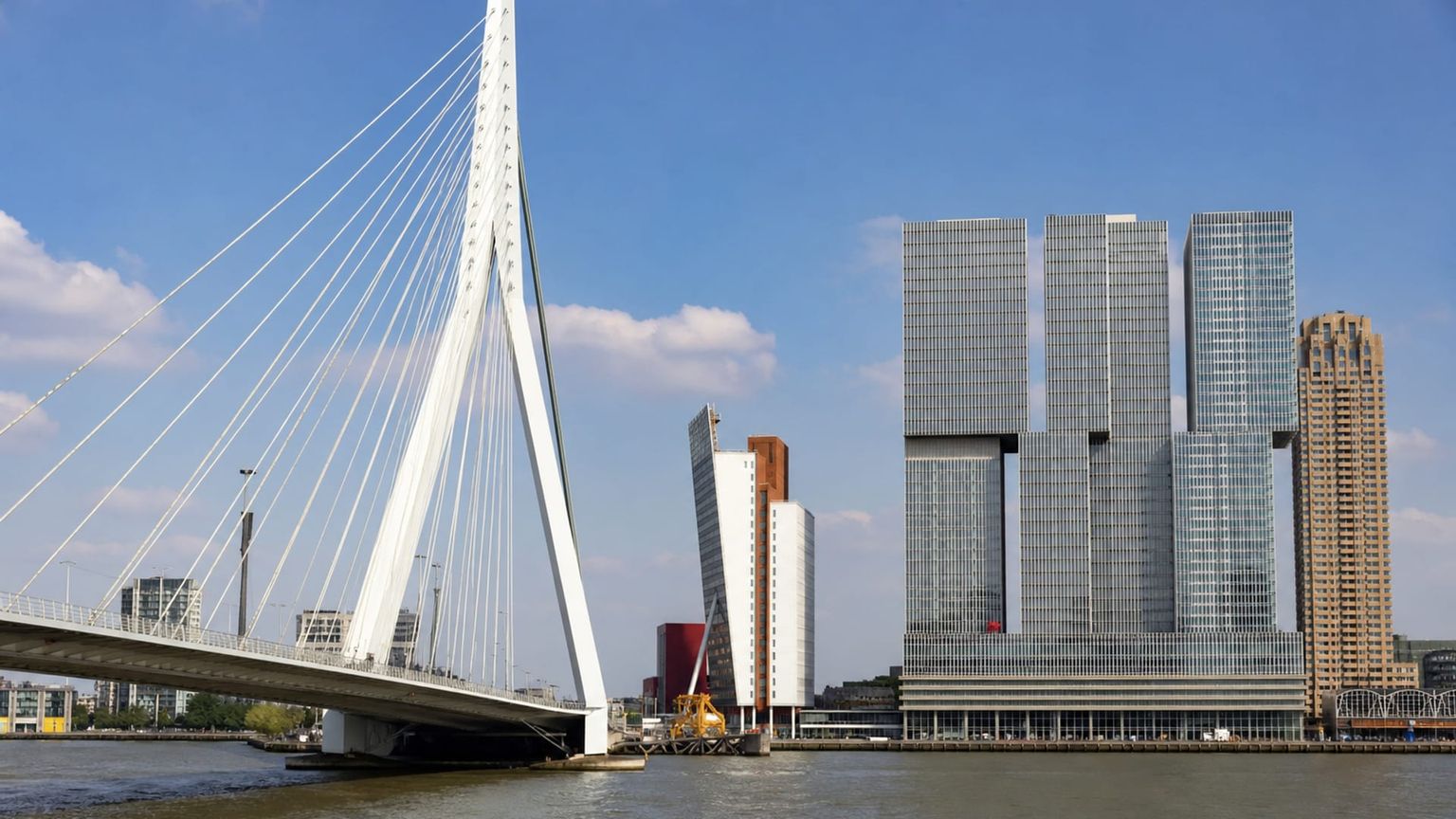
Start at the Market Hall in the morning, when the stalls are calmer and the ceiling artwork is easier to take in, then walk about 5 minutes to the Cube Houses for the tilted façades and the Kijk-Kubus model home. From there, it is roughly a 10-minute walk to the waterfront near the Erasmus Bridge, where you can continue toward Kop van Zuid for lunch and river views before riding a tram or walking back across the bridge to the center.
Begin in Scheepvaartkwartier, where tree-lined streets and river frontage give you a quieter start, then walk about 10 minutes to the Euromast for the observation deck and skyline views. After that, continue by tram or taxi into Delfshaven for canals, old warehouses, and a late lunch by the water, with about 15 to 20 minutes between the two areas depending on your route.
Head out early for the Kinderdijk windmill area, since the outer paths are easiest to enjoy before the buses and cyclists build up. The trip takes about 45 to 60 minutes each way by a mix of train, bus, and local transfer, and the site itself works well for a 2 to 3 hour visit; return to Rotterdam in the afternoon, then finish with Museum Rotterdam ’40-’45 NU near Coolsingel, which is about a 5 to 10 minute walk from the core shopping streets.
End the trip with a short morning at Museum Rotterdam ’40-’45 NU if you want one last focused museum stop, then move into the shopping streets of the city centre for any final purchases near Lijnbaan and Beurs. For a slower close, settle into a café in Delfshaven or Scheepvaartkwartier, both of which give you an easy last coffee stop before heading back to Rotterdam The Hague Airport (RTM).
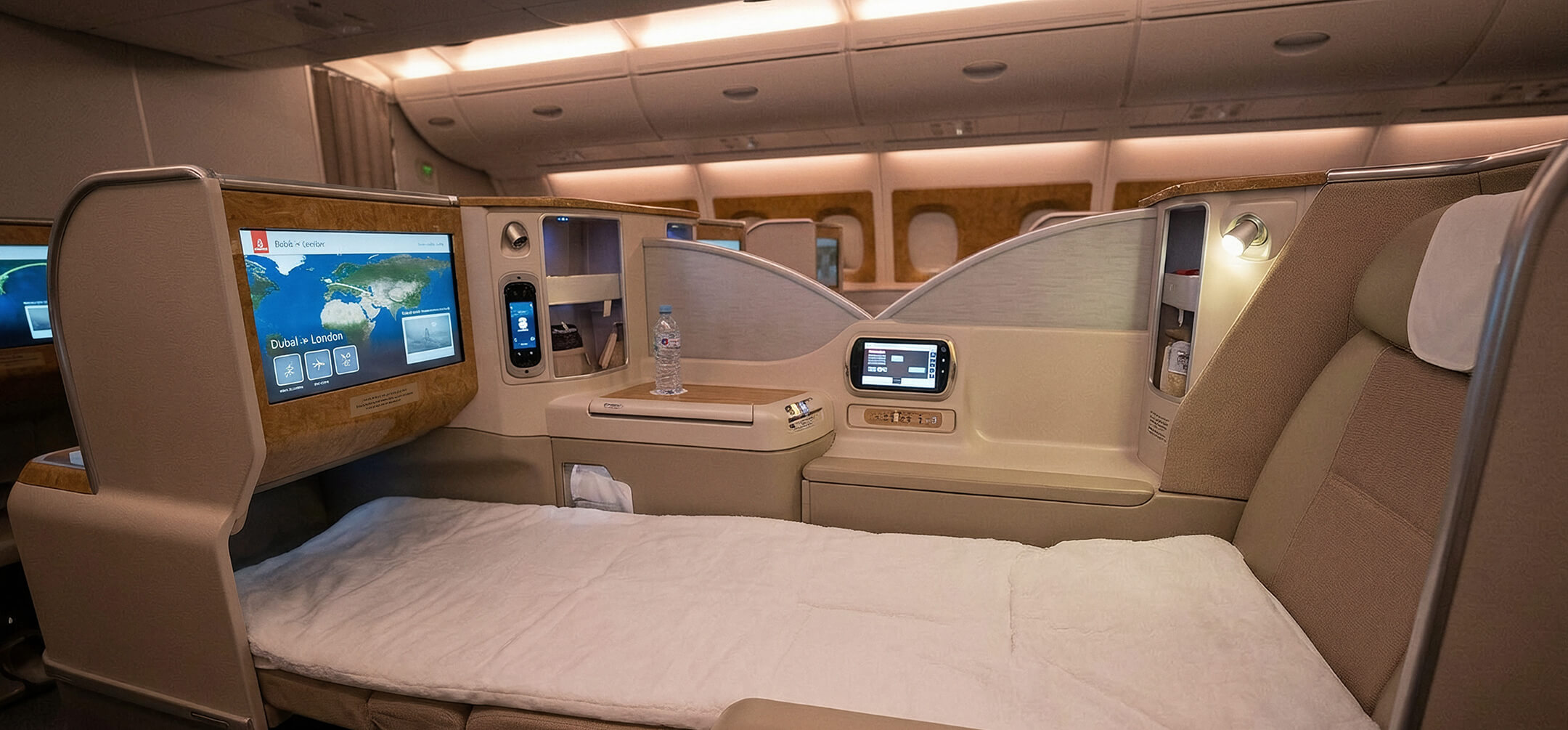
Business-class flights from the US to Rotterdam
Flights to Rotterdam usually involve one-stop routings from both coasts, with the best options depending on whether you are leaving from New York or Los Angeles. The tradeoff is often between a shorter itinerary and a lower fare.
From New York, Delta Air Lines, KLM, Air France, Lufthansa, British Airways, and Turkish Airlines all appear on common itineraries, with total trip times of about 7 to 8 hours on the fastest options. Round-trip fares usually start at $3,200, and nonstop KLM options can push higher.
Los Angeles departures often connect through Amsterdam (AMS), Frankfurt (FRA), London Heathrow (LHR), Istanbul (IST), or Paris Charles de Gaulle (CDG), with total travel times of about 14 to 19 hours. KLM, Lufthansa, Turkish Airlines, British Airways, and Air France are the main names to watch, and fares typically begin at $3,900 round-trip, rising past $5,500 on higher-end itineraries.
Rotterdam feels different when you slow down
A deliberate Rotterdam trip gives each part of the city a job, the center for the Markthal and Cube Houses, the south bank for the Erasmus Bridge, Scheepvaartkwartier for the river, and Delfshaven for a quieter last meal. Trams and short walks connect those pieces without forcing the day into long backtracks. If you want help shaping the route or narrowing the stay, AranGrant experts can build a plan around your dates and the neighborhoods that fit your trip