
Qatar Airways plans to introduce its Qsuite Next Gen in the second half of 2026, marking the first major update to its flagship business-class product since 2017.
The update comes at a time when most airlines have standardized around enclosed, single-passenger suites. Qatar Airways is taking a different direction, expanding both the physical space of each seat and the ways passengers can use it during the flight.
In this overview, we will take a look at the main changes that this update brings, and on which aircraft you can expect to see Qatar Airways’ newest business-class cabin.
Read in this post:
Why Qatar Airways Is Updating The Qsuite
When Qatar Airways introduced the Qsuite in 2017, it set a new benchmark for the airline industry. The cabin combined a 1-2-1 layout with fully enclosed suites, sliding doors, and a seat that converts into a 79-inch fully flat bed. Also, it introduced two configurations that defined the product: a double bed in the center section and a four-seat “quad” arrangement across two rows.
In 2026, enclosed suites have already become a standard across long-haul business-class cabins. Thus, the Qsuite’s advantage is no longer the privacy it offers, but how it allows passengers traveling together to share space. The Next Gen update focuses on that part of the experience.
What Changes With The Qsuite Next Gen
The Qsuite Next Gen keeps the same 1-2-1 layout but introduces measurable changes in space, seating, and onboard technology, compared to the previous Qsuite version.
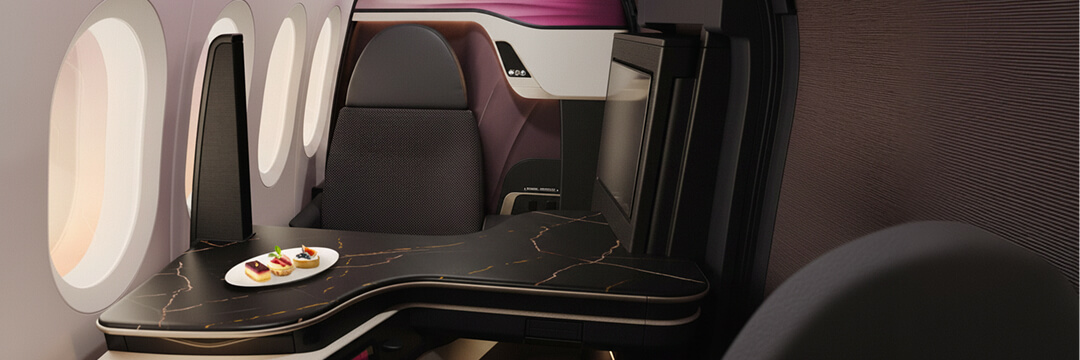
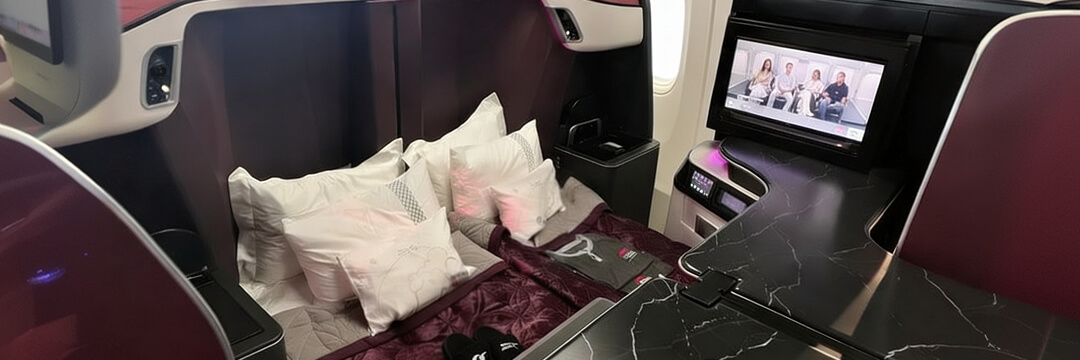
- Wider seat and expanded sleeping space: The seat width increases to 23 inches in the upright position, about 1.5 inches wider than the current Qsuite. In bed mode, the sleeping surface expands further, offering 4 inches more of width at the shoulder and hip levels. This reduces the narrow, confined feel often associated with enclosed suites and brings the sleeping surface closer to the proportions of a standard bed.
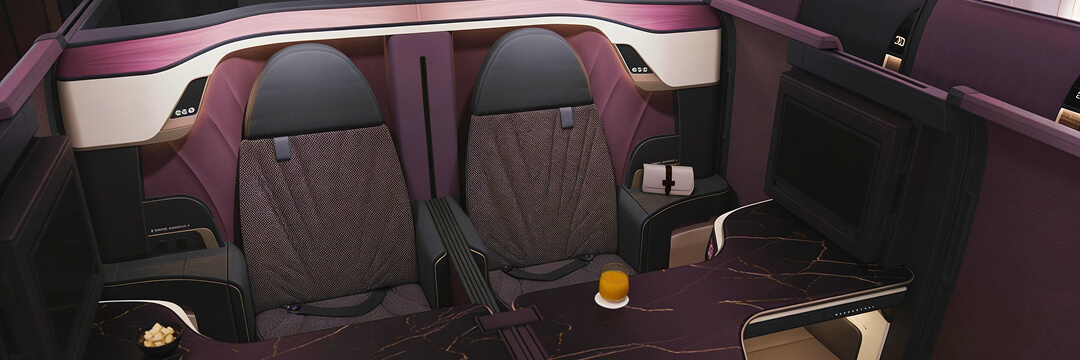
- Quad Suite redesigned as a modular shared space: In the current Qsuite, the quad configuration involves four seats across two rows, with partitions that travelers can open by sliding them behind their in-flight entertainment screens. The new suite features motorized 4K OLED screens that move at a 90-degree angle and completely open the view for the four passengers, removing any physical barriers above the shared console level.
- New Companion Suites for two passengers: This new type of suite allows two passengers in window seats to face each other. In the current Qsuite, traveling together requires choosing between sitting side by side in the center or sitting separately with a window view. The new layout removes that compromise.
- Taller and motorized partitions: The original Qsuite door requires manual operation and can show wear over time. The Next Gen version introduces a motorized sliding mechanism, so travelers can open and close the door with the touch of a button. The door height also increased by 2 inches. This reduces visibility into the suite from the aisle and offers travelers more privacy.
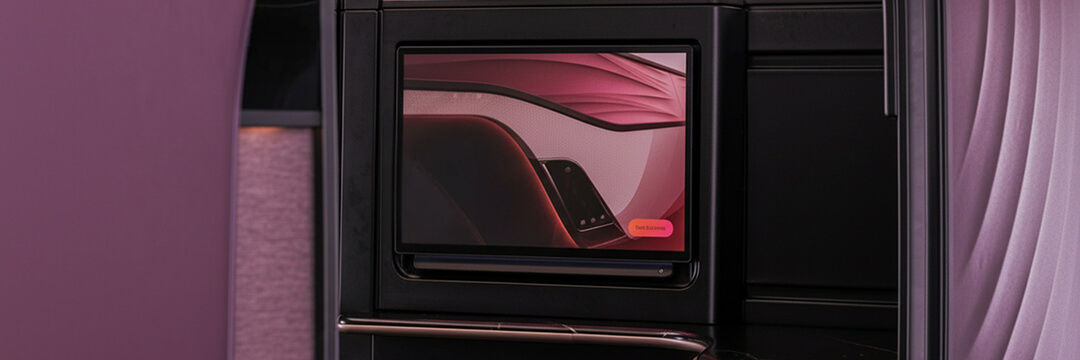
- OLED in-flight entertainment screens: Each Qsuite Next Gen seat includes a 21.5-inch 4K OLED screen, replacing older LED displays. OLED technology provides deeper contrast and maintains visibility in different lighting conditions, including during daytime flights.
- High-power charging and integrated connectivity: The new Qsuite includes 60W USB-C power delivery, allowing travelers to fast-charge laptops or other devices. The side consoles feature built-in wireless charging pads for smaller devices, like phones and smartwatches. The Qsuite Next Gen cabin also introduces Starlink Wi-Fi, offering high-speed connectivity suitable for video calls and continuous online work.
The rollout will begin on the airline’s Airbus A350-1000 aircraft and continue in the following years once deliveries of the newest Boeing 777-9 planes start. Qatar Airways is expected to announce the specific routes later in the year.
Why This Update Matters
The Qsuite Next Gen does not change the foundation of Qatar Airways’ business-class product. It builds on it. The update focuses on how the same space can serve different purposes, whether it is a single seat with a wide bed, a Quad Suite that opens for shared use, or a two-person suite in the window seats.
As airlines update their premium cabins, changes like these show how the focus is shifting from introducing new features to improving how existing ones perform.