

Chapters:

Need help with your trip?
Our support team is available 24/7. Request a callback or call us directly at (833) 619-0908
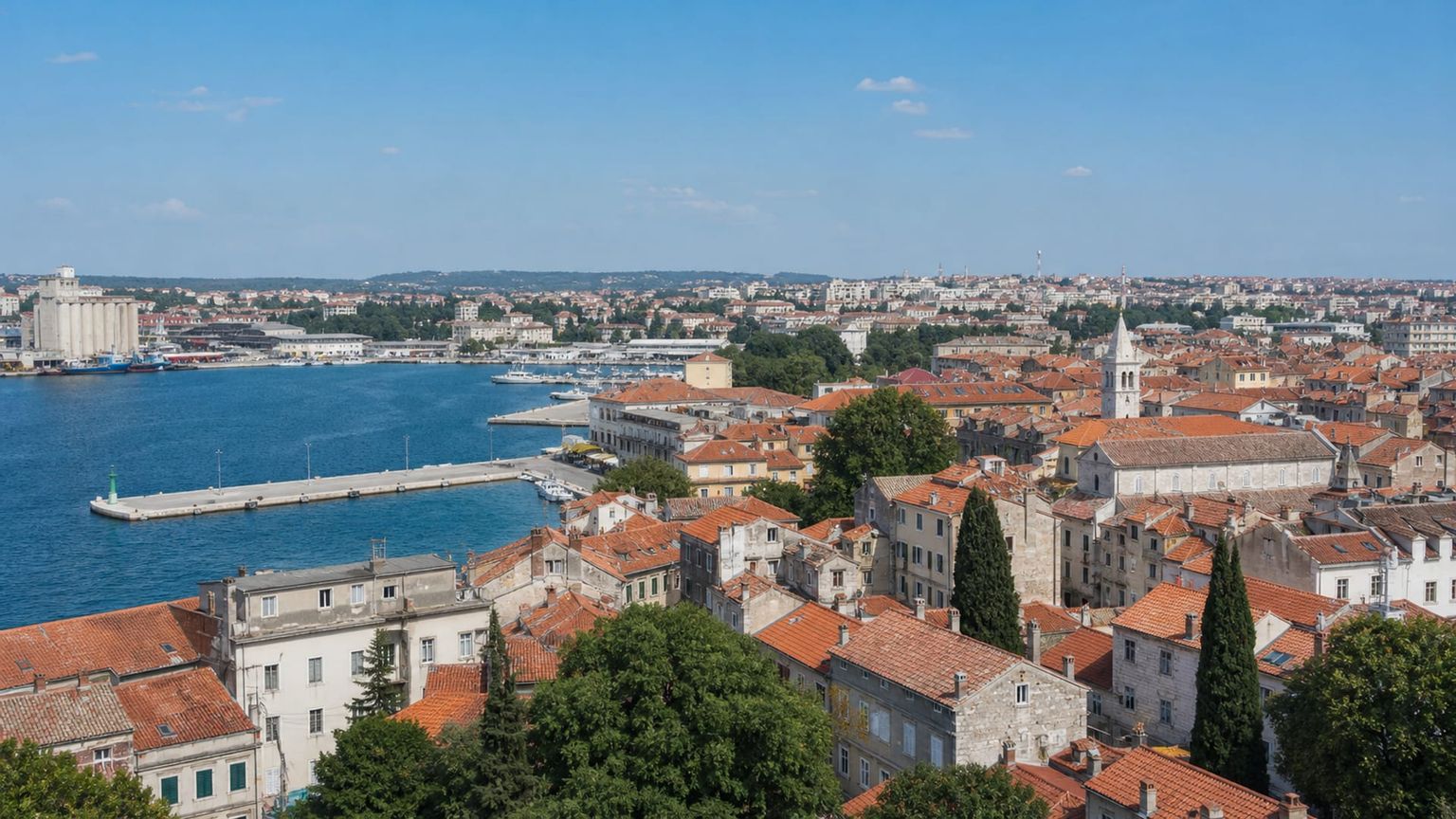
Pula often gets treated as a quick Roman stop, with travelers lining up for the Arena, a photo at the forum, and then a rushed dinner before moving on. That plan misses how much of the city sits a short walk or bus ride away, from coastal paths to quieter Roman ruins.
Without that wider view, distances feel bigger than they are and the busiest streets absorb too much of the day. The result is more backtracking, more taxi time, and less room for the harbor, Verudela, and Brijuni to fit naturally into the stay.
This guide spaces the city out by area, timing, and meal stops, so the center, coast, and island day each have a clear place in the plan.
Useful things to know

Main language(s): Croatian
Dobar dan (DOH-bar dahn) – Hello / good day
Molim (MOH-leem) – Please
Hvala (HVAH-lah) – Thank you
Govorite li engleski? (GOH-voh-ree-teh lee EN-gleh-skee) – Do you speak English?
Koliko košta? (koh-LEE-koh KOH-shta) – How much does it cost?

Currency: The local currency is the euro (EUR, €).

Cash and cards: Cards and contactless are widely accepted; carry about €20 to €40 ($22 to $44) in cash for small purchases.

Tipping: Round up, or leave 5-10% for good service in restaurants.

Traditional food: Istrian fuži, truffles, brodet, prosciutto

Water and coffee costs: Water ~€2 ($2), bar espresso ~€1.50 to €2 ($2 to $2).

Taxis and ride apps: Bolt and Uber operate here; taxis can be limited late at night.

Plug and voltage: Type C/F socket, 230V

Dining and shop opening hours: Breakfast is about 7:00-10:00, lunch 12:00-15:00, and dinner 19:00-22:00. Many restaurants close one day a week, often Sunday.

Emergency number: 112 for police, fire, and medical emergencies.
Where to stay in Pula
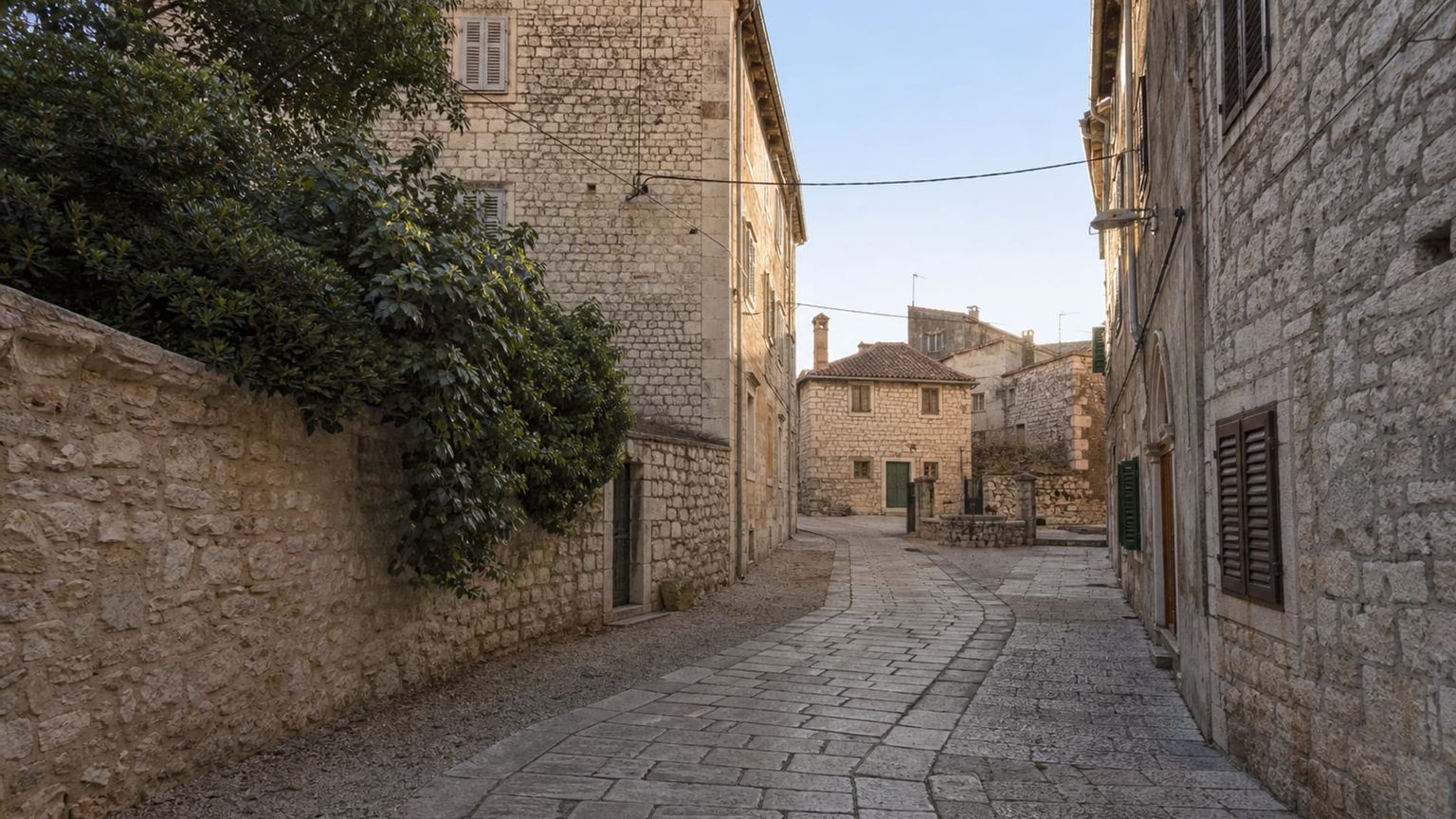
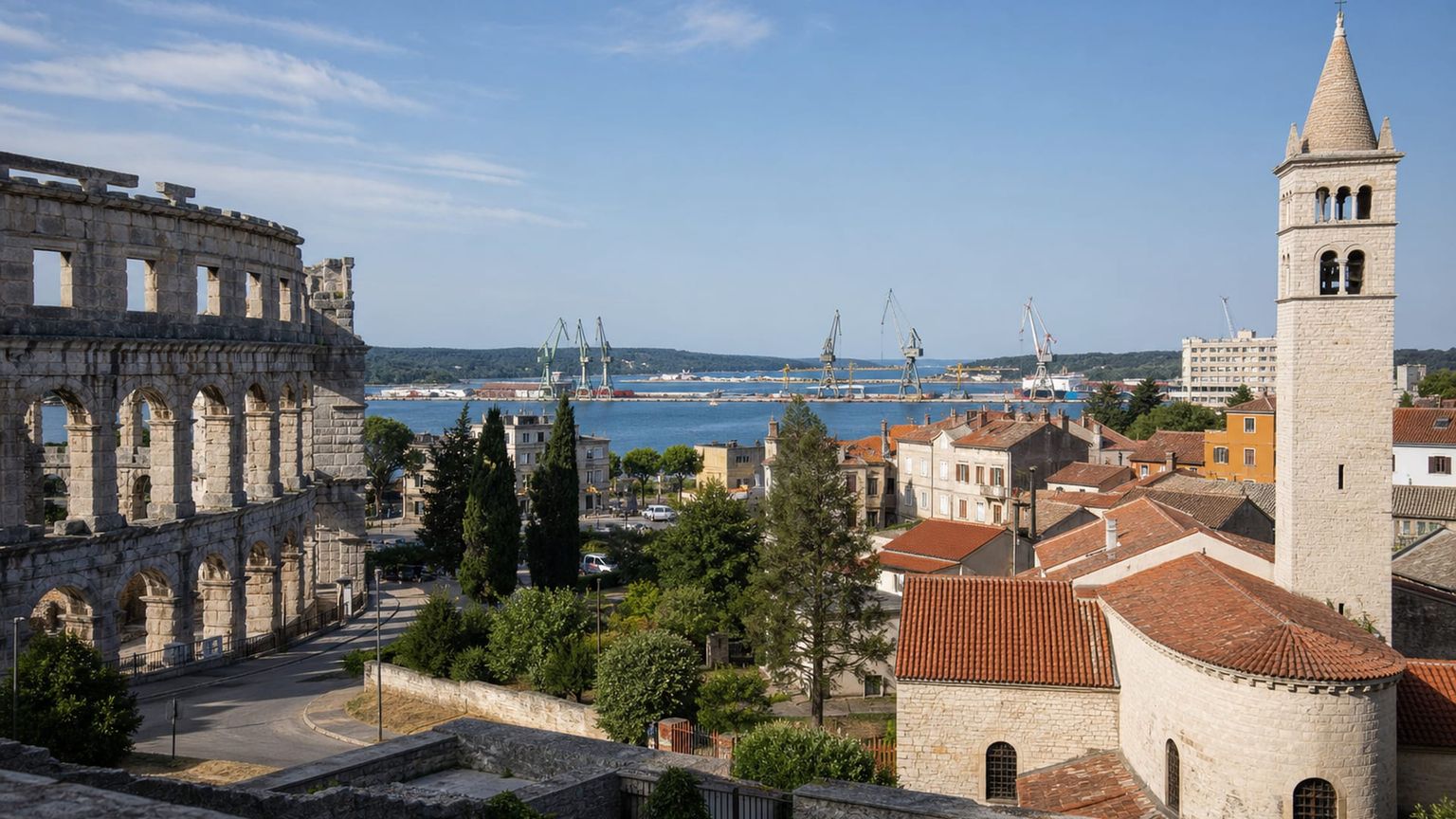
Pula’s Old Town centers on the Roman core, with the Arena, Temple of Augustus, and compact pedestrian streets close together. It suits visitors who want to walk to the main sights, dinner spots, and harbor viewpoints without relying on taxis.
Best for: First-time visits, sightseeing, and travelers who want the main monuments on foot
What to expect: Expect narrow streets, café spillover, and the most tourist traffic in the city center, especially in the afternoon and early evening.
Hotel prices: Usually about €100 to €220 (~$109 to ~$239) per night for well-rated stays
Distance to major sights: 5 minutes on foot to the Pula Arena; about 8 minutes on foot to the Temple of Augustus
Quietness: Busy by day, lively and noisier at night near restaurant streets, with calmer side lanes a short walk away.
Main trade-off: Parking is limited and the best-located rooms can cost more than stays farther out.
Good to know: If you plan to go out after dark, check whether your room faces an alley or a main street, because late foot traffic and café noise can carry well into the evening.
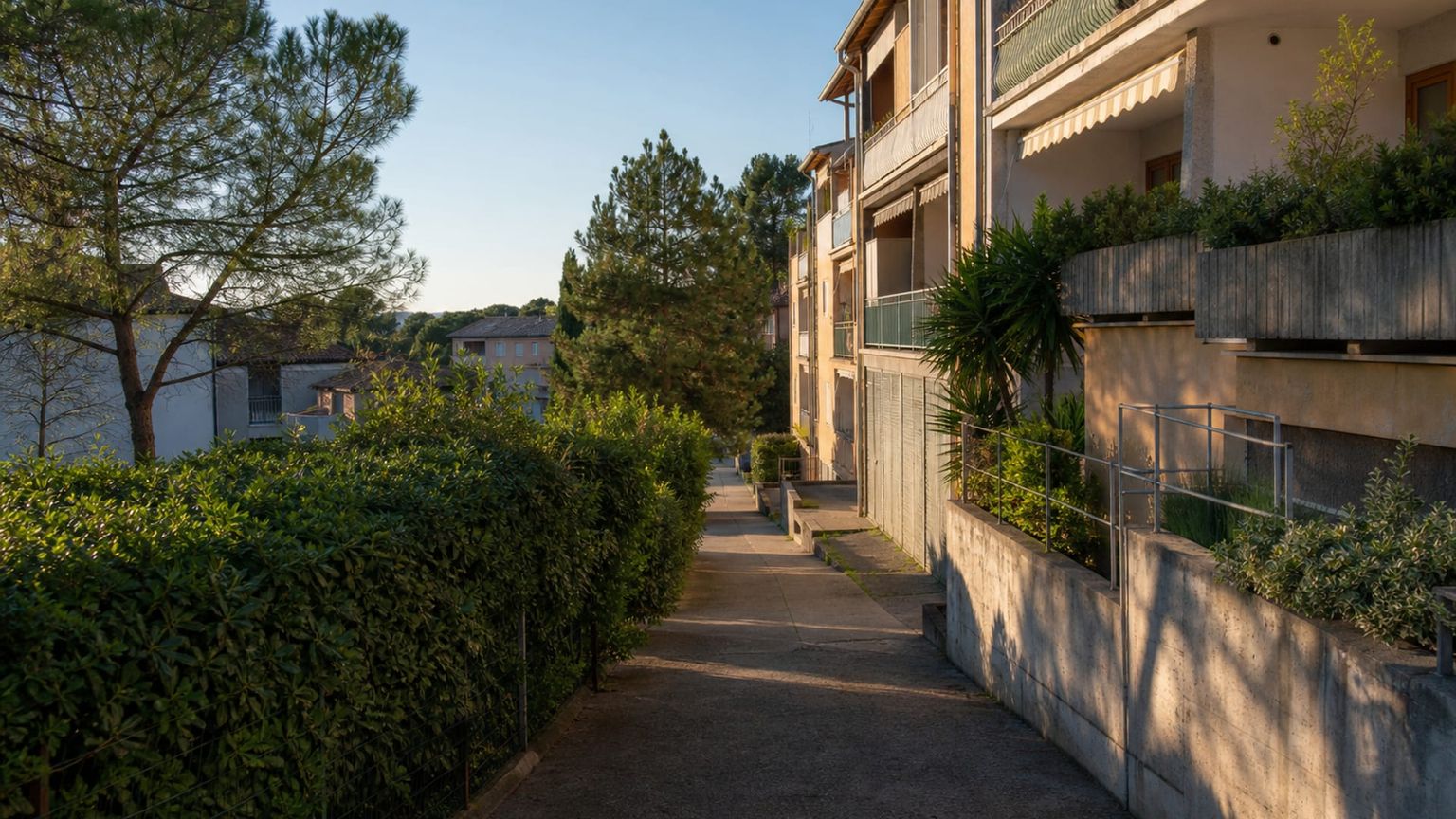
Veruda sits south of the center, with apartment blocks, local shops, and easy bus access toward the waterfront and city core. It works well for travelers who want a residential base with quicker access to beaches than the Old Town offers.
Best for: Longer stays, families, and travelers who want a residential base near the coast
What to expect: Expect local errands, apartment buildings, and moderate foot traffic rather than a tourist-heavy street scene.
Hotel prices: Usually about €80 to €170 (~$87 to ~$185) per night for well-rated stays
Distance to major sights: About 15 minutes by bus to the Pula Arena; about 20 minutes on foot to Valkane Beach
Quietness: Calm during the day, with a little more street activity around shops and bus stops in the early evening.
Main trade-off: You will use buses or taxis more often for Old Town dinners and evening plans.
Good to know: Choose a place near a main bus line if you want to avoid uphill walks and longer transfers back at night.
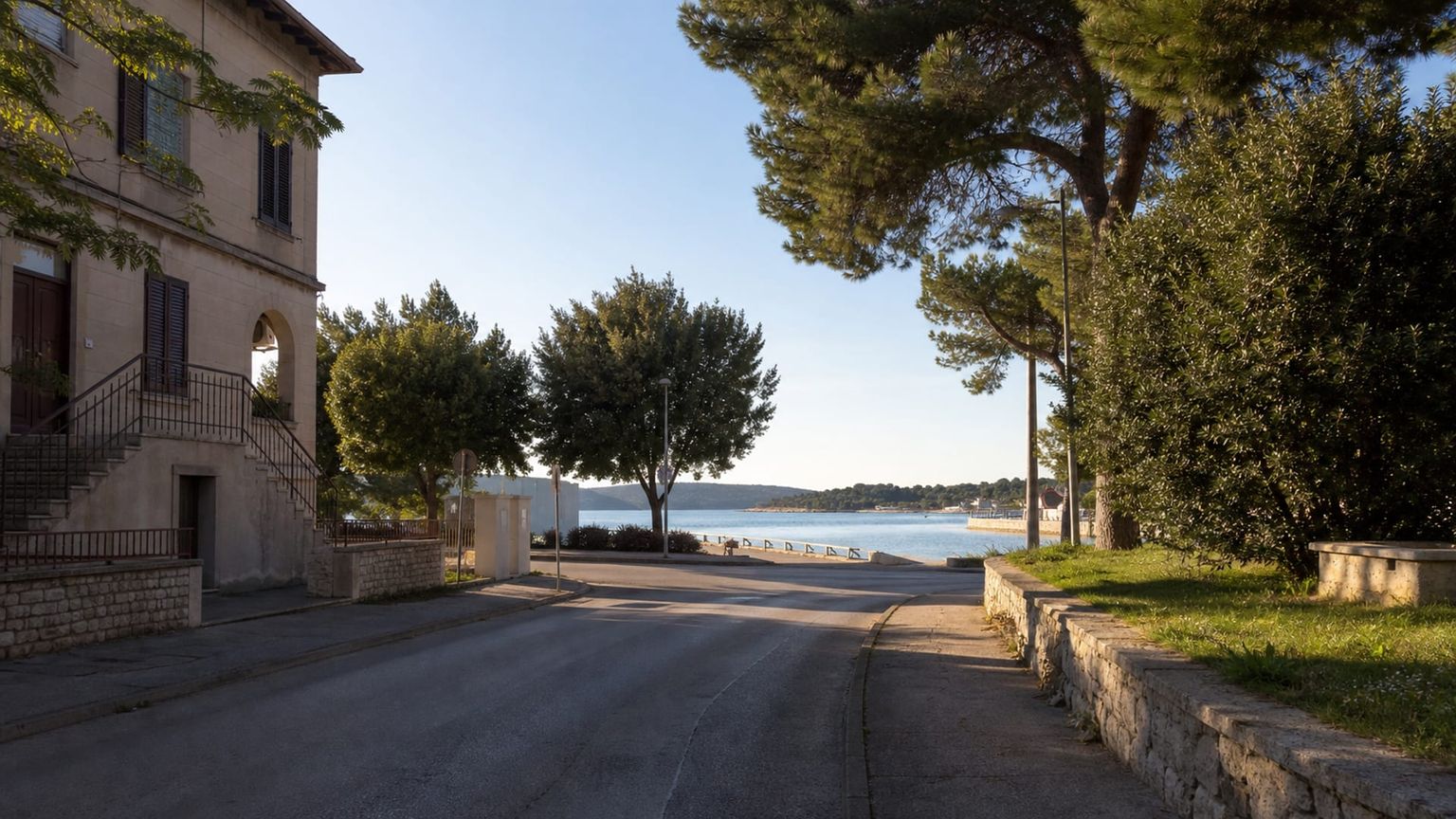
Stoja is a coastal neighborhood west of the center, known for rocky coves, sea views, and access to the Štinjan side of the waterfront. It suits travelers who want swimming and shoreline walks built into the stay, with the center still within easy reach.
Best for: Beach access, seaside walks, and travelers who want a quieter coastal base
What to expect: Expect a more residential, seaside atmosphere, with walkers, swimmers, and fewer late-night crowds than in the center.
Hotel prices: Usually about €90 to €190 (~$98 to ~$207) per night for well-rated stays
Distance to major sights: About 15 minutes by bus to the Pula Arena; about 10 minutes on foot to the nearest swimming coves
Quietness: Quiet in the morning and early afternoon, with a bit more activity along the coast at sunset.
Main trade-off: You gain water access, but you will be farther from the densest restaurant streets and the main historic sights.
Good to know: Pack footwear for rocky entries to the sea, because many swimming spots here are platforms or stone shelves rather than sandy beaches.
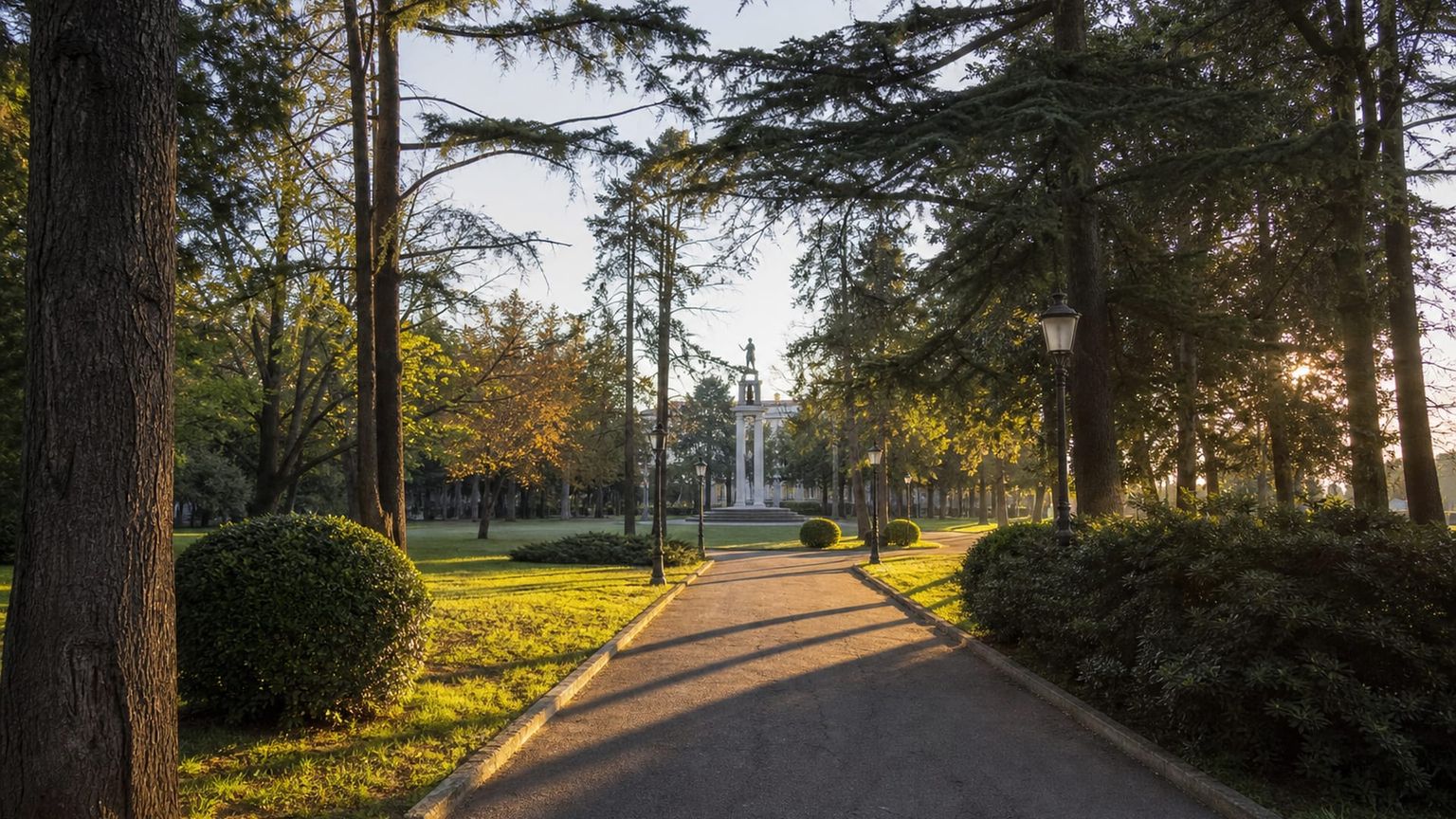
The area around Maximilian’s Park sits just above the old core, close to the Roman monuments and municipal offices. It gives you fast access to the center while staying slightly removed from the busiest pedestrian streets and summer evening crowds.
Best for: Sightseeing with a quieter central base and easy access to the Roman core
What to expect: Expect a central but less hectic setting, with some office traffic by day and lighter movement after dinner hours.
Hotel prices: Usually about €95 to €200 (~$104 to ~$218) per night for well-rated stays
Distance to major sights: About 7 minutes on foot to the Pula Arena; about 10 minutes on foot to the Temple of Augustus
Quietness: Fairly calm during the day, then noticeably quieter in the evening than the main square and waterfront streets.
Main trade-off: You stay close to everything, but the immediate area has fewer restaurants than the heart of the Old Town.
Good to know: If you want the easiest evenings, confirm whether your stay has elevator access, since many older buildings in this part of town have stairs only.
Travelers usually avoid staying in Veruda and Stoja if they want to be close to Pula Arena and the old town, since both sit farther south and can mean longer bus or taxi rides back in the evening. Veli Vrh and Štinjan are also less convenient for a short city break, with fewer visitor amenities near the center and more dependence on local transport or a car for dinner and sightseeing.
Hotel deals
How to get around Pula efficiently
Pula has no metro or suburban rail, so walking, Pulapromet buses, taxis, and ride-hailing apps do most of the work between the Roman core and the coast.

Metro
for longer distances
Pula has no metro or suburban rail, so visitors rely on buses, taxis, and walking for most local trips.

Bus and tram
for convenience
Pulapromet runs the city buses, with the most useful links covering the center, Verudela, Stoja, Vidikovac, and the main intercity bus station. A single ticket bought in advance costs about $1.70 (€1.50) and is valid for 1 hour, while onboard payment is higher at about $2.30 (€2) for the same validity. Check times carefully, because evening and Sunday frequencies are limited.

Taxi
for convenience or late hours
Licensed taxis in Pula use metered fares, not fixed citywide set rates, and a short ride in town usually costs about $7 to $15 (€6 to €14), while Pula Airport to the center is roughly $28 to $40 (€25 to €35). Drivers can usually accept cards, but cash is still worth carrying, and taxis wait at the airport rank or can be booked by phone or app.
*Prices are based on rates updated as of June 2026 and may change at the time of travel.
Walk in the center, use buses for Verudela and Stoja, and lean on taxis or ride apps late at night or for airport transfers.
Iconic landmarks
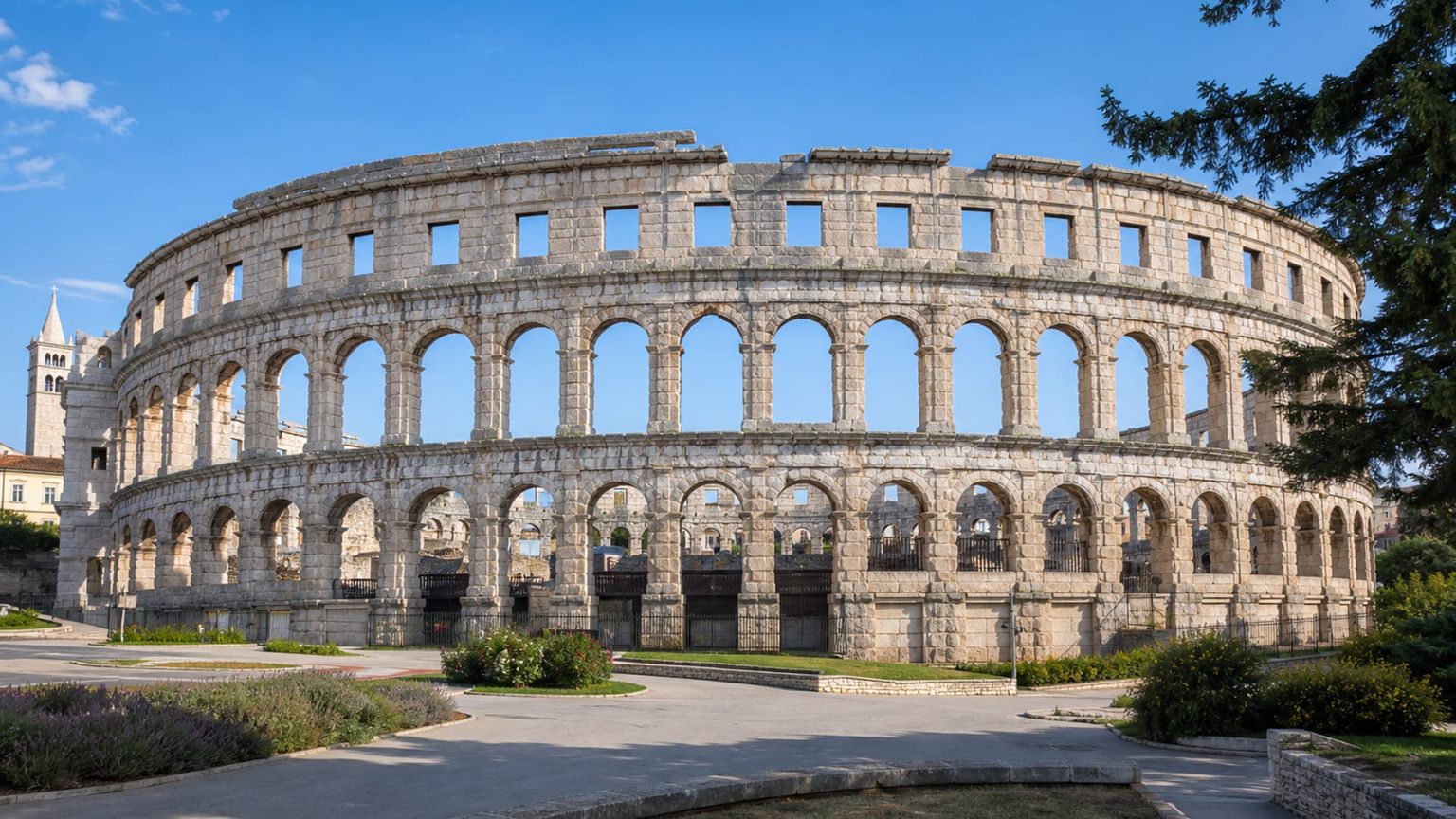
Pula Arena
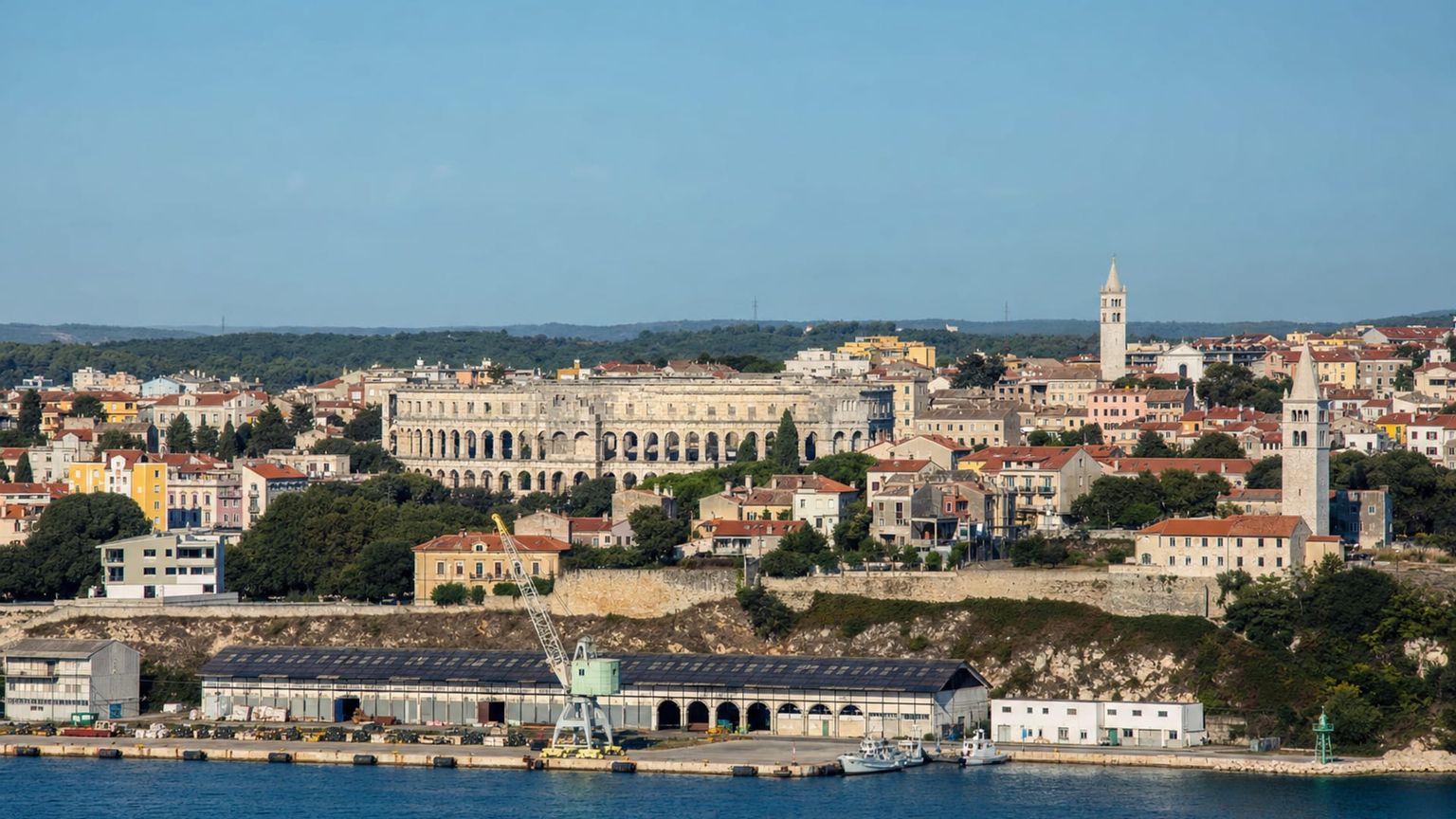
Pula Arena, a Roman amphitheater from the 1st century CE, holds concerts and film screenings inside a four-tier stone oval. Walk the arcades, then see the underground halls where olive oil once stored for export.
Time needed: About 1 to 2 hours
Entry: Tickets cost about $10 to $16 (€9 to €15), with lower prices for children and students; evening event prices can differ from daytime admission. Visit the official site for details.
Tip: Go early or late for softer light and fewer tour groups in the seating tiers.
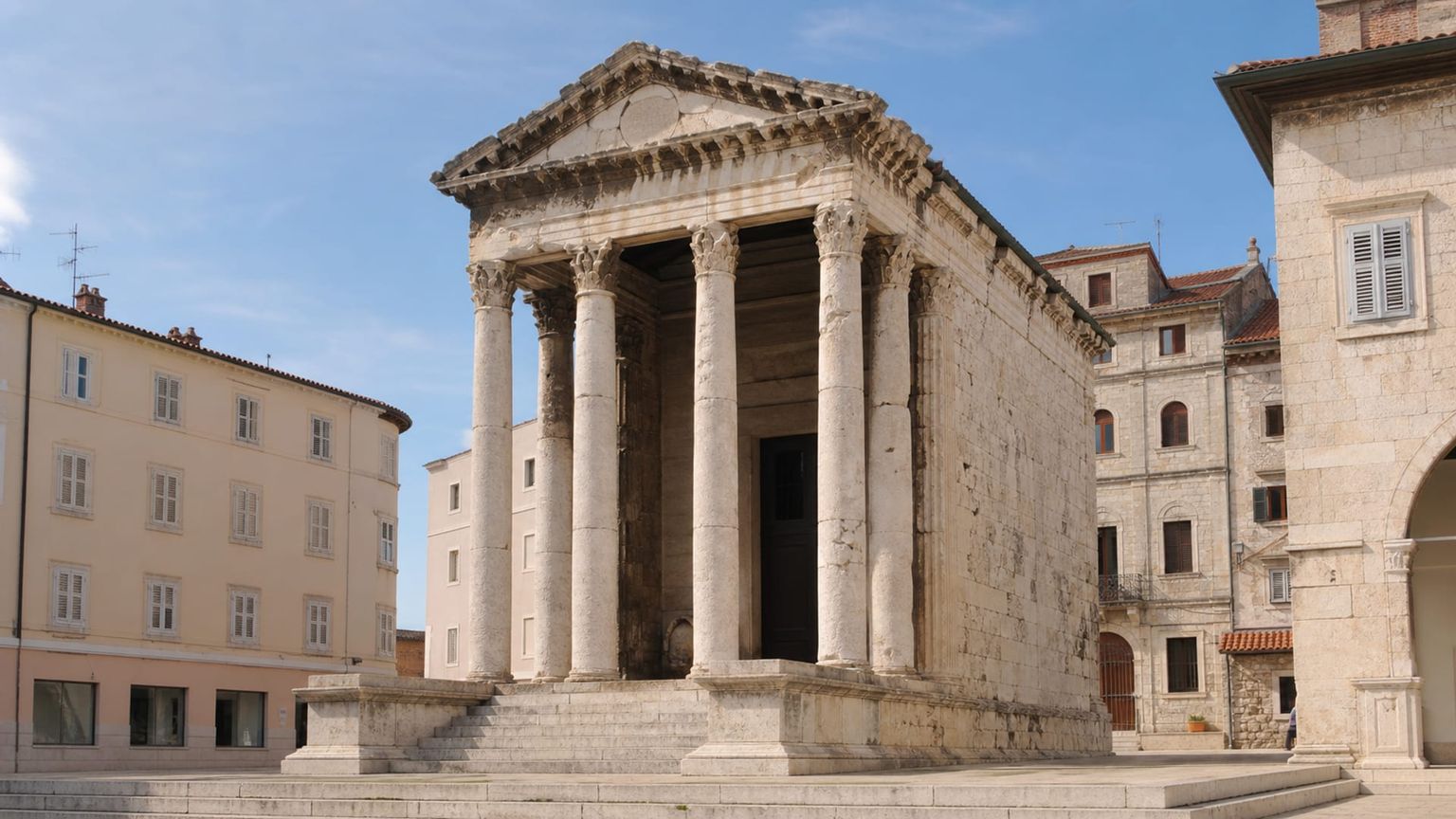
Temple of Augustus
The Temple of Augustus stands on Pula Forum as a small but finely proportioned Roman temple, rebuilt after wartime damage. Its bronze statue displays and carved Corinthian details reward a short, close look before you move on through the square.
Time needed: About 20 to 30 minutes
Entry: Admission costs about $3 to $5 (€3 to €4); check on site for any reduced rates tied to temporary exhibitions or combined museum tickets. Visit the official site for details.
Tip: Visit when the forum is quieter, so you can study the facade without street noise.
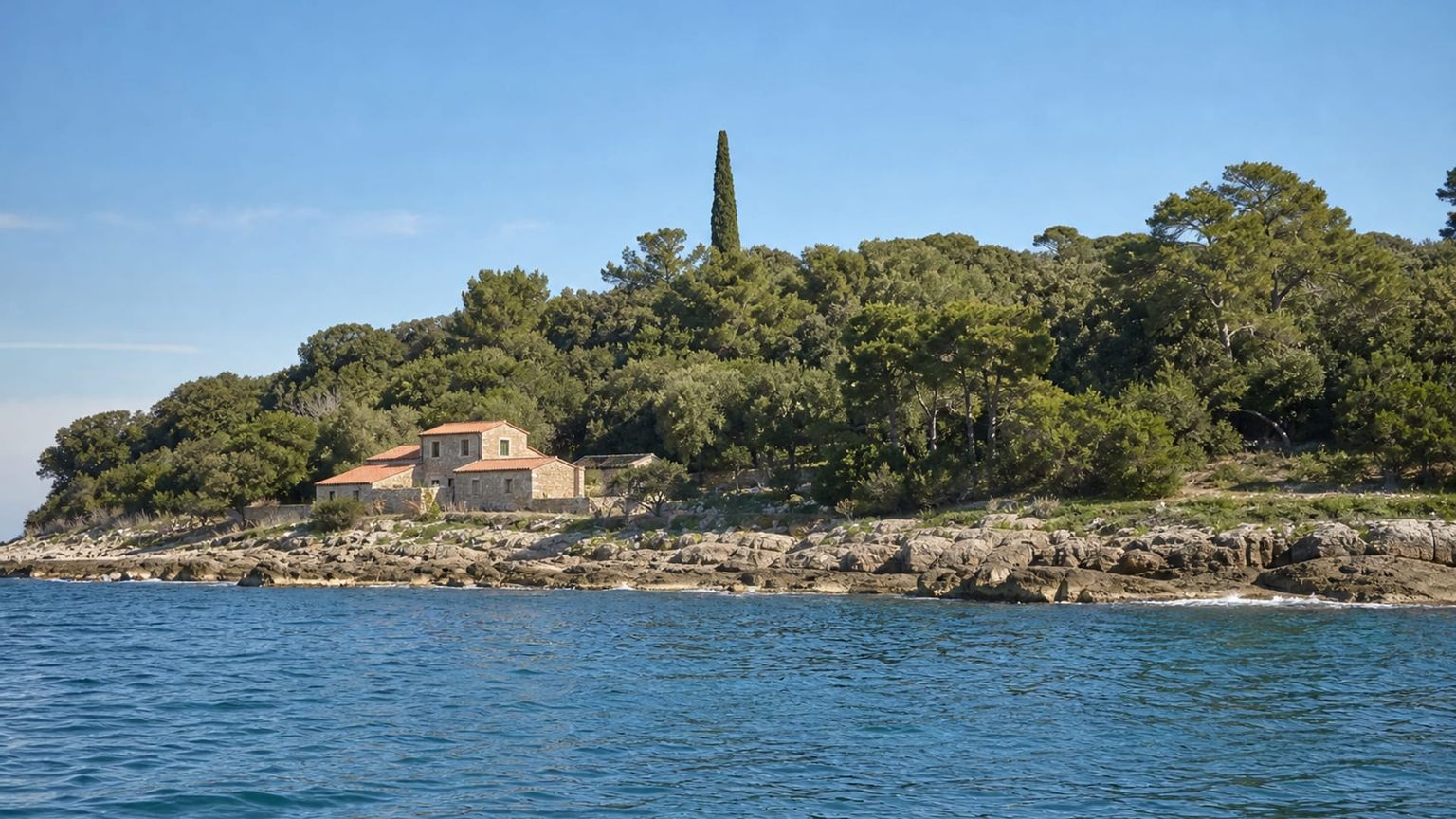
Brijuni National Park
Brijuni National Park lies off the coast from Pula and pairs island scenery with archaeological sites, Roman villa ruins, and a safari park on Veliki Brijun. You can reach it by official boat from Fažana and return the same day.
Time needed: About 4 to 6 hours
Entry: Entry costs about $32 to $46 (€30 to €42), including the boat transfer from Fažana; extra charges apply for the train, safari, or museum visits. Visit the official site for details.
Tip: Take the first boat out, then leave time for the island train and the coastal walk.
Overlooked sites worth visiting

Verudela Peninsula coastal path
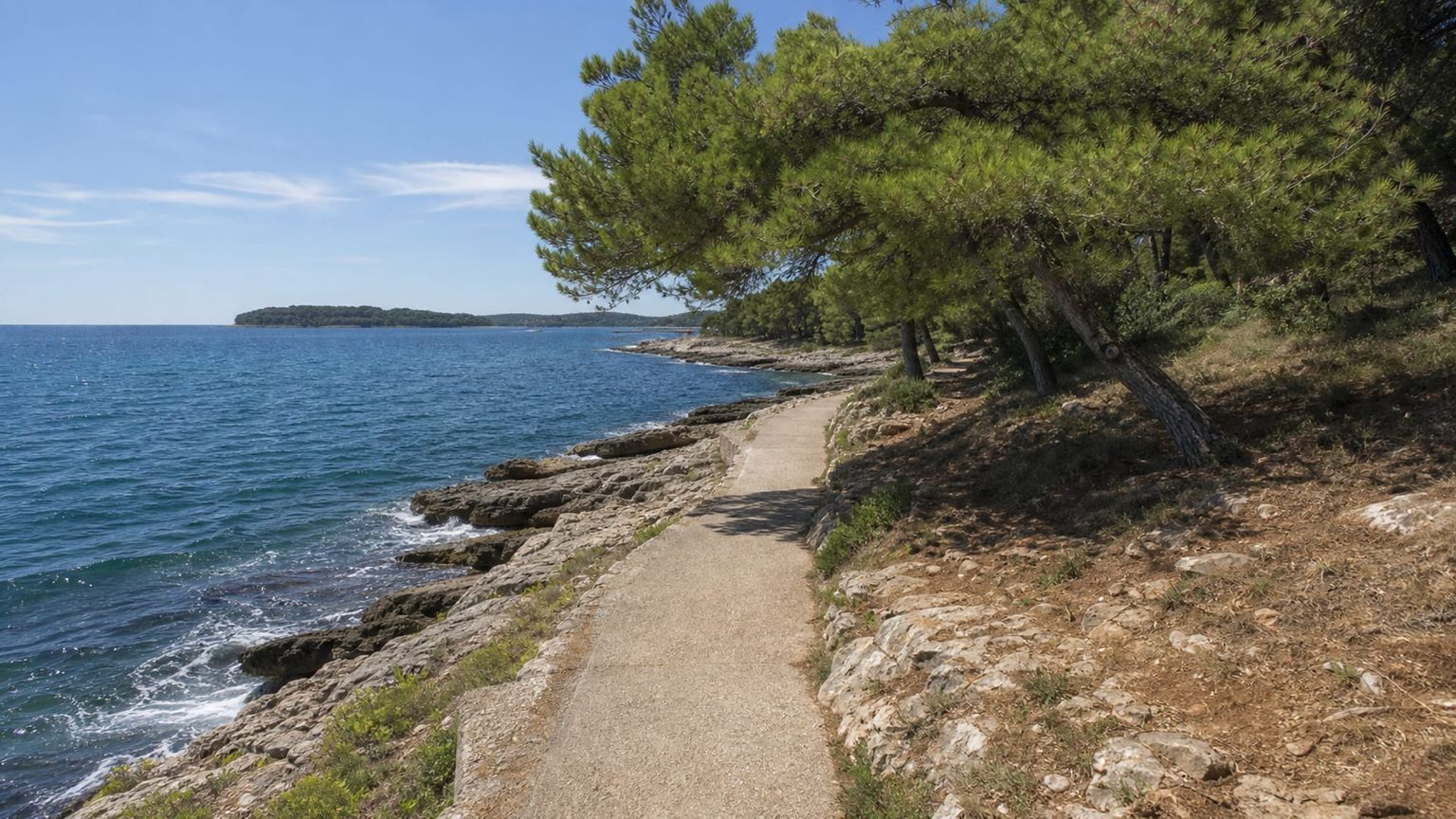
A seaside loop of coves, stone shelves, and pine shade south of Pula, with viewpoints toward the Brijuni islands. Bring water shoes if you want to enter the sea from the rocks.
Time needed: About 1 to 2 hours
Entry: Free to access. There is no ticketed entrance for the path itself, and you can walk the shoreline at no cost. Beach clubs, sunbed rentals, and parking near the peninsula are separate charges.
Tip: Go early or near sunset for cooler walking and softer light.

Small Roman Theatre
This compact Roman ruin near the historic center sits partly in a park, with low stone seating and simple interpretive panels. It gives a quick look at Pula’s Roman past without the crowds at the arena.
Time needed: About 30 minutes
Entry: Standard admission costs $4 to $6 (€4 to €5). Opening hours vary by season, and the site is small enough to visit in one short stop, usually as part of a walk through the old town.
Tip: Pair it with a morning walk through the old town.
Traditional food
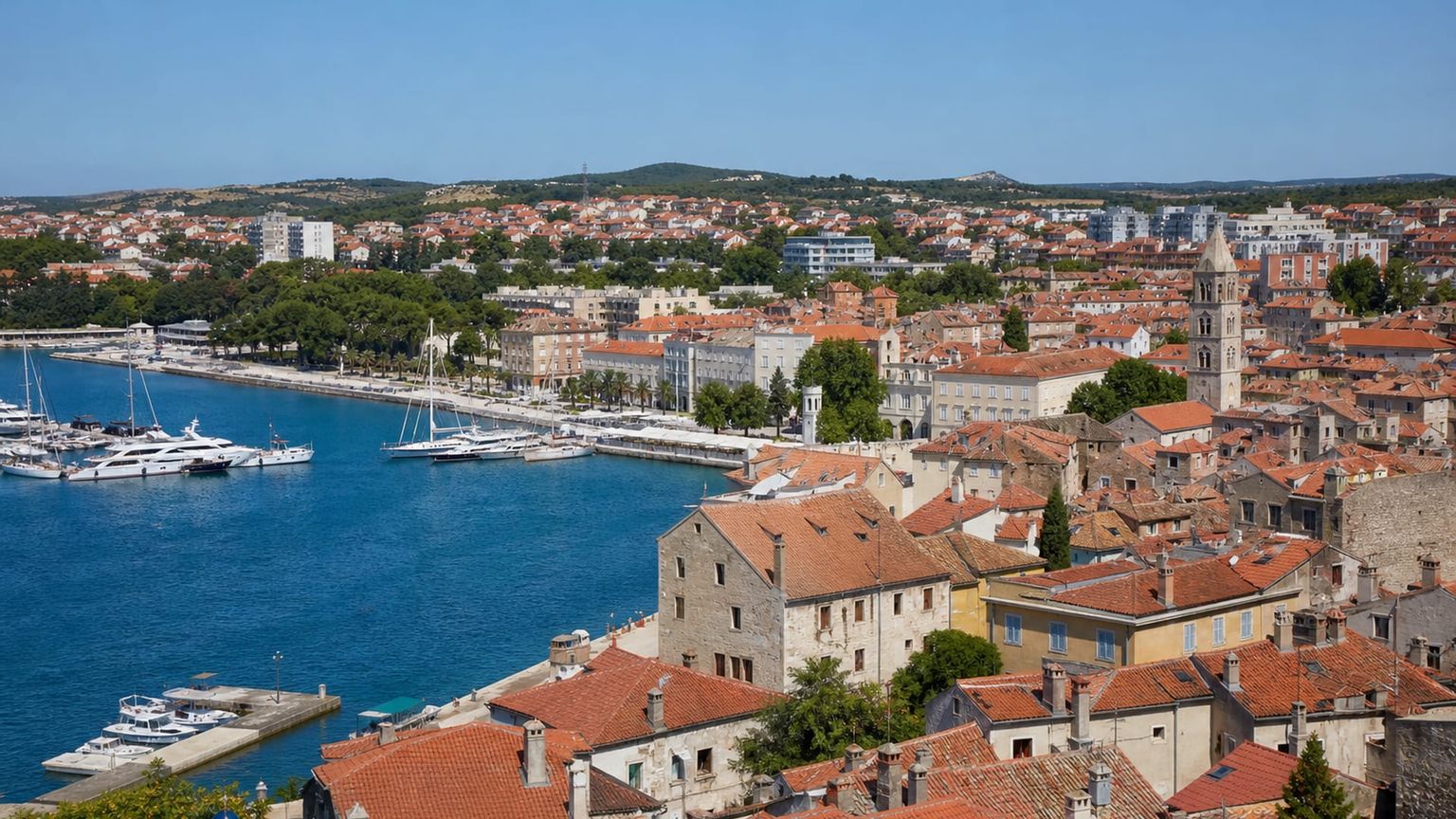
Pula’s table leans on Istrian fuži, truffles, brodet, and prosciutto, with olive oil, seafood, and seasonal produce shaping meals that move from relaxed taverns to longer, slower dinners.
Fuži with truffles
Istrian fuži arrives as hand-rolled pasta with a truffle-heavy sauce that suits the region’s forests and inland farms. Konoba Boccaporta is a strong Pula choice for it, especially if you want a meal that leans into local sourcing.
Brodet
Brodet is a fish stew built on layered seafood flavor, usually served with polenta or bread for soaking up the broth. Fish House is a fitting Pula address for a well-made version, with a menu that keeps the emphasis on the catch.
Istrian prosciutto
Istrian prosciutto is dry-cured, gently salty, and often served with cheese or bread as a starter. Vodnjanka, just outside the center in the broader Pula area, works well when you want to pair it with other regional dishes.
Mussels buzara
Mussels buzara is a tomato, garlic, and wine dish that shows up often along the coast and pairs well with a late lunch. Bistro Alighieri in Pula serves a version that fits a central meal between sightseeing stops.
Best time to visit Pula
Pula works well in more than one season, but summer brings the strongest beach weather while spring and early fall make the Roman core, Brijuni, and the coastline easier to enjoy on foot.
Best for: Roman sights, coastal walks, and lighter restaurant crowds
What you get: About 55°F to 72°F (13°C to 22°C), with comfortable sightseeing weather and moderate visitor numbers
Trade-offs: Sea temperatures stay cool for swimming
Best for: Beach days, Brijuni, and long evenings outdoors
What you get: About 72°F to 86°F (22°C to 30°C), with the busiest crowds and the most activity along the waterfront
Trade-offs: Midday heat and higher hotel rates can narrow the pace of the day
Best for: Warm water, easier sightseeing, and local dining
What you get: About 57°F to 79°F (14°C to 26°C), with fewer crowds after peak summer
Trade-offs: Shorter days arrive quickly by late October
Best for: Quiet museums, café time, and low-key city breaks
What you get: About 41°F to 55°F (5°C to 13°C), with the lightest tourist traffic of the year
Trade-offs: Swimming and island outings become limited
A realistic 5-day plan in Pula
A good Pula stay does not force every sight into one day. The outline below starts in the center, adds an island day, then opens space for the coast, so each move feels timed rather than crammed together.
Arrive at Pula Airport (PUY), then take a taxi or prebooked transfer into the center in roughly 15 to 20 minutes for about $25 to $35 (€23 to €32). If you are staying in Old Town or near Maximilian’s Park, check in, drink some water, and keep dinner close to your room at a café near Pula Forum or the harbor so the first evening stays simple and walkable.
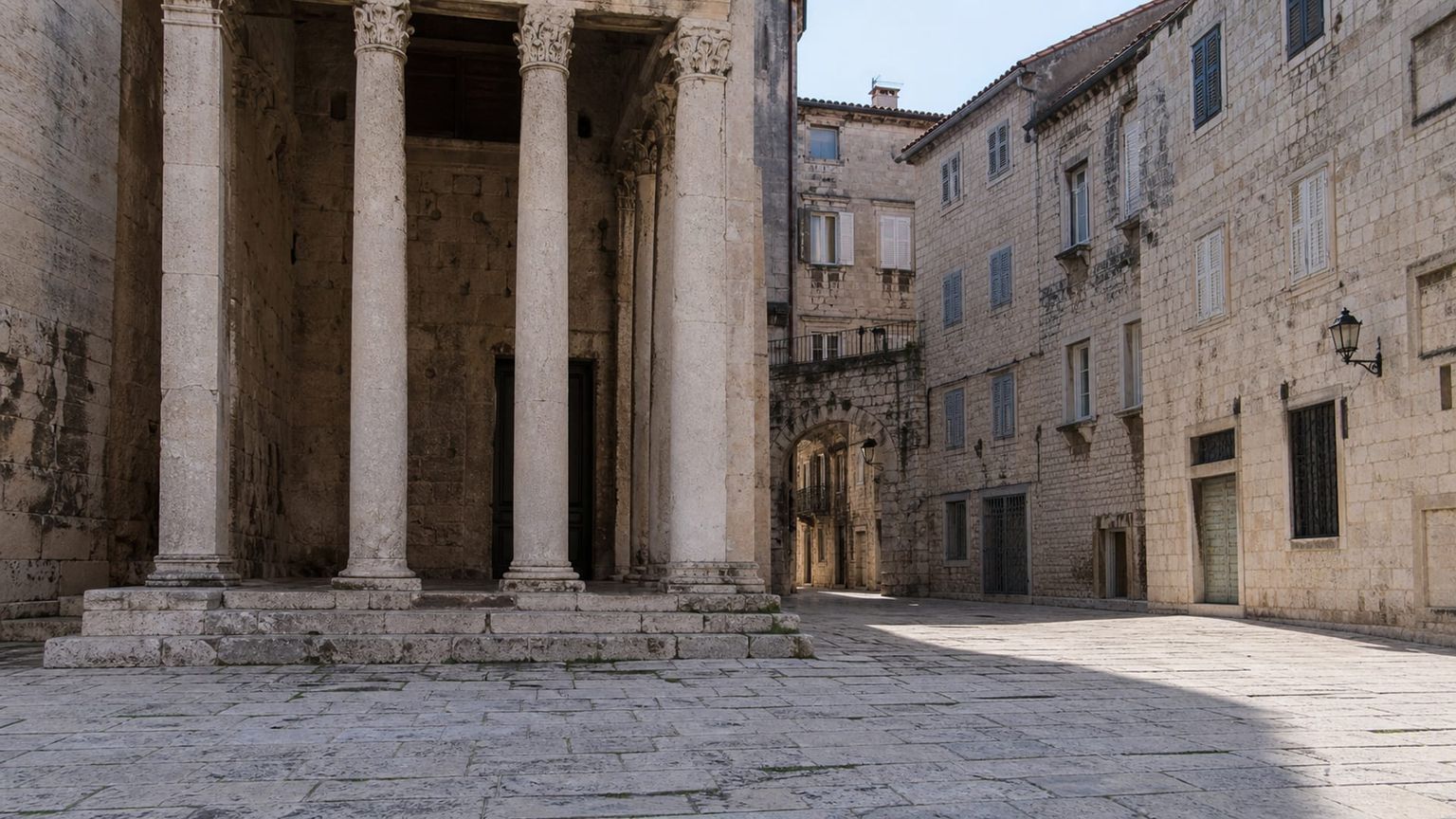
Begin at the Pula Arena, then walk about 8 minutes to the Temple of Augustus on Pula Forum. Spend about 1 to 2 hours at the arena, then 20 to 30 minutes at the temple, with a short pause for coffee in Old Town before heading about 12 minutes on foot to the Small Roman Theatre for a quieter Roman stop. Finish with an easy dinner back in Old Town, where the compact streets keep everything close.
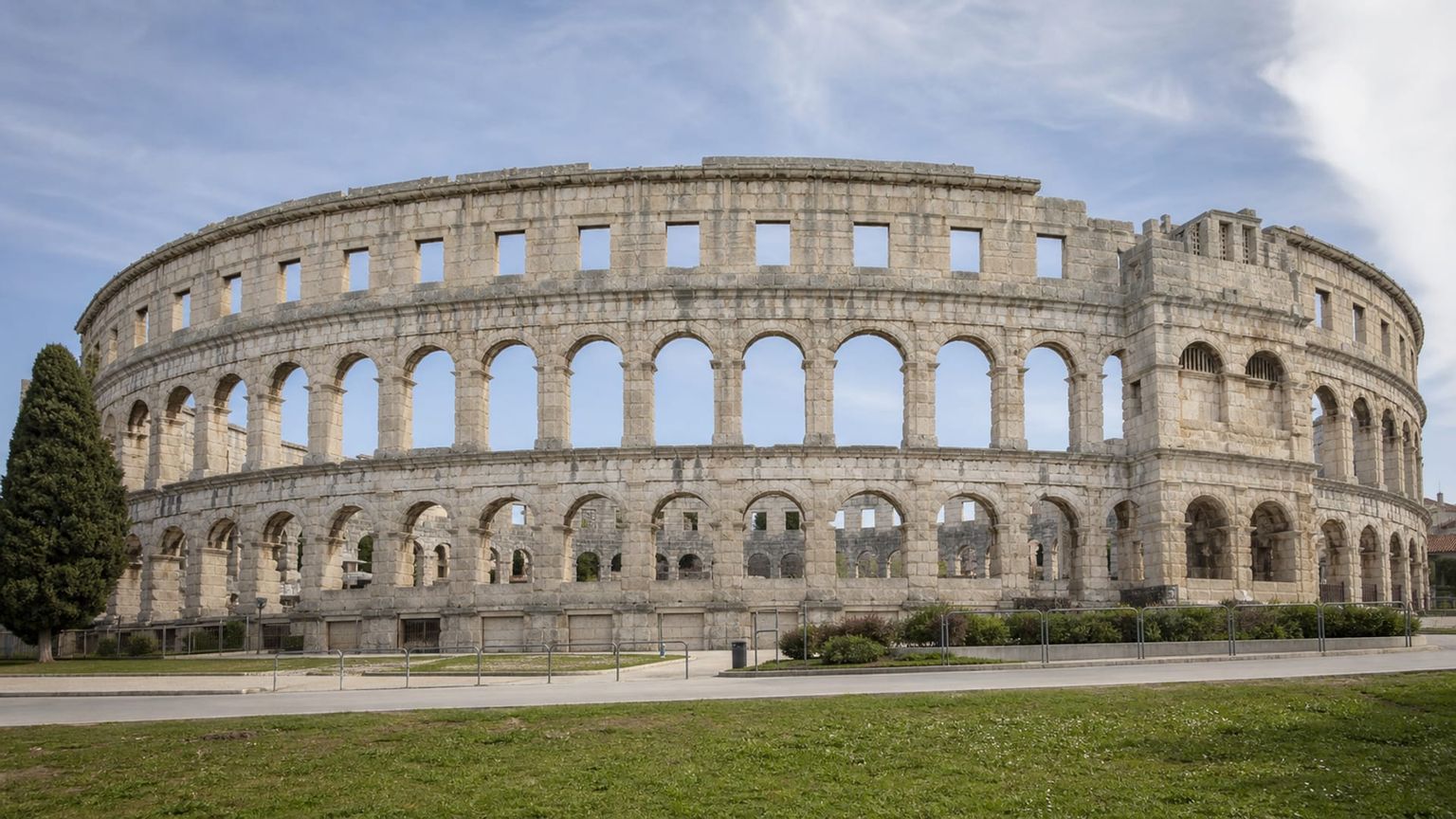
Start with an early trip to Brijuni National Park, which takes about 4 to 6 hours including the boat from Fažana and the return crossing. From Pula center, reach Fažana by bus or taxi in roughly 25 to 35 minutes, then make time for the island train, the coastal walk, and the ruins on Veliki Brijun before coming back for a low-key evening in Veruda or the Old Town.
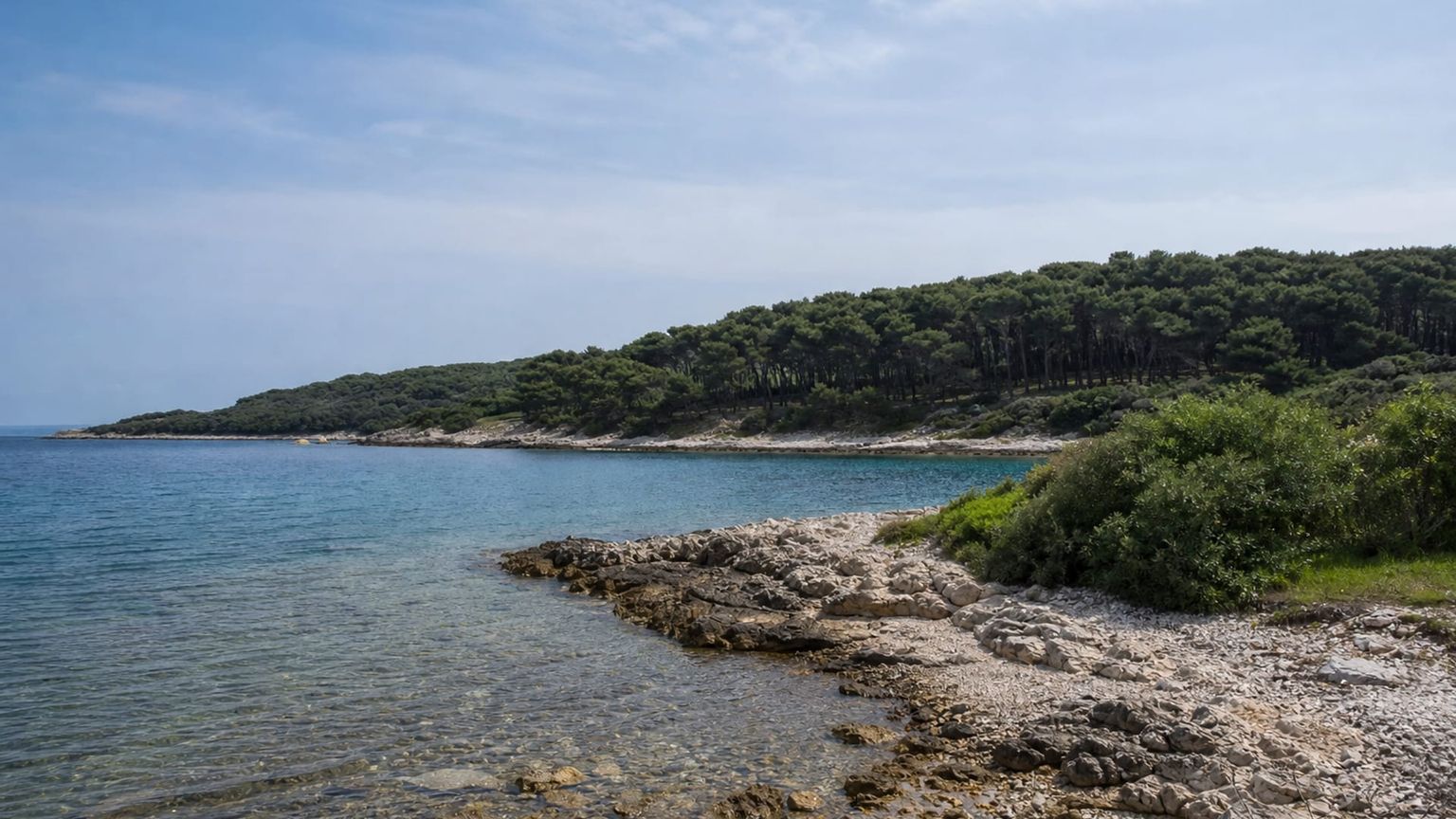
Head south to the Verudela Peninsula coastal path for a shoreline walk that takes about 1 to 2 hours, with coves, pine shade, and views toward the Brijuni islands. If you are based in Veruda or Stoja, the path is a short bus ride or taxi away, and from the center it is about 15 to 20 minutes by bus. After the walk, return through Veruda for a late lunch, then spend the afternoon near a swimming cove or at the water’s edge in Stoja.
Start the morning with one last quiet stop at the Temple of Augustus or, if you prefer a smaller visit, the Small Roman Theatre. Then browse the Old Town shops for local olive oil, wine, and ceramics, before ending at a café in the Maximilian’s Park area or along the streets near Pula Forum for a final coffee and cake before departure.
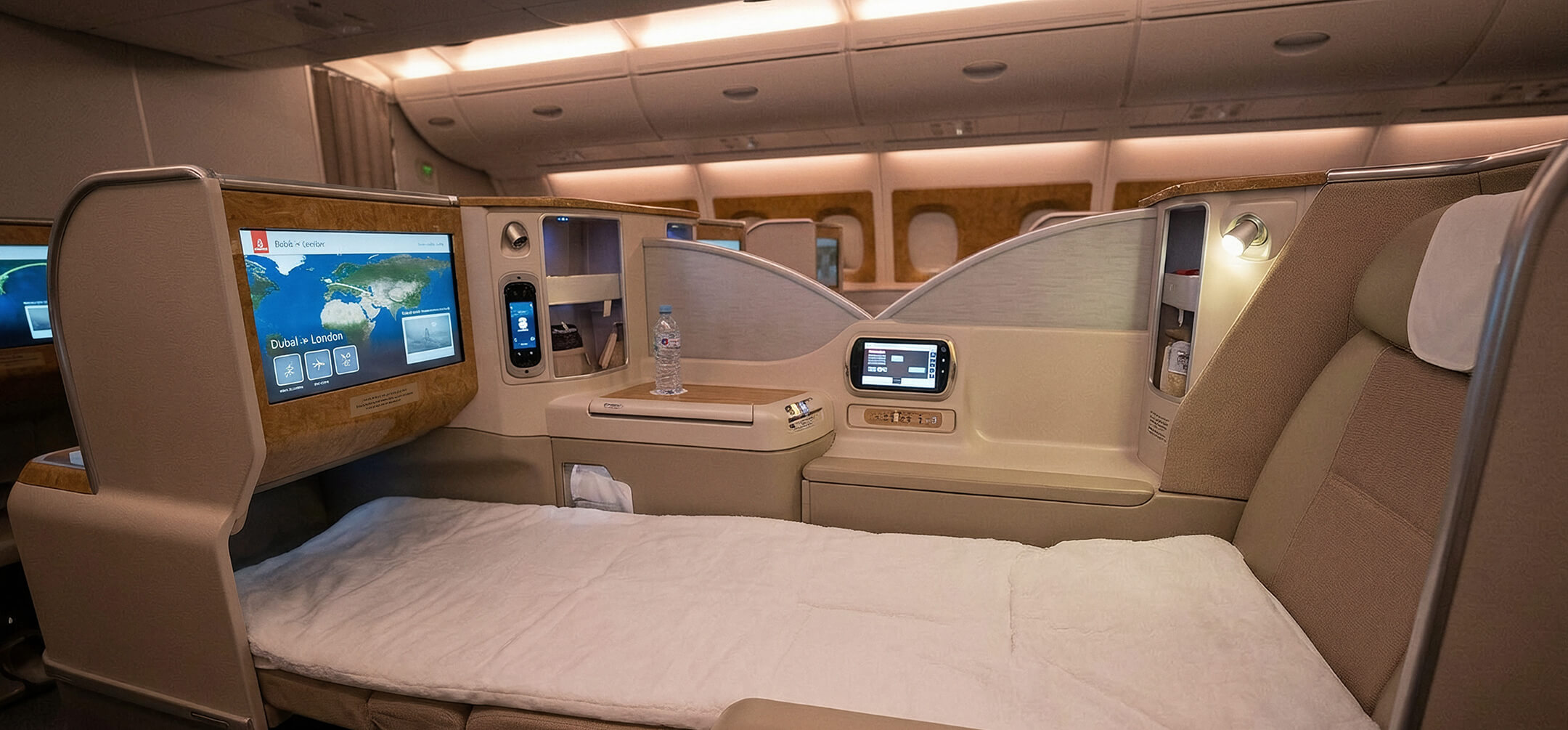
Business-class flights from the US to Pula
Reaching Pula from the United States usually means a one-stop trip, with the most common hubs in Western Europe or Istanbul. The examples below show how that looks from both coasts, along with the fare ranges you can expect.
From New York, carriers such as Delta Air Lines, KLM, Lufthansa, British Airways, Turkish Airlines, and Air France usually connect through AMS, FRA, MUC, LHR, IST, or CDG. One-stop itineraries commonly run 12 to 18 hours, and round-trip fares usually start at $2,200 and can reach about $4,800. If you do not mind a layover, common routings via AMS, FRA, or LHR often lower the fare.
From Los Angeles, Lufthansa, Turkish Airlines, British Airways, KLM, Air France, and Delta Air Lines typically route through FRA, MUC, IST, AMS, LHR, or CDG. The total journey usually takes about 14 to 20 hours, and round-trip fares often sit between $2,500 and $5,200, with one-stop itineraries usually sitting below the fastest options.
Pula feels different when you slow down
A well-planned Pula trip gives each part of the city a role: the Arena and Forum for the Roman core, Brijuni for a full-day crossing, and Verudela or Stoja for sea air after the museum stops. Pulapromet buses and short taxi rides keep the center connected to the coast, while Old Town and Maximilian’s Park make good anchors for the evenings. If you want more detail before you book, the AranGrant experts can help shape the route around your dates and pace