

Chapters:

Need help with your trip?
Our support team is available 24/7. Request a callback or call us directly at (833) 619-0908
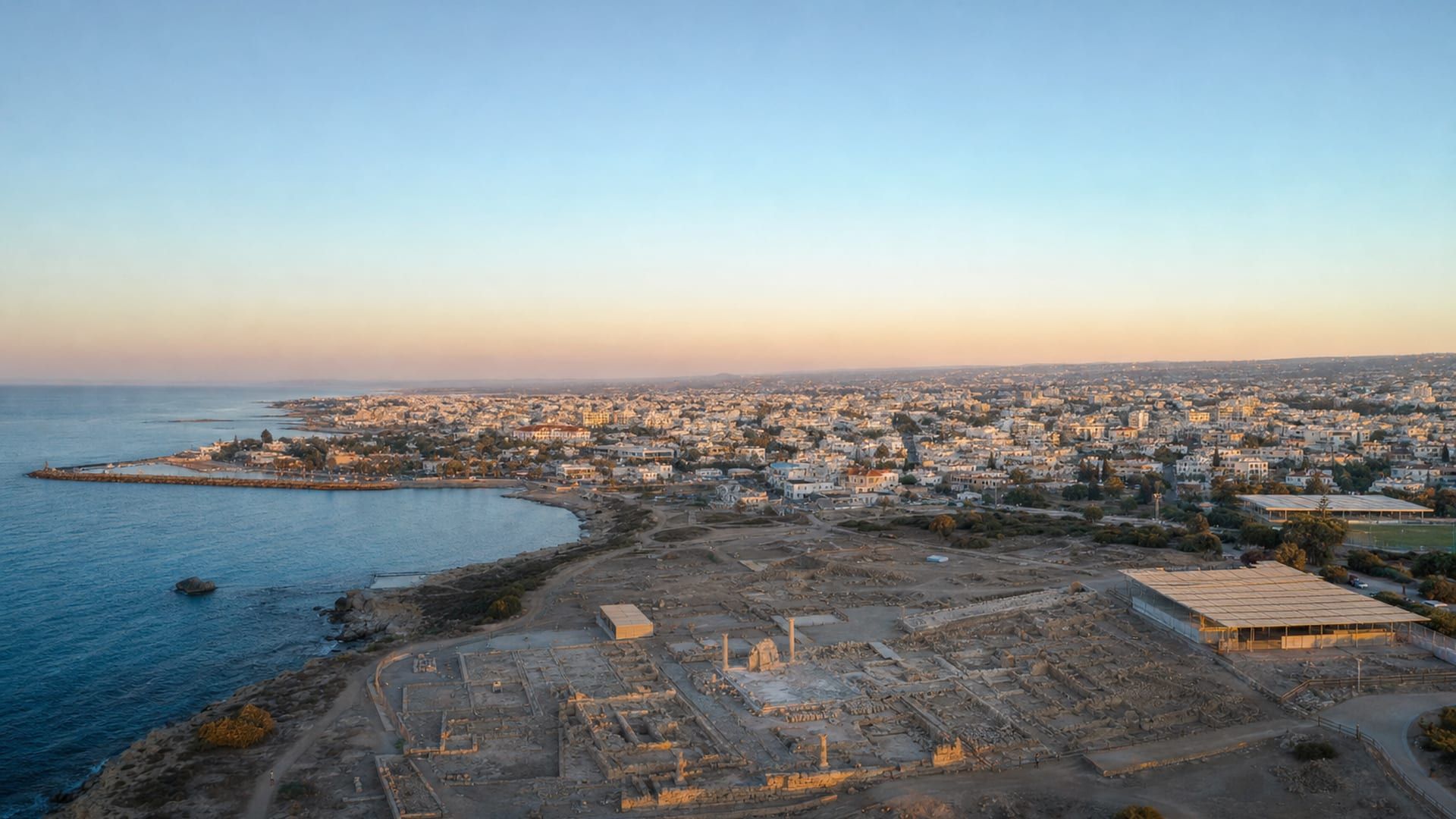
Paphos trips often start with the harbor, a quick look at the mosaics, and a dinner on the promenade, while the quieter layers of the city stay off the itinerary. Visitors also underestimate how much time simple moves can take once they leave the waterfront.
The archaeological park, Tombs of the Kings, and the old port sit close enough to link, but heat, crowds, and uneven walking surfaces change the pace fast. Add bus timings or a taxi hop, and a loose plan can feel stretched.
This guide keeps the center of gravity near Kato Paphos, then builds outward in a way that fits the city’s distances, opening hours, and seaside light.
Useful things to know

Main language(s): Greek
Γεια σας (YAH sahs) – Hello / good morning
Παρακαλώ (pah-rah-kah-LOH) – Please
Ευχαριστώ (ef-khah-rees-TOH) – Thank you
Μιλάτε αγγλικά; (mee-LAH-teh ahng-glee-KAH) – Do you speak English?
Πόσο κάνει; (POH-so KAH-nee) – How much does it cost?

Currency: The local currency is the euro (EUR, €).

Cash and cards: Cards and contactless are widely accepted; carry about €20 to €40 ($22 to $44) in cash for small cafes, kiosks, and taxis.

Tipping: Round up taxi fares and leave 5-10% at restaurants when service is good.

Traditional food: Souvla, kleftiko, halloumi, sheftalia

Water and coffee costs: Water ~€1.50 ($2), bar espresso ~€2.50 ($3).

Taxis and ride apps: Bolt and local taxis operate here; app coverage can be thin late at night.

Plug and voltage: Type G socket, 240V

Dining and shop opening hours: Breakfast is about 07:30-10:00, lunch 13:00-15:00, and dinner 20:00-23:00. Many kitchens close in the afternoon between lunch and dinner.

Emergency number: 112 for police, fire, and ambulance.
Where to stay in Paphos
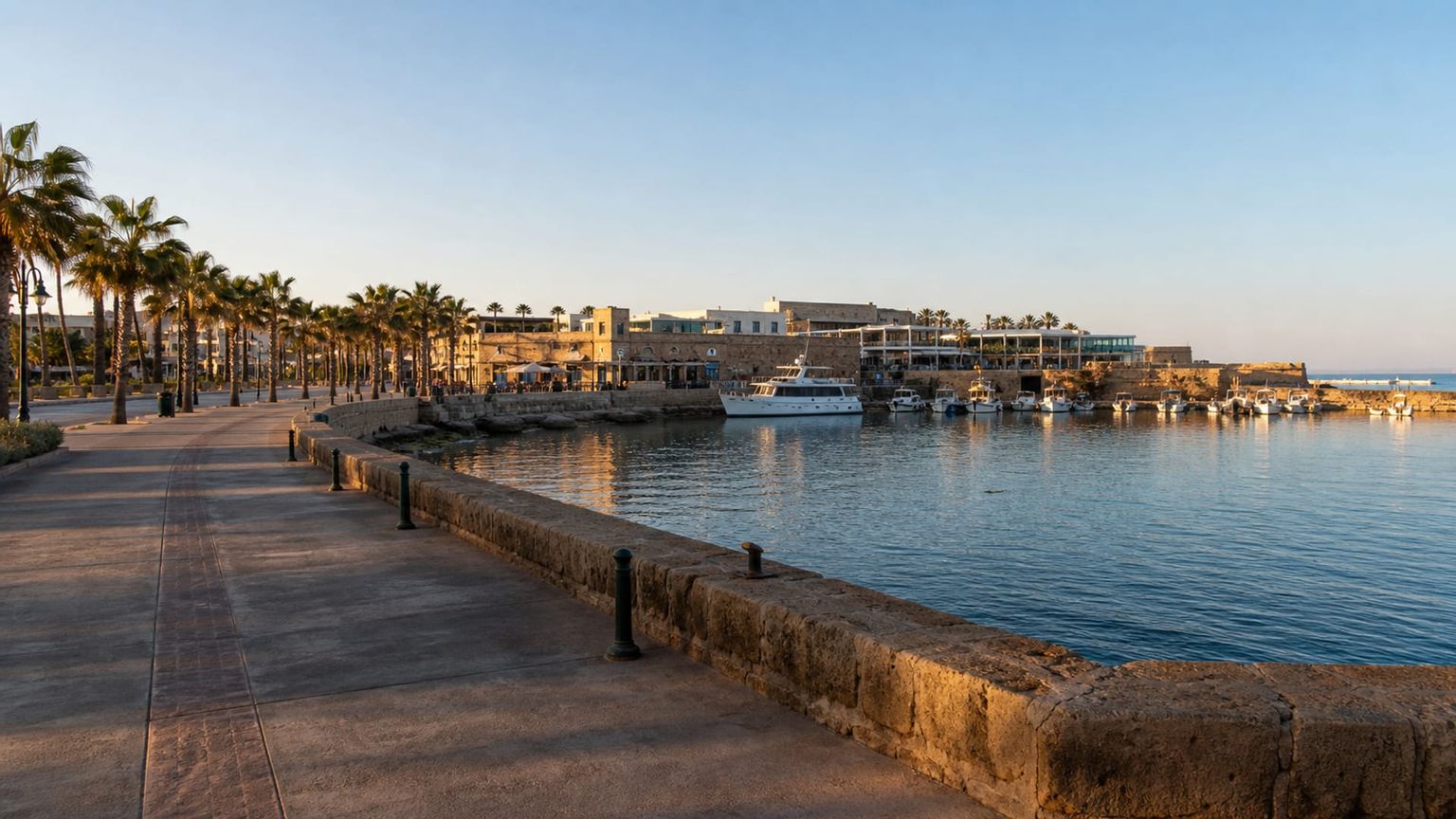
The harbor and waterfront core puts you beside the Castle, seaside promenades, and the town’s main restaurant strip. It suits visitors who want to walk to the archaeological park, beaches, and evening dining without relying on long taxi rides.
Best for: First-time visits, beach access, and travelers who want the main sights on foot
What to expect: Busy by day, with tour groups, cafes, and steady foot traffic along the seafront; evenings bring the most dining and promenade activity.
Hotel prices: Usually about 90€ to 180€ (~$98 to ~$196) per night for well-rated stays
Distance to major sights: 5 to 15 minutes on foot to Paphos Harbour and Paphos Castle; about 15 to 20 minutes on foot to the Paphos Archaeological Park
Quietness: Lively through the day and evening, with the most noise near the waterfront and restaurant streets.
Main trade-off: You pay more for the best walking access, and peak-season rooms close to the promenade can book early.
Good to know: If you plan late dinners or sunset walks, pick a room a few streets back from the harbor front to reduce night noise.
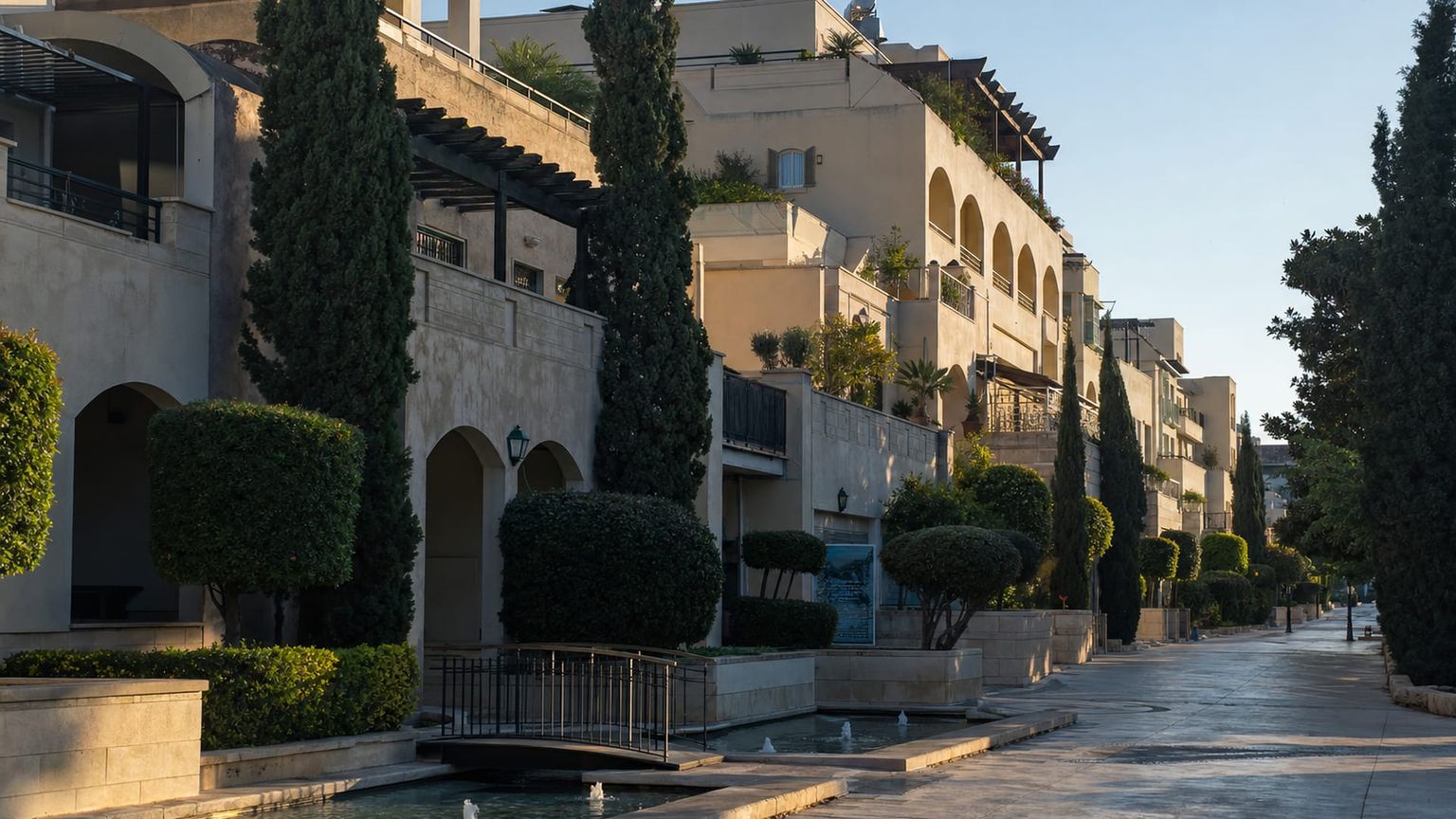
Universal sits just inland from Kato Paphos, with apartment blocks, small hotels, and easy road access to the coast. It matters because it often gives you a lower-cost base while keeping the harbor, beach, and archaeological sites close enough for short rides or manageable walks.
Best for: Apartment stays, longer visits, and travelers who want cheaper lodging near the coast
What to expect: Residential streets, low-key cafes, and less evening foot traffic than the waterfront, with most activity around hotel clusters and main roads.
Hotel prices: Usually about 70€ to 130€ (~$76 to ~$141) per night for well-rated stays
Distance to major sights: About 10 to 20 minutes by taxi to Paphos Harbour; roughly 20 to 30 minutes on foot to the Paphos Archaeological Park
Quietness: Quieter in the evening than the harbor area, while daytime traffic can be noticeable on the main roads.
Main trade-off: You save money, but you will likely depend more on taxis or longer walks for the seafront and old port area.
Good to know: Choose a place near the bus corridor if you want easier access to both the harbor and the beach without renting a car.
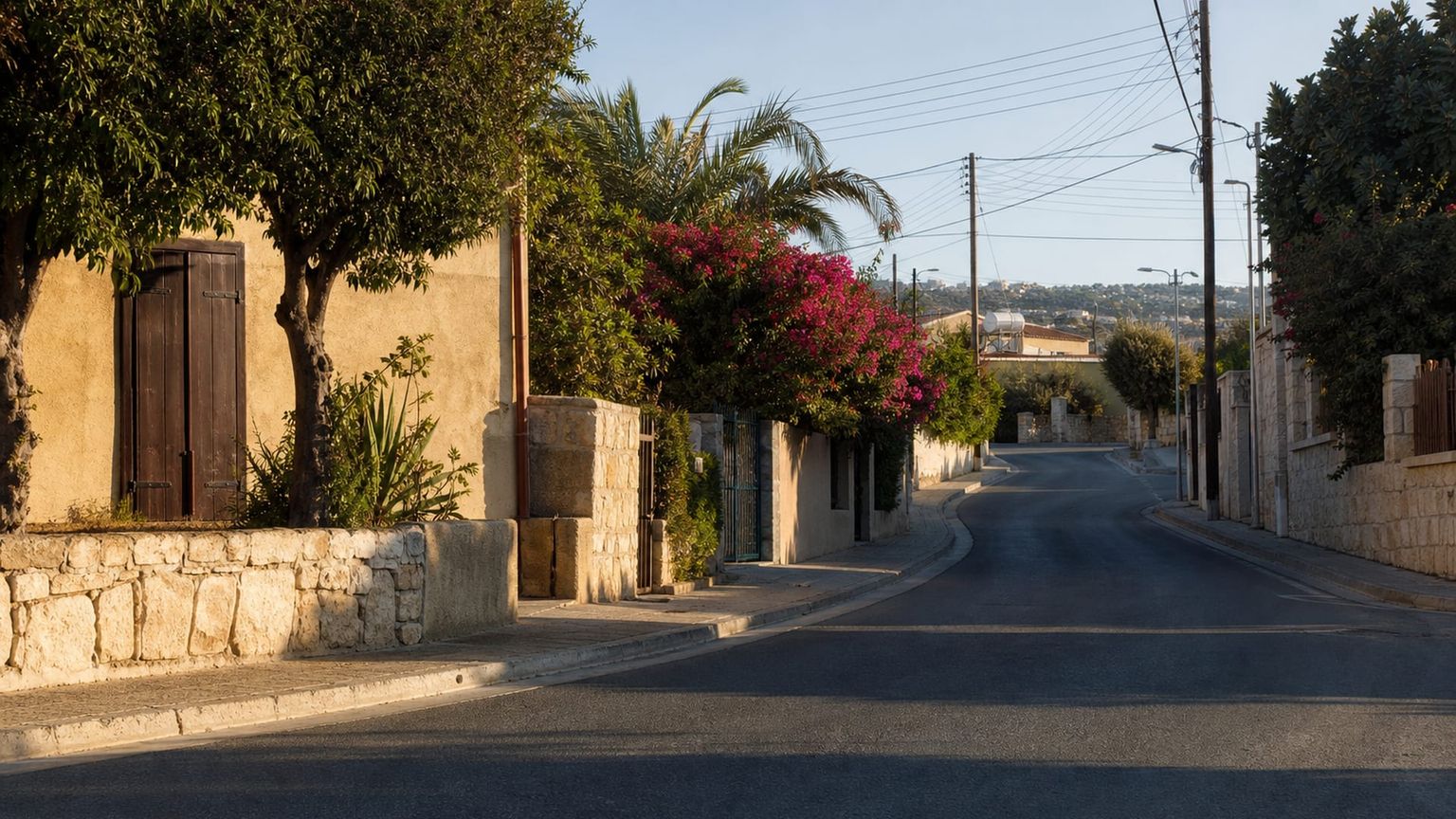
Chloraka is a coastal suburb north of central Paphos, with resort hotels, sea views, and a more spread-out layout. It matters for travelers who want a resort-style stay, easy parking, and a base that still reaches central Paphos without much effort.
Best for: Resort stays, couples, and travelers with a car who want a quieter coastal base
What to expect: A mix of low-rise hotels, residential streets, and local shops, with more resort guests than street life and limited late-night activity.
Hotel prices: Usually about 80€ to 160€ (~$87 to ~$174) per night for well-rated stays
Distance to major sights: About 10 to 15 minutes by taxi to Paphos Harbour; about 20 to 30 minutes by taxi to the Paphos Archaeological Park
Quietness: Calmer than the harbor in the evening, though some seafront hotels and main roads stay active in peak season.
Main trade-off: The setting is quieter, but you give up walkability to the harbor and archaeological sites.
Good to know: If you stay here, check the hotel shuttle or local bus stops before booking, since not every property sits close to the sea path or main road.
Travelers usually avoid staying in Kato Paphos far from the harbor edge, Chloraka, and Pegeia, because these areas sit well away from the main archaeological sites and central dining streets, and evening travel into town takes longer. Geroskipou and the airport side of Paphos are also less convenient for a short stay, since they have fewer visitor amenities and add extra taxi or bus time for beach, harbor, and old-town visits.
Hotel deals
How to get around Paphos efficiently
Paphos has no metro or rail link, so most visitors move between the harbor, the old town, and the airport by bus, taxi, or short walks.

Metro
for longer distances
Paphos has no metro or suburban rail, so visitors rely on buses and taxis for airport and city trips.

Bus and tram
for convenience
Paphos bus routes link Paphos Airport, the harbor, Kato Paphos, and the old town, with airport fares typically about $2.15 (€2.00) to $2.70 (€2.50) and day passes about $6.45 (€6.00). Single tickets usually stay valid for one ride, while day tickets cover unlimited bus use until late evening; evening and Sunday frequencies are thinner than daytime.

Taxi
for convenience or late hours
Licensed taxis use metered fares rather than fixed airport pricing, and a ride from Paphos Airport to central Paphos usually costs about $30 to $40 (€28 to €37), depending on time and luggage. You can book by phone, use official ranks, or ask your hotel to call one; most accept cash, and many also take cards, though it is wise to confirm before setting off.
*Prices are based on rates updated as of June 2026 and may change at the time of travel.
Use buses for low-cost airport and cross-town trips, taxis when you want speed or are arriving late, and walking for the harbor area, where the main sights sit closest together.
Iconic landmarks
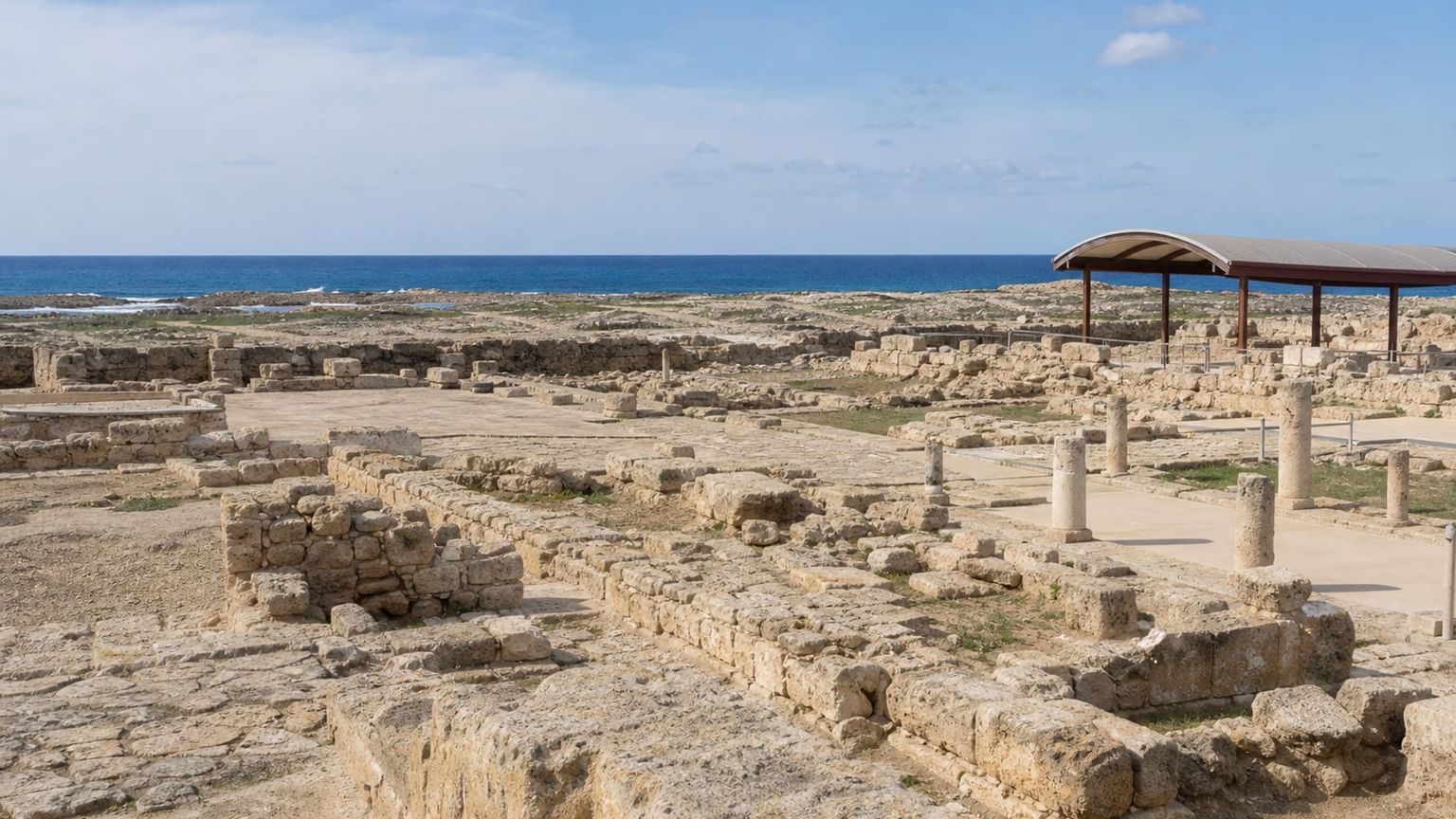
Kato Paphos Archaeological Park
This waterfront park brings together Roman villas, a theatre, an Odeon, and the Tombs of the Kings route in one compact site. The floor mosaics in the Houses of Dionysus, Theseus, and Aion are the main draw.
Time needed: About 2 to 3 hours
Entry: Admission costs $6 (€5) in winter and $11 (€10) in summer for the main park, with reduced rates for eligible visitors and children. Visit the official site for details.
Tip: Go early for cooler ground and fewer tour groups, then circle the mosaics before noon light fades them.
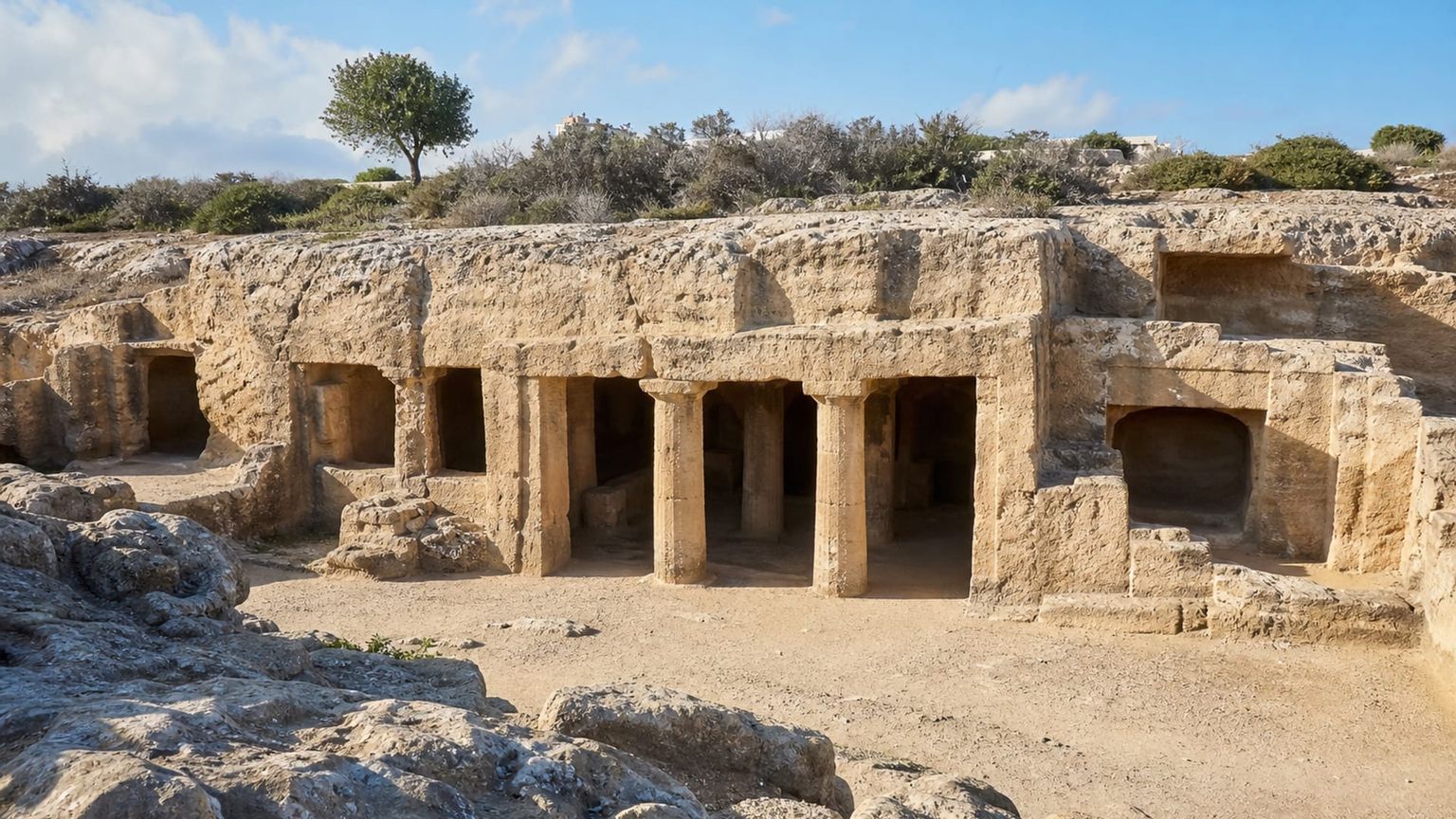
Tombs of the Kings
Carved out of solid rock, this necropolis holds Hellenistic and Roman tomb chambers, open courtyards, and columned facades. The scale is the point, and the walk gives a clear view of elite burial customs near the coast.
Time needed: About 1 to 2 hours
Entry: Admission costs $3 (€2.50) in winter and $6 (€5) in summer, with reduced rates for eligible visitors and children. Visit the official site for details.
Tip: Wear closed shoes, the paths are uneven, and late afternoon gives better relief on the carved rock.
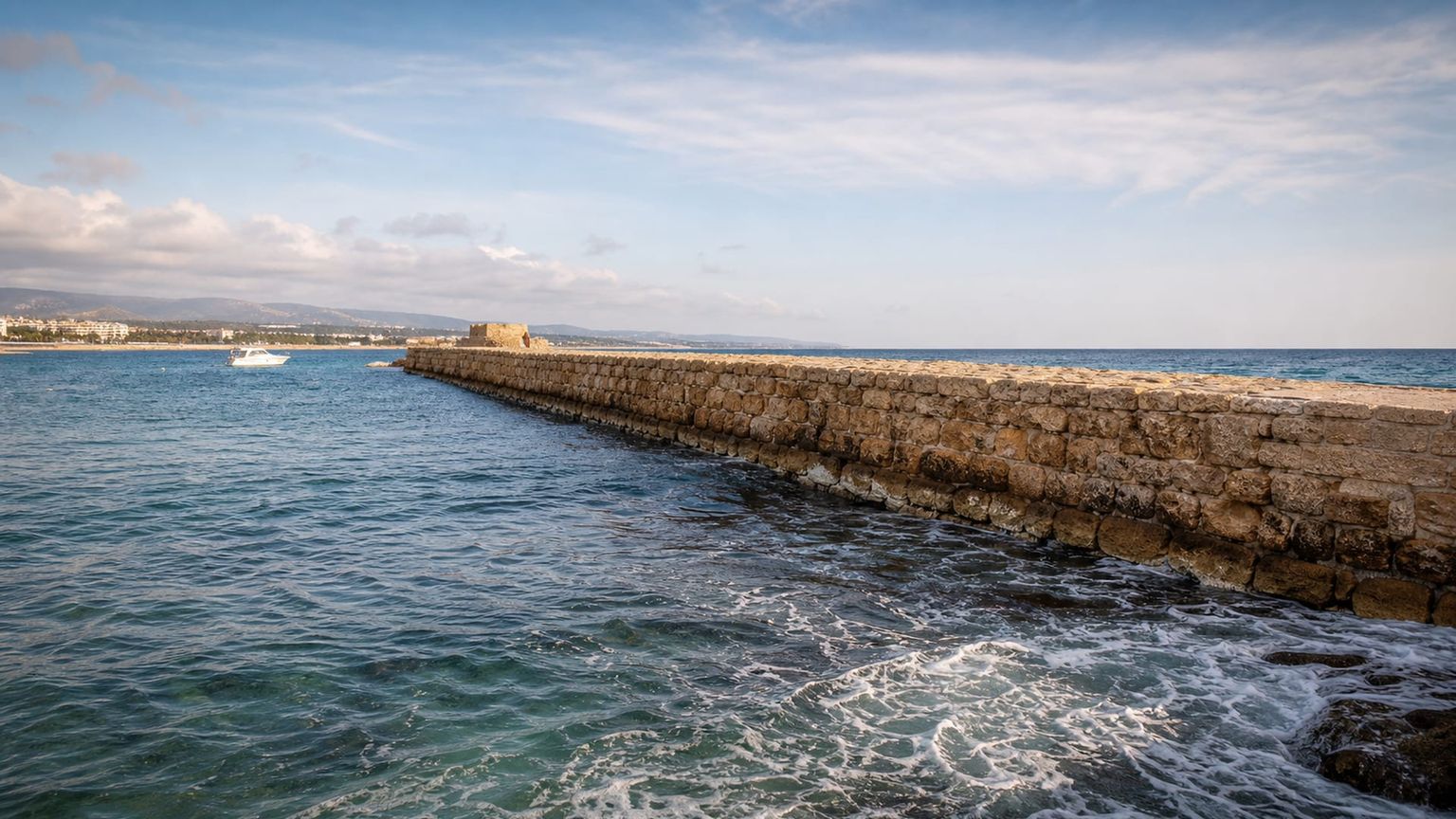
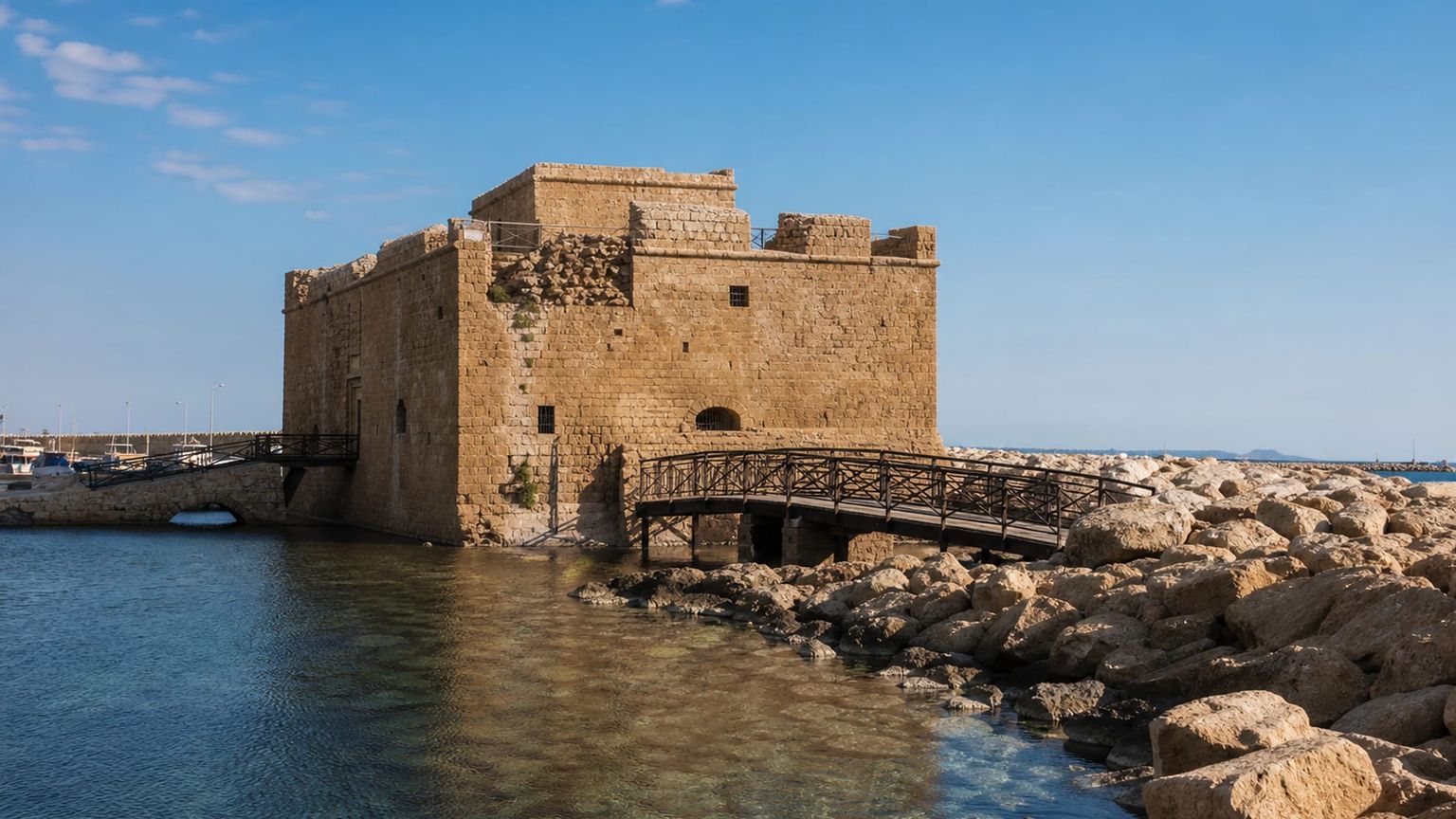
Paphos Castle
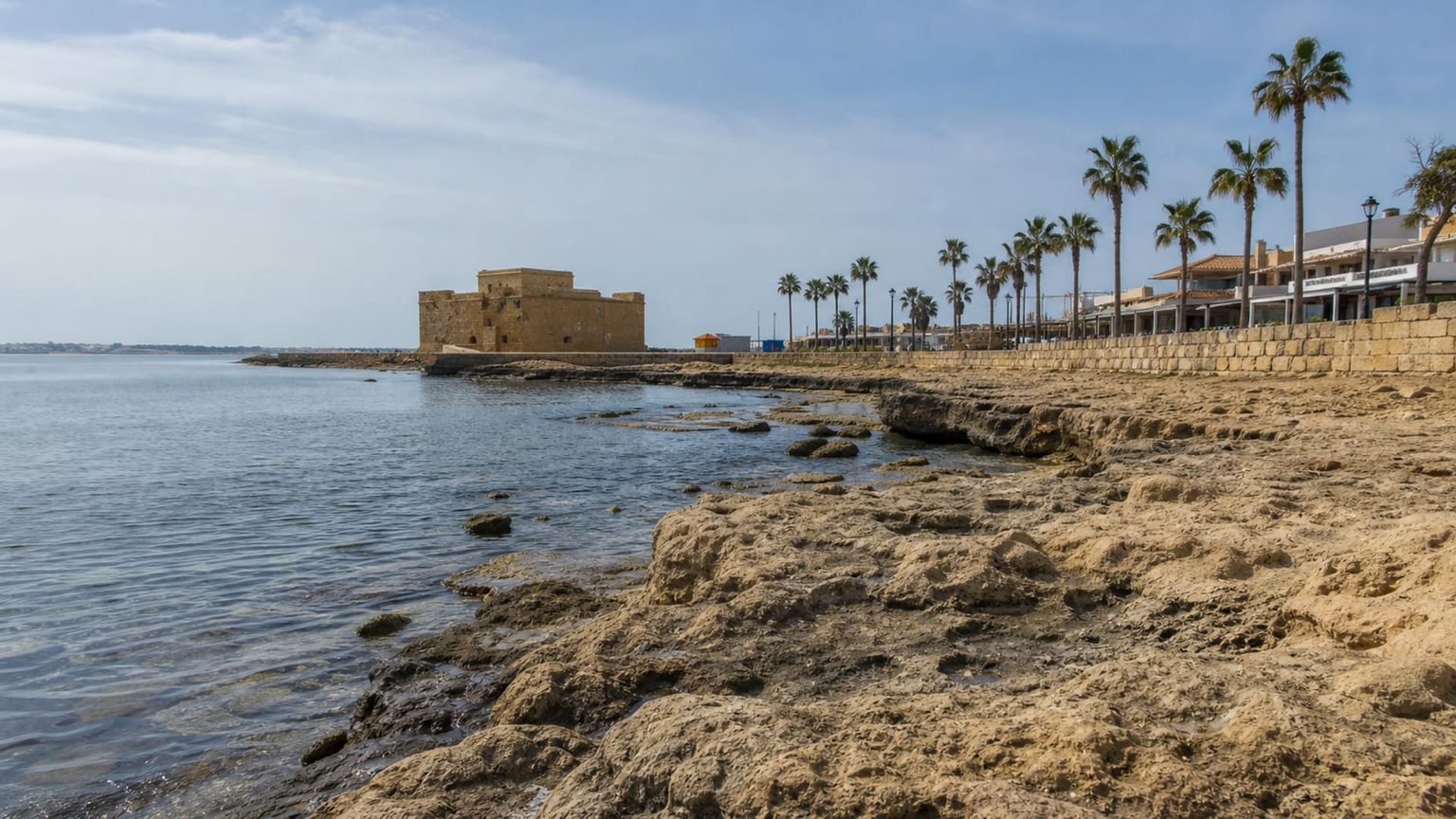
Set at the edge of the harbor, this small fortress dates to Byzantine origins and later Venetian and Ottoman use. Its heavy stone walls frame wide sea views, while the harbor setting makes it an easy stop with the old port nearby.
Time needed: About 30 to 45 minutes
Entry: Admission costs $3 (€2.50) year-round for access to the castle interior, with reduced rates for eligible visitors and children. Visit the official site for details.
Tip: Visit near sunset for softer light over the harbor, then continue along the seafront promenade.
Overlooked sites worth visiting

Paphos Ethnographic Museum
This small private museum packs pottery, tools, costumes, and carved furniture into a compact house near the harbor. The collection gives a clear look at Cypriot domestic life without a long visit.
Time needed: About 45 minutes
Entry: Admission costs about $5 ($4.50); prices can change, and the museum accepts cash or card depending on the day. It suits a short indoor stop, with display rooms that take only a brief visit to cover.
Tip: Go before midday for quieter galleries.

Paphos Harbour Breakwater
The breakwater gives you a short walk beside the old port, with fishing boats, castle views, and open water in one compact loop. Sunset brings the best light for photos and an easy pause by the sea.
Time needed: About 30 to 45 minutes
Entry: Free to access. The path is open air and unticketed, so you can walk it at no cost, then stay for a coffee or snack near the harbor if you want to extend the stop.
Tip: Visit at sunset for the clearest castle views.
Traditional food
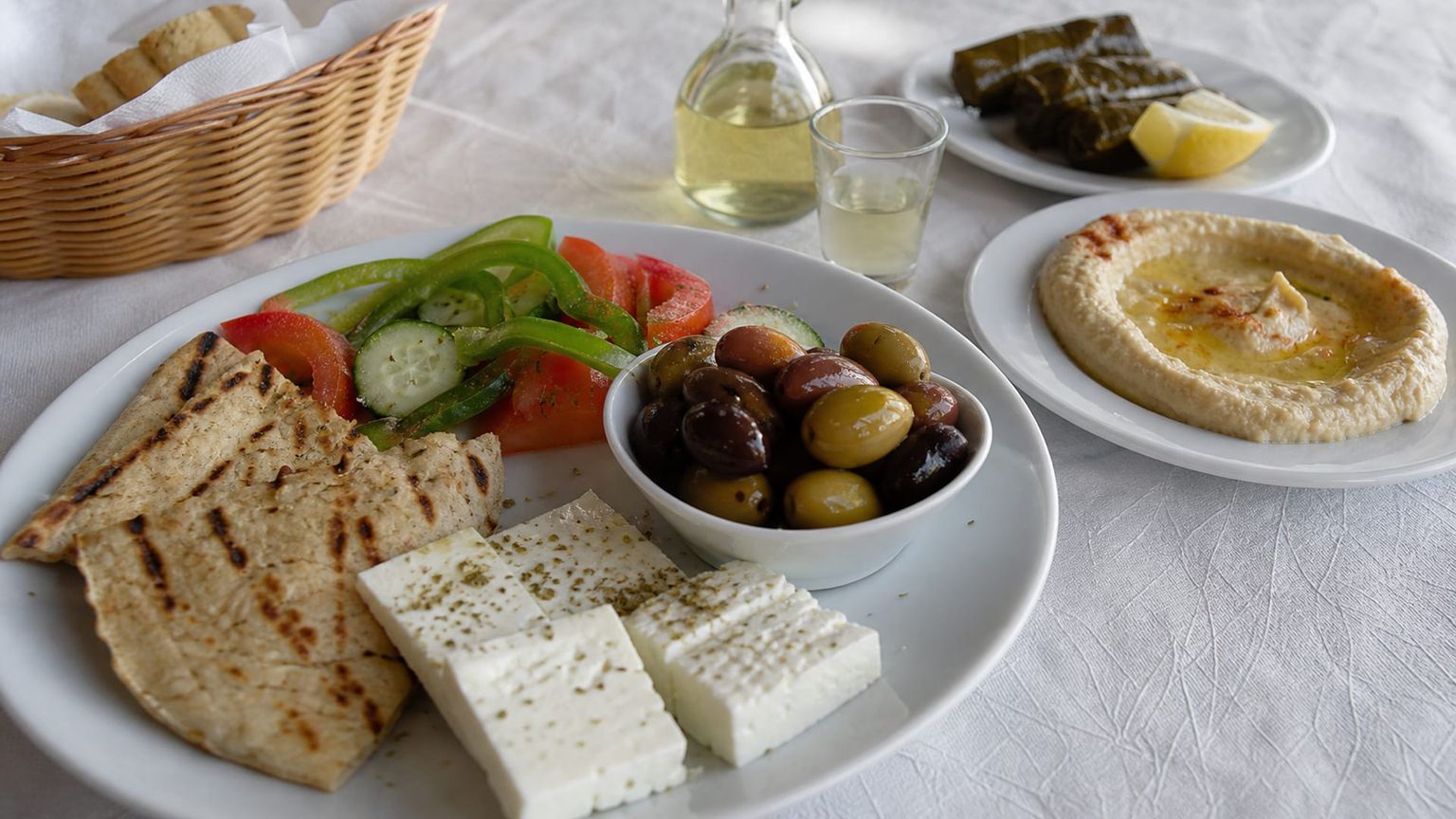
Paphos leans on grilled meats, halloumi, sheftalia, and olive oil, with tavernas that keep lunch and dinner hours in the local cycle. Souvla and kleftiko anchor the table, then fresh bread, salads, and meze fill it out.
Souvla
Large cuts of pork or lamb roast over charcoal until the edges crisp and the center stays juicy. Try it at Dias Zeus in Paphos, where the grill focus makes it a strong city pick.
Kleftiko
This slow-baked lamb turns tender in sealed clay or covered ovens, with herbs and potatoes soaking up the juices. Zorbas Tavern in Paphos serves a version that fits the dish’s long-cooked style.
Halloumi
Cyprus’s signature cheese arrives grilled or fried, with a salty bite and a firm center that stands up well to meze. Try it at Ouzeri in Paphos, where the menu treats it as a proper course, not just a side.
Sheftalia
These minced meat sausages are wrapped in caul fat and cooked over charcoal, which gives them a rich, smoky finish. The Kings Avenue Mall area branch of Agora Tavern in Paphos is a common stop for a plate of them.
Best time to visit Paphos
Spring and autumn are the easiest seasons for Paphos, while summer brings stronger heat and winter stays mild enough for sightseeing with lighter crowds.
Best for: Mosaics, harbor walks, and long outdoor days
What you get: About 66 to 80°F (19 to 27°C), with moderate crowds and comfortable walking conditions
Trade-offs: Easter periods and school holidays can add a brief rush
Best for: Sea swims, early museum visits, and sunset dinners
What you get: About 77 to 92°F (25 to 33°C), with the highest visitor numbers and the strongest midday heat
Trade-offs: You need to plan around sun exposure and busy waterfront evenings
Best for: Balanced sightseeing and warmer sea water
What you get: About 70 to 84°F (21 to 29°C), with lighter crowds after peak summer
Trade-offs: Some days stay hot enough to push outdoor walks earlier in the day
Best for: Quiet site visits and lower hotel rates
What you get: About 55 to 66°F (13 to 19°C), with the smallest crowds and cooler evenings
Trade-offs: Some beach time feels limited, and occasional rain can interrupt plans
A realistic 5-day plan in Paphos
Five days in Paphos work best when you keep the harbor as your anchor and let the quieter stops fill the edges. The plan below starts with arrival and the waterfront, then moves through archaeology, local museums, and a final easy day near the center.
Land at Paphos Airport (PFO), then take a taxi to Paphos Harbour and Kato Paphos in about 20 to 25 minutes for roughly $25 to $35. If you prefer to save a little, the airport bus to the harbor area usually takes about 30 to 40 minutes and costs about $2 to $3, depending on the route and time of day. Check into a room a few streets back from the waterfront, so you can walk to dinner without staying right in the late-evening noise. Keep your first outing short, order a light meal near the harbor promenade, and drink plenty of water before an early night.
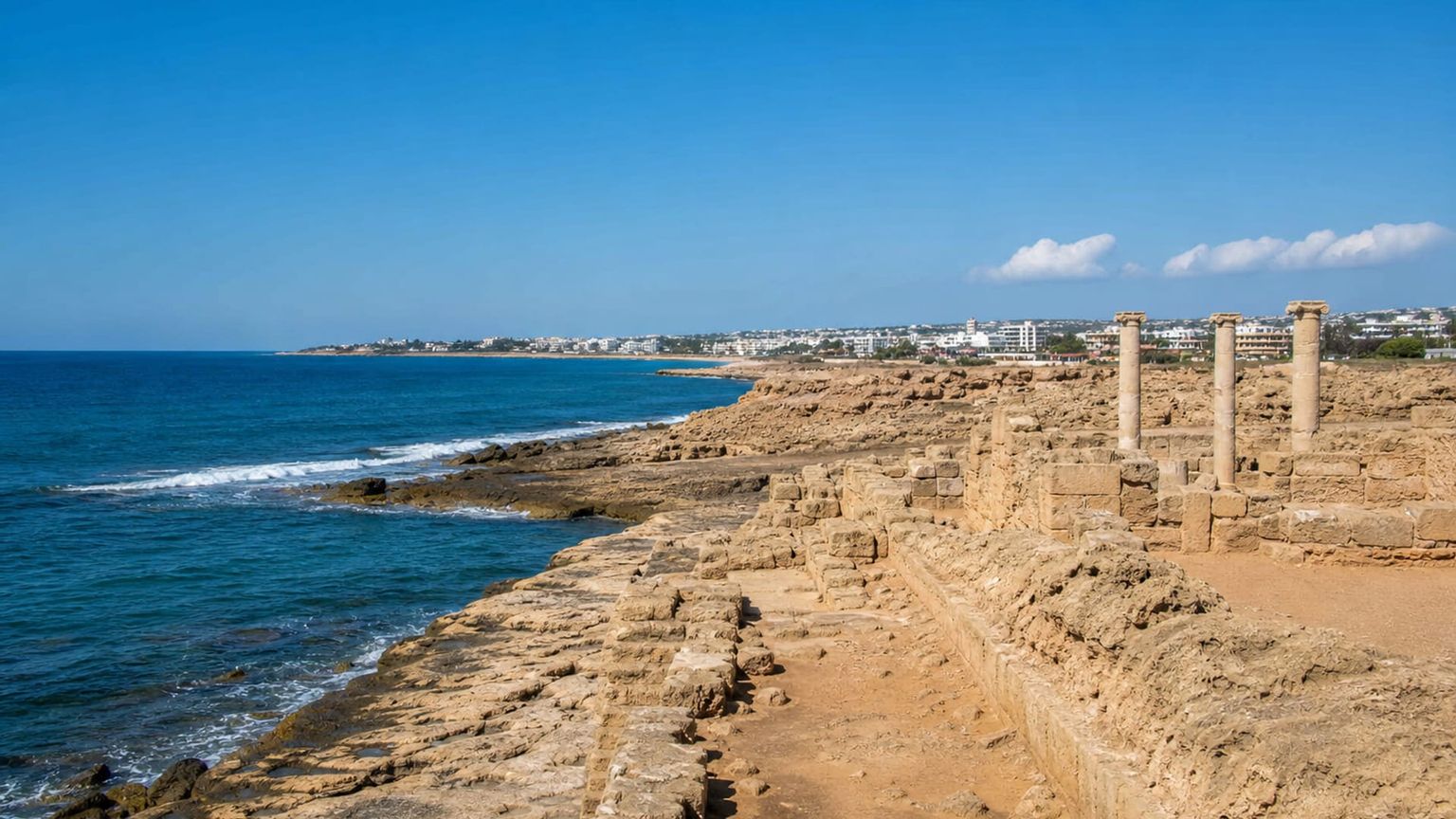
Start early at Kato Paphos Archaeological Park, where you can spend about 2 to 3 hours moving through the Roman villas, theater, and mosaics before the midday sun gets harsh. From the park, walk about 10 to 15 minutes to Paphos Harbour, then continue another 5 minutes to Paphos Castle for the sea views and a quick look inside. Finish with an easy waterfront meal, then wander the Paphos Harbour Breakwater for 30 to 45 minutes at sunset, when the castle and boats catch the best light.
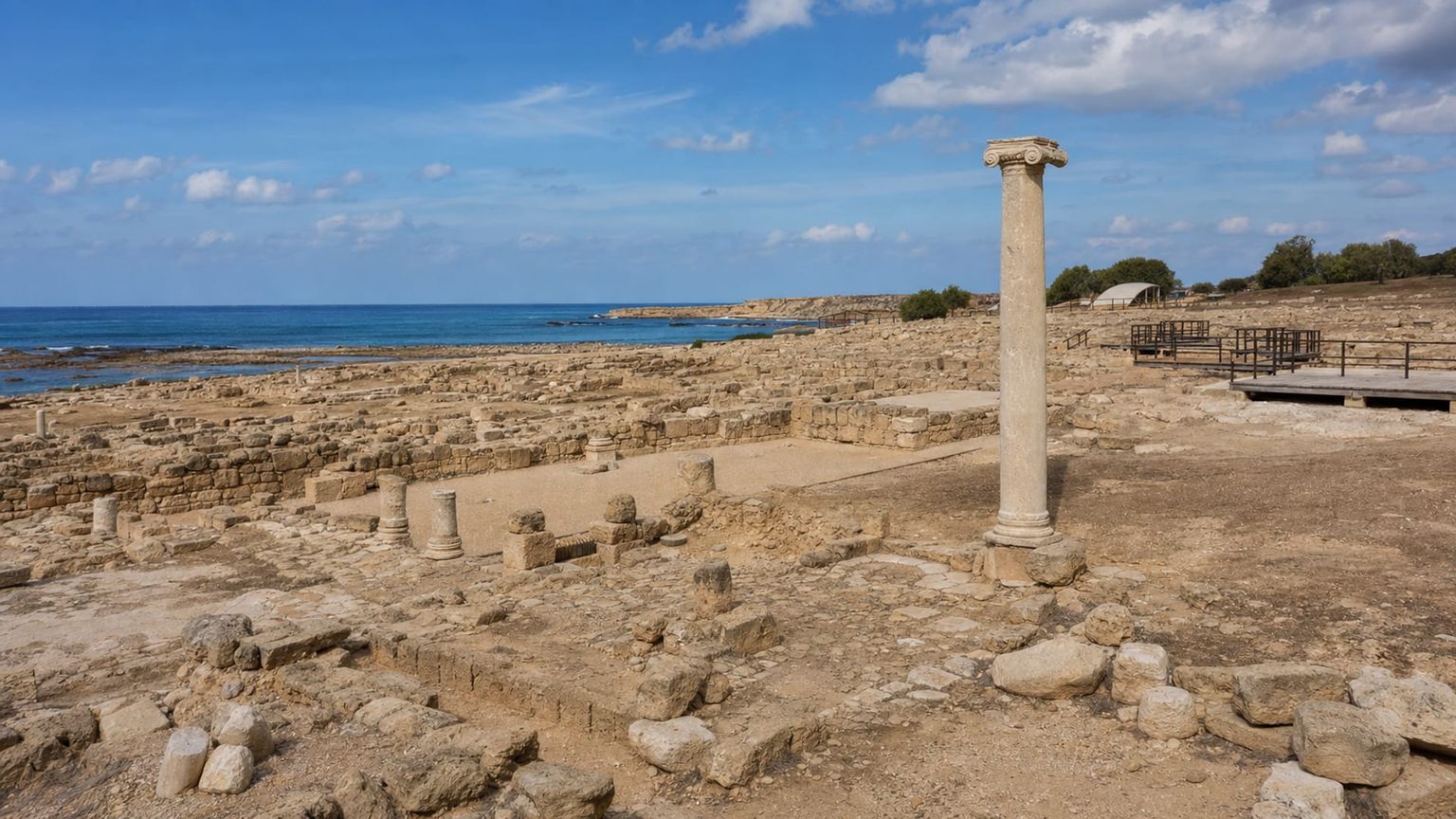
Tombs of the Kings makes a strong morning stop, and from Paphos Harbour and Kato Paphos it takes about 10 to 15 minutes by taxi or roughly 35 to 45 minutes on foot. Plan 1 to 2 hours for the rock-cut chambers, courtyards, and columned fronts, then head back toward the harbor for lunch. In the afternoon, stop at the Paphos Ethnographic Museum, which takes about 45 minutes and sits close enough to the waterfront for an easy walk or a short taxi ride. End with a slow drink near the old port, then turn in early.
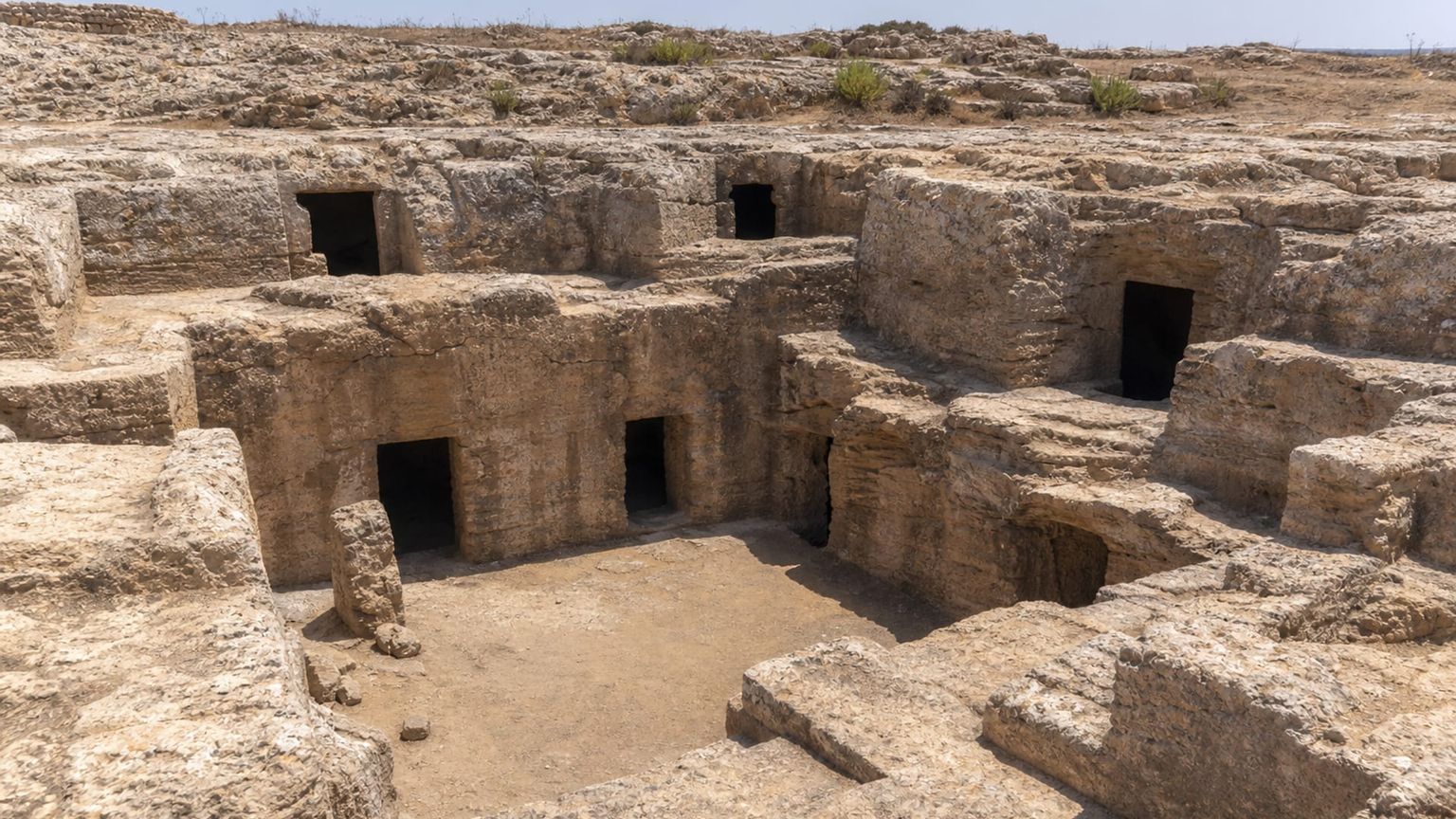
Begin with a coastal contrast in Chloraka, about 10 to 15 minutes by taxi from the harbor, for a quieter morning walk and a look at the sea-facing hotels and residential streets. After that, return toward central Paphos and spend time in Universal, which sits about 10 to 20 minutes by taxi from Paphos Harbour, so you can compare a more local neighborhood setting with the waterfront core. Break for lunch near the bus corridor, then circle back to the harbor for a final evening stroll and a low-key dinner by the promenade.
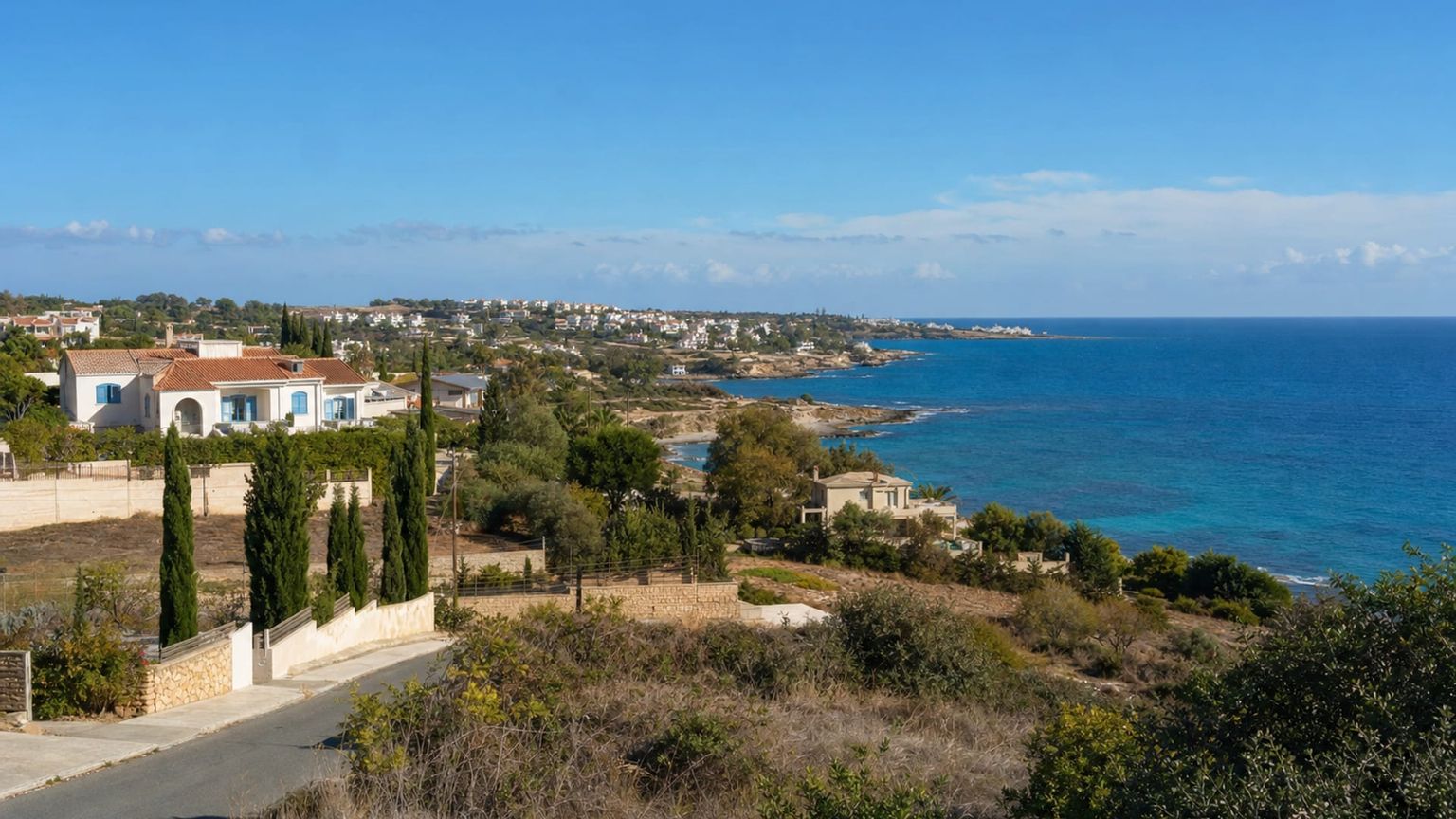
For your last day, stay close to the center and keep the pace easy with one final stop at the Paphos Ethnographic Museum if you missed it earlier, or a second visit if you want more time with the collection. Afterward, browse the harbor area for souvenirs, then head into Kato Paphos for a café stop and one last seaside coffee before you pack. If your flight leaves later in the day, you can fit in a final walk along the waterfront without needing to cross town.
Business-class flights from the US to Paphos
Business-class trips to Paphos usually run through one European or Gulf hub, and the best option often depends on whether you depart from the East Coast or the West Coast. The examples below show the range you should expect from New York (JFK) and Los Angeles (LAX).
From New York (JFK), British Airways, American Airlines, Lufthansa, Turkish Airlines, and Emirates all appear among the common options. If you are willing to connect, typical layovers through London (LHR), Frankfurt (FRA), Istanbul (IST), Dubai (DXB), or Madrid (MAD) can bring fares to roughly $2,400 from a usual round-trip starting point of about $3,400.
Los Angeles (LAX) departures usually come via British Airways, Lufthansa, Turkish Airlines, Emirates, or Qatar Airways, with the long trip taking about 15 to 20 hours end to end. Round-trip fares generally run from $4,200 to $6,000, and the Pacific departure makes this the pricier starting point.
Paphos feels different when you slow down
A deliberate Paphos stay keeps you close to the harbor, then uses short taxi rides or bus links to reach Tombs of the Kings, Chloraka, and Universal without wasting time crossing the city. You can still leave room for the breakwater at sunset, a quiet lunch near the promenade, and one last coffee in Kato Paphos before departure. If that is the trip you want, AranGrant experts can help you shape it







