

Chapters:

Need help with your trip?
Our support team is available 24/7. Request a callback or call us directly at (833) 619-0908
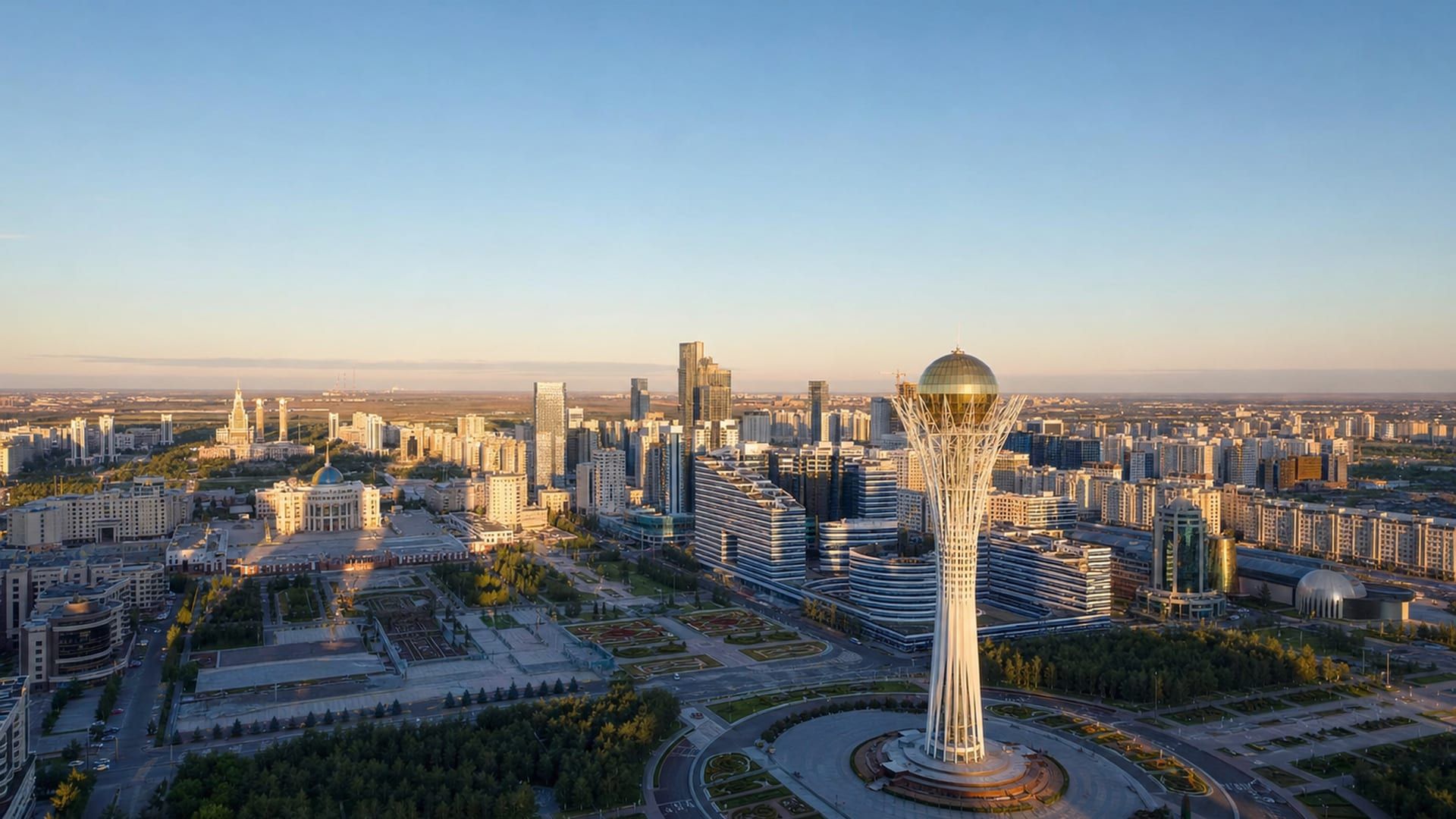
Few capitals have reinvented themselves as quickly as Astana. In 1997, Kazakhstan moved its government here from Almaty, to what was then a provincial town on the Esil River, and spent the next two decades building a new capital on the open steppe across the water. Along the way, the city changed names so many times that it holds a Guinness World Record for it, and it has been Astana again since 2022. Today it is home to about 1.5 million people.
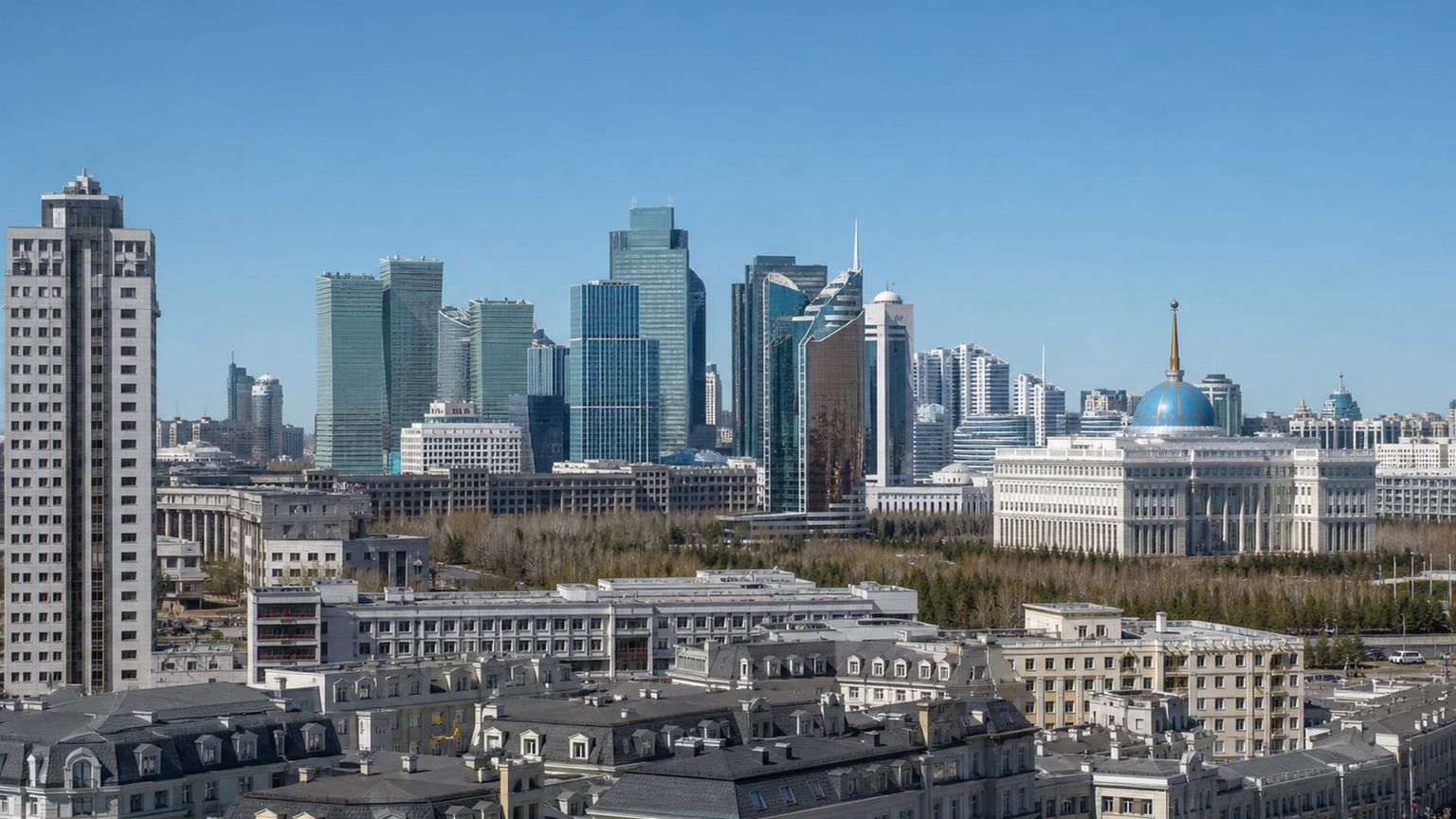
The river still divides the city in two. Glass towers and wide boulevards fill the Left Bank, while Soviet-era streets and a riverside promenade make up the Right Bank. This guide covers both, with where to stay, what to eat, how to get around, when to go, and how to spend five days here.
Useful things to know

Main language(s): Kazakh, Russian
Sälemetsiz be (sah-leh-meh-TSIZ beh) – Hello
Ötinemin (uh-tee-neh-MEEN) – Please
Rakhmet (rakh-MET) – Thank you
Siz ağylşynşa söileisiz be? (seez ah-ghil-SHIN-sha suh-ee-LAY-seez beh) – Do you speak English?
Qansha turady? (kahn-SHAH too-rah-DUH) – How much does it cost?

Currency: Kazakhstani tenge (KZT, ₸)

Cash and cards: Cards and contactless payments are accepted almost everywhere. Carry KZT 10,000 to KZT 20,000 ($20 to $40) in cash for markets and small cafés.

Tipping: Leave 5% to 10% at restaurants for good service, and round up taxi fares.

Traditional food: Beshbarmak, kazy, kuyrdak, and baursak

Water and coffee costs: A bottle of water costs KZT 300 to KZT 500 ($0.60 to $1.05), and an espresso costs KZT 700 to KZT 1,200 ($1.45 to $2.50).

Taxis and ride apps: Yandex Go and inDrive both work in Astana. Before you get in, make sure the car and license plate match what the app shows.

Plug and voltage: Type C and F sockets, 220V

Dining and shop opening hours: Breakfast is from 7:00 am to 10:00 am, lunch from 12:00 pm to 2:30 pm, and dinner from 6:00 pm to 10:00 pm. Some restaurants close between lunch and dinner.

Emergency number: Dial 112 for police, ambulance, and the fire brigade.
Where to stay in Astana
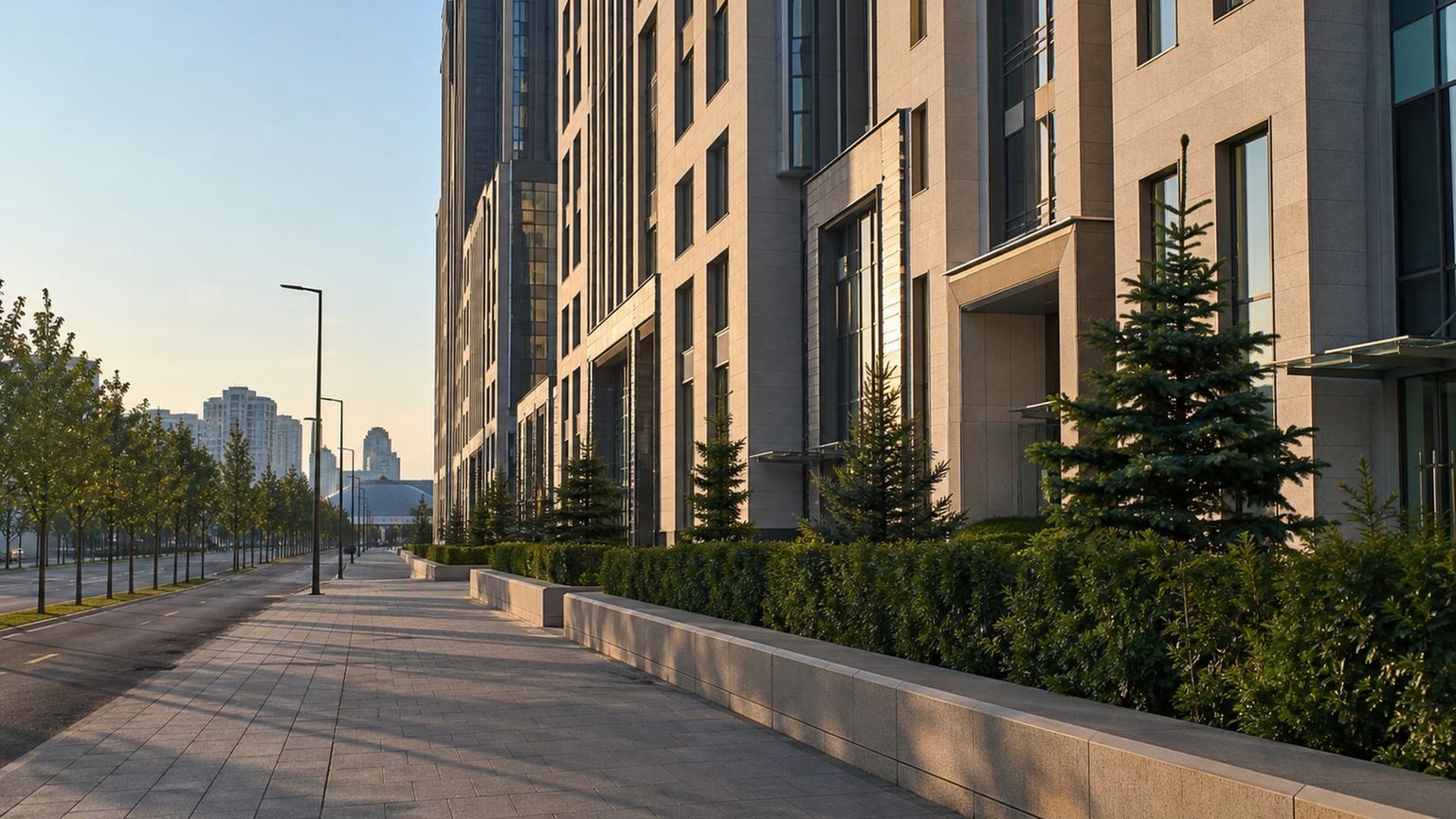
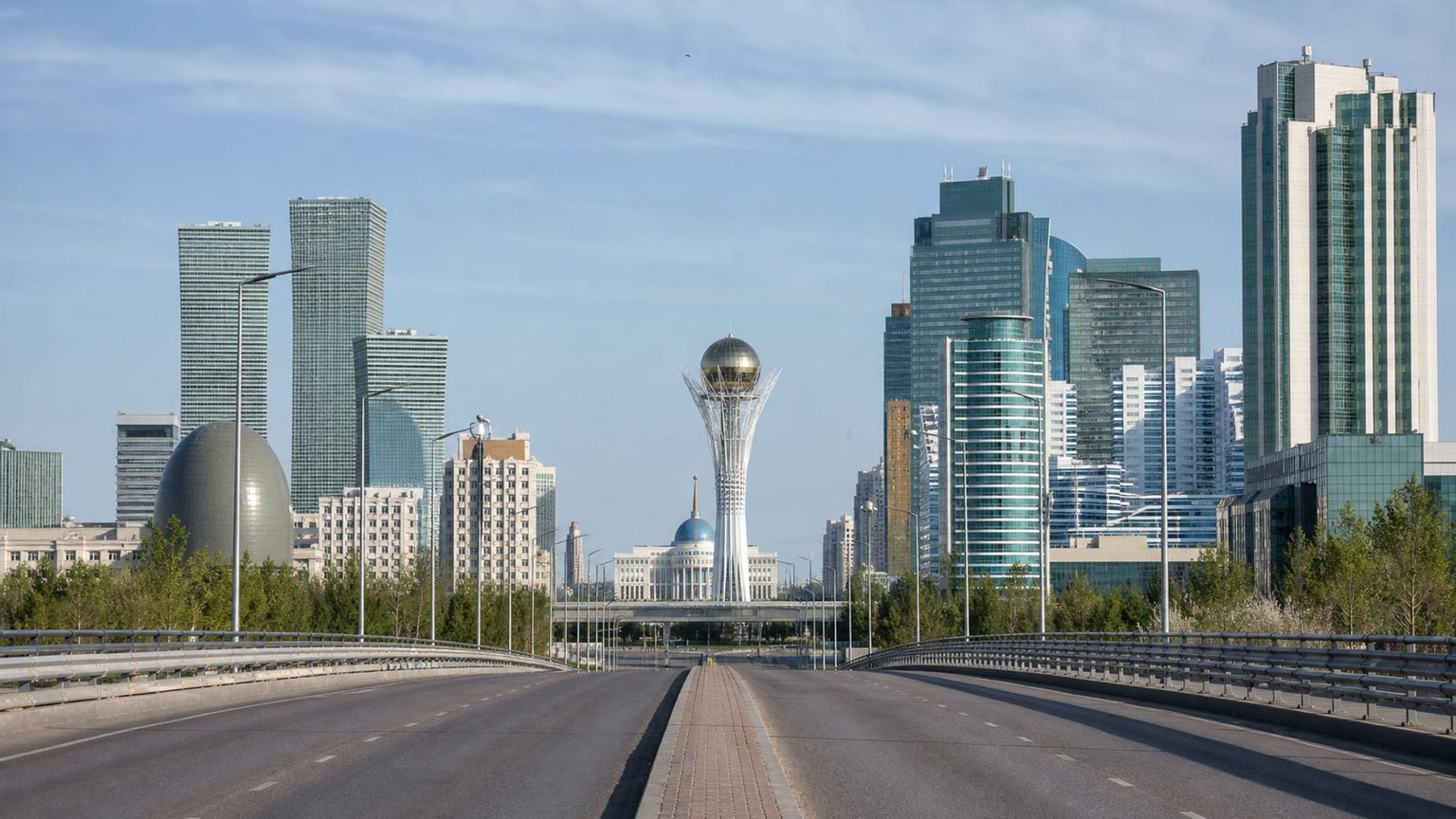
Nurzhol Boulevard is the reason to stay here. The wide, mostly pedestrian boulevard starts at the blue-domed presidential palace, passes Baiterek Tower and a string of fountains, and ends at Khan Shatyr. Most of Astana’s five-star hotels and many good restaurants are within a few blocks of it.
Best for: First-time visits, business trips, and travelers who want fast access to major sights
What to expect: Wide roads, modern towers, shopping centers, and a steady flow of office traffic during the day, with quieter sidewalks after dark.
Hotel prices: Usually about $70 to $180 per night for well-rated stays
Distance to major sights: 10 to 20 minutes by taxi to Bayterek Tower, 15 to 25 minutes to EXPO 2017 area
Quietness: Quieter in the evening than during office hours, though traffic stays active on main roads
Main trade-off: Hotels here often cost more than in older districts, and the area can feel spread out if you prefer to walk between restaurants.
Good to know: The LRT has a stop at Baiterek, so you can get from the airport to the boulevard without a taxi.
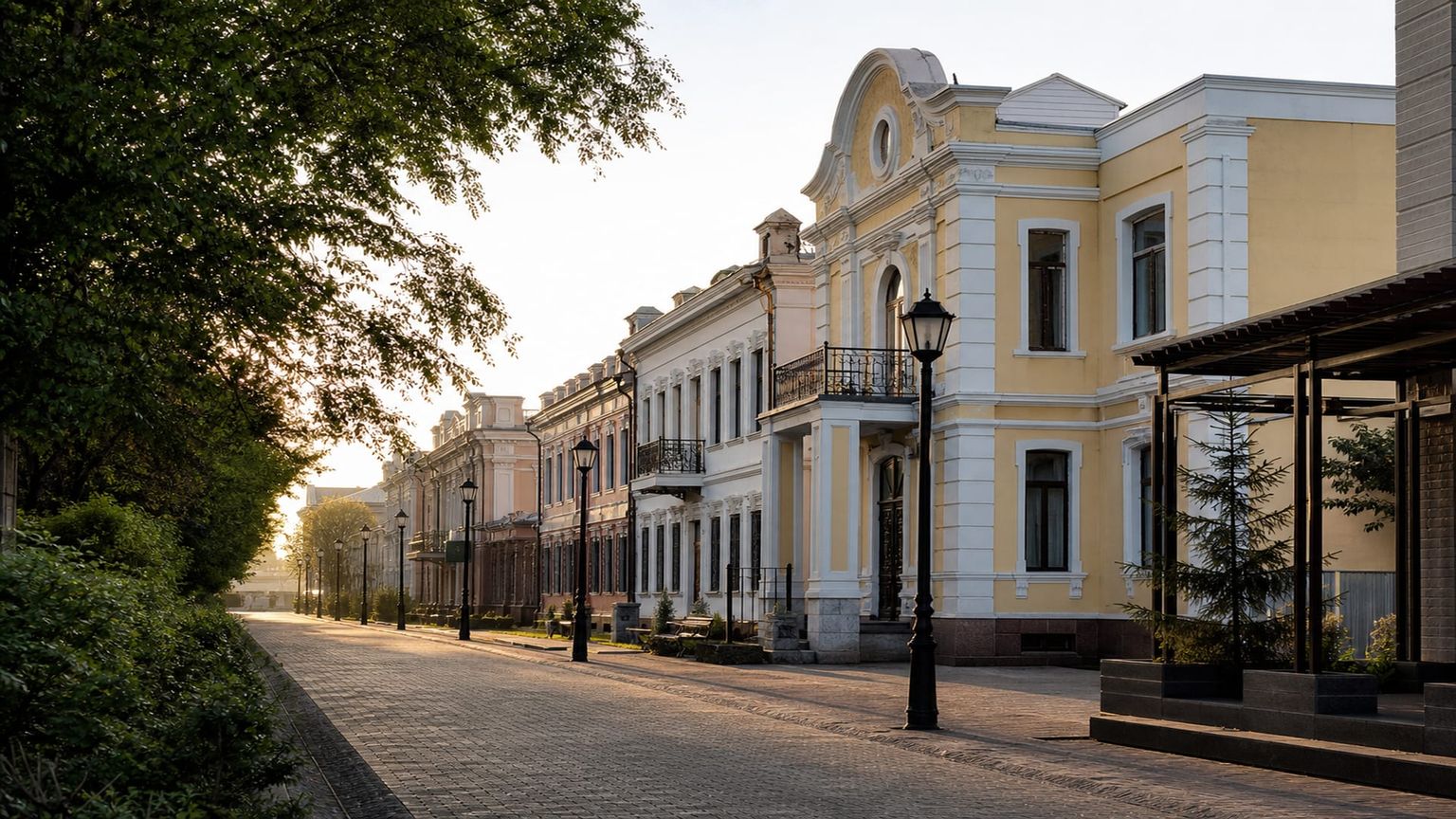
Locals call Respublika Avenue, the Right Bank’s main street, “five minutes of Hollywood,” and it is lined with cafés, shops, and restaurants. A few blocks away, the Old City Square hosts fairs and festivals, and the promenade by Atyrau Bridge has restaurant terraces right on the river.
Best for: Travelers who want local cafés, market access, and a less formal base
What to expect: Busier sidewalks, more neighborhood trade, and a mix of old housing and small shops rather than landmark architecture.
Hotel prices: Usually about $40 to $90 per night for well-rated stays
Distance to major sights: 15 to 25 minutes by taxi to Bayterek Tower, 10 to 20 minutes to the river embankment
Quietness: Noisier by day because of local traffic and shops, calmer late in the evening
Main trade-off: You give up polished hotel stock and direct sightseeing scenery, so you may need more taxi time for the newest attractions.
Good to know: The Old City Square, in front of the city hall, hosts Astana’s big fairs and festivals, so check the events calendar before you book.
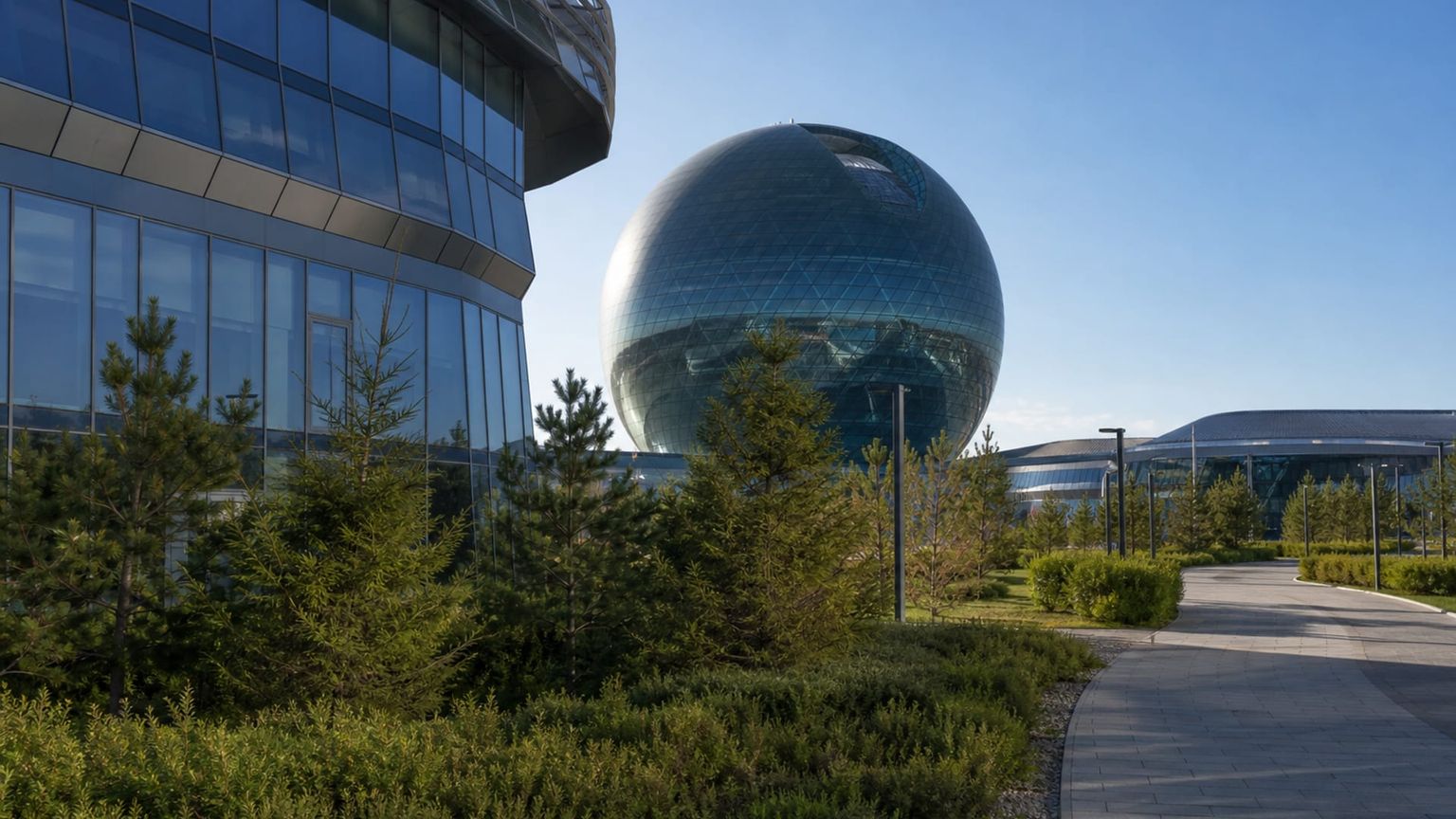
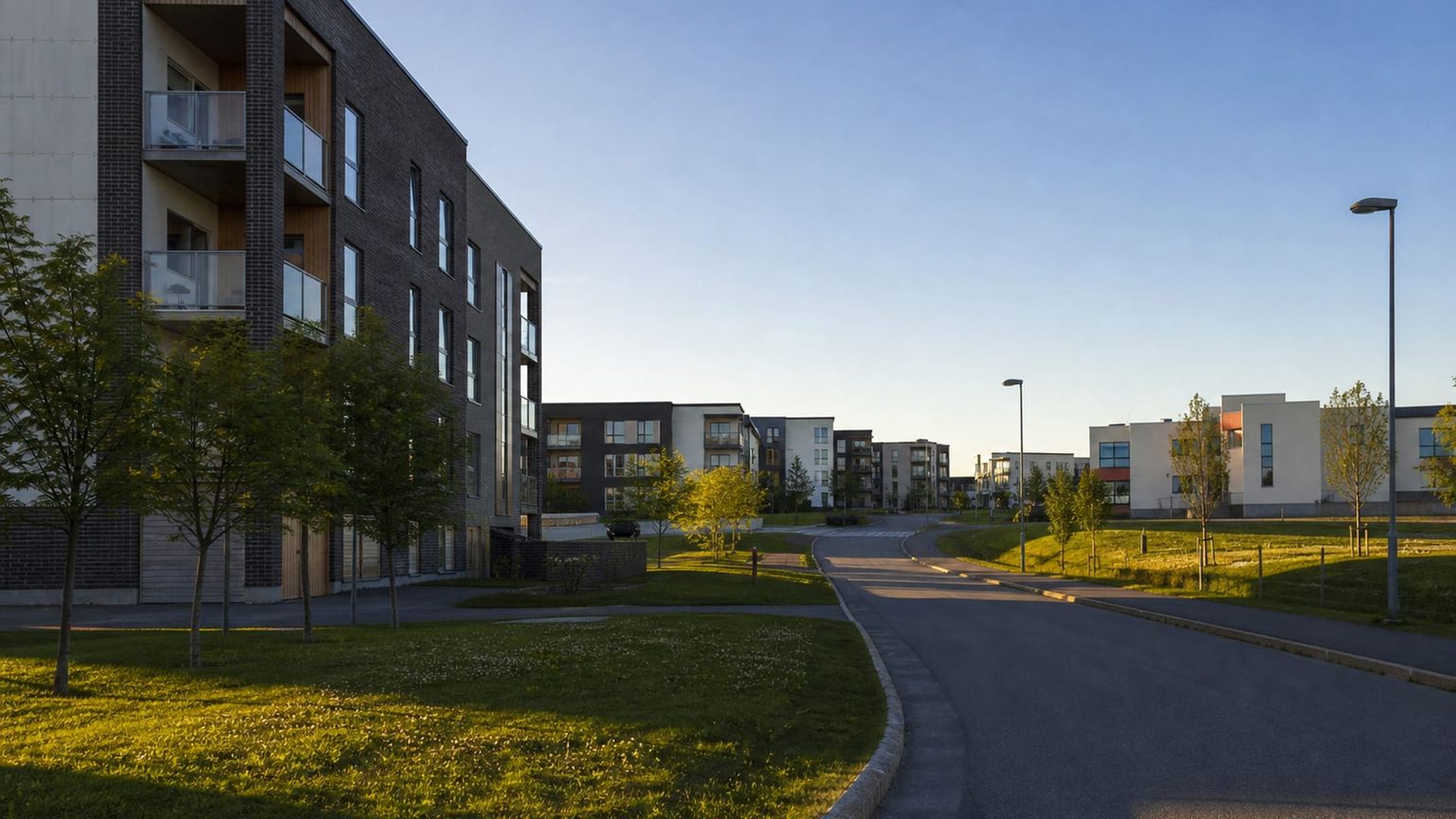
This district was built from scratch for the 2017 World Expo, and its centerpiece, the Nur Alem sphere, now houses the Museum of Future Energy. Several international hotels opened here for the Expo, and the airport is only a few stops away on the LRT, which makes the area an easy base for short trips.
Best for: Conference trips, airport access, and visitors focused on the newer west side of the city
What to expect: Open boulevards, modern towers, and lighter street life than in the center, with more activity inside hotels and malls than on the sidewalks.
Hotel prices: Usually about $60 to $150 per night for well-rated stays
Distance to major sights: 5 to 15 minutes by taxi to the EXPO sphere, 15 to 25 minutes to Bayterek Tower
Quietness: Generally quieter at night, while daytime can bring more traffic from events and office commuters
Main trade-off: You will depend more on taxis for central dining and riverfront walks, because the area is built around large parcels rather than dense streets.
Good to know: For dinner, head to Mega Silk Way, which has the area’s widest choice of restaurants.
Travelers usually avoid the outlying residential microdistricts on both banks, which are far from the main sights and have few restaurants. Hotels near the railway stations suit an early train but little else.
Hotel deals
How to get around Astana efficiently
Distances in Astana are long, so most visitors take taxis for everyday trips and the new LRT line to and from the airport.

LRT
light rail) (for the airport and the Left Bank
Astana’s first LRT line opened in May 2026. The ride from the airport to Nurly Zhol railway station takes about 40 minutes, with stops near EXPO, Mega Silk Way, and the government center. A ride costs KZT 200 ($0.41), and trains operate from 6:00 am to 11:00 pm.

Bus and tram
for short trips
City buses cover both banks, and a ride costs KZT 110 ($0.23) with a transport card or KZT 220 ($0.45) in cash. Transfers to another bus are free within 60 minutes. Most route information is in Kazakh and Russian, so having a map app helps.

Taxi
for convenience or late hours
A taxi from the airport to the center costs about KZT 3,000 ($6), and short trips within one bank cost a little less. Yandex Go is the easiest app to use and takes cash or a foreign bank card. On inDrive, you suggest your own fare and drivers accept it or make a counteroffer.
*Prices are based on rates updated as of October 2026 and may change at the time of travel.
Taxis and ride apps are the easiest way to get around Astana day to day. For the airport, the LRT is worth taking, since it costs a fraction of a taxi fare.
Iconic landmarks
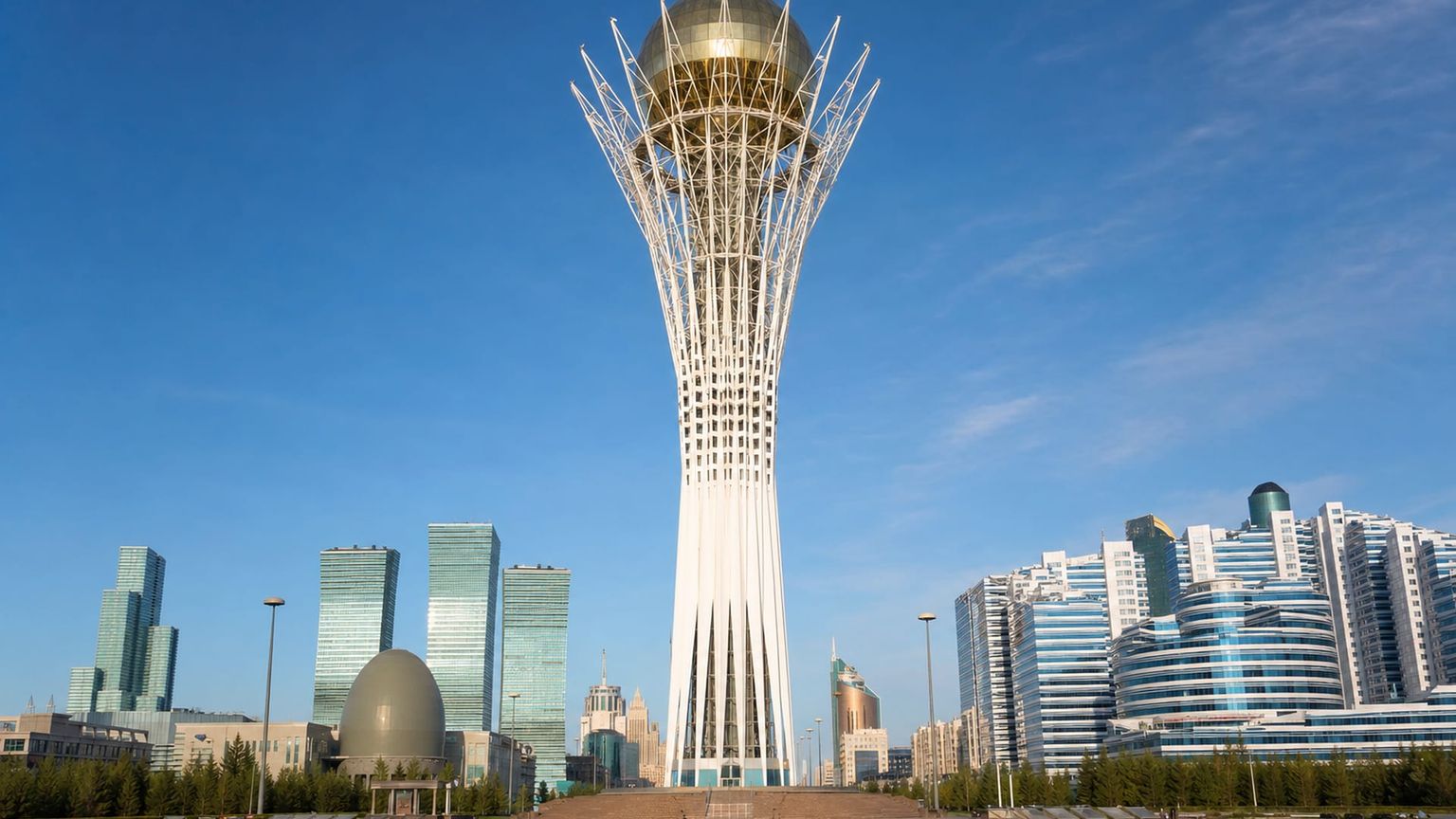
Baiterek Tower
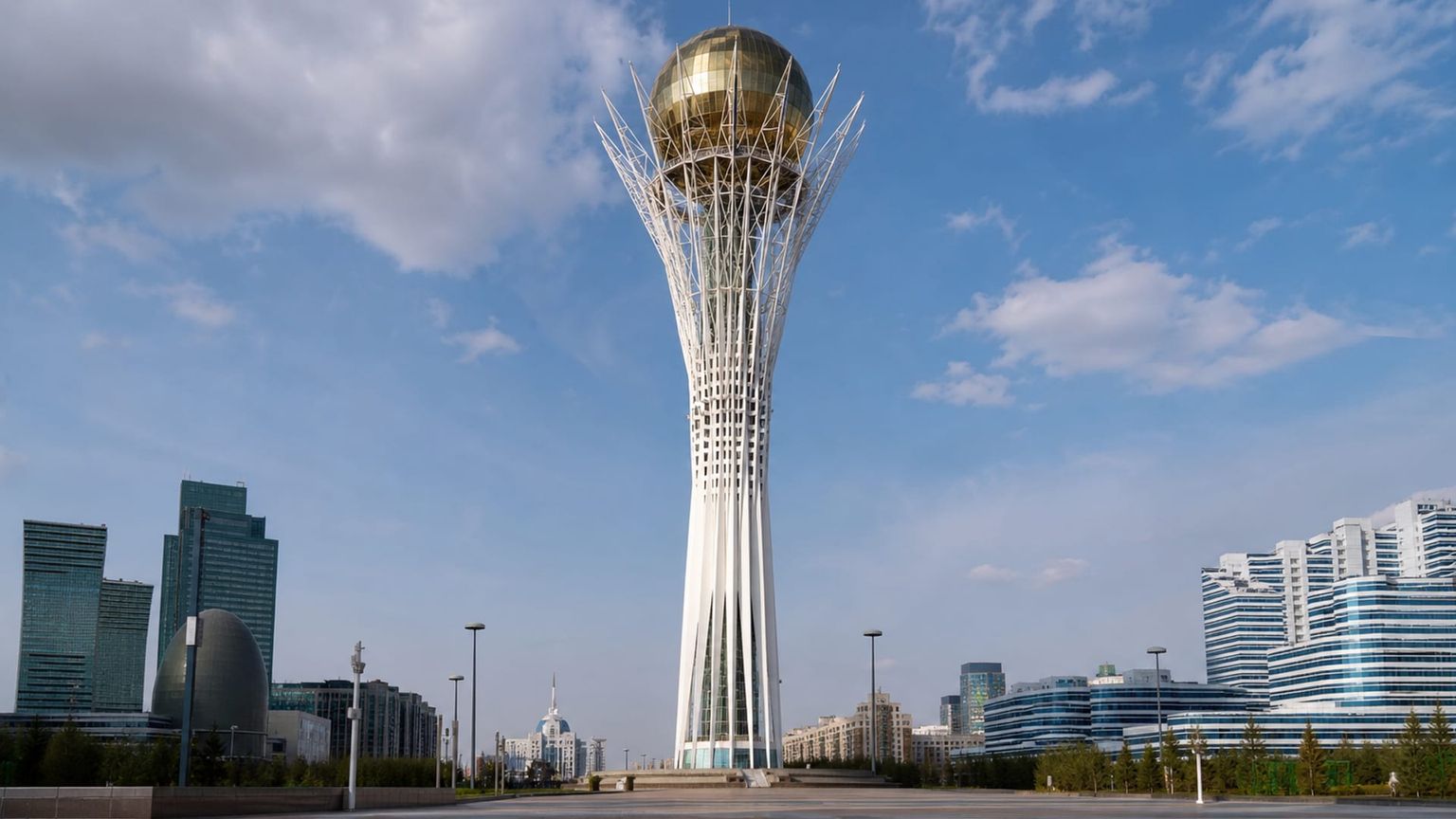
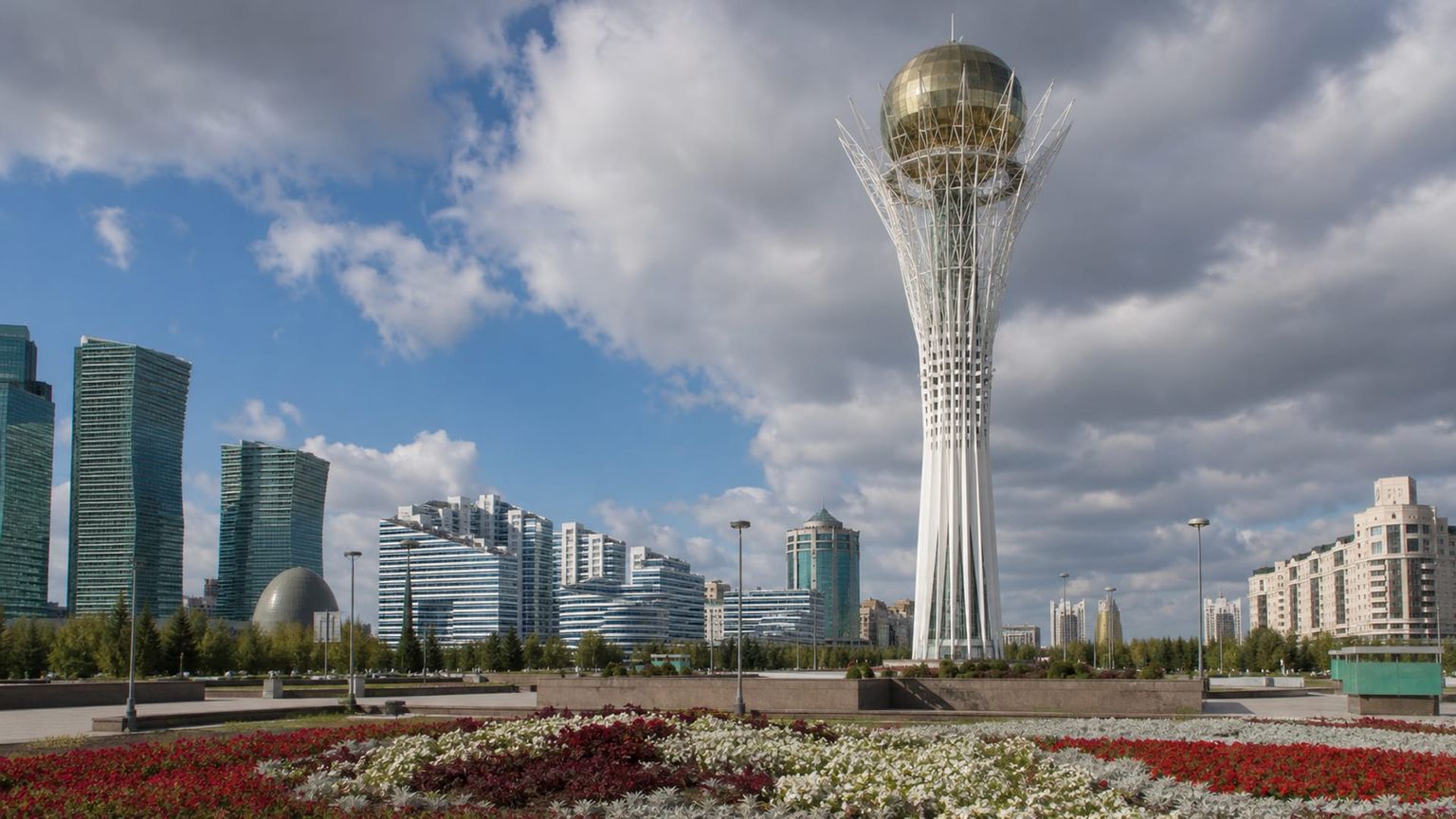
Astana’s best-known symbol is a 344-foot (105-meter) white tower topped with a golden sphere, said to represent a mythical tree holding the egg of the sacred bird Samruk. The observation deck inside the sphere, at 318 feet (97 meters), looks straight down Nurzhol Boulevard.
Time needed: About 1 to 1.5 hours
Entry: Observation deck tickets cost about $5 to $7 (about 2,300 to 3,200 KZT), with lower rates for children and some local concessions. Visit the official site for details.
Tip: Go at sunset, then stay to see the tower lit up after dark.
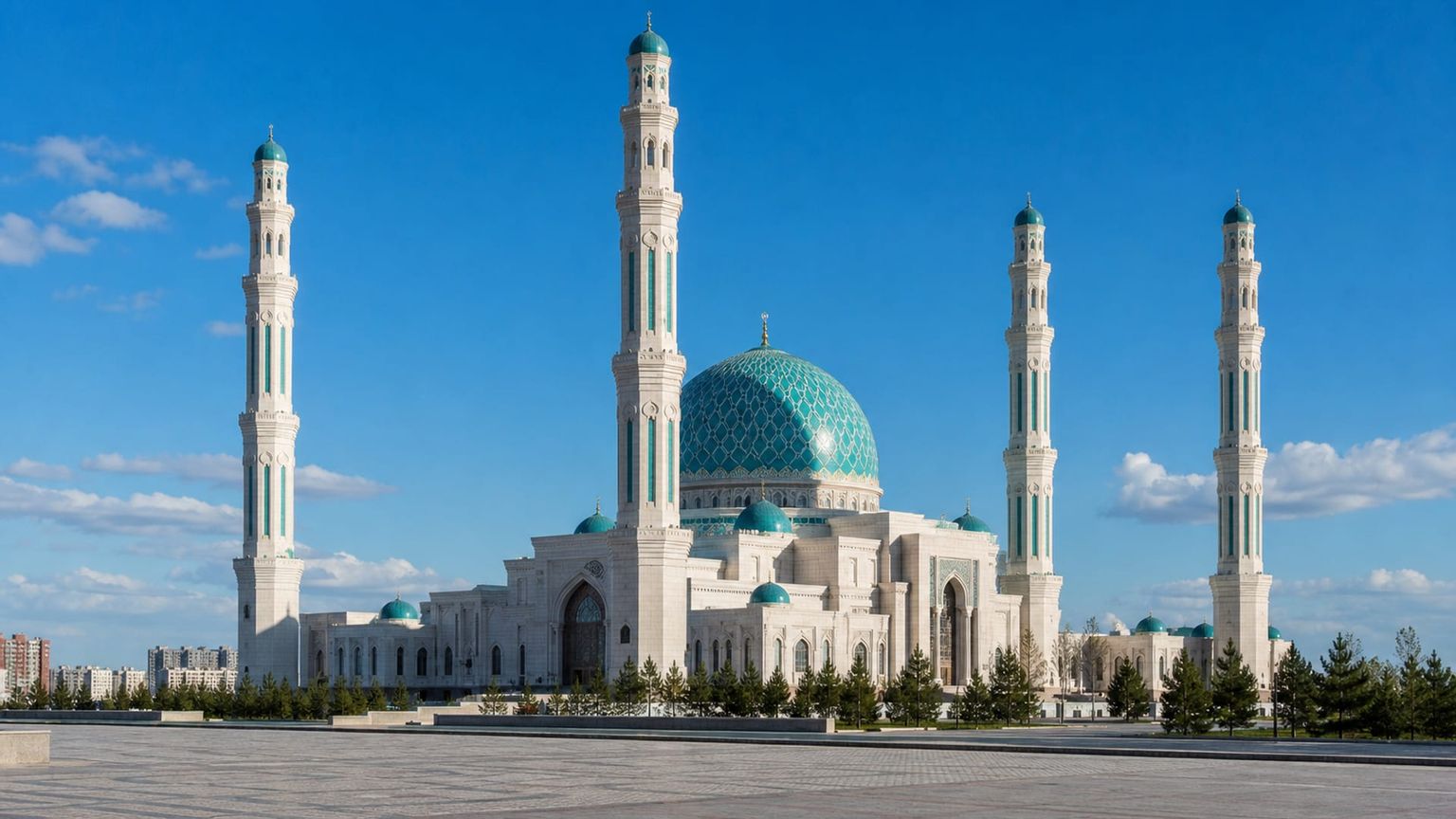
Hazret Sultan Mosque
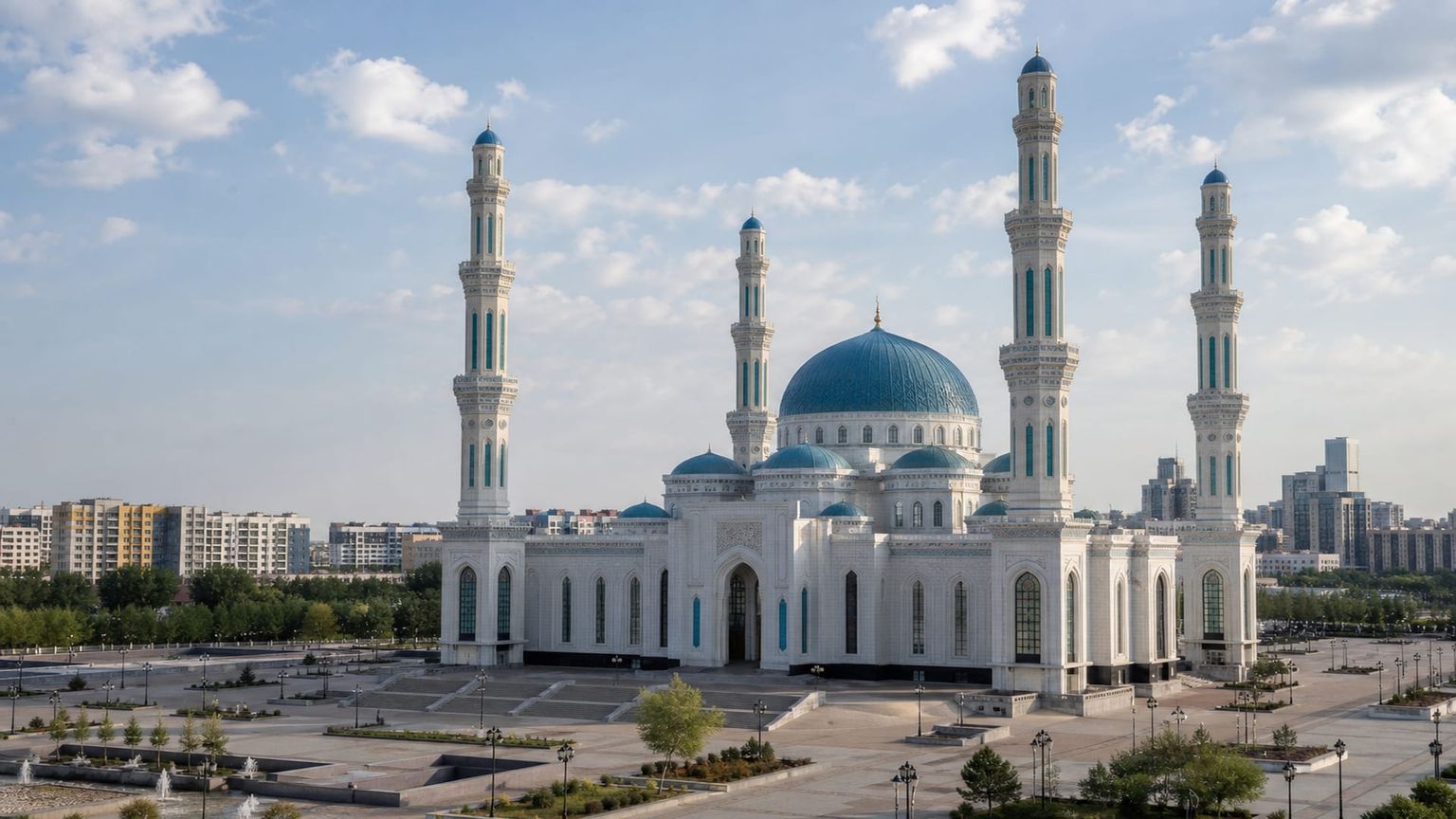
One of the largest mosques in Central Asia, Hazret Sultan opened in 2012 on Independence Square, on the Right Bank. Its white facade blends classical Islamic style with Kazakh ornaments, and four 253-foot (77-meter) minarets surround the largest dome in Kazakhstan.
Time needed: About 1 to 1.5 hours
Entry: Free to enter, with no admission fee for visitors outside prayer times; modest dress is required and guides may charge separately. Visit the official site for details.
Tip: Avoid visiting on Friday during midday prayers, when the main hall is full.
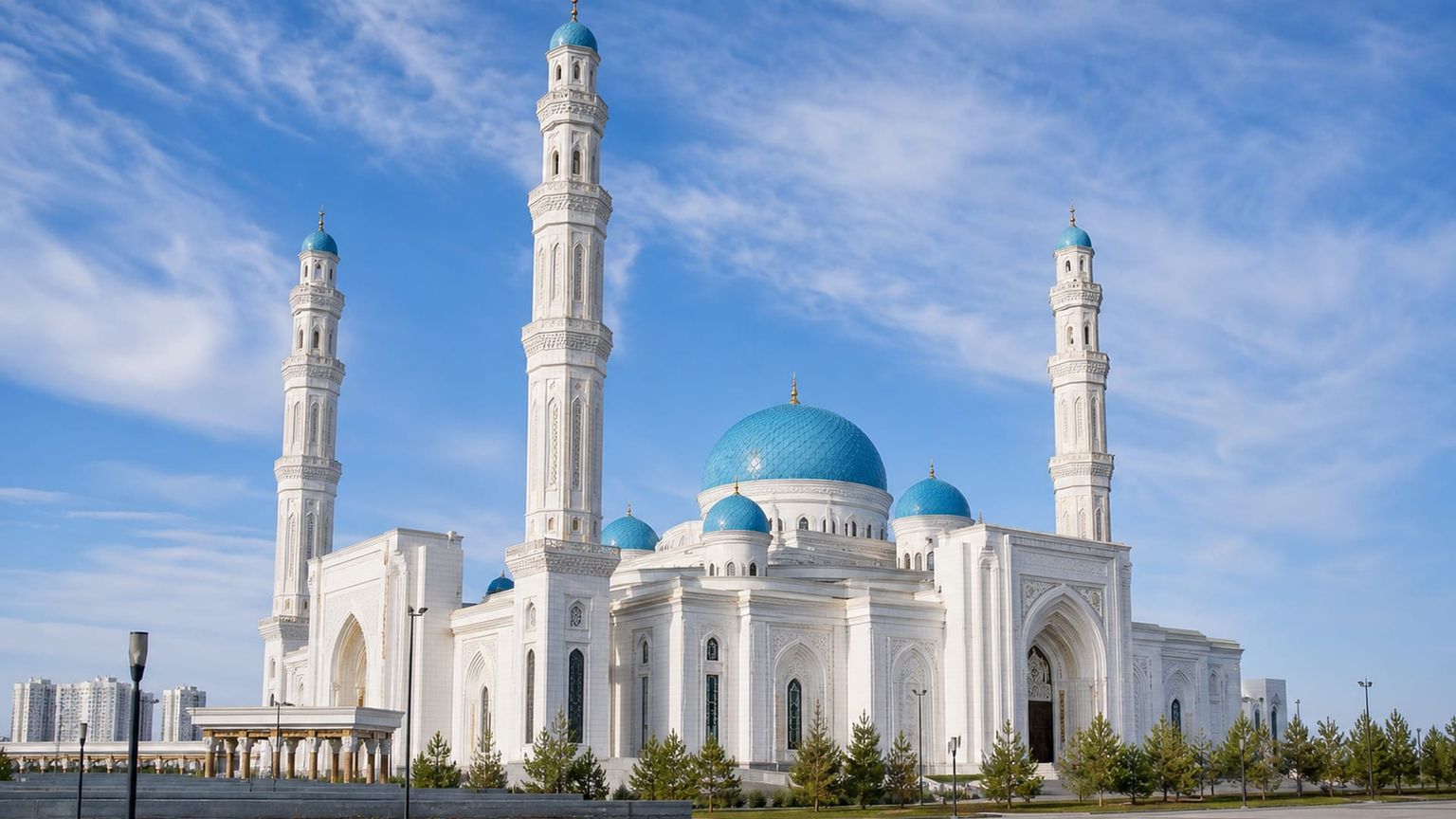
Khan Shatyr
Designed by Norman Foster and opened in 2010, Khan Shatyr is a 492-foot (150-meter) transparent tent at the western end of Nurzhol Boulevard. Inside are shops, restaurants, and the Sky Beach Club, an indoor beach that stays warm even in the steppe winter.
Time needed: About 45 minutes to 1 hour
Entry: Free to enter, with no admission fee for visitors outside prayer times; modest dress is required and photography rules vary by area. Visit the official site for details.
Tip: Pack a swimsuit if you want to swim. The pool water is kept at about 82°F (28°C).
Overlooked sites worth visiting

National Museum of Kazakhstan
The largest museum in Central Asia opened on Independence Square in 2014. Most visitors come for the Gold Halls and the Golden Man, a Saka warrior’s armor made of thousands of gold pieces.
Time needed: About 1 to 2 hours
Entry: Free to access; no ticket is needed for the park grounds. Budget only for any rented bike, kiosk snack, or paid event if you visit during a festival or concert held on site.
Tip: Allow at least an hour for the Gold Halls alone.

Palace of Peace and Reconciliation
Known locally as the Pyramid, this Norman Foster building opened in 2006 across from Independence Square. Guided tours climb to the apex, where a stained-glass ceiling shows 130 doves, one for each ethnic group in Kazakhstan.
Time needed: About 1 hour
Entry: Admission is typically about $3 to $6 (approximately 1,500 to 3,000 KZT) for adults, with lower rates for students and children; special exhibitions or guided visits may cost extra.
Tip: Afterward, walk through Presidential Park, the largest park in Kazakhstan.
Traditional food
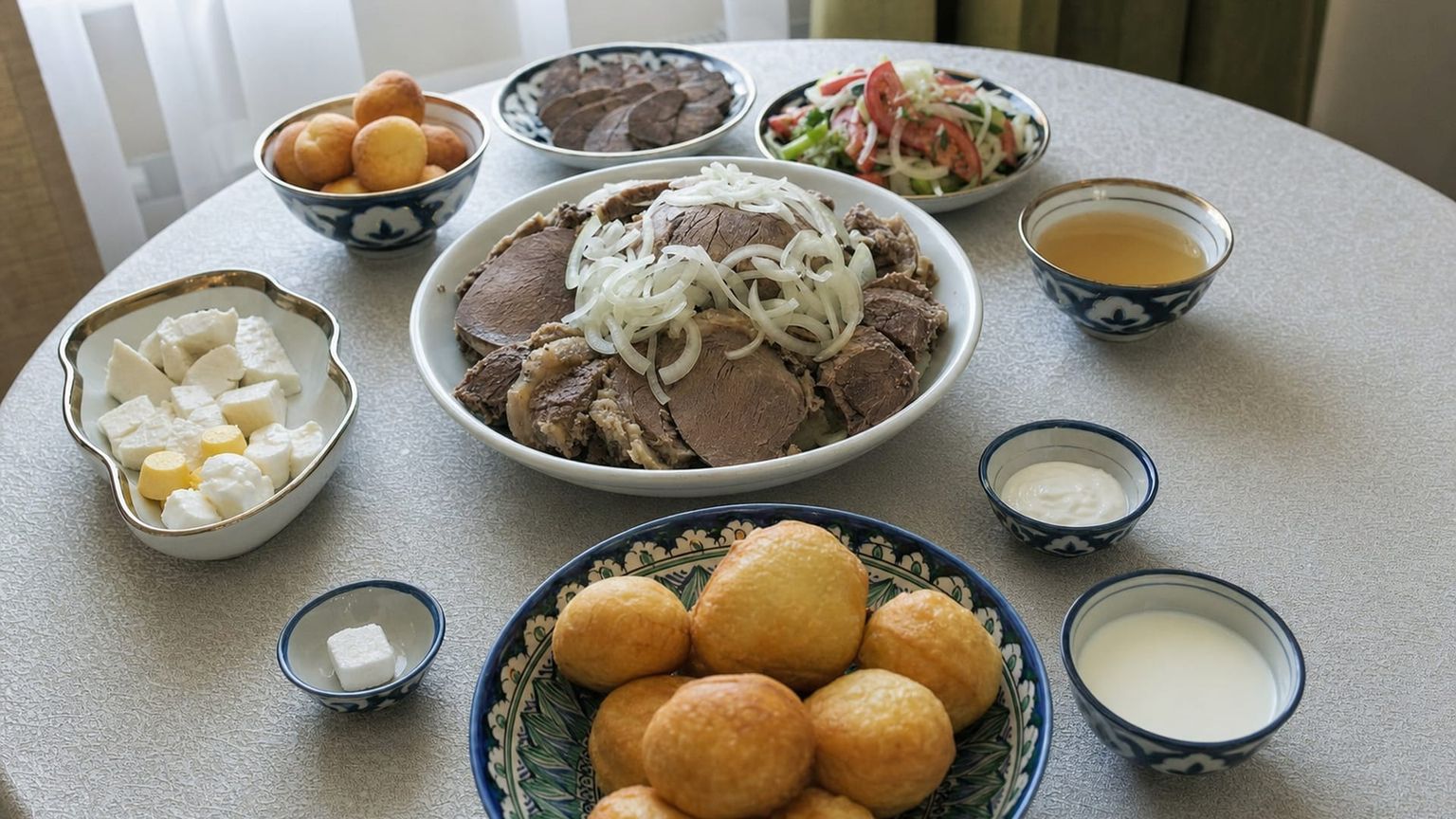
Kazakh food grew out of nomadic life on the steppe, which is why horse meat, lamb, and rich broths appear on almost every menu in Astana. Portions are large and meant for sharing.
Beshbarmak
Kazakhstan’s national dish is boiled horse meat or lamb served over wide, flat noodles with an onion broth, traditionally eaten by hand. Try it at Arnau, a Kazakh restaurant on Turan Avenue on the Left Bank.
Kazy
Kazy is a sausage made from horse rib meat in a natural casing, sliced thin and served at almost every celebration. Try it at Qazaq Gourmet, a modern Kazakh restaurant on Mangilik El Avenue known for its horse-meat dishes.
Kuyrdak
Kuyrdak is a hearty pan-fried dish of meat and offal, such as liver, heart, and kidney, cooked with onions and usually shared. Try it at Satti, on Kabanbay Batyr Avenue between the presidential palace and Khan Shatyr.
Baursak
Baursaks are small pieces of fried dough served warm with tea at nearly every Kazakh meal, sweet or savory. Try them at Daididau, a Kazakh restaurant next to Baiterek Tower with live dombra music in the evenings.
Best time to visit Astana
Astana’s weather swings hard between seasons, with warm summers, very cold winters, and steppe winds that make any day feel colder.
Best for: Long walks on Nurzhol Boulevard, outdoor cafés, and mild, green days in late May
What you get: About 10°F to 69°F (-12°C to 21°C), with snow still common in March, mild days by May, and quickly changing weather
Trade-offs: March still feels like winter, and strong winds can make April feel much colder.
Best for: Riverside walks, late sunsets, outdoor dining, and long days of sightseeing
What you get: About 55°F to 80°F (13°C to 27°C), with long, mostly sunny days and July as both the warmest and the wettest month
Trade-offs: July 6 is Capital Day, a public holiday that brings crowds and road closures.
Best for: Mild September sightseeing, park walks, and uncrowded museums in October
What you get: About 15°F to 65°F (-9°C to 18°C), with pleasant September days, cool October evenings, and frost by November
Trade-offs: By November, frost and the first snow arrive, with lows near 15°F (-9°C). The days also get noticeably shorter.
Best for: Museums, the indoor beach at Khan Shatyr, and the city’s snowy skyline
What you get: About -1°F to 18°F (-18°C to -8°C), with January the coldest month and frequent strong winds off the steppe
Trade-offs: Temperatures often drop below 0°F (-18°C), which makes walking between sights uncomfortable.
A realistic 5-day plan in Astana
Five days is enough time to see both sides of the Esil River. The Left Bank, where most of the landmarks are, gets two days, Independence Square and the Old Town get one each, and the EXPO area comes last because it is close to the airport.
After you land, take the LRT to Baiterek on the Left Bank for KZT 200 ($0.41), or take a taxi for about KZT 3,000 ($6), which takes 20 minutes. Check in and keep the rest of the day free. In the evening, walk along Nurzhol Boulevard, which is mostly closed to cars, to see Baiterek Tower and the presidential palace lit up after dark. Have dinner near your hotel and finish the day early to rest after the long flight.
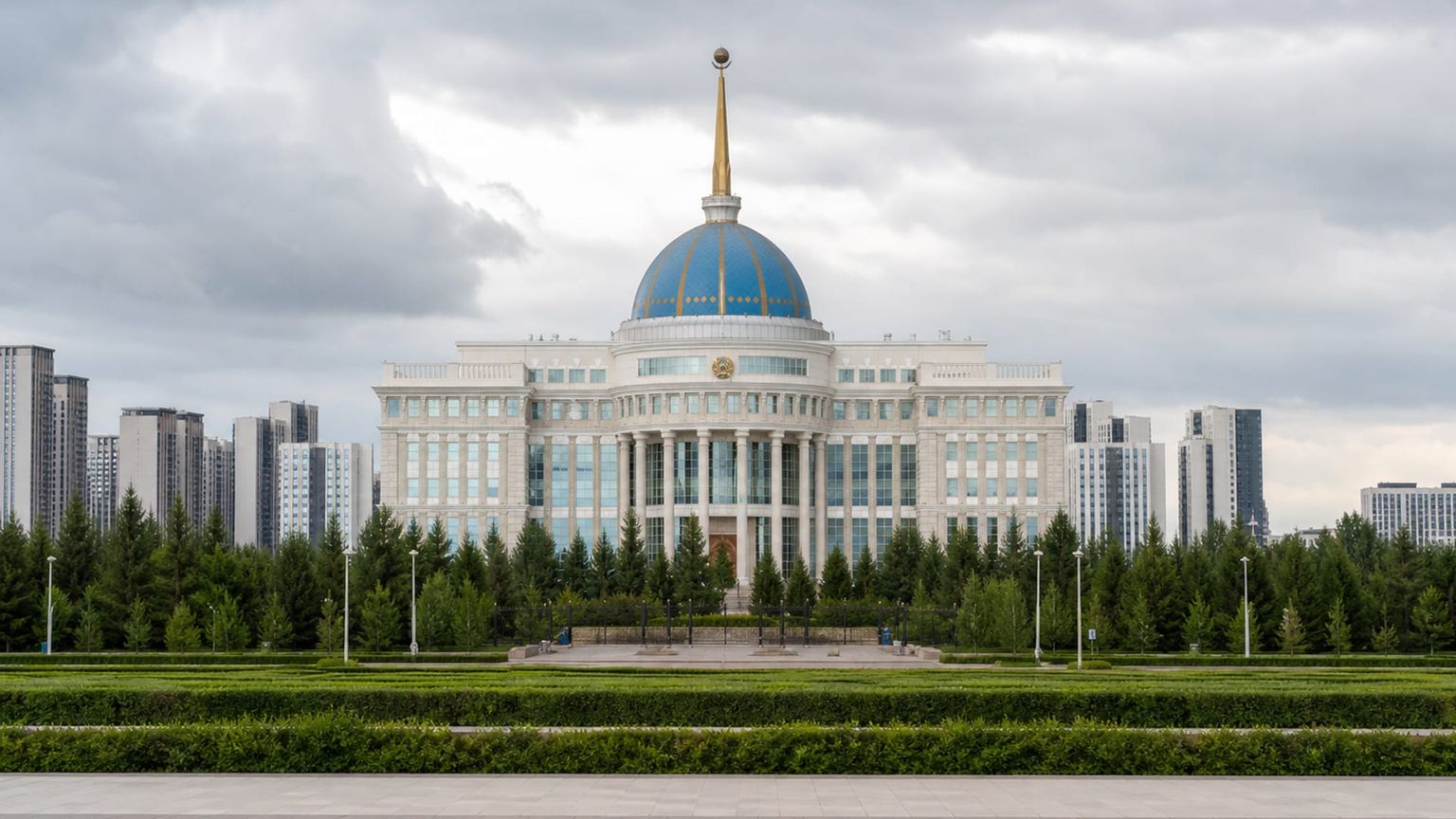
On your first full day, go up Baiterek Tower in the morning, before the lines get long, and look straight down Nurzhol Boulevard from the observation deck. Then walk west along the boulevard to Satti on Kabanbay Batyr Avenue for lunch. Khan Shatyr is a few minutes farther on, so spend the afternoon there shopping or swimming at the indoor beach. In the early evening, walk 15 minutes to the Abu Nasyr al-Farabi Mosque to see its golden dome at sunset.
On the third day, take a taxi across the river to Independence Square, about 10 minutes from the Left Bank. Start at Hazret Sultan Mosque, which has the largest dome in Kazakhstan, and then walk across the square to the National Museum of Kazakhstan, which is closed on Mondays, to see the Golden Man in the Gold Halls. In the afternoon, take a guided tour of the Palace of Peace and Reconciliation and walk through Presidential Park. Then take a taxi back to the Left Bank for dinner at Arnau.
After a day of museums, spend a slower day in the Old Town on the Right Bank, about 15 minutes by taxi from the Left Bank. Walk along Respublika Avenue, stop for coffee along the way, and continue a few blocks to Old City Square. In the afternoon, follow the river promenade toward Atyrau Bridge, where several restaurants have terraces by the water in summer. In the evening, take a taxi back to the Left Bank for dinner at Qazaq Gourmet on Mangilik El Avenue.
On your last day, check out of your hotel and take the LRT or a taxi to the EXPO area, about 15 minutes from Baiterek. Visit the Museum of Future Energy inside the Nur Alem sphere, and then have lunch at Mega Silk Way next door. From there, the airport is a few stops away on the LRT or about 15 minutes by taxi. In winter, leave extra time for the trip, since snow can slow traffic.
Business-class flights from the US to Astana
Reaching Nur-Sultan usually means a connection, not a direct long-haul flight, so the route details matter as much as the fare. From both coasts, the main choices cluster through a few repeat hubs.
From New York, carriers such as Turkish Airlines, Qatar Airways, Emirates, Lufthansa, and Air Astana typically route through IST, DOH, DXB, FRA, or MUC, with total travel times of about 16 to 23 hours. Round-trip fares generally start at $3,200 and can reach $6,500.
Los Angeles travelers usually see Air Astana, Qatar Airways, Turkish Airlines, Emirates, Lufthansa, and similar one-stop combinations, with common layovers in DOH, IST, DXB, FRA, or MUC. You will usually see round-trip fares starting near $3,500, with higher-end tickets reaching $7,000.
Astana is worth taking slowly
Astana was built on a grand scale, and it is at its best when you give it time. Spend a day on each bank, let a lunch at a Kazakh restaurant stretch into the afternoon, and stay out to see the boulevards lit up after dark. When you are ready to plan your trip, our team of travel experta at AranGrant can help you find a business-class flight that fits your dates and preferences.







