

Chapters:

Need help with your trip?
Our support team is available 24/7. Request a callback or call us directly at (833) 619-0908
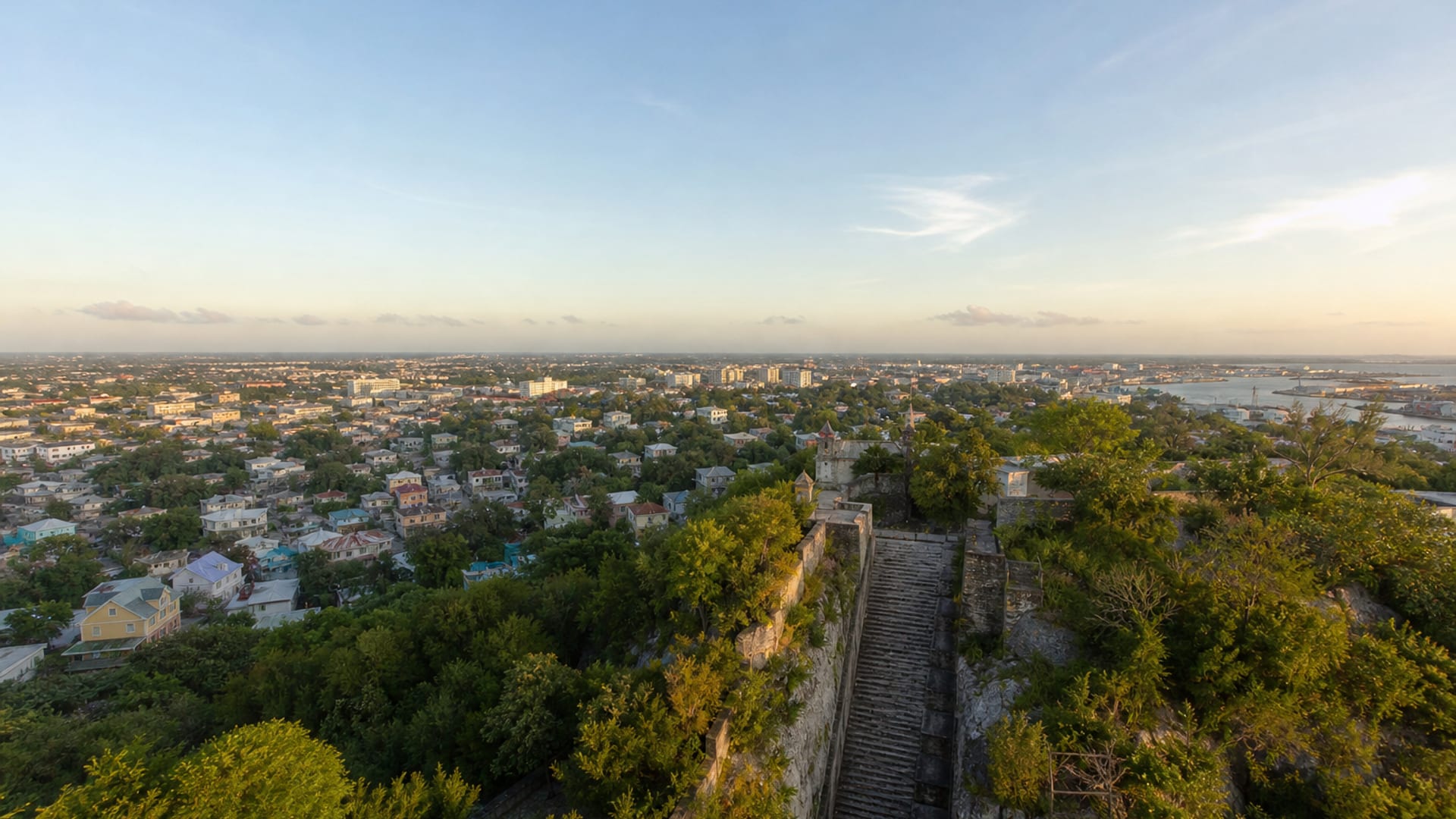
Nassau combines historic landmarks, busy waterfront streets, resort areas, and beaches that are spread across several distinct parts of the city. Downtown holds many of the main cultural sights, while Cable Beach and Paradise Island require separate trips from the historic center.
Planning by area helps avoid unnecessary backtracking, especially when cruise traffic, midday heat, and road congestion slow short journeys. Grouping nearby sights also leaves more time for beaches, museums, and meals without packing too much into one day.
This guide covers where to stay, how to get around, what to eat, and how to organize five days in Nassau with practical routes between the city’s main areas.
Useful things to know

Main language(s): English

Currency: Bahamian dollar (BSD, B$)

Cash and cards: Cards and contactless payments are widely accepted, but carry B$40 to B$80 (US$40 to US$80) for taxis, tips, and smaller vendors.

Tipping: Leave 15% to 20% in restaurants when service is not included, and round up small taxi fares.

Traditional food: Conch salad, cracked conch, grilled lobster, and Bahamian mac and cheese are among Nassau’s best-known local dishes.

Water and coffee costs: Bottled water usually costs B$1.50 to B$3 (US$1.50 to US$3), while an espresso costs B$3 to B$5 (US$3 to US$5).

Taxis and ride apps: Licensed taxis are widely available, while Bahamas Ride offers app-based taxi booking in Nassau.

Plug and voltage: Type A/B socket, 120V, 60Hz

Dining and shop opening hours: Restaurants serve lunch from 12:00 pm to 2:30 pm and dinner from 6:00 pm to 10:00 pm. Resort and hotel restaurants often stay open later.

Emergency number: Dial 911 for police or fire and 919 for an ambulance.
Where to stay in Nassau
Cable Beach stretches along Nassau’s north coast with large resorts, restaurants, nightlife, and a long sandy shoreline. It suits travelers who want beach access and resort facilities while staying within a short taxi ride of Downtown Nassau.
Best for: Beach time, resort stays, and easy access to restaurants and nightlife
What to expect: Large hotels, beach activity, casino traffic, and busy resort entrances throughout the day
Hotel prices: Well-rated hotels generally cost B$250 to B$600 (US$250 to US$600) per night.
Distance to major sights: 15 to 25 minutes by car to Downtown Nassau, depending on traffic
Quietness: Livelier around the main resorts, with quieter stretches farther along the beach
Main trade-off: Beachfront rooms cost more, and most historic sights require a taxi or bus.
Good to know: Stay near the main resort cluster if you want restaurants and evening entertainment within easy reach.
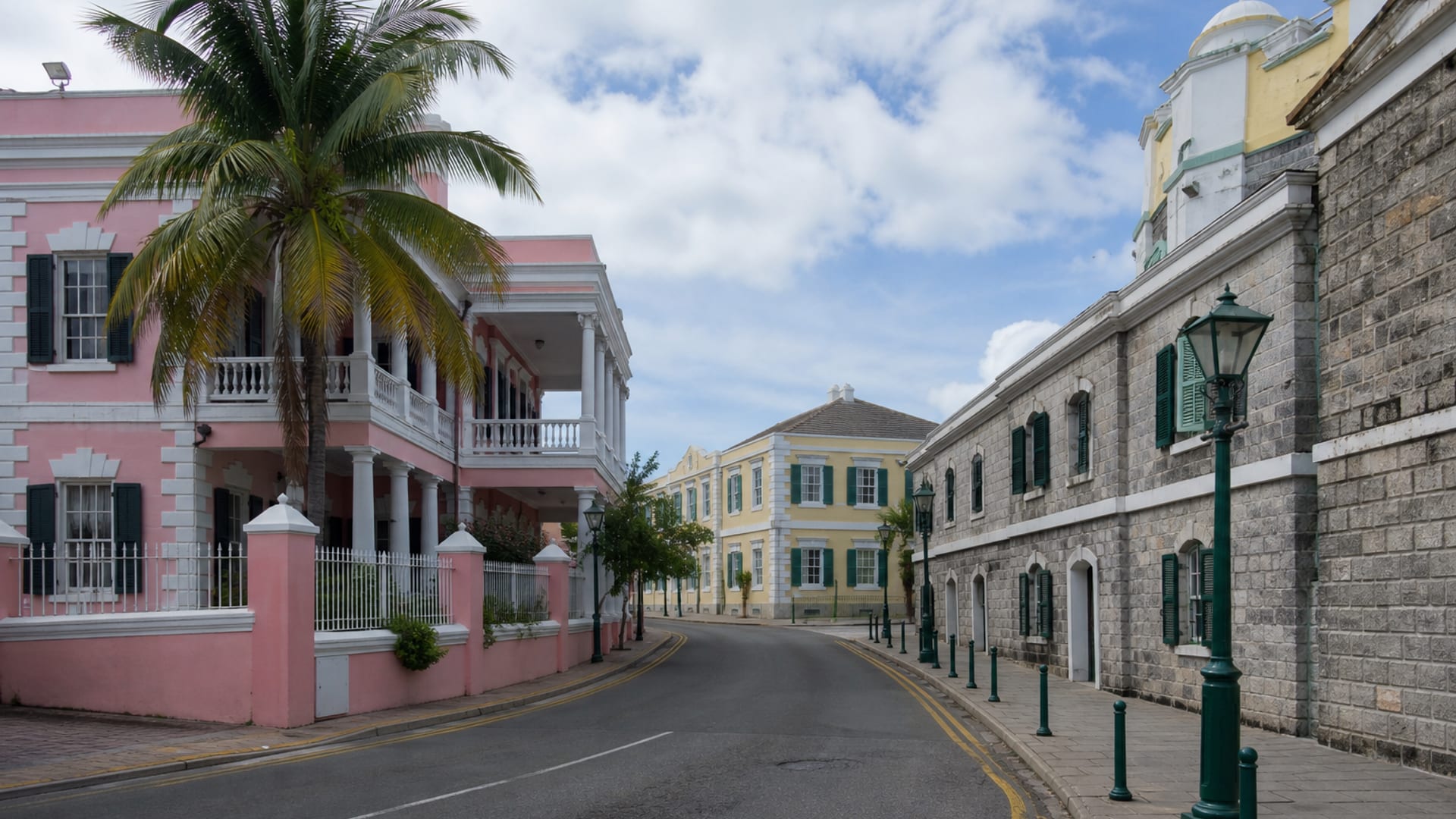
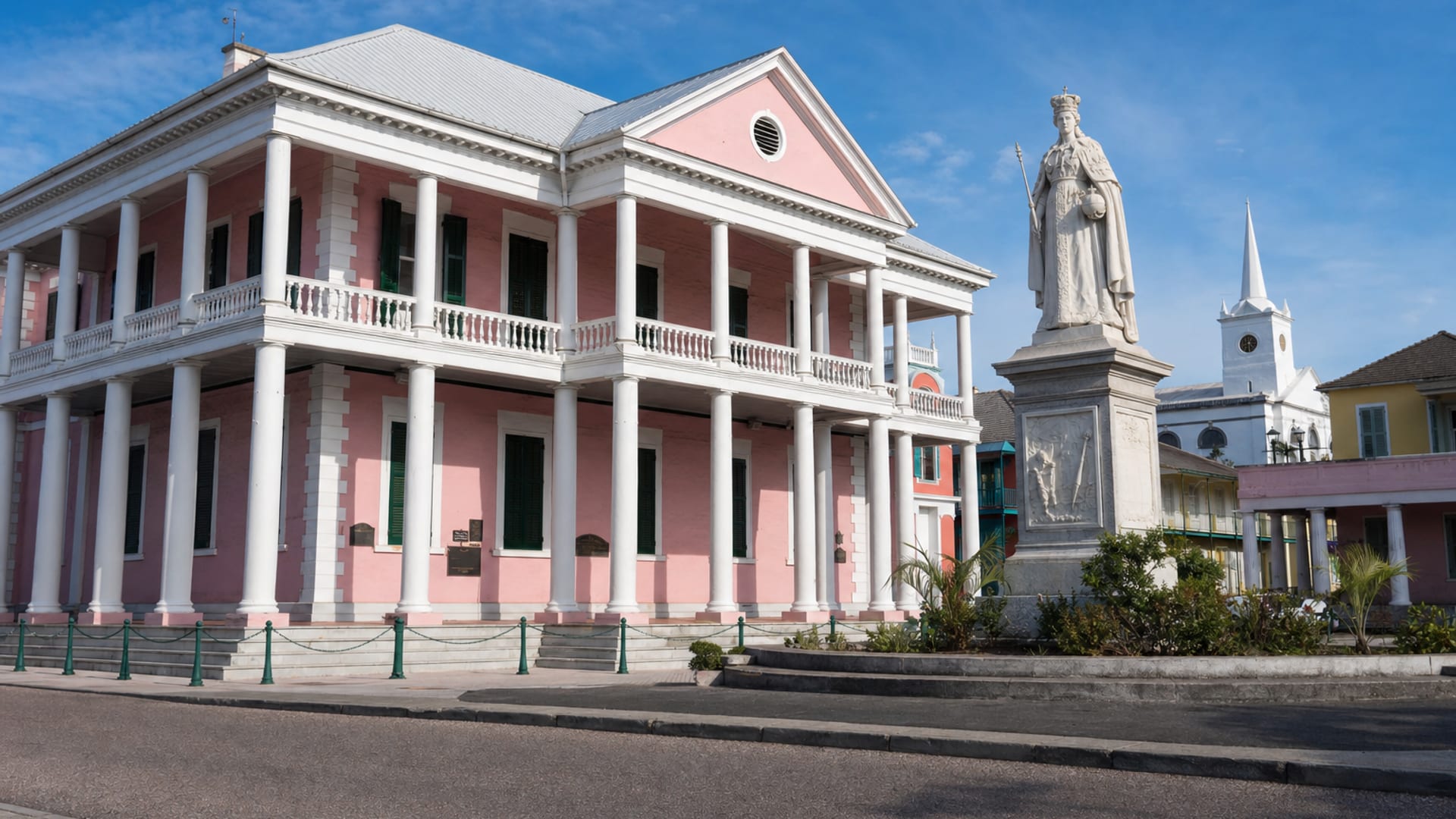
Downtown Nassau centers on Bay Street, the cruise port, historic government buildings, museums, and the Straw Market. It suits first-time visitors who want the city’s main cultural sights and shopping streets within walking distance.
Best for: Sightseeing, shopping, cruise-port access, and travelers who want to walk to the main historic sites
What to expect: Busy sidewalks, cruise-day crowds, shops, museums, and steady daytime activity
Hotel prices: Nightly rates usually range from B$180 to B$400 (US$180 to US$400).
Distance to major sights: 5 to 15 minutes on foot to Parliament Square, the Straw Market, and nearby museums
Quietness: Busiest during the day, with less street activity after shops and cruise facilities close
Main trade-off: Evening dining and entertainment are less concentrated than in the major resort areas.
Good to know: Choose a hotel close to Bay Street if walking to the main historic sights is your priority.
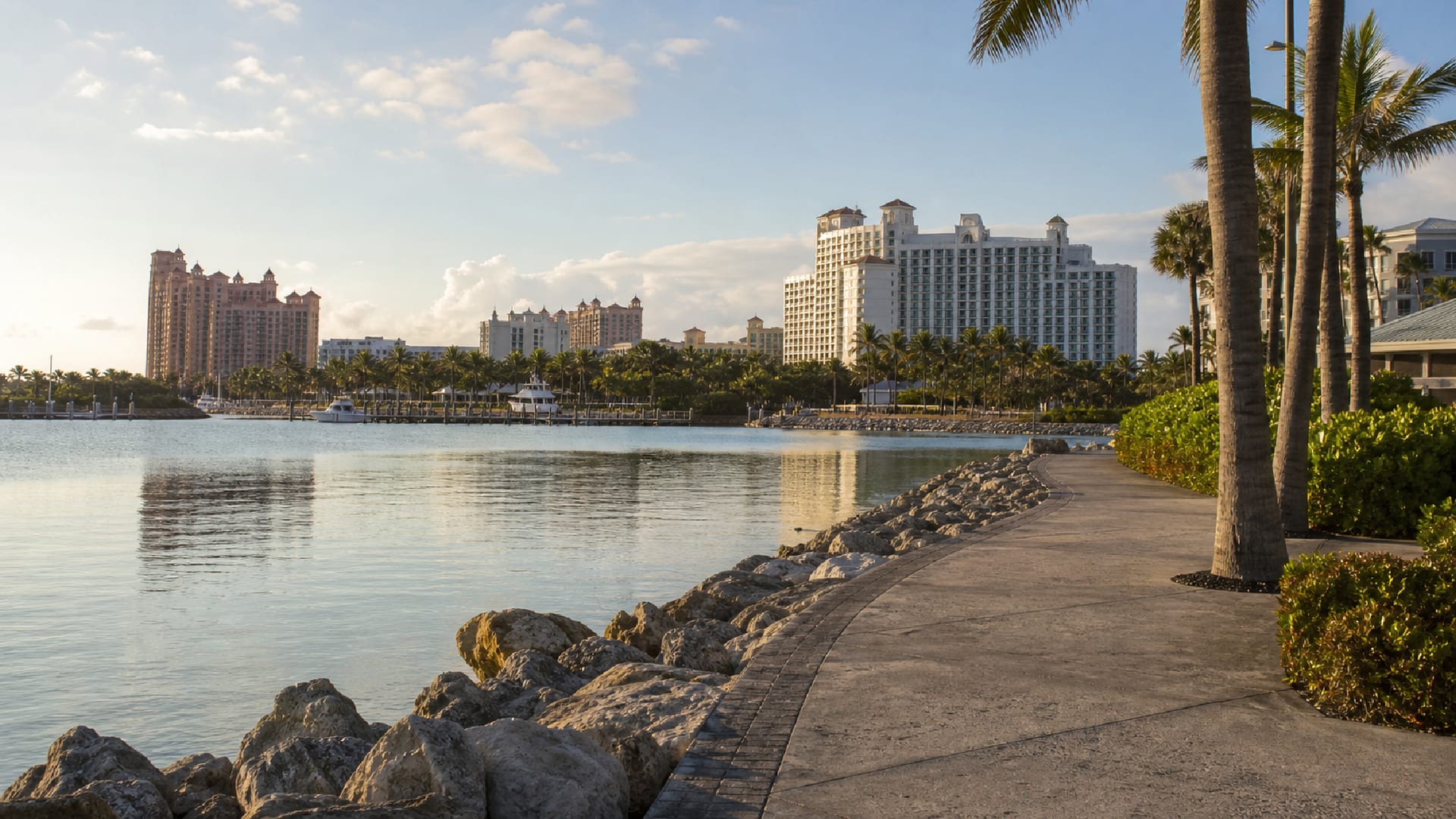
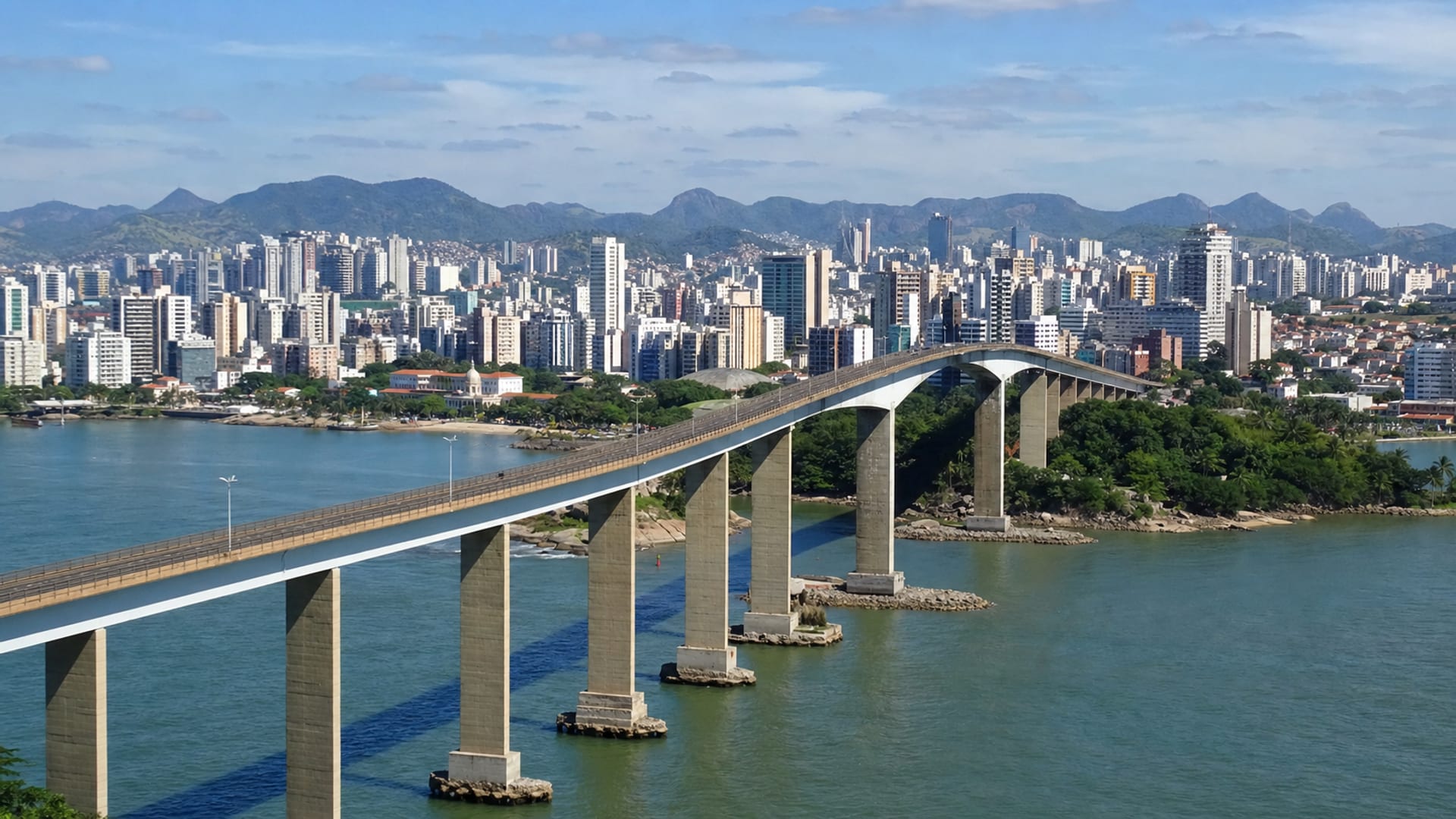
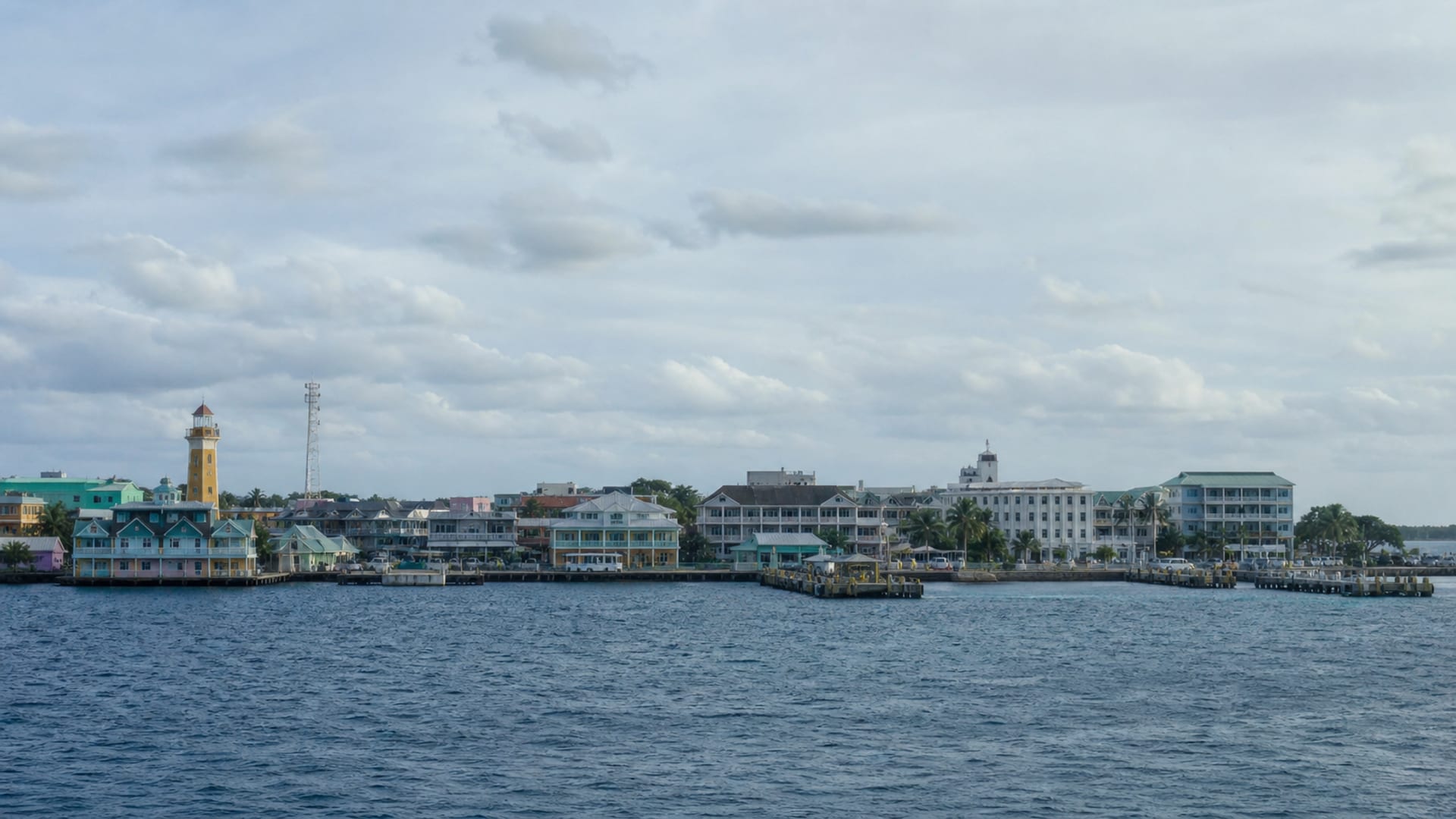
Paradise Island lies across Nassau Harbour and is connected to the city by a bridge. Large resorts, beaches, marina facilities, restaurants, pools, and attractions such as Atlantis make it a self-contained option for resort-focused stays.
Best for: Resort stays, families, beaches, pools, and on-site dining
What to expect: Large resorts, marina activity, beaches, casinos, and steady visitor traffic
Hotel prices: Expect to pay B$350 to B$900 (US$350 to US$900) per night for well-rated stays.
Distance to major sights: 10 to 20 minutes by car to Downtown Nassau, depending on traffic
Quietness: Activity concentrates around resorts, restaurants, the marina, and casino areas.
Main trade-off: Rates are high, and sightseeing in Nassau usually requires taking a taxi across the bridge.
Good to know: Budget for regular taxi rides if you plan to spend much of your stay exploring New Providence.
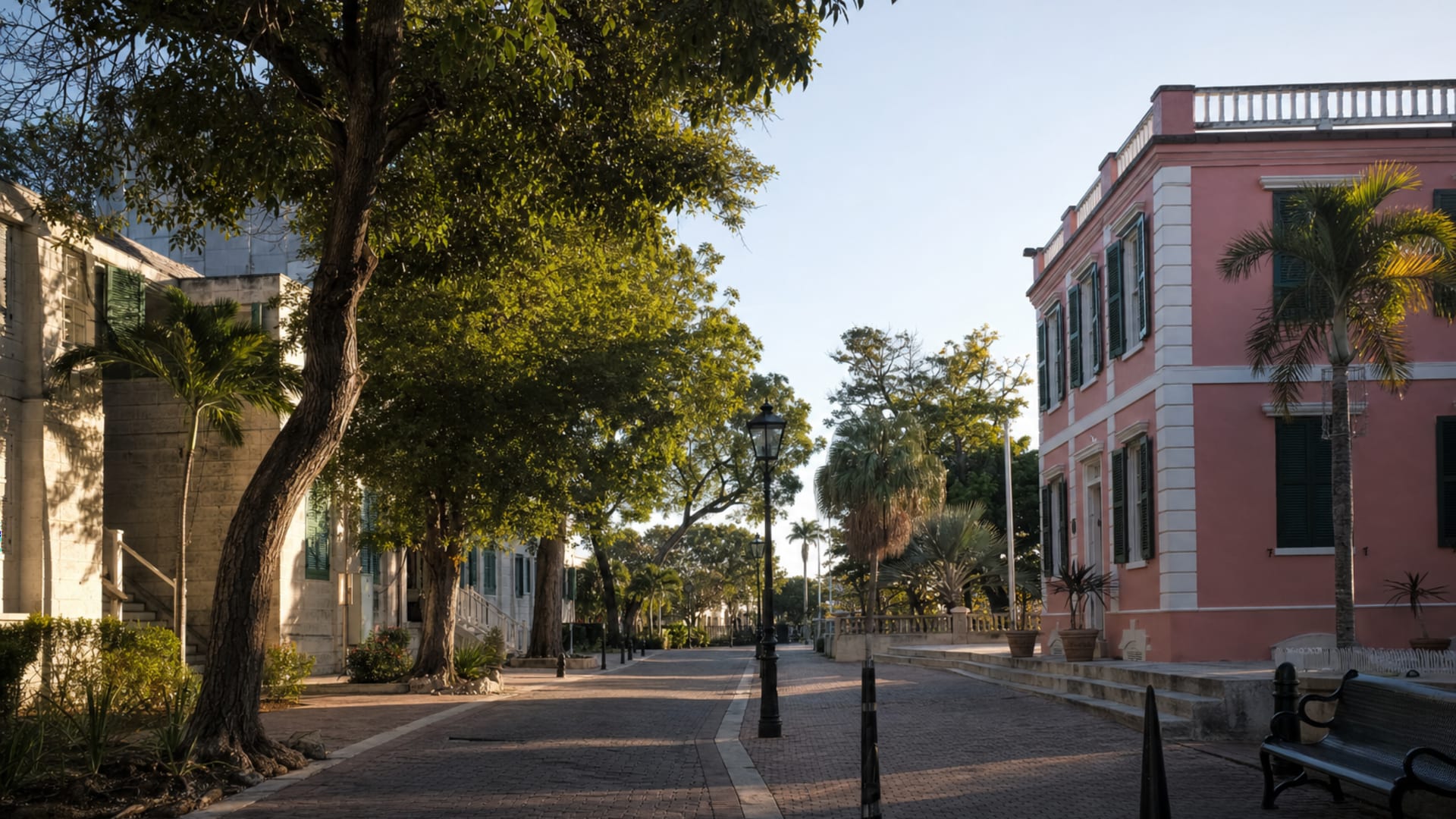
Western New Providence offers smaller hotels, quieter residential streets, and quick access to Lynden Pindling International Airport (NAS). It suits late arrivals, early departures, and travelers who prefer a lower-key stay outside the main resort districts.
Best for: Airport access, short stays, and travelers who prefer smaller hotels
What to expect: Residential streets, boutique properties, lighter tourist traffic, and fewer walkable attractions
Hotel prices: Hotels in this area generally charge B$120 to B$250 (US$120 to US$250) per night.
Distance to major sights: About 5 to 15 minutes by car to the airport and 15 to 25 minutes to Cable Beach
Quietness: Generally quieter than Downtown Nassau, Cable Beach, and Paradise Island
Main trade-off: Most sightseeing, dining, and nightlife require a taxi ride or rental car.
Good to know: This area is most practical when airport access is more important than staying near the historic center.
Outer residential areas in western and southern New Providence are less convenient for a first sightseeing-focused stay because they add travel time to Downtown Nassau, Cable Beach, and the main visitor attractions.
Hotel deals
How to get around Nassau efficiently
Nassau has no metro or suburban rail, so most visitors use jitneys, taxis, and app-based taxi services for trips between Downtown, Cable Beach, Paradise Island, and the airport.

Metro
for longer distances
Jitney buses run along many main roads on New Providence, including routes through Downtown Nassau and toward Cable Beach. The basic fare is B$1.25 (US$1.25), with longer journeys costing up to B$3.50 (US$3.50). Pay in cash with exact change; most services finish by 7:00 pm.

Bus and tram
for convenience
Licensed taxis use set zone fares. From Lynden Pindling International Airport (NAS), the current fare is B$36 (US$36) to Downtown Nassau and B$29 (US$29) to Cable Beach. Airport taxis are available outside the terminals, with extra charges for additional passengers and luggage.

Taxi
for convenience or late hours
App-based taxi services can be useful for hotel pickups and city journeys when you want the fare and driver details arranged in advance. Availability varies by area and time, so taxis are the more dependable option for airport transfers and late returns.
*Prices are based on rates updated as of June 2026 and may change at the time of travel.
Use jitneys for inexpensive daytime trips along the main roads, taxis for airport and cross-town journeys, and app-based rides when pre-booking is more convenient.
Iconic landmarks
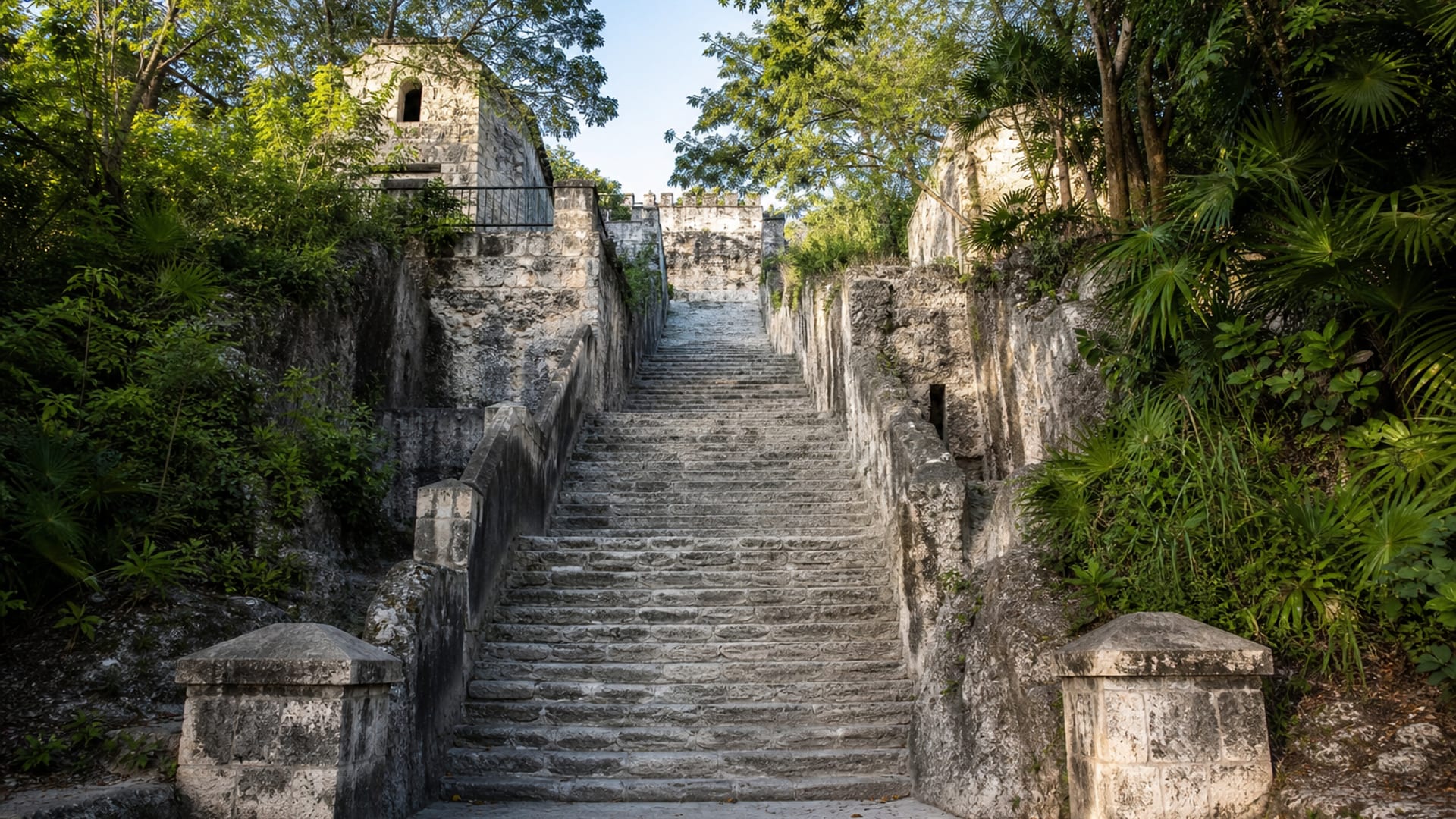
Queens Staircase
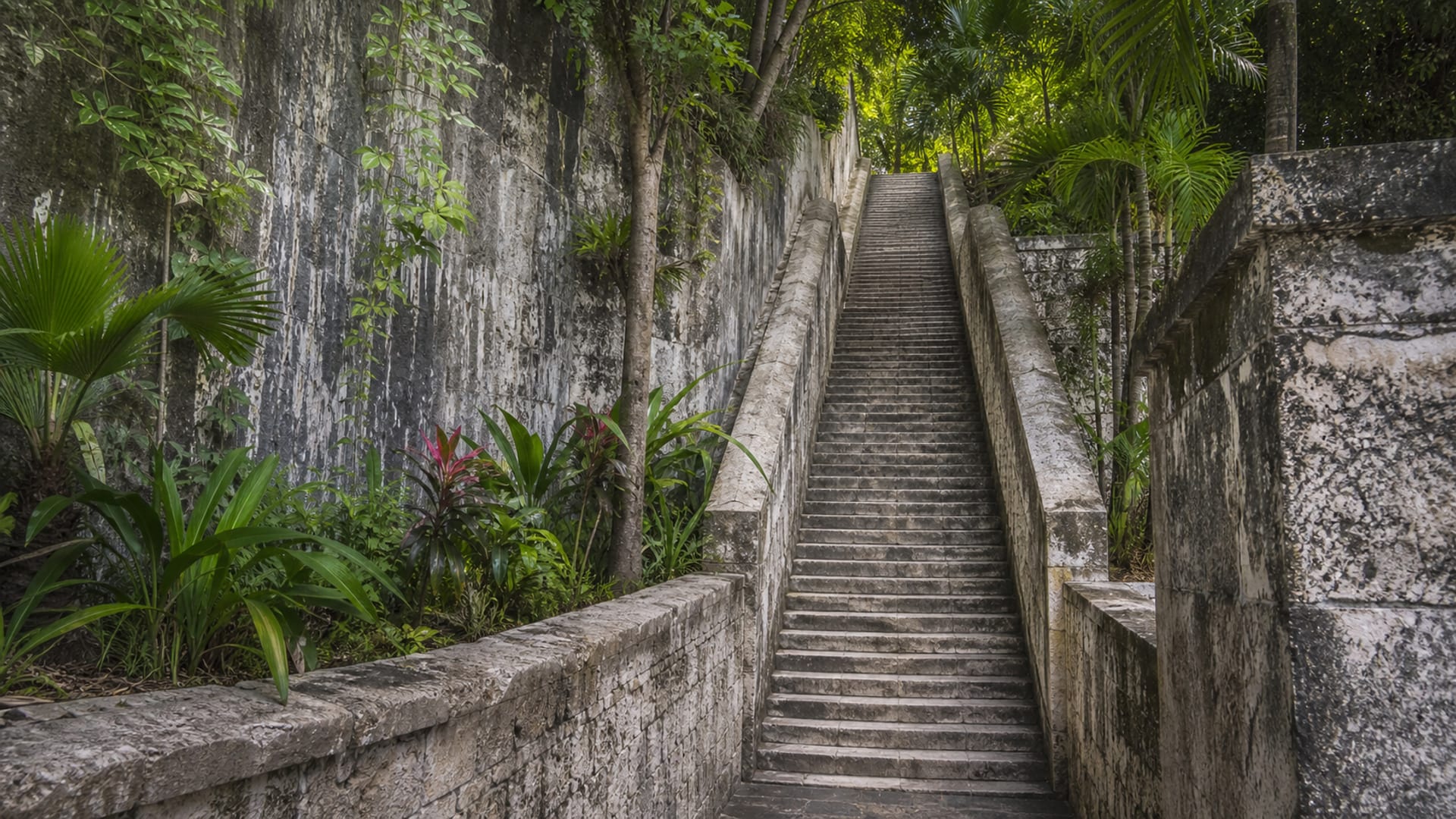
The Queen’s Staircase was carved from solid limestone by enslaved Africans between 1793 and 1794 to create a direct route between Nassau and Fort Fincastle. It is known as the 66 Steps, although only 65 are visible today.
Time needed: 30 to 45 minutes
Entry: Free
Tip: Visit early for cooler temperatures and fewer groups on the steps.
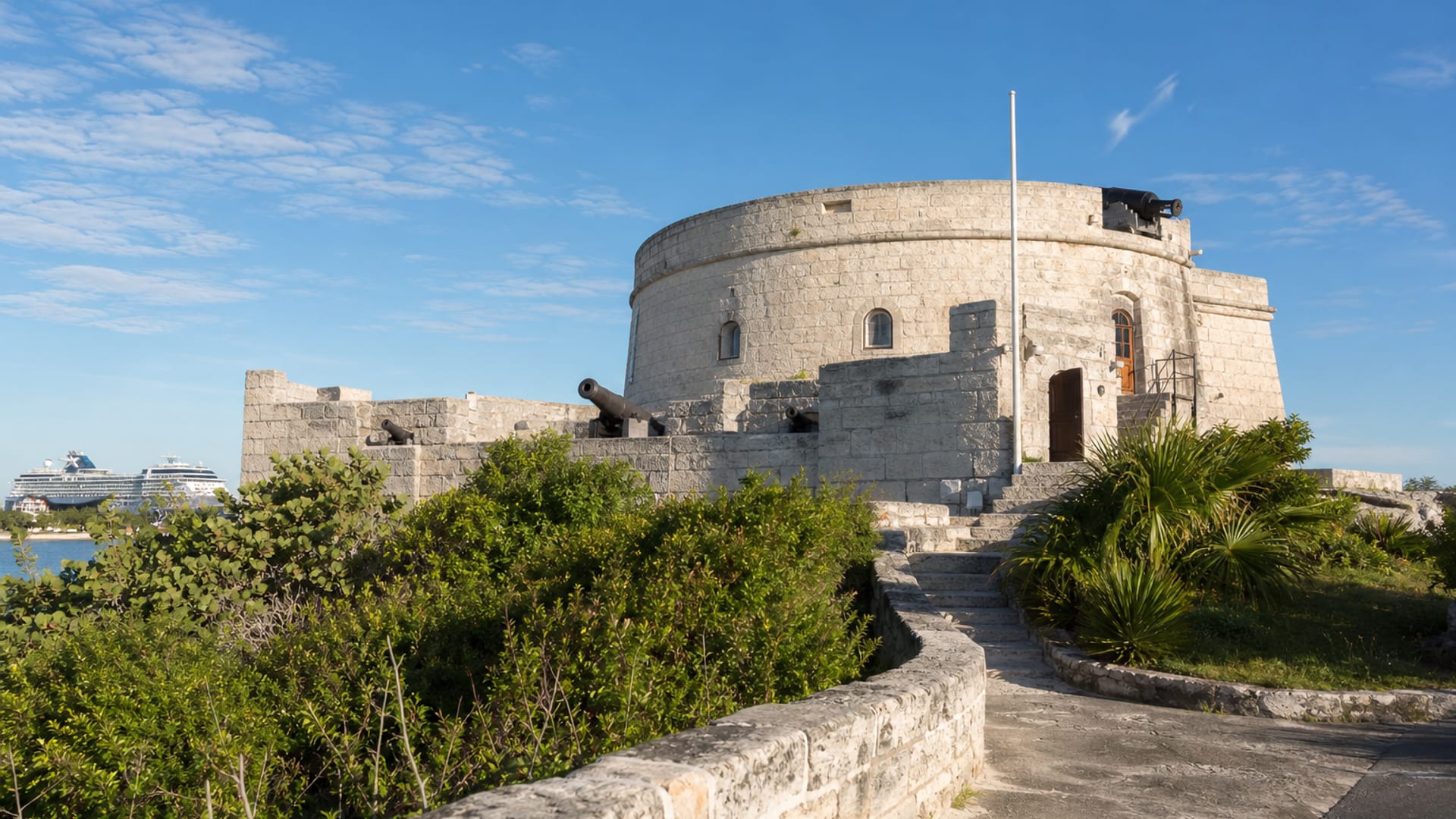
Fort Fincastle
Built in 1793 on Bennet’s Hill, Fort Fincastle overlooks Nassau and its harbor from one of the city’s highest points. Its limestone walls and defensive position show how the colonial port was protected.
Time needed: 45 minutes to 1 hour
Entry: Donations are appreciated; guided tours are available during daytime hours.
Tip: Pair it with the Queen’s Staircase, which is located directly below the fort.
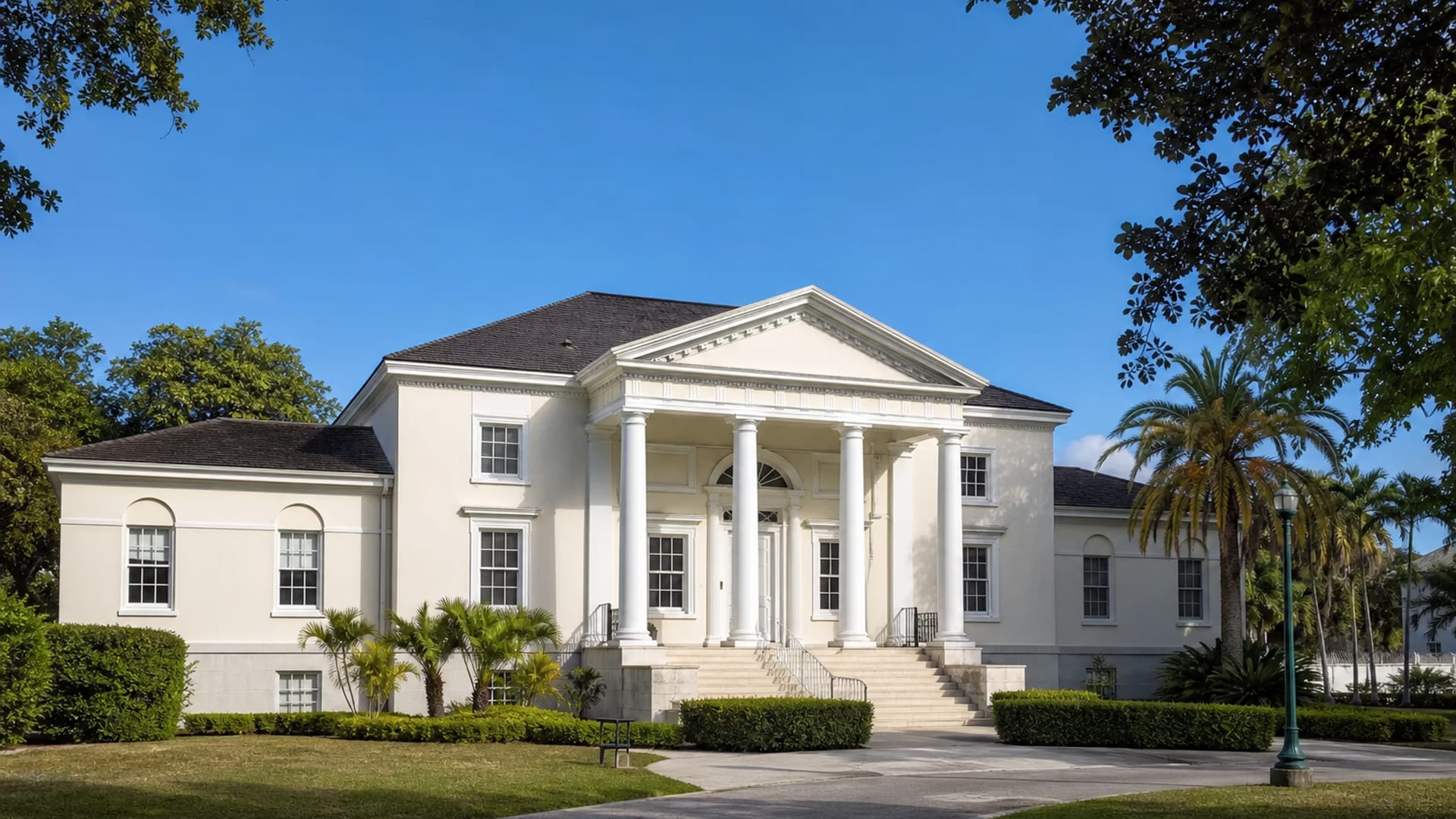
The National Art Gallery of The Bahamas
The National Art Gallery of The Bahamas occupies historic Villa Doyle and presents Bahamian art from earlier periods through contemporary work. Exhibitions explore local identity, history, landscape, and changing artistic traditions.
Time needed: 1 to 2 hours
Entry: Adult admission costs B$10 (US$10); seniors and students pay B$5 (US$5), and children under 12 enter free. Visit the official site for details.
Tip: Visit late morning before moving on to nearby Downtown Nassau sights.
Overlooked sites worth visiting

Ardastra Gardens, Zoo and Conservation Centre
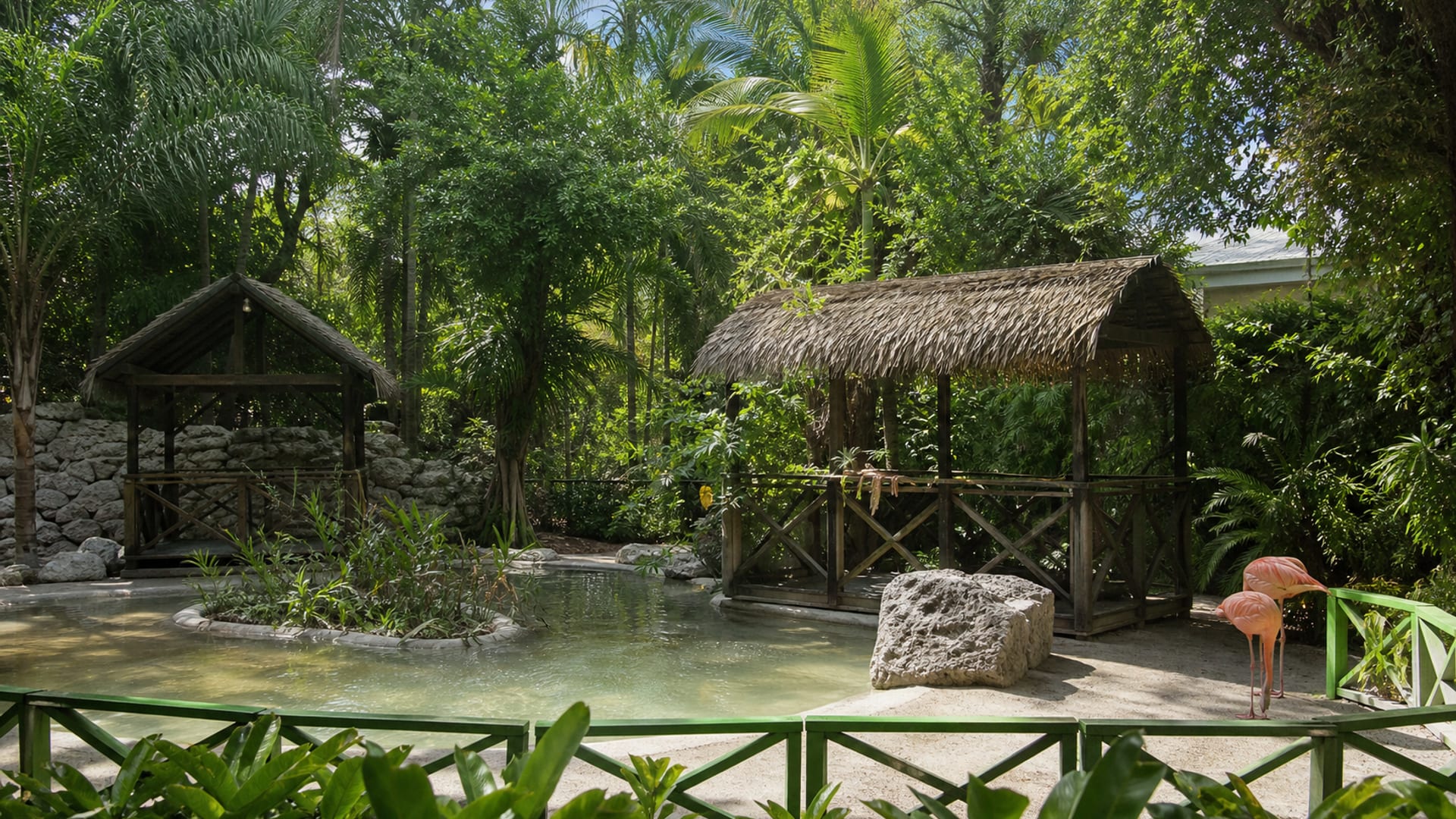
Ardastra Gardens combines tropical landscaping with more than 200 animals, including the Bahamas’ famous marching flamingos. Shaded paths and scheduled animal presentations make it an easy half-day stop west of Downtown Nassau.
Time needed: About 1.5 to 2 hours
Entry: Adults pay B$16 (US$16), children B$8 (US$8), and children 3 and under enter free. Visit the official site for details.
Tip: Visit in the morning for cooler paths and one of the early flamingo shows.

Pompey Museum of Slavery & Emancipation
The Pompey Museum occupies historic Vendue House, where enslaved Africans and other goods were once sold. Its exhibits examine slavery, resistance, and emancipation in The Bahamas from a central Downtown Nassau location.
Time needed: 45 minutes to 1 hour
Entry: Admission is US$5.50; the museum is generally open Monday to Saturday from 9:30 am to 4:30 pm. Visit the official site for details.
Tip: Pair it with Bay Street and the Straw Market, which are nearby.
Traditional food
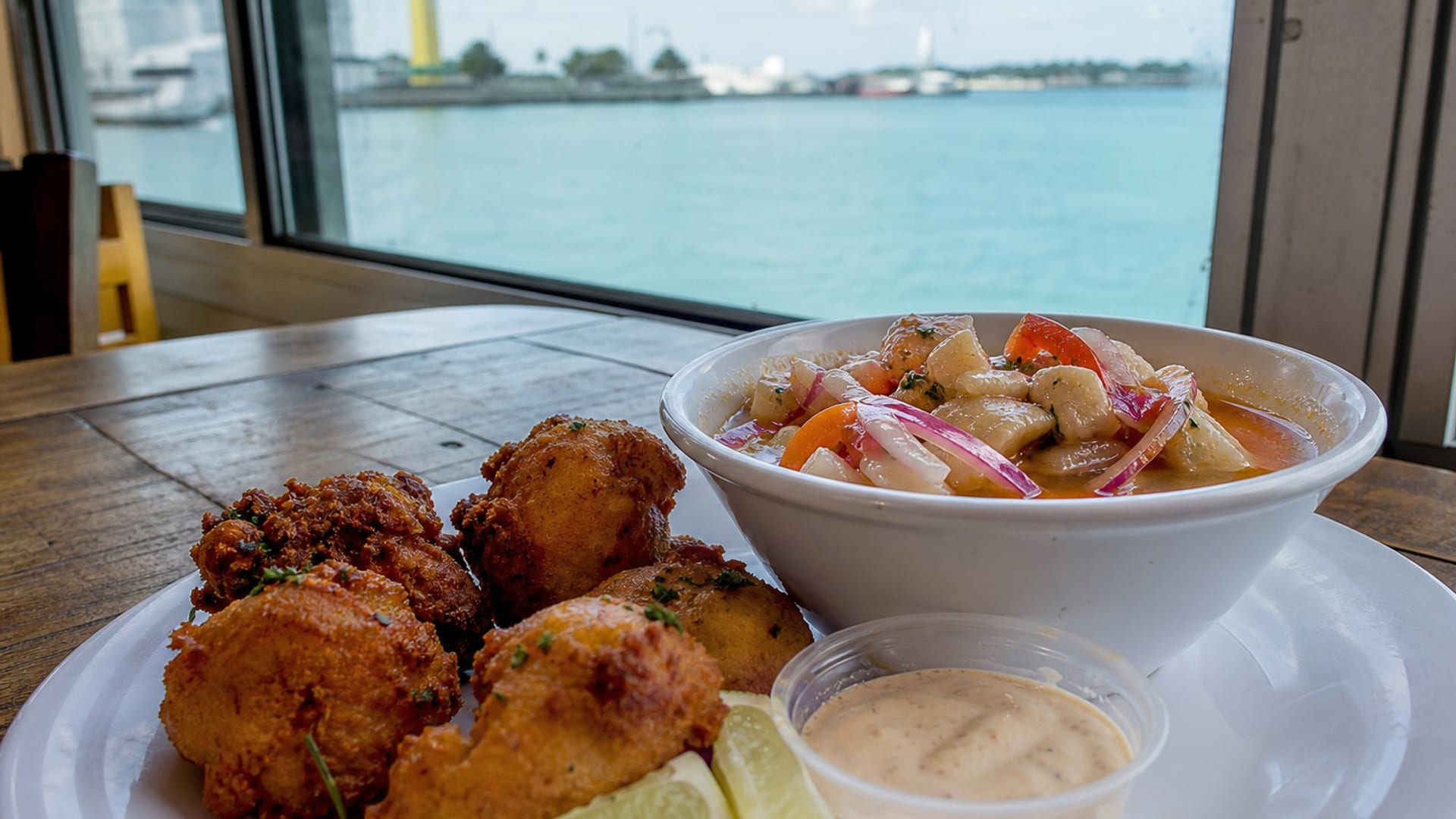
Nassau’s food combines conch, lobster, fish, citrus, peppers, and hearty Bahamian sides, with seafood appearing across Fish Fry stalls and long-running local restaurants.
Conch salad
Conch salad combines raw conch with tomato, onion, sweet pepper, citrus juice, and chili for a fresh, sharp dish served cold. Arawak Cay’s Fish Fry is one of Nassau’s best-known places to order it.
Cracked conch
Cracked conch is tenderized, battered, and fried until crisp, then usually served with fries, peas and rice, or other local sides. Goldie’s Conch House at Arawak Cay is a long-running Nassau stop for it.
Grilled lobster
Bahamian lobster is often split and grilled, with the meat served simply so its natural sweetness stays central. The Poop Deck serves Bahamian lobster tail grilled, broiled, or cracked.
Bahamian mac and cheese
Bahamian mac and cheese is baked until firm and rich, with a denser texture than stovetop versions. Bahamian Cookin’ Kitchen in downtown Nassau serves baked macaroni and cheese alongside local seafood and meat dishes.
Best time to visit Nassau
Nassau stays warm year-round, but rainfall, humidity, and hurricane risk shape the seasons more than temperature does.
Best for: Beach days, sightseeing, and the most comfortable outdoor weather
What you get: 63°F to 78°F (17°C to 26°C), with lower rainfall, cooler evenings, and the highest hotel demand
Trade-offs: Room rates rise, and popular restaurants book up faster.
Best for: Beach time, city walks, and warm weather before the summer peak
What you get: 64°F to 85°F (18°C to 30°C), with rising temperatures and increasing rainfall toward May
Trade-offs: Easter and school holidays can push up hotel demand and prices.
Best for: Long beach days, swimming, and travelers comfortable with heat
What you get: 73°F to 90°F (23°C to 32°C), with high humidity, frequent showers, and warmer sea temperatures
Trade-offs: Heat, heavy rain, and hurricane-season weather can disrupt plans.
Best for: Quieter hotels, lower visitor numbers, and flexible itineraries
What you get: 69°F to 89°F (21°C to 32°C), with warm weather, lighter crowds, and rainfall easing later in the season
Trade-offs: September and October carry the highest hurricane risk.
A realistic 5-day plan in Nassau
Five days gives you time to separate downtown Nassau, the historic hill, Cable Beach, Paradise Island, and one quieter wildlife stop. This order keeps the central sights together and avoids repeating the same museums and shopping streets.
Land at Lynden Pindling International Airport (NAS), then take a taxi to your hotel. The set fare is B$29 (US$29) to Cable Beach or B$36 (US$36) to Downtown Nassau. Check in, keep dinner close to your hotel, and use the first evening for a short beach or waterfront walk instead of adding another cross-city trip.
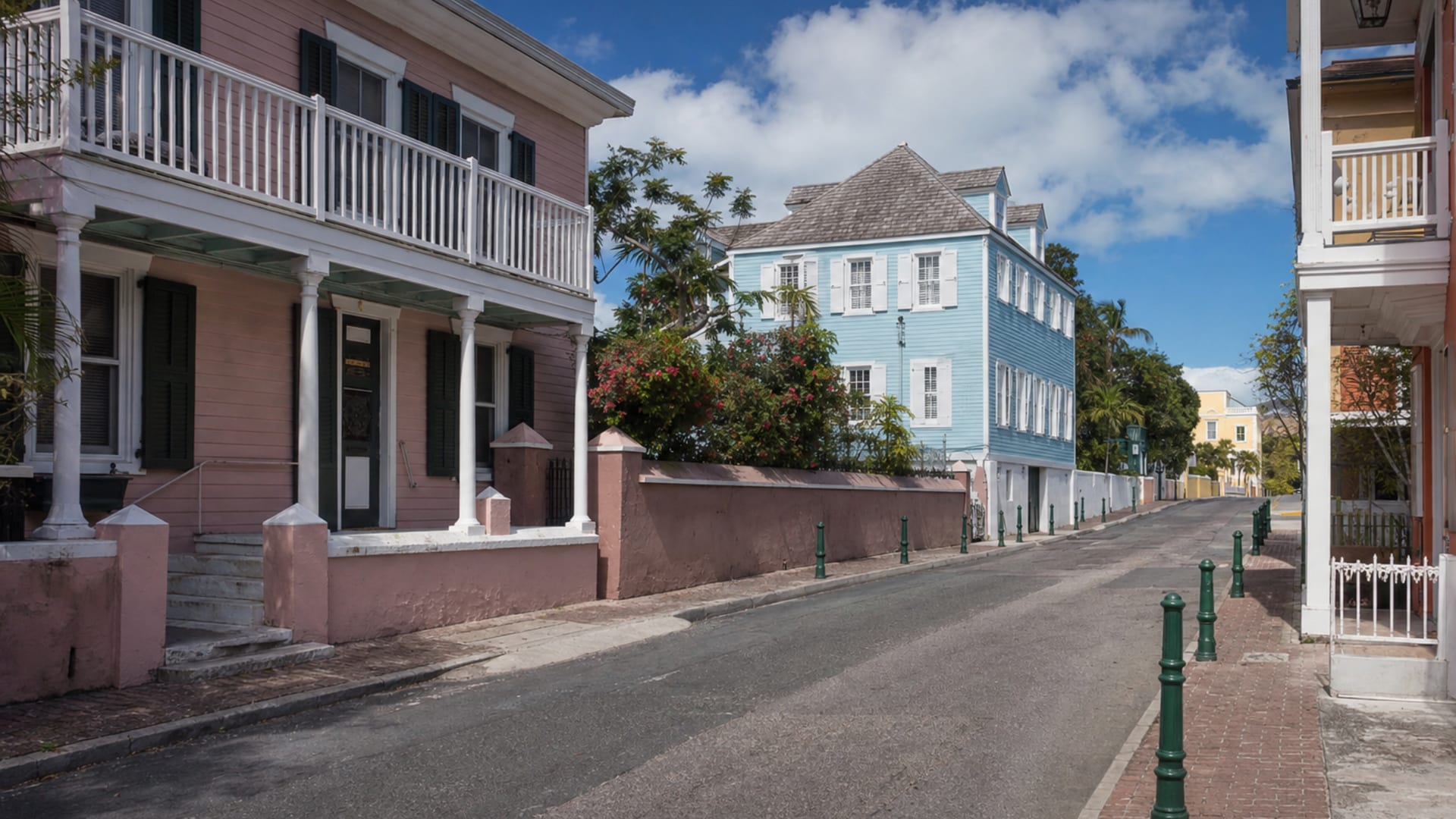
Start at the Queen’s Staircase early and allow 30 to 45 minutes for the steps and surrounding limestone walls. Continue directly to Fort Fincastle for another 45 minutes to 1 hour, then head downhill into Downtown Nassau for lunch. Spend 1 to 2 hours at the National Art Gallery of The Bahamas before finishing the day around Bay Street.
Begin with a morning on Cable Beach, with enough time for a swim or a walk along the waterfront before the day heats up. Then take a short taxi ride to Ardastra Gardens, Zoo and Conservation Centre, where four acres of tropical gardens hold over 200 animals including Caribbean flamingos, Lory parrots, and Bahamian boa constrictors. Time your visit to catch the daily flamingo marching show. Allow 1.5 to 2 hours, then return to Cable Beach for a slower afternoon by the water or head to a nearby restaurant for lunch.
Paradise Island is 10 to 20 minutes by taxi from Downtown Nassau across the Sir Sidney Poitier Bridge. The main draw is Atlantis Resort, where a day pass covers the water park, beaches, pools, and The Dig Aquarium. Cabbage Beach runs along the northern coast just past the resort and is open to all visitors. Plan lunch and a slower afternoon on the island. Return to your hotel after dinner and allow extra time for the crossing.
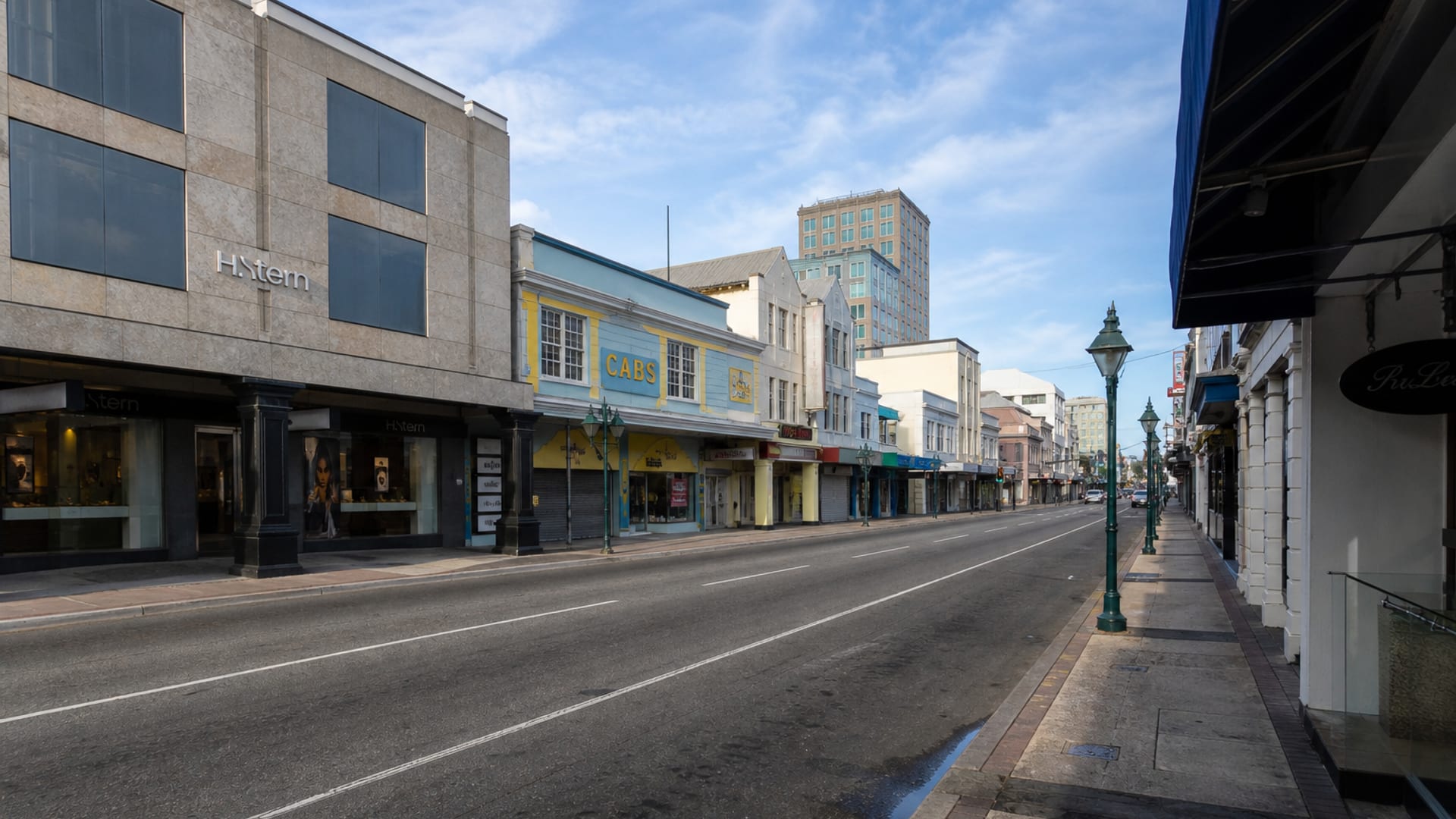
Keep the final morning close to Downtown Nassau with the Straw Market, Bay Street, or the Pompey Museum if your departure time allows. Have lunch nearby, collect your bags, then leave for Lynden Pindling International Airport (NAS). The taxi ride from Downtown Nassau generally takes 20 to 30 minutes, but allow extra time during heavier traffic.
Business-class flights from the US to Nassau
Reaching Nassau usually means choosing between a nonstop flight or a one-stop option through a major US or Canadian hub. The price range shifts with season and routing, so the origin city matters.
From New York, American Airlines, Delta Air Lines, JetBlue, Bahamasair, Air Canada, and British Airways all serve this market, with nonstop flying time at about 3 to 4 hours. If you take a connection, common hubs include MIA, CLT, ATL, PHL, and YYZ, and the trip can stretch to about 5 to 9 hours. Round-trip fares in this market often start near $900, with premium dates climbing to roughly $1,800.
Los Angeles travelers usually connect through MIA, ATL, CLT, DFW, or YYZ, and the total journey runs about 8 to 13 hours. American Airlines, Delta Air Lines, United Airlines, JetBlue, and Air Canada cover the route, and typical round-trip pricing sits at roughly $1,400 to $3,000, with a connection often lowering the fare.
Nassau feels different when you slow down
A well-planned Nassau stay keeps the historic sights together, leaves separate time for Cable Beach or Paradise Island, and uses taxis for the longer trips between them. Downtown is easy to explore on foot once you arrive. AranGrant experts can help you find business-class flights and hotels that fit your dates and preferred location.







