

Chapters:

Need help with your trip?
Our support team is available 24/7. Request a callback or call us directly at (833) 619-0908
Nagoya itineraries often start and end at the station, with a quick castle stop, a shrine visit, and a meal built around miso. Travelers who follow that pattern usually skip the city’s quieter contrasts, from industrial heritage to ceramics gardens and side streets that reward unhurried time.
That shortcut leaves real distance between sights, and it also ignores how Nagoya’s best days depend on timing, whether you reach Nagoya Castle before the groups arrive or move through Osu after lunch. A rushed route can turn short subway hops into a long series of transfers and queues.
This guide separates the city into workable sections, pairs each one with the right train line or walk, and keeps the food stops tied to the neighborhoods where they make sense.
Useful things to know

Main language(s): Japanese
Konnichiwa (kohn-nee-chee-wah) – Hello / good afternoon
Onegaishimasu (oh-neh-guy-shee-mas) – Please
Arigatou gozaimasu (ah-ree-gah-toh goh-zai-mas) – Thank you
Eigo o hanasemasu ka? (eh-goh oh hah-nah-seh-mas kah) – Do you speak English?
Ikura desu ka? (ee-koo-rah dess kah) – How much does it cost?

Currency: The local currency is the Japanese yen (JPY, ¥).

Cash and cards: Cards and contactless are widely accepted; carry about ¥3,000 to ¥5,000 ($20 to $35) for small shops and transit gaps.

Tipping: Tipping is not customary; rounding up is appreciated but not expected.

Traditional food: Hitsumabushi, miso katsu, kishimen, tenmusu

Water and coffee costs: Water about ¥150 ($1), bar espresso about ¥500 ($3.50).

Taxis and ride apps: Uber and JapanTaxi operate here; availability can be patchy late at night.

Plug and voltage: Type A/B socket, 100V

Dining and shop opening hours: Breakfast is about 7:00-9:00, lunch 11:30-14:00, and dinner 18:00-21:00. Many restaurants stop seating before closing, and some shops close on Wednesday or Thursday.

Emergency number: 110 for police, 119 for fire and ambulance.
Where to stay in Nagoya
Nagoya Station puts you beside the city’s main rail hub, with underground malls, department stores, and easy transfers across central Nagoya. It suits visitors who want quick rail access for sightseeing, dining, and arrivals from Nagoya (NGO) via the Meitetsu line.
Best for: Rail arrivals, business trips, and visitors who want the easiest train connections
What to expect: Busy sidewalks by day, heavy commuter flow, and a bright commercial atmosphere well into the evening.
Hotel prices: Usually about ¥12,000 to ¥28,000 (~$80 to ~185) per night for well-rated stays
Distance to major sights: About 10 minutes by subway to Nagoya Castle, about 15 minutes to Osu Shopping District
Quietness: Lively through the day and evening, with quieter side streets and hotel interiors after business hours.
Main trade-off: The area can feel crowded and hotel prices rise near the station, especially on weekdays and during major events.
Good to know: If you plan late arrivals or early departures, this is the easiest place to base yourself, because the airport train and intercity rail both converge here.
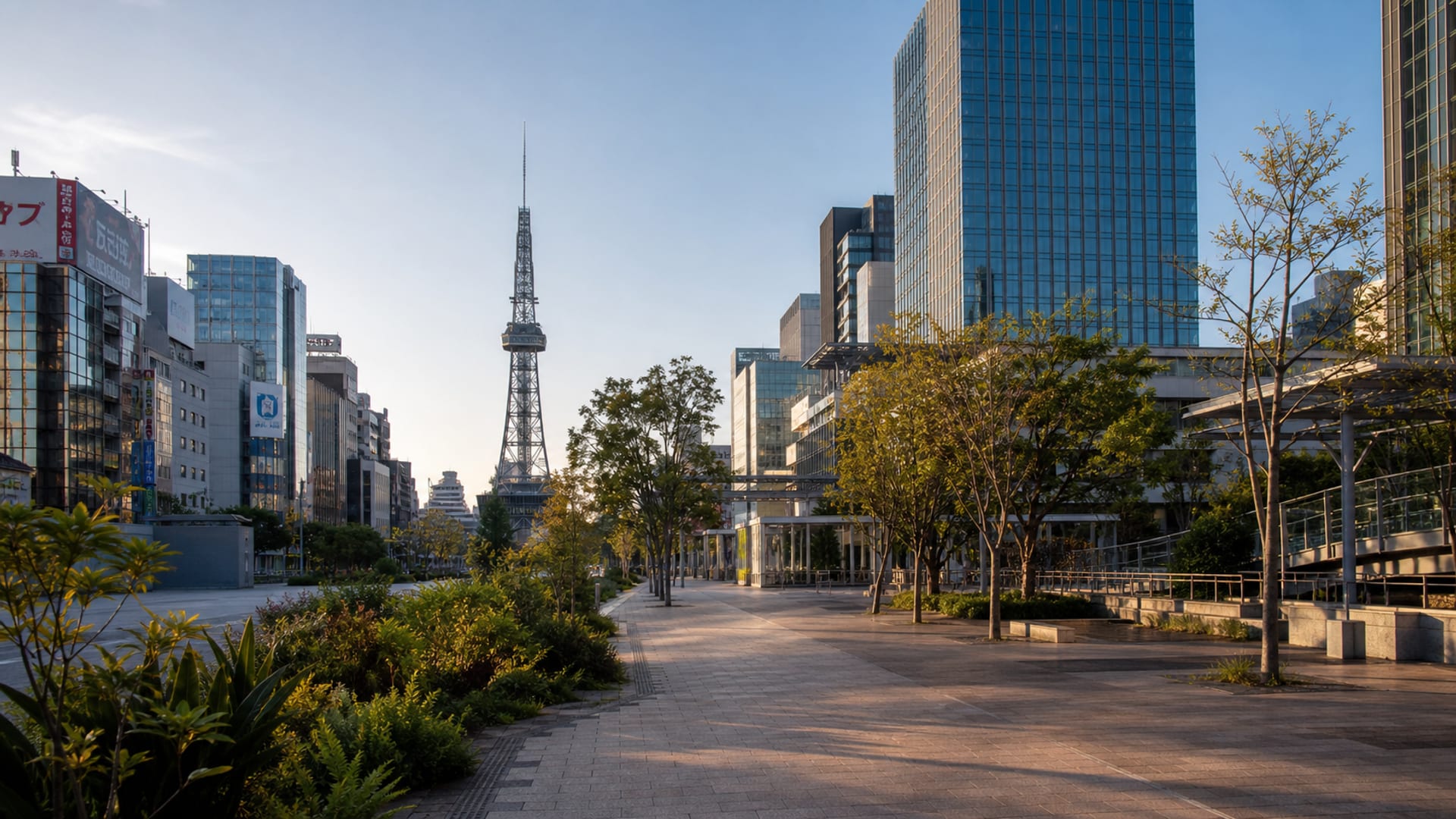
Sakae is Nagoya’s main shopping and nightlife district, centered on department stores, restaurants, and the TV Tower area. It matters because it gives you the widest choice of dining and evening plans within a short subway ride of major sights.
Best for: Dining, shopping, nightlife, and travelers who want the busiest central base
What to expect: Thick pedestrian traffic, bright storefronts, and active streets into late evening, especially around the main intersections.
Hotel prices: Usually about ¥10,000 to ¥25,000 (~$66 to ~165) per night for well-rated stays
Distance to major sights: About 5 minutes on foot to Oasis 21, about 10 minutes by subway to Nagoya Castle
Quietness: Busy and bright all day, with some blocks staying loud late into the night.
Main trade-off: You gain restaurant and shopping choice, but street noise and higher weekend demand make the calmest rooms harder to find.
Good to know: Choose a hotel a block or two off the main intersections if you want easier sleep, since the busiest corners stay active late.
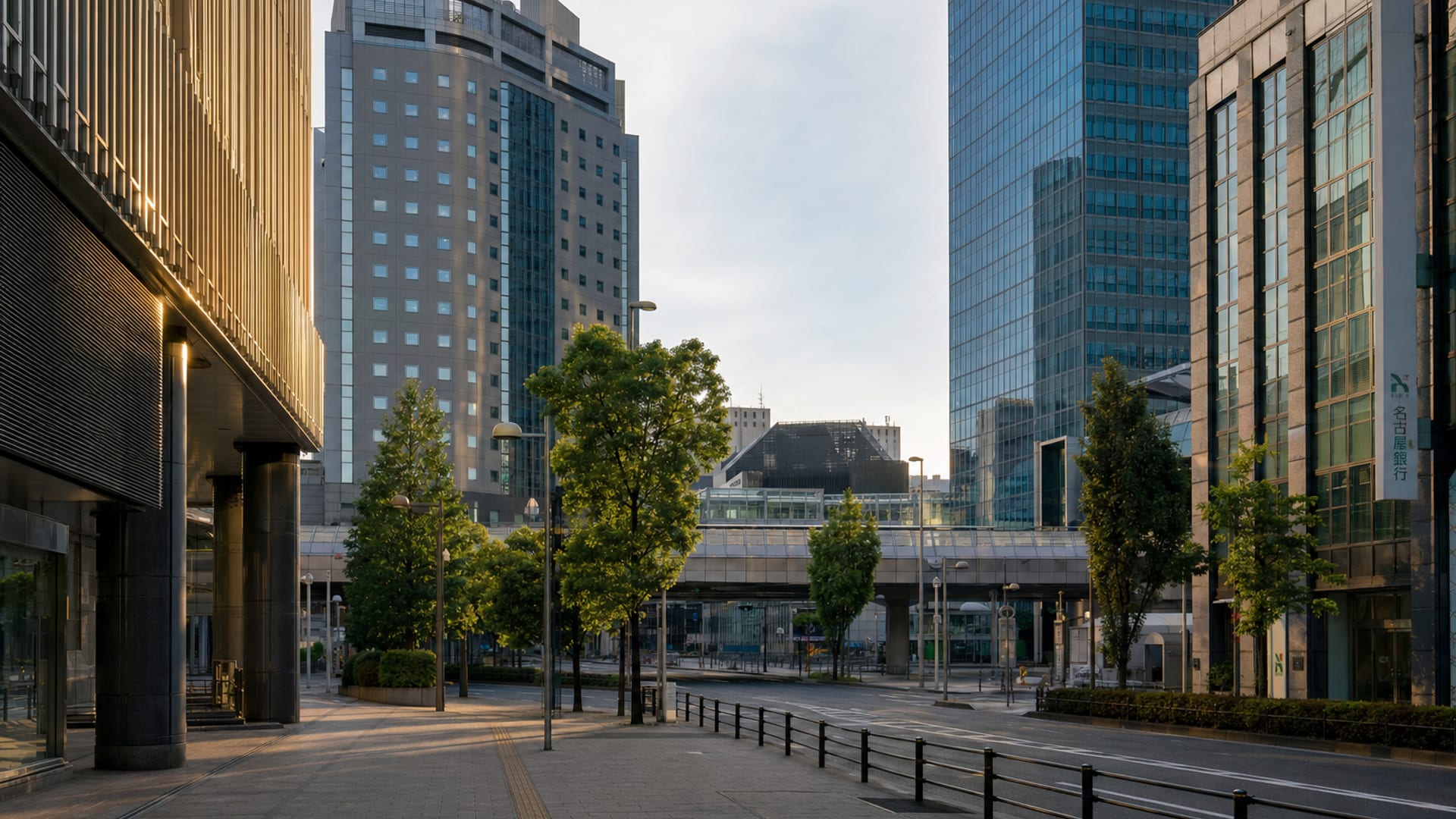
Kanayama sits south of the core and combines a major train interchange with local dining, offices, and concert venues. It works well for travelers who want fast movement around the metro without paying central Sakae prices every night.
Best for: Transit access, concertgoers, and travelers who want a lower-key central base
What to expect: A working-city atmosphere with commuter traffic, steady station footfall, and fewer late-night crowds than Sakae.
Hotel prices: Usually about ¥8,000 to ¥20,000 (~$53 to ~132) per night for well-rated stays
Distance to major sights: About 7 minutes by train to Sakae, about 15 minutes by train to Nagoya Castle
Quietness: Moderately active by day, then noticeably quieter after office hours and the evening train rush.
Main trade-off: The area is less scenic than Sakae, so you may trade atmosphere for easier rail access and lower room rates.
Good to know: This is a strong choice if you expect to use JR, Meitetsu, or subway lines often, because transfers here are simpler than from many smaller stations.
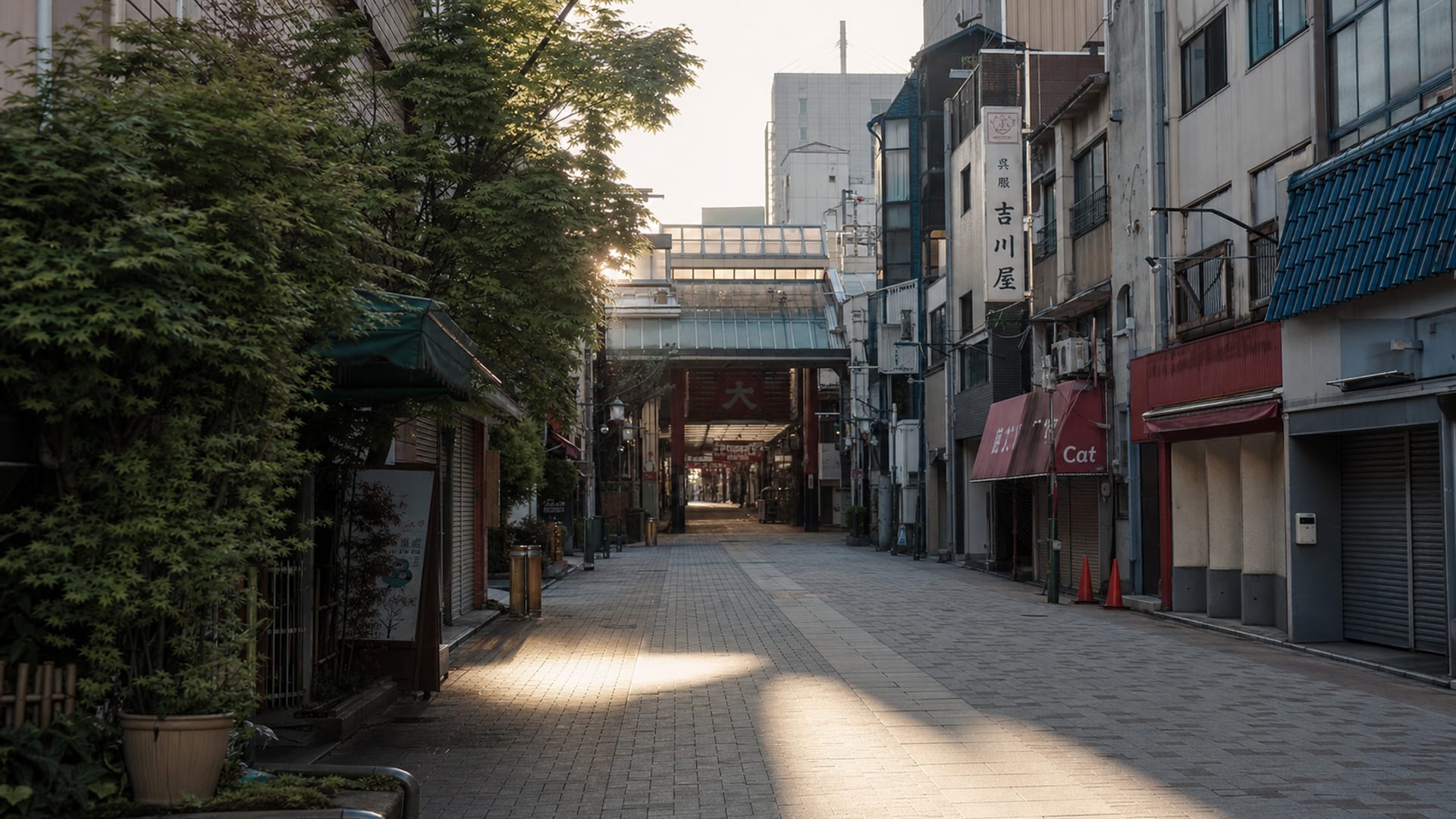
Osu is a compact district known for arcades, secondhand shops, temples, and a dense food scene. It matters for travelers who want character on the street and easy access to both shopping and the central subway network.
Best for: Food-focused trips, indie shopping, and visitors who want a more local-feeling base
What to expect: Narrow shopping streets, steady daytime browsing, and a younger crowd around the arcades and restaurants.
Hotel prices: Usually about ¥9,000 to ¥22,000 (~$59 to ~145) per night for well-rated stays
Distance to major sights: About 10 minutes on foot to Osu Kannon, about 10 to 15 minutes by subway to Nagoya Station
Quietness: Busy and lively during the day, then calmer at night once the shops close.
Main trade-off: The neighborhood has fewer large hotels than the station area, so room choice can be narrower and some streets are livelier in the evening.
Good to know: If you want to wander for food and shopping after dinner, this area puts most of that within an easy walk, but late-night train access is a little less direct than at Nagoya Station.
Travelers usually avoid Nishi Ward, especially the western side near Kiyosu and the industrial belt, because it sits far from Nagoya Castle, Osu, and Sakae and has fewer visitor-focused hotels and restaurants. Parts of Minato Ward near Nagoya Port, Atsuta Ward outside the station area, and the airport-side areas of Tokoname are also less convenient for a city stay, since they place you well away from the main sights and can make evening travel into central Nagoya more time-consuming.
Hotel deals
How to get around Nagoya efficiently
Nagoya’s transport network centers on Meitetsu, JR, and the subway, so the easiest days mix short rail rides with walks between compact districts and station-linked sights.

Train
for longer distances
Nagoya does not have a separate metro network at NGO; use Meitetsu Railway from Chubu Centrair International Airport to Meitetsu Nagoya Station, with the μSKY taking about 28 minutes for roughly $9 ($1,240). Limited Express and express trains run more often and take longer, and the airport access trains connect cleanly with the wider Meitetsu and JR systems in central Nagoya.

Bus
for convenience
Centrair Limousine buses link the airport with Nagoya Station, Sakae, and several major hotels, usually in about 45 to 70 minutes depending on traffic; fares are about $9 to $15 ($1,200 to $2,000). In the city, Meitetsu and municipal buses cover most neighborhoods, pay as you board, and accept cash or contactless transit cards on many routes, while the low-floor tram heritage system is not a practical option here because Nagoya no longer has a tram network.

Taxi
for convenience or late hours
Licensed taxis at Chubu Centrair International Airport use metered fares, not set airport flat rates, and the trip to central Nagoya typically costs about $95 to $140 ($13,000 to $19,000) depending on traffic and the exact drop-off point. Drivers line up at the designated taxi rank, most vehicles accept cash and many take major cards or transit payment apps, and a night surcharge usually applies late at night.
*Prices are based on rates updated as of June 2026 and may change at the time of travel.
Subway rides work best for Castle, Sakae, and Kanayama, trains suit Atsuta and airport transfers, and taxis make sense late at night or when you want to avoid extra changes.
Iconic landmarks
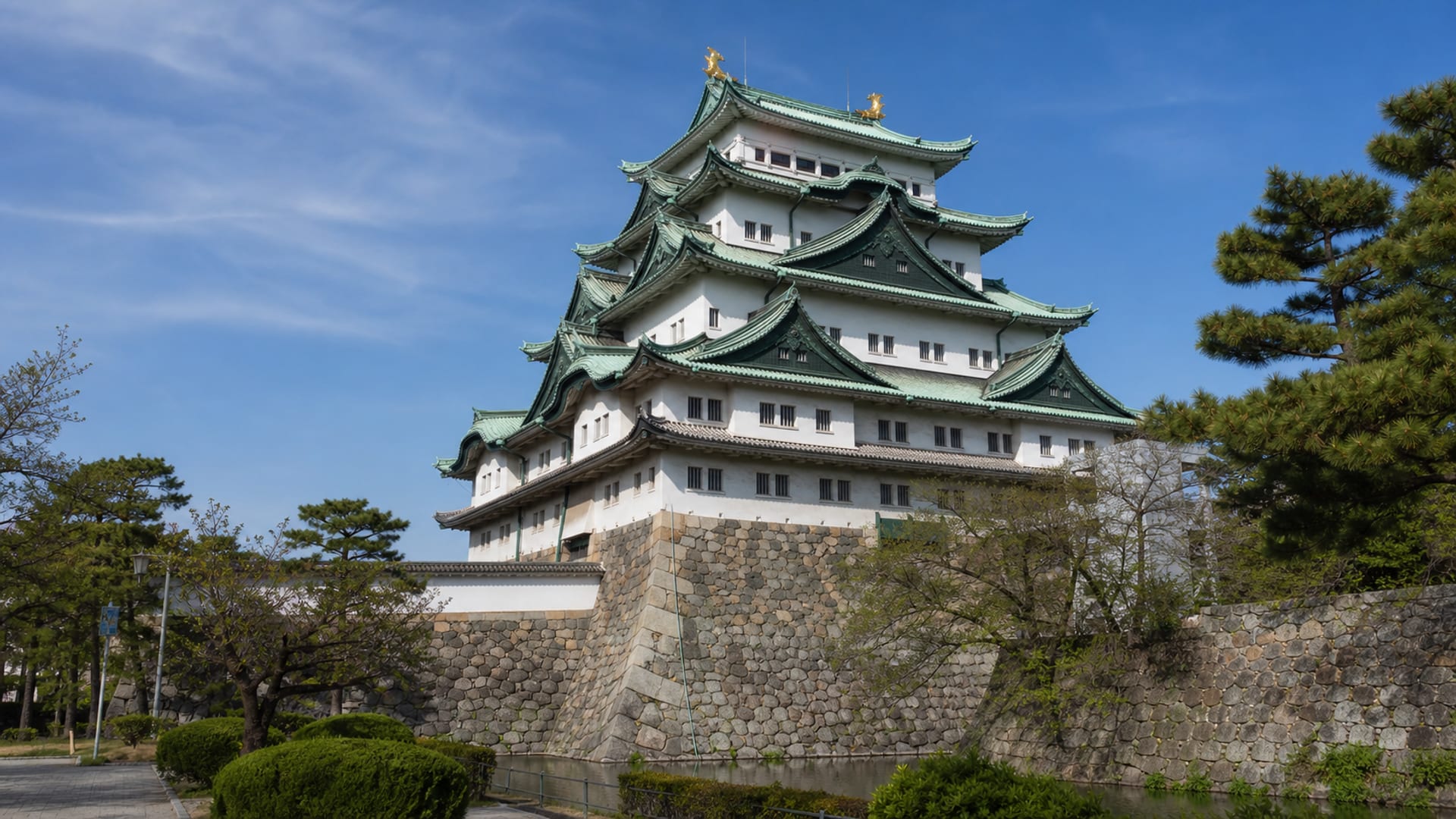
Nagoya Castle
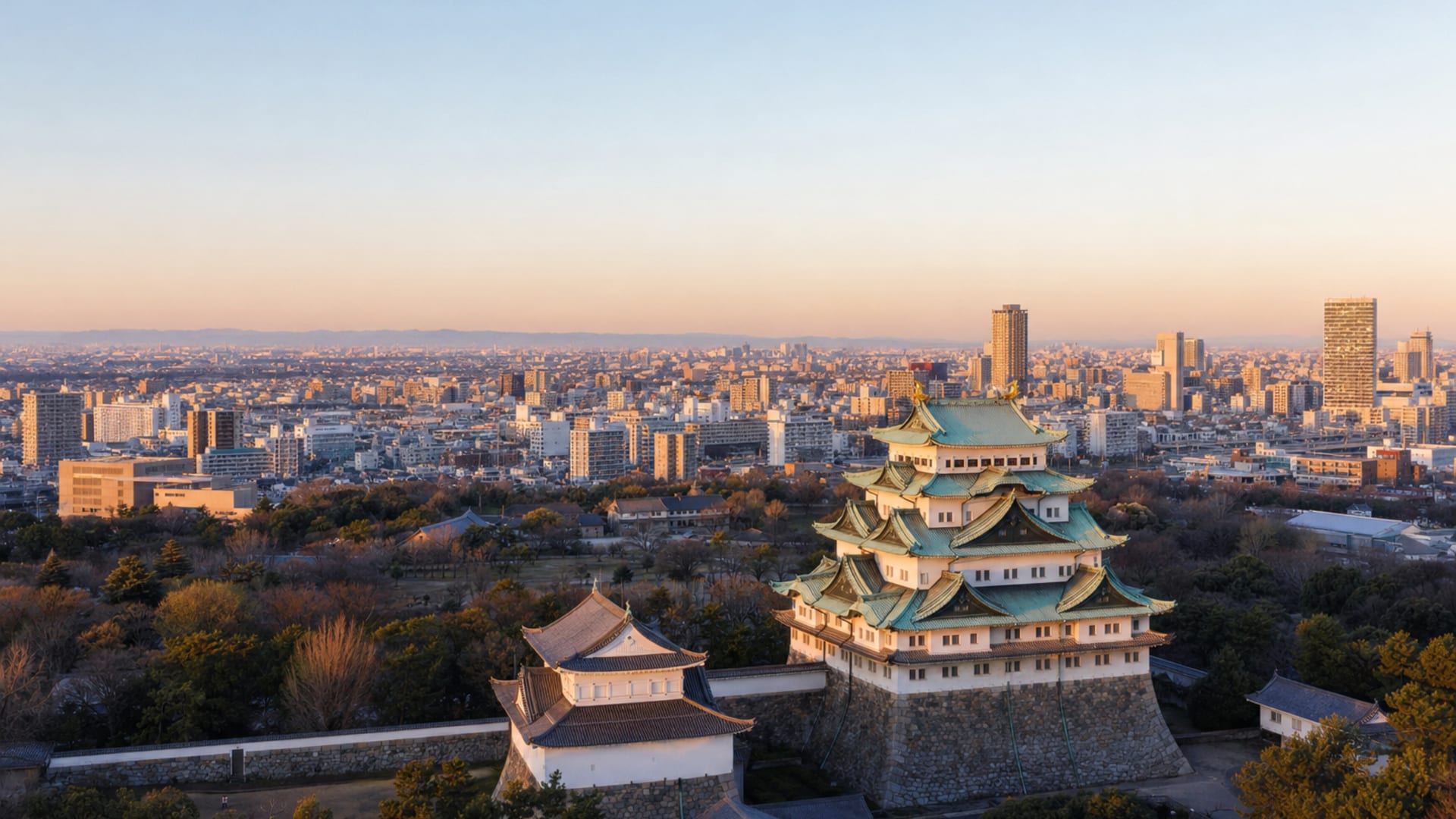
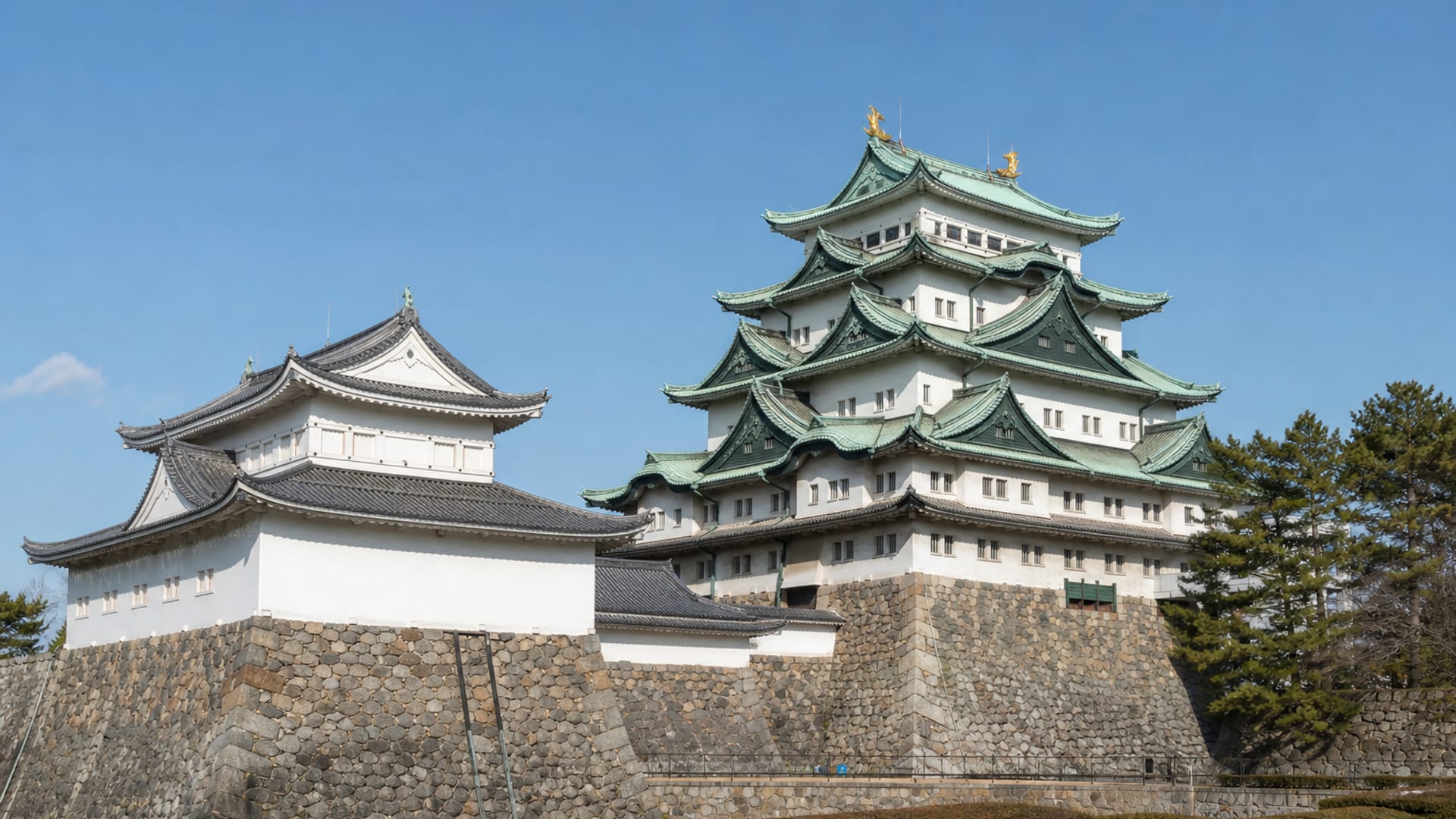
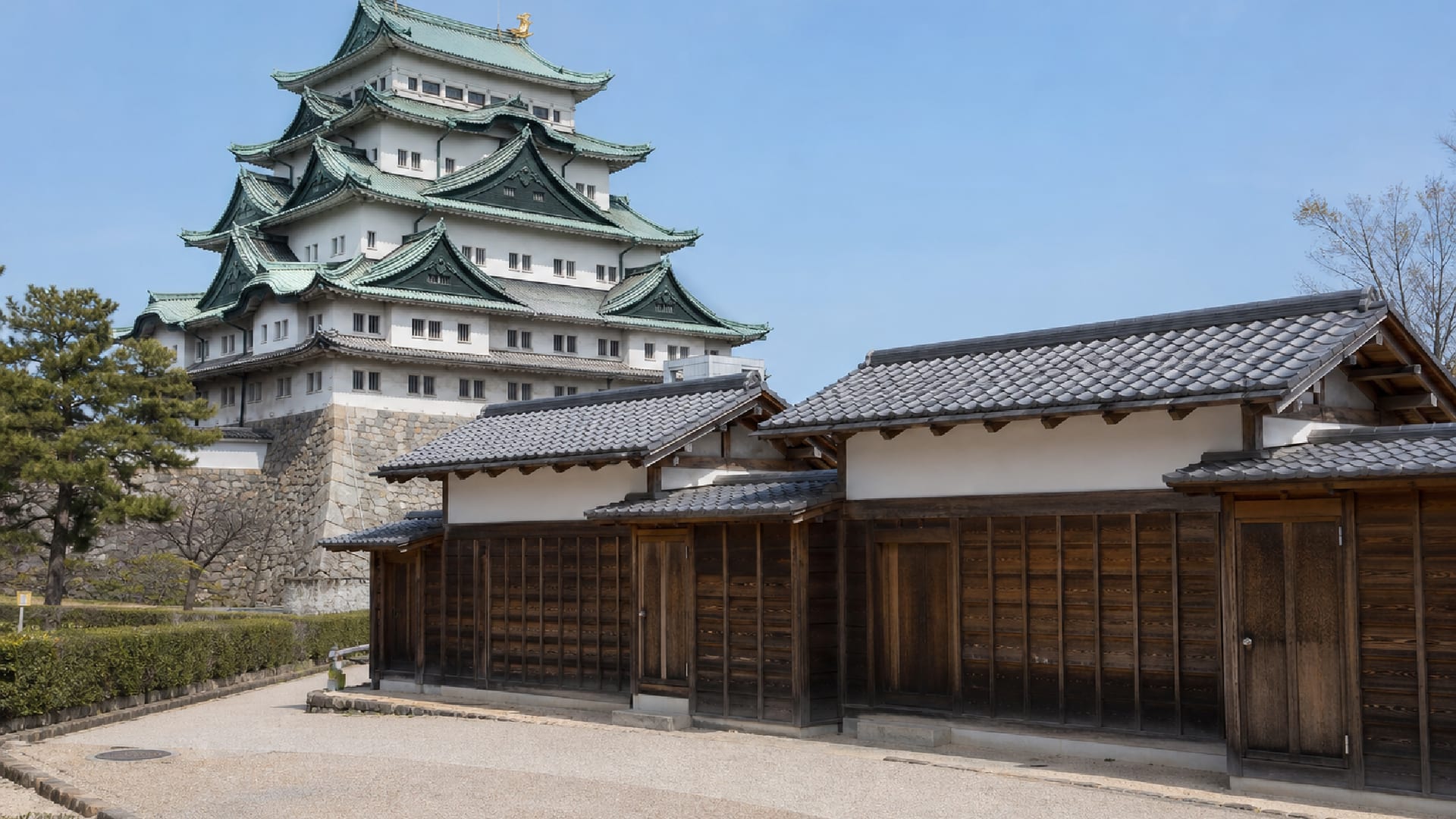
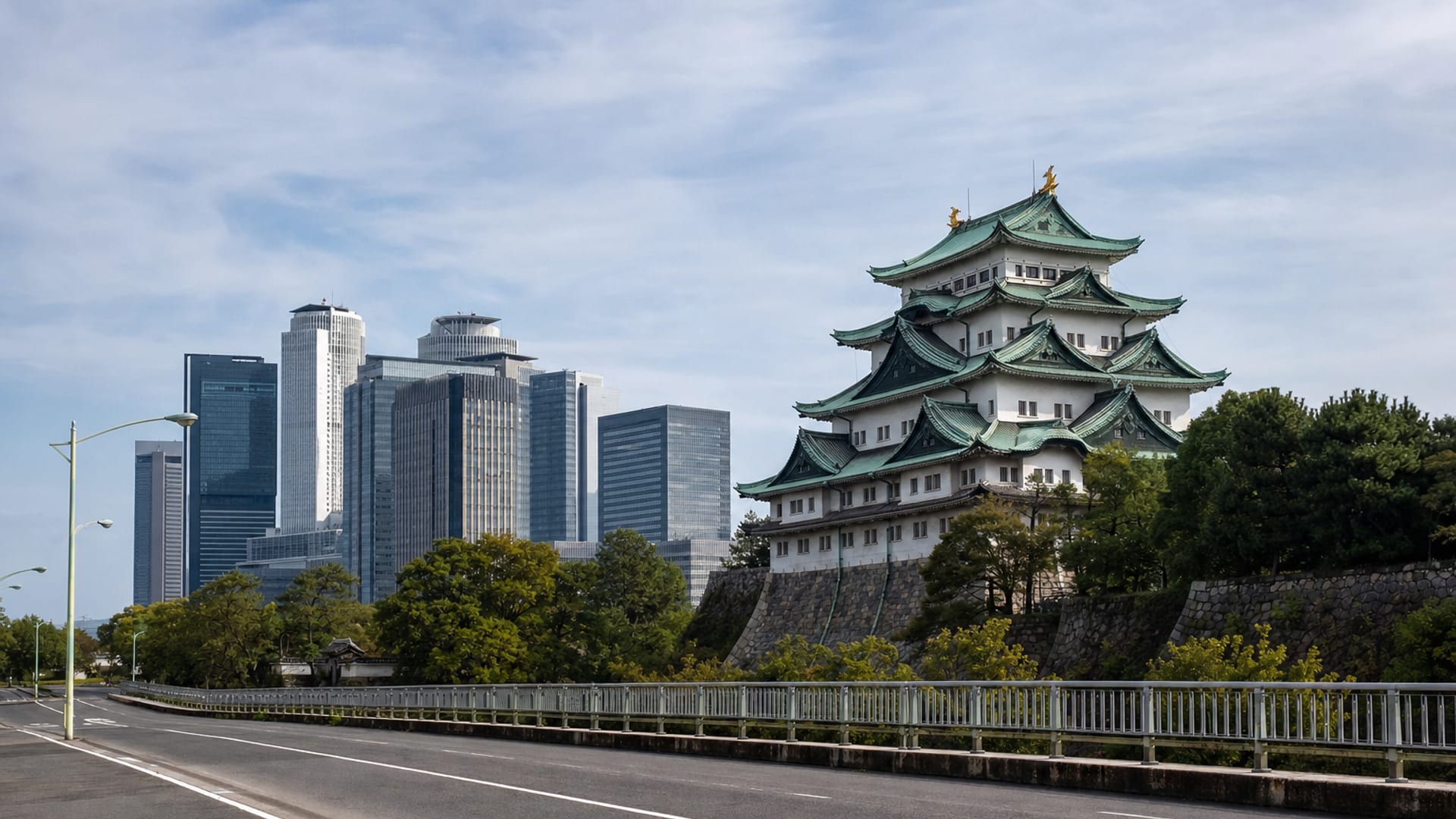
Nagoya Castle anchors the city center with its gold shachihoko roof ornaments, reconstructed palace rooms, and broad stone walls. The grounds also include seasonal gardens and museum displays tied to the Owari Tokugawa clan.
Time needed: About 2 to 3 hours
Entry: Adults pay $4 ($600) for castle and palace admission; garden access is free on some dates, and hours vary by exhibit and season. Visit the official site for details.
Tip: Go in the morning for lighter crowds and better photos of the main keep.
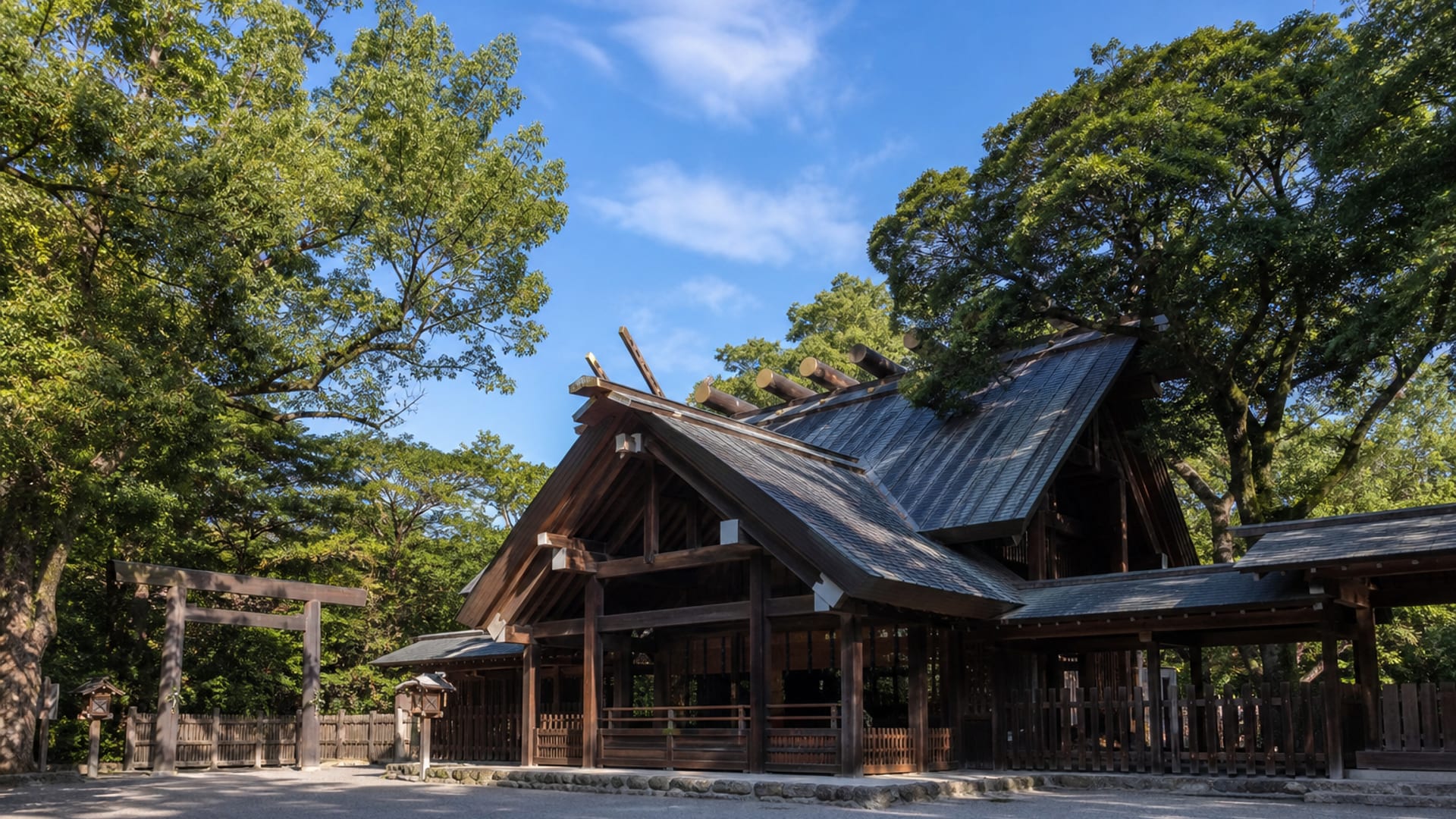
Atsuta Jingu
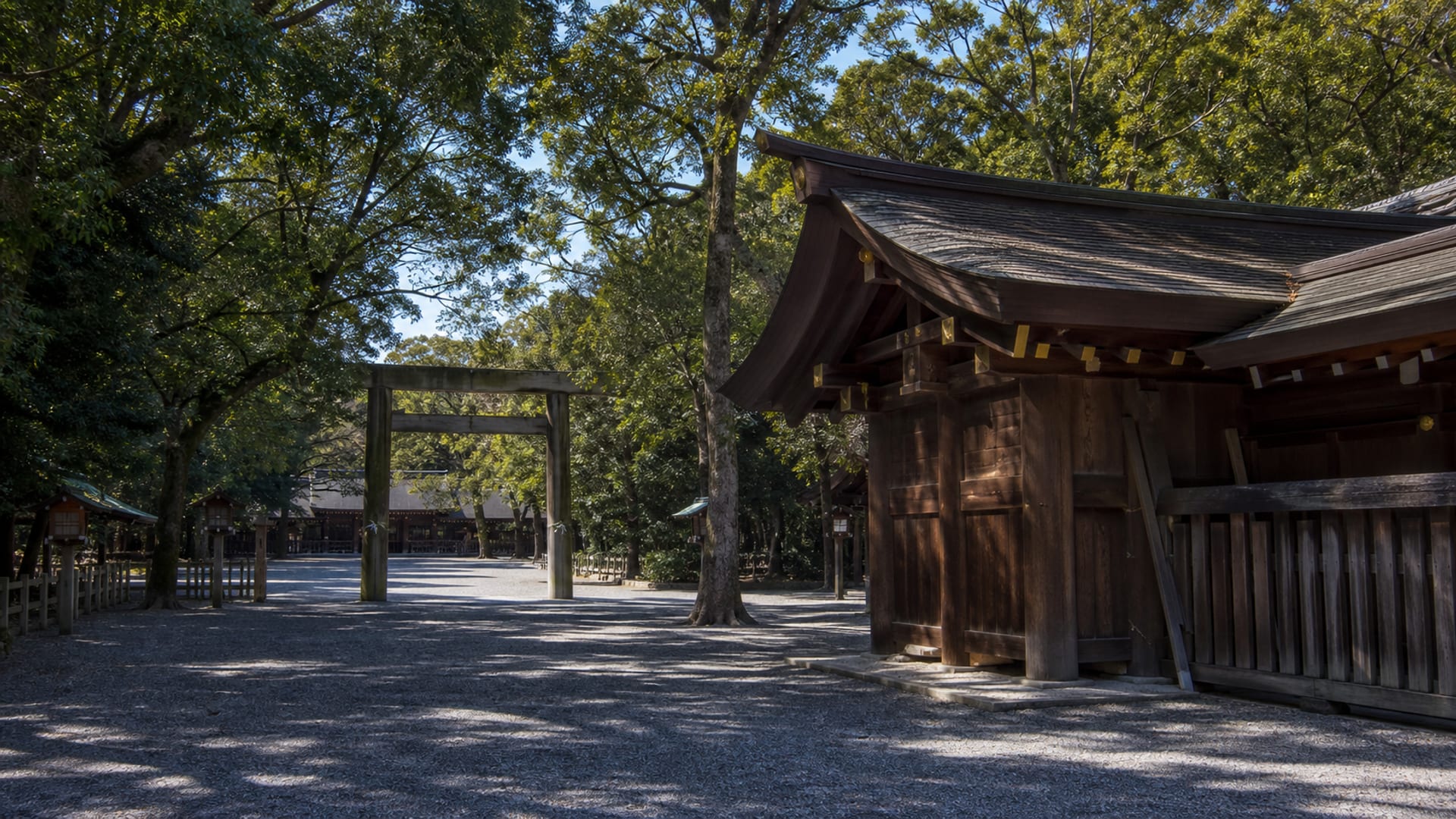
Atsuta Jingu is one of Japan’s most important Shinto shrines, known for its forested precincts and long history tied to the sacred Kusanagi sword. Visitors come for its quiet paths, treasure hall, and ritual architecture.
Time needed: About 1 to 2 hours
Entry: Free to enter; museum and treasure hall admission is separate, with adult tickets usually about $3 ($500) to $4 ($700). Visit the official site for details.
Tip: Visit early or late in the day, when the forested grounds are calmest and coolest.
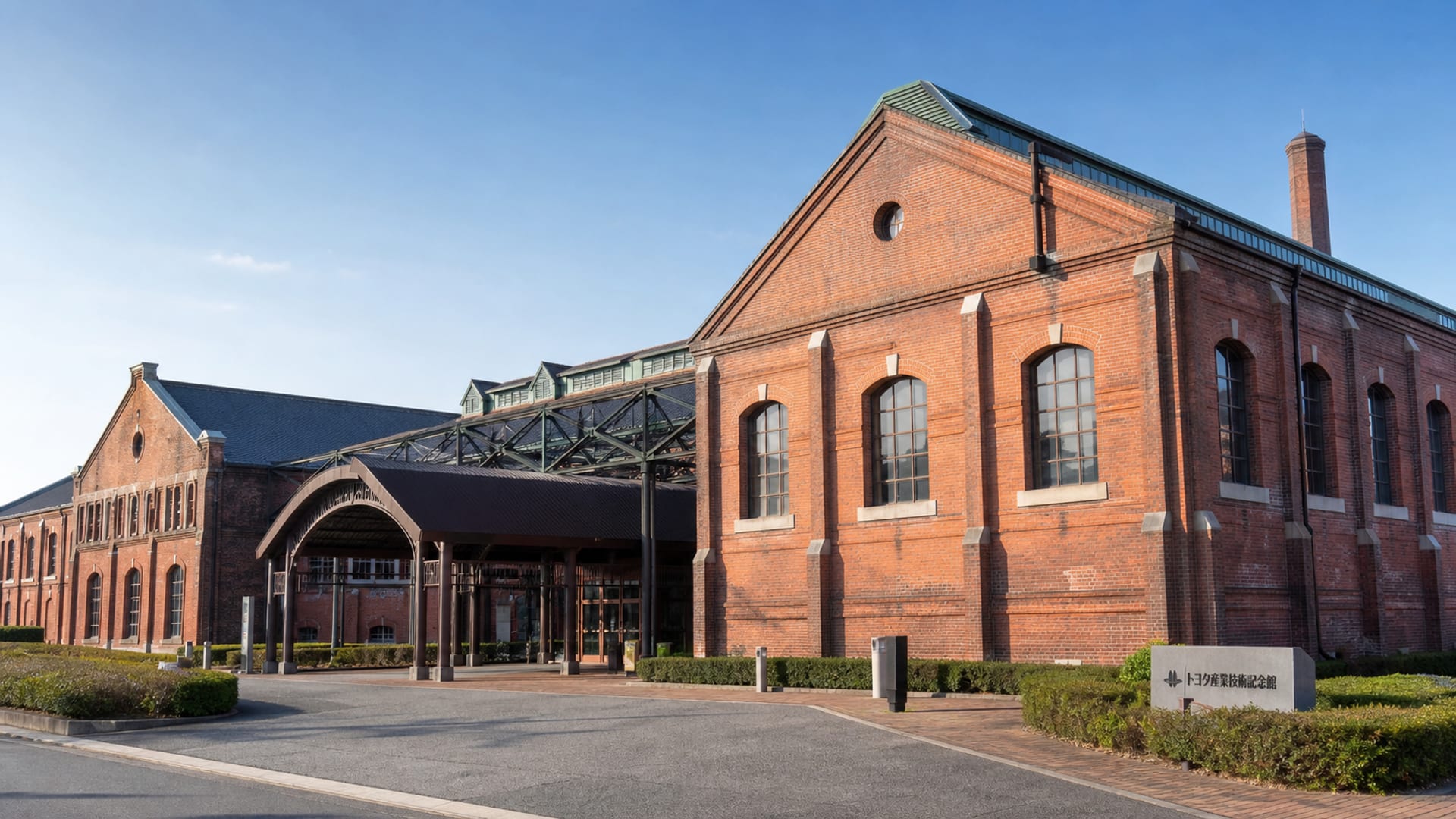
Toyota Commemorative Museum of Industry and Technology
The Toyota Commemorative Museum of Industry and Technology traces Nagoya’s move from textile machinery to automobile engineering. Live demonstrations, preserved factory halls, and well-labeled exhibits make the industrial story easy to follow.
Time needed: About 2 to 3 hours
Entry: Adults pay $6 ($1,000) for museum admission; students and children receive lower rates, and last entry is usually 30 minutes before close. Visit the official site for details.
Tip: Set aside time for the live demonstrations, since they show the machinery at work.
Overlooked sites worth visiting

Atsuta Shrine Treasure Hall
This compact museum beside Atsuta Shrine displays swords, armor, lacquerware, and ritual objects tied to the shrine’s long history. It gives a close look at sacred objects without the crowds that fill the main grounds.
Time needed: About 1 hour
Entry: Admission is $1 to $3 (about ¥100 to ¥300) for adults, with lower rates for students and children. Special exhibits may cost more, and the hall opens on a separate schedule from the shrine grounds. Visit the official site for details.
Tip: Visit after the shrine grounds, then continue to the old camphor trees.

Noritake Garden
Set on the former Noritake pottery site, this open-air garden pairs brick kilns, a chimney, and shaded paths with an craft center and museum. It is a good stop for a slower walk and a look at Nagoya’s ceramics history.
Time needed: About 1 to 2 hours
Entry: Garden entry is free. Museum and craft experiences inside the site may charge separate fees, often about $3 to $8 (about ¥300 to ¥800) depending on the activity or exhibition, and hours vary by facility. Visit the official site for details.
Tip: Go late afternoon for softer light on the red brick structures.
Traditional food
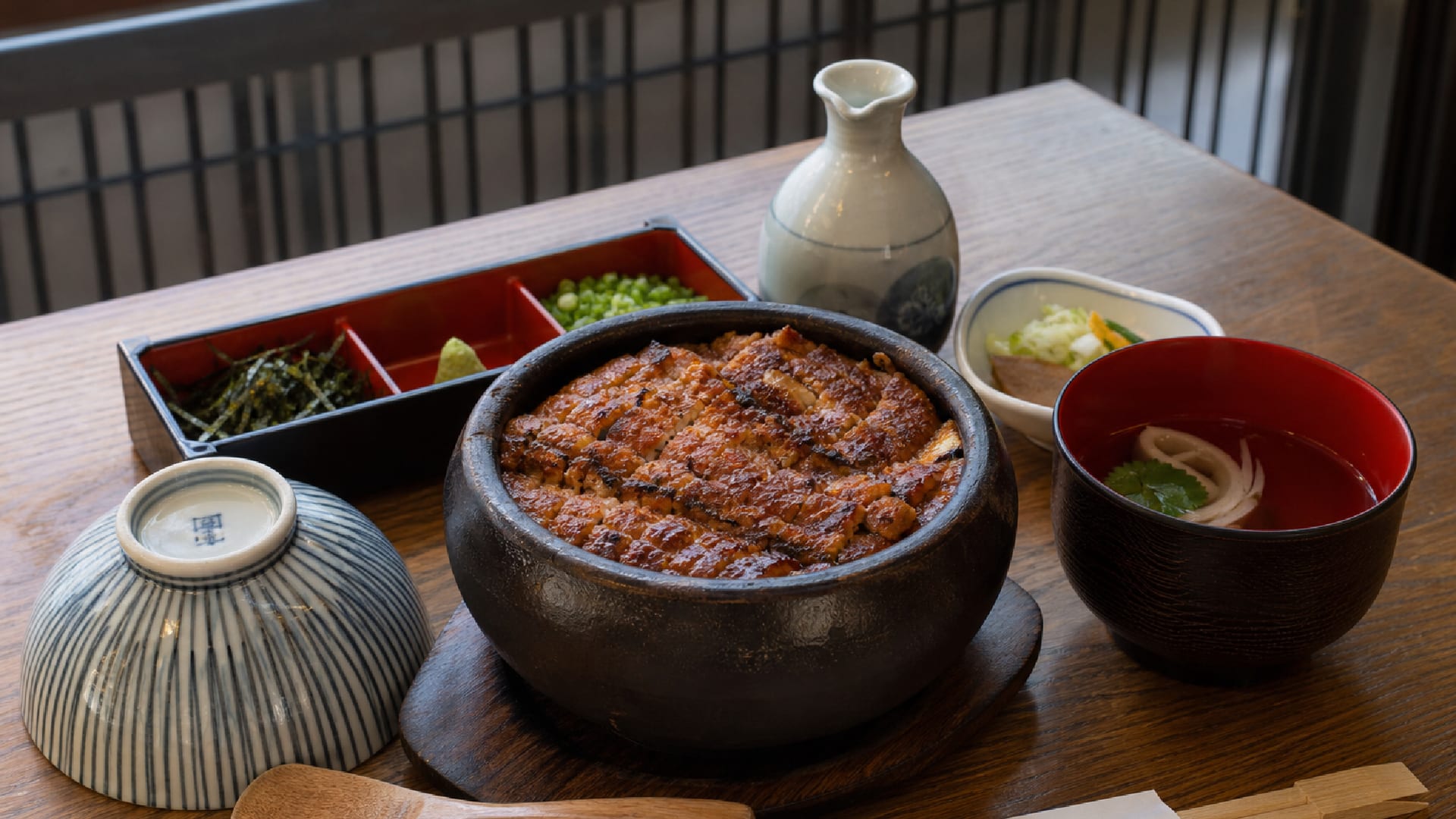
Nagoya’s table leans savory and bold, with red miso, grilled eel, wheat noodles, and small plates that pair well with a quick lunch or an unhurried dinner. The city also likes set meals and counter service, so timing matters as much as the dish.
Hitsumabushi
Charcoal-grilled eel over rice, served in stages with condiments and broth. Atsuta Horaiken Jingu Honten is the canonical stop in Nagoya for this dish.
Miso katsu
Pork cutlet topped with thick red miso sauce, one of Nagoya’s defining flavors. Yabaton, especially its central branches, is the city’s best-known name for it.
Kishimen
Flat wheat noodles in a light broth, often finished with dashi, scallions, and simple toppings. Sumiyoshi Kishimen at Nagoya Station is a classic place to order it.
Tenmusu
A rice ball filled with shrimp tempura, usually eaten as a quick snack or light meal. Senju, the restaurant most closely associated with the style in Nagoya, is the traditional reference point.
Best time to visit Nagoya
Nagoya shifts clearly by season, with humid summers, cool winters, and spring and autumn that make walking between districts far easier.
Best for: Castle grounds, shrine visits, and comfortable walking days
What you get: About 46-73°F (8-23°C), with lighter crowds in early March and a rise during cherry blossom periods
Trade-offs: Popular sights can feel crowded during peak bloom
Best for: Late evenings in Sakae and indoor museum days
What you get: About 73-91°F (23-33°C), humid and busy, with indoor attractions drawing more visitors during the hottest hours
Trade-offs: Heat and humidity make long outdoor walks tiring
Best for: All-day sightseeing and food-focused walks
What you get: About 52-77°F (11-25°C), with good visibility and steady crowds that spread across the city
Trade-offs: Weekends can fill up quickly around major sights
Best for: Museum time, shrine visits, and easier rail connections
What you get: About 34-50°F (1-10°C), generally lighter crowds outside holiday periods and calm station corridors
Trade-offs: Cold mornings can make early starts less appealing
A realistic 5-day plan in Nagoya
The five-day plan follows a sensible order for Nagoya: arrive, settle near the rail network, then move through the castle, shrine, industrial museum, and departure-day shopping without backtracking across the city.
Land at Nagoya (NGO), then take the Meitetsu Airport Line to Nagoya Station in about 30 minutes for roughly ¥1,430 (~$9.50). If you want an easier first night, stay near Nagoya Station or in Sakae, then keep the evening close to the hotel with water, an early meal, and a light walk through the station underground malls or the illuminated streets near Oasis 21.
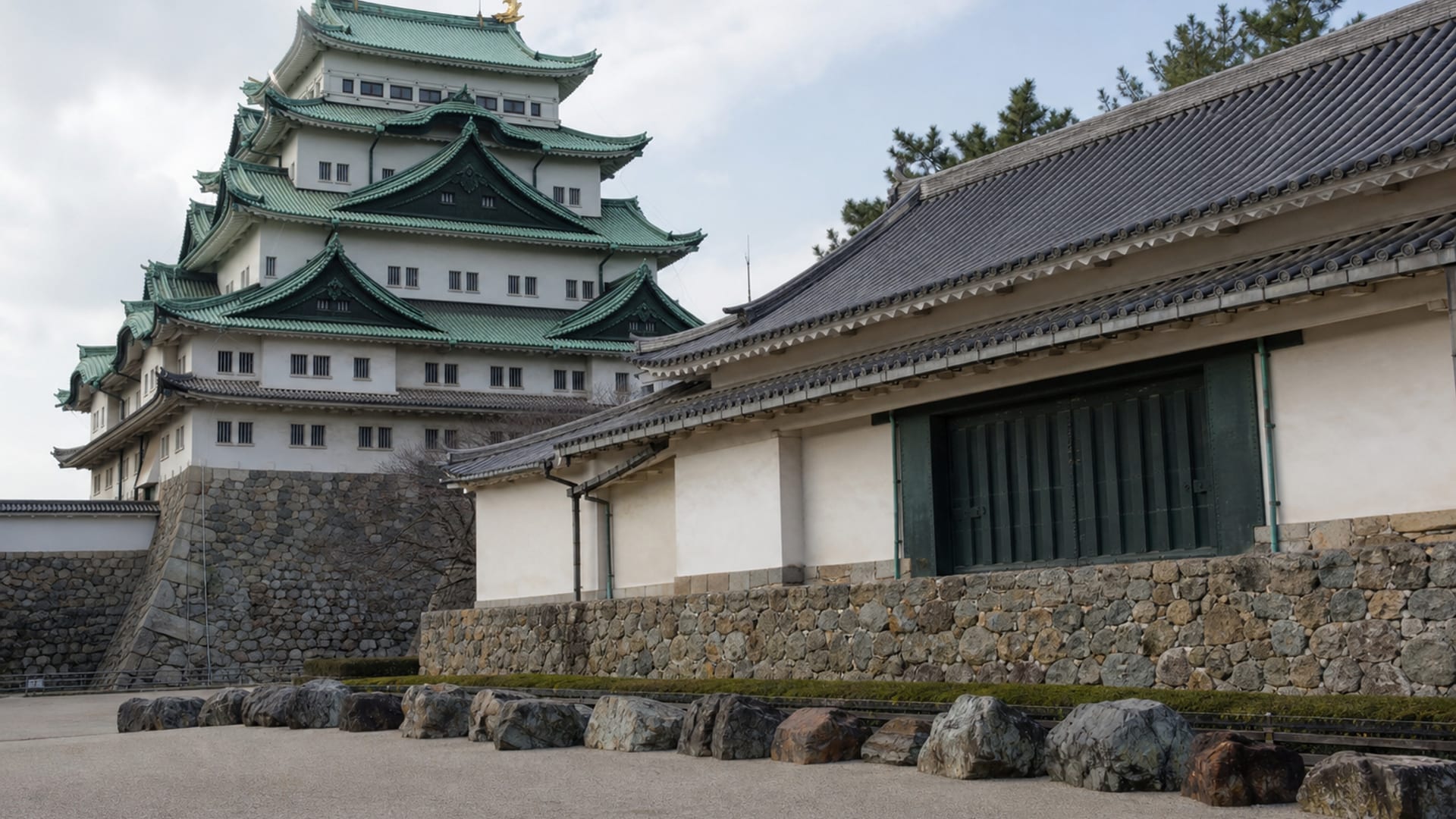
Start in Nagoya Castle in the morning, when the grounds are quieter and the main keep photographs well. From Nagoya Station, the subway ride takes about 10 minutes. Plan about 2 to 3 hours for the castle and palace areas, then continue about 10 minutes by subway to Sakae for lunch, department store browsing, and a late-afternoon stop at Oasis 21 and the TV Tower area.
Begin at Atsuta Jingu, where the forested precincts are most restful before the day gets busy. From Sakae, it takes about 15 minutes by train, and the shrine visit itself takes about 1 to 2 hours. After that, walk to the Atsuta Shrine Treasure Hall for about an hour, then ride roughly 20 minutes to Osu for arcade browsing, secondhand shops, and an unhurried dinner near the shopping streets.
A morning at the Toyota Commemorative Museum of Industry and Technology gives clear context for Nagoya’s manufacturing history, and it is easiest from Nagoya Station, about 10 minutes away by subway or local train. Allow 2 to 3 hours for the live demonstrations and factory halls, then head about 15 minutes by train to Kanayama for a late lunch and a quieter evening. If you still want one more stop, Noritake Garden sits about 10 to 15 minutes from the station area and works well for a late-afternoon walk among the brick kilns and ceramic displays.
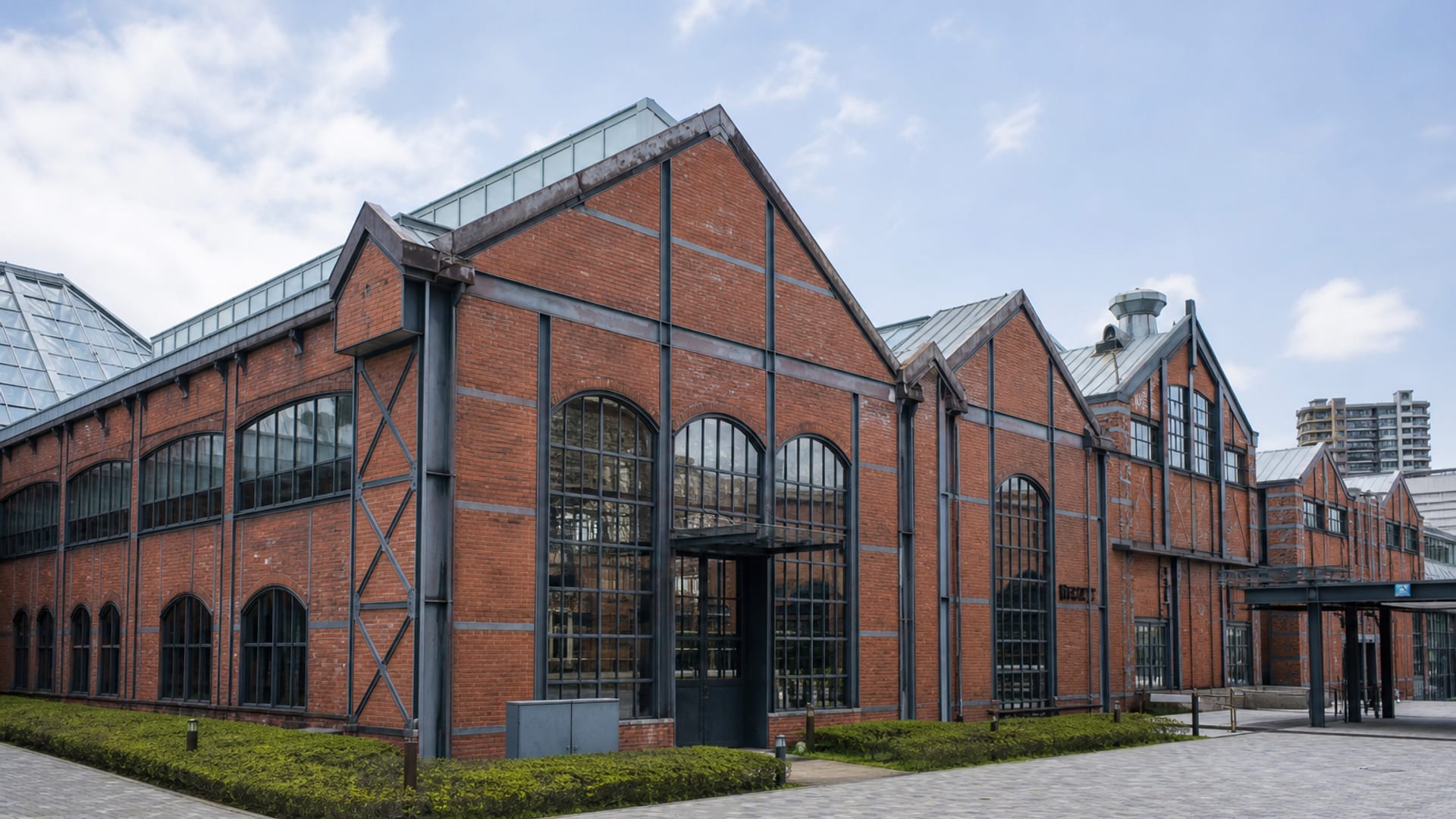
Begin the last day with Noritake Garden if you want one more museum-style stop, then move back toward Nagoya Station for shopping in the underground malls or a final sweep through department stores in Sakae. If your flight leaves later, finish with coffee in Osu or a relaxed meal near Kanayama, where station access stays easy and you can reach Nagoya (NGO) without rushing.
Business-class flights from the US to Nagoya
Flights to Nagoya usually involve one stop, so route choice matters more than the final fare headline. From New York and Los Angeles, the best options differ mainly by connection city and total time on the ground.
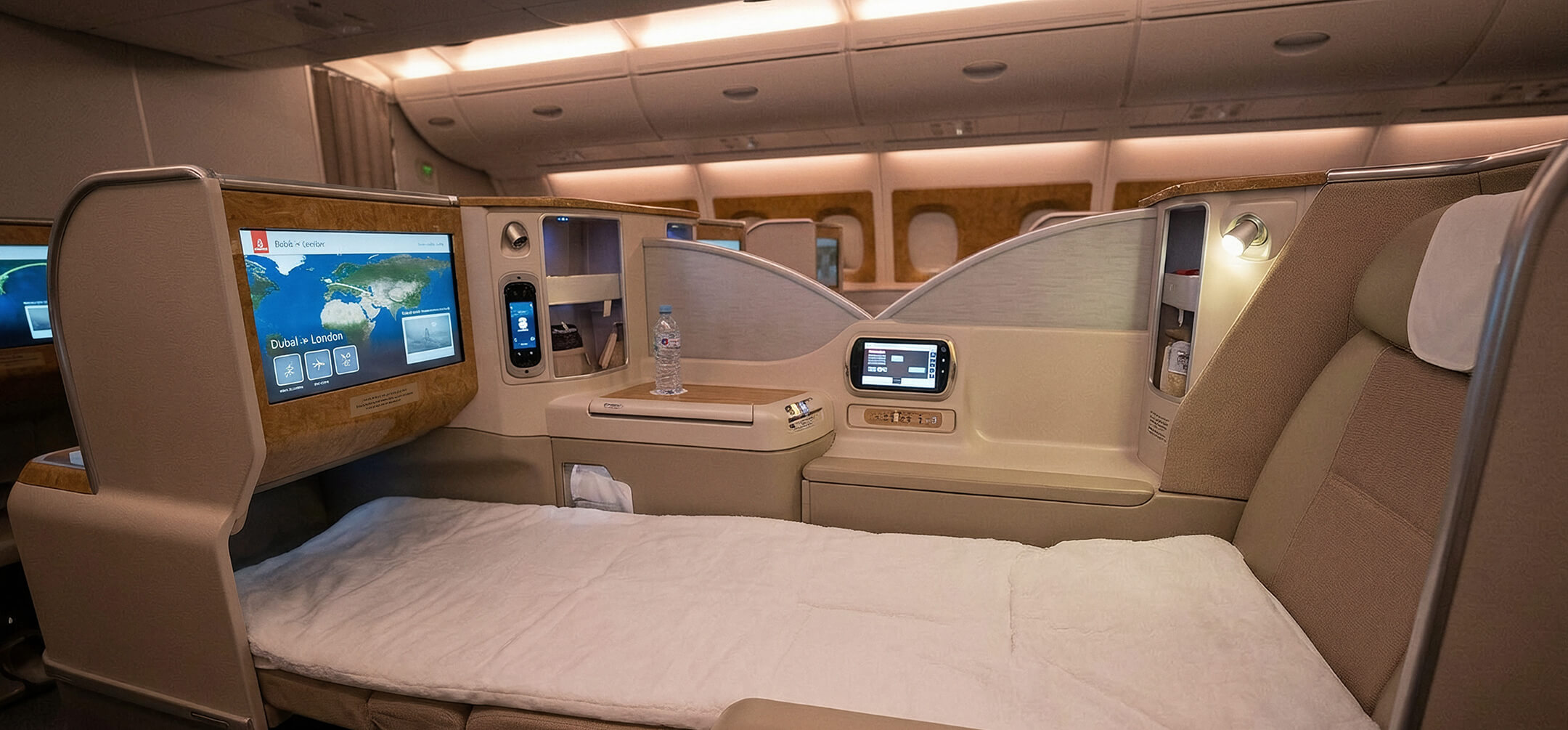
From New York, All Nippon Airways, Japan Airlines, Cathay Pacific, Korean Air, Qatar Airways, and Emirates all appear on typical itineraries. Round-trip fares usually start at about $4,200 and can climb to $7,500, while layovers via Tokyo, Doha, or Dubai can cut that to roughly $3,000 to $4,800.
Los Angeles travelers usually see All Nippon Airways, Japan Airlines, Cathay Pacific, Korean Air, Singapore Airlines, and EVA Air. Round-trip fares are usually about $3,600 to $6,800, and one-stop itineraries via Tokyo, Seoul, Hong Kong, Singapore, or Taipei can sometimes open lower fares, though the premium gap stays wide.
Nagoya feels different when you slow down
A deliberate Nagoya trip gives each district a clear role: Nagoya Castle in the morning, Sakae for lunch and shopping, Atsuta Jingu before the crowds build, then Osu or Kanayama when the day starts to open up again. The city works best when you let the subway and Meitetsu lines do the long moves, then finish on foot in the neighborhoods that reward attention. If you want help matching flights, hotels, and days in the right order, the AranGrant experts can build it around your dates