

Bhutan travel comes with rules you rarely encounter elsewhere. Before choosing a lodge or planning a route through the Himalayas, you need a visa approved ahead of departure, a nightly government fee paid in advance, and a licensed guide to accompany you. Reaching the country adds another layer, since flights from the US connect through a regional gateway before continuing to Paro.
Bhutan welcomes international visitors but regulates how they travel, and the nightly fee each visitor pays helps fund national development and conservation.
This guide covers the entry requirements, flights, seasonal conditions, places to visit, premium accommodations, festivals, and costs that shape a first trip to Bhutan.
Read in this post:
Bhutan travel rules for US visitors: visa, daily fee, and guide
US citizens can travel to Bhutan with an approved visa, a Department of Tourism-certified guide, and payment of the nightly Sustainable Development Fee (SDF). Visa applications take up to five working days to process, and you can apply independently without purchasing an organized tour package.
How to apply for a Bhutan visa
You can complete the Bhutan visa application through the country’s official immigration portal. The process requires you to:
- Sign the Pledge of Friendship, a declaration committing you to respect Bhutan’s culture, sacred sites, and natural environment, then create an account.
- Enter your travel dates and upload a digital passport copy and a recent photograph.
- Pay the one-time visa application fee and the SDF for your planned stay.
A hotel or accredited tour operator can also submit the application on your behalf. If one company is already arranging your lodges, guide, and transportation, letting it handle the visa saves you an additional step.
Do you need a guide in Bhutan?
Bhutan’s Department of Tourism requires international visitors to have a certified guide accompanying them at all times, including visits to dzongs and other cultural monuments. Treks also require an accredited guide or tour operator. With a certified guide, you can travel throughout most of the country without obtaining separate route permits.
These rules reflect Bhutan’s approach to protecting its cultural and natural heritage. Known in Dzongkha as Druk Yul, or the Land of the Thunder Dragon, Bhutan is a carbon-negative country, with forests covering approximately 70% of its territory.
Bhutan tourism has become more flexible since the country reopened to international visitors in September 2022. You no longer need to purchase a fixed, all-inclusive tour package. Instead, you can choose your accommodation, arrange private transportation, and plan the itinerary according to your interests.
How much does it cost to visit Bhutan?
As of October 2026, Bhutan’s mandatory government fees for a seven-night trip total $740 per adult. The SDF costs $100 per person, per night, while the visa application carries a one-time $40 fee.
The SDF supports national development, including healthcare, education, infrastructure, cultural preservation, and environmental protection.
The current $100 nightly rate is a 50% reduction from the standard $200 fee. Introduced on September 1, 2023, the discount is scheduled to remain in effect until August 31, 2027. For travel after that date, check the applicable SDF before applying for your visa.
Children aged 6 to 11 pay a reduced SDF of $50 per night, while children under 6 are exempt. Each child requiring a visa still pays the $40 application fee.
These mandatory charges are only part of the overall Bhutan travel cost. Bhutan also introduced a 5% Goods and Services Tax (GST) on January 1, 2026. Registered businesses charge GST on taxable goods and services, including applicable tourism services such as accommodation, transportation, guiding, and meals. Some operators incorporate the tax into their quoted prices, while others show it separately.
When comparing itineraries, request a final quotation that includes government fees, accommodation, guiding, transportation, meals, and taxes. This gives you an accurate Bhutan trip cost before you commit to a particular lodge or travel package.
How to get to Bhutan: flights into Paro Airport
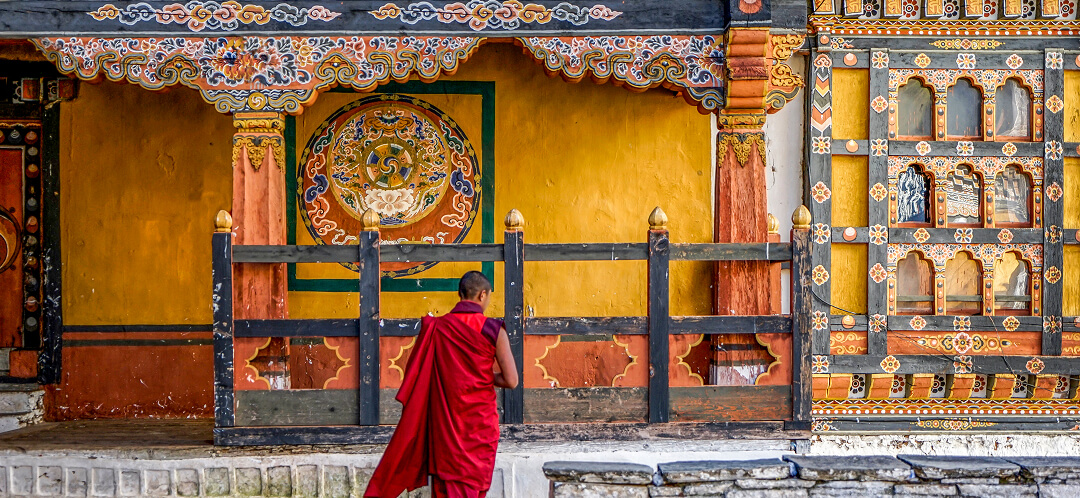
There are no nonstop flights from the US to Bhutan, so travelers first take a long-haul flight to an Asian gateway, then board a regional flight to Paro International Airport (PBH). Only two airlines, Drukair and Bhutan Airlines, serve Paro, with flights from cities like Bangkok, Delhi, and Kathmandu.
Paro International Airport lies in a narrow Himalayan valley beside the Pa Chhu River. Its single runway measures 7,430 feet (2,265 m) long, with mountains rising to elevations near 18,000 feet (5,500 m) in the surrounding region.
This geography makes Paro one of the world’s more demanding commercial airports. Flights operate only in daylight and under visual meteorological conditions, with a small group of specially certified pilots qualified to navigate the mountainous approach. Cloud cover, wind, and poor visibility can delay arrivals or departures.
Booking your Paro flight: separate tickets and baggage
Only two regional airlines fly to Paro, and few long-haul carriers have ticketing agreements with them. As a result, travelers often book the Paro flight on a separate ticket from the long-haul flight to the gateway. When the two flights are on separate tickets, a delay to the first flight does not automatically entitle you to rebooking on the second. You also need to collect your luggage, complete the necessary immigration formalities, and check in again at the gateway airport.
Drukair offers an alternative through interline agreements with Thai Airways, Turkish Airlines, and Air India. These partnerships provide eligible single-ticket itineraries combining the airlines’ networks, with through-checked baggage among the advertised benefits. However, not all flights can be booked together on one ticket.
Our AranGrant advisors can make the whole process easier for you and check whether your chosen flights can be issued on one ticket. If you decide to book separate tickets, confirm the baggage and entry requirements for your connecting airport.
Choosing the best gateway city for your Bhutan flight
For US travelers, the main gateway cities for Paro flights are Bangkok (BKK), Delhi (DEL), Singapore (SIN), Kathmandu (KTM), and Kolkata (CCU). Your choice depends on the available long-haul connections and the onward flight schedule to Paro.
Нщг can board nonstop flights to Delhi (DEL) and Singapore (SIN) from major US hubs like New York (JFK) and San Francisco (SFO). Reaching Bangkok (BKK), Kathmandu (KTM), or Kolkata (CCU) requires at least one layover. When choosing a gateway, compare the total travel time and onward flights to Paro, since Bhutan-bound services do not operate daily on every route.
What to expect in business class on the final flight
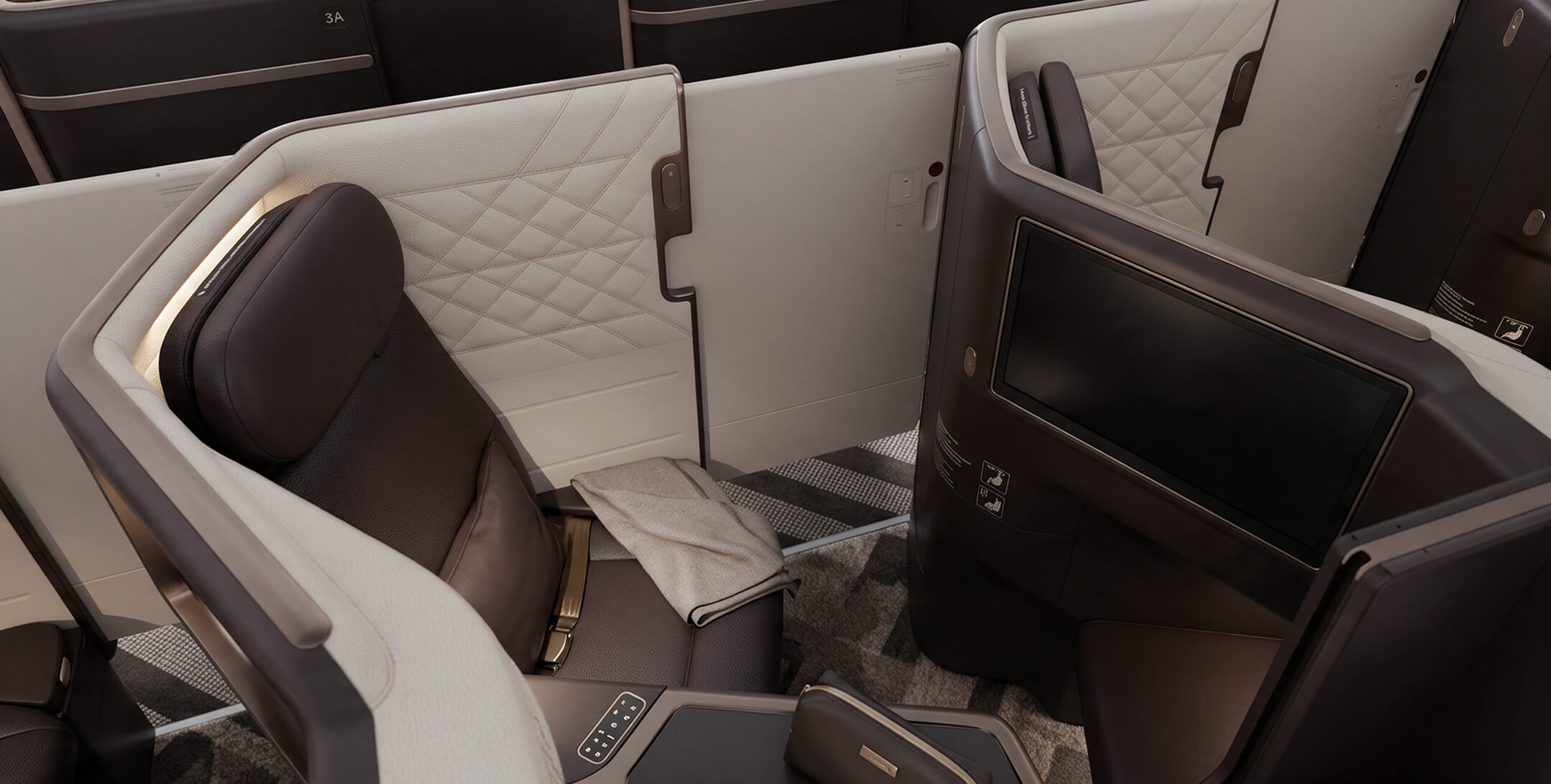
Business class on flights into Paro differs from the long-haul premium cabins familiar to many US travelers. Drukair flies smaller narrow-body jets, including Airbus A319s and A320neos, while Bhutan Airlines uses Airbus A319 aircraft.
Drukair’s A319 business cabin has 16 reclining seats arranged in four rows of 2-2. Bhutan Airlines has 12 business-class seats on its A319s. These are conventional regional premium seats, without the lie-flat beds and privacy features common on international long-haul flights.
Drukair also operates ATR 42-600 turboprops, so the aircraft and cabin available depend on the route. Check the scheduled aircraft and business-class seating before booking, especially if seat comfort is important to you.
Best time to visit Bhutan for clear Himalayan views
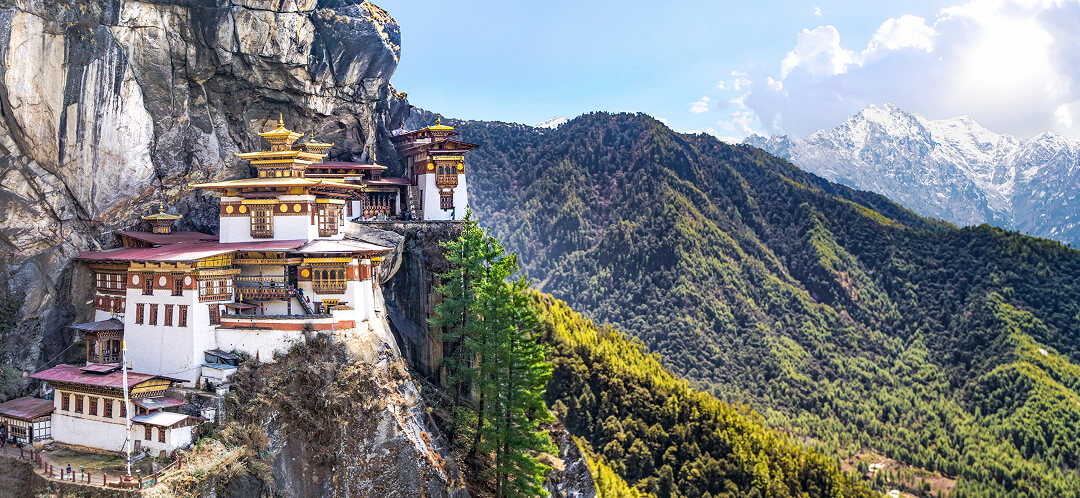
October and November are the best months to visit Bhutan because they offer some of the clearest Himalayan views in the country, with bright days following the summer monsoon and comfortable conditions for sightseeing. Spring, from March to May, brings flowering rhododendrons and greener valleys, although mountain views tend to be hazier than in autumn.
Autumn is Bhutan’s busiest tourist season, particularly in October and November, when clearer skies reveal the Himalayan peaks.
- Weather: The monsoon retreats, bringing bright, sunny days and cooler nights. Daytime temperatures in the main western valleys frequently reach the upper 60s°F (near 20°C), with colder conditions at higher elevations.
- Best for: Clear mountain views, cultural festivals, and trekking. Flights to Paro and popular premium lodges fill quickly during peak festival weeks, so secure reservations early.
Spring brings rhododendron blooms, green agricultural fields, and colorful hillsides after winter.
- Weather: March and early April are generally dry, with rain becoming more frequent from mid-April onward. Mountain views are often hazier than in autumn, while snow and mud can remain on higher trekking routes.
- Best for: Botanical scenery, cultural sightseeing, and visits to the western valleys. Spring conditions are more favorable for monastery visits and shorter hikes than for treks across snowbound high passes.
Summer brings Bhutan’s monsoon, with heavy rain particularly affecting the southern regions. The countryside becomes exceptionally green, but traveling between valleys takes more planning.
- Weather: July and August are among the wettest months, with prolonged cloud cover, heavy downpours, and a greater risk of landslides or road closures. September can remain wet until the monsoon retreats.
- Best for: Travelers interested in green scenery and quieter tourist sites. Poor mountain visibility, wet roads, and difficult trekking conditions make summer less suitable for a first trip covering several valleys.
Winter brings clear skies, cold nights, and fewer international visitors. The lower Punakha Valley temperature remains milder than Thimphu and Phobjikha, making it particularly appealing during the colder months.
- Weather: Days are often crisp and sunny, but temperatures fall below freezing at night in higher valleys. Paro and Thimphu get little snow, but it is common above 9,800 feet (3,000 m). It can briefly close road passes such as Dochula, and high trekking passes often stay snowbound until late spring.
- Best for: Quieter cultural visits, clear winter scenery, and watching black-necked cranes. Every winter, several hundred of these rare cranes fly in from the Tibetan Plateau to the Phobjikha Valley, Bhutan’s largest crane wintering ground, and stay until mid-March.
For a trip between January and March, consider combining Punakha with Phobjikha. The contrast between Punakha’s milder valley and Phobjikha’s high-altitude landscape gives you two different experiences, along with a chance to see the cranes before their spring departure.
Places to visit in Bhutan on a first trip
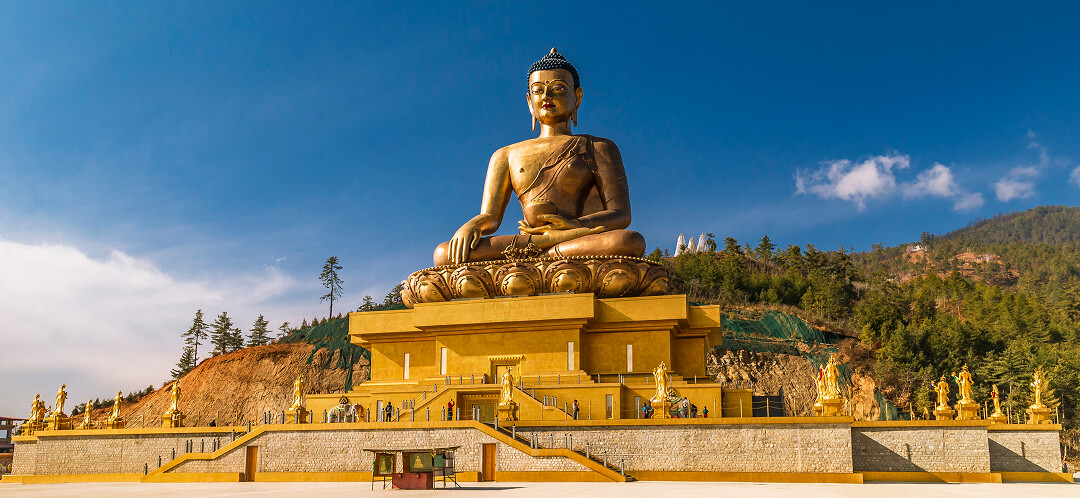
Some of the best places to visit on a first trip to Bhutan include Paro, Thimphu, and Punakha. These western valleys contain the Tiger’s Nest Monastery, the 177-foot (54 m) Buddha Dordenma, and Punakha Dzong, one of the country’s most important religious and historical buildings. The three destinations form a manageable route from Paro International Airport, although driving times on Bhutan’s mountain roads are longer than the distances suggest.
They also provide three different perspectives on the kingdom. Paro brings you close to Bhutan’s best-known monastery, Thimphu introduces the country’s capital and contemporary life, and Punakha shows the country’s warmer, rice-growing side around its 17th-century dzong.
Thimphu and the Buddha Dordenma
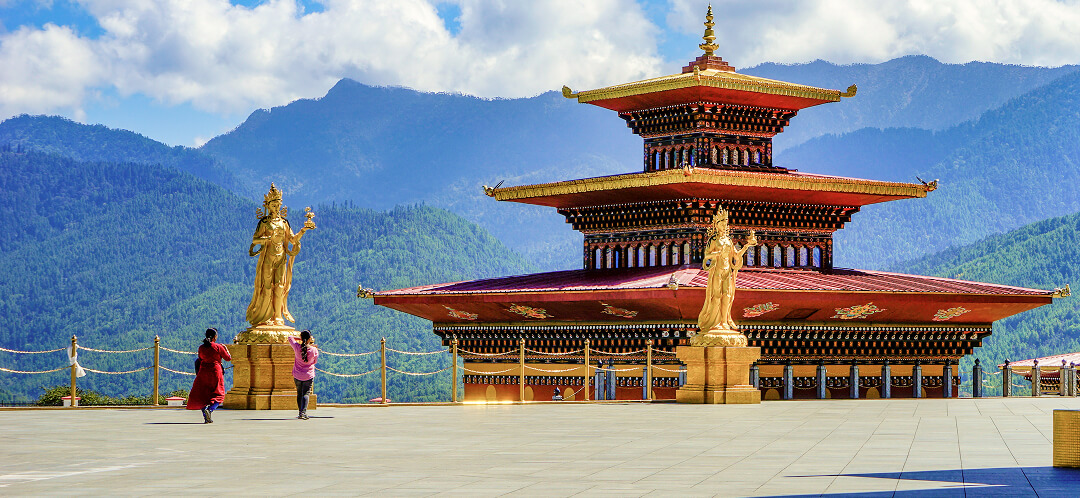
Thimphu, Bhutan’s capital, is home to the Buddha Dordenma, a monumental bronze statue covered in gold leaf on Kuenselphodrang Hill. Consecrated in 2015 to mark the fourth king’s 60th birth anniversary, it overlooks the valley and contains approximately 125,000 smaller Buddha statues.
Dochula Pass and Punakha
The road from Thimphu to Punakha crosses Dochula Pass at 10,200 feet (3,100 m). Its 108 white memorial chortens honor Bhutanese soldiers who died during military operations in 2003. On clear days, the viewpoint reveals Himalayan peaks, including Gangkar Puensum and Masanggang.
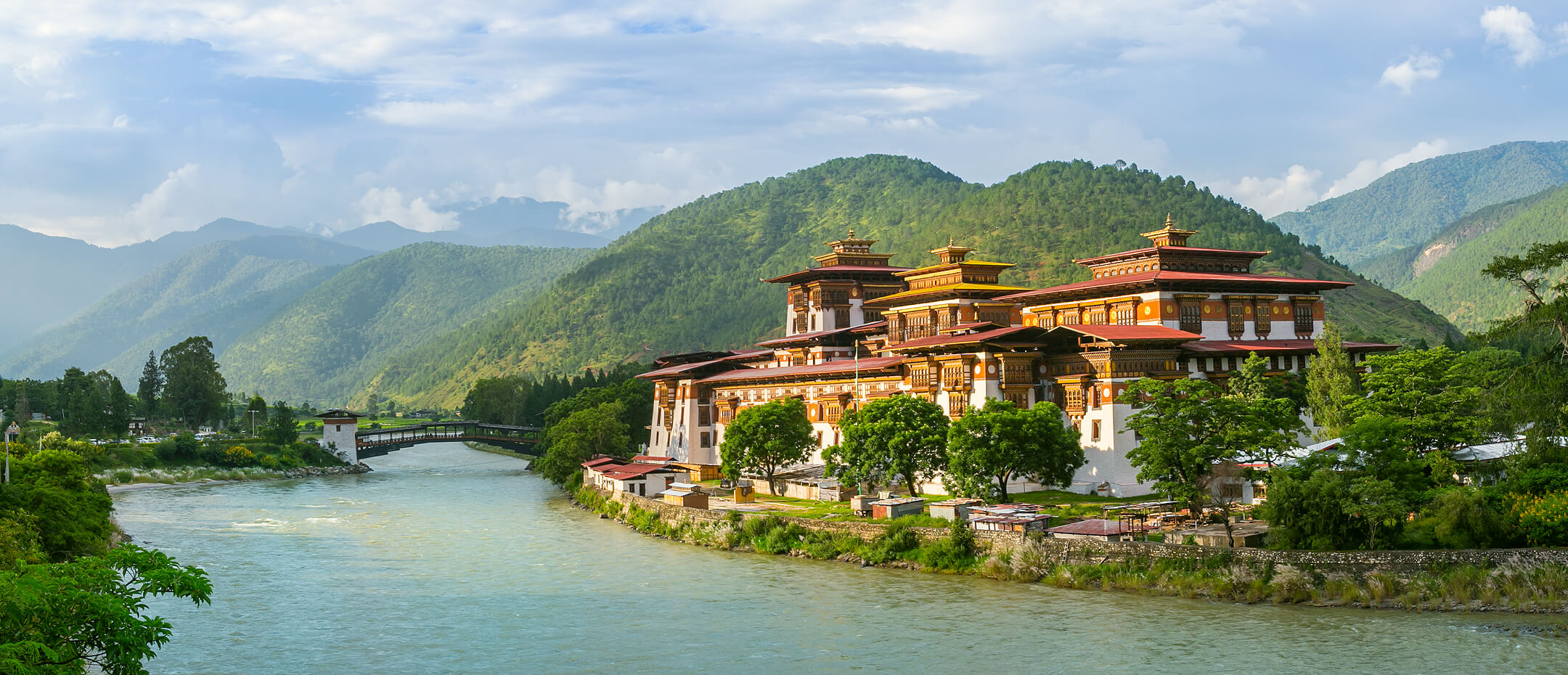
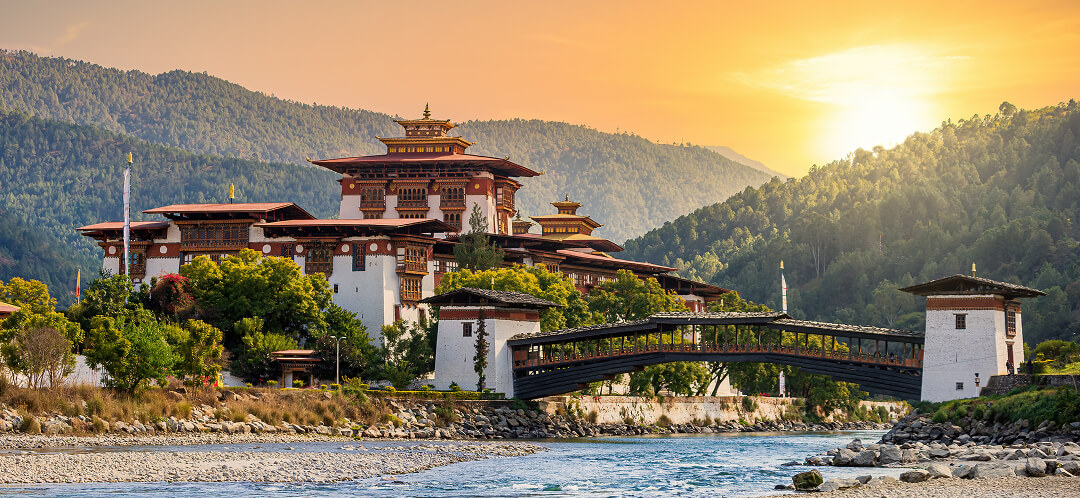
As the road descends into Punakha, the scenery changes to a warmer valley with rice fields and rivers. Punakha Dzong stands where the Pho Chhu and Mo Chhu meet. Built in 1637–38, it served as Bhutan’s seat of government until the mid-20th century and remains the winter residence of the central monastic body.
The dzong has an important place in royal history: Bhutan’s first king was crowned here in 1907, and the fifth king received the sacred scarf of kingship here in 2008. Visitors enter over the Bazam, a traditional wooden cantilever bridge rebuilt in 2008. Farther north, a suspension bridge about 520 feet (160 m) long crosses the Pho Chhu.
Set aside a full day for Punakha to explore the dzong and cross the suspension bridge to the villages beyond. Your guide must go with you inside the dzong.
Phobjikha Valley and Bumthang
The Phobjikha Valley, below Gangtey Goenpa monastery, is known for its broad glacial landscape and wintering black-necked cranes. Beyond crane watching, you can walk the valley’s trails and visit the monastery.
Farther east, Bumthang contains some of Bhutan’s oldest religious sites, including Jambay Lhakhang and Kurjey Lhakhang. Reaching this central region requires a long mountain journey, so it is better reserved for an extended itinerary with overnight stops along the way.
Hiking to Paro Taktsang, the Tiger’s Nest Monastery
Paro Taktsang, known in English as the Tiger’s Nest Monastery, clings to a cliff approximately 10,240 feet (3,120 m) above sea level, nearly 3,000 feet (900 m) above the Paro Valley.
According to Buddhist tradition, Guru Rinpoche reached the site on a flying tigress and meditated in a cave during the eighth century. The monastery was later rebuilt following a devastating fire in April 1998.
Reaching Tiger’s Nest requires a substantial uphill hike. The initial trail climbs through pine forest toward a viewpoint and café, with prayer flags appearing along the route. The final approach becomes steeper. Visitors descend into a gorge, cross near a waterfall, and climb a series of more than 700 stone steps toward the monastery entrance.
The ascent commonly takes two to three hours, while the return is usually faster. Total hiking time, including breaks and a visit to the monastery, is five to six hours.
Hiking tip: Plan the Tiger’s Nest hike for the last full day of your Bhutan trip. Spending several days in Paro, Thimphu, or Punakha beforehand gives you time to adjust to the altitude and reduces the pressure of attempting the climb immediately after a long international flight.
You might also like to read: Off-the-beaten-path travel destinations worth the detour
Bhutan luxury travel: lodges, resorts, and wellness retreats
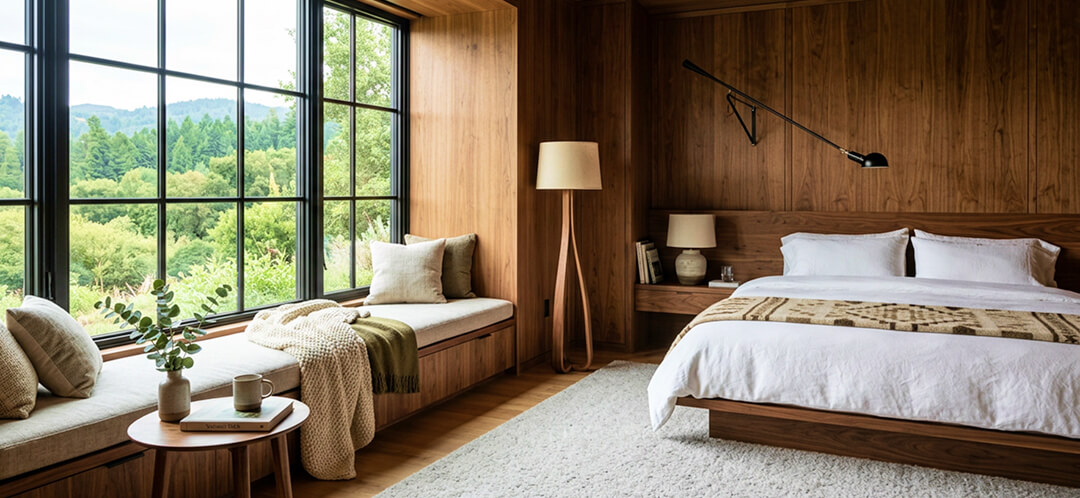
Bhutan’s leading luxury accommodations work as lodge circuits, letting travelers stay with the same hotel group while moving between valleys. Amankora operates five lodges with a combined 76 suites, while Six Senses Bhutan has five properties across Thimphu, Paro, Punakha, Gangtey, and Bumthang. COMO offers a smaller two-property combination in Paro and Punakha.
On a short first visit, starting in Paro keeps your first drive short and puts the Tiger’s Nest trail nearby, while starting in Thimphu puts you closer to the capital’s sights.
Amankora: a five-valley lodge collection
Amankora operates five small lodges across western and central Bhutan.
Amankora Paro offers 24 suites in a pine forest above the valley, with views toward the surrounding mountains. Its wellness facilities include a two-story spa, traditional hot stone baths, and a glass-walled yoga studio. The location also gives visitors access to the Tiger’s Nest hiking route.
In Thimphu, Amankora has 16 suites in a building inspired by traditional dzong architecture. The lodge stands in a secluded pine forest overlooking the capital, close enough for day visits to the city.
The Punakha lodge has 12 suites, and travelers can reach it on foot across a suspension bridge. Its position above rice fields near the Mo Chhu River gives it a more rural atmosphere than the city lodge in Thimphu.
Farther east, the eight-suite Gangtey lodge overlooks the valley and Gangtey Goenpa monastery.
In Bumthang, the 16-suite lodge stands close to the region’s temples and pilgrimage sites.
Across the collection, features such as wood-burning stoves, large window seats, and spacious bathrooms create continuity between properties. On a five-valley trip, that means the same comforts at every stop.
Six Senses Bhutan: wellness across five valleys
Six Senses Bhutan follows a similar five-lodge model but places particular emphasis on wellness, sleep, spa treatments, and activities tied to each destination.
Six Senses Thimphu overlooks the capital from a hillside and is known as the Palace in the Sky. It has 20 suites, five villas, and an indoor pool, and its windows look across the Thimphu Valley to the Buddha Dordenma.
The Paro lodge stands above the Paro National Museum, incorporating elements of historical stone ruins into the design of its 16 suites and four villas. From its hillside position, guests look out over the valley where the Tiger’s Nest hike begins.
Six Senses Punakha stands among rice fields, in a valley noticeably warmer than Thimphu. Its accommodation includes 19 suites and private villas, with spa and wellness facilities.
Six Senses Gangtey’s nine suites and villas take their design from the traditional bridges used to watch black-necked cranes, and their large windows face the Phobjikha Valley.
Six Senses Bumthang, with nine suites and villas, is designed to reflect the surrounding forest.
Six Senses combines these settings with yoga, meditation, traditional treatments, and programs such as Six Senses Punakha’s Sleep Well Journey. The group currently lists 82 suites and villas across its five Bhutan lodges.
COMO Uma Paro: a smaller lodge circuit
COMO Uma Paro is the closest of the three groups’ Paro lodges to the airport, about a 10-minute drive. The property occupies a forested hillside above Paro town, which makes it a convenient first or last night of a trip. It has 20 rooms and suites plus nine private villas.
The COMO Shambhala wellness facilities include an indoor heated pool, yoga facilities, four treatment rooms, and private spaces for traditional Bhutanese hot stone baths.
COMO also operates Uma Punakha, a smaller property with 10 rooms overlooking the Punakha Valley. COMO’s seven-night itinerary splits the stay between the two lodges, so you change hotels once instead of four times on a five-lodge circuit.
Comparing Bhutan’s principal luxury resorts
| Hotel group | Properties in Bhutan | Valleys covered | Spa and wellness |
|---|---|---|---|
| Amankora | 5 lodges | Paro, Thimphu, Punakha, Gangtey, Bumthang | Spas, hot stone baths, yoga, tailored treatments |
| Six Senses | 5 lodges | Paro, Thimphu, Punakha, Gangtey, Bumthang | Signature spas, meditation, yoga, sleep, and wellness programs |
| COMO | 2 properties | Paro, Punakha | COMO Shambhala, indoor pool at Paro, yoga, holistic therapies |
Beyond the lodge counts and locations, these accommodations differ most in the kind of stay each one offers. Amankora offers intimate properties and the same service standards across five valleys. Six Senses gives wellness a larger role, with spa and mindfulness programs integrated into its itineraries. COMO provides a smaller circuit centered on Paro and Punakha.
If you prefer a city hotel, Pemako Thimphu (formerly Taj Tashi) stands in the heart of the capital, in a building modeled on Bhutan’s dzongs.
Bhutan festivals: tshechu dates for 2027
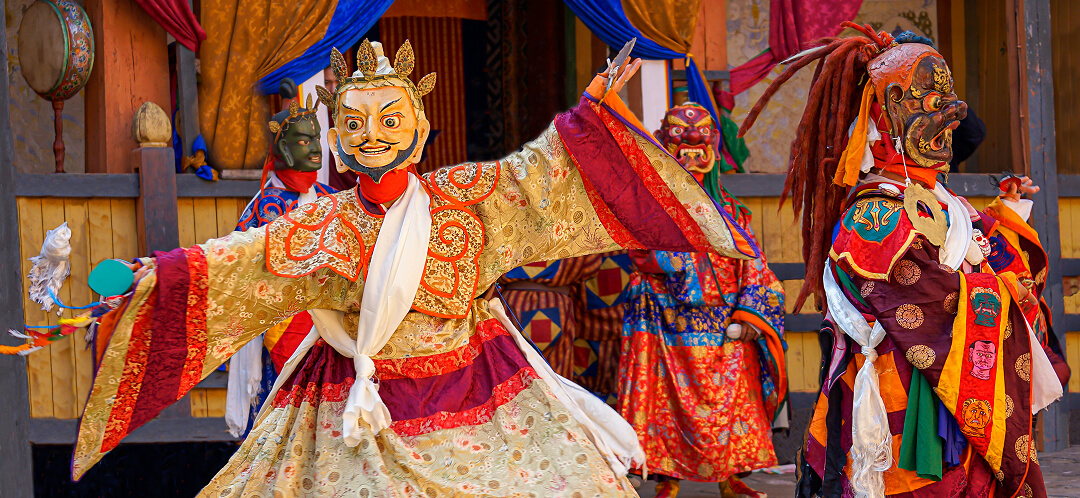
Bhutan’s tshechu festivals follow the Bhutanese lunar calendar, so their dates change each year. The tentative 2027 calendar places Paro Tshechu on March 18–22 and Thimphu Tshechu on October 10–12, two of the most important celebrations for visitors traveling through the western valleys.
Tshechus are Buddhist religious festivals featuring masked dances, ceremonial music, elaborate costumes, and gatherings of local communities. Many performances portray events from Buddhist teachings and traditions associated with Guru Rinpoche.
For visitors, a tshechu is a chance to watch a living religious event.
The principal dates in Bhutan’s tentative 2027 festival calendar are:
| Festival | Tentative 2027 dates | Location |
|---|---|---|
| Punakha Dromchoe | February 13–15 | Punakha Dzong |
| Punakha Tshechu | February 16–18 | Punakha Dzong |
| Paro Tshechu | March 18–22 | Rinpung Dzong area, Paro |
| Thimphu Tshechu | October 10–12 | Tashichhodzong, Thimphu |
| Black-Necked Crane Festival | November 11 | Gangtey Goenpa, Phobjikha Valley |
| Jambay Lhakhang Drup | November 14–17 | Jambay Lhakhang, Bumthang |
These dates are based on the Department of Tourism’s published 2027 calendar, but they may still change. Confirm them before making nonrefundable travel arrangements.
Punakha’s February celebrations open with the Dromchoe, whose ritual dances mark Bhutan’s 17th-century victory over Tibetan forces, followed by the Punakha Tshechu.
Paro Tshechu is the easiest major festival to fit into a first trip because it takes place in the same valley as Paro International Airport. One of its most important moments comes on the final day, when a large religious silk appliqué, called a thongdrel, is unveiled for public viewing.
Thimphu Tshechu attracts large crowds to the capital in October. It also falls during one of the country’s clearest and busiest travel periods.
The Black-Necked Crane Festival in November has a different emphasis. Held in Phobjikha, it celebrates the arrival of the black-necked cranes, a protected species listed as Near Threatened by the IUCN, and promotes awareness of their protection. Community performances and traditional dances connect the event to the valley’s conservation efforts.
Jambay Lhakhang Drup takes place at Jambay Lhakhang in Bumthang, a temple founded in the seventh century.
Festival travel has a practical consequence: rooms in the most desirable lodges become harder to secure during these dates. If a particular tshechu is central to your visit, choose the festival first and build the surrounding itinerary from there.
Is Bhutan safe to visit?
Yes, Bhutan is safe to visit by the US Department of State’s measure: it rates the country Level 1, meaning travelers should exercise normal precautions. Its September 4, 2026 update identifies limited medical care and natural hazards as the main concerns. For most visitors, altitude, mountain roads, and access to healthcare deserve more attention than crime.
Crime and petty theft
Crime rates are relatively low, although petty theft can occur in public places. Normal precautions with passports, cash, and valuables remain appropriate, particularly in towns and during crowded festivals.
Altitude sickness
Altitude affects people differently. Headaches, nausea, unusual fatigue, and shortness of breath can indicate altitude-related illness. Acclimatizing gradually, staying hydrated, and avoiding hard exertion right after arrival are sensible precautions.
Travelers with preexisting heart, lung, or other medical conditions should discuss the altitude and the physical demands of their itinerary with a doctor before departure.
Medical care
Although Bhutan provides healthcare services in its principal towns, more complex treatment and emergency care are limited, particularly in remote regions.
The State Department advises travelers to obtain appropriate health insurance and medical evacuation coverage. A conventional US health insurance policy often provides little or no coverage for care overseas, and transportation to a higher-level medical facility can be expensive.
Road safety
Mountain roads frequently have tight turns, steep drop-offs, and limited visibility. During the monsoon, landslides and flooding can interrupt journeys, sometimes requiring substantial changes to an itinerary.
Visitors can’t rent a self-drive vehicle in Bhutan, so they should ask their operator for a driver experienced on mountain roads and a comfortable vehicle for the long days between valleys.
Finalize your Bhutan itinerary before applying for a visa
Confirm your flight into Paro, private guide, and lodge nights before submitting the visa application. Bhutan collects the SDF for the full planned stay in advance, and refunds for canceled or shortened visits arrive only after you leave, minus bank charges.