


Most travelers who plan a trip to Greece eventually come across photographs of Meteora. It looks extraordinary, but also remote, specific, and slightly difficult to fit into a polished Greece journey.
That is why many travelers end up leaving it out of the itinerary. How do you get there without losing too much time? How many nights does it deserve? Is it better as a stop from Athens or Thessaloniki? And once you arrive, how do you experience it properly?
With the right plan, Meteora can become one of the most rewarding additions to the trip. This guide explains how to make the journey practical, comfortable, and worth the extra effort.
Read in this post:
What Meteora actually is
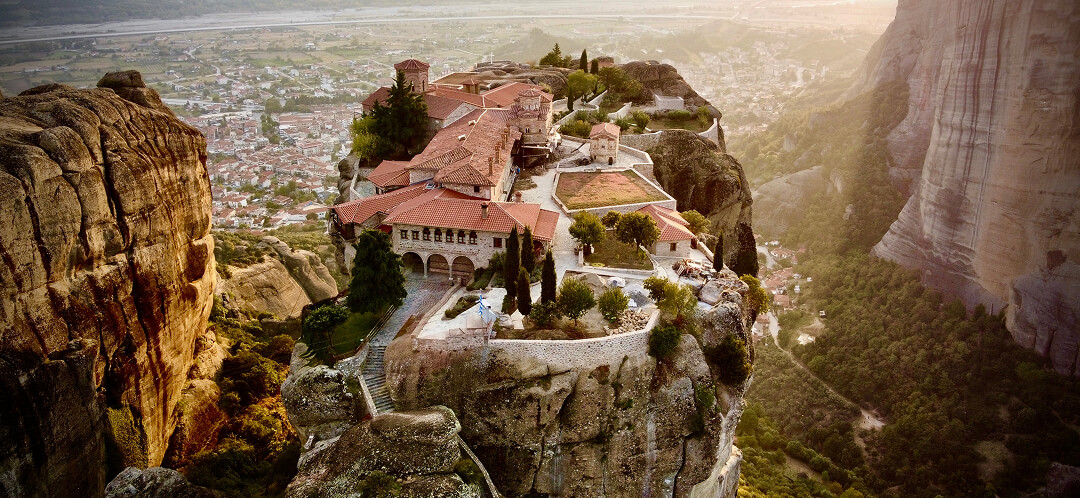
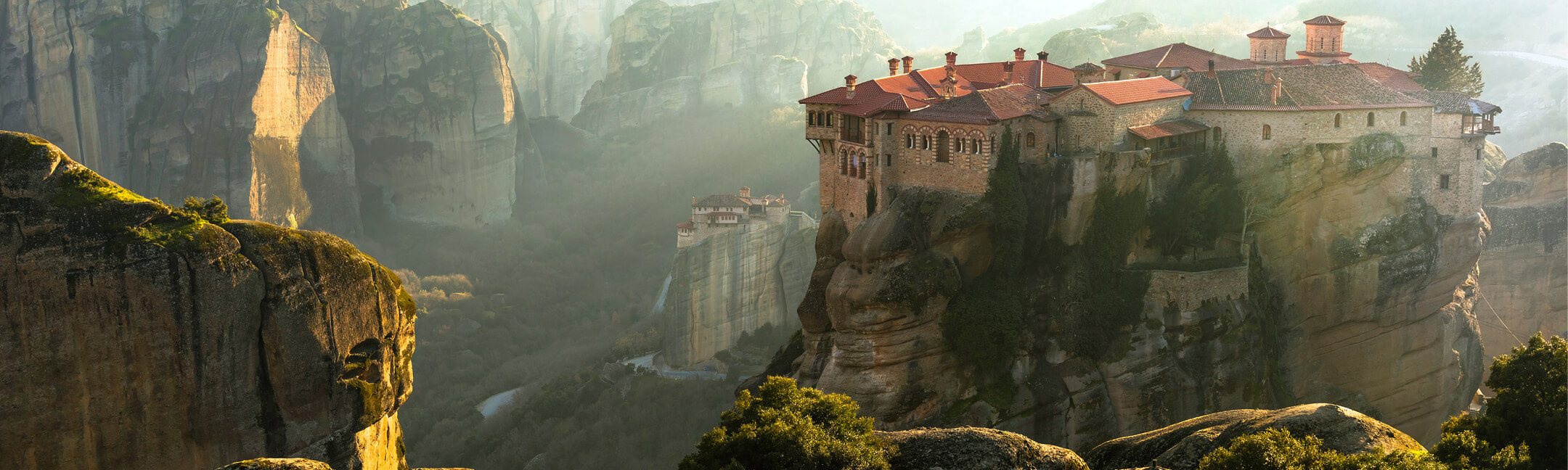
The name Meteora comes from the Greek for “suspended in the air.” It is an accurate description, though it barely prepares you for the reality. The site is located near the towns of Kalambaka and Kastraki in central Greece, at the foothills of the Pindos Mountains.
Meteora is an entire geological landscape where monasteries sit on enormous sandstone pillars rising directly from the valley floor. Some stand isolated and climb more than 1300 feet (over 400 meters) above the earth. Others cluster along ridgelines and cliffs connected by narrow roads, hiking trails, and stone staircases cut into the rock.
At their height in the 16th century, 24 monasteries operated across the formations. Abandonment, earthquakes, and two World Wars reduced that number to six active monasteries, all of which are open to visitors today.
How to get there from the US
- Through Athens
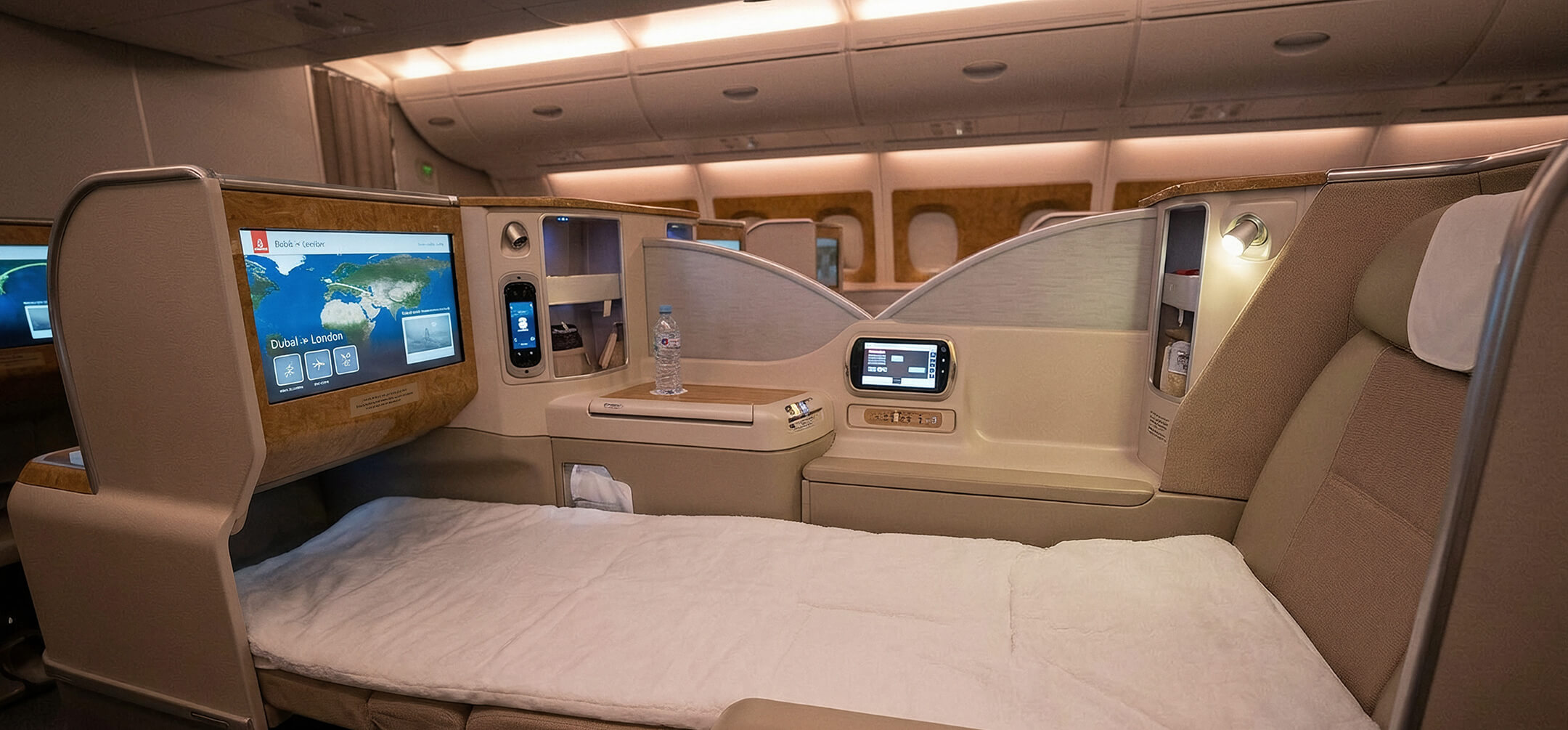
Most American travelers enter Greece through Athens, the country’s main international gateway. From New York (JFK), American Airlines and Delta Air Lines operate nonstop service to Athens International Airport (ATH), with a scheduled flight duration of about 9 to 10 hours. As of 2026, business class fares on these nonstop routes commonly range between $4,500 and $6,000, depending on the airline, season, and departure timing.
From other East Coast cities, such as Boston (BOS) or Philadelphia (PHL), travelers usually connect through a major European hub, including London Heathrow Airport (LHR) and Paris Charles de Gaulle International Airport (CDG). Total travel time on these flights generally runs between 12 and 14 hours, depending on the layover.
From the West Coast, a one-stop itinerary is typically unavoidable. Routes from Los Angeles (LAX) or San Francisco (SFO) through hubs such as Munich International Airport (MUC) usually take between 14 and 17 hours in total. Business class availability is generally strong on these routes, especially with Lufthansa, SWISS, and British Airways, with fares typically ranging between $4,800 and $7,700 depending on the airline and season.
- Through Thessaloniki
Thessaloniki, Greece’s second-largest city, is worth considering as an alternative entry point because it places you much closer to Meteora. It does not receive nonstop flights from the United States, but it connects smoothly through major European hubs.
A business round-trip from Chicago O’Hare International Airport (ORD) to Thessaloniki Airport “Makedonia” (SKG) with a stop in Zurich Airport (ZRH) will cost about $3,500-$4,000 and will take from 13 to 14 hours. From the West Coast, a flight from such a departure point as Seattle (SEA) will take about 15 hours for about $4,500-$6,800.
Getting to Meteora inside Greece
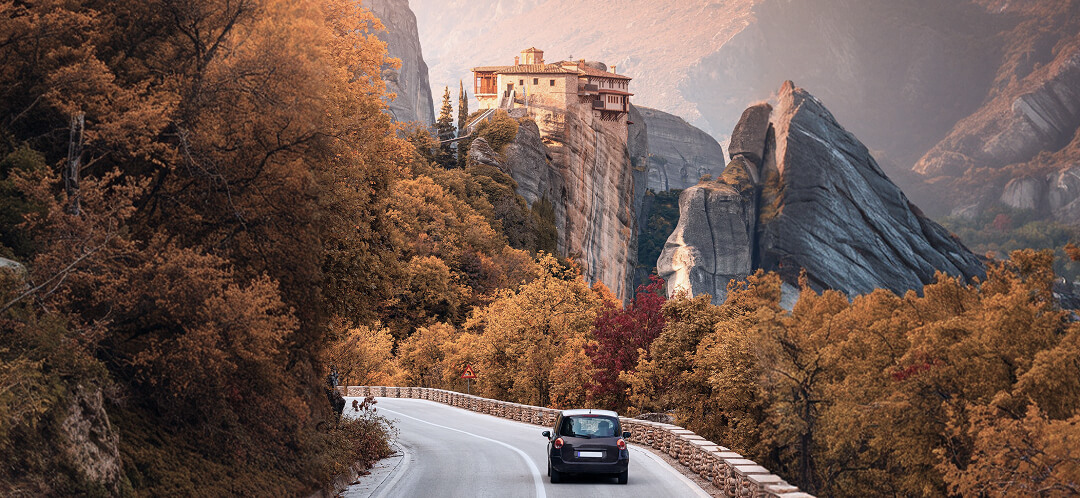
The distance from Athens to Meteora is about 217 miles (350 km), with a drive of roughly 3.5 to 4 hours depending on traffic and stops. From Thessaloniki, the journey is shorter, about 2.5 hours along the modern Egnatia Odos highway. The best option to reach the place depends on how much flexibility, privacy, and schedule control you want once you arrive.
- Private transfer services
For the smoothest door-to-door option, travelers can book a private transfer from Athens, Thessaloniki, or the nearest airport. Services such as Visit Meteora and Welcome Pickups offer advance bookings with flexible pick-up times, luggage assistance, and comfortable vehicles.
As of 2026, private transfers from Athens cost about €550–€600 ($640–$700), while transfers from Thessaloniki cost approximately €350 ($410). This option suits travelers who want a direct, stress-free arrival at their Meteora hotel without driving themselves.
- Premium car rental
A rental car suits travelers who feel comfortable driving in Greece and want maximum flexibility. Greece’s upgraded highways make the drive from Athens to Meteora simple, and having a car helps once you arrive, especially for early monastery visits, sunset viewpoints, and schedule changes.
You can book an intermediate or premium SUV, such as a BMW X1, Audi A4, or Volvo XC40, through providers such as Avis, Hertz, or Sixt at Athens International Airport, Thessaloniki Airport, or city locations. In 2026, premium rentals usually cost between $35–$65 (€30–€56) per day during the shoulder months and $85–$150+ (€73–€129+) per day during peak summer.
- Private tours
Private tours are an excellent option if you want a guided one- or two-day Meteora visit with the logistics handled for you. Operators such as Visit Meteora, GetYourGuide, and selected Viator partners offer tours from Athens, Thessaloniki, and other major Greek cities.
These tours often use Mercedes Sprinter-style minivans with air conditioning, USB charging, Wi-Fi, and scheduled rest stops. They suit families, couples, and seniors who prefer a structured experience. However, a short visit, especially from Athens, can feel rushed. You will see Meteora, but you may not experience the place fully.
As of 2026, private tours from Athens generally range from €755 to €1,700 ($880–$1,980), while tours from Thessaloniki usually cost between €450 and €650 ($525–$760), depending on length and group size.
- Train service
Train travel was once a popular way to reach Kalambaka, the base town for Meteora. However, major storms in 2023 severely damaged rail infrastructure in central Greece, and direct train service from Athens to Meteora is currently unavailable. Full service is unlikely to resume before mid-2027, so travelers should plan around private transfers, car rentals, or guided tours instead.
Where to stay in Meteora for the best experience
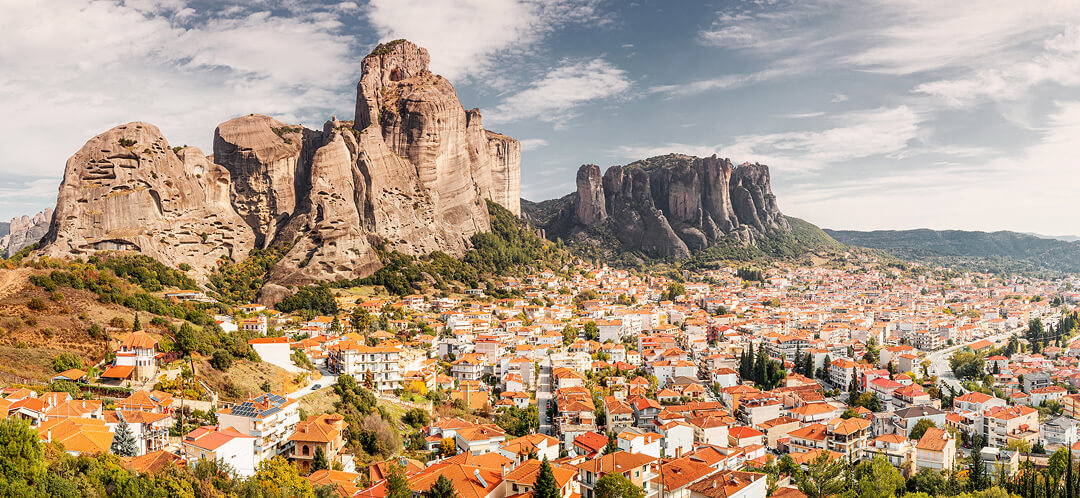
For travelers planning an overnight stay in Meteora, accommodation is centered around two towns directly below the rock formations: Kastraki and Kalambaka. The monasteries themselves are active religious communities and do not offer overnight accommodation to visitors.
Because Meteora is a protected UNESCO World Heritage site, the region does not have massive international five-star resorts or large-scale luxury developments. Accommodation instead focuses on boutique hotels, guesthouses, and private villas.
Kastraki vs. Kalambaka
The difference between Kastraki and Kalambaka is subtle, but it can shape the pace and feel of the stay.
Kastraki is the smaller and quieter of the two towns, positioned directly at the base of the rock formations. It is the stronger overall choice and suits travelers who want to feel more immersed in the landscape, with easy access to viewpoints, hiking trails, and early-morning monastery visits. Several boutique guesthouses here offer direct views of the cliffs from private terraces. Doupiani House and Dellas Boutique Hotel are among the stronger options in this category, with rates generally ranging between $95 and $175 (€80 and €150) per night during the shoulder season.
Kalambaka is larger and more practical, with more restaurants, cafés, and full-service hotels. Properties such as Monastiri Guest House and Divani Meteora Hotel usually range between $200 and $235 (€170 and €200) per night and suit travelers who prioritize convenience, comfort, and polished service.
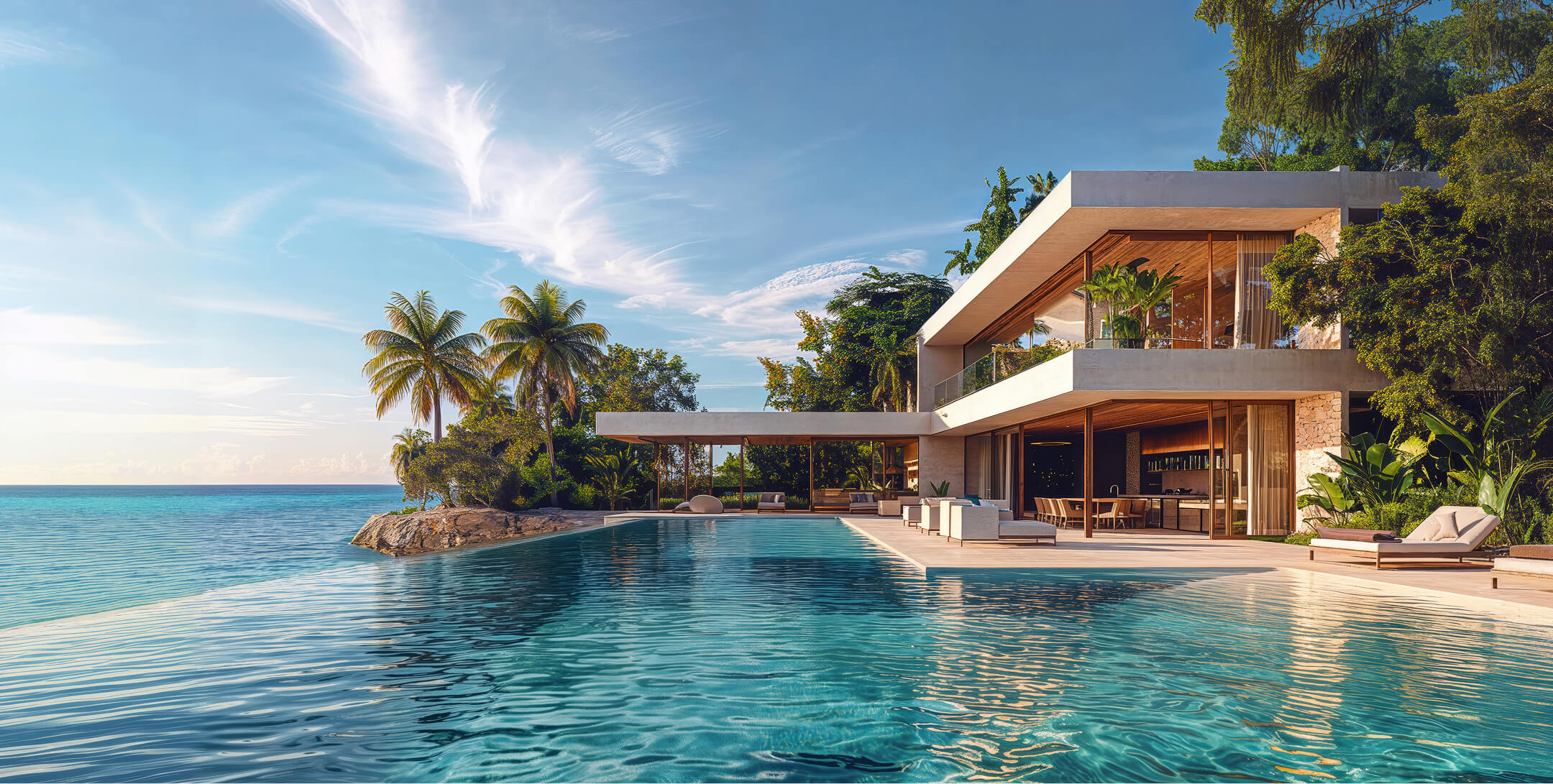
If you want a more elevated stay, consider private villas such as Dream Nest Meteora or Meteora Grande Luxury Suite & Spa, which offer some of the most exclusive accommodation in Meteora.
Our convenient hotel search tool can help you narrow down the options that suit you most.
How much time you actually need
The monasteries themselves take less time than most visitors expect. The viewpoints, the trails, and the quality of light in the early morning and evening are what justify staying longer.
Two nights is a realistic minimum. Three nights is the more comfortable option and allows enough time to visit the monasteries without rushing, experience sunrise or sunset properly, and enjoy the region at a slower pace.
When to go and why timing matters
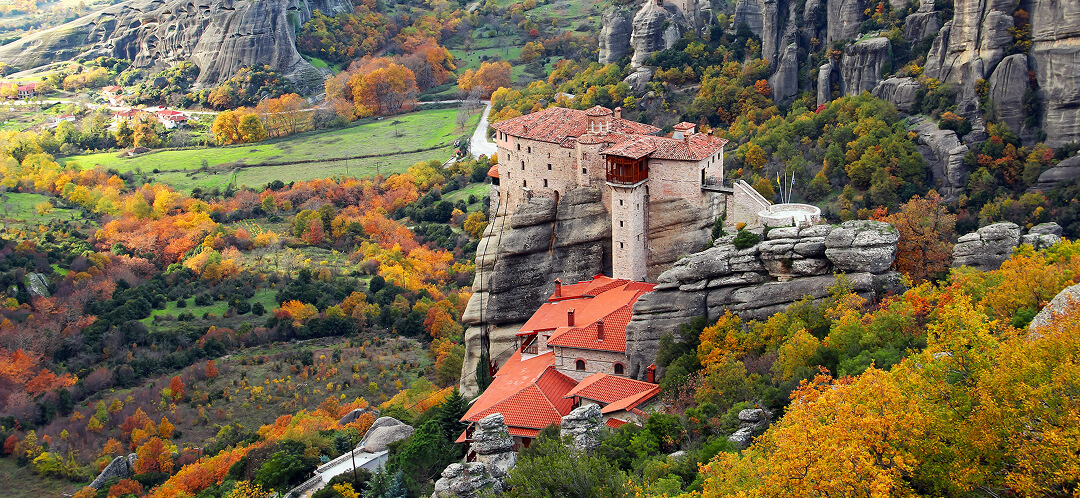
For most travelers, spring and autumn offer the easiest conditions for exploring Meteora. Spring brings mild weather, greener landscapes, and comfortable conditions for short walks and site visits. Autumn is better for a quieter stay, especially after mid-September, when crowds thin and the weather becomes more comfortable for walking and photography.
Summer, by contrast, requires more careful planning due to the heat and heavier visitor traffic. Start early, rest in the middle of the day, and return at sunset when the landscape softens again. In winter, opening hours may be shorter, and the weather requires more flexibility, but you may experience Meteora at its quietest and most authentic.
A note on time of day
The hour can matter as much as the season. Start early if you want cooler weather, easier parking, and fewer people at the main sites. Leave viewpoints and photography stops for late afternoon or sunset. Avoid midday when possible, especially in summer, when heat and tour traffic are at their highest.
The monasteries: which ones to visit
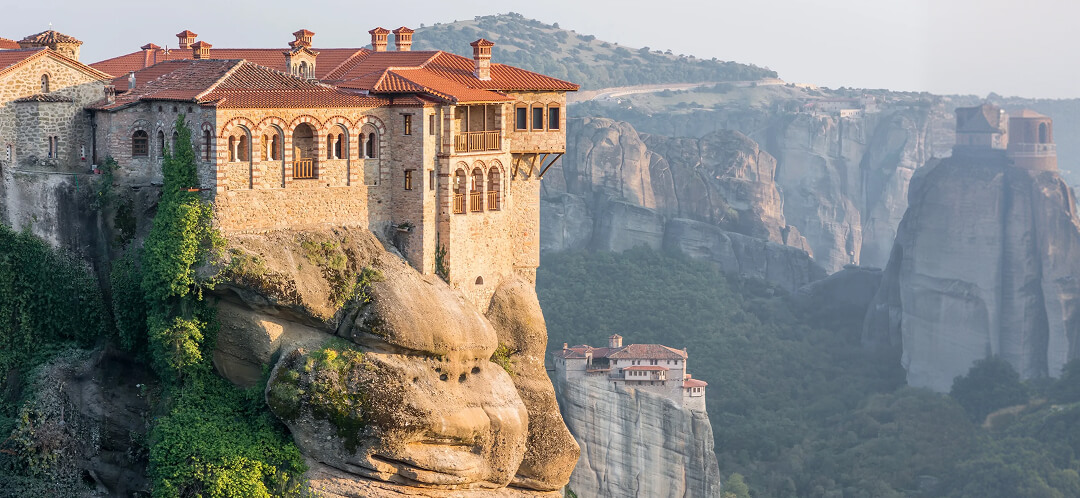
Each monastery in Meteora has its own character and its own position on the rocks. Understanding what distinguishes them before you arrive allows you to make considered choices instead of simply moving through them in sequence.
The six monasteries
The Holy Monastery of Great Meteoron (Megalo Meteoro) is the largest and oldest of the six, founded in the 14th century by Athanasios the Meteorite. It houses an impressive museum along with some of the most elaborate frescoes in the complex. It also draws the highest number of visitors, which makes arriving early here more important than anywhere else.
The Holy Monastery of Varlaam is the second-largest and, for many travelers, the most satisfying single visit. It offers a strong exterior position, well-preserved frescoes, and is slightly less crowded than Megalo Meteoro. For a first-time visitor choosing where to focus, Varlaam is the most consistent recommendation.
The Holy Monastery of Roussanou is built directly onto a narrow rock pinnacle and operated by a community of nuns. It is particularly striking from the exterior and is worth prioritizing for anyone interested in the visual experience of the architecture itself.
The Holy Monastery of Holy Trinity will be familiar to travelers who remember its appearance in the James Bond film “For Your Eyes Only.” The approach requires a long staircase cut into the rock face, and the views from the top are among the finest in the entire complex.
The Holy Monastery of St. Stephen’s is the most physically accessible of the six, requiring no significant stair climbing. It offers panoramic views over Kalambaka and is also a functioning convent.
The Holy Monastery of St. Nicholas Anapafsas is the smallest and least visited of the six. It contains exceptional 16th-century frescoes by the painter Theophanis the Cretan, which makes it a rewarding addition for travelers with an extra half-day.
Visiting two monasteries per morning before midday is more rewarding than attempting all six in a single session. The slower pace allows you to experience each monastery properly and keeps the experience from feeling rushed.
Practical details worth knowing in advance
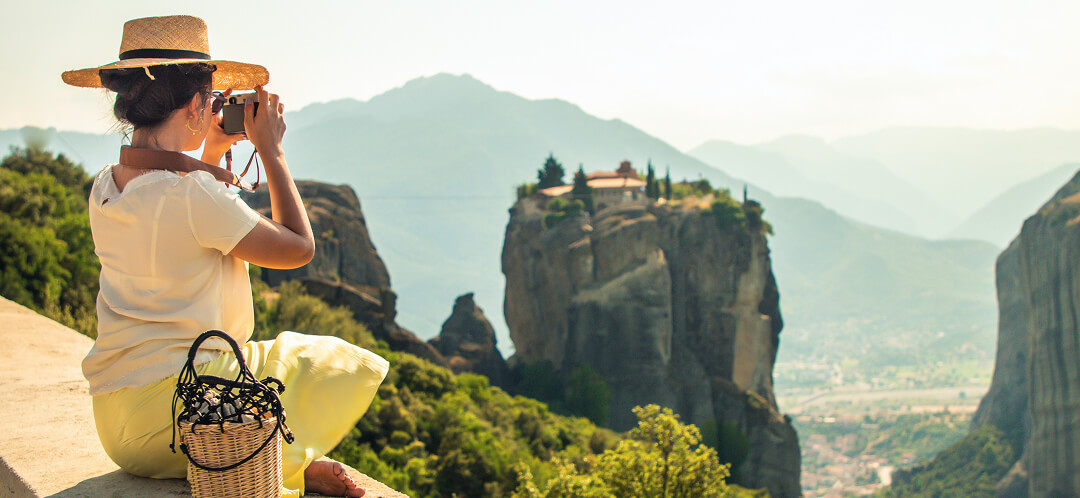
As all these monasteries are active religious sites, visitors need to dress modestly and behave respectfully.
- Dress code
For monastery visits, choose modest clothing that feels comfortable but still appropriate for the setting. Shoulders and knees should stay covered, men should wear long trousers, and women should wear or bring a skirt, as trousers are not accepted inside the monastery complexes. Some sites provide wrap-around coverings at the entrance, though bringing your own scarf, shawl, or light layer is usually more convenient.
- Shoes and bags
Even if you do not plan to hike, you will still walk on stairs, stone paths, and uneven surfaces. Supportive shoes make the visit easier while still fitting a polished travel wardrobe. Small backpacks and standard cameras are usually fine, while larger bags, strollers, and tripods may need to stay outside or in designated storage areas.
- Photography and etiquette
Meteora is highly photogenic, but photography rules vary between monasteries. Outdoor photography is generally unrestricted, while some interior spaces prohibit cameras, flash, or tripods. Signs near the entrance usually explain the current rules clearly, and most visitors keep photography relatively discreet inside the monastery grounds.
- Opening hours
Most monasteries open between 9 am and 10 am and close around 4 pm to 5 pm, depending on the season. Each site also has its own weekly closing day, so check the current schedule before you set your route. If you especially want to see Great Meteoron, Varlaam, or another specific monastery, plan the day around that opening window first.
Final thoughts
Many travelers often leave out Meteora because it does not fit easily into the standard Greece itinerary. Getting there usually means an extra drive or transfer into the mainland, so many travelers focus on Athens or the islands instead. But spending two or three nights in Meteora offers a different experience of Greece: striking landscapes, historic monasteries, and a quieter pace.
At AranGrant, we can help make that kind of itinerary easier to plan from the start. You can book your business-class flight to Greece and receive assistance with routing, connections, and schedule choices. Whether you fly into Athens, continue to Thessaloniki, or combine Meteora with the islands or mainland Greece, we will make it easier to add a less obvious destination without complicating the overall journey.