

Chapters:

Need help with your trip?
Our support team is available 24/7. Request a callback or call us directly at (833) 619-0908
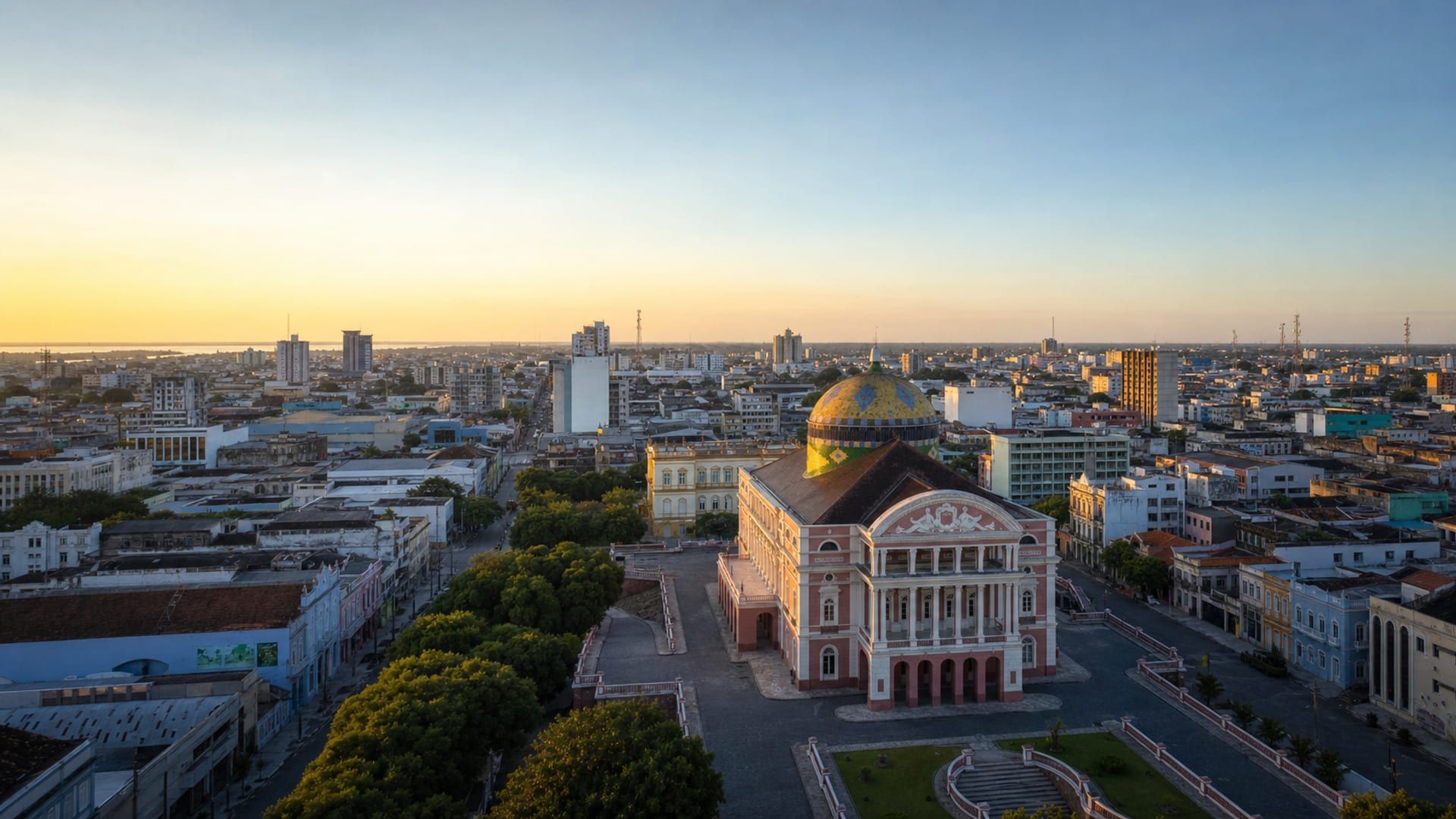
Manaus sits deep in the Brazilian Amazon, on the Rio Negro just upstream from where it meets the Solimões to form the Amazon itself. Between the 1880s and the 1910s, it was the center of the world’s rubber trade, and the latex tapped from trees in the surrounding forest turned a river port into one of the richest cities in Brazil. That money paid for an opera house with a tiled dome, a cast-iron market on the waterfront, and palaces built to European tastes, all still standing. Today, the same streets hold tacacá stalls, regional cafés, and floating docks where boats leave for the river every morning.
This guide covers where to stay, what to eat, how to get around, when to go, and how to spend five days in Manaus.
Useful things to know

Main language(s): Portuguese
Olá (oh-LAH) – Hello / good morning
Por favor (por fah-VOR) – Please
Obrigado (oh-bree-GAH-doh) – Thank you
Você fala inglês? (voh-SEH FAH-lah een-GLAYS) – Do you speak English?
Quanto custa? (KWAHN-toh KOOS-tah) – How much does it cost?

Currency: Brazilian real (BRL, R$)

Cash and cards: Cards and contactless payments work in most hotels, restaurants, and malls. Carry R$50 to R$100 (US$10 to US$20) for market stalls, street food, and small cafés.

Tipping: Most restaurants add an optional 10% service charge to the bill. If it is not included, leave about 10%.

Traditional food: Tacacá, grilled tambaqui, pirarucu, and the x-caboquinho sandwich are the dishes most closely tied to Manaus.

Water and coffee costs: A 16.9-ounce (0.5-liter) bottle of water usually costs R$4 to R$8 (US$0.80 to US$1.55), and an espresso costs R$6 to R$10 (US$1.15 to US$1.95).

Taxis and ride apps: Uber and 99, a Brazilian ride app, both operate in Manaus, alongside metered taxis at the airport and outside the main hotels.

Plug and voltage: Type N sockets (older Type C outlets are still common), 127V

Dining and shop opening hours: Hotels serve breakfast from about 6:00 am to 10:00 am, lunch is from 11:30 am to 3:00 pm, and dinner from 7:00 pm to 10:30 pm. Many restaurants close on Mondays.

Emergency number: Dial 190 for police, 192 for an ambulance (SAMU), and 193 for the fire brigade.
Where to stay in Manaus
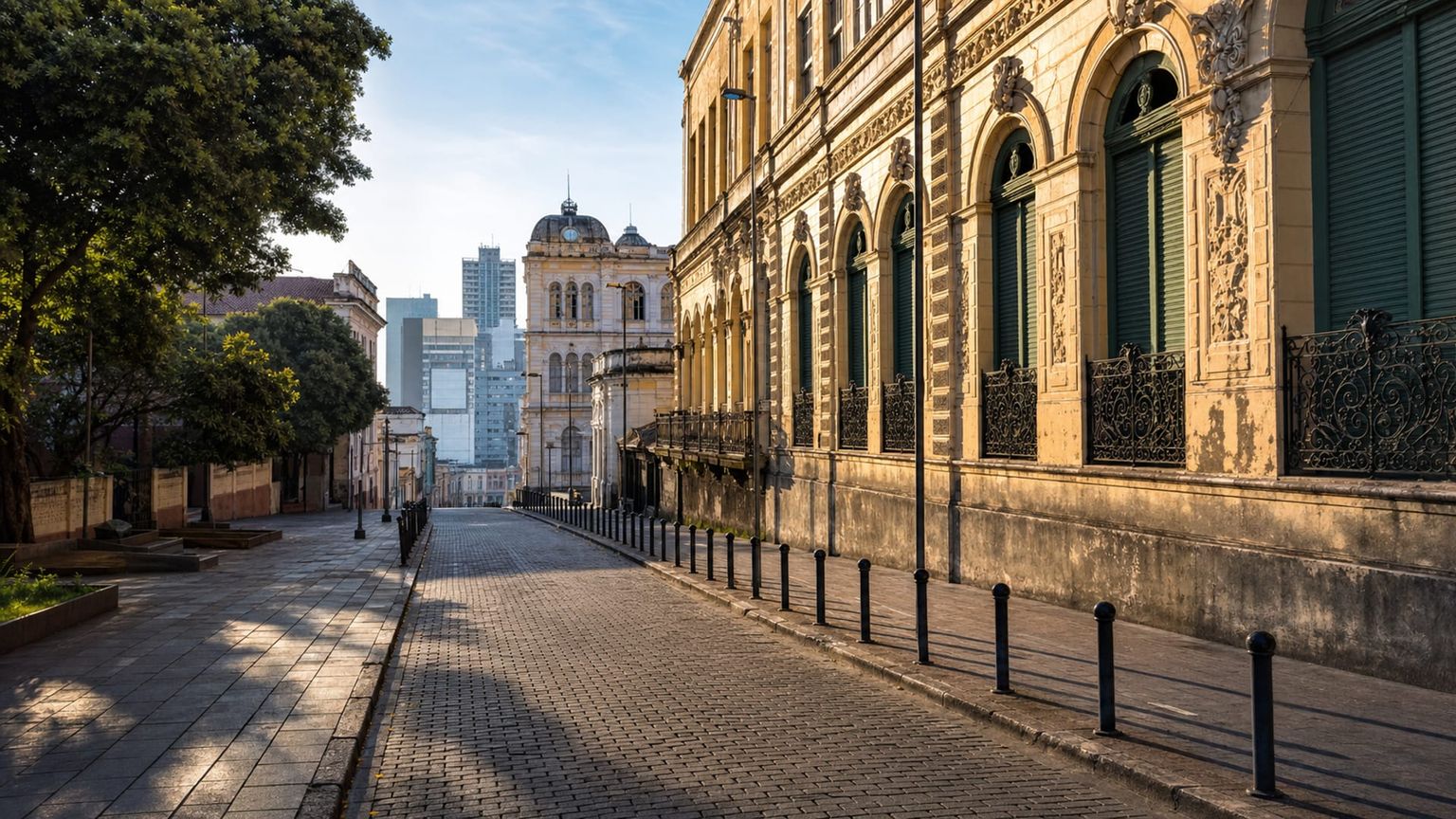
Manaus’s historic center was built with rubber money: the Amazon Theatre, its square, the cast-iron municipal market, and a floating port that rises and falls with the river all sit within a short walk. Boutique hotels in restored buildings put you steps from the best regional restaurants.
Best for: Sightseeing, heritage walks, and easy access to the port
What to expect: Busy weekdays, active daytime trade, and fewer people after office hours.
Hotel prices: Usually about R$180 to R$380 (~$36 to ~$76) per night for well-rated stays
Distance to major sights: 5 to 15 minutes on foot to the Amazon Theatre and the Port of Manaus
Quietness: Noisy and active during the day, noticeably quieter at night except near main roads.
Main trade-off: You gain the shortest walks to major sights, but some blocks feel worn and less appealing after dark.
Good to know: Several hotels sit on the streets around the theater, so evening performances are a short walk away.
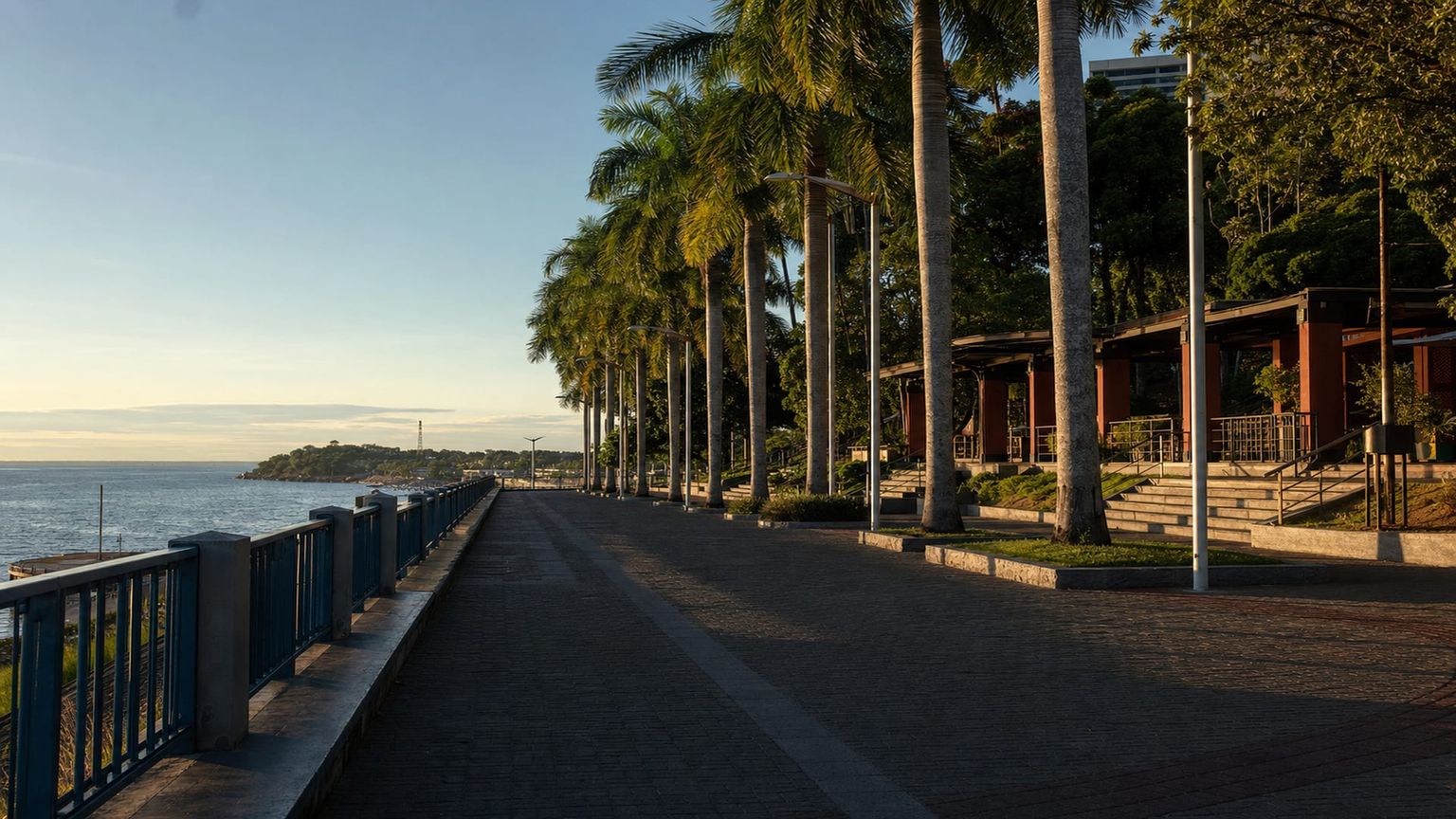
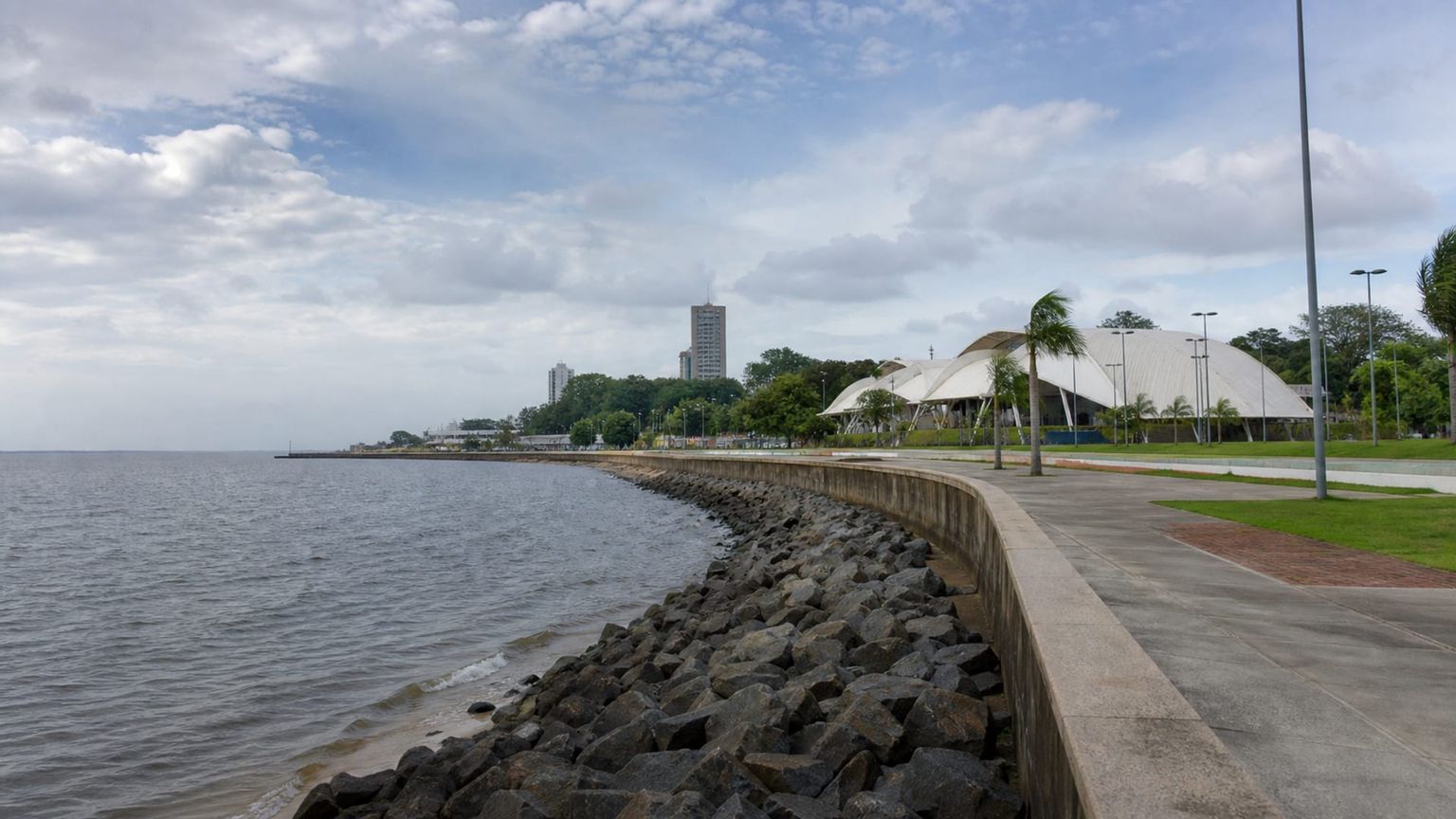
Ponta Negra lines the Rio Negro on the city’s western edge, with a long riverside promenade, a river beach, and some of the best sunsets in Manaus. Hotels sit right by the water, and at night, people crowd the bars and restaurants on the avenue behind the beach.
Best for: Riverfront stays, dining, and visitors who want a newer neighborhood
What to expect: Lively in the evening, with walkers, diners, and more weekend traffic along the promenade.
Hotel prices: Usually about R$220 to R$520 (~$44 to ~$104) per night for well-rated stays
Distance to major sights: 30 to 45 minutes by taxi to the Amazon Theatre; about 10 minutes on foot to Ponta Negra Beach
Quietness: Calm in the morning, then much busier at sunset and on weekends.
Main trade-off: You get a better dining scene and river views, but you will spend more time reaching the historic center and port.
Good to know: Swimming in the river is only allowed during set hours, so check the signs and lifeguard posts before you go in.
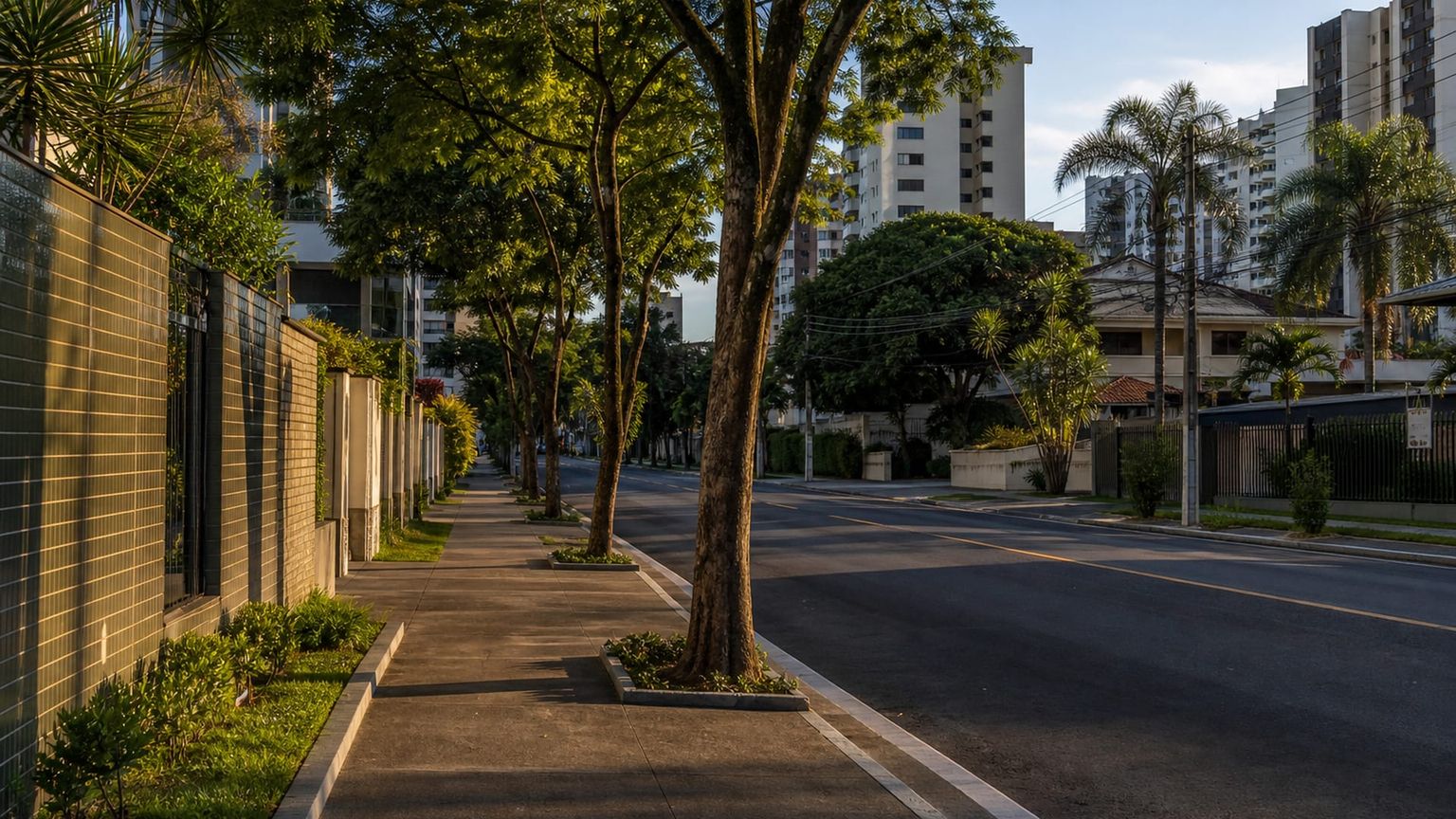
Adrianópolis is the most upscale and high-rise district in Manaus, home to international business hotels and to Manauara Shopping, the city’s best-known mall. Wide avenues, good restaurants, and a quieter residential feel make it the usual base for executives and repeat visitors.
Best for: Business travel, shopping, and visitors who want a central residential base
What to expect: Moderate traffic, office crowds on weekdays, and a more residential pace than the center.
Hotel prices: Usually about R$240 to R$600 (~$48 to ~$120) per night for well-rated stays
Distance to major sights: 15 to 25 minutes by taxi to the Amazon Theatre and about 10 minutes by taxi to Manauara Shopping
Quietness: Quieter at night than Centro, with more activity near malls and main avenues in the afternoon.
Main trade-off: Hotels cost more here, but you usually gain newer buildings and a more comfortable block-by-block environment.
Good to know: Several of the district’s premium hotels are within a few blocks of Manauara Shopping.
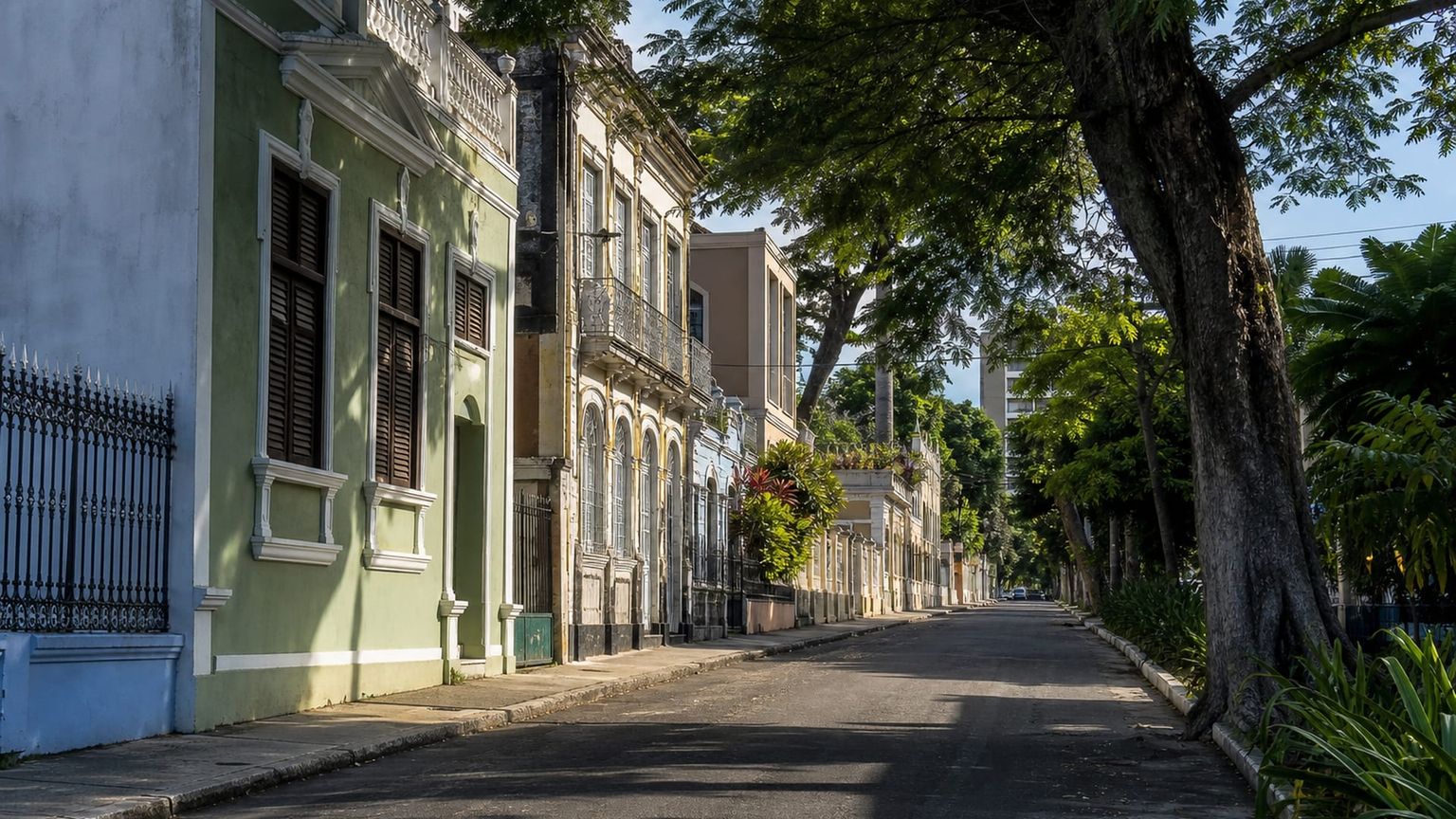
Next door to Adrianópolis, the Vieiralves area of Nossa Senhora das Graças is one of the city’s main dining and nightlife hubs, with bars, regional cafés, and two shopping centers. Banzeiro, one of the first restaurants to serve Amazonian food in a modern way when it opened in 2009, is here too.
Best for: Early flights, short stays, and travelers focused on airport access
What to expect: Mostly residential streets with local commerce, modest foot traffic, and busier stretches near shopping areas.
Hotel prices: Usually about R$160 to R$320 (~$32 to ~$64) per night for well-rated stays
Distance to major sights: 20 to 30 minutes by taxi to the Amazon Theatre and about 15 to 20 minutes by taxi to Manaus (MAO)
Quietness: Often quieter at night than central districts, though main roads stay active into the evening.
Main trade-off: You save on room rates and airport time, but you will rely on taxis for most sightseeing and dinners.
Good to know: Banzeiro is almost always full by 8:00 pm, so book a table ahead, especially on weekends.
Travelers usually avoid staying in Cidade Nova, Jorge Teixeira, and the Distrito Industrial, which are far from the waterfront and the historic center and have few restaurants. Hotels near the airport suit an early flight but little else.
Hotel deals
How to get around Manaus efficiently
Manaus has no metro or train, so visitors get around by bus, taxi, ride app, or rental car, depending on the distance and the time of day.

Bus
for airport transfers
City buses cover most of Manaus, and a single fare costs R$4.50 (US$0.87). Line 306 links the airport with Centro in 30 to 40 minutes, and line 641 reaches Ponta Negra in about 30 minutes. Buses get crowded at rush hour, so take one only if you are traveling light.

Rental car
for day trips outside the center
Localiza, Movida, Alamo, and other agencies have desks at Manaus Airport (MAO), offering small cars for R$130 (US$25) a day. A car is handy for MUSA and for day trips across the 2.2-mile (3.6 km) Rio Negro Bridge to Iranduba. You need an International Driving Permit to rent a car.

Taxi
for convenience or late hours
Metered taxis wait outside arrivals at Manaus Airport, and a ride to Centro usually costs R$60 to R$100 (US$12 to US$19). Uber and 99 are often cheaper, at about R$35 (US$7) for the same trip, and are the easiest way to get around at night.
*Prices are based on rates updated as of September 2026 and may change at the time of travel.
For most trips, a taxi or ride app is the easiest choice. A rental car suits day trips out of the city, and the historic center is best explored on foot.
Iconic landmarks
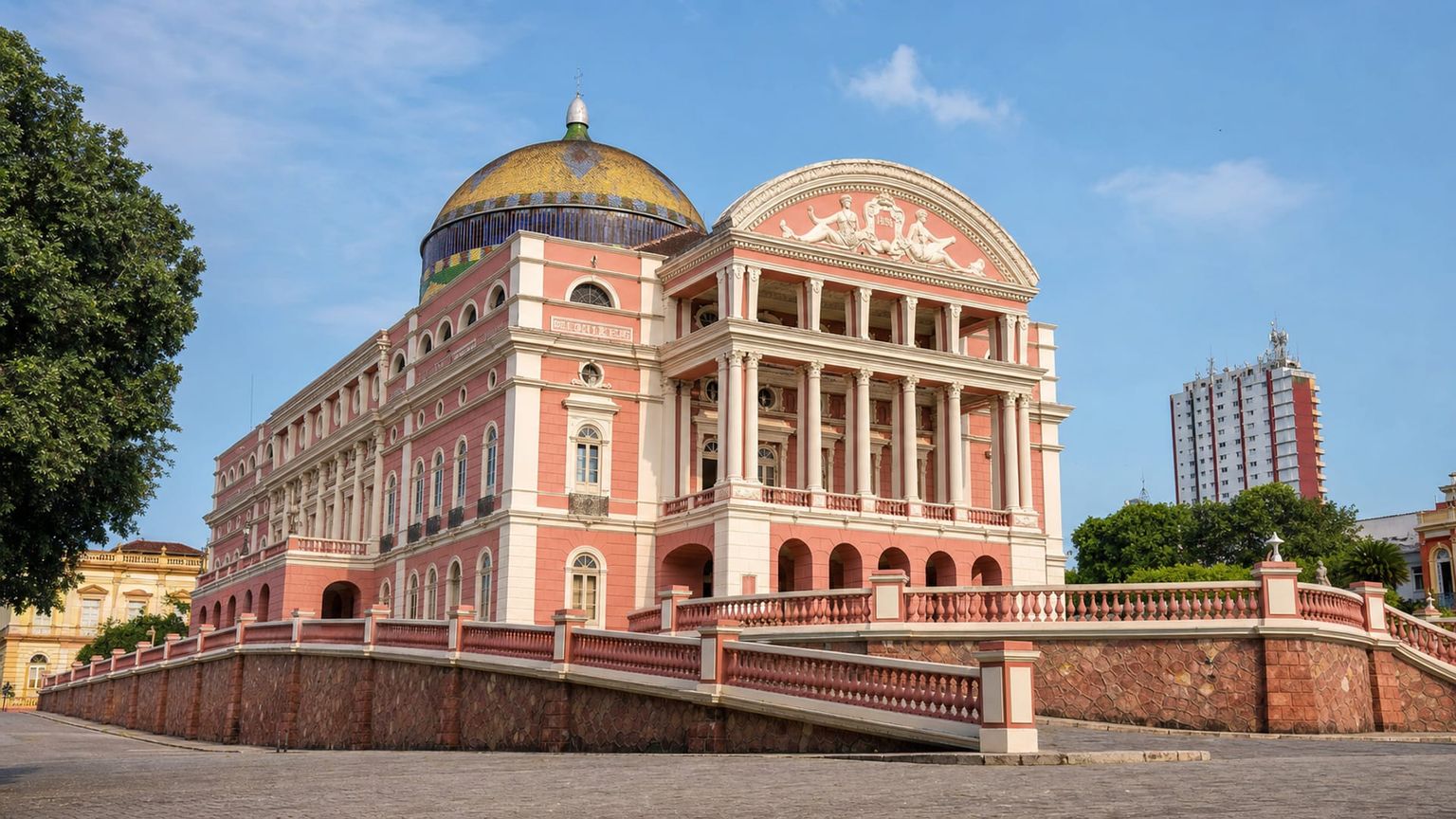
Amazon Theatre
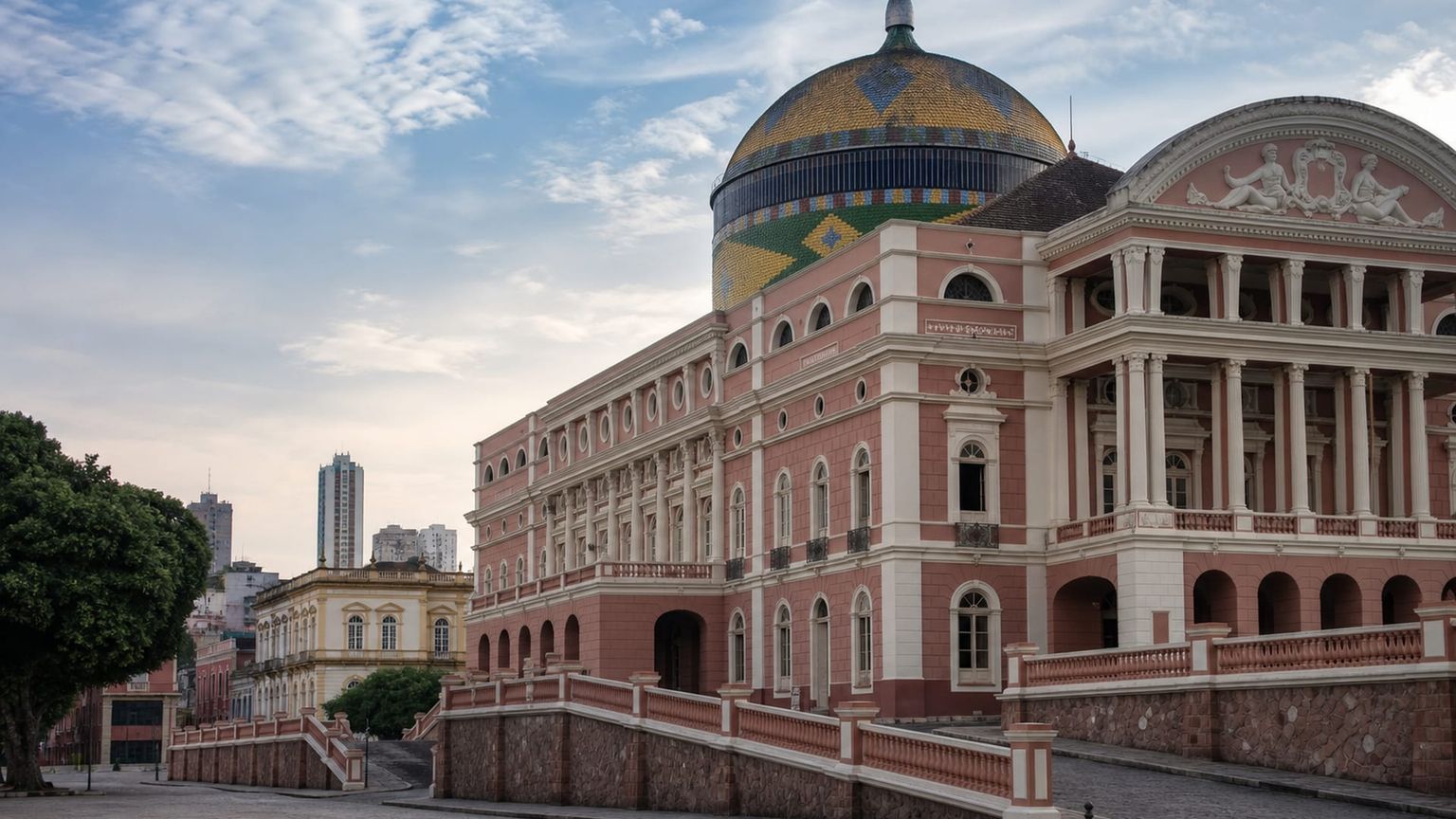
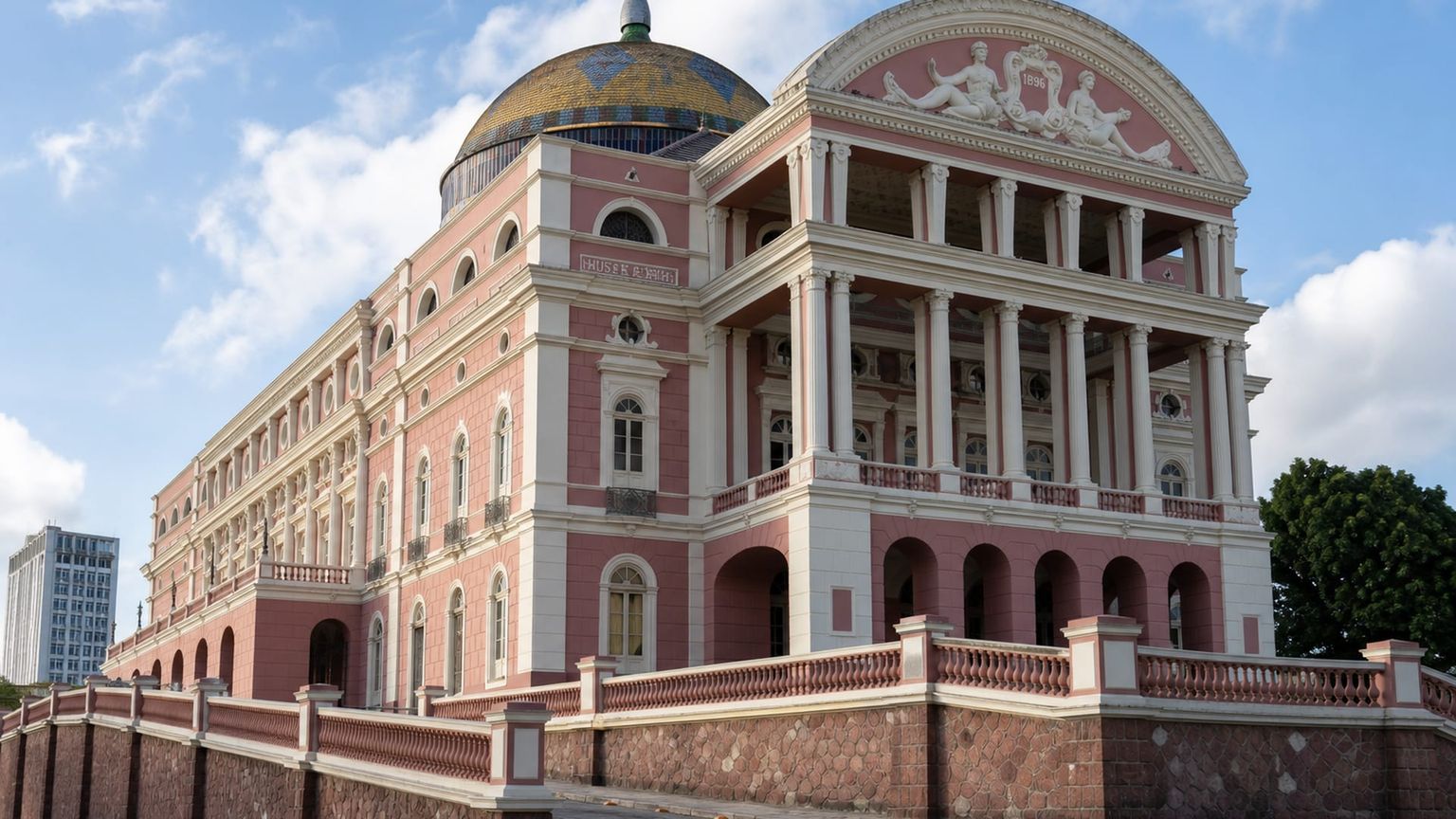
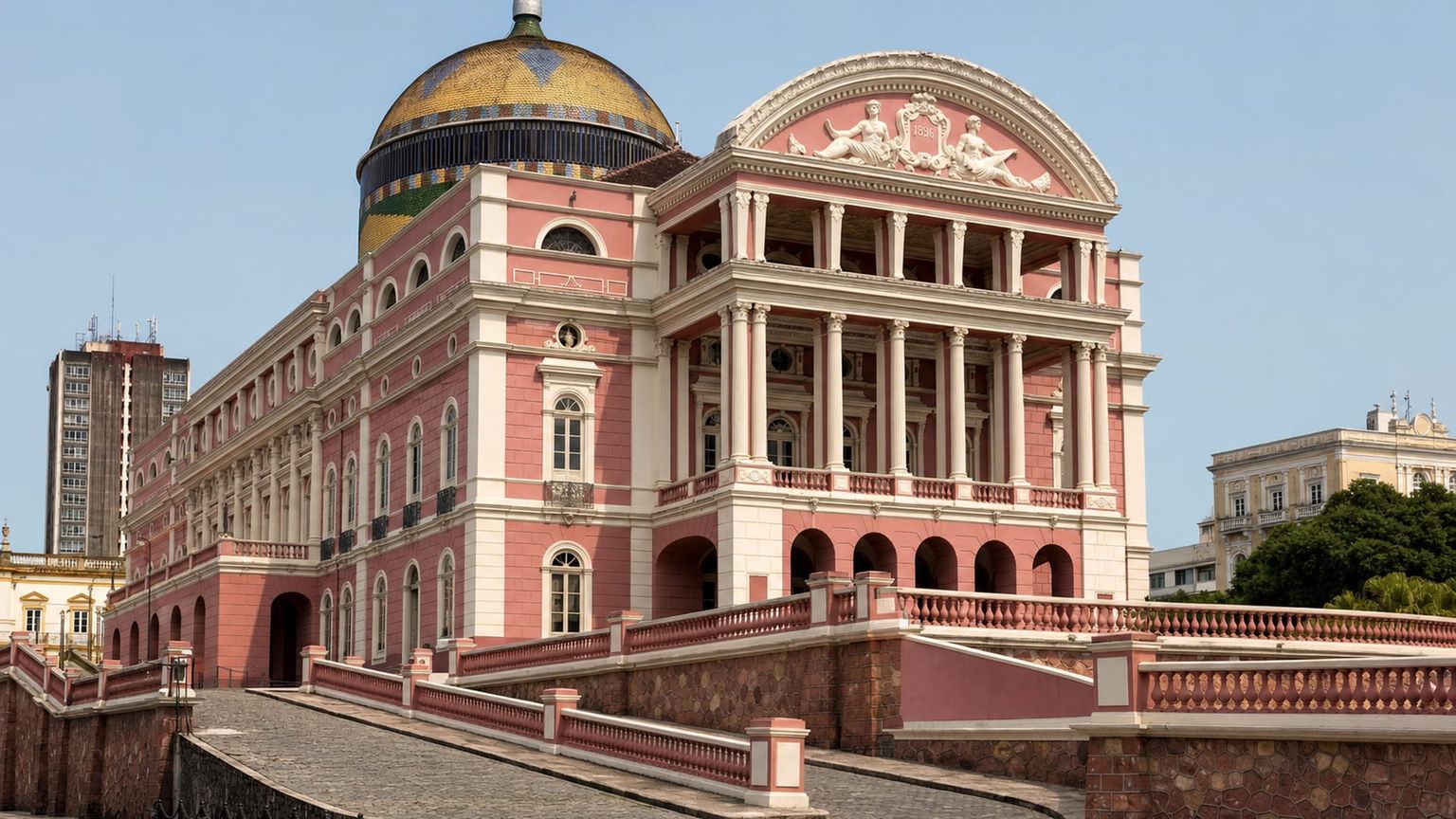
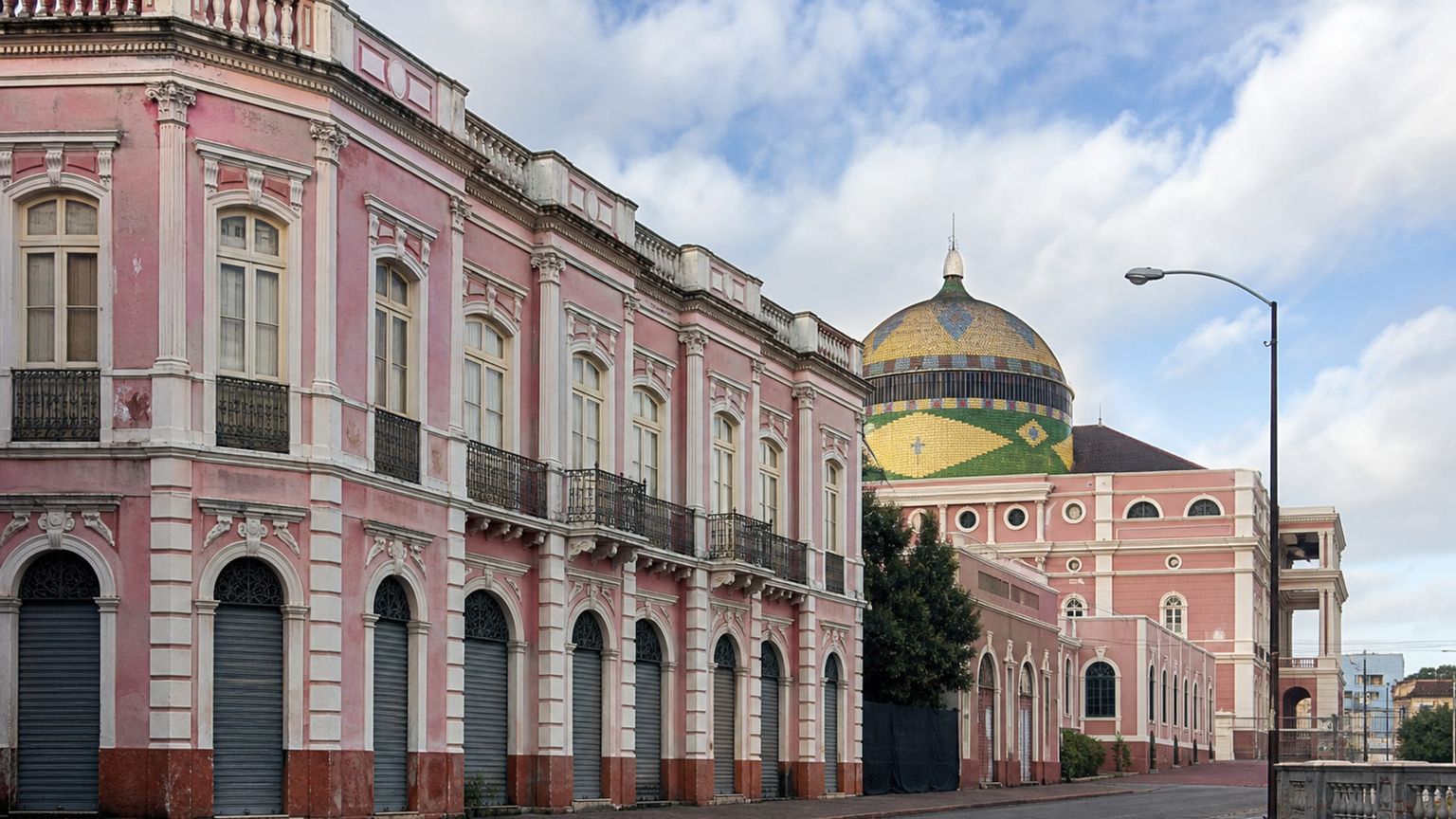
Opened on December 31, 1896, the Amazon Theatre was the rubber barons’ showpiece, built so European opera companies could perform in the Amazon. The guided tour takes you through the auditorium, its painted ceilings, and the grand salon. In 2026, UNESCO added it to the World Heritage List.
Time needed: About 1 to 2 hours
Entry: Guided visits typically cost about $6 to $10 (R$30 to R$50), with event tickets priced separately. Visit the official site for details.
Tip: Check the program for free concerts and rehearsals, which are common.
Meeting of the Waters
About 6 miles (10 km) from the center, the black Rio Negro and the sandy-brown Solimões run side by side for about 4 miles (6 km) without mixing. From a boat, you can see a sharp line between the two colors and dip a hand in each to feel the difference in temperature.
Time needed: About 1 to 2 hours
Entry: Free to enter; food, drinks, and market purchases are priced separately. Visit the official site for details.
Tip: Short trips from Porto da Ceasa, a dock closer to the meeting point, take less time.
Adolpho Lisboa Municipal Market
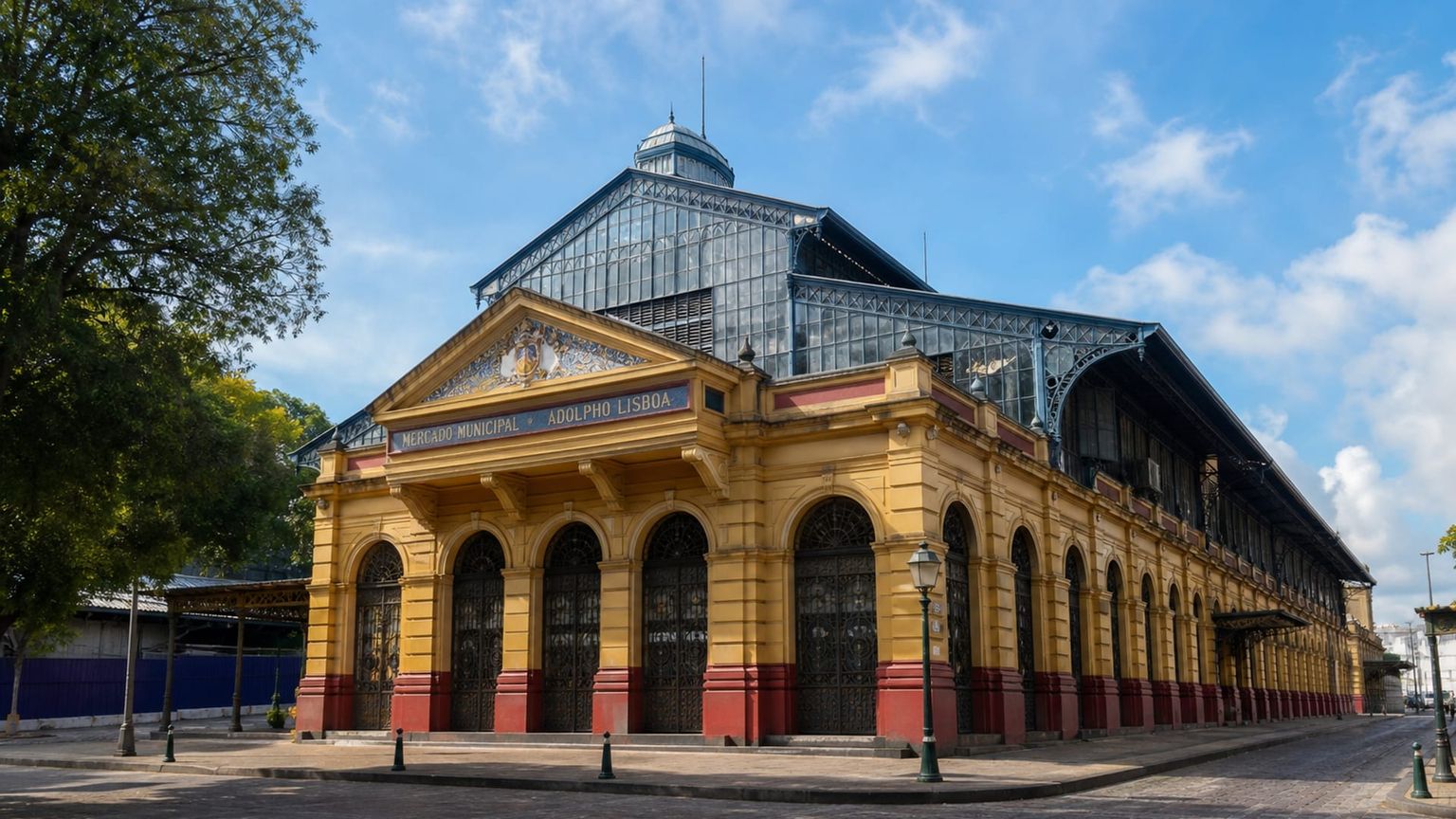
Opened on July 15, 1883, the Adolpho Lisboa Market stands on the Rio Negro waterfront in Centro, with cast-iron pavilions imported from Europe and inspired by Les Halles in Paris. Inside, stalls sell river fish, regional herbs, jambu cachaça, and local crafts.
Time needed: About 3 to 4 hours
Entry: Adult tickets cost about $8 to $12 (R$40 to R$60), with reduced rates for children and seniors. Visit the official site for details.
Tip: Visit the floating port next door afterward; it is also where river boat tickets are sold.
Overlooked sites worth visiting

MUSA, Museum of the Amazon
Despite its name, MUSA isn’t a typical museum. It’s a stretch of real rainforest in the city’s north, with trails, aquariums, snakes and spiders, and a 138-foot (42-meter) tower above the treetops.
Time needed: About 1.5 to 2.5 hours
Entry: Free to access. Some activities inside the park, such as canoe outings or snack purchases, cost extra if you choose them. Cash helps for small on-site purchases, and opening times can shift with weather or maintenance work.
Tip: Climb the tower before 10:00 am, before the midday heat sets in.

Palácio Rio Negro
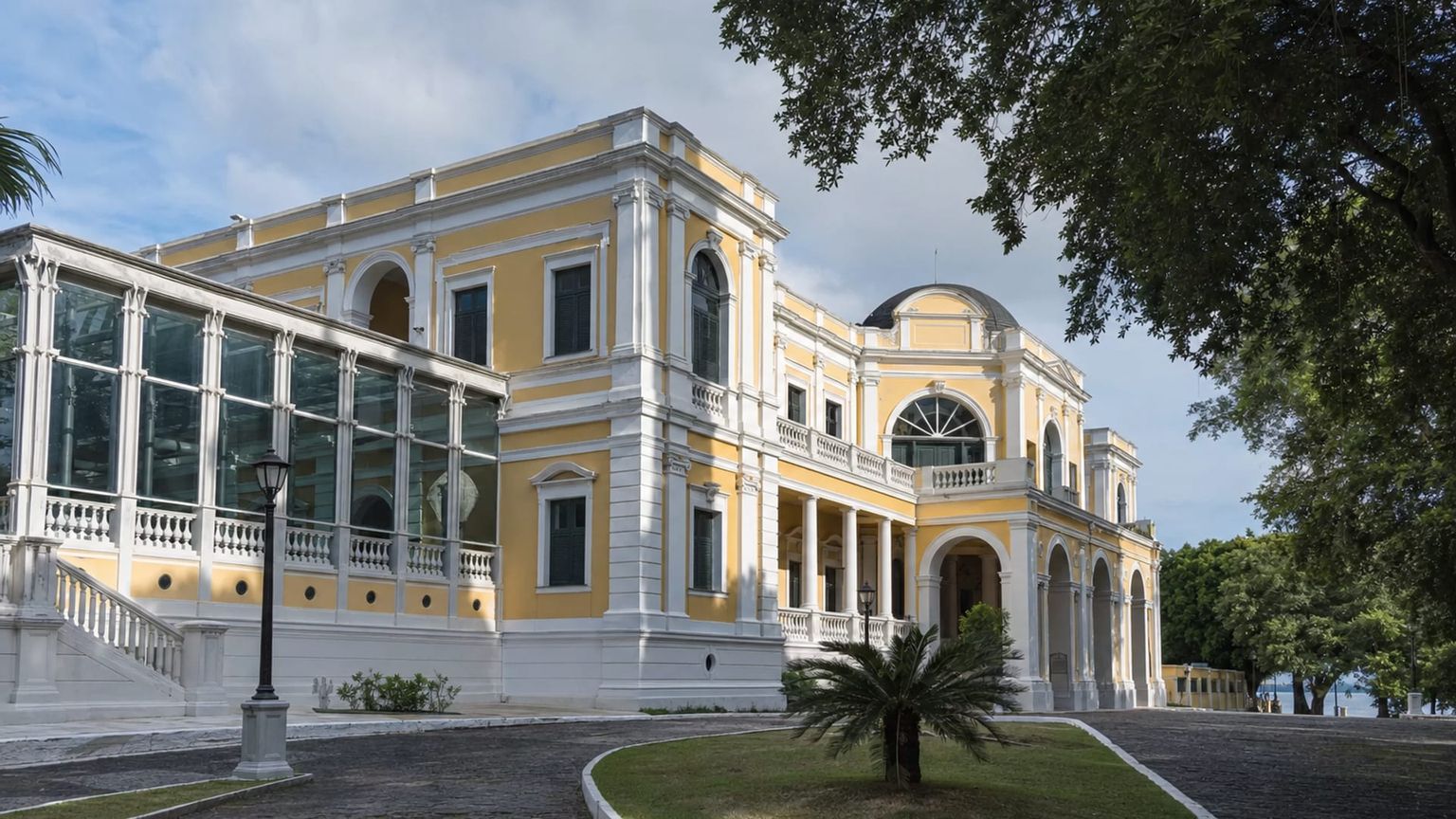
Built in 1903 for German rubber baron Karl Waldemar Scholz, this eclectic-style palace later housed the state government and is now a cultural center with exhibitions and period rooms.
Time needed: About 1 to 1.5 hours
Entry: Admission usually costs about $2 to $4 (about R$10 to R$20) for general visitors, with reduced or free entry on some days or for eligible groups. Check the posted schedule before you go, because hours can change for holidays or temporary closures. Visit the official site for details.
Tip: It is on Avenida Sete de Setembro, so it fits easily into a day in Centro.
Traditional food
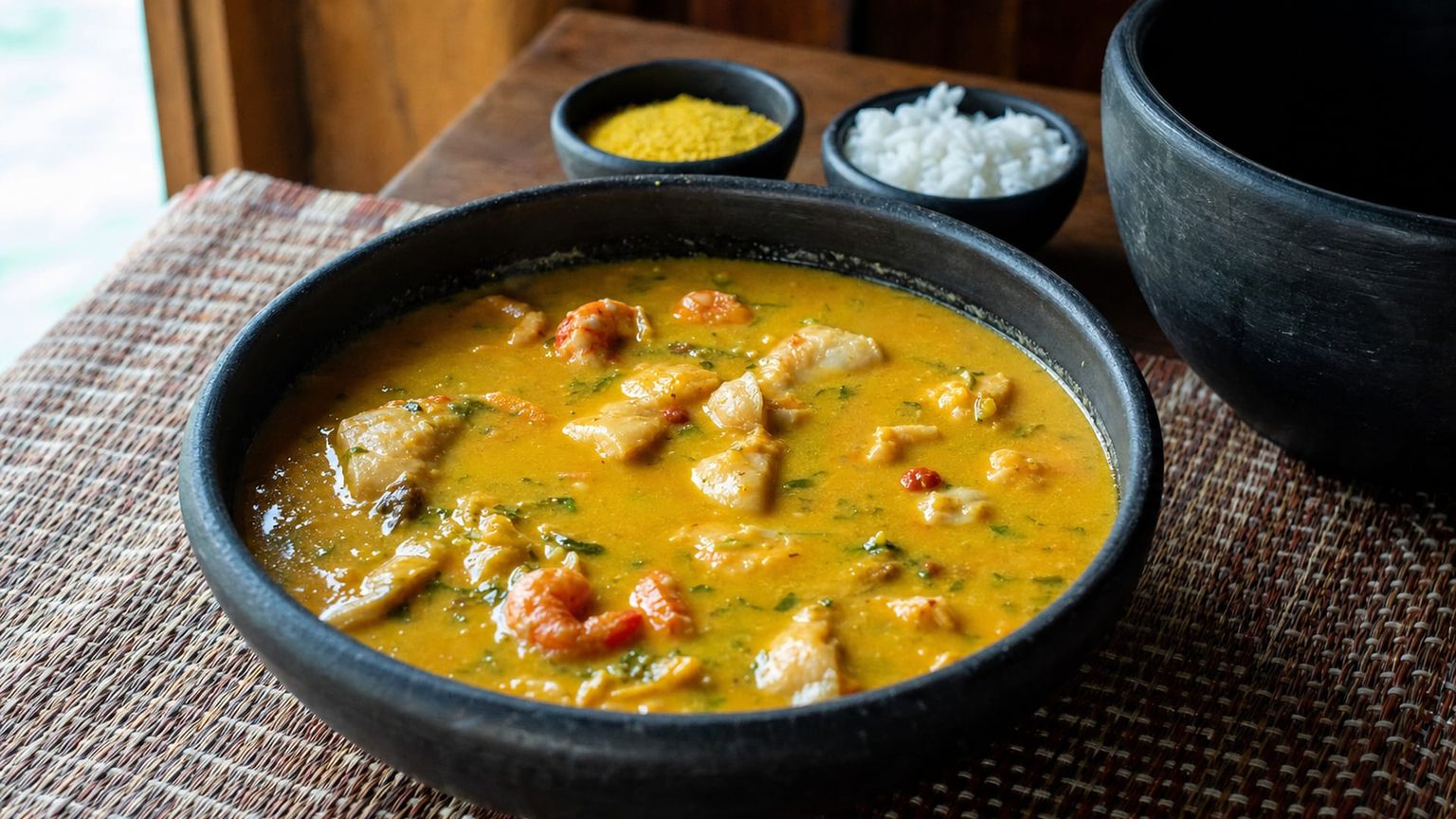
Most meals in Manaus revolve around river fish and Amazon ingredients like tucupi (a sour manioc broth), jambu (a leaf that tingles on the tongue), and tucumã (an orange palm fruit).
Tacacá
Tacacá is a hot, sour soup of tucupi, tapioca, dried shrimp, and jambu leaves, served in a gourd bowl and eaten in the late afternoon. Try it at Tacacá da Gisela, a stall on the square in front of the Amazon Theatre.
Tambaqui de banda
Tambaqui, a large river fish with rich, fatty meat, is often split in half and grilled over coals, a style called “de banda.” Try it at Tambaqui de Banda, a restaurant named after the dish, across from the Amazon Theatre.
Pirarucu
Pirarucu, one of the largest scaled freshwater fish in the world, has firm white meat and is often called the “cod of the Amazon.” Try it at Caxiri, next to the Amazon Theatre, where the grilled pirarucu belly is the signature dish to share.
X-caboquinho
The x-caboquinho is a toasted French roll filled with tucumã, salty queijo coalho cheese, and fried plantain; the city council declared it part of Manaus’s heritage in 2019. Try it at Café Regional Priscila, a regional breakfast café.
Best time to visit Manaus
Manaus is hot all year, so the real difference between seasons is rain and the level of the river, which rises and falls by several meters.
Best for: The Amazon Theatre, museums, and short river trips between afternoon showers
What you get: Temperatures of about 73°F to 88°F (23°C to 31°C), with the rainy season well underway and heavy rains on most afternoons and evenings
Trade-offs: Frequent rain can delay boat trips and slow down walks around Centro.
Best for: Canoe trips through flooded forest and seeing the Rio Negro run high and wide
What you get: About 73°F to 88°F (23°C to 31°C), with March and April the wettest months of the whole year and the river rising steadily week by week
Trade-offs: Heavy downpours and high humidity can cut outdoor plans short.
Best for: The Meeting of the Waters, river tours, and long forest walks on the MUSA trails
What you get: About 73°F to 90°F (23°C to 32°C), with the river near its peak in June and drier, sunnier days from July onward through late August
Trade-offs: July school holidays bring more Brazilian visitors and higher hotel rates.
Best for: River beaches, sunsets at Ponta Negra, and dry, clear days on the forest trails
What you get: About 75°F to 91°F (24°C to 33°C), the hottest and driest stretch of the year, with September and October usually being the warmest months
Trade-offs: Low water can rule out canoe trips and make some river routes harder to reach.
A realistic 5-day plan in Manaus
Five days is enough to see the best of Manaus without rushing. Spend the first two days in the historic center, take a full day on the river, then explore the forest at MUSA and the riverfront at Ponta Negra before you fly home.
Land at Manaus (MAO) and take a taxi or ride-share app to your hotel, which usually takes 25 to 40 minutes depending on traffic. Once you have checked in, walk to the Largo de São Sebastião in the early evening, when the heat eases, and the square in front of the Amazon Theatre fills up. Try a first bowl of tacacá at Tacacá da Gisela, then keep dinner simple at Tambaqui de Banda and call it an early night.
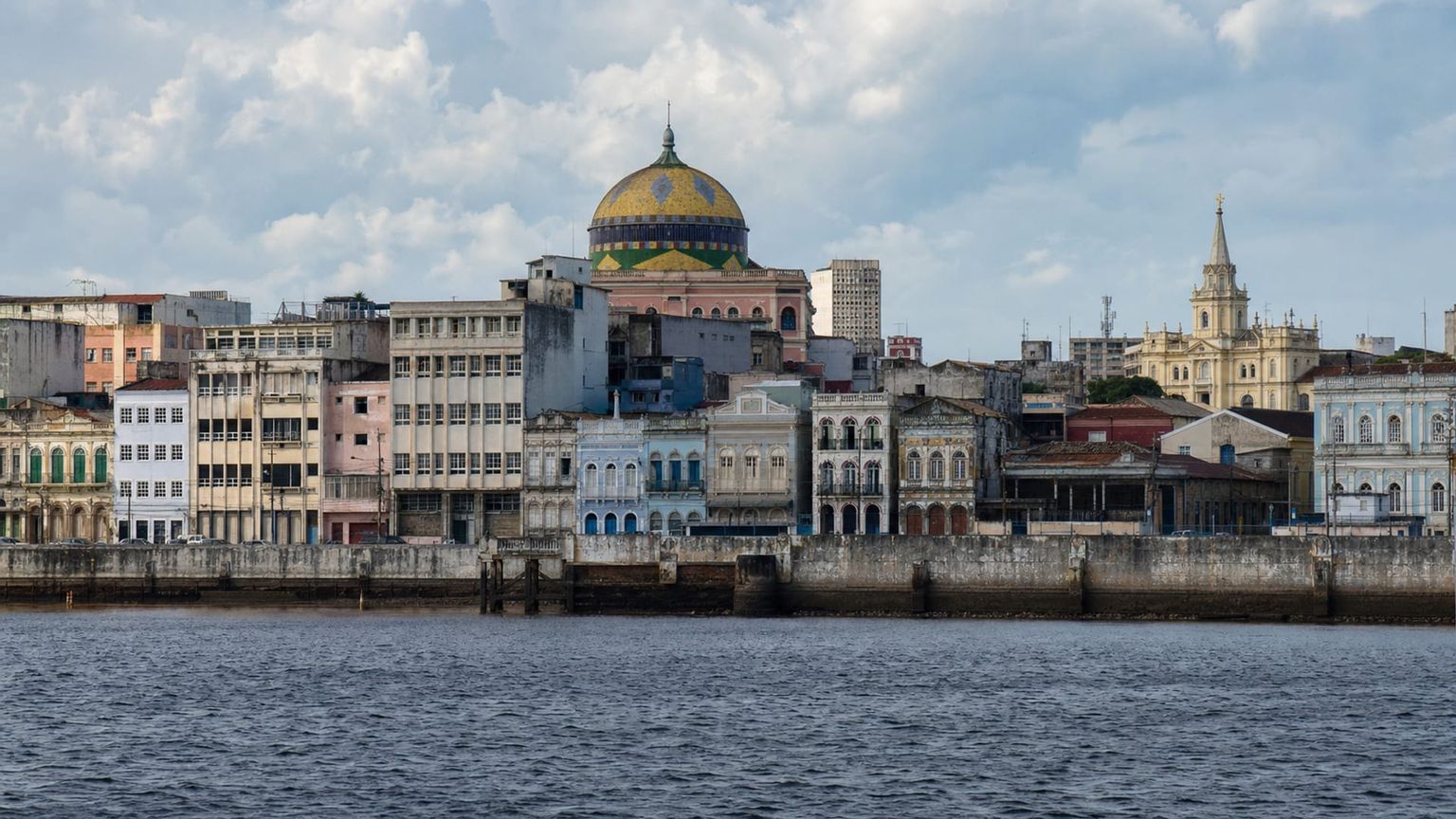
Start with a guided tour of the Amazon Theatre in the morning, then walk down through the old commercial streets to the Adolpho Lisboa Municipal Market and the floating port beside it. After lunch, head to the Palácio Rio Negro for its period rooms and exhibitions. Book dinner at Caxiri, overlooking the theater, and check whether there is a free concert or rehearsal in the evening.
Give the whole day to the river. Full-day boat tours usually leave between 8:00 and 9:00 am and return at about 3:00 pm, stopping at the Meeting of the Waters, where the dark Rio Negro and the muddy Solimões run side by side. Most tours include lunch and a visit to a riverside community, and many stop at a floating platform where you can see pink river dolphins up close. Back in the city, rest at the hotel, then have dinner in Vieiralves at Banzeiro.
Leave early for MUSA, and avoid Wednesdays, when the museum is closed. Climb the 138-foot (42-meter) tower before the heat builds, then walk the forest trails past the aquariums and snake enclosures. In the afternoon, head west to Ponta Negra and walk the riverside promenade as the sun sets over the Rio Negro, then stay for dinner at one of the restaurants on the avenue behind the beach.
Start with a regional breakfast of x-caboquinho, tapioca, and fresh juice, then keep the rest of the morning light. Browse Manauara Shopping in Adrianópolis or take one last walk around the Largo de São Sebastião. Allow 25 to 40 minutes by taxi to Manaus (MAO), and more during the weekday rush hour.
Business-class flights from the US to Manaus
Flights from the New York area and Los Angeles usually connect through major hubs before reaching Manaus, and the best option often depends on whether you value fewer changes or a lower fare. The route shape matters enough here to compare both origin cities separately.
From New York, American Airlines, Delta Air Lines, Copa Airlines, LATAM Airlines, TAP Air Portugal, and Avianca all appear on itineraries to Manaus, with nonstop flying time from New York (JFK) to Manaus lasting about 7 to 8 hours when available. Many one-stop options route through Panama City, São Paulo, Lima, Lisbon, or Madrid, with total travel time usually about 12 to 18 hours. Round-trip fares from New York usually start at about $1,400 and can reach $4,500.
Los Angeles itineraries usually connect through Panama City, São Paulo, Lima, Rio de Janeiro, or Bogota, since nonstop service is about 11 to 13 hours when it runs. United Airlines, American Airlines, Copa Airlines, LATAM Airlines, Avianca, and Aeromexico show up on these trips, and round-trip fares from Los Angeles often fall between $1,700 and $5,200.
Manaus moves at the river's pace
Few cities feel as unlikely as Manaus: an opera house in the middle of the rainforest, palaces built with rubber money, and two rivers running side by side just beyond the port. It is a city for slow days, long lunches, and evenings outdoors once the heat breaks. When you are ready to see it for yourself, the AranGrant team can help you find a business-class flight that makes the long journey a comfortable one.







