

Chapters:

Need help with your trip?
Our support team is available 24/7. Request a callback or call us directly at (833) 619-0908
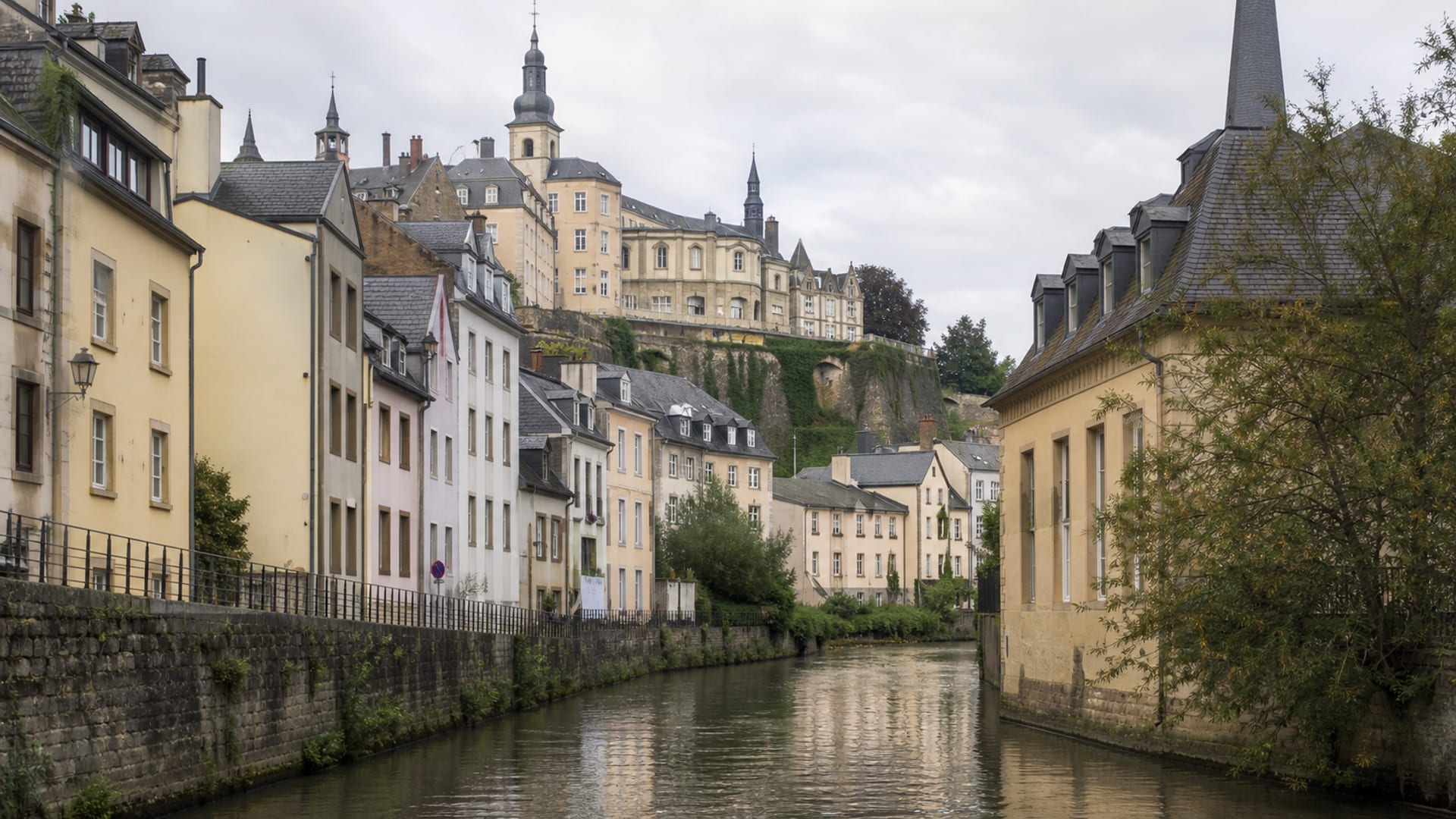
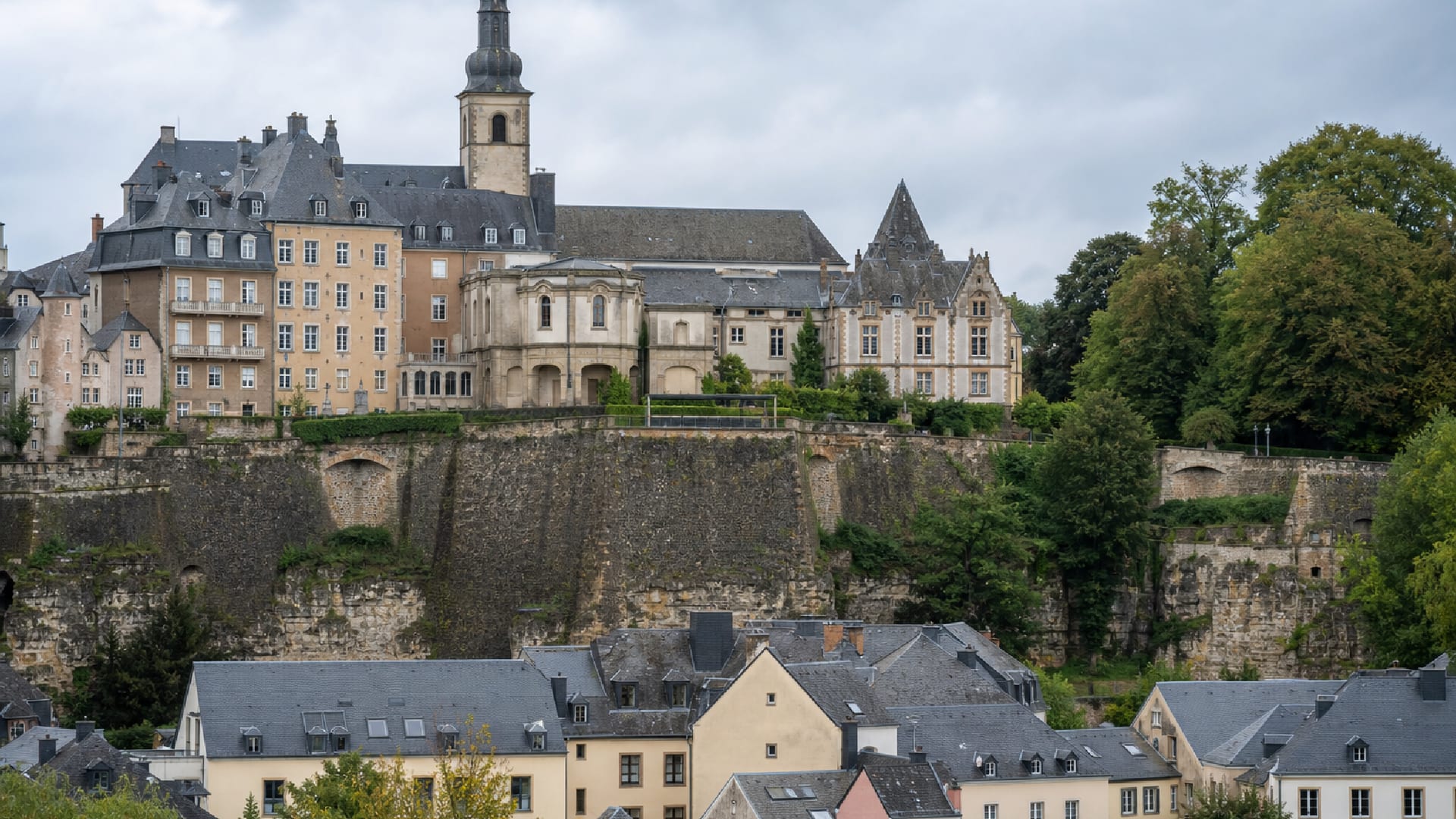
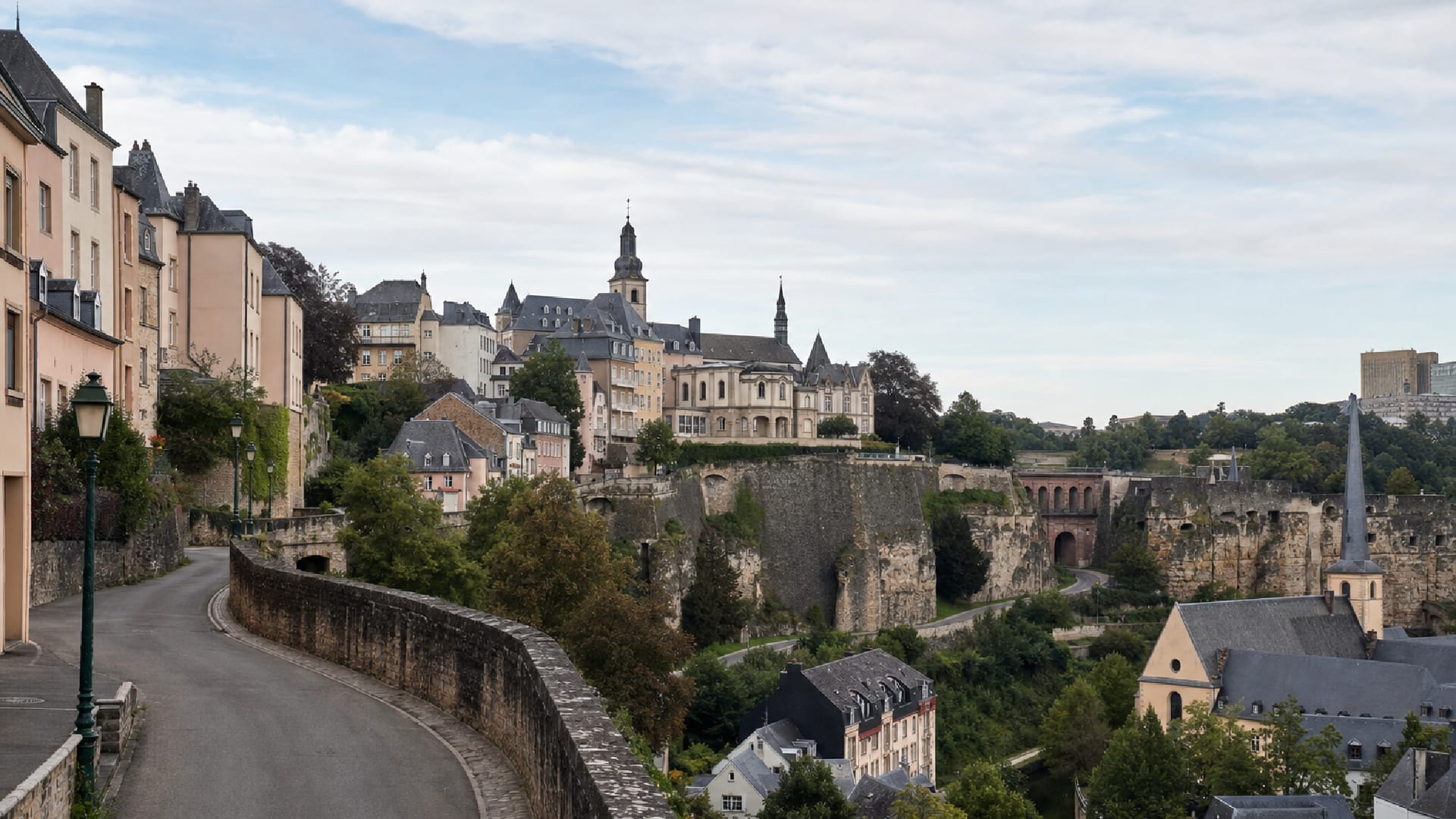
Luxembourg City is shaped by dramatic elevation changes, with the historic upper town rising above the Alzette and Pétrusse valleys. Ville Haute contains the palace, cathedral, and fortress remains; Grund follows the river below, while Kirchberg introduces the city’s modern museums, EU institutions, and contemporary architecture.
Despite its compact size, the city benefits from dividing sightseeing by level and district. This article covers the best areas to stay, free public transport, major landmarks, Luxembourgish food, seasonal conditions, a practical five-day itinerary, and business-class flights from the US.
Useful things to know

Main language(s): Luxembourgish, French, German
Moien (moy-en) – Hello / good morning
Wann ech gelift (vahn ekh gə-lift) – Please
Merci (mehr-see) – Thank you
Schwätzt Dir Englesch? (shvetsst deer eng-glesh) – Do you speak English?
Wéi vill kascht dat? (vay veel kasht dat) – How much does it cost?

Currency: Euro (EUR, €)

Cash and cards: Hotels, restaurants, attractions, and most shops accept cards. Carry €20–€40 ($23–$47) for smaller purchases or businesses that prefer cash.

Tipping: Service is generally included. Round up smaller bills or leave 5%–10% at restaurants when service is particularly good.

Traditional food: Judd mat Gaardebounen, Bouneschlupp, Kachkéis, and Gromperekichelcher

Water and coffee costs: Bottled water generally costs €2–€3 ($2.30–$3.50), while an espresso commonly costs €2.50–€3.50 ($2.90–$4.10).

Taxis and ride apps: Licensed taxis operate throughout the city, while Uber and Free Now provide app-based bookings.

Plug and voltage: Type C/F socket, 230V, 50Hz

Dining and shop opening hours: Cafés commonly open from 7:00 am or 8:00 am. Lunch usually begins around noon, while dinner service often starts from 7:00 pm. Some restaurants close between services.

Emergency number: Dial 112 for fire or medical emergencies and 113 for police.
Where to stay in Luxembourg
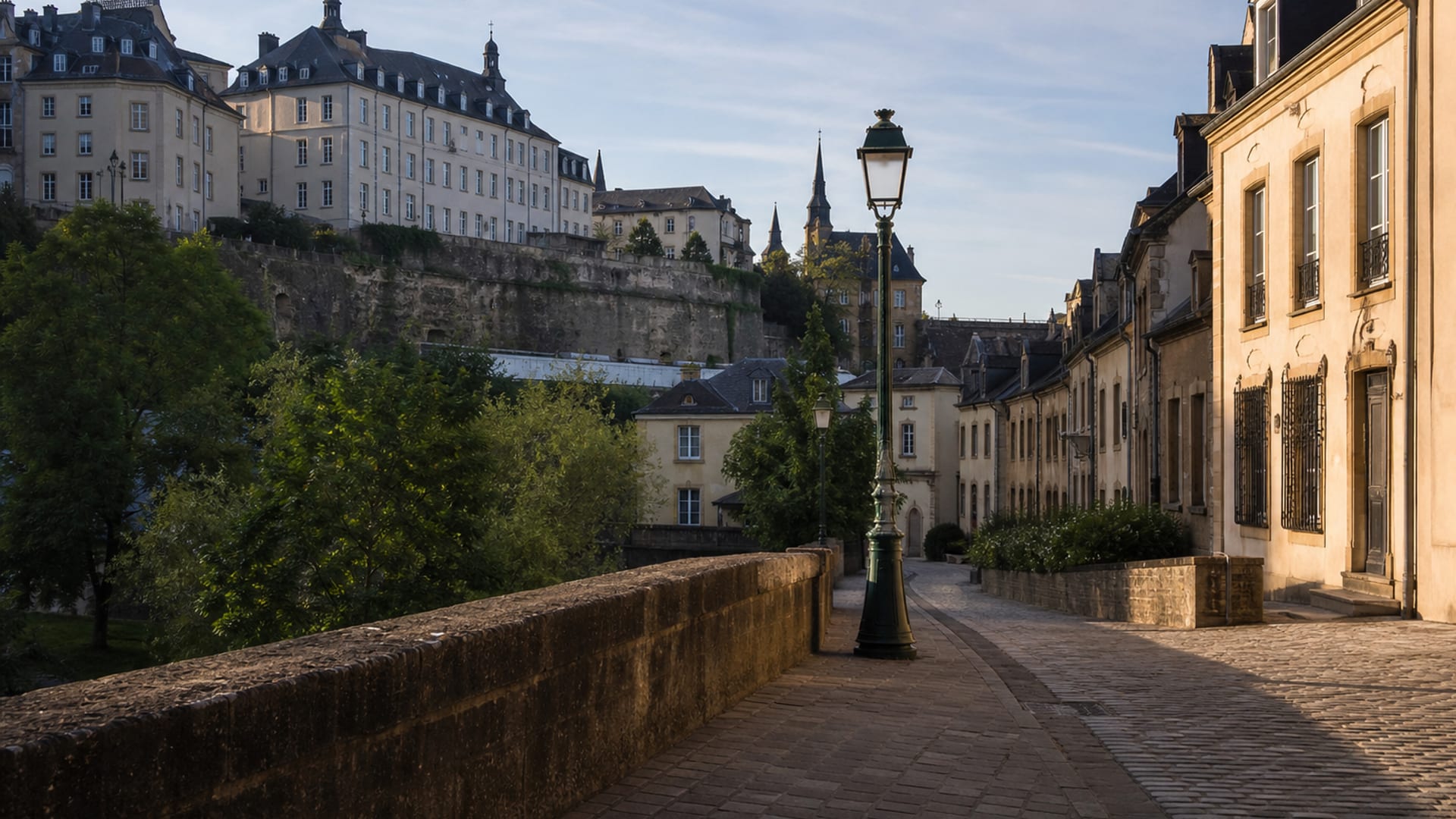
Ville Haute forms Luxembourg City’s historic upper center, with the Grand Ducal Palace, Notre-Dame Cathedral, Place d’Armes, shops, restaurants, and fortress viewpoints packed into a compact district. Hotels range from smaller boutique properties to luxury stays.
Best for: First visits, historic sights, restaurants, and central walks
What to expect: Pedestrian streets, squares, cafés, government buildings, shops, and steady daytime activity
Hotel prices: Nightly rates at well-reviewed properties typically range from €220 to €400 ($255–$460).
Distance to major sights: The Grand Ducal Palace and Notre-Dame Cathedral are both within the historic district.
Quietness: Smaller streets become less active once shops and restaurants close.
Main trade-off: Accommodation is expensive, particularly around the main squares and pedestrian streets.
Good to know: Staying here reduces the number of uphill journeys between the valleys and the historic center.

Gare surrounds Luxembourg Central Station south of the old town and has hotels, bakeries, restaurants, and shops. It is practical for rail arrivals and airport access while keeping Ville Haute close enough to reach by tram, bus, or a longer walk.
Best for: Rail travelers, transport access, short stays, and a broader hotel range
What to expect: Busy station streets, hotels, restaurants, shops, buses, and regular pedestrian traffic
Hotel prices: Rooms in well-reviewed properties generally cost €140–€260 ($160–$300) per night.
Distance to major sights: The tram reaches the central districts quickly, while the station itself is within the neighborhood.
Quietness: Streets away from the station frontage are generally less exposed to noise.
Main trade-off: The surroundings feel more commercial and less historic than Ville Haute.
Good to know: Choose a hotel a few blocks from the station if you want transport convenience with less street noise.
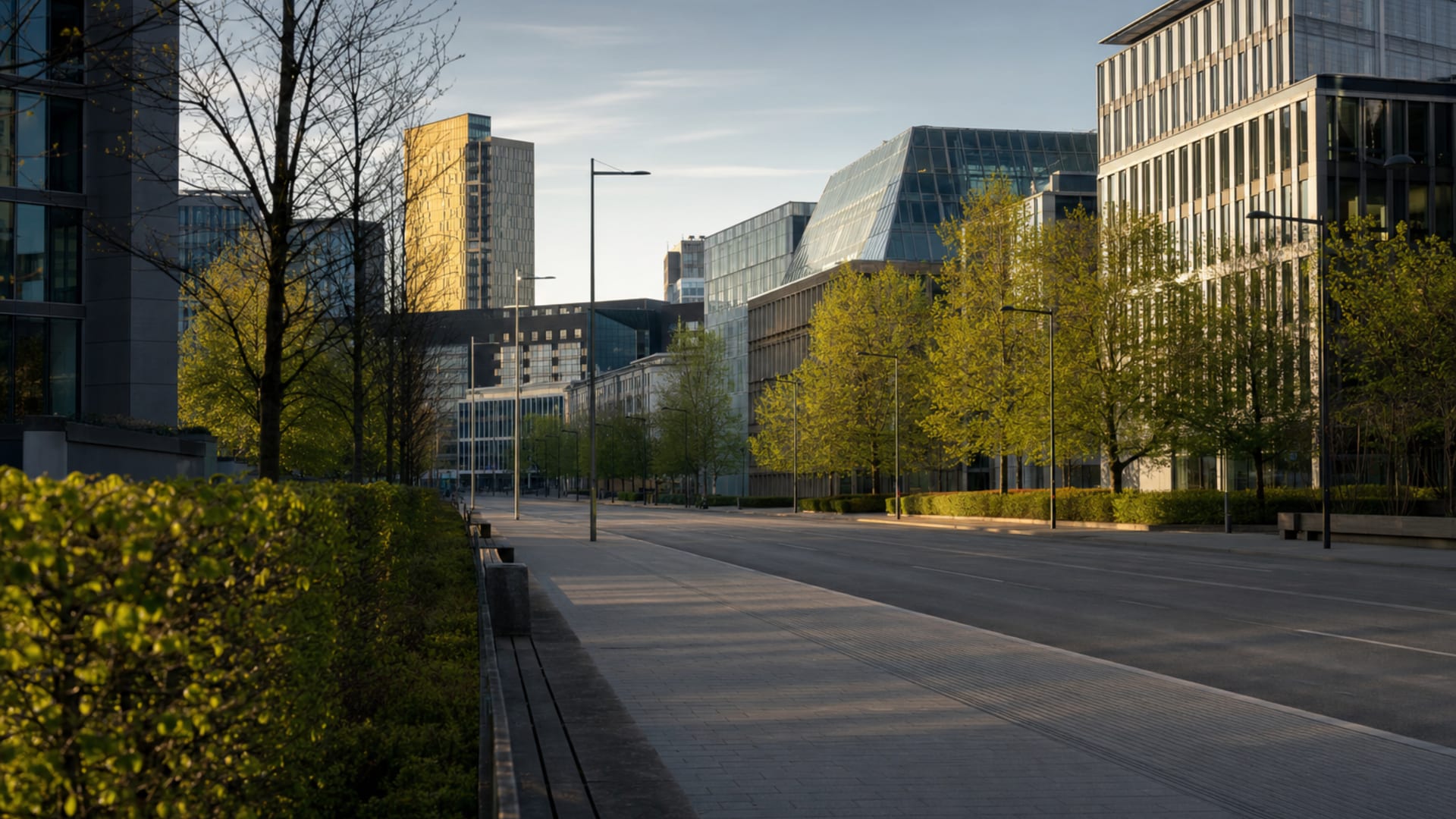
Kirchberg is the city’s modern institutional district, with EU buildings, the Philharmonie, museums, newer hotels, and contemporary residential developments. The tram provides direct access to the airport and central districts, making the area particularly useful for business travel.
Best for: Business trips, museums, newer hotels, and airport tram access
What to expect: Modern architecture, offices, cultural institutions, wide streets, and heavy weekday activity
Hotel prices: Hotels in the district commonly charge €170–€320 ($200–$370) per night.
Distance to major sights: The Philharmonie and Mudam are nearby, while Ville Haute is a short tram ride southwest.
Quietness: Office areas become considerably less active after the working day ends.
Main trade-off: Traditional restaurants and historic streets are concentrated farther west in the old town.
Good to know: The direct tram makes this district particularly convenient for both Luxembourg Airport and Gare.
Belair, Gasperich, and farther residential districts can suit longer stays or specific appointments but add unnecessary travel time for a sightseeing-focused visit. Ville Haute, Gare, and Kirchberg provide more practical access to major attractions.
Hotel deals
Getting around Luxembourg
Luxembourg’s public buses, trams, and second-class trains are free nationwide, so most city journeys require no ticket or fare.

Tram
for the airport, Gare, and Kirchberg
Luxtram links Luxembourg Airport (LUX), Kirchberg, the center, and Gare. Second-class public transport is free, so you don’t need a ticket. Use the tram for most airport and cross-city journeys.

Bus
for neighborhoods beyond the tram line
City and regional buses cover districts not directly served by Luxtram. Standard public bus travel within Luxembourg is free, with no ticket or validation required for domestic journeys.

Taxi
for convenience or late hours
Licensed taxis and app-based rides are useful when luggage, late hours, or steep elevation changes make public transport inconvenient. Prices vary by distance, traffic, and operator, so check the quoted fare before booking. A trip from the airport downtown takes 20 minutes and costs €30 to €50 ($35–$60).
*Prices are based on rates updated as of September 2026 and may change at the time of travel.
Use the tram for the airport and principal districts, buses for routes outside the tram corridor, and taxis when you want a convenient trip.
Iconic places in Luxembourg
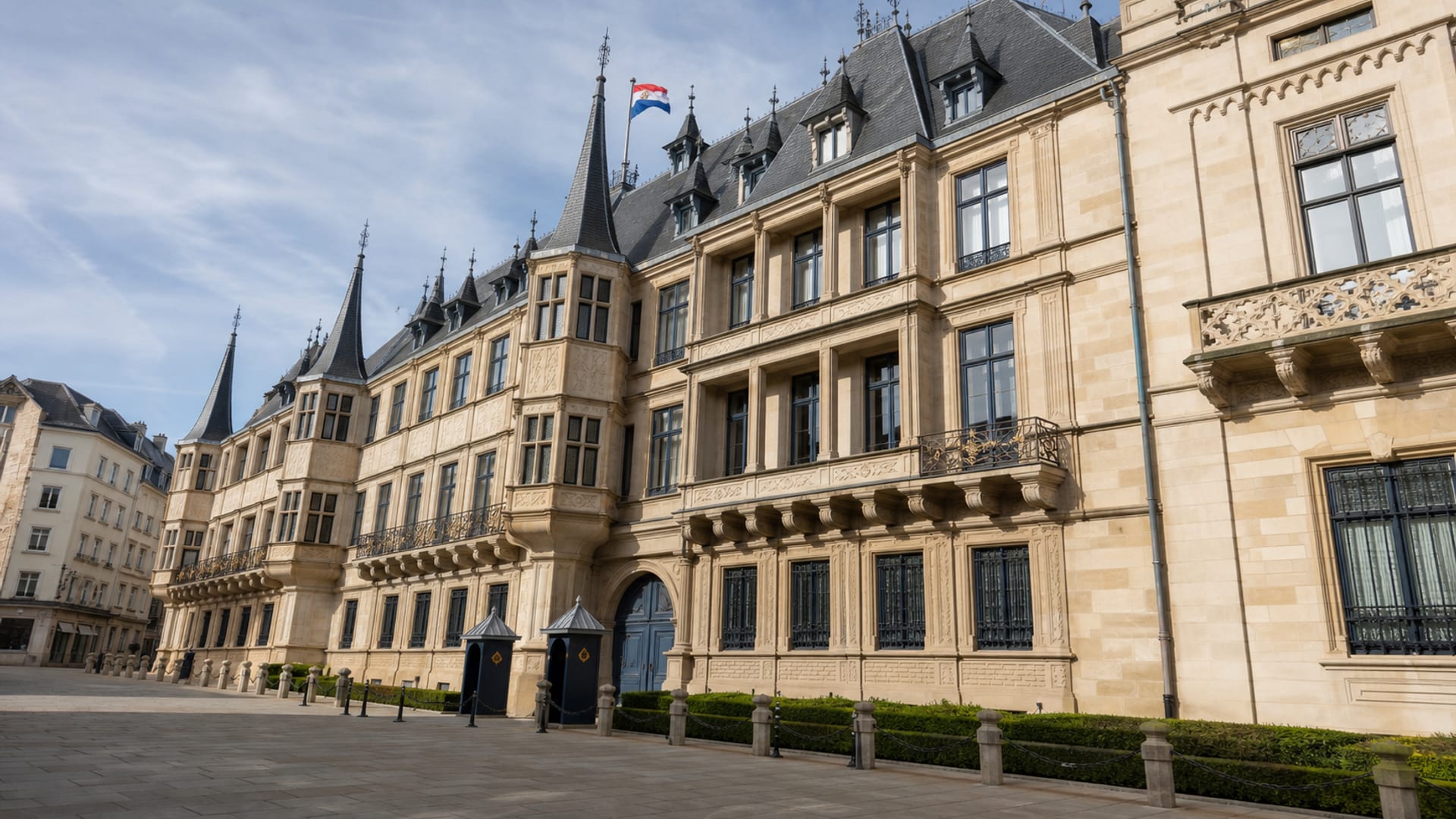
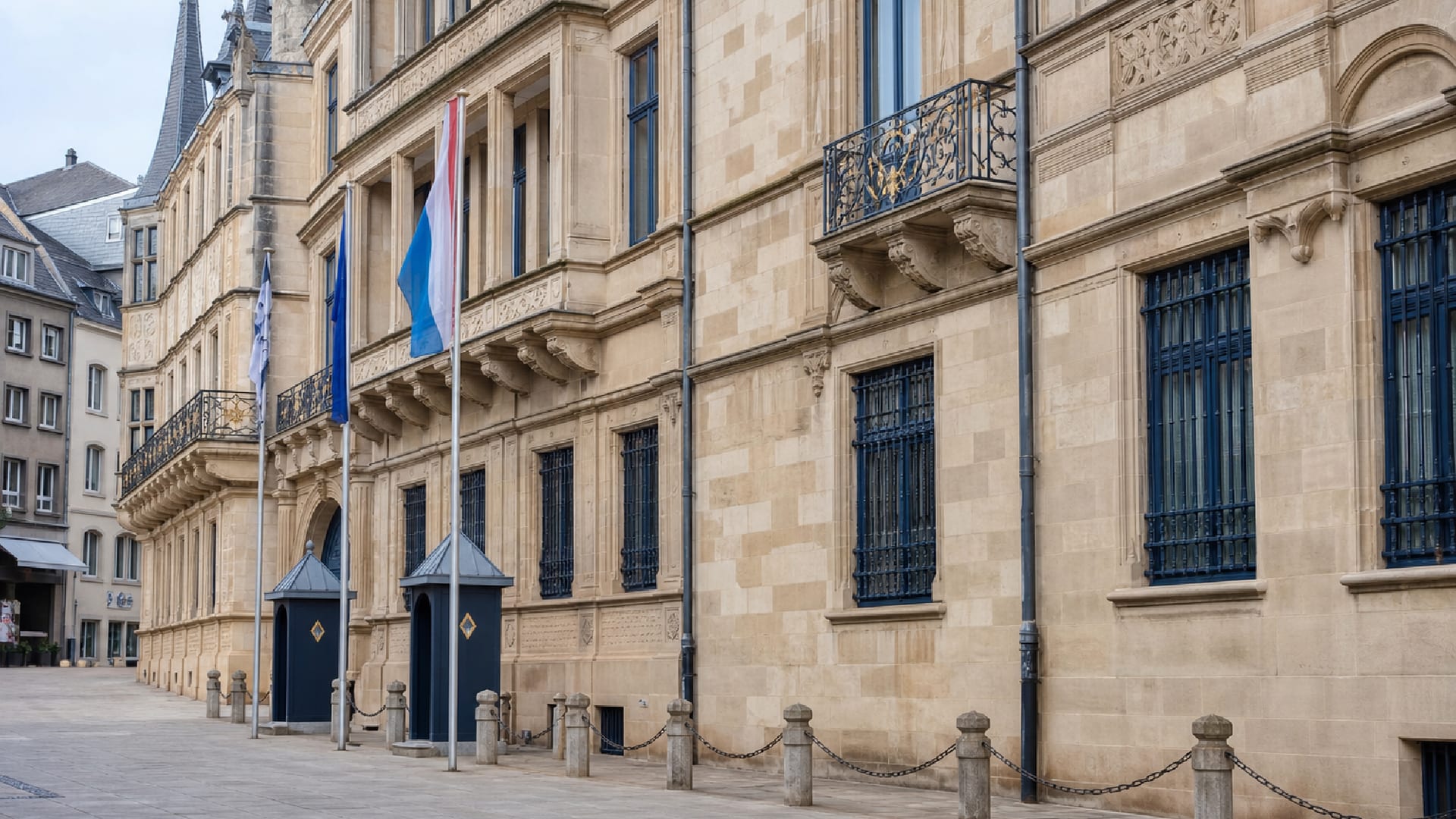
Grand Ducal Palace
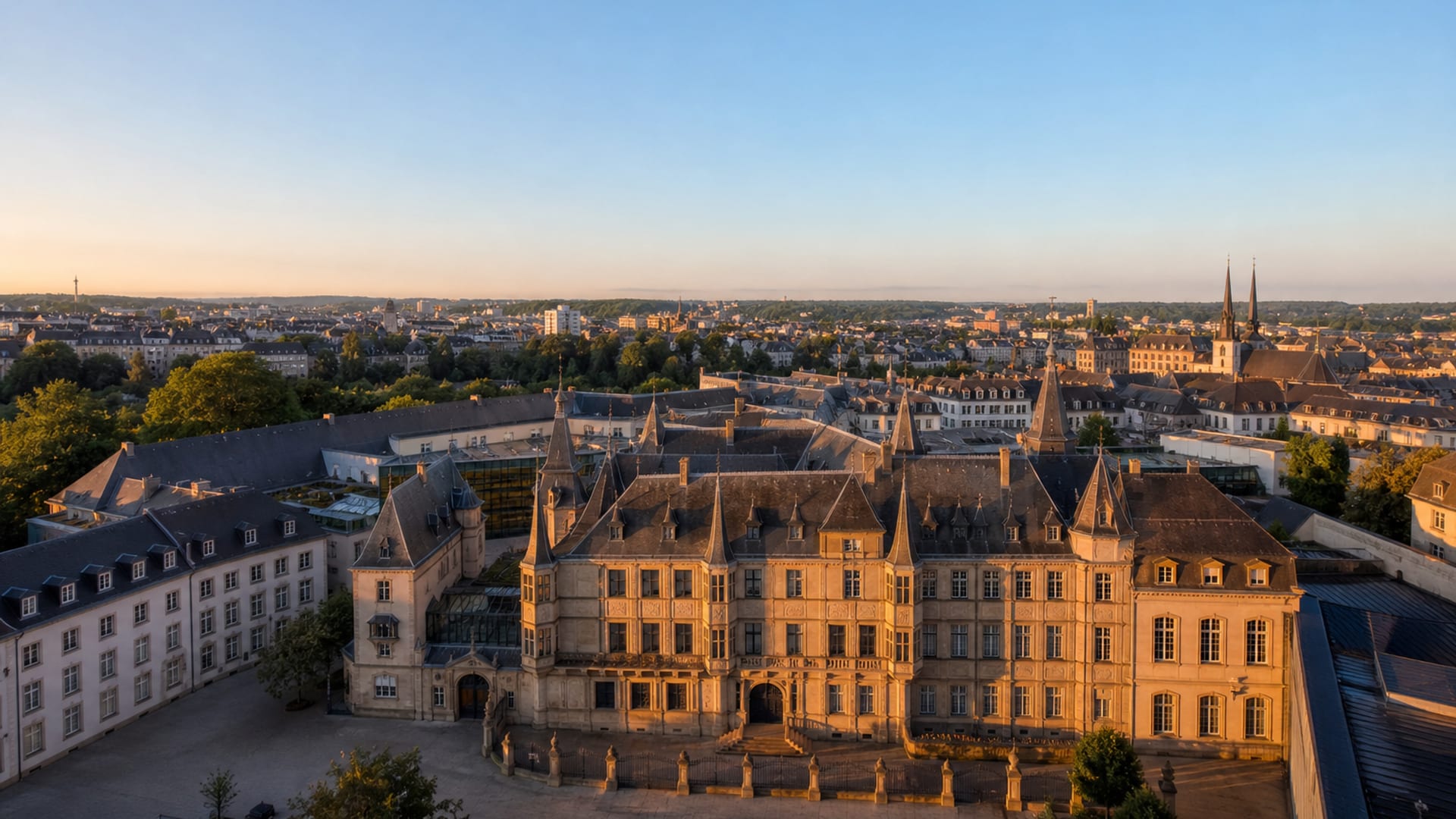
Built in the late 16th century, the Grand Ducal Palace combines Renaissance façades with formal state interiors used for official duties. Guided visits reveal reception rooms, the Grand Duke’s office, and ceremonial spaces normally closed to the public.
Time needed: 1 hour
Entry: The palace is open for guided tours during Summer; 2026 visits ran from July 18 to August 30. Tickets cost €18 ($21). Visit the official site for details.
Tip: Outside tour season, you can admire the façade while exploring the surrounding old town.
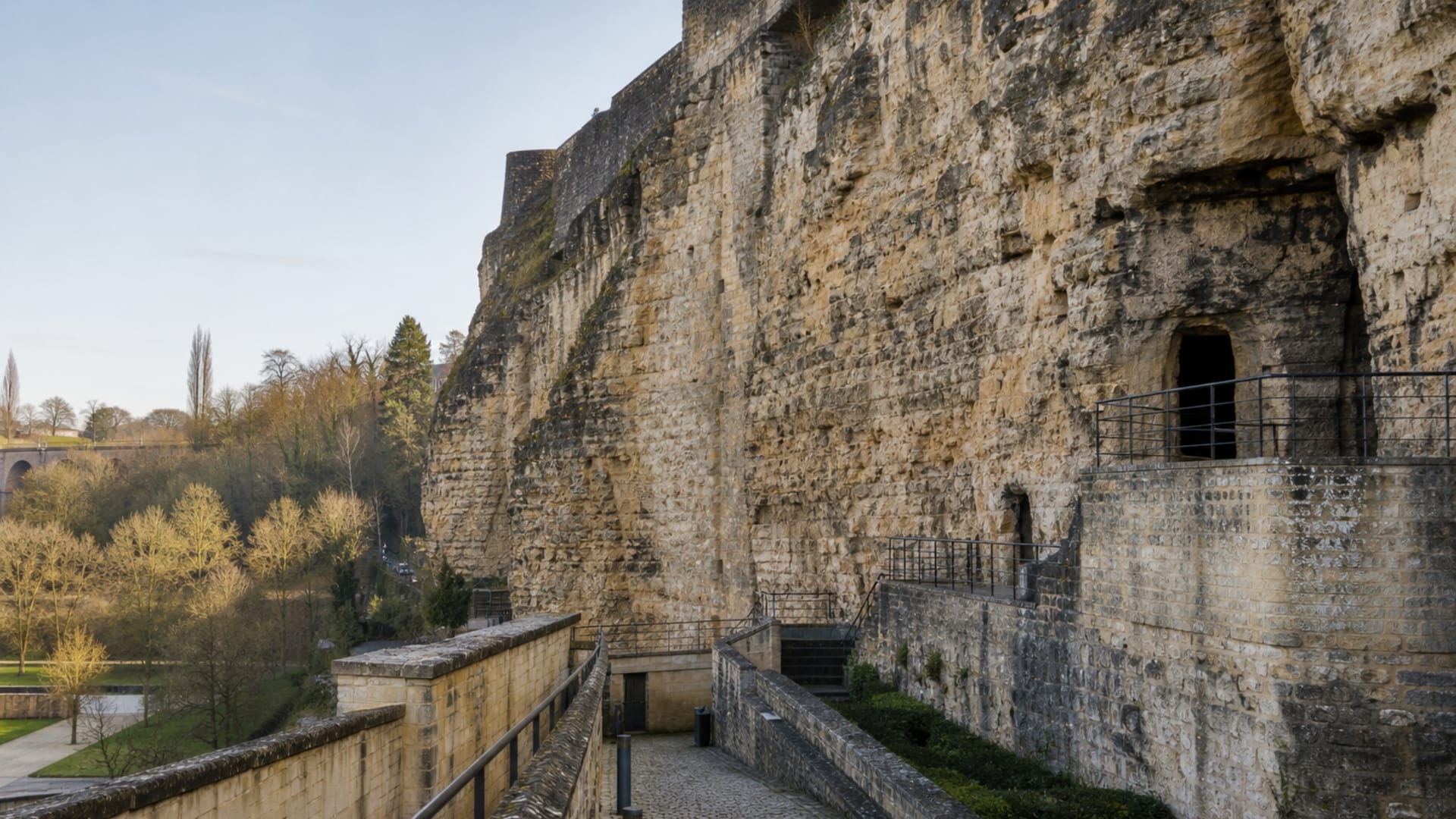
Bock Casemates
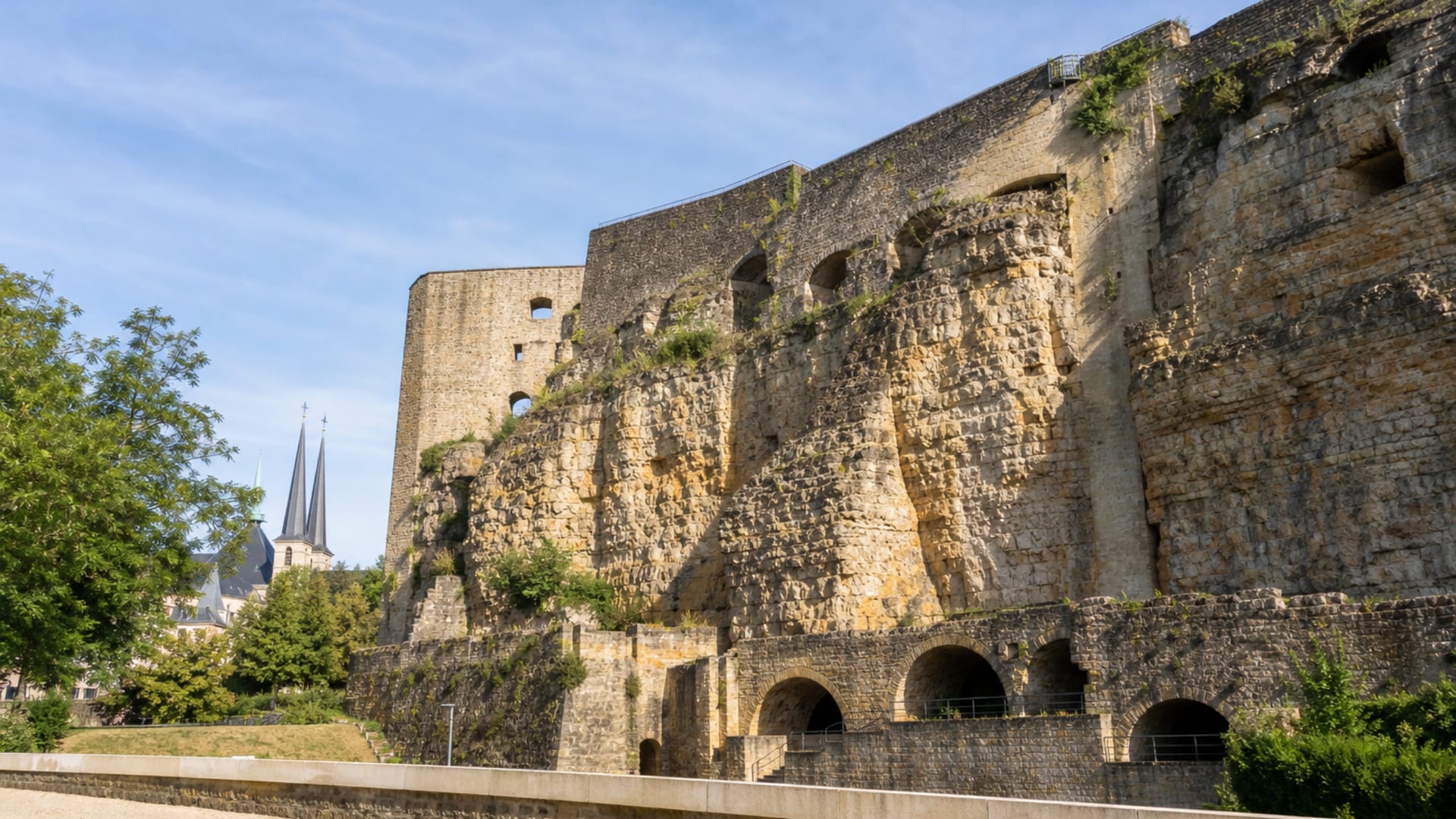
The Bock Casemates form part of Luxembourg’s former fortress, with tunnels, chambers, stairways, and openings cut into the sandstone cliffs above the Alzette. The passages also provide unusual views across Grund and the fortified lower city.
Time needed: 45 minutes
Entry: Adult tickets cost €11 ($13). Visit the official website for more details.
Tip: Wear shoes with good grip because the stone passages include uneven stairs.
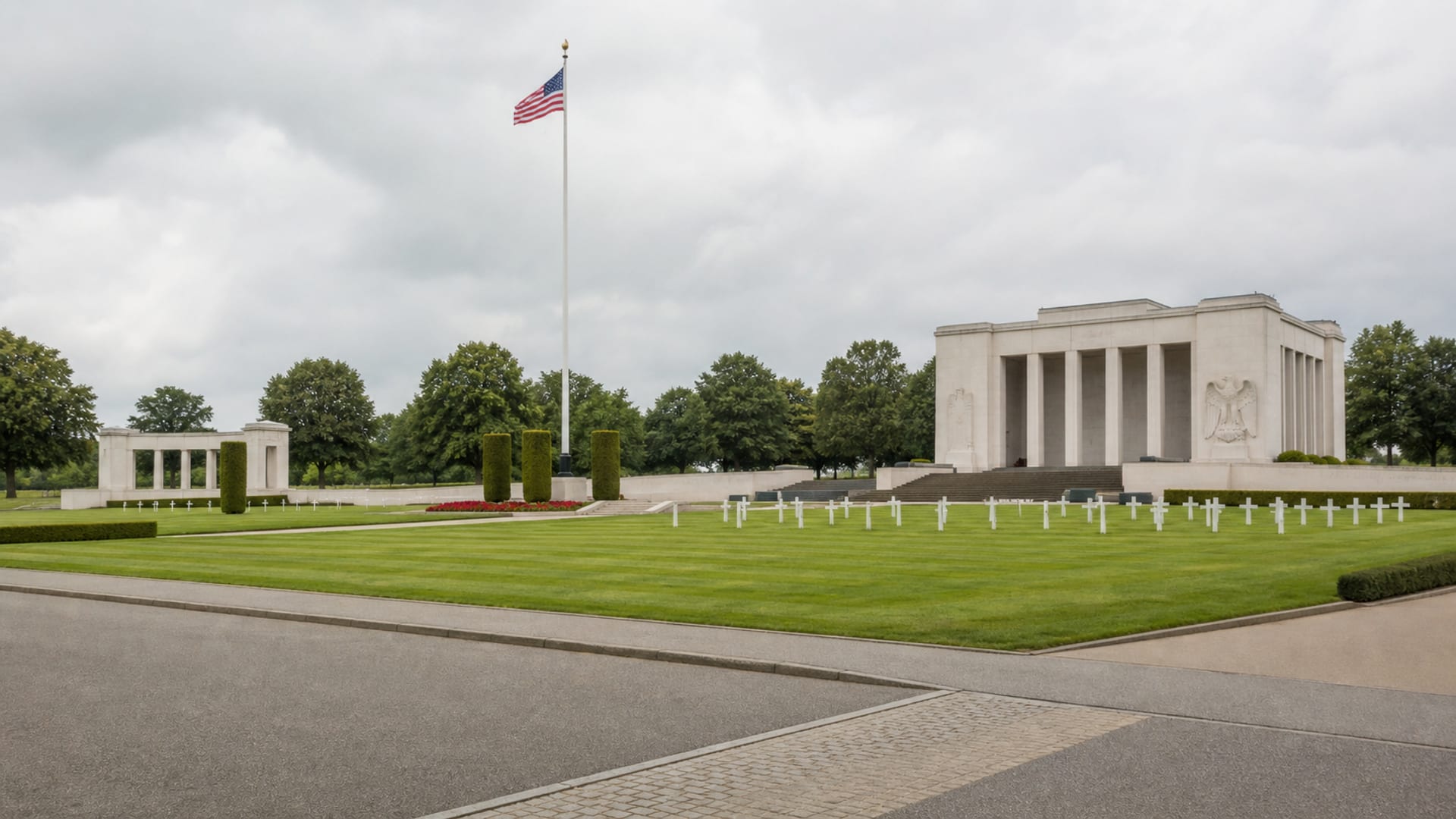
Luxembourg American Cemetery
Luxembourg American Cemetery contains 5,070 graves from World War II, including that of General George S. Patton Jr. The landscaped site also includes a memorial chapel, maps of military operations, and the names of 371 missing service members.
Time needed: 1 hour
Entry: Free; open daily from 9:00 am to 5:00 pm except December 25 and January 1. Visit the official site for details.
Tip: Allow time for the visitor building before walking through the burial sections.
Overlooked places in Luxembourg

Pétrusse Casemates
The Pétrusse Casemates cut beneath the old fortress near Place de la Constitution, with underground galleries and stone passages that show another layer of Luxembourg’s defensive system.
Time needed: 45 minutes
Entry: Adult tickets cost €12.60 ($14.70). Visit the official site for details.
Tip: Reserve a time slot before visiting during busy periods.

Am Tunnel
Am Tunnel occupies an underground passage beneath the city and hosts changing contemporary art exhibitions in an unusual setting linked to the former headquarters of Spuerkeess.
Time needed: Approximately 1 hour
Entry: Admission is free. Visit the official site for details.
Tip: Use it as a short indoor stop between Gare and Ville Haute.
What to eat in Luxembourg
Luxembourgish food uses pork, potatoes, beans, and cheese to create simple dishes with influences from the country’s position between France, Germany, and Belgium.
Judd mat Gaardebounen
Judd mat Gaardebounen pairs smoked pork collar with broad beans and potatoes and is one of Luxembourg’s best-known traditional dishes. Um Dierfgen in the city center currently serves it among its house specialties.
Bouneschlupp
Bouneschlupp is a thick green bean soup traditionally made with potatoes, bacon, cream, and sometimes sausage. Komptoir currently serves a version with vegetables, bacon, and sausage.
Kachkéis
Kachkéis is a soft, spreadable cooked cheese commonly eaten on bread and sometimes accompanied by mustard or pickles. It is widely associated with traditional Luxembourgish cooking and can also be found in shops and markets.
Gromperekichelcher
Gromperekichelcher are fried potato cakes seasoned with onion, parsley, and spices and are particularly common at markets and festivals. Komptoir offers them with apple compote as part of its current menu.
Best time to visit Luxembourg
Luxembourg City has mild summers and cool winters, while spring and early fall generally provide the most comfortable conditions for sightseeing.
Best for: Old-town walks, casemates, parks, and longer sightseeing days
What you get: Temperatures generally rise from 45°F to 66°F (7°C–19°C), with longer daylight through May.
Trade-offs: Rain and cool evenings can interrupt longer outdoor plans.
Best for: Palace tours, valley walks, terraces, and full sightseeing days
What you get: Temperatures commonly range from 57°F to 79°F (14°C–26°C), with the longest daylight of the year.
Trade-offs: Central hotels and major attractions receive more visitors during peak dates.
Best for: Museums, food, fortress walks, and cooler sightseeing
What you get: Temperatures generally fall from 66°F to 41°F (19°C–5°C), with mild conditions early in the season.
Trade-offs: Shorter days and wetter weather become more noticeable by November.
Best for: Museums, restaurants, seasonal markets, and shorter city breaks
What you get: Temperatures commonly range from 28°F to 43°F (-2°C–6°C), with fewer visitors outside holiday periods.
Trade-offs: Cold, damp conditions reduce time for valleys, viewpoints, and casemate approaches.
A 5-day plan in Luxembourg
Five days in the city give you enough time to visit Ville Haute, both major casemate systems, Grund, Kirchberg, and the American Cemetery.
Land at Luxembourg Airport (LUX), then take the free tram toward Kirchberg, Ville Haute, Gare, or the stop closest to your hotel. Public buses, trams, and second-class trains are free. After check-in, keep the evening near your hotel. If you stay in Ville Haute, walk around Place d’Armes and Place Guillaume II before dinner and save the casemates for the following morning.
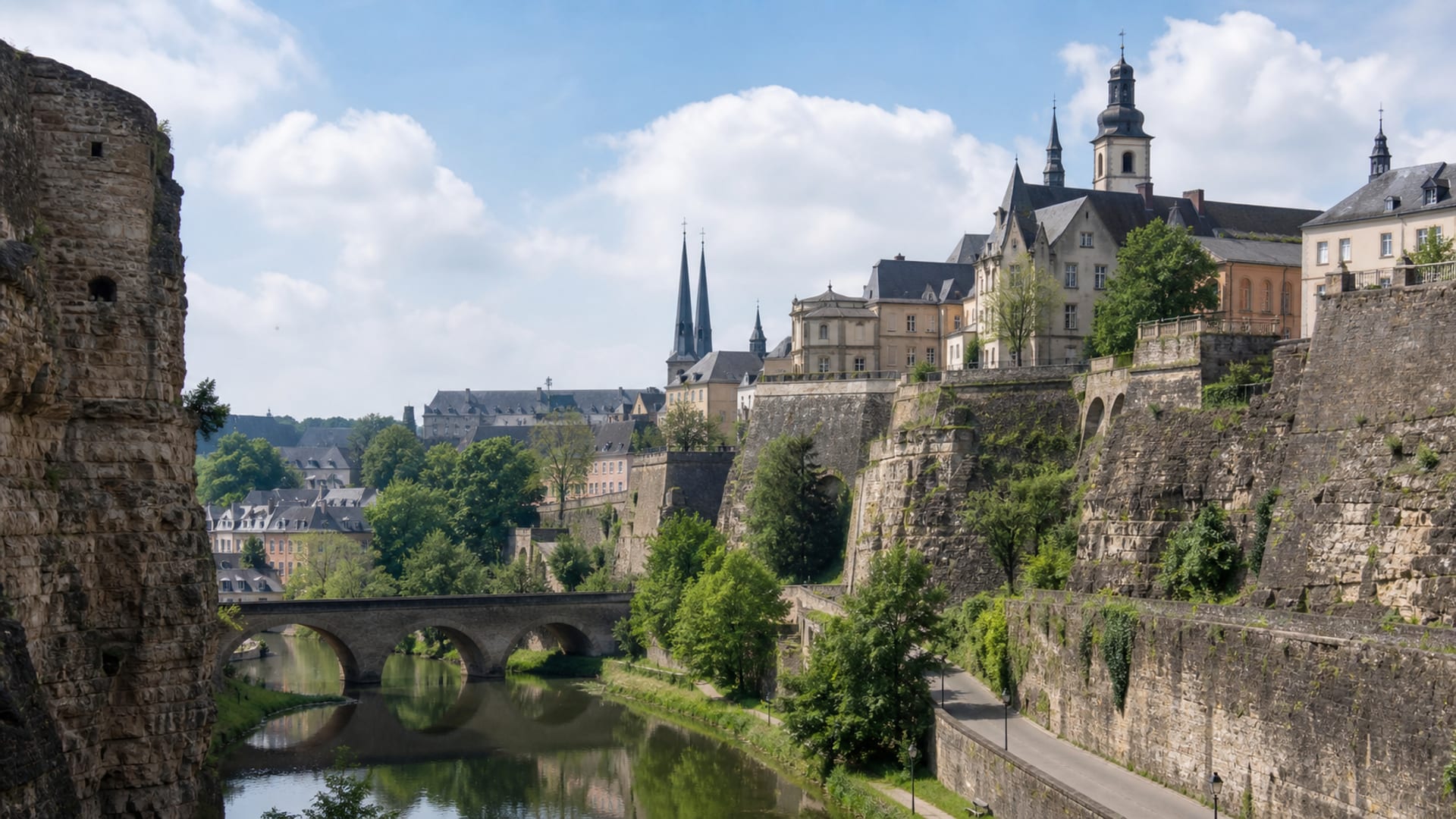
Begin your day at the Grand Ducal Palace and allow 30 to 45 minutes for the surrounding streets and façade if seasonal tours are unavailable. Walk a few minutes to Notre-Dame Cathedral, then continue to Bock Casemates and spend 1 to 1.5 hours underground. Adult tickets cost €11 ($13). Afterward, walk downhill into Grund for lunch and riverside sightseeing before using the lift or public transport to return to the upper city.
Start at Pétrusse Casemates near Place de la Constitution and allow 45 minutes for the timed underground route. Adult admission costs €12.60 ($14.70). Continue through the Pétrusse valley or toward Gare, depending on the weather, and stop for lunch in the station district. Spend the afternoon at Am Tunnel before returning to Ville Haute by tram or on foot instead of climbing back and forth several times.
Take the tram to Kirchberg in the morning and spend time around the Philharmonie, Mudam, and the district’s contemporary architecture. After lunch, continue by bus or taxi to Luxembourg American Cemetery, about 3 miles (5 km) east of the center. Allow 1 hour for the memorial, chapel, and graves before returning to the city. The cemetery is free and is normally open from 9:00 am to 5:00 pm.
Keep your final morning around Ville Haute or Gare for shopping, coffee, or any central sight you missed earlier. Leave your luggage at the hotel instead of returning to Kirchberg or the cemetery before departure. Take the free tram or bus to Luxembourg Airport once you are ready to leave. Because public transport requires no standard second-class ticket, the main planning issue is allowing enough time for the ride, check-in, and security.
Business-class flights from the US to Luxembourg
There are currently no nonstop flights from New York (JFK) or Los Angeles (LAX) to Luxembourg Airport (LUX), so both routes require at least one connection.
New York (JFK) to Luxembourg (LUX)
Travelers can fly from John F. Kennedy International Airport (JFK) to Luxembourg with British Airways, KLM, SWISS, Scandinavian Airlines, Lufthansa, and other European carriers. Common hubs include London Heathrow (LHR), Amsterdam (AMS), Zurich (ZRH), Frankfurt (FRA), and Copenhagen (CPH). The flights take between 9.5 and 15 hours, and typically cost $3,000–$5,800.
Los Angeles (LAX) to Luxembourg (LUX)
Flights from Los Angeles International Airport (LAX) also require at least one connection, commonly through London Heathrow (LHR), Amsterdam (AMS), Frankfurt (FRA), Zurich (ZRH), Copenhagen (CPH), or another European hub. These flights are operated by airlines like SWISS, Lufthansa, KLM, British Airways, and LOT. The fastest itineraries take 12 hours, while the longest ones can take up to 28 hours. Round-trip business-class tickets on this route usually cost between $4,000 and $9,800.
Luxembourg unfolds across more than one level
Luxembourg City changes noticeably between the streets above the valleys and the districts below them. Ville Haute contains the palace, cathedral, and fortress history; Grund brings you down to the river, while Kirchberg adds a very different modern side of the capital. Travelers planning to visit this stunning city can reach out to our AranGrant experts for assistance with booking business-class flights and hotels.