

Chapters:

Need help with your trip?
Our support team is available 24/7. Request a callback or call us directly at (833) 619-0908
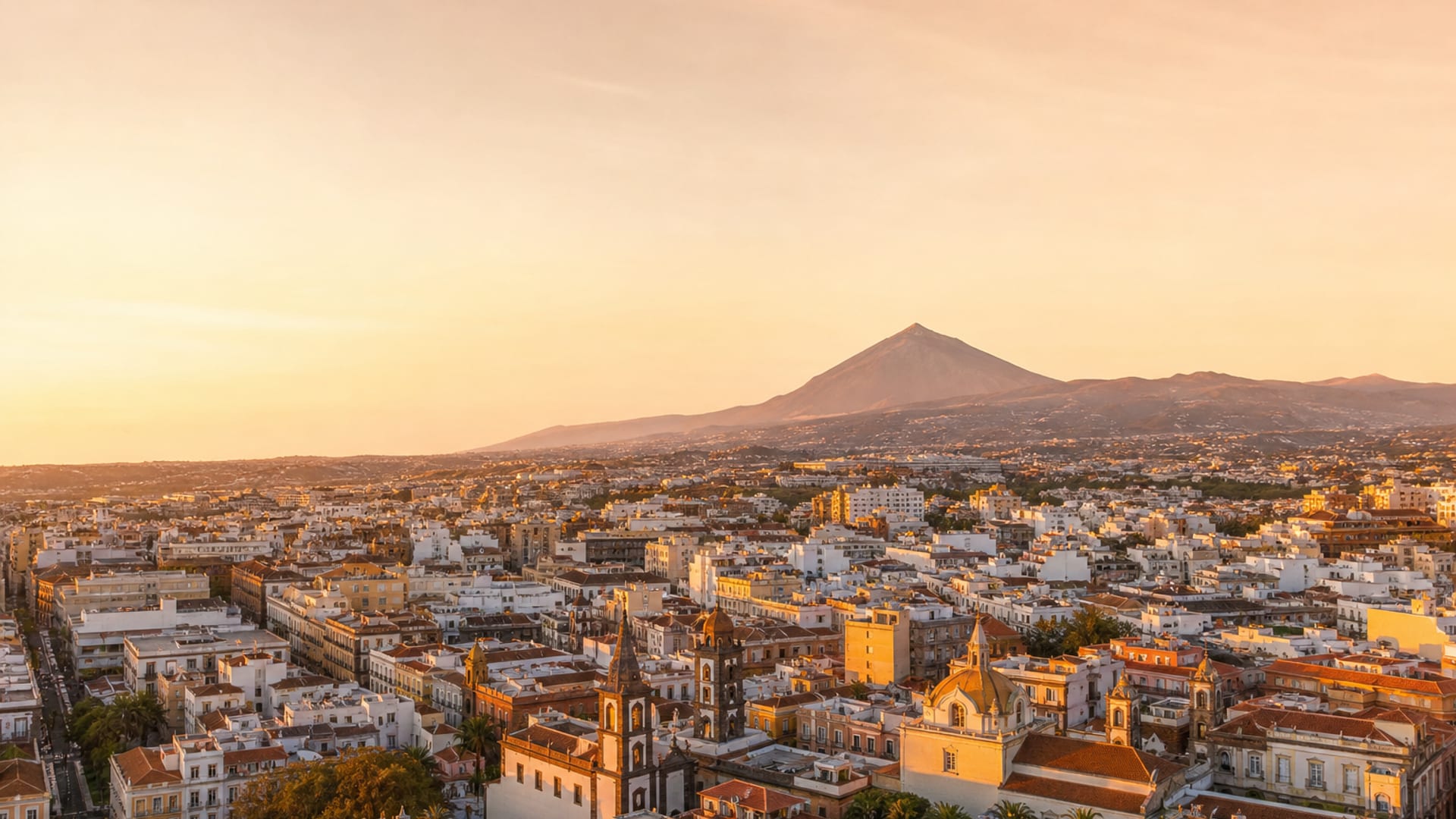
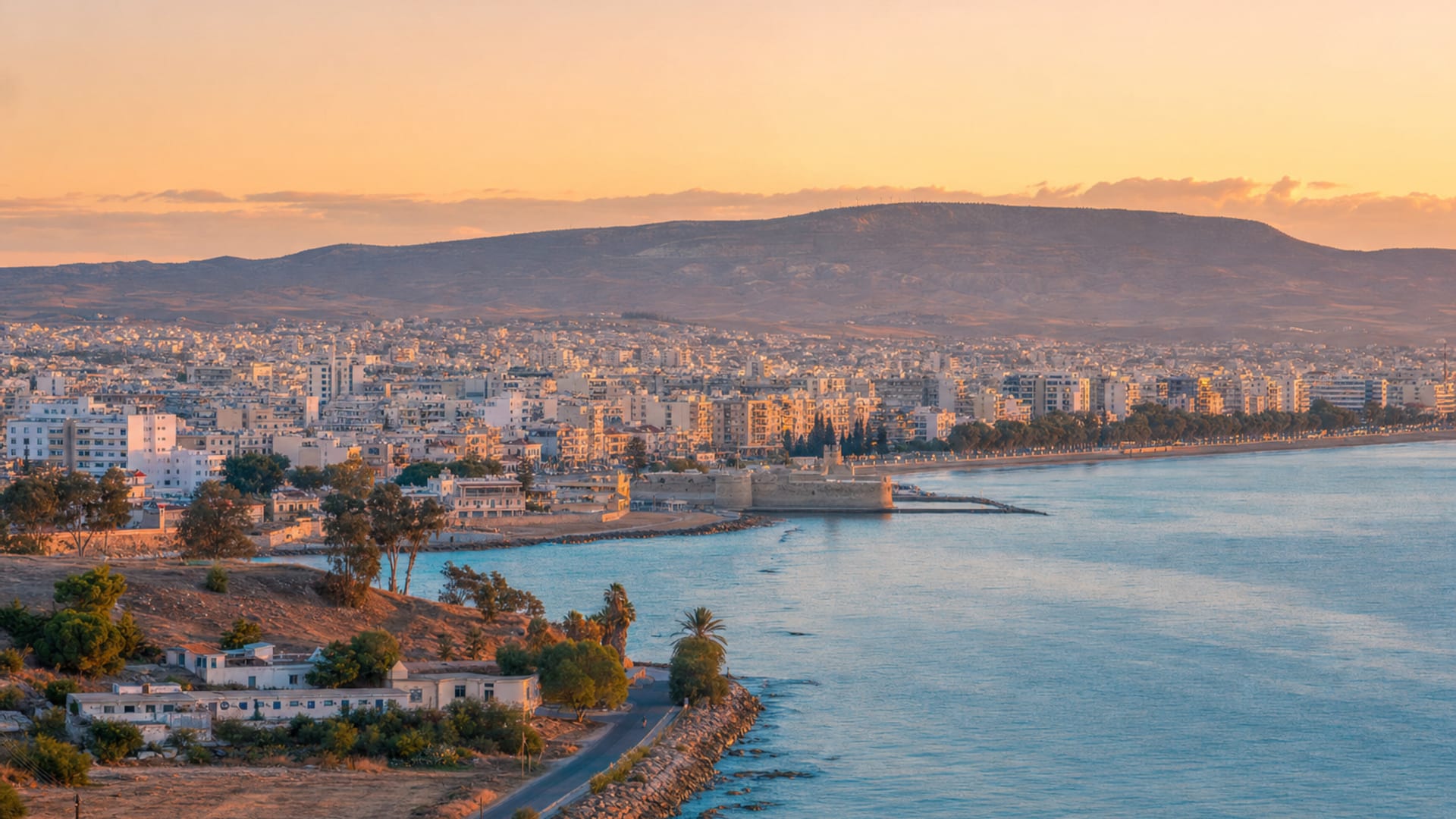
Larnaca is a coastal city in southeastern Cyprus and one of the island’s oldest continuously inhabited settlements. Its history stretches back more than 3,000 years to ancient Kition, which grew into an important port and trading center in the eastern Mediterranean.
Centuries of Greek, Byzantine, Ottoman, and British rule have all left their mark on the city. Today, Larnaca is a modern Cypriot city with warm weather for much of the year and a long coastline along the Mediterranean Sea.
This guide covers everything you need to know about where to stay, what to eat, how to get around, when to visit, what to see, and how to spend five days in Larnaca.
Useful things to know
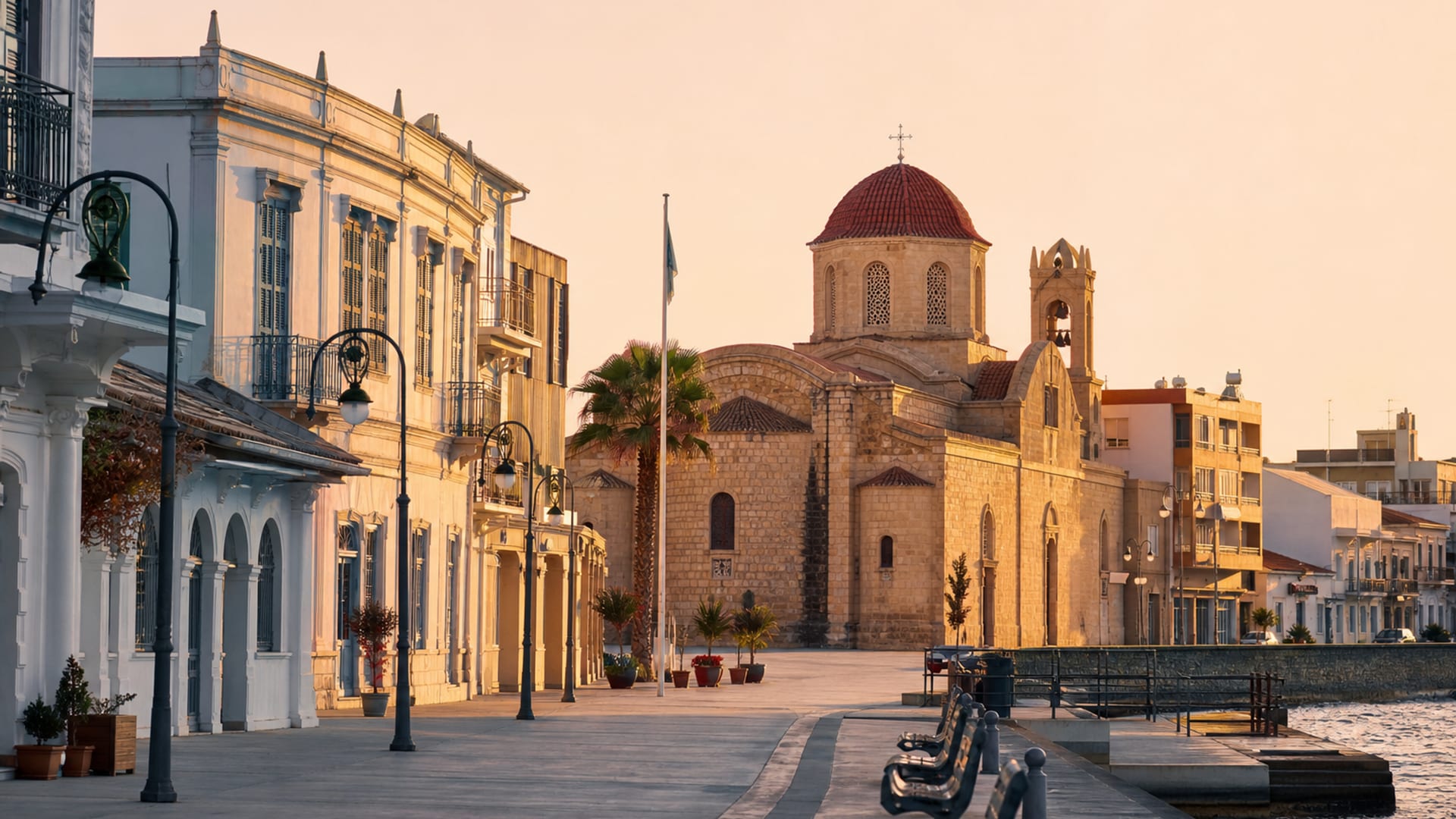

Main language(s): Greek is the main language. English is widely spoken in hotels, restaurants, shops, and other visitor-oriented businesses.
Γεια σας (YAH sas) – Hello
Παρακαλώ (pah-rah-kah-LOH) – Please
Ευχαριστώ (ef-khah-ree-STOH) – Thank you
Μιλάτε αγγλικά; (mee-LAH-teh ahn-glee-KAH) – Do you speak English?
Πόσο κοστίζει; (POH-soh koss-TEE-zee) – How much does it cost?

Currency: Euro (EUR, €)

Cash and cards: Most hotels, restaurants, supermarkets, and shops accept cards. Carry some cash for bus tickets, kiosks, bakeries, and other small purchases.

Tipping: Tipping is optional. Customers in restaurants often round up the bill or leave 5% to 10% after good table service. Small tips are also common for taxi drivers.

Traditional food: Halloumi, sheftalia, koupepia, moussaka

Water and coffee costs: A small bottle of water usually costs €1 to €2 ($1.20 to $2.35). An espresso at a café is often €2 to €3 ($2.35 to $3.50).

Taxis and ride apps: Bolt operates in Larnaca. Licensed taxis are also available at the airport, taxi ranks, and through hotels.

Plug and voltage: Cyprus uses Type G three-pin sockets with a 230V, 50Hz electricity supply. US travelers need a plug adapter.

Dining and shop opening hours: Breakfast is generally served from 7:00 am to 10:00 am. Lunch usually starts at noon, while dinner begins at 7:00 pm. Shop opening hours vary, particularly on Sundays.

Emergency number: Call 112 for police, fire, or medical emergencies.
Where to stay in Larnaca
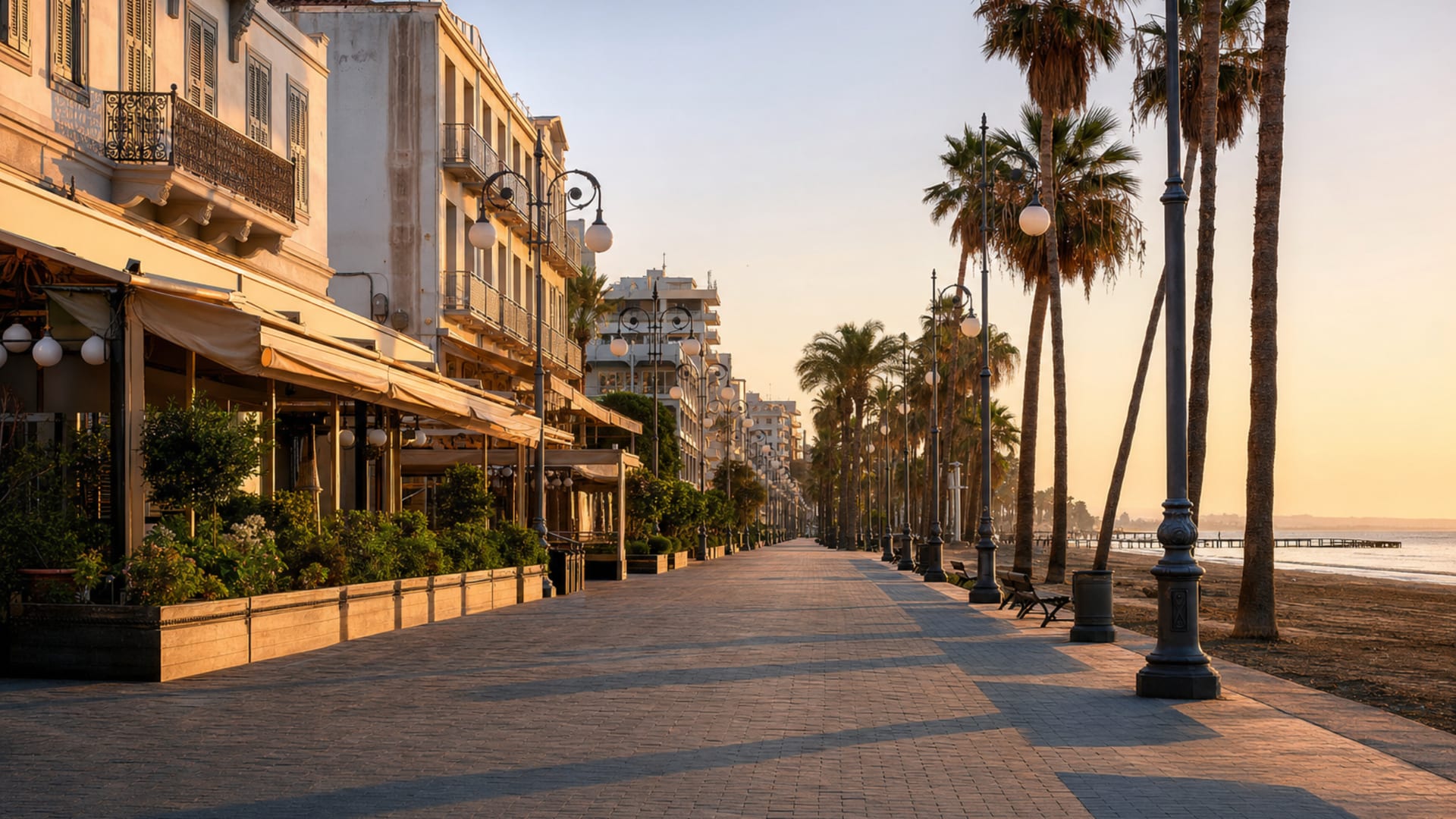
Finikoudes is Larnaca’s main waterfront district and one of the best-known parts of the city. It has a broad seafront, a long sandy beach, and a promenade shaded by rows of palm trees.
Best for: Beach time, dining, and staying close to the waterfront
What to expect: Busy by day with walkers, swimmers, and cafe traffic; evenings bring a lively promenade and more noise.
Hotel prices: Usually about $120 to $240 per night for well-rated stays
Distance to major sights: 5 to 10 minutes on foot to Larnaca Fort and the Old Town, about 15 minutes on foot to the marina
Quietness: Lively in the daytime and evening, with late noise from the promenade and nearby bars.
Main trade-off: Rooms near the beach and main strip can cost more and pick up sound from traffic, especially on weekends.
Good to know: A room facing away from Athinon Avenue can be noticeably quieter in the evening.
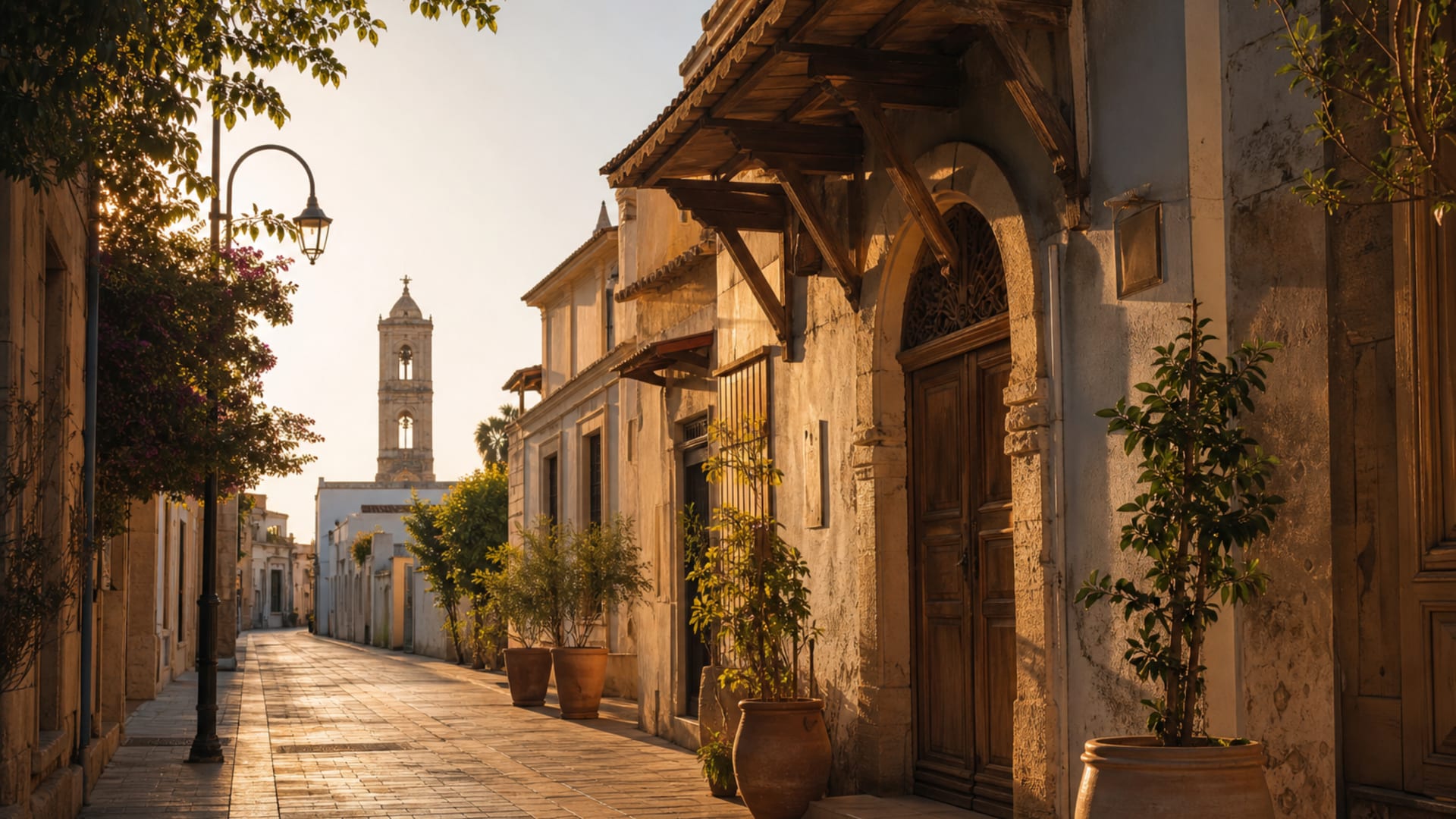
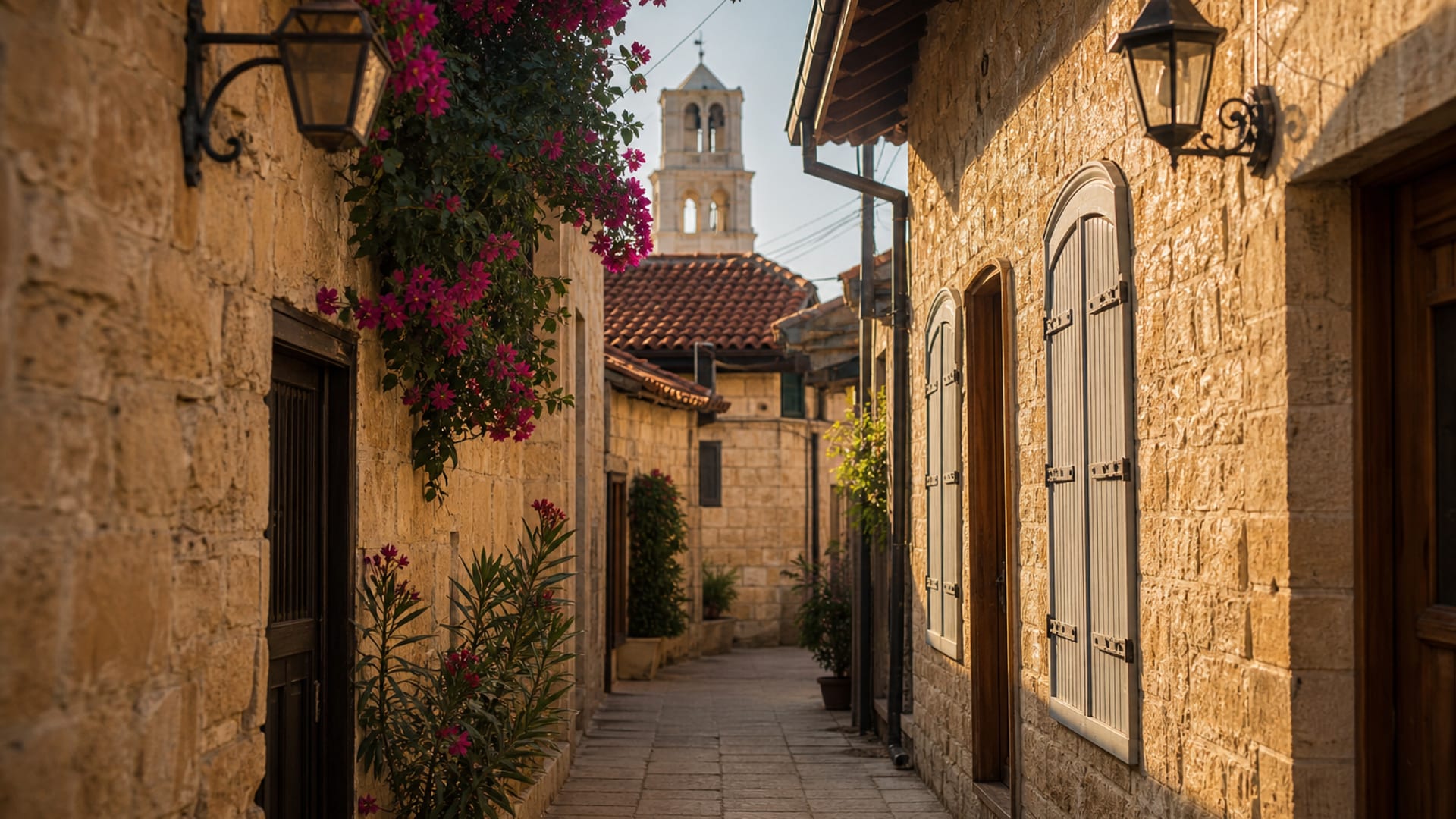
Larnaca’s Old Town is the small historic area behind Finikoudes, with Saint Lazarus Church at its center. Many streets are narrow, and old houses, workshops, bakeries, small shops, and restaurants occupy buildings that are noticeably smaller than those along the modern seafront.
Best for: Sightseeing, heritage walks, and staying in the city center
What to expect: Active streets, daytime foot traffic, and a mix of local life and visitor movement near the main sights.
Hotel prices: Usually about $90 to $180 per night for well-rated stays
Distance to major sights: About 5 minutes on foot to Larnaca Fort, 5 to 10 minutes on foot to Finikoudes, about 10 minutes on foot to Agios Lazaros
Quietness: Brisk during the day, then quieter at night once the shops close, except on streets with late cafes.
Main trade-off: Lodging stock is smaller here, so the best rooms go fast and some buildings have fewer modern amenities.
Good to know: Check how close a taxi can get to the hotel entrance before arriving with heavy luggage.
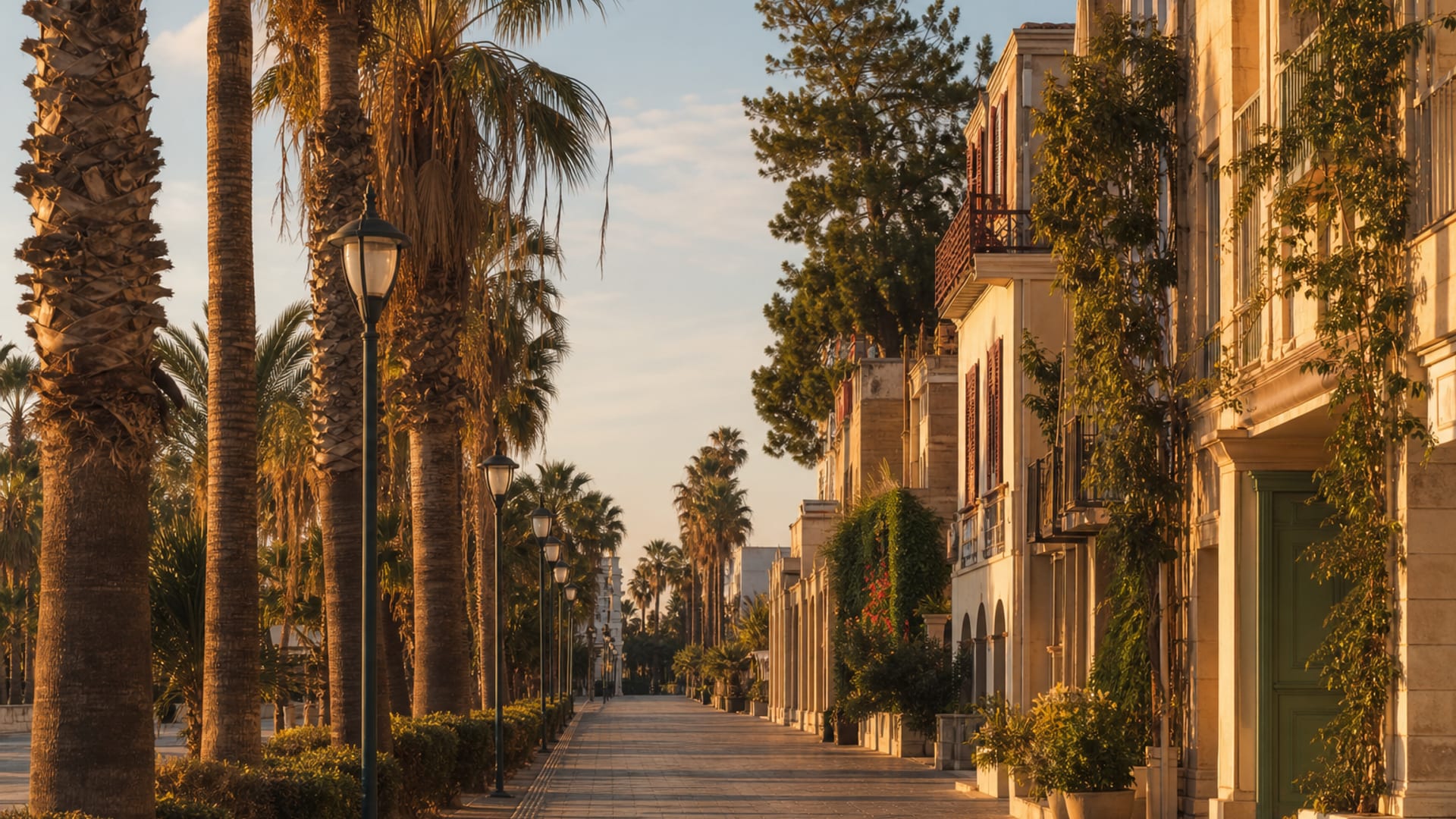
Mackenzie is the beach area south of central Larnaca, only a short distance from the airport. Its broad sandy beach is popular during the day, while restaurants and bars draw people back in the evening.
Best for: Beach stays, apartment hotels, and easy airport access
What to expect: Daytime beach activity, steady restaurant traffic, and a busier strip once dinner starts.
Hotel prices: Usually about $100 to $220 per night for well-rated stays
Distance to major sights: About 10 minutes by taxi to Larnaca Fort, about 15 minutes by taxi to the Old Town, about 10 minutes by taxi to Larnaca (LCA)
Quietness: Calmer in the morning, then noticeably louder in the evening along the restaurant strip.
Main trade-off: You stay a little farther from the Old Town, and the seafront road can bring extra noise at night.
Good to know: Aircraft often pass low over the coast before landing, which has also made Mackenzie a well-known plane-spotting location.
Oroklini Village and the hotels along Dhekelia Road are farther from central Larnaca, so getting to the Old Town and main waterfront usually means taking a bus or taxi. Dromolaxia is close to the airport and Salt Lake, but it isn’t a convenient place to stay if you’ll spend most of your trip in the city center.
Hotel deals
How to get around Larnaca efficiently
Larnaca is relatively small, so getting from one part of the city to another rarely takes much time.

City bus
for airport and cross-city trips
City buses cover routes to the airport, Mackenzie, Dhekelia Road, and other parts of Larnaca. A daytime ride costs €2.70 ($3.15) in cash or €2 ($2.35) with a Motion card, which you can top up before travel. If you pay cash, buy the ticket directly from the driver.

Intercity bus
for day trips
Intercity buses connect Larnaca with Nicosia, Limassol, Ayia Napa, Paralimni, and Paphos. One-way fares are €5 ($5.85) to the first four destinations and €10 ($11.65) to Paphos. You can buy tickets from the driver or at an Intercity Buses sales point.

Taxi and rideshare services
for convenience or late hours
Bolt and licensed taxis are available throughout Larnaca. The regulated fare from Larnaca International Airport (LCA) to Finikoudes is €15 ($17.50) for up to four passengers. Bolt shows the price before booking, while regular taxis use a meter for city trips.
*Prices are based on rates updated as of June 2026 and may change at the time of travel.
Finikoudes, the Old Town, Saint Lazarus Church, and Larnaca Fort are close enough to walk between. Buses are convenient for getting to the airport and places farther along the coast, while taxis are a better option for reaching the Salt Lake or for traveling with luggage.
Iconic landmarks
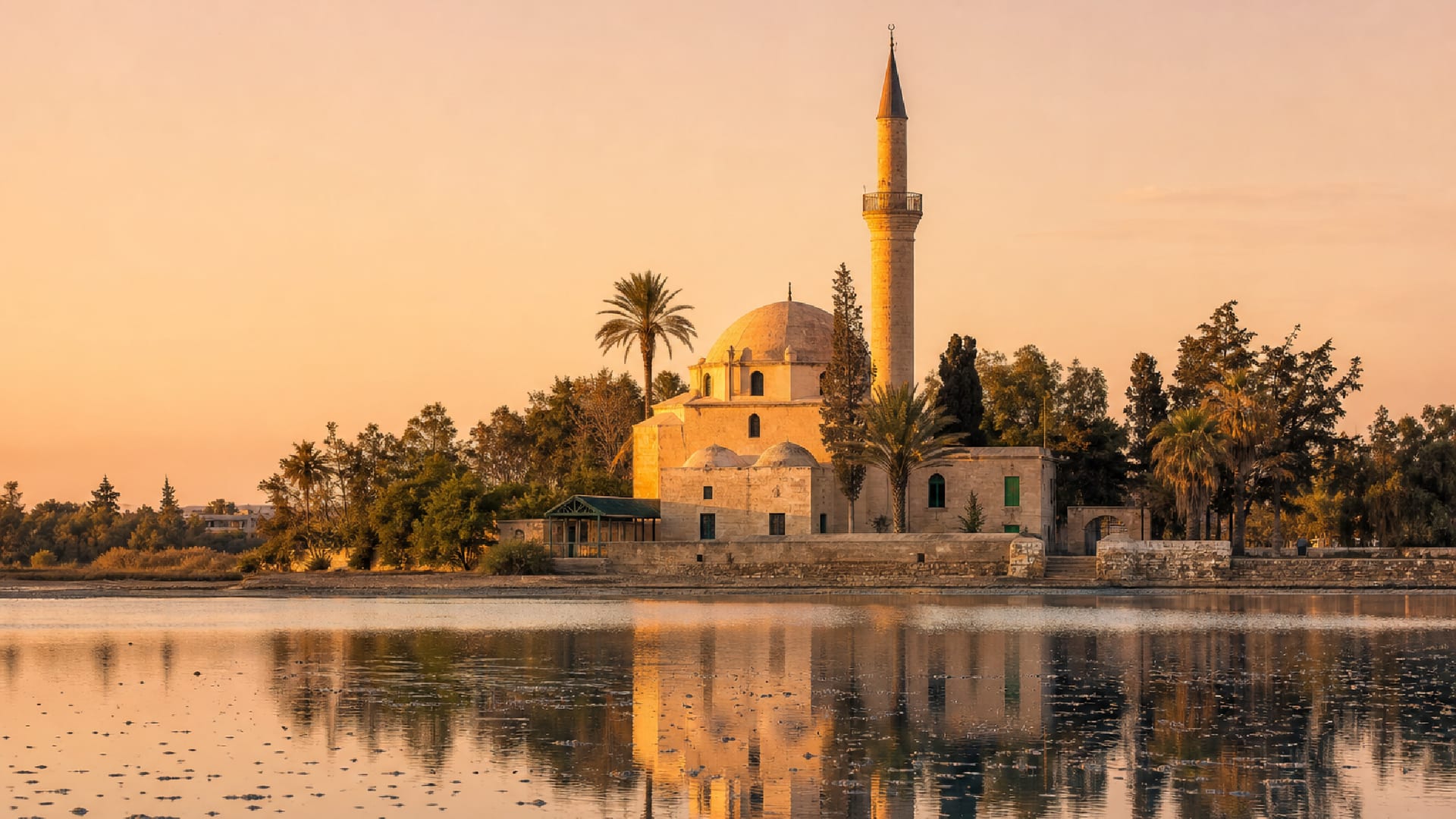
Larnaca Salt Lake and Hala Sultan Tekke
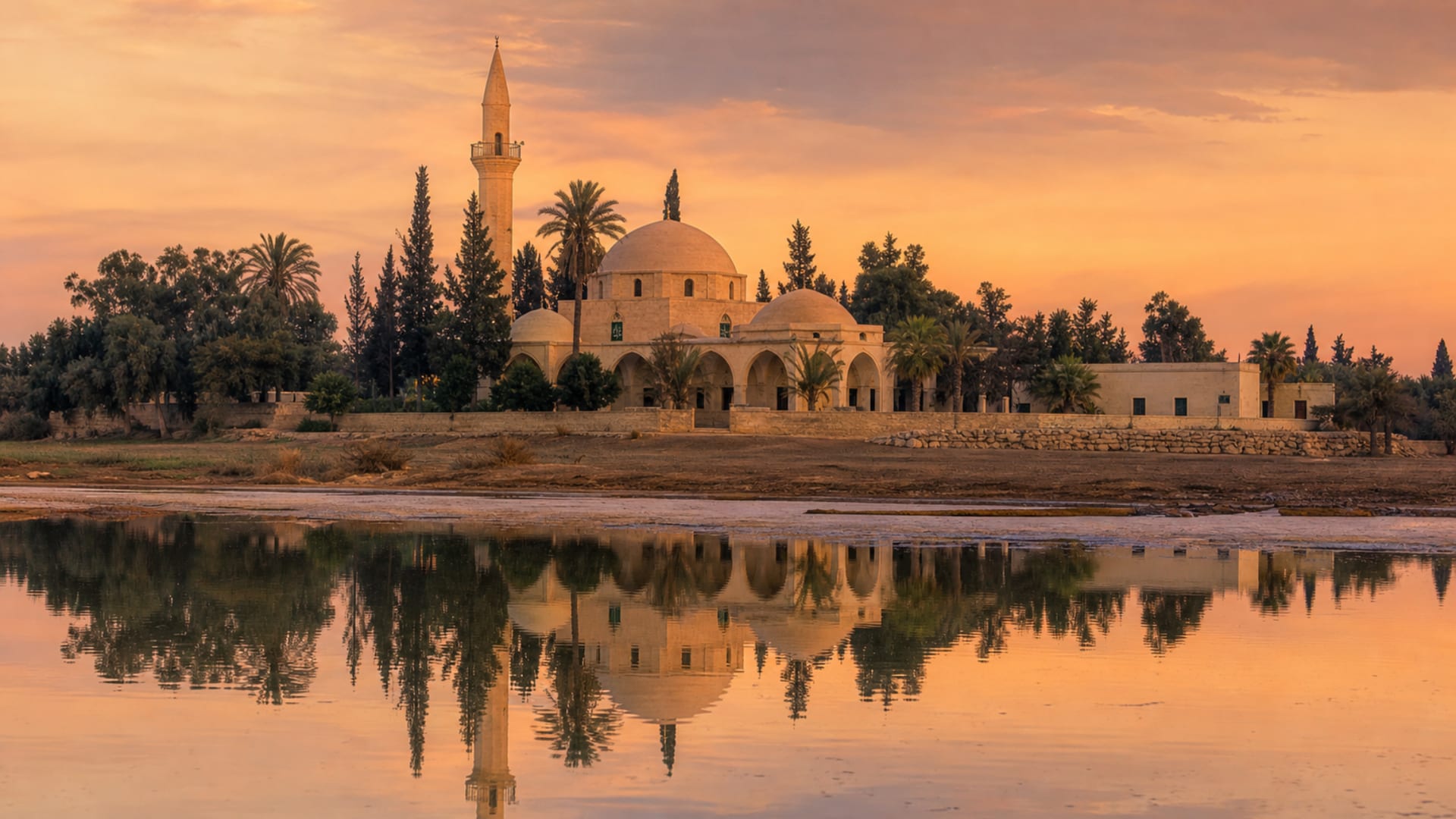
Larnaca Salt Lake fills with rain in winter, when flamingos and other migratory birds gather in the shallow water. Hala Sultan Tekke is on the western shore, surrounded by palms, and is one of the most important Muslim religious sites in Cyprus.
Time needed: About 1 to 2 hours
Entry: Free to access; the mosque has no fixed admission fee, but modest dress is expected and photography rules can vary inside the prayer area. Visit the official site for details.
Tip: Visitor access is restricted during Friday prayers.
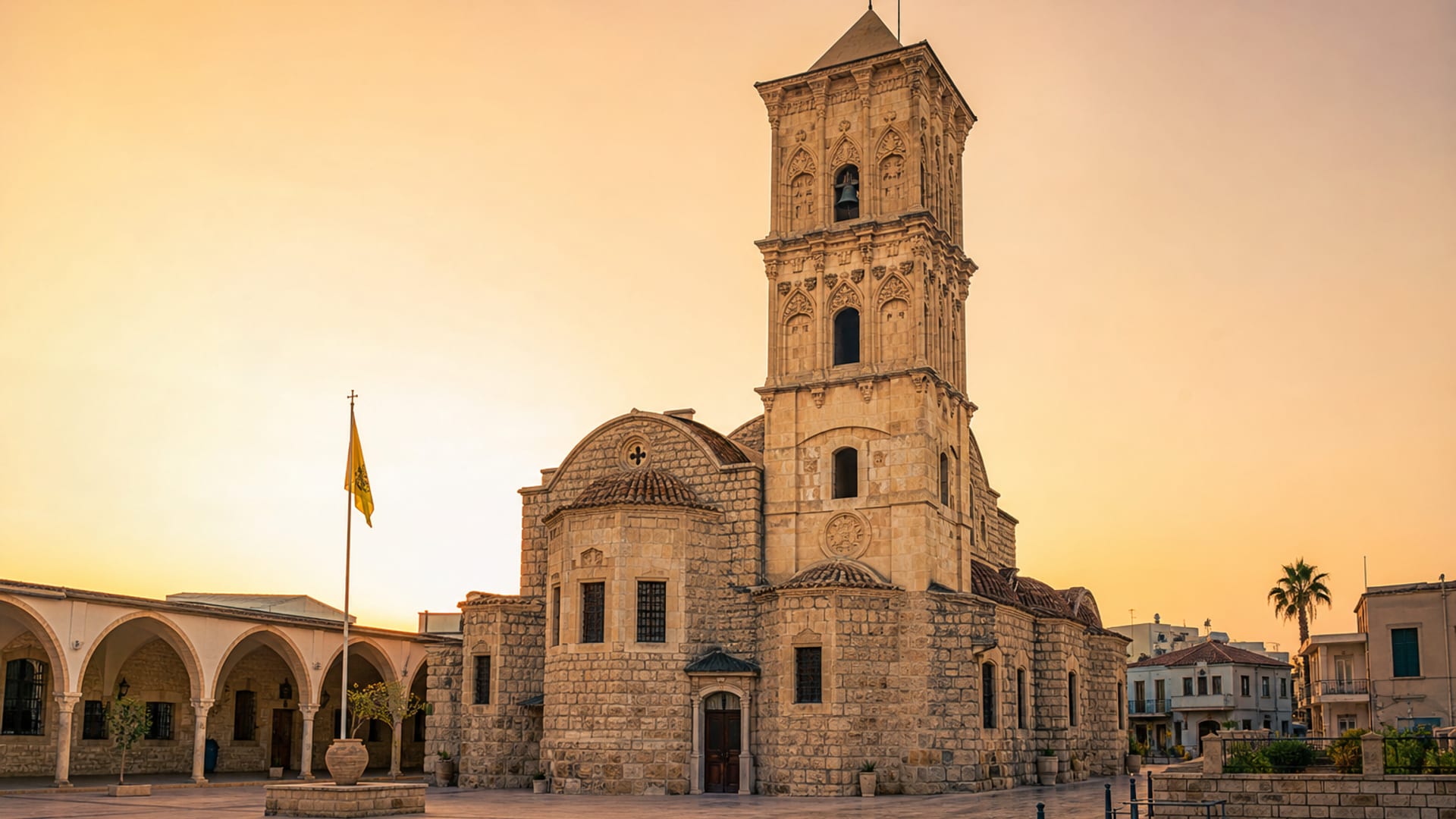
Church of Saint Lazarus
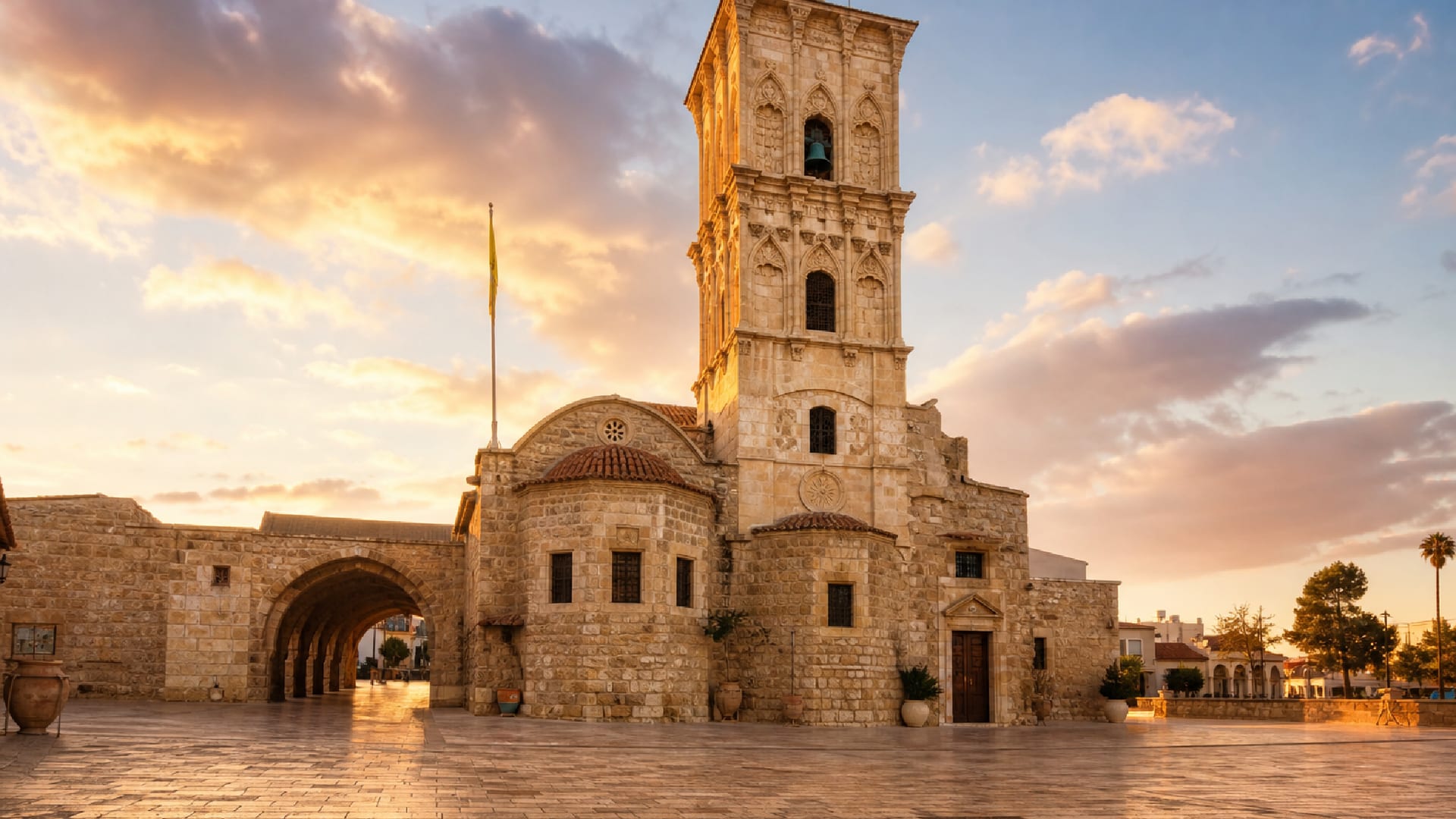
The Church of Saint Lazarus dates to the 9th century and was built over Saint Lazarus’s tomb. Inside, a carved iconostasis covered in gold leaf faces the nave, while stairs lead down to the tomb beneath the church.
Time needed: About 45 to 75 minutes
Entry: Entry is free for the church; a small donation is customary if you want to visit the crypt, where access may depend on opening hours. Visit the official site for details.
Tip: Check winter opening hours, as the church may close in the afternoon.
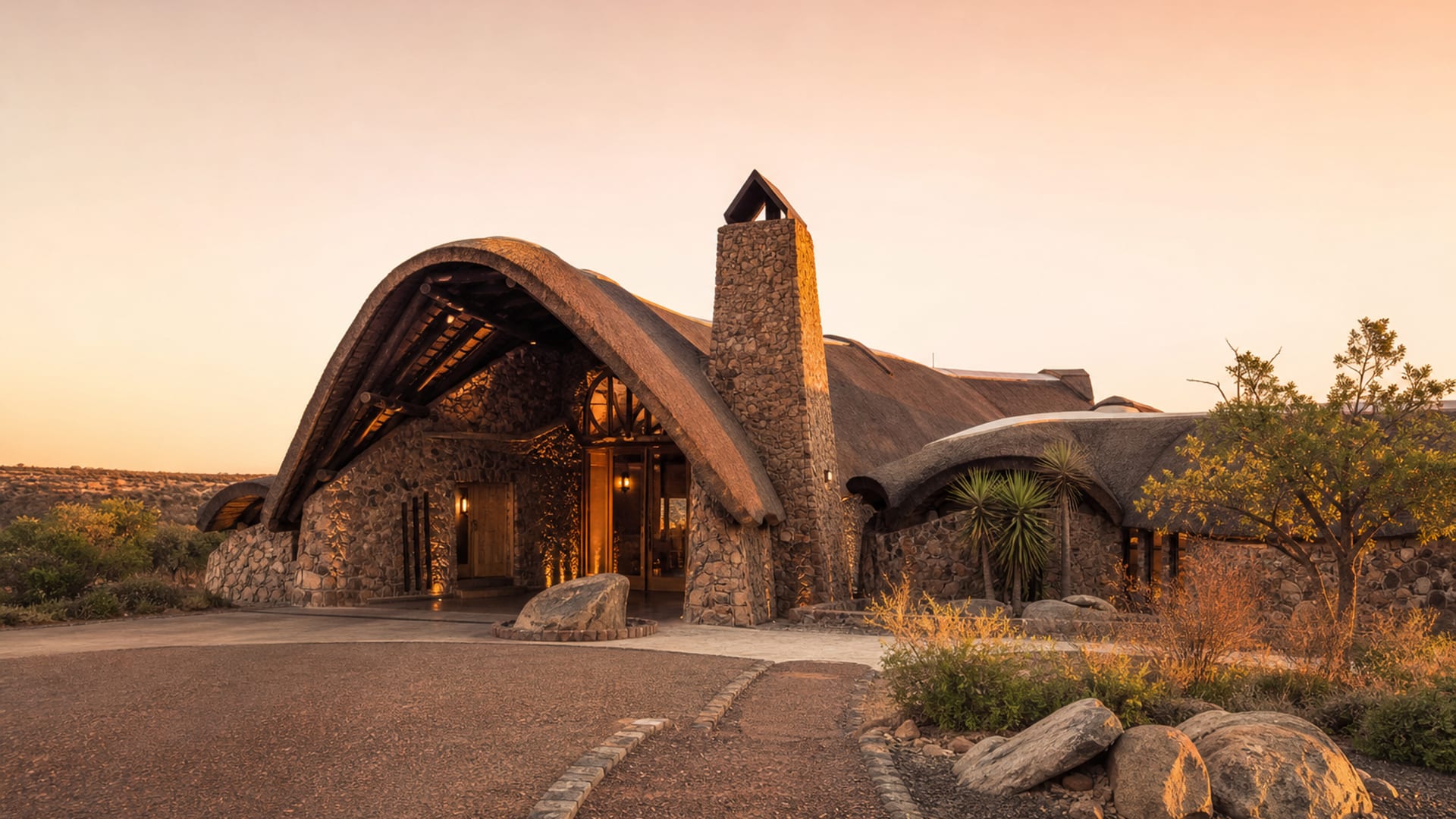
Kition archaeological site
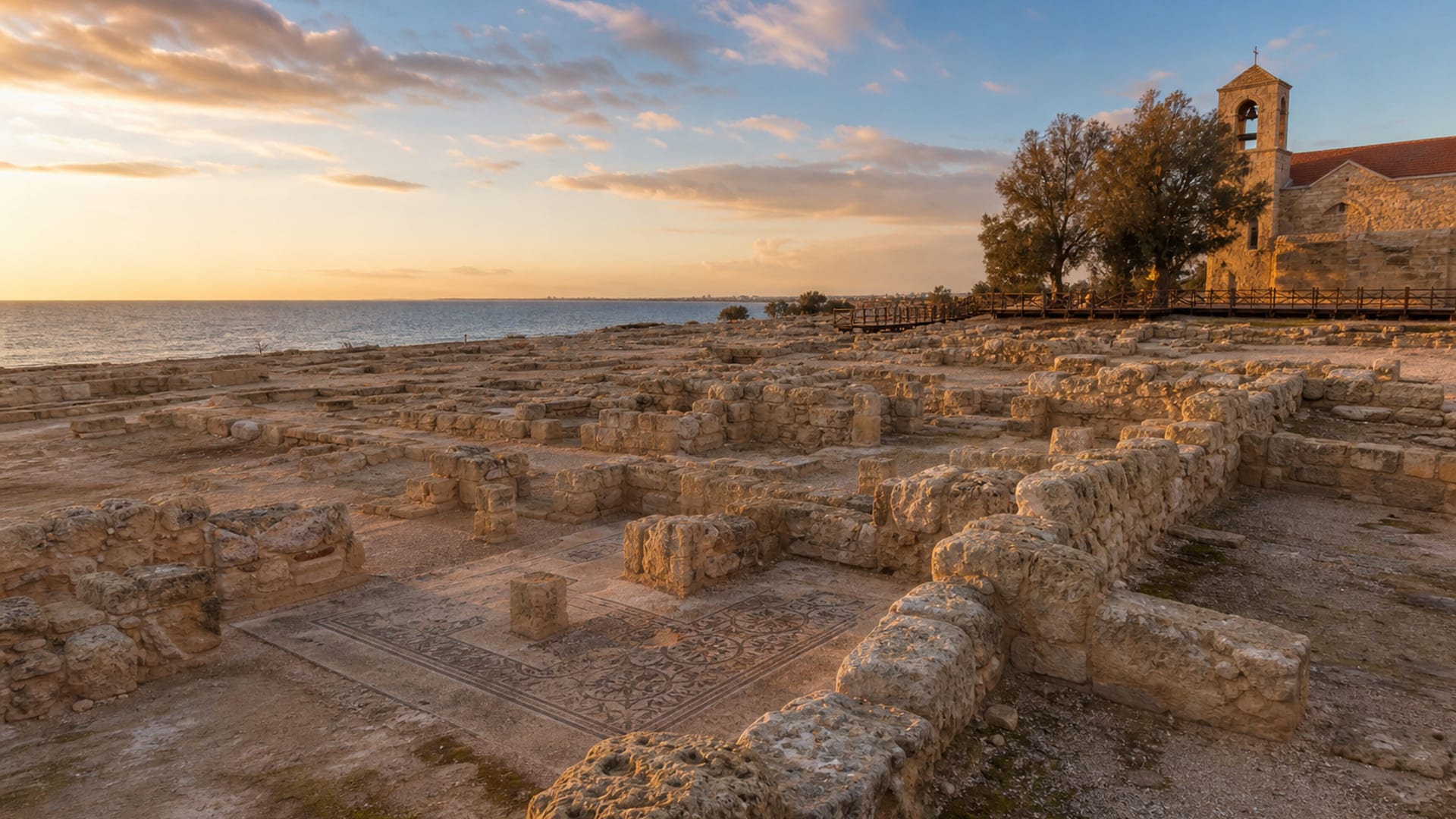
Ancient Kition stood where modern Larnaca is today, and parts of the city are still visible at the archaeological site. These include sections of defensive walls and temple foundations, with some of the remains dating to the Phoenician period.
Time needed: About 45 to 60 minutes
Entry: Standard tickets cost $4 (€3.50) for adults, with reduced rates for children, students, and seniors; opening hours vary by season. Visit the official site for details.
Tip: Visit on a weekday because Kition closes on weekends and public holidays.
Overlooked sites worth visiting

Byzantine Museum of Saint Lazarus
The museum is next to Saint Lazarus Church and holds religious objects from churches across the Larnaca district. Inside are icons, old gospels, crosses, and church silver, many of them several centuries old.
Time needed: About 45 minutes
Entry: Admission costs about $2 to $3 (€2 to €3) for adults, with reduced rates for students and senior visitors. The museum is compact, so most visitors can cover the collection in one short stop without a guide.
Tip: The museum closes on Sundays and on Wednesday and Saturday afternoons.

Larnaca Salt Lake Nature Trail
This 2.5-mile (4 km) trail follows the edge of the Salt Lake toward Kamares Aqueduct. The path passes wetland plants and bird habitat, with wide views across the lake along much of the walk.
Time needed: About 1 hour
Entry: Free to access. The boardwalk and lake edge are open public space, so there is no ticket office or timed admission. Bring water, since shade is limited and the best viewing spots require a short walk from nearby parking.
Tip: There is little shade, so avoid the hottest part of the day in summer.
Traditional food
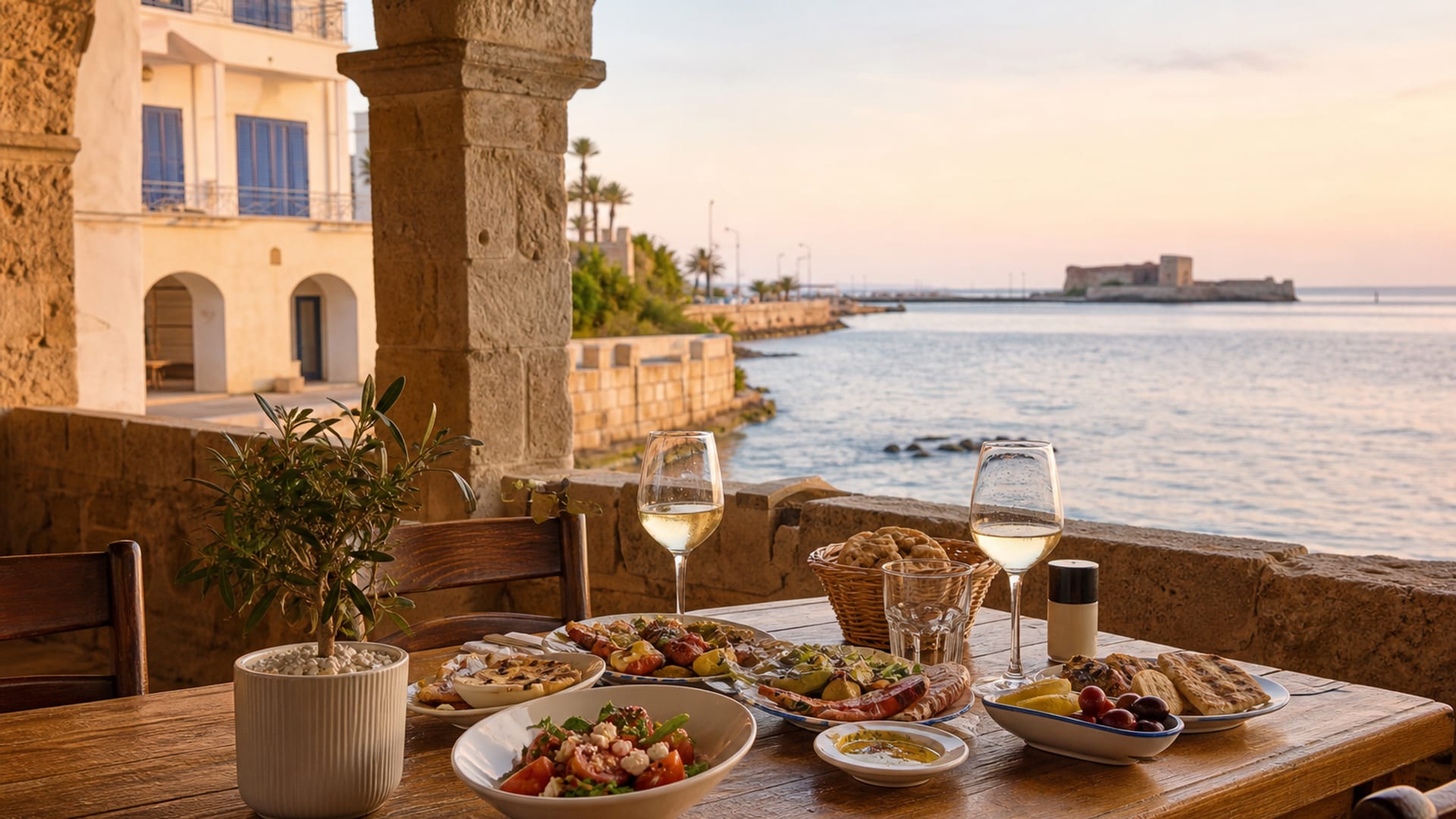
Cypriot food uses plenty of grilled meat and cheese, vegetables, olive oil, lemon, herbs, pulses, and bread. Meze is also common in Larnaca, with several small dishes served over the course of a meal instead of everything on one plate.
Halloumi
Halloumi is a firm brined cheese traditionally made with sheep’s and goat’s milk. It softens over heat without melting, so restaurants often grill it and serve it warm with bread, vegetables, or other meze dishes. Militzis serves grilled halloumi.
Sheftalia
Sheftalia are made with seasoned minced pork wrapped in caul fat and cooked over charcoal. The fat browns over the fire and keeps the meat inside moist. Famelia Tavern serves them both on their own and in pita.
Koupepia
Koupepia are vine leaves wrapped around rice, herbs, and usually minced meat. They are cooked slowly until the leaves soften and are often served as one part of a larger Cypriot meal. Vlachos Tavern serves a traditional pork-and-rice version.
Moussaka
Cypriot moussaka usually combines eggplant, potatoes, minced meat, and béchamel in a baked dish with several distinct layers. It is heavier than many of the grilled dishes on a typical taverna menu. Alasia serves a traditional version.
Best time to visit Larnaca
Larnaca has hot, dry summers and mild winters, with most of the rain falling between late fall and early spring. The sea is pleasant for swimming from early summer until late fall.
Best for: Flamingos at the Salt Lake, museums, churches, and long walks through central Larnaca
What you get: Days are usually mild, with highs of 63°F to 65°F (17°C to 18°C), while evenings are cooler and rain is more common than at other times of year.
Trade-offs: The sea is cold for swimming, and rainy or windy days can make outdoor plans less appealing.
Best for: Historic sights, outdoor dining, the Salt Lake Trail, and beach time at the end of the season
What you get: Temperatures climb steadily, with daytime highs of about 66°F (19°C) in March and 80°F (27°C) by May.
Trade-offs: Easter can bring large crowds to Saint Lazarus Church and the nearby streets.
Best for: Swimming, Mackenzie Beach, evenings along Finikoudes, and dinner by the sea
What you get: Days are hot and dry, with highs usually between 87°F and 91°F (30°C to 33°C), and the sea is warm throughout the season.
Trade-offs: The summer heat can make sightseeing uncomfortable in the middle of the day, especially in places with little shade.
Best for: Swimming in September and October, outdoor meals, Old Town walks, and sightseeing after the busiest summer months
What you get: September is still hot, with highs near 88°F (31°C), while November is much milder at roughly 73°F (23°C). The sea is still pleasant for swimming through much of the season.
Trade-offs: Rain becomes more common later in fall, especially in November.
A realistic 5-day plan in Larnaca
This itinerary starts with central Larnaca, then gives the Salt Lake, ancient Kition, and the southern coast enough time of their own.
After checking in to your hotel, spend the afternoon around Finikoudes. It is a useful first stop because this is where the modern center meets the sea, and walking the promenade gives you an immediate idea of Larnaca’s small scale. Start near the marina, continue along the beach, and finish by Larnaca Fort at the southern end. Have dinner nearby and leave the historic streets behind the waterfront for the next morning, when there is more time to explore them properly.
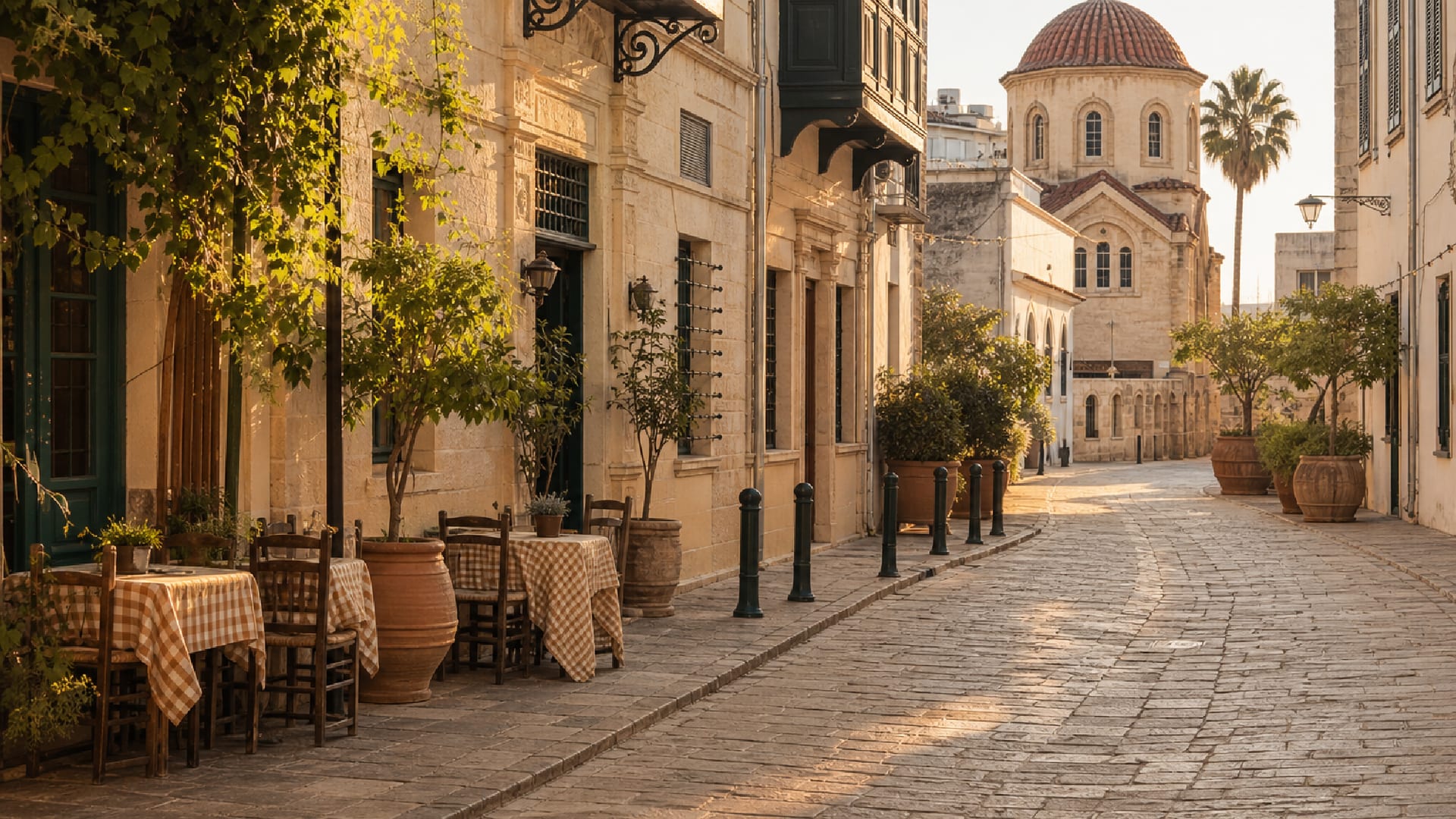
Begin at Saint Lazarus Church, which dates to the 9th century and is one of Larnaca’s most important historic buildings. Next, visit the Byzantine Museum, where you can see icons, old gospels, crosses, and church silver. After that, spend some time in the Old Town, where narrow streets, old houses, workshops, bakeries, and small shops let you immerse yourself in the life of the older part of Larnaca.
Spend the morning at the Salt Lake, where flamingos and other migratory birds gather during winter. From there, continue to Hala Sultan Tekke, one of Cyprus’s most important Muslim religious sites. Later, head to Mackenzie for lunch and some time by the sea, with plenty of restaurants along the beach and aircraft passing low overhead on their approach to the airport.
Visit Kition in the morning on a weekday and spend about an hour walking through the surviving walls and temple foundations. The site is small enough to explore without taking up most of the day. Afterward, return to central Larnaca for lunch and browse the shops around Ermou Street. In the late afternoon, take a taxi to Kamares Aqueduct and walk along the surviving 18th-century arches before heading back into town for dinner.
Keep the final morning simple and plan it around your departure time. Have breakfast near Finikoudes and take one last walk along the waterfront, or spend some time in the Old Town browsing bakeries, food shops, and small stores. If your flight leaves later in the day, Mackenzie is also a good option because it is close to the airport.
Business-class flights from the US to Larnaca
Reaching Larnaca from the United States usually means a one-stop itinerary, and the best options cluster through major European and Gulf hubs. The East Coast and West Coast examples below show how the routing and fare bands differ.
From New York, carriers such as Aegean Airlines, Air France, British Airways, Emirates, Lufthansa, and Turkish Airlines all appear in the mix, with one-stop journeys usually taking about 12 to 18 hours. Common layover points include ATH, CDG, LHR, DXB, FRA, and IST, and round-trip fares usually start at $3,200 and reach about $6,500.
Los Angeles itineraries tend to run through CDG, LHR, DXB, FRA, DOH, or IST on airlines such as Air France, British Airways, Emirates, Lufthansa, Qatar Airways, and Turkish Airlines. Round-trip fares usually run $3,600 to $7,000, and one-stop options through Doha often price lower than the more direct hub pairings.
More than a beach town
Larnaca has everything people look for in a Mediterranean beach destination: a long coastline, sandy beaches, warm water, and plenty of sunshine. At the same time, it is still a city with its own history and character, which makes a trip here more interesting than a simple resort stay.
When you are ready to plan the trip, AranGrant travel experts can help you compare business-class flights to Larnaca and find the one that matches your dates and travel style.







