

Chapters:

Need help with your trip?
Our support team is available 24/7. Request a callback or call us directly at (833) 619-0908
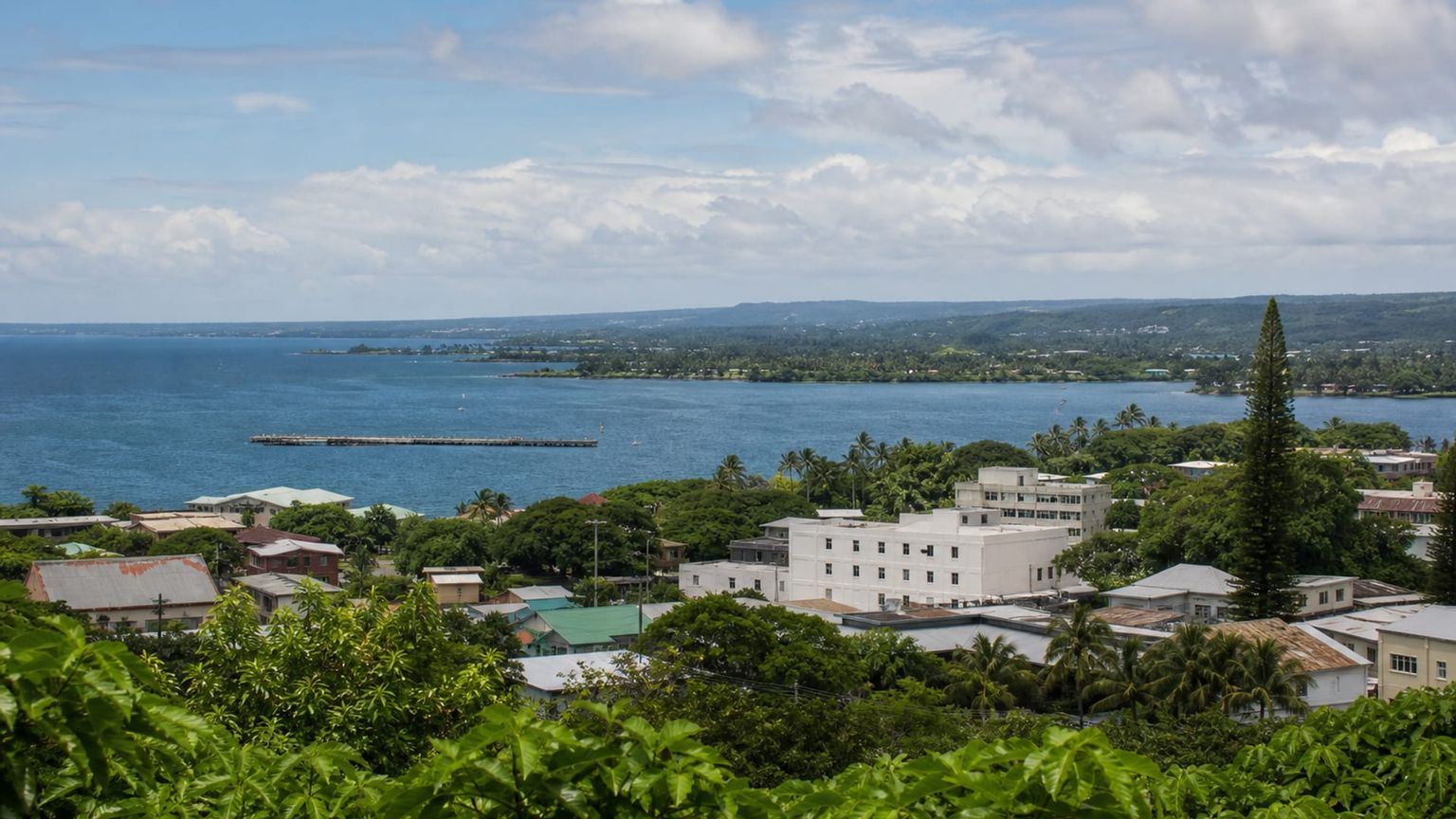
Hilo trips often begin with a quick loop from the airport to downtown, a waterfall stop, and dinner near the bay, while the quieter corners of the east side get little attention. Travelers also miss how early the town winds down, which matters when you plan meals and evening walks.
That loose approach can waste time, since the main sights sit close together but not close enough to treat casually, and some routes depend on short drives rather than easy walking. Rain, parking, and early closing hours can also shape the day more than visitors expect.
This guide sets out the city block by block, with stays, transport, food, and a five-day plan that keeps each day clustered by area, so you can spend more time at the bay, the museums, and the gardens.
Useful things to know

Main language(s): English

Currency: The local currency is the US dollar (USD, $).

Cash and cards: Cards and contactless are widely accepted; keep about $20 to $40 cash for small stalls, tips, and parking.

Tipping: Round up taxi fares and leave 15 to 20% at restaurants if service is good.

Traditional food: poke, laulau, loco moco, haupia

Water and coffee costs: Water about $2 ($2), bar espresso about $5 ($5).

Taxis and ride apps: Uber and Lyft operate here; availability can thin late at night.

Plug and voltage: Type A/B socket, 120V

Dining and shop opening hours: Breakfast is about 06:00-09:00, lunch 11:00-14:00, and dinner 17:30-20:30. Many places close early, and some restaurants shut one or two days a week.

Emergency number: 911 for police, fire, and medical emergencies.
Where to stay in Hilo
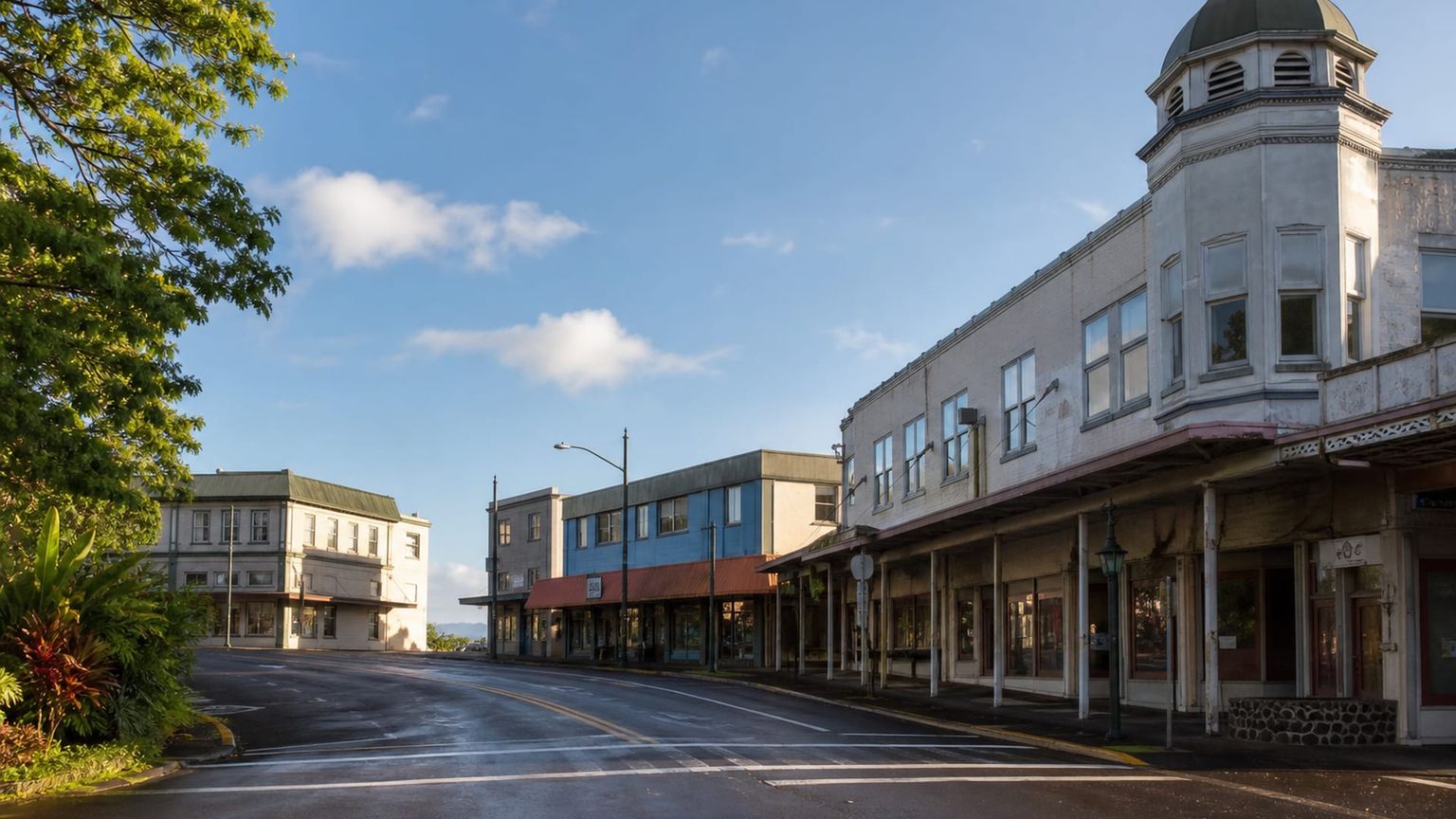
Hilo Downtown puts you near the bay, the farmers market, older storefronts, and the town’s main dining strip. It works well for visitors who want easy walking access to the civic center and a practical base for exploring the east side of the island.
Best for: Walking to restaurants, markets, and historic sights
What to expect: Expect sidewalks, local traffic, daytime errands, and the busiest concentration of shops and eateries in town.
Hotel prices: Usually about $140 to $260 per night for well-rated stays
Distance to major sights: 5 to 15 minutes on foot to Hilo Farmers Market and Banyan Drive; about 10 minutes by car to Liliʻuokalani Gardens
Quietness: Daytime is active with shoppers and traffic, while evenings are much calmer after restaurants close.
Main trade-off: Parking can be tighter than in outer neighborhoods, and some blocks quiet down early at night.
Good to know: Choose this area if you plan to eat out often, but book ahead for rooms with parking because central lots can fill quickly.
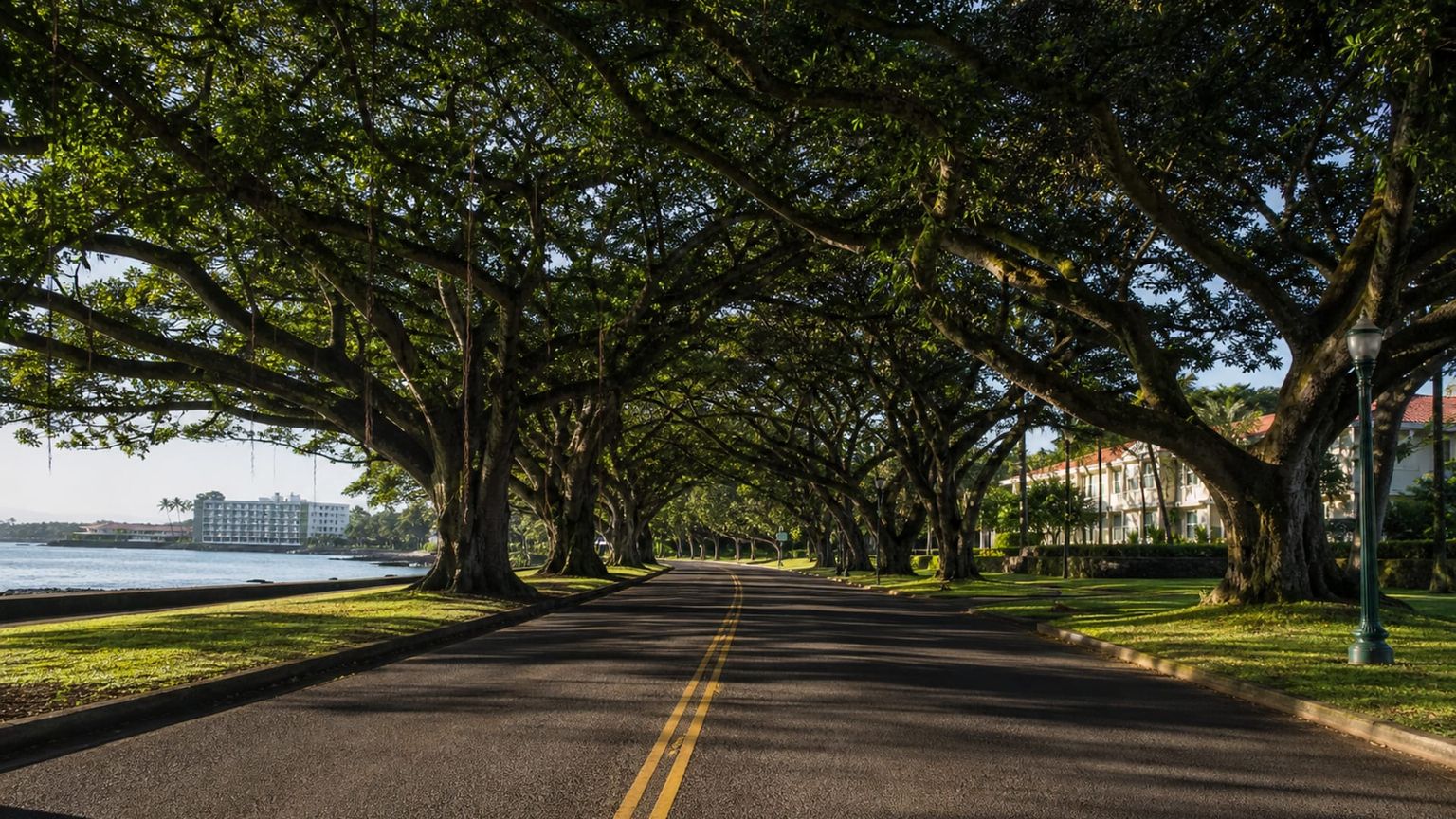
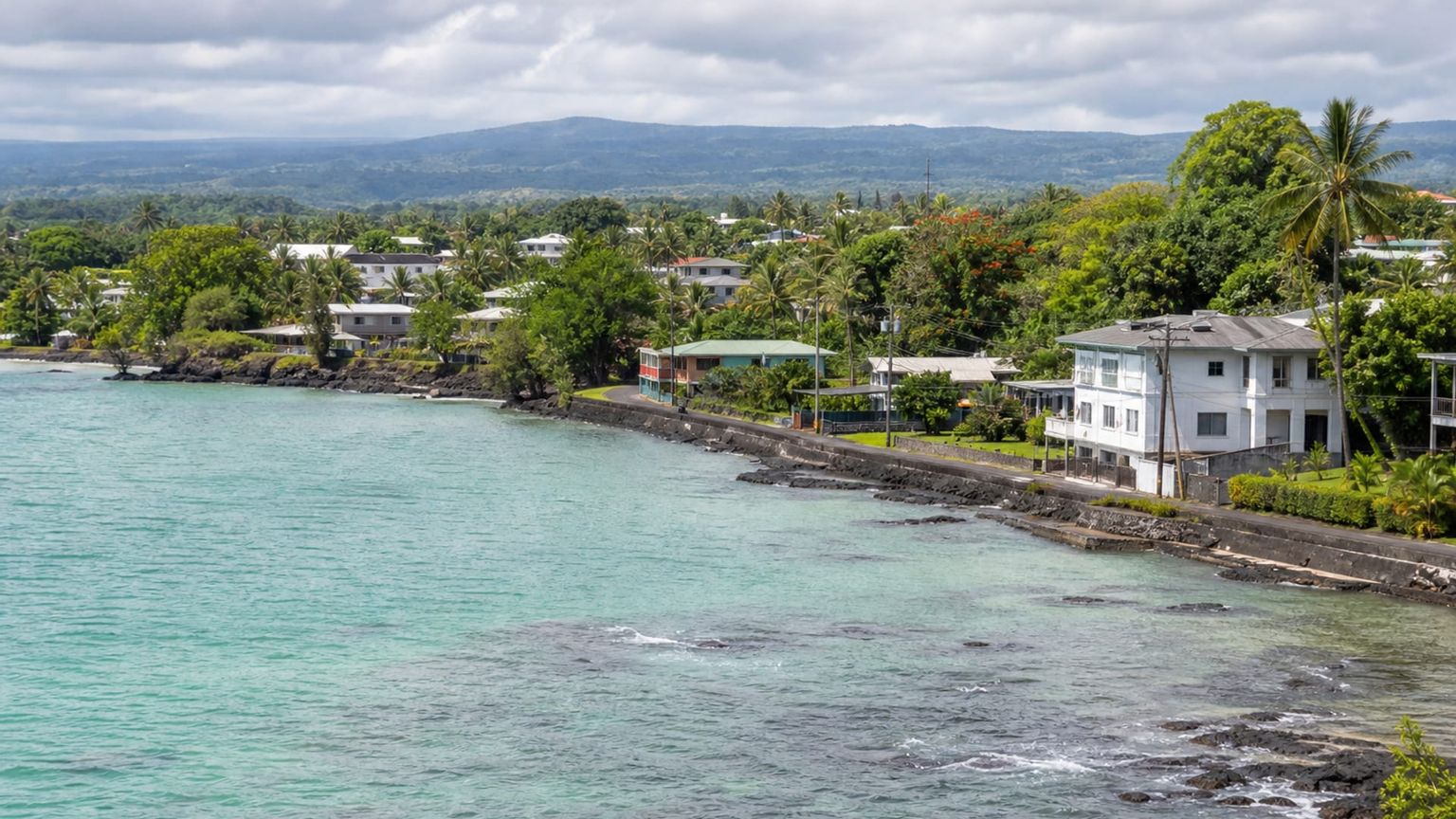
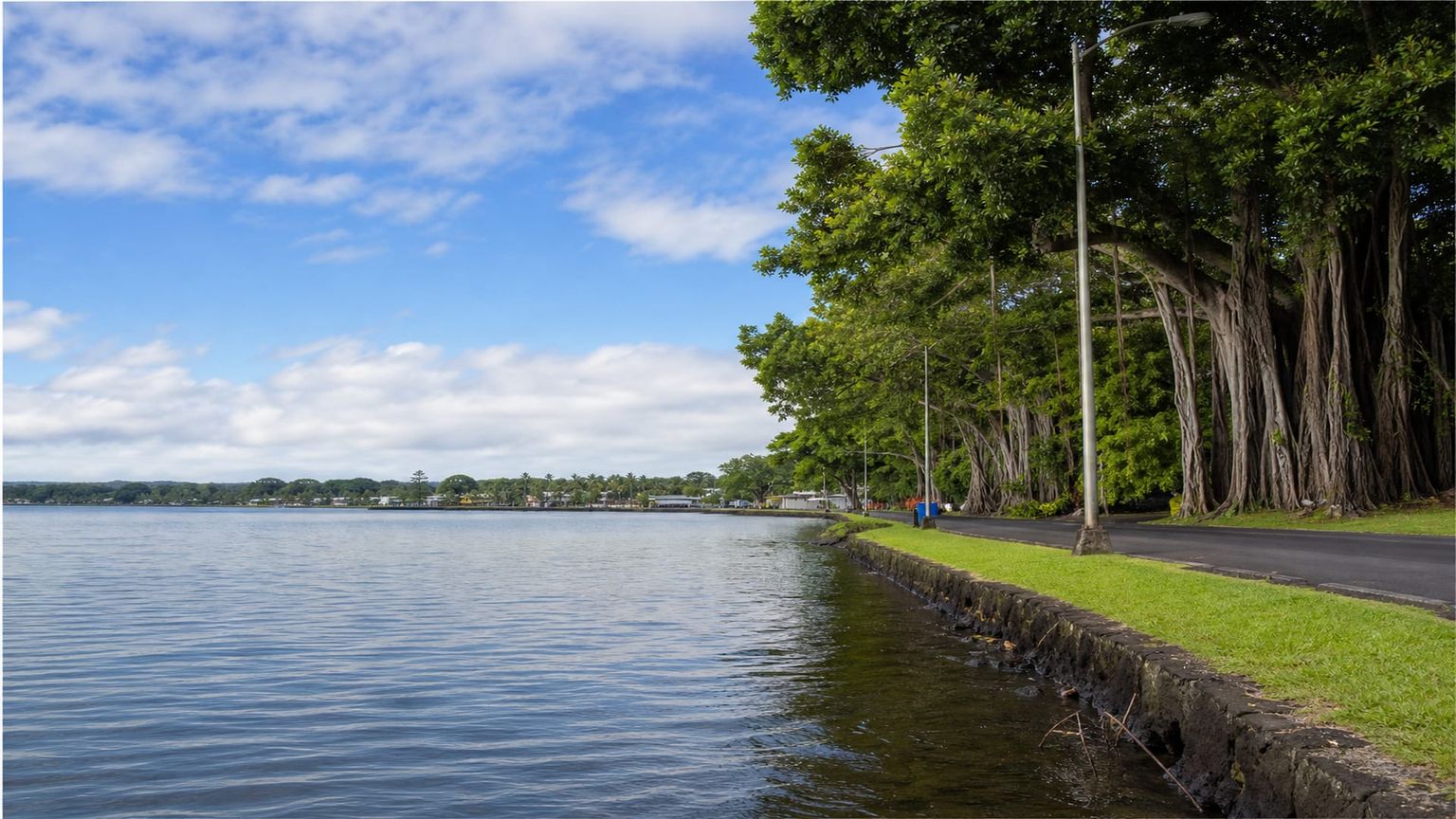
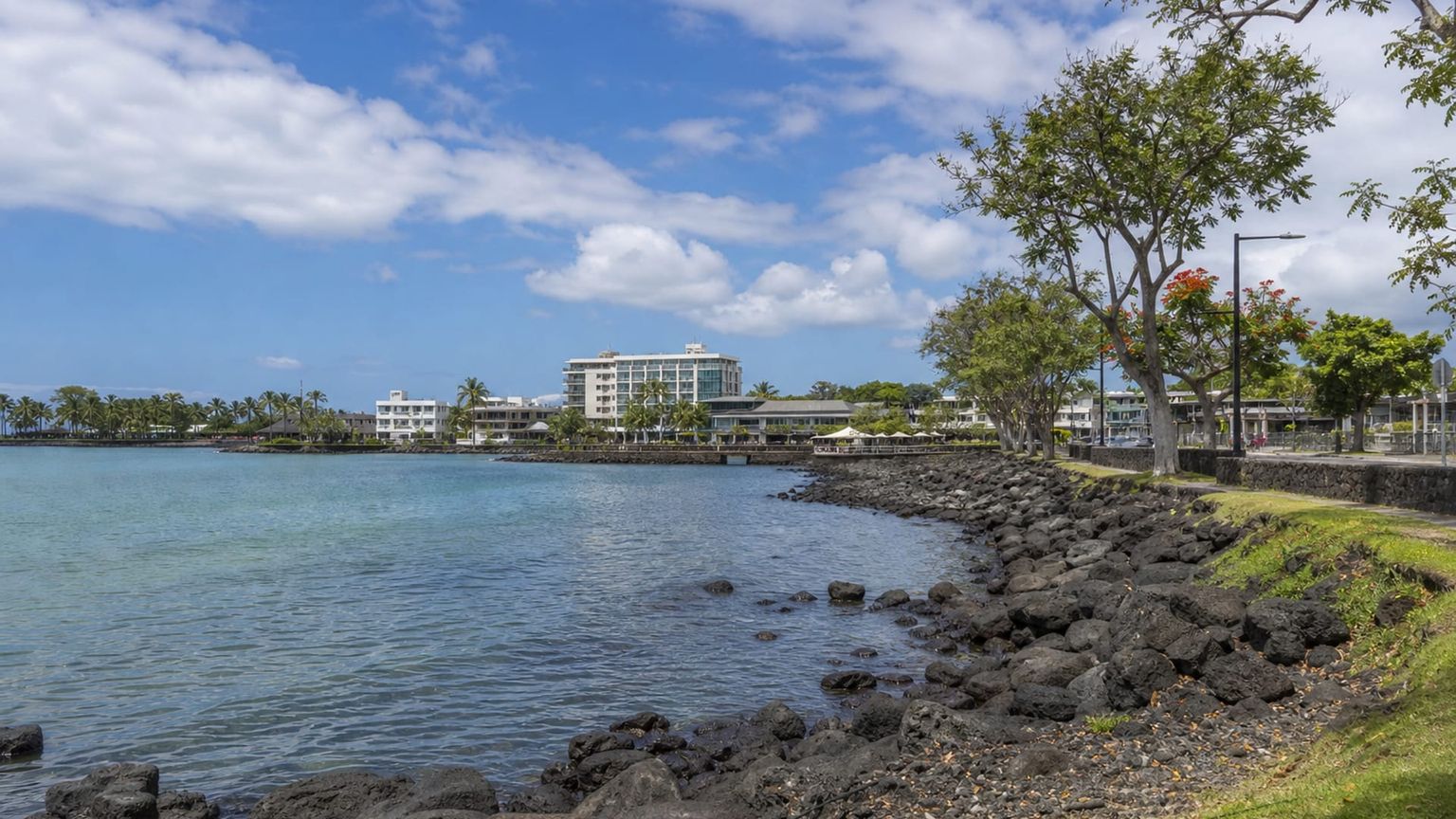
Banyan Drive stretches along Hilo Bay beside hotels, parks, and the shoreline path, so the setting feels more open than the downtown core. It suits travelers who want water views and quick access to the gardens, beaches, and the airport road.
Best for: Bay views, park access, and easy airport-side positioning
What to expect: Expect resort-style lodging, steady car traffic, and a shoreline corridor that draws walkers in the morning and at sunset.
Hotel prices: Usually about $180 to $320 per night for well-rated stays
Distance to major sights: About 10 minutes by car to Hilo Farmers Market and 5 to 10 minutes on foot to Liliʻuokalani Gardens
Quietness: Days bring more traffic and visitor movement, while late evenings are quieter along the bay.
Main trade-off: You will usually pay more for the location, and most dining still requires a short drive into town.
Good to know: This is a strong pick if you want open views, but confirm whether your room faces the bay, because some properties sit farther back from the shoreline.
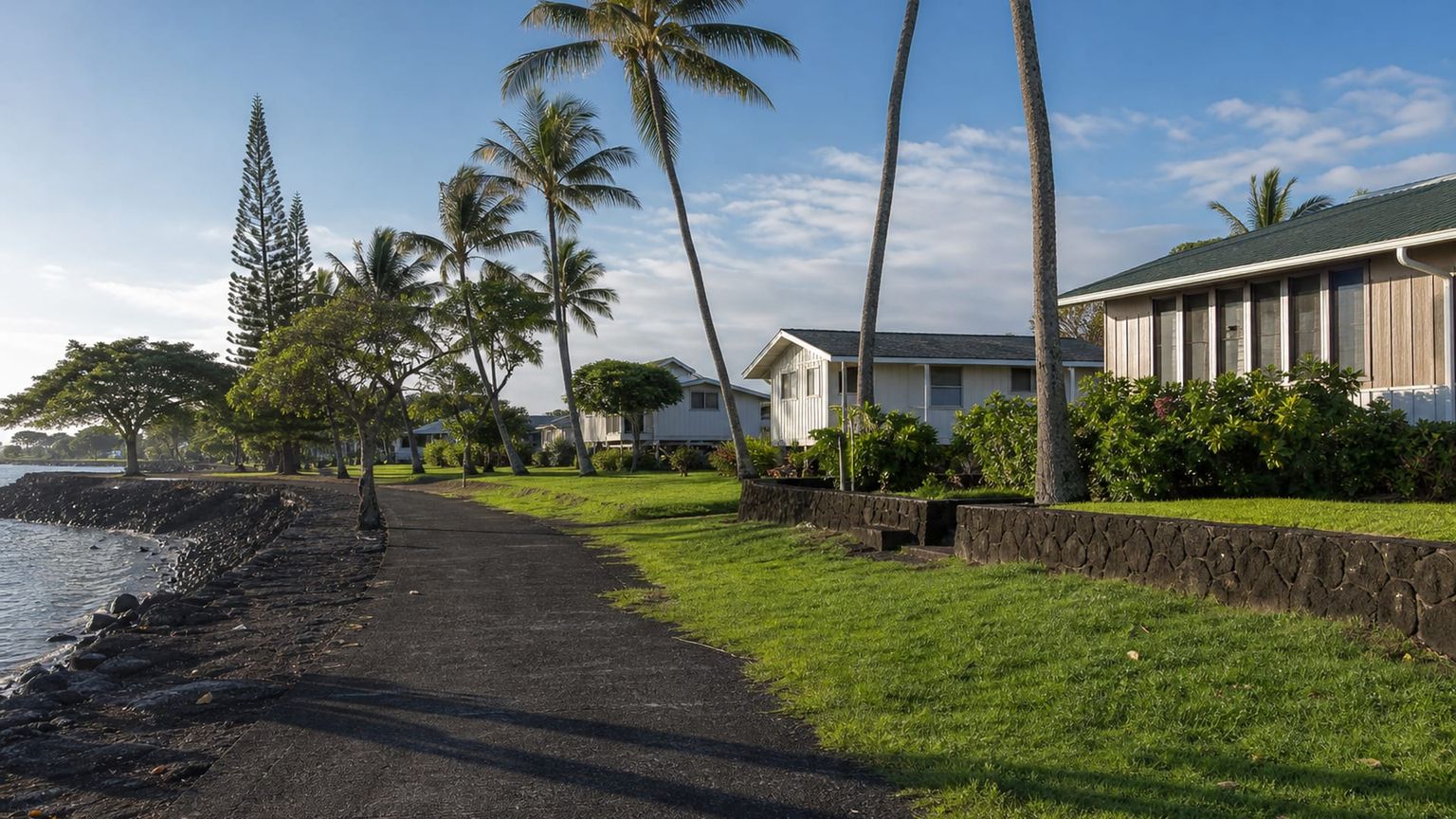
Keaukaha sits on Hilo’s eastern waterfront near small beaches, coconut groves, and residential streets with a local pace. It matters for travelers who want a quieter stay close to the ocean and a short drive to both downtown and the airport.
Best for: Beach access, a residential setting, and travelers with a car
What to expect: Expect low-key streets, limited commercial activity, and more locals than visitors after dark.
Hotel prices: Usually about $150 to $280 per night for well-rated stays
Distance to major sights: About 10 to 15 minutes by car to Hilo Downtown and 10 minutes by car to Hilo International Airport (ITO)
Quietness: Days are calm with some beach traffic, while evenings are very quiet in most blocks.
Main trade-off: You will find fewer hotels and restaurants nearby, so most meals and errands require driving.
Good to know: Stay here if you value space and a quieter shoreline, but check the exact address, since some beach access points have limited parking.
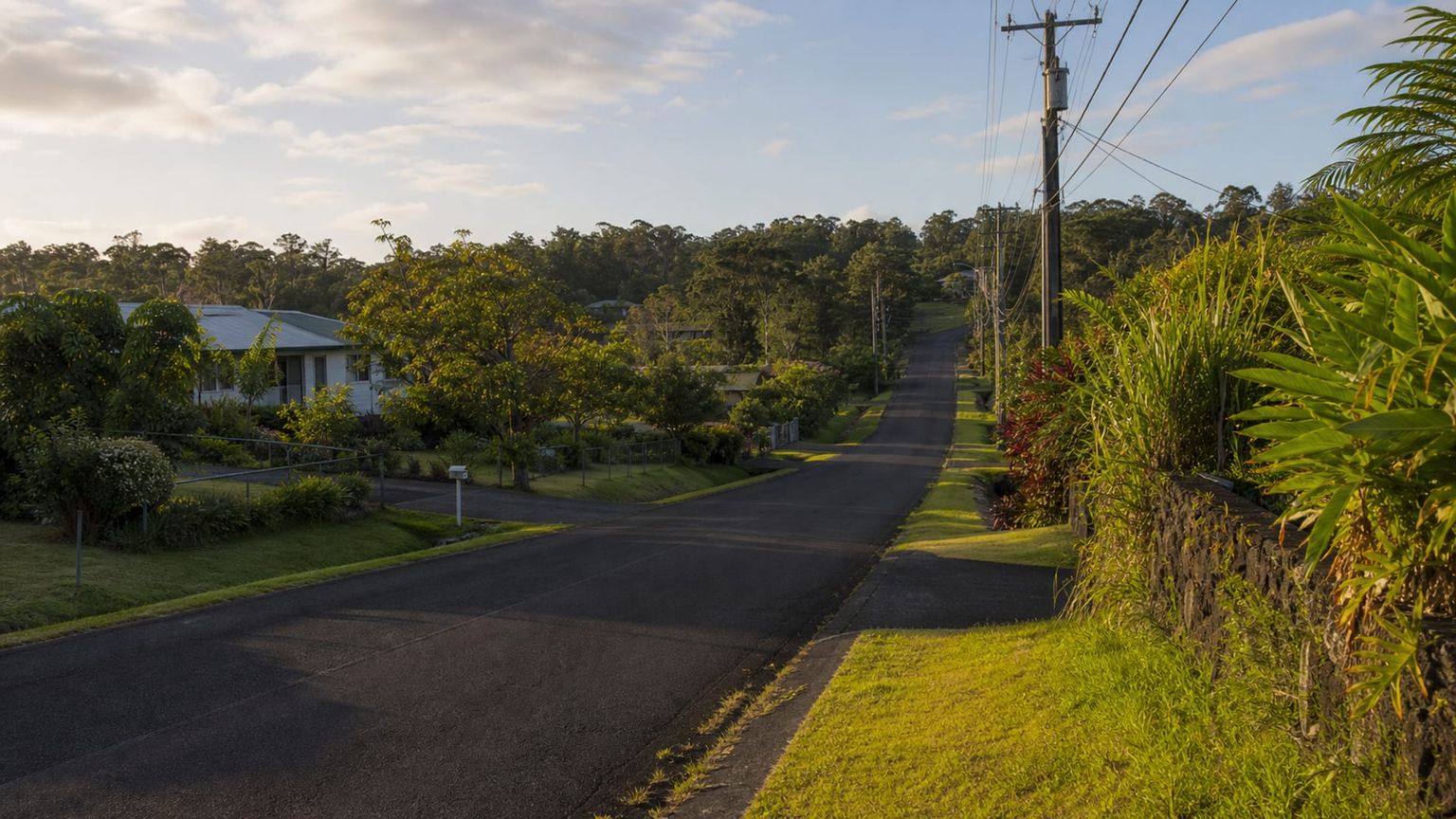
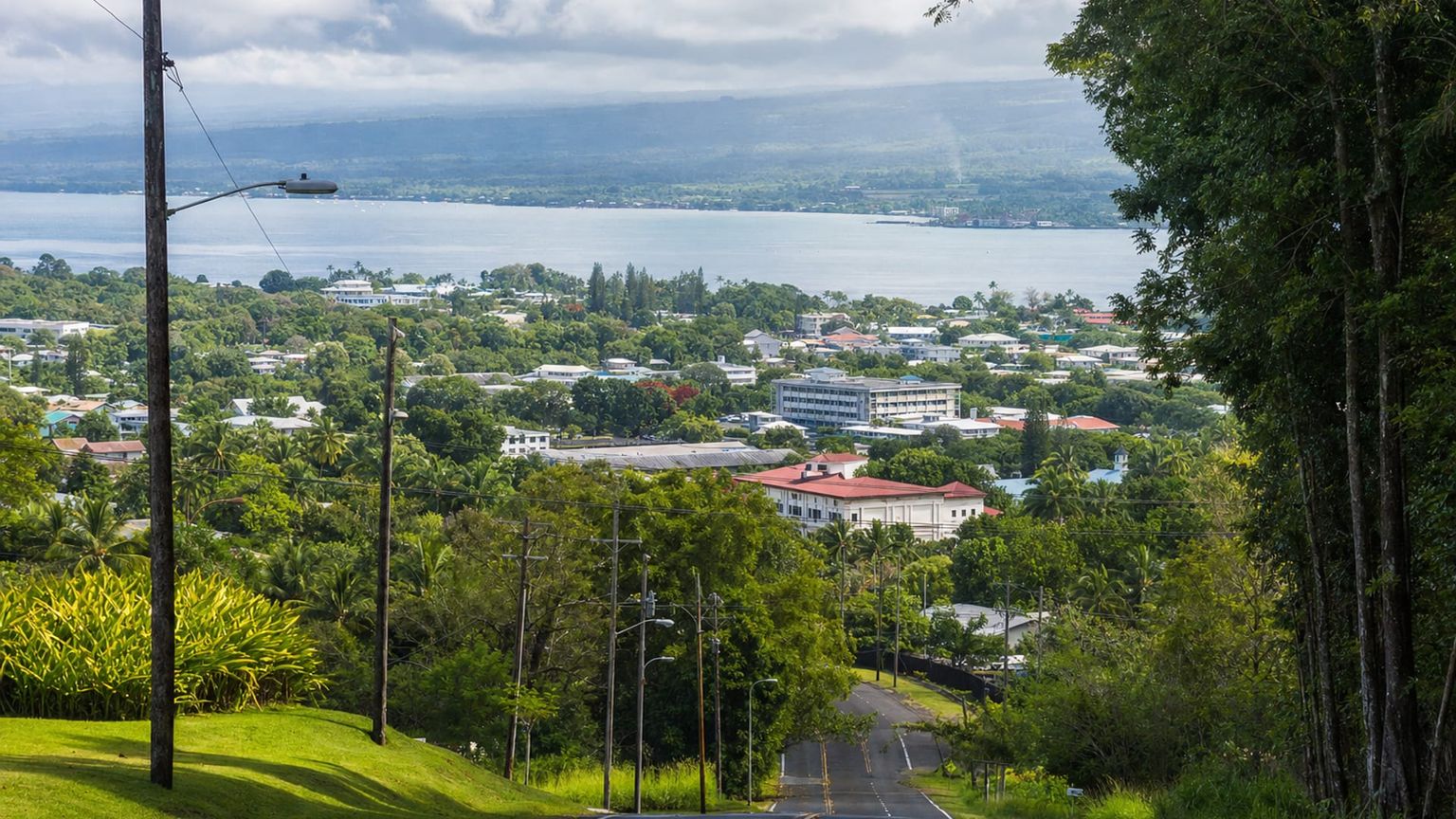
Waiakea Uka rises above central Hilo on the hillside, with residential streets, cooler air, and wider views over town and the bay. It suits visitors who want a quieter base and do not mind driving down for restaurants, markets, and the waterfront.
Best for: A quieter hillside base with views and car travelers
What to expect: Expect residential streets, little nightlife, and a more spread-out layout than the waterfront areas below.
Hotel prices: Usually about $130 to $240 per night for well-rated stays
Distance to major sights: About 10 to 15 minutes by car to Hilo Downtown and 15 to 20 minutes by car to Liliʻuokalani Gardens
Quietness: Days are peaceful with light neighborhood traffic, and evenings stay very quiet.
Main trade-off: The setting is less walkable, and the uphill roads make car use the normal way to reach most attractions.
Good to know: Pick this area if you want a quieter overnight base, but plan on driving for nearly every meal and errand.
Travelers usually avoid staying in lower Hilo town near the port and industrial strip, because it sits away from the main visitor area on Kamehameha Avenue and the downtown core. Upper Waiakea and Puainako are less convenient for a first-time stay, since they are more residential, farther from the bayfront, and require more driving for dinner and evening plans. The Keaukaha shoreline area is also less convenient for hotel stays, because lodging options are limited and you will be farther from most restaurants and central sights.
Hotel deals
How to get around Hilo efficiently
Hilo has no metro, so most visitors move between downtown, Banyan Drive, and Keaukaha by bus, taxi, rideshare, or rental car.

Metro
for longer distances
Hilo has no metro or subway network, so local trips rely on buses, taxis, and rental cars. The closest equivalent for longer cross-island travel is the Hawaiʻi County bus system, which links Hilo with towns such as Pāhoa, Honokaʻa, and Waimea on limited schedules.

Bus and tram
for convenience
The Hele-On Bus covers Hilo, the airport, downtown, the university area, and several outlying communities. Single fares are about $2 ($2) to $4 ($4) depending on route length, and day passes are about $4 ($4) to $6 ($6); check schedules carefully, because some routes run only a few times a day and weekend frequency is limited.

Taxi
for convenience or late hours
Licensed taxis serve Hilo and use metered fares rather than set flat rates, with airport trips to downtown usually costing about $18 to $25. Expect a base fare plus mileage and waiting time, and most drivers accept cash; ask before boarding if you want to pay by card, since card acceptance varies.
*Prices are based on rates updated as of June 2026 and may change at the time of travel.
Walk downtown when your plans stay near the bay, use the bus for low-cost daytime trips, and rely on taxis or rideshares when you want to cross town after dark.
Iconic landmarks
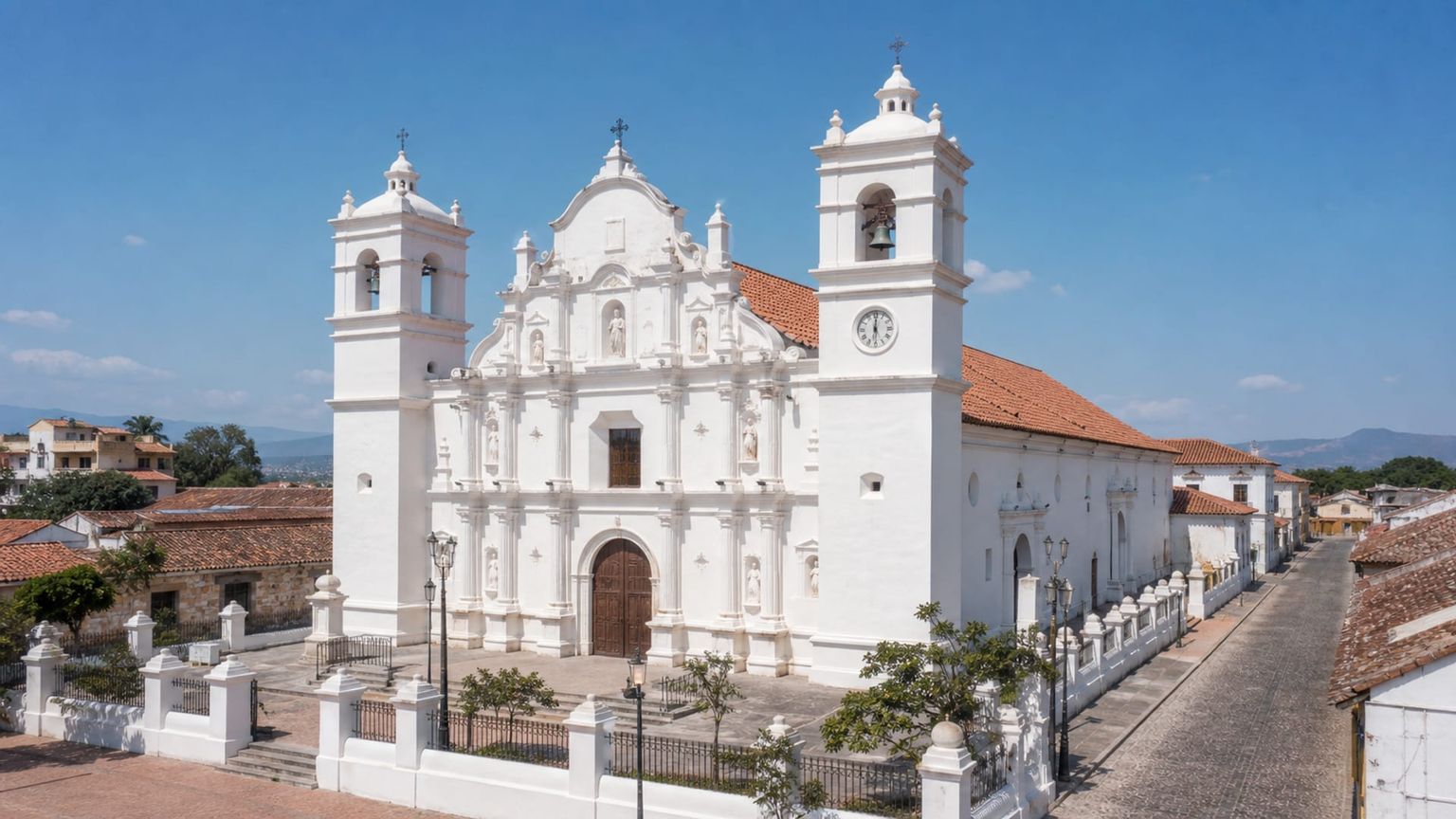
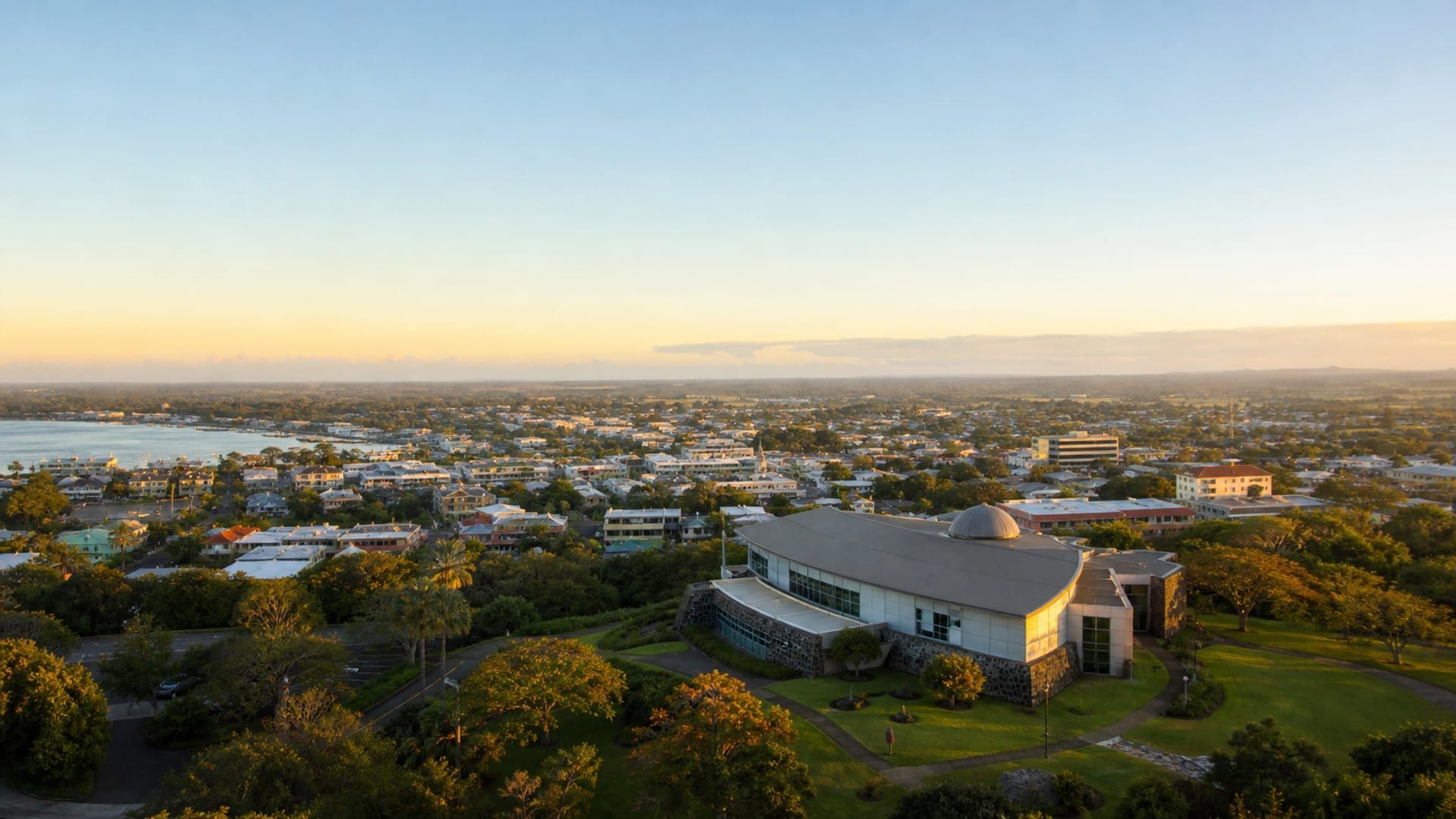
ʻImiloa Astronomy Center
ʻImiloa pairs a planetarium with Hawaiian cultural exhibits, so you can see how Polynesian wayfinding, volcano science, and observatory work connect in one visit. It sits in Hilo, about 4 km from downtown.
Time needed: About 2 to 3 hours
Entry: Tickets cost $17.50 to $21 ($17.50 to $21) for adults, with lower prices for children, seniors, and local residents. Visit the official site for details.
Tip: Go early in the day, then stay for a planetarium show before the galleries fill up.
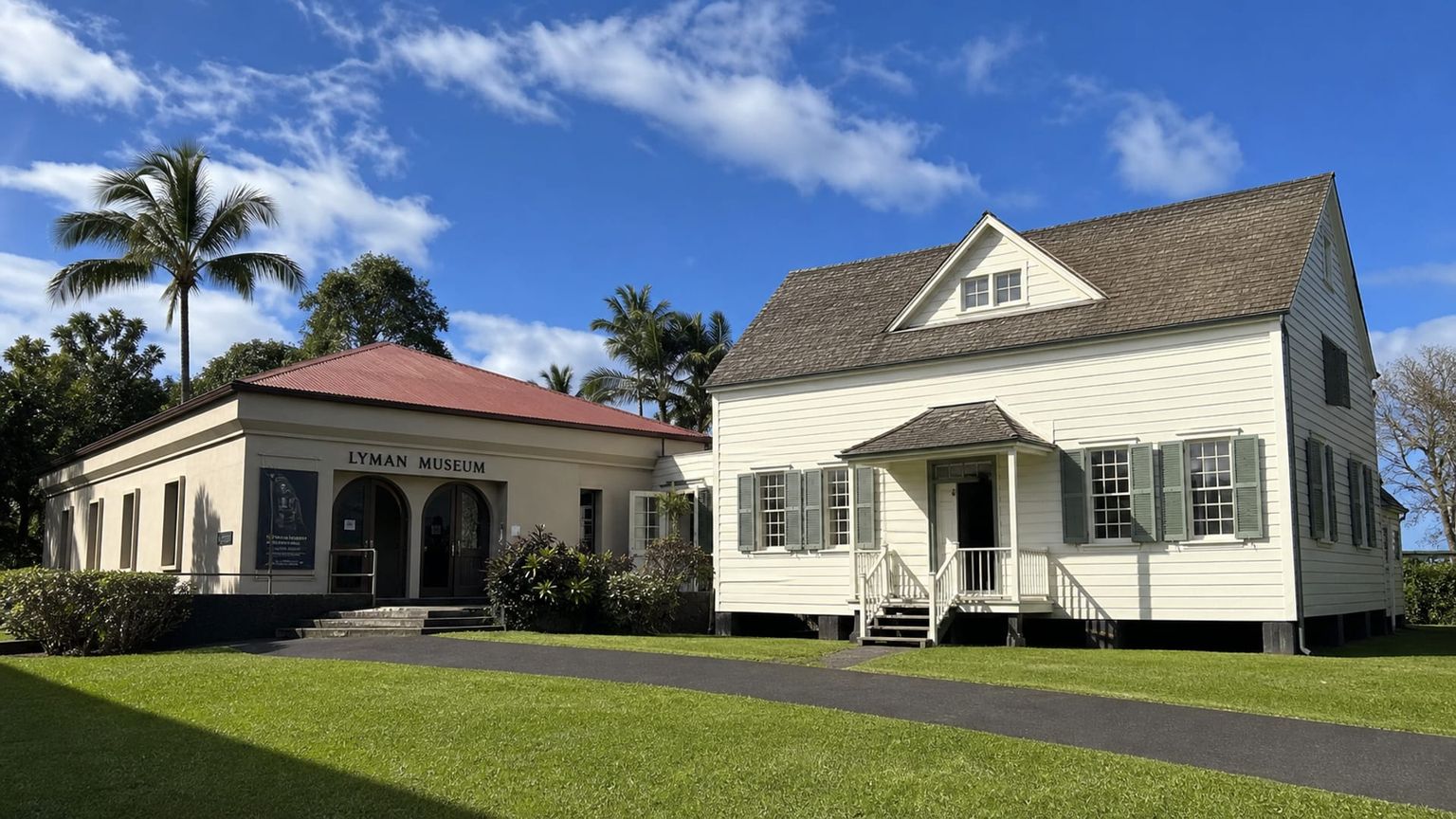
Lyman Museum and Mission House
This museum pairs geology, natural history, and Hawaiian artifacts with the 1839 Lyman Mission House next door. In Hilo, it gives a clear look at island life, faith, and science within a small downtown campus.
Time needed: About 1.5 to 2.5 hours
Entry: Admission costs $10 ($10) for adults, $8 ($8) for seniors, and $5 ($5) for children ages 4 to 17. Visit the official site for details.
Tip: Pair it with a morning walk downtown, then arrive before midday to avoid the busiest tour times.
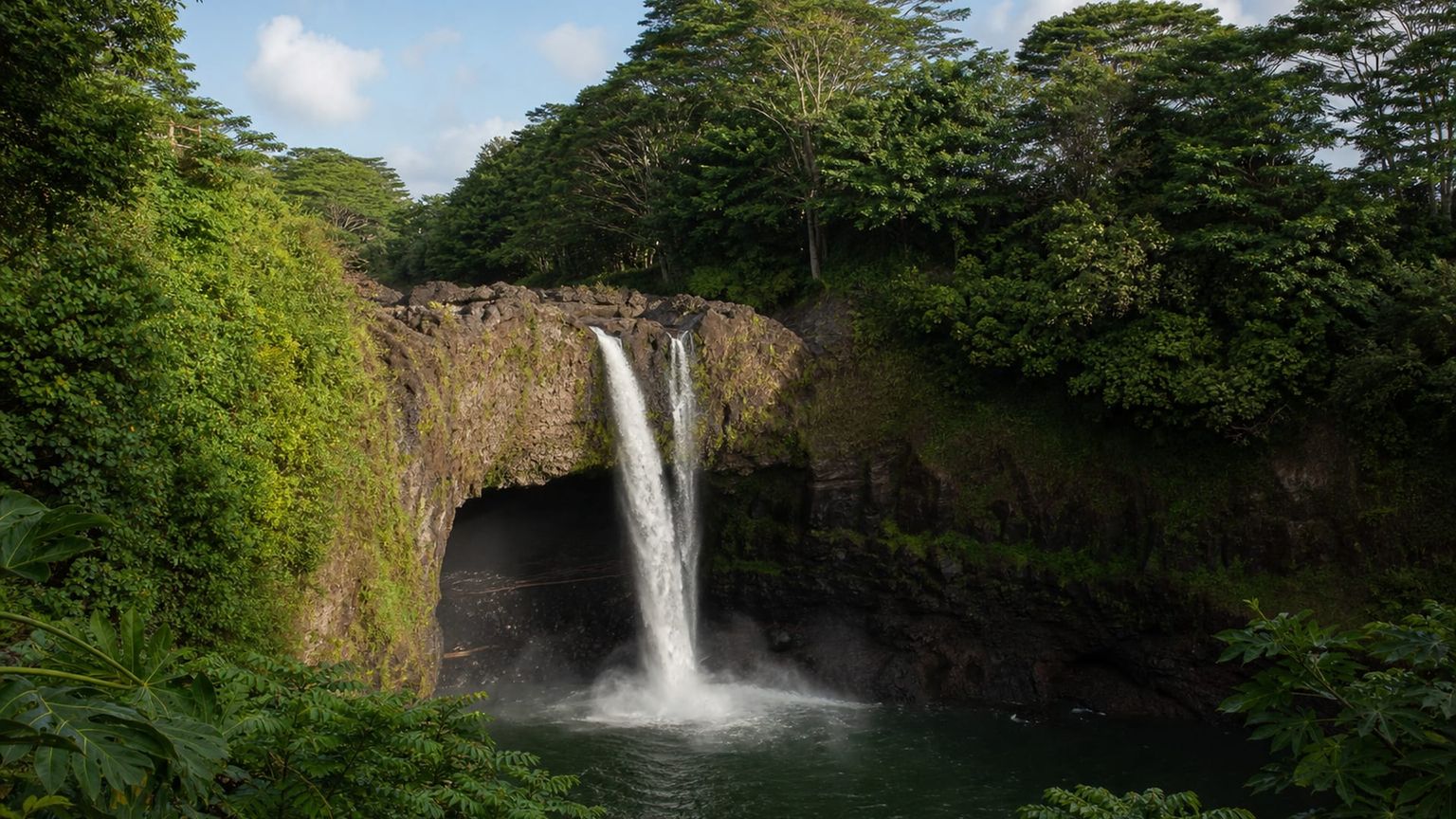
Rainbow Falls
Rainbow Falls drops in a single sheet over a lava cave on the Wailuku River, and morning light often creates a rainbow in the spray. The overlook sits just west of downtown Hilo, with a short walk from the parking area.
Time needed: About 30 to 45 minutes
Entry: Free to access
Tip: Visit in the morning, when the sun reaches the falls and parking is usually easier.
Overlooked sites worth visiting

Liliʻuokalani Gardens
A 24-acre Japanese garden on Hilo Bay, with ponds, stone lanterns, and arched bridges set beside walking paths. It suits a slow hour before or after downtown, with wide bay views and quiet corners.
Time needed: About 1 to 2 hours
Entry: Free to enter; the park is open daily and there is no ticket gate or timed admission. Parking is generally free nearby, and visitors can walk in from the bayfront path without paying an entry fee.
Tip: Go in early morning for softer light and fewer walkers.

Lyman Museum and Mission House
This compact museum pairs Hawaiian natural history with a preserved 1839 mission house, giving a tight look at Hilo’s past. Its galleries are small enough for an easy visit between meals or rain showers.
Time needed: About 1 to 2 hours
Entry: Admission is $12 ($12) for adults, $10 ($10) for seniors, and $6 ($6) for children ages 5 to 17. The museum sells tickets at the door, and the mission house visit is usually included in the same entry. Visit the official site for details.
Tip: Check the house tour times when you arrive.
Traditional food
Hilo food leans on fresh fish, taro, coconut, and plate-lunch staples, with poke, laulau, loco moco, and haupia showing up in diners, counters, and market stalls that close early.
Poke
Fresh cubes of seasoned fish usually come with rice, seaweed, and onion. Suisan Fish Market in Hilo is the classic stop, with a takeout counter that draws locals and visitors alike.
Laulau
Pork or fish wrapped in taro leaves and steamed until tender, laulau tastes best as part of a plate lunch. Cafe 100 is a long-running Hilo stop for it and the city’s most famous comfort-food plates.
Loco moco
Rice, a hamburger patty, gravy, and a fried egg make up this Hilo staple. Cafe 100 serves one of the city’s best-known versions, and it fits the town’s hearty lunch culture.
Haupia
This chilled coconut dessert appears in pies, squares, and plate-lunch desserts across Hilo. It’s a good finish at Ken’s House of Pancakes, where the menu covers classic local sweets and breakfast fare.
Best time to visit Hilo
Hilo stays warm all year, but rain, surf, and trade winds shift the feel of each season enough to change how much time you want outdoors.
Best for: Waterfalls, gardens, and longer bayfront walks
What you get: About 70 to 82°F (21 to 28°C), with moderate visitor levels and frequent showers that keep the landscape green
Trade-offs: Afternoon rain can interrupt longer outdoor plans
Best for: Beach time, easy driving, and evening walks on Banyan Drive
What you get: About 72 to 84°F (22 to 29°C), with the busiest travel weeks and more people at the most popular sights
Trade-offs: Rooms and rental cars can book up faster
Best for: Museum visits and mixed indoor-outdoor days
What you get: About 71 to 83°F (22 to 28°C), with fewer visitors and comfortable conditions for moving between town and the bay
Trade-offs: Rain showers still appear without much warning
Best for: Low-key stays, museum time, and quieter shoreline walks
What you get: About 68 to 80°F (20 to 27°C), with lighter crowds and wetter stretches that favor flexible planning
Trade-offs: The wettest weeks can shorten beach and garden time
A realistic 5-day plan in Hilo
A five-day stay in Hilo works best when you cluster each day by the bay, downtown, or the road to the waterfall, instead of bouncing across the island. The plan below keeps the drive times short and leaves room for early closing hours.
Land at Hilo International Airport (ITO), then take a taxi or rideshare into Hilo Downtown in about 10 to 15 minutes for roughly $20 to $30. If you are staying on Banyan Drive, the drive is closer to 10 minutes and usually costs about the same. Check in, refill your water bottle, and keep dinner close to the bay, with a simple meal near Hilo Farmers Market or on the downtown strip so you do not spend the evening in the car.
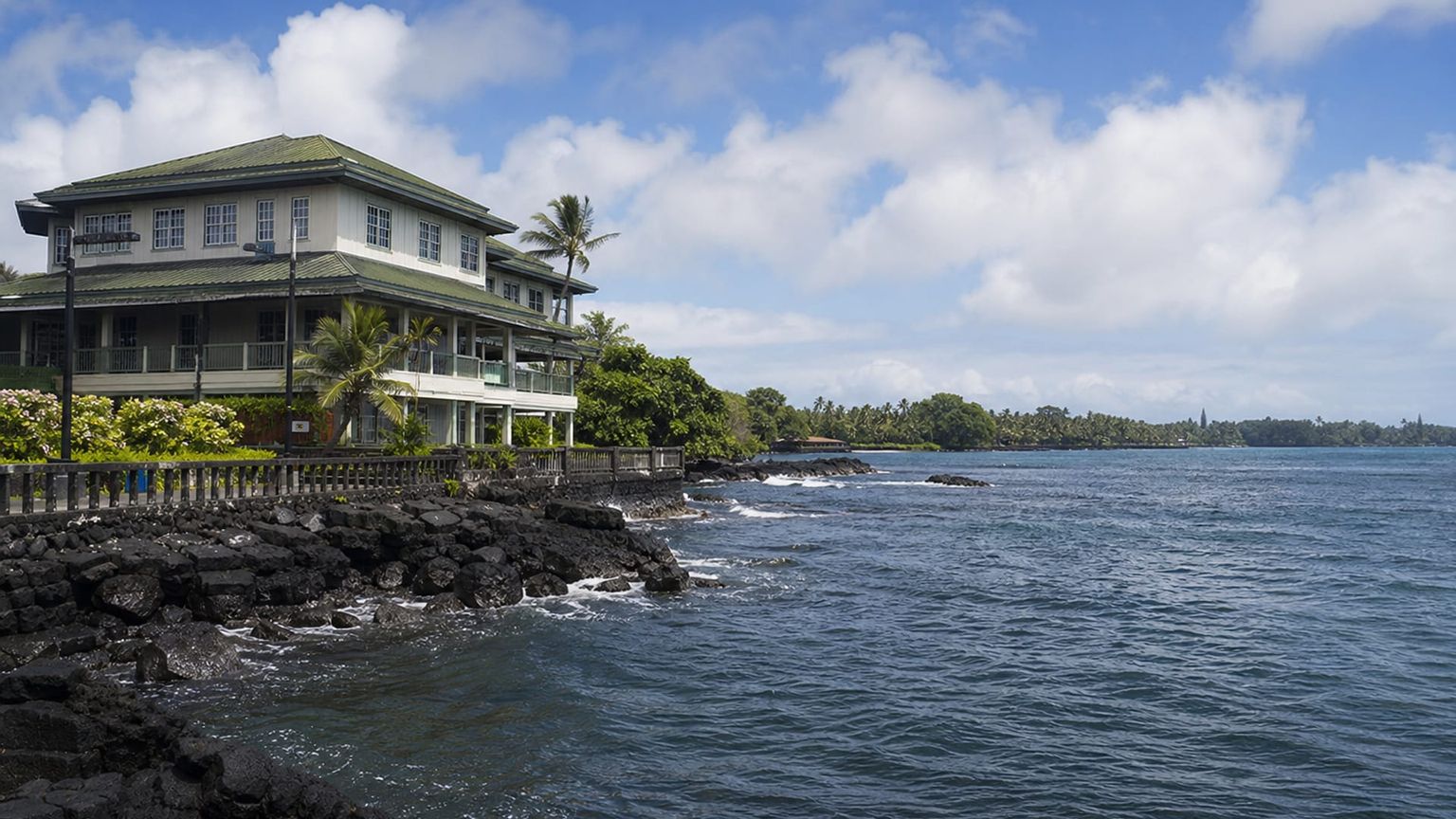
Begin at Rainbow Falls, where the overlook sits just west of downtown Hilo and the visit usually takes 30 to 45 minutes. From there, drive about 10 minutes to the Lyman Museum and Mission House for 1.5 to 2.5 hours, then continue about 10 minutes to ʻImiloa Astronomy Center for a 2 to 3 hour stop that ties Hawaiian wayfinding to volcano science and the planetarium. End with a quiet walk in Hilo Downtown, where dinner and a short stroll keep the rest of the day close together.
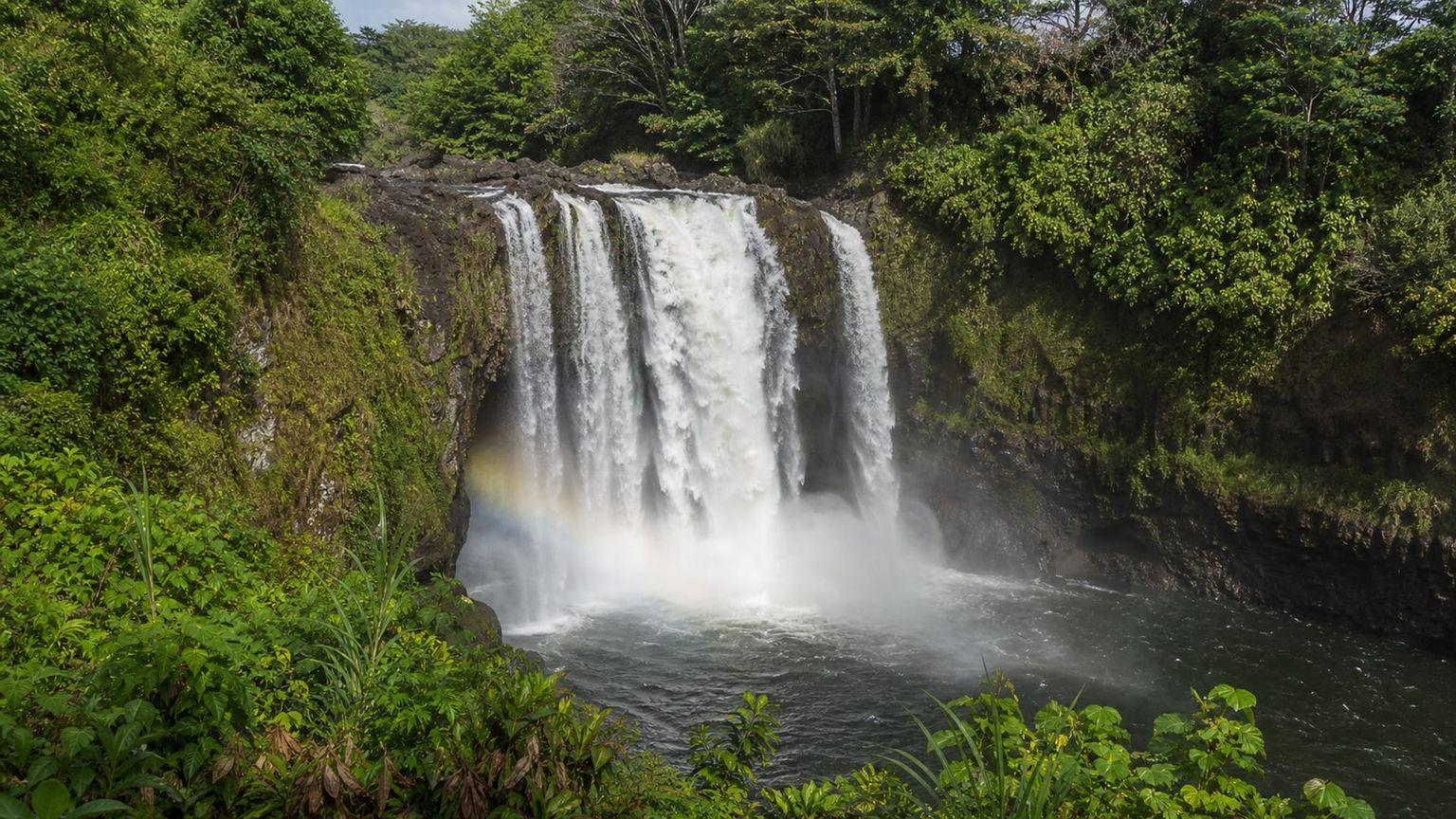
Start early in Liliʻuokalani Gardens, about 5 to 10 minutes from Banyan Drive and an easy stop for 1 to 2 hours among ponds, bridges, and bay views. After that, drive roughly 10 minutes into Hilo Downtown for the farmers market and nearby storefronts, then continue about 10 minutes to Rainbow Falls if you want a second look in better light or a faster visit than yesterday. Finish the afternoon back on the waterfront, where the path along Hilo Bay works well for an unhurried evening walk.
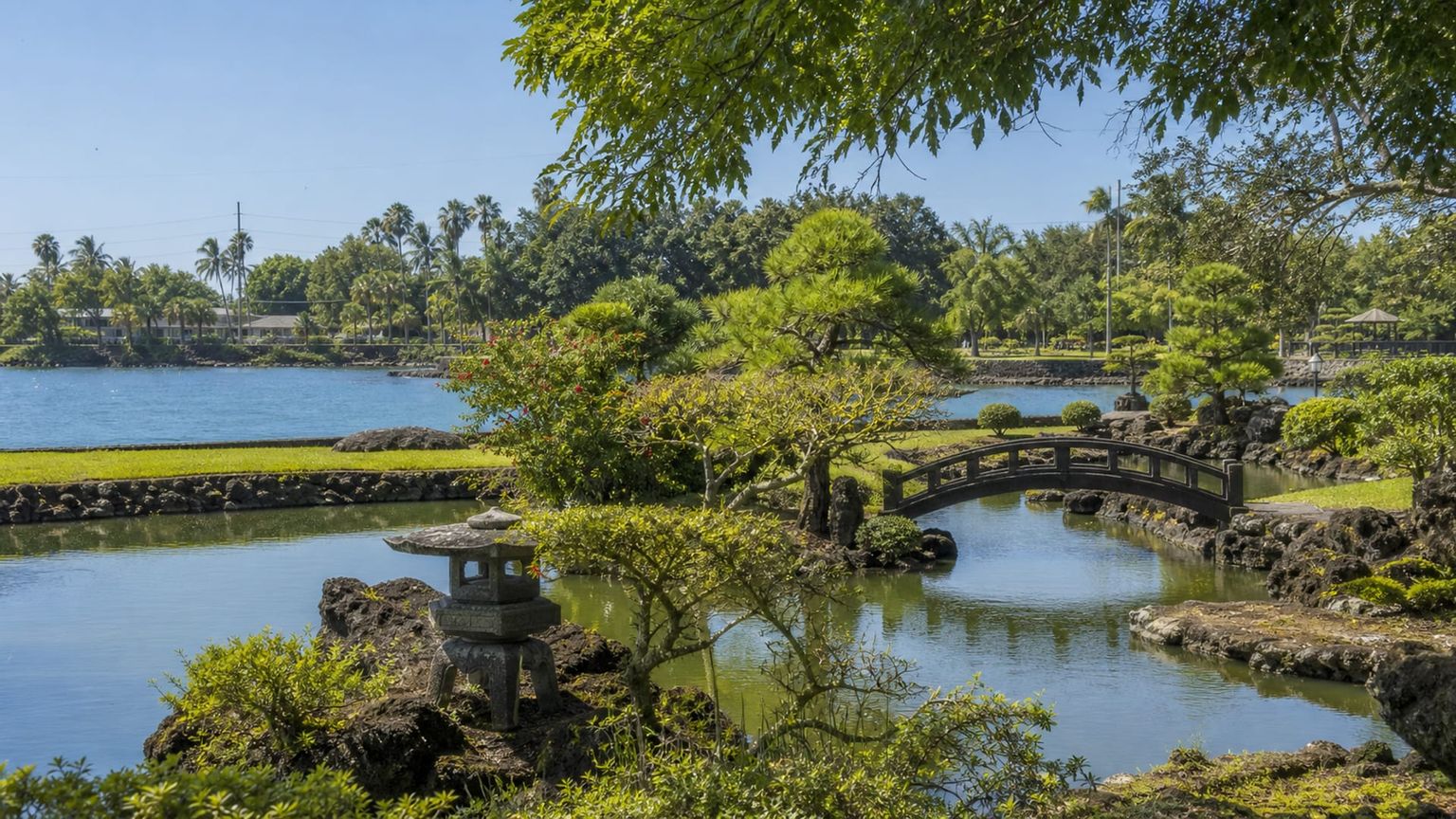
Go back to the waterfront and spend the morning on Banyan Drive, then walk or drive about 5 to 10 minutes to Liliʻuokalani Gardens for a calmer stretch of the bayfront. From there, head about 10 minutes to ʻImiloa Astronomy Center if you want another indoor block with air conditioning and exhibits, or stay downtown and split the day between the Lyman Museum and Mission House and nearby cafés, both within about 10 minutes by car. Keep the longest meal of the day in Hilo Downtown, where you can eat without crossing town again.
For a closing day, start with one last visit to the Lyman Museum and Mission House if you want a compact museum stop before packing, then move into Hilo Downtown for shopping, bakery runs, and last-minute gifts near the farmers market. If you are based on Banyan Drive, a final coffee beside Hilo Bay keeps the morning easy, while travelers in Keaukaha or Waiakea Uka can head down to the waterfront or downtown for a slow breakfast before the airport drive. Plan to leave for Hilo International Airport (ITO) about 30 to 45 minutes before your flight, or a little longer if you are returning a rental car.
Business-class flights from the US to Hilo
Flights into Hilo usually involve a connection, so the useful comparison is not just price, but how much time you spend in the air and at the layover airport. The two common origin markets below show how that plays out from each coast.
From New York, Hawaiian Airlines, Delta Air Lines, United Airlines, American Airlines, and Alaska Airlines typically route you to Hilo in about 11 to 12 hours nonstop when that option is available, while one-stop trips often connect through LAX, SFO, SEA, HNL, or HOU and take about 13 to 18 hours. For paid premium fares, common ranges sit from $1,400 to $3,200 round-trip, and itineraries that include a layover can drop to roughly $900 to $1,800.
Los Angeles travelers usually see Hawaiian Airlines, Delta Air Lines, United Airlines, and American Airlines on the Hilo market, with nonstop flights taking about 6 to 7 hours. If you choose a connection, common hubs include SFO, HNL, SEA, PHX, and DEN, and the extra stop stretches the trip to about 8 to 13 hours; round-trip fares usually start at $900 and reach $2,400, with nonstop options often sitting at the lower end of that range.
Hilo feels different when you slow down
A deliberate Hilo trip stays close to the bay, with one day for Rainbow Falls, one for the Lyman Museum and Mission House, and slower time for Liliʻuokalani Gardens, Banyan Drive, and downtown meals before the town closes in for the evening. Taxis, the Hele-On Bus, and short walks each have a place here. If you want help shaping the right base and itinerary, the AranGrant experts can build it around Hilo Downtown, Banyan Drive, or Keaukaha