

Chapters:

Need help with your trip?
Our support team is available 24/7. Request a callback or call us directly at (833) 619-0908
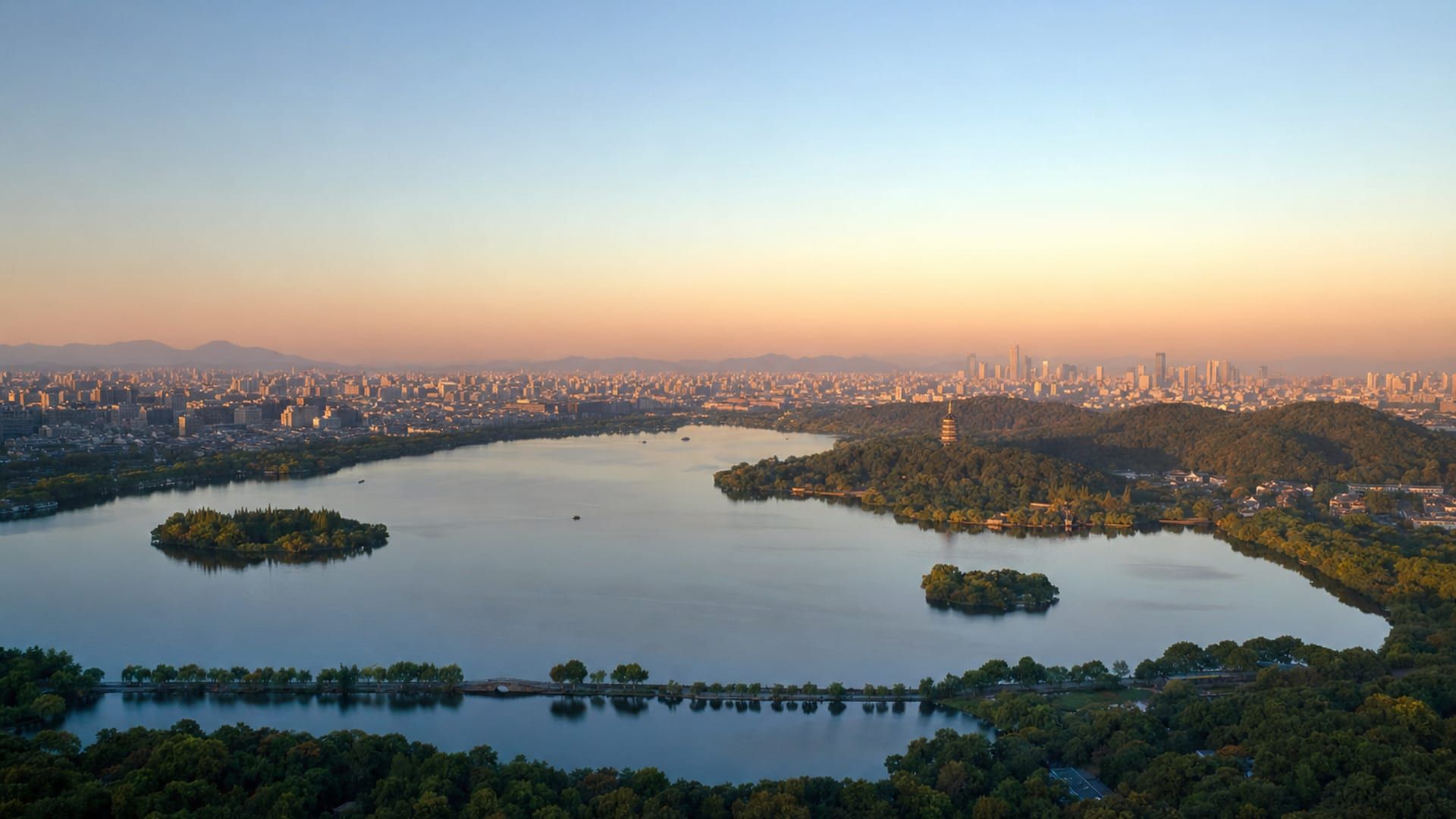
Hangzhou has been one of eastern China’s important cities for more than a thousand years. Known as Lin’an during the Southern Song dynasty, it served as the imperial capital from 1127 to 1279. West Lake was already central to the city by then, and poets, scholars, monks, and officials had spent centuries shaping the landscape around it.
The lake itself is partly the result of human work. Repeated dredging between the 9th and 12th centuries created its main causeways and artificial islands, while temples, pagodas, and gardens developed along the surrounding hills. UNESCO added the West Lake Cultural Landscape to the World Heritage List in 2011.
Modern Hangzhou is the capital of Zhejiang Province and a major city in the Yangtze River Delta. There is plenty to see and do beyond the lake, and this guide covers where to stay, what to eat, how to get around, when to visit, and how to spend five days there.
Useful things to know

Main language(s): Mandarin Chinese
你好 (nǐ hǎo) – Hello
请 (qǐng) – Please
谢谢 (xièxie) – Thank you
你会说英语吗? (nǐ huì shuō yīngyǔ ma?) – Do you speak English?
多少钱? (duōshao qián?) – How much does it cost?

Currency: Chinese yuan (CNY, ¥)

Cash and cards: Alipay and WeChat Pay are the main payment methods. You can link international cards to both apps. Keep ¥200 to ¥500 ($30 to $74) in cash as a backup option.

Tipping: Tipping is not customary in restaurants or taxis. Private guides and drivers sometimes receive tips, but there is no standard percentage.

Traditional food: Dongpo pork, West Lake fish in vinegar sauce, beggar’s chicken, and Longjing shrimp are among the best-known local dishes.

Water and coffee costs: A small bottle of water in a restaurant usually costs ¥2 to ¥4 ($0.30 to $0.60), while coffee at a café commonly costs ¥20 to ¥35 ($3 to $5.20).

Taxis and ride apps: Metered taxis operate throughout Hangzhou. DiDi and Amap also handle app-based rides, and both integrate easily with Chinese mobile payment systems.

Plug and voltage: China uses Type A, Type C, and Type I plugs with a 220V, 50Hz electricity supply.

Dining and shop opening hours: Breakfast restaurants often open by 6:30 am or 7:00 am. Lunch commonly runs from 11:00 am to 2:00 pm, while dinner starts from 5:00 pm or 5:30 pm. Many shopping malls open from 10:00 am to 10:00 pm.

Emergency number: Call 110 for police, 120 for ambulance and medical emergencies, and 119 for fire and rescue.
Where to stay in Hangzhou
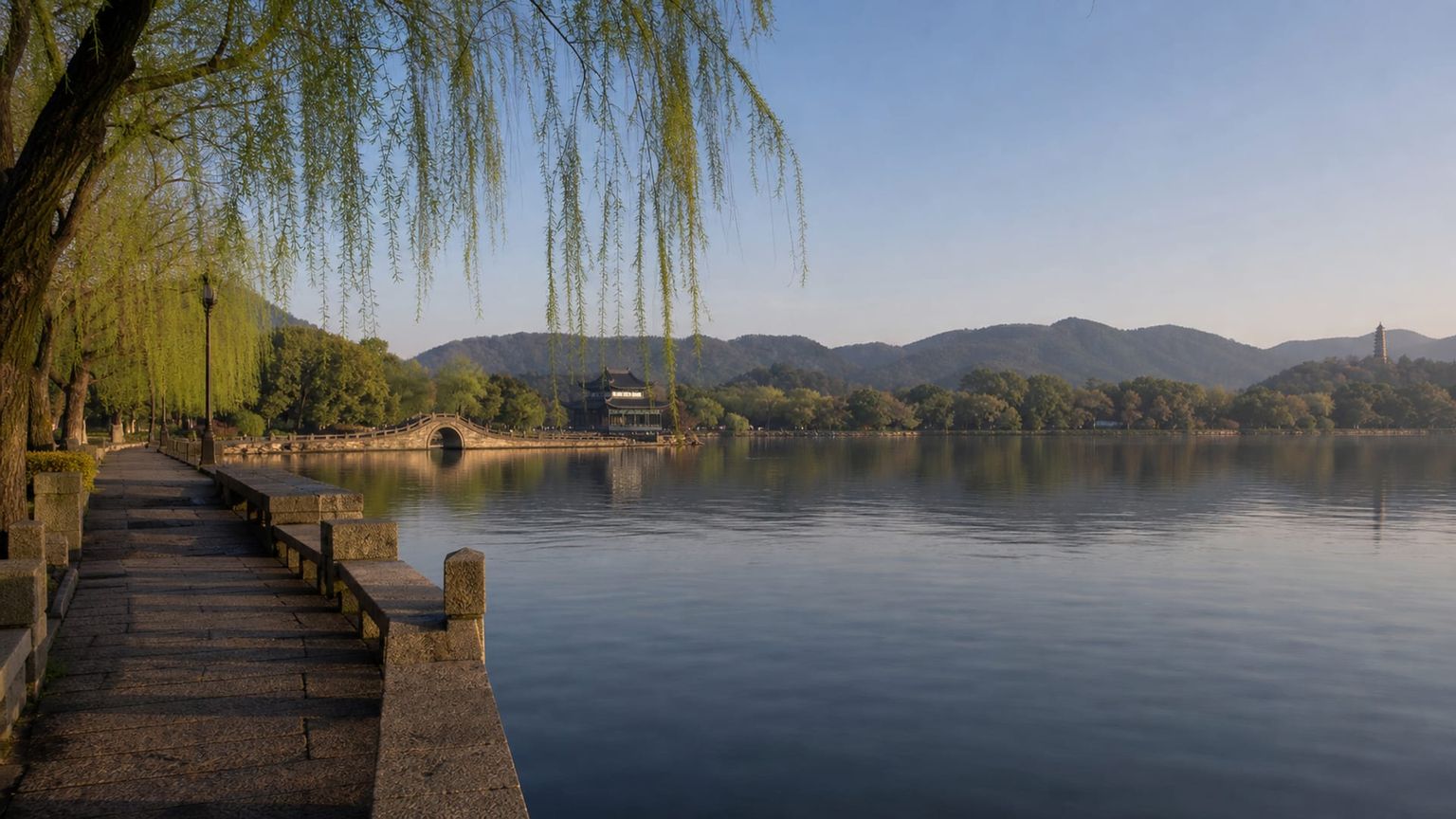
West Lake covers a large area and includes several distinct parts. Hotels are mainly along the eastern and northern shores, where the lake meets central Hangzhou, while the western side has wooded hills, temples, gardens, and tea fields.
Best for: Scenic walks, boat rides, and first-time sightseeing
What to expect: Lakeside promenades, tour groups, cyclists, and a steady flow of visitors from morning through sunset.
Hotel prices: Usually about 550 to 1,500 CNY (~$77 to ~$210) per night for well-rated stays
Distance to major sights: 10 to 25 minutes on foot to West Lake viewpoints; 20 to 30 minutes by taxi to Lingyin Temple
Quietness: Busy by day, calmer after dark once day visitors leave the lakefront
Main trade-off: Rooms near the water cost more, and the prettiest blocks can be less convenient for late-night dining than central commercial streets.
Good to know: Hotels near Hubin Road are closer to central Hangzhou and the busiest part of the lakeshore. Hotels on the western side are closer to Lingyin Temple and the tea-growing hills.
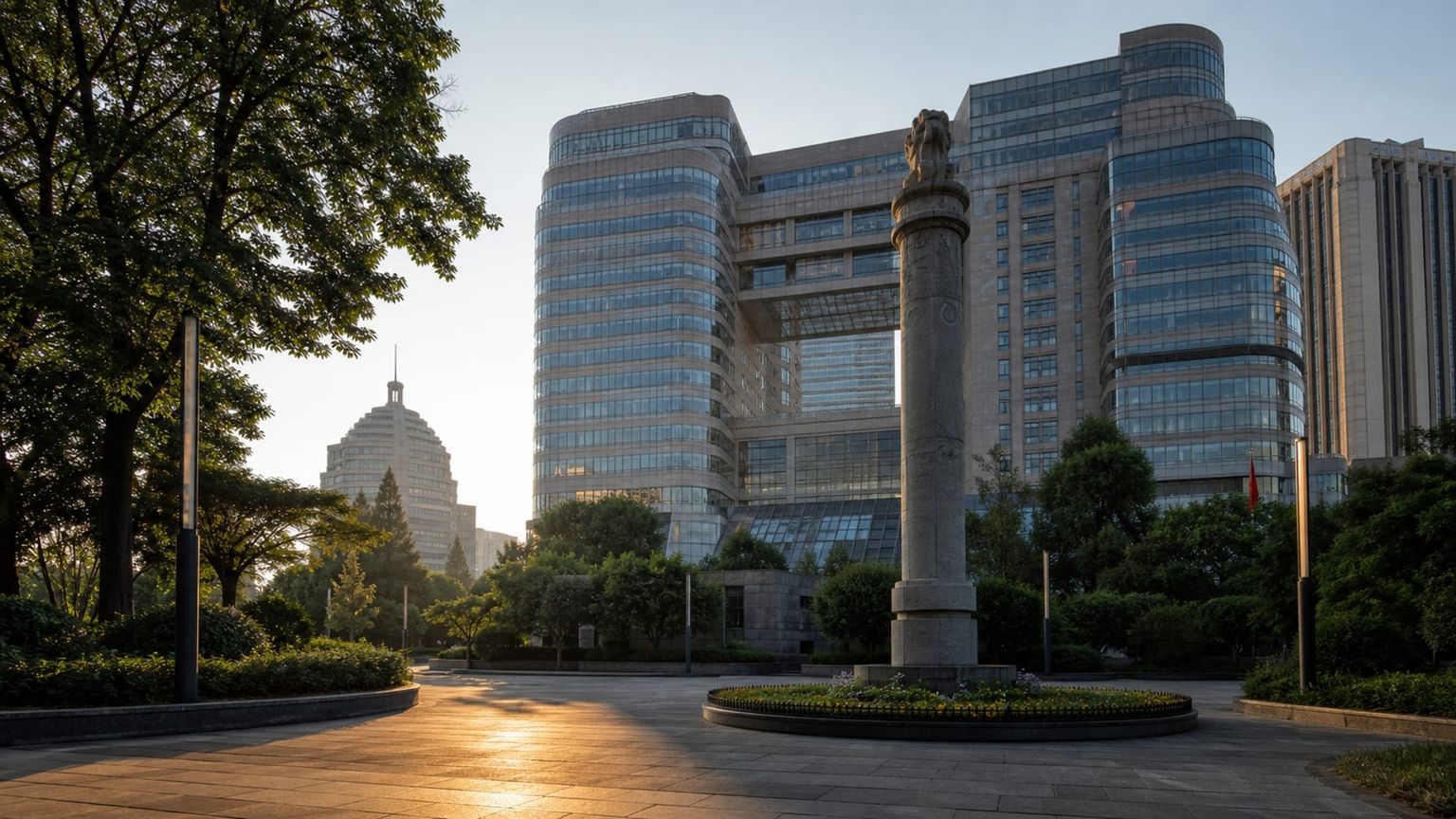
Wulin Square is a large public square north of West Lake, surrounded by department stores, shopping malls, hotels, office towers, and broad city streets. This district is one of Hangzhou’s busiest commercial areas.
Best for: Metro access, shopping, and a central base for moving across the city
What to expect: Heavy daytime foot traffic, bright storefronts, office workers, and plenty of activity into the evening.
Hotel prices: Usually about 400 to 1,000 CNY (~$56 to ~$140) per night for well-rated stays
Distance to major sights: 15 to 20 minutes by taxi to West Lake; about 20 minutes by Metro to Hangzhou East Railway Station
Quietness: Lively through the day, with more subdued streets late at night away from the main malls
Main trade-off: You trade lake scenery for transport convenience, and the most convenient streets can feel busy at peak shopping hours.
Good to know: Wulin Square Station and nearby metro stops make this one of the most convenient central areas for travelers planning cross-city trips.
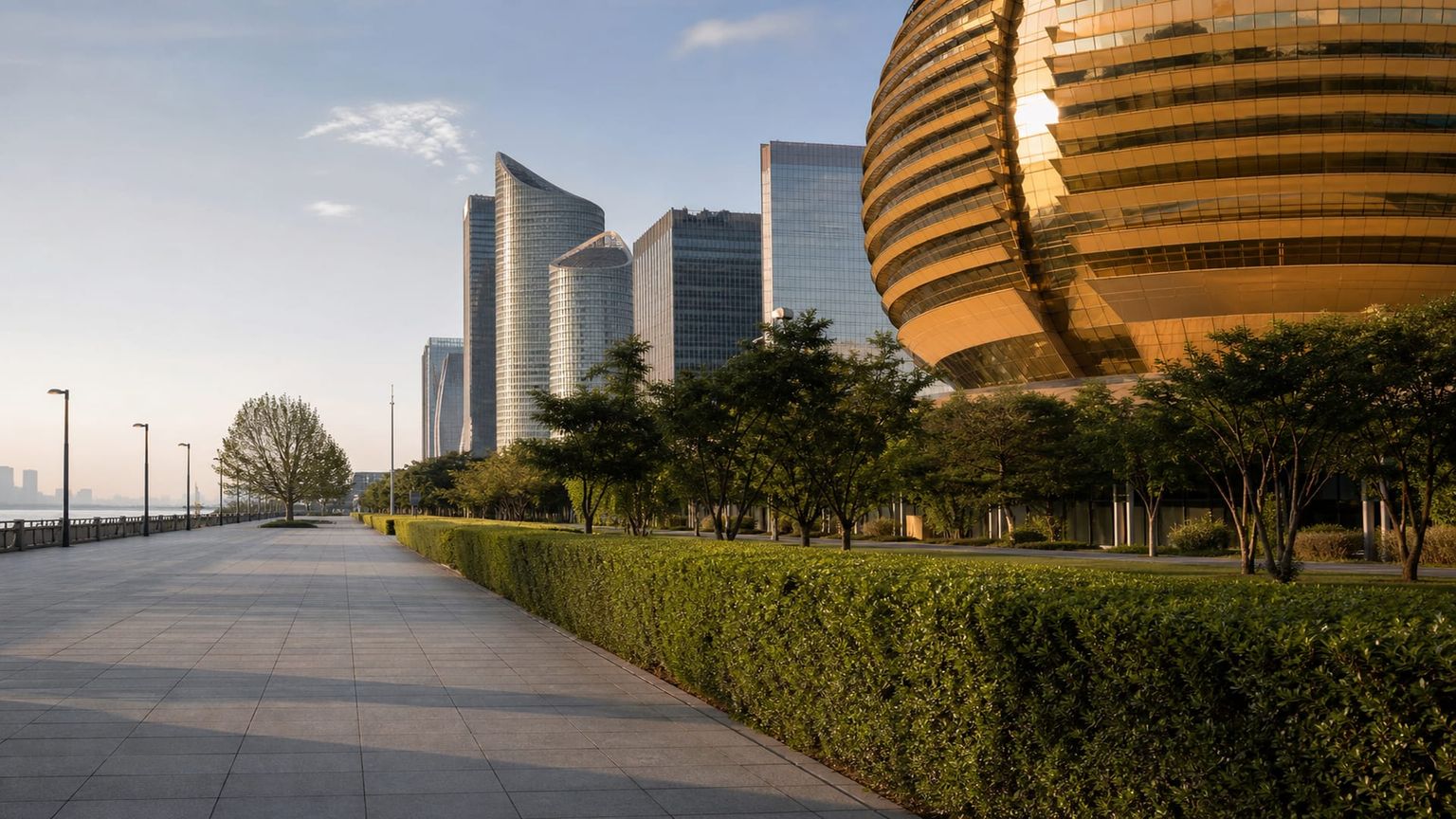
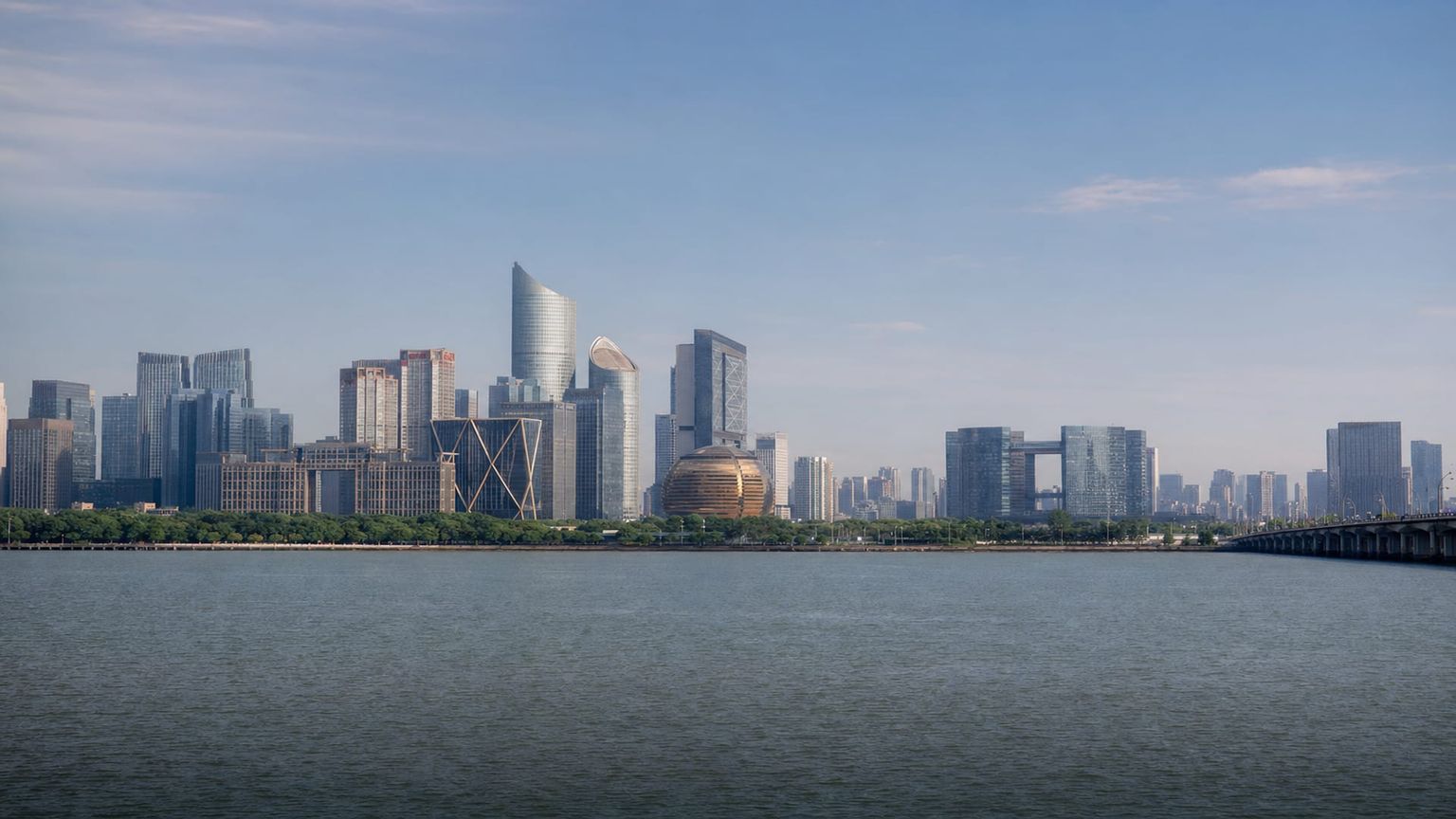
Qianjiang New Town extends along the north bank of the Qiantang River. Hangzhou developed much of the district in the 21st century, and its skyline now features the Citizen Center, Hangzhou Grand Theatre, offices, apartment towers, and large international hotels.
Best for: Business travel, newer hotels, and the eastern side of the city
What to expect: Wide roads, office traffic, large hotel lobbies, and a quieter street scene than the older lake district.
Hotel prices: Usually about 500 to 1,200 CNY (~$70 to ~$168) per night for well-rated stays
Distance to major sights: 20 to 30 minutes by taxi to West Lake; 10 to 15 minutes on foot to the Qiantang River waterfront
Quietness: Calm on many side streets, with more movement around office towers during weekday hours
Main trade-off: You will be farther from Hangzhou’s historic sights, so sightseeing days usually start with a taxi or Metro ride.
Good to know: Citizen Center Station serves the district and is useful for trips toward both West Lake and Hangzhou East Railway Station.
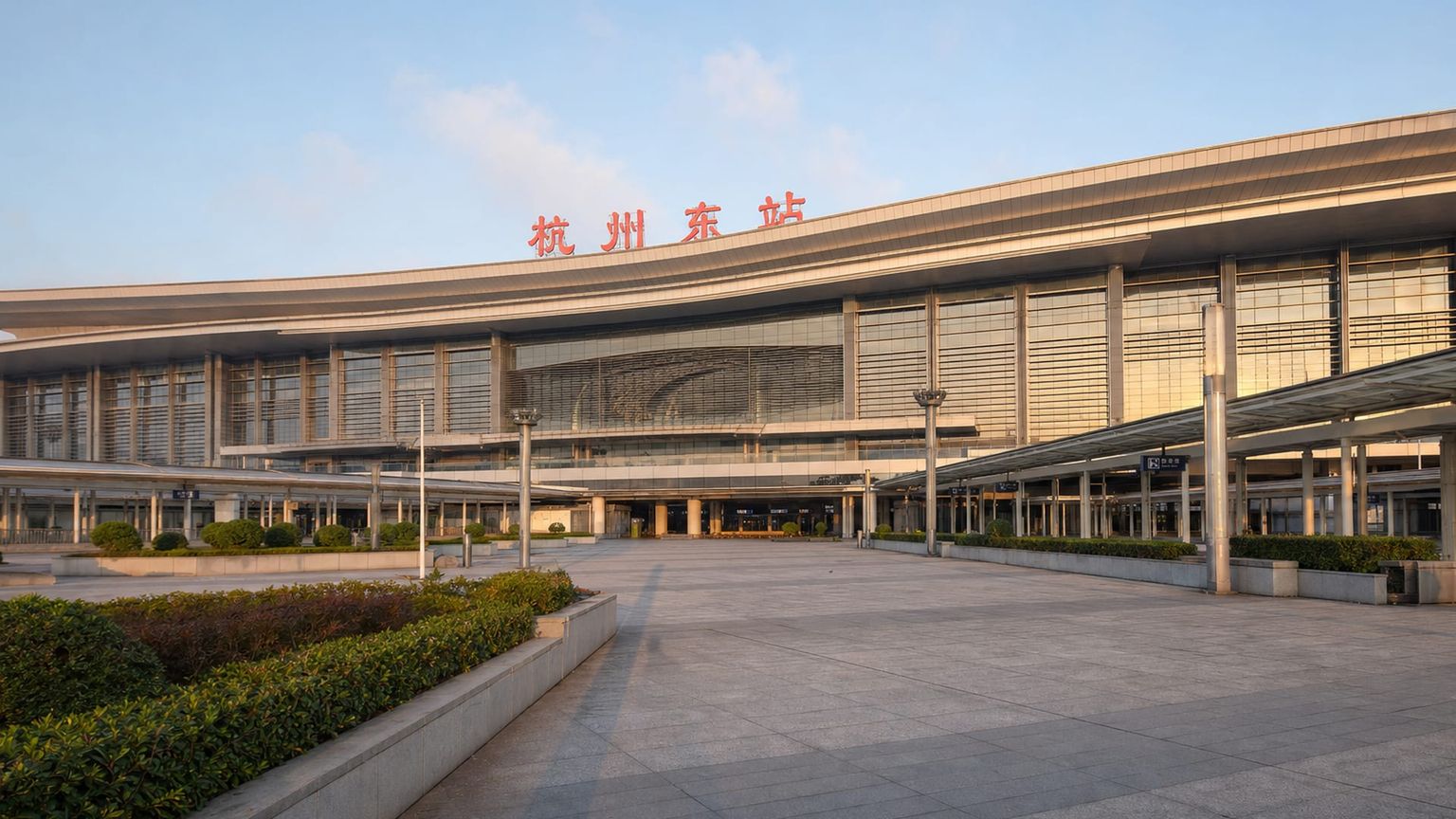
Hangzhou East Railway Station is the city’s main high-speed rail hub. Large hotels, apartment towers, restaurants, and shops surround the station, from which trains leave frequently for Shanghai and other major Chinese cities.
Best for: Train arrivals, early departures, and short business stays
What to expect: Constant transit traffic, chain hotels, food courts, and a utilitarian street scene built around the station complex.
Hotel prices: Usually about 350 to 900 CNY (~$49 to ~$126) per night for well-rated stays
Distance to major sights: 5 to 10 minutes on foot to Hangzhou East Railway Station; about 30 minutes by taxi to West Lake
Quietness: Busy and noisy near the station by day, quieter in hotel blocks after evening trains taper off
Main trade-off: You gain excellent rail access, but the area offers little atmosphere and fewer reasons to linger after check-in.
Good to know: Metro Line 19 reaches Hangzhou Xiaoshan International Airport (HGH) from Hangzhou East Railway Station in roughly 26 minutes.
For a first sightseeing trip, avoid staying in Xiasha, Linping, and outer parts of Yuhang. Reaching West Lake, Lingyin Temple, and central Hangzhou from these areas requires long rides on a taxi or Metro.
Hotel deals
How to get around Hangzhou efficiently
Hangzhou is easy to navigate, with a large metro network, frequent buses, and widely available taxis throughout the city.

Metro
for rides to the airport and longer trips across the city
The Metro serves West Lake, Wulin Square, Hangzhou East Railway Station, and residential districts. Fares start at ¥2 ($0.30). One-day passes cost ¥15 ($2.20), while three-day passes cost ¥40 ($6). Passengers can pay with Alipay and WeChat Pay. Stations also have ticket machines and service counters.

Bus
for trips to Lingyin Temple and tea hills
City buses serve the roads around West Lake, Lingyin Scenic Area, Longjing tea country, and residential districts without access to the Metro. Most urban fares are ¥2 to ¥4 ($0.30 to $0.60). As with the metro, passengers can use Alipay and WeChat Pay to pay, as well as cash.

Taxi
for for trips late in the evening and between scattered sights
Hangzhou taxis use meters. The current starting fare is ¥13 ($1.90) for the first 1.9 miles (3 km), followed by ¥2.50 ($0.37) per kilometer up to 6.2 miles (10 km). Drivers charge ¥3.75 ($0.56) per kilometer beyond that distance. Passengers can pay with cash, Alipay, and WeChat Pay.
*Prices are based on rates updated as of June 2026 and may change at the time of travel.
The metro is usually the most efficient way to cross the city and skip the traffic. Choose a taxi if comfort is a priority or if you’re traveling with luggage.
Iconic landmarks
West Lake
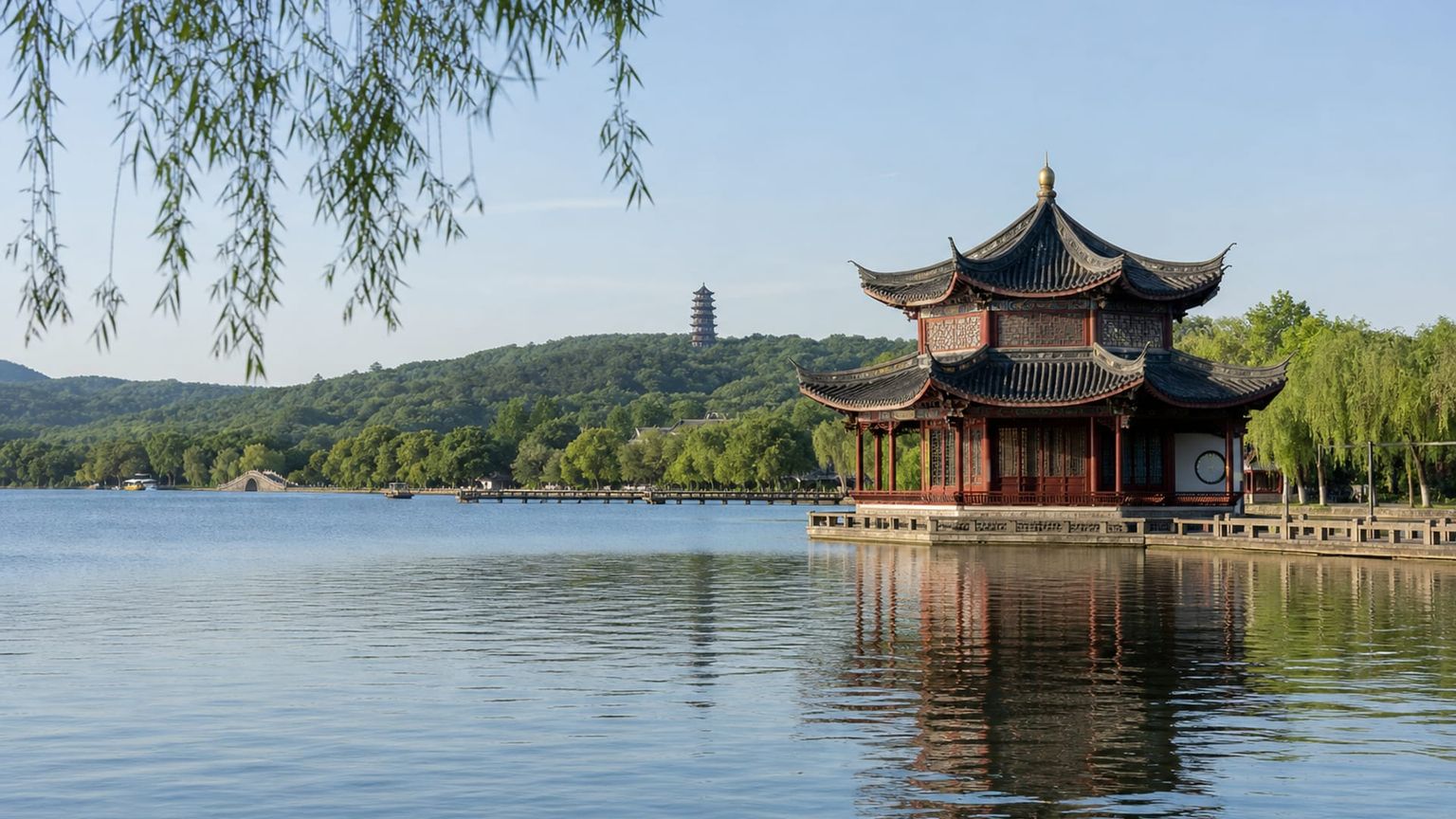
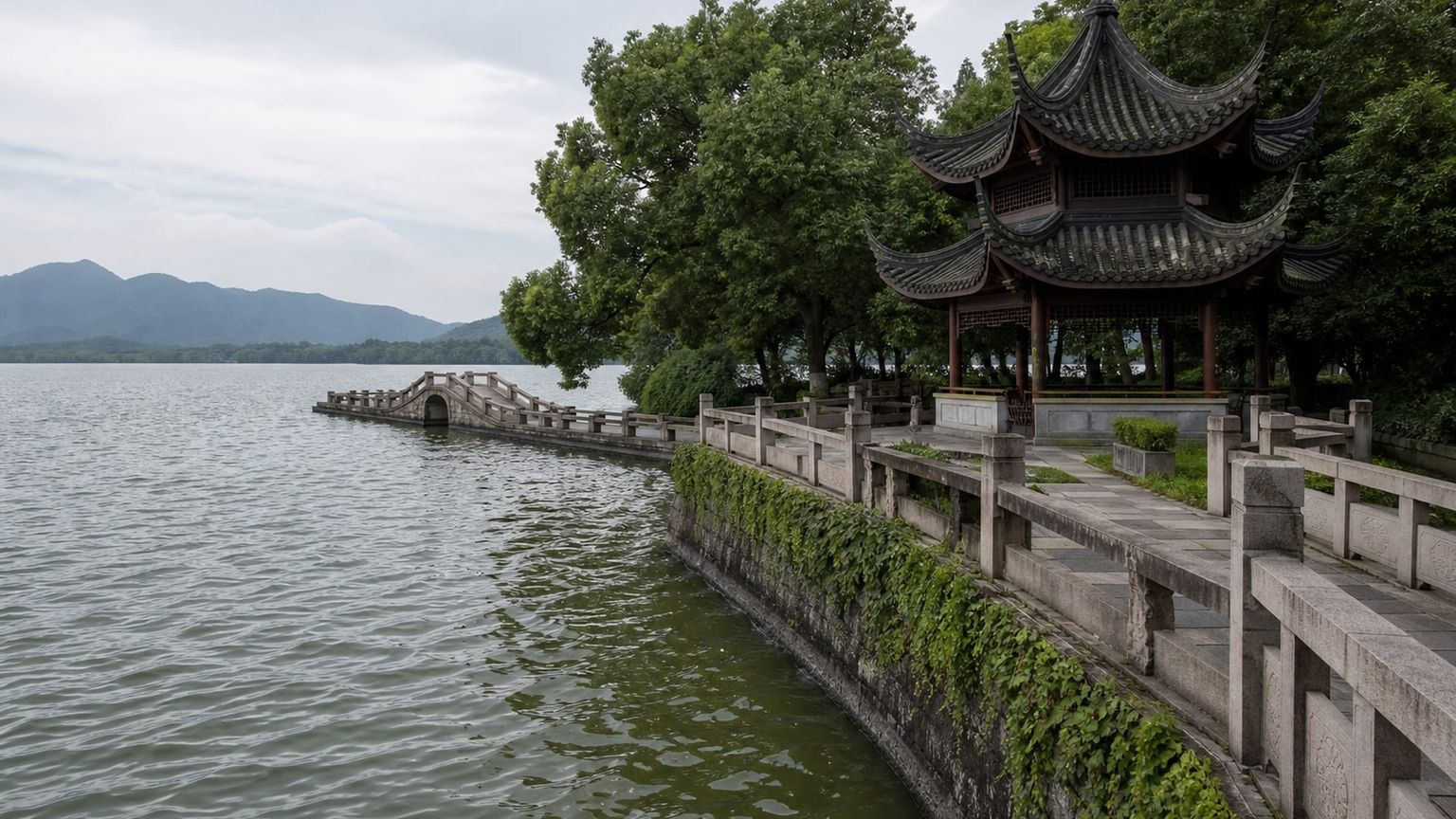
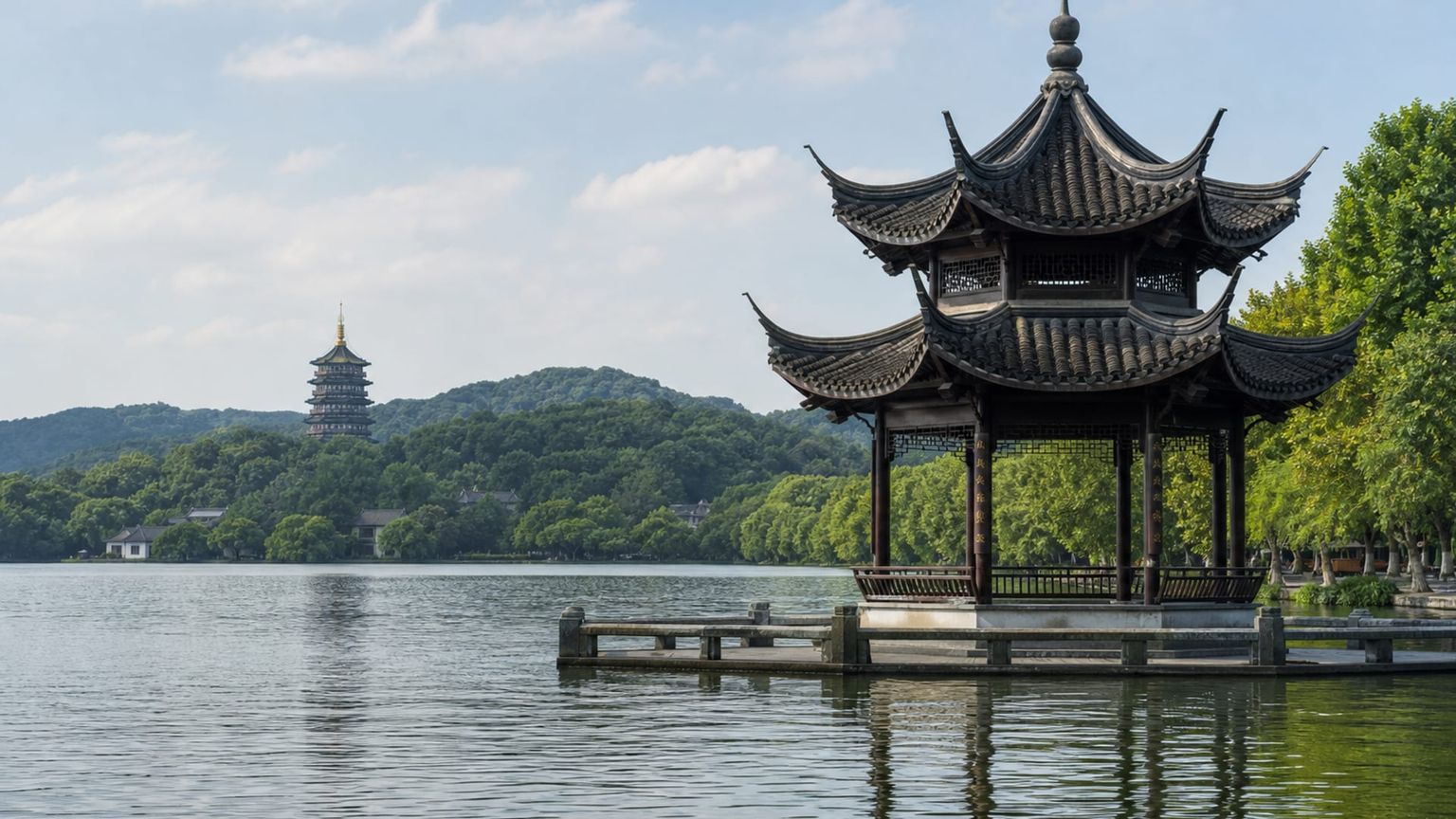
West Lake is the center of Hangzhou’s best-known historic landscape. Visitors can walk along tree-lined causeways, cross stone bridges, take boats to small islands, and stop at gardens, pagodas, and temples around the shore.
Time needed: About 3 to 4 hours
Entry: Free to access; boat rides and some scenic-area facilities cost extra, usually about $3 to $15 (¥20 to ¥108), depending on route and vessel type. Visit the official site for details.
Tip: Choose one or two parts of the lake instead of trying to walk the entire shoreline in a single visit.
Lingyin Temple and Feilai Peak
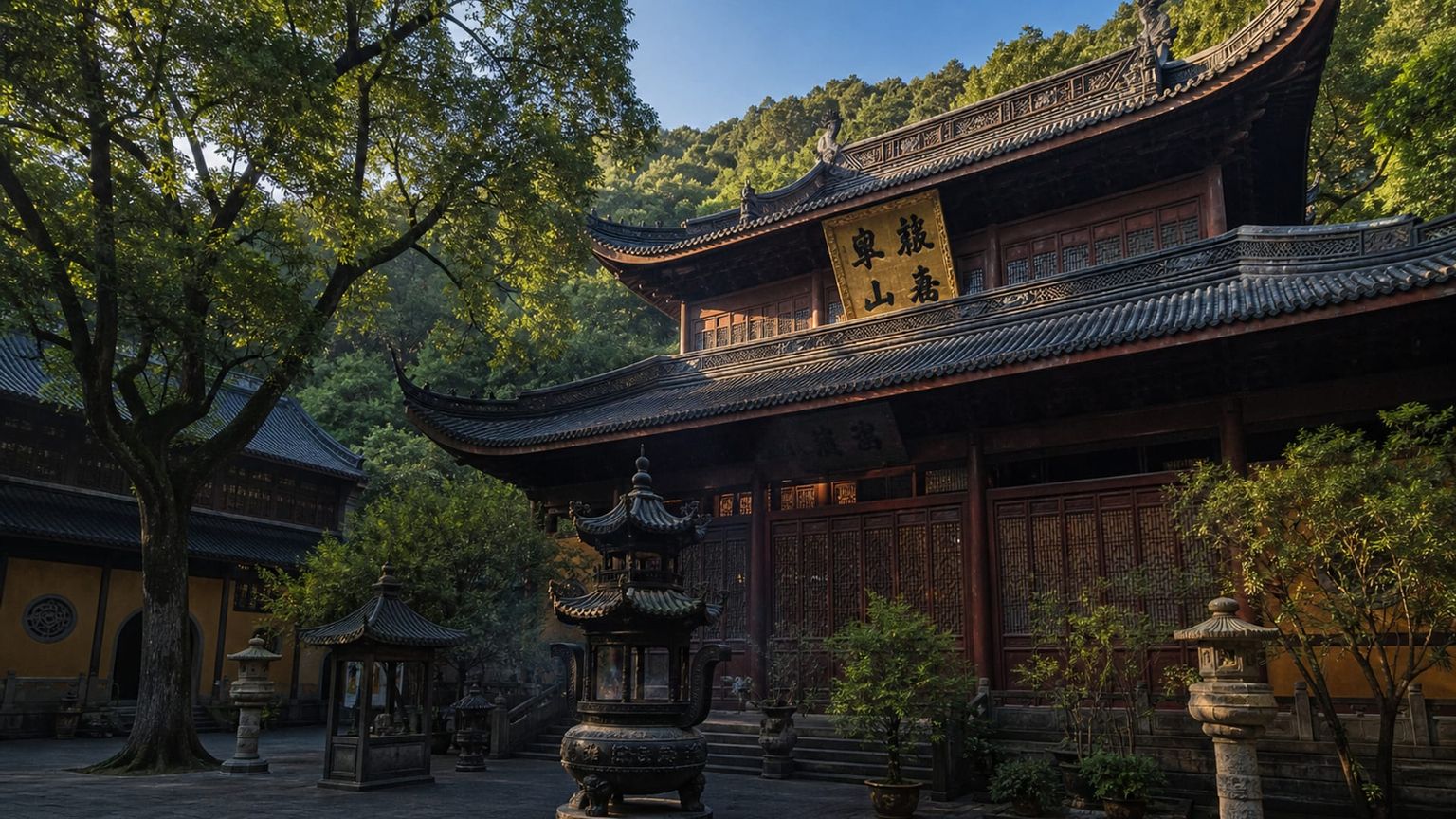
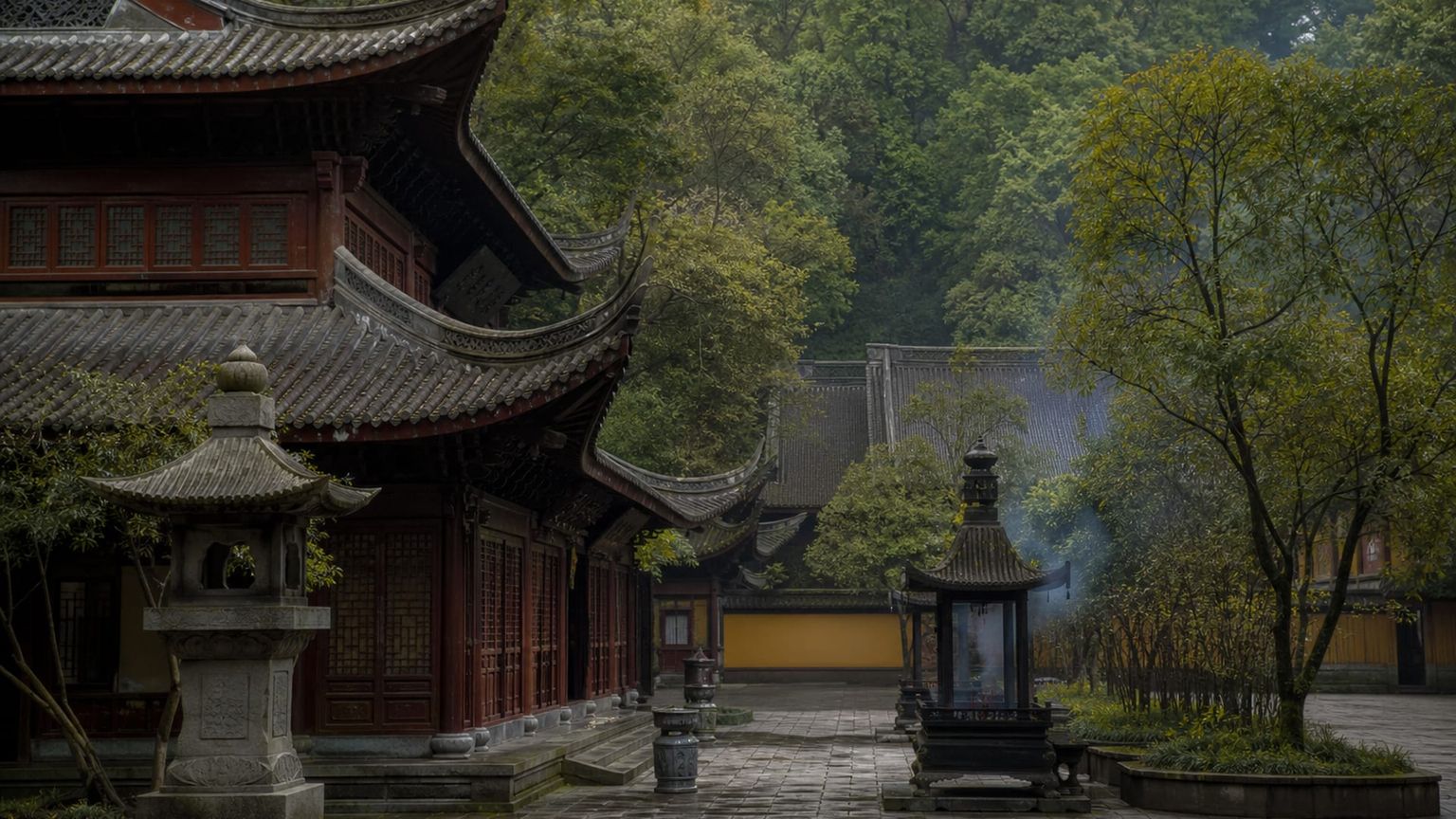
Lingyin Temple is one of Hangzhou’s oldest Buddhist temples, founded in 328. The complex has several large worship halls, statues, and courtyards. Just outside the temple, Feilai Peak has hundreds of Buddhist carvings cut into the rock and caves.
Time needed: About 2 to 3 hours
Entry: Tickets cost about $13 to $19 (¥90 to ¥140) for the temple and Feilai Feng scenic area, with separate paid shuttle or bus options at peak times. Visit the official site for details.
Tip: Book in advance. Same-day time slots may not be available, particularly on weekends and public holidays.
Six Harmonies Pagoda
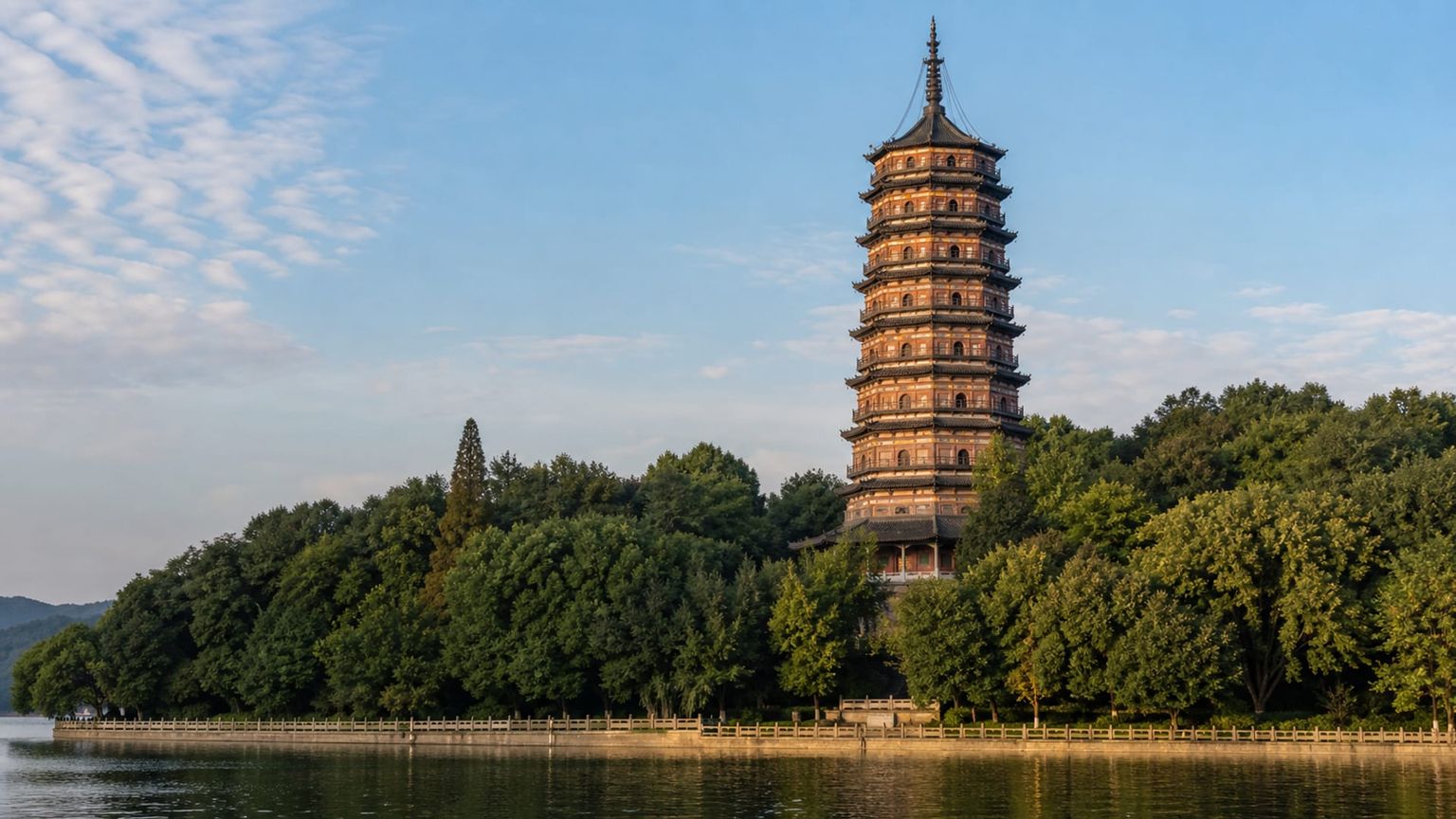
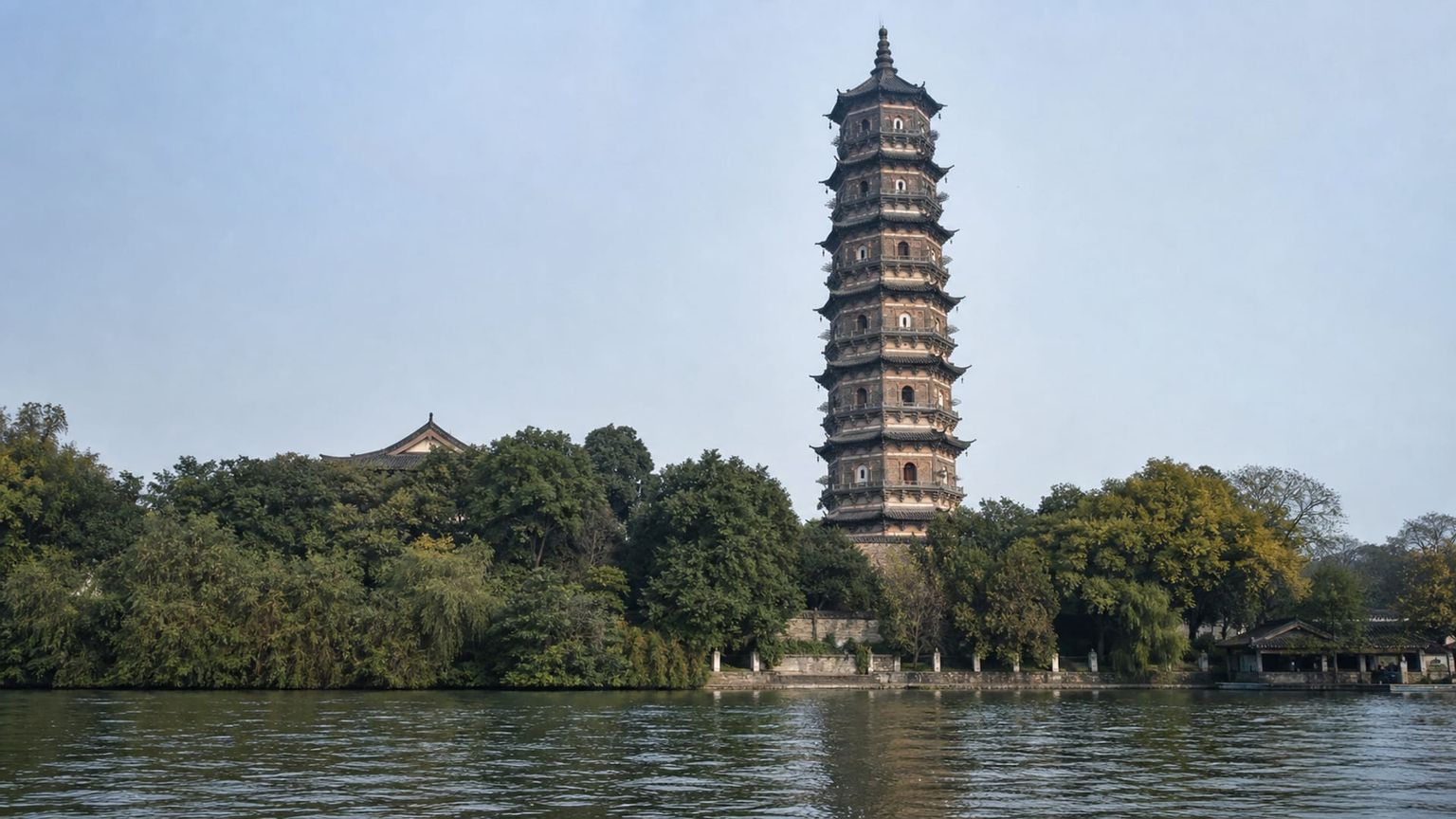
Six Harmonies Pagoda is a 13-story pagoda on Yuelun Hill beside the Qiantang River. Visitors can climb the internal stairways, stop at different levels, and enjoy the wide views of the river and the bridges crossing it.
Time needed: About 1 to 2 hours
Entry: Tickets cost about $5 to $8 (¥35 to ¥60) for access to the pagoda grounds and interior, with seasonal hours that vary by day and weather. Visit the official site for details.
Tip: Clear weather gives the best river views from the upper levels.
Overlooked sites worth visiting

China National Tea Museum
At China National Tea Museum, visitors learn how tea is grown, processed, prepared, traded, and used in Chinese life. The museum’s displays include historic teaware, production tools, documents, and materials from different tea-growing regions.
Time needed: About 1 to 1.5 hours
Entry: Grounds entry is free; pagoda admission costs about $4 to $5 (CNY 30 to CNY 35), and the tower usually opens daily with separate access for the upper levels. Some seasonal exhibits or special areas may charge extra, so check the ticket desk on arrival.
Tip: The museum’s Shuangfeng site is near the villages and tea fields where Longjing, or Dragon Well tea, is grown. You can visit both on the same trip.

China National Silk Museum
The China National Silk Museum has historic fabrics, garments, looms, and archaeological textiles, with displays explaining how silk was made, used, and traded in China.
Time needed: About 1 to 2 hours
Entry: Admission is free for the permanent collection, with occasional special exhibitions or guided programs carrying separate fees, usually about $3 to $8 (CNY 20 to CNY 60). Entry hours can shift for holidays and events, so confirm the day’s schedule before you go. Visit the official site for details.
Tip: The permanent Silk Road and sericulture exhibitions are the best places to start before moving into the fashion and conservation galleries.
Traditional food
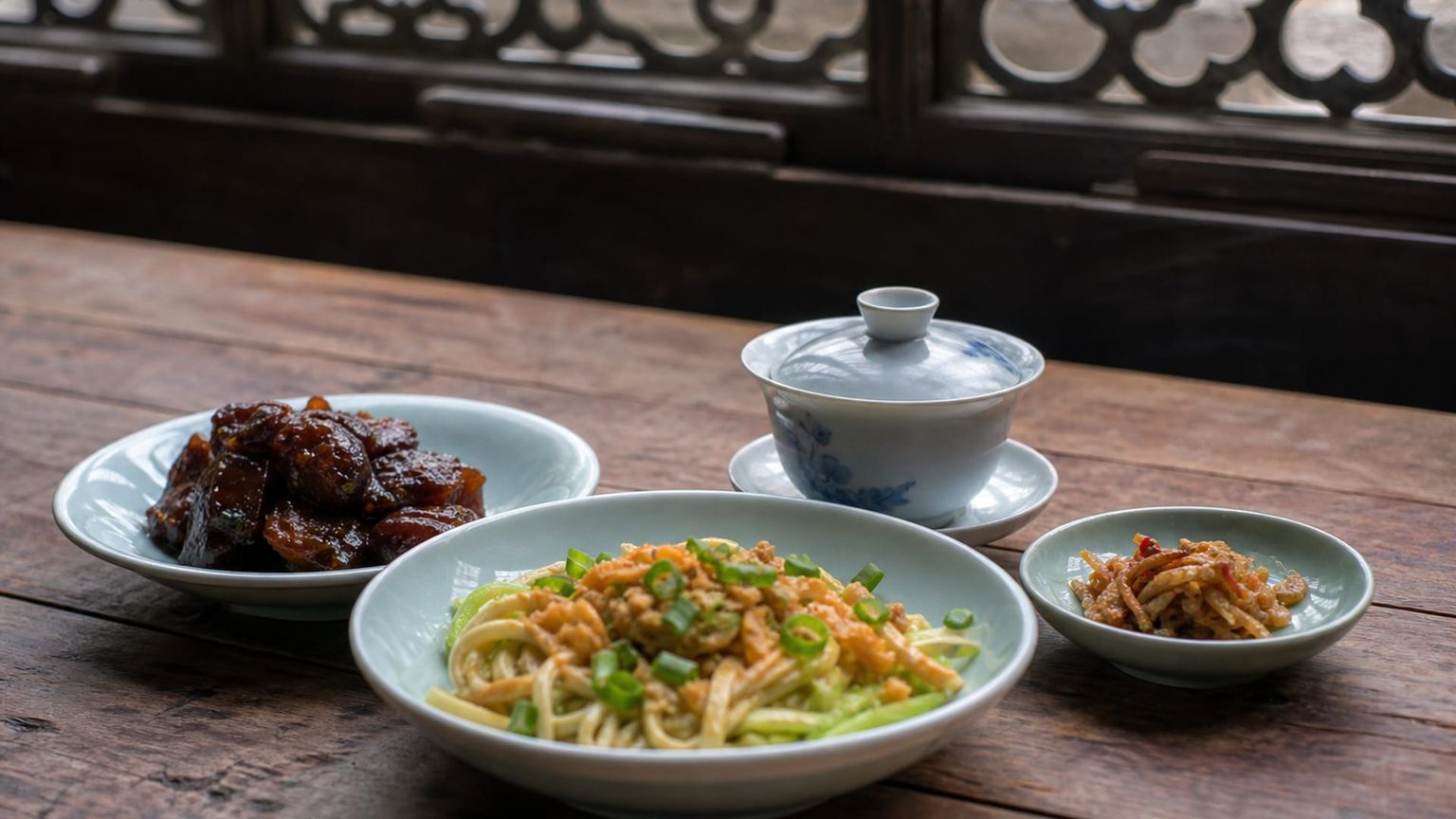
Hangzhou cooking belongs to the broader Jiangnan tradition of eastern China. Cooks generally use moderate seasoning and pay close attention to texture, freshness, and the main ingredient’s natural flavor.
Dongpo pork
Dongpo pork is pork belly slowly braised with soy sauce, sugar, rice wine, ginger, and scallions until the meat becomes very tender. The dish takes its name from Su Dongpo, the Song-dynasty poet and official. Try it at Lou Wai Lou beside West Lake.
West Lake fish in vinegar sauce
This dish is freshwater fish cooked gently and covered with a sauce made from vinegar, sugar, and ginger. The sauce is sweet and sour but does not hide the fish itself. Ziwei Hall at the West Lake State Guesthouse is one of the best places to try it.
Beggar’s chicken
Beggar’s chicken is seasoned chicken wrapped in lotus leaves and baked for several hours, traditionally inside a clay covering. The wrapping keeps the meat moist and carries the scent of the lotus leaf into the chicken. Try it at Zhi Wei Guan near West Lake.
Longjing shrimp
Longjing shrimp combines peeled river shrimp with Longjing green tea leaves. The shrimp are cooked quickly so they stay tender, while the tea adds a light herbal fragrance. Try it at Jin Sha at Four Seasons Hotel Hangzhou at West Lake.
Best time to visit Hangzhou
Hangzhou has a humid subtropical climate, with plenty of rainfall, high summer humidity, and cool, damp winters. Temperatures vary noticeably across the year, and the city receives rain in every season.
Best for: West Lake walks, tea villages, gardens, temples, and spring flowers
What you get: Average daytime highs rise from 57°F (14°C) in March to 77°F (25°C) in May. Rain becomes more frequent later in spring. Tea picking starts during this period, and many flowering trees around West Lake bloom in March and April.
Trade-offs: Wet days become more common as May approaches, and weekends can be crowded around West Lake.
Best for: Lotus flowers, evening lake walks, museums, and boat trips outside the hottest part of the day
What you get: Average daytime highs reach 83°F to 92°F (28°C to 33°C). Humidity is high, and June is usually the wettest month. Lotus flowers appear across West Lake in early summer and usually reach peak bloom in July.
Trade-offs: July and August can be very hot, especially in the afternoon, and heavy rain can interrupt outdoor plans.
Best for: West Lake, Lingyin Temple, pagodas, tea-country walks, and long days outside
What you get: Average daytime highs fall from 81°F (27°C) in September to 62°F (17°C) in November. Rainfall generally decreases after summer, and October often has long stretches of dry, mild weather.
Trade-offs: National Day in early October brings very large domestic crowds, especially around West Lake and other major sights.
Best for: Museums, temples, lakeside walks, and restaurants
What you get: Average daytime highs generally range from 46°F to 52°F (8°C to 11°C). Nights are colder, and damp air can make temperatures feel lower than the thermometer suggests.
Trade-offs: Cloud, rain, and occasional haze are common, and the colder weather makes long outdoor visits less comfortable.
A realistic 5-day plan in Hangzhou
Hangzhou has major sights around West Lake, in the hills to the west, and along the Qiantang River. Over five days, there is time to see each area without packing too much into a single day.
After checking in at your hotel, start near Hubin Road on the eastern shore of West Lake. Walk north toward Broken Bridge, then continue onto Bai Causeway, one of the historic paths across the lake. From the causeway, enjoy the view over West Lake toward the wooded western hills, with central Hangzhou behind you. In the afternoon, take a short boat ride to see the islands, bridges, and causeways from the water before returning to Hubin for dinner.
Go to Lingyin Temple in the morning after reserving a time slot in advance. Before entering the monastery, stop at Feilai Peak to see hundreds of Buddhist figures carved into the limestone cliffs and caves. After the temple, visit the China National Tea Museum’s Shuangfeng site to see historic teaware, production tools, and displays explaining how tea is grown and processed. Continue to Longjing Village after lunch to walk through the tea fields, then stop at a tea house to taste Longjing tea and see how local growers prepare it.
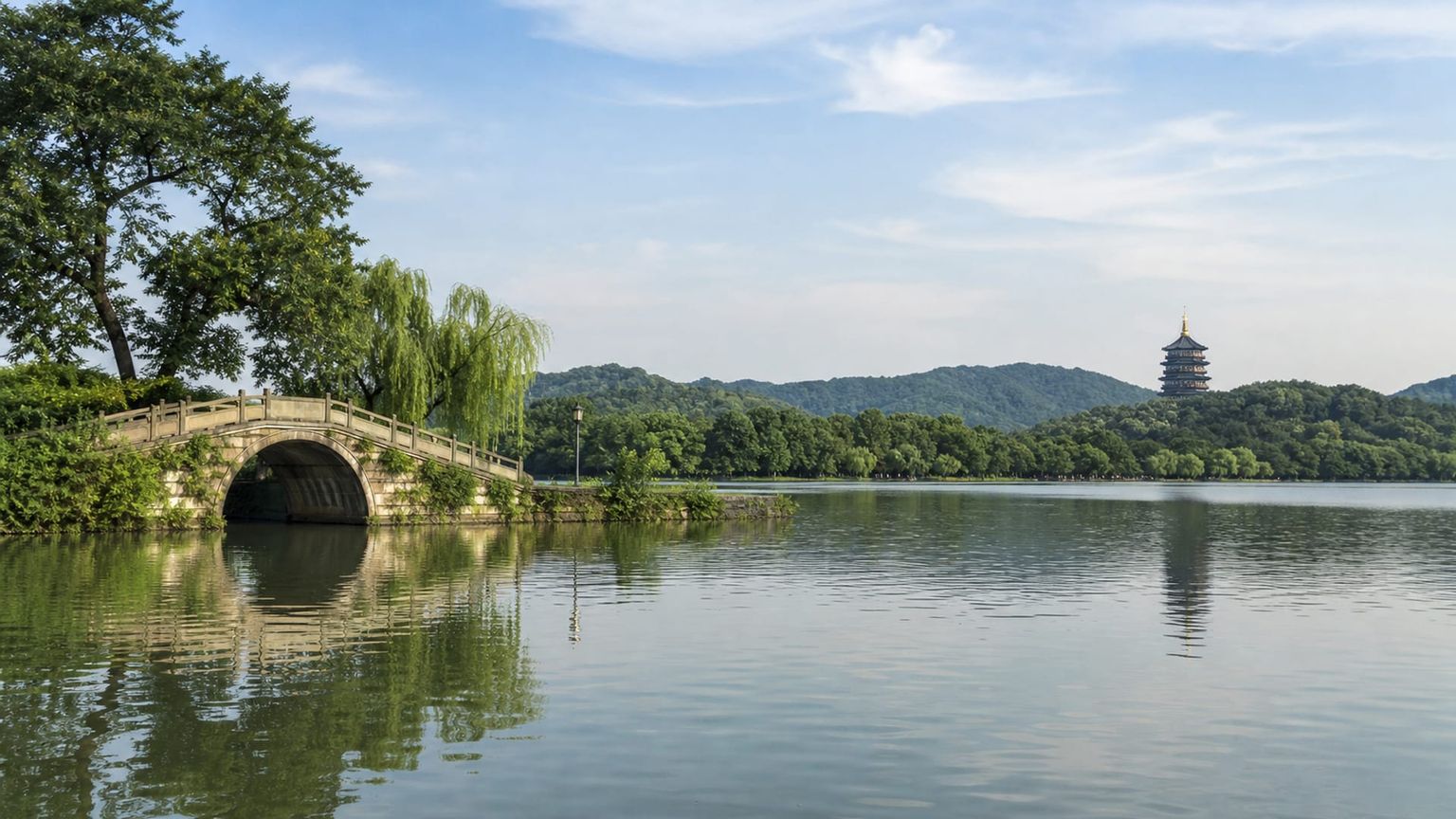
Start at the China National Silk Museum, where visitors can see historic fabrics, garments, looms, and archaeological textiles from different periods of Chinese history. The displays cover how people raised silkworms, produced silk, made clothing, and traded textiles. Afterward, continue to the southern shore of West Lake and walk through the parks near Leifeng Pagoda and Su Causeway. Stay until late afternoon for views across the lake toward the western hills.
Begin at Six Harmonies Pagoda on Yuelun Hill beside the Qiantang River. Walk through the grounds, then climb the pagoda and stop at the upper levels to look across the river and its bridges. After lunch, travel east to Qianjiang New Town. Walk to City Balcony, a large riverfront terrace overlooking the Qiantang River, then visit Hangzhou Grand Theatre to see its distinctive curved architecture and the open civic plaza around it.
Spend the final morning around Wulin Square, one of central Hangzhou’s main commercial areas. Walk through the square itself, browse the nearby department stores and shopping centers, or stop for coffee before lunch. The area also has plenty of restaurants, so it is a good place to spend a few hours without committing to another major sight. After lunch, return to the hotel for luggage, then take the Metro or a taxi to Hangzhou Xiaoshan International Airport (HGH).
Business-class flights from the US to Hangzhou
Business-class fares to Hangzhou usually come through one-stop itineraries from both coasts, with routing choices that can change the trip length quite a bit. The main airline options also differ by origin, so the best fare often depends on whether you value a shorter connection or a wider choice of hubs.
From New York, Air China, China Eastern Airlines, Cathay Pacific, Qatar Airways, and Emirates usually appear on the strongest options. Round-trip fares from New York to Hangzhou generally run from $4,200 to $7,500, and the most useful connection points often include PEK, PVG, HKG, DOH, and DXB, with total travel times typically landing in the 18 to 24 hour range.
Los Angeles flyers usually see Air China, China Eastern Airlines, Cathay Pacific, Singapore Airlines, and Asiana Airlines among the main choices. Round-trip fares usually start near $3,800 and can reach $6,800, and the common connection hubs, HKG, ICN, PVG, PEK, and TPE, often put total travel time in the 16 to 22 hour range.
A final look at Hangzhou
Hangzhou is a city where centuries-old temples and tea fields are only a short distance from dense commercial districts and the modern Qiantang Riverfront. That close proximity is part of what makes the city interesting to explore, especially with enough time to see more than the best-known sights.
If you are planning to make that trip, our travel experts at AranGrant can help you find business-class flights to Hangzhou from the US, so you can reach your destination in comfort.







