

Chapters:

Need help with your trip?
Our support team is available 24/7. Request a callback or call us directly at (833) 619-0908
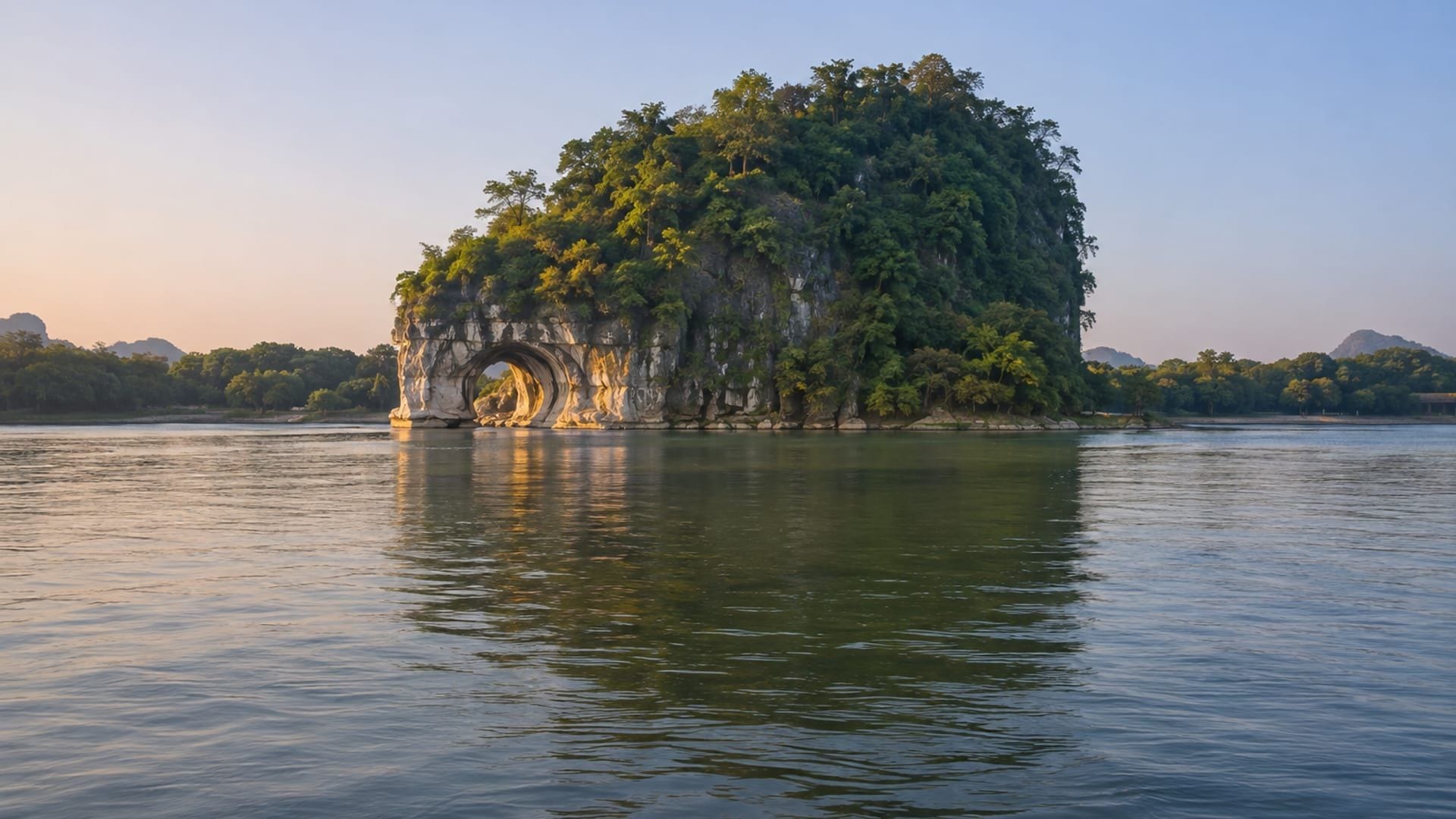
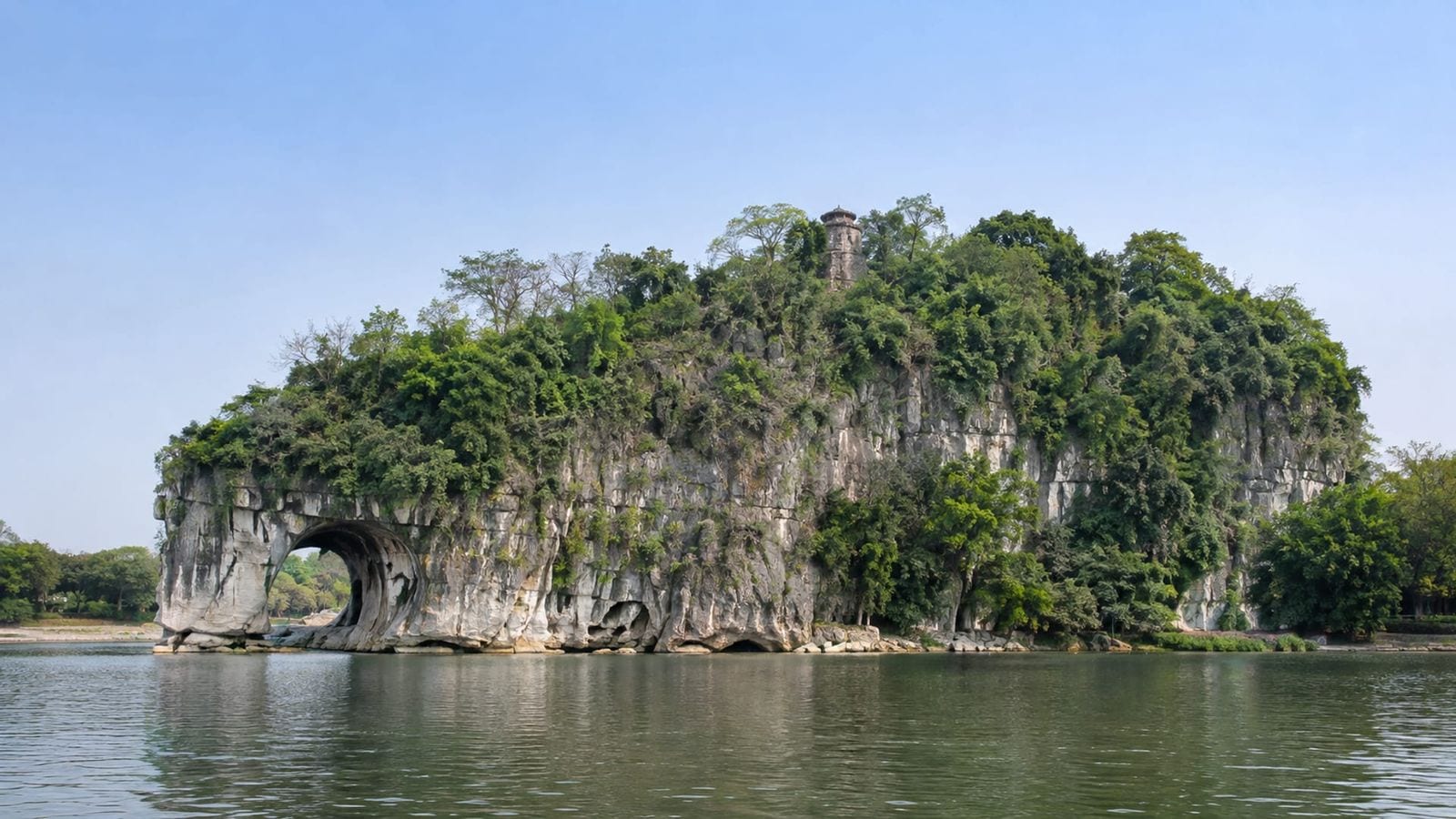
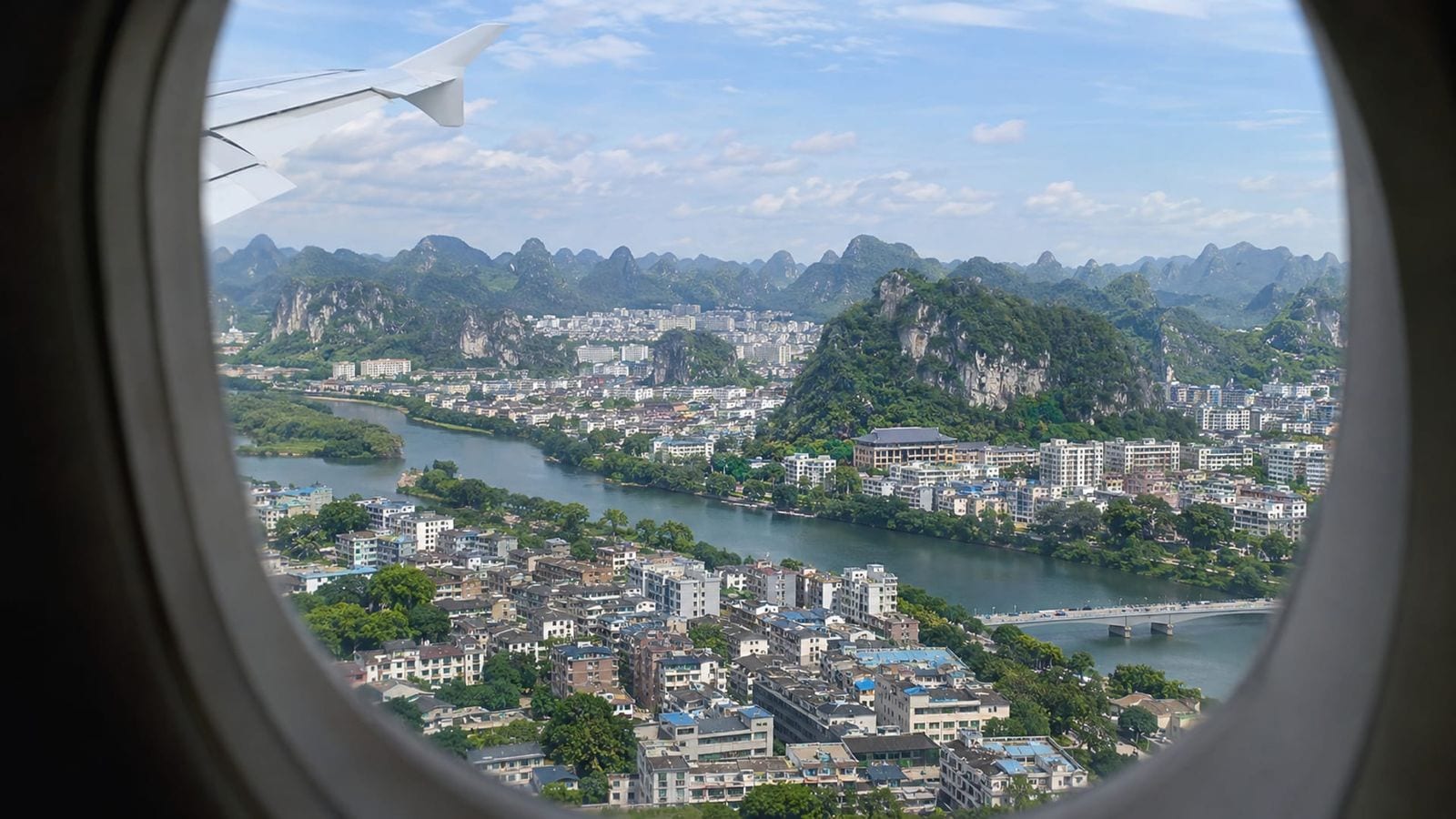
Guilin’s limestone hills rise beside the Li River and above the city’s streets, bringing the karst landscape into the urban center. At Elephant Trunk Hill, an opening through the rock creates the profile that has become the city’s emblem, with a stone trunk reaching toward the water.
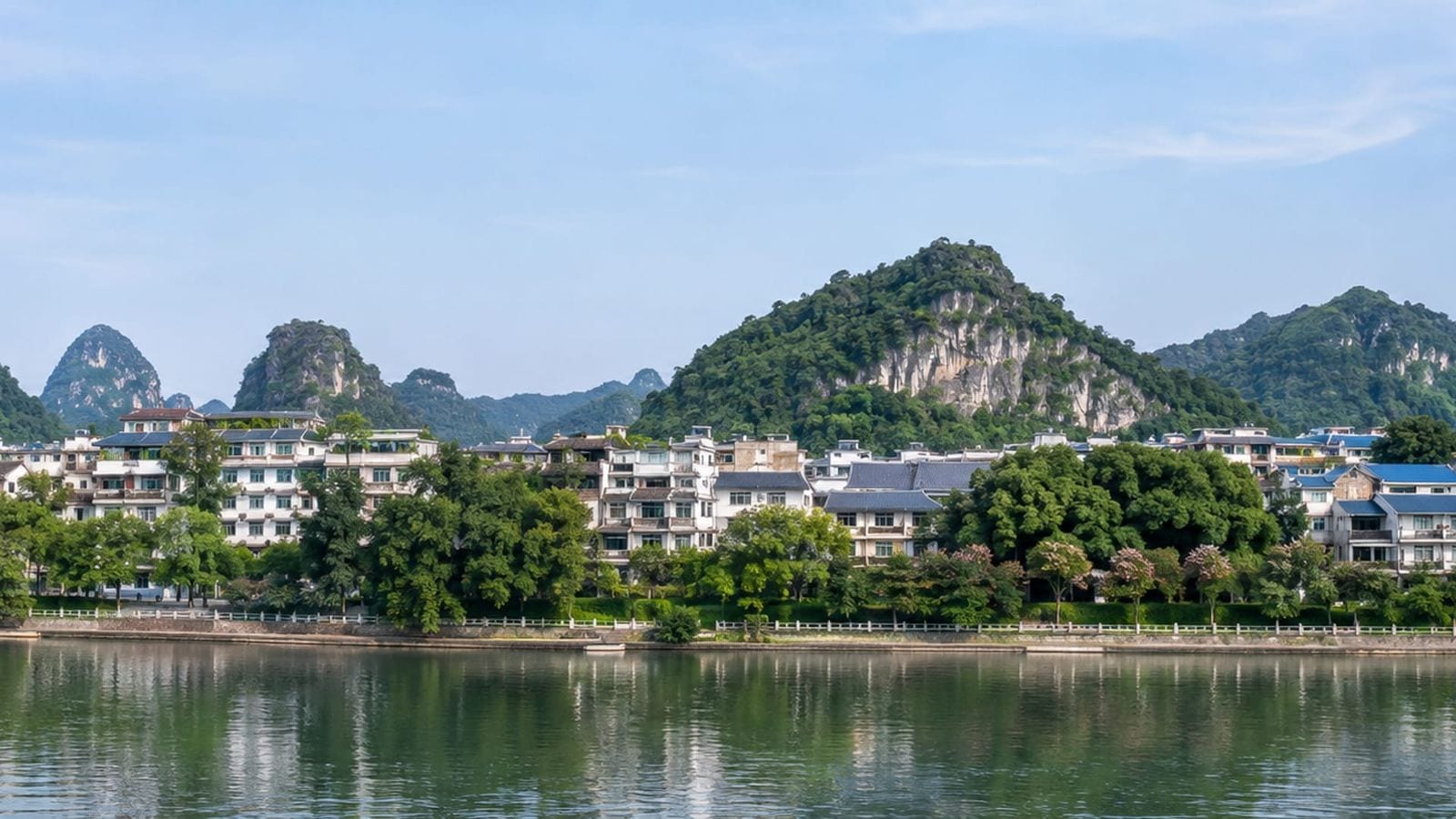
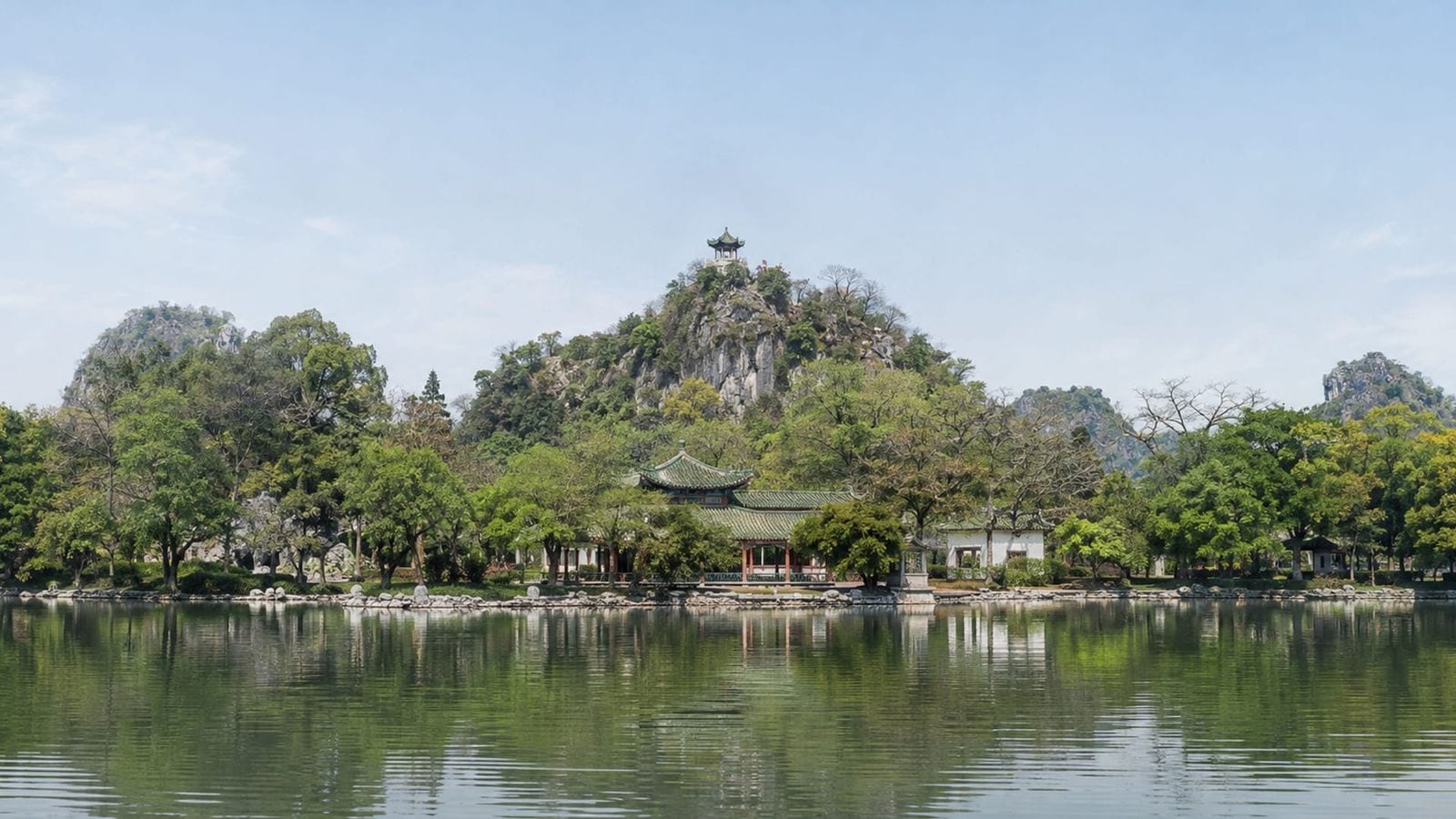
The same geology shapes a climb up Solitary Beauty Peak and the underground chambers of Reed Flute Cave. Between these outings, paths beside Shan Lake bring the hills into view across the water, while the Sun and Moon Twin Pagodas add an illuminated landmark after dark.
Five days allow time for the central lakes, a cave excursion, and local history in Lingui. Choose Xiufeng District for evenings near the water, then use taxis for sights beyond the center.
Useful things to know

Main language(s): Mandarin Chinese
你好 (nee how) – Hello
请 (ching) – Please
谢谢 (shyeh shyeh) – Thank you
你会说英语吗? (nee hway shwaw ying yoo mah) – Do you speak English?
多少钱? (dwaw shaow chyen) – How much does it cost?

Currency: Chinese yuan (CNY, ¥)

Cash and cards: Cards and contactless acceptance is limited; carry ¥200 to ¥400 ($28 to $56) in cash.

Tipping: Skip tipping in restaurants and taxis; tipping is not customary in Guilin.

Traditional food: Guilin rice noodles, Lipu taro pork, beer fish, and stuffed river snails are among the classic dishes of Guilin.

Water and coffee costs: Bottled water ¥2 to ¥5 ($0.30 to $0.70); espresso ¥15 to ¥30 ($2 to $4).

Taxis and ride apps: Find licensed, metered taxis at Guilin Liangjiang International Airport; short city rides cost ¥10 to ¥25 ($1.40 to $3.50); DiDi.

Plug and voltage: Type A/C/I socket, 220V

Dining and shop opening hours: Breakfast is 7 am to 9 am, lunch 11:30 am to 1:30 pm, and dinner 6 pm to 8 pm. Shops generally open 9 am to 9 pm; smaller businesses may close during Lunar New Year.

Emergency number: Police 110, ambulance 120, fire 119.
Where to stay in Guilin
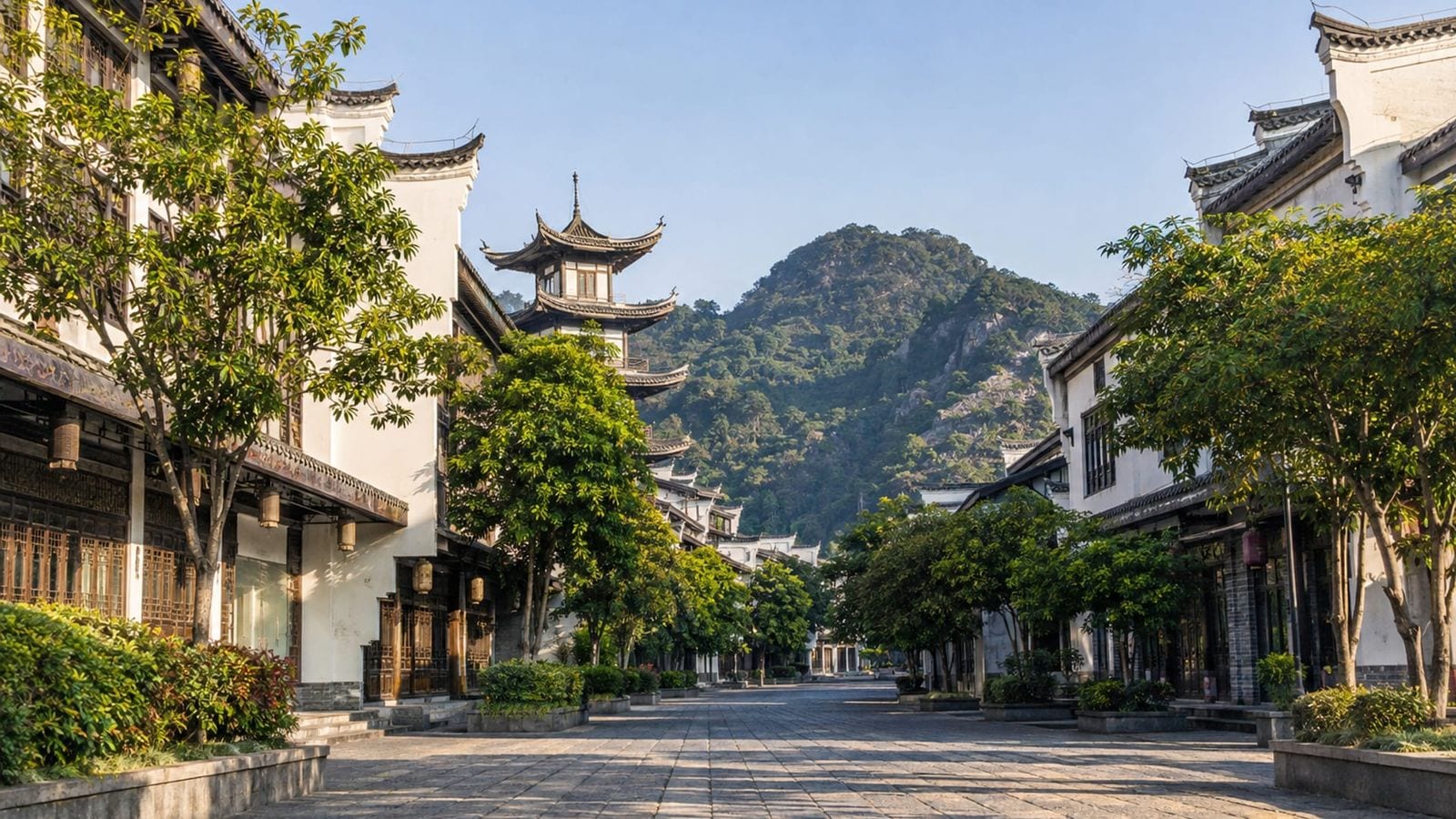
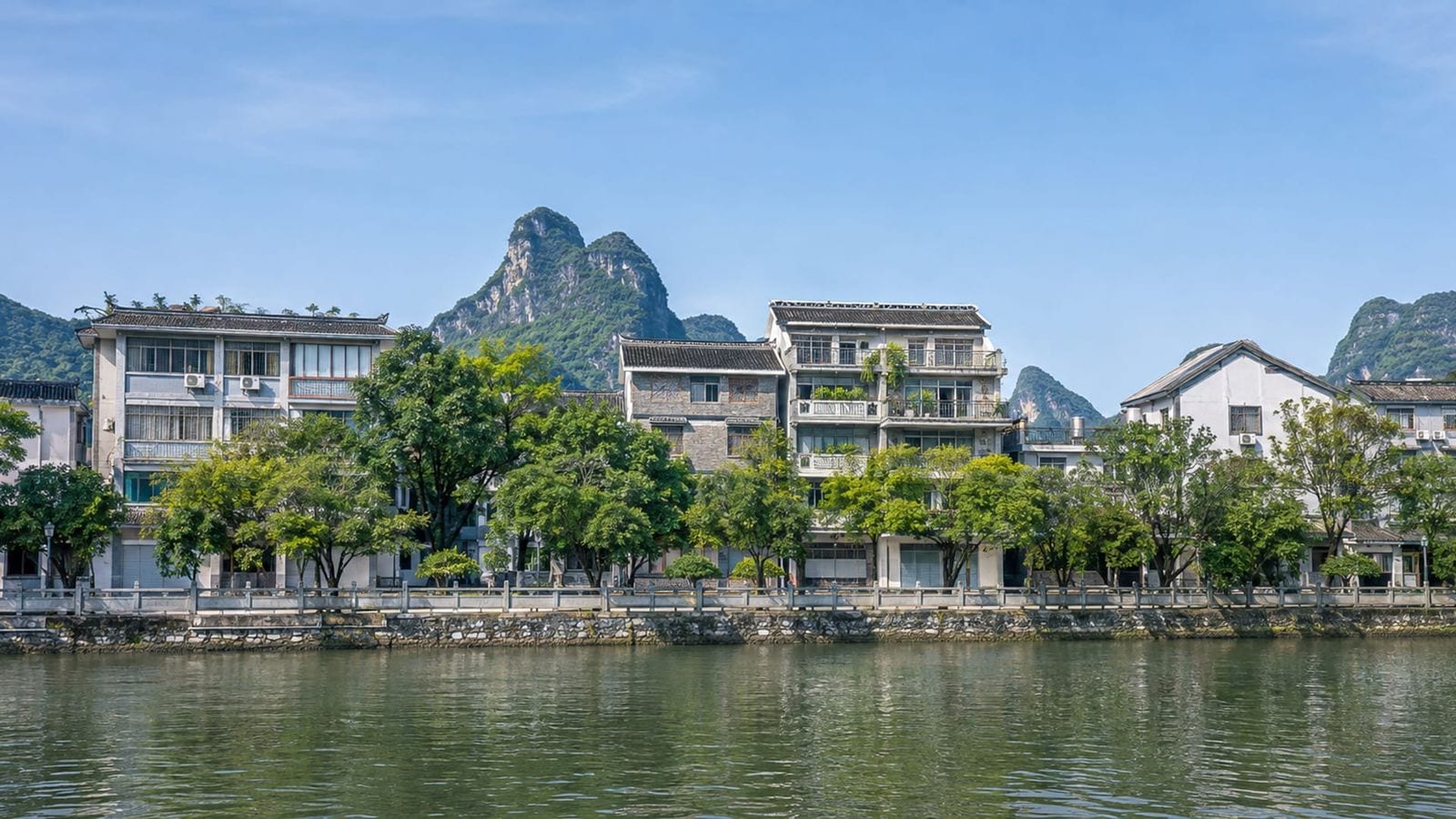
Xiufeng District covers much of central Guilin west of the Li River, with lakeside walks, shopping streets, and hotels close to the city’s best-known sights. Stay here for evenings near Rong Lake and Shan Lake, with a wide choice of restaurants and short trips to the central riverfront.
Best for: Lakeside walks, central sightseeing, and restaurant choice
What to expect: Central shopping streets attract daytime crowds and evening diners.
Hotel prices: Well-rated hotels cost ¥300 to ¥800 ($42 to $112) a night.
Distance to major sights: From hotels near Rong Lake, walk 15 to 25 minutes to the Sun and Moon Twin Pagodas.
Quietness: Shopping streets stay active into the evening; rooms facing Rong Lake can offer quieter nights.
Main trade-off: Central hotels can face traffic noise, and lake views often increase room prices.
Good to know: Choose a room facing away from the road if you plan to sleep before nearby restaurants close.
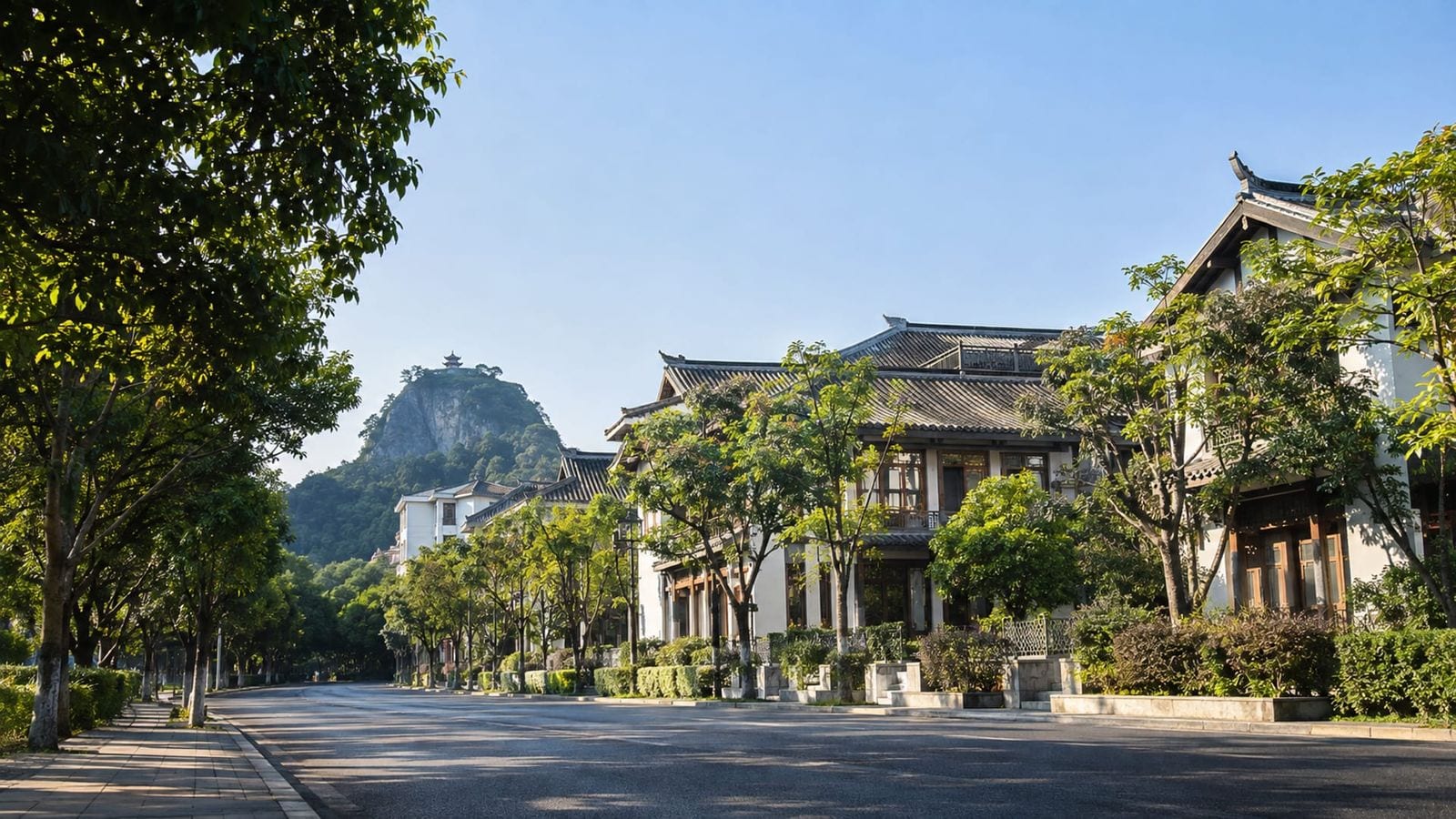
Xiangshan District stretches south from Guilin’s central lakes along the west bank of the Li River and includes Guilin Railway Station. Hotels in its northern part put Elephant Trunk Hill within easy reach, while stays farther south suit travelers arriving or departing by train.
Best for: Elephant Trunk Hill, river walks, and access to Guilin Railway Station
What to expect: Station traffic and busy avenues contrast with quieter residential streets.
Hotel prices: Budget ¥250 to ¥650 ($35 to $91) nightly for a well-rated hotel.
Distance to major sights: Hotels near Guilin Railway Station are a 10 to 15-minute taxi ride from Elephant Trunk Hill.
Quietness: Main roads carry traffic by day and evening; residential side streets become quieter after dinner.
Main trade-off: The district extends far south, so a hotel address here does not guarantee walking access to central sights.
Good to know: Check your ticket: Guilin Railway Station, Guilin North Railway Station, and Guilin West Railway Station are separate stations.
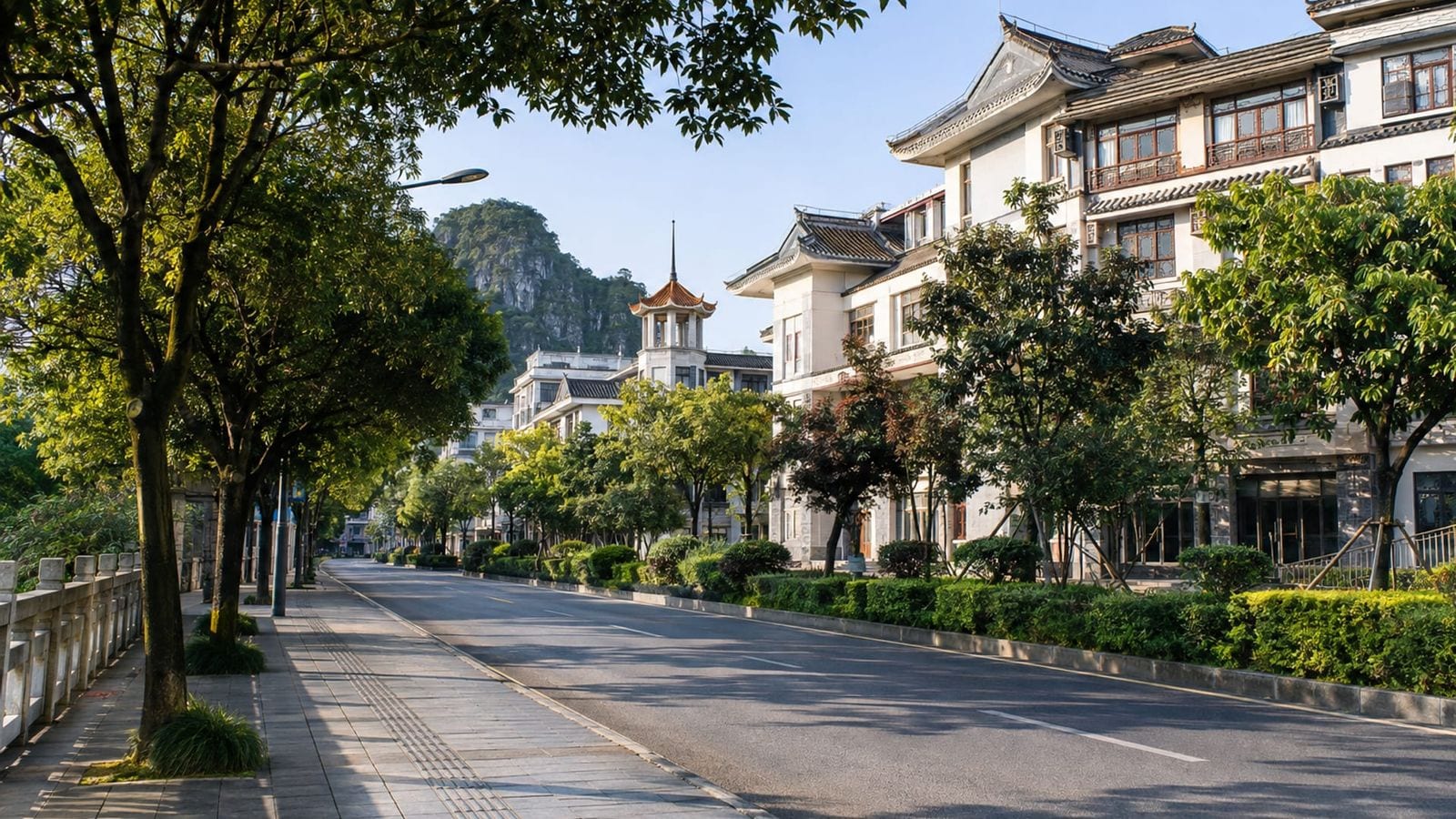
Across the Li River from central Guilin, Qixing District combines established residential neighborhoods, university campuses, and the limestone scenery of Seven Star Park. Visitors can choose hotels near the park for local restaurants and walks, then cross the river for the central lakes.
Best for: Seven Star Park, neighborhood dining, and stays east of the Li River
What to expect: University areas bring students and inexpensive dining, while major roads carry steady traffic.
Hotel prices: A well-rated hotel typically charges ¥250 to ¥700 ($35 to $98) per night.
Distance to major sights: From hotels near Seven Star Park’s main entrance, allow 15 to 25 minutes by taxi to Elephant Trunk Hill.
Quietness: Park surroundings attract daytime visitors; residential lanes are quieter in the evening than the main avenues.
Main trade-off: Trips to the central lakes require a bridge crossing, with longer taxi journeys during busy periods.
Good to know: Choose accommodation near Seven Star Park’s western side to shorten journeys across the river to central Guilin.
Lingui, west of central Guilin, and Yanshan, farther south, are less convenient for major downtown sights. Zhemu, southeast of the center, adds travel time for evening dining near the central lakes.
Hotel deals
How to get around Guilin efficiently
Lakeside paths connect central Guilin’s sights, while buses, metered taxis, and DiDi cover journeys beyond the lakes.

Taxi
for convenience or late hours
Metered taxis connect Guilin Liangjiang International Airport with central Guilin in about 45 to 60 minutes for ¥100 to ¥150 ($14 to $21). Short central trips typically cost ¥10 to ¥30 ($1.40 to $4.20); use taxis for luggage or late arrivals.

Walking
for short central distances
Beside Shan Lake and Rong Lake, central Guilin has lakeside paths suited to free, short outings. Allow 20 to 30 minutes to walk between Elephant Trunk Hill and the lakes; use street crossings where lakeside paths meet busy roads.

Bus and tram
for convenience
For a daytime trip from Guilin Railway Station to Seven Star Park, take bus 11 and allow about 25 to 40 minutes, depending on traffic. City bus fares generally range from ¥1 to ¥2 ($0.15 to $0.30); buses suit inexpensive trips beyond the lakes.
*Prices are based on rates updated as of November 2026 and may change at the time of travel.
Walk between the central lakes, take buses for inexpensive daytime outings, and choose taxis or DiDi for airport transfers, luggage, or trips after dark.
Iconic landmarks
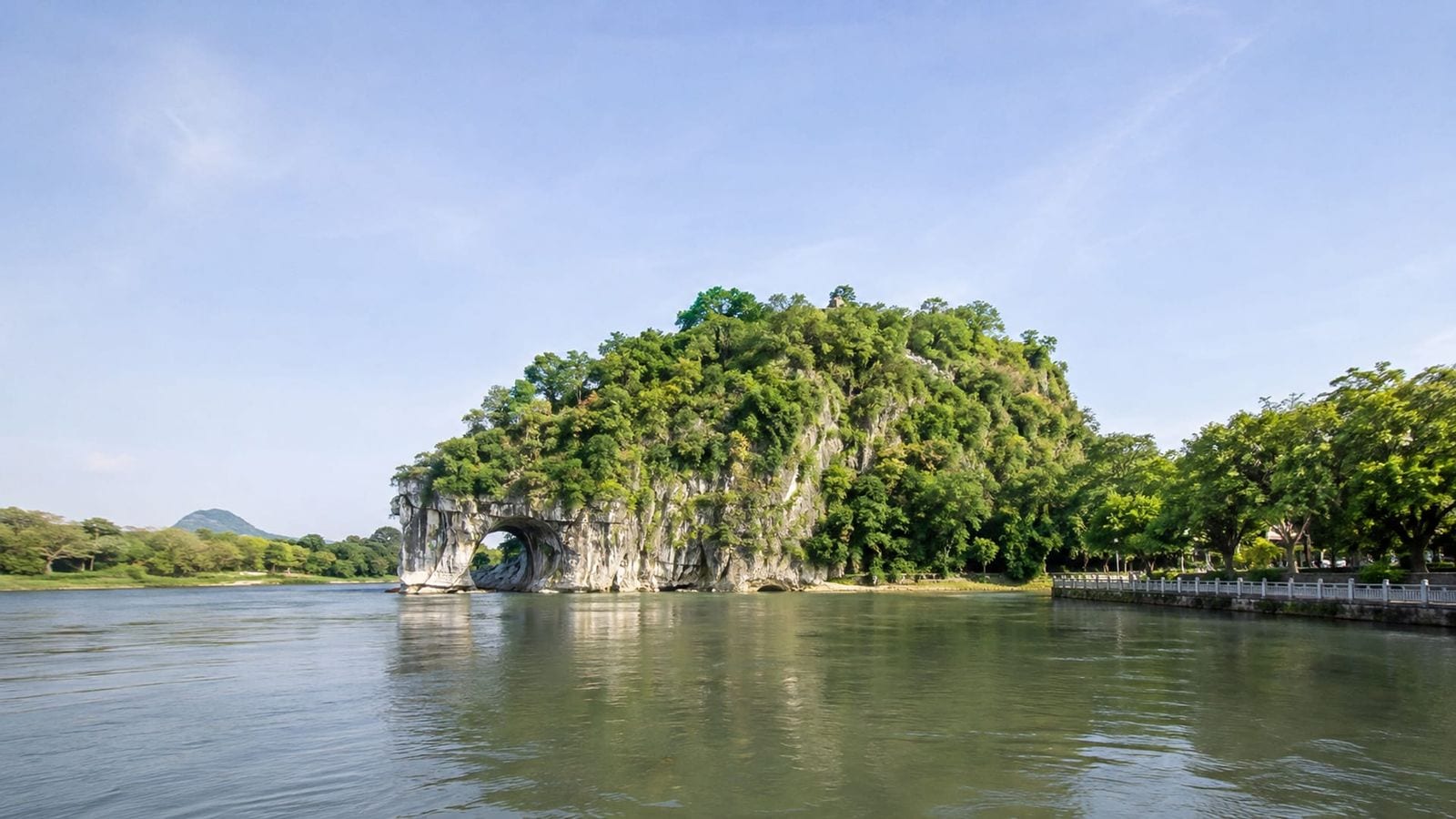
Elephant Trunk Hill
An arch between the hill and the Li River gives Guilin’s signature landmark its elephant shape, with a stone trunk reaching toward the water. Riverside paths reveal the opening known as Water Moon Cave and changing views of the limestone.
Time needed: About 1 to 2 hours
Entry: Free to access
Tip: Head to the riverbank for the elephant profile before exploring the hill.
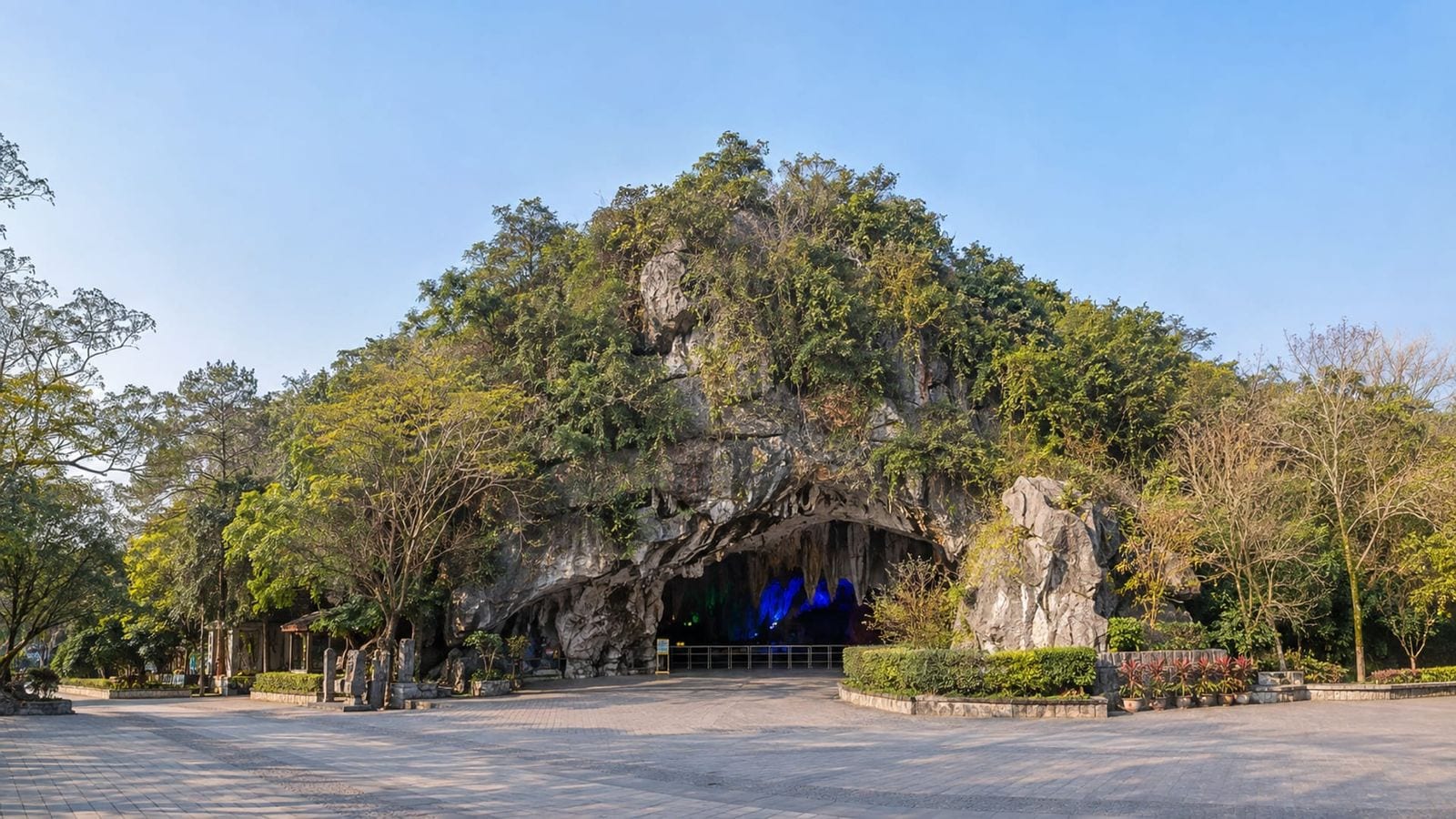
Reed Flute Cave
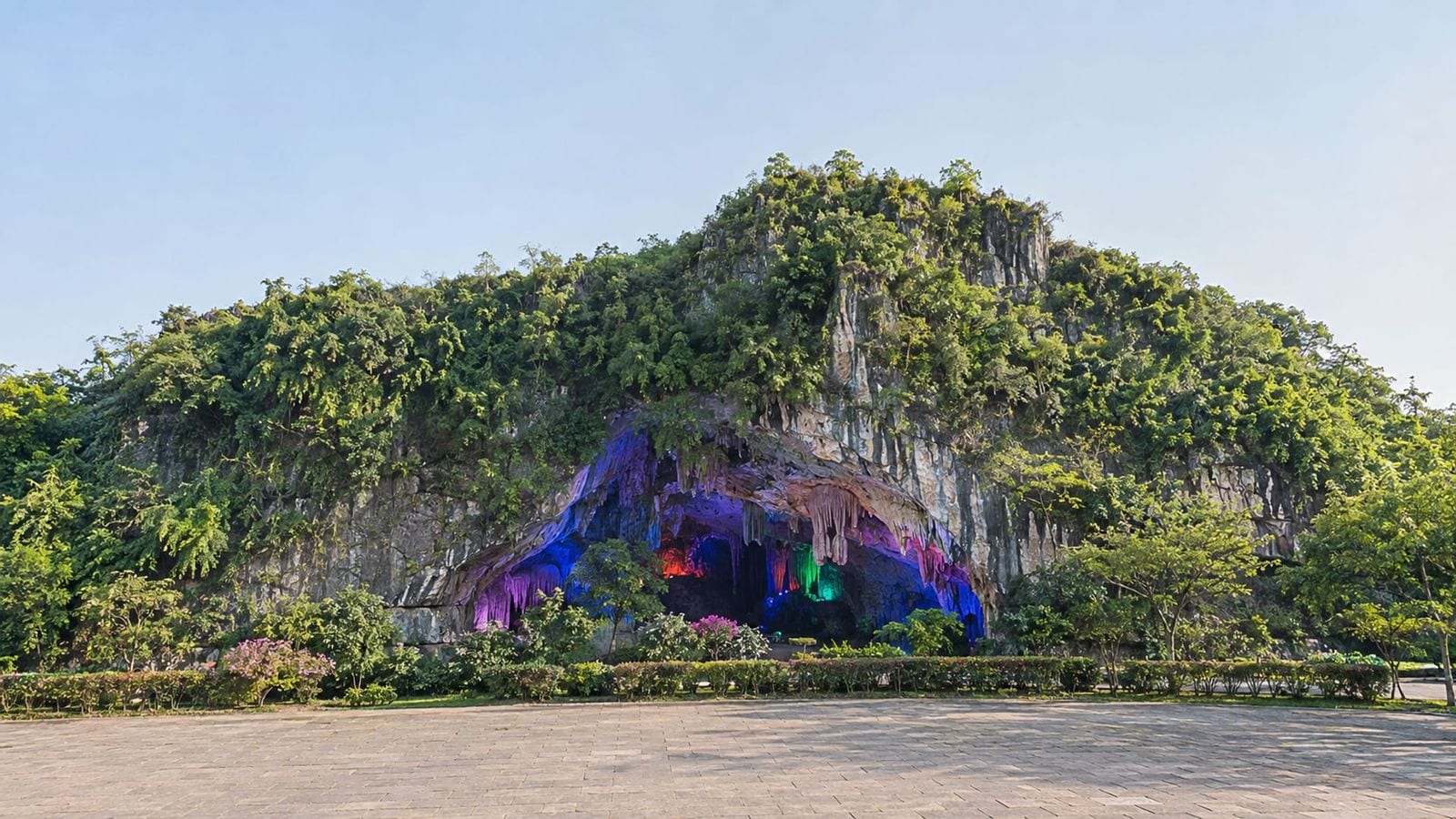
Colored lighting illuminates stalactites, stalagmites, and broad chambers inside this limestone cave on Guilin’s northwestern edge. The walking route passes formations resembling curtains and pillars, shaped by mineral-rich water over time.
Time needed: About 1 to 2 hours
Entry: Moderately priced: standard adult admission
Tip: Allow time for the cave approach; the underground route includes stairways.
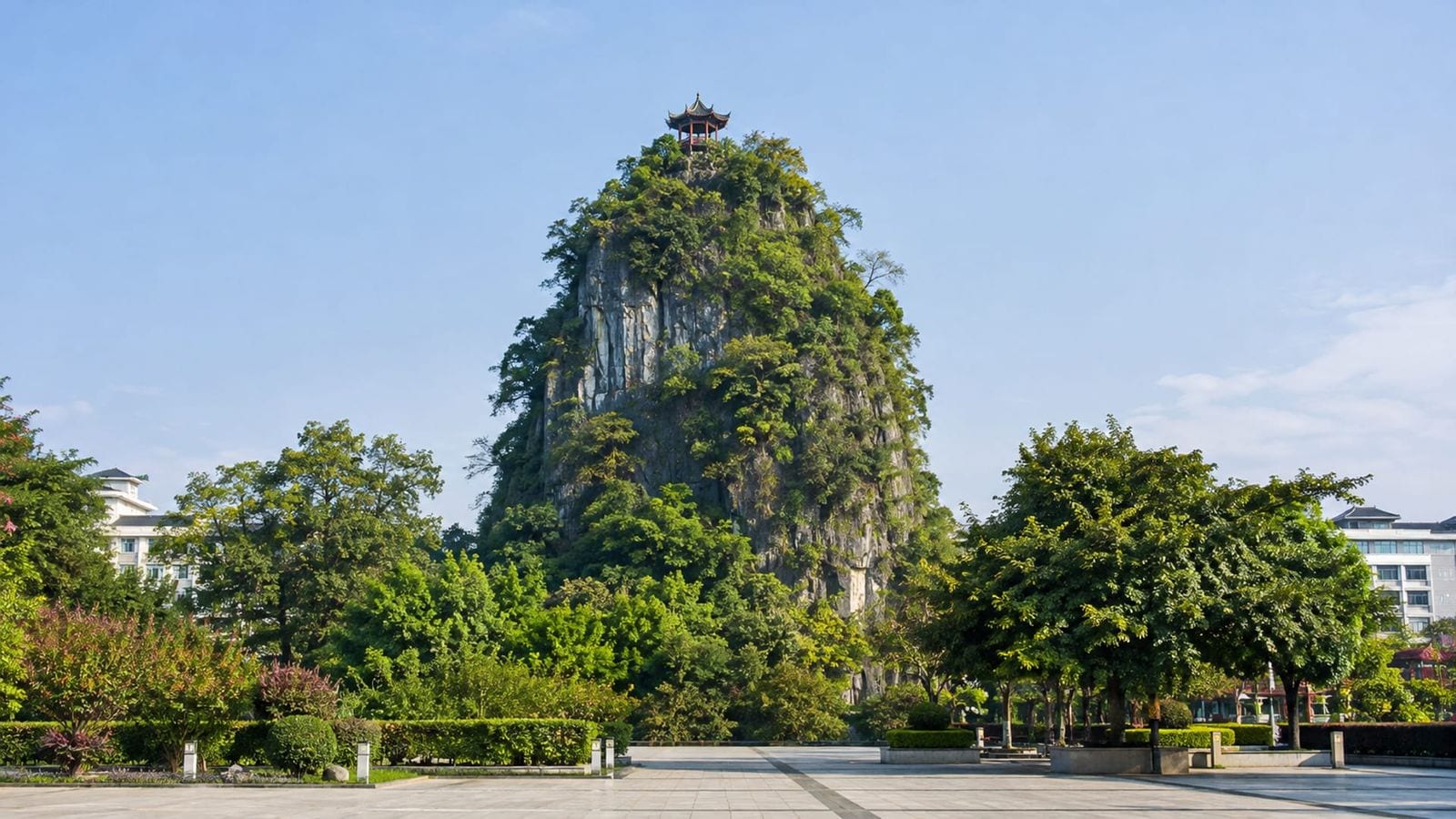
Solitary Beauty Peak
Rising within the former Jingjiang princes’ palace grounds, this limestone peak offers an elevated view across central Guilin. A steep staircase leads to the summit, while the grounds below connect the city’s royal history with its karst landscape.
Time needed: About 1 to 2 hours
Entry: Moderately priced: standard adult admission
Tip: Climb the summit staircase before exploring the palace grounds in detail.
Overlooked sites worth visiting

Shanshui Park
Shanshui Park brings landscaped paths and water features to Lingui, Guilin’s newer urban center. Its open grounds offer a slower outdoor stop away from the city’s better-known karst sights.
Time needed: About 1 hour
Entry: Free to access
Tip: Pair a morning walk here with the nearby Guilin Museum.

Guilin Museum
Guilin Museum traces the city’s history through ceramics, bronzes, and displays on local communities. The modern museum in Lingui adds cultural context beyond Guilin’s celebrated scenery.
Time needed: About 1 to 2 hours
Entry: Free admission
Tip: Bring your passport for the museum’s visitor registration.
Traditional food
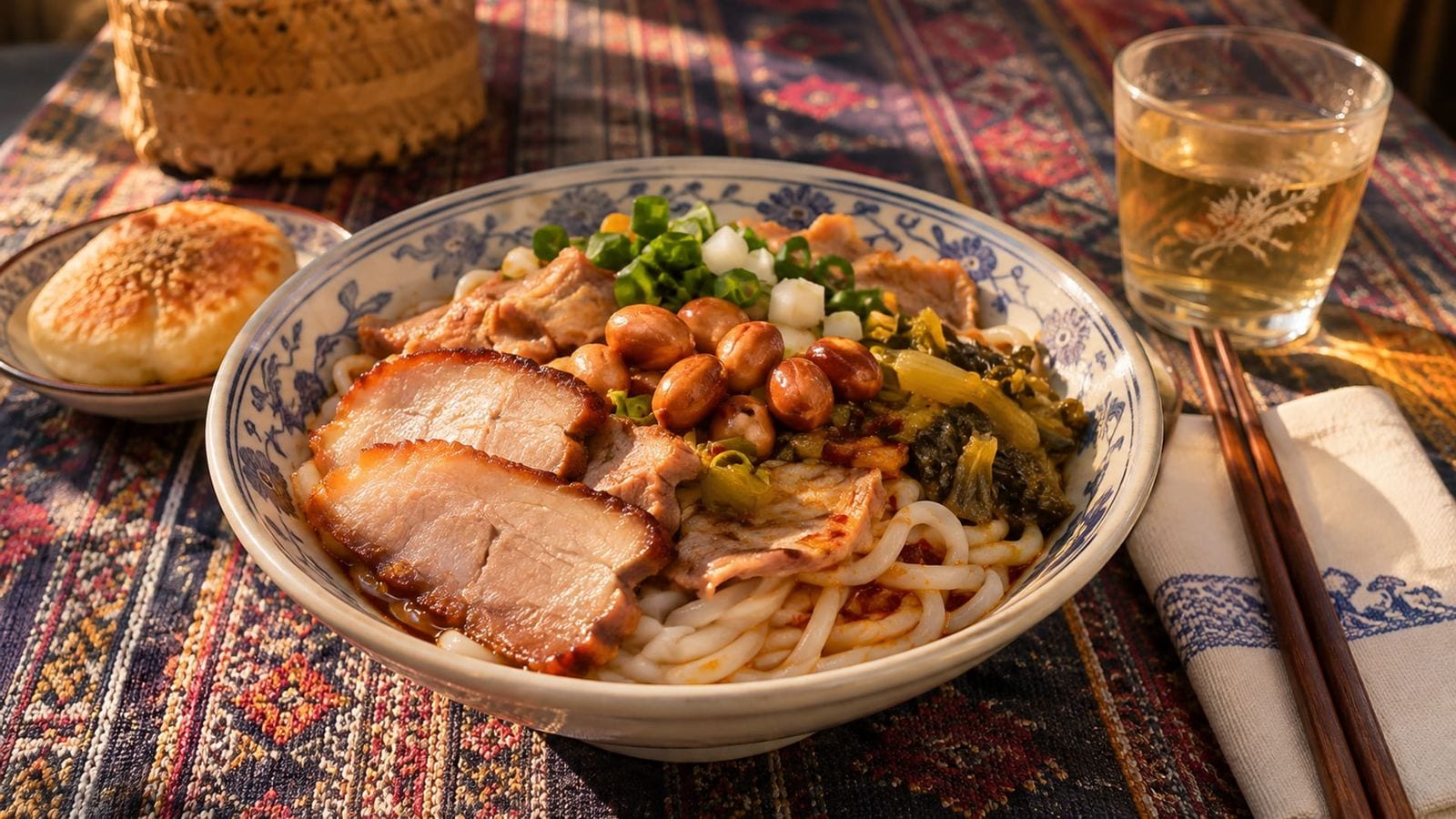
Rice noodles anchor Guilin breakfasts, while taro, pork, river fish, and snails fill lunch and dinner menus. Pickled vegetables, chili, and savory broths bring sharpness and depth to the table.
Guilin rice noodles
Rice noodles come with a savory seasoning, sliced meat, and toppings such as pickled vegetables and peanuts. Try Chongshan Rice Noodles for this Guilin breakfast staple, adding chili to suit your taste.
Lipu taro pork
Slices of pork belly alternate with taro, then steam until the meat softens and the taro absorbs its savory juices. Order Lipu taro pork at Chunji Roast Goose, where vegetables provide a lighter accompaniment.
Beer fish
Freshwater fish cooks with beer, tomatoes, peppers, and aromatics, producing a savory sauce to spoon over rice. Try beer fish at Guilin Ren, and take care with the small bones as you separate portions to share.
Stuffed river snails
River snail meat combines with minced pork and seasonings before returning to the shells for cooking. A Gan Restaurant serves this local specialty; the filling brings together the snail’s firmness and the pork’s richness.
Best time to visit Guilin
Guilin’s spring rain, hot summers, drier autumns, and cool winters change the conditions for hill climbs and lakeside walks.
Best for: Green hills and mist along the Li River make spring appealing for photos
What you get: Temperatures span 50°F to 82°F (10°C to 28°C), with greener hills and frequent rain; holiday crowds increase sharply during early May.
Trade-offs: Rain can obscure summit views and leave the steps at Solitary Beauty Peak slippery.
Best for: Long daylight hours allow early hill climbs and evening walks by the lakes
What you get: Expect 72°F to 91°F (22°C to 33°C), high humidity, and heavy rain; school vacations bring more families to Guilin’s best-known sights.
Trade-offs: Heat makes exposed climbs tiring, while heavy rain can interrupt outdoor outings.
Best for: Drier weather favors summit views, cave excursions, and walks by Shan Lake
What you get: Days range from 52°F to 86°F (11°C to 30°C), with generally drier weather; early October brings substantial national holiday crowds.
Trade-offs: The early October holiday increases demand for central hotels and crowds at Elephant Trunk Hill.
Best for: Cooler days suit Guilin Museum and quieter walks beside the central lakes
What you get: Conditions range from 41°F to 59°F (5°C to 15°C), with damp, gray spells; crowds are generally lighter outside the Lunar New Year holiday.
Trade-offs: Damp cold limits long evenings outdoors, and Lunar New Year can shorten restaurant opening hours.
A realistic 5-day plan in Guilin
Arrival and departure frame three full days of riverfront landmarks, limestone scenery, and history in Lingui. Schedule the Guilin Museum outing Tuesday through Sunday to avoid its Monday closure.
From Guilin Liangjiang International Airport (KWL), take a taxi to your hotel in Xiufeng District, allowing 45 to 60 minutes and ¥100 to ¥150 ($14 to $21). For a light dinner, take a 10 to 20-minute taxi ride south to Chunji Roast Goose in Xiangshan District and order vegetables alongside a small portion of goose.
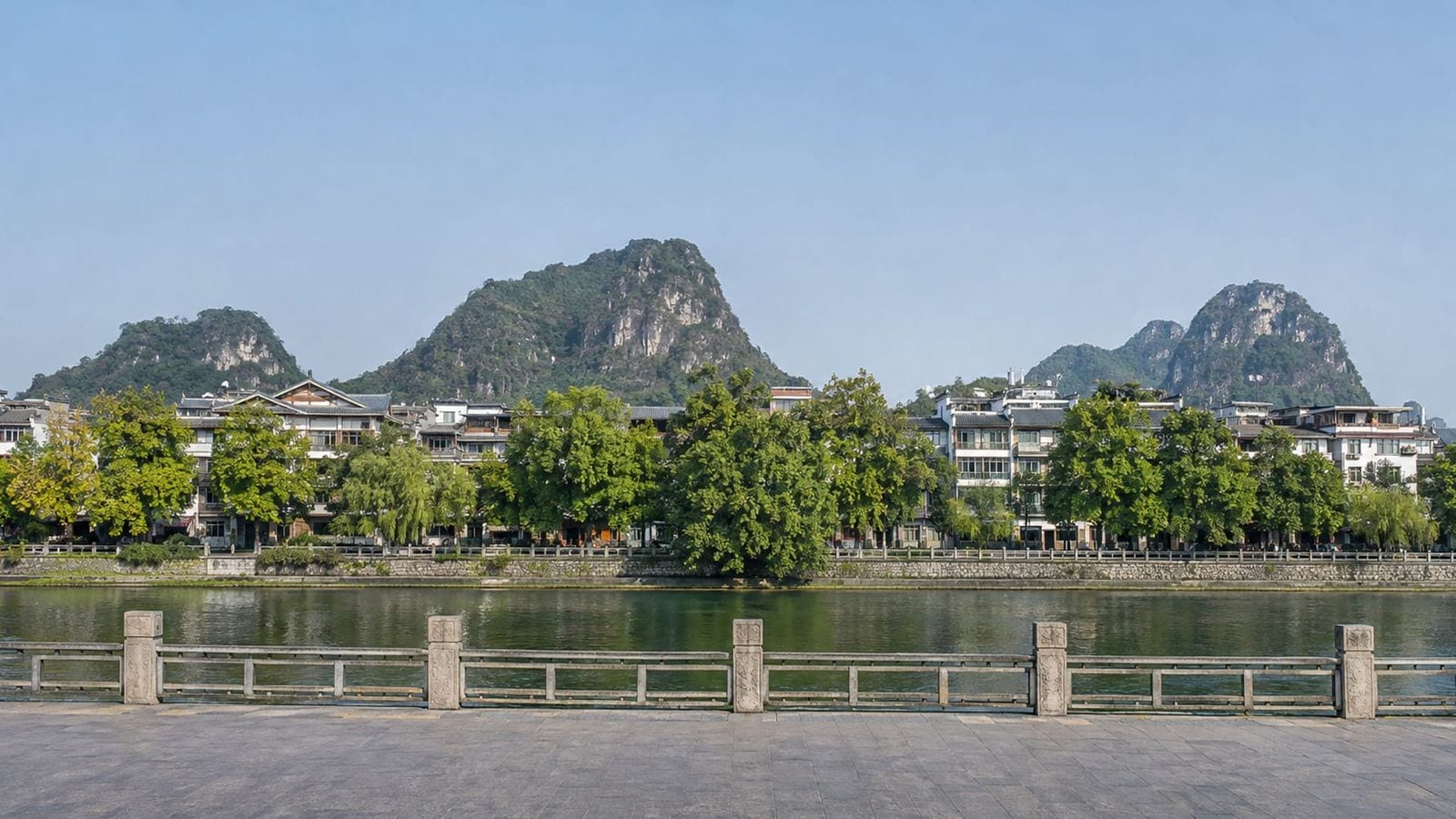
Elephant Trunk Hill starts your riverside morning in Xiangshan District; allow two hours for the elephant profile and paths beside the Li River. Walk 15 to 20 minutes north to the Sun and Moon Twin Pagodas at Shan Lake, then spend the afternoon exploring the lakeside paths before the pagodas illuminate after dark.
A climb up Solitary Beauty Peak introduces central Guilin from above; spend two hours on the staircase and former palace grounds. Continue northwest by taxi to Reed Flute Cave, a 20 to 30-minute journey. Allow another two hours for the approach, underground chambers, and stairways before dinner near the cave.
Lingui pairs landscaped public space with local history: take a taxi from central Guilin to Shanshui Park, allowing 40 to 60 minutes. Explore its paths before walking 15 to 25 minutes to Guilin Museum for two hours among ceramics and bronzes. The museum opens Tuesday to Sunday, 9 am to 5 pm; bring your passport for registration.
Before departure, spend an hour shopping in Xiufeng District near your hotel, with lunch there before collecting your luggage. Allow 45 to 60 minutes by taxi to Guilin Liangjiang International Airport (KWL), budgeting ¥100 to ¥150 ($14 to $21), plus your airline’s required check-in time.
Business-class flights from the US to Guilin
Connections through major Chinese hubs link New York and Los Angeles with Guilin (KWL); these two examples compare fares and journey times.
From New York, one-stop journeys to Guilin (KWL) via Beijing (PEK) or Shanghai (PVG) take 20 to 30 hours. Round-trip fares range from $4,500 to $8,500, with airline options including Air China, China Eastern Airlines, and China Southern Airlines.
Travelers leaving Los Angeles can reach Guilin (KWL) with a connection in Beijing (PEK) or Shanghai (PVG), taking 18 to 27 hours overall. Air China, China Eastern Airlines, and China Southern Airlines are among the options, with round-trip fares of $4,000 to $8,000.
Guilin feels different when you slow down
A Guilin trip takes shape through mornings beside the Li River, a climb up Solitary Beauty Peak, and an afternoon beneath the limestone at Reed Flute Cave. Staying in Xiufeng District keeps the central lakes close for evening walks, while taxis connect the farther sights in Lingui. Leave time for rice noodles before setting out and a shared taro pork dinner afterward. Ask AranGrant experts to shape your Guilin flights around an autumn stay near Shan Lake