

Chapters:

Need help with your trip?
Our support team is available 24/7. Request a callback or call us directly at (833) 619-0908
Corfu trips often begin with the Old Town, a beach afternoon, and a quick bus ride to one major sight, while smaller places such as Old Perithia or Angelokastro get left out.
That pattern misses how far apart the island’s highlights sit and how much time is lost if you keep backtracking to Corfu Town between every stop. Summer traffic, ferry schedules, and narrow lanes can also slow simple plans.
This guide groups sights by area, matches them with the right transport, and gives each day a clear purpose, so you can see more without turning the island into a sequence of rushed transfers.
Useful things to know

Main language(s): Greek
Γειά σας (YAH sahs) – Hello / good morning
Παρακαλώ (pah-rah-kah-LOH) – Please
Ευχαριστώ (ef-hah-rees-TOH) – Thank you
Μιλάτε αγγλικά; (mee-LAH-teh ahng-glee-KAH) – Do you speak English?
Πόσο κάνει; (POH-soh KAH-nee) v How much does it cost?

Currency: The local currency is the euro (EUR, €).

Cash and cards: Cards and contactless are widely accepted; carry about €20 to €40 ($22 to $44) for small cafes, taxis, and beach kiosks.

Tipping: Round up or leave about 5-10% in restaurants when the bill does not include service.

Traditional food: sofrito, pastitsada, bourdeto, bianco

Water and coffee costs: Water about €1.50 ($2), bar espresso about €2 ($2).

Taxis and ride apps: Bolt operates here; local taxis are common, so check the meter or fare before you ride.

Plug and voltage: Type C/F socket, 230V

Dining and shop opening hours: Breakfast is about 08:00-10:00, lunch 13:00-15:00, and dinner 20:00-22:30. Many kitchens close in the afternoon, and some tavernas keep later hours in summer.

Emergency number: 112 for police, fire, and medical emergencies.
Where to stay in Corfu
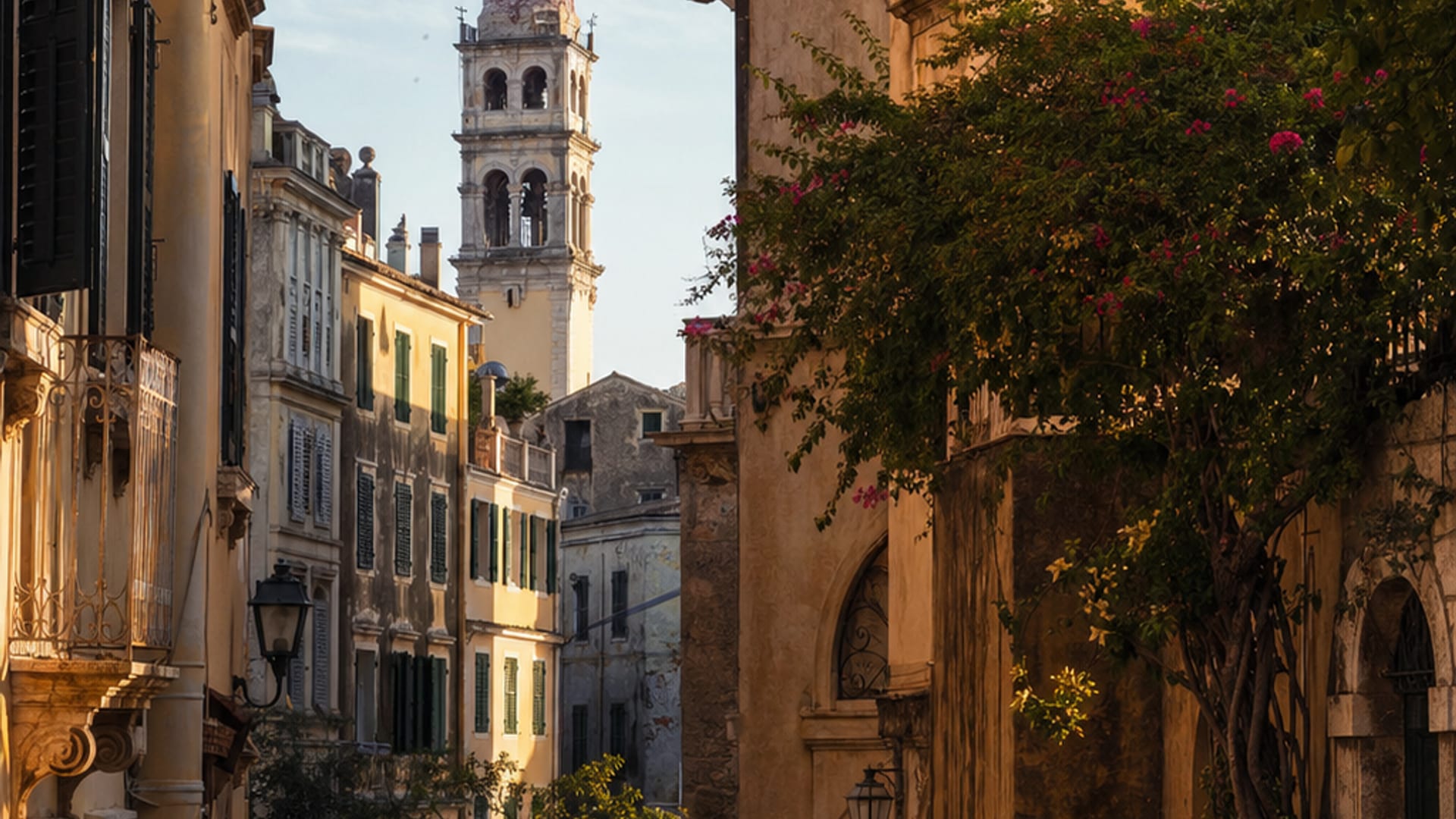
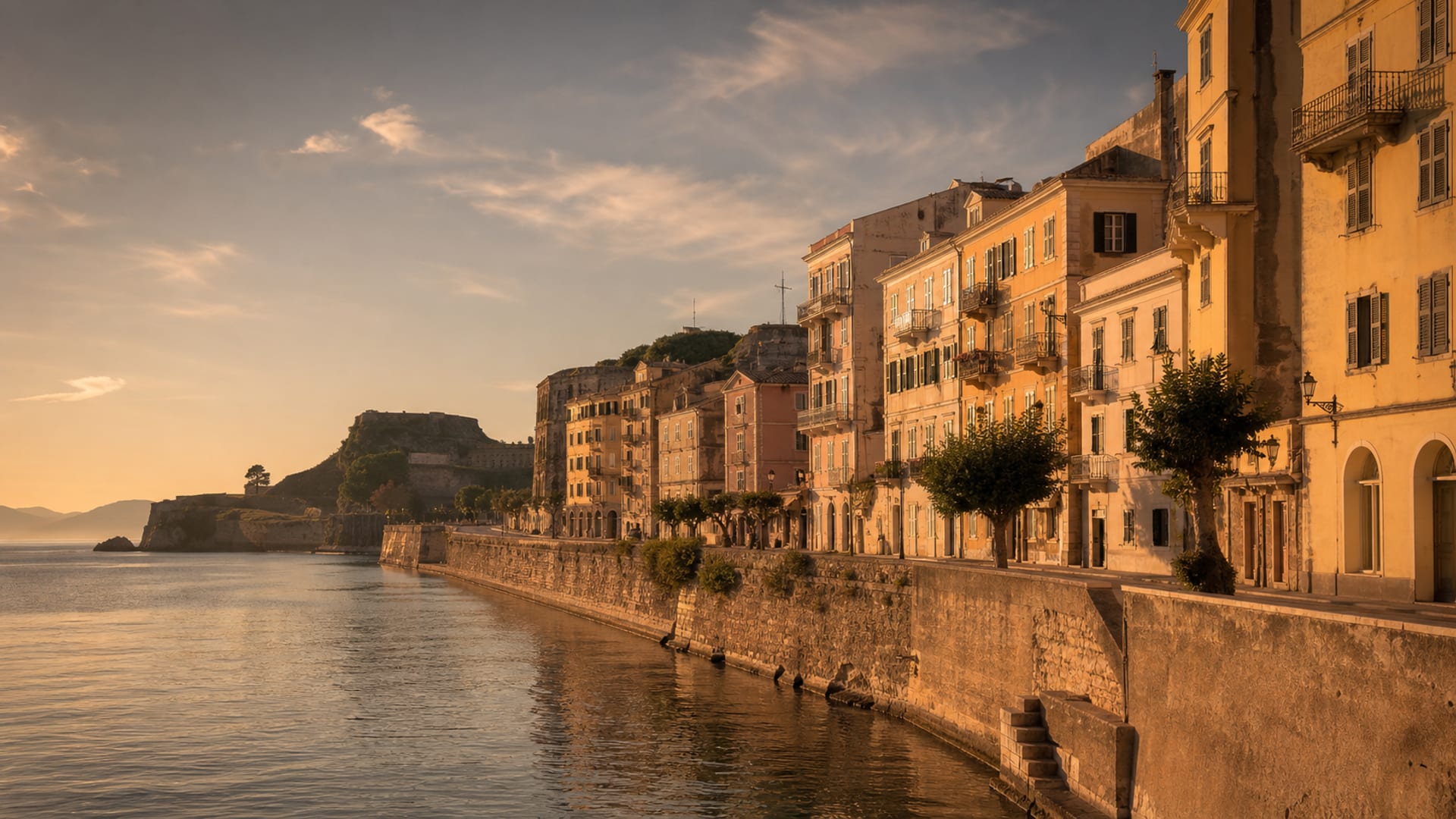
The island capital gathers the Old Town, the port, and most museums in one walkable core. Staying here puts you close to ferries, dining, and the main sights, with the strongest choice of hotels on the island.
Best for: First-time visits, sightseeing, ferry access, and travelers who want the widest hotel choice
What to expect: Narrow lanes, busy cafés, steady daytime foot traffic, and the highest concentration of visitors on the island.
Hotel prices: Usually about €120 to €250 (~$130 to ~275) per night for well-rated stays
Distance to major sights: 5 to 15 minutes on foot to the Old Fortress and Liston, about 10 minutes on foot to the Old Town core
Quietness: Busy through the day and lively at night, especially near the port and main squares.
Main trade-off: Rooms in the historic core can cost more, and late-evening noise is common on streets with bars and restaurants.
Good to know: If you want late dinners or an early ferry, staying near the port saves time, but the oldest lanes can mean stairs and limited vehicle access.
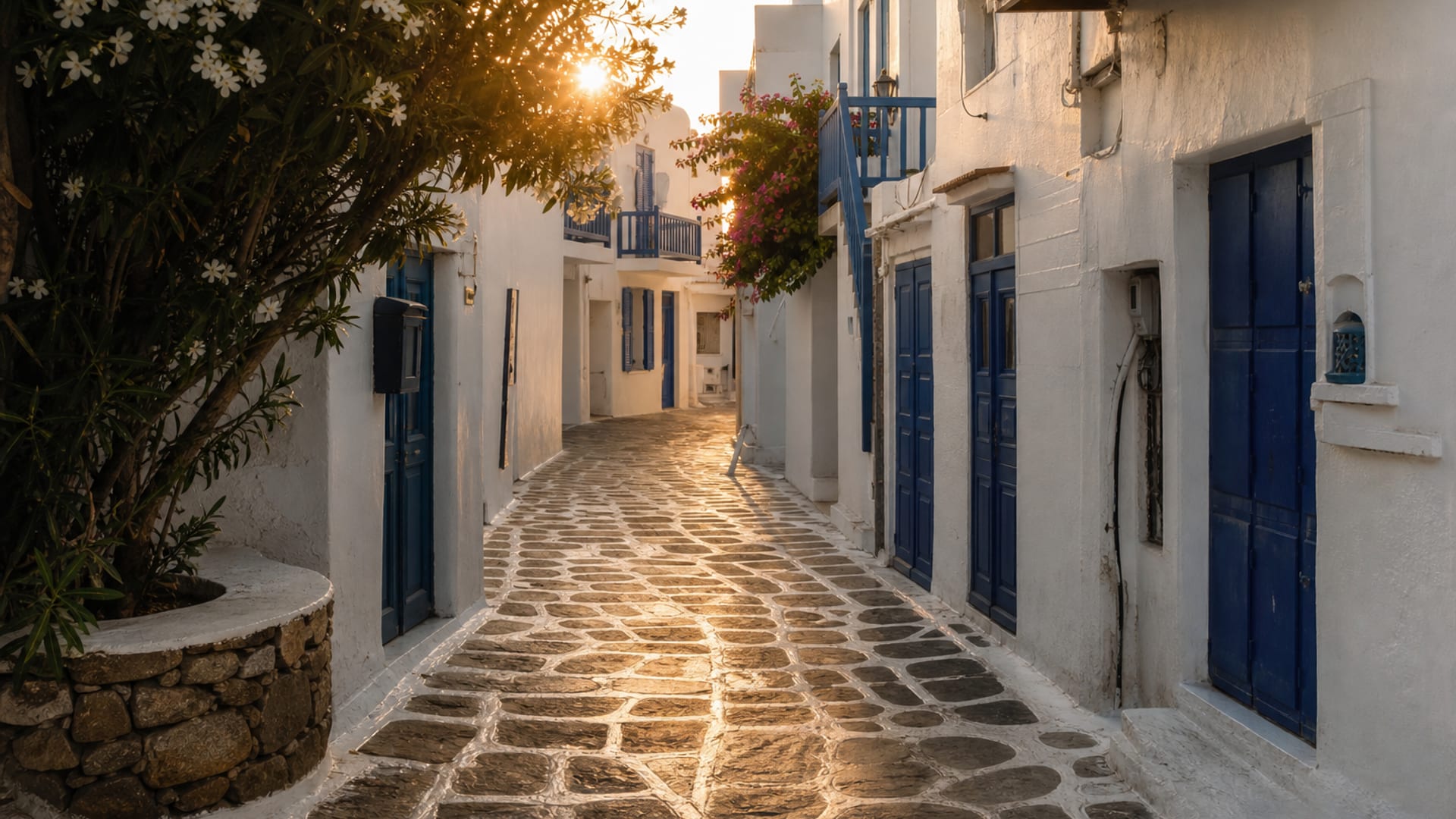
Kanoni sits on a low peninsula south of the center, with direct views toward Mouse Island and the lagoon. It suits travelers who want a quieter base near the airport and quick bus access into Corfu Town.
Best for: Airport access, short stays, sea views, and travelers who prefer a quieter overnight base
What to expect: A residential shoreline with hotels, a few tavernas, and calm evenings except near the main viewpoints.
Hotel prices: Usually about €90 to €180 (~$100 to ~200) per night for well-rated stays
Distance to major sights: About 10 minutes by bus to Corfu Town and roughly 15 minutes on foot to Pontikonisi viewpoint
Quietness: Quiet at night, with more activity in the late afternoon around the viewpoints and cafés.
Main trade-off: You will spend extra time getting to the Old Town, and the area is less walkable for restaurants after dark.
Good to know: Choose this if you have an early flight, but check bus timings before dinner because taxis become the easiest option once evening service thins out.
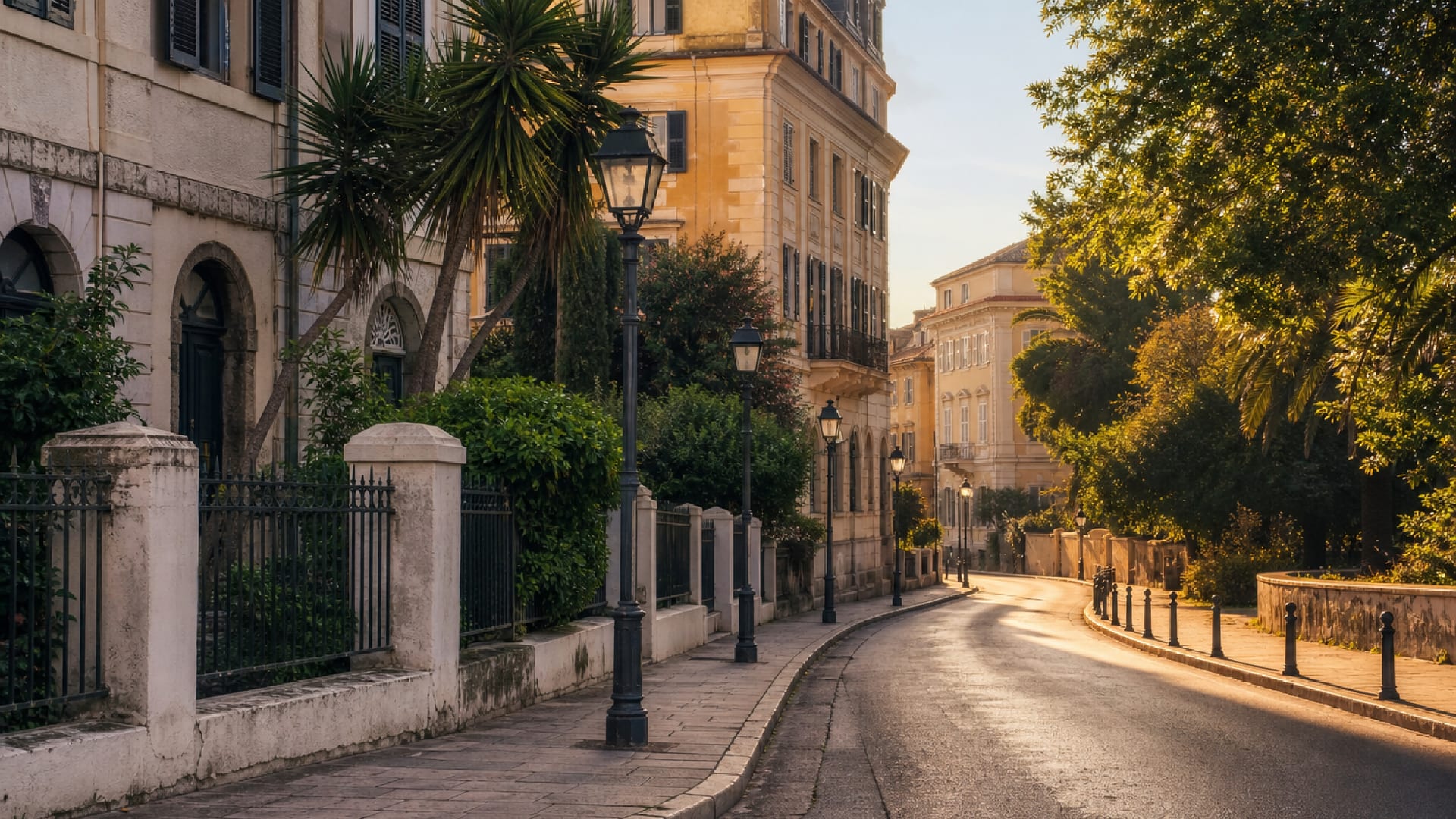
Garitsa follows the bay just southeast of the Old Town, with a waterfront promenade and easy access to the city center. It gives you sea views and a slightly looser pace while keeping major sights within walking distance.
Best for: Waterfront walks, couples, and travelers who want to stay close to the center without the busiest streets
What to expect: A mix of apartments, small hotels, and local cafés along a bayfront road with moderate daytime activity.
Hotel prices: Usually about €85 to €170 (~$95 to ~185) per night for well-rated stays
Distance to major sights: About 10 to 20 minutes on foot to the Old Fortress and Liston, roughly 15 minutes on foot to the Spianada
Quietness: Quieter than the Old Town by day and generally calm at night, with occasional road noise along the bay.
Main trade-off: You trade direct Old Town atmosphere for a longer walk back after dinner and fewer late-night options nearby.
Good to know: If you plan to walk into the center each day, pick a room away from the main road so the bay traffic does not dominate the evening.
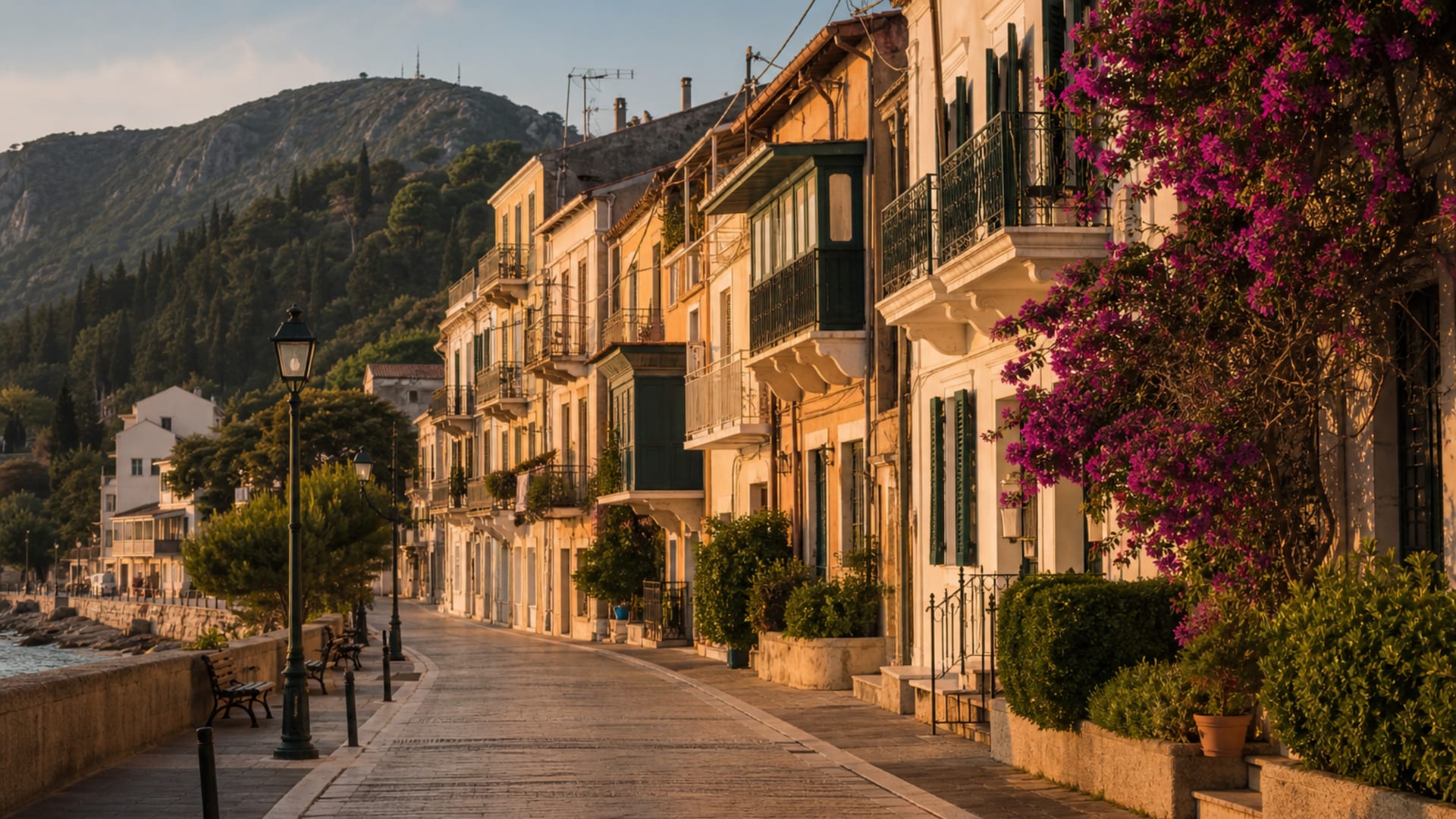
Benitses is a seaside village about 12 km south of Corfu Town, known for its harbor, beach access, and relaxed resort strip. It works for visitors who want a beach base with restaurants and an easy bus ride into the capital.
Best for: Beach time, relaxed resort stays, and travelers who do not need to be in the Old Town every evening
What to expect: A compact waterfront with tavernas, small hotels, and summer crowds that concentrate near the beach and harbor.
Hotel prices: Usually about €70 to €150 (~$75 to ~165) per night for well-rated stays
Distance to major sights: About 25 to 35 minutes by bus to Corfu Town and roughly 20 minutes on foot to Benitses beach
Quietness: Lively in the evening along the waterfront, then quieter once the main dining strip winds down.
Main trade-off: You gain easier beach access, but the ride into Corfu Town adds time to sightseeing and ferry days.
Good to know: If you stay here, confirm the last return bus before making dinner plans in town, because late rides are less frequent outside peak season.
Travelers usually avoid staying in Benitses if they plan to sightsee in Corfu Town, since it sits well south of the main historic area and adds a longer evening return. Ipsos is less convenient for a heritage-focused stay because it is geared more to beach traffic than museum or old-town access, while Kavos is far from Corfu Town and the island’s main sights, with limited appeal for visitors who want easy day trips and late-night movement back to the hotel. Roda and Acharavi are also usually avoided for a short stay centered on the south or west coast, because both sit on the north coast and make cross-island travel slow.
Hotel deals
How to get around Corfu efficiently
Corfu has no metro or rail network, so blue and green buses, taxis, and walking do the real work between the airport, the Old Town, and the island’s farther corners.

Bus
for reaching beaches and villages
Corfu has no metro or suburban rail, so visitors rely on buses, taxis, and walking for local trips. For island-wide movement, the green intercity buses link Corfu Town with places such as Paleokastritsa, Kavos, and Acharavi, while the blue urban buses cover the town and nearby suburbs. Single tickets usually cost about $1.20 to $2.20 (€1.10 to €2), and day tickets are typically about $4.40 to $5.50 (€4 to €5), with validity tied to the printed time or service day.

Car rental
for reaching sights off the bus routes
Blue buses handle the most useful urban hops in Corfu Town, including the airport, port, and the old town edge, while green KTEL buses connect the town with beaches and villages across the island. Buy on board when possible, keep small bills or coins ready, and check return times carefully, since late-evening frequency drops sharply outside the main corridors. A local ride usually costs about $1.20 to $2.20 (€1.10 to €2), while longer intercity trips often run about $3.30 to $11 (€3 to €10), with tickets valid for the specific trip or service day.

Taxi
for convenience or late hours
Licensed taxis in Corfu use metered fares, though airport and port trips often follow fixed or semi-fixed local pricing that drivers quote before departure. From Corfu Airport to Corfu Town, expect about $15 to $22 (€14 to €20), and longer cross-island rides can land roughly in the $33 to $77 (€30 to €70) range, depending on distance, time, and luggage. Taxis line up at stands, and most drivers accept cash, while card payment may be possible but should be confirmed first.
*Prices are based on rates updated as of June 2026 and may change at the time of travel.
Walk for the center, use buses for Corfu Town to the beaches and villages, and take taxis when you need to cut cross-island time or keep an early flight calm.
Iconic landmarks
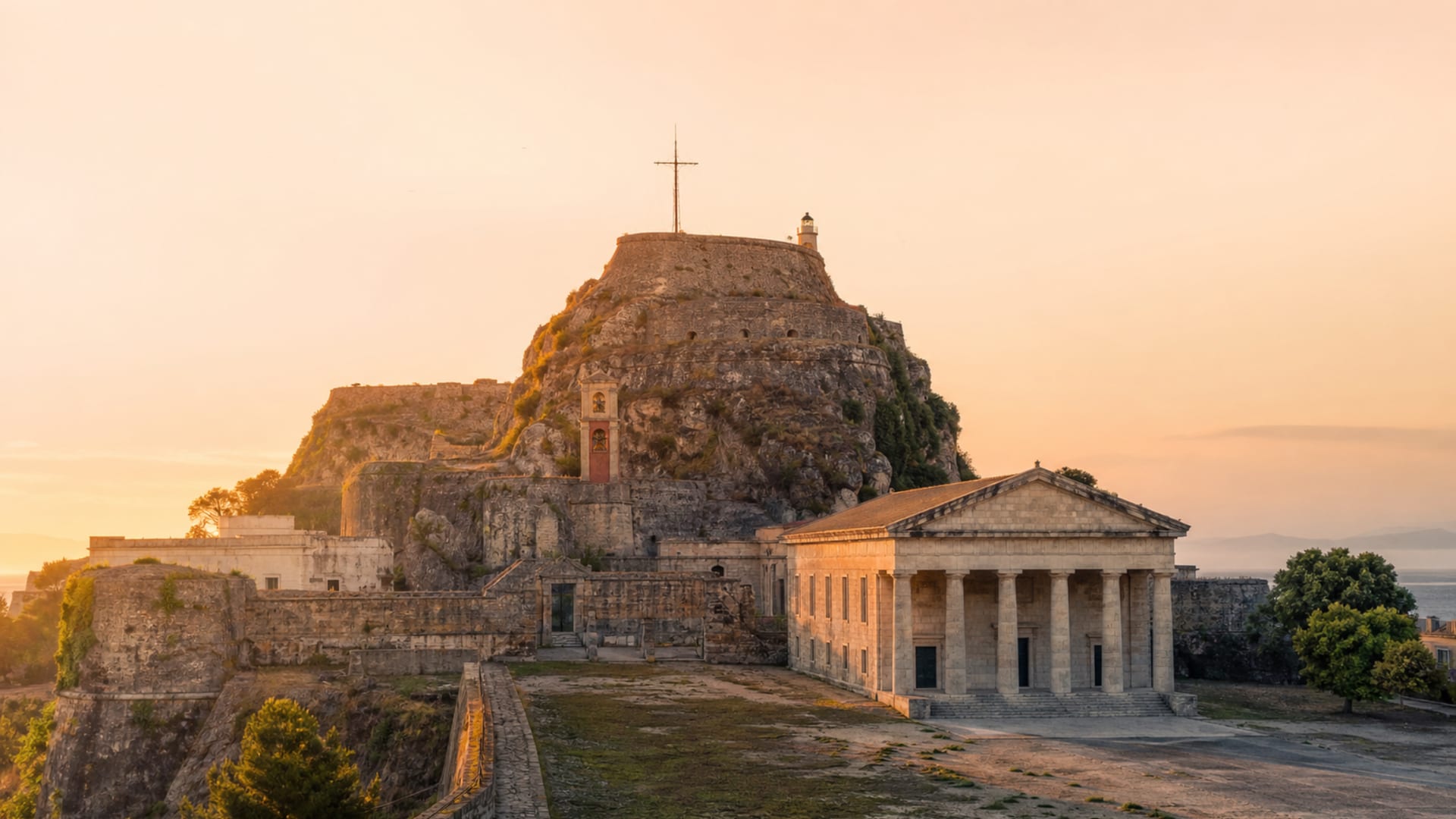
Old Fortress
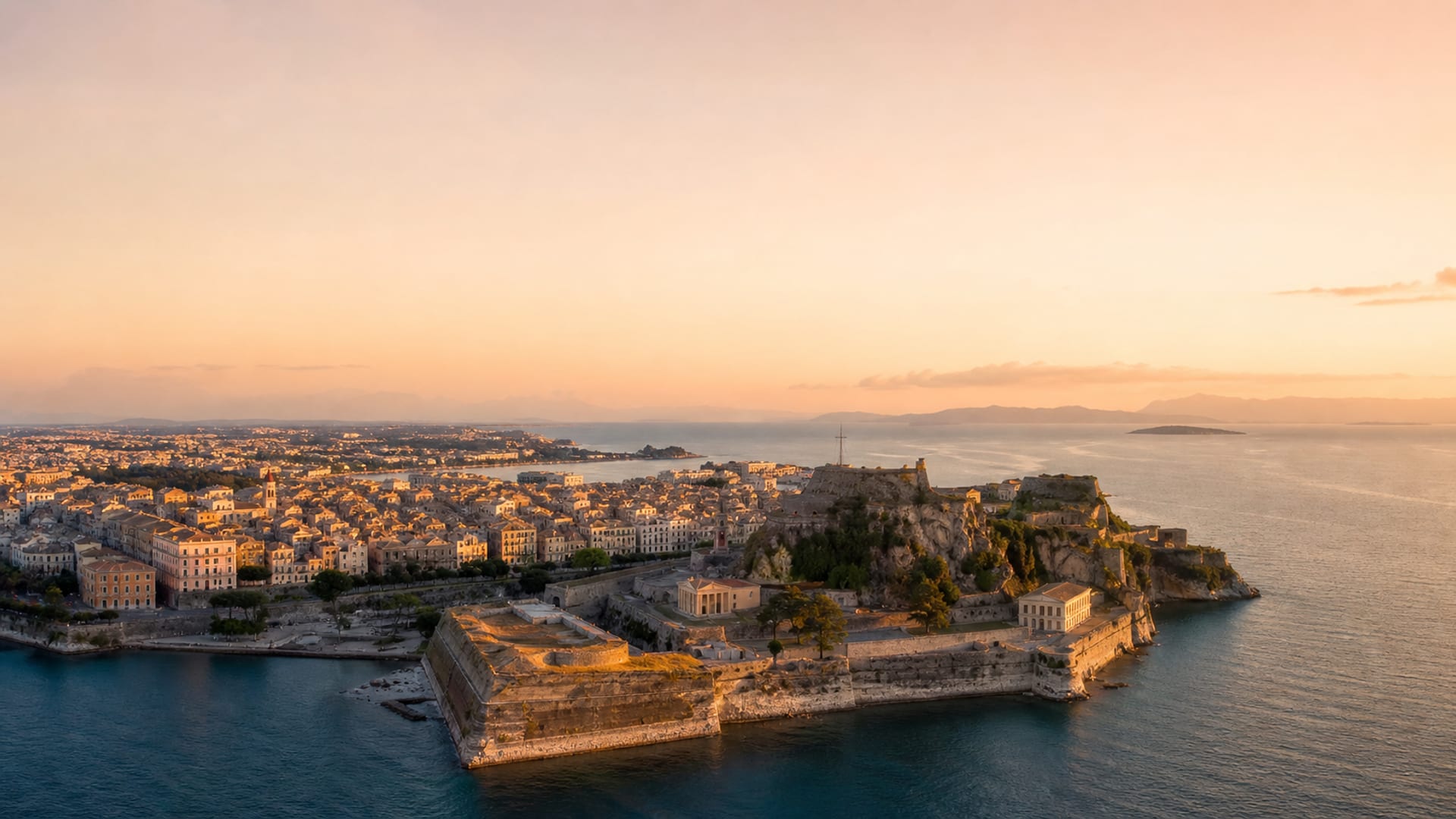
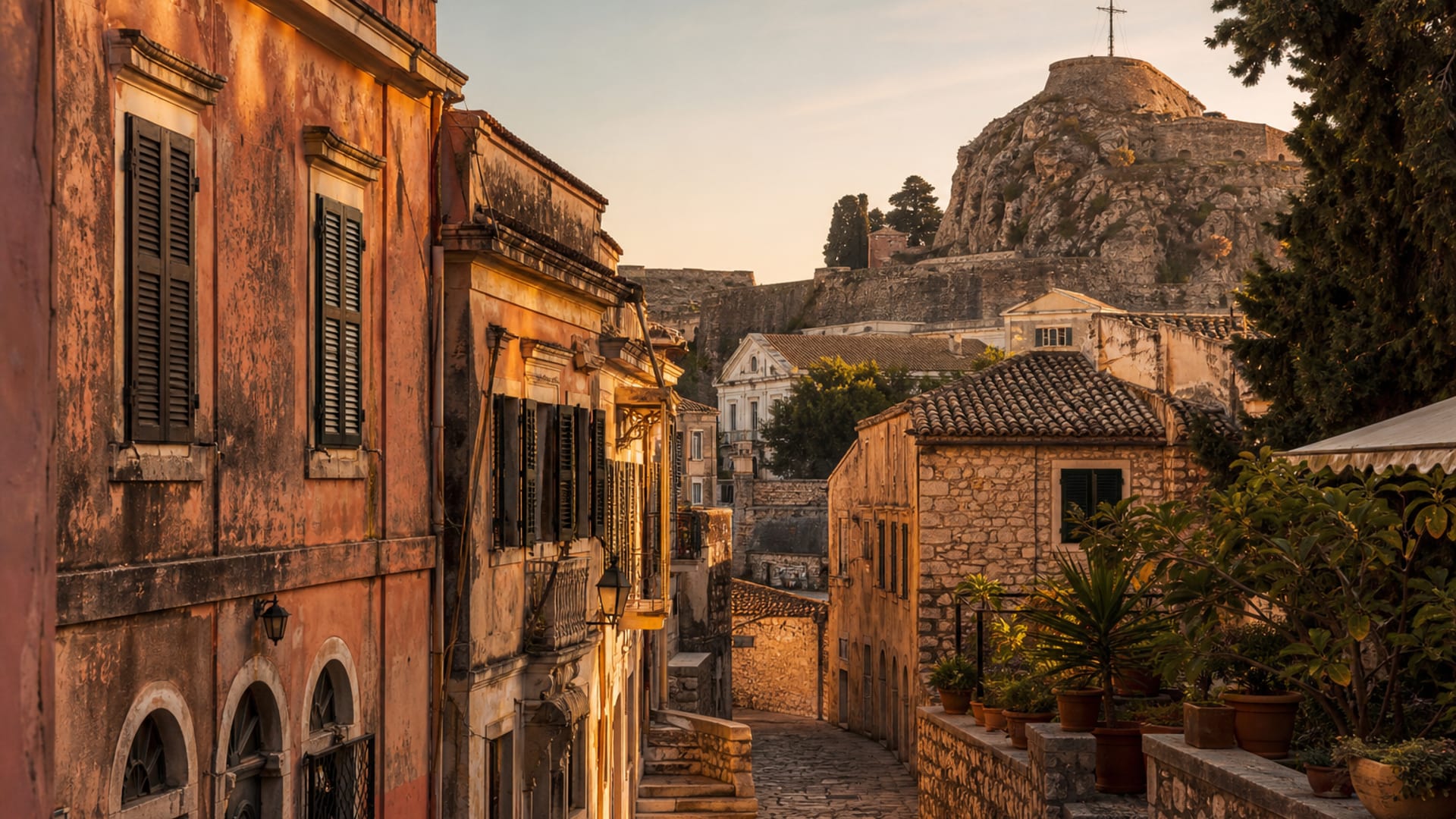
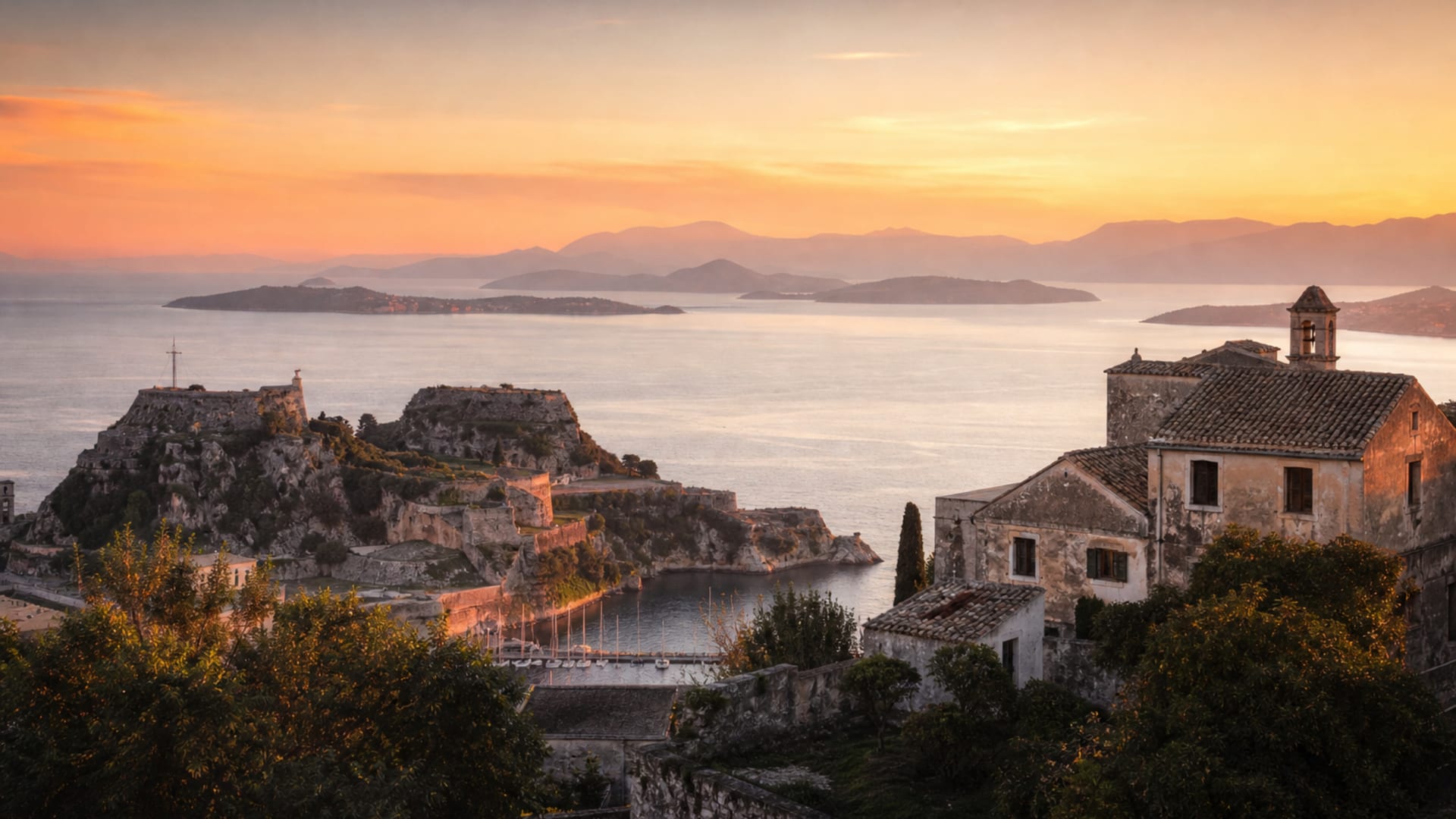
Corfu’s Old Fortress guards the eastern edge of Corfu Town, with Venetian walls, the 19th-century British-built St. George church, and wide views over the harbor and old quarter. Plan time for the hilltop walk and the bastion paths.
Time needed: About 2 to 3 hours
Entry: Tickets cost about $11 to $17 (€10 to €15) for adults, with reduced rates for children, students, and EU seniors on selected days. Visit the official site for details.
Tip: Go near opening time for cooler climbs and fewer tour groups on the walls.
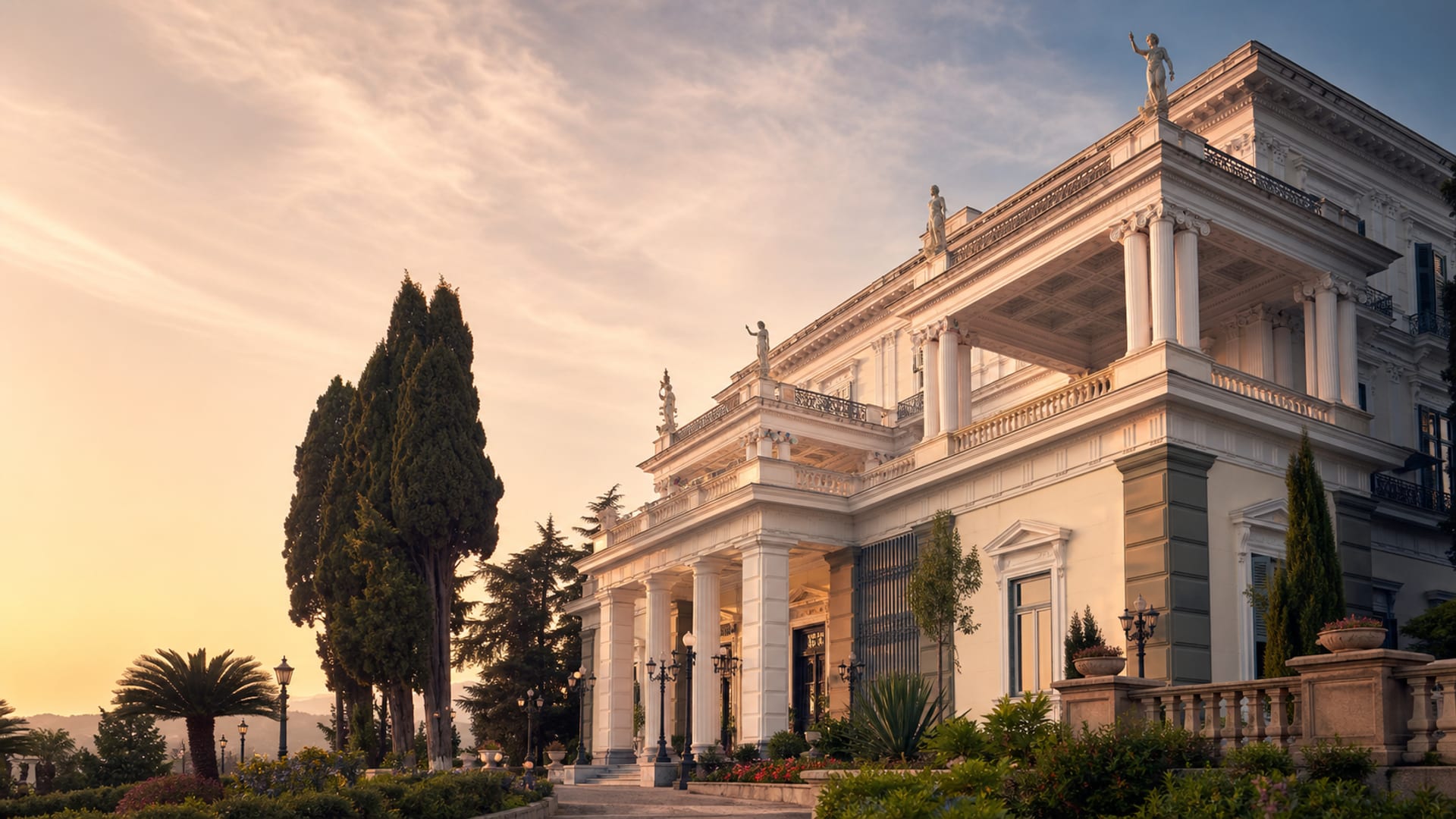
Achilleion Palace
Built for Empress Elisabeth of Austria, Achilleion Palace sits in Gastouri about 10 km from Corfu Town. Its frescoed rooms and terraced gardens center on the Achilles statues and sea views that made the villa famous.
Time needed: About 1.5 to 2 hours
Entry: Tickets cost about $7 to $11 (€6 to €10) for adults, with lower prices for children and concessions when offered by the site. Visit the official site for details.
Tip: Late afternoon brings softer light across the terraces and better photos over the coast.
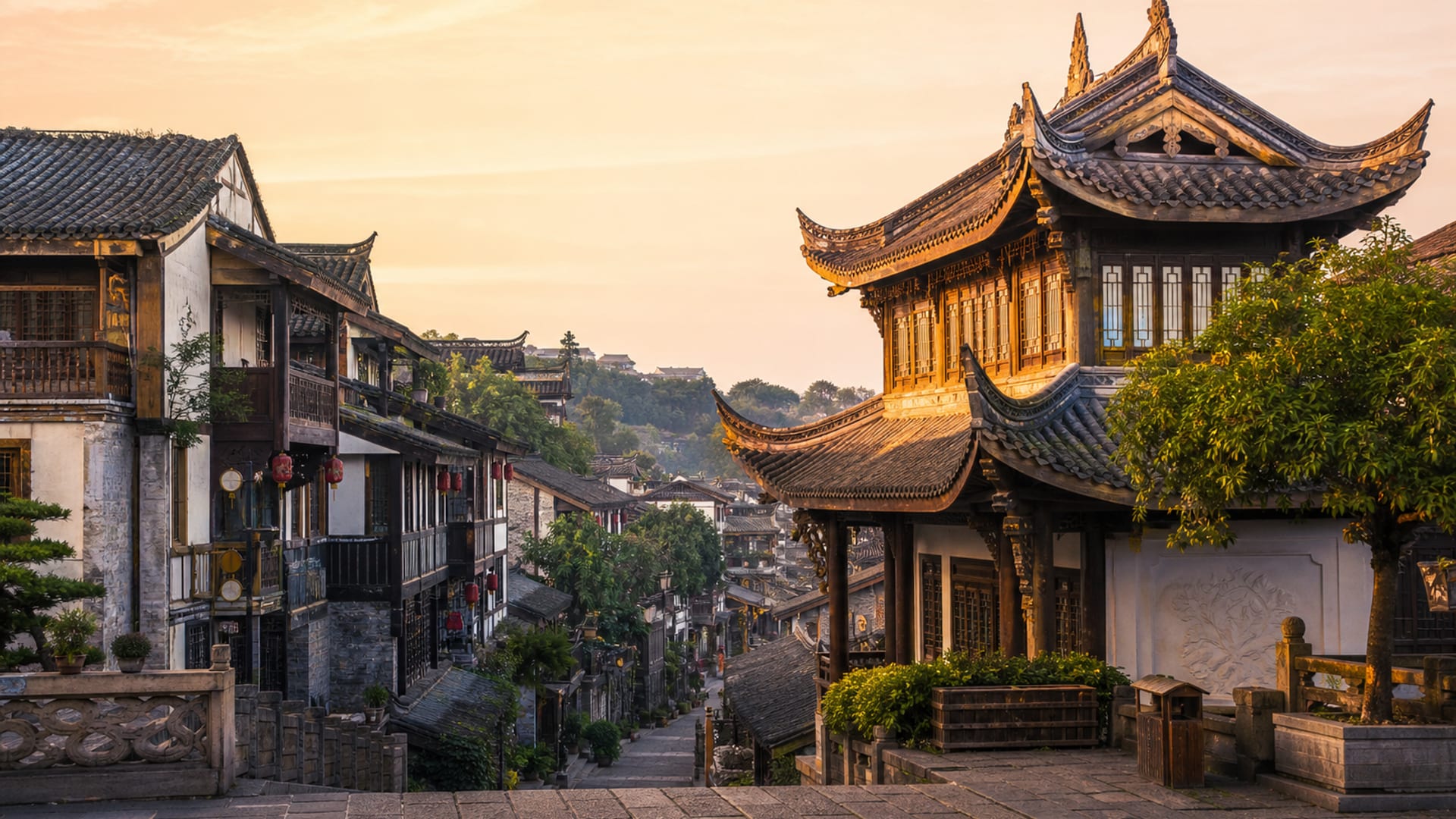
Paleokastritsa Monastery
Perched above Paleokastritsa on Corfu’s west coast, this 13th-century monastery combines a small church, courtyards, and a compact museum with icons and ecclesiastical objects. The setting also gives broad views over the bays below.
Time needed: About 45 minutes to 1 hour
Entry: Free to access, with voluntary donations often accepted at the entrance and modest charges possible for the small museum on site.
Tip: Wear covered shoulders and arrive before midday, when buses and coach groups are busiest.
Overlooked sites worth visiting

Angelokastro
A Byzantine fortress crowns a limestone ridge above Corfu’s northwest coast, with wide views over Paleokastritsa and the sea. The climb is short but steep, so it suits a slower half day.
Time needed: About 1 to 2 hours
Entry: Admission is about $4 to $6 (€4 to €5) per adult, with lower rates for children and EU concessions when offered. Bring cash, since card acceptance can vary at the gate, and check opening hours in advance because last entry shifts by season.
Tip: Go in late afternoon for cooler air and softer light.

Old Perithia
This abandoned mountain village in the Pantokrator foothills has stone houses, small chapels, and a few restored tavernas. Its lanes are quiet enough for a lingering walk and a long lunch.
Time needed: About 2 to 3 hours
Entry: Free to wander the village lanes, but some restored houses, small museums, and private properties may charge about $3 to $6 (€3 to €5) for access or tastings. Cash is useful, as several tavernas and hosts do not take cards.
Tip: Pair the visit with lunch, then walk the lanes before sunset.
Traditional food
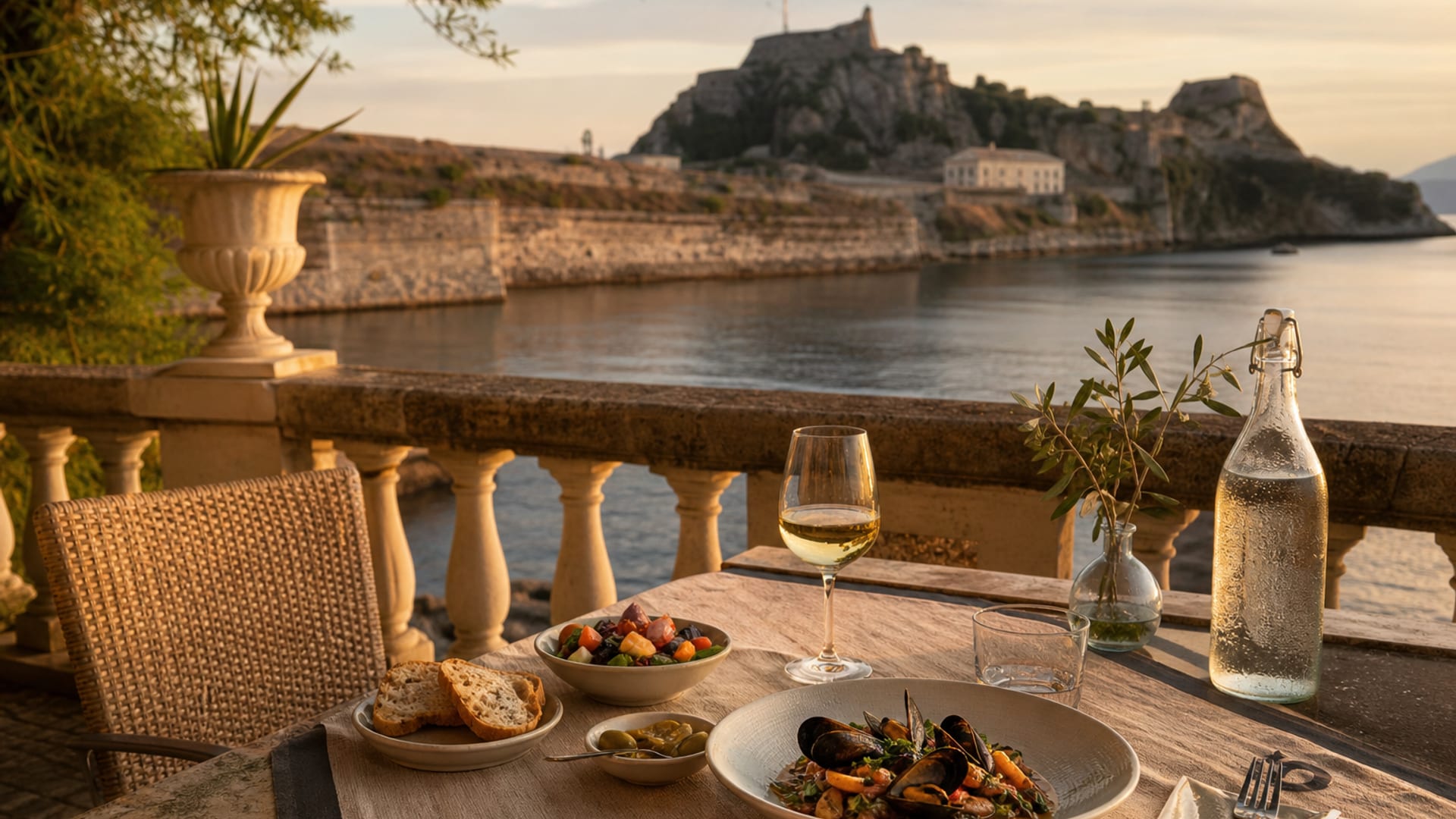
Corfu’s table leans on olive oil, garlic, herbs, and slow-cooked meats, with sofrito, pastitsada, bourdeto, and bianco showing how Venetian influence settled into local cooking.
Sofrito
Thin veal or beef slices simmer in white wine, garlic, and parsley until the sauce turns light and fragrant. The canonical stop in Corfu Town is Salto Wine Bar and Bistro, which gives the dish a polished, central setting.
Pastitsada
This festive Corfiot pasta dish uses tomato, spice, and slow-cooked meat for a rich, layered sauce. Etrusco Restaurant in Kato Korakiana is a strong canonical choice for a carefully prepared version.
Bourdeto
A red pepper and fish stew with heat that builds without overwhelming the seafood. For a dependable Corfu Town tasting, Rex Restaurant keeps it close to the island’s traditional tavern style.
Bianco
Bianco is a white fish stew with potatoes, lemon, garlic, and pepper, and it usually tastes brighter than it looks. The canonical address here is The Venetian Well in Corfu Town, where the dish sits comfortably beside other island classics.
Best time to visit Corfu
Corfu shifts with the season, from busy beach months and hot afternoons to calmer shoulder periods that make the Old Town, west coast, and hill villages easier to link in one trip.
Best for: Wildflowers, comfortable sightseeing, and uncrowded road trips
What you get: About 54°F to 72°F (12°C to 22°C), with lighter crowds before the summer surge and a little more movement in the center by May
Trade-offs: Sea temperatures stay cool for swimming early in the season
Best for: Beach time, long evenings, and full ferry and tavern hours
What you get: About 75°F to 91°F (24°C to 33°C), with the heaviest crowds in Corfu Town, the west coast, and the most popular beaches
Trade-offs: Heat and traffic can slow cross-island days
Best for: Warm water, softer light, and easier museum and village visits
What you get: About 61°F to 82°F (16°C to 28°C), with crowds easing after early September and a calmer pace by late October
Trade-offs: Some seasonal businesses begin shortening hours
Best for: Quiet lanes, lower room rates, and unhurried town walks
What you get: About 47°F to 61°F (8°C to 16°C), with very light crowds and a slower visitor scene outside the holidays
Trade-offs: Some island attractions and services run on reduced schedules
A realistic 5-day plan in Corfu
A good Corfu plan works best when each day has one geographic focus, because the island’s roads and sights do not cluster neatly around a single center. The five-day structure below keeps arrival easy, then widens the reach without wasting time on repeat crossings.
Land in Corfu (CFU) and take a taxi from the airport to Corfu Town, which usually takes about 10 to 15 minutes and costs roughly $12 to $18 (€11 to €16). If you prefer a bus, the ride into the center is cheaper but slower and depends on the schedule, so a taxi makes the first evening easier after a flight. Check into a room near the port or the Old Town, then walk no more than 10 minutes for water, a café table, and a simple dinner in the Liston or Spianada area. Keep the pace low, drink plenty of water, and save the fortress climbs for tomorrow.
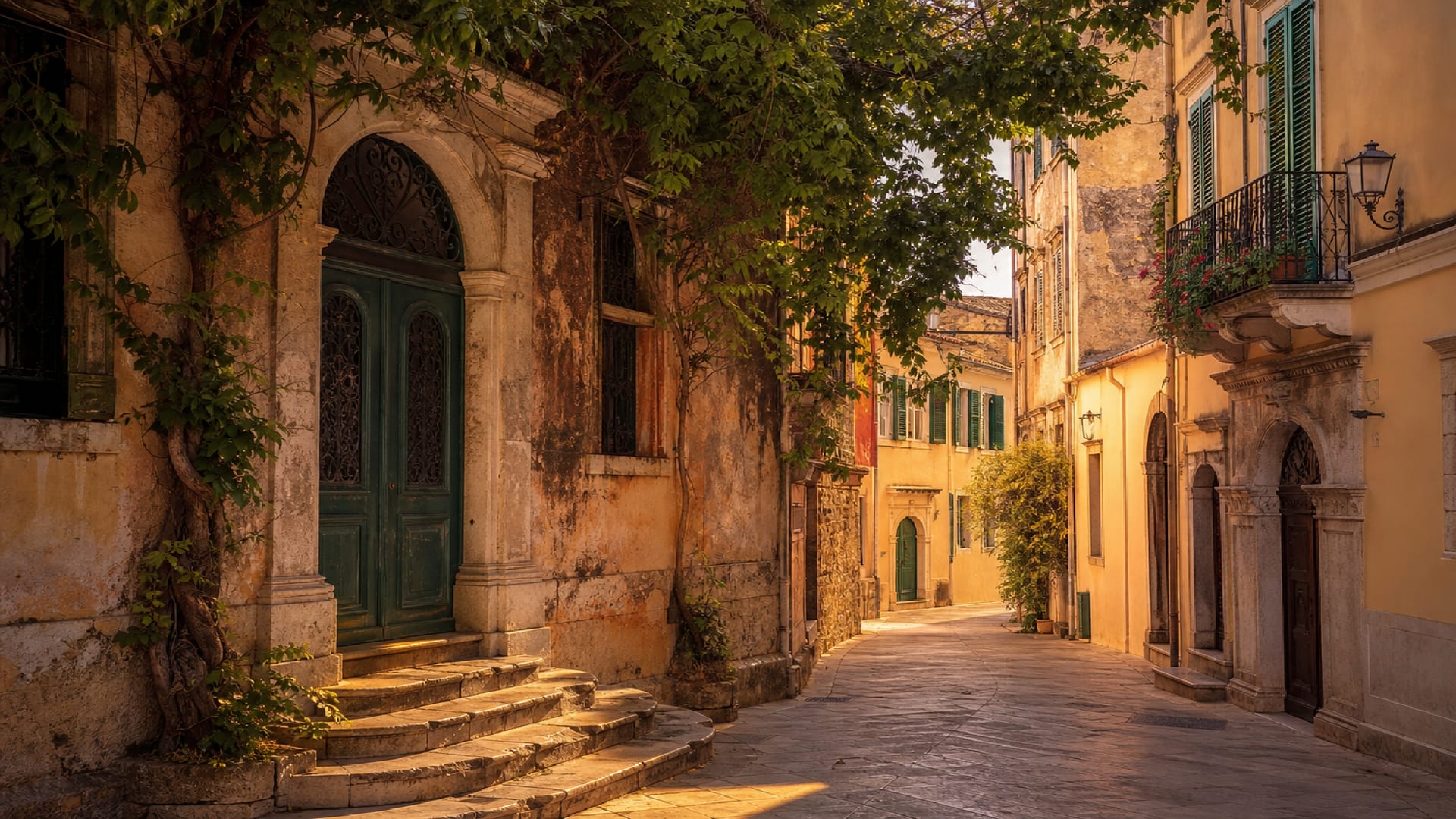
Start early at the Old Fortress, where the walk from Corfu Town takes about 5 to 15 minutes depending on your hotel. Plan 2 to 3 hours for the walls and bastions, then head back into the Old Town for lunch in the lanes near the Liston, about 10 minutes away on foot. In the afternoon, cross to Garitsa Bay for a waterfront walk, roughly 15 minutes from the Spianada, and end with an easy dinner before returning to your base. Tickets for the fortress cost about $11 to $17 (€10 to €15), so you can keep the rest of the day centered on the historic core.
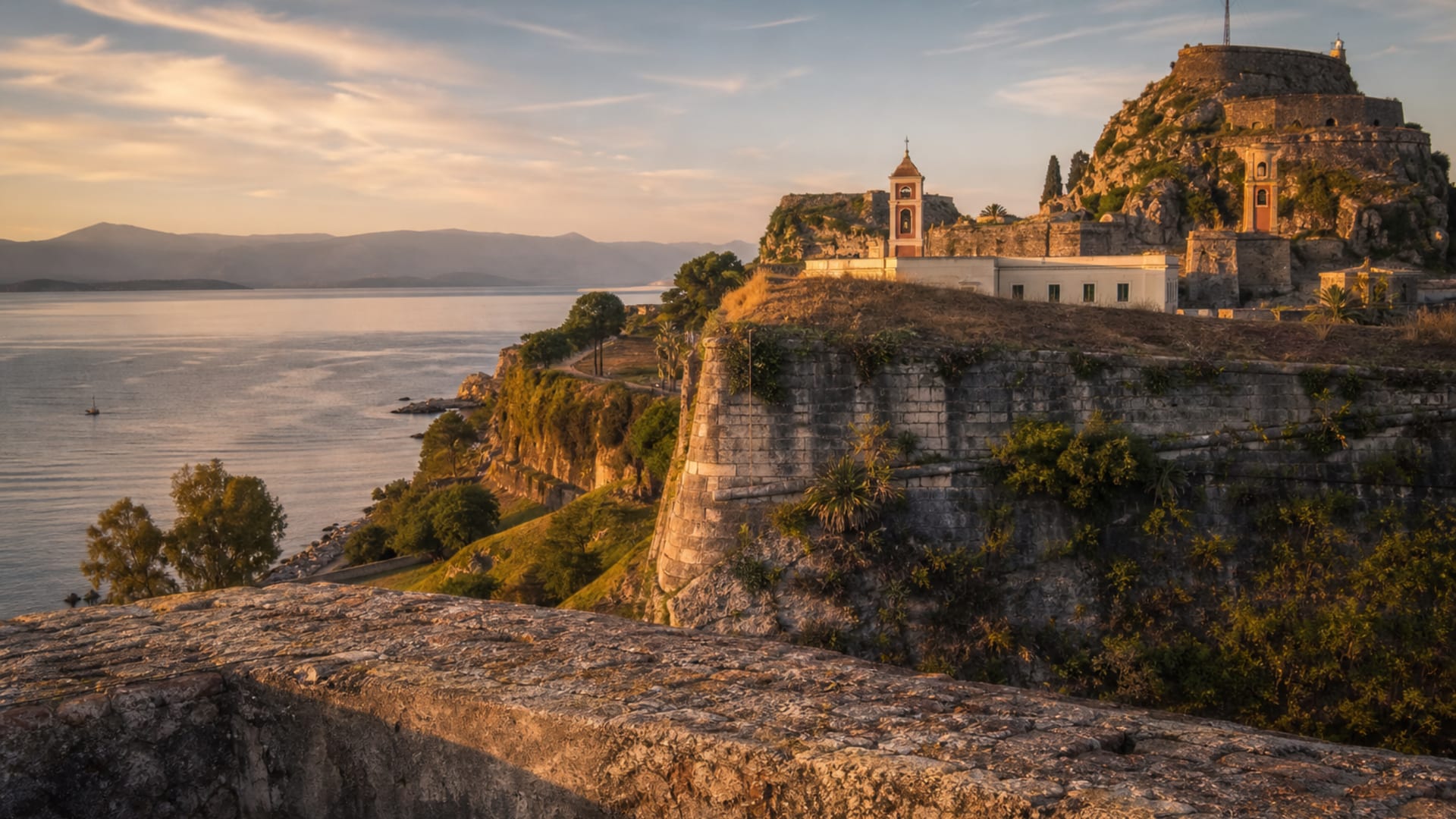
A west-coast morning pairs Paleokastritsa Monastery with Angelokastro, since both reward an early start and a transit day outside the center. Reach Paleokastritsa first, spend about 45 minutes to 1 hour at the monastery, then continue to Angelokastro for a 1 to 2 hour visit and the ridge views above the sea. If you are staying in Corfu Town, expect the drive to take about 45 to 60 minutes each way to Paleokastritsa, with extra time for the higher road to Angelokastro, so an organized car or taxi works better than relying on buses. Finish with a late lunch on the west coast before heading back to Corfu Town for a quieter evening.
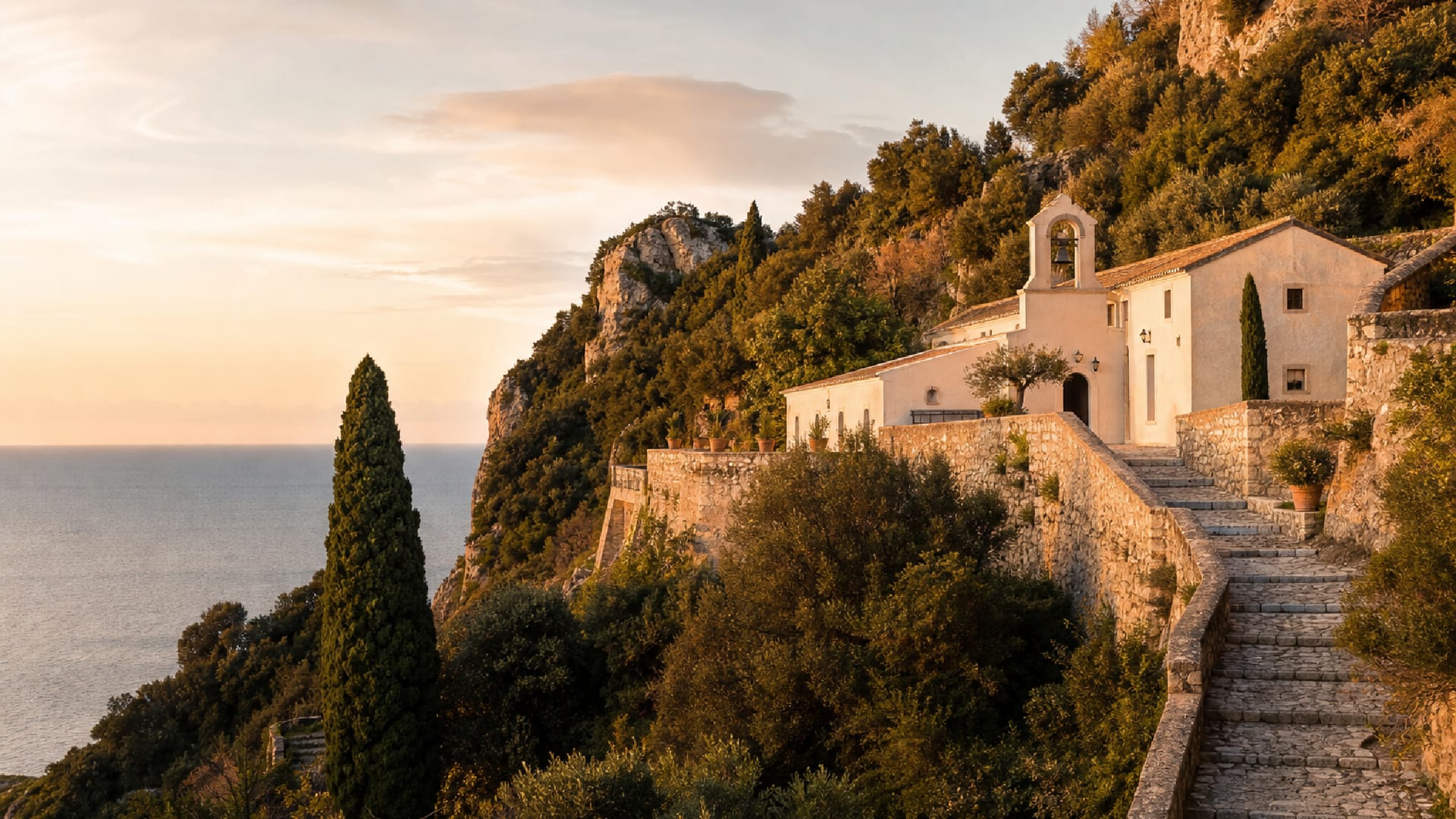
The south of the island works well for a slower day, beginning at Achilleion Palace in Gastouri, about 10 km from Corfu Town and roughly 20 to 25 minutes away by taxi or car. Spend 1.5 to 2 hours in the palace and gardens, then continue to Benitses, about 10 to 15 minutes farther by road, for a seaside lunch and a short harbor stroll. If you want a longer walk, return toward Garitsa in the late afternoon, where the bayfront path gives you an easy finish back near the center. Palace tickets cost about $7 to $11 (€6 to €10), and the day combines the island’s imperial history with its southern shoreline.
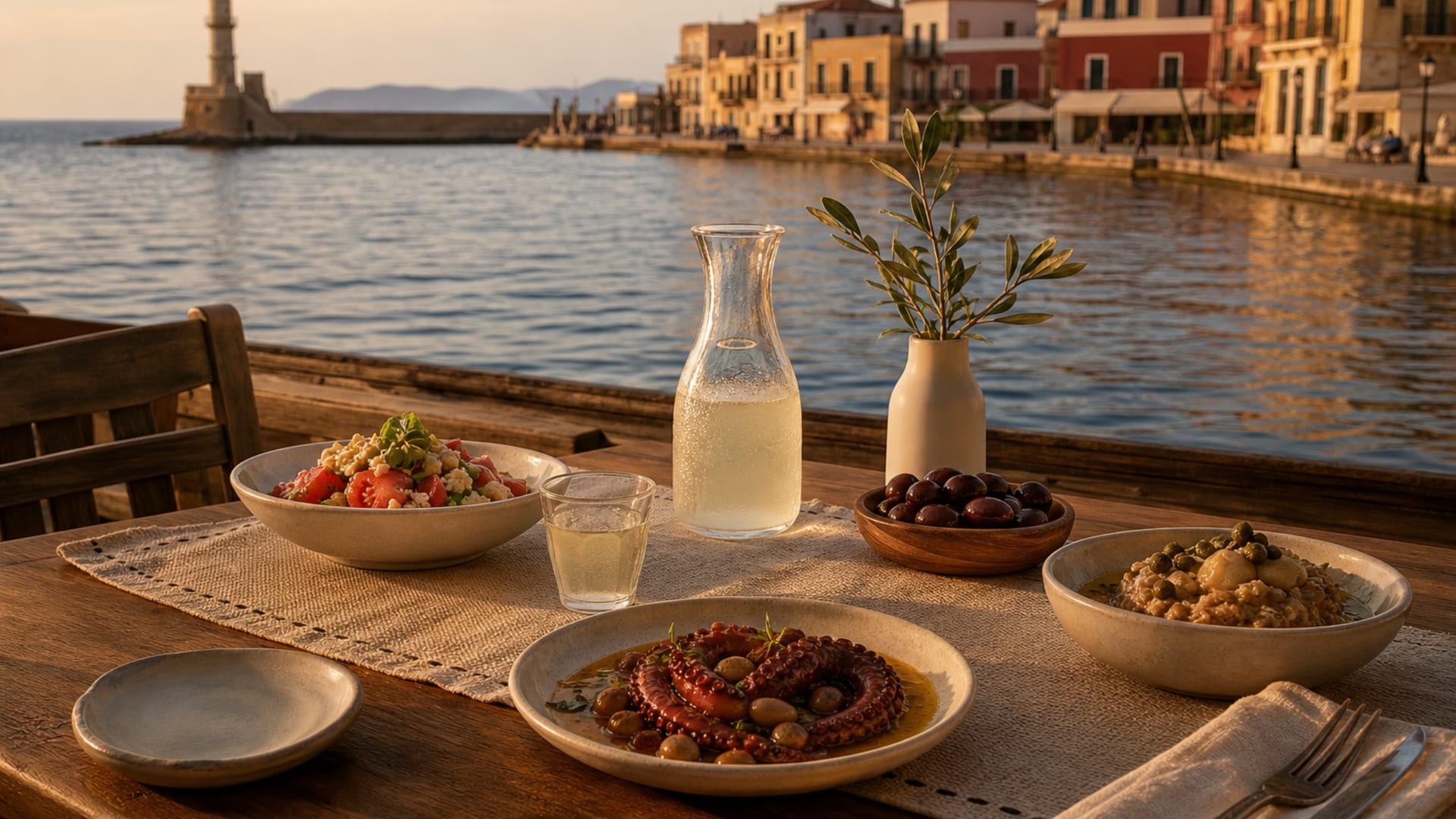
Before departure, fit in one last stop that stays close to your base, such as the museums and streets around Corfu Town, then leave enough time for a final coffee in Garitsa or near the port. If your flight is later in the day, browse the Old Town for local olive oil, kumquat liqueur, and ceramic pieces, all within a short walk of the main squares. From the center, the airport transfer usually takes about 10 to 15 minutes by taxi, so you can keep the morning compact and still avoid a rush. A final seated lunch in the Liston district works well if you want to end the trip near the island’s most recognizable promenade.
Business-class flights from the US to Corfu
Reaching Corfu from the US usually means a connection, so the main choice is how long you want to sit between flights and which hubs you prefer. The East Coast and West Coast examples both lean on major European transfer points, but their timing and pricing differ.
From New York (JFK) or nearby airports, Delta Air Lines, British Airways, Air France, Lufthansa, and Turkish Airlines all appear in the market. Nonstop travel is not the norm here, so the trip usually runs about 10 hours 30 minutes to 11 hours 30 minutes, while one-stop options route through LHR, CDG, FRA, IST, or AMS and often take about 13 to 18 hours. Round-trip fares usually start at $4,200 and can reach $8,500, with nonstop and one-stop options both appearing in the market.
Los Angeles (LAX) itineraries typically involve Delta Air Lines, British Airways, Lufthansa, Turkish Airlines, or Air France, with 13 hours 30 minutes to 15 hours in the air when a nonstop is available. More often, one-stop journeys connect through LHR, CDG, FRA, IST, or AMS and stretch to about 16 to 22 hours. Expect roughly $4,800 to $9,200 for a round trip from Los Angeles (LAX).
Corfu feels different when you slow down
A deliberate Corfu trip has a clear center of gravity, Corfu Town for the Old Fortress, the Liston, and a waterfront base, then the west coast for Paleokastritsa and Angelokastro, and the south for Achilleion and Benitses. Blue buses, taxis, and short walks each do a different job, so the island opens up in pieces instead of in one tiring sweep. If you want help shaping those pieces into a clean plan, AranGrant experts can tailor it to your dates and pace