

Chapters:

Need help with your trip?
Our support team is available 24/7. Request a callback or call us directly at (833) 619-0908
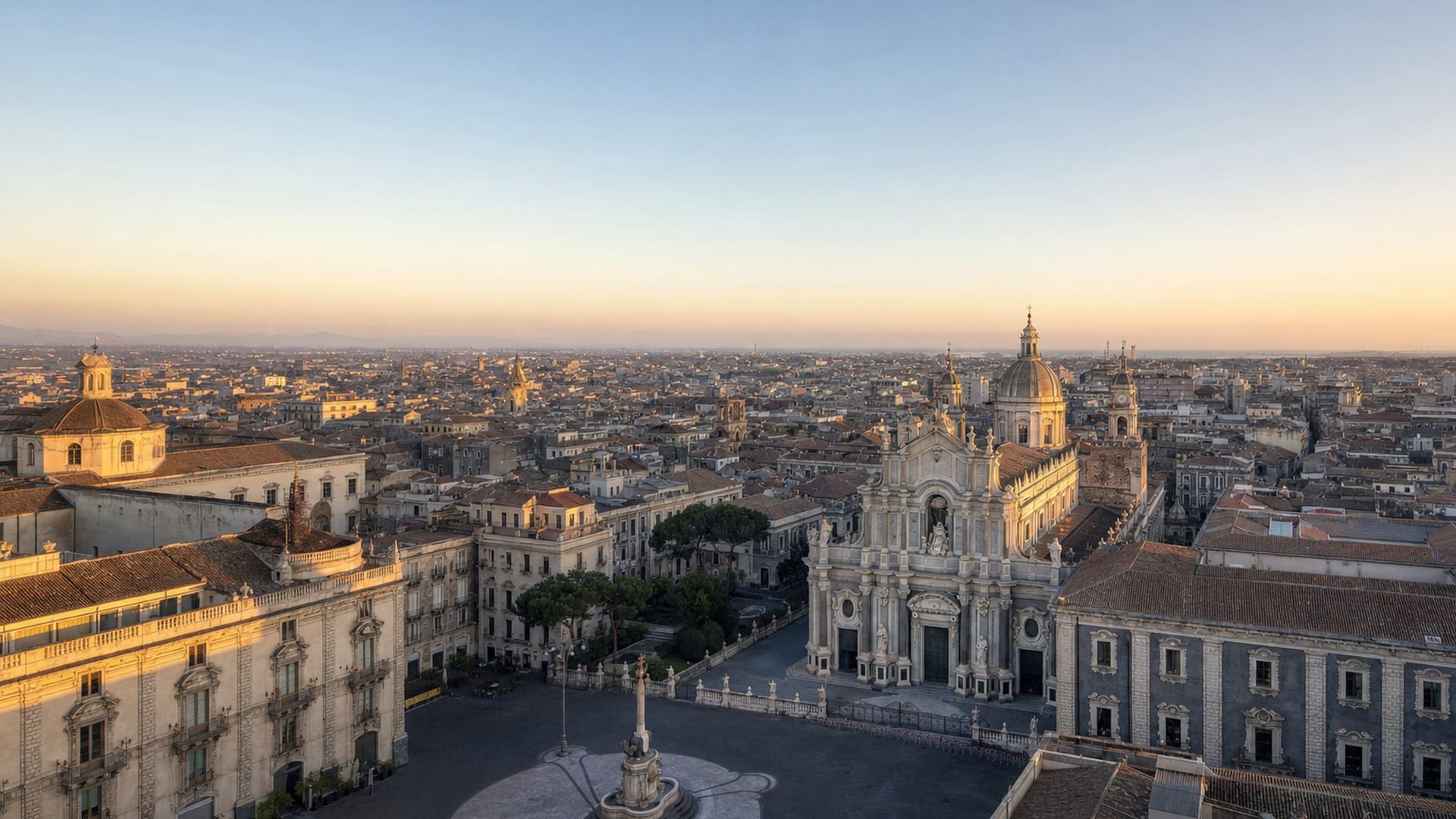
Catania trips often start with the square, the castle, and one dinner on Via Etnea, then stop before travelers see how the city changes by block and by hour. The easy mistake is to treat the center as one compact stage.
That misses the way lava-stone streets, market traffic, and uphill garden walks shape the day. Distances stay walkable, but crowds, openings, and heat can make a simple plan feel longer than it looks.
This guide sets out the city in a cleaner sequence, with neighborhoods, transit, food, and timing arranged so each stop has a clear place in the day.
Useful things to know

Main language(s): Italian
Ciao (chow) – Hello
Per favore (pehr fah-VOH-reh) – Please
Grazie (GRAHT-see-eh) – Thank you
Parla inglese? (PAR-lah een-GLEH-zeh) – Do you speak English?
Quanto costa? (KWAHN-toh KOH-stah) – How much does it cost?

Currency: The local currency is the euro (EUR, €).

Cash and cards: Cards and contactless are widely accepted; carry about €20 to €30 ($22 to $33) in cash for small cafes, taxis, and market stalls.

Tipping: Round up small bills; leave about 5-10% at restaurants if service is good.

Traditional food: Arancini, Pasta alla Norma, Pasta con le sarde, granita

Water and coffee costs: Water ~€2 ($2), bar espresso ~€1.50 to €2.50 ($2 to $3).

Taxis and ride apps: Free Now and Uber work here, but Uber is limited and often uses licensed cars.

Plug and voltage: Type C/F socket, 230V

Dining and shop opening hours: Breakfast is about 7:00-10:00 am, lunch 12:30-2:30 pm, and dinner 8:00-10:30 pm. Many kitchens close between lunch and dinner.

Emergency number: 112 for police, fire, and medical emergencies.
Where to stay in Catania
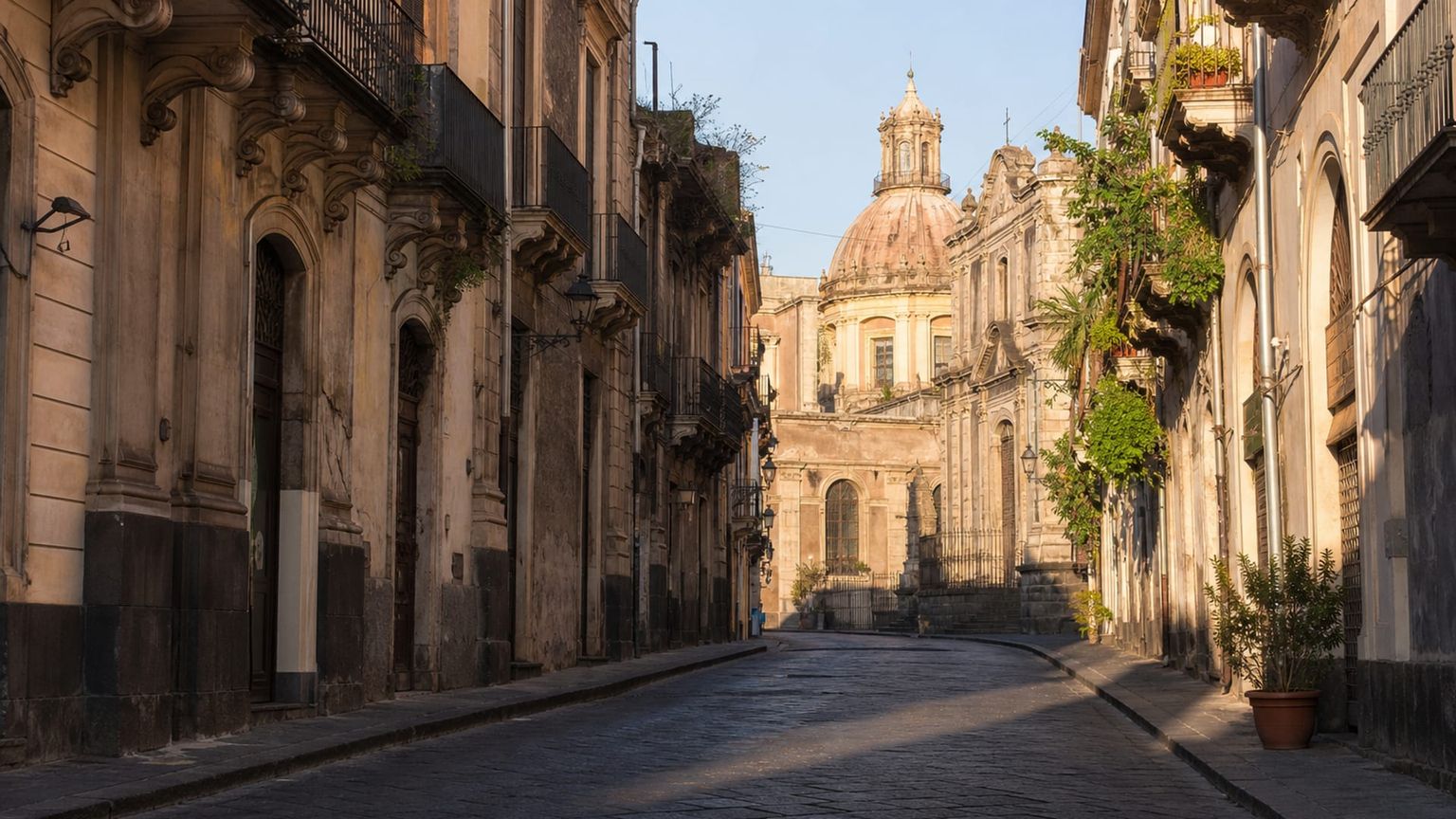
Catania’s historic center puts you among Baroque squares, the fish market, and the main pedestrian streets. It matters for travelers who want churches, restaurants, and museums within an easy walk of the city’s core sights.
Best for: First-time visits, walking between landmarks, and dining near the main sights
What to expect: Busy streets by day, especially near the market, with more pedestrian traffic and late dinners in the evening.
Hotel prices: Usually about 90€ to 180€ (~$99 to ~$198) per night for well-rated stays
Distance to major sights: 0 to 10 minutes on foot to Piazza del Duomo and the fish market
Quietness: Noisy in the day, livelier than quiet at night on restaurant streets
Main trade-off: You pay for centrality with traffic, occasional street noise, and fewer easy parking options.
Good to know: Choose a room on a side street if you want easier sleep, since the busiest lanes can stay active late.

Borgo-Sanzio sits just north and east of the center, with residential streets, local shops, and direct access to Via Etnea. It suits travelers who want a more lived-in base while staying close to the historic core and the university area.
Best for: Longer stays, local cafés, and visitors who want central access without staying in the busiest streets
What to expect: Moderate street life, neighborhood cafés, and regular traffic on the main avenues.
Hotel prices: Usually about 80€ to 150€ (~$88 to ~$165) per night for well-rated stays
Distance to major sights: 10 to 20 minutes on foot to Via Etnea and about 20 minutes by transit to Piazza del Duomo
Quietness: Calmer than the center in the day, quieter at night on side streets but busier along the main roads
Main trade-off: You will walk a bit more for the main monuments, and rooms near arterial roads can hear traffic.
Good to know: If you plan to use buses or taxis, check the exact street, because a few blocks can change the noise level a lot.
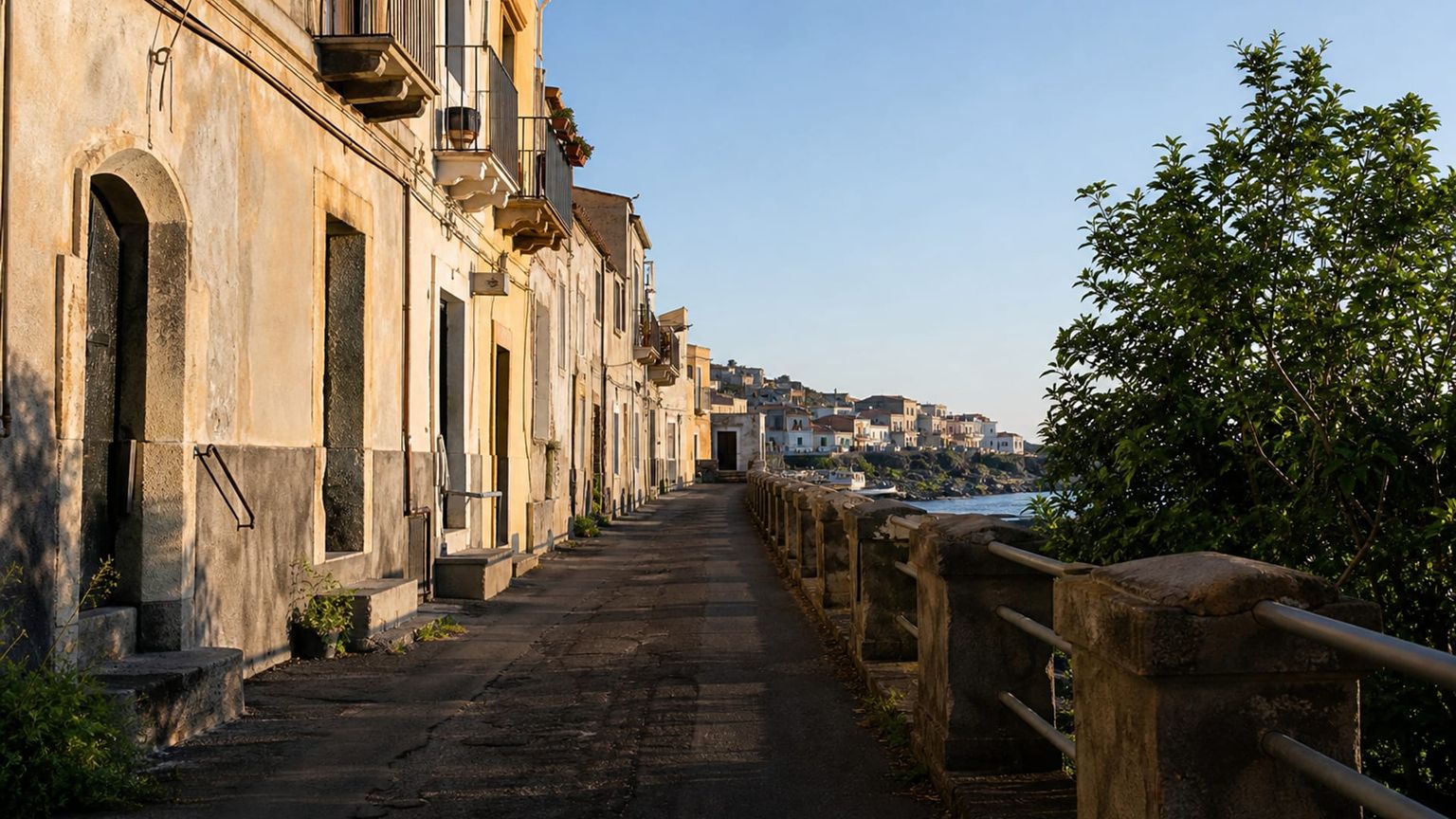
Ognina is Catania’s seafront quarter, with a working harbor, seafood restaurants, and access to the coastal promenade. It matters for travelers who want sea air, a more local setting, and an easy base for evenings near the water.
Best for: Sea views, seafood dining, and travelers who prefer a coastal setting over the city center
What to expect: Active around the harbor and restaurant strips, quieter on residential streets after dinner.
Hotel prices: Usually about 85€ to 170€ (~$94 to ~$187) per night for well-rated stays
Distance to major sights: 15 to 25 minutes by transit to Piazza del Duomo and about 10 minutes on foot to the waterfront promenade
Quietness: Brisk by the harbor in daytime, noticeably calmer late at night outside the dining streets
Main trade-off: You will need transit for most historic sights, and waterfront stays can cost more than inland neighborhoods.
Good to know: Check ferry and cruise schedules if you stay near the harbor, because port traffic can add noise and road activity.
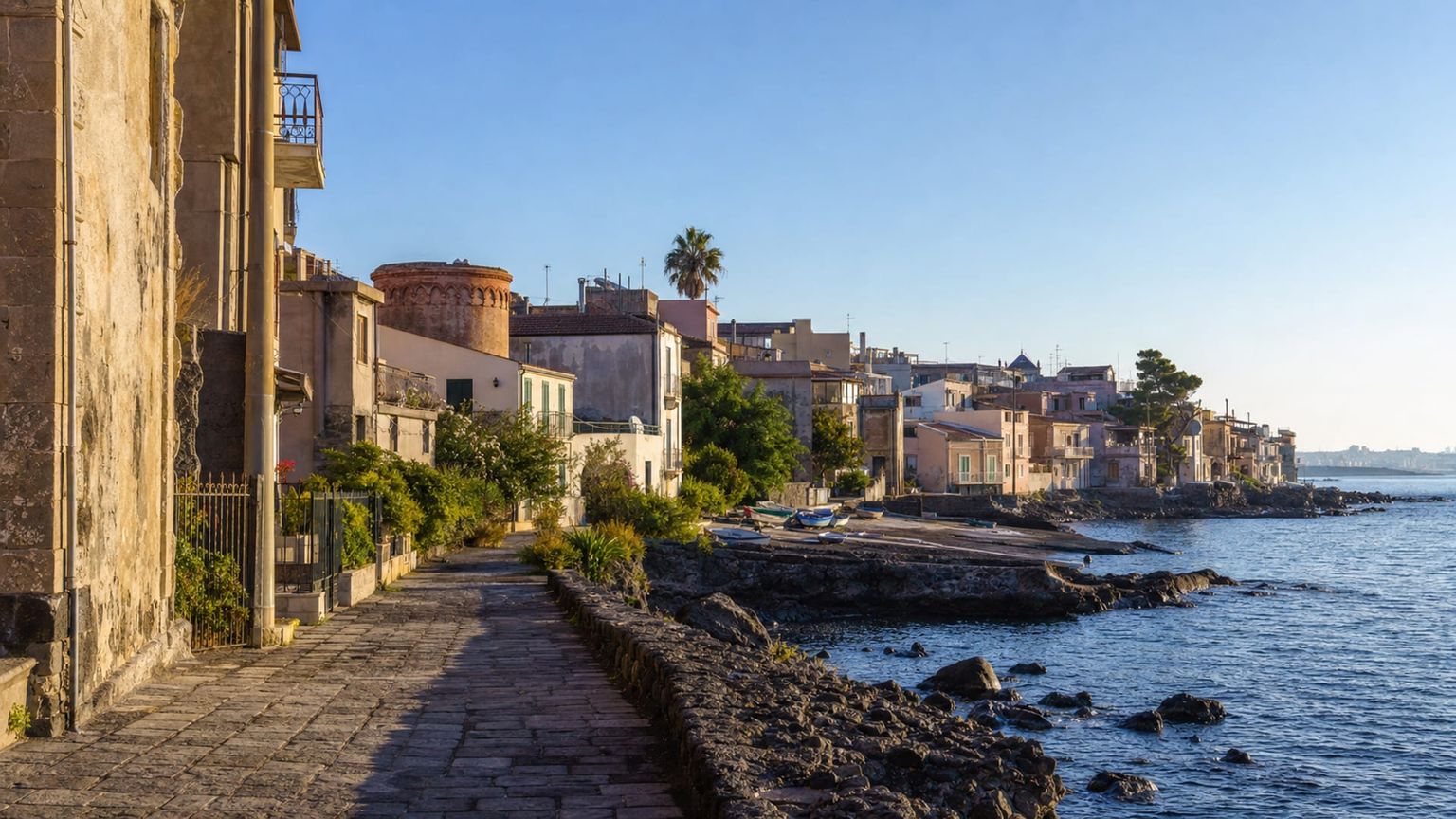
San Giovanni li Cuti is a small seaside pocket known for its black-sand shoreline, waterfront bars, and summer swimming spots. It matters if you want the coast first, with the city center still reachable by bus or taxi.
Best for: Beach time, relaxed evening walks, and travelers who want a coastal setting near the city
What to expect: Small-scale seaside activity, with more movement in warm weather and quieter streets outside peak summer evenings.
Hotel prices: Usually about 90€ to 180€ (~$99 to ~$198) per night for well-rated stays
Distance to major sights: 20 to 30 minutes by transit to Piazza del Duomo and about 5 minutes on foot to the shoreline
Quietness: Busy on summer afternoons and evenings, much calmer once beach hours end
Main trade-off: The area has fewer hotel choices and fewer all-day amenities than the center.
Good to know: If you are visiting outside summer, check opening hours for bars and beach clubs, because some close early or seasonally.
Travelers usually avoid staying in Catania’s Zia Lisa and parts of the industrial zone near the port, because they sit far from the main sights and have few visitor amenities. The outer edges of Librino and the airport-side area near Catania (CTA) are also less convenient, since evening travel into the center takes longer and hotel options are limited.
Hotel deals
How to get around Catania efficiently
Catania works best with a mix of walking and short rides, since the airport has no direct metro line and the Alibus, taxis, and local buses do most of the heavy lifting.

Metro
for the north side of the city
Catania has no metro line that serves the airport area directly, so the closest rail option is the AMTS Alibus shuttle or, farther inland, the Circumetnea narrow-gauge rail line for trips into the city. If you need rail-style transit, use surface transport instead, since metro access does not cover CTA.

Bus
for convenience
AMTS runs the Alibus from Catania Fontanarossa Airport (CTA) to the city center and the central station, with fares of about $5 (€4) and tickets valid for one trip; the ride takes roughly 20 to 30 minutes, traffic depending. Local buses also link the airport with nearby neighborhoods and the station area, and trams cover parts of the urban corridor, so check the stop list before boarding because not every line reaches the airport.

Taxi
for convenience or late hours
Licensed taxis use metered fares, with airport trips to central Catania usually costing about $28 to $40 (€25 to €35), while late-night rides and luggage can raise the total. From Catania Fontanarossa Airport (CTA), look for the official taxi rank or book through a licensed company, and confirm whether the driver applies a fixed airport fare or the meter before departure; most cabs accept cash, and many take cards, though it is wise to ask first.
*Prices are based on rates updated as of June 2026 and may change at the time of travel.
Use the Alibus for the airport run, taxis when timing matters, and walking for the historic center, with buses filling in the gaps to neighborhoods like Borgo-Sanzio and Ognina.
Iconic landmarks
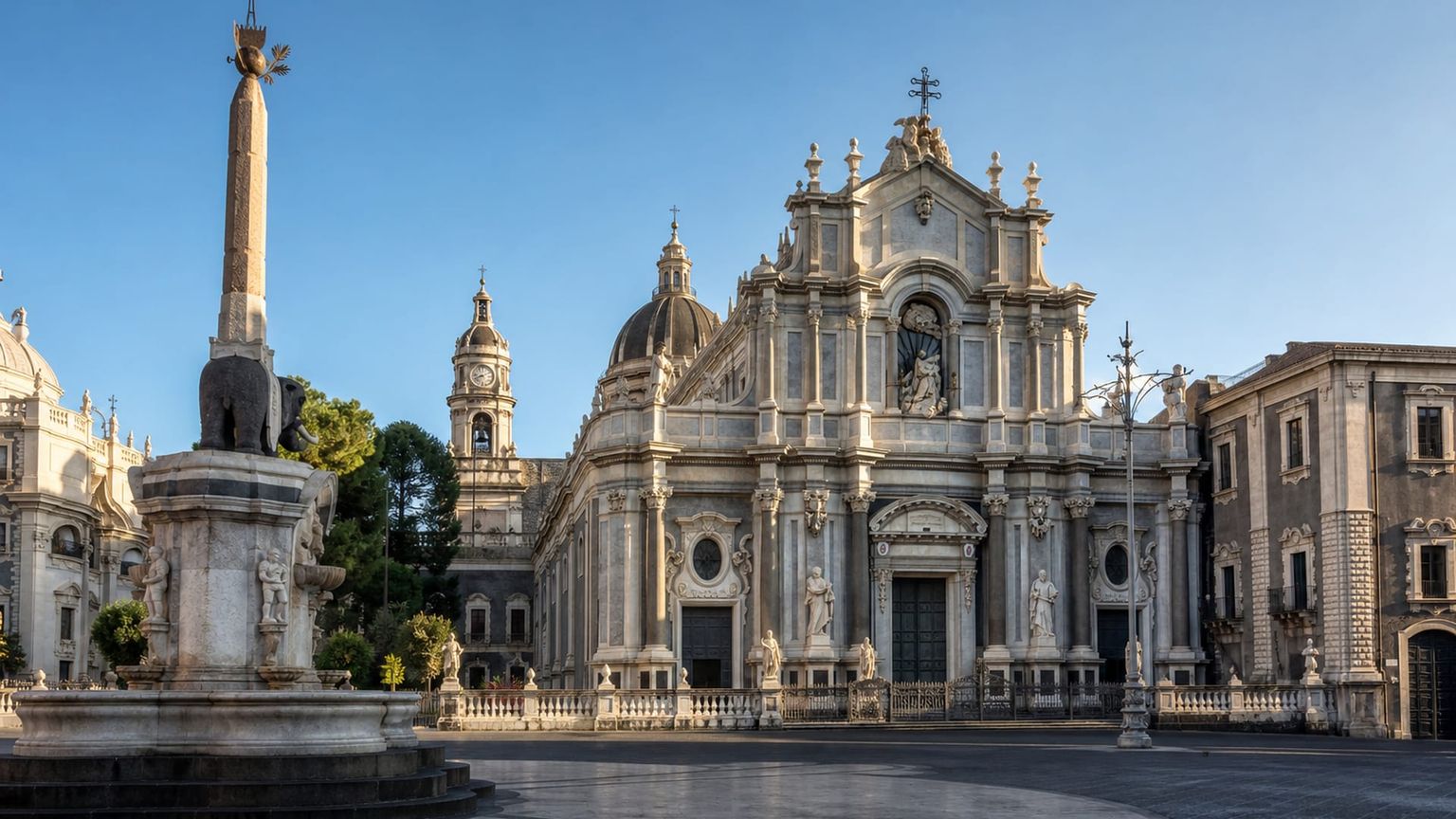
Piazza del Duomo and Catania Cathedral
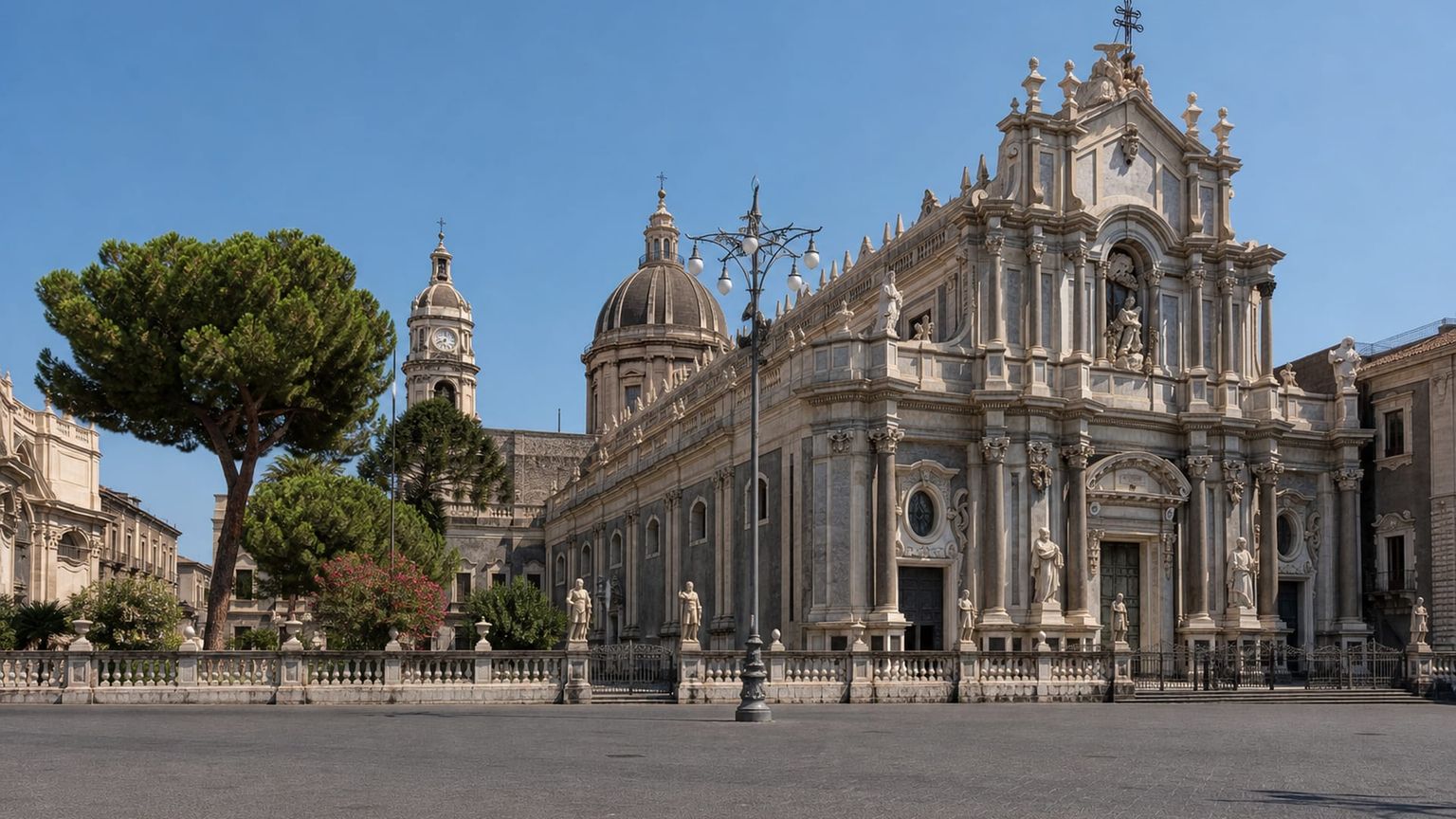
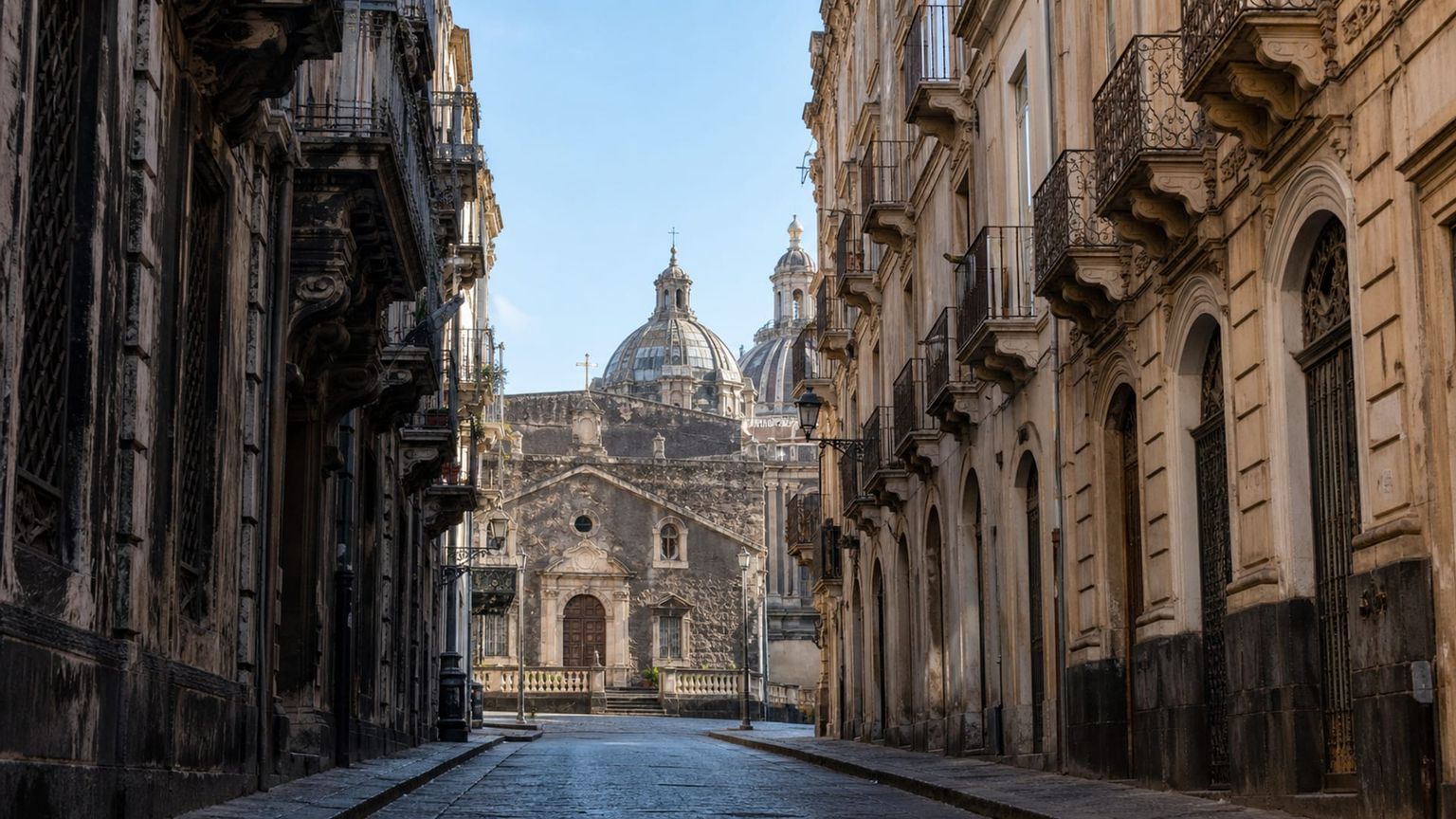
Catania’s main square brings together the cathedral, the Elephant Fountain, and the city’s lava-stone Baroque frontage. It anchors the historic center and gives a fast read on how the 1693 rebuilding shaped the city.
Time needed: About 1 to 2 hours
Entry: Free to access the square; the cathedral is free to enter, with separate fees for the bell tower and select areas when open Visit the official site for details.
Tip: Go early or near dusk, when the square is calmer and the lava stone shows well in side light.
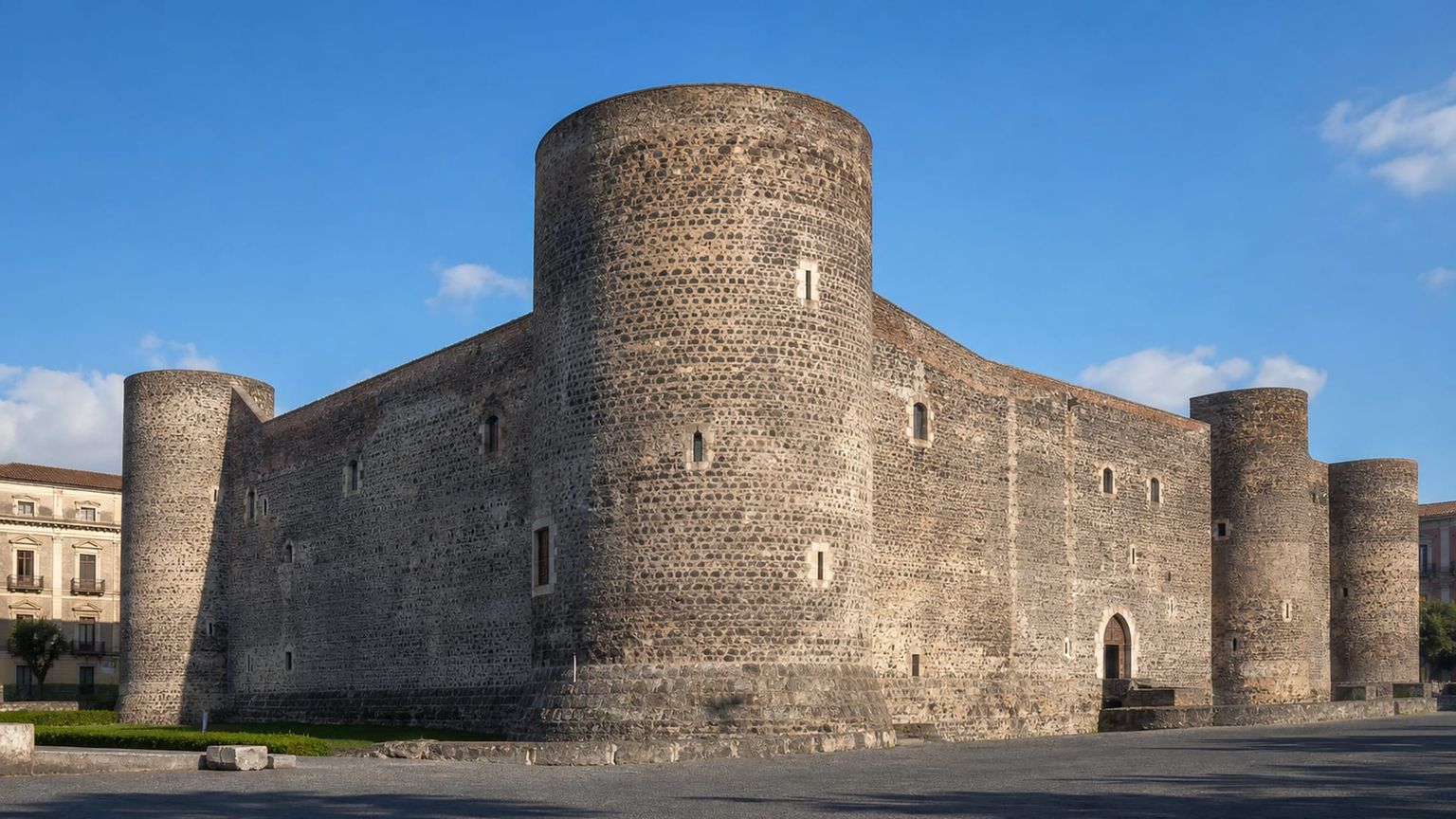
Castello Ursino
Built in the 13th century for Frederick II, Castello Ursino sits on former lava terrain and now houses the Civic Museum. Its heavy basalt walls and archaeology rooms make the city’s medieval layer easy to trace.
Time needed: About 1 to 2 hours
Entry: Standard tickets cost $9 ($8) for adults, with reduced rates for eligible visitors and occasional free-entry days Visit the official site for details.
Tip: Allow extra time for the museum rooms, which add context to the castle’s volcanic setting.
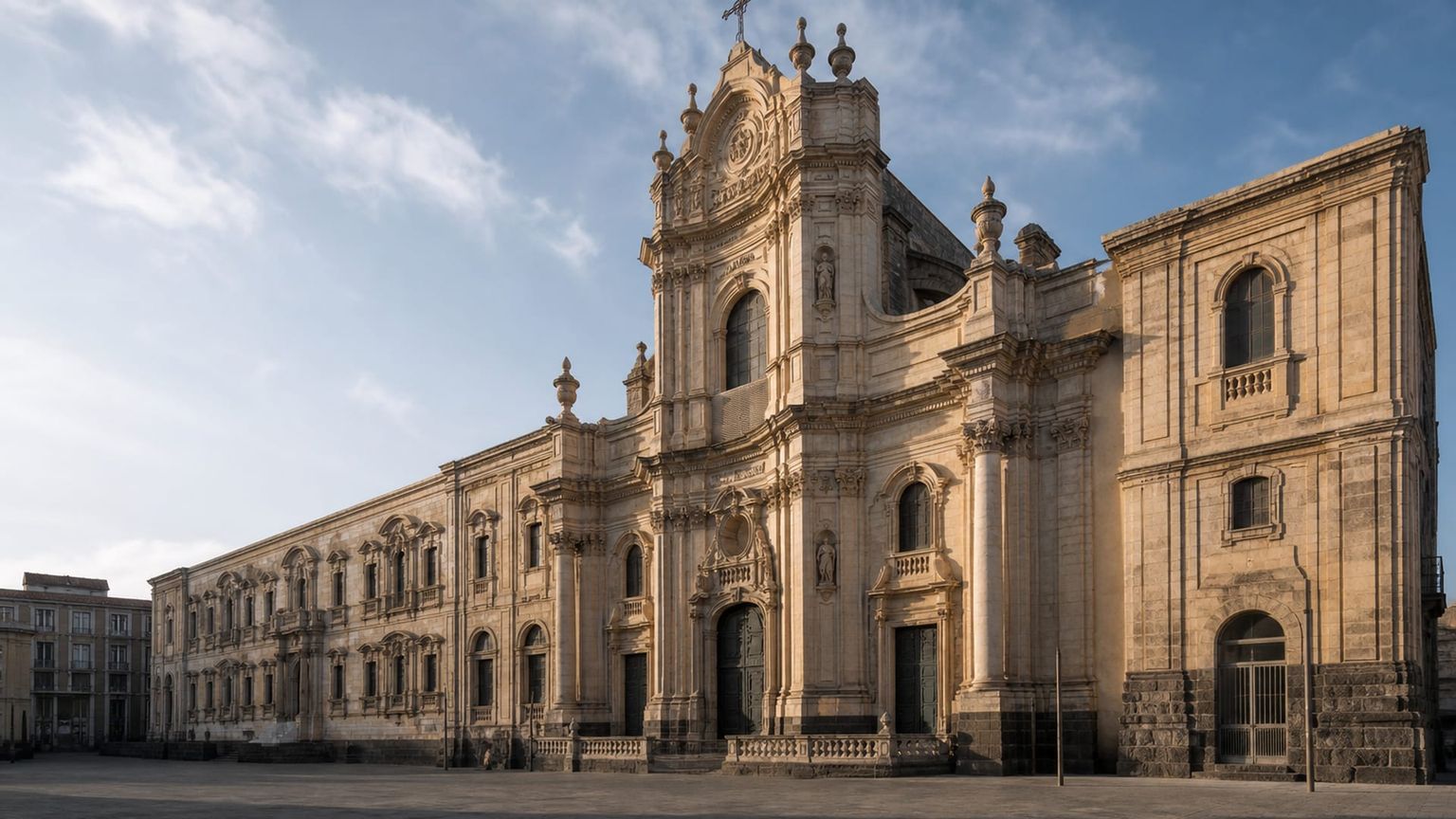
Monastery of San Nicolò l'Arena
This vast Benedictine complex combines a late-Baroque church, cloisters, and grand stairways on the edge of the old city. Its scale, courtyards, and lava-stone detail make it one of Catania’s clearest historic landmarks.
Time needed: About 1 to 2 hours
Entry: Standard tickets cost $7 ($6) to $10 ($9), depending on the areas open and any guided route included Visit the official site for details.
Tip: Check the day’s opening hours, since access can vary when university events use the complex.
Overlooked sites worth visiting

Giardino Bellini
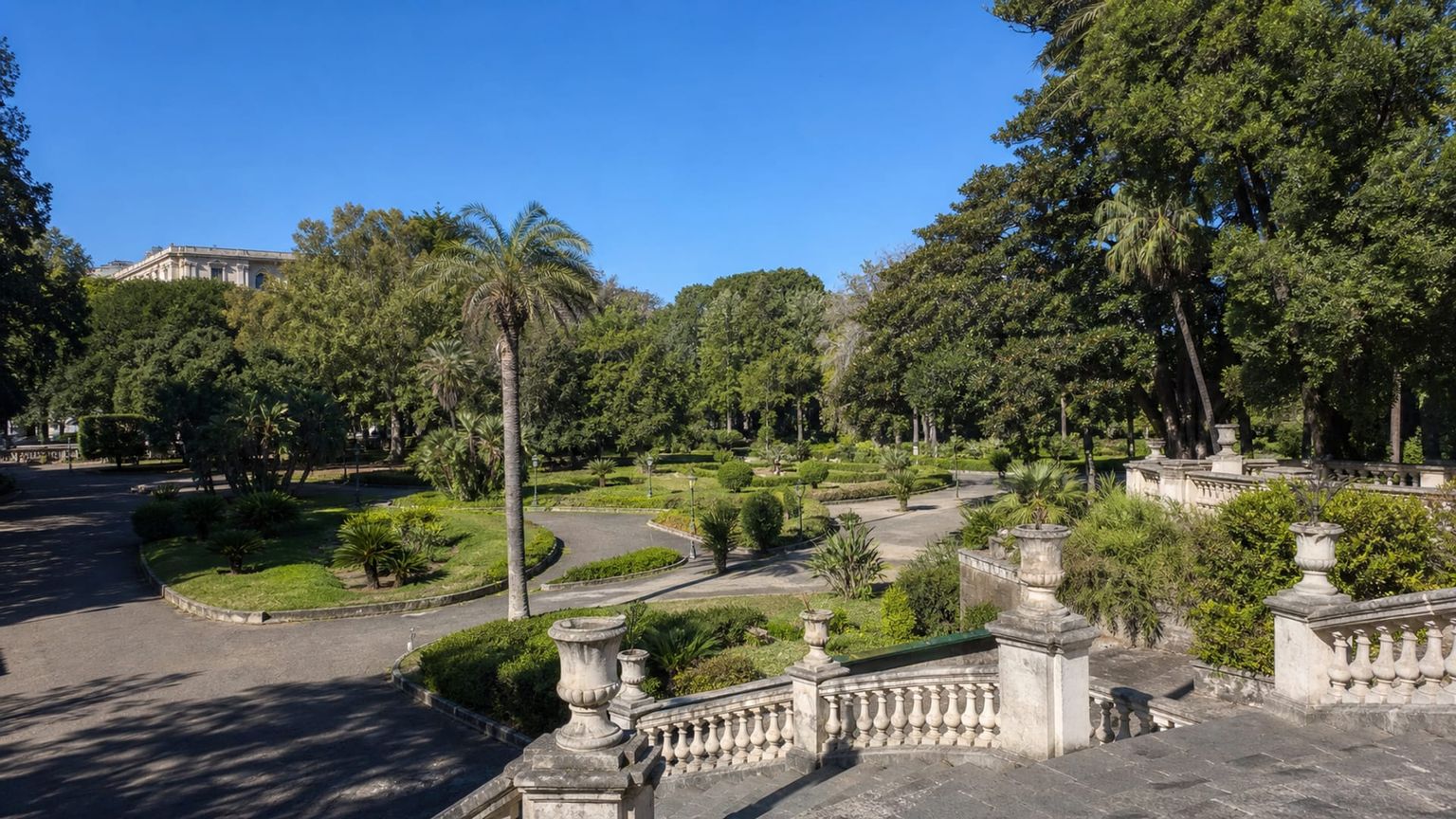
Catania’s oldest public garden layers shaded paths, ironwork, and a long hillside promenade above the city center. Early mornings bring cooler air and fewer joggers, with Mount Etna visible on clear days.
Time needed: About 1 hour
Entry: Free to access; no ticket is required for the public paths, terraces, and benches. Small seasonal events or nearby cafes may charge separately, but entry to the garden itself costs nothing.
Tip: Go early for shade and a clearer Etna view.

Museo Diocesano di Catania
Inside the former seminary, this compact museum displays liturgical silver, vestments, and carriage pieces tied to the archdiocese. The rooftop terrace adds close views of the cathedral dome and Baroque square.
Time needed: About 1 to 2 hours
Entry: Standard tickets cost $7 ($6) for adults, with reduced rates for students and children. Admission usually covers the museum rooms and rooftop terrace, and audio guides or special tours may cost extra Visit the official site for details.
Tip: Pair it with the cathedral square, then visit before lunch.
Traditional food
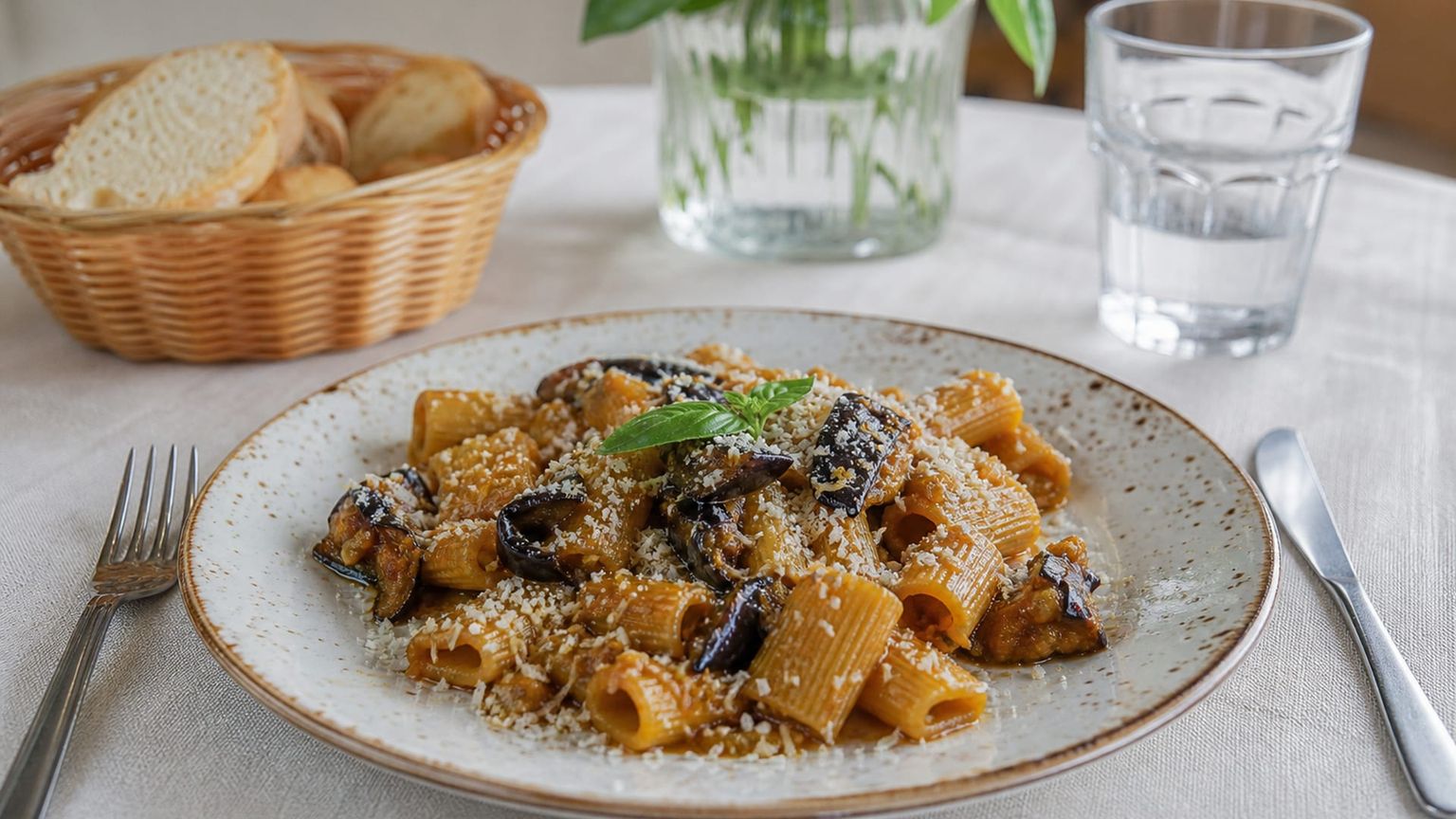
Catania’s cooking leans on seafood, tomato, eggplant, and wheat, then adds bright citrus and Sicilian sweets. Arancini, Pasta alla Norma, Pasta con le sarde, and granita show up across cafés and trattorie, often at hours that fit the city’s late dining pattern.
Arancini
These saffron rice balls, usually filled with ragù or cheese, are one of the clearest Catania snacks to try between sights. Antica Trattoria I Principi, near the center, is a good canonical stop for a classic version.
Pasta alla Norma
Eggplant, tomato, ricotta salata, and basil define this Catania staple, and the balance depends on the sauce and the fry on the eggplant. Trattoria del Forestiero has a long local reputation for serving it well.
Pasta con le sarde
This Palermo-born pasta appears in Catania too, with sardines, fennel, pine nuts, and raisins giving it a deeper sweet-salty profile. Corte dei Biscari is a strong place to try a polished version in the historic center.
Granita
Granita is the city’s daytime pause, especially with brioche at breakfast, and almond or coffee versions are the safest first order. Caffè Sicilia in nearby Noto is famous, but in Catania, Pasticceria Savia is the classic stop for a city-center taste.
Best time to visit Catania
Catania shifts with heat and crowd levels, so spring and autumn often suit long walks best, while summer favors early starts and winter keeps museum days more comfortable.
Best for: Garden walks, square time, and open-air sightseeing
What you get: About 60°F to 75°F (16°C to 24°C), with moderate crowds and comfortable afternoons
Trade-offs: Late spring can bring stronger sun and busier weekends
Best for: Beach time, early museum visits, and late dinners
What you get: About 72°F to 91°F (22°C to 33°C), with the heaviest crowds and the warmest evenings
Trade-offs: Midday heat can shorten walking plans
Best for: Balanced sightseeing, food stops, and city walks
What you get: About 63°F to 79°F (17°C to 26°C), with lighter crowds after early September
Trade-offs: Rain can interrupt the occasional day in late autumn
Best for: Museum time, café breaks, and lower room rates
What you get: About 50°F to 63°F (10°C to 17°C), with the quietest streets and fewer visitors
Trade-offs: Some beach spots and seasonal venues scale back hours
A realistic 5-day plan in Catania
The five-day plan follows the city’s shape rather than forcing a long checklist. It begins in the historic center, moves through the Benedictine core and the castle, then leaves room for a garden day, a neighborhood walk, and an easy final morning.
Land at Catania Airport (CTA), then take a taxi into Centro Storico for roughly 15 to 20 minutes and about $25 to $35, or bus if you want a cheaper option with a longer ride. Stay near Piazza del Duomo or on a side street off Via Etnea, so your first evening stays close to cafés and a simple dinner. Aim for water, a short walk past the square if you still have energy, and an early plate of pasta or seafood before an easy night.
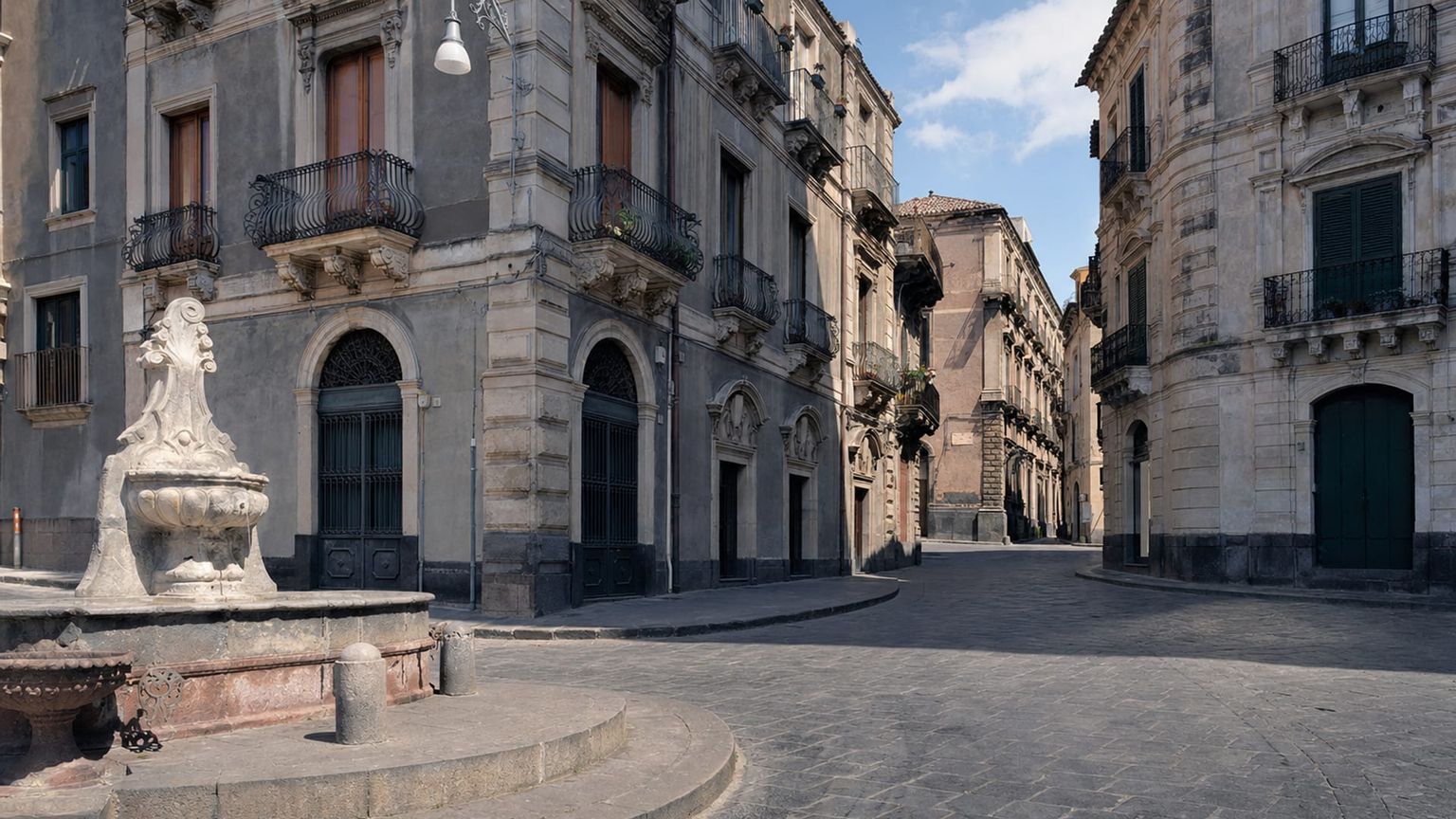
Begin in Piazza del Duomo and Catania Cathedral, about 1 to 2 hours, then walk roughly 5 minutes to the Museo Diocesano di Catania for the rooftop terrace and about 1 to 2 hours inside. From there, continue about 10 minutes on foot to Giardino Bellini for a shaded break and city views, then head about 15 minutes back toward the center for dinner near the market streets. This route keeps the historic core tightly grouped, with the lava-stone square, church museum, and garden all within a compact loop.
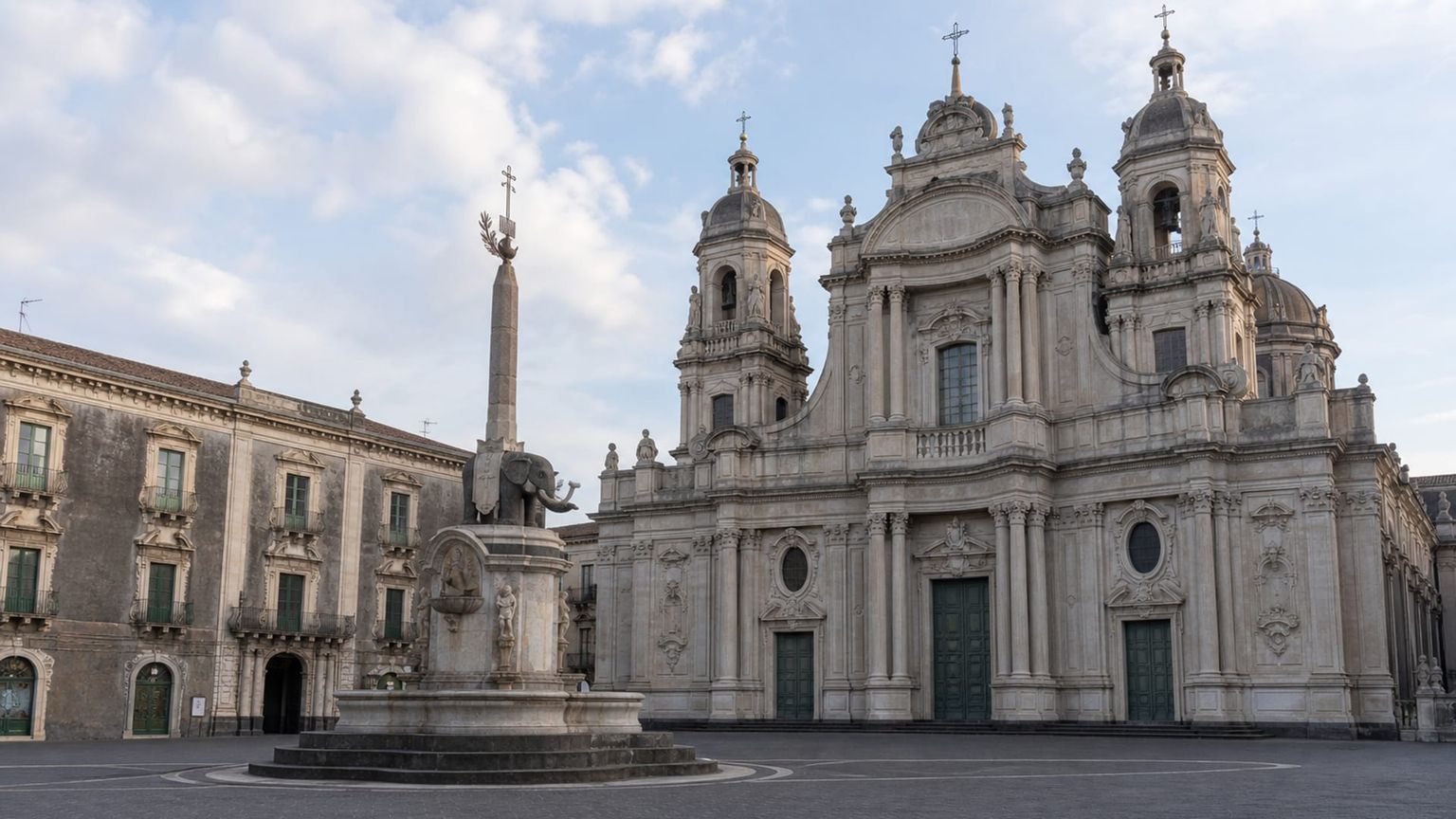
Start at the Monastery of San Nicolò l’Arena, where the cloisters and stairways take about 1 to 2 hours, then walk roughly 12 minutes to Castello Ursino for the civic museum and basalt walls, another 1 to 2 hours. After the castle, linger in the streets between the old port and the center for lunch, then return to Centro Storico on foot in about 10 to 15 minutes for a slower afternoon coffee. The day pairs Catania’s grand Benedictine complex with its medieval fortress, both anchored by lava stone and easy walking distance.
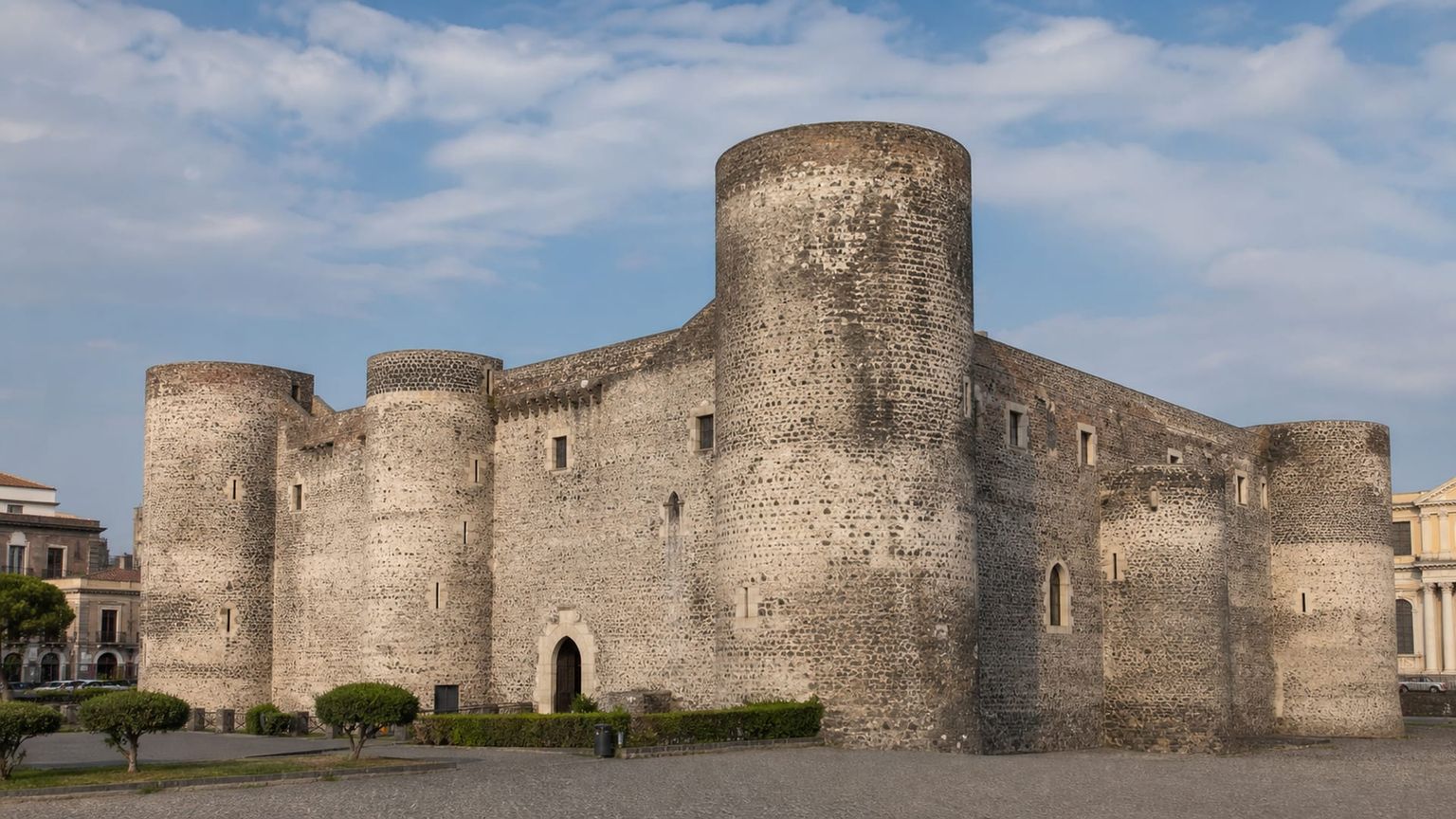
Head to Giardino Bellini early if you want cooler air, then spend about 1 hour on the terraces before moving on to the broader axis of Via Etnea, about 5 minutes away on foot. From there, treat the rest of the day as a neighborhood walk through Borgo-Sanzio, where local cafés and everyday streets give you a sense of the city beyond the main monuments; buses and taxis back to the center usually take about 10 to 15 minutes. Finish with dinner in the historic center or near Via Etnea, depending on where you want to sleep that night.
For a final morning, fit in one last stop at the Museo Diocesano di Catania if you missed it earlier, then spend the rest of the day browsing Via Etnea for shops and small purchases before a coffee stop in Borgo-Sanzio. If you prefer the coast before you go, a late walk in Ognina adds harbor views and an easy seafood lunch without forcing a long museum visit. Keep your luggage timing simple, then head back toward Catania Airport (CTA) with enough room for traffic near departure time.
Business-class flights from the US to Catania
Catania usually requires a connection from both New York and Los Angeles, but the route choices differ enough to shape the fare. The examples below show how hub choices and total travel time affect the final price.
From New York (JFK), ITA Airways, Lufthansa, Turkish Airlines, Air France, and Swiss International Air Lines all appear on the route mix, with total travel time typically about 11 to 12 hours on the nonstop option when available. If you do not mind a layover, common routings via Frankfurt (FRA), Munich (MUC), or Istanbul (IST) often cut the fare to about $1,300 to $2,800, while round-trip fares usually start at $2,200 and can reach $5,500.
Los Angeles travelers usually connect, and the trip from Los Angeles (LAX) to Catania (CTA) commonly takes about 15 to 21 hours. Lufthansa, Turkish Airlines, Air France, Swiss International Air Lines, and ITA Airways all appear on the route map, with round-trip fares generally running from $2,600 to $6,200, and the lower end usually tied to one-stop itineraries through European or Turkish hubs.
Catania feels different when you slow down
A deliberate Catania trip gives each district its own role: Piazza del Duomo for the first read on the city, Giardino Bellini for shade and distance, Castello Ursino for the medieval layer, and Borgo-Sanzio for ordinary streets and coffee. Use walking for the center, the Alibus for the airport, and taxis when you want a cleaner end to the day. If you want help shaping the route, the AranGrant experts can turn this outline into a tighter Catania stay







