

Chapters:

Need help with your trip?
Our support team is available 24/7. Request a callback or call us directly at (833) 619-0908
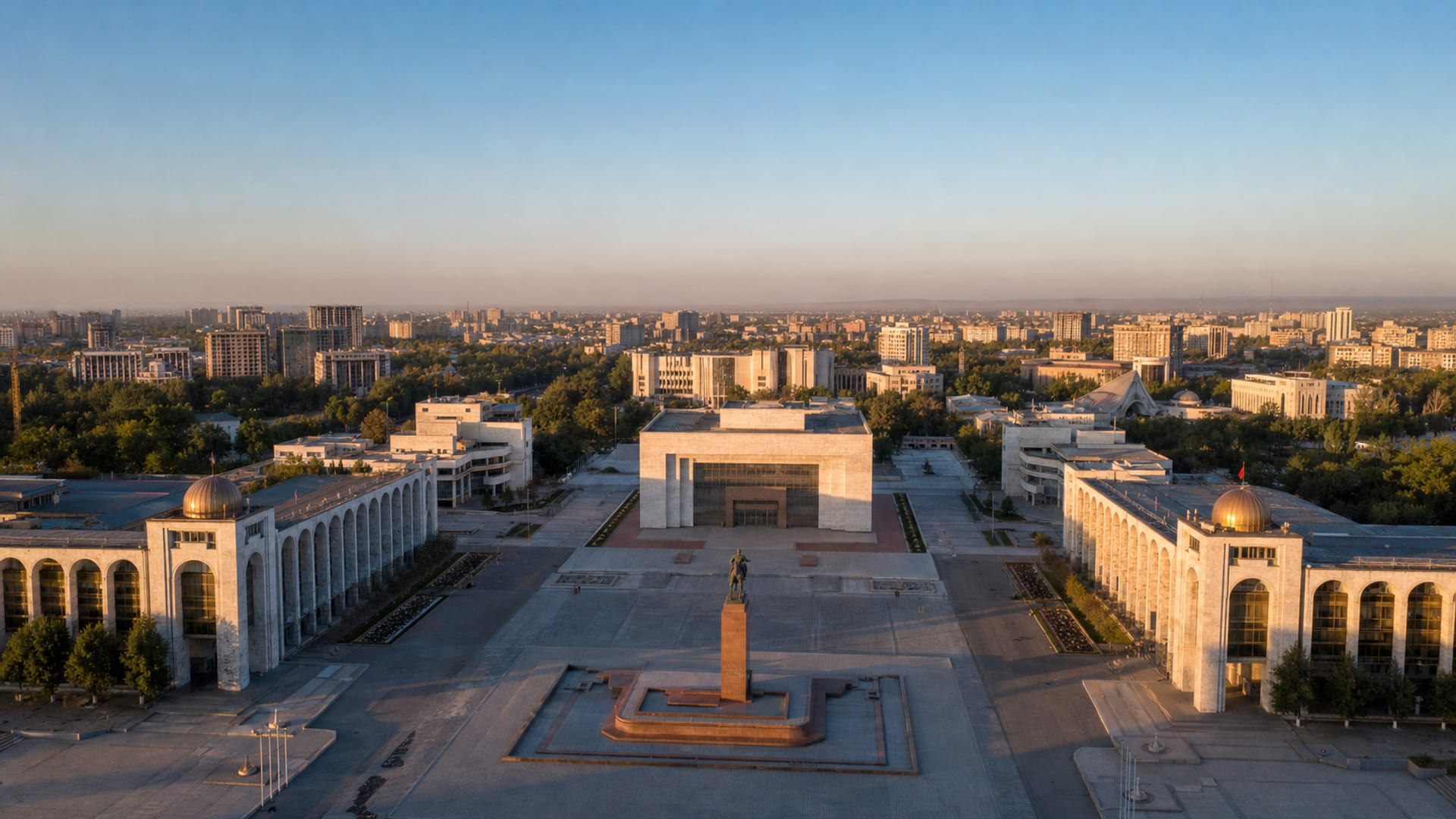
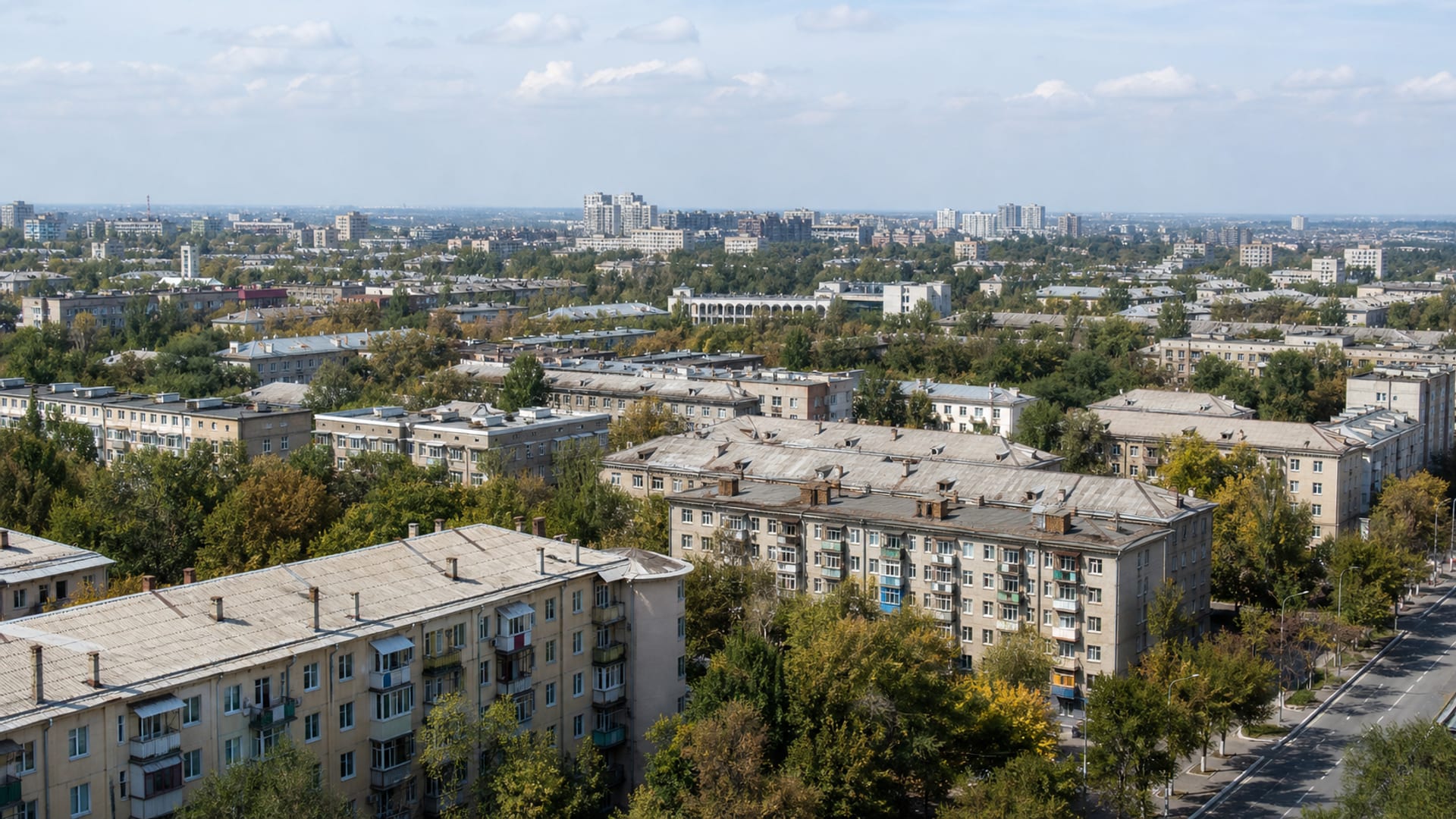
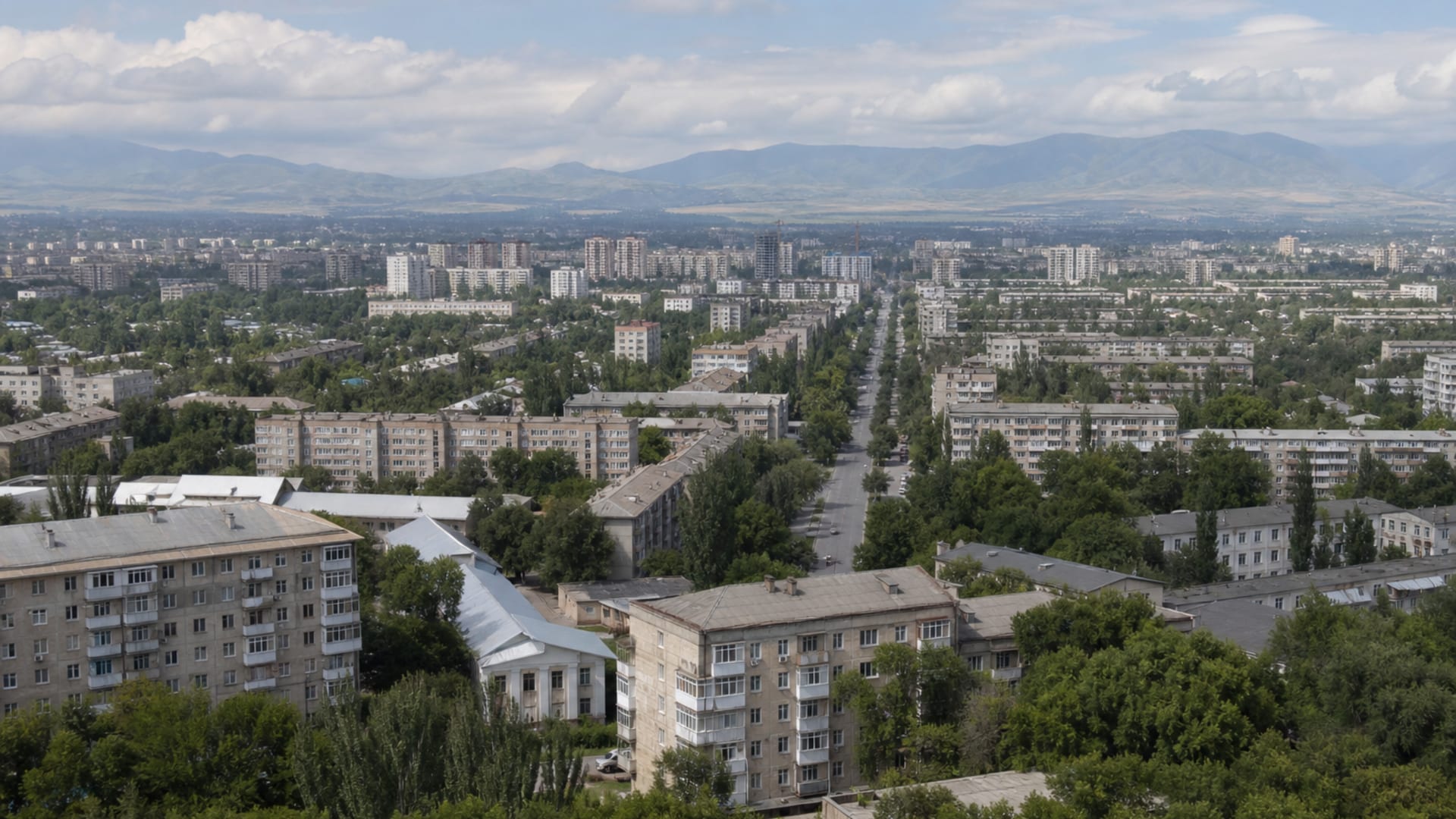
Bishkek combines broad Soviet-era avenues, leafy parks, busy bazaars, and residential districts with the mountains visible beyond the city. The center holds many of the main museums and civic landmarks, while markets, restaurants, and quieter neighborhoods spread farther out.
That layout makes planning more important than the map first suggests. Bus routes and ride-hailing handle the longer links, while the central grid is easier to explore in smaller sections instead of crossing the city repeatedly.
This guide covers where to stay, how to get around, what to eat, and how to organize five days in Bishkek with one mountain trip beyond the city.
Useful things to know

Main language(s): Kyrgyz, Russian
Салам (sah-LAHM) – Hello
Сураныч (soo-RAH-nych) – Please
Рахмат (rahk-MAHT) – Thank you
Сиз англисче сүйлөйсүзбү? (seez ahng-LEES-cheh shoo-LOI-sooz-boo) – Do you speak English?
Бул канча турат? (bool KAN-cha too-raht) – How much does it cost?

Currency: Kyrgyzstani som (KGS, с)

Cash and cards: Cards are widely accepted in hotels, restaurants, and larger shops, but carry KGS 1,500 to KGS 3,000 ($17 to $35) for bazaars and smaller purchases.

Tipping: Tipping is voluntary; round up small bills or leave 5% to 10% for good restaurant service.

Traditional food: Beshbarmak, laghman, manty, and shorpo are among Kyrgyzstan’s best-known traditional dishes.

Water and coffee costs: Bottled water usually costs KGS 60 ($0.70), while an espresso typically costs KGS 120 ($1.40).

Taxis and ride apps: Yandex Go and inDrive operate in Bishkek; check the plate and driver details in the app before boarding.

Plug and voltage: Type C/F socket, 220V, 50Hz

Dining and shop opening hours: Many cafés open from 8:00 am, while restaurants commonly stay open into the evening. Market and shop hours vary by district and day.

Emergency number: Dial 112 for general emergencies, 102 for police, 103 for ambulance, or 101 for fire and rescue.
Where to stay in Bishkek
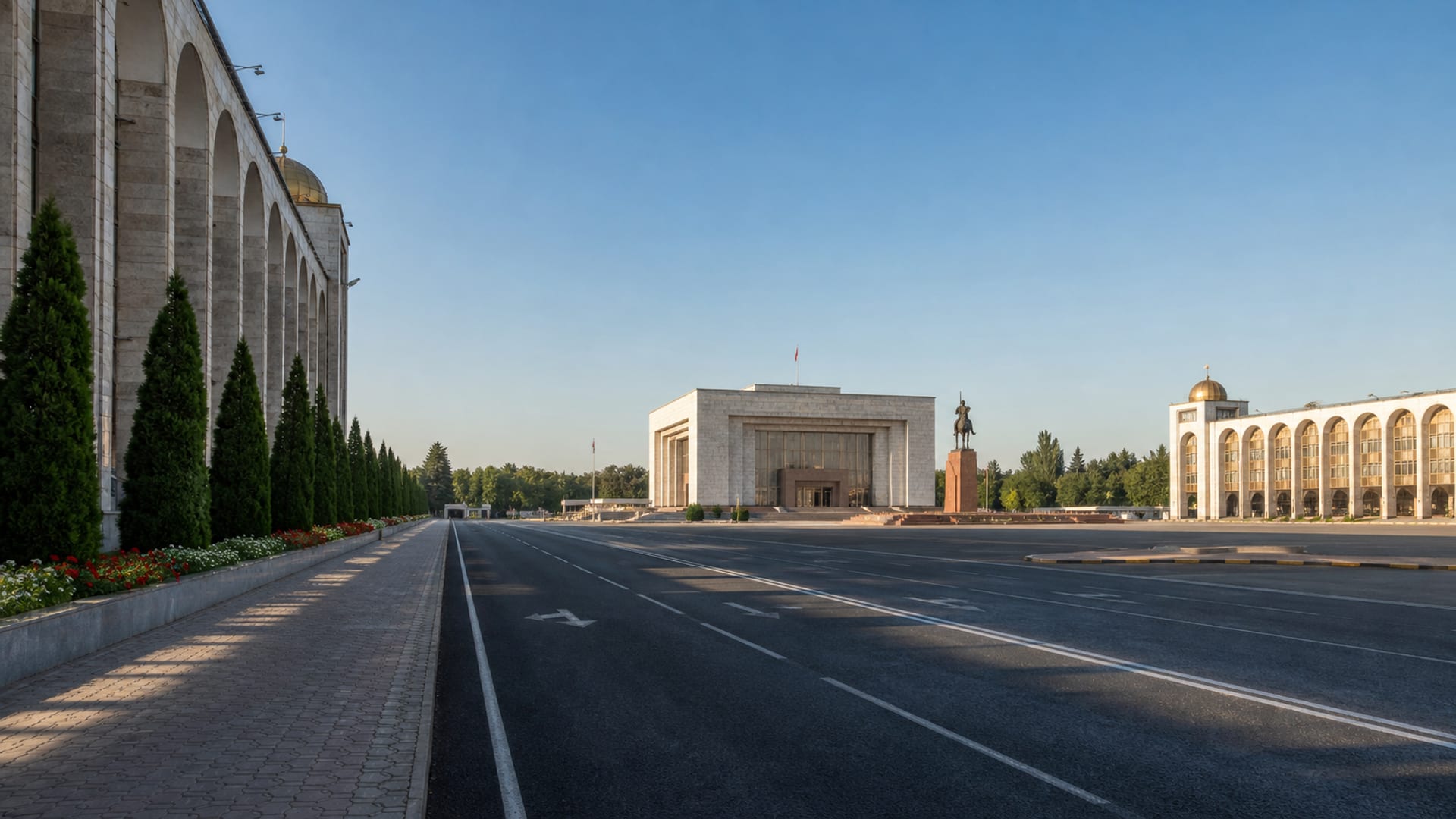
Chui Avenue and Ala-Too Square are at the heart of central Bishkek, close to government buildings, museums, cafés, shops, and major public spaces. It suits first-time visitors who want the city’s main landmarks within easy walking distance.
Best for: First-time visits, sightseeing, and walking to central landmarks
What to expect: Wide avenues, cafés, shops, office traffic, and steady activity during the day
Hotel prices: Well-rated hotels generally cost KGS 5,200 to KGS 12,200 ($60 to $140) per night.
Distance to major sights: 5 to 10 minutes on foot to Ala-Too Square and 10 to 15 minutes to the State History Museum
Quietness: Busy during the day, with less activity on side streets later in the evening
Main trade-off: Central rooms cost more, and avenue-facing hotels can pick up traffic noise.
Good to know: Choose a side-street hotel if you want central access without sleeping directly above the busiest roads.
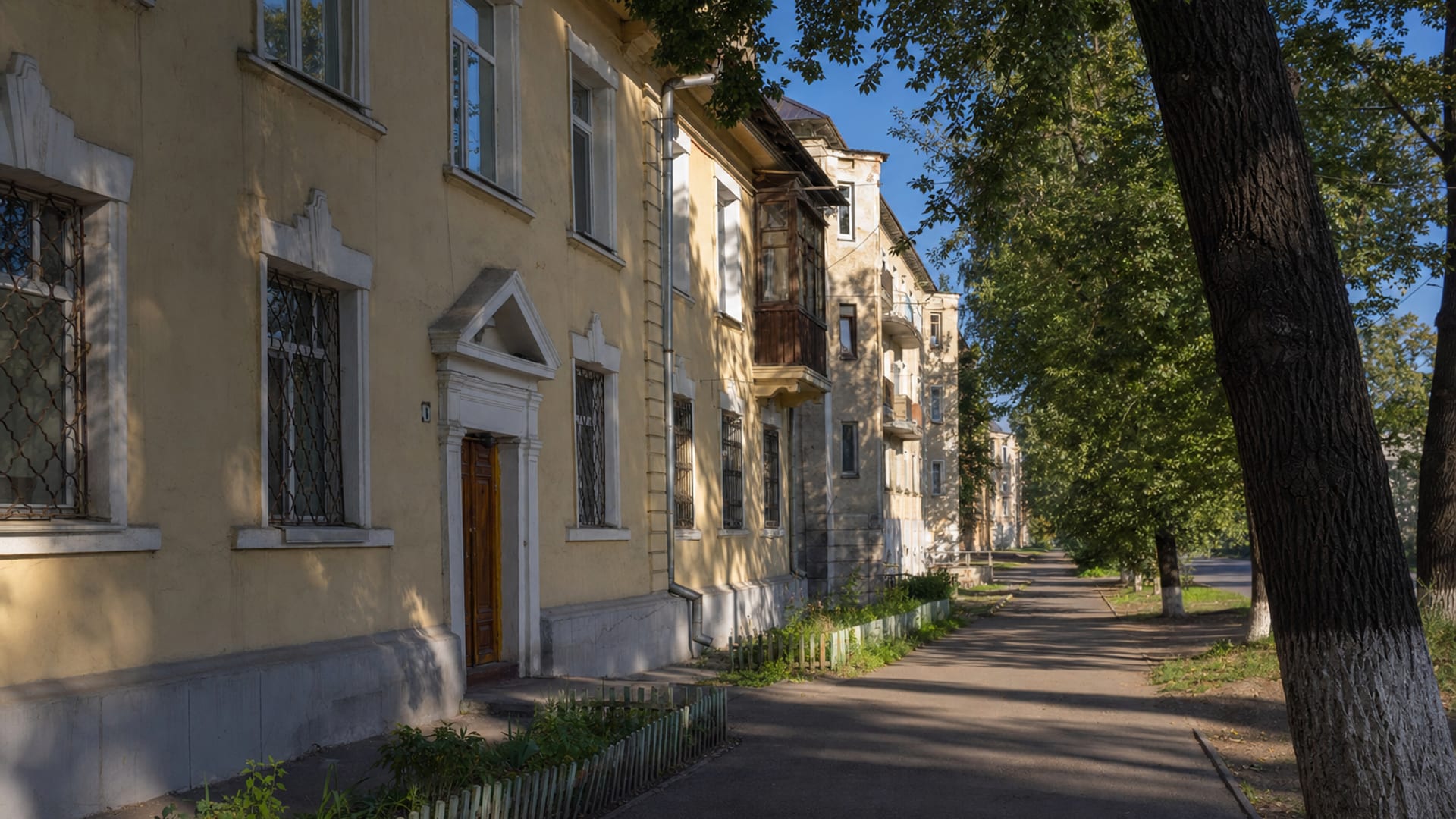
Sverdlov District extends east and northeast of central Bishkek, with residential blocks, local shops, markets, and several main roads leading back toward the center. It suits longer stays and travelers who prefer a more residential setting.
Best for: Longer stays, local dining, and travelers comfortable using taxis or buses
What to expect: Apartment blocks, neighborhood shops, local restaurants, and fewer tourists than central Bishkek
Hotel prices: Nightly rates usually range from KGS 3,000 to KGS 7,000 ($35 to $80).
Distance to major sights: 10 to 20 minutes by car to Ala-Too Square, depending on the exact location
Quietness: Quieter than the central avenues, especially on residential side streets
Main trade-off: Most sightseeing days require a taxi or bus into the center.
Good to know: Stay near a major road if you want easier pickups and simpler evening returns.
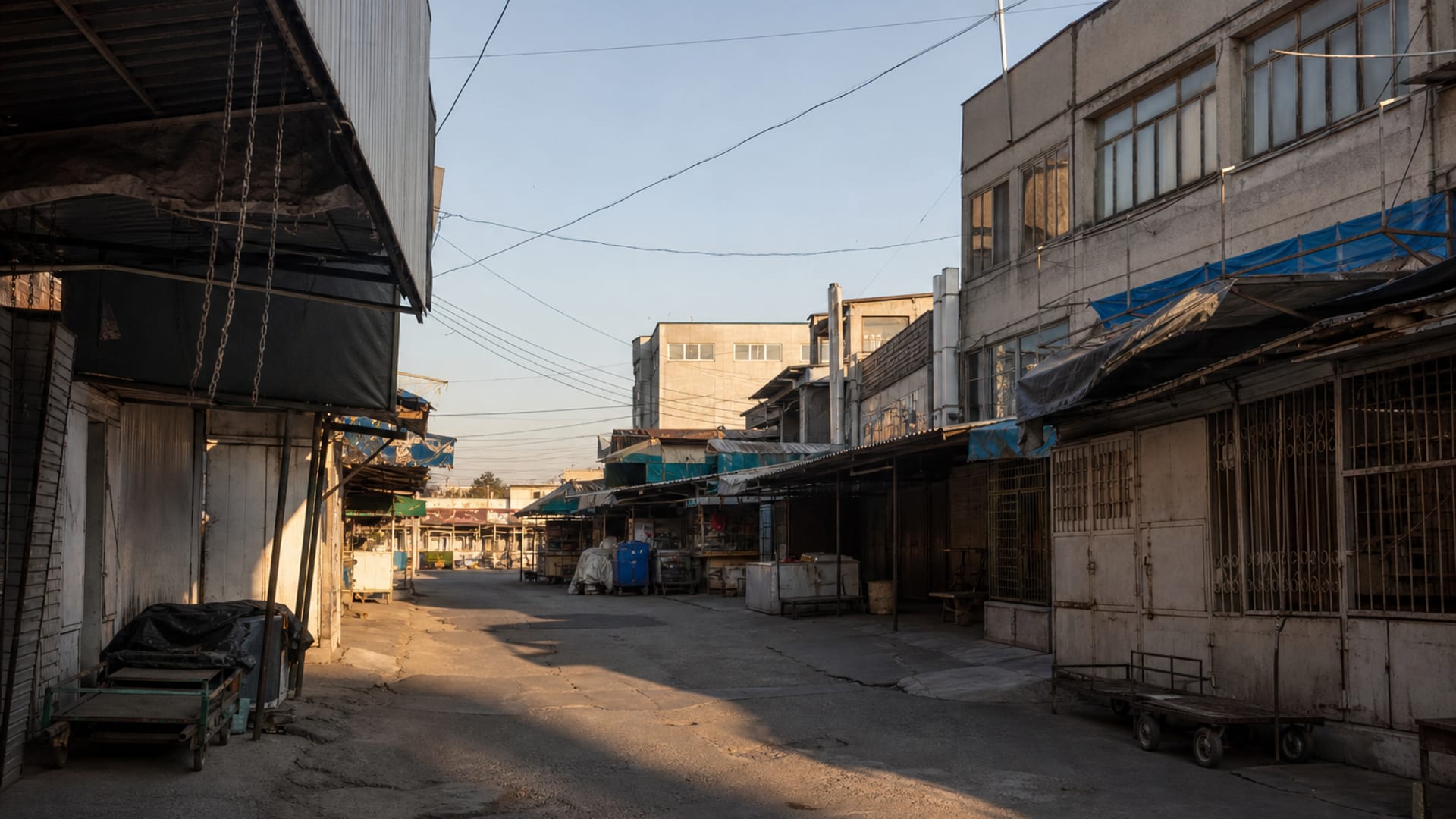
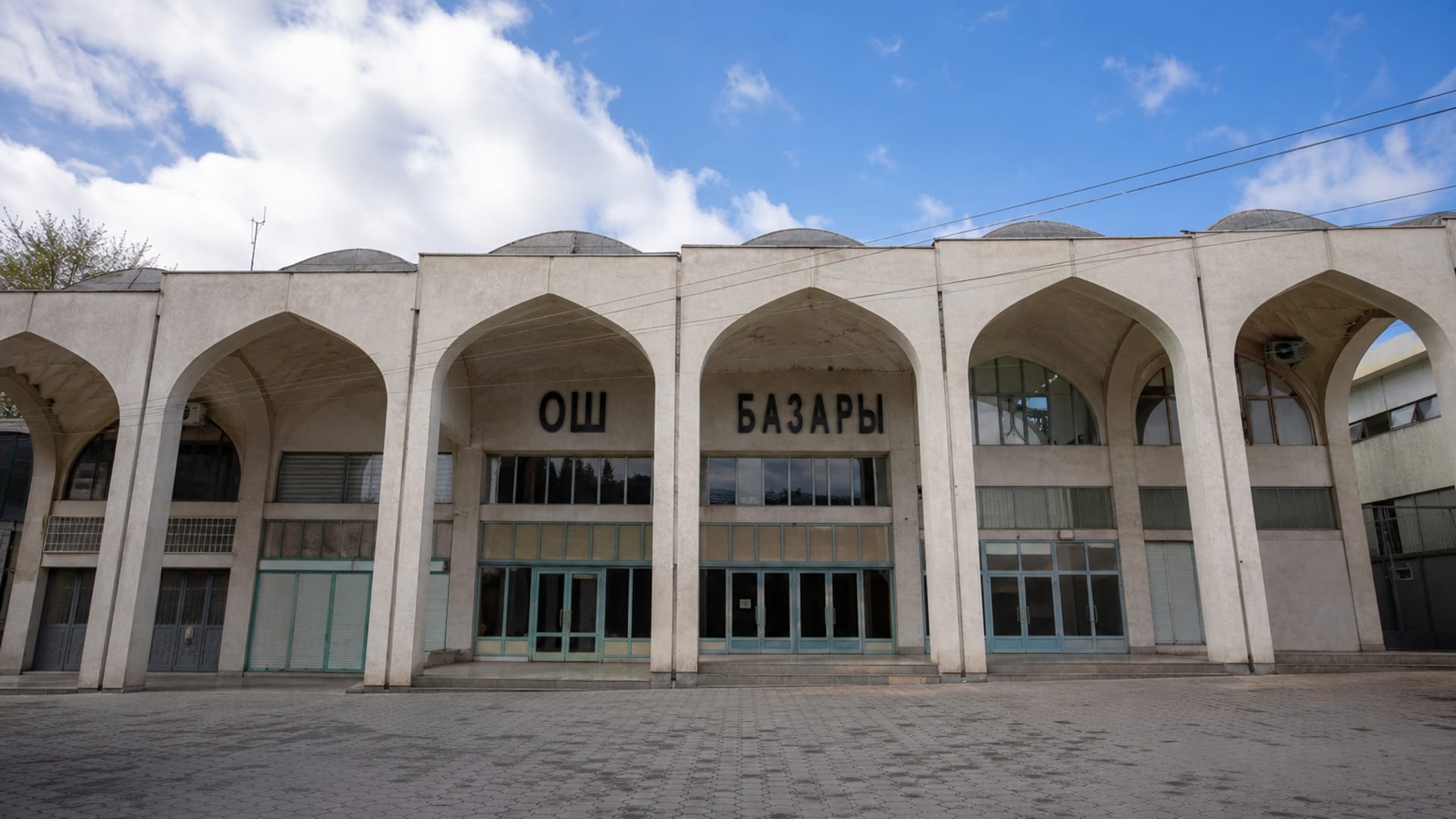
The streets around Osh Bazaar combine market halls, produce stalls, shops, transport stops, and budget accommodation. It suits travelers who want immediate access to one of Bishkek’s busiest commercial areas and do not mind daytime noise.
Best for: Market visits, lower hotel prices, and access to everyday shopping
What to expect: Heavy daytime foot traffic, vendors, buses, and constant activity around the market
Hotel prices: Expect to pay KGS 2,200 to KGS 5,200 ($25 to $60) per night.
Distance to major sights: 10 to 15 minutes on foot to Osh Bazaar and 15 to 25 minutes by car to Ala-Too Square
Quietness: Loud during market hours, then considerably quieter after stalls close
Main trade-off: The area is less convenient for evening walks around Bishkek’s main sights.
Good to know: Look for rooms away from the market-facing streets if early deliveries or traffic noise concern you.
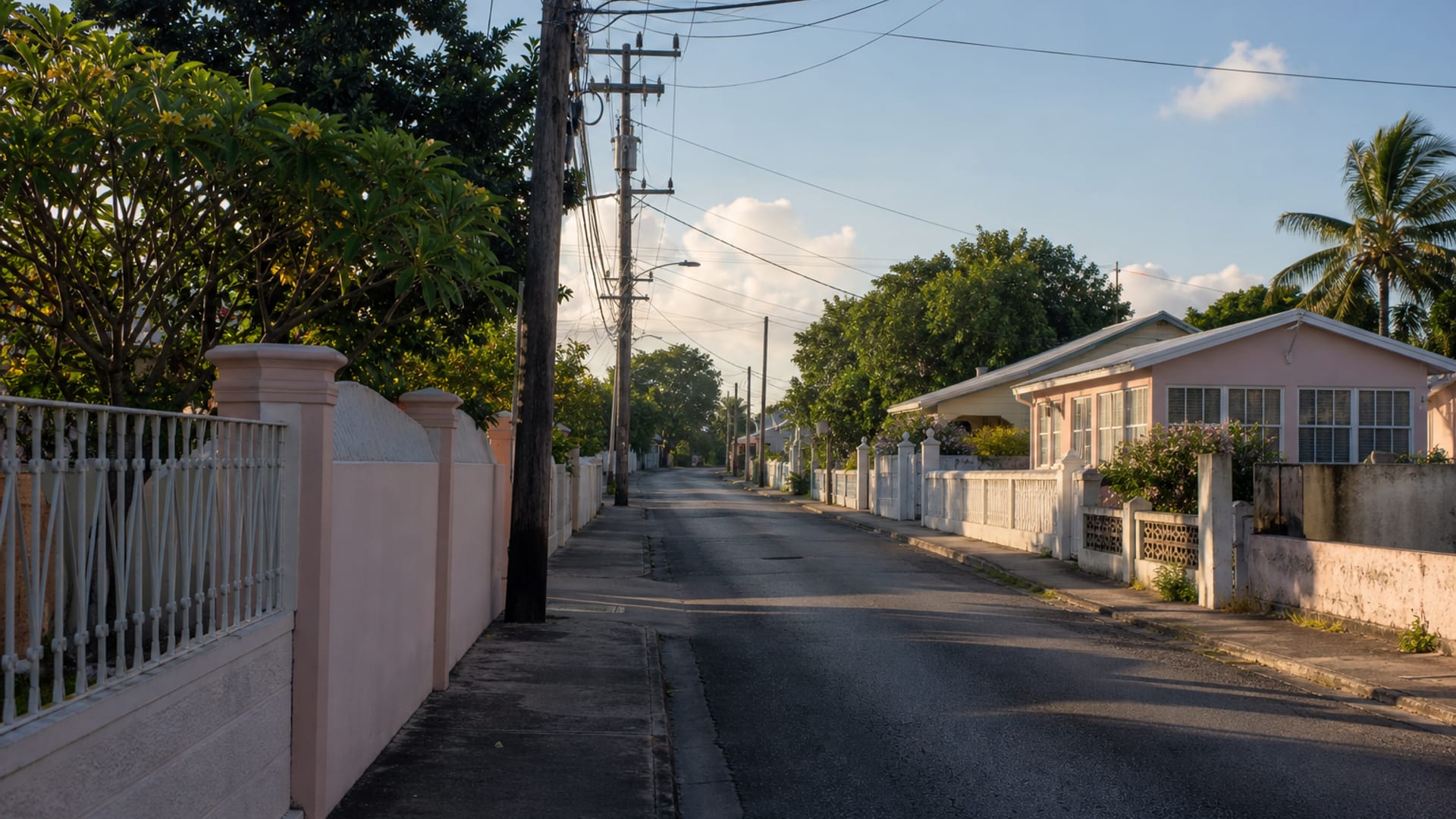
South Bishkek has newer apartment blocks, residential streets, cafés, and more open space than the central grid. It suits families and longer stays when more space matters more than walking to the main monuments.
Best for: Families, longer stays, and travelers who prefer more residential surroundings
Best for: Families, longer stays, and travelers who want more space than the downtown core offers
What to expect: Apartment buildings, neighborhood cafés, supermarkets, and fewer tourists than downtown
Hotel prices: Hotels in this area generally charge KGS 3,500 to KGS 8,300 ($40 to $95) per night.
Distance to major sights: 15 to 30 minutes by car to Ala-Too Square, depending on traffic and location
Quietness: Residential streets are generally quieter than the central avenues.
Main trade-off: Restaurants and major sights are more spread out, so most outings require a ride.
Good to know: This area suits travelers who are comfortable using Yandex Go or inDrive for most trips.
The far western industrial areas and outer southern suburbs are less practical for a first stay because they add regular travel time to Ala-Too Square, museums, restaurants, and the main central parks.
Hotel deals
How to get around Bishkek efficiently
Bishkek has no metro, so most visitors rely on buses, marshrutkas, and app-based taxis for longer trips beyond the central grid.

Bus
for low-cost city travel
Municipal buses cover central Bishkek and most residential districts. Standard fares are generally KGS 17 ($0.20), with higher cash fares on some services. Pay using the accepted onboard payment method and check current routes before leaving.

Marshrutka
for flexible local routes
Marshrutkas (local minibuses) and smaller buses serve many routes beyond the main municipal routes. Fares are about KGS 20 ($0.25), and route numbers are displayed on the vehicle. Travel times vary considerably with traffic and stopping frequency.

Taxi
for convenience or late hours
Yandex Go and inDrive are widely used for city trips, airport transfers, and late-night rides. Fares are shown or agreed before departure and vary with traffic and demand. Use the in-app driver and vehicle details before boarding.
*Prices are based on rates updated as of June 2026 and may change at the time of travel.
Use buses for the lowest-cost trips, marshrutkas for routes beyond the main bus network, and app-based taxis for trips with luggage, late at night, or across the city.
Iconic landmarks
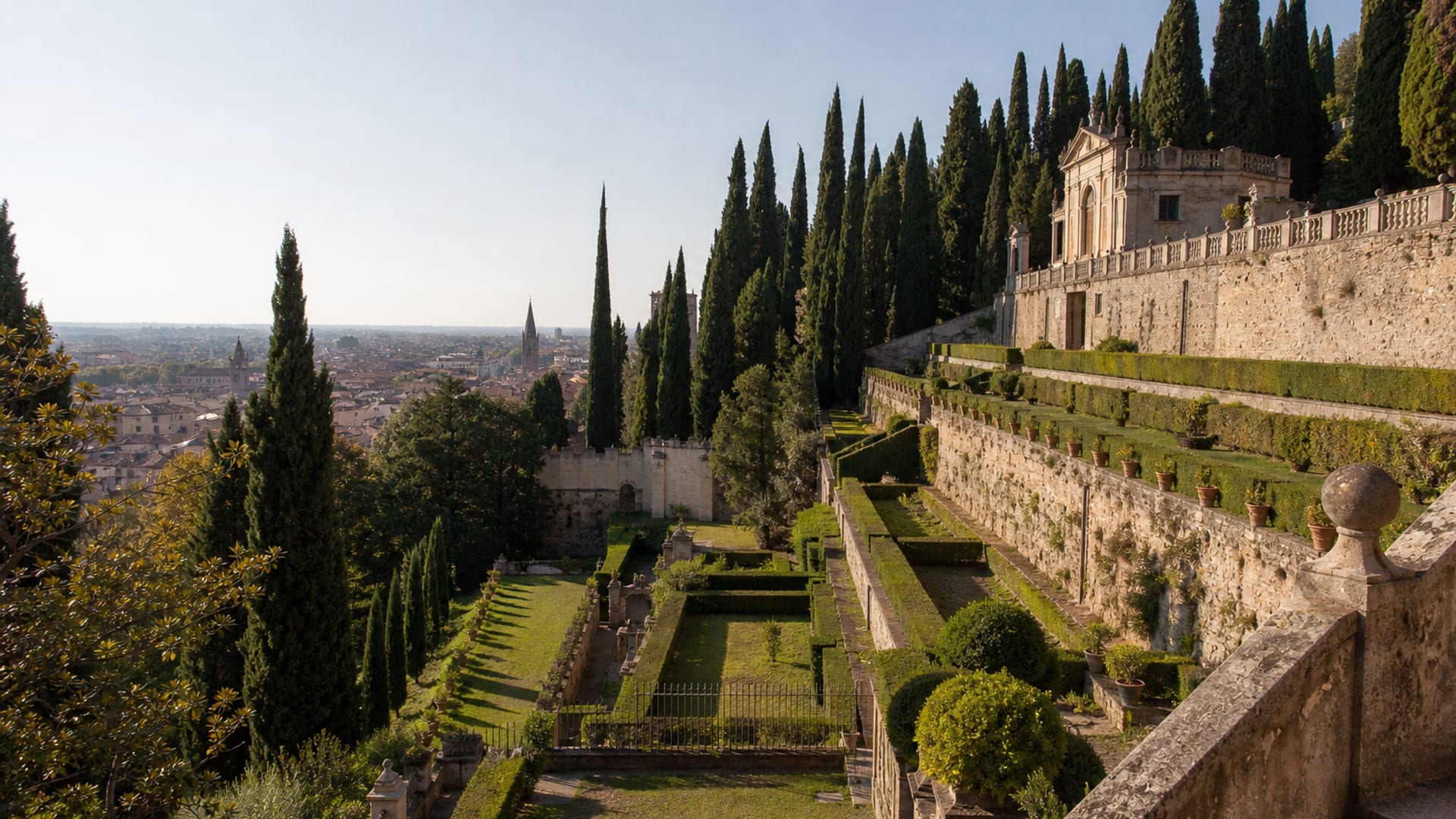
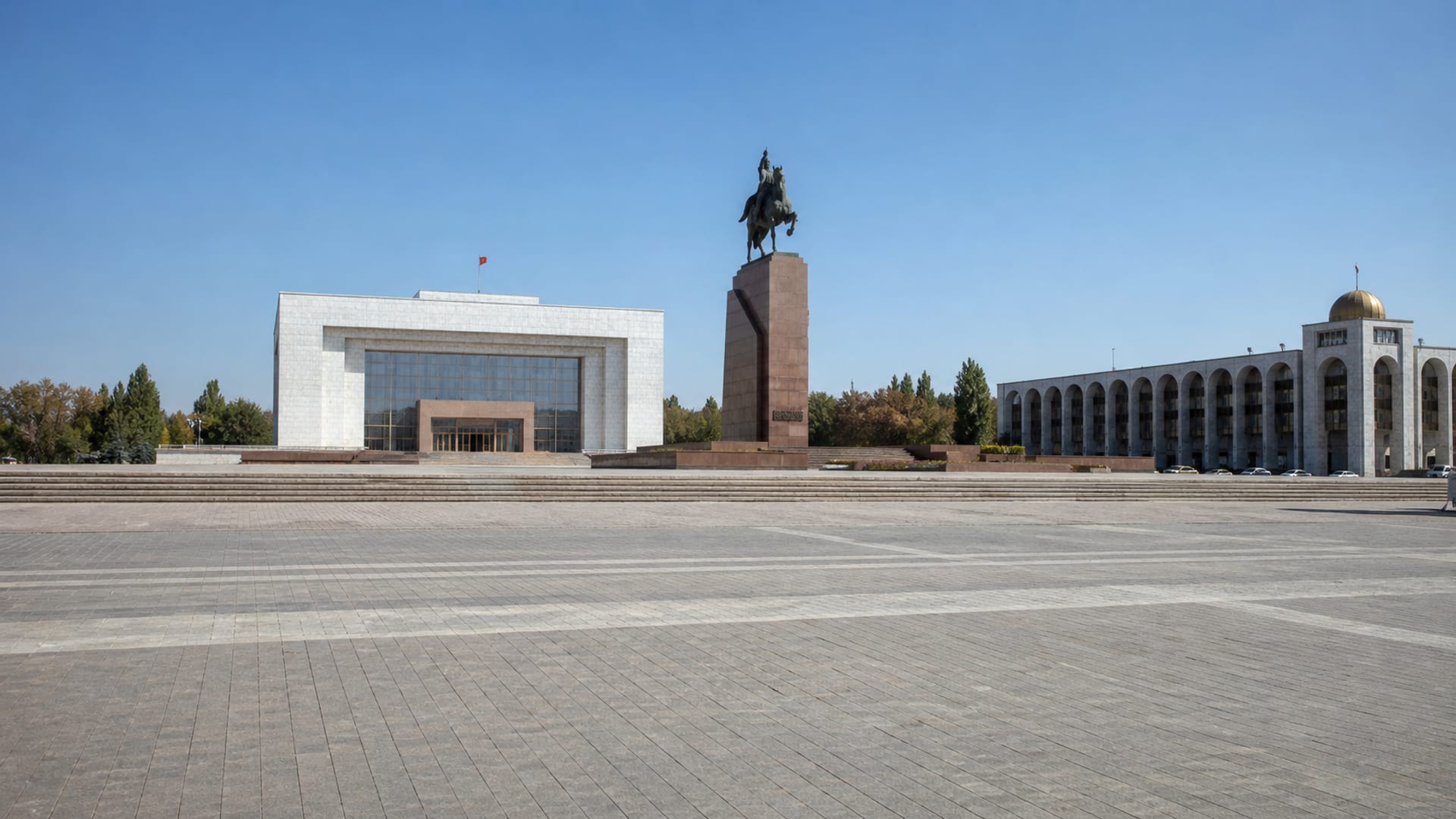
Ala-Too Square
Ala-Too Square forms the civic heart of Bishkek, with broad paving, fountains, the State History Museum, and the city’s 328-foot (100-meter) national flagpole. It is one of the easiest places to see the capital’s monumental Soviet-era layout.
Time needed: 45 minutes to 1 hour
Entry: Free; nearby museums charge separately.
Tip: Visit in the late afternoon, then stay as the square lights come on.
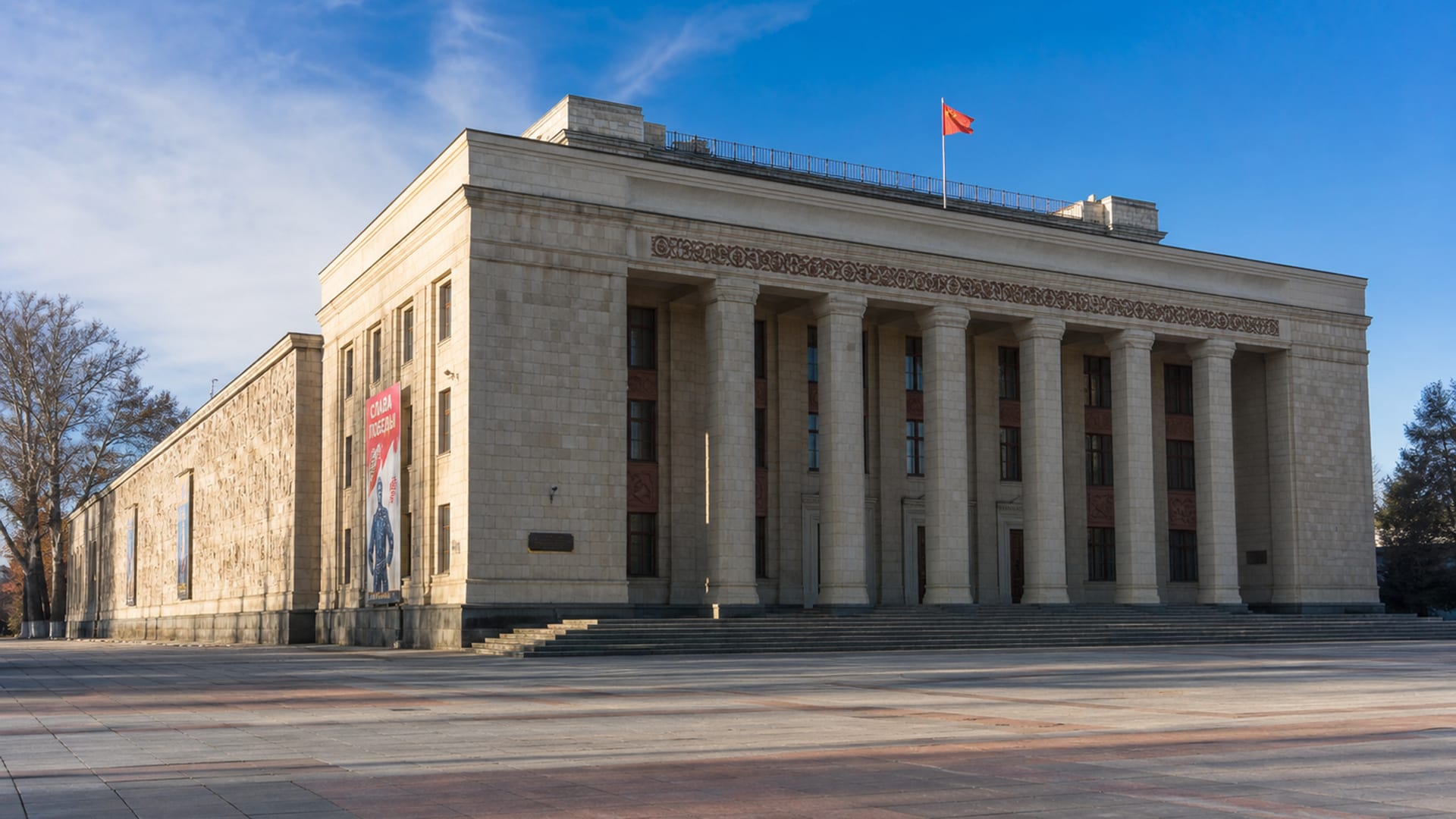
State Historical Museum
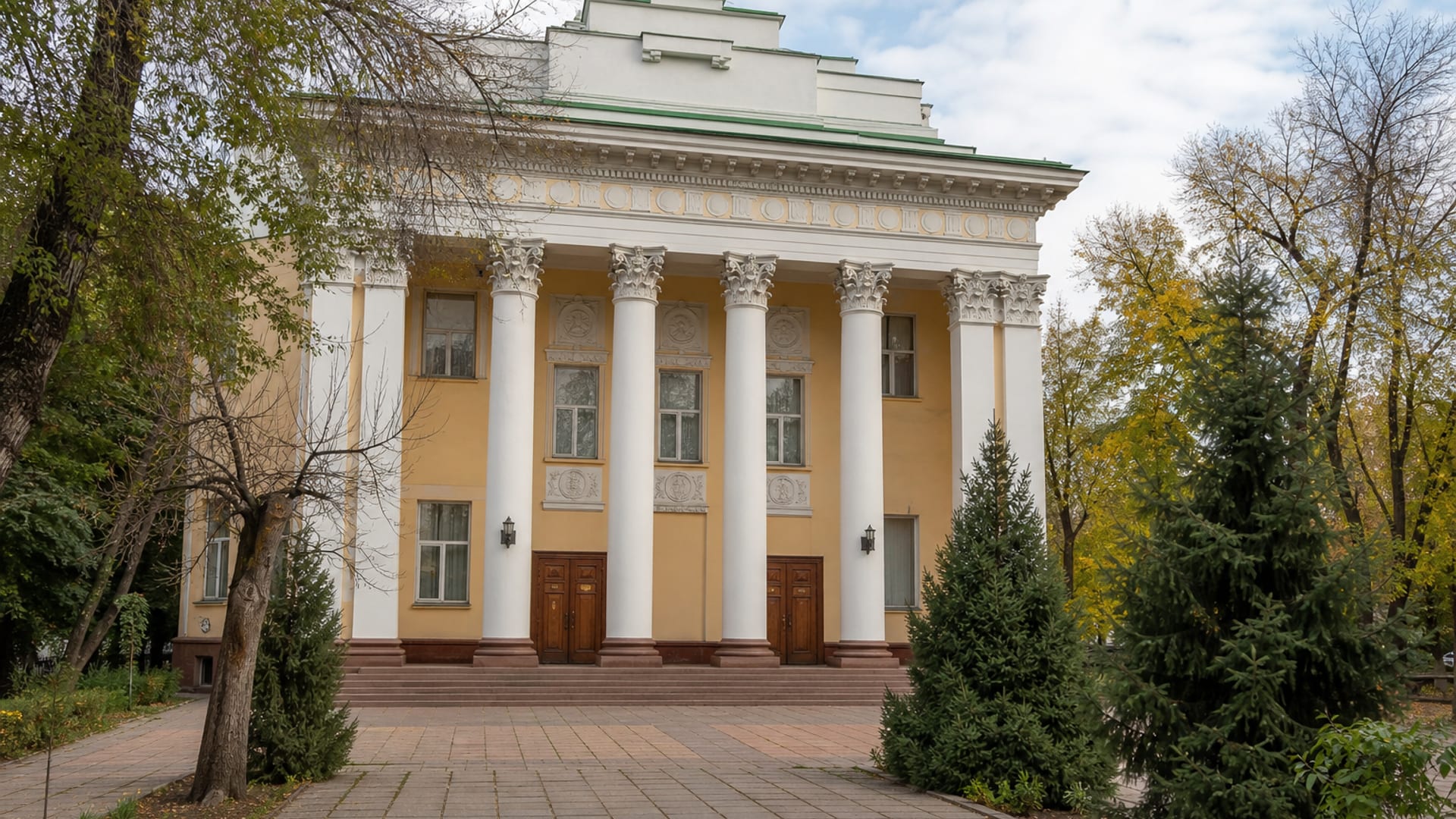
Facing Ala-Too Square, the State History Museum traces Kyrgyz history through nomadic culture, Soviet rule, and the independence period. Its location directly beside Ala-Too Square makes it easy to combine with the city’s main civic landmarks.
Time needed: 1 to 2 hours
Entry: Adult admission costs KGS 200 ($2.30). Visit the official website for more details.
Tip: Visit earlier in the day for quieter galleries.
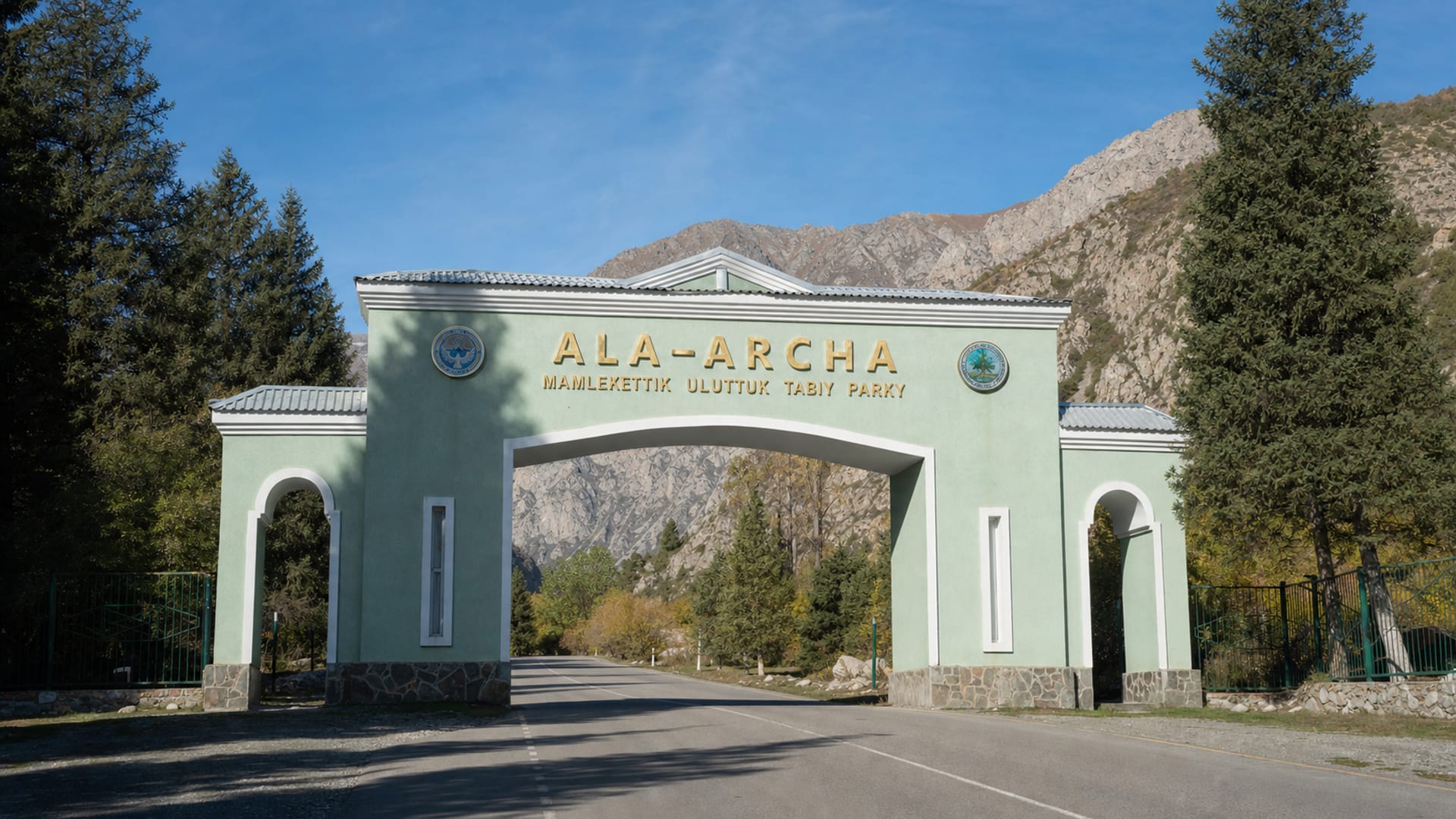
Ala-Archa National Park
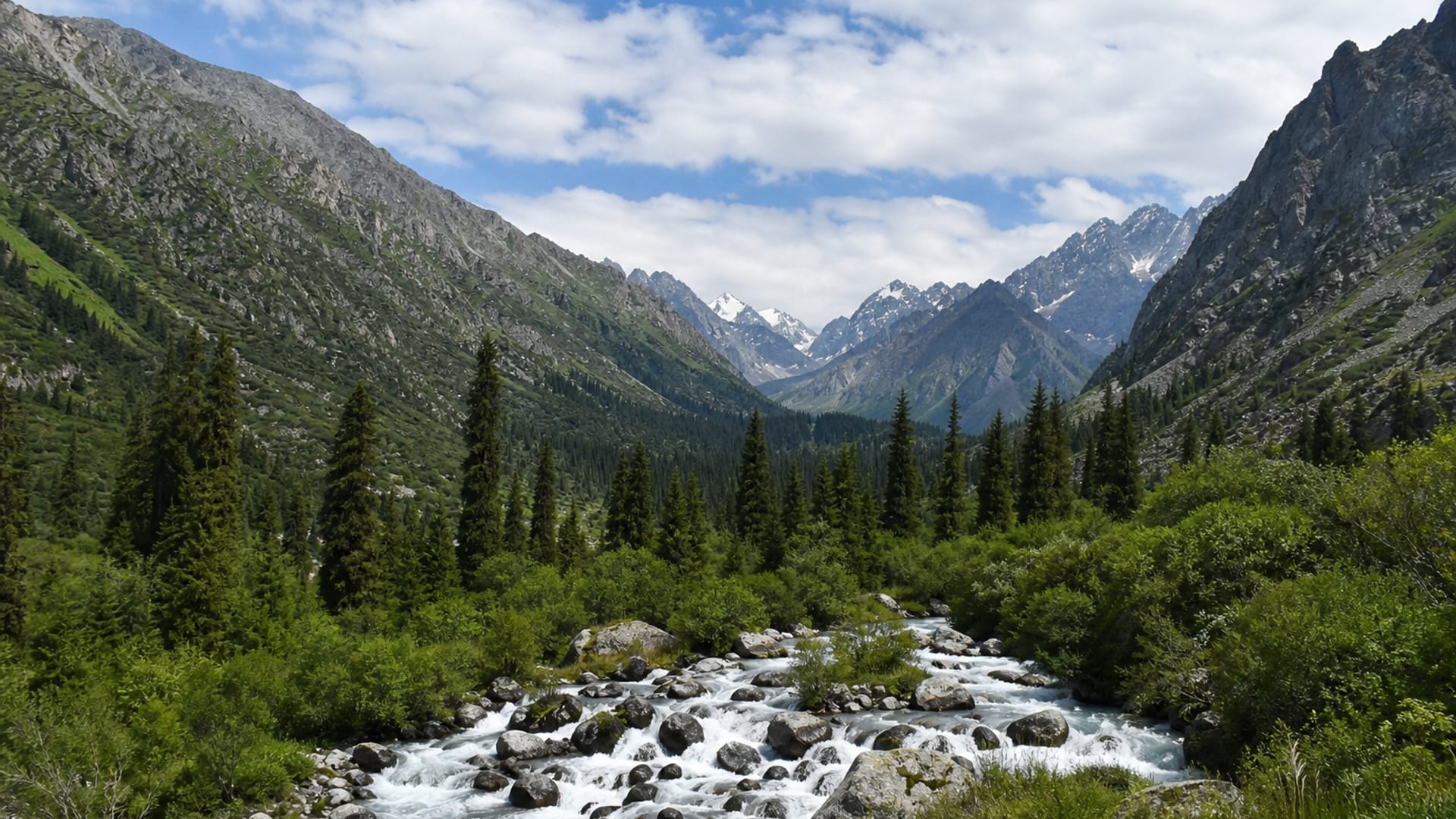
Ala-Archa National Park lies south of Bishkek and brings alpine valleys, river scenery, picnic areas, and marked hiking routes within easy reach of the capital. It is the most practical mountain outing to add to a short city stay.
Time needed: 3 to 5 hours
Entry: Adult admission costs KGS 250 ($3). Visit the official site for details.
Tip: Start early, especially on weekends when the entrance and trailheads become busier.
Overlooked sites worth visiting

Ala-Too Square
Bishkek’s main square opens onto mountain views and the State History Museum facade, with changing statues, fountains, and plenty of benches for a slow pause between walks.
Time needed: 1 to 2 hours
Entry: Free
Tip: Visit before noon, when the produce and food stalls are busiest.

Osh Bazaar
Osh Bazaar is one of Bishkek’s busiest markets, with bread, dried fruit, spices, household goods, textiles, and produce filling a dense network of stalls. The stalls give a direct look at everyday shopping and food culture in the capital.
Time needed: 45 minutes to 1 hour
Entry: Free
Tip: Visit in the morning or late afternoon for cooler paths and lighter foot traffic.
Traditional food
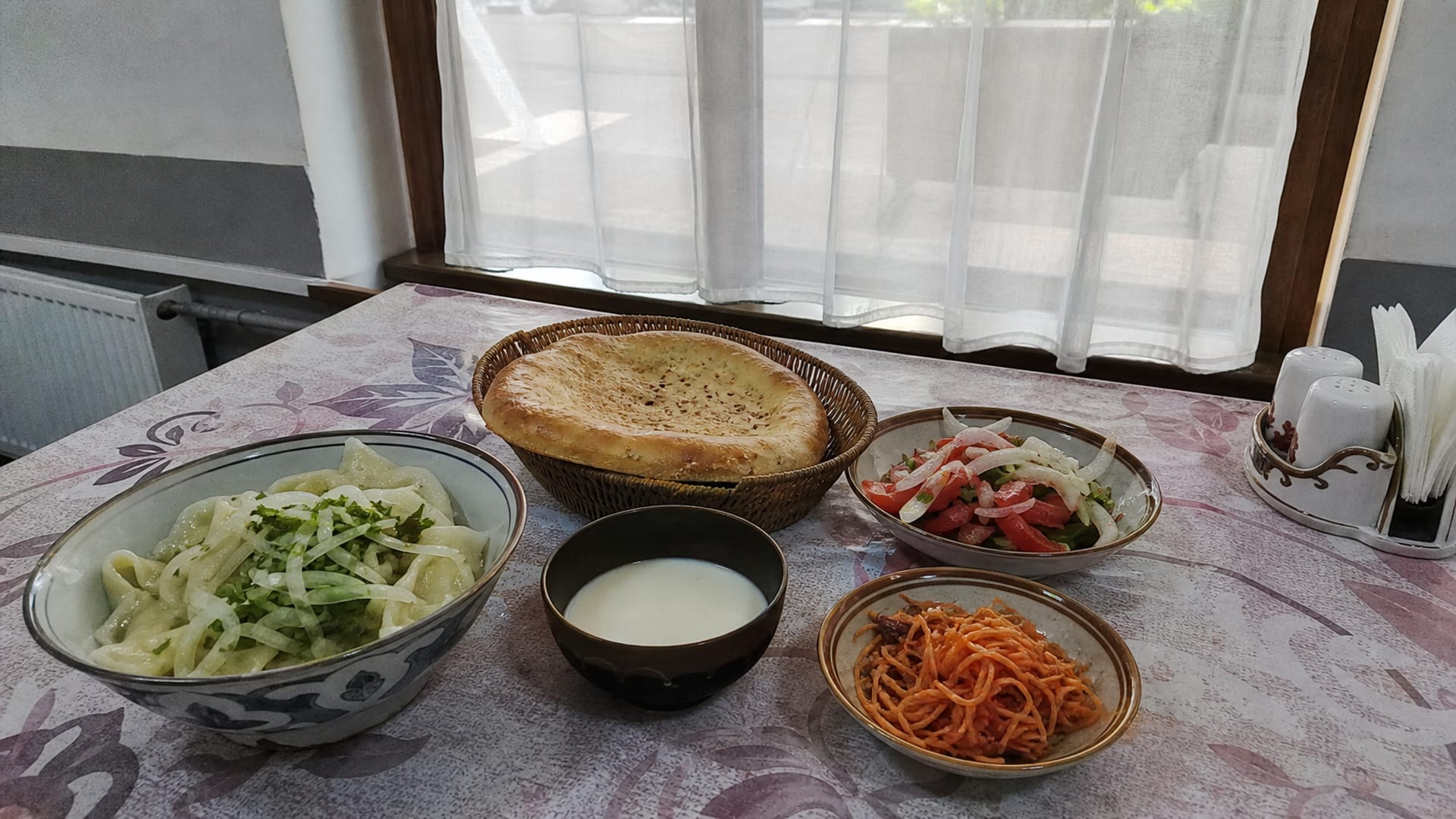
Bishkek’s food combines meat, noodles, broth, and dough, with beshbarmak, laghman, manty, and shorpo among the most familiar Kyrgyz and Central Asian dishes.
Beshbarmak
Beshbarmak combines boiled meat with hand-cut noodles and onion broth, usually served as a substantial shared meal. NAVAT offers several versions in Bishkek, including lamb, beef, and horse meat.
Laghman
Laghman uses hand-pulled noodles with meat, vegetables, and a seasoned sauce or broth. Arzu serves the dish alongside a broad selection of Kyrgyz and Central Asian classics.
Manty
Manty are steamed dumplings filled with seasoned meat and sometimes pumpkin or other vegetables. Faiza is one of Bishkek’s long-established places for traditional Kyrgyz dishes and serves meat-filled manty.
Shorpo
Shorpo is a clear meat broth with potatoes, vegetables, and herbs, commonly served as a warming first course. Pishpek serves a beef version with potatoes, carrots, tomatoes, peppers, and onion.
Best time to visit Bishkek
Bishkek has hot summers, cold winters, and sharp temperature changes in spring and fall. Late spring and early fall bring the best conditions for city walks and mountain trips.
Best for: City walks, museums, parks, and early-season trips to Ala-Archa
What you get: 34°F to 76°F (1°C to 24°C), with temperatures rising quickly and some of the year’s wettest weather
Trade-offs: March can still feel cold, while April and May bring more rain.
Best for: Mountain outings, long evenings, markets, and early sightseeing
What you get: 60°F to 90°F (16°C to 32°C), with hot, generally dry weather and the warmest days in July
Trade-offs: Afternoon heat makes exposed squares and longer city walks tiring.
Best for: City walks, outdoor dining, mountain views, and comfortable sightseeing
What you get: 31°F to 79°F (-1°C to 26°C), with warm September days followed by a quick cooling through October and November
Trade-offs: Temperatures can drop sharply later in the season.
Best for: Museums, cafés, local dining, and shorter sightseeing days
What you get: 19°F to 43°F (-7°C to 6°C), with cold mornings, lighter visitor numbers, and occasional snow or ice
Trade-offs: Short daylight hours and icy sidewalks limit longer outdoor plans.
A realistic 5-day plan in Bishkek
Five days give you enough time to explore Bishkek’s civic center, markets, parks, and mountain scenery. The first days stay within the central grid before the itinerary opens out toward Ala-Archa.
Land at Manas International Airport (BSZ), then take an airport taxi or Yandex Go to central Bishkek. The ride to the center usually takes 30 to 45 minutes and costs KGS 800 to KGS 1,000 ($10 to $12). Check in near Chui Avenue or Ala-Too Square, then keep dinner close to your hotel.
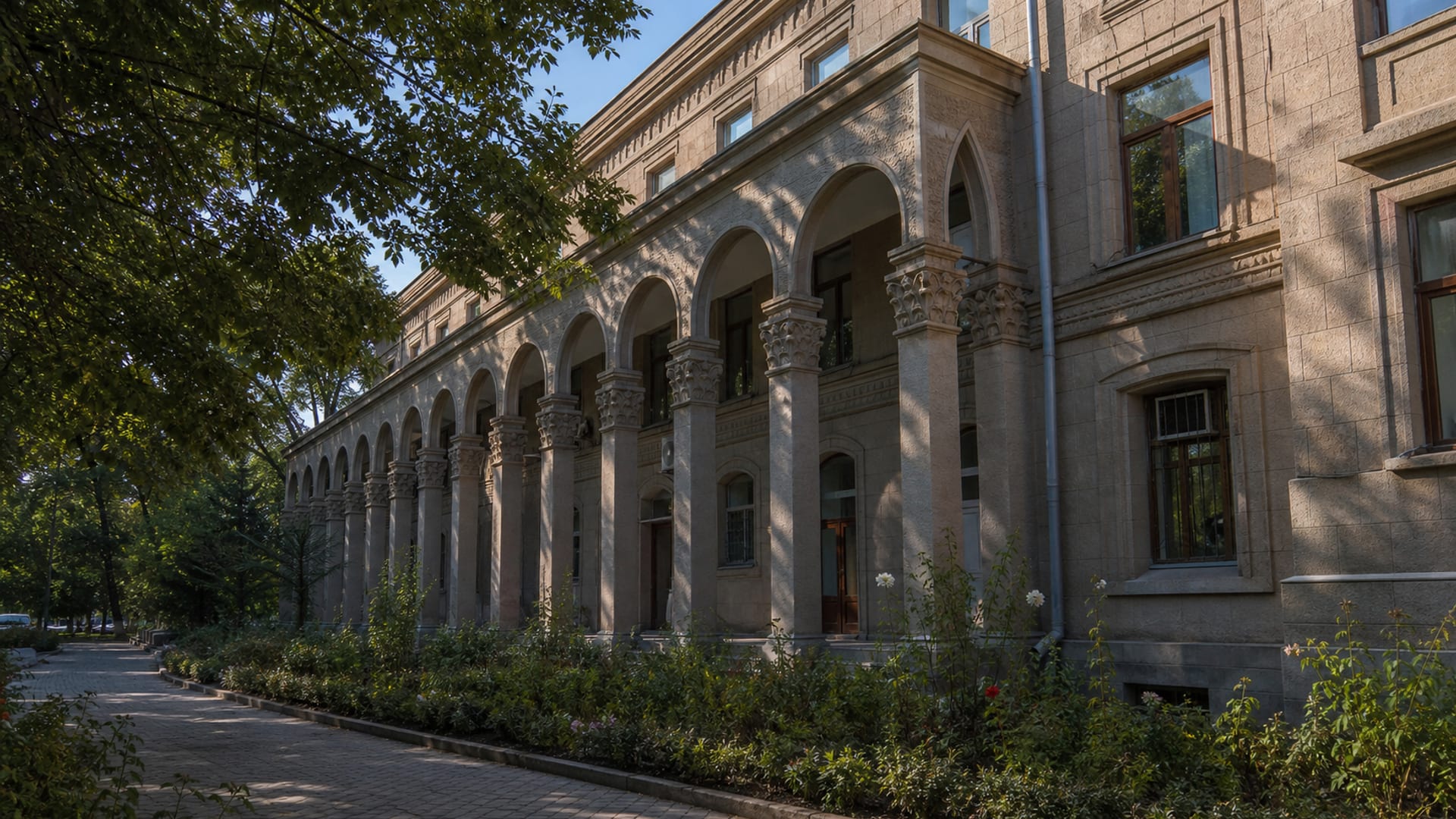
Begin at Ala-Too Square and spend up to 1 hour around the flagpole, fountains, and civic buildings. Continue into the State History Museum for 1 to 2 hours, then walk along Chui Avenue and nearby Oak Park. Finish with dinner in the center rather than returning to the square a second time.
Visit Osh Bazaar before noon and allow 1 to 2 hours for the bread, produce, dried fruit, spices, and textile sections. From central Bishkek, the drive generally takes 15 to 25 minutes depending on traffic. Have lunch nearby, then return toward the center for cafés, local shops, or a slower walk through the surrounding residential streets.
Leave early for Ala-Archa National Park, a 40- to 60-minute ride from central Bishkek by car. Adult admission costs KGS 250 ($3). Allow 3 to 5 hours for the riverside paths, viewpoints, and easier hiking routes, then return to Bishkek for dinner. Transport or vehicle charges may apply separately.
Keep the final morning central with coffee, last-minute shopping, or a short walk along Chui Avenue and the surrounding civic streets. Collect your bags, then allow 30 to 45 minutes for the transfer back to Manas International Airport (BSZ), with extra time during heavier traffic.
Business-class flights from the US to Bishkek
Flights to Bishkek usually involve one stop, and the longest connections often shape the fare as much as the airline does. From both coasts, the main task is choosing a route that keeps the total travel time manageable.
From New York, Turkish Airlines, Air Astana, Qatar Airways, Emirates, Uzbekistan Airways, and Pegasus Airlines are the main names you will see, with total travel time usually about 15 to 24 hours. Common change points include Istanbul (IST), Doha (DOH), Dubai (DXB), Abu Dhabi (AUH), Tashkent, and Almaty (ALA), and round-trip fares usually start from $3,200 and can climb to about $6,500.
Los Angeles itineraries usually price from about $3,100 to $6,200 round-trip, and the airlines most often listed are Turkish Airlines, Qatar Airways, Emirates, Air Astana, Uzbekistan Airways, and Lufthansa. Common change points include Istanbul (IST), Doha (DOH), Dubai (DXB), Frankfurt (FRA), Almaty (ALA), and Tashkent, with total travel time usually about 15 to 23 hours.
Bishkek feels different when you slow down
Bishkek feels more manageable when the central sights stay together, Osh Bazaar gets its own outing, and Ala-Archa remains a separate mountain day. Buses and app-based taxis handle the longer links, while the center is easy to explore on foot. Our AranGrant travel experts can help you find business-class flights and hotels that fit your dates and preferred location.







