

Chapters:

Need help with your trip?
Our support team is available 24/7. Request a callback or call us directly at (833) 619-0908
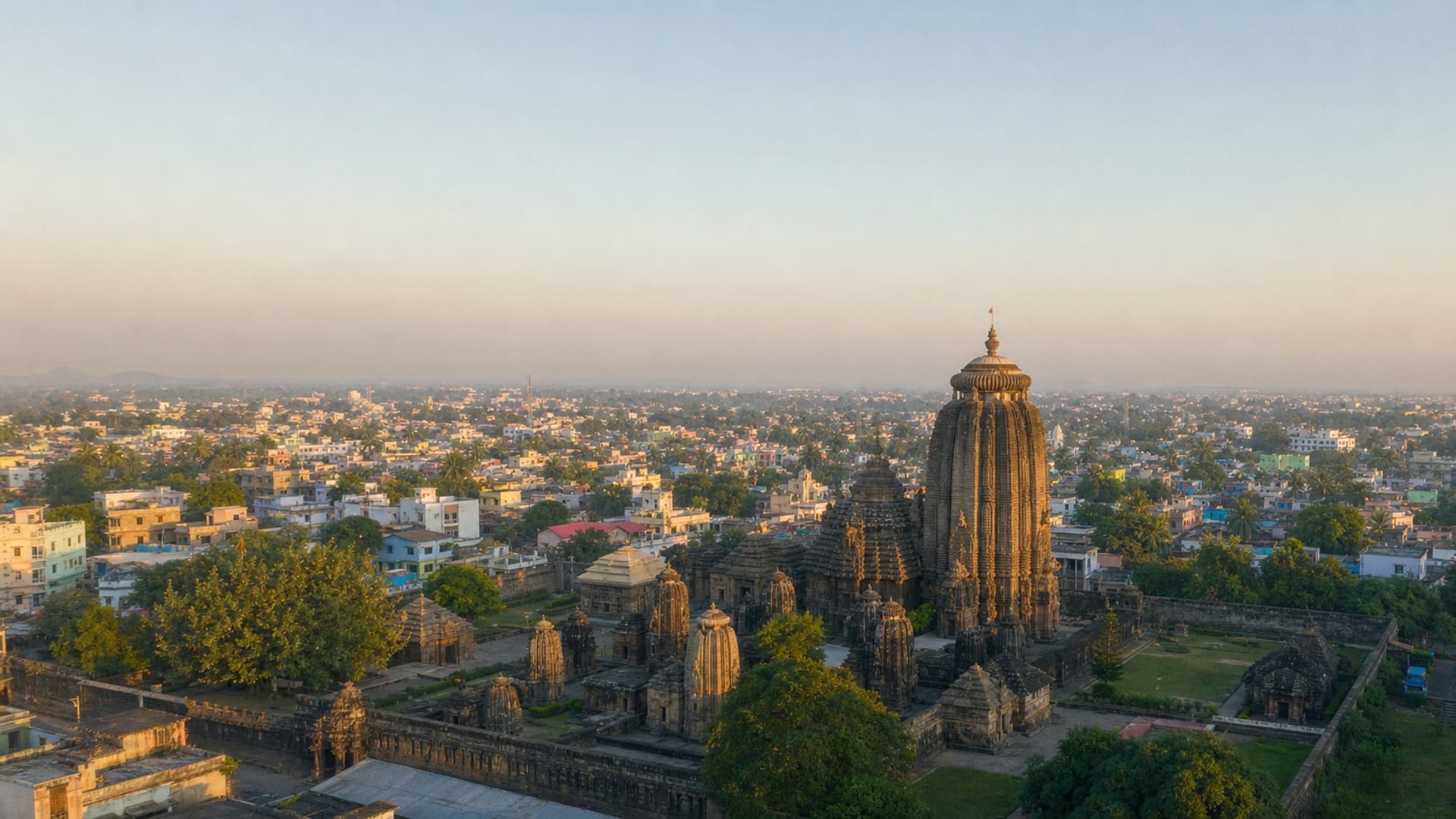
Bhubaneswar is a city where ancient temples and a fast-growing modern capital sit close together. In Old Town, stone shrines rise beside ponds, markets, and narrow streets still shaped by daily worship. A short drive away, wider roads lead to business districts, malls, museums, and newer neighborhoods.
The city also opens out toward the Udayagiri and Khandagiri Caves and the hills at Dhauli, so some of its most important sights sit beyond the center. Heat and traffic can slow the day, so it helps to plan each outing by area and avoid unnecessary trips across the city.
This article will help you decide where to stay, how to get around, what to see and eat, and when to visit so you can explore Bhubaneswar at a comfortable pace.
Useful things to know

Main language(s): Odia; Hindi and English are also widely understood.
Namaskar (nah-mah-SKAR) – Hello
Dayakari (dah-yah-KAH-ree) – Please
Dhanyabad (dhun-yah-BAAD) – Thank you
Apana ingraji kuhanti ki? (ah-pah-nah een-GRAH-jee koo-HUN-tee kee) – Do you speak English?
Eita kete tanka? (AY-tah KEH-tay TAHN-kah) – How much is this?

Currency: Indian rupee (INR, ₹)

Cash and cards: Cards and virtual UPI payments are common at hotels, malls, and larger restaurants. Keep cash for markets, temple offerings, auto-rickshaws, and small vendors.

Tipping: Tipping is optional. Leave 5% to 10% at sit-down restaurants when service is good, and give small tips to hotel staff or drivers if you want.

Traditional food: Pakhala bhata, dalma, chhena poda, and macha ghanta are common traditional dishes in Bhubaneswar.

Water and coffee costs: Bottled water costs ₹10–₹40 ($0.10–$0.40); coffee at cafés often costs ₹75–₹200 ($0.80–$2.10).

Taxis and ride apps: Uber, Ola, Odisha Yatri, and Rapido operate in Bhubaneswar. Auto-rickshaws are also widely available for shorter trips.

Plug and voltage: Types C, D, and M, 230V, 50Hz. US travelers need a plug adapter, and 120V-only devices also require a voltage converter.

Dining and shop opening hours: Restaurants commonly serve lunch from about 12:30–3:00 pm and dinner from 7:00–10:30 pm. Malls and major shops often remain open until 9:00 or 10:00 pm.

Emergency number: Call 112 for any emergency. Police: 100; fire: 101; ambulance: 108.
Where to stay in Bhubaneshwar
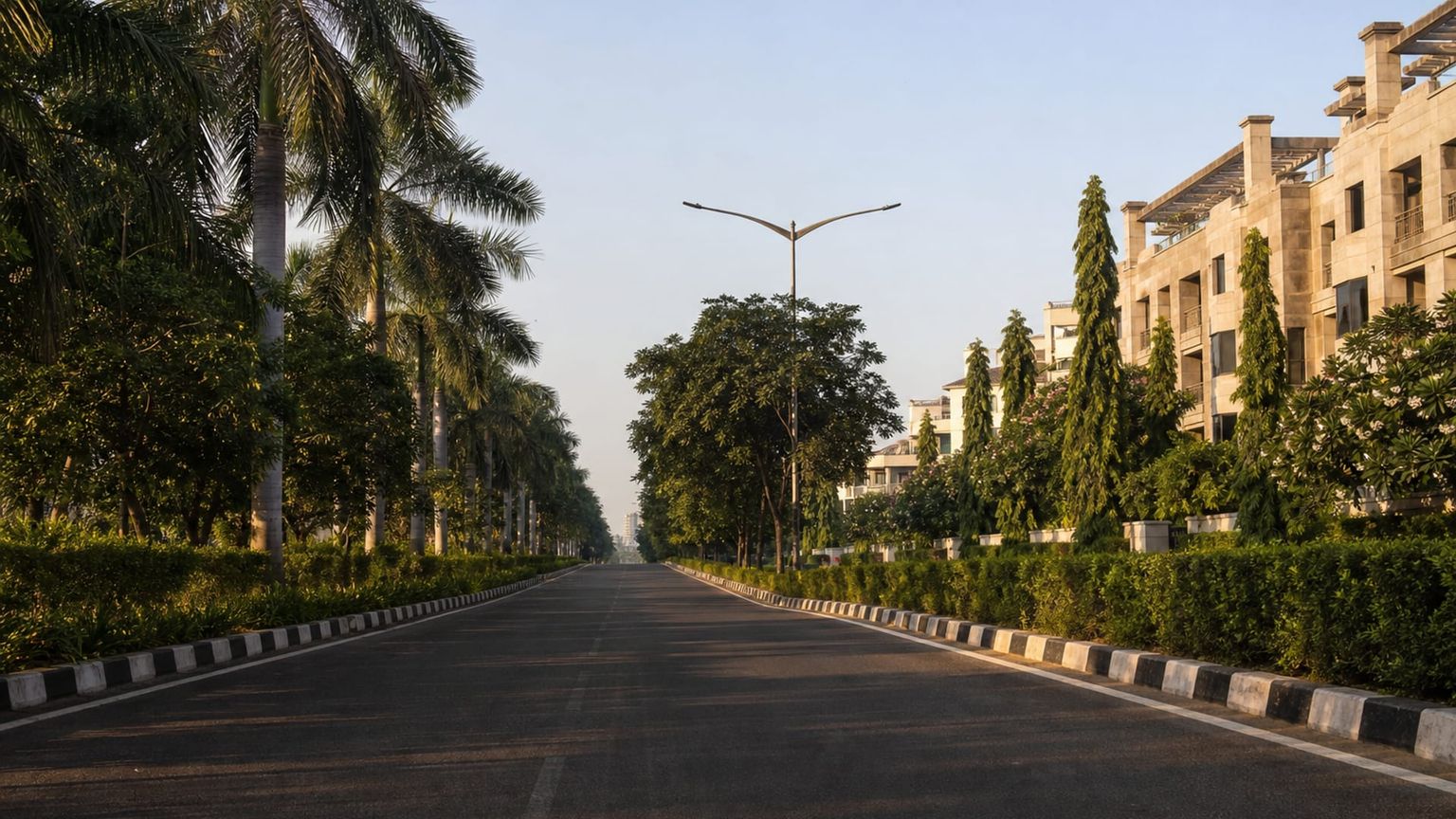
Saheed Nagar is a central residential and commercial district along Janpath, with hotels, restaurants, shops, and malls close to Bhubaneswar railway station. Road links reach the airport and newer business districts quickly, while the old temple quarter remains a short taxi ride away.
Best for: Dining, shopping, and a central base for getting across the city
What to expect: Busy roads by day, with restaurants, offices, and local shoppers; evenings stay active but not loud on the main streets.
Hotel prices: Usually about $35 to $90 per night for well-rated stays
Distance to major sights: About 15 minutes by taxi to Udayagiri and Khandagiri Caves, roughly 20 minutes to Lingaraj Temple
Quietness: Livelier in the day, calmer on side streets after dark; main roads keep some traffic noise into the evening.
Main trade-off: You get convenience and more hotel choice, but the area lacks the heritage setting that many visitors come to Bhubaneswar for.
Good to know: Bhubaneswar railway station is 5–10 minutes by car, and Biju Patnaik International Airport (BBI) is about 15 minutes away.
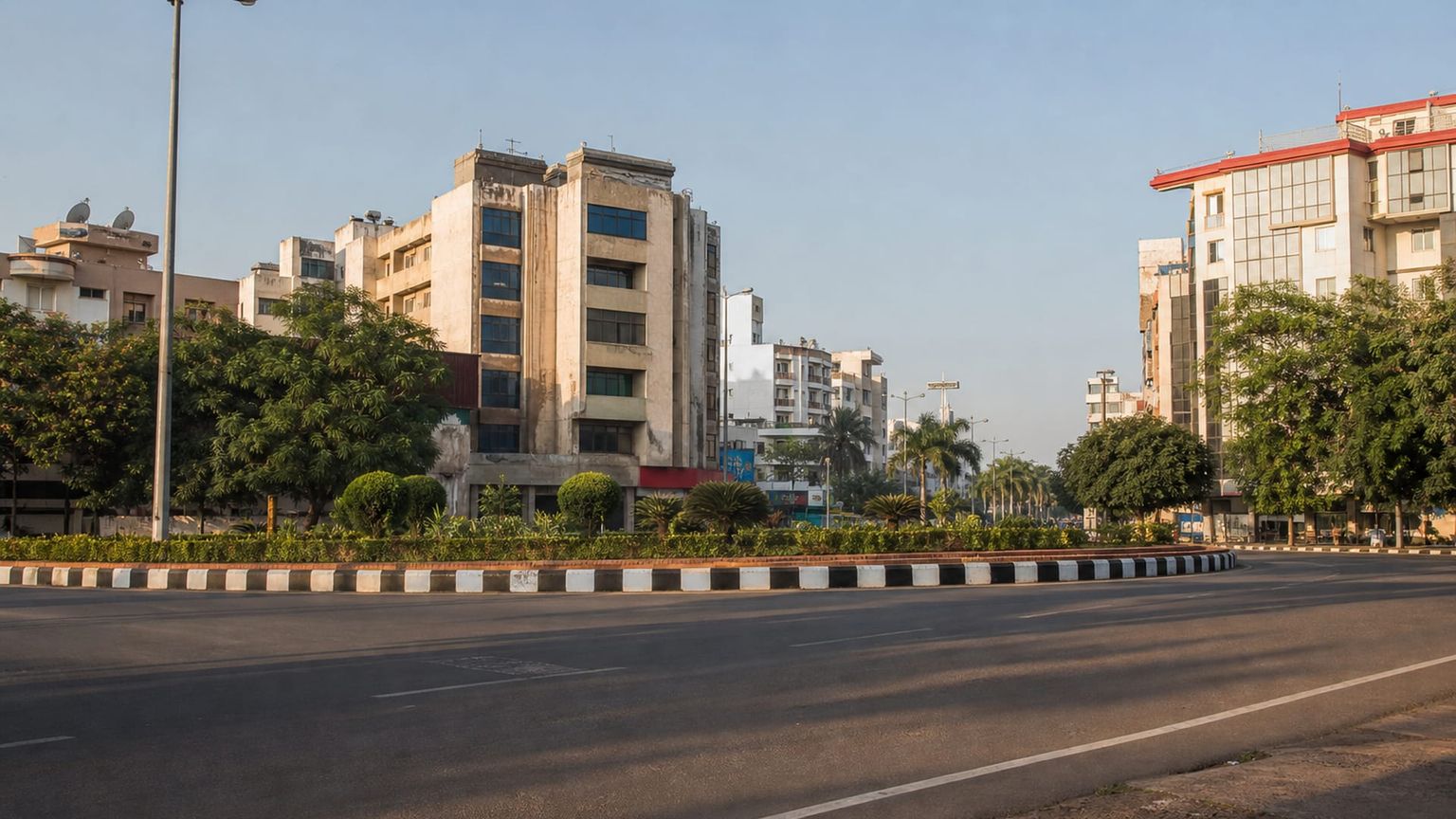
Jaydev Vihar is a major hotel and commercial district along Nandankanan Road, with Pal Heights, Mayfair Lagoon, Swosti Premium, offices, restaurants, and shopping nearby. Its location near NH16 provides direct road access to the airport, the caves, and northern Bhubaneswar.
Best for: Business trips, short stays, and travelers who want quick road access
What to expect: Heavy traffic at peak times, with a functional urban feel, chain hotels, and shopping centers nearby.
Hotel prices: Usually about $30 to $80 per night for well-rated stays
Distance to major sights: About 20 minutes by taxi to Mukteshwar Temple and roughly 25 minutes to Lingaraj Temple
Quietness: Noisy during commute hours, then quieter late at night once office traffic clears.
Main trade-off: The area saves time on cross-city travel, but you will depend on taxis or cars for most sightseeing and temple visits.
Good to know: Biju Patnaik International Airport (BBI) is about 20 minutes away by car; Udayagiri and Khandagiri are 15 minutes away.
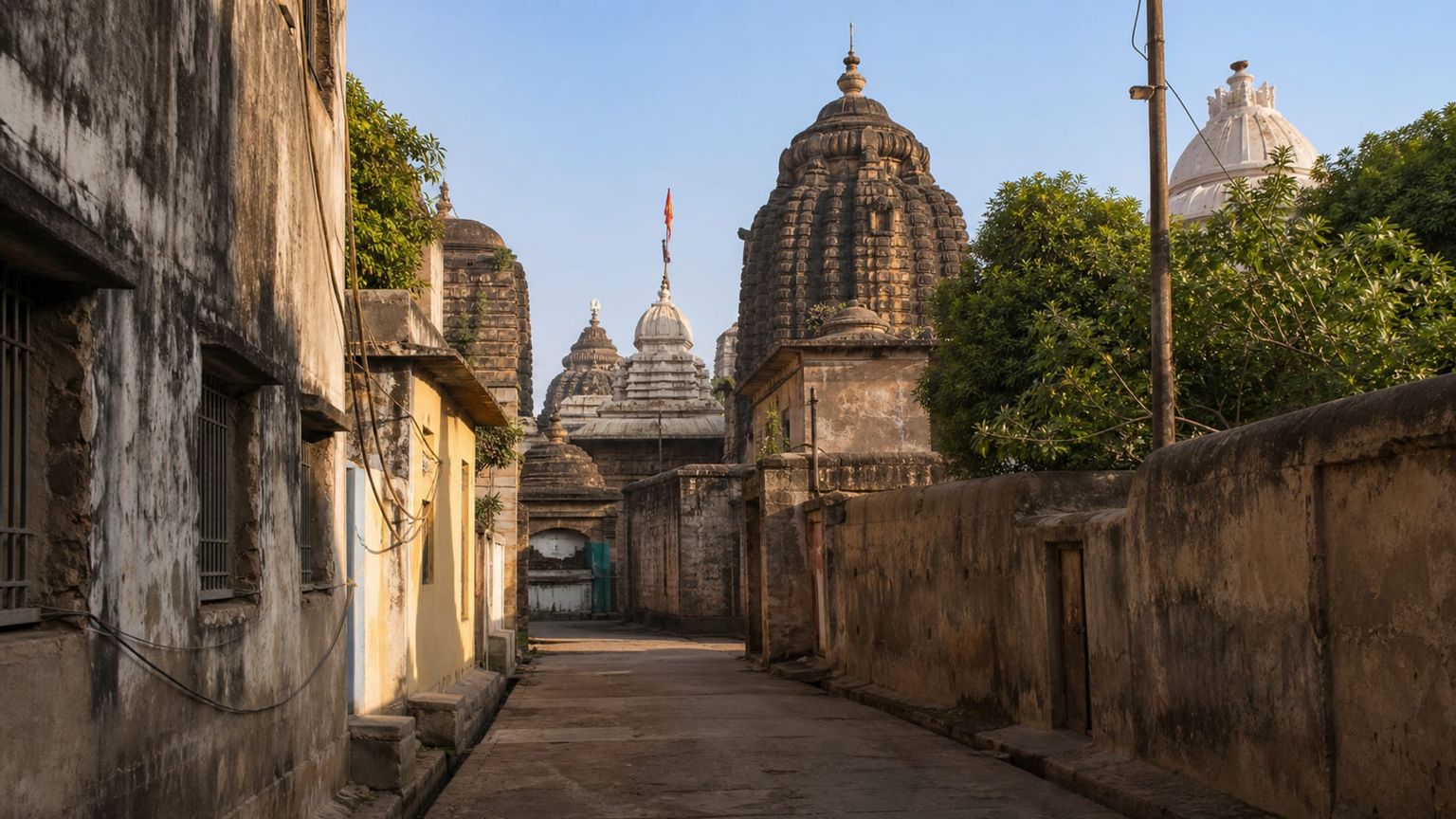
Old Town, also called Ekamra Kshetra, is Bhubaneswar’s historic temple district around Lingaraj Temple and Bindu Sagar. Centuries-old shrines, ritual activity, small shops, and traditional streets place visitors close to the city’s strongest concentration of living heritage and daily worship.
Best for: Temple visits, heritage walks, and photographers who want to stay near the oldest monuments
What to expect: Dense lanes, pilgrim traffic, temple bells, and a constant flow of local movement through the day.
Hotel prices: Usually about $25 to $70 per night for well-rated stays
Distance to major sights: Within 5 to 10 minutes on foot of Lingaraj Temple and about 15 minutes on foot of Mukteshwar Temple
Quietness: Busy and animated in the day, with early morning and evening temple activity that can carry late.
Main trade-off: You gain the closest access to the historic temples, but lodging options are fewer and the streets can feel crowded and tight.
Good to know: Lingaraj Temple admits Hindus only. Non-Hindu visitors can view the temple architecture from a dedicated platform outside the complex.
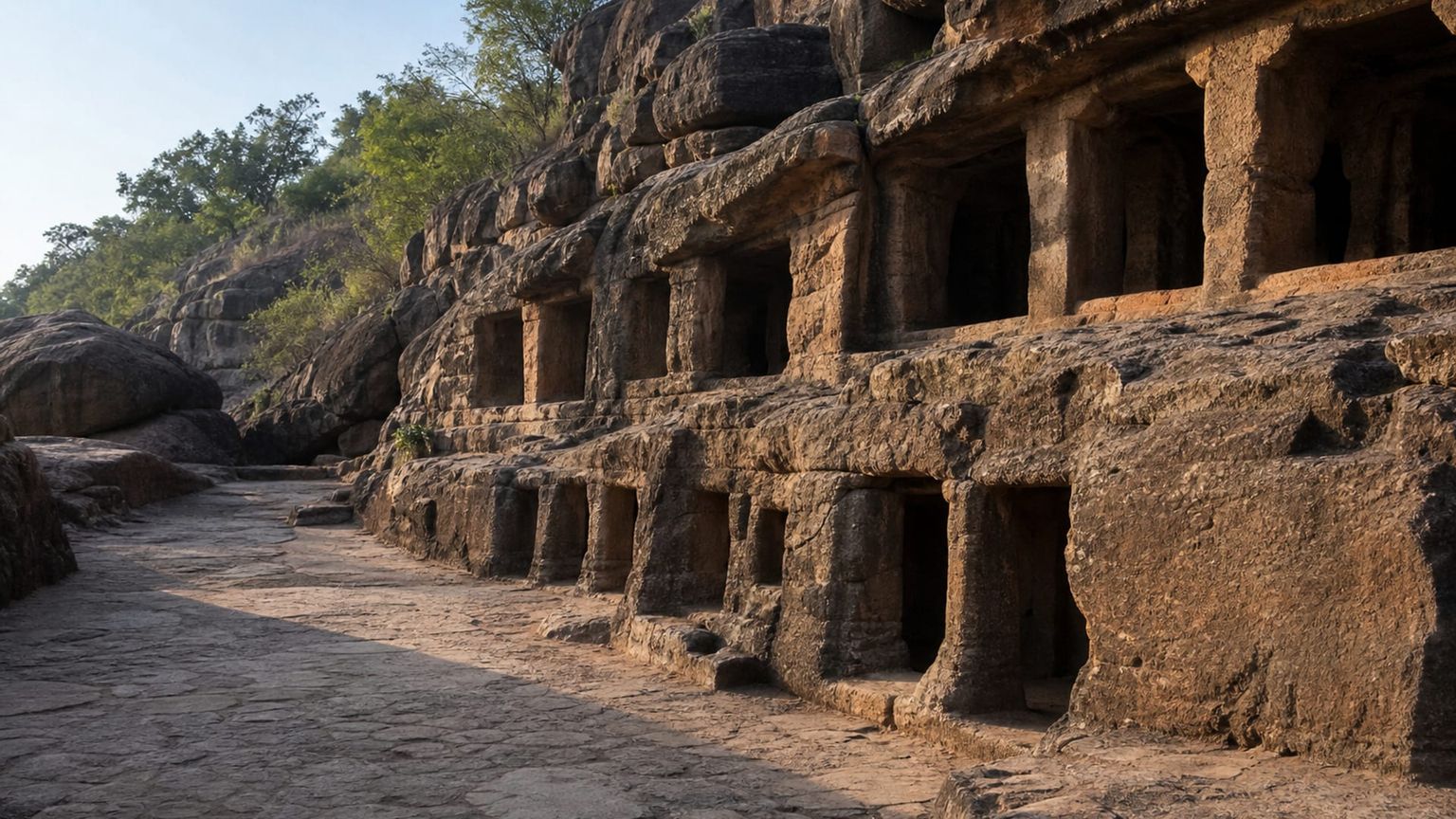
Khandagiri is a residential district on Bhubaneswar’s western side, close to the Udayagiri and Khandagiri Caves. Guesthouses, small hotels, local shops, and restaurants fill the streets near the cave complex, while larger roads connect the area with Old Town and central Bhubaneswar.
Best for: Cave visits, short stays, and travelers who prefer a quieter base
What to expect: Residential streets, local shops, and moderate daytime activity, with less traffic than the city center.
Hotel prices: Usually about $20 to $55 per night for well-rated stays
Distance to major sights: About 5 minutes by taxi to Udayagiri and Khandagiri Caves and roughly 20 minutes by taxi to Lingaraj Temple
Quietness: Calmer than central Bhubaneswar by day and even quieter after dark, with activity tapering early.
Main trade-off: You stay close to the caves, but you will usually need transport for the main temple circuit and central dining.
Good to know: Restaurants are available near Khandagiri and Jagamara, so you do not need to return to central Bhubaneswar for every evening meal.
Travelers focused on Bhubaneswar’s temples may find Patia and Jatni inconvenient because both add travel time to the historic core. Cuttack Road is closer, but its heavy traffic and spread-out layout make it less suitable for walking.
Hotel deals
How to get around Bhubaneshwar efficiently
Bhubaneswar has no operating metro. Ama Bus covers major corridors, while autos and app cabs handle short trips, temple visits, and airport transfers.

Ama Bus
for low-cost cross-city trips
Ama Bus is the main public transport network in Bhubaneswar, with routes serving the railway station, Khandagiri, Patia, and the airport area. Fares start at ₹5 ($0.05). A one-day City Pass costs ₹40 for regular buses or ₹60 for buses with AC ($0.40–$0.60).

Auto-rickshaw and Ama E-Ride
for short local journeys
For short trips between temples, markets, and nearby neighborhoods, auto-rickshaws are easy to find. Ama E-Ride feeder vehicles charge a flat ₹10 ($0.11) on their routes, while an Uber Auto from Biju Patnaik International Airport (BBI) to the city averages about ₹143 ($1.50).

App cab
for airport transfers, luggage, and late hours
Uber and Ola both operate in Bhubaneswar and are useful for direct trips across the city or airport transfers. Uber Go rides between Biju Patnaik International Airport (BBI) and central Bhubaneswar cost ₹288 ($3); both apps show the fare before booking.
*Prices are based on rates updated as of October 2026 and may change at the time of travel.
Use Ama Bus for low-cost cross-city travel, autos for short local rides, and app cabs for direct trips or transfers to Biju Patnaik International Airport (BBI).
Iconic landmarks
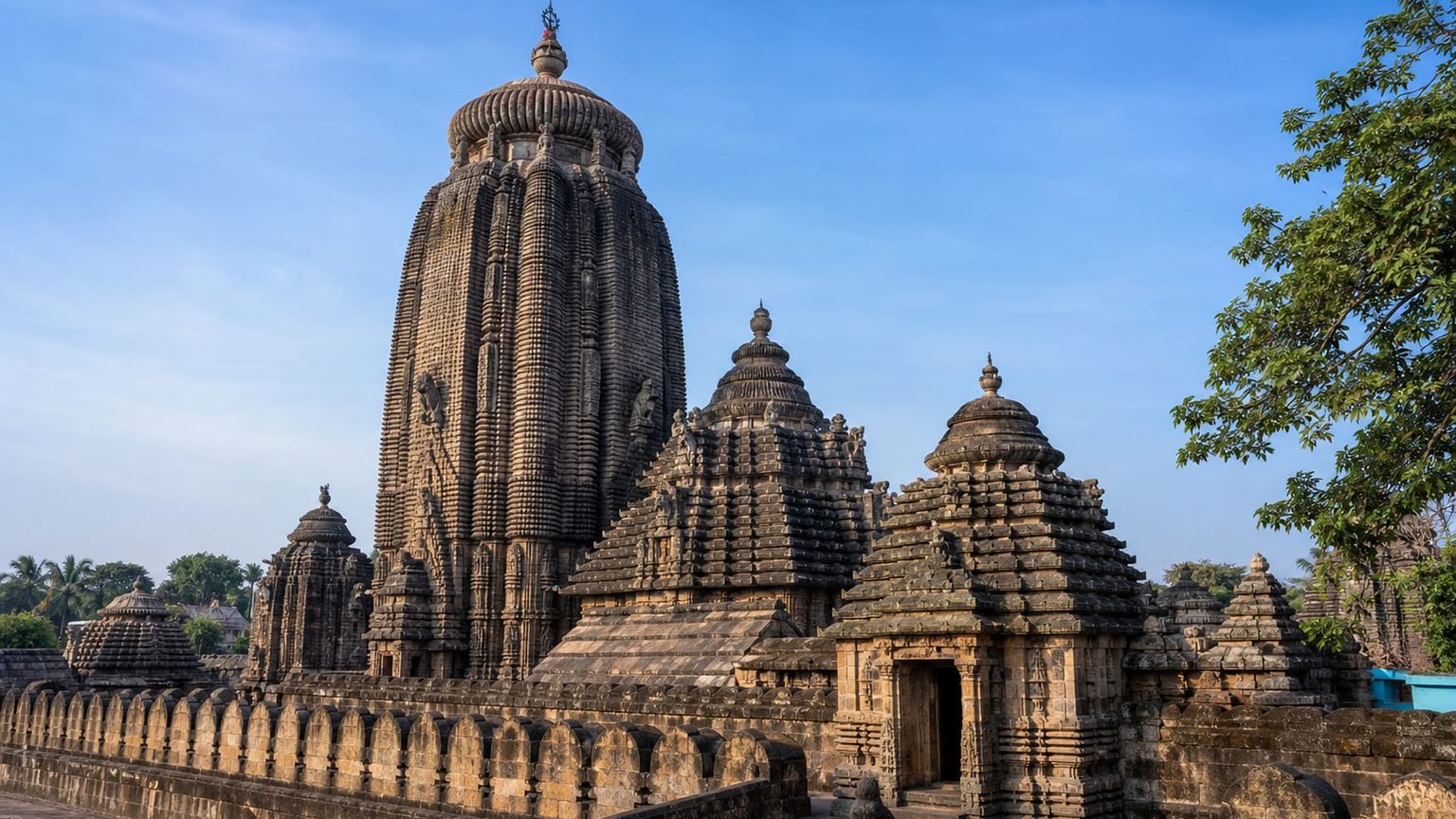
Lingaraj Temple
Lingaraj Temple is Bhubaneswar’s leading historic shrine and a major example of Kalinga architecture. Built in the 11th century and dedicated to Harihara, it rises nearly 180 feet above Ekamra Kshetra, with smaller temples, carved stonework, and active rituals inside the complex.
Time needed: About 1 to 2 hours
Entry: Free to access; non-Hindus cannot enter the main sanctum, and a camera fee may apply in outer areas during special visits.
Tip: Go early in the morning before the heat builds and rituals draw larger groups.
Udayagiri and Khandagiri Caves
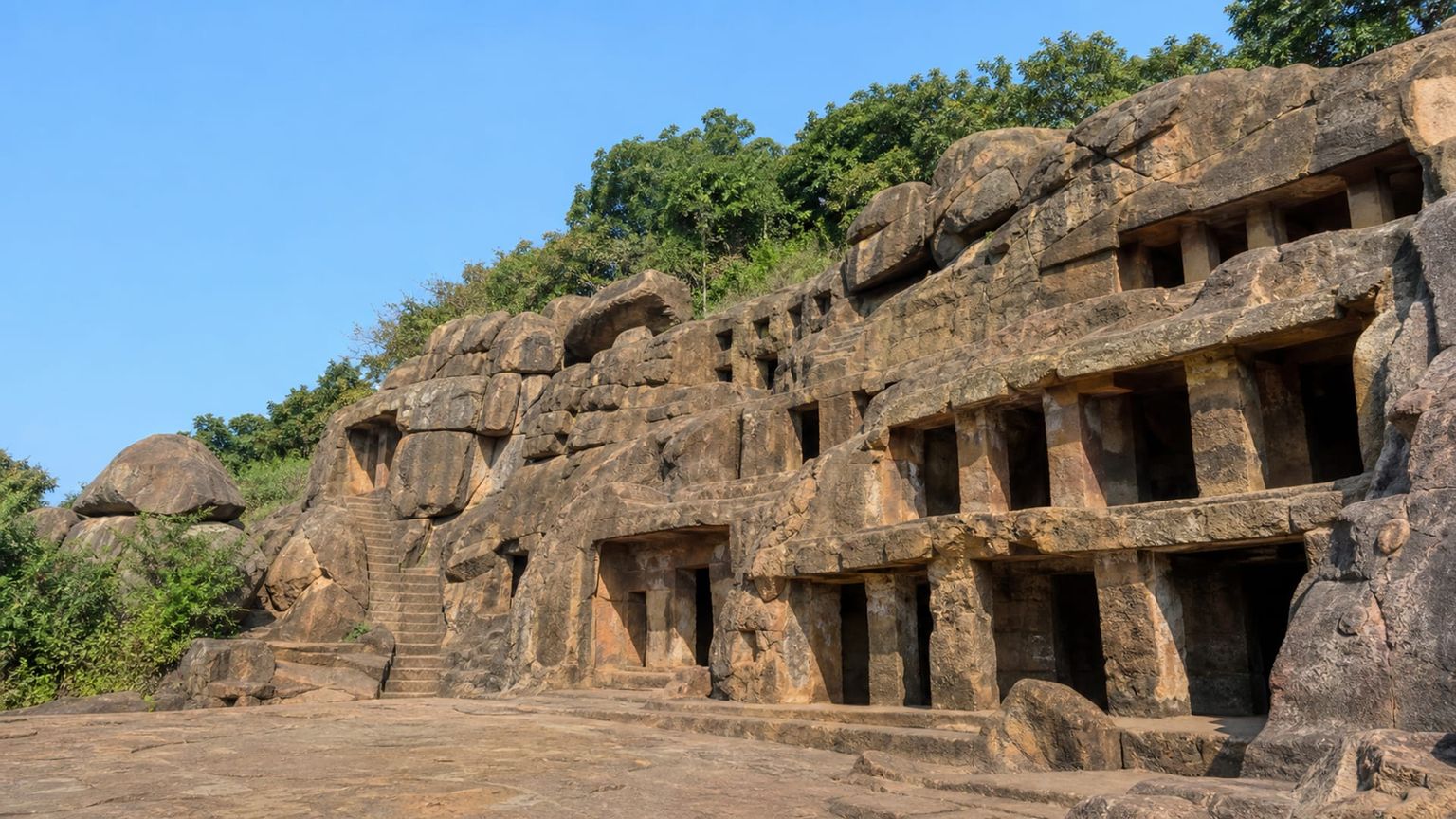
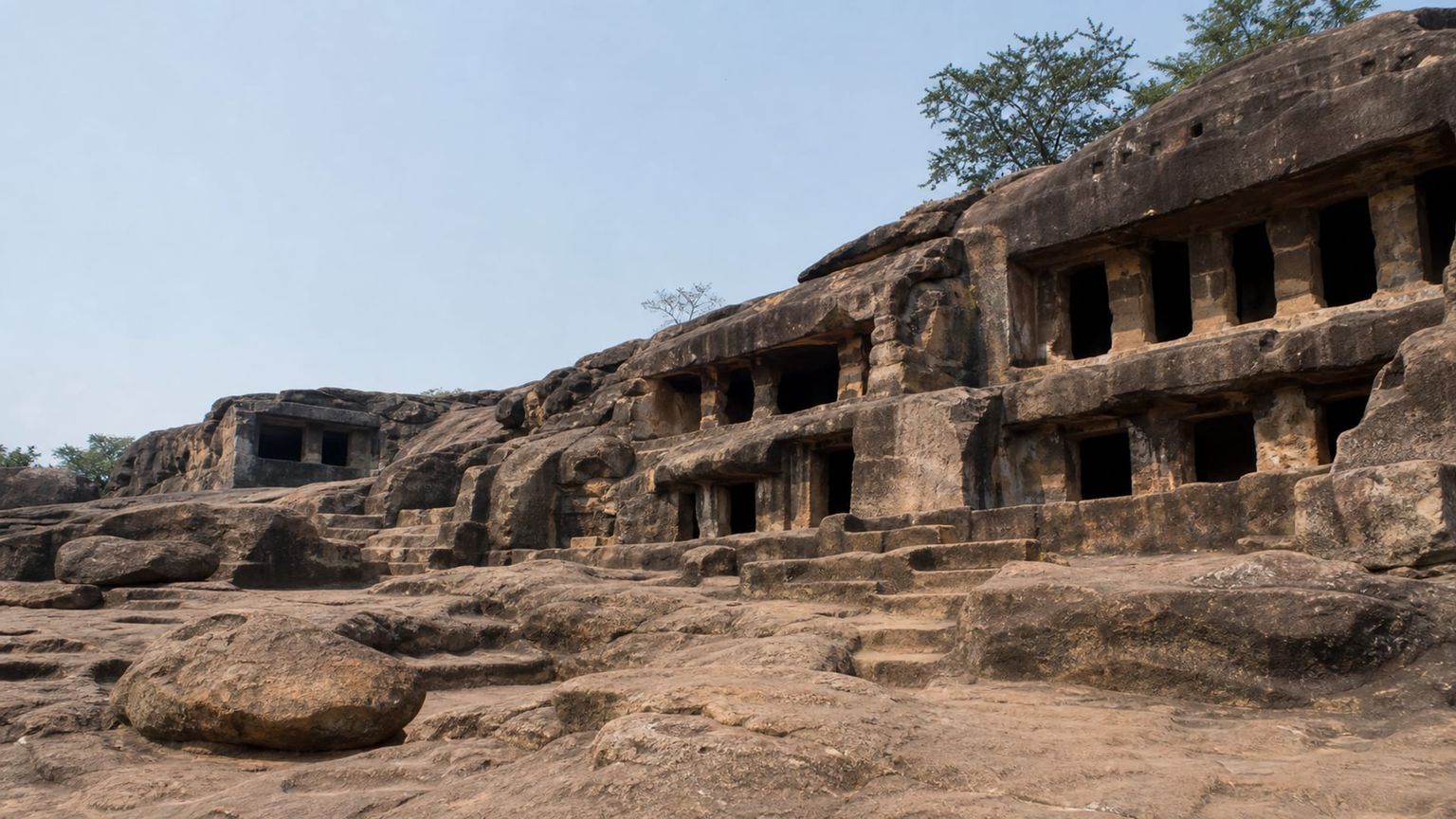
Udayagiri and Khandagiri are twin hills cut with caves for Jain monks during King Kharavela’s reign in the 2nd century BCE. Rani Gumpha, the Hathigumpha inscription, carved façades, stone cells, and elevated city views make the site one of Bhubaneswar’s key ancient monuments.
Time needed: About 1 to 2 hours
Entry: Entry is about $0.30 to $1 ($20 to ₹80) for Indians and $3 to $6 ($250 to ₹500) for foreign visitors, depending on the site.
Tip: Wear sturdy shoes and visit early; the hills include steep, uneven stone steps.
Dhauli Shanti Stupa
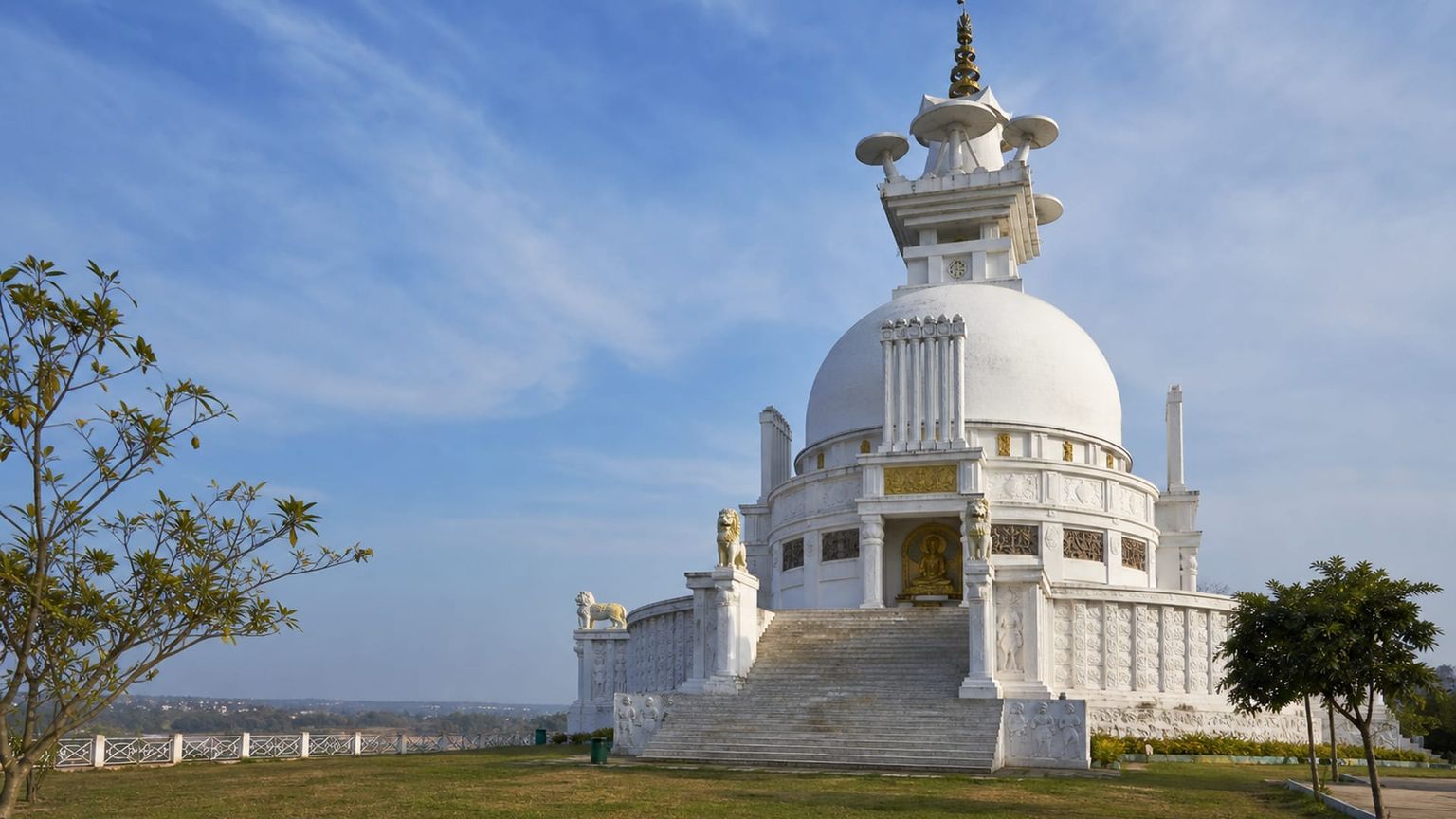
Dhauli Shanti Stupa stands above the Daya River near the site associated with the Kalinga War of the 3rd century BCE. Built in the 1970s, the white Peace Pagoda marks Emperor Ashoka’s turn toward Buddhism and nonviolence, with hilltop views and Ashokan heritage close by.
Time needed: About 45 to 60 minutes
Entry: Free to access; small fees may apply for parking or nearby vehicle entry, while the pagoda itself has no ticket charge.
Tip: Visit in the late afternoon for cooler weather and views of the Daya River before sunset.
Overlooked sites worth visiting

Mukteswara Temple
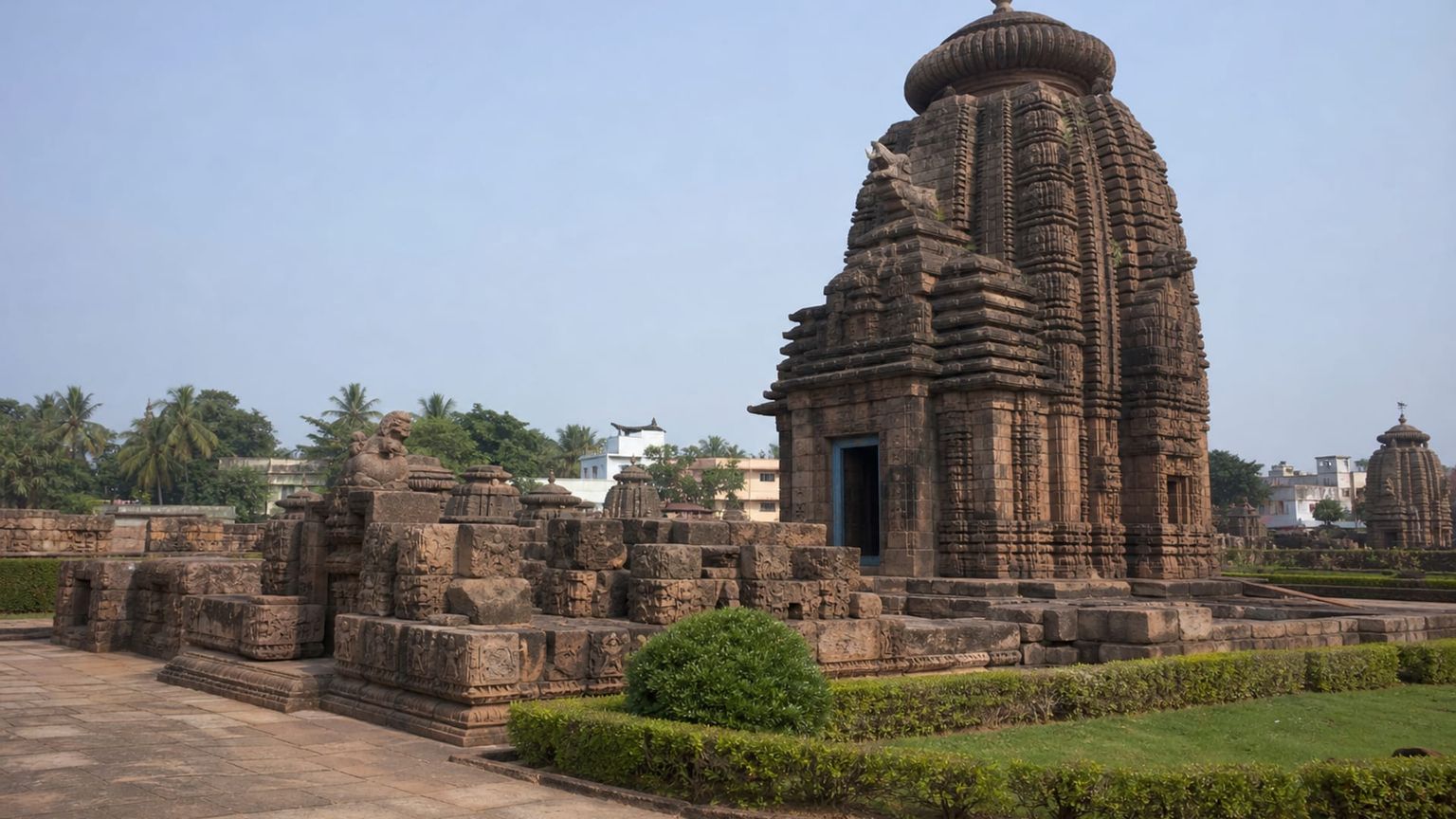
Mukteswara Temple is a 10th-century shrine known for its carved torana, lattice windows, and detailed sandstone sculpture. Its smaller scale makes the architecture easy to study up close.
Time needed: About 30 to 45 minutes
Entry: Free to access. The temple is open to visitors during daylight hours, with no ticket office or timed admission. Donations are optional, and local rituals can briefly limit access to the inner shrine if priests are conducting worship.
Tip: Remove your shoes before entering, and keep your shoulders and knees covered.

Odisha State Museum
Odisha State Museum traces the state’s history through archaeology, bronzes, art, anthropology, coins, and a large palm-leaf manuscript collection near Kalpana Square in Bhubaneswar.
Time needed: About 1 to 1.5 hours
Entry: Tickets cost about $0.60 to $1.20 ($50 to ₹100) for Indian citizens, with higher rates for foreign visitors on some gallery days. Camera fees, if charged, are separate, and the museum follows standard daytime opening hours with weekly closure rules. Visit the official site for details.
Tip: Buy your ticket before 4:30 pm; the counter closes an hour before the museum closes.
Traditional food
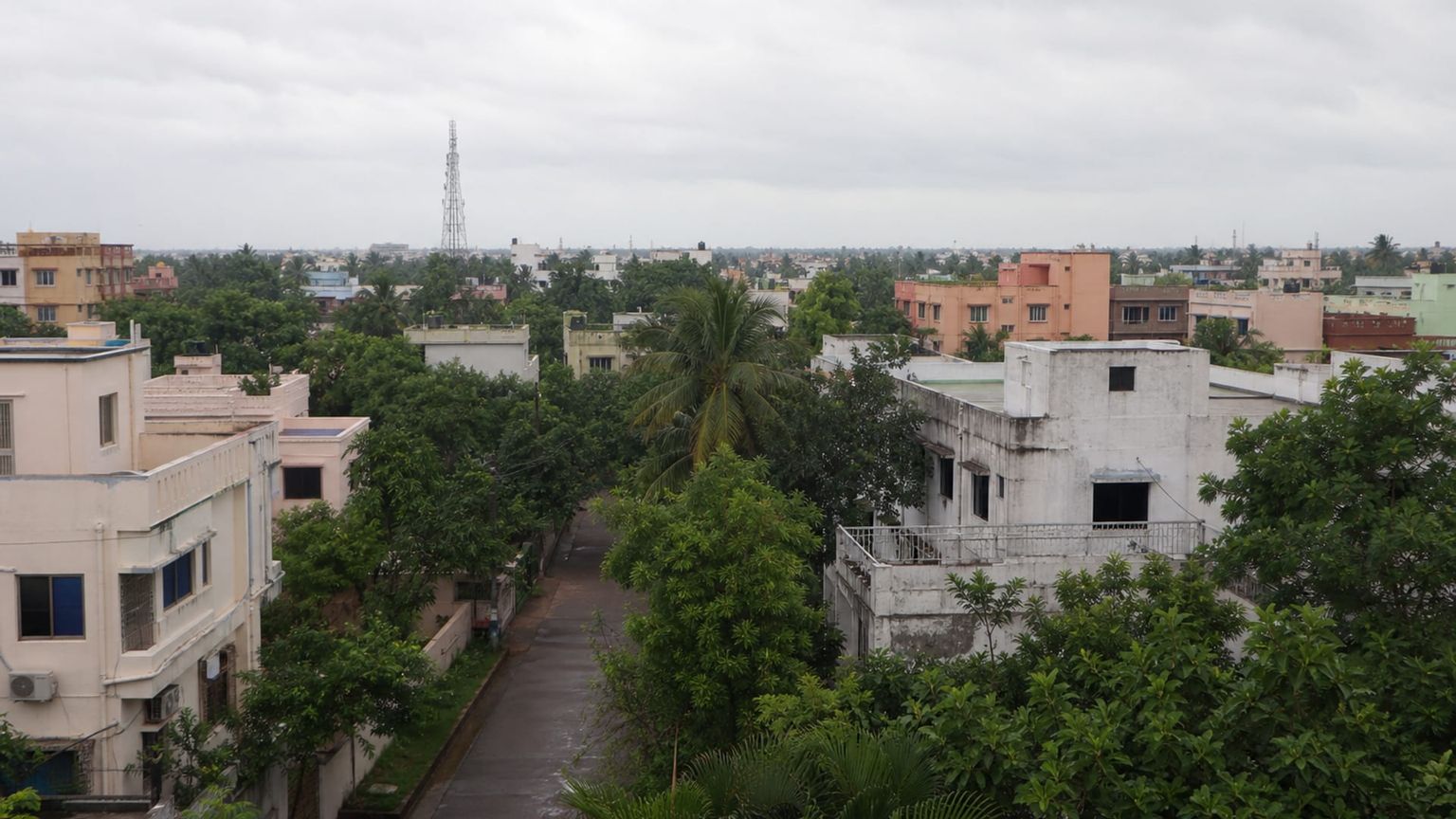
Bhubaneswar’s food reflects Odisha’s rice-based cooking, mild spices, freshwater fish, lentils, and milk sweets; Pakhala bhata, dalma, chhena poda, and macha ghanta show that range well.
Pakhala Bhata
Pakhala bhata is cooked rice soaked or lightly fermented in water, often served with curd, fried vegetables, or fish. Odisha Hotel serves the dish alongside other traditional Odia specialties at several Bhubaneswar branches.
Dalma
Dalma cooks lentils with vegetables such as pumpkin, raw papaya, or eggplant, then finishes them with mild spices and sometimes coconut. Dalma is listed among its signature Odia preparations at its Bhubaneswar restaurants.
Chhena Poda
Chhena poda mixes fresh chhena with sugar, semolina, and cardamom, then bakes it until the outside turns dark and caramelized. Oddis’ Kitchen includes the dessert on its current menu alongside traditional Odia main dishes.
Macha Ghanta
Macha ghanta is a rich fish curry with vegetables, Bengal gram, and aromatic spices, traditionally served with rice. O By Odisha in Patia currently lists machha ghanta among its Odia main-course dishes and is a good place to try it in Bhubaneswar.
Best time to visit Bhubaneshwar
Bhubaneswar is easiest to explore from late fall through winter, when heat and rain ease. March to May is the hottest; the monsoon brings heavy rain.
Best for: Temple visits, cave outings, heritage walks, and longer days spent outdoors
What you get: December to February brings the coolest, driest weather, with daytime temperatures often near 82°F–91°F (28°C–33°C) and cooler nights.
Trade-offs: This is peak visitor season, so major temples and attractions can be busier on weekends and festival dates.
Best for: Early temple visits, museum time, and shorter sightseeing days with long breaks
What you get: Heat builds quickly from March to May, with daytime temperatures often reaching 97°F–100°F (36°C–38°C) before the summer monsoon arrives.
Trade-offs: April and May can be very hot and humid, making exposed temple grounds and cave visits tiring by midday.
Best for: Museums, indoor stops, short outings, and travelers comfortable with heavy rain
What you get: June to Augustbrings the heaviest rain and high humidity, with daytime temperatures near 90°F (32°C) and frequent heavy showers.
Trade-offs: Heavy rain can slow road travel and interrupt outdoor plans, especially during stronger monsoon spells.
Best for: Temple visits, heritage walks, and outdoor sightseeing as the monsoon eases
What you get: September is still rainy. October and November bring less rain and lower humidity, with daytime highs easing from 89°F (32°C) to about 87°F (31°C) by November.
Trade-offs: October can still be humid and wet, while cyclone activity in the Bay of Bengal can disrupt travel plans.
A realistic 5-day plan in Bhubaneshwar
Five days give you enough time to see Bhubaneswar’s temples, caves, museums, and Dhauli without packing too much into each day. Keep Old Town together, give the caves their own morning, and leave one lighter day before departure for a more relaxed trip.
After landing at Biju Patnaik International Airport (BBI), take an app-based cab to Saheed Nagar or Jaydev Vihar. The drive is usually about 15–25 minutes, depending on traffic. Check in, rest, and keep the first evening close to your hotel with an easy dinner nearby. If you still feel like going out, take a short walk past local shops or through a nearby mall before turning in early and saving the temple district for the next morning. Keep water with you, especially in warmer months.
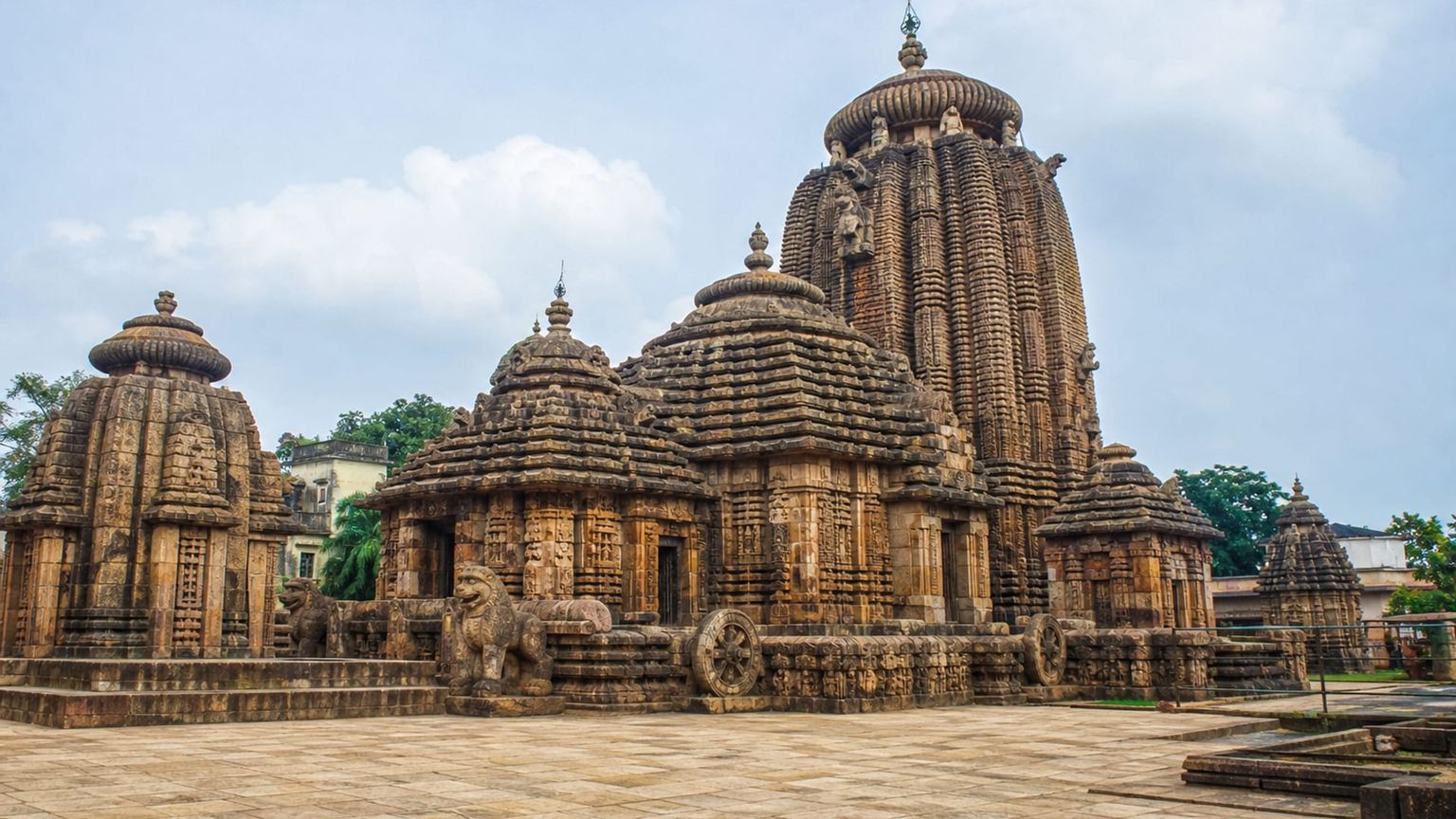
Spend the morning in Old Town, beginning at Lingaraj Temple before the midday closure. Hindu visitors may enter the complex, while non-Hindu visitors use the viewing platform outside. From there, walk toward Bindu Sagar and continue to Mukteswara Temple to study its carved gateway and sandstone details. Have lunch nearby, then add Parasurameswar Temple or Rajarani Temple before returning to your hotel. The temples are close enough to cover on foot, so you spend less time in traffic.
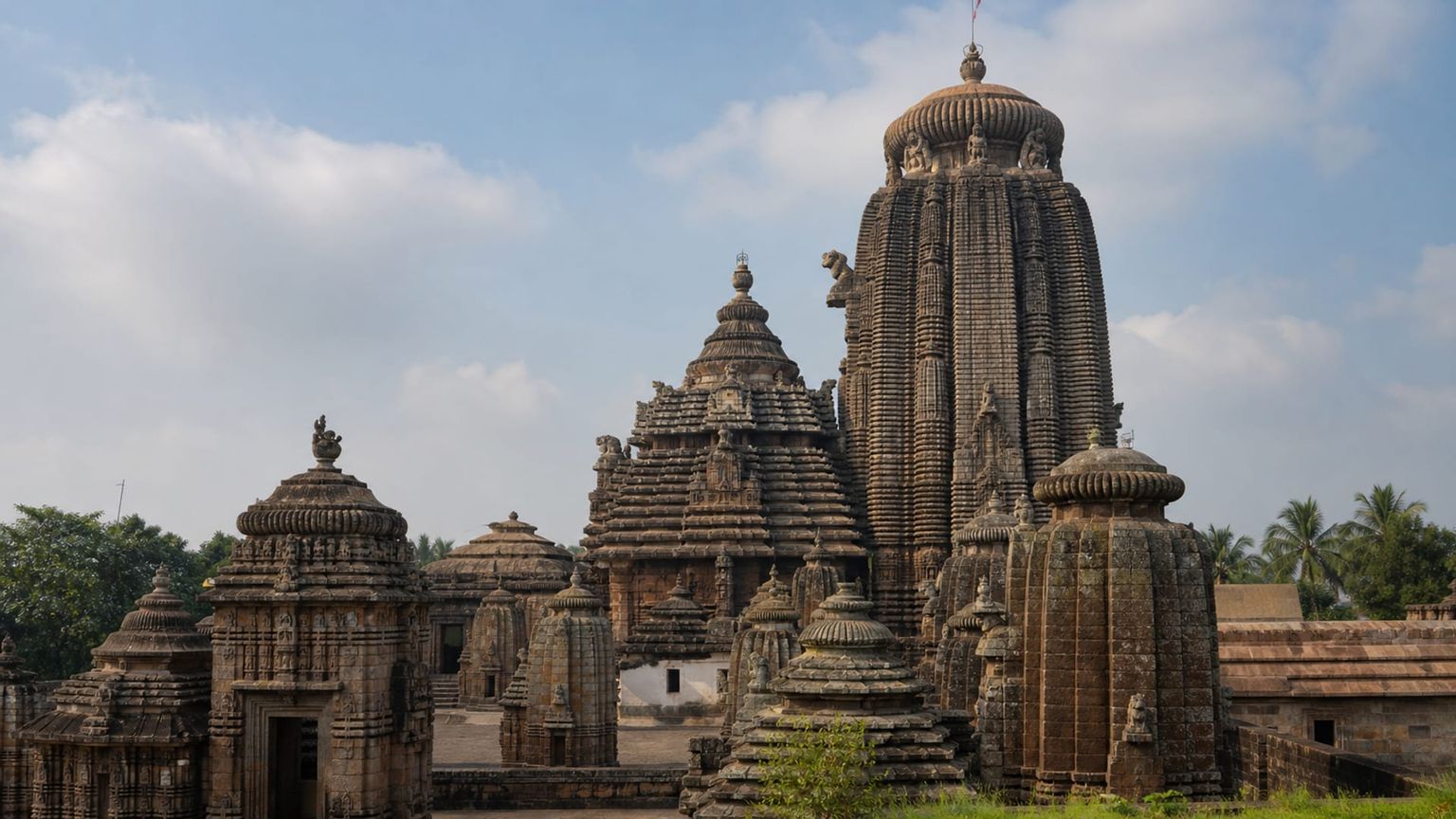
After breakfast, head to the Udayagiri and Khandagiri Caves and allow 2–3 hours for Rani Gumpha, the Hathigumpha inscription, and the climb between the twin hills. Stop for lunch in Khandagiri, then continue to the Museum of Tribal Arts and Artifacts for textiles, jewelry, tools, and objects from Odisha’s tribal communities. The higher cave paths also open to wide views across Bhubaneswar. The museum closes on Mondays, so switch this day if needed.
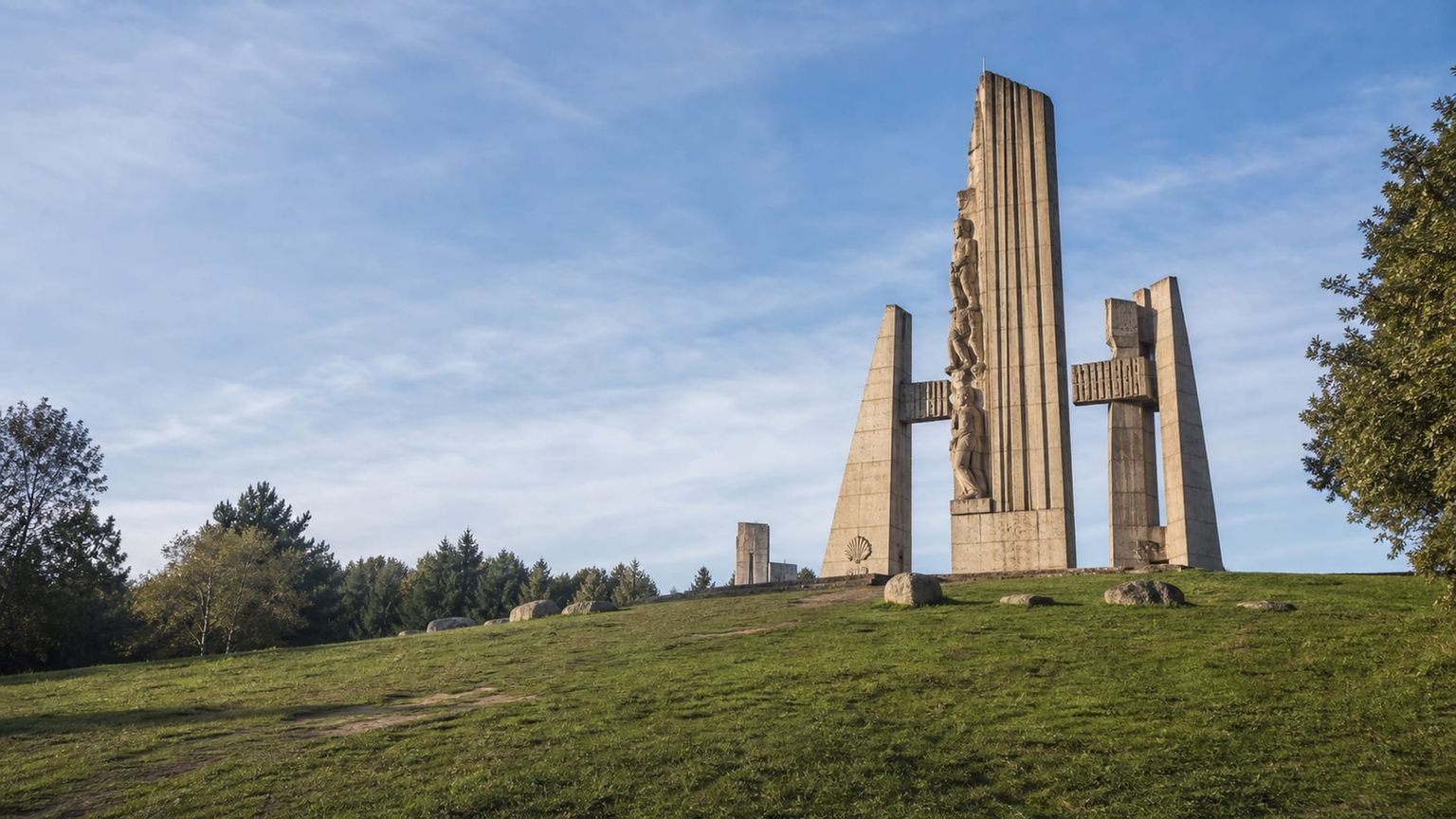
Spend the afternoon south of the center, first at the Chausathi Yogini Temple in Hirapur, a small circular shrine lined with carved yogini figures. Dhauli is only 6.5 km farther, so continue there and stop first at the Ashokan Rock Edicts before heading uphill to Dhauli Shanti Stupa. Late afternoon brings cooler air and broad views over the Daya River. Leave enough time for both stops before Dhauli closes at 6:00 pm, without rushing.
On the final morning, visit Odisha State Museum for its archaeology, bronzes, coins, and palm-leaf manuscripts, which add useful context to the temples seen earlier in the trip. The museum opens at 10:00 am and closes on Mondays and the second and fourth Saturdays. Have lunch nearby, return to your hotel for your bags, then head to Biju Patnaik International Airport (BBI). For a US-bound itinerary, plan to reach the airport about 3 hours before departure.
Business-class flights from the US to Bhubaneshwar
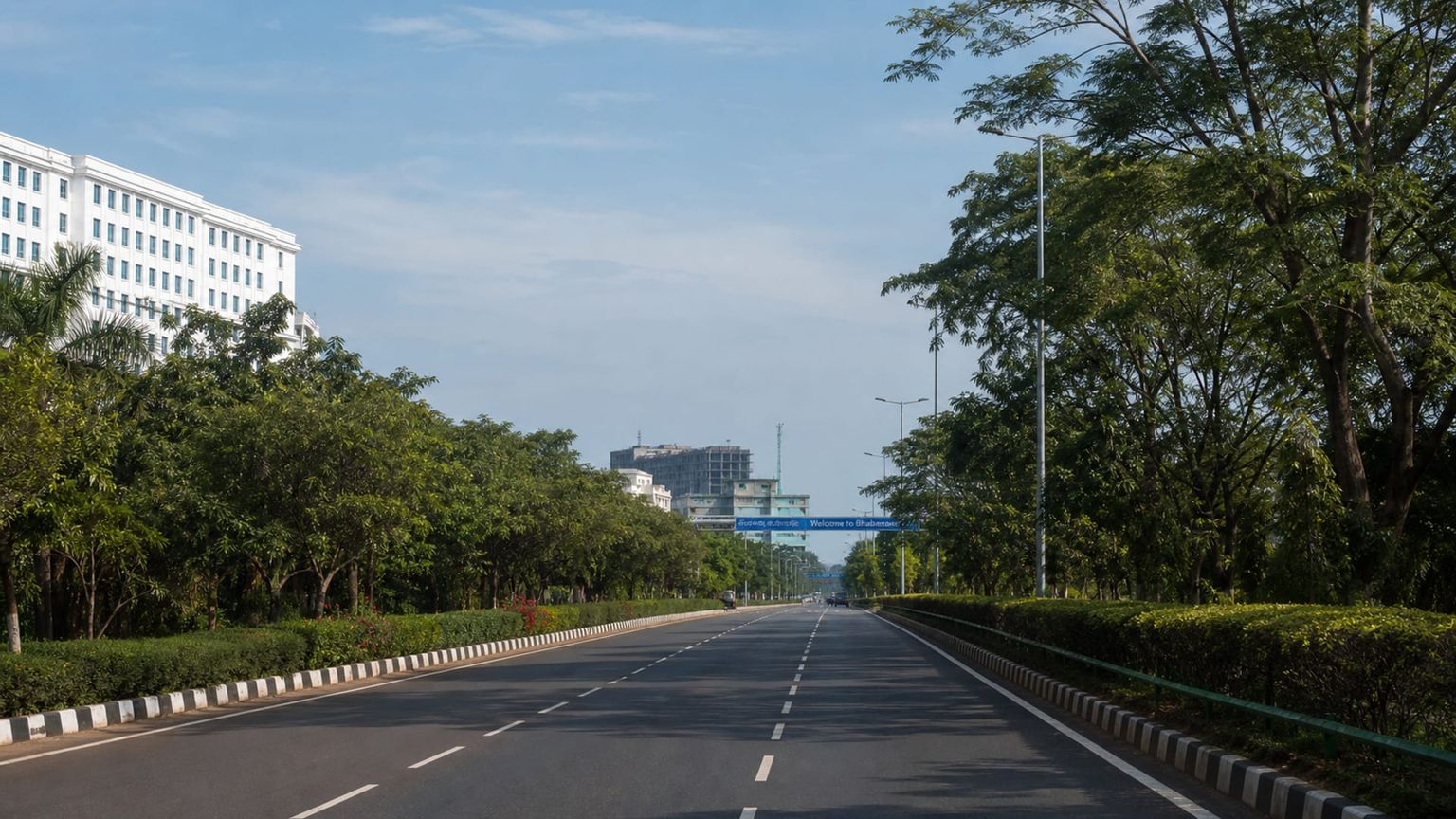
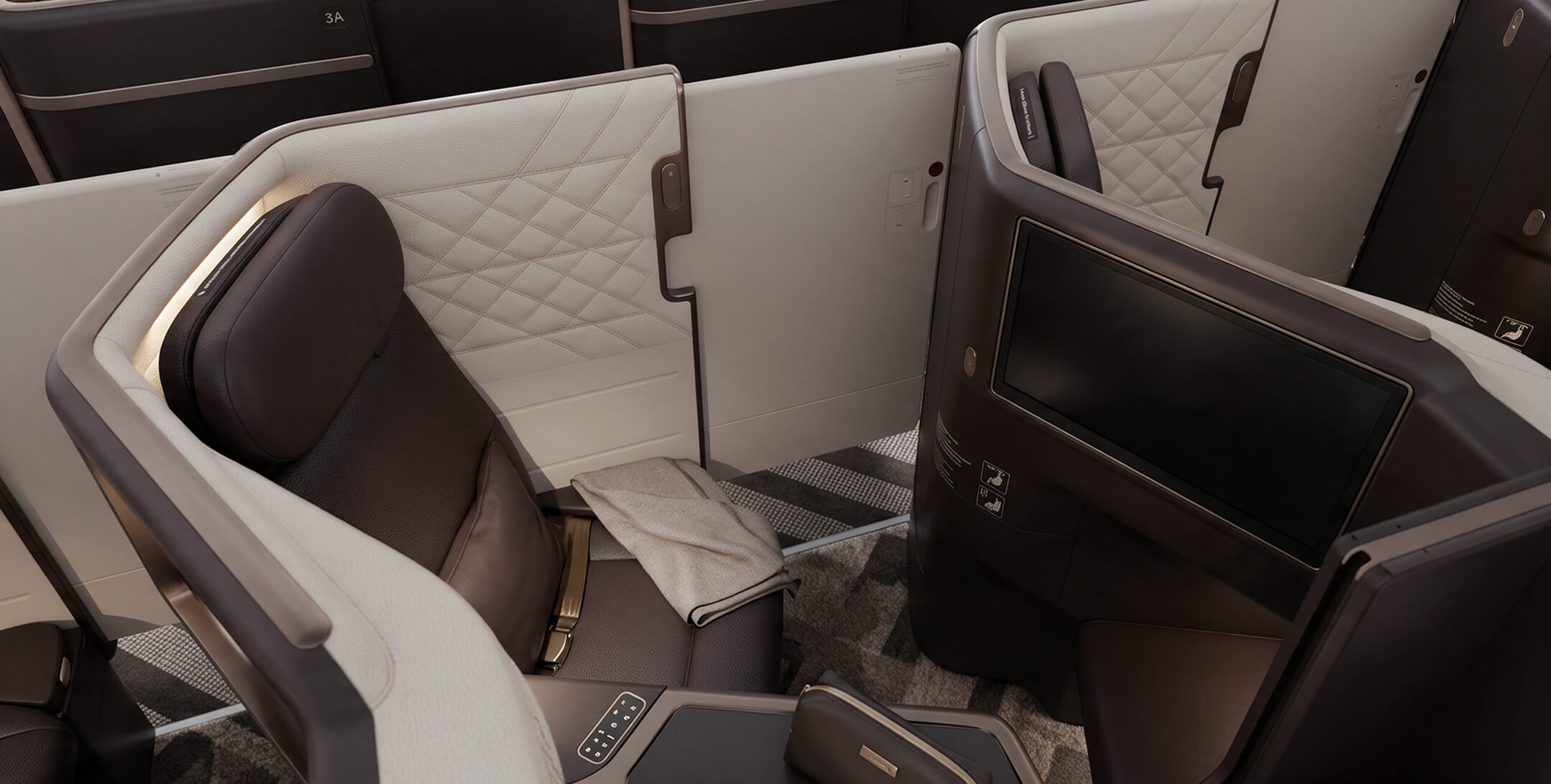
Bhubaneswar (BBI) has no nonstop flights from JFK or LAX, so business-class journeys from the US require at least one connection through a major hub.
New York (JFK) to Bhubaneswar (BBI)
From New York (JFK), the shortest flight option is typically Air India with Air India Express via Delhi (DEL), requiring one stop before the final flight to Bhubaneswar. Two-stop itineraries include British Airways with IndiGo or Air India via London Heathrow (LHR) and Delhi, Air France with IndiGo via Paris (CDG) and DEL, and Qatar Airways with Air India via Doha (DOH) and Delhi. Total travel time is 21 to 29 hours, with round-trip business-class fares ranging from $4,300 to $15,100.
Los Angeles (LAX) to Bhubaneswar (BBI)
From Los Angeles (LAX), all of the main options involve two stops. British Airways and IndiGo route through London Heathrow (LHR) and Delhi (DEL), Air France and IndiGo through Paris (CDG) and DEL, while Qatar Airways and Air India connect via Doha (DOH) and Delhi (DEL). Air Canada with Air India adds another option through Toronto (YYZ) and DEL, and British Airways with Air India also operates via LHR and DEL. Journey times run from about 28 to 36 hours, with round-trip fares of $6,000 to $16,900.
Leave room to enjoy Bhubaneswar
Bhubaneswar is easier to explore when you group nearby sights. Spend one day around the Old Town temples, another at the caves, and visit Dhauli separately. This cuts down on long rides and gives you more time at each place. Once your dates are set, AranGrant travel experts can help you compare business-class flights to Bhubaneswar (BBI) and find a hotel that fits your trip.