

Chapters:

Need help with your trip?
Our support team is available 24/7. Request a callback or call us directly at (833) 619-0908
Bangkok has a lot to offer for a five-day trip: landmarks such as the Grand Palace, the Chatuchak Market, the Chao Phraya waterfront, and a food culture that runs from street stalls to professional restaurant kitchens.
Those sights are located in different districts, and road traffic between them is slow and unpredictable. Thus, the location of your hotel and the way you plan each day are the two decisions that determine how much of the city you can see within a five-day trip.
This guide organizes Bangkok by neighborhood and transport links, so you can plan each day of your stay around a clear starting point and move between the city’s most famous landmarks without long, unplanned detours across districts.
Useful things to know

Main language(s): Thai
สวัสดี (sà-wàt-dii) – Hello / good morning
กรุณา (gà-rú-naa) – Please
ขอบคุณ (khàawp-khun) – Thank you
พูดภาษาอังกฤษได้ไหม (phûut phaasaa ang-grìt dâi mái) – Do you speak English?
ราคาเท่าไหร่ (raa-khaa thâo-rai) – How much does it cost?

Currency: Thai baht (THB, ฿)

Cash and cards: Cards work at hotels, malls, and large restaurants. Apple Pay and Google Pay may work where contactless is supported. Carry ฿300–฿1,000 ($9–$30) in cash for street food, markets, and small purchases.

Tipping: Round up taxi fares and leave the change at casual eateries. In full-service restaurants, leave 5%–10% if a service charge is not already included; many higher-end places add one automatically.

Traditional food: Pad Thai, tom yum goong, som tam, and khao man gai are among the traditional Thai dishes most closely associated with Bangkok.

Water and coffee costs: A small bottle of water usually costs ฿10–฿20 ($0.30–$0.60), and an espresso at the bar is about ฿60–฿90 ($1.80–$2.75). Sit-down café prices are often higher, especially in malls and tourist areas.

Taxis and ride apps: Grab, Bolt, and inDrive operate in Bangkok. Metered taxis are also available. Bolt is generally cheaper than Grab. Avoid unlicensed drivers offering rides at the airport.

Plug and voltage: Type A/B/C/O socket, 220V, 50Hz

Dining and shop opening hours: Breakfast is served from 7:00 am to 10:00 am, lunch from 11:00 am to 2:00 pm, and dinner from 6:00 pm to 10:00 pm. Night markets are open until later. Malls work from 10:00 am to 10:00 pm; smaller shops are open until 8:00 pm or 9:00 pm.

Emergency number: 191 for the police, 1669 for medical emergencies and ambulance services, 199 for the fire brigade
Where to stay in Bangkok
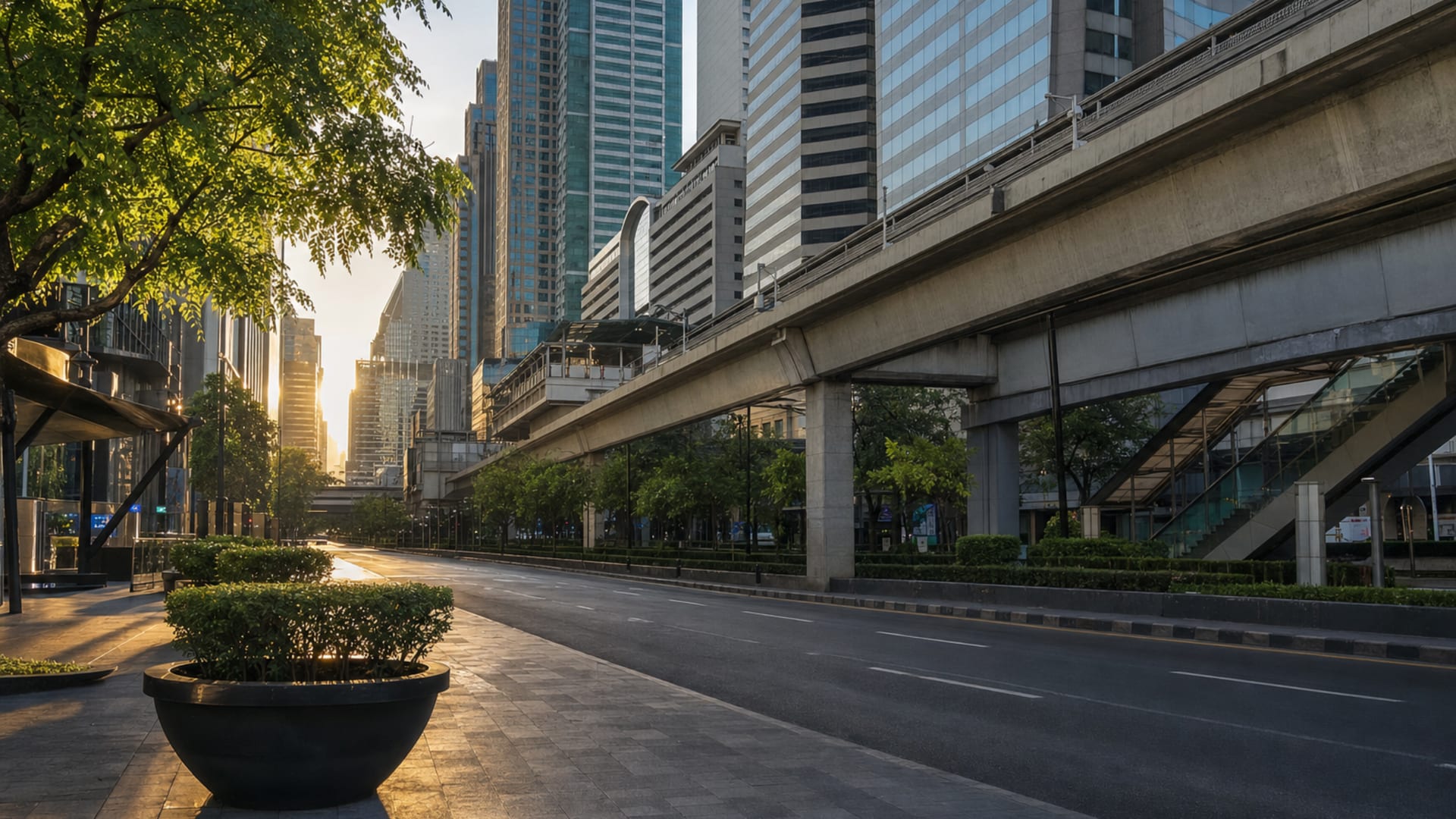
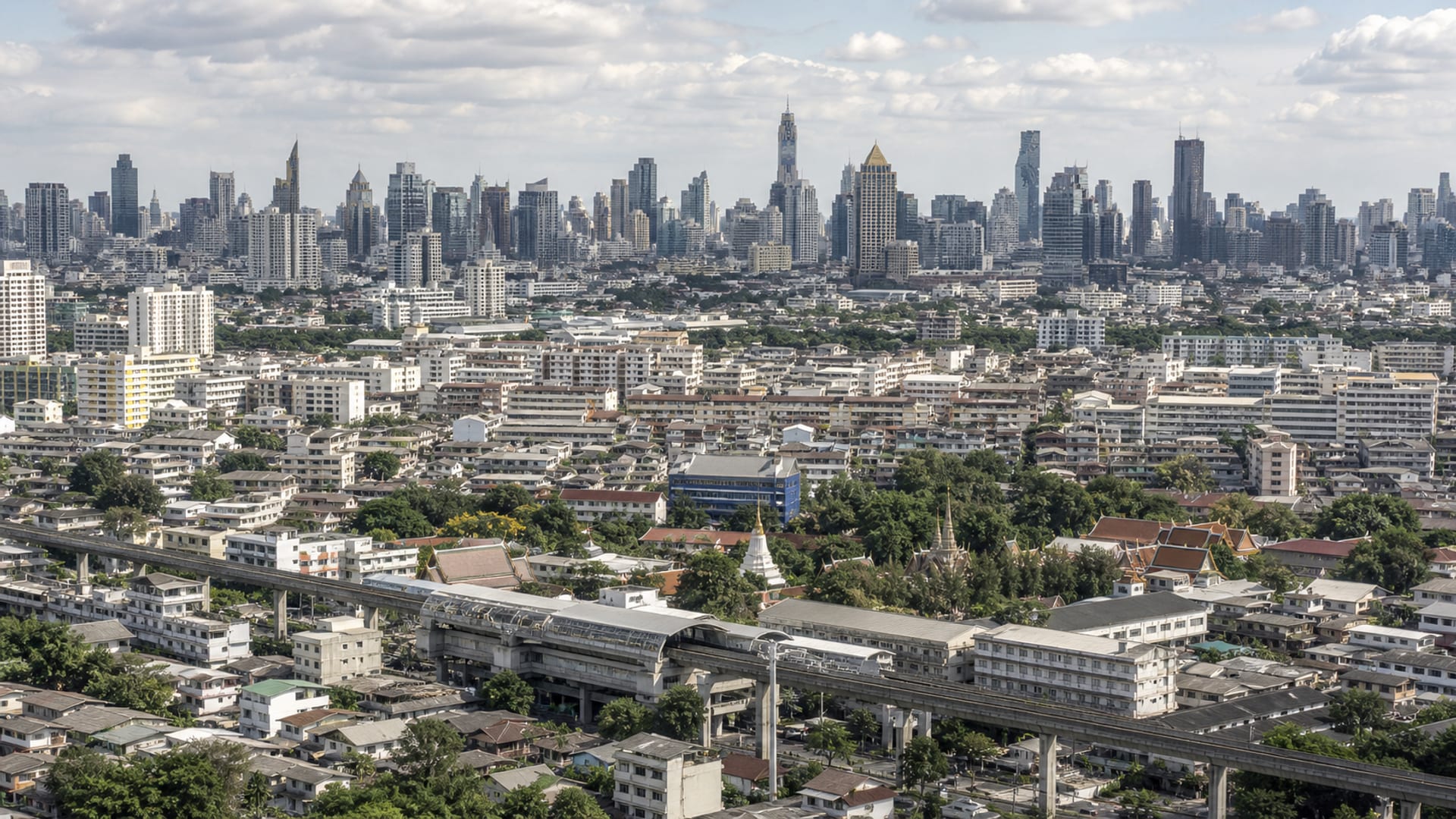
Bangkok’s long east-west corridor mixes office towers, apartment blocks, malls, and narrow side streets packed with restaurants and bars. The BTS (Bangkok Mass Transit System) runs through it, so you can reach shopping, dining, and many central neighborhoods without long taxi rides.
Best for: Restaurant hopping, shopping, nightlife, and travelers who want easy BTS access
What to expect: Busy sidewalks, heavy traffic on the main road, and lively evenings in the side streets
Hotel prices: Usually about $70–$220 (฿2,300–฿7,300) per night for well-rated stays
Distance to major sights: About 30–45 minutes by BTS, MRT, or taxi to the Grand Palace, with a transfer required on the BTS route
Quietness: Busy all day, with quieter side streets and a louder evening scene near bars and restaurants
Main trade-off: Central positioning comes with traffic noise. Some hotels may be far from BTS or MRT stations.
Good to know: A hotel near a BTS or MRT station keeps most of the neighborhood within easy reach and reduces the need for taxis.
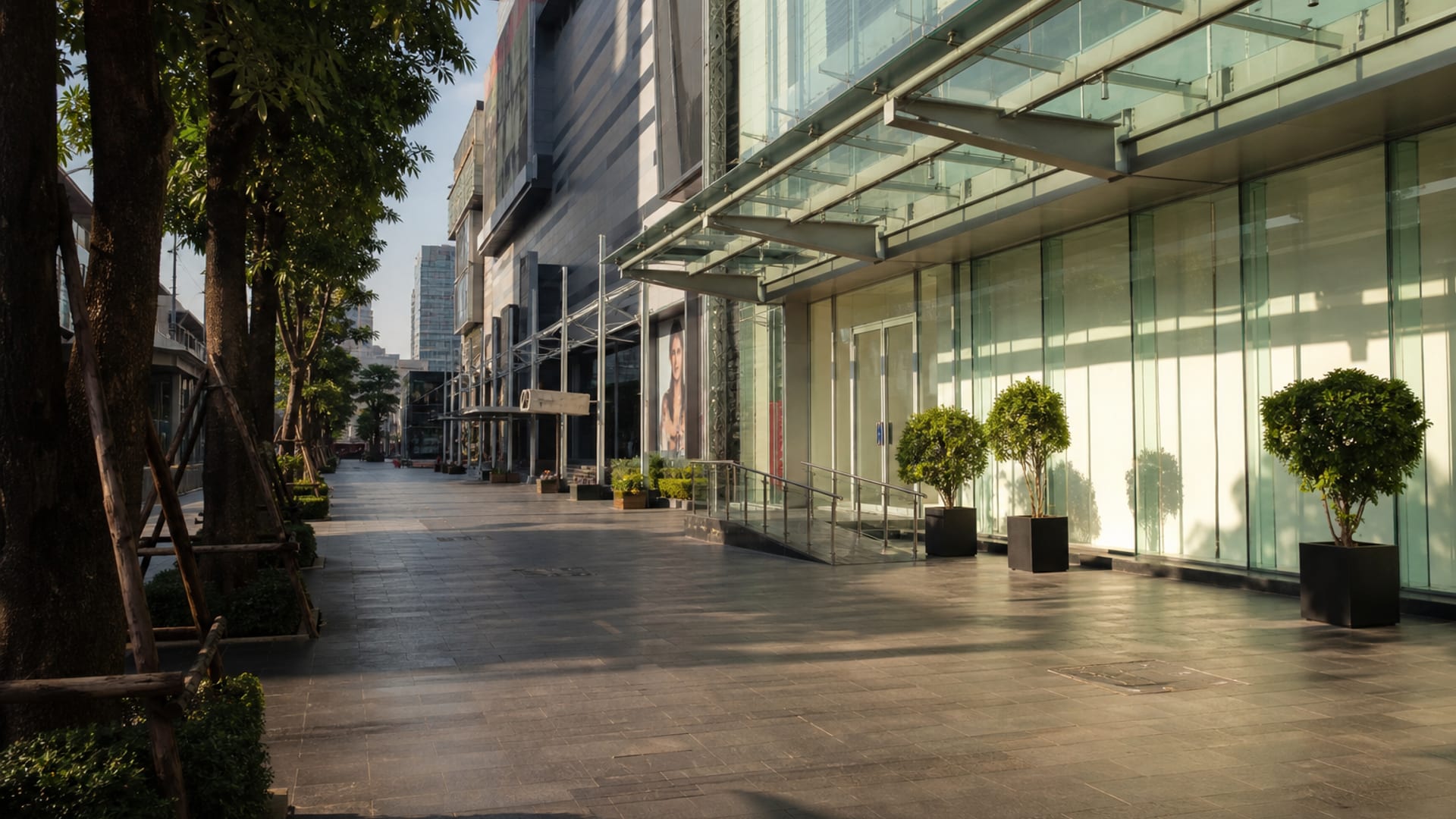
Siam is the city’s retail center, where major malls, the BTS interchange, and pedestrian bridges concentrate the action. The area offers easy access to shopping areas, cinemas, and transport stations.
Best for: Shopping, easy access to transport, and visitors who want to stay in the center of the city
What to expect: Large malls, constant foot traffic, and a busy daytime crowd that thins late at night
Hotel prices: Usually about $80–$220 (฿2,700–฿7,300) per night for well-rated hotels
Distance to major sights: About 10–15 minutes by BTS to Jim Thompson House; about 30 minutes to the Grand Palace by taxi
Quietness: Very active in the day, then noticeably quieter after mall hours, except near major roads
Main trade-off: The area is less atmospheric than older quarters, and hotel rates can be higher.
Good to know: Late-night dining choices shrink once the malls close, so plan meals before the evening runs late.
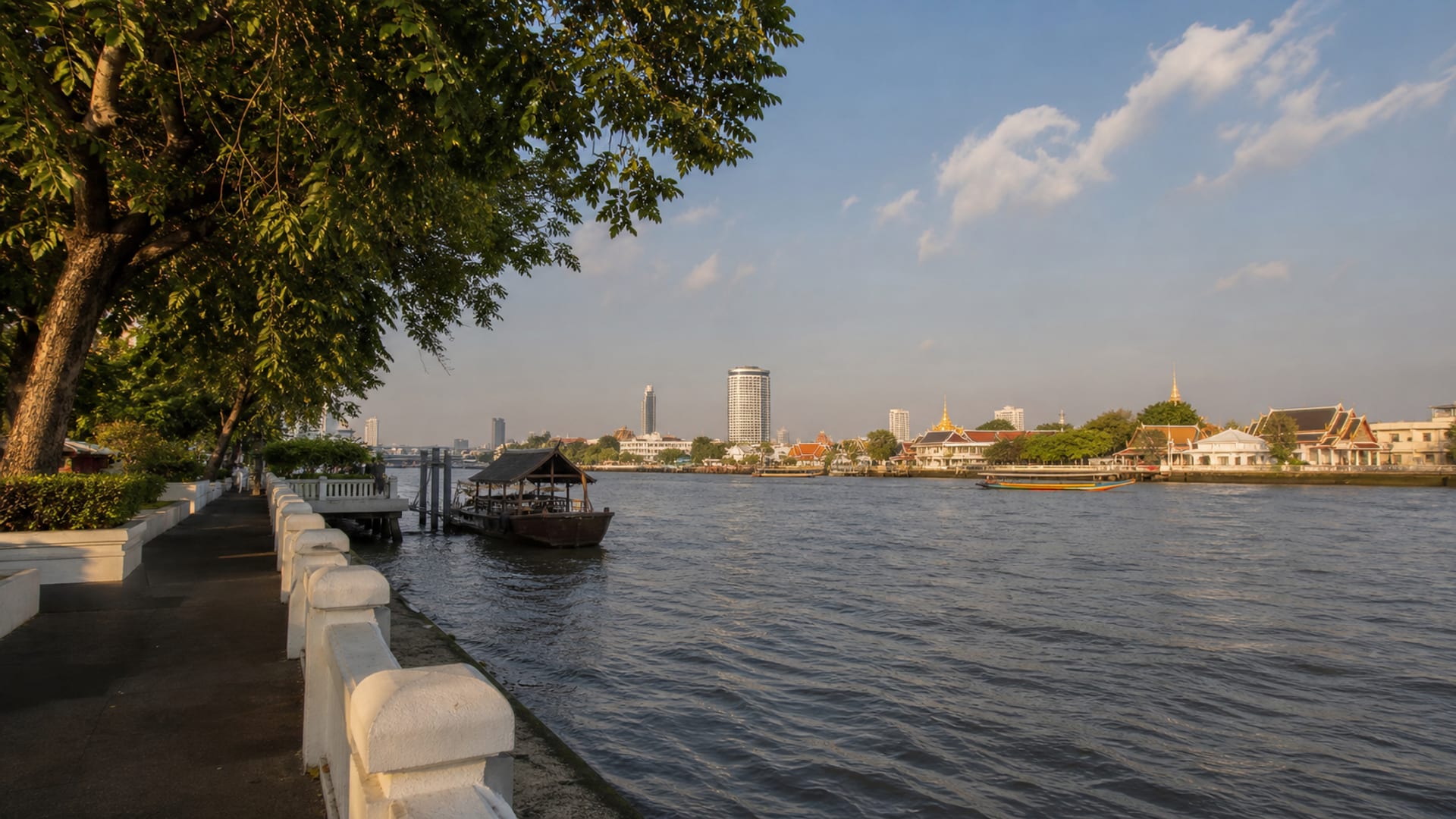
The Riverside covers the Chao Phraya waterfront, with hotels, temples, ferries, and views that put Bangkok’s historic core in easy reach. It suits travelers who want a scenic base with boat access to the Grand Palace, Wat Arun, and old-town sightseeing.
Best for: Scenic stays, temple visits, boat travel, and travelers who prefer a quieter area
What to expect: Hotel promenades, river traffic, and a slower street scene than the central shopping districts
Hotel prices: Usually about $90–$260 (฿3,000–฿8,700) per night for well-rated hotels; top riverside addresses go considerably higher.
Distance to major sights: About 20–35 minutes by ferry or MRT to the Grand Palace; about 20 to 25 minutes to Wat Arun by ferry
Quietness: Calmer during the day away from piers, then more subdued at night once river tours and dinner boats wind down
Main trade-off: You trade walkable nightlife for river views and ferries, and some addresses are farther from the BTS and MRT network.
Good to know: Choose a hotel with an easy pier or shuttle connection, because some hotels have direct pier access, while others require a shuttle or a longer walk.
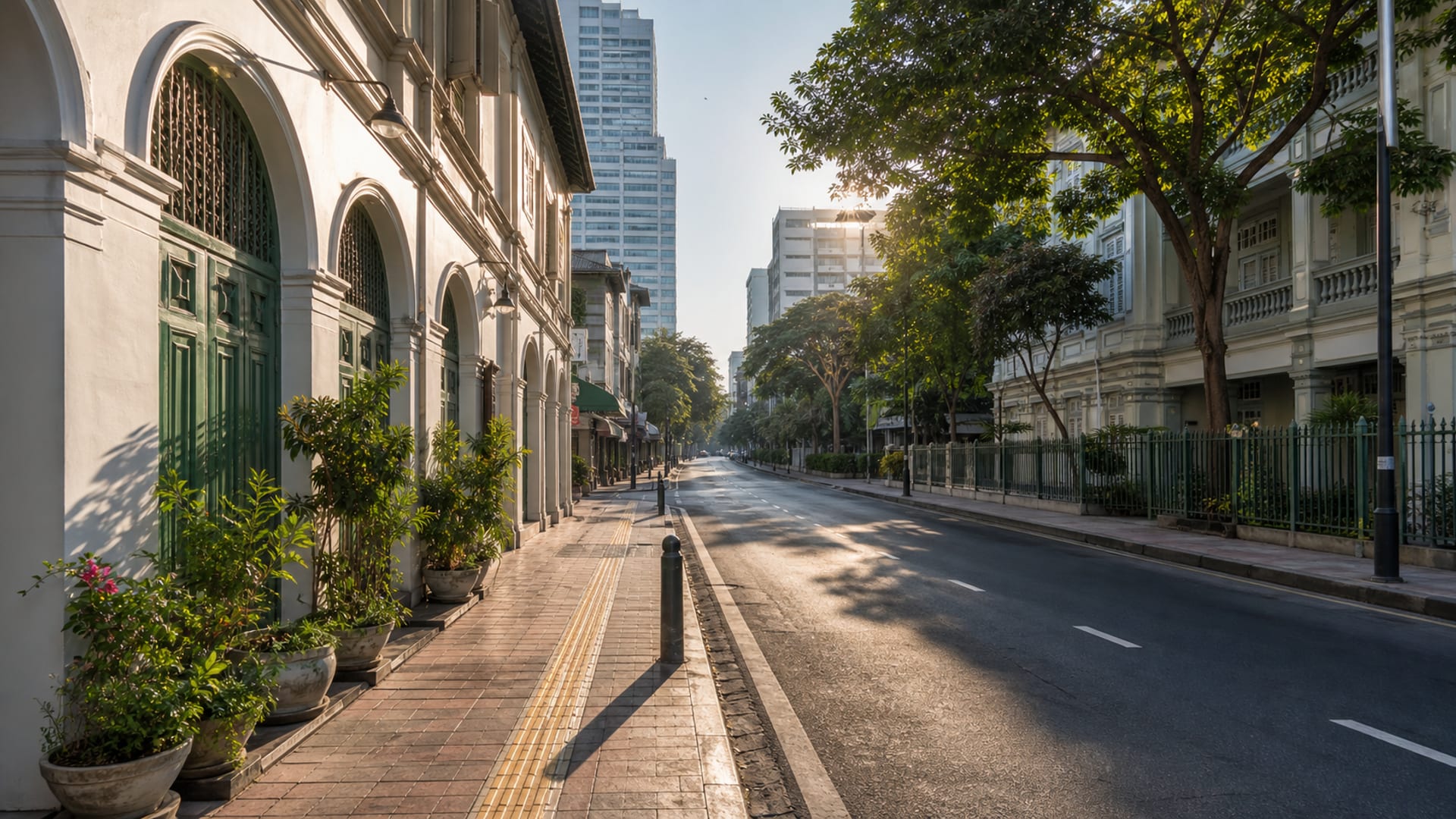
Bang Rak lies between the river and the Silom/Sathorn business corridor, with heritage buildings, business towers, and a dense line of restaurants. The area places Silom, Sathorn, the river, and multiple transit options within easy reach without the crowds typical of Siam.
Best for: Central access, heritage streets, dining, and access to BTS, MRT, and river transport
What to expect: Busy main roads, older shopfronts, and a mix of office workers, hotel guests, and evening diners
Hotel prices: Usually about $60–$180 (฿2,000–฿6,000) per night for well-rated hotels
Distance to major sights: 10 to 20 minutes by BTS, MRT, or taxi to Lumphini Park; about 20–35 minutes to the Grand Palace by taxi or ferry
Quietness: Moderately busy by day, then livelier in the evening near restaurant streets and hotel bars
Main trade-off: You get a well-connected location, but some blocks are more traffic-heavy than scenic, and certain sidewalks are narrow.
Good to know: If you plan to use ferries, check the walking route to the nearest pier before booking, since not every hotel is close to one.
Travelers usually avoid staying in outer Lat Krabang, Don Mueang, the northern fringe of Chatuchak, Bang Na, and the far-eastern Sukhumvit, as they are far from the historic center, the river, and the main temple areas.
Hotel deals
Getting around Bangkok
The BTS and MRT connect central Bangkok’s shopping districts, sightseeing areas, and transit hubs. Taxis reach destinations outside the rail network.

Metro
for longer distances
Bangkok’s BTS Skytrain and MRT cover central areas, with single fares varying from ฿16 to ฿65 ($0.50–$2.00). The Airport Rail Link connects Suvarnabhumi (BKK) to Phaya Thai in about 30 minutes. Buy tickets at the station machines.

Bus and tram
for convenience
Bangkok’s buses cover areas beyond the BTS and MRT. Fares range from ฿8 to ฿30 ($0.25 to $0.90), paid in cash on board. Air-conditioned and non-air-conditioned routes are available. Allow extra time, as journey times vary sharply with traffic.

Taxi
for convenience or late hours
Bangkok taxis are metered, starting at ฿35 ($1.10). Typical city trips cost ฿80–฿150 ($2.50–$4.50). Airport rides from Suvarnabhumi add a ฿50 ($1.50) surcharge plus expressway tolls, totaling roughly $12–$16. Insist on the meter and carry cash.
*Prices are based on rates updated as of June 2026 and may change at the time of travel.
Use the BTS and MRT for central trips, ferries for the river and old-city sights, and taxis for destinations outside the rail network and late-night returns.
Iconic places in Bangkok
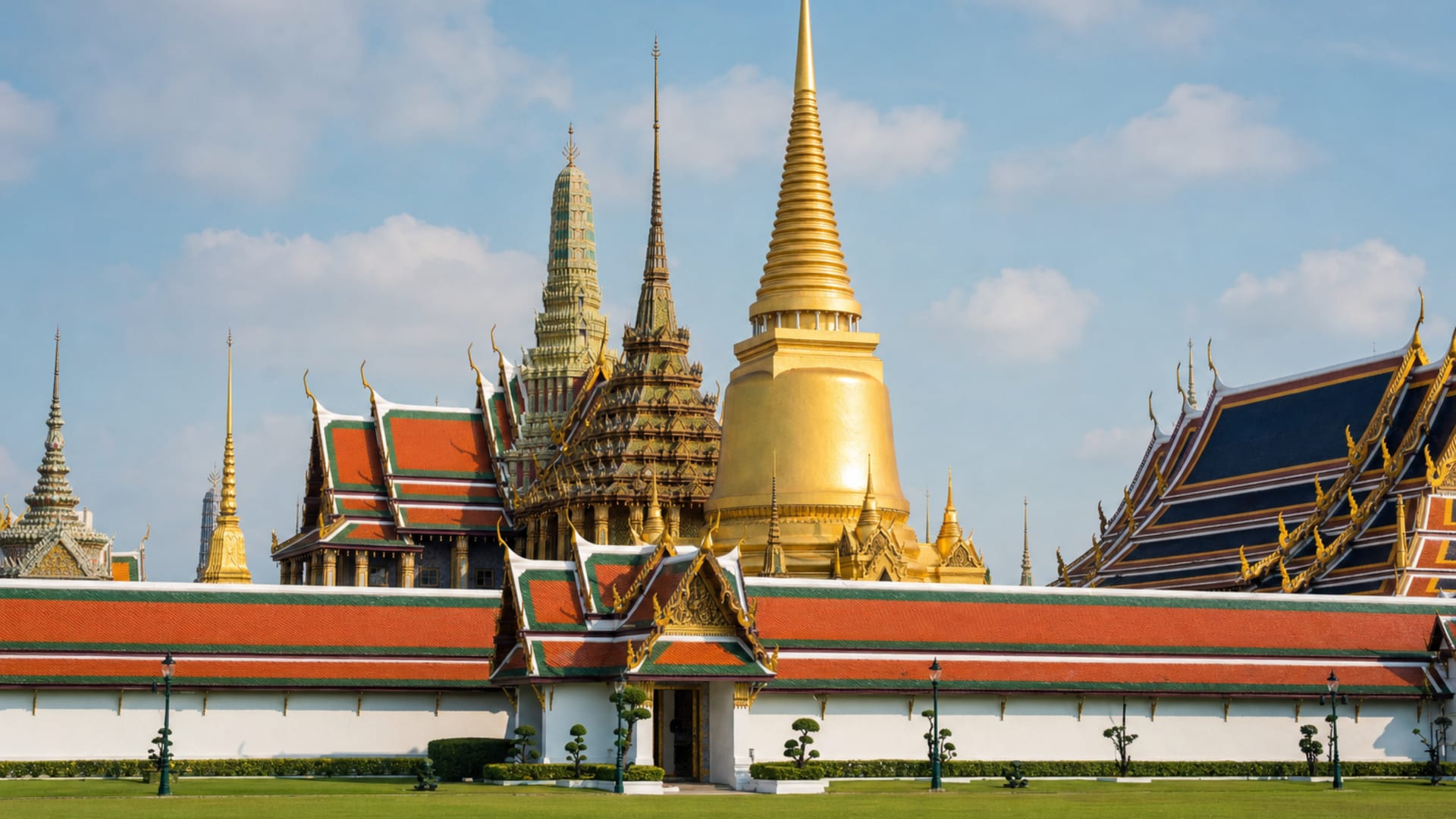
Grand Palace and Wat Phra Kaew
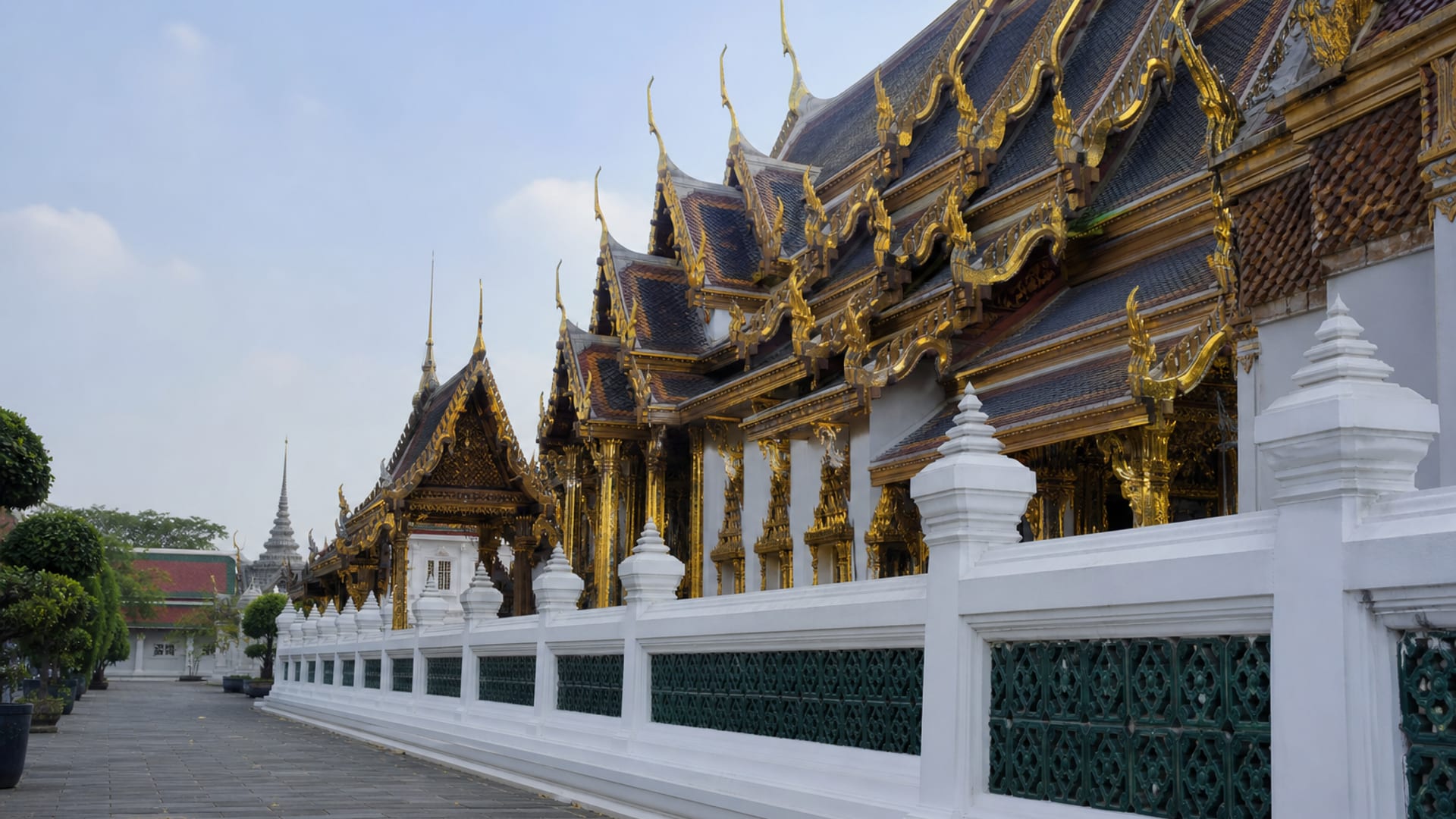
Bangkok’s royal complex pairs gilded halls, mirrored spires, and the Emerald Buddha, the country’s most revered image. The grounds show the scale of Thai court architecture at the heart of the old city.
Time needed: About 2 to 3 hours
Entry: Tickets cost ฿500 ($15) and are sold only at the gate. There is a dress code. Visit the official site for details.
Tip: Arrive at opening time (8:30 am), before tour groups fill the courtyards and walkways.
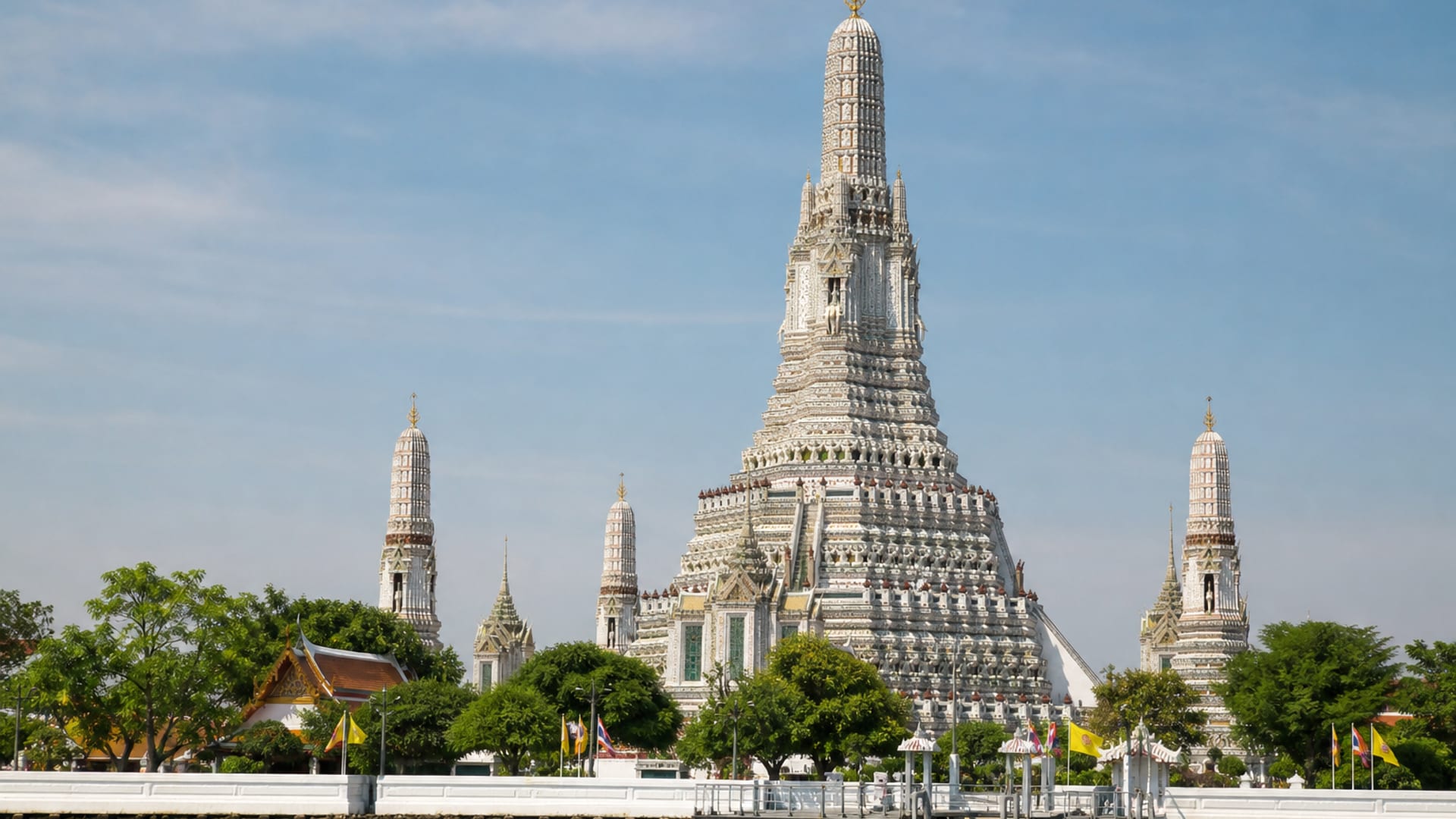
Wat Arun
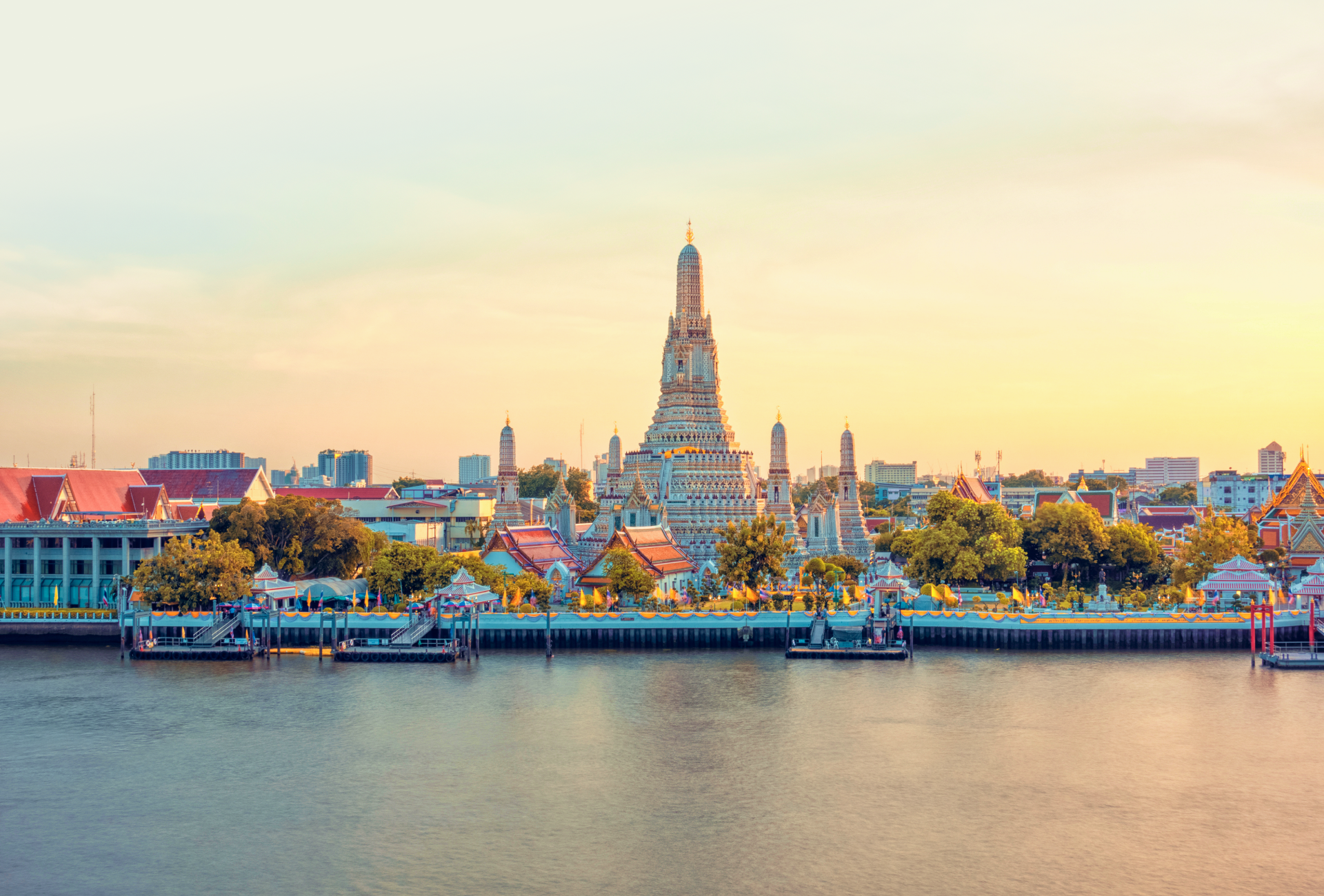
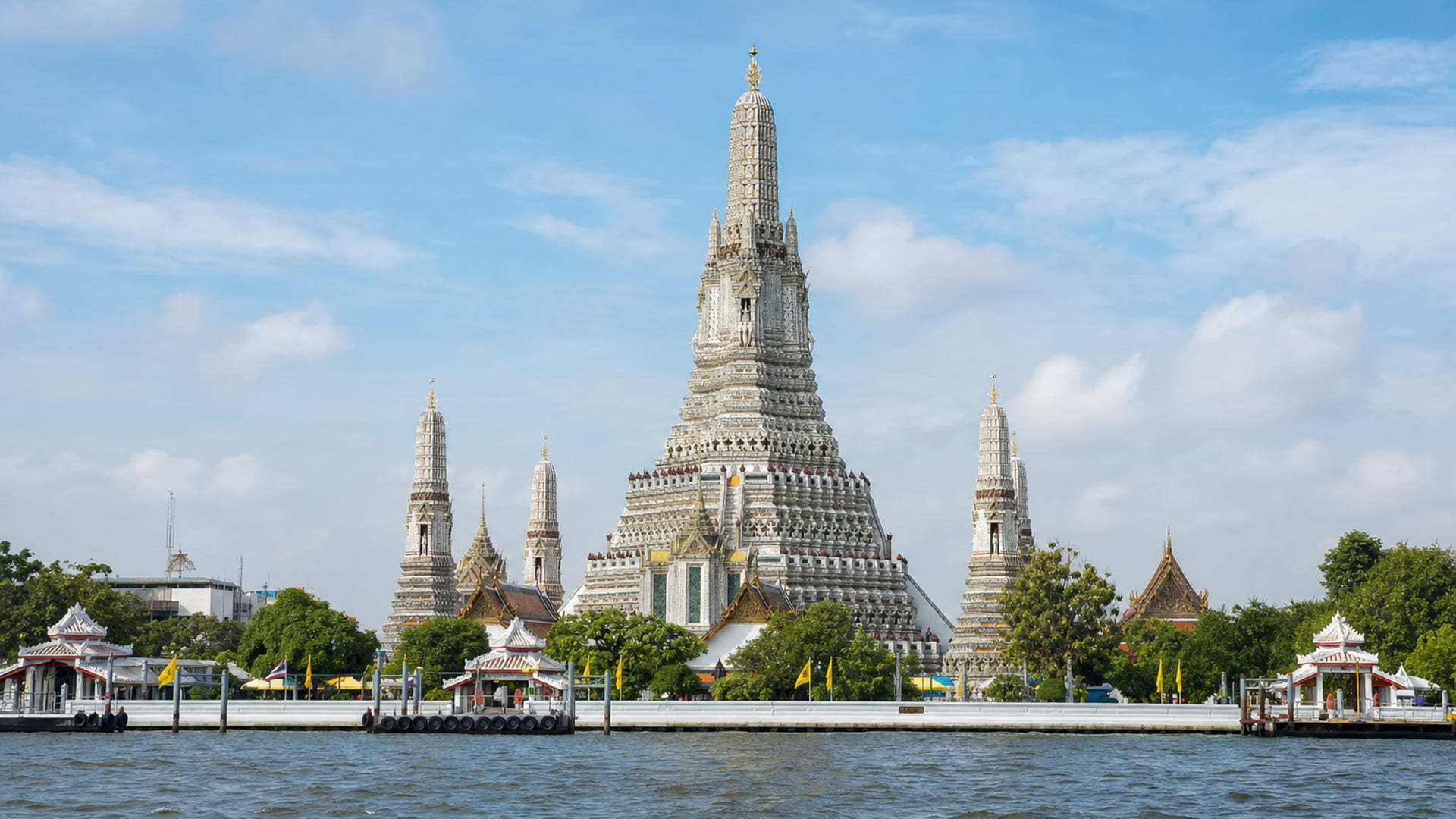
Rising from the Thonburi bank of the Chao Phraya, Wat Arun is known for its porcelain-studded central prang and river views. The steep stairways and riverfront setting make it a distinct stop on Bangkok’s west side.
Time needed: About 1 to 2 hours
Entry: Entrance costs ฿200 ($6). Tickets are sold at the gate Visit the official site for details.
Tip: Go late in the day, when the riverfront light brings out the tower’s detail.
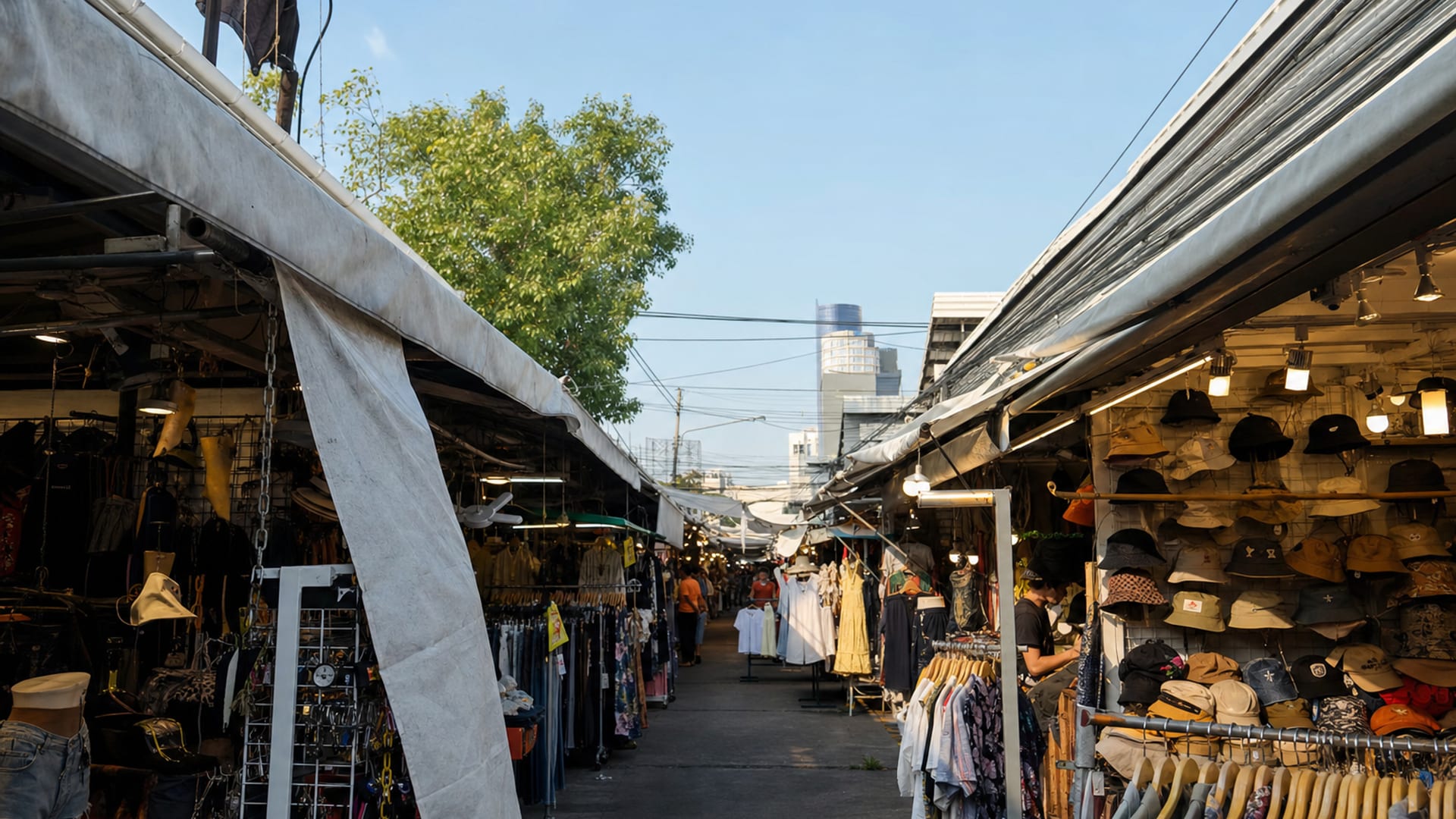
Chatuchak Weekend Market
Bangkok’s largest market, with over 15,000 stalls selling clothing, ceramics, plants, art, and street food. Its size and weekend-only schedule make it a city landmark as much as a shopping stop.
Time needed: About 2 to 4 hours
Entry: Free to enter. The full market opens on weekends only (9:00 am–6:00 pm) Visit the official site for details.
Tip: Start early, before the midday heat builds and the walkways become crowded.
Overlooked places in Bangkok

Bang Krachao
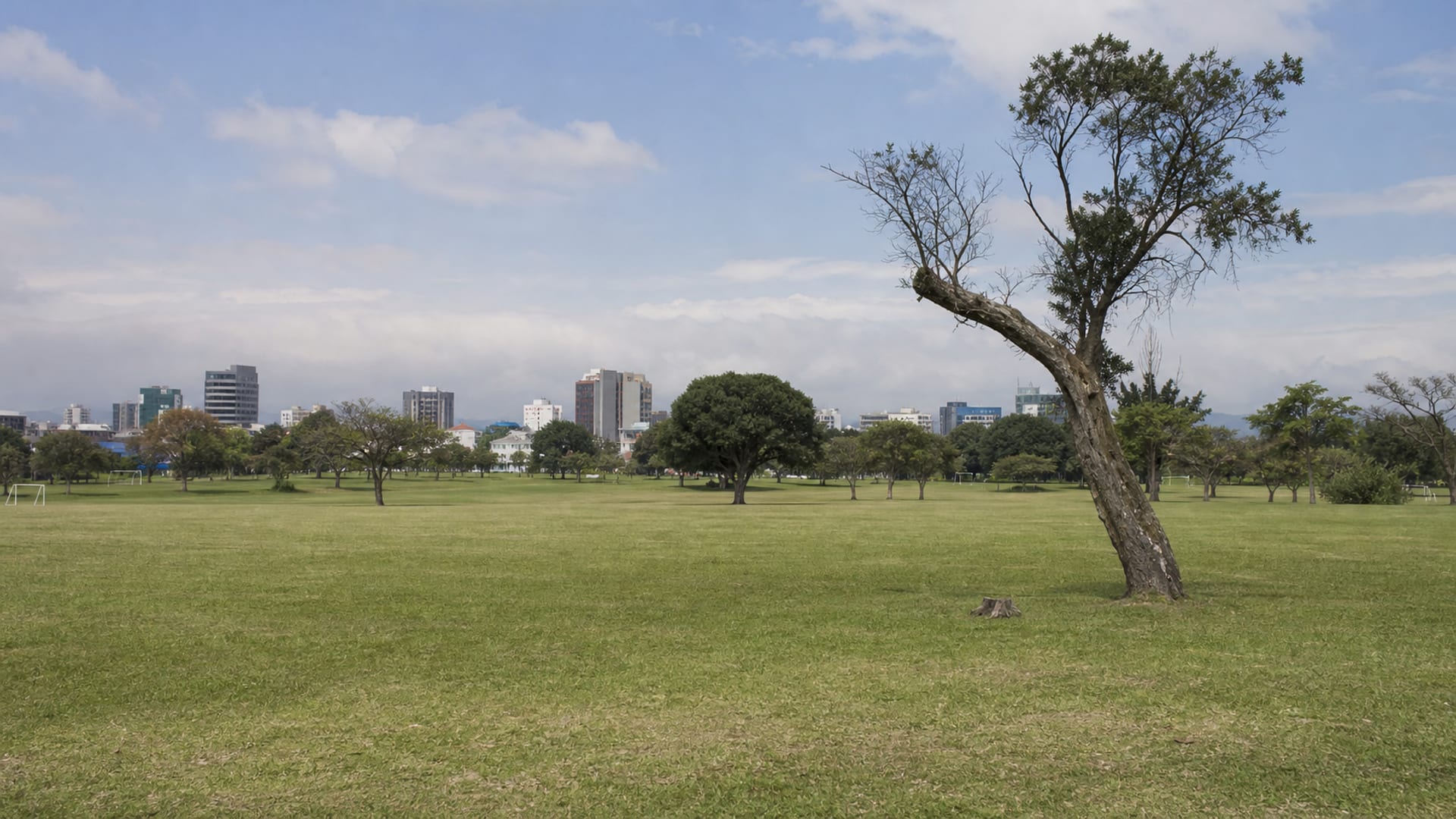
A leafy peninsula of canals, cycling paths, and small temples, accessible by a short ferry from the Khlong Toei area south of central Bangkok. Weekday mornings are the quietest time to visit.
Time needed: About 2 to 4 hours
Entry: Free to enter. Ferry crossing ฿5–฿40; bike rental ฿60–฿100 per day. No advance booking needed.
Tip: Go before 10:00 am for the coolest ride and softer light.

Museum of Contemporary Art (MOCA Bangkok)
A private museum showcasing Thai modern and contemporary art in a purpose-built building north of the center. One of Bangkok’s calmer indoor art destinations for art-focused visitors.
Time needed: About 1 to 2 hours
Entry: Adult tickets cost ฿300 ($9). Visitors under 15 or over 60 enter free. Visit the official site for details.
Tip: Allow extra time for the taxi or Red Line train ride from central Bangkok.
What to eat in Bangkok
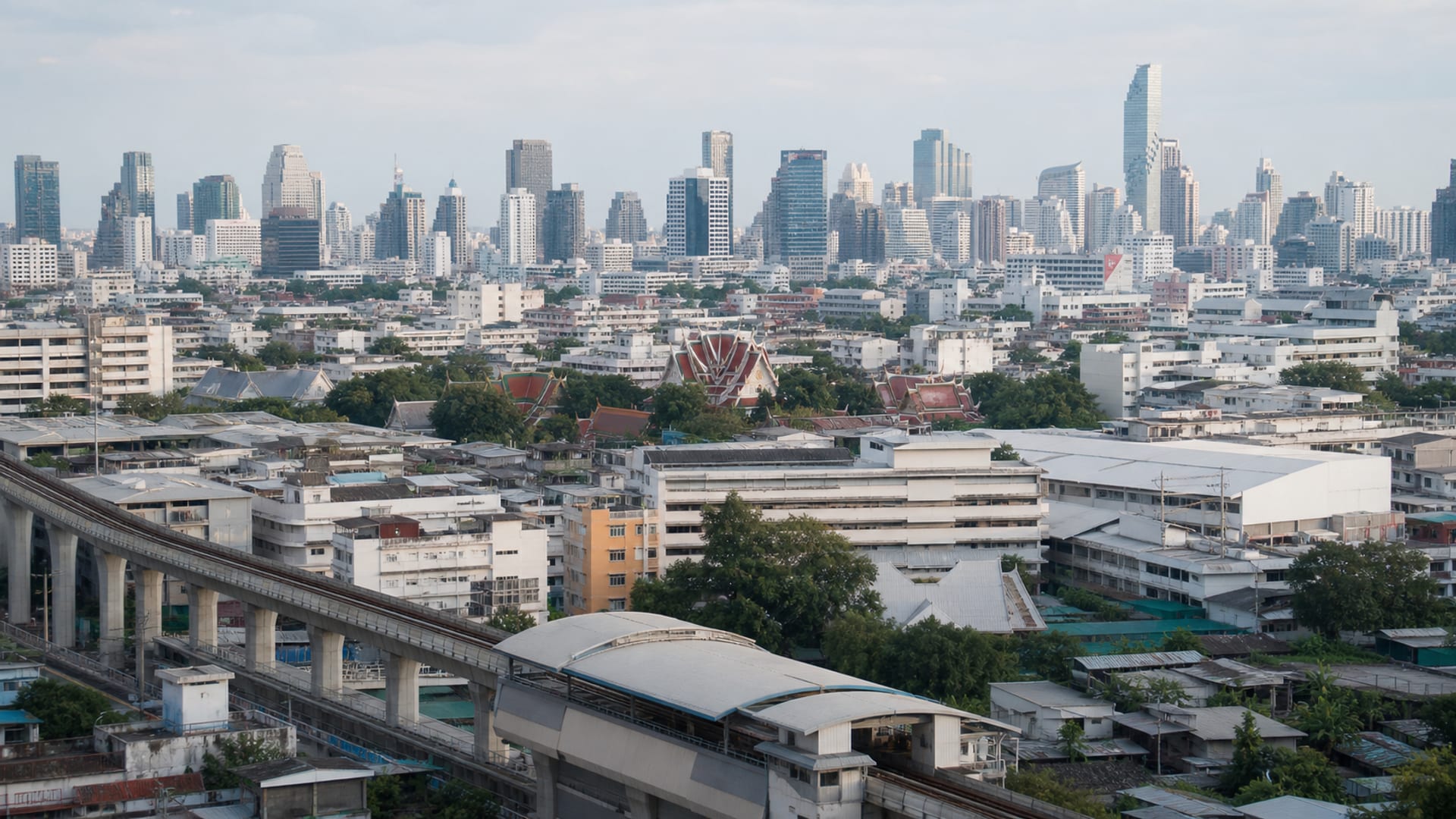
Bangkok’s food leans on jasmine rice, noodles, herbs, chilies, lime, fish sauce, and coconut, combining sweet, sour, salty, and hot flavors. The city is famous for its street-food culture.
Pad Thai
This stir-fried noodle dish balances tamarind, egg, tofu, peanuts, and shrimp or chicken in one pan. Thip Samai is the classic Bangkok stop for it, and the queue reflects how popular the dish remains in Bangkok.
Tom yum goong
Tom yum goong brings shrimp, lemongrass, lime leaf, galangal, chilies, and mushrooms into a sharp, fragrant soup. Jay Fai serves a well-regarded version. The restaurant is primarily known for its crab omelet.
Som tam
Som tam combines green papaya, chilies, lime, fish sauce, peanuts, and tomato for a salad that lands hot, salty, and bright. Somtam Nua offers a popular Bangkok version that many diners pair with sticky rice and grilled chicken.
Khao man gai
Khao man gai pairs poached chicken with rice cooked in chicken fat, plus ginger sauce and broth on the side. Go-Ang Pratu Nam Chicken Rice is a Bangkok standard for it, especially when you want something fast but well-made.
Best time to visit
Bangkok is hot year-round. The cool season makes sightseeing easier, while the rainy months bring heavy downpours and longer travel times.
Best for: Temple visits, river walks, and outdoor market mornings
What you get: About 72°F to 90°F (22°C to 32°C), with lighter humidity and the biggest visitor crowds
Trade-offs: Peak demand raises hotel prices, and popular sights fill early
Best for: Indoor museums, mall time, and early starts before the heat builds
What you get: About 79°F to 98°F (26°C to 37°C), with fewer tourists than the cool season
Trade-offs: Midday heat in the hot season can make outdoor walking uncomfortable.
Best for: Food-focused trips and flexible sightseeing with lower room rates
What you get: About 77°F to 91°F (25°C to 33°C), with thinner crowds between storms
Trade-offs: Heavy afternoon rain can slow ferries, taxis, and market visits.
Best for: Balanced sightseeing before the main cool-season rush
What you get: About 75°F to 90°F (24°C to 32°C), with moderate crowds and improving weather
Trade-offs: October still sees regular afternoon showers; November is drier, but light rain is possible.
A 5-day plan in Bangkok
A five-day stay in Bangkok is most pleasant when temple landmarks and markets each have their own day. That spares you from long trips between districts and leaves room for a slower final morning.
Land at Bangkok Suvarnabhumi (BKK), then take a taxi or the Airport Rail Link to the city center. The Rail Link to Phaya Thai station takes about 30 minutes and costs ฿45 ($1.50); a taxi to Sukhumvit takes 30–45 minutes and costs roughly ฿400–฿500 ($12–$15). Staying near a BTS station keeps the first evening simple, so check in, settle in, and head to a nearby dinner spot in Asok or Thonglor for an easy plate of rice, noodles, or grilled chicken before an early night.
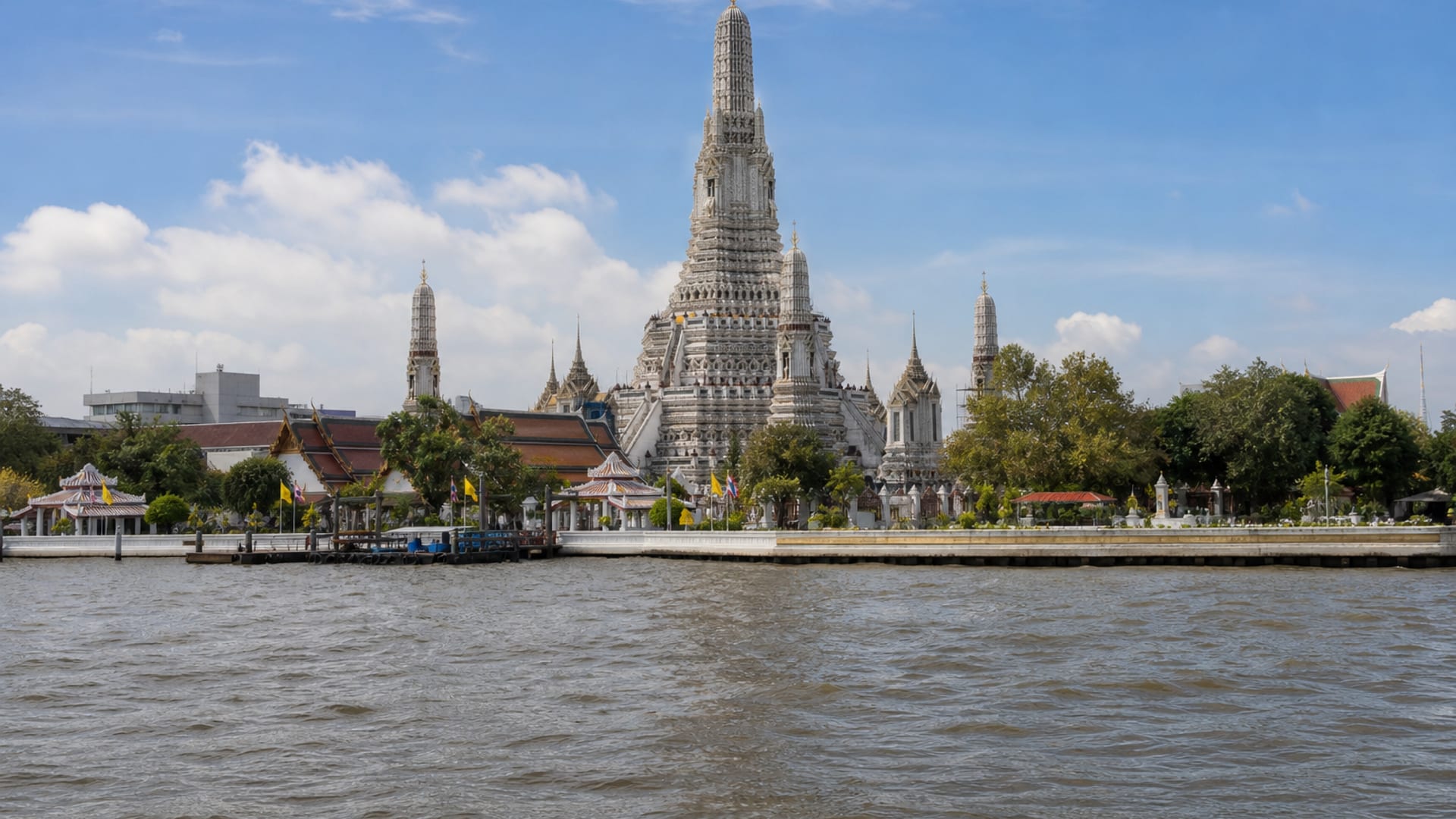
Begin early at the Grand Palace and Wat Phra Kaew, since opening time (8:30 am) avoids the busiest courtyard flow and the visit takes about 2 to 3 hours; admission is ฿500 ($15) for foreign visitors. From there, walk about 10 minutes to Tha Tien Pier and take the cross-river ferry to Wat Arun, a 5-minute crossing for ฿3–฿5, then spend time at the temple before the late afternoon light hits the prang; entrance costs ฿200 (~$6). Finish with dinner near the Riverside or Bang Rak.
Chatuchak Weekend Market is open Saturdays and Sundays only, so plan this day for the weekend. Start early at the market, as an early arrival helps avoid the hottest part of the day and gives you a better chance to explore before the midday crowd builds; plan about 2 to 4 hours and expect free entry. MOCA Bangkok is a short 10–15 minute taxi ride from Chatuchak, as both are in the same district. Spend 1 to 2 hours in its Thai modern and contemporary galleries, then finish with dinner in Siam.
Head out before 10:00 am, when temperatures are lower, and the bike paths are less crowded. Take a taxi or MRT to the Khlong Toei area, then cross by ferry (฿5–฿20) and rent a bike on the other side (฿60–฿100 per day). Spend 3 to 5 hours cycling the elevated lanes and canal-side paths, then return to the city for an evening in Bang Rak, where heritage shopfronts, Surawong dining rooms, and a riverfront drink round out the day.
Begin with the Jim Thompson House near National Stadium BTS, where about 1 hour covers the historic silk compound and traditional Thai architecture; adult admission is ฿250 (~$8) and a guided tour is included. From there, Siam is one BTS stop away for a final coffee or some mall time before collecting bags and heading to Bangkok (BKK) for departure.
Business-class flights from the US to Bangkok
No nonstop flights currently operate from New York or Los Angeles to Bangkok, so all itineraries involve at least one layover. The examples below show typical one-stop options from both coasts in 2026.
New York (JFK) to Bangkok (BKK)
Airlines such as Etihad Airways, Emirates, Qatar Airways, Turkish Airlines, and Cathay Pacific connect JFK to Bangkok via hubs including Abu Dhabi (AUH), Dubai (DXB), Doha (DOH), Istanbul (IST), and Hong Kong (HKG), with total journey times typically running 20–26 hours. Etihad Airways offers round-trip business-class tickets ranging from $4,700 to $9,400.
Los Angeles (LAX) to Bangkok (BKK)
Airlines including Philippine Airlines, Cathay Pacific, EVA Air, and Korean Air serve this route, with common connections through Manila (MNL), Hong Kong (HKG), and Tokyo (NRT). Total journey times usually run 20–22 hours. Philippine Airlines offers round-trip business-class tickets ranging from $4,600 to $5,900.
Bangkok by neighborhood and ferry
A good Bangkok trip ties together Sukhumvit, Siam, the Riverside, and Bang Rak with the city’s main modes of transport: BTS for central areas, ferries for Wat Arun and the Grand Palace, and taxis for remote areas. Grouping days by area reduces travel time and makes it easier to see different sides of the city without spending hours in traffic. If you want to start planning your trip to Bangkok, our experts at AranGrant can help you find flights that match your preferences and schedule.







