

Chapters:

Need help with your trip?
Our support team is available 24/7. Request a callback or call us directly at (833) 619-0908
Accra’s main business districts, hotel areas, and coastline are close together on a map, which makes the city look compact. In practice, embassies, hotels, restaurants, and the coastline are spread across separate corridors, each with its own rhythm through the day.
A day in Airport Residential Area or Cantonments can look completely different by evening, when Osu’s restaurants and bars fill up and coastal roads slow with traffic. Meetings, sightseeing, and dinner plans rarely line up unless the day is built around which corridor comes first.
This guide lays out a compact schedule for Accra, pairing neighborhoods with nearby restaurants, museums, and coastal stops, with flight timing and seasonal notes included so a short business trip still leaves room to see the city.
Useful things to know

Main language(s): English

Currency: Ghanaian cedi (GHS, GH¢)

Cash and cards: Cards and contactless payments are accepted at many hotels and larger venues; carry about GHS 310 to GHS 625 ($27 to $55) in cash for taxis, tips, and small purchases.

Tipping: Round up small fares and leave about 5% to 10% in restaurants if service is good.

Traditional food: Waakye, jollof rice, banku and tilapia, kelewele

Water and coffee costs: A small bottle of water usually costs GHS 15 to GHS 30 ($1.50 to $3), bar espresso costs about GHS 30 to GHS 45 ($1.50 to $4).

Taxis and ride apps: Bolt and Yango operate here; confirm the pickup point before you ride.

Plug and voltage: Type D/G socket, 230V

Dining and shop opening hours: Breakfast runs from 6:30 am to 9:30 am, lunch is served between 12:00 pm and 3:00 pm, and dinner from 6:30 pm to 10:00 pm. Many places close by 11:00 pm, with later hours on weekends.

Emergency number: 112 unified, or 191 for police, 192 for fire, and 193 for ambulance
Where to stay in Accra
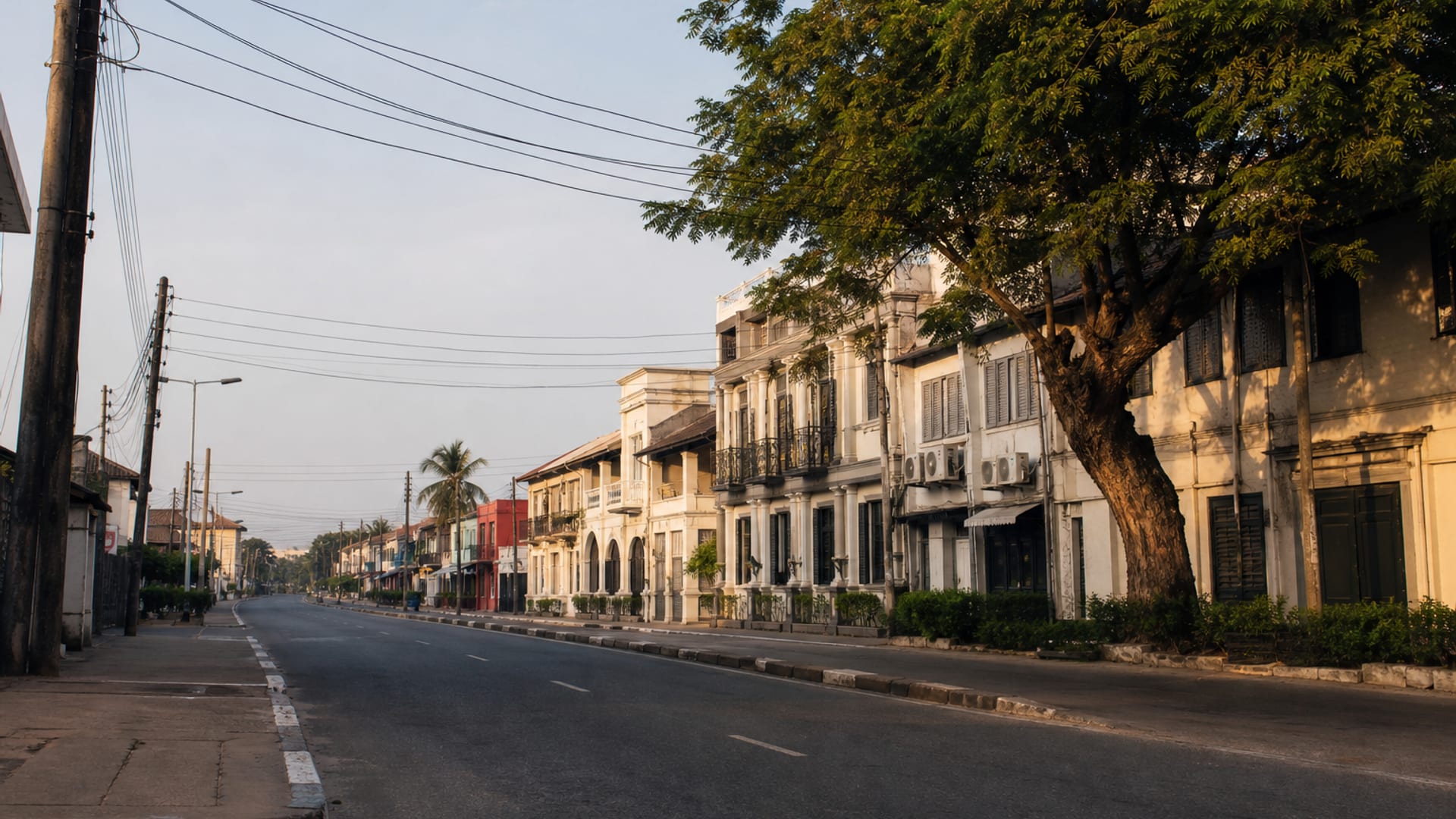
Osu is Accra’s best-known dining and nightlife district, with hotels, restaurants, bars, and shops packed along Oxford Street and the nearby side streets. It suits travelers who want to stay close to the city’s busiest evening venues and have easy taxi access across town.
Best for: Dining, nightlife, and travelers who want a central location with easy access to taxis
What to expect: Busy streets, late-opening venues, and a steady flow of locals, business travelers, and weekend visitors
Hotel prices: About GHS 1,400 to GHS 3,400 ($122 to $295) per night for well-rated stays
Distance to major sights: About 10 to 15 minutes by car to both Black Star Square and the nearby Kwame Nkrumah Memorial Park
Quietness: Active through the day and lively well into the evening, especially near Oxford Street
Main trade-off: Traffic and music can make sleep lighter, and better-located hotels usually cost more than similar rooms farther out.
Good to know: Choose a room off the main strip if you want easier nights; the loudest bars cluster on the busiest blocks.
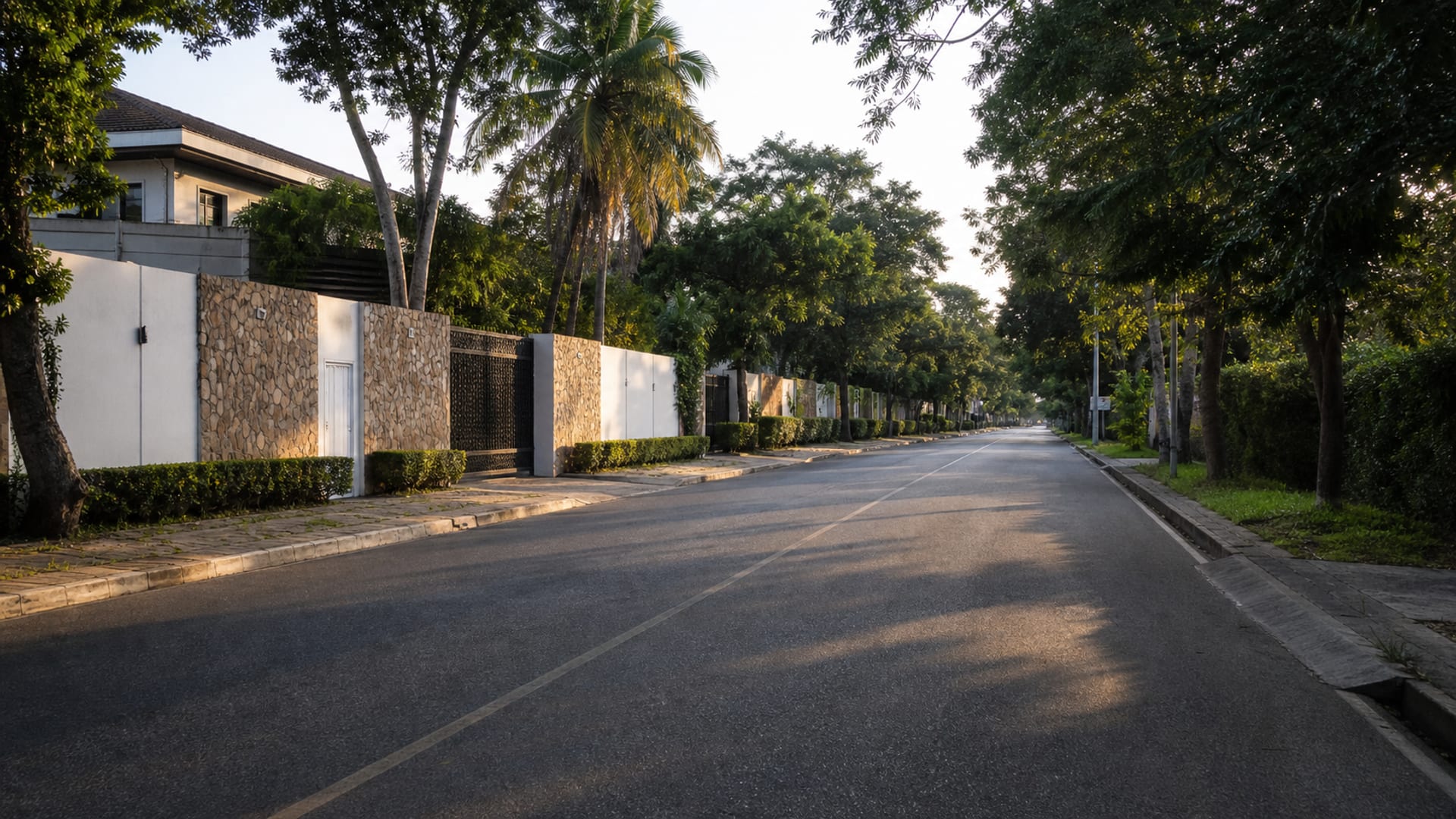
Cantonments is one of Accra’s more residential and diplomatic districts, with embassies, guesthouses, and larger hotels set on wider streets and behind gates. It suits travelers who want a calmer location without losing access to central Accra and the airport corridor.
Best for: Business trips, embassy access, and travelers who prefer a quieter residential area
What to expect: Tree-lined streets, guarded compounds, and lighter foot traffic than in the central entertainment districts
Hotel prices: Usually about GHS 1,900 to GHS 4,350 ($165 to $380) per night for well-rated hotels
Distance to major sights: About 10 to 20 minutes by car to Black Star Square, and about 15 to 20 minutes to the Accra Airport (ACC)
Quietness: Quiet by day and generally calm at night, with only occasional traffic on the main roads
Main trade-off: You will pay more for space and calm, and you may need taxis to get to restaurants and evening venues.
Good to know: Pick this area if you want easy access to the airport. Peak-hour traffic can slow the trip into downtown.
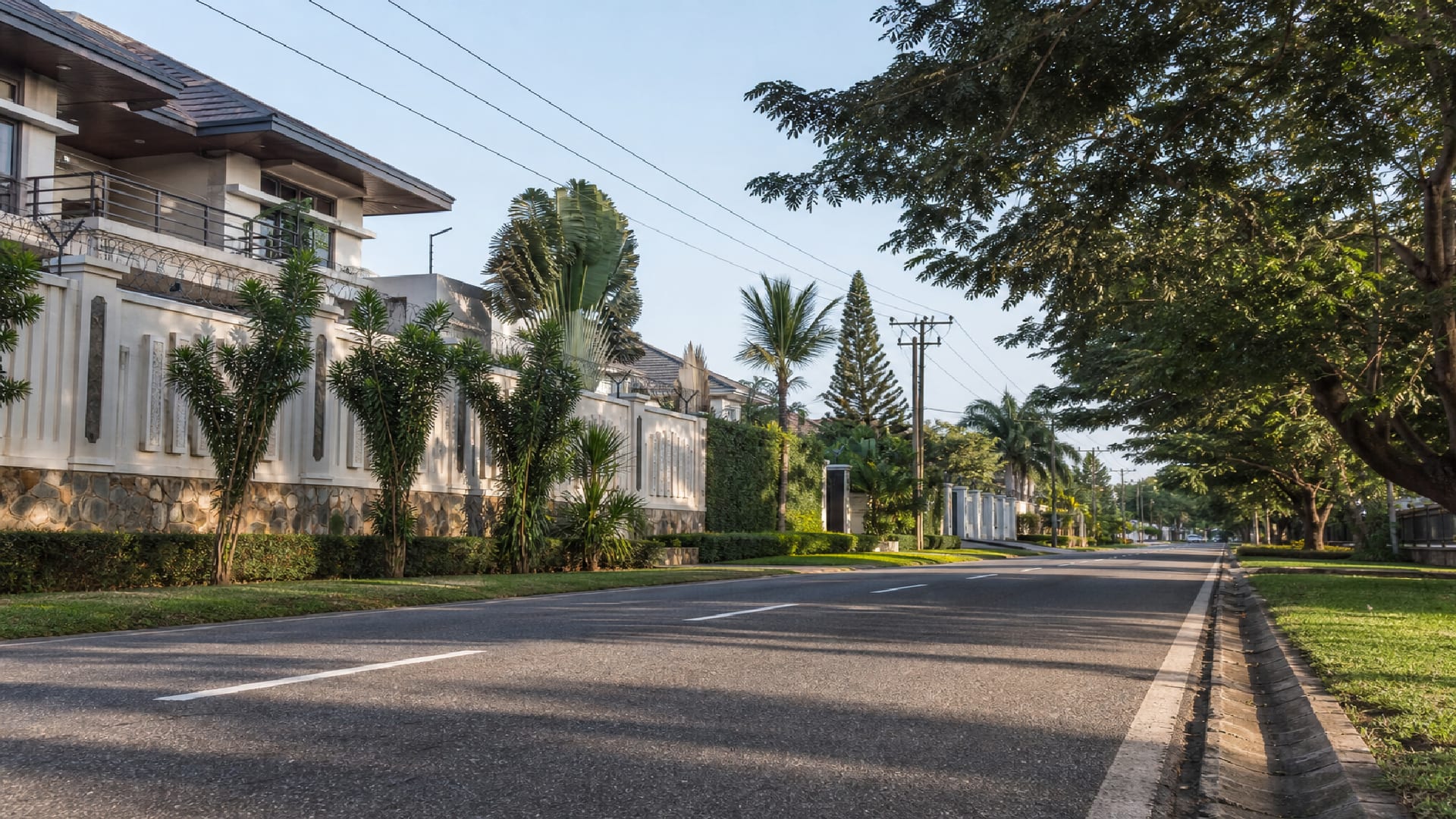
Airport Residential Area is just west of Kotoka International Airport, with modern hotels, apartments, and office buildings spread along broad roads. It is convenient for short stays, since it keeps arrivals, departures, and meetings close together without putting you far from central Accra.
Best for: Overnight layovers, early flights, and business travelers with airport-linked schedules
What to expect: Moderate traffic by day, hotel-focused streets, and fewer casual evening crowds than Osu or East Legon
Hotel prices: About GHS 1,700 to GHS 4,050 ($148 to $355) per night for well-rated stays
Distance to major sights: About 5 to 10 minutes by car to Accra Airport (ACC), and about 15 to 25 minutes to the Independence Arch
Quietness: Usually calm at night, although some roads carry airport and commuter traffic during the day
Main trade-off: Restaurants and entertainment are more limited than in the livelier districts, so you may rely on taxis after dark.
Good to know: Book here if you have an early departure, because the airport is close enough to reduce the risk of a delayed morning transfer.
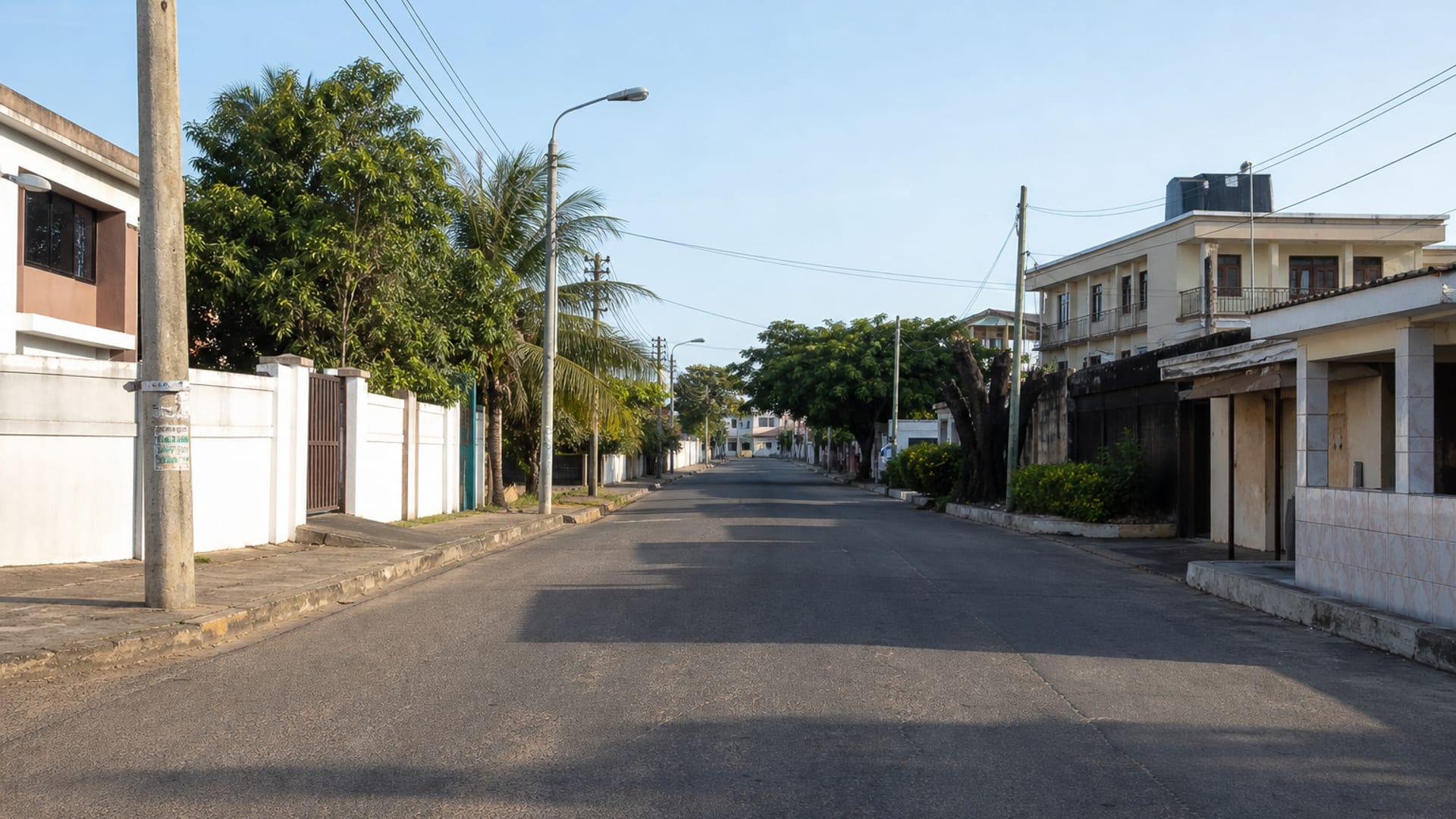
Labone is a compact, upscale neighborhood north of Osu, known for guesthouses, villas, cafés, and a growing cluster of restaurants. It gives travelers a residential setting with enough dining options nearby to avoid spending every evening on Oxford Street.
Best for: Longer stays, couples, and travelers who want restaurants without the noisiest blocks
What to expect: Local traffic, neighborhood cafés, and a mix of expats, residents, and hotel guests moving through the area
Hotel prices: About GHS 1,550 to GHS 3,735 ($135 to $325) per night for well-rated hotels
Distance to major sights: About 10 to 15 minutes by car to Black Star Square, and about 15 to 20 minutes to the airport
Quietness: Quieter than Osu in the evening, although restaurant streets still see activity after dark
Main trade-off: You get a calmer stay, but the best-known nightlife and shopping are a short taxi ride away.
Good to know: Check how far your hotel is from the main roads, because the quieter lanes can be less convenient for ride-hailing pickups.
Far-west spots like Kokrobite and Bortianor mean long drives to Osu and the waterfront. East Legon is far from the historic core and crosses busy roads. Labadi suits beach trips more than walkable, central stays.
Hotel deals
Getting around Accra
Accra runs on road transport. Trotros minibuses cover most neighborhoods at low cost, taxis and rideshare cars offer direct transfers, and walking is a good option for shorter distances.

Rail
for longer distances
Accra has no metro network, so the closest rail option is the suburban rail line, which has limited commuter coverage. Trains run just twice daily on the Accra–Tema route, and tickets cost GHS 12 ($1). For most visitors, it does not replace road transport, and trip times depend heavily on traffic.

Bus and tram
for convenience
The Trotro minibus network covers Accra widely, including routes toward central neighborhoods, Makola, Osu, and the airport corridor. Stops and numbering can be informal. Fares run GHS 3 to GHS 16 ($0.30 to $1.40), and rides between districts take roughly 20 to 60 minutes depending on traffic.

Taxi
for convenience or late hours
Taxi drivers in Accra negotiate fares more often than using meters. Short city trips commonly cost GHS 45–GHS 125 ($4–$11), while airport transfers cost GHS 125–GHS 310 ($11–$30) depending on distance and traffic. Most taxis accept cash payments in Ghanaian cedi only.
*Prices are based on rates updated as of June 2026 and may change at the time of travel.
Trotros suit low-cost cross-town rides, taxis and ride-hailing are best for longer trips and beach visits, and walking fits shorter stretches in Osu and Labone.
Iconic landmarks
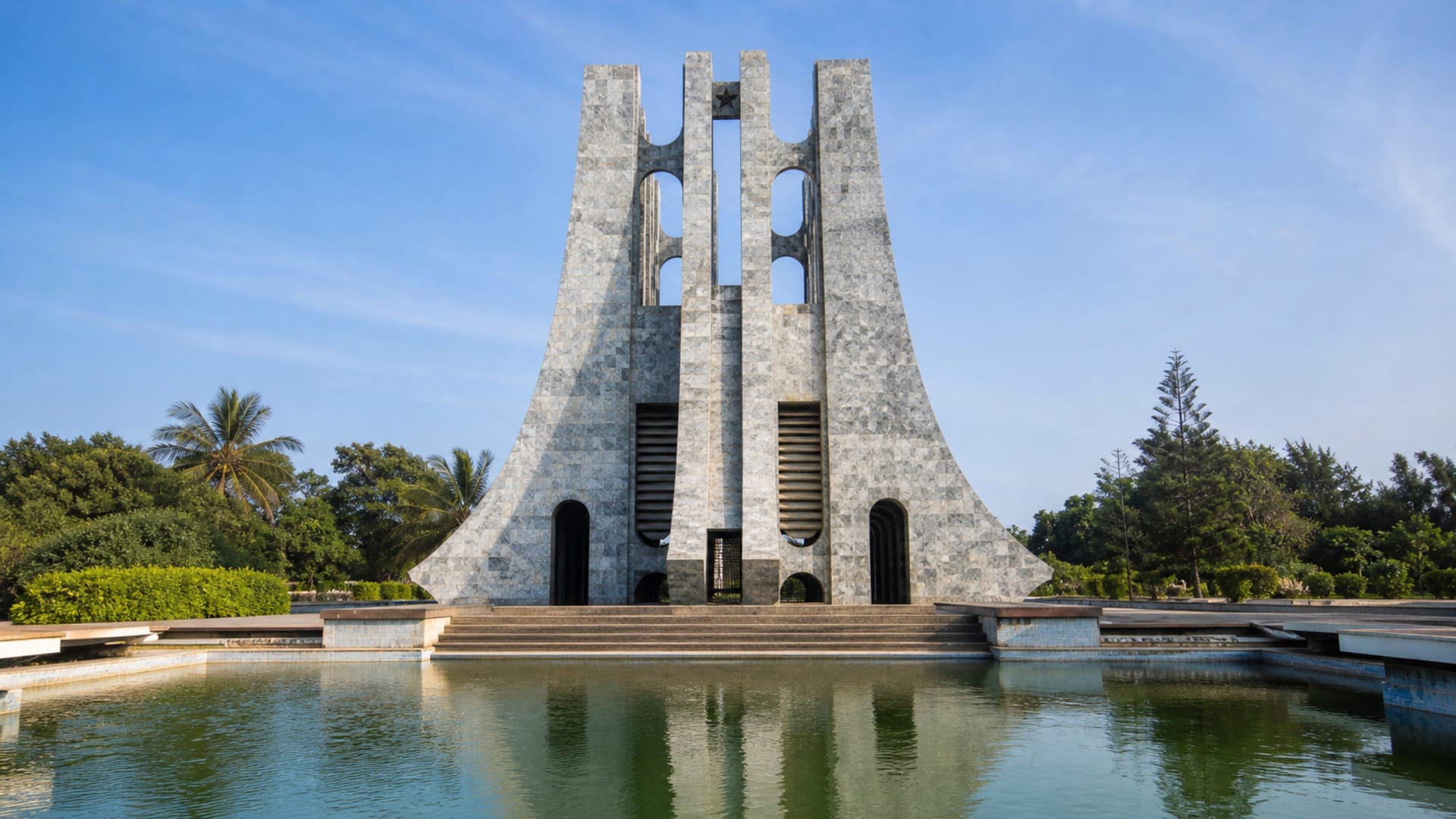
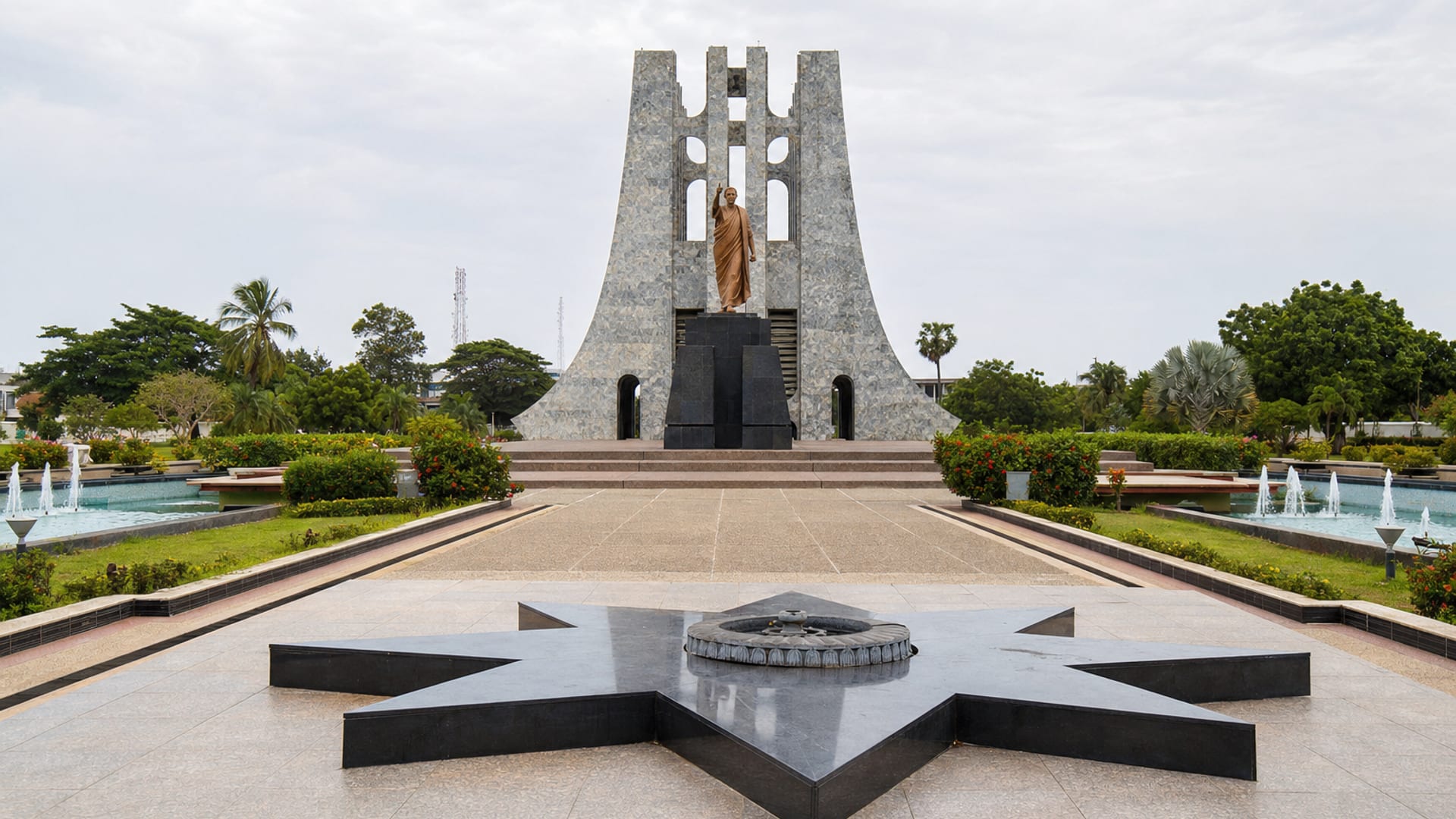
Kwame Nkrumah Memorial Park
This central Accra memorial honors Ghana’s first president with a mausoleum, museum galleries, and formal gardens. Reflecting pools lined with flute-blower statues lead up to the bronze statue of Nkrumah himself.
Time needed: About 1 to 2 hours
Entry: Foreign adults pay GHS 100 ($9) for entrance. Visit the official site for details.
Tip: Visit early for cooler paths and lighter crowds in the memorial gardens.
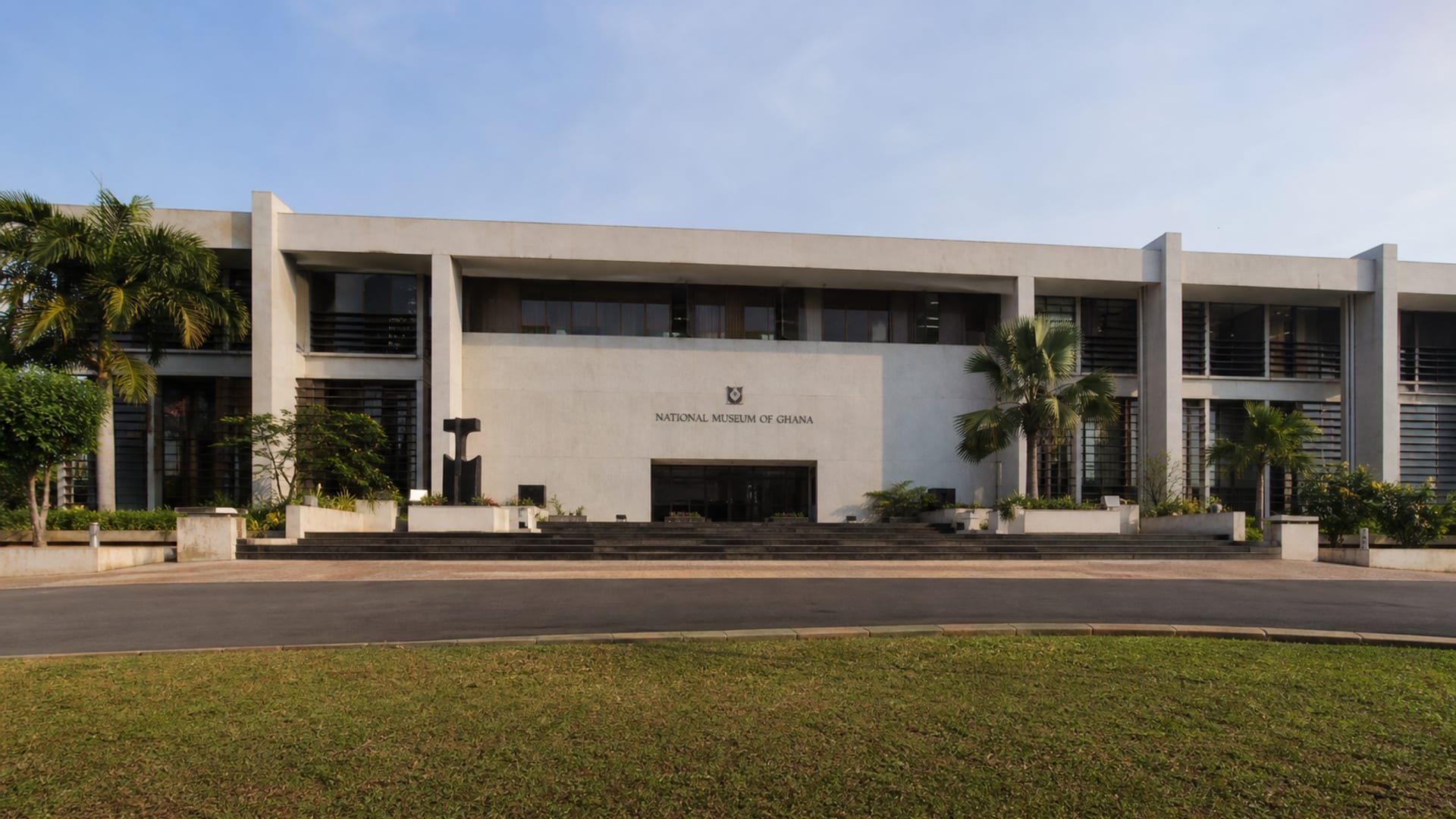
National Museum of Ghana
Accra’s main museum traces Ghana’s history through archaeology, royal regalia, textiles, and contemporary art. Its displays give useful context before visits to forts, markets, and historic neighborhoods elsewhere in the city.
Time needed: About 1 to 2 hours
Entry: Admission costs GHS 80 ($7) for foreign adults, with lower rates for children. Visit the official site for details.
Tip: Go midmorning, when galleries are calmer, and staff can answer your questions.
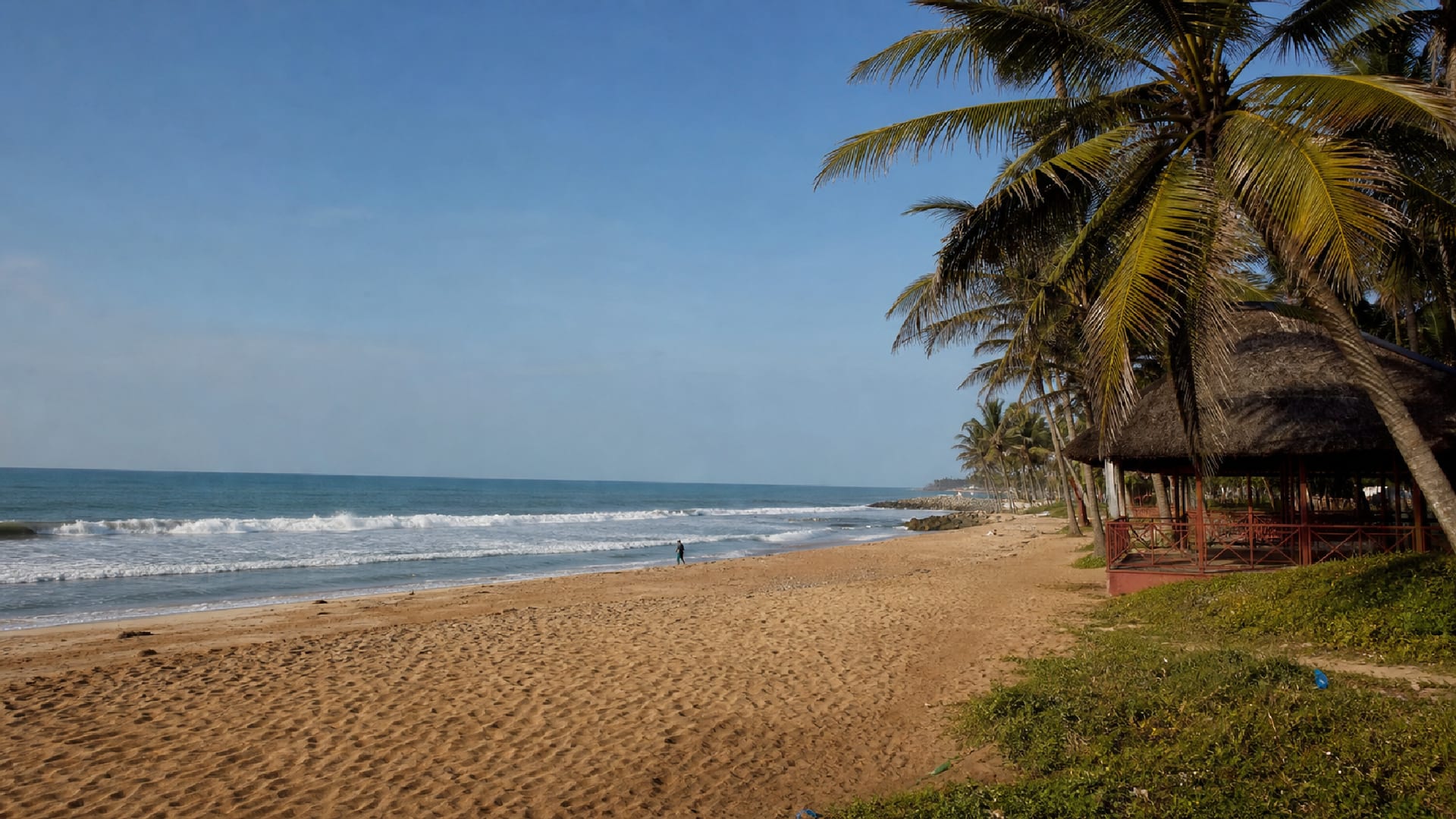
Labadi Beach
Labadi Beach is Accra’s best-known public shoreline, with a long stretch of sand, Atlantic surf, and a busy weekend scene of music, horse rides, and food stalls. It is close to the city center, yet the beach frontage stays open and easy to enter.
Time needed: About 2 to 3 hours
Entry: The entrance fee is GHS 5 to GHS 20 ($0.50 to $1.75); chairs, horse rides, and food cost extra.
Tip: Arrive near sunset for softer light and the busiest beachfront activity.
Overlooked places in Accra

W.E.B. Du Bois Memorial Centre for Pan-African Culture
A compact museum and library honoring W.E.B. Du Bois, with manuscripts, photos, and his mausoleum on the grounds. The setting attracts fewer visitors than Accra’s bigger museums, so you can browse at your own pace.
Time needed: About 1 to 2 hours
Entry: About GHS 30 to 45 ($2.75 to $4) for adults; discounted student and children rates; no booking needed.
Tip: Go in the morning for cooler grounds and quieter galleries.

Jamestown Lighthouse
Jamestown’s red-and-white lighthouse rises above one of Accra’s oldest fishing districts, with colonial forts and a working harbor nearby.
Time needed: About 30 minutes to 1 hour, plus time to explore Jamestown
Entry: No set fee; a local guide climbs you up for GHS 10 to GHS 20 ($0.90 to $1.75).
Tip: Agree on a price before climbing, and visit by day for safety.
What to eat in Accra
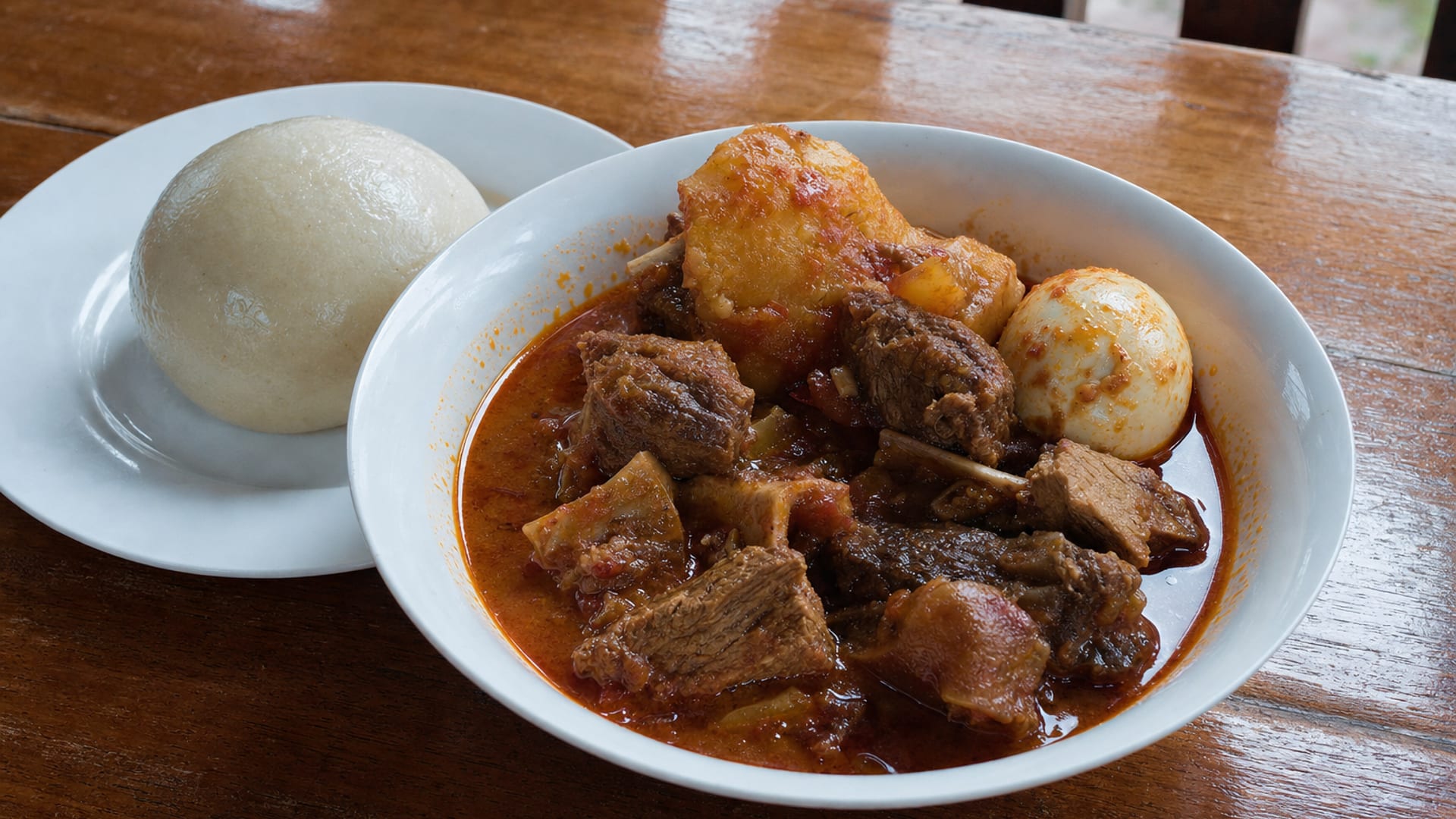
Accra’s cuisine centers on rice, corn, cassava, and peppery stews, with grilled fish, fried plantains, and street-side snacks showing up beside waakye, jollof rice, banku and tilapia, and kelewele.
Waakye
This rice and bean plate comes with stew, shito, spaghetti, and boiled eggs or fried plantain. Auntie Muni’s at Labone Junction is Accra’s best-known waakye stall.
Jollof rice
Ghanaian jollof arrives fragrant, tomato-rich, and usually paired with chicken, beef, or fish. Asanka Local in Osu is a well-loved chop bar for a hearty, traditional serving.
Banku and tilapia
Fermented corn and cassava dough pairs with grilled tilapia and pepper sauce, usually eaten with the hands. The Buka Restaurant is a dependable place to order it in Accra.
Kelewele
Spiced fried plantain makes an easy snack or side, with ginger and pepper giving it its heat. Frankie’s Foods, on Oxford Street in Osu, makes a good stop between neighborhoods.
Best time to visit
Weather in Accra is warm all year, but dry months ease beach time and travel, while wetter months bring heavier rain and softer light.
Best for: Dry skies, beach afternoons, and easier sightseeing
What you get: Temperatures between 79°F and 91°F (26°C to 33°C), with lower rain and fuller hotel demand
Trade-offs: Prices rise and popular dining spots fill more quickly.
Best for: Museum visits and flexible city days before the rains build
What you get: Temperatures between 79°F and 90°F (26°C to 32°C), with increasing humidity and lighter crowds after early March
Trade-offs: Rain becomes more common later in the season.
Best for: Quieter city breaks and more time indoors at museums and cafés
What you get: Temperatures between 75°F and 84°F (24°C to 29°C), with frequent rain and fewer peak crowds
Trade-offs: Wet spells can interrupt beach plans and lengthen road times.
Best for: Balanced weather for beaches, museums, and neighborhood dining
What you get: Temperatures between 77°F and 86°F (25°C to 30°C), with warmer days and rain easing toward November
Trade-offs: Late-season humidity can still make midday walks feel heavy.
A 5-day plan in Accra
A five-day trip to Accra is simple when you group sights by district. This plan starts with arrival and recovery, then guides you through museums, monuments, the beach, and a final neighborhood circuit before departure.
A taxi from Accra Airport (ACC) to Airport Residential Area, Cantonments, or Osu usually takes 10 to 25 minutes, depending on traffic, and costs GHS 90 to GHS 230 ($8 to $20). If you land late, book a hotel near the airport in Airport Residential Area. Settle in and have a light dinner at a hotel restaurant or a calm café in Cantonments instead of crossing the city after dark. Drink plenty of water, especially after a long-haul flight, and save your first full trip to the city for the morning.
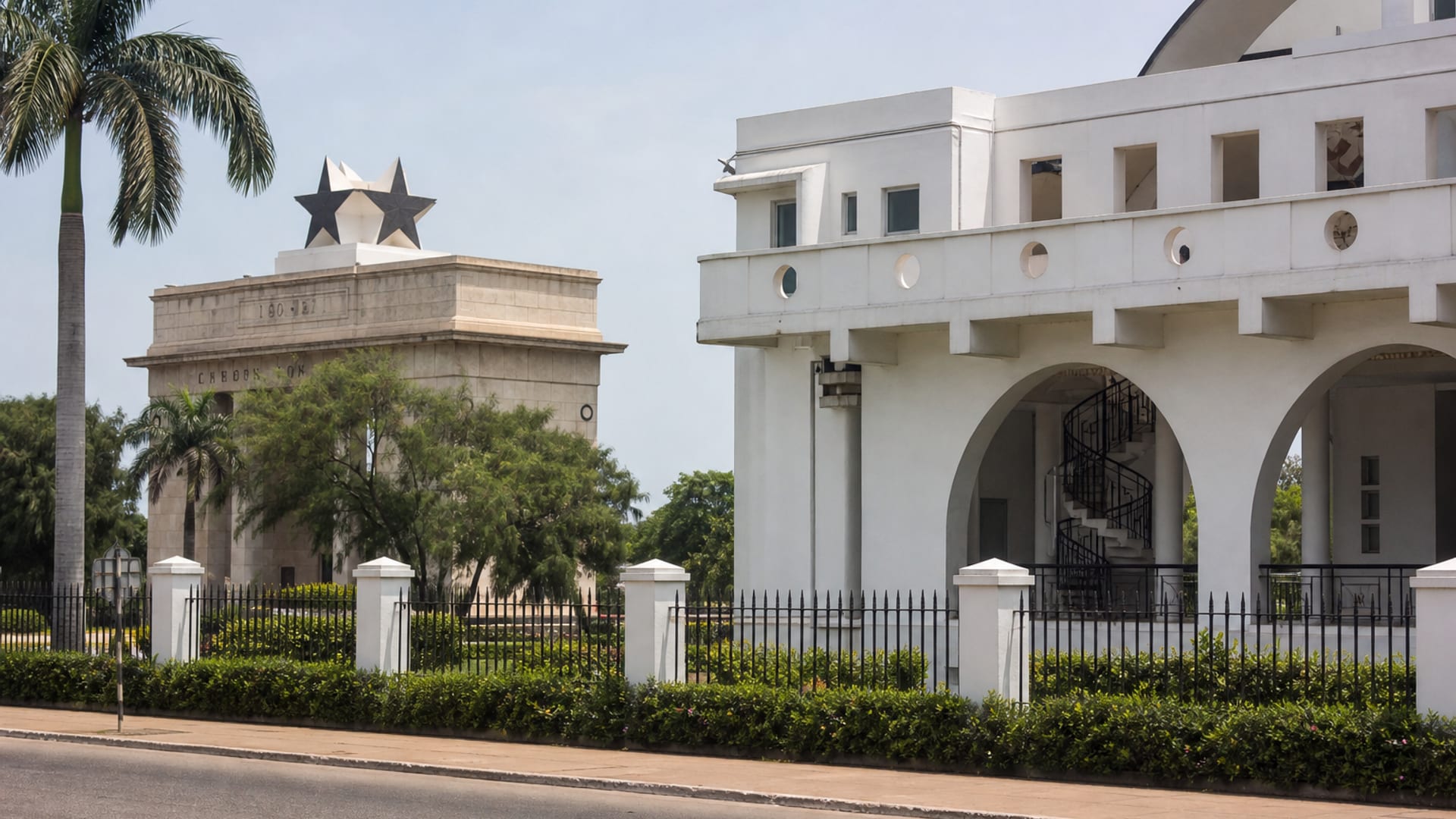
Start at the National Museum of Ghana, where a midmorning visit gives you about 1 to 2 hours for the galleries and a clear introduction to the country’s history. From there, take a 15-minute taxi ride to Kwame Nkrumah Memorial Park, where you can spend another 1 to 2 hours among the mausoleum, museum rooms, and gardens. If you want a late-afternoon change of pace, continue for 10 to 15 minutes by car to Osu for dinner on Oxford Street or on a side street just off the main strip.
Begin at the W.E.B. Du Bois Memorial Centre for Pan-African Culture, where the museum, library, and mausoleum make a compact stop of about 1 to 2 hours. Take a 20-minute ride to Jamestown to climb the lighthouse and see the old fishing harbor, then a short 10-minute hop to Black Star Square. Spend the rest of the afternoon browsing the nearby Arts Centre crafts market before heading to Osu or Labone for dinner.
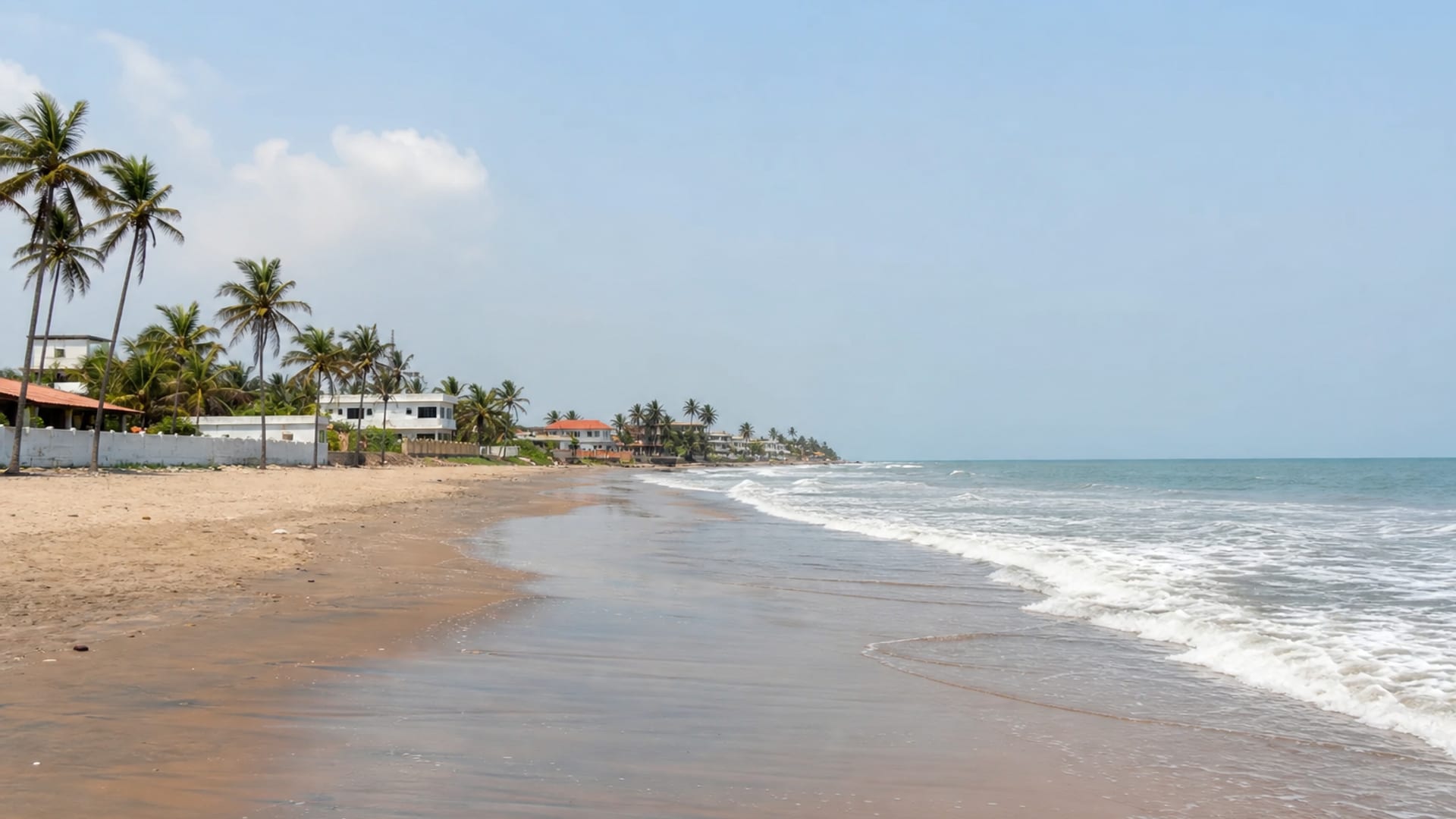
Labadi Beach leads the day if you want time outdoors, so arrive early for a quieter stretch of sand, then stay through the late-morning buildup of vendors, horse rides, and music. From the beach, take a taxi to Cantonments or Labone for lunch, then continue for 10 to 15 minutes to the National Museum of Ghana for a second cultural stop if you skipped it earlier. End the evening in Labone, where neighborhood cafés give you an easy dinner away from Osu’s busiest blocks.
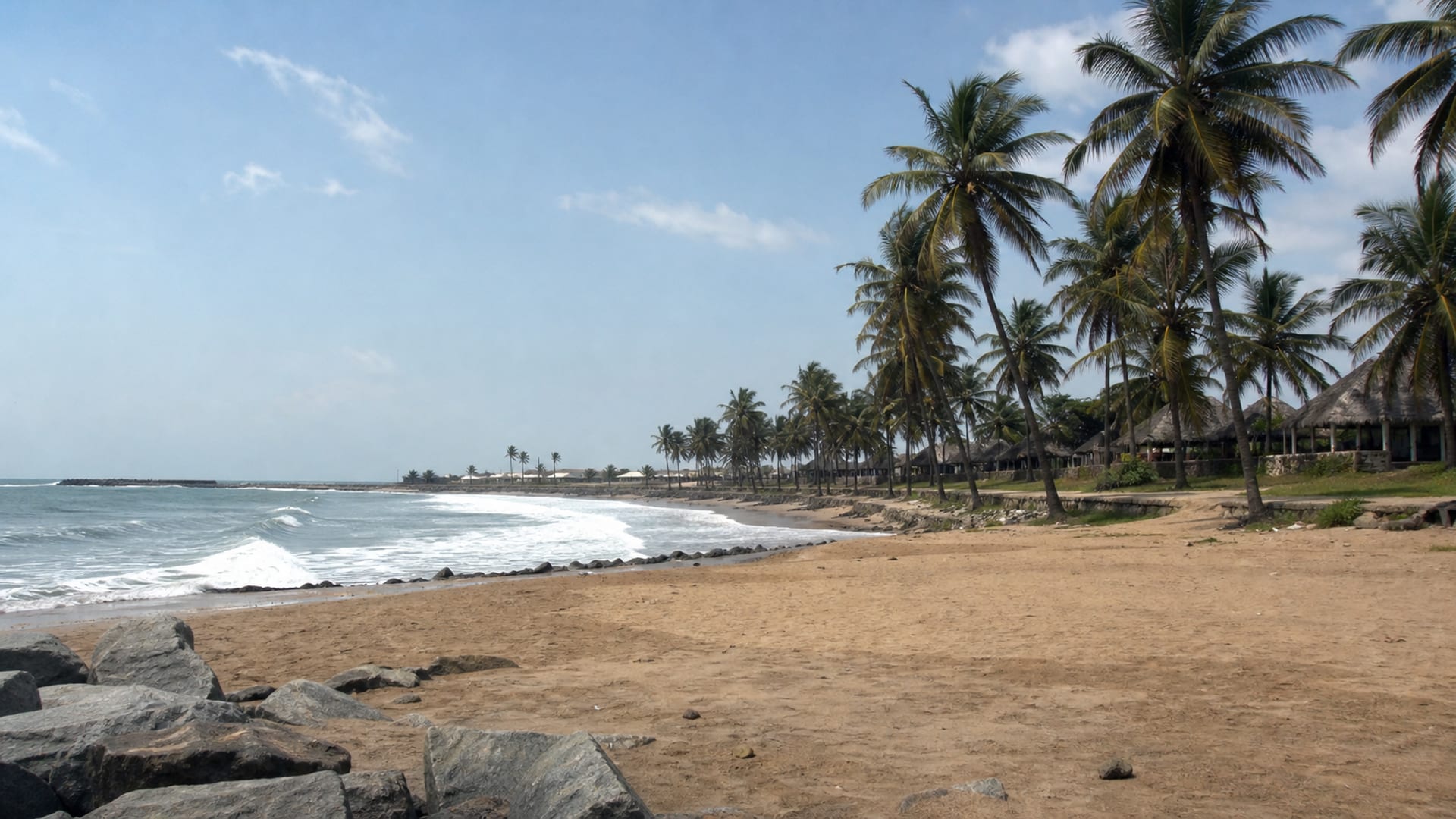
For your last day, pair one final museum stop with a slower neighborhood circuit: start at the W.E.B. Du Bois Memorial Centre for Pan-African Culture, then take a 15-minute taxi ride to Osu for shopping along Oxford Street. After that, settle into a café in Labone for coffee or a late lunch, then return to your hotel with enough time to pack before an evening flight from Accra Airport (ACC).
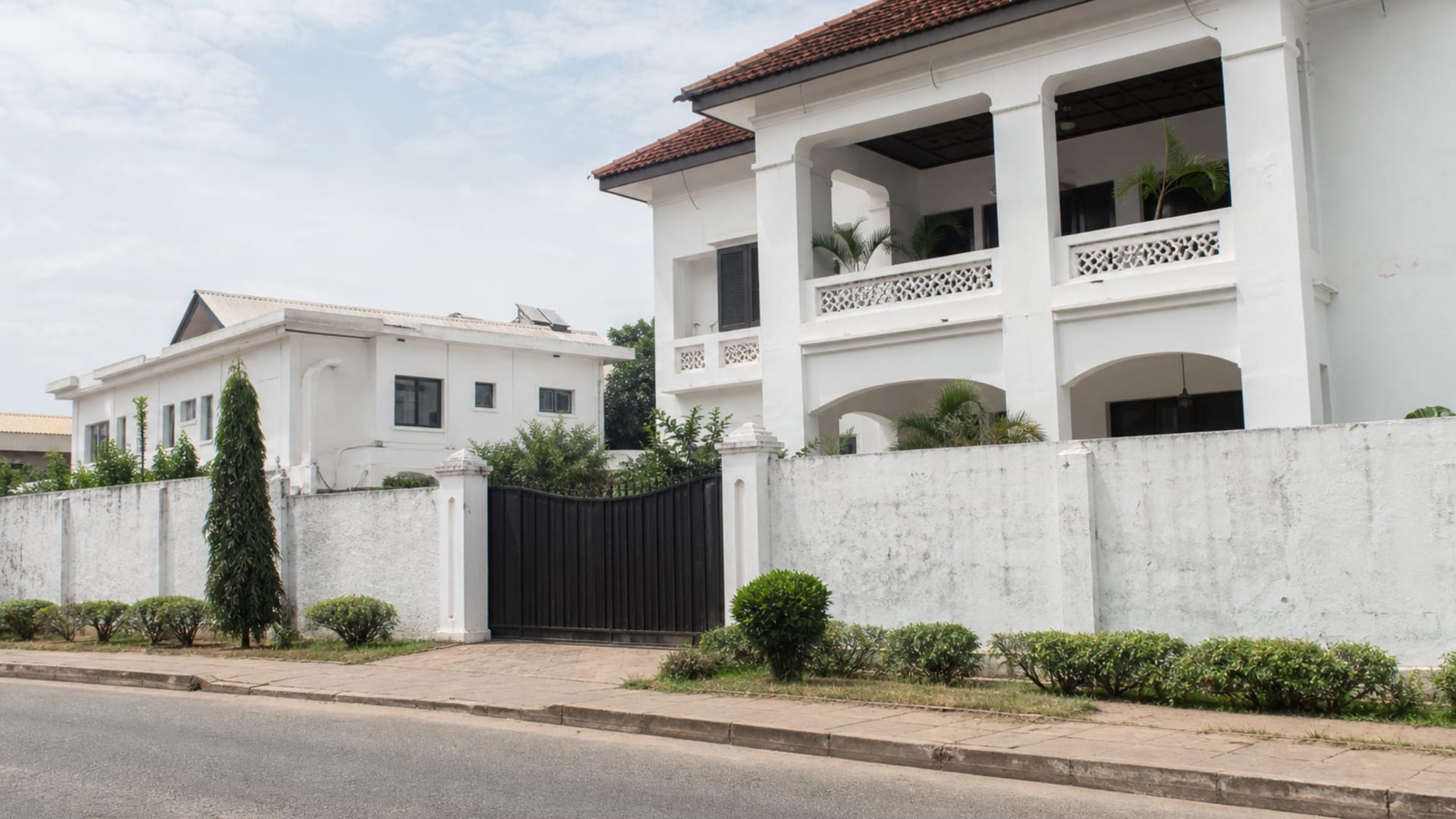
Business-class flights from the US to Accra
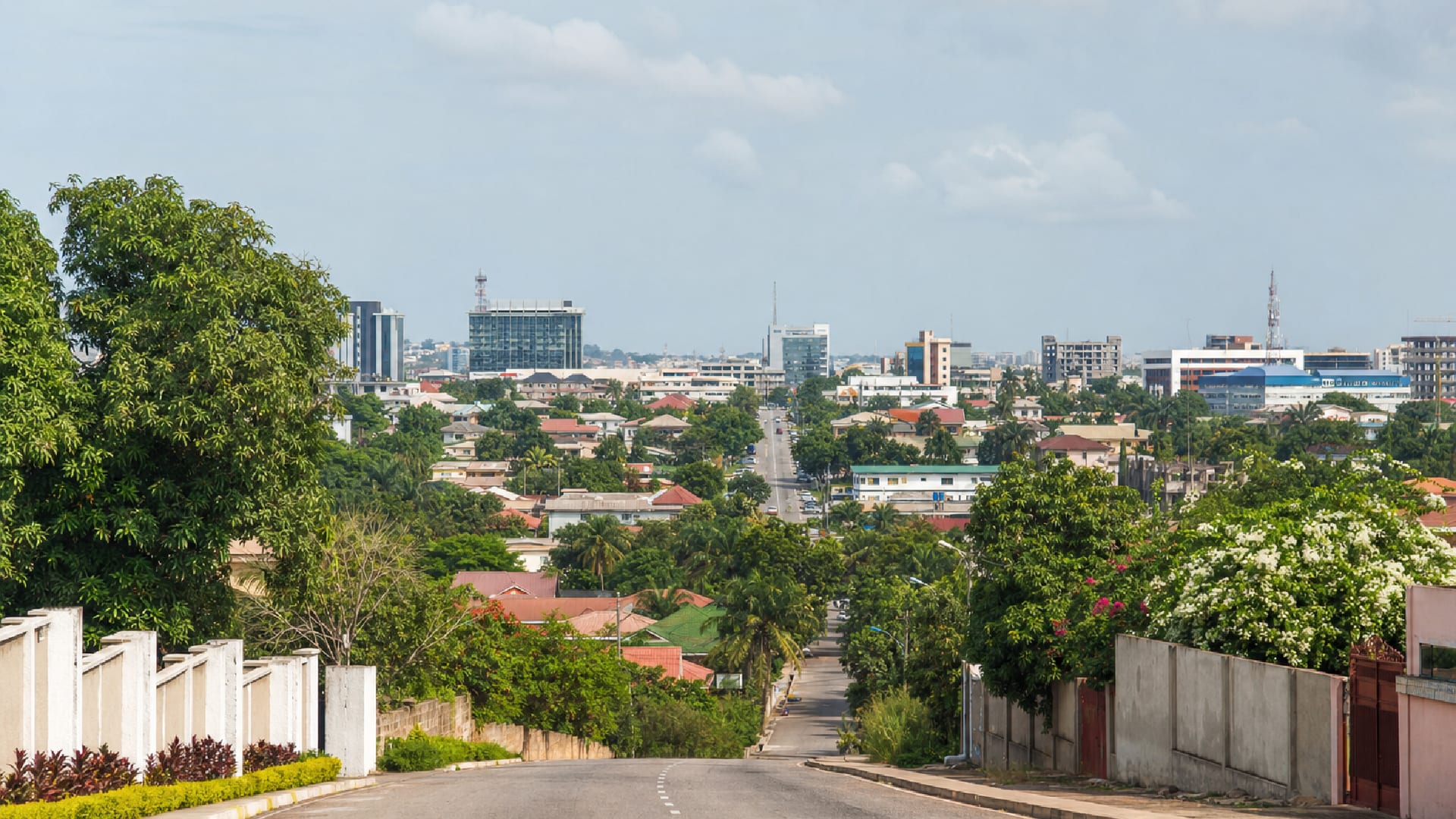
From the East Coast and West Coast of the US, most routes to Accra involve one stop, with fares and travel time shifting based on the connection you choose.
New York (JFK) to Accra (ACC)
Delta Air Lines, KLM, Air France, British Airways, Iberia, and Turkish Airlines operate this route. A nonstop flight takes about 11 hours, while one-stop itineraries via Amsterdam (AMS), Paris (CDG), London (LHR), or Madrid (MAD) usually run 13 to 18 hours. Round-trip fares start at approximately $4,100 and can reach $7,500, depending on demand and how early you book.
Los Angeles (LAX) to Accra (ACC)
From Los Angeles, you can only find one-stop flights to Accra, regardless of the airline you choose. Delta Air Lines, United Airlines, KLM, British Airways, Turkish Airlines, and Emirates are among the names you will see, connecting via Amsterdam (AMS), London (LHR), Istanbul (IST), or Dubai (DXB). Total travel time usually varies from 16 to 24 hours, depending on the layover. Round-trip fares usually range from $4,800 to $8,500 for this route.
Accra is easier to read one district at a time
A well-paced Accra trip usually keeps you moving between Osu, Labone, Cantonments, and the central monuments instead of crisscrossing the city all day. Taxis, Trotros, and short walks each have a place, whether you are heading to the National Museum, Labadi Beach, or dinner on Oxford Street. Use the city at that scale, and the days read clearly. When you are ready to start planning your trip, the AranGrant team can help you find the right flights and hotel for a comfortable journey and stay in Accra.







