

Chapters:

Need help with your trip?
Our support team is available 24/7. Request a callback or call us directly at (833) 619-0908
Abu Dhabi trips often follow a simple loop, mosque first, museum second, beach if time allows, while the quieter pieces of the city get left out. Travelers also underestimate how much time they lose between islands, promenades, and heritage sites.
That pace can turn a short stay into a series of taxi hops, with longer waits at peak meal times and after sunset. The city reads best when you plan its distances instead of filling each day to the edge.
This guide organizes the trip by neighborhood and time of day, so the mosque, palace, fort, and museum visits sit where they fit best and the route between them stays clear.
Useful things to know

Main language(s): Arabic, English
مرحبا (marhaban) – Hello
من فضلك (min fadlak) – Please
شكرا (shukran) – Thank you
هل تتكلم الإنجليزية؟ (hal tatakallam al-injiliziya?) – Do you speak English?
بكم هذا؟ (bikam hatha?) – How much does it cost?

Currency: The local currency is the United Arab Emirates dirham (AED, د.إ).

Cash and cards: Cards and contactless are widely accepted; keep about AED 100 to 200 ($27 to $54) in cash for taxis, tips, and small shops.

Tipping: Add about 10% in nicer restaurants if service is not included; rounding up is common elsewhere.

Traditional food: Harees, machboos, shawarma, luqaimat

Water and coffee costs: Water ~AED 3 to 6 ($1 to $2), bar espresso ~AED 12 to 18 ($3 to $5).

Taxis and ride apps: Uber and Careem operate here; airport pickups can be restricted, so check the app.

Plug and voltage: Type G socket, 230V

Dining and shop opening hours: Breakfast is about 7:00-10:00 am, lunch 12:30-3:00 pm, and dinner 7:00-11:00 pm. Many places close or quieten during Friday prayer and some daytime hours in Ramadan.

Emergency number: 999 for police, 998 for ambulance, 997 for fire.
Where to stay in Abu Dhabi
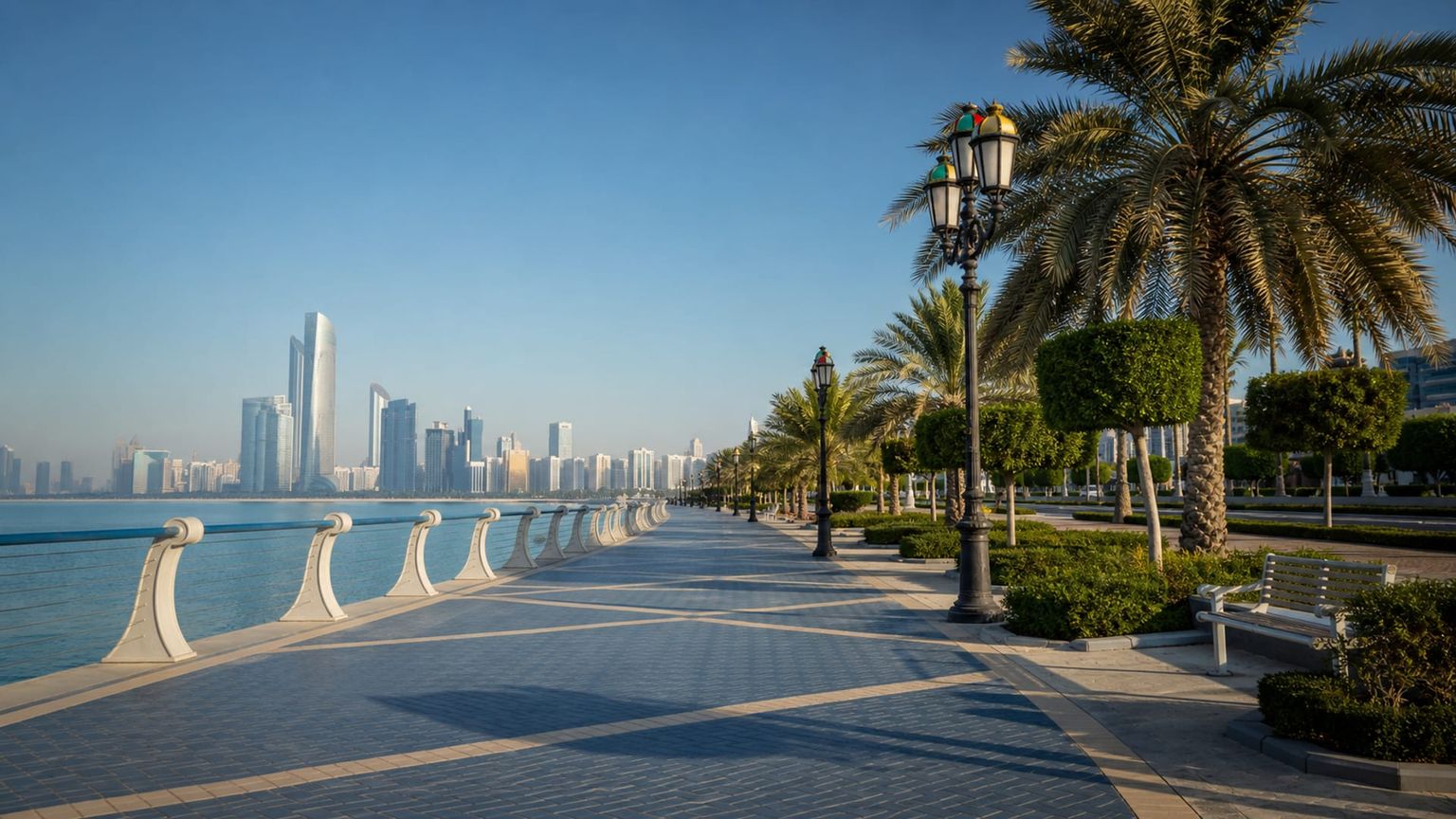
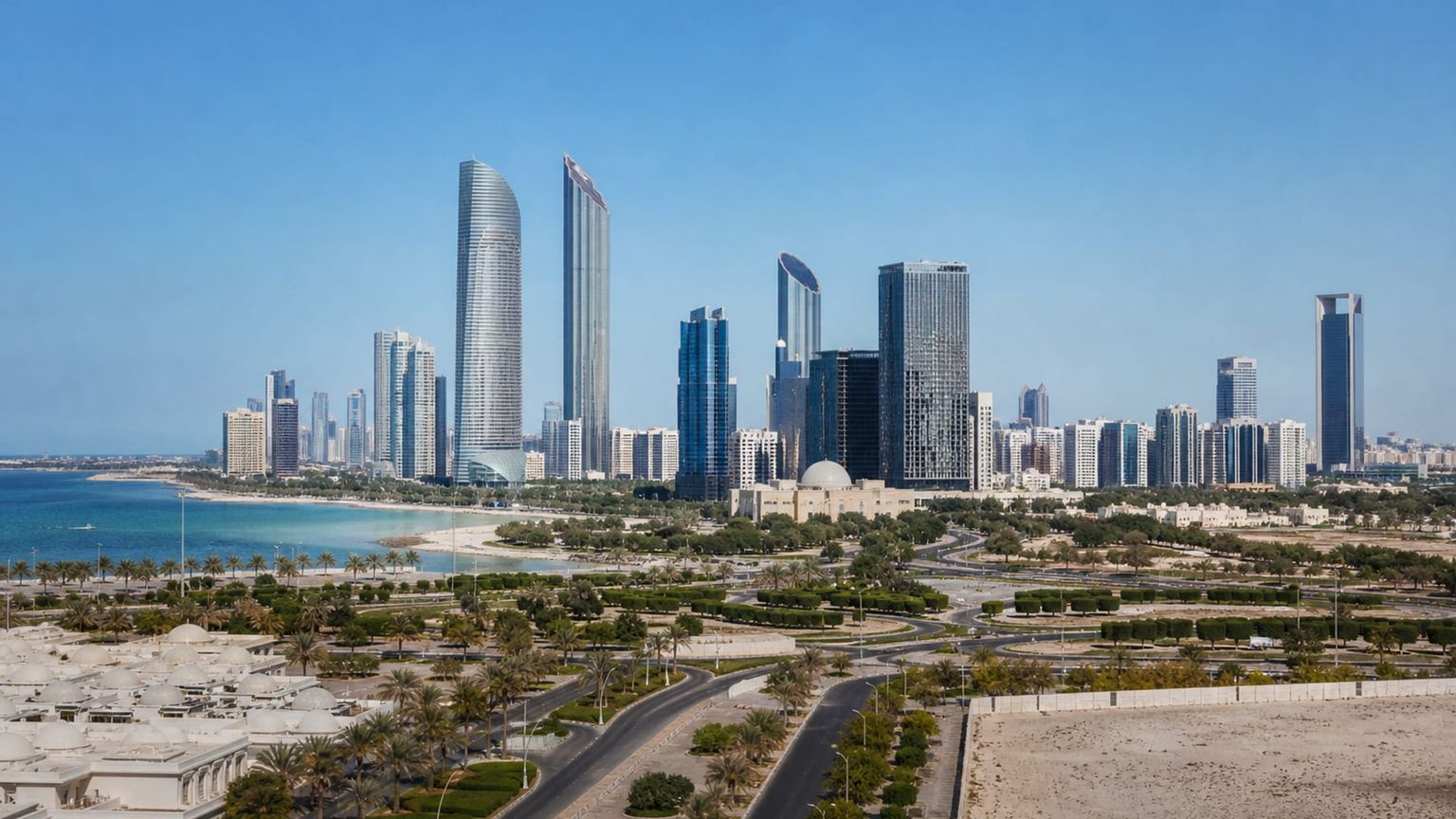
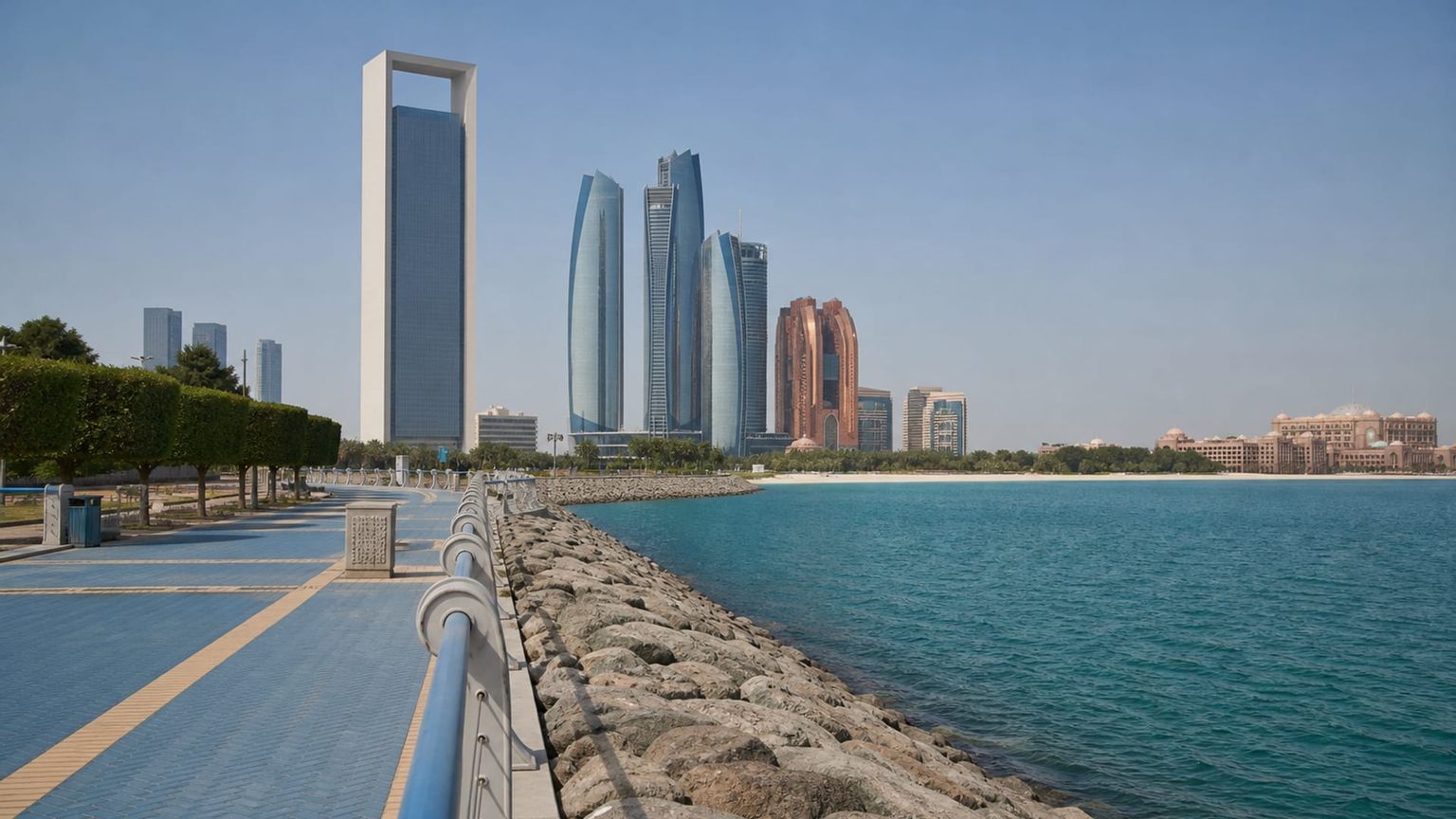
Abu Dhabi’s waterfront strip lines the central coast with high-rise hotels, public beach access, and a long promenade. It puts you close to government offices, marina views, and easy city transport, making it a strong base for sightseeing and beach time.
Best for: Beach time, waterfront walks, and central access to the city center
What to expect: Wide sidewalks, hotel towers, and steady foot traffic near the beach and parks, with more activity in the late afternoon and evening.
Hotel prices: Usually about $150 to $350 per night for well-rated stays
Distance to major sights: About 10 to 15 minutes by car to Qasr Al Hosn and about 20 to 25 minutes to Louvre Abu Dhabi
Quietness: Busy by day, calmer late at night once the promenade traffic thins
Main trade-off: Top waterfront hotels can cost more than inland options, and the busiest stretches see heavier traffic on weekends.
Good to know: Choose a place set back from the main promenade if you want easier sleep, because seafront rooms can pick up evening noise from restaurants and walkers.
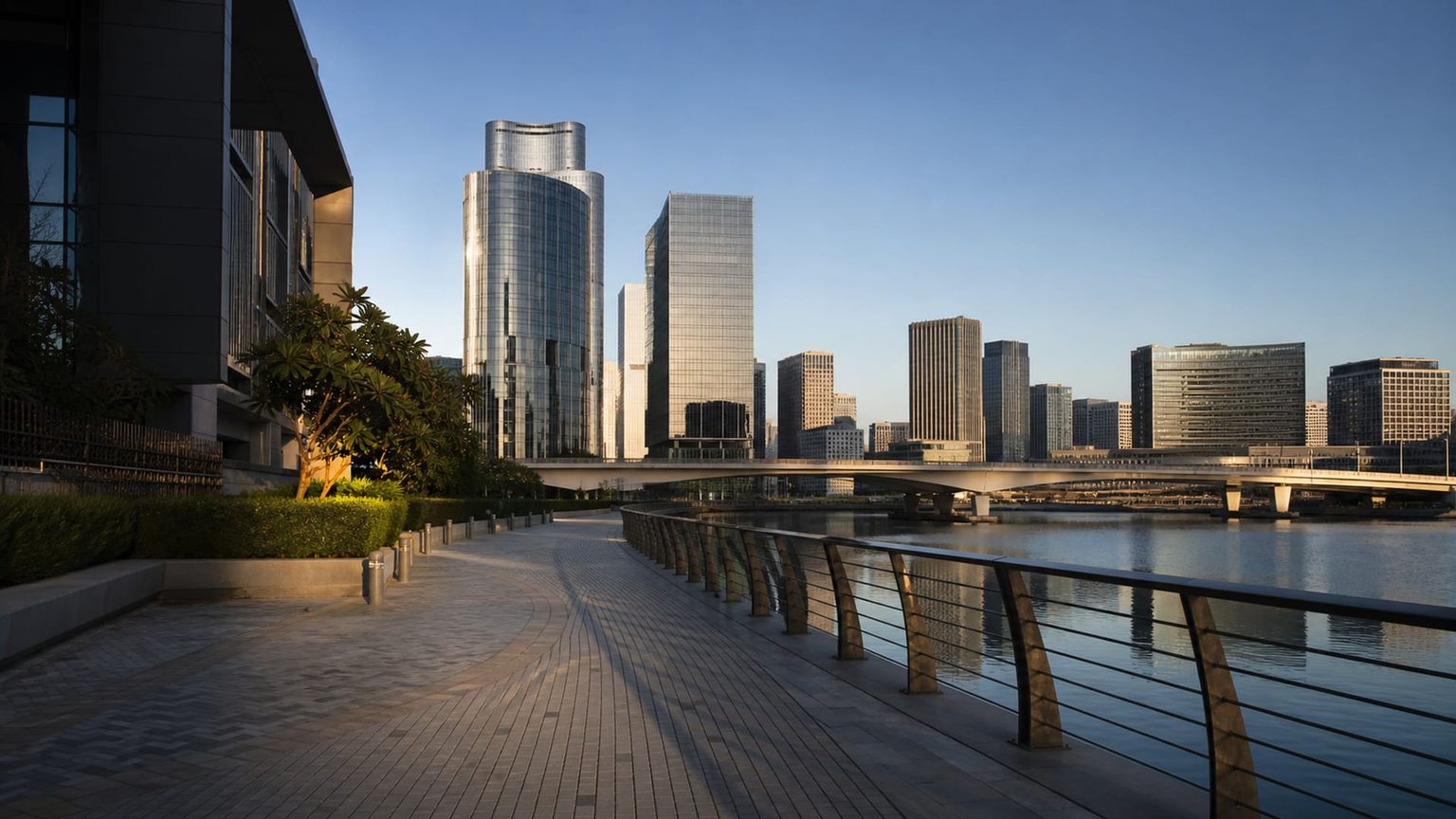
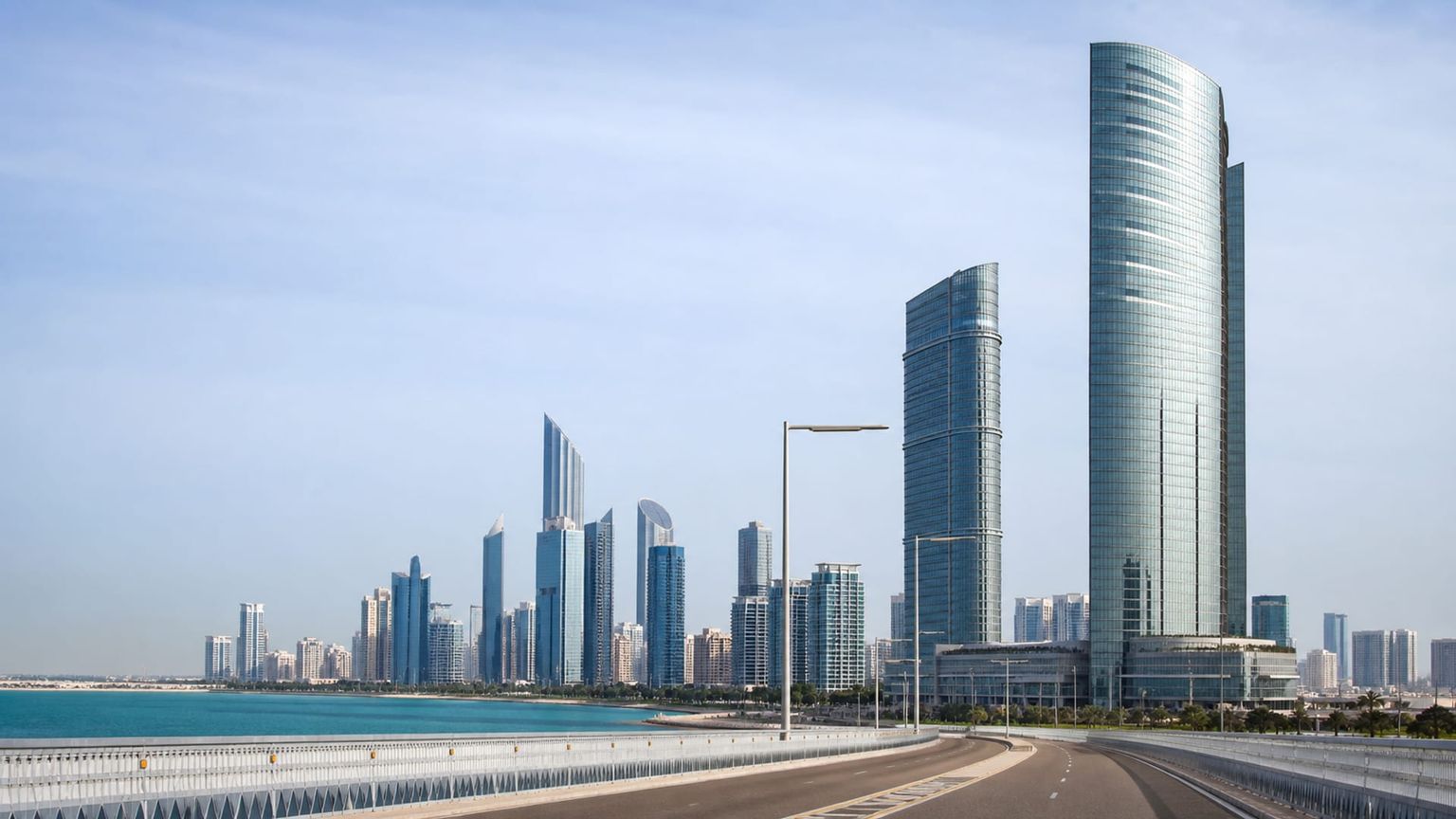
Al Maryah Island is the city’s modern business and dining district, centered on luxury hotels, the Galleria mall, and office towers. It matters if you want polished hotel stock, easy taxi access, and a location that keeps you close to both downtown and the waterfront.
Best for: Business trips, upscale dining, and easy access to central Abu Dhabi
What to expect: Clean sidewalks, mall traffic, and hotel guests rather than a street-market scene, with the busiest periods tied to dinner and mall hours.
Hotel prices: Usually about $180 to $450 per night for well-rated stays
Distance to major sights: About 10 minutes by car to Qasr Al Hosn and about 20 minutes to the Corniche
Quietness: Quiet in the morning and late evening, busier during shopping and dinner hours
Main trade-off: You pay for newer hotels and branded addresses, while the district has less of a neighborhood feel after mall hours.
Good to know: If you plan to dine out often, book near the Galleria or a hotel with a good taxi stand, since late-night walking options are limited.
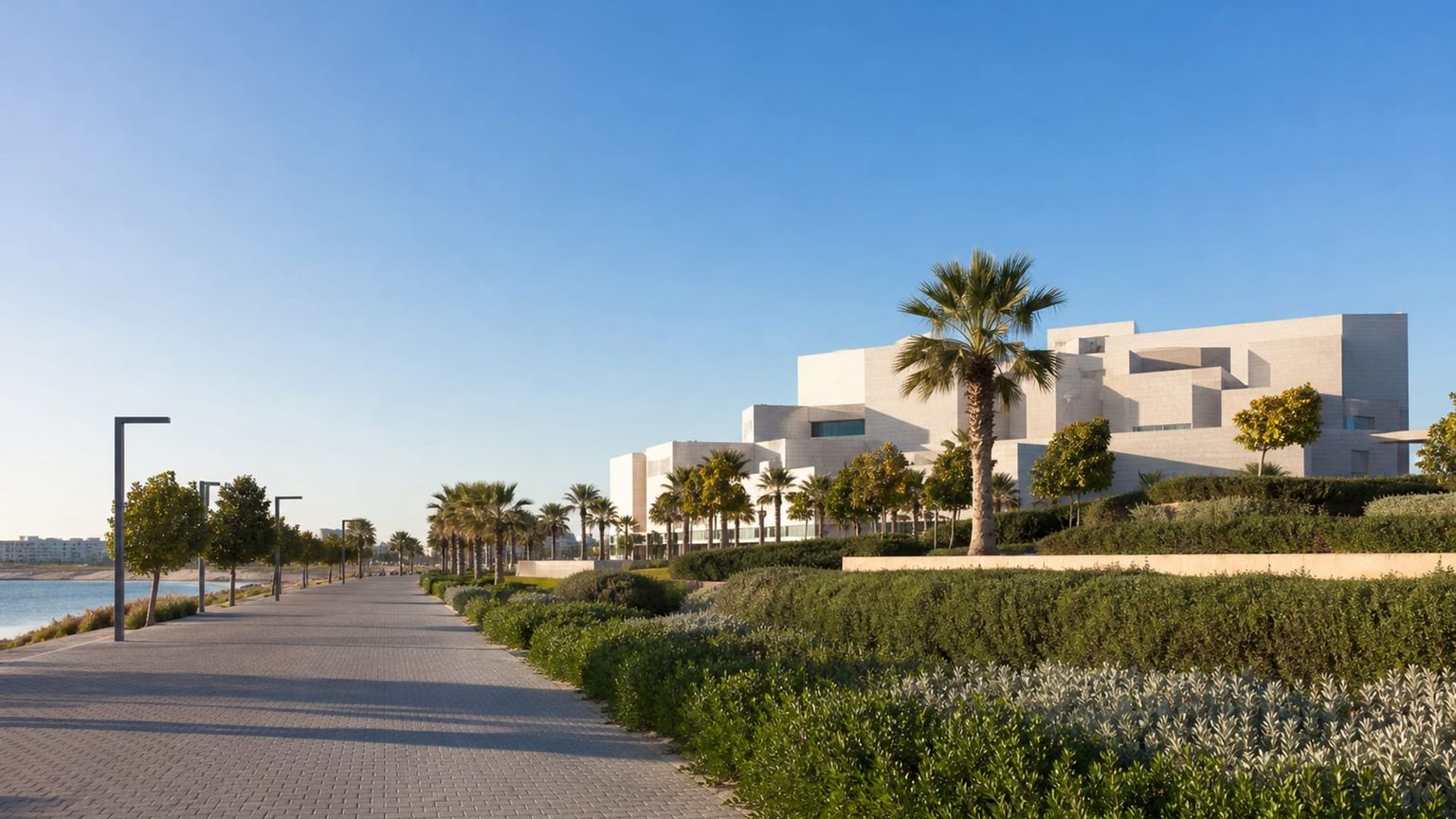
Saadiyat Island is Abu Dhabi’s cultural and resort island, home to museum campuses, beach clubs, and some of the city’s highest-end hotels. It suits travelers who want a quieter coastal setting with easy access to the Louvre Abu Dhabi and other major sights.
Best for: Museum visits, resort stays, and travelers who want beach access
What to expect: Resort traffic, private beach access, and fewer casual passersby than in the city center, with activity centered on hotels, museums, and beach clubs.
Hotel prices: Usually about $220 to $700 per night for well-rated stays
Distance to major sights: About 5 to 10 minutes by car to Louvre Abu Dhabi and about 20 to 25 minutes to the Corniche
Quietness: Generally quiet through the day, with a small rise in activity at hotel restaurants after sunset
Main trade-off: Hotels can be expensive, and you will depend more on cars or taxis for most dinners and sightseeing.
Good to know: If you want to visit museums early, staying here can cut your transfer time, but you should plan transport in advance for nights out in the city center.
Travelers usually avoid staying on Abu Dhabi’s outlying desert edges, including Al Mafraq and the far eastern fringe near Al Ain Road, because they sit far from the Corniche, Louvre Abu Dhabi, and central dining. Saadiyat’s outer resort strip can also be less convenient for city sightseeing, while Yas Island is better for theme parks than for easy access to the old city, and the airport district suits transit stays more than a base for visiting major sights.
Hotel deals
How to get around Abu Dhabi efficiently
Abu Dhabi has no metro, so taxis, buses, and a few ride-hailing options do most of the work, with the airport bus linking AUH to the city for the cheapest arrival.

Metro
for longer distances
Abu Dhabi has no metro, so visitors depend on taxis, buses, and private transfers rather than rail. The closest fixed-route option is the intercity and city bus network, not a subway. From Abu Dhabi airport (AUH), plan on road transfers into the city rather than any rail link.

Bus and tram
for convenience
Bus 490 links Abu Dhabi airport (AUH) with the city center, and standard fares start at about $0.80. Use a Hafilat smart card, because cash is not accepted on most routes. Buses cover the main island corridors, Corniche, Al Wahda, and key intercity links, but frequencies can be modest, so check departure times if you need to connect to a flight.

Taxi
for convenience or late hours
Licensed Abu Dhabi taxis use meters, with airport trips usually starting from a higher flag-fall than street hails; a ride into central Abu Dhabi commonly costs about $10 to $20, while longer cross-city trips can reach about $25 to $40. You can hail them on the street, book through dispatch, or use the official app, and most cars take cash and cards. At Abu Dhabi airport (AUH), taxis queue outside the terminal, and late-night waits are usually short.
*Prices are based on rates updated as of June 2026 and may change at the time of travel.
Use buses for the lowest fares, taxis for direct cross-island trips, and ride-hailing when you want to move between hotels, museums, and dinner without waiting.
Iconic landmarks
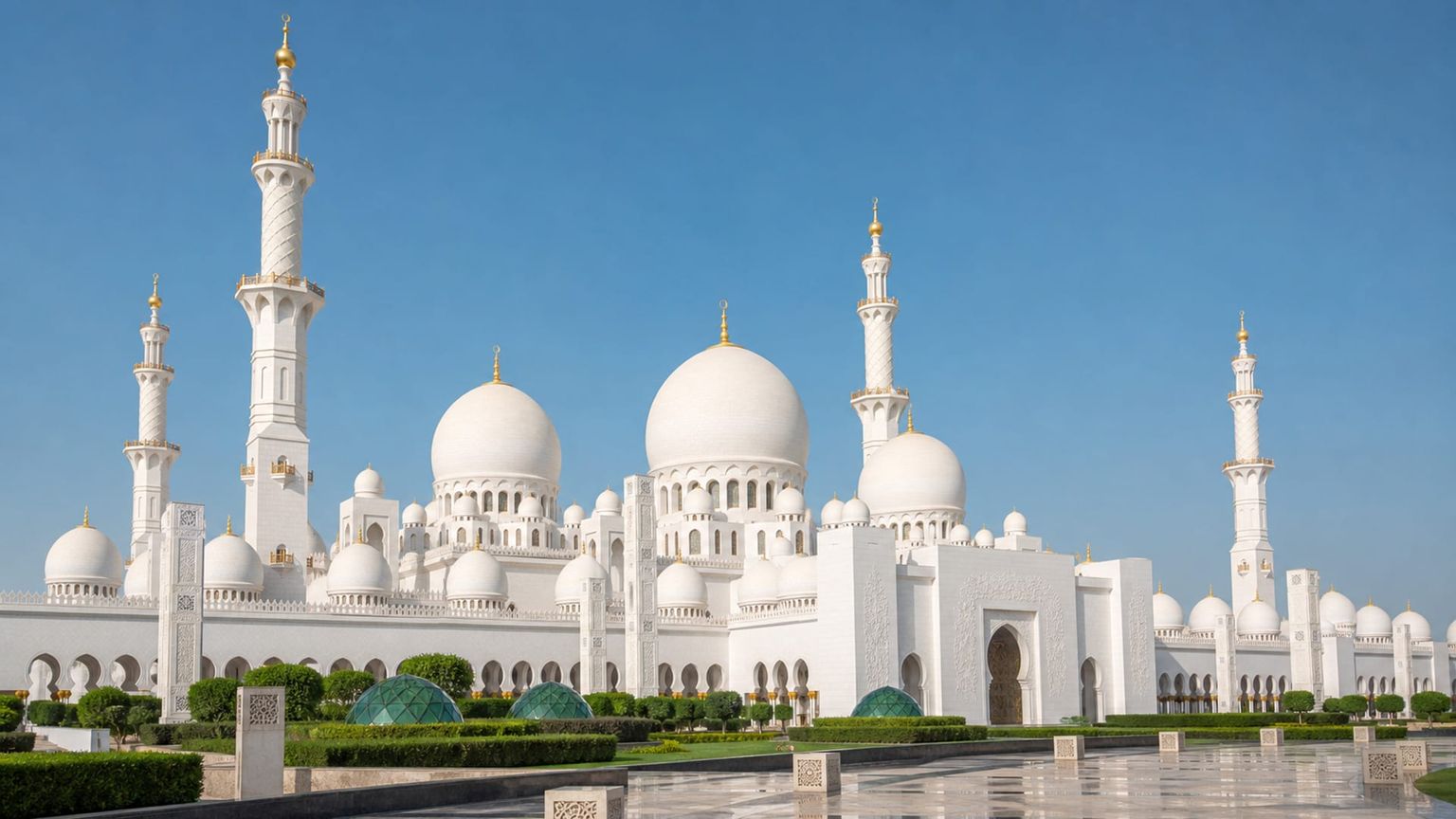
Sheikh Zayed Grand Mosque
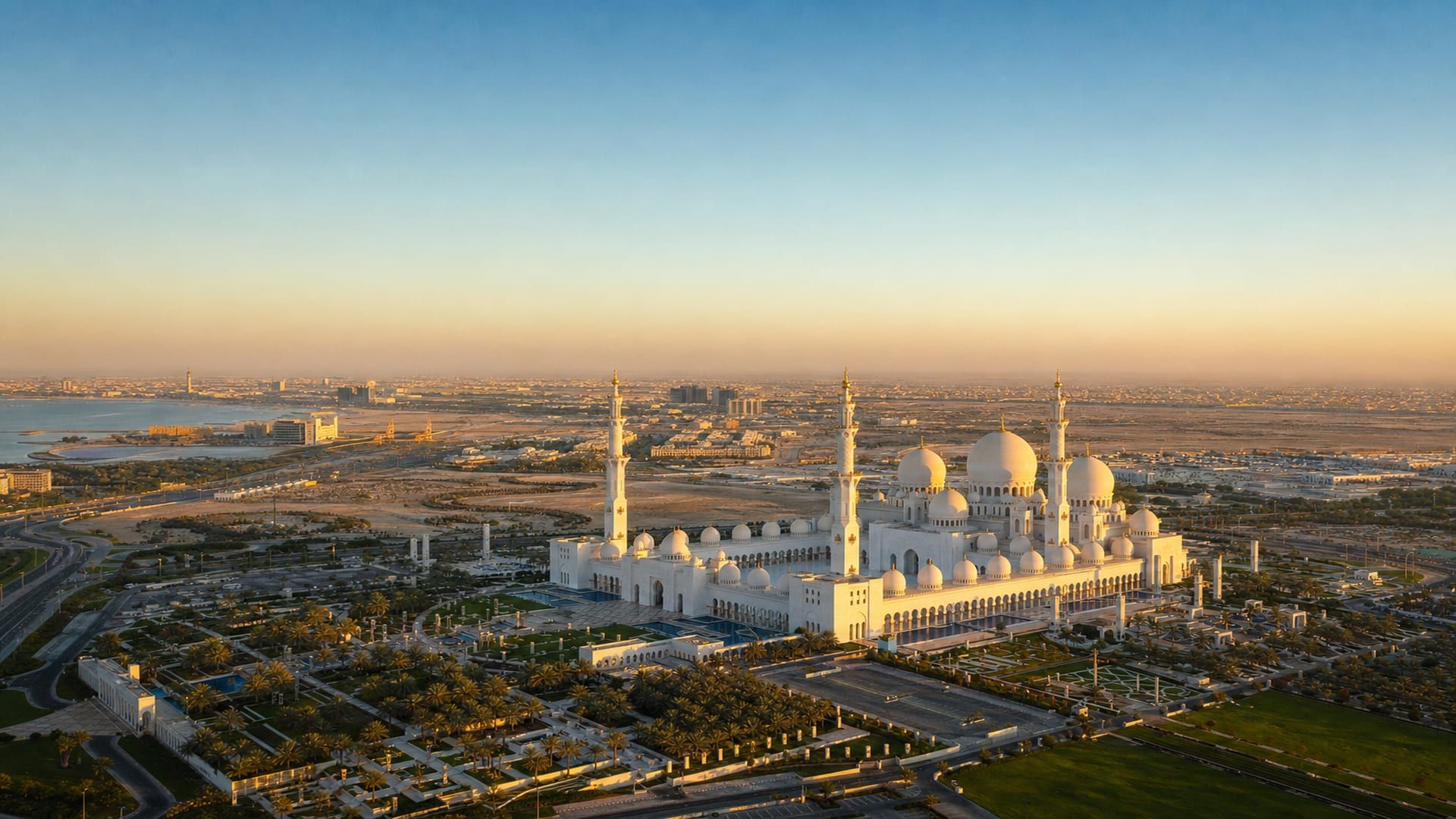
Abu Dhabi’s landmark white marble mosque pairs 82 domes with reflective pools, floral inlay, and a vast prayer hall. Non-Muslim visitors can enter outside prayer times, with dress rules and security checks at the gate.
Time needed: About 1 to 2 hours
Entry: Free to access; non-Muslim visitors can join set-entry tours at no charge, while dress rules and security screening still apply at the gate. Visit the official site for details.
Tip: Visit at sunset, when the white stone and pools pick up the warmest light.
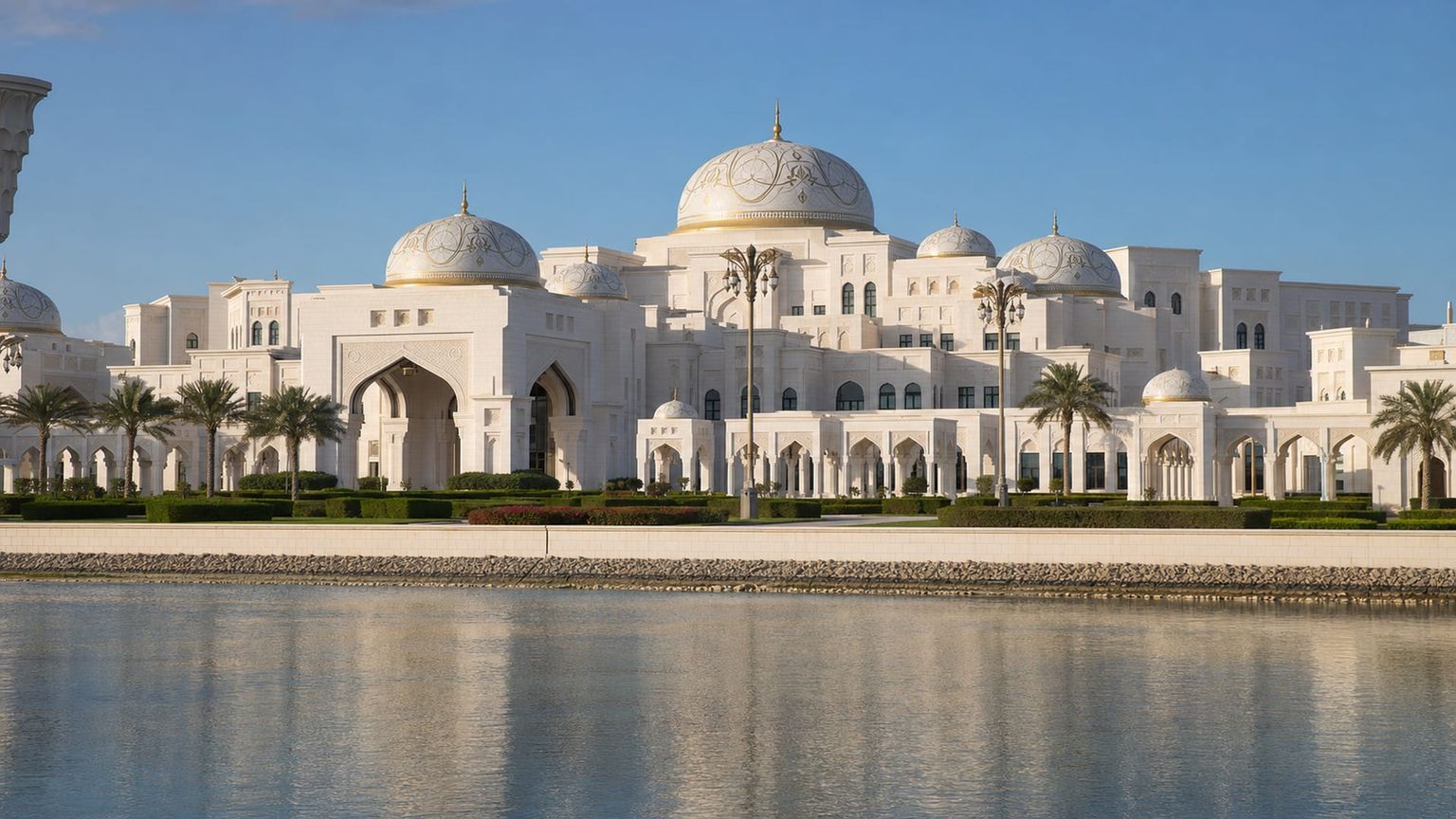
Qasr Al Watan
This working presidential palace opens select halls, gardens, and the House of Knowledge to visitors. Its carved domes, geometric stonework, and evening light show make it one of the city’s most striking cultural stops.
Time needed: About 2 to 3 hours
Entry: Tickets cost $17 ($63) for adults and $8 ($30) for children ages 4 to 17; children under 4 enter free. Visit the official site for details.
Tip: Go late afternoon, then stay for the projection show after dark.
Louvre Abu Dhabi
Jean Nouvel’s museum under a vast perforated dome links galleries on world art and regional history. Its waterfront setting, changing light, and compact layout make it a core cultural stop on Saadiyat Island.
Time needed: About 2 to 3 hours
Entry: Standard tickets cost $20 ($73); visitors under 18 enter free, and select groups receive discounted admission on the door. Visit the official site for details.
Tip: Arrive in the morning, when galleries are quiet and the dome shadows are sharpest.
Overlooked sites worth visiting

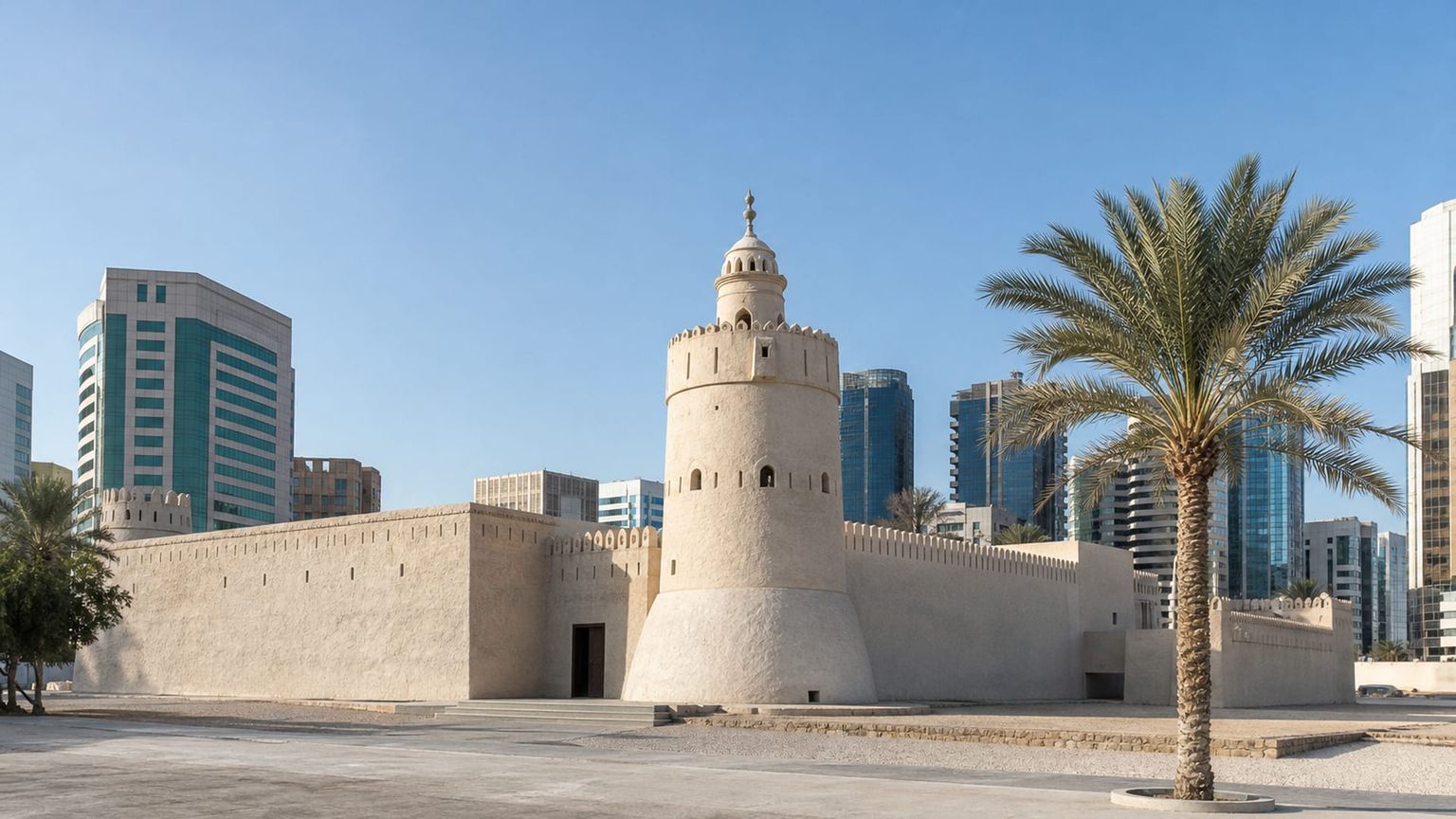
Qasr Al Hosn
Abu Dhabi’s oldest standing fort anchors the city’s early history, with limestone walls, watchtowers, and a restored inner fort. The site pairs well with the House of Artisans next door.
Time needed: About 1 to 2 hours
Entry: Admission costs $8 ($30) for adults and $4 ($15) for children ages 6 to 17; children under 6 enter free. Access is usually included in heritage passes during some city events, but standard walk-up tickets apply on most days. Visit the official site for details.
Tip: Go early for quieter courtyards and softer light.

Sir Bani Yas Church and Monastery
This 7th-century Christian site on Sir Bani Yas Island is one of the Gulf’s most important early Christian finds. The compact ruins include a church, monastic cells, and carved plaster fragments.
Time needed: About 45 minutes
Entry: Entry is typically free to view as part of island heritage visits, but access depends on island operators and guided access rules. Check current tour arrangements before you go, because independent arrival is limited and seasonal schedules can change.
Tip: Visit on a guided stop, since access is controlled.
Traditional food
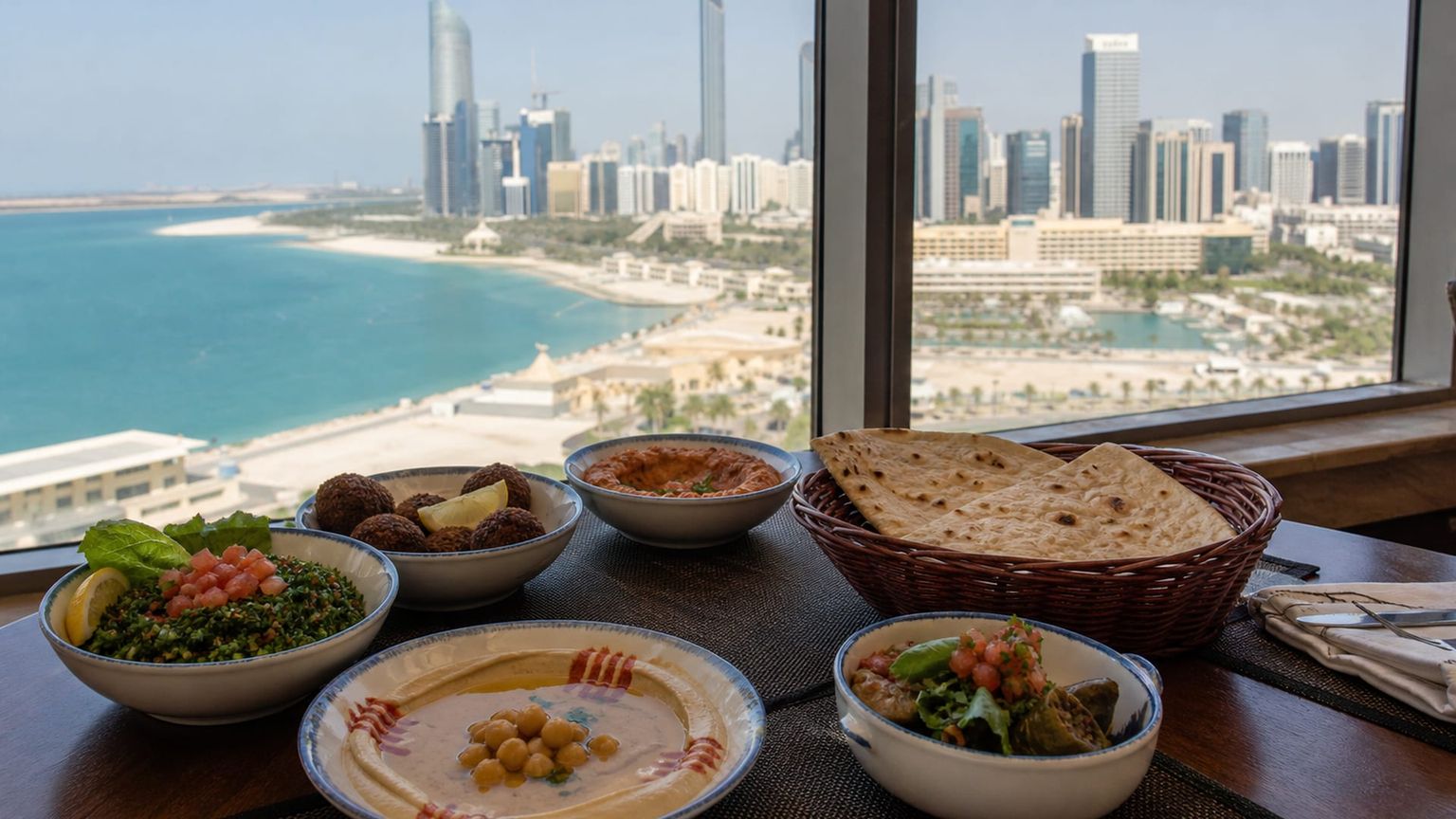
Abu Dhabi’s cooking leans on rice, lamb, spice, and slow-cooked grains, with harees, machboos, shawarma, and luqaimat showing both home-style comfort and late-evening café habits.
Harees
This slow-cooked wheat and meat dish is one of the clearest tastes of Emirati home cooking, and Al Fanar Restaurant at Yas Mall serves a widely trusted version in a setting that leans into local flavors.
Machboos
Spiced rice with meat or fish, machboos works well for a full lunch, and Mezlai at Emirates Palace Mandarin Oriental is a strong Abu Dhabi address for a more formal plate.
Shawarma
Abu Dhabi’s shawarma scene is best treated as an everyday meal rather than a novelty, and Operation: Falafel at The Galleria is a dependable stop for a late bite between shopping and sightseeing.
Luqaimat
These crisp, syrup-coated dumplings are the dessert to order with Arabic coffee, and Al Mrzab is a well-known Abu Dhabi restaurant for a classic finish.
Best time to visit Abu Dhabi
Abu Dhabi is most comfortable in the cooler months, while summer shifts outdoor plans toward early starts, taxis, and indoor stops.
Best for: Best for mosque visits, beach walks, and long days outdoors
What you get: About 61 to 77°F (16 to 25°C), with the largest visitor crowds and the most active promenade hours
Trade-offs: Popular sights and waterfront areas feel busiest
Best for: Best for balanced sightseeing before the heat rises
What you get: About 70 to 97°F (21 to 36°C), with moderate crowds and easier reservations than in winter
Trade-offs: Late spring afternoons can feel hot
Best for: Best for museums, malls, and hotel pools
What you get: About 88 to 109°F (31 to 43°C), with lighter daytime crowds and heavy reliance on indoor plans
Trade-offs: Outdoor visits need careful timing
Best for: Best for getting back outside as temperatures ease
What you get: About 77 to 97°F (25 to 36°C), with crowds building again as the weather improves
Trade-offs: Early autumn still runs hot at midday
A realistic 5-day plan in Abu Dhabi
A five-day Abu Dhabi stay works well when you group the city by island and by opening hours. The plan below starts with the center, then moves through the mosque, palace, museums, fort, and a final day that leaves room for shopping and the airport run.
Land at Abu Dhabi (AUH), then take a taxi into Corniche, Al Maryah Island, or Saadiyat Island in about 30 to 45 minutes for roughly $20 to $35. If you arrive early, settle into your hotel, drink water, and keep dinner close, a simple meal at The Galleria on Al Maryah Island or a beachfront restaurant on the Corniche works well before an early night.
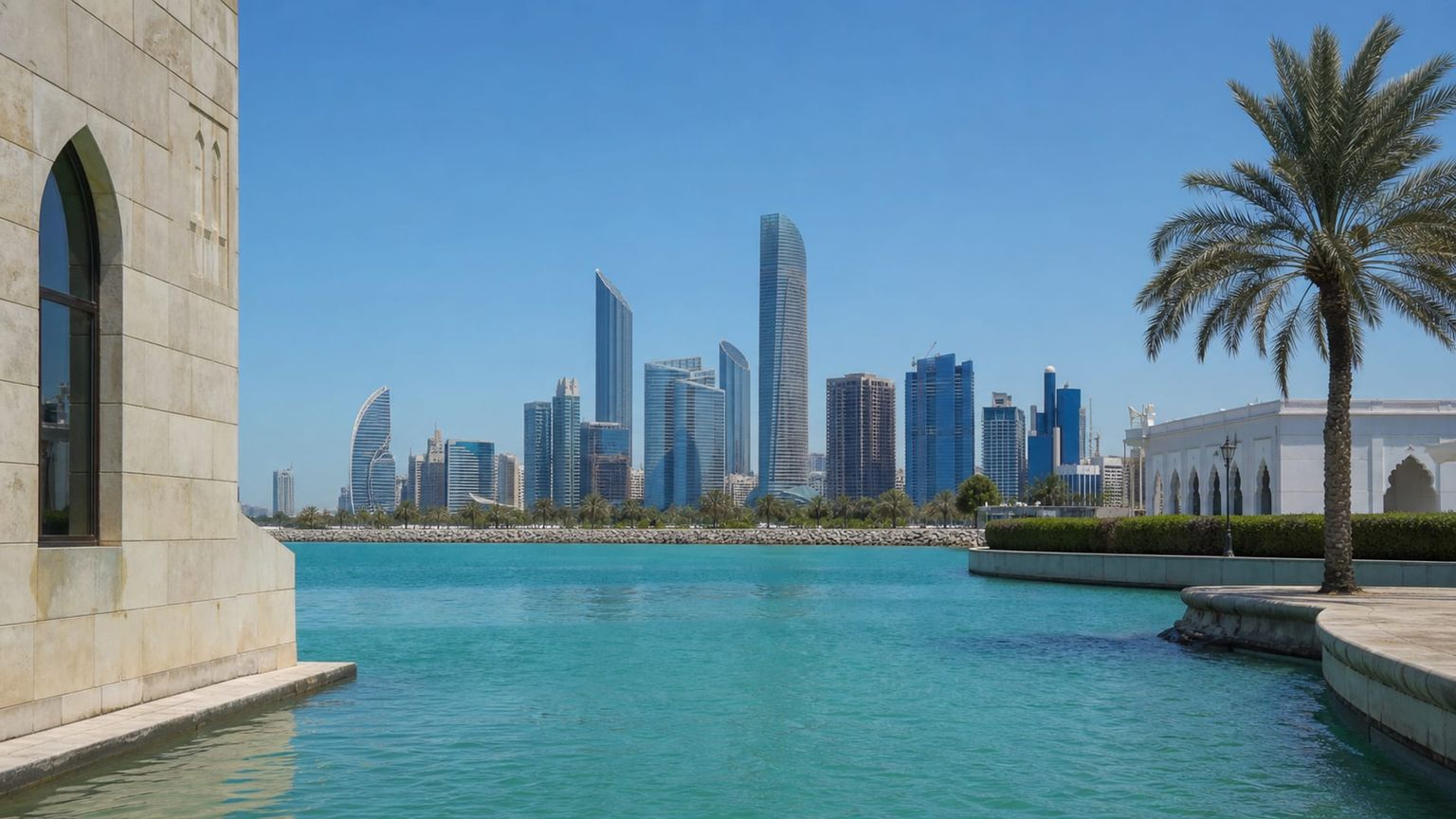
Start at the Sheikh Zayed Grand Mosque, which takes about 1 to 2 hours, then take a taxi to Qasr Al Watan in about 15 to 20 minutes for a late-afternoon visit and the evening projection show. From there, continue to the Corniche in about 10 to 15 minutes by car for a waterfront walk and an easy dinner near the promenade.
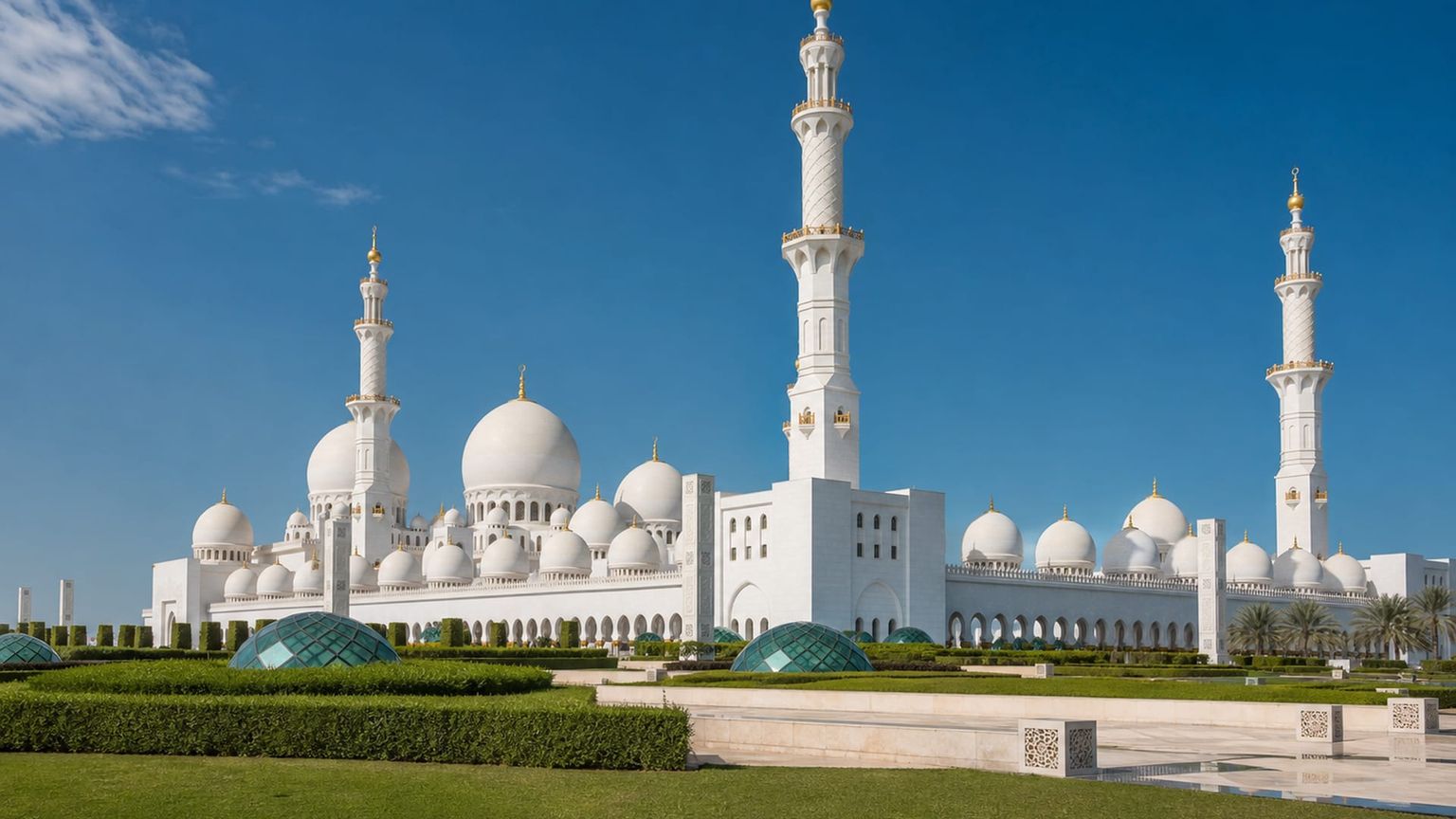
Begin at the Louvre Abu Dhabi on Saadiyat Island, where the museum and waterfront setting usually fill about 2 to 3 hours, then ride to Saadiyat Beach or back to your hotel for a short break. In the afternoon, head to Qasr Al Hosn in about 20 to 25 minutes by car to see the fort and the House of Artisans, then stay nearby for an early dinner in the city center.
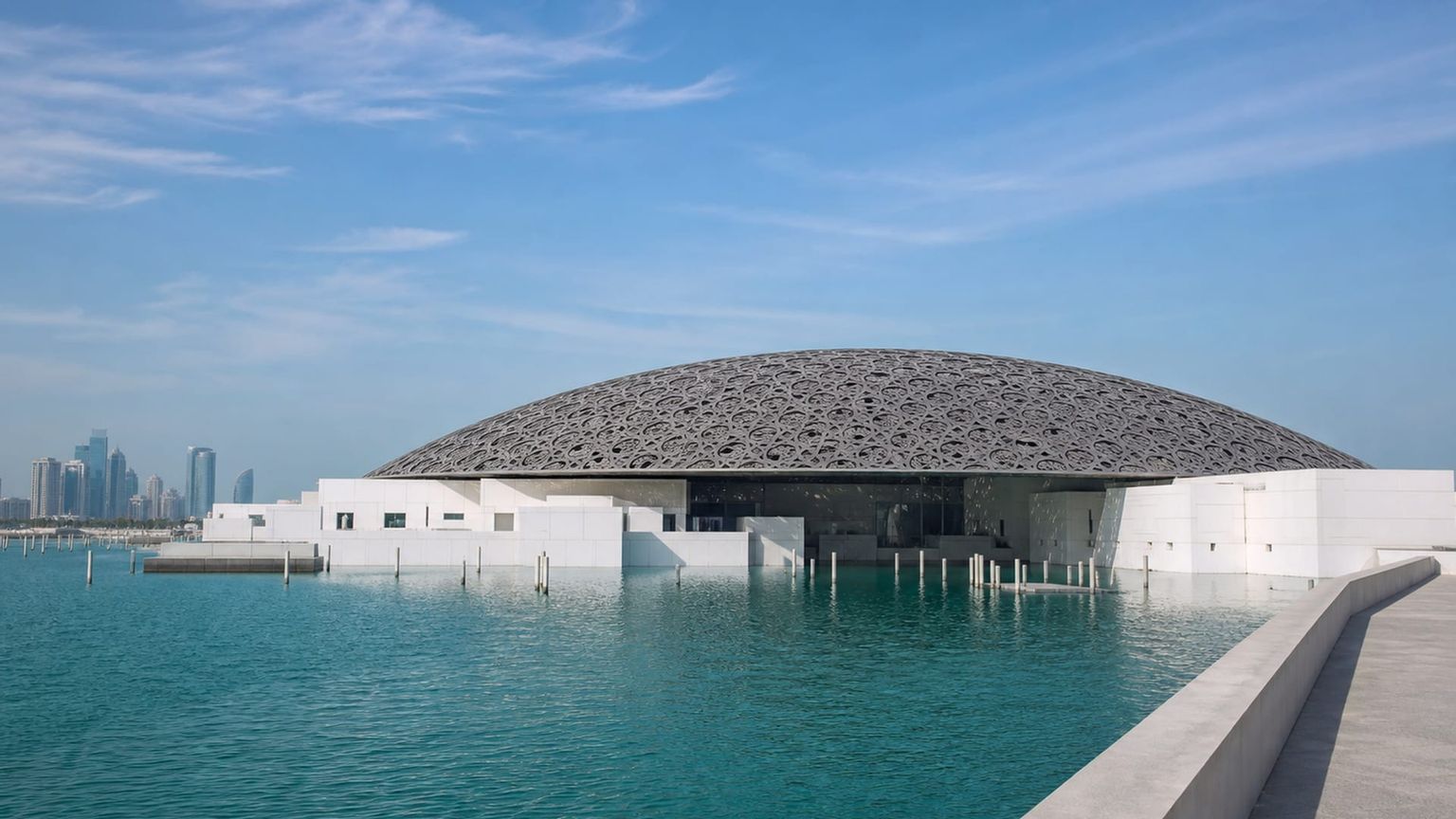
Spend the morning at Qasr Al Hosn if you did not linger there on day 3, then continue to Al Maryah Island in about 10 minutes by taxi for lunch and a slower afternoon at The Galleria. If you want one more heritage stop, a visit to the nearby Corniche takes about 10 to 15 minutes by car and gives you a clear contrast between the waterfront and the old fort.
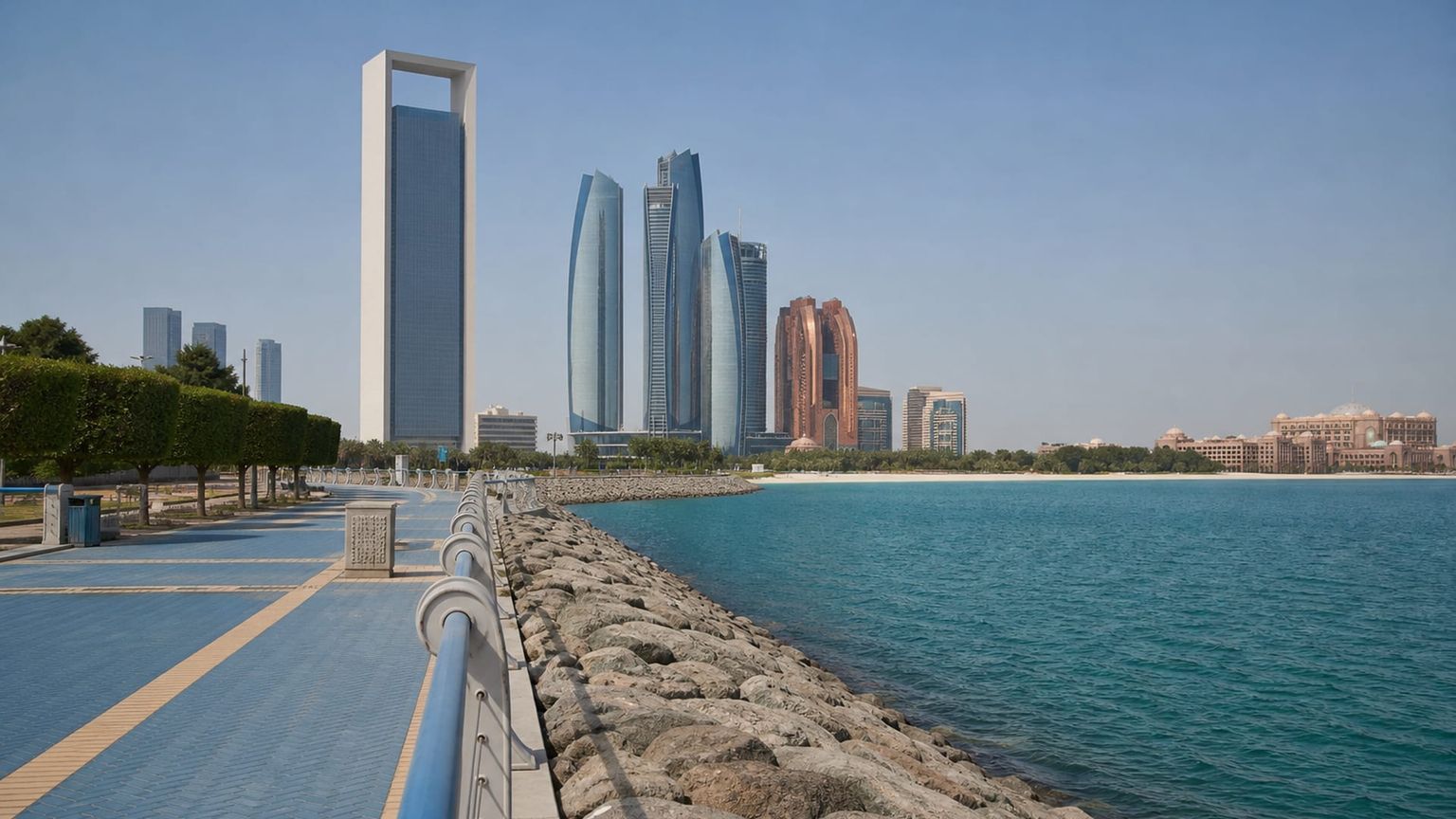
For a final day, begin with a short museum stop at the Louvre Abu Dhabi if you want one last indoor visit, then move to Al Maryah Island for shopping and an unhurried lunch at The Galleria. End with coffee in the Corniche area or near your hotel, then head to Abu Dhabi (AUH) with time for the airport run, which usually takes about 30 to 45 minutes by taxi.
Business-class flights from the US to Abu Dhabi
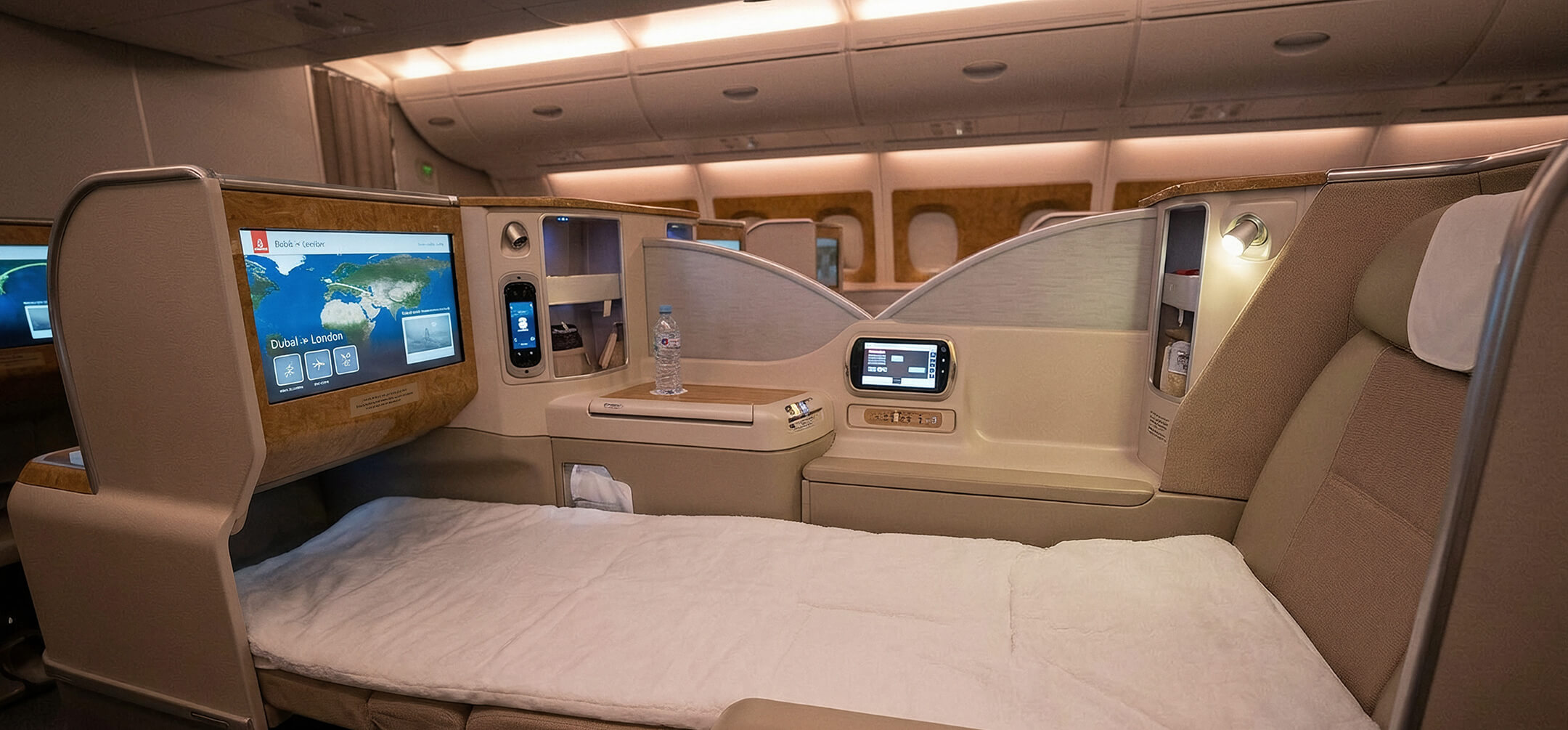
Long-haul flights into Abu Dhabi usually come through one-stop connections, and the best choice often depends on whether you depart from the East Coast or the West Coast. The fares below show the upper end of how the city is typically reached in premium seating.
From New York, carriers including Etihad Airways, Qatar Airways, Turkish Airlines, Emirates, Air France, and Lufthansa sell itineraries to Abu Dhabi that usually take about 13 to 14 hours nonstop, or about 16 to 20 hours with a connection. Common layovers run through DOH, DXB, IST, CDG, or FRA, and that extra stop can bring fares down to about $3,200 to $5,000 instead of the $5,500 to $9,500 range.
Los Angeles travelers usually see Etihad Airways, Qatar Airways, Turkish Airlines, Emirates, and Lufthansa on the board, with nonstop journeys of about 16 to 17 hours. When you accept a connection through DOH, DXB, IST, FRA, or CDG, the trip often drops from roughly $5,800 to $10,500 to about $3,500 to $5,500.
Abu Dhabi feels different when you slow down
A deliberate Abu Dhabi trip makes space for the city’s distances, so the days can move from Corniche walks to Saadiyat’s museum district, then back to Qasr Al Hosn or Al Maryah Island without feeling rushed. Taxis do the heavy lifting, the bus is worth knowing for airport arrivals, and the best meals often sit close to where you end the day. If you want help shaping the route, the AranGrant experts can match your stay to the season and the neighborhood that fits it best