

Chapters:

Need help with your trip?
Our support team is available 24/7. Request a callback or call us directly at (833) 619-0908
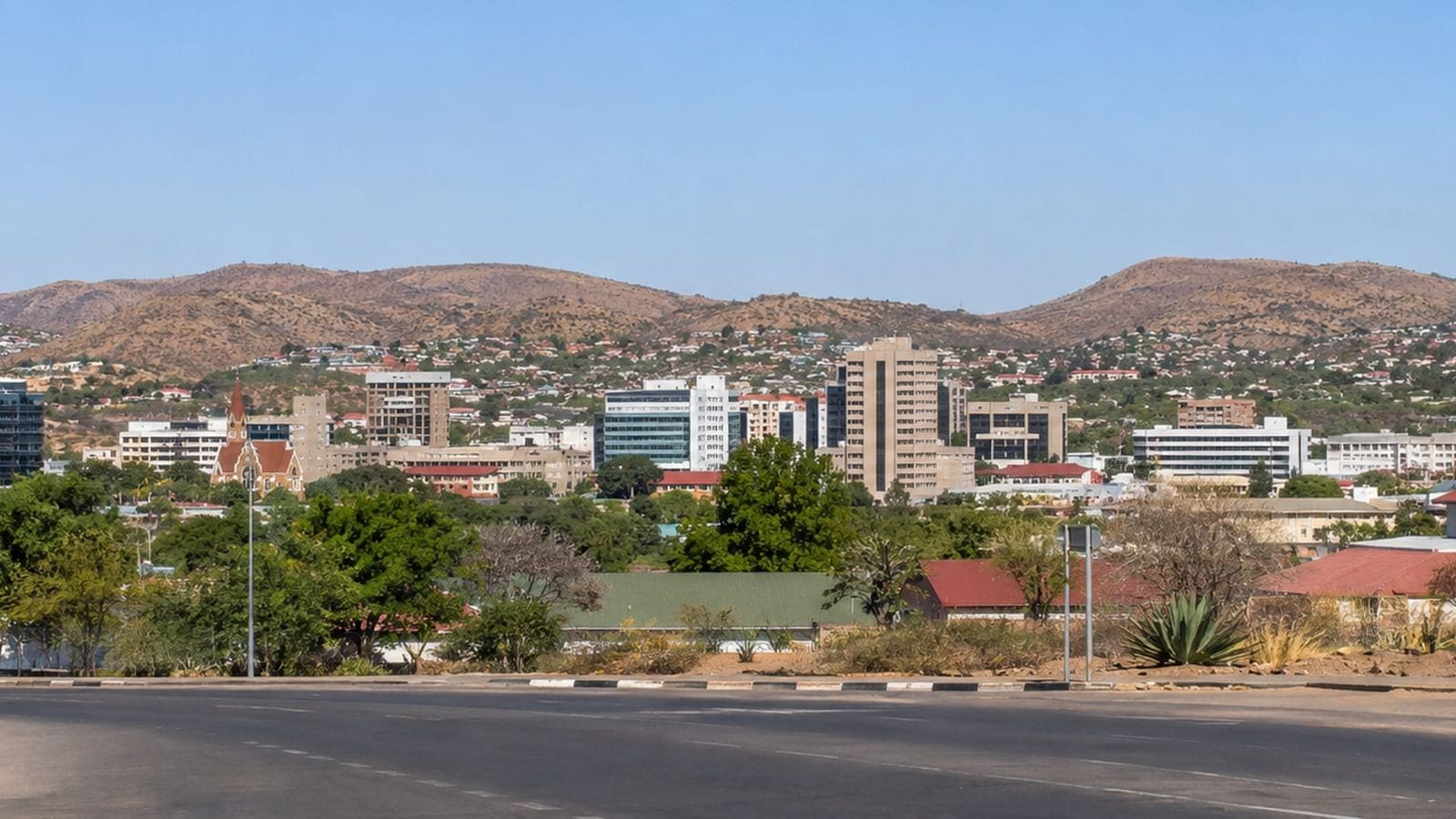
Windhoek is a compact capital where Namibia’s political history, German colonial architecture, contemporary culture, and highland landscape meet within a relatively small area. Its museums, neighborhoods, and viewpoints are spread far enough apart that some planning helps.
The center brings together Christuskirche, the Independence Memorial Museum, galleries, shops, and civic buildings, while Klein Windhoek and Eros add quieter streets and strong dining. Just outside the city, Daan Viljoen changes the setting with hiking trails and wildlife in the Khomas Hochland.
This guide covers the details that shape a Windhoek stay, including hotels, transport, food, seasonal conditions, a five-day plan, and business-class flights to Hosea Kutako International Airport (WDH).
Useful things to know

Main language(s): English is the official language; Afrikaans and Oshiwambo are also widely spoken in Windhoek.

Currency: Namibian dollar (NAD, N$)

Cash and cards: Cards are widely accepted at hotels, restaurants, and larger shops. Carry some Namibian dollars for taxis, markets, and small purchases.

Tipping: Restaurants commonly receive about 10% when service is not included. Small tips for fuel attendants and car guards are customary but optional.

Traditional food: Kapana, oshifima, mahangu porridge, potjiekos, biltong, and mopane worms are among the Namibian foods commonly found in Windhoek.

Water and coffee costs: A 16.9-ounce (500 ml) bottle of water often costs N$25 (US$1.60), while an espresso costs N$25 to N$40 (US$1.60 to US$2.50).

Taxis and ride apps: inDrive, Yango, and LEFA operate in Windhoek. Check the fare before confirming; inDrive allows passengers to propose a price.

Plug and voltage: Namibia uses 220–240V, 50Hz electricity. Type M three-round-pin sockets are standard, so US travelers need a plug adapter.

Dining and shop opening hours: Major malls often trade until 7:00 pm on weekdays and close earlier on weekends. Restaurant hours vary by venue, including on Sundays.

Emergency number: Call 10111 for the police. In Windhoek, call 061-21-11-11 for an ambulance or fire and rescue, or 061-30-23-02 for City Police.
Where to stay in Windhoek
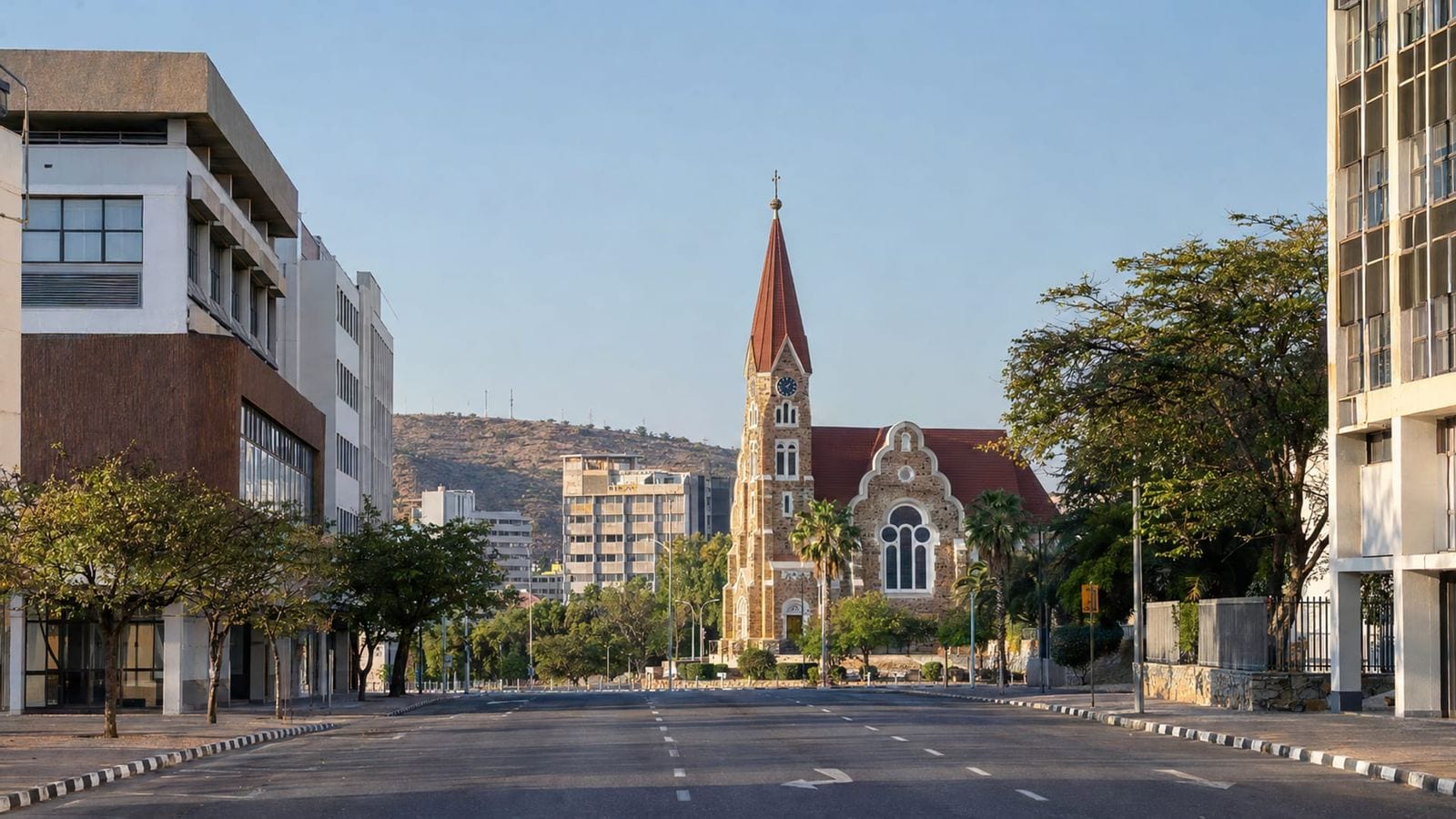
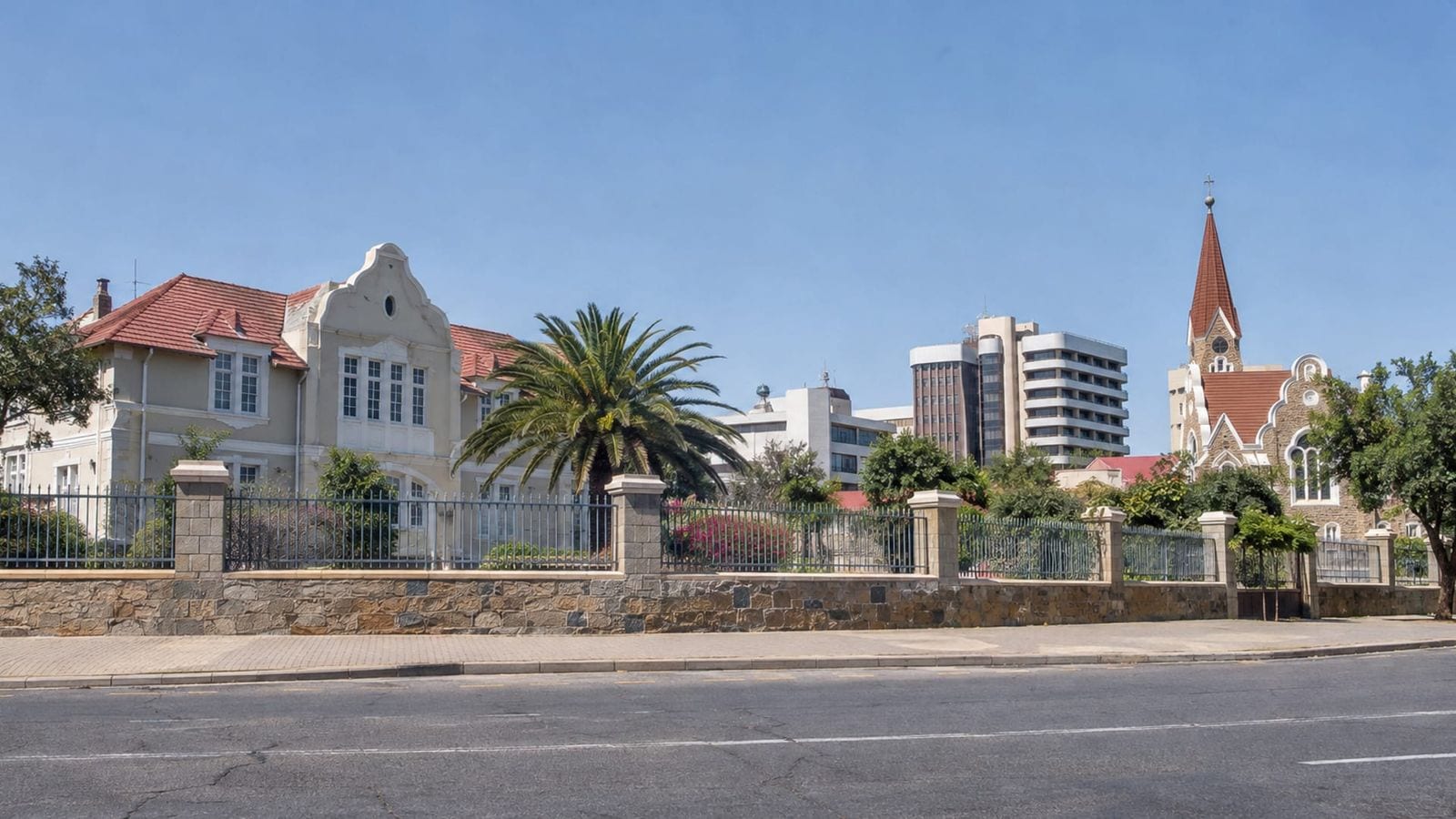
Windhoek’s city center follows Independence Avenue and the surrounding blocks, where government buildings, banks, shops, hotels, restaurants, and several major sights are concentrated. Christ Church and the Independence Memorial Museum are close enough to reach on foot from many central hotels.
Best for: First-time visits, short stays, and travelers who want the easiest access to central sights and errands
What to expect: Busy sidewalks by day, with office workers, shoppers, and tour pickups; evenings quiet down after business hours.
Hotel prices: Usually about $55 to $120 per night for well-rated stays
Distance to major sights: 5 to 15 minutes on foot to Christ Church and Independence Avenue
Quietness: Active and functional in the day, then notably quieter after dark with limited late-night activity.
Main trade-off: You get convenience, but rooms can cost more than in outer neighborhoods and the street scene thins out after business hours.
Good to know: : Central sights and shops are easy to reach on foot during the day. After dark, use a taxi or reputable ride app instead of walking alone.
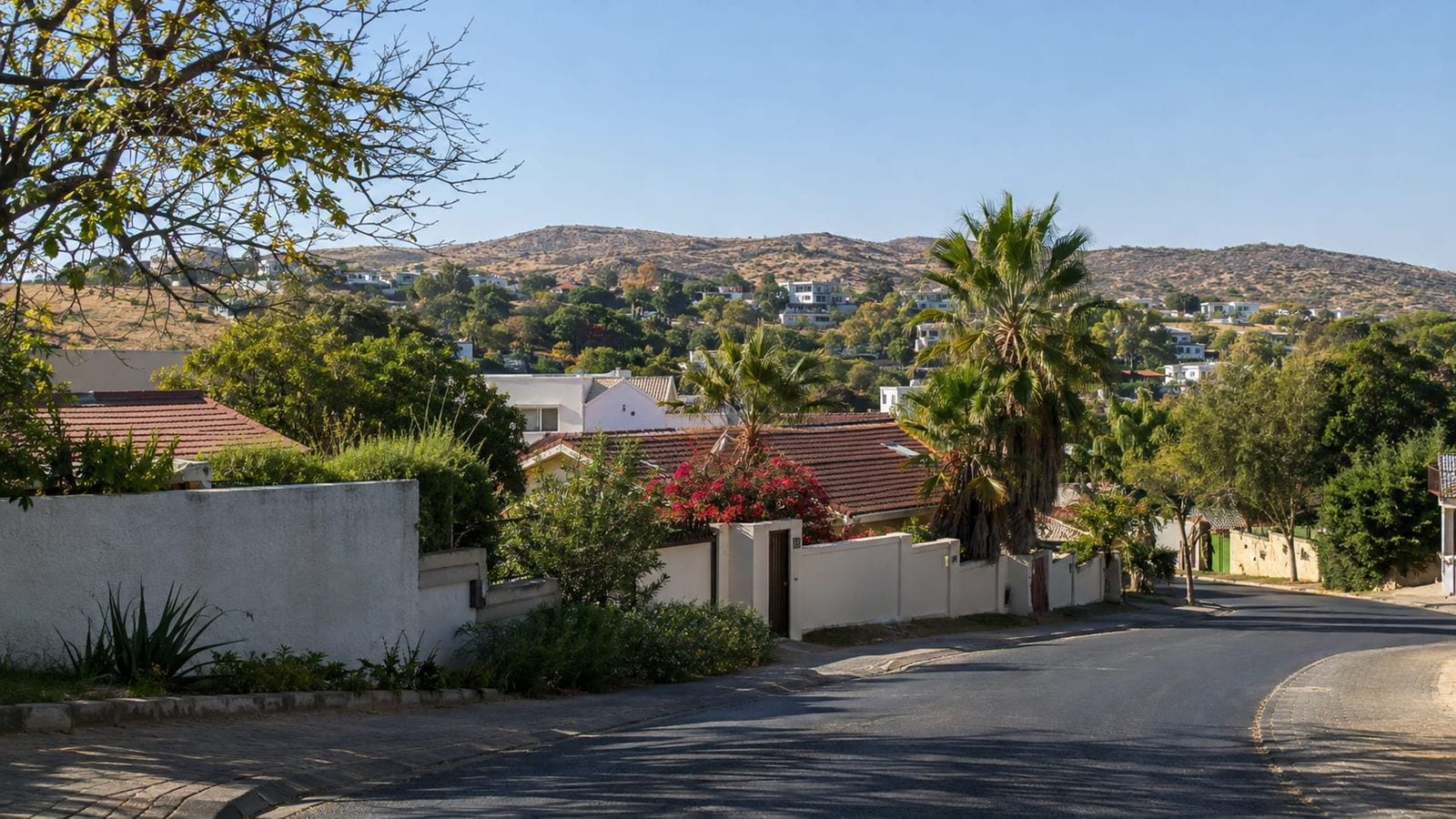
Klein Windhoek is a residential neighborhood east of central Windhoek, with guesthouses, smaller hotels, restaurants, and several diplomatic properties. The area has less daytime commercial activity than the City Centre, while central sights and shops remain a short taxi ride away.
Best for: Leisure travelers, longer stays, and visitors who prefer a quieter residential base with easy access to the center
What to expect: Low-key streets, scattered cafes, and a more residential feel than the core, with modest activity around dining spots.
Hotel prices: Usually about $70 to $160 per night for well-rated stays
Distance to major sights: 10 to 20 minutes by taxi to Christ Church, about 25 minutes on foot to the center
Quietness: Quieter than the center during the day and typically calm in the evening, aside from restaurant hours.
Main trade-off: You gain more space and quieter nights, but you will depend more on taxis for central dining and sightseeing.
Good to know: : Klein Windhoek has several restaurants and guesthouses within the neighborhood, so dinner does not always require a trip to the city center.
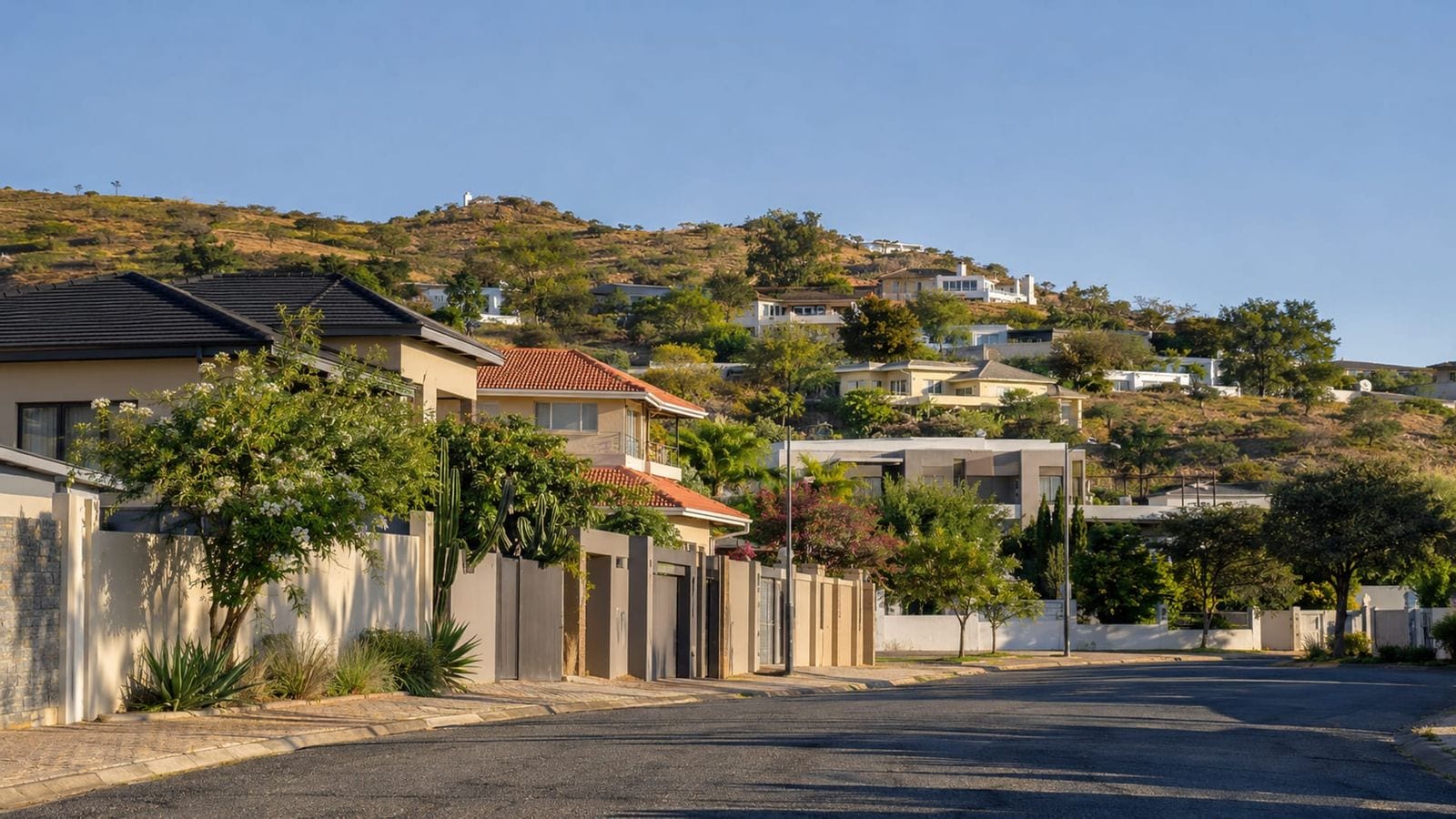
Ludwigsdorf is a residential neighborhood on Windhoek’s eastern hills, adjoining Klein Windhoek. The area has hillside homes, guesthouses, diplomatic properties, and quieter streets, while restaurants, central sights, and larger shops are within a short drive from most accommodation.
Best for: Travelers with a car, longer stays, and visitors who want a residential base with more privacy
What to expect: Sparse foot traffic, quiet streets, and limited casual walk-in activity outside local residences and a few businesses.
Hotel prices: Usually about $65 to $150 per night for well-rated stays
Distance to major sights: 20 to 30 minutes by taxi to Christ Church and the center
Quietness: Very quiet in the day, and even calmer at night with little street activity.
Main trade-off: The setting is calmer, but you will spend more on rides and lose the ease of walking to dinner or sights.
Good to know: : Restaurants are available nearby, especially toward Klein Windhoek, so staying in Ludwigsdorf does not require returning downtown for every meal.
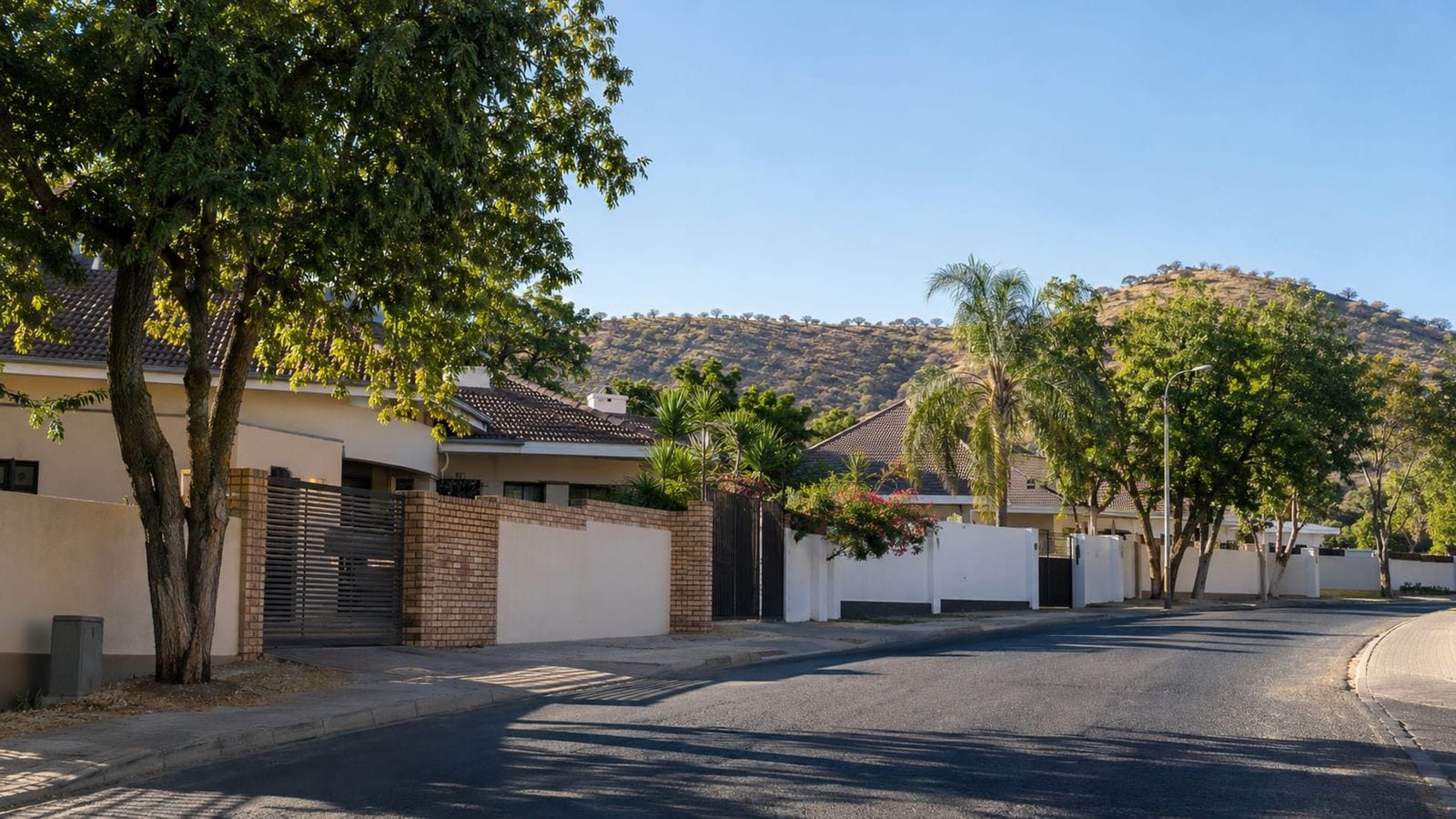
Eros is a residential and mixed-use neighborhood north of central Windhoek, with homes, hotels, medical facilities, restaurants, and Eros Shopping Centre. It has less commercial activity than the City Centre, while Christ Church and other central sights remain only a short drive away.
Best for: Business travelers, early departures, and short stays with car or taxi access to the center
What to expect: Mostly residential activity, some hotel traffic, and light street movement rather than a busy pedestrian scene.
Hotel prices: Usually about $60 to $140 per night for well-rated stays
Distance to major sights: 10 to 20 minutes by taxi to Christ Church and Independence Avenue
Quietness: Calm during the day and generally quiet at night, with only occasional traffic from nearby roads.
Main trade-off: It works well for airport access, but you will rely on transport for most restaurants and central attractions.
Good to know: : Eros is not an airport district; reaching Hosea Kutako International Airport (WDH) still requires roughly 35 to 40 minutes by car from this part of Windhoek.
For a city-focused stay, Brakwater and accommodation near Hosea Kutako International Airport (WDH) add substantial driving time to central sights and restaurants. They are better suited to road trips, late arrivals, or early departures.
Hotel deals
How to get around Windhoek efficiently
Getting around Windhoek generally means using buses for planned local trips, taxis or ride apps for more flexible travel, and dedicated transfers for WDH.

Metro
for longer distances
For Hosea Kutako International Airport (WDH), use a scheduled shuttle, private transfer, taxi, or rental car. The drive from central Windhoek usually takes 40 to 50 minutes. Shuttle seats start near N$250 (US$15.60), while private transfers commonly cost N$350 to N$500 (US$22 to US$31).

Bus and tram
for convenience
Municipal buses are useful for low-cost weekday travel between the CBD, Eros, Klein Windhoek, Katutura, Avis, and other districts. Service mainly follows commuter periods, so check the timetable first. A trip costs N$8.50 (US$0.53) by smartcard or N$9.50 (US$0.59) in cash.

Taxi
for convenience or late hours
Shared taxis are useful for short city trips, while inDrive, Yango, LEFA, and Yene give more direct door-to-door options, especially after dark. The standard shared-taxi fare is N$15 (US$0.94) per passenger; rideshare prices vary by distance, demand, and pickup point.
*Prices are based on rates updated as of August 2026 and may change at the time of travel.
Use buses for planned weekday trips, taxis or ride apps for flexible city travel, and a booked shuttle or transfer for the 28-mile (45 km) trip to WDH airport.
Iconic landmarks
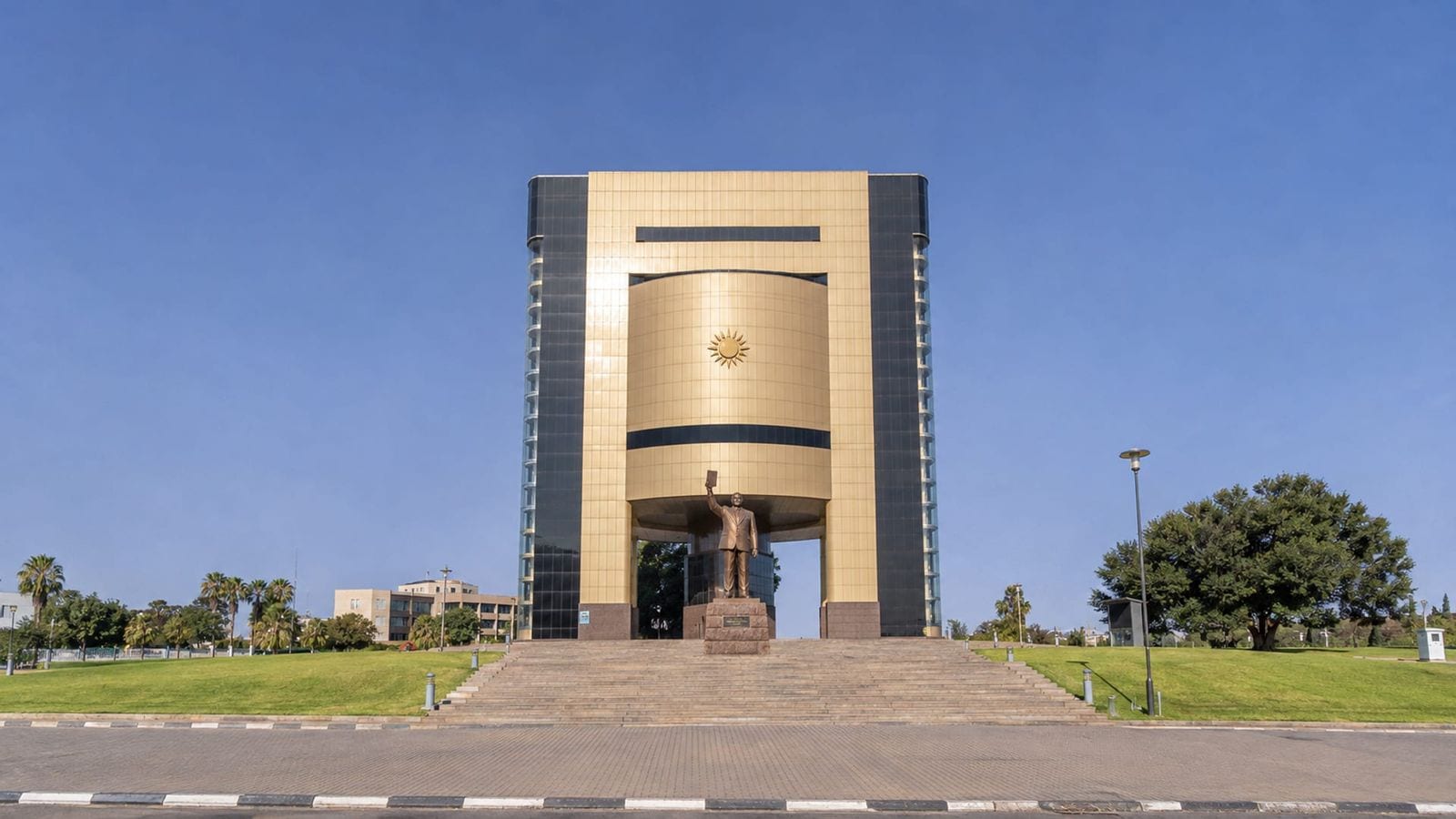
Independence Memorial Museum
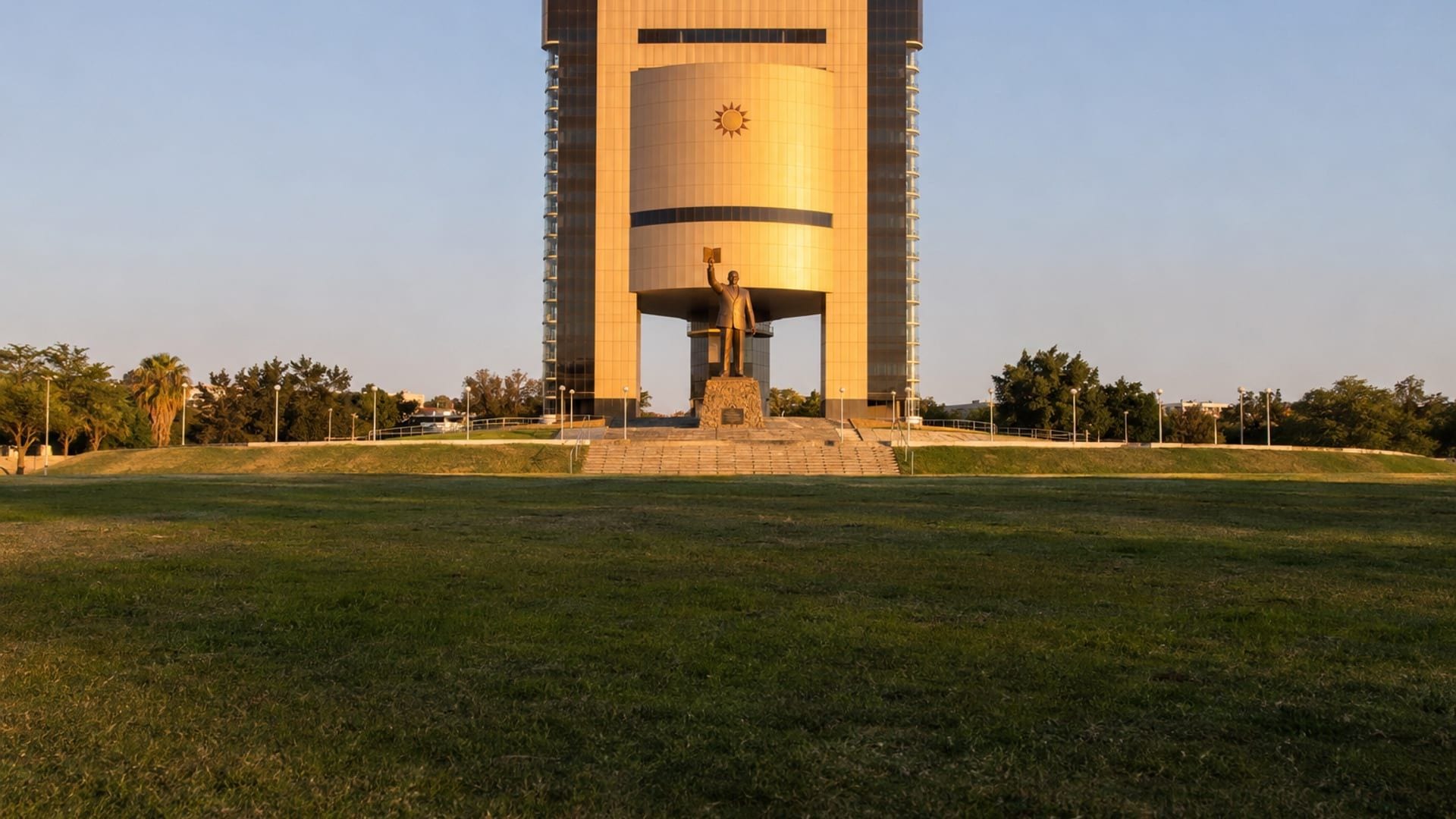
The Independence Memorial Museum presents Namibia’s colonial history, resistance movements, and road to independence across three main galleries. A glass elevator climbs the outside of the building, while the upper levels look across central Windhoek, Christuskirche, and the government precinct.
Time needed: About 1 to 2 hours
Entry: Admission is free, with no timed entry required for the museum or the memorial grounds. Visit the official site for details.
Tip: : Take the glass elevator for one of the clearest elevated views over central Windhoek.
Christuskirche
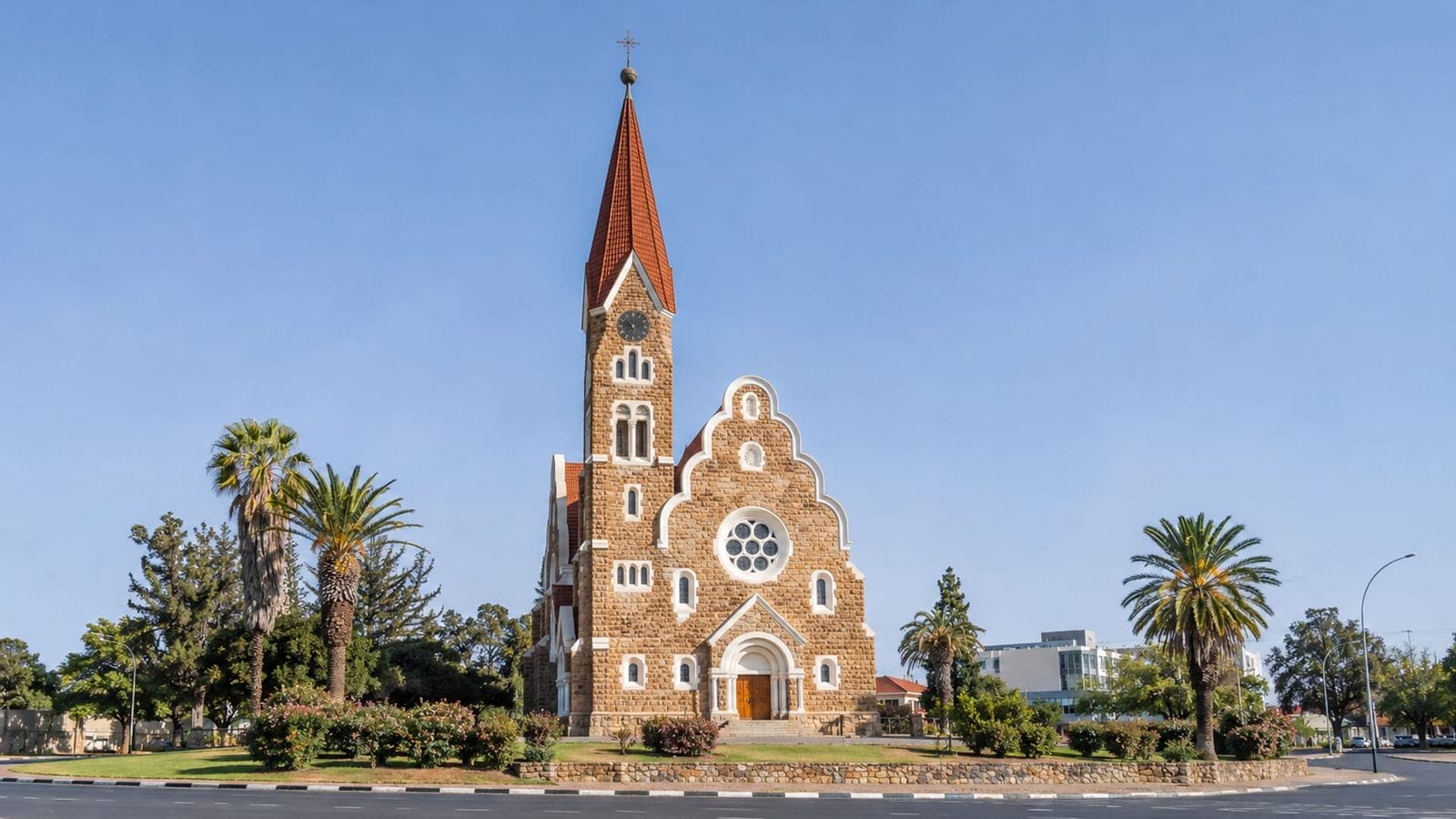
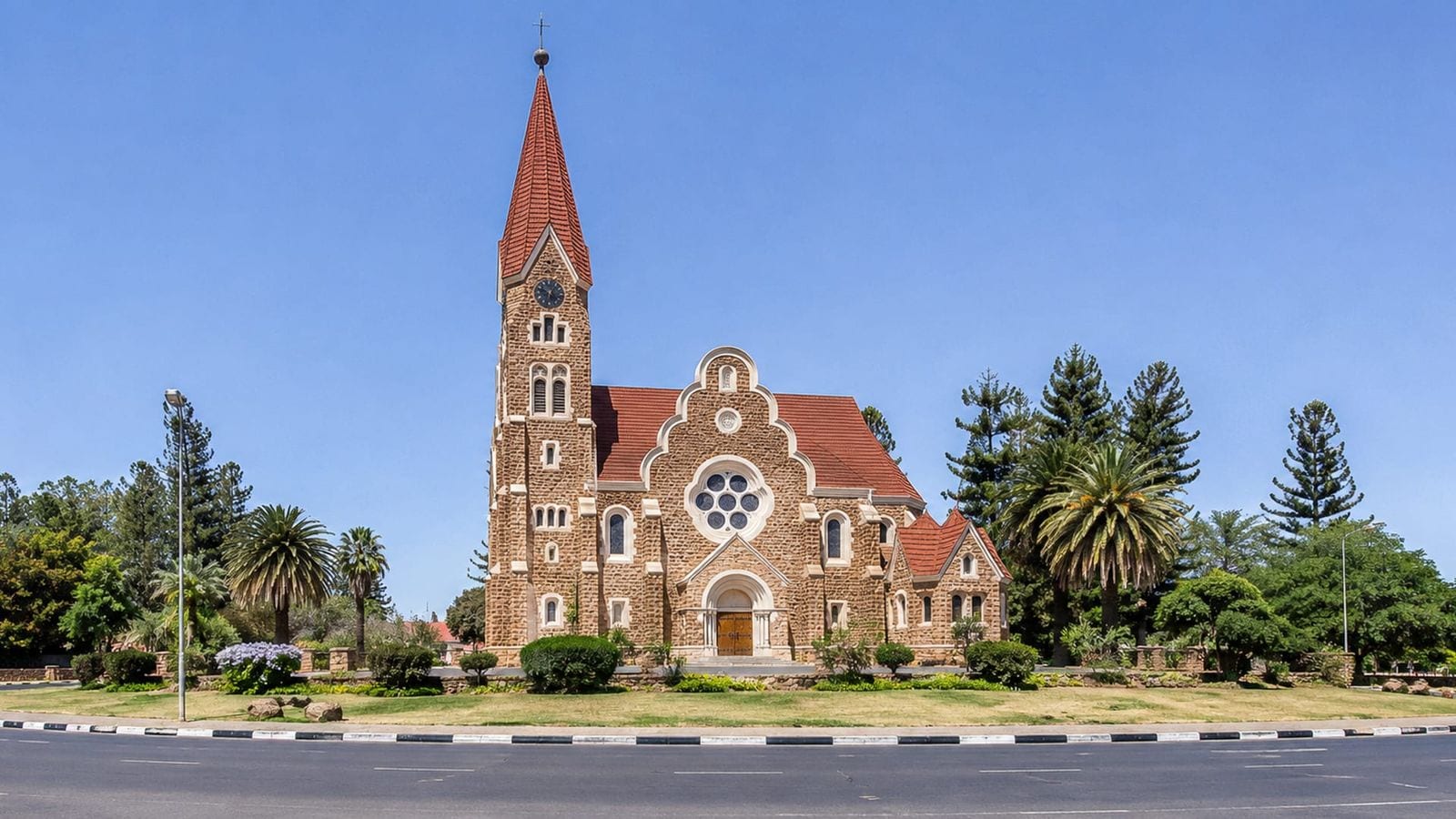
Christuskirche is Windhoek’s landmark Lutheran church, begun in 1907 and consecrated in 1910. Its pale sandstone walls, stained-glass windows, red-tiled roof, and neo-Romanesque design reflect the city’s German colonial period and make the exterior worth seeing even when the doors are closed.
Time needed: About 30 to 45 minutes
Entry: Admission is free, and visitors can enter during normal opening hours without a ticket.
Tip: : Visit on Monday or Tuesday morning, when volunteers most often open the church to visitors.
Daan Viljoen Game Reserve
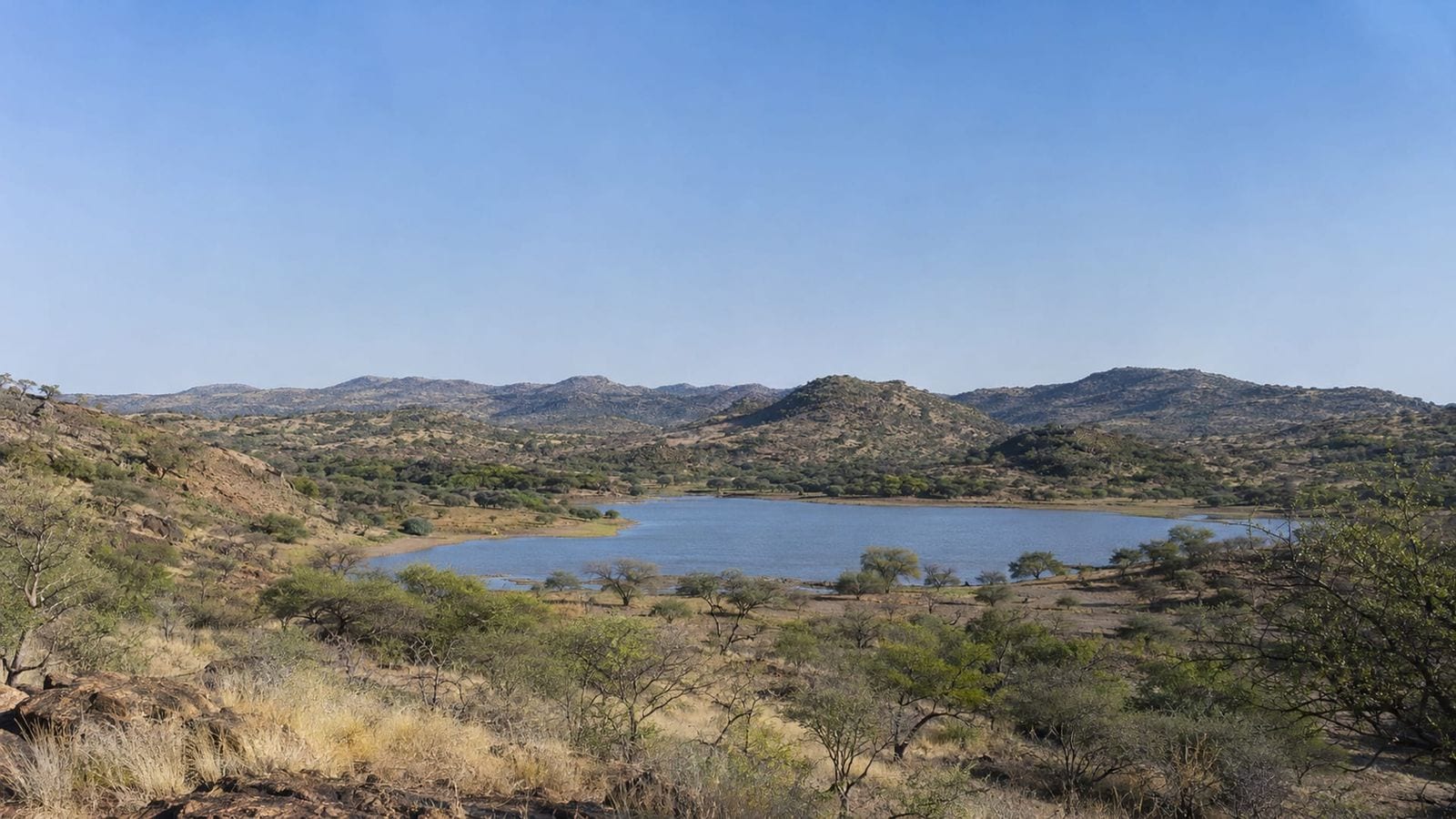
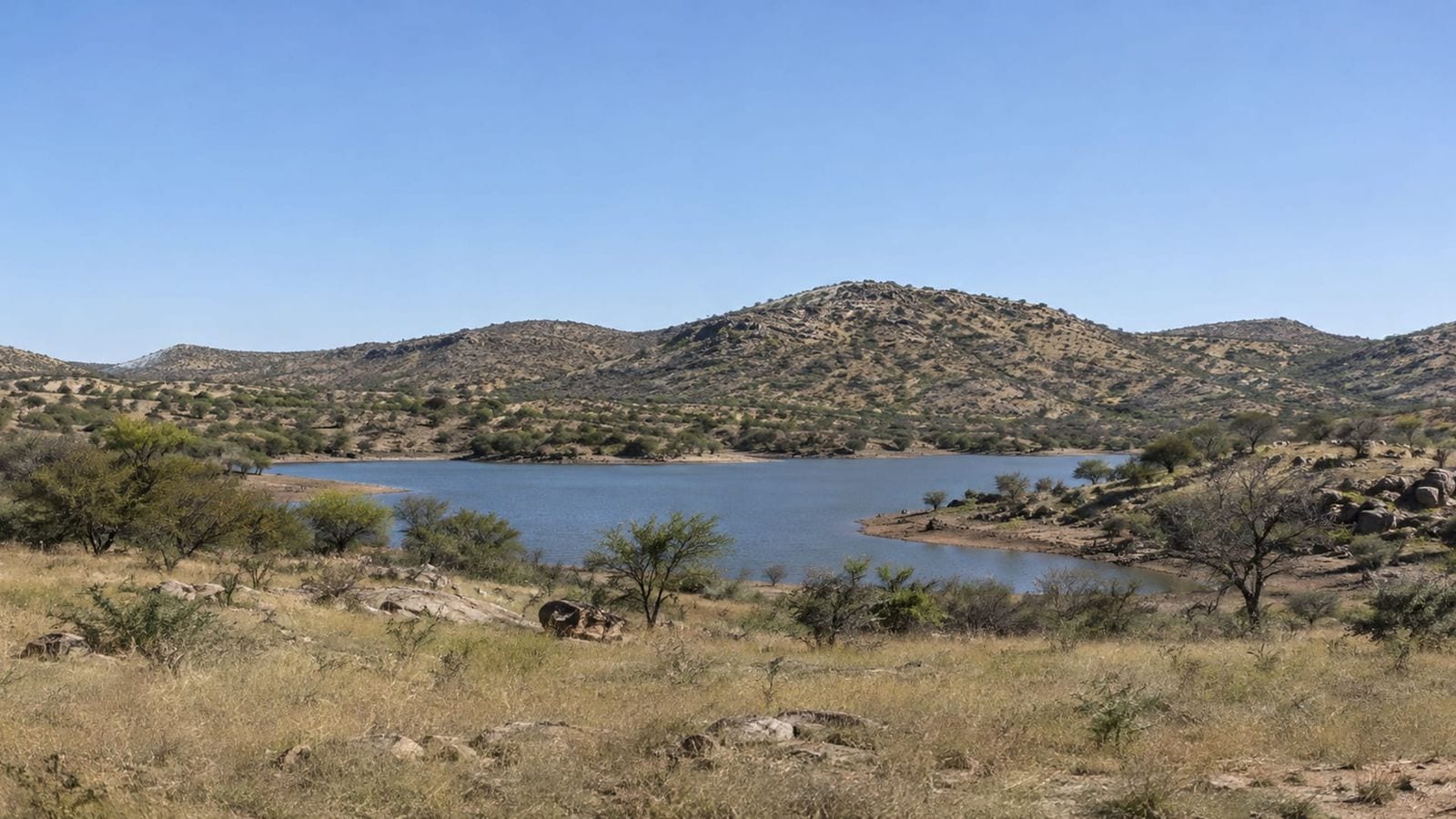
Daan Viljoen Game Park lies 15 miles (24 km) west of Windhoek in the Khomas Hochland. Its 1.9-mile (3 km) and 5.6-mile (9 km) hiking trails cross highland scrub where springbok, kudu, gemsbok, wildebeest, Hartmann’s mountain zebra, and many bird species may be seen. Self-drives are possible.
Time needed: About 2 to 4 hours
Entry: Day-use entry is about $3 to $6 ($55 to $110), with higher rates for some vehicle categories. Visit the official site for details.
Tip: : Start early for cooler hiking conditions and more time on the trails before midday heat.
Overlooked sites worth visiting

TransNamib Museum
The TransNamib Museum occupies Windhoek’s historic railway station and displays locomotives, railway equipment, maps, and objects that trace Namibia’s rail history from colonial rule to independence.
Time needed: About 30 to 45 minutes
Entry: Free to access
Tip: : Visit before 1:00 pm or after 2:00 pm; the museum closes for lunch on weekdays.

National Art Gallery of Namibia
The National Art Gallery of Namibia presents visual art and craft by Namibian artists through changing exhibitions, while its collections place local work within wider African and global contexts.
Time needed: About 45 minutes to 1 hour
Entry: Admission costs about $1 to $4 (approximately N$20 to N$80) Visit the official site for details.
Tip: : Check the current exhibition before visiting, since displays change throughout the year.
Traditional food
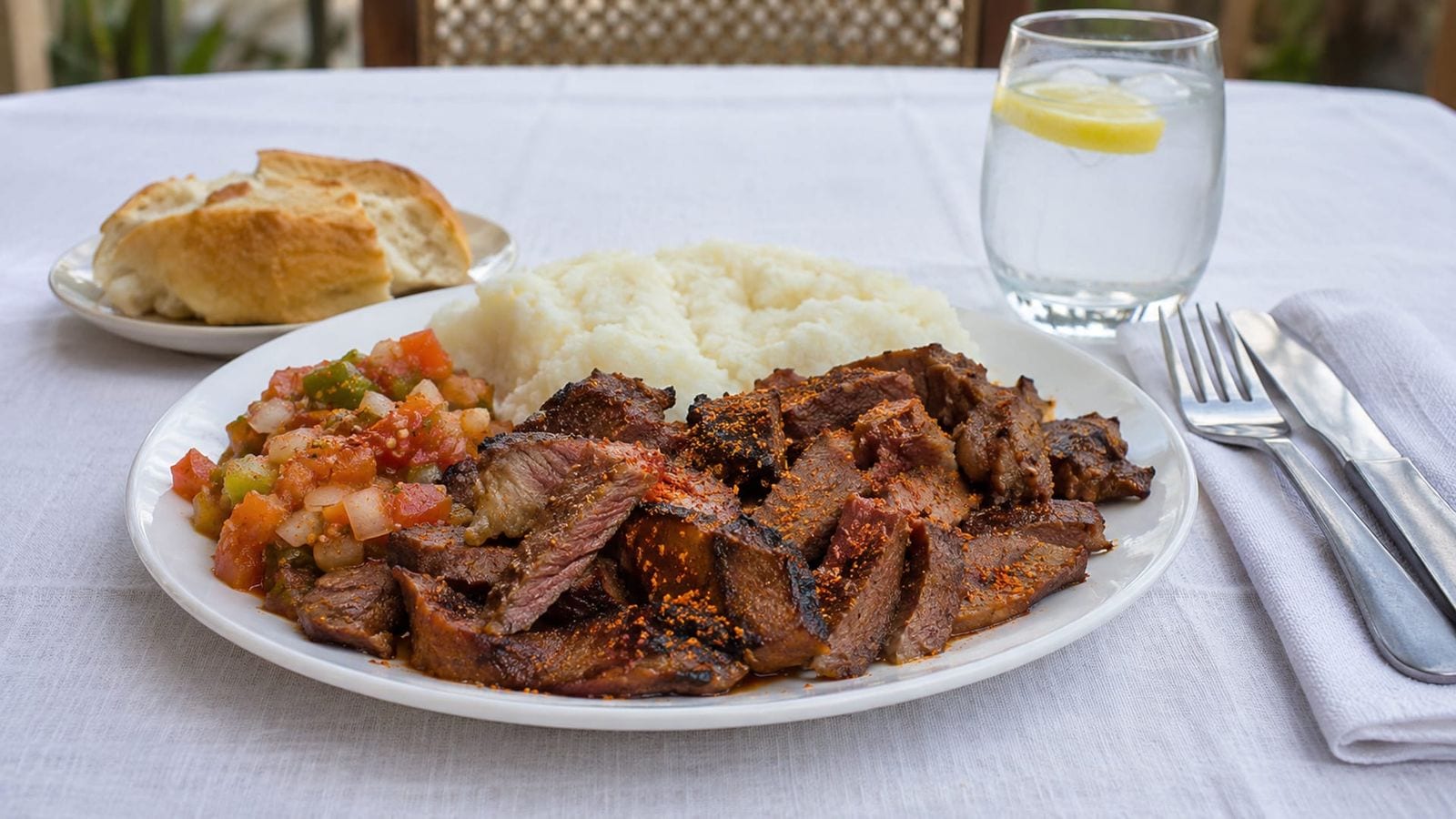
Windhoek’s food draws on Namibian traditions and wider southern African influences, with grilled meat, millet porridge, dried meat, and seasonal ingredients appearing in markets and restaurants.
Kapana
Kapana consists of beef cut into small pieces and grilled over an open flame, then eaten with kapana spice, salsa, pap, or vetkoek. Joe’s Beerhouse serves its Kapana Special with stiff maize porridge and traditional seasoning.
Biltong
Biltong is beef or game meat seasoned with salt and spices, cured, and air-dried before being sliced into thin pieces. Fresh ’n Wild at Utopia serves biltong with droëwors as part of its small-plate selection.
Oshifima
Oshifima is a thick porridge prepared from maize meal or mahangu millet and commonly eaten with meat, vegetables, spinach, beans, or sauce. Xwama Cultural Village in Katutura serves mahangu porridge alongside traditional Namibian dishes.
Mopane worms
Mopane worms are edible caterpillars that may be fried until crisp or cooked with tomatoes, onions, and seasoning, usually with pap on the side. Roof of Africa serves them seasonally in both preparations.
Best time to visit Windhoek
Windhoek has hot, rainy summers and dry winters, with wide day-to-night temperature swings that make spring and fall especially comfortable.
Best for: Green scenery, longer daylight, and travelers comfortable with summer heat
What you get: Average highs reach 88°F to 91°F (31°C to 33°C), lows stay near 63°F (17°C), and afternoon thunderstorms bring the year’s main rainfall.
Trade-offs: Heat and afternoon thunderstorms can interrupt outdoor plans, especially from December through February.
Best for: Mild temperatures, city walks, museums, and outdoor sightseeing with less rain
What you get: Highs ease from 85°F to 78°F (29°C to 26°C), while lows fall from 61°F to 51°F (16°C to 11°C) as rainfall steadily declines.
Trade-offs: March can still bring summer rain, while evenings become noticeably cooler through April and into May.
Best for: Dry weather, reserve visits, clear days, and comfortable daytime sightseeing
What you get: Average highs stay near 73°F to 78°F (23°C to 26°C), lows near 45°F to 49°F (7°C to 9°C), with almost no rainfall and many clear days overall.
Trade-offs: Early mornings and nights can be cold, and July through August fall within Namibia’s busy travel season.
Best for: Warmer days, longer daylight, outdoor sightseeing, and early-season greenery
What you get: Highs rise from about 85°F to 90°F (29°C to 32°C), lows reach 56°F to 62°F (13°C to 17°C), and the first rains may arrive by November.
Trade-offs: Heat builds steadily toward November, while peak-season demand brings busier hotels and attractions.
A realistic 5-day plan in Windhoek
Five days in Windhoek allow time for the capital’s history, art, local craft, and nearby wildlife without crowding several major stops into one day. Keep the order flexible around museum opening hours, especially if the stay includes Sunday or Monday.
After the 40- to 50-minute drive from Hosea Kutako International Airport (WDH), keep the first afternoon close to the hotel. In the city center, Independence Avenue introduces Windhoek through shops, offices, restaurants, and the mix of modern buildings and older landmarks that shape the capital. A short walk nearby is enough to see the nearby areas before dinner, without turning arrival day into a sightseeing schedule.
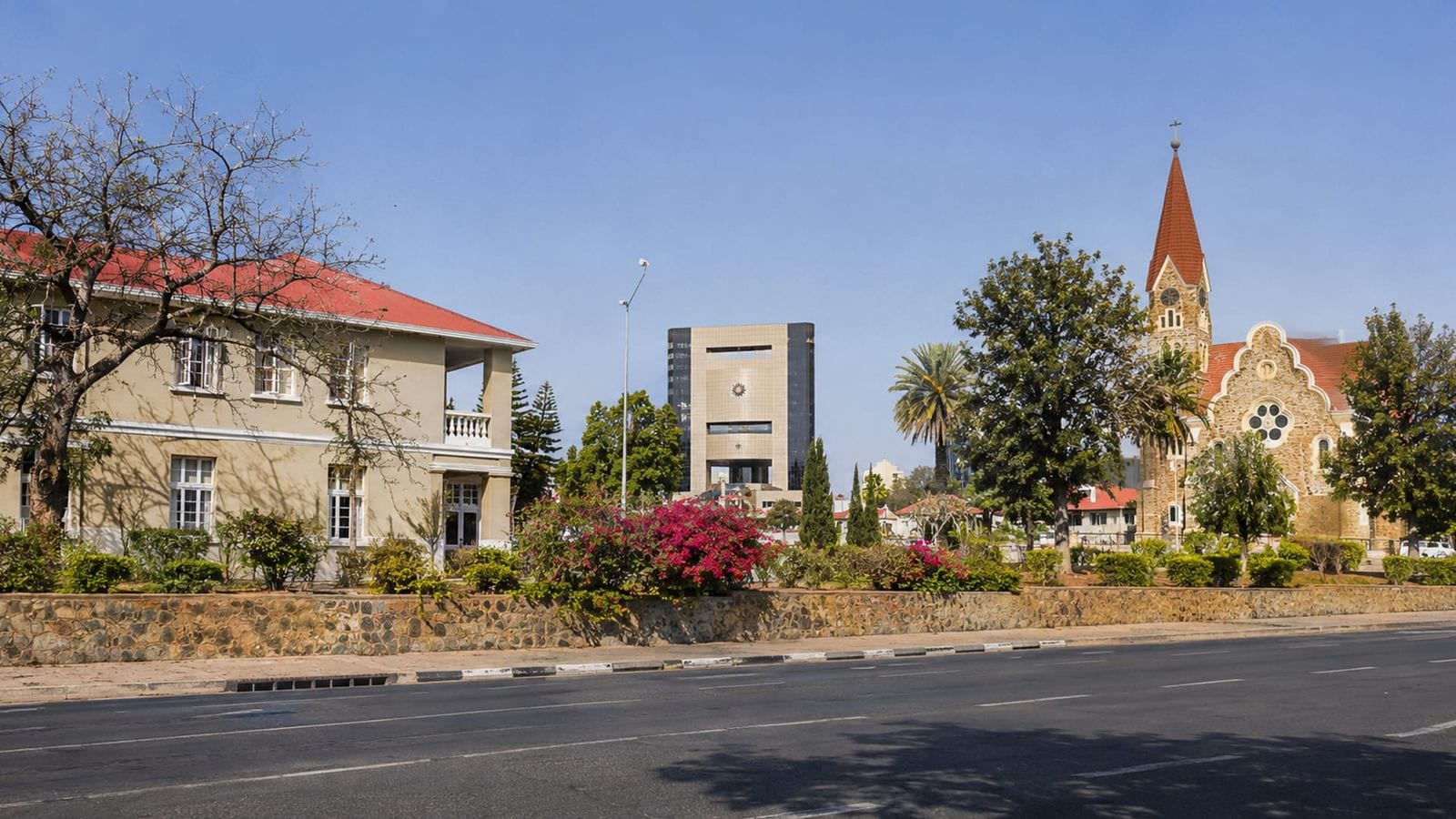
Spend the day around Windhoek’s strongest cluster of national-history landmarks. Inside the Independence Memorial Museum, the galleries trace colonial rule, resistance, and the independence movement, while the upper floors open views across the center. Outside, the Sam Nujoma statue and Genocide Memorial continue that story. Christuskirche stands nearby, with its sandstone walls and stained glass adding the city’s German colonial layer.
Daan Viljoen Game Park changes the scale of the trip after two days in the city. About 15 miles (24 km) west of Windhoek, its dry highland landscape supports kudu, springbok, gemsbok, wildebeest, Hartmann’s mountain zebra, and abundant birdlife. A shorter walking trail or self-drive lets you see the Khomas Hochland up close, while an early start keeps the outdoor portion of the day out of the strongest midday heat.
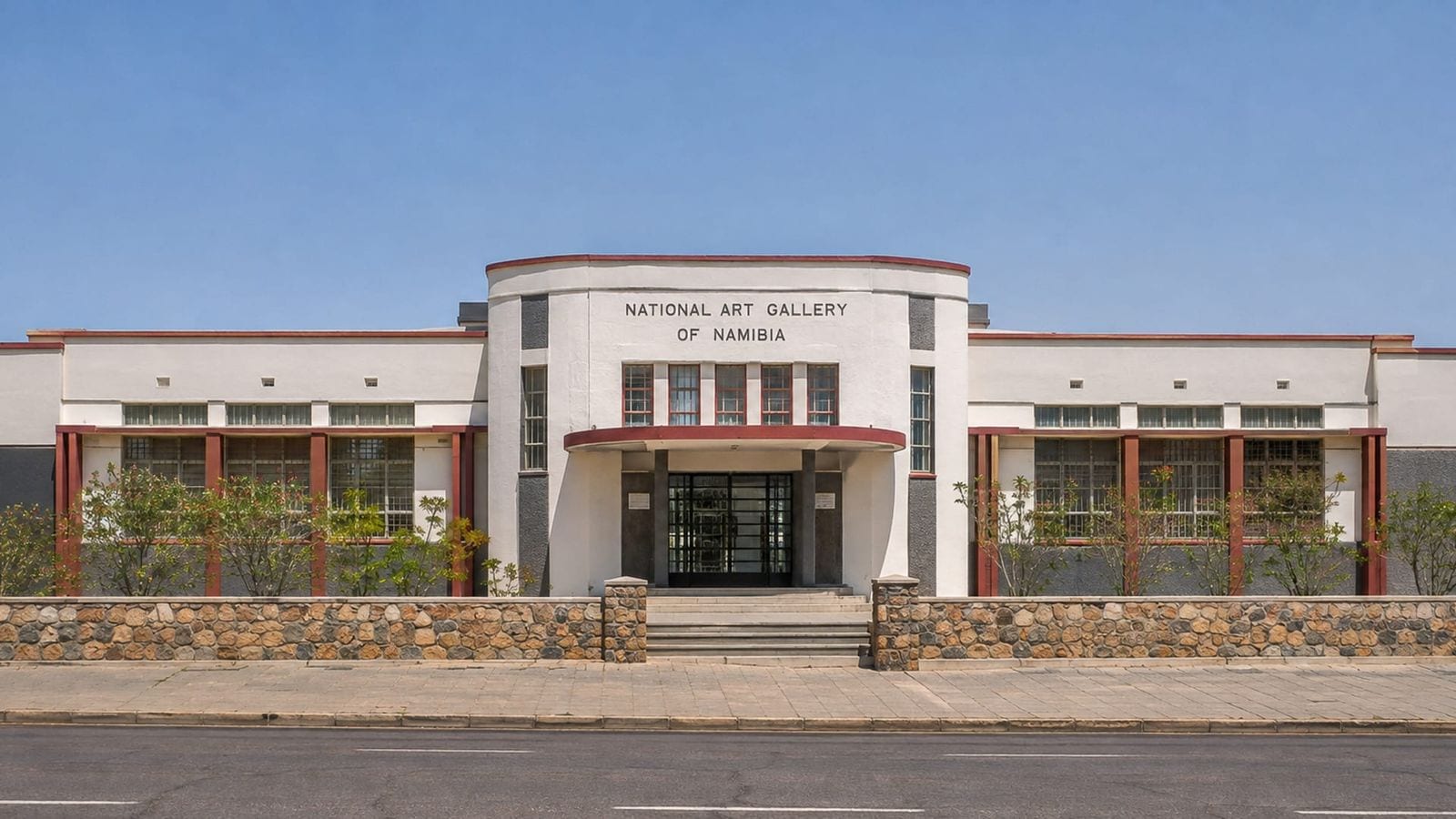
Return to central Windhoek for a day that can be covered mostly on foot. The National Art Gallery introduces Namibian visual art through changing exhibitions, while nearby streets lead back into the civic and commercial center. Continue toward Independence Avenue and Zoo Park, where shaded lawns break up the urban streetscape. By the end, the short distances between the gallery, park, shops, and civic buildings make the scale of central Windhoek much clearer.
Keep the final morning light at the Namibia Craft Centre on Tal Street. Its shops bring together baskets, textiles, jewelry, woodwork, leather goods, and other pieces made by craft enterprises from across Namibia, giving the last stop more local context than a generic souvenir run. There is also a café on site, so breakfast or coffee can fit naturally before returning to the hotel, allowing 40 to 50 minutes for the drive to Hosea Kutako Airport (WDH).
Business-class flights from the US to Windhoek
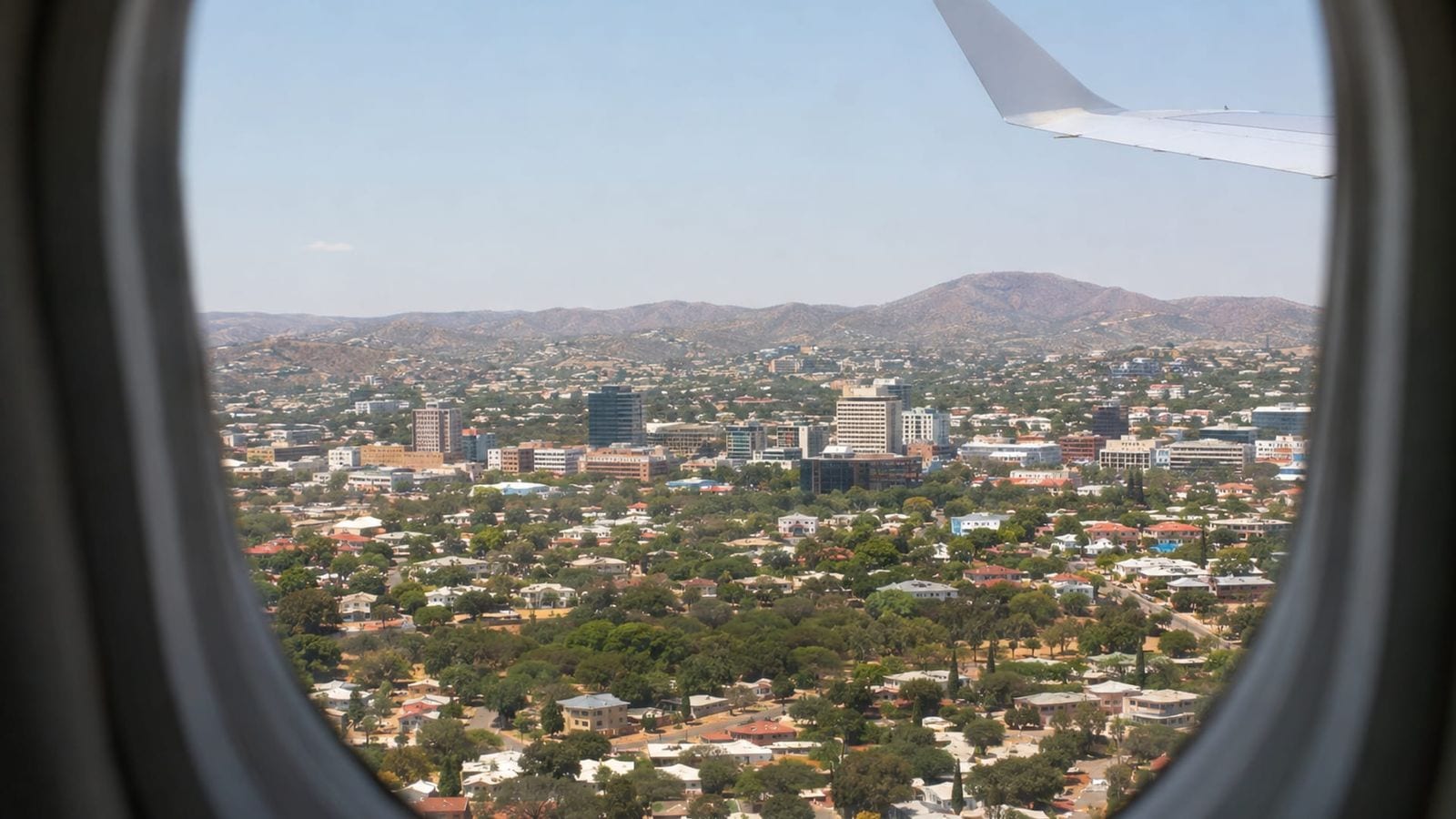
Reaching Windhoek from either US coast requires at least one stop. The shortest routes include one layover in Munich. Aside from that, several two-stop flights to Windhoek are available.
New York (JFK) to Windhoek (WDH)
From John F. Kennedy International Airport (JFK), travelers can take a codeshare flight to Windhoek (WDH) with Lufthansa and Discover Airlines, with a layover in Munich (MUC). Two-stop alternatives include ITA Airways and Ethiopian via Rome (FCO) and Addis Ababa (ADD), or British Airways and Airlink via London (LHR) and Johannesburg (JNB). The total journey usually takes 26 to 32 hours, depending on the layover, and round-trip business-class fares range from US$5,000 to US$10,200.
Los Angeles (LAX) to Windhoek (WDH)
From Los Angeles (LAX), travelers can also find flights to Windhoek (WDH) through Munich (MUC), with Lufthansa and Discover Airlines. Two-stop flights on this route include options with SWISS and South African Airways via Zurich (ZRH) and Johannesburg (JNB), or United and Ethiopian via Washington Dulles (IAD) and Addis Ababa (ADD). Travel time on this route ranges from 27 to 31 hours. Depending on demand, round-trip business-class fares may cost US$7,100 to US$11,300.
Make the most of your time in Windhoek
A well-planned stay in Windhoek leaves room for opening hours, longer drives, and quieter periods between outings without making the trip feel overfilled. Keeping each day focused gives the visit a clear rhythm and enough flexibility when plans change. Once the dates are set, AranGrant can help compare business-class flights to Windhoek and hotel options that fit the trip, so the main travel arrangements are in place before departure.