

Chapters:

Need help with your trip?
Our support team is available 24/7. Request a callback or call us directly at (833) 619-0908
Visitors often divide Valencia between the old town, the City of Arts and Sciences, and the beach, leaving neighborhood meals and smaller museums for whatever time is left.
Those stops sit far enough apart that repeated crossings can take time from the visit itself. Combining the cathedral, aquarium, and waterfront in one day also puts long indoor visits beside walks in the afternoon heat.
This guide groups nearby sights into separate days, gives El Cabanyal its own waterfront outing, and leaves arrival and departure centered on Russafa. Transport choices and meal stops follow that geography, with time for the Torres de Quart, the old city gate.
Useful things to know

Main language(s): Spanish, Valencian
Hola (OH-lah) – Hello
Por favor (por fah-VOR) – Please
Gracias (GRAH-thyahs) – Thank you
¿Habla inglés? (AH-blah een-GLES) – Do you speak English?
¿Cuánto cuesta? (KWAN-toh KWES-tah) – How much does it cost?

Currency: The local currency is the euro (EUR, €).

Cash and cards: Cards and contactless are widely accepted; carry about $25 to $45 (€20 to €40) in cash.

Tipping: Round up for coffee or leave about 5-10% for good restaurant service; tipping is optional.

Traditional food: Valencian paella, Arroz al horno, Fideuà, Esgarraet

Water and coffee costs: Water €1 to €2 (about $1 to $2), bar espresso €1.50 to €2.50 (about $2 to $3).

Taxis and ride apps: Uber, Bolt

Plug and voltage: Type C/F socket, 230V

Dining and shop opening hours: Breakfast is typically 8:00-10:00 am, lunch 2:00-3:30 pm, and dinner 9:00-11:00 pm. Many restaurants close between lunch and dinner.

Emergency number: 112 for police, ambulance, and fire.
Where to stay in Valencia
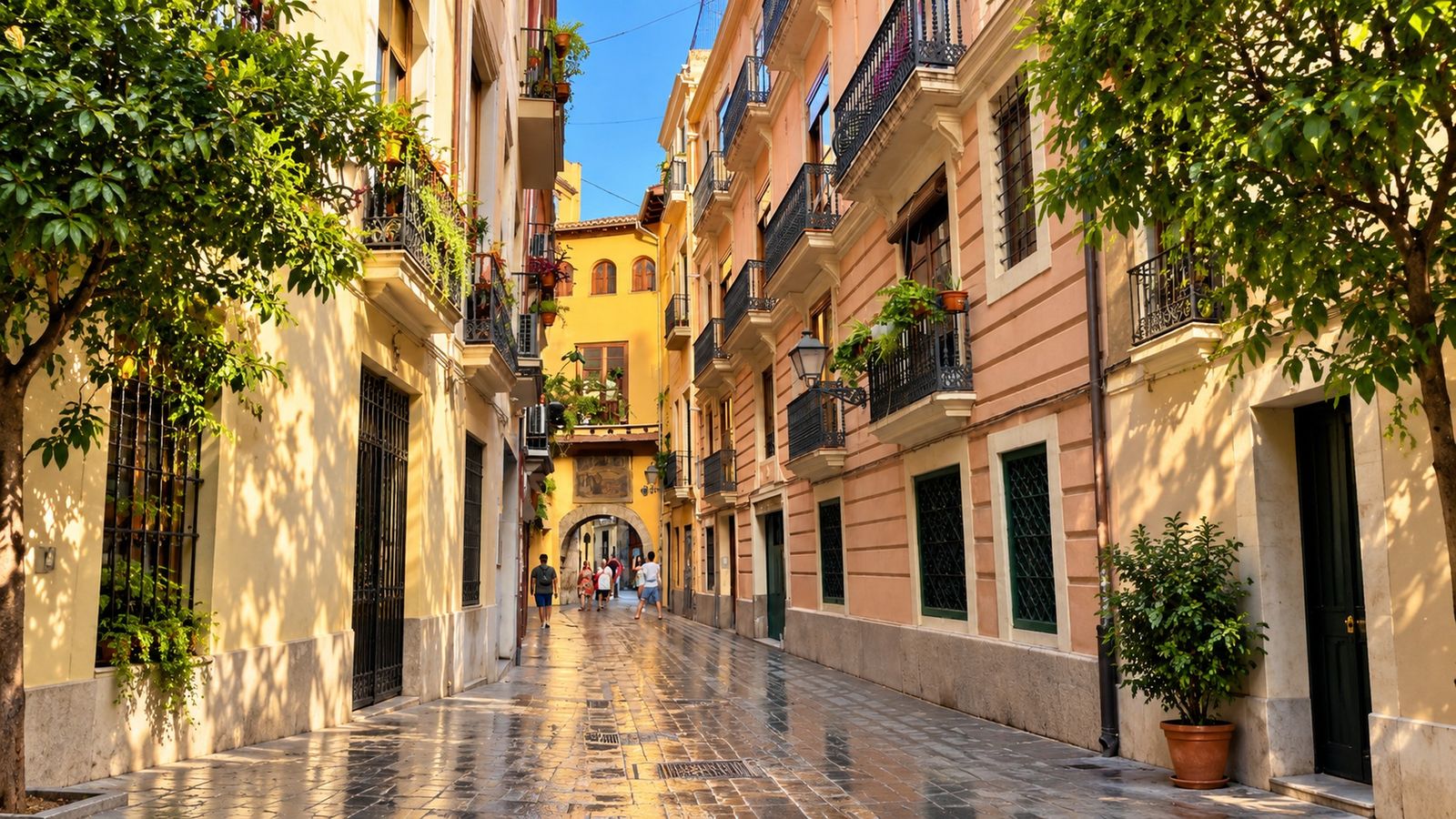
El Carme is a historic quarter within Valencia’s old town, with medieval lanes, small squares, and a choice of hotels and apartments. Staying here puts the Central Market and Valencia Cathedral within easy walking distance, while bars keep several narrow streets lively well into the night.
Best for: Historic sightseeing, walking tours, and access to old-town landmarks
What to expect: Sightseers fill the main lanes by day, and bar crowds gather on selected streets after dinner.
Hotel prices: Usually about 100€ to 200€ (~115$ to ~230$) per night for well-rated stays
Distance to major sights: About 5 to 15 minutes on foot to Valencia Cathedral and the Central Market, depending on your hotel.
Quietness: Daytime activity centers on sightseeing; evenings can bring bar noise beneath street-facing rooms.
Main trade-off: Narrow lanes limit vehicle access, and nightlife can interrupt sleep.
Good to know: If arriving by taxi with large bags, ask the hotel for its nearest accessible drop-off point.
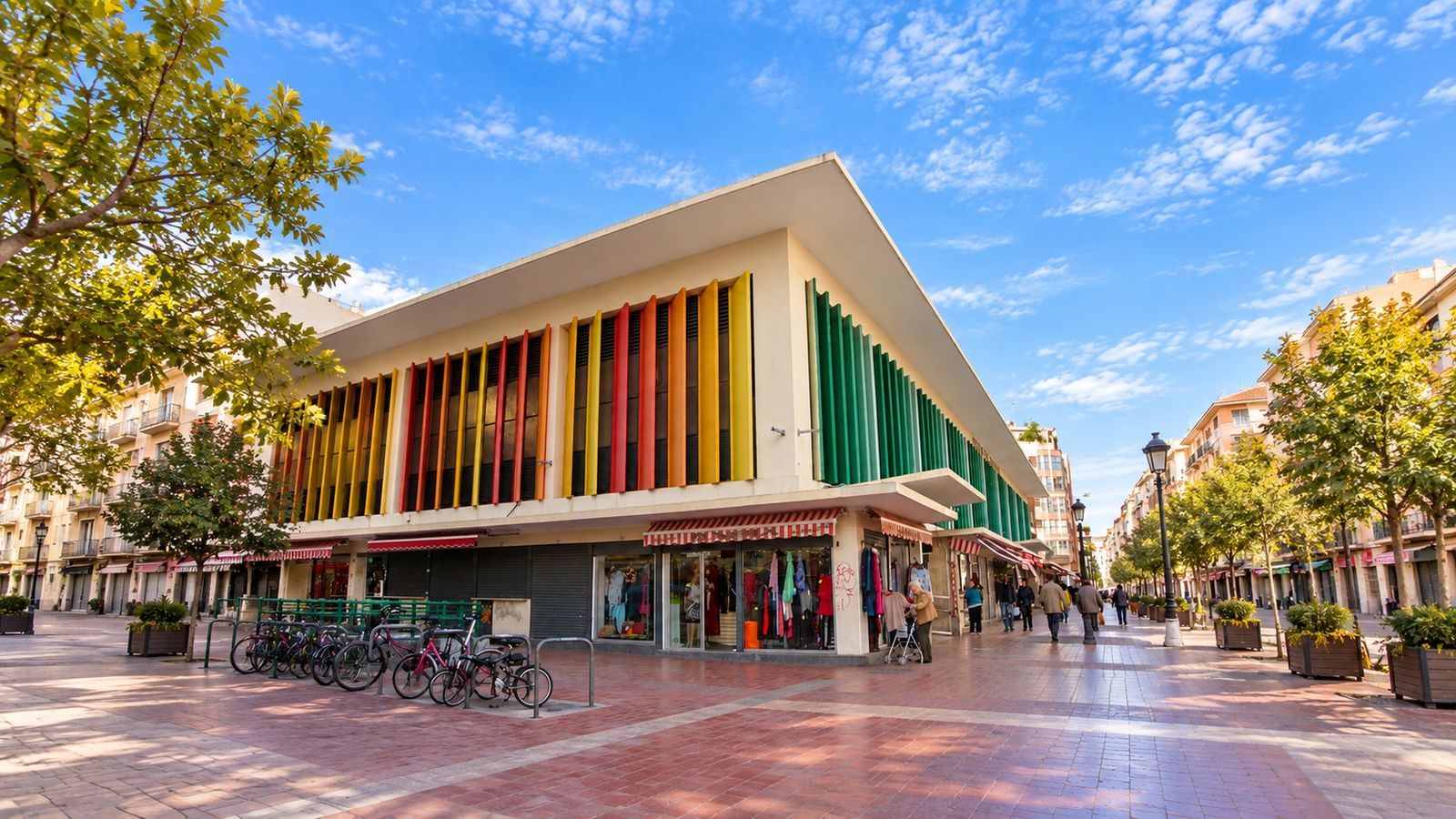
Russafa is a residential neighborhood south of Valencia’s old town, known for its food market, independent shops, and concentration of restaurants. Its hotels and apartments suit trips built around dining and city walks, with the historic center reachable on foot from much of the neighborhood.
Best for: Restaurant exploration, neighborhood shopping, and access to the main railway station
What to expect: Market shopping animates the mornings, while restaurant terraces and bars draw evening crowds.
Hotel prices: Usually about 100€ to 190€ (~115$ to ~220$) per night for well-rated stays
Distance to major sights: About 20 to 30 minutes on foot to the Central Market from central Russafa.
Quietness: Residential side streets can be quieter during the day, but restaurant streets stay active after dark.
Main trade-off: Most major historic sights require a longer walk than they would from an old-town hotel.
Good to know: Choose a bedroom facing an interior courtyard if your accommodation sits above restaurants or bars.
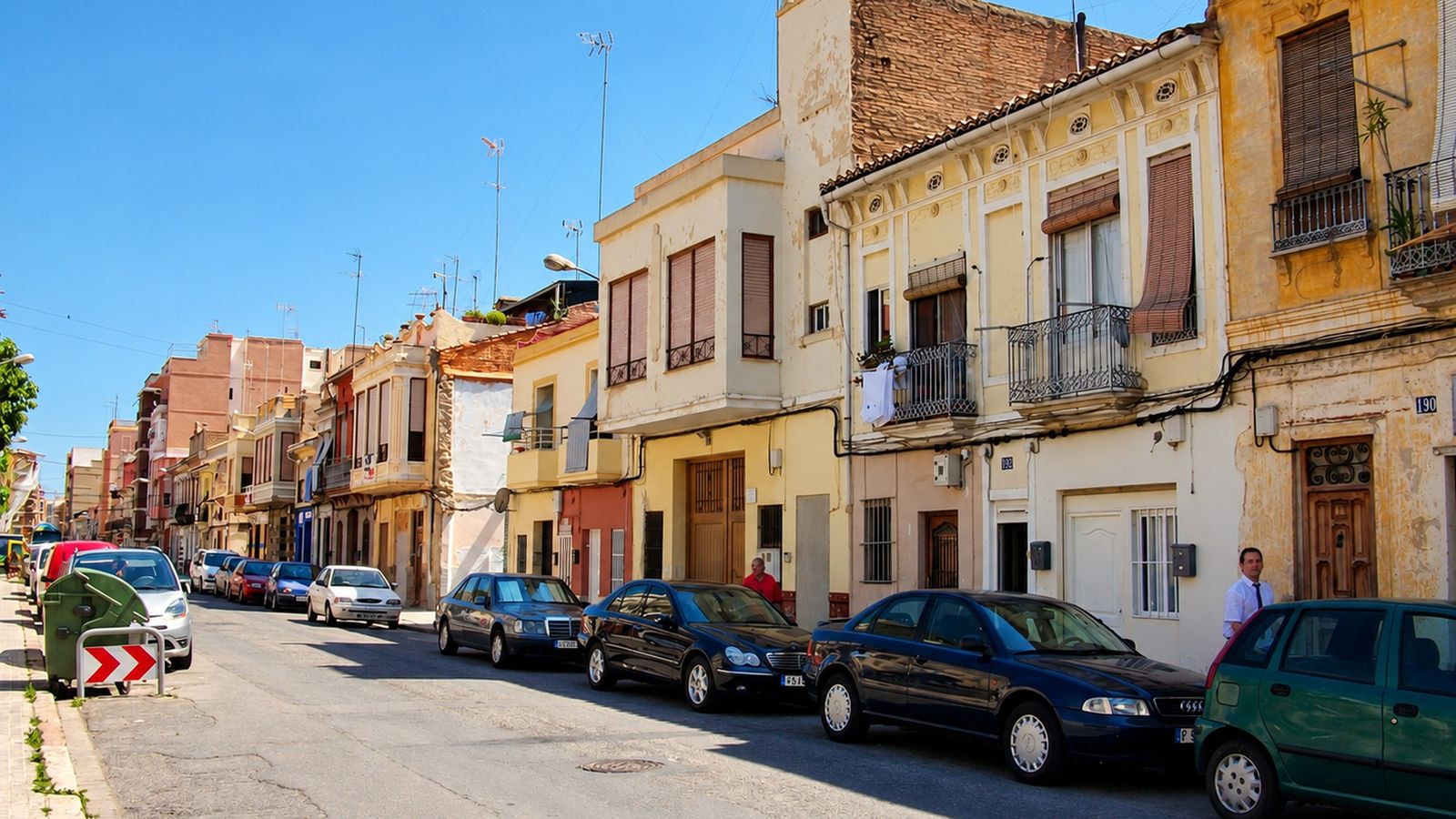
El Cabanyal is Valencia’s former fishing neighborhood, where tiled houses and a street grid lead toward the city’s sandy waterfront. Boutique hotels and apartments make it a beach-oriented alternative to the center, with local markets and seafood restaurants adding reasons to stay beyond swimming.
Best for: Beach days, seaside walks, and exploring maritime heritage
What to expect: Residential streets mix with market activity, while beach approaches attract more visitors in warm weather.
Hotel prices: Usually about 90€ to 190€ (~105$ to ~220$) per night for well-rated stays
Distance to major sights: About 5 to 20 minutes on foot to Las Arenas Beach; roughly 30 to 45 minutes by public transit to Valencia Cathedral.
Quietness: Interior residential streets often quieten after daytime shopping, while waterfront venues attract evening diners.
Main trade-off: Old-town sightseeing requires public transit or a taxi, and beach demand raises summer room rates.
Good to know: Check the property’s map location: accommodation deeper inside the neighborhood can be a 20-minute walk from the sand.
Less convenient for sightseeing: Faitanar has few visitor amenities; La Punta’s dispersed layout means longer walks between destinations; Benimàmet lies on the outskirts, far from the historic center.
Hotel deals
How to get around Valencia efficiently
Metrovalencia links Valencia Airport (VLC) with the center, while city buses, coastal trams, and taxis connect the historic core with the waterfront and modern museums.

Metro
for longer distances
Lines 3 and 5 connect Valencia Airport (VLC) with Xativa in about 20 to 25 minutes. Follow airport signs to the station; single fares cost about $5 to $7 (€4 to €6), plus a reusable ticket card.

Bus and tram
for convenience
For the City of Arts and Sciences, take EMT bus 95 along the Turia Gardens corridor. Central stops are about 15 to 30 minutes away; budget about $2 to $3 (€2 to €3) for a single ticket purchased onboard.

Taxi
for convenience or late hours
White taxis use meters, including from Valencia Airport (VLC), with supplements and minimum fares. Hail one or use a rank; central trips take about 10 to 20 minutes and cost $9 to $18 (€8 to €15); airport trips take 20 to 30 minutes, about $29 to $47 (€25 to €40).
*Prices are based on rates updated as of October 2026 and may change at the time of travel.
Choose the metro for airport travel, buses for the City of Arts and Sciences, trams for coastal neighborhoods, and taxis for journeys with luggage.
Iconic landmarks
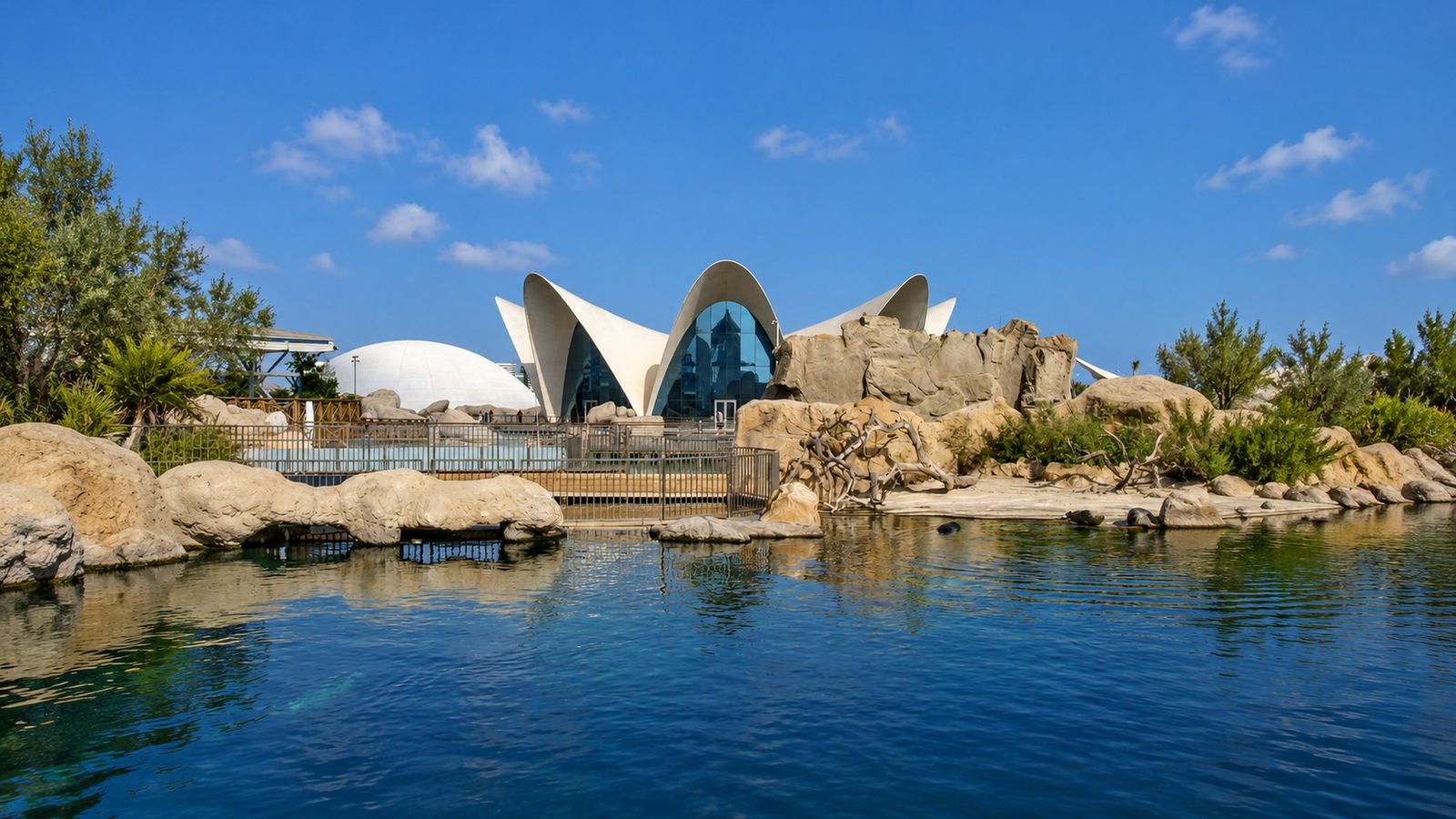
Oceanogràfic
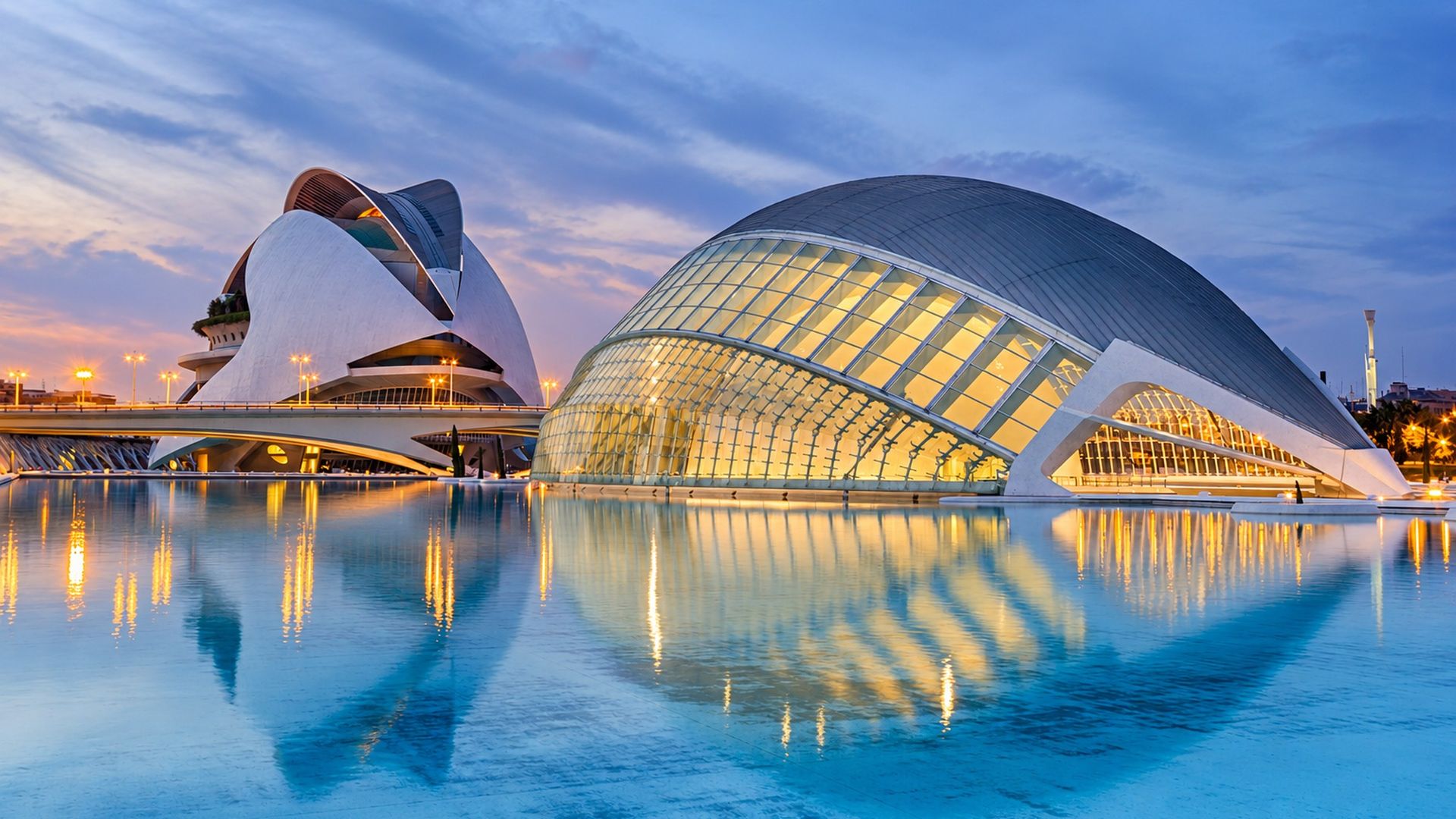
Part of Valencia’s City of Arts and Sciences, this aquarium presents marine habitats from the Mediterranean to polar waters. Its underwater tunnels bring visitors alongside sharks, while separate exhibits introduce belugas and jellyfish.
Time needed: About 3 to 4 hours
Entry: Expensive: the standard adult ticket covers the aquarium’s marine habitats and underwater tunnels; separate attractions require their own admission.
Tip: Start with the outdoor habitats before midday, then explore the indoor tanks.
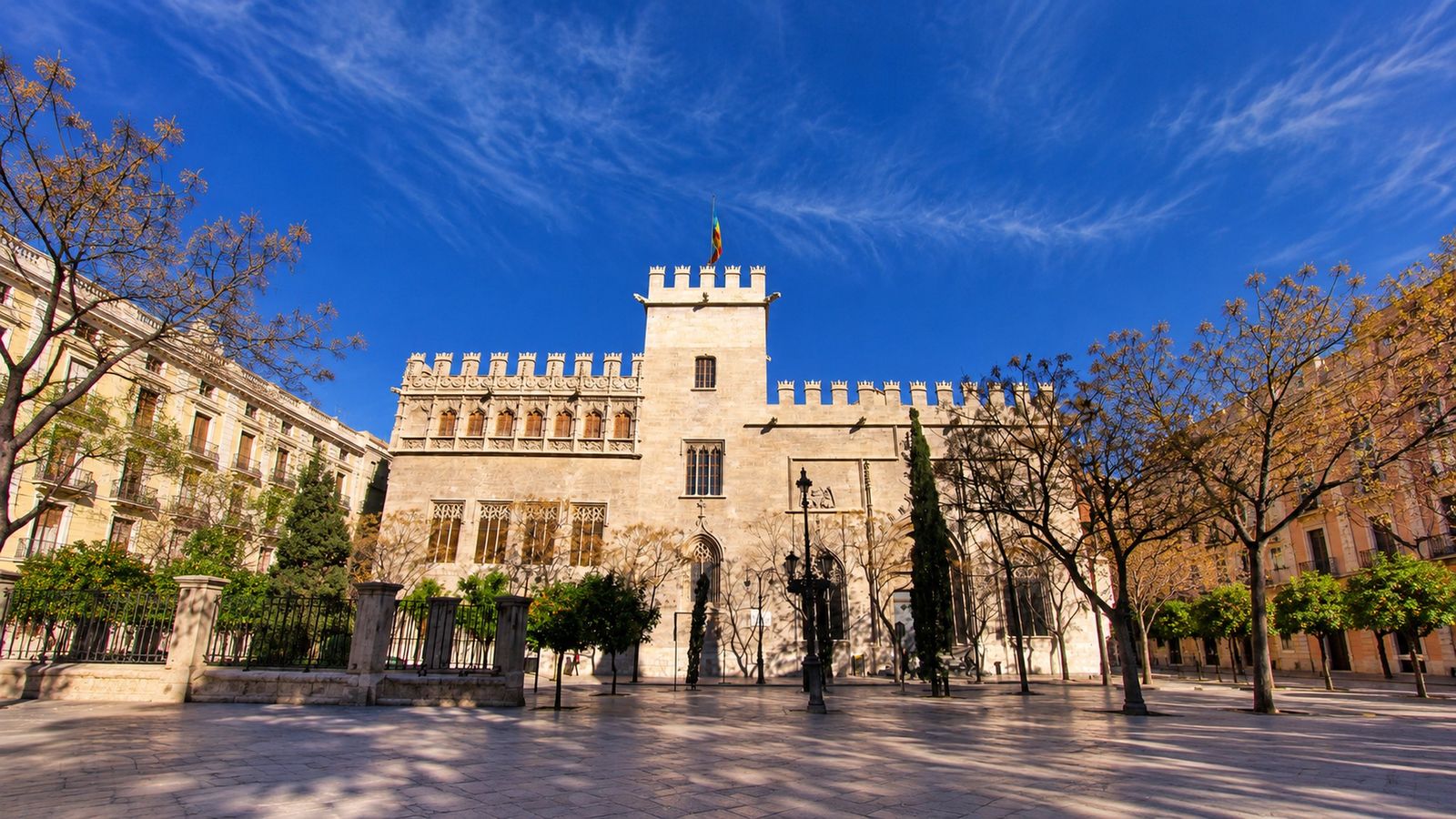
Silk Exchange
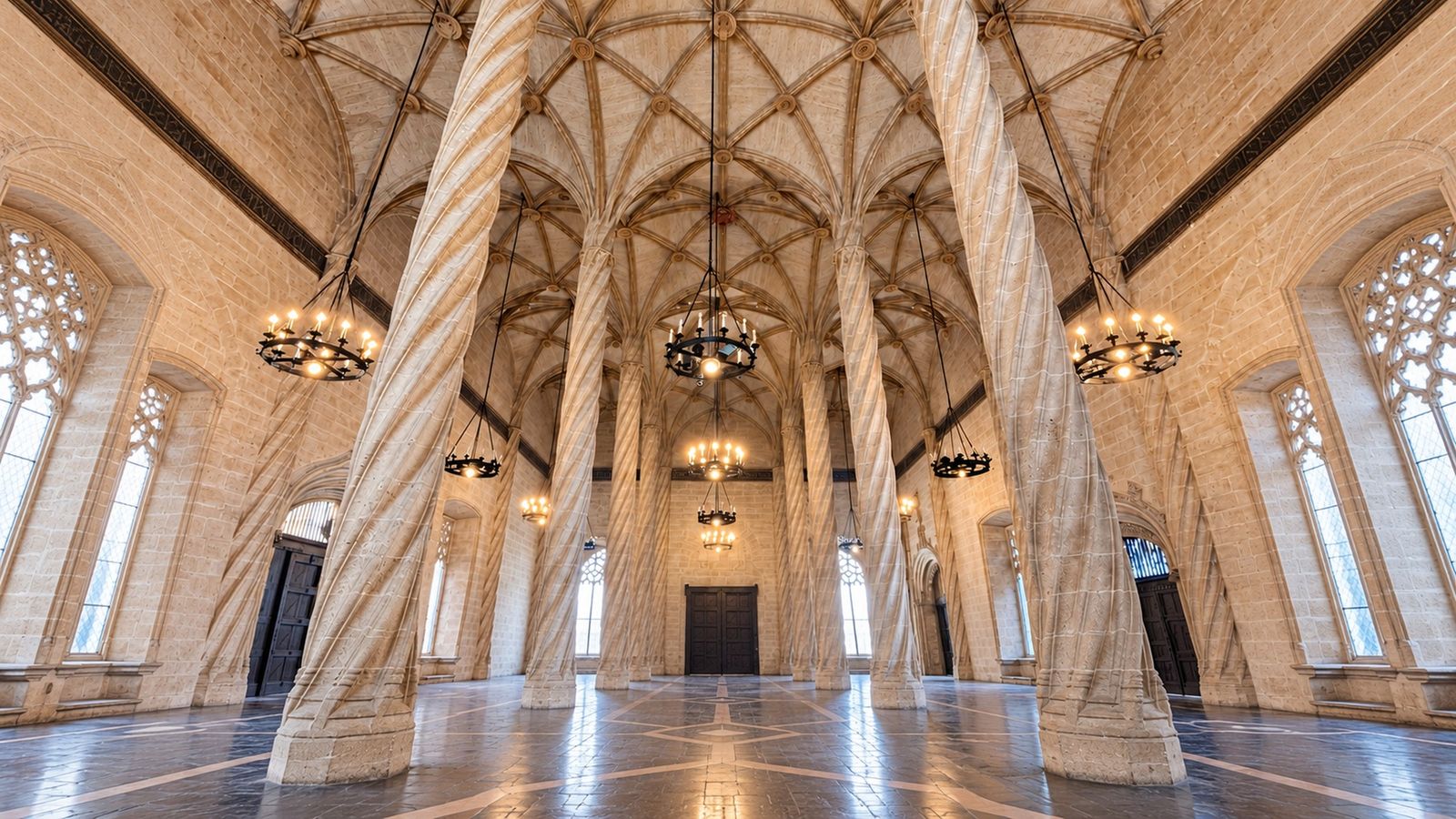
Twisting stone columns rise through the trading hall of Valencia’s Silk Exchange, a UNESCO World Heritage Site. Built during the city’s commercial golden age, the Gothic complex includes an orange-tree courtyard and richly carved doorways.
Time needed: About 1 to 2 hours
Entry: Low-cost: the standard adult ticket covers the monumental trading hall and courtyard; admission also includes the historic rooms open to visitors.
Tip: Visit on Sunday for free admission, then cross to the Central Market exterior.
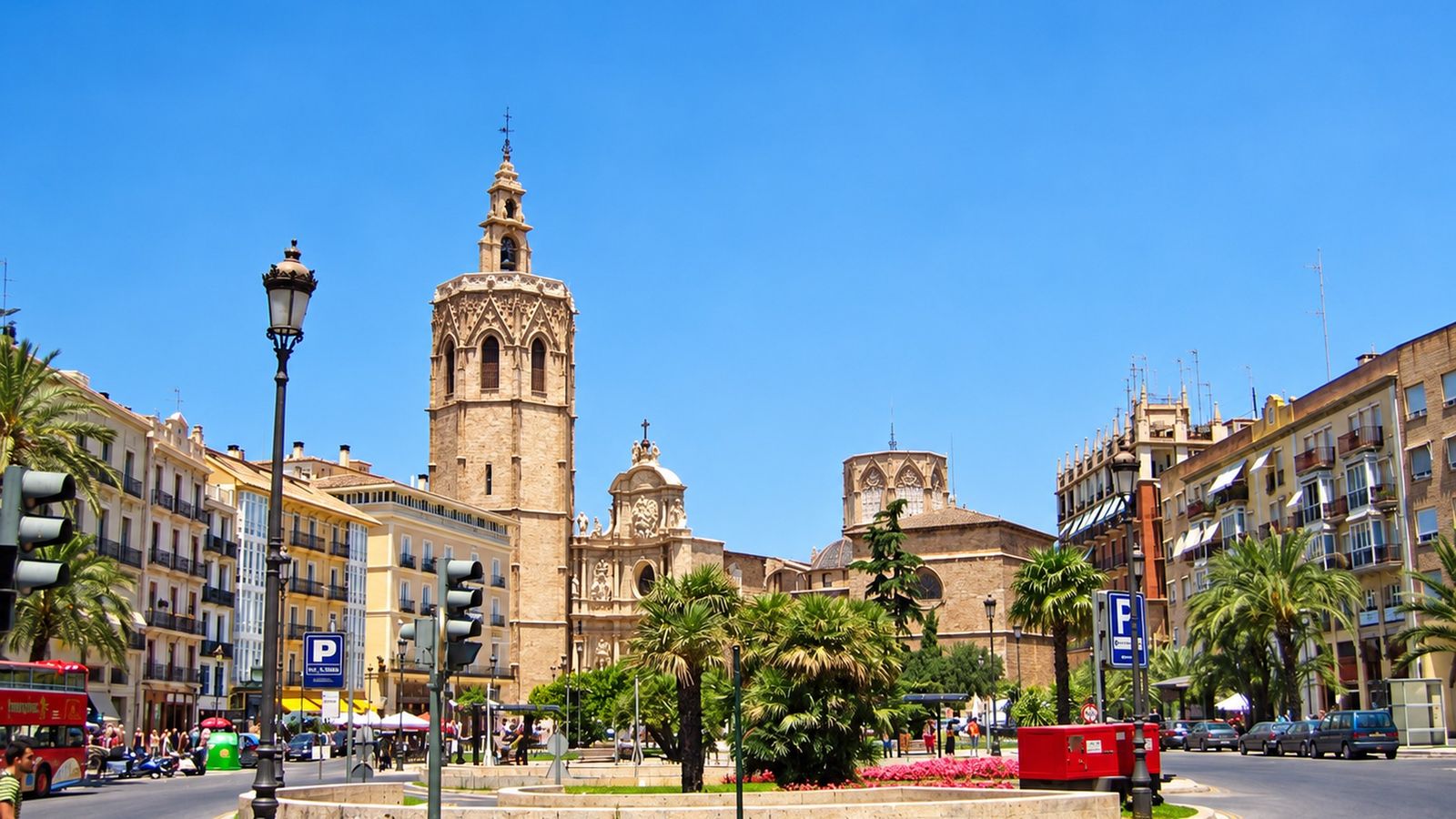
Valencia Cathedral
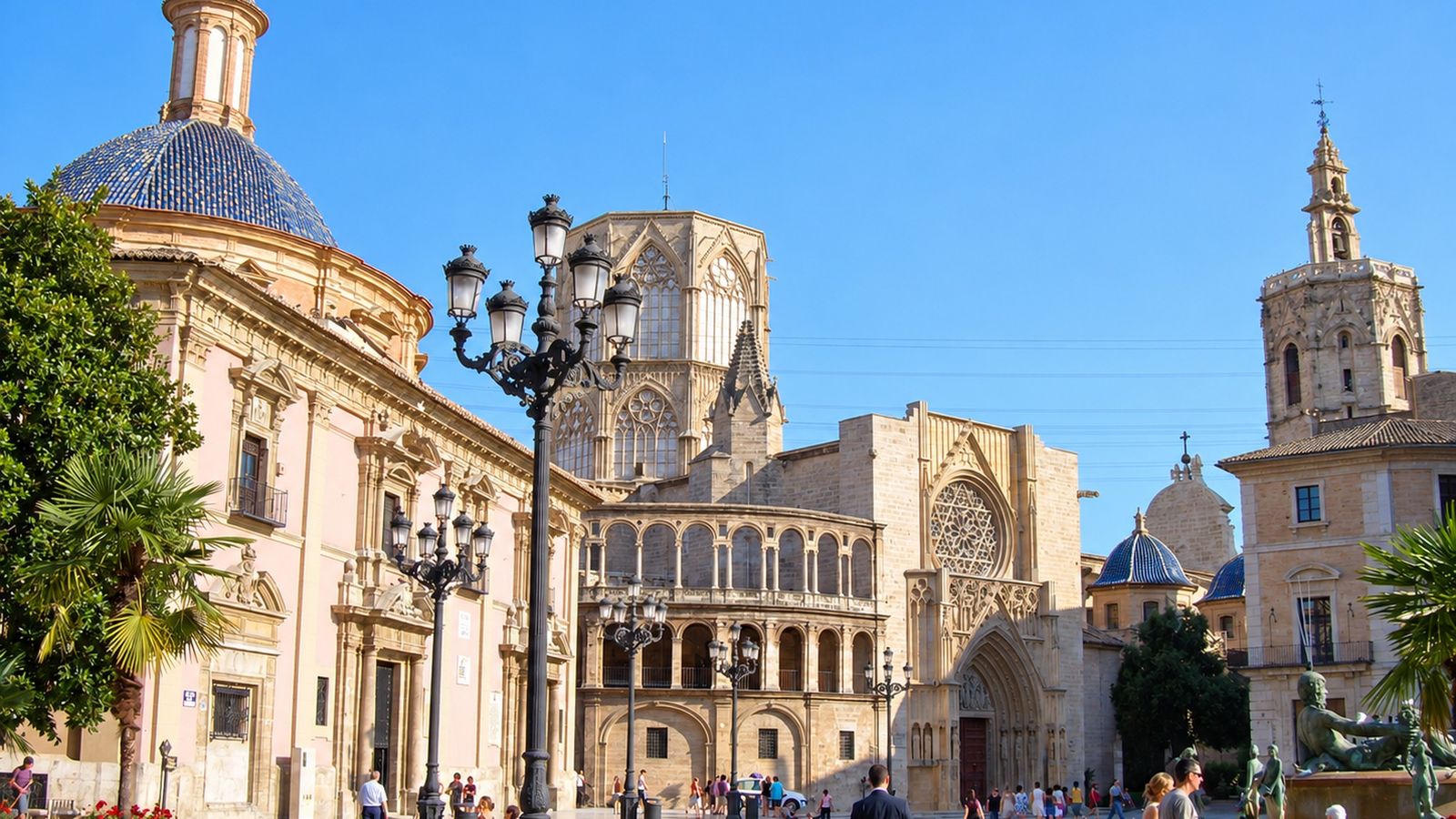
Romanesque, Gothic, and Baroque elements meet in Valencia Cathedral, built on the site of the city’s former main mosque. Inside, the Chapel of the Holy Grail holds the chalice traditionally associated with the Last Supper.
Time needed: About 1 to 2 hours
Entry: Moderately priced: the standard adult cultural ticket covers the cathedral and its museum; climbing the Miguelete bell tower requires separate admission.
Tip: Allow extra time for the Miguelete’s 207 steps; the spiral staircase is narrow.
Overlooked sites worth visiting

Jardín de Monforte
Laid out from 1859 for the Marquis of San Juan to a design by the architect Sebastián Monleón, this neoclassical garden surrounds a small palace with clipped hedges, ponds, fountains and marble statues. Protected as a historic-artistic monument, it has been open to the public since 1973.
Time needed: About 30 to 45 minutes
Entry: Free: the garden is open to the public with no ticket. The small palace inside it is not open to visitors.
Tip: Look for José Bellver’s marble lions at the entrance before you head in along the hedged paths.

Torres de Quart
Built between 1441 and 1460, these twin towers are one of the two surviving gates of Valencia’s medieval city wall, and they still carry cannonball marks from 1808. They stand at the western edge of El Carme, where Calle de Quart meets Calle Guillem de Castro.
Time needed: About 30 to 45 minutes
Entry: Low-cost: a small admission fee applies, and entry is free on Sundays and public holidays. Visitors can climb to the top of the towers. Visit the official site for details. Visit the official site for details.
Tip: The towers close on rainy days for safety, so plan the climb for a dry day.
Traditional food
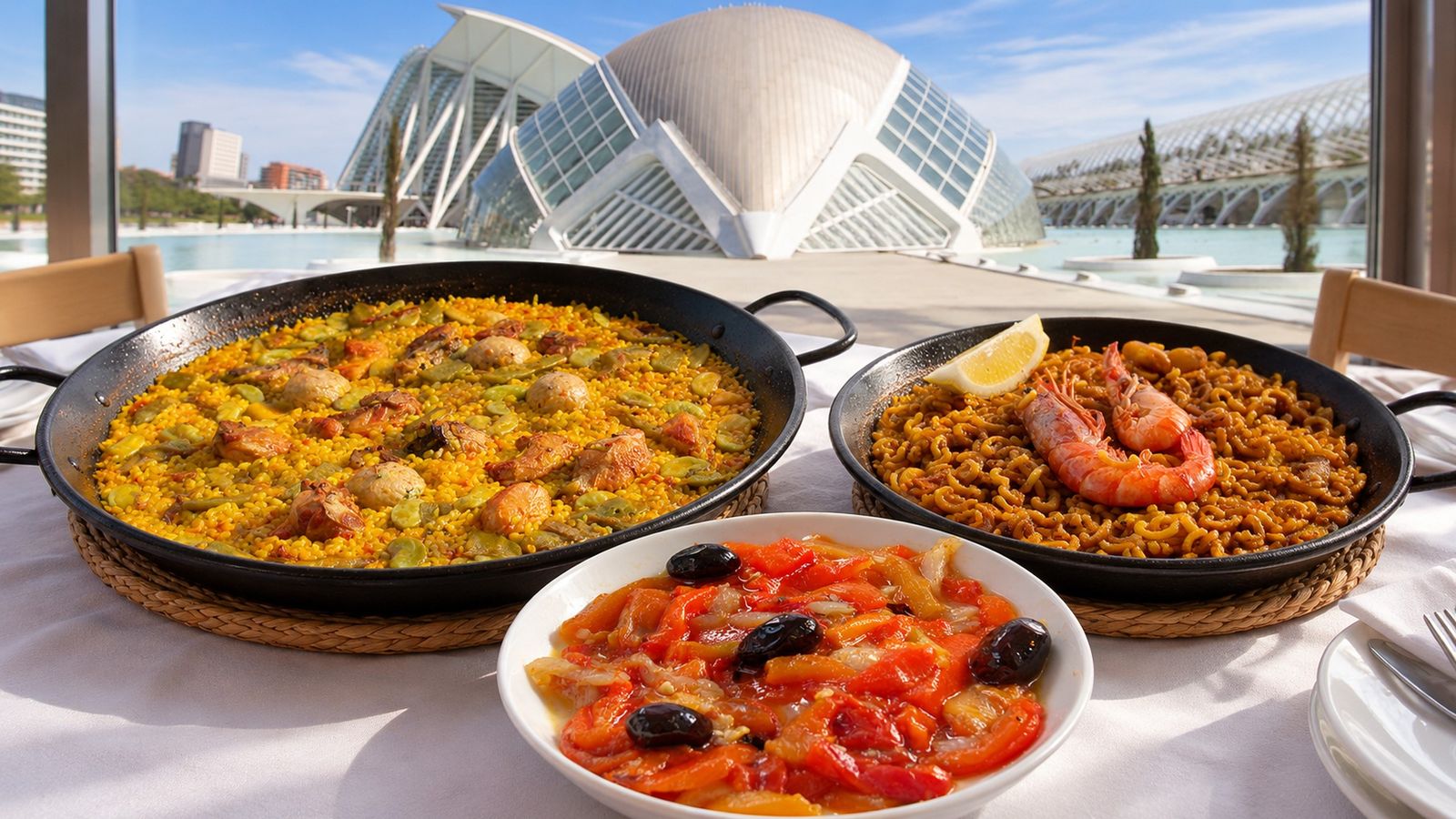
Rice anchors Valencia’s cooking, with chicken, rabbit, vegetables, and seafood shaping different preparations. Roasted peppers and salt cod bring savory contrast, while lunch gives paella and other rice dishes their customary place at the table.
Valencian paella
Chicken, rabbit, and local beans distinguish Valencia’s traditional paella. Casa Carmela is a longstanding choice for versions cooked over a wood fire.
Arroz al horno (oven-baked rice)
Pork, chickpeas, potato, and tomato enrich this oven-baked rice dish. El Rall serves it among its traditional Valencian rice preparations.
Fideuà (seafood noodles)
Short noodles absorb seafood stock in this shallow-pan preparation. La Pepica offers a waterfront setting for trying it alongside the restaurant’s rice specialties.
Esgarraet (roasted peppers and salt cod)
Roasted red peppers, salt cod, garlic, and olive oil make a savory starter. Casa Montaña is an established address for this Valencian dish.
Best time to visit Valencia
Valencia’s seasons change the balance between historic-center walks and beach afternoons, with spring festival crowds, hot summer days, autumn rain, and cooler winter weather each influencing how to arrange a visit.
Best for: Old-town walks and the March Fallas celebrations
What you get: Typical daytime highs reach about 66 to 75°F (19 to 24°C); Fallas brings dense crowds in March
Trade-offs: Festival fireworks and street closures can disrupt sleep and taxi access
Best for: Swimming and evening walks along Las Arenas Beach
What you get: Daytime highs commonly reach about 82 to 88°F (28 to 31°C), with busy beaches and waterfront restaurants
Trade-offs: Heat and humidity make midday sightseeing tiring
Best for: Combining September beach visits with museums later in the season
What you get: Afternoon temperatures typically range from about 68 to 82°F (20 to 28°C); beach crowds thin as autumn advances
Trade-offs: Heavy rain can interrupt outdoor plans, particularly in October
Best for: Exploring the Silk Exchange and Valencia Cathedral with fewer visitors
What you get: Expect daytime highs of about 61 to 64°F (16 to 18°C), with lighter sightseeing crowds outside holidays
Trade-offs: Shorter daylight hours limit waterfront outings, and the sea is cold for swimming
A realistic 5-day plan in Valencia
Five days give Valencia’s historic center, museum complex, and maritime neighborhoods separate places in the itinerary. Russafa anchors the arrival and departure days, while the three full days group sights by location. The waterfront day starts at Cabanyal Market, so schedule it for a day other than Sunday.
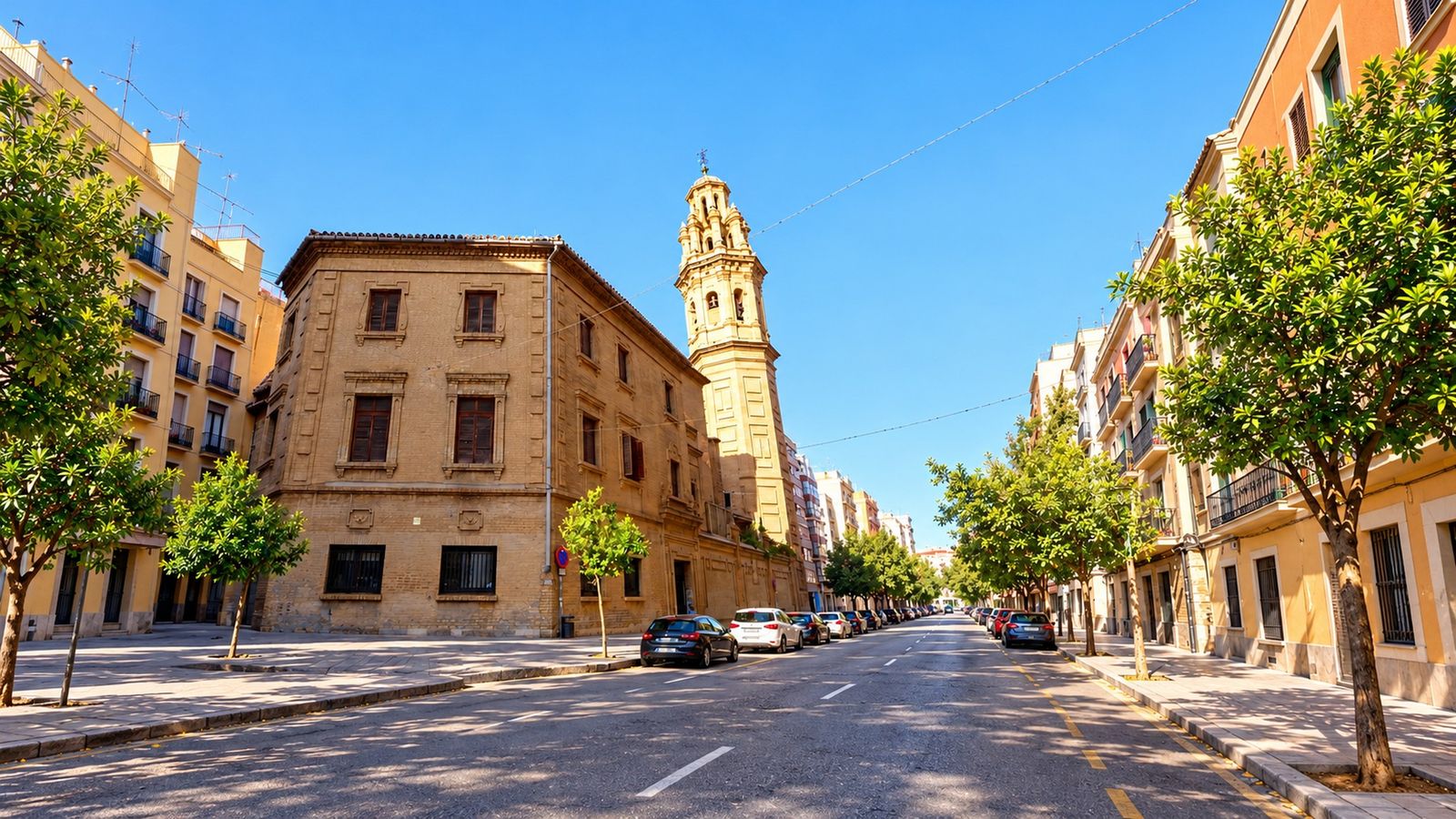
From Valencia Airport (VLC), take a taxi to your hotel in Russafa, allowing about 20 to 30 minutes and roughly $30 to $45 (€25 to €40). After unpacking, drink some water and limit your evening to a short neighborhood walk. Choose a light dinner near your hotel in Russafa, then return on foot.
Twisting Gothic columns introduce the morning at the Silk Exchange, where about an hour covers the trading hall and courtyard. Walk roughly 10 minutes to Valencia Cathedral and allow about two hours for its interior and optional bell-tower climb. After lunch nearby, walk about 15 minutes west to the Torres de Quart, the medieval city gate, and climb to the top for views over El Carme’s rooftops, finishing at the old town’s western edge.
Dedicate the morning to Oceanogràfic, allowing about four hours for its marine habitats and underwater tunnels. Start outdoors before midday, then explore the indoor tanks. Following lunch within the complex, walk roughly 10 to 15 minutes to the Science Museum at the City of Arts and Sciences. Its interactive exhibitions warrant another two to three hours. Finish with the surrounding pools and futuristic architecture before taking a taxi back to your hotel.

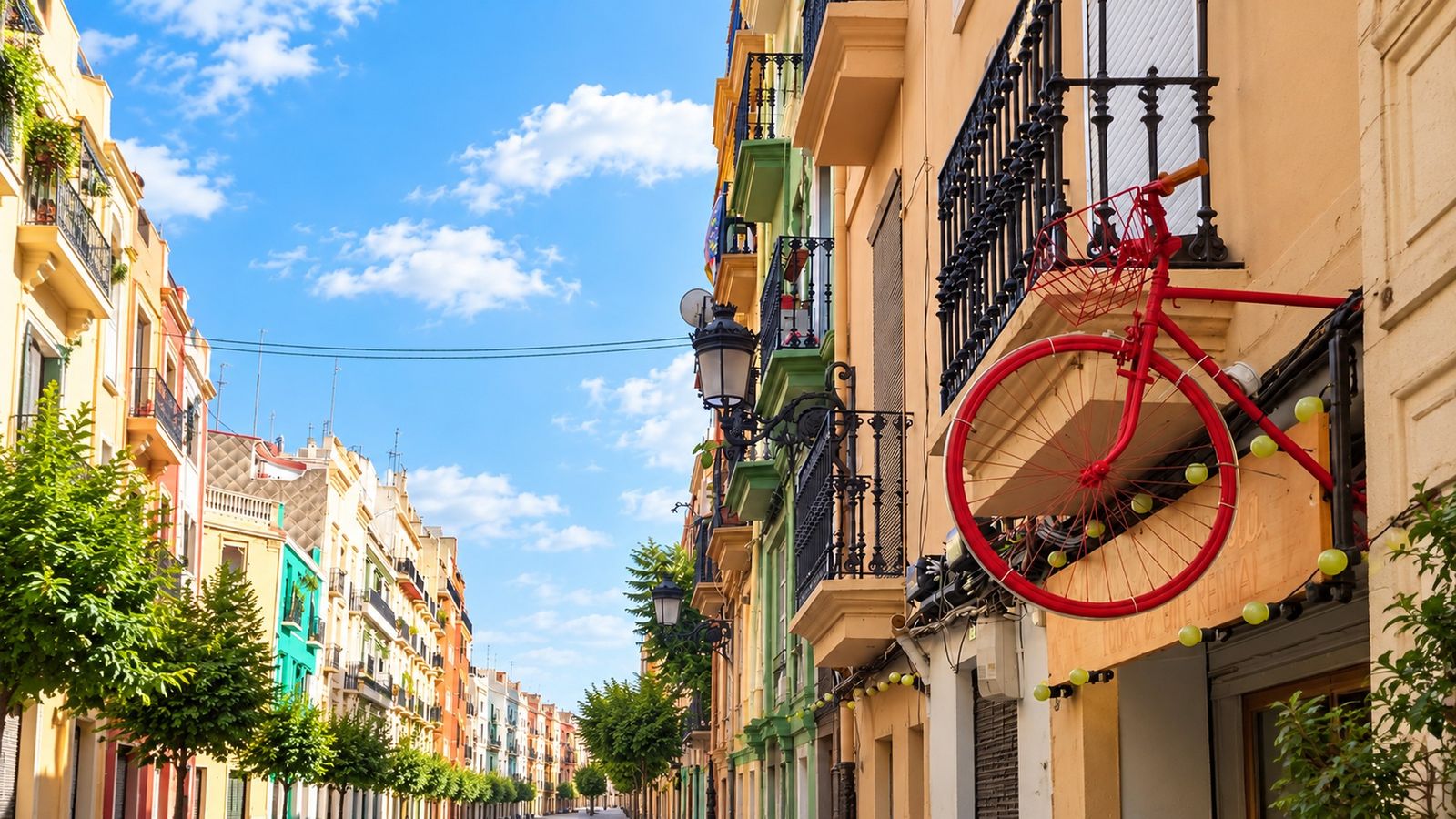
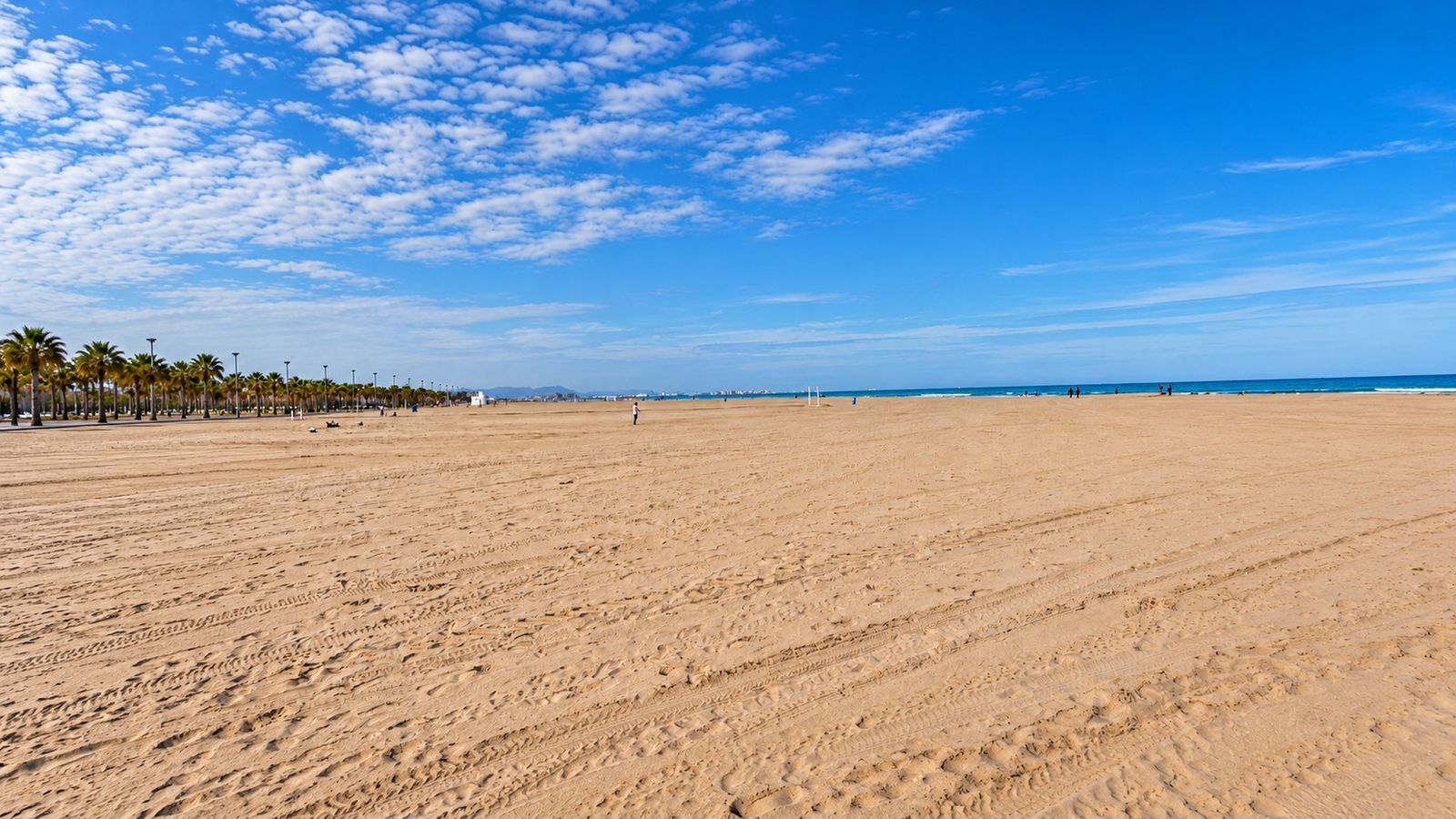
Along Valencia’s waterfront, maritime houses and a sandy beach fill the day. Begin at Cabanyal Market on a morning other than Sunday, allowing about an hour for the food stalls. Continue through El Cabanyal’s tiled residential streets for another hour, heading east without retracing your steps. Las Arenas Beach lies roughly 15 to 20 minutes from the market on foot, excluding stops. Have a waterfront lunch, then spend the afternoon walking the promenade or swimming when conditions permit.
Before your flight, have breakfast near your hotel and browse Russafa’s independent shops if departure time permits. Keep purchases within walking distance of your accommodation so you can collect your bags without crossing the city. Allow about 20 to 30 minutes for the taxi journey to Valencia Airport (VLC), with additional time during weekday traffic, and reach the terminal within your airline’s recommended check-in window.
Business-class flights from the US to Valencia
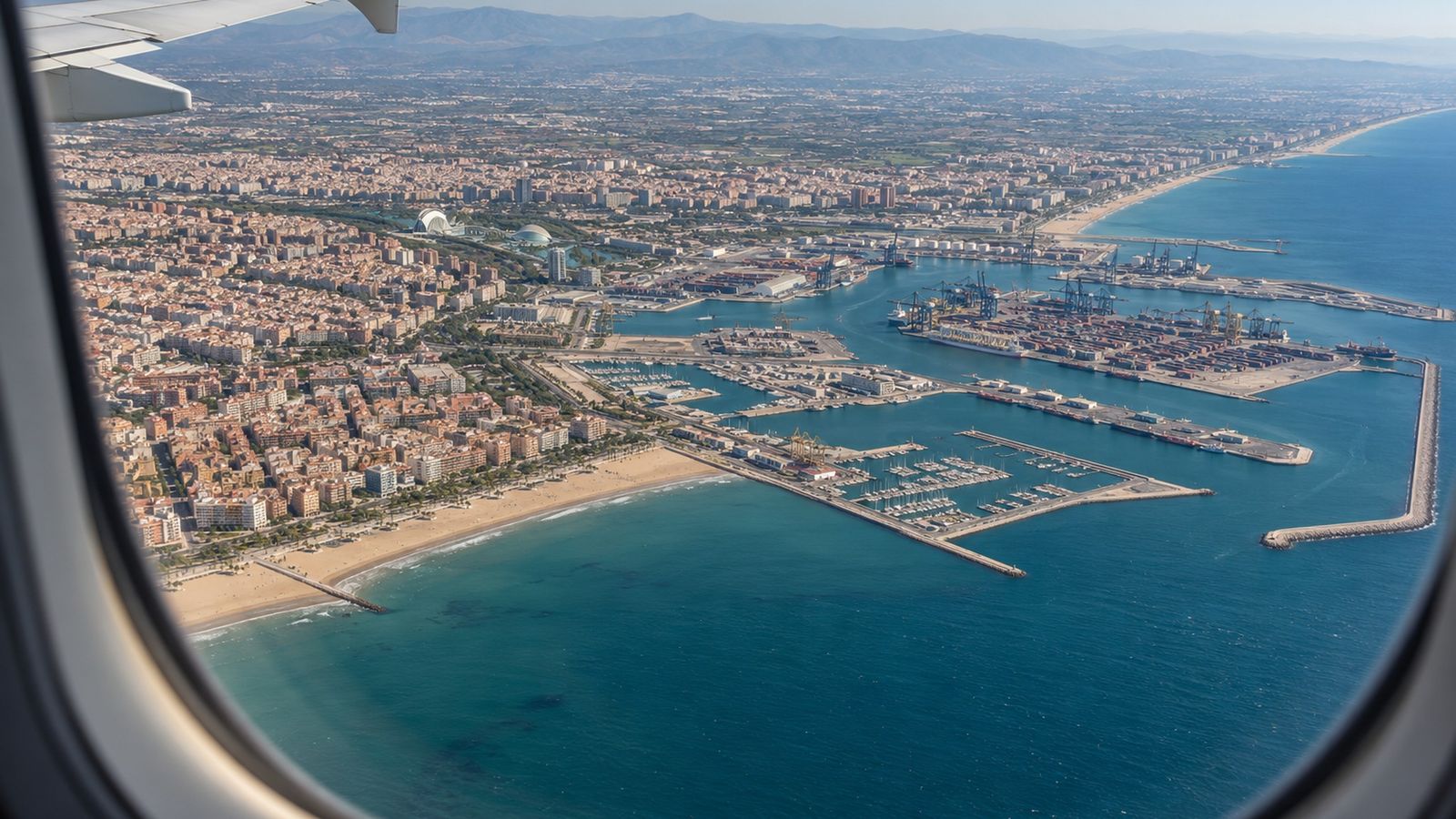
The New York and Los Angeles examples below show how journey length and round-trip fares compare for travel to Valencia (VLC). Iberia appears in both departure options.
A one-stop journey with Iberia from New York to Valencia (VLC) takes about 10 to 14 hours in total. Round-trip fares generally fall between about $3,000 and $6,000 (€2,600 to €5,200).
Connecting through Madrid (MAD), Iberia journeys from Los Angeles (LAX) to Valencia (VLC) typically take about 15 to 19 hours. Allow roughly $4,000 to $8,000 (€3,500 to €7,000) for a round-trip ticket.
Valencia feels different when you slow down
A considered Valencia visit gives the Silk Exchange and cathedral a morning together, reserves several hours for Oceanogràfic, and lets El Cabanyal lead into an afternoon beside the sea. Staying in Russafa keeps neighborhood meals close at the beginning and end of the trip. Choose dates that suit your balance of beach time and city walks, then ask AranGrant experts to shape your flights to Valencia (VLC) for a spring visit or an early-autumn waterfront stay