

Chapters:

Need help with your trip?
Our support team is available 24/7. Request a callback or call us directly at (833) 619-0908
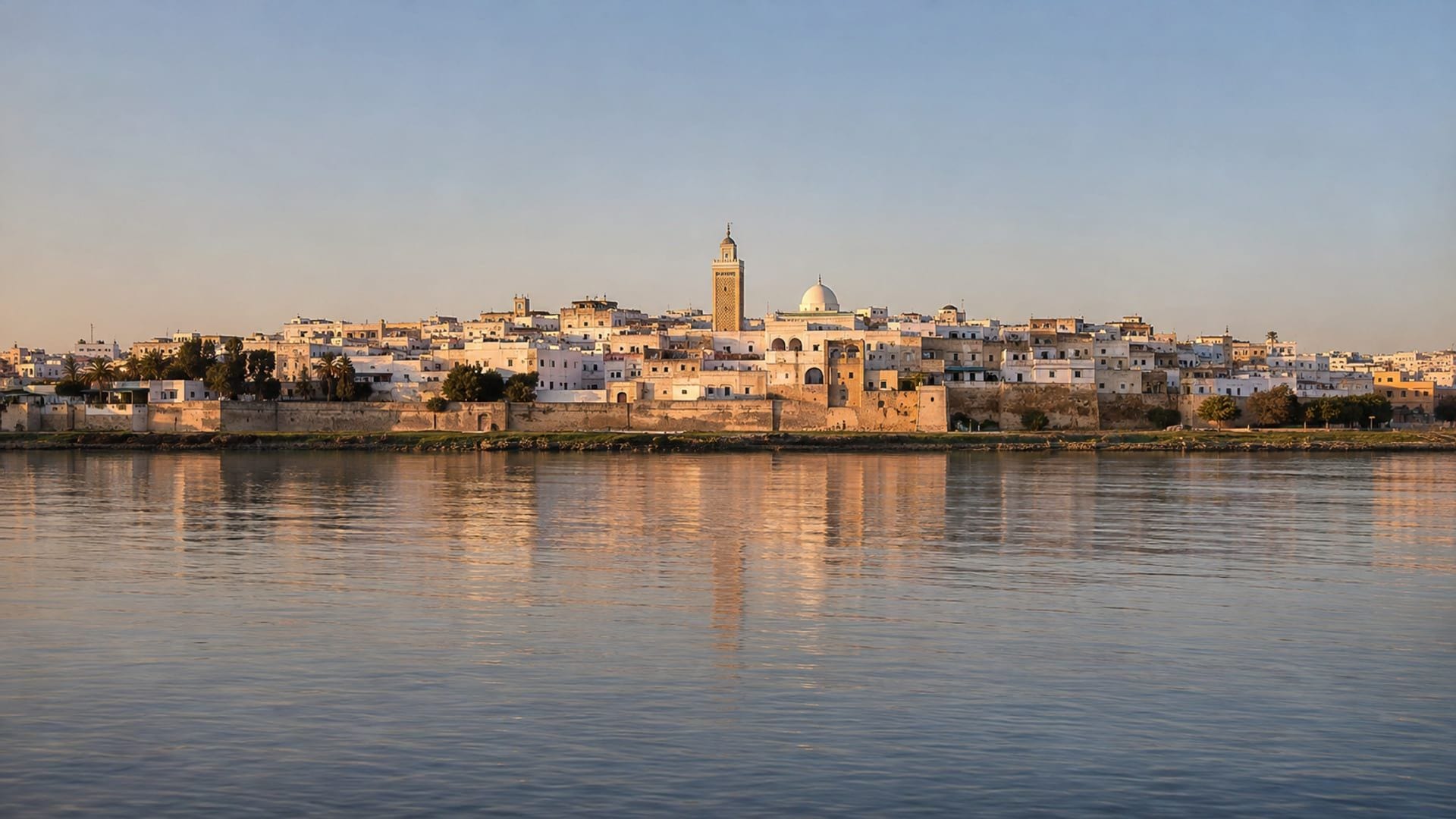
Tunis has grown around a city whose history reaches back well over a thousand years. The Medina developed into one of the major cities of the Islamic world, especially under the Almohads and Hafsids between the 12th and 16th centuries. Mosques, palaces, madrasas, mausoleums, and old houses still survive from different periods of that history.
Modern Tunis extends far beyond the Medina. More than one million people live in the Tunis governorate, and the capital now includes dense central districts, newer residential and business areas, and suburbs that continue toward the Mediterranean coast.
There is plenty to see and do across Tunis and its surroundings. This guide covers everything you need to know about where to stay, what to eat, how to get around, when to visit, and how to spend five days there.
Useful things to know

Main language(s): Arabic, French
مرحبا – Marhba (mar-HBA) – Hello.
من فضلك – Min fadlik (min fad-LIK) – Please.
شكرا – Shukran (shook-RAN) – Thank you.
هل تتكلم الإنجليزية؟ – Hal tatakallam al-ingliziya? (hal ta-ta-kal-LAM al-in-gli-ZI-ya) – Do you speak English?
بقداش هذا؟ – Bqaddesh hedha? (bka-DESH HEH-dha) – How much does this cost?

Currency: Tunisia uses the Tunisian dinar (TND).

Cash and cards: Hotels, larger restaurants, and shopping centers commonly accept cards, but cash is still useful for taxis, markets, cafés, and smaller businesses. Keeping TND 100–TND 150 ($34–$52) is practical for everyday expenses.

Tipping: A tip of 5% to 10% is common in restaurants when the service is good. Small café and taxi bills are often rounded up.

Traditional food: Couscous, brik, harissa, and Tunisian tagine are common local specialties.

Water and coffee costs: A small bottle of water usually costs TND 1–TND 2 ($0.35–$0.70), while an espresso commonly costs TND 2–TND 4 ($0.70–$1.40).

Taxis and ride apps: Yellow taxis operate throughout Tunis. inDrive is available for app-based rides.

Plug and voltage: Tunisia uses Type C and Type E plugs with a 230V, 50Hz electricity supply.

Dining and shop opening hours: Cafés often open from 7 am or 8 am, while restaurants commonly serve lunch from noon and dinner from 7 pm or 8 pm. Shop hours vary by area and day.

Emergency number: Call 197 for police, 190 for ambulance and emergency medical services, and 198 for fire and Civil Protection. The National Guard is 193.
Where to stay in Tunis
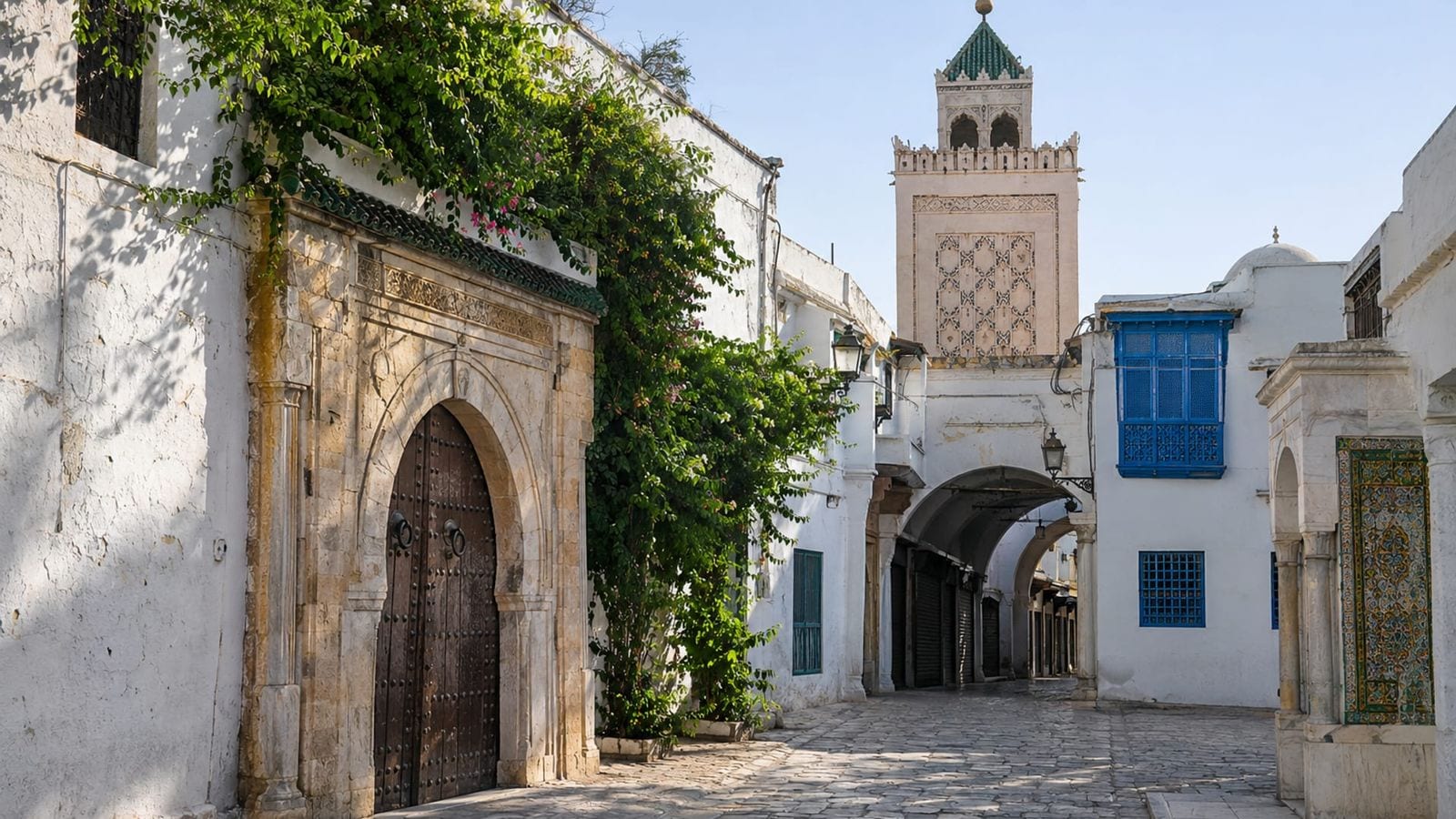
The Medina is the historic center of Tunis. Around Zitouna Mosque, narrow streets lead into covered souks, while quieter sections contain old courtyard houses, workshops, and small neighborhood mosques.
Best for: Historic atmosphere, souks, and travelers who want to walk to major old-city landmarks
What to expect: Narrow lanes, busy market hours, and plenty of foot traffic around the main souks and gateways.
Hotel prices: Usually about $45 to $120 per night for well-rated stays
Distance to major sights: On foot to Zitouna Mosque in about 5 to 10 minutes, and to the Bardo Museum in about 20 to 30 minutes by taxi
Quietness: Busy by day, much calmer late in the evening once the shops close.
Main trade-off: Some streets are hard to reach by car, so luggage handling and late arrivals can take extra time.
Good to know: Check the exact hotel entrance before arrival, as addresses inside the Medina can be hard to find the first time.
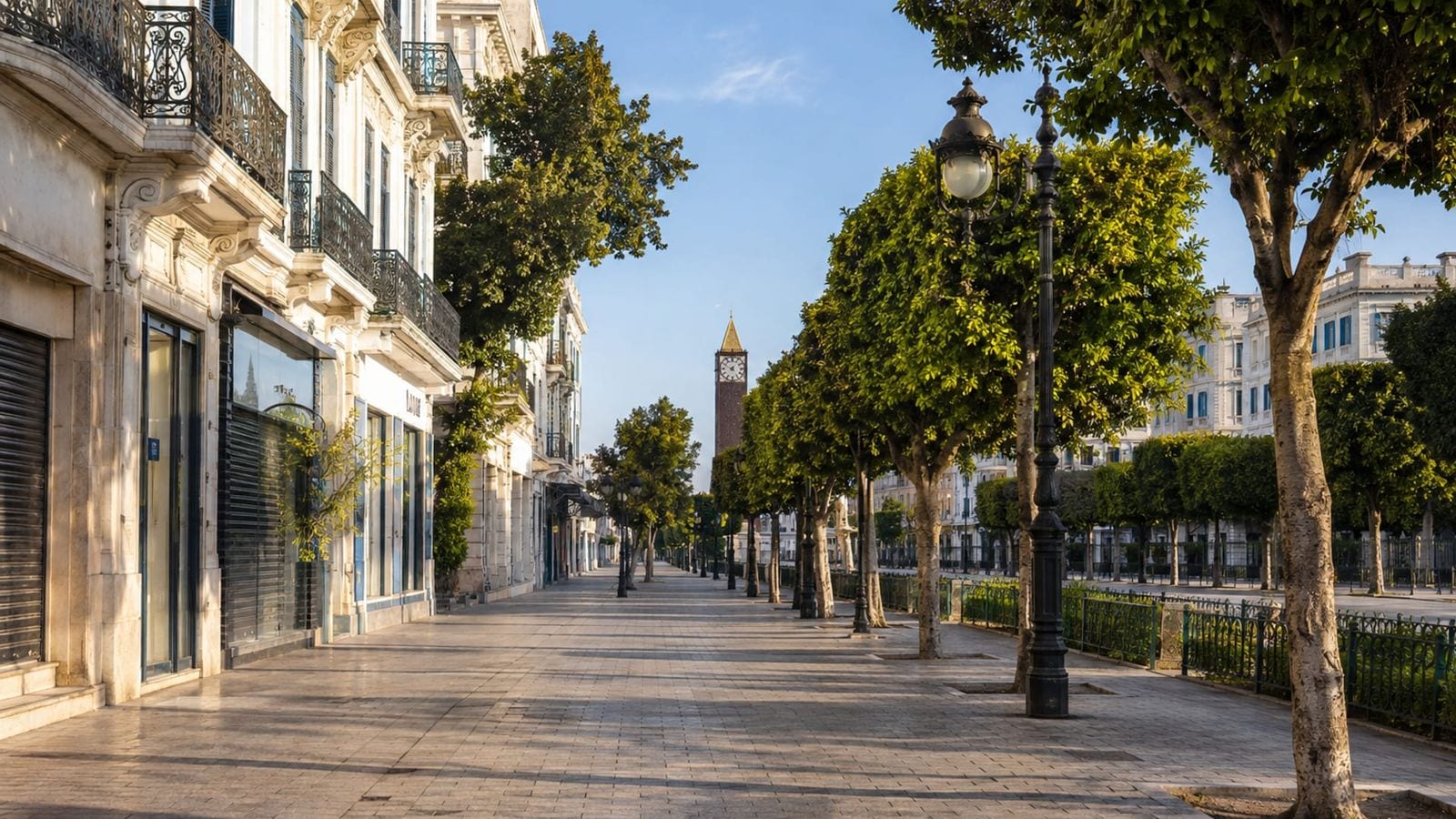
Ville Nouvelle begins east of the Medina and was developed during the French colonial period. Avenue Habib Bourguiba runs through the district past cafés, hotels, offices, the Municipal Theatre, and the Cathedral of St. Vincent de Paul.
Best for: Transport access, business trips, and travelers who want an easy base for crossing the city
What to expect: Broad streets, steady daytime activity, and moderate evening movement near shops and cafés.
Hotel prices: Usually about $55 to $140 per night for well-rated stays
Distance to major sights: About 10 to 15 minutes by taxi to the Medina of Tunis, and about 25 to 35 minutes by taxi to Sidi Bou Said
Quietness: Livelier during the day, quieter at night outside the main commercial streets.
Main trade-off: You give up historic character for easier vehicle access and a wider choice of contemporary hotels.
Good to know: Ville Nouvelle has easy access to taxis, light rail, and the TGM for trips toward Carthage and Sidi Bou Said.
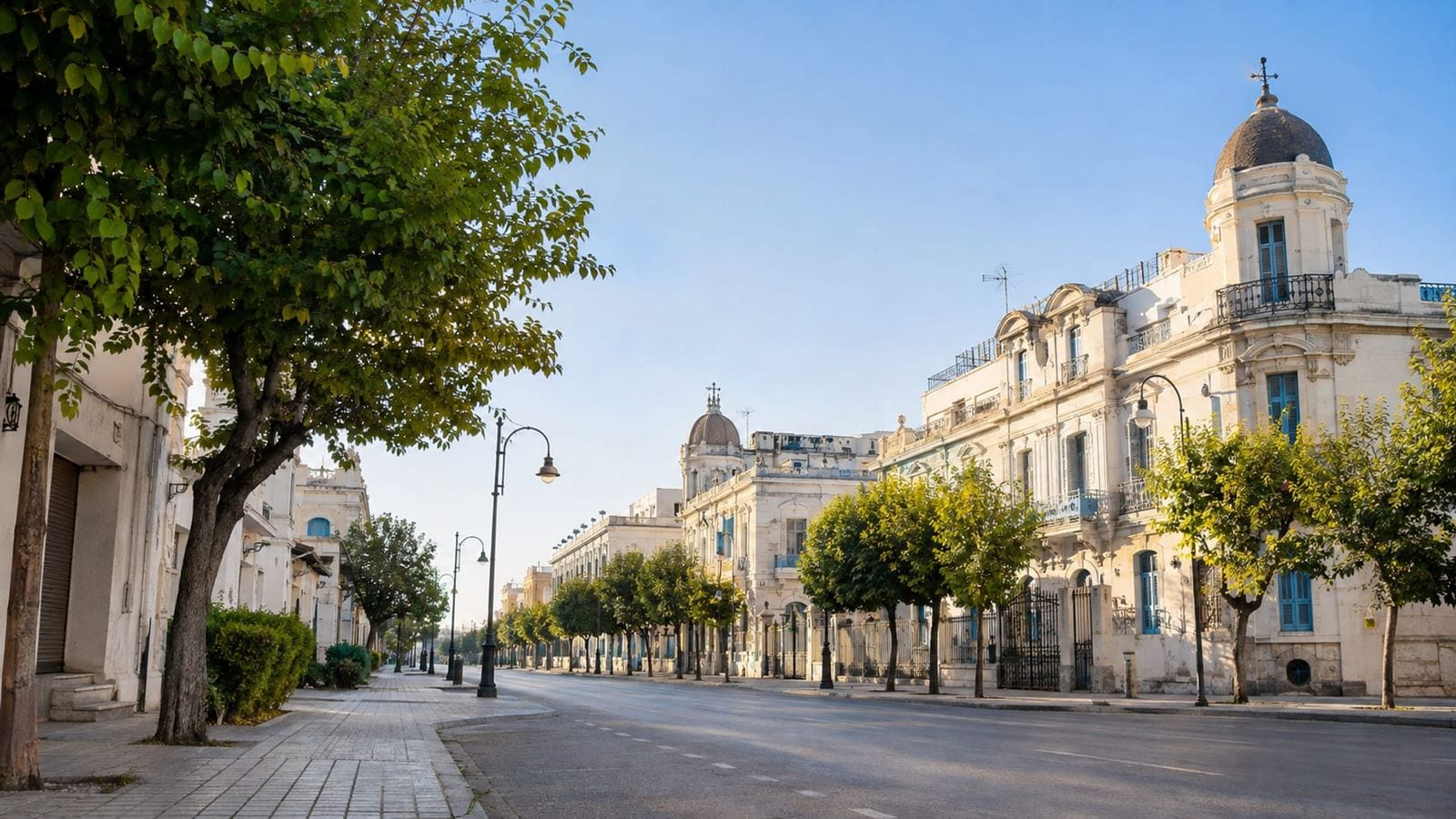
Good to know: Nelson Mandela light-rail station serves the area and provides another option for reaching central Tunis.
Best for: Modern hotels, business travel, parking, and travelers who prefer a newer district
What to expect: Wide roads, office traffic in the day, and a quieter residential feel after business hours.
Hotel prices: Usually about $70 to $180 per night for well-rated stays
Distance to major sights: About 15 to 25 minutes by taxi to the Medina of Tunis, and about 20 to 30 minutes by taxi to Tunis-Carthage Airport (TUN)
Quietness: Active on weekdays, noticeably calmer in the evening and on weekends.
Main trade-off: It is less walkable for sightseeing, so you will depend more on taxis to reach the old city and museums.
Good to know: Book here if you want parking or an airport-oriented stay, but plan on taxi time for most sightseeing.
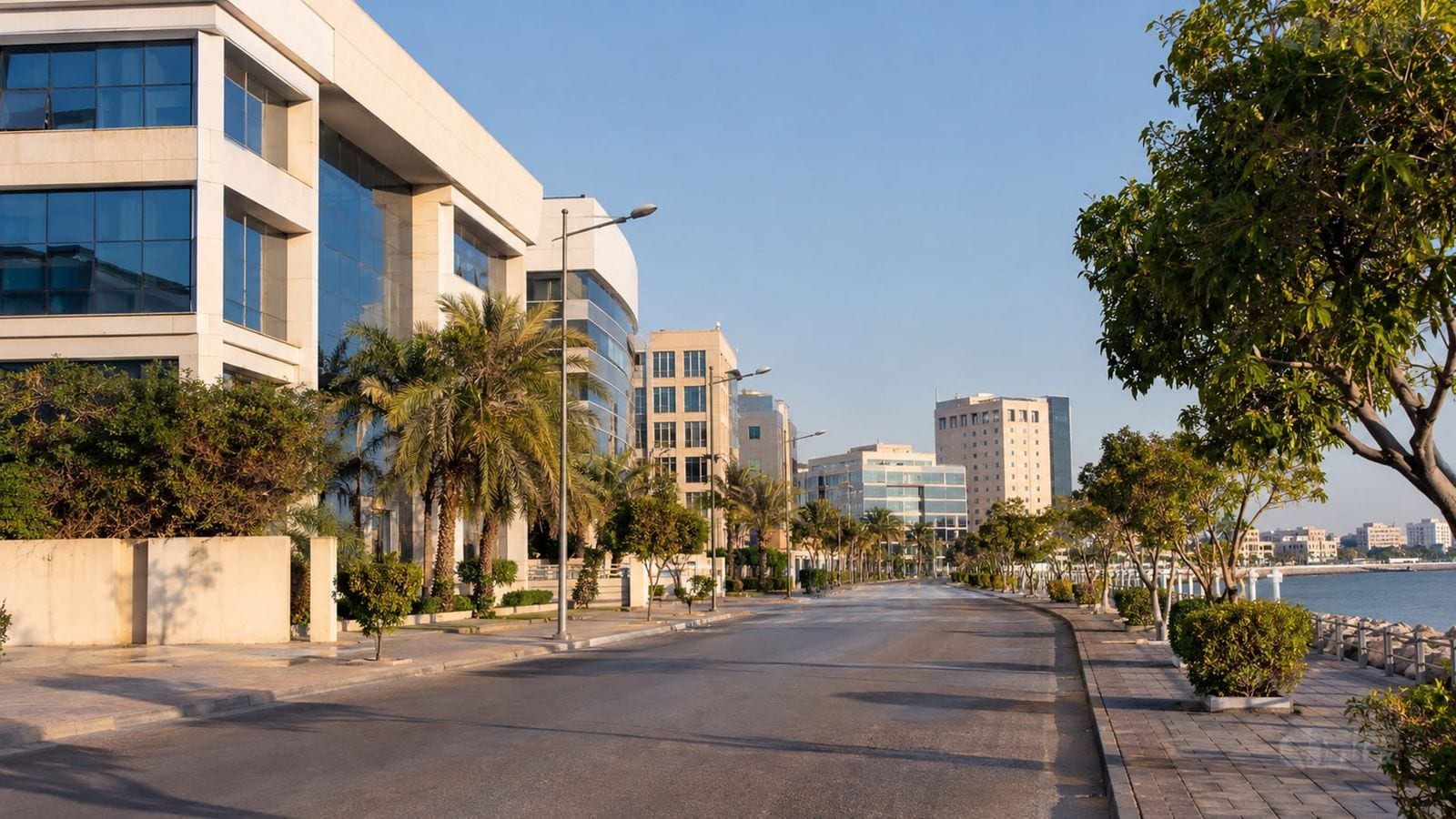
Les Berges du Lac lies between central Tunis and Tunis-Carthage International Airport (TUN). It is a newer part of the city, with wide roads separating office developments, apartment buildings, hotels, and shopping areas near Lake Tunis.
Best for: Quieter stays, residential surroundings, and travelers who do not need to walk to the medina
What to expect: Low-key streets, local neighborhood activity, and less evening movement than in central Tunis.
Hotel prices: Usually about $60 to $150 per night for well-rated stays
Distance to major sights: About 15 to 20 minutes by taxi to the Medina of Tunis, and about 15 to 20 minutes by taxi to Tunis-Carthage Airport (TUN)
Quietness: Calm through the day, very quiet in the evening.
Main trade-off: You will usually need a car or taxi for dining and sightseeing, since the area is more residential than visitor-focused.
Good to know: This area is particularly practical for early flights or business meetings.
For a first sightseeing trip, Ben Arous, La Soukra, and outer parts of Ariana are less practical because reaching the Medina, Ville Nouvelle, and other central sights usually requires longer taxi rides or multiple public-transport trips.
Hotel deals
How to get around Tunis efficiently
Central Tunis is easy to explore on foot, while the TGM rail, light rail, buses, and taxis cover longer trips across the city and toward the coast.

TGM rail
for Carthage, Sidi Bou Said, and La Marsa
The TGM runs from Tunis Marine through La Goulette and Carthage to Sidi Bou Said and La Marsa. A single ticket generally costs TND 0.50–TND 1.25 ($0.17–$0.43), depending on distance and class. Buy a paper ticket at the station before boarding.

Light rail and bus
for central districts and residential neighborhoods
Light-rail lines serve central Tunis, Bardo, Ariana, Ben Arous, and several nearby suburbs. Buses reach residential districts and outer parts of the city that the rail network does not. Fares range from TND 0.50 to TND 1.50 ($0.17 to $0.52), depending on distance. You can buy a ticket at the station.

Taxi
for direct trips between districts and sights
Yellow taxis are common across Tunis and use meters for city trips. A short ride in central Tunis costs TND 5–TND 8 ($1.70–$2.80), while trips from the center to Sidi Bou Said or La Marsa often cost TND 20–TND 30 ($6.90–$10.30). Most drivers expect cash in Tunisian dinars, and night fares are higher.
*Prices are based on rates updated as of June 2026 and may change at the time of travel.
Use trams and buses for short city hops, the TGM for Sidi Bou Said and Carthage, and taxis when the route crosses several districts, or the schedule is tight.
Iconic landmarks
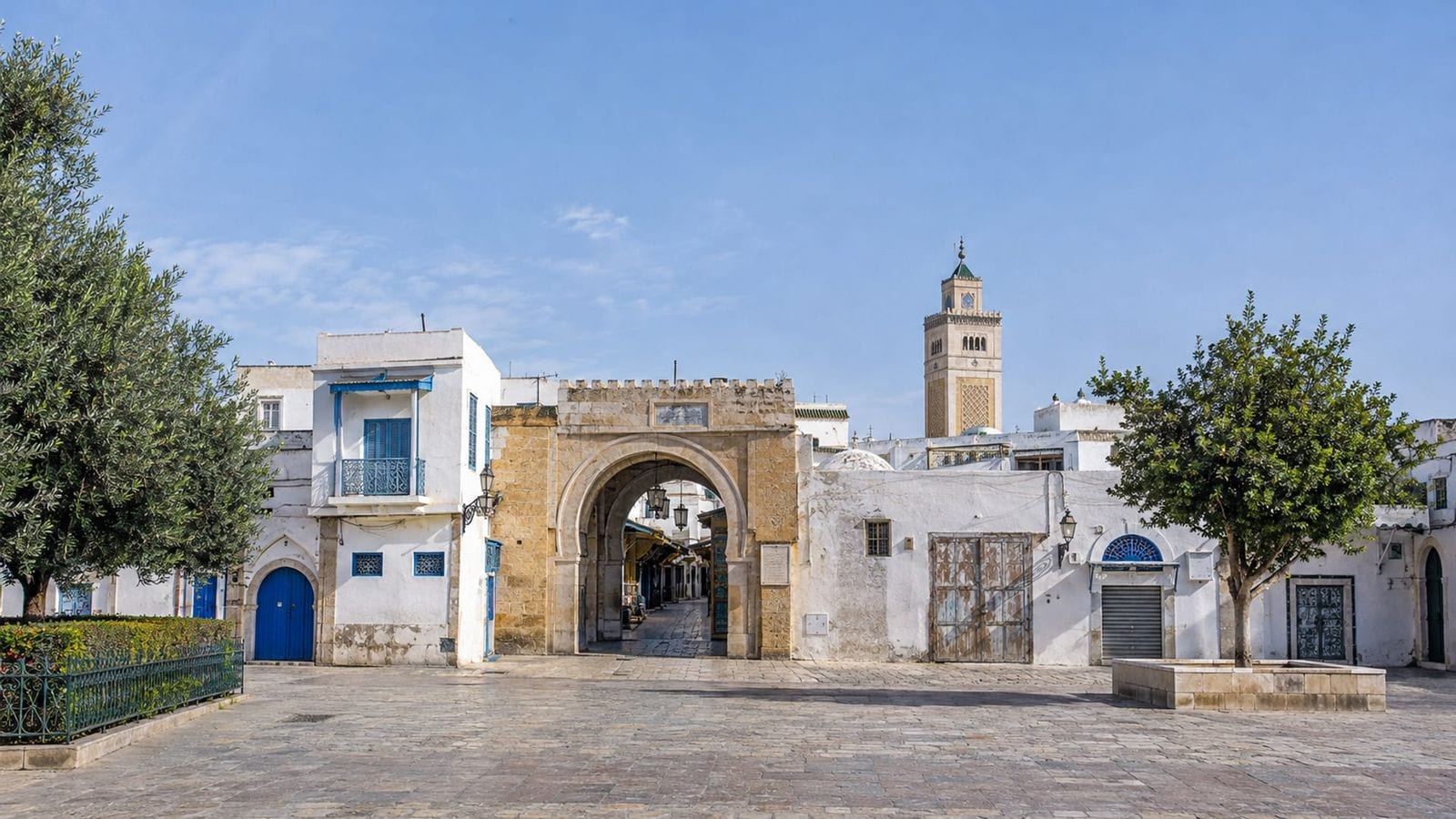
Medina of Tunis
The Medina is Tunis’s oldest part and has been a UNESCO World Heritage Site since 1979. Its narrow streets contain covered souks, mosques, madrasas, mausoleums, courtyard houses, and historic gates, with Zitouna Mosque at its center.
Time needed: About 3 to 4 hours
Entry: Free to access, with paid entry only for select mosques, museums, and private houses inside the medina
Tip: Allow 3 to 4 hours.
Entry: Walking through the Medina is free, although some individual monuments charge admission.
Tip: Start near Bab Bhar and continue toward Zitouna Mosque, then explore the surrounding souks and smaller streets.
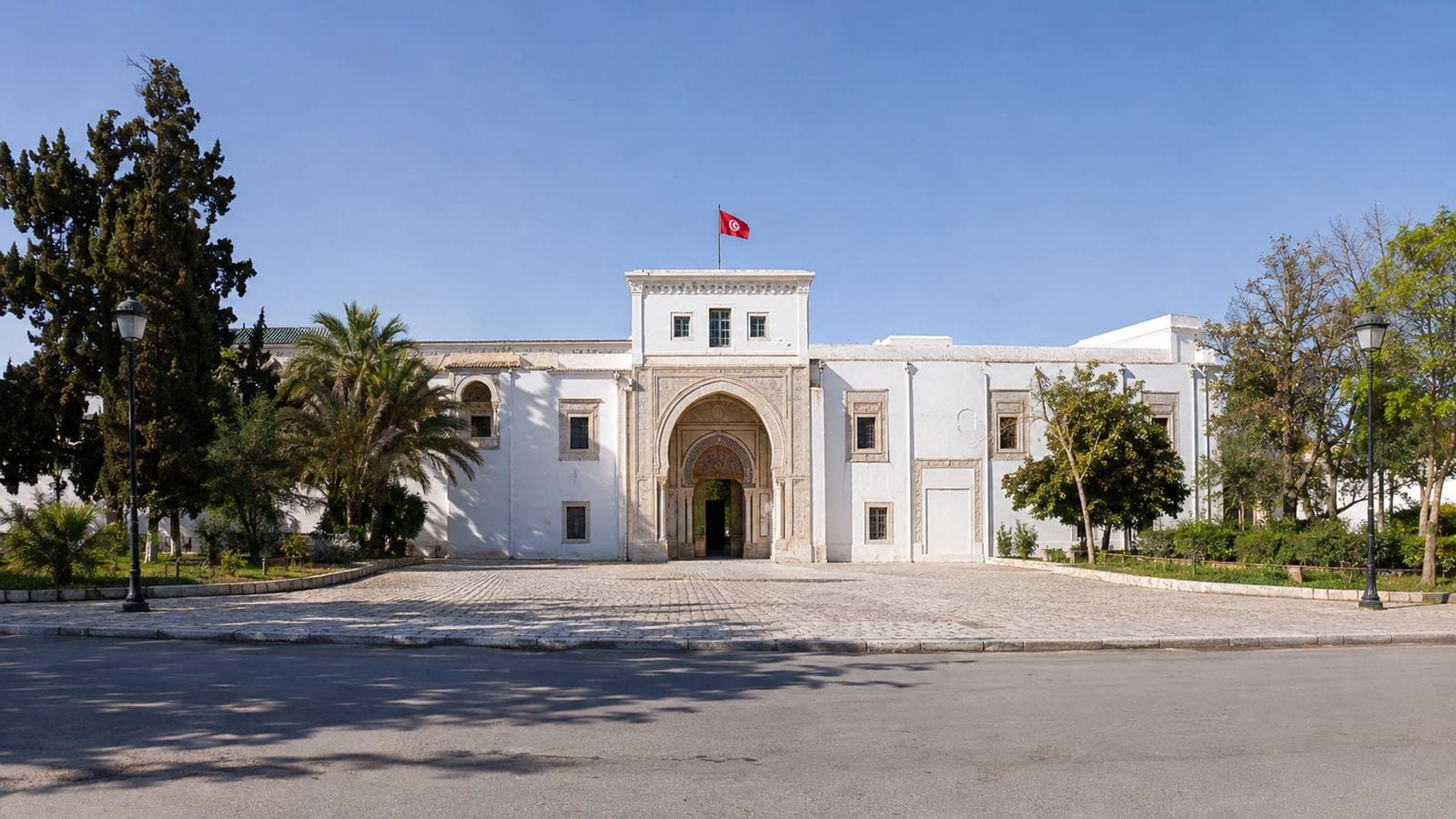
Bardo National Museum
The Bardo occupies a former palace and contains Tunisia’s largest archaeological collection. Its galleries are especially known for Roman mosaics, along with Punic objects, sculptures, ceramics, and finds from archaeological sites across the country.
Time needed: About 2 to 3 hours
Entry: Standard admission costs about $5 to $10 (approximately 15 to 30 TND), with possible reduced rates for residents and students Visit the official site for details.
Tip: Allow 2 to 3 hours.
Entry: Admission for non-residents costs TND 30 ($10.30). The museum closes on Mondays.
Tip: Leave enough time for both the mosaics and the palace rooms, which contain decorated ceilings, tiled walls, and carved plasterwork.
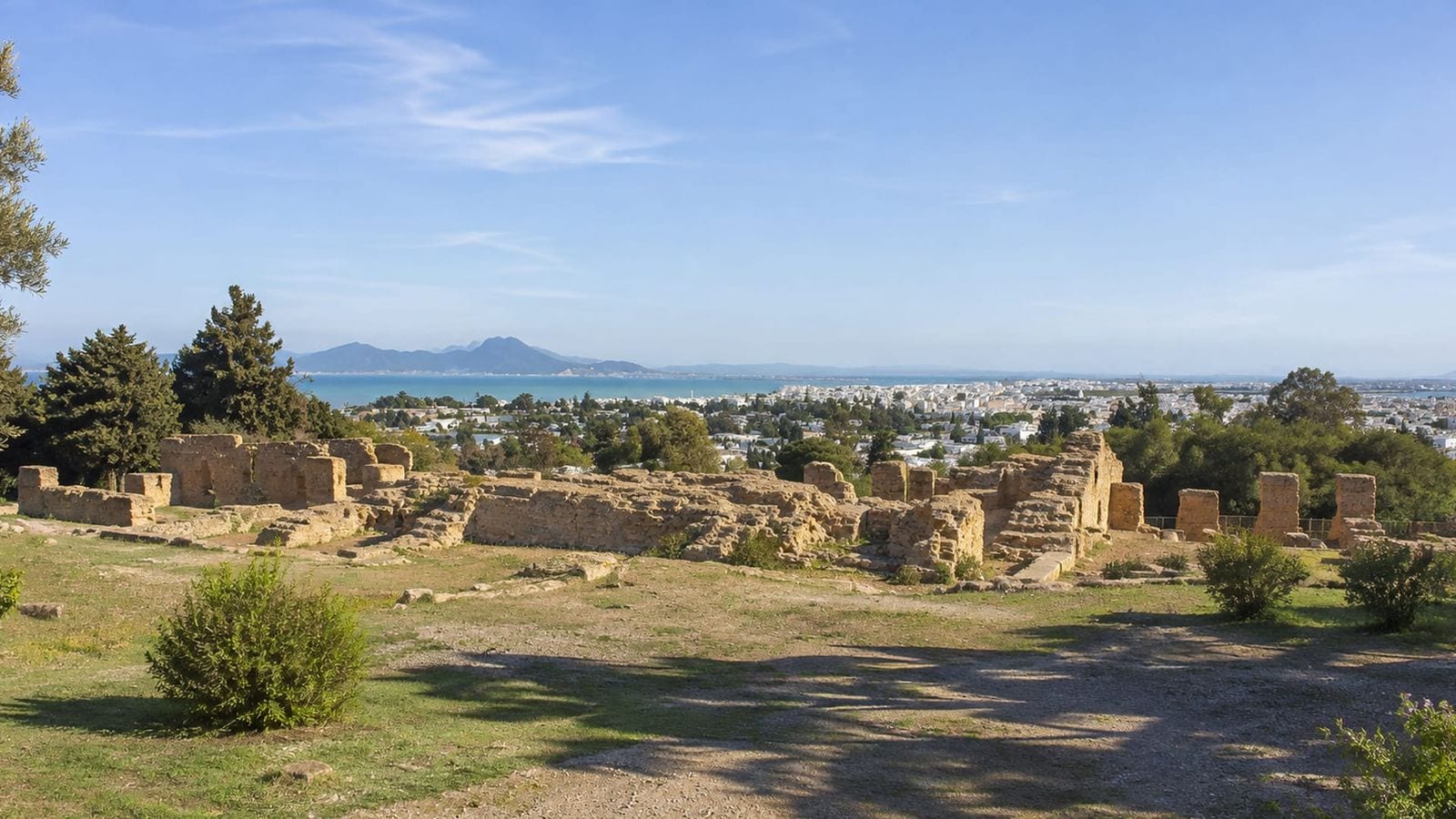
Carthage Archaeological Site
Carthage consists of several archaeological areas spread across the modern suburb. The main sites include the Antonine Baths, Roman theater, Punic ports, Tophet, amphitheater, Roman villas, and remains on Byrsa Hill.
Time needed: About 1 to 2 hours
Entry: Standard admission costs about $2 to $6 (approximately 6 to 18 TND), with combined tickets sometimes available for nearby Carthage sites
Tip: Allow 3 to 4 hours.
Entry: A grouped ticket for non-residents costs TND 20 ($6.90) and covers the archaeological sites.
Tip: The ruins are spread across several separate areas, so a taxi between the more distant sites saves time.
Overlooked sites worth visiting

Sidi Bou Said Cemetery
This small cemetery is near the upper part of Sidi Bou Said, above the Bay of Tunis. Whitewashed graves cover the hillside, with the Bay of Tunis visible beyond the cemetery walls.
Time needed: About 1 to 2 hours
Entry: Free to access; the park is open to the public with no admission fee. Expect informal on-site costs only if you use seasonal rides, kiosks, or other extras inside the grounds.
Tip: Allow 30 to 45 minutes.
Entry: Admission is free.
Tip: Visit it while walking through Sidi Bou Said, since it is close to the village center.

Dar Lasram
Dar Lasram is an early-19th-century house in the Medina. It now houses the Association for the Protection of the Medina. Inside are a central courtyard, tiled walls, carved plaster, painted ceilings, and rooms arranged around the courtyard.
Time needed: About 45 to 75 minutes
Entry: Admission typically costs about $2 to $5 (about 6 to 15 TND), depending on the current exhibit program and any special opening. Cash payment is often easiest at the door.
Tip: Allow 45 minutes to 1 hour.
Entry: Admission costs TND 5 ($1.70).
Tip: Some rooms are used as offices, so access can vary.
Traditional food
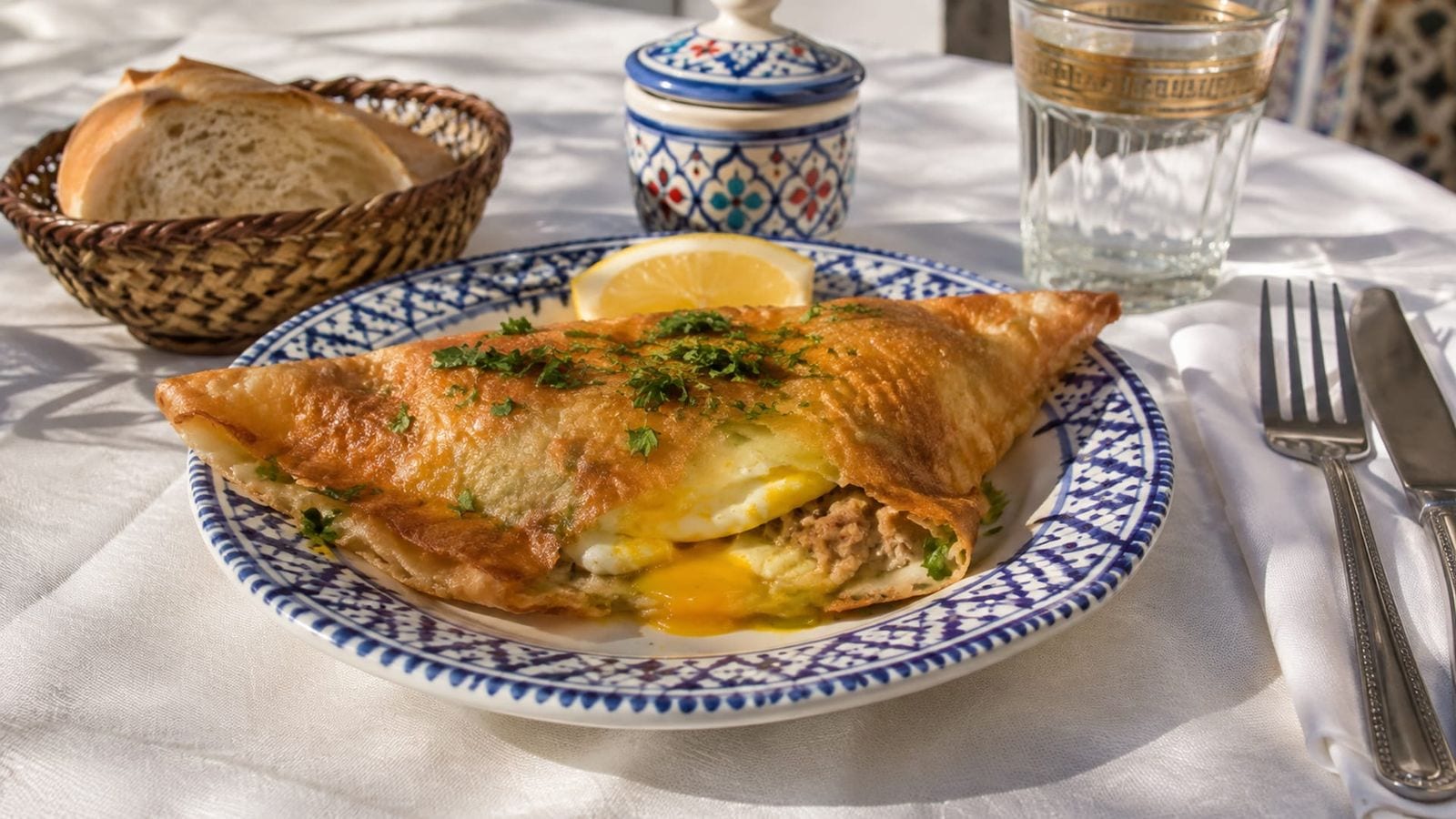
Tunisian cooking is bold, aromatic, and often quite spicy. Meals commonly use olive oil, tomatoes, peppers, seafood, lamb, fresh herbs, and warm spices, with regional influences from across the Mediterranean and North Africa.
Brik
Brik is a thin pastry filled with egg, tuna, parsley, and sometimes capers, then fried until crisp. El Ali in the Medina serves brik with egg and tuna.
Couscous
Tunisian couscous is usually served with vegetables and meat or fish in a spicy tomato-based sauce. Try it at Dar El Jeld, where the menu includes both meat and fish couscous.
Harissa
Harissa is a chili paste made with red peppers, garlic, spices, and olive oil. It is often served with bread or added to salads, grilled dishes, and sauces. Bab Tounès is a good place to try it with a traditional Tunisian meal.
Lamb tagine
Tunisian tagine is baked with eggs, meat, cheese, herbs, and vegetables, with recipes varying by restaurant and household. El Ali serves a version called tajine mâalma.
Best time to visit Tunis
Tunis has mild winters, warm spring and fall weather, and hot summers. Rain is more common from late fall through early spring, while July and August are the hottest and driest months.
Best for: Medina walks, Carthage, Sidi Bou Said, outdoor cafés, and long days outside
What you get: Average daytime highs rise from about 66°F (19°C) in March to 77°F (25°C) in May, with less rain as spring progresses.
Trade-offs: March can still bring cool evenings and occasional rain.
Best for: Coastal areas, evenings in Sidi Bou Said, outdoor dining, and beach time near Tunis
What you get: Average daytime highs reach about 84°F (29°C) in June and climb to 91°F (33°C) in August, with long sunny days and very little rain.
Trade-offs: July and August can be very hot, especially at open archaeological sites such as Carthage.
Best for: Medina walks, museums, Carthage, Sidi Bou Said, and outdoor dining
What you get: Average daytime highs fall from about 86°F (30°C) in September to 79°F (26°C) in October and 70°F (21°C) in November.
Trade-offs: Rain becomes more frequent later in the season.
Best for: Museums, the Medina, restaurants, and sightseeing without the heat
What you get: Average daytime highs are generally in the low 60s°F, with cooler nights and more rain than in summer. January averages about 63°F (17°C) during the day.
Trade-offs: Evenings can be cold, and rainy or windy days happen more often.
A realistic 5-day plan in Tunis
Five days are enough to see central Tunis, spend proper time in the Medina and Bardo, and devote separate days to Carthage and the coast.
After checking in, start on Avenue Habib Bourguiba and walk toward the Municipal Theatre and the Cathedral of St. Vincent de Paul. Continue to Bab Bhar, the gate between Ville Nouvelle and the Medina, then enter the first streets of the old city for an early look at its shops, cafés, and architecture. Finish back in Ville Nouvelle for dinner.
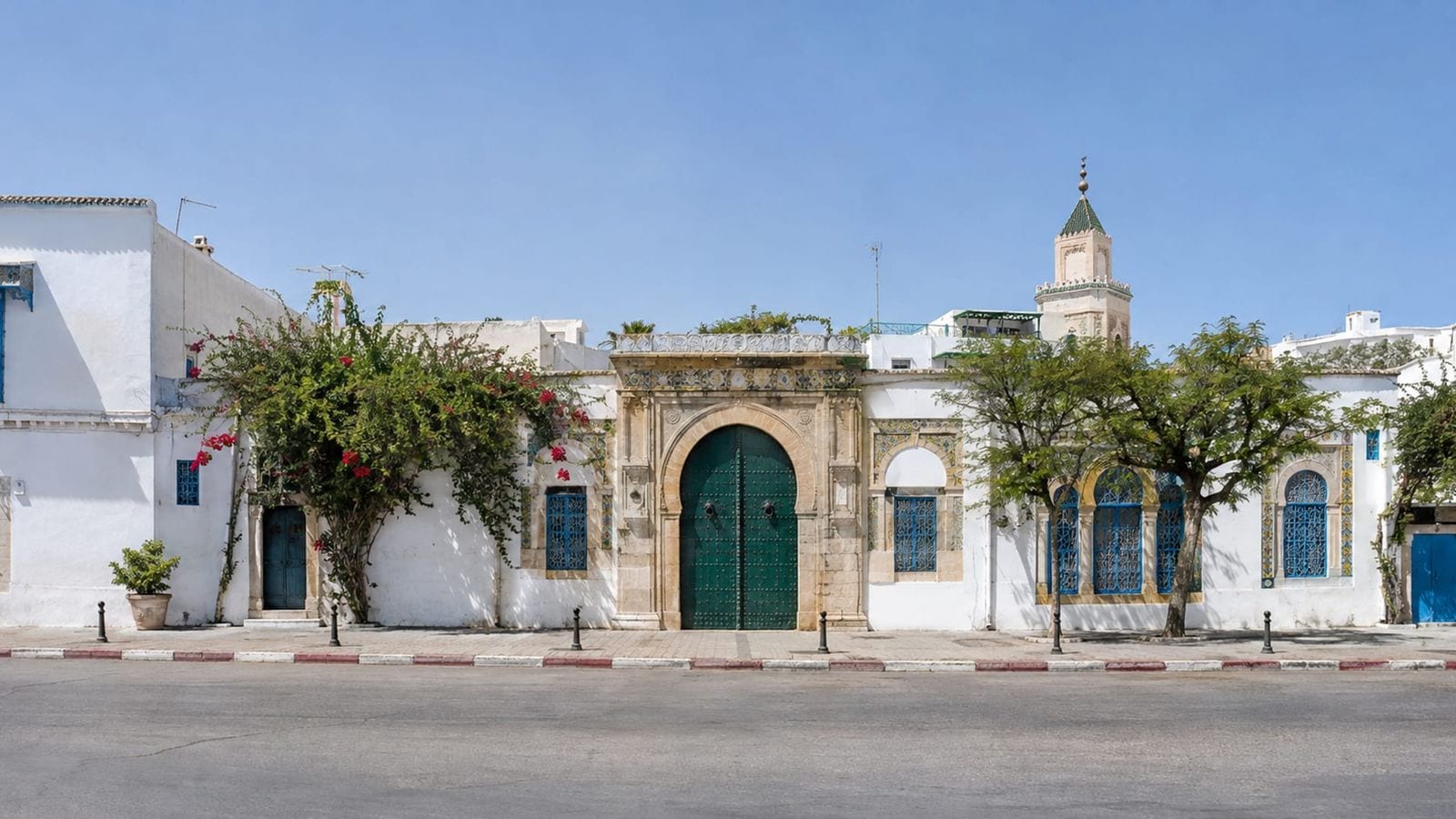
Begin at Zitouna Mosque, then explore the souks around it, where shops still sell textiles, perfumes, leather goods, metalwork, and traditional clothing. Continue to Dar Lasram to see how a wealthy Tunis family lived in the 19th century, with rooms arranged around a decorated courtyard. After lunch, take a taxi to the Bardo National Museum for its Roman mosaics, Punic objects, sculpture, and ornate palace interiors.
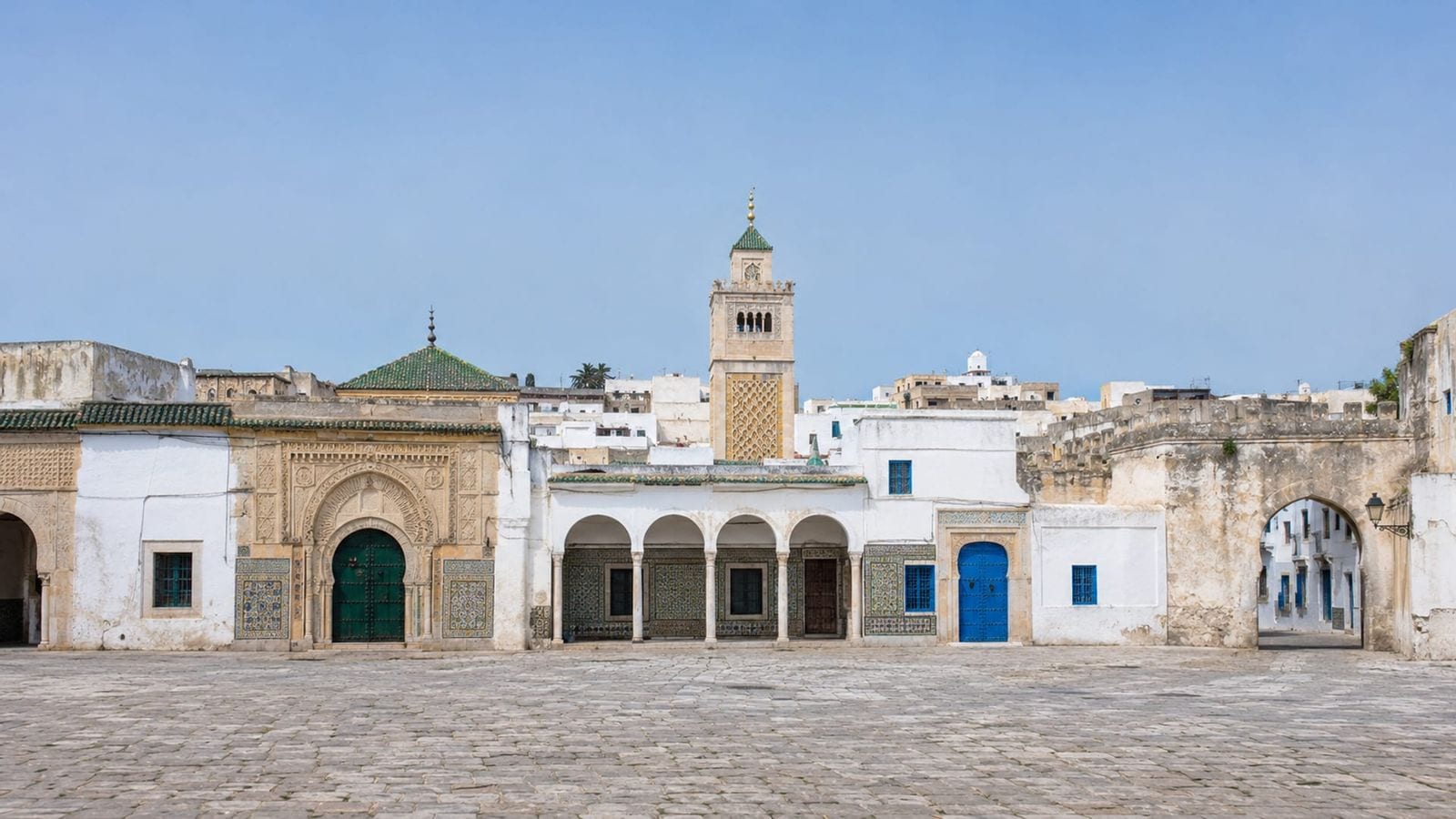
Spend the morning in Carthage, starting at the Antonine Baths to see the surviving foundations of one of the largest Roman bath complexes outside Rome. Continue to Byrsa Hill for archaeological remains and views across the former city, then visit another nearby site such as the Roman villas or Punic ports. In the afternoon, head to Sidi Bou Said to walk among its white houses, blue doors, cafés, and streets overlooking the Bay of Tunis.
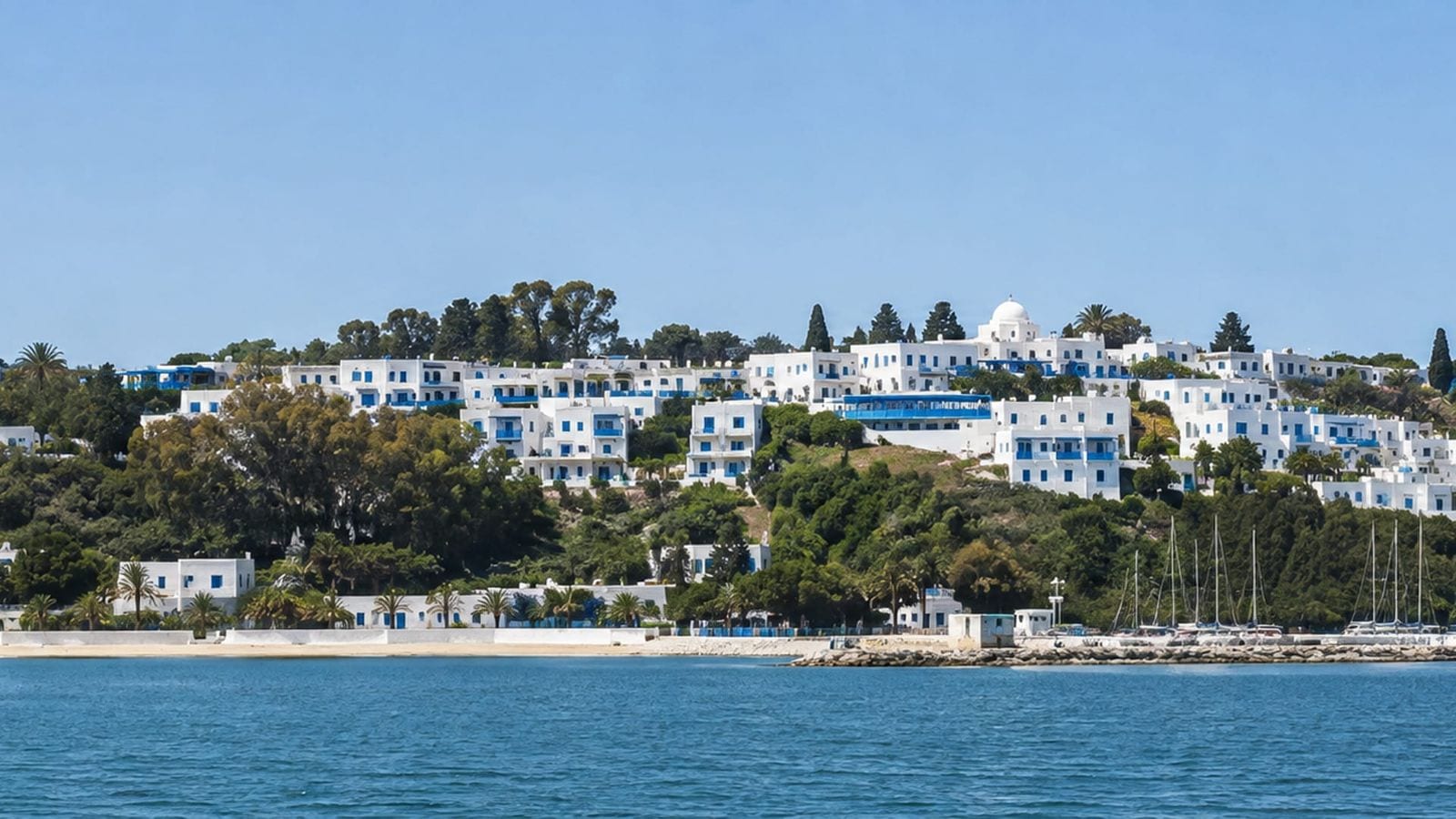
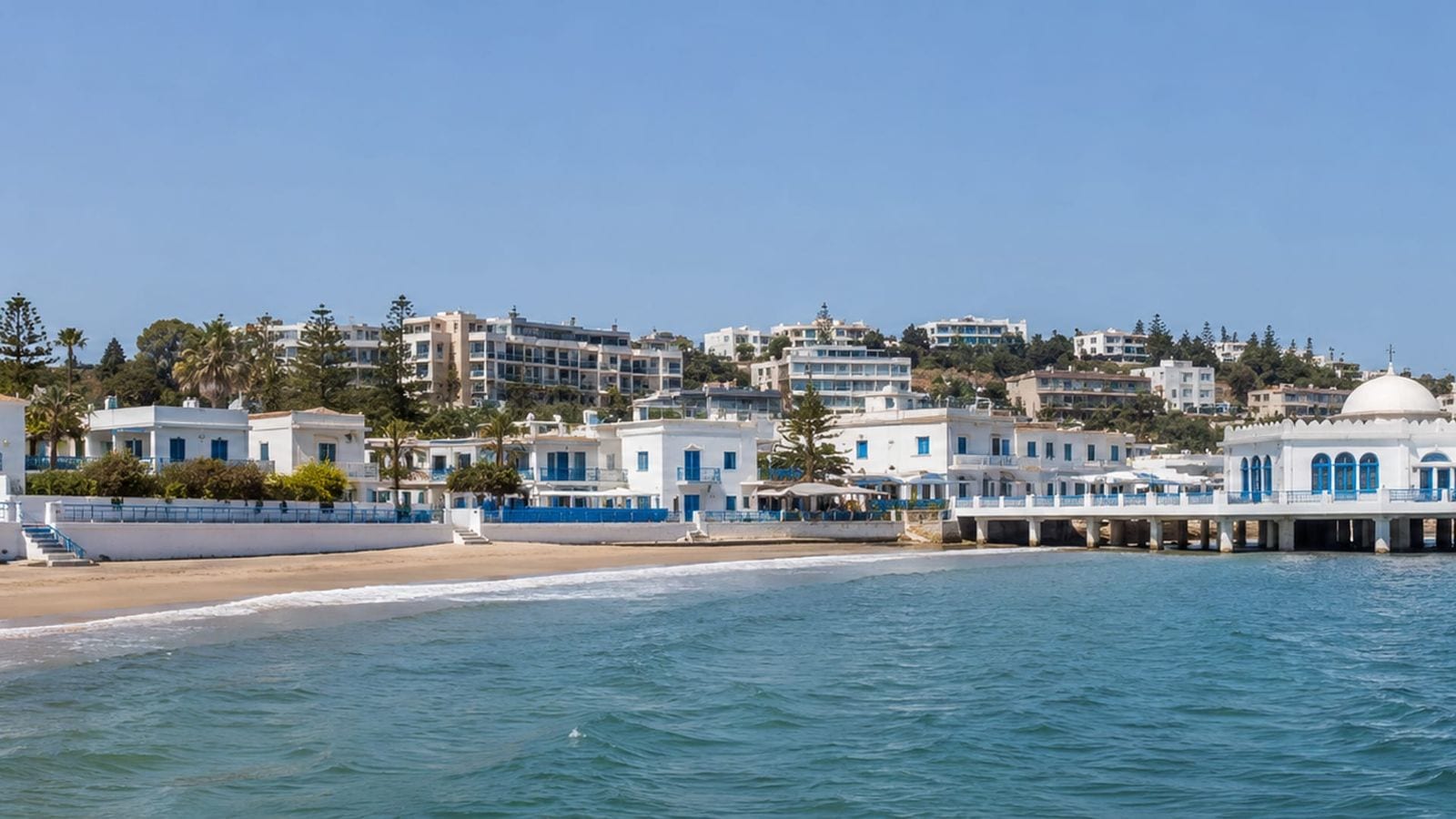
Start in La Marsa with a walk along the seafront and La Marsa Beach, then stop for coffee near the Corniche and spend some time in the town center before lunch. In the afternoon, continue north to Gammarth. Spend time at the beach, visit a beach club, or book a thalassotherapy treatment. Before returning to Tunis, stop at Cap Gammarth for views across the Mediterranean and the northern coastline.
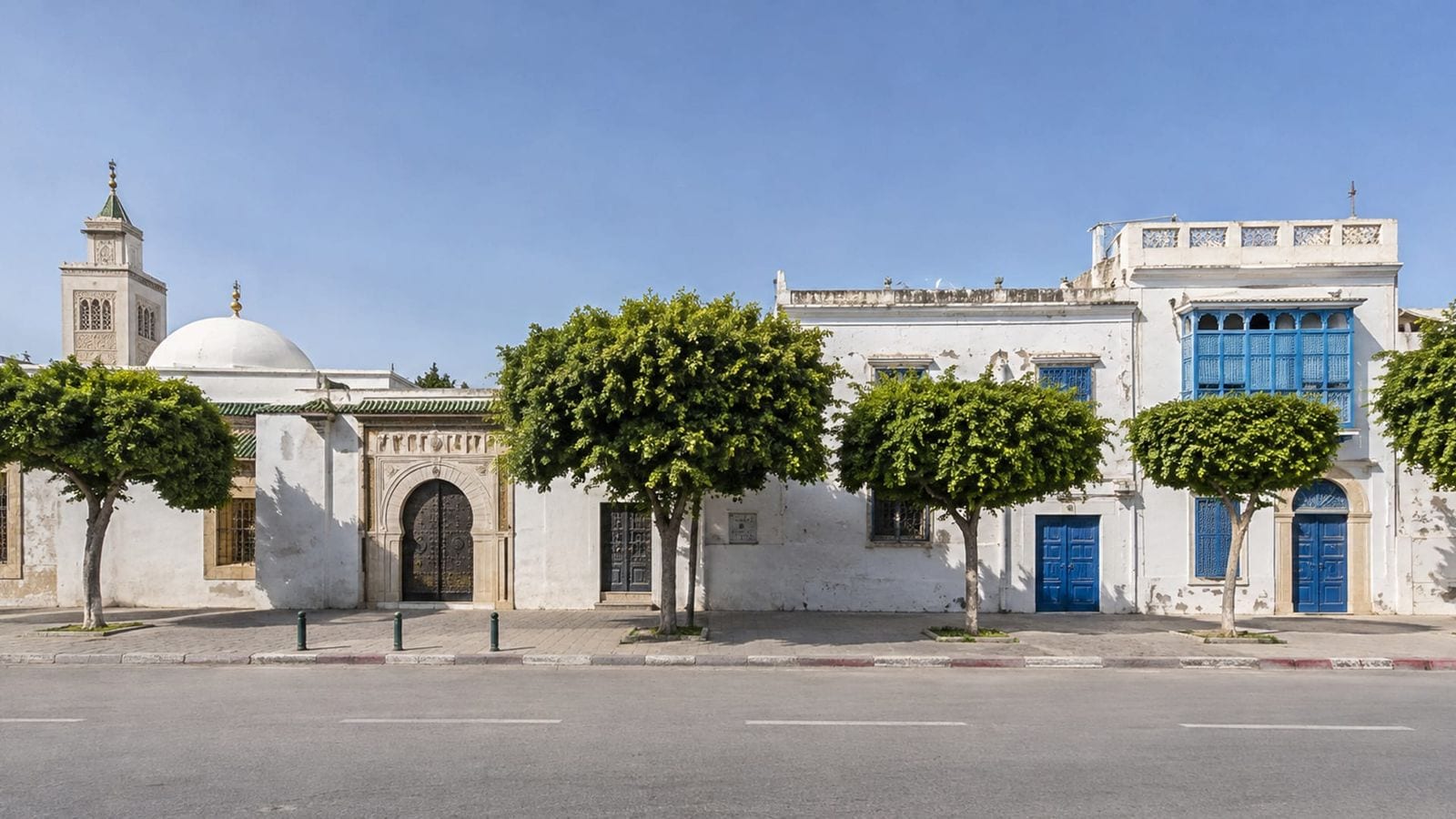
Spend the final morning in Ville Nouvelle. Walk along Avenue de France and Avenue Habib Bourguiba, stop for coffee, browse bookshops or department stores, and have lunch nearby. If time allows, visit the Cathedral of St. Vincent de Paul or the Municipal Theatre if either was missed on the first day. Return to the hotel for luggage, then take a taxi to Tunis-Carthage International Airport (TUN), which usually takes 15–25 minutes from central Tunis depending on traffic.
Business-class flights from the US to Tunis
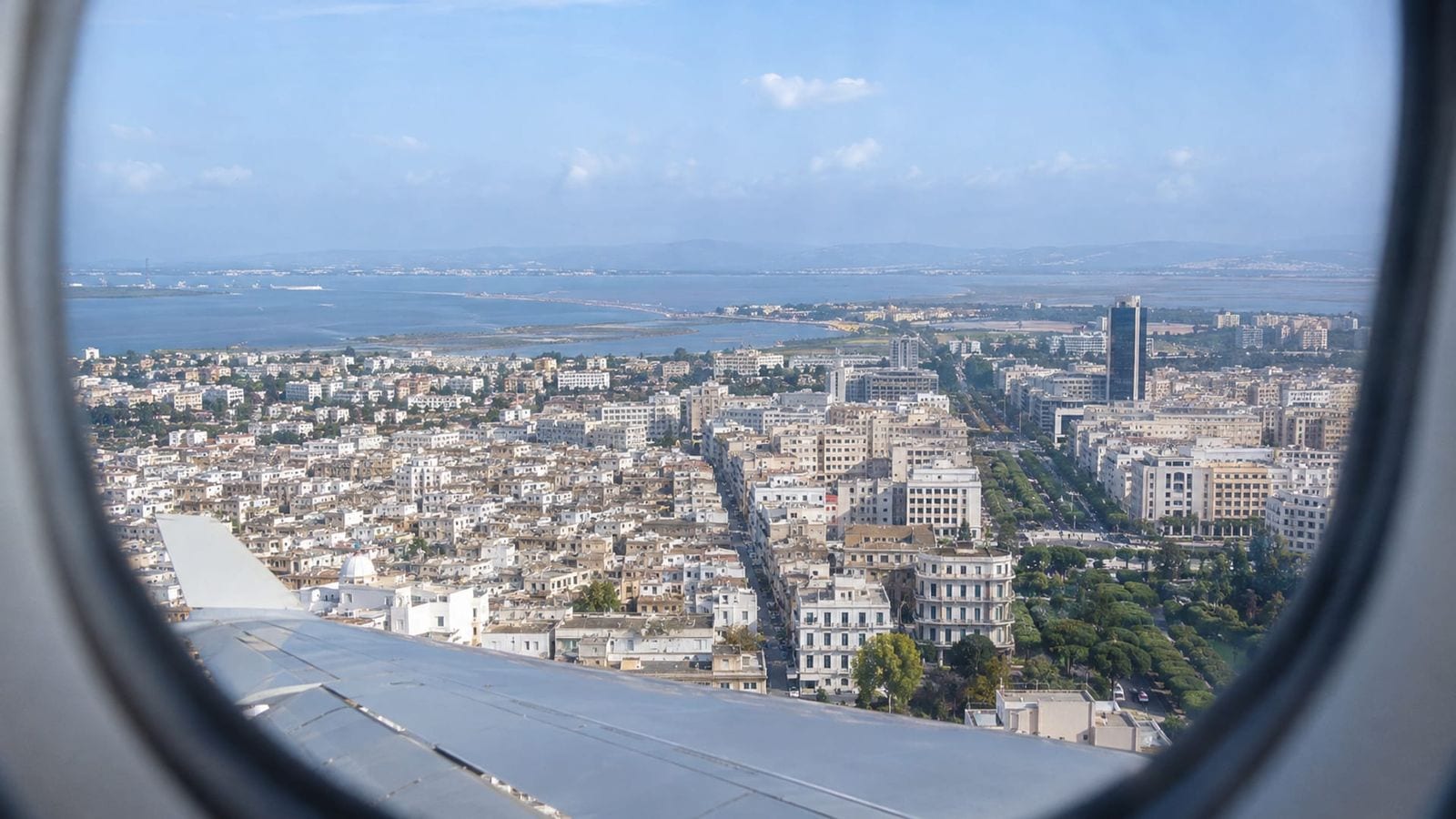
For long-haul arrivals, the most useful route examples to Tunis usually connect through major European or Gulf hubs. From both New York and Los Angeles, one-stop itineraries dominate the premium fare picture.
From New York, Turkish Airlines, Air France, Lufthansa, Qatar Airways, and ITA Airways are among the airlines commonly sold on these itineraries. Round-trip fares usually start near $3,000 and can reach $6,500.
From Los Angeles, Turkish Airlines, Air France, Lufthansa, Qatar Airways, and Emirates are common names on these routes. Round-trip fares from Los Angeles to Tunis often run from $3,400 to $7,000; if you do not mind a layover, common routings via Istanbul (IST) or Doha (DOH) can cut the price to roughly $1,100 to $1,800.
More to see in Tunis
Tunis has changed many times over the centuries, and those different periods are still easy to see across the city. The old Medina, French-era center, modern districts, archaeological sites, and coastal towns all belong to the same capital region, but each has a very different character.
There is much more to Tunis than a first trip can cover, and this guide should give you a good place to start exploring it. When you are ready to plan your trip, AranGrant experts can help you find business-class flights to Tunis so you can get there in comfort.







