

Chapters:

Need help with your trip?
Our support team is available 24/7. Request a callback or call us directly at (833) 619-0908
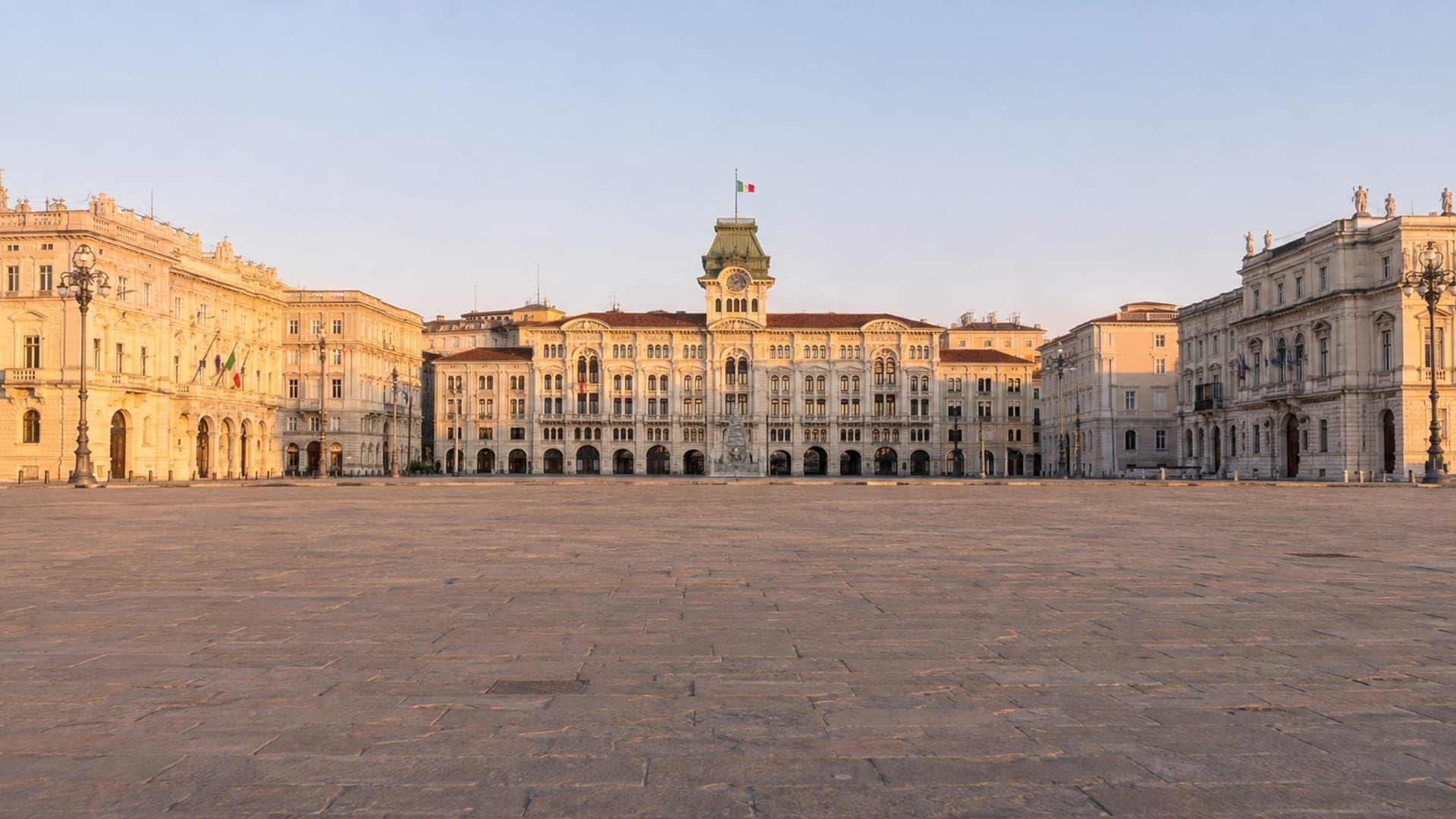
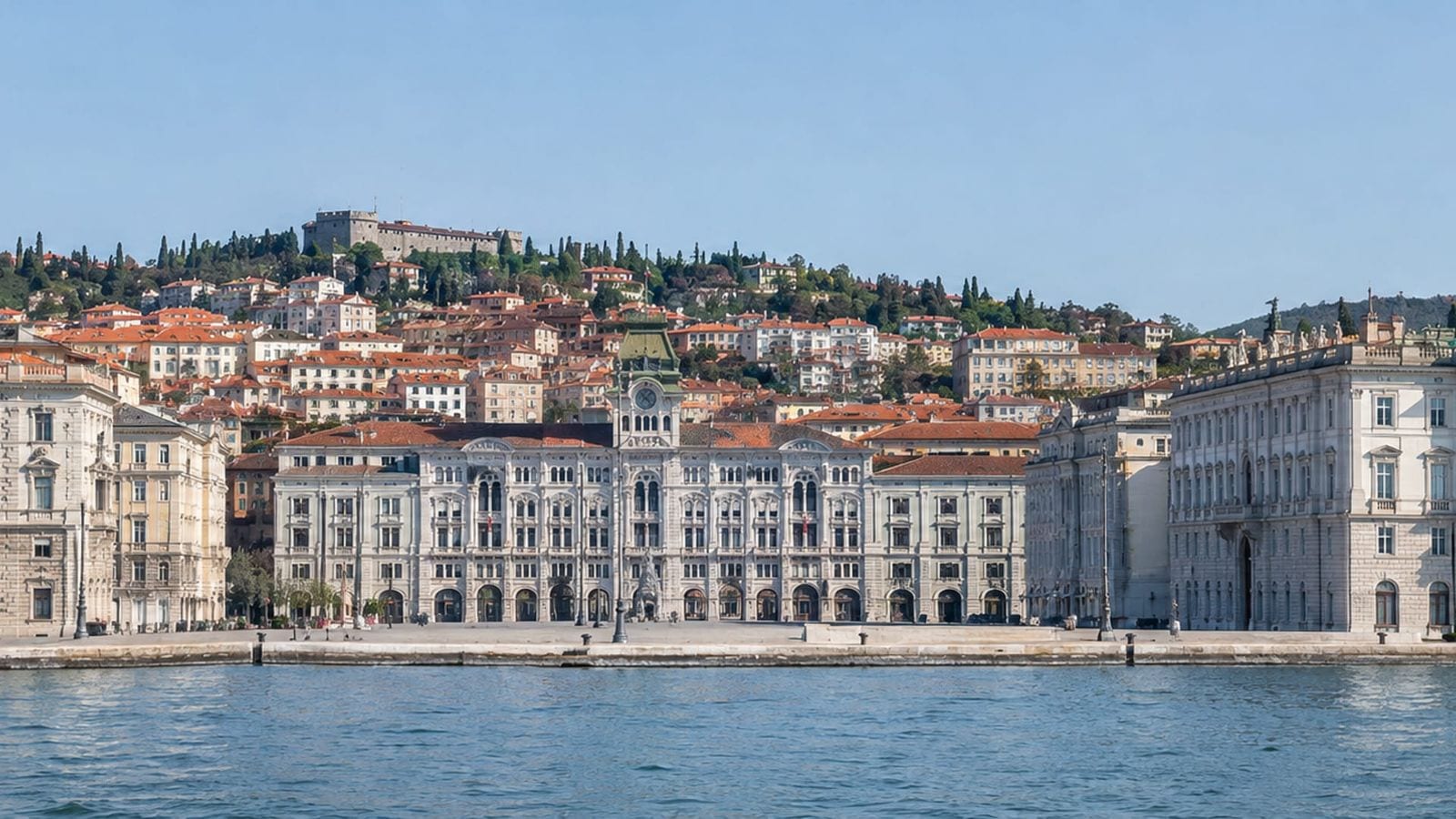
Trieste feels different from most Italian cities, with Habsburg architecture, a broad waterfront, hilltop landmarks, and cafés that reflect its Central European past. Piazza Unità d’Italia and Miramare Castle draw the most attention, but the city’s character also comes through San Giusto, the old harbor, and quieter residential streets.
The waterfront is easy to explore on foot, while the hilltop and coastal sights need buses or taxis. The waterfront is easy to explore on foot, while San Giusto, Miramare, and outer neighborhoods need buses or taxis. This article covers where to stay, how to get around, what to eat, and how to organize five days without unnecessary backtracking.
Useful things to know

Main language(s): Italian
Ciao (chow) – Hello
Per favore (pehr fah-VOH-reh) – Please
Grazie (GRAHT-syeh) – Thank you
Parla inglese? (PAHR-lah een-GLEH-zeh) – Do you speak English?
Quanto costa? (KWAHN-toh KOH-stah) – How much does it cost?

Currency: Euro (EUR, €)

Cash and cards: Cards and contactless payments are widely accepted, but carry €20 to €40 ($22 to $44) for smaller shops and cash-only purchases.

Tipping: Round up small bills or leave 5% to 10% in restaurants for good service when service is not included.

Traditional food: Jota, prosciutto di San Daniele, gnocchi di susine, and sardoni in savor are among Trieste’s best-known regional dishes.

Water and coffee costs: Bottled water usually costs €2 ($2.30), while an espresso costs €1.50 to €2 ($1.70 to $2.30).

Taxis and ride apps: Uber and itTaxi operate in Trieste, though app-based airport pickup can be more limited than city rides.

Plug and voltage: Type C/F socket, 230V, 50Hz

Dining and shop opening hours: Restaurants serve lunch from 12:30 pm to 2:30 pm and dinner from 7:30 pm to 10:30 pm. Opening days and afternoon closures vary.

Emergency number: Dial 112 for police, fire, and medical emergencies.
Where to stay in Trieste
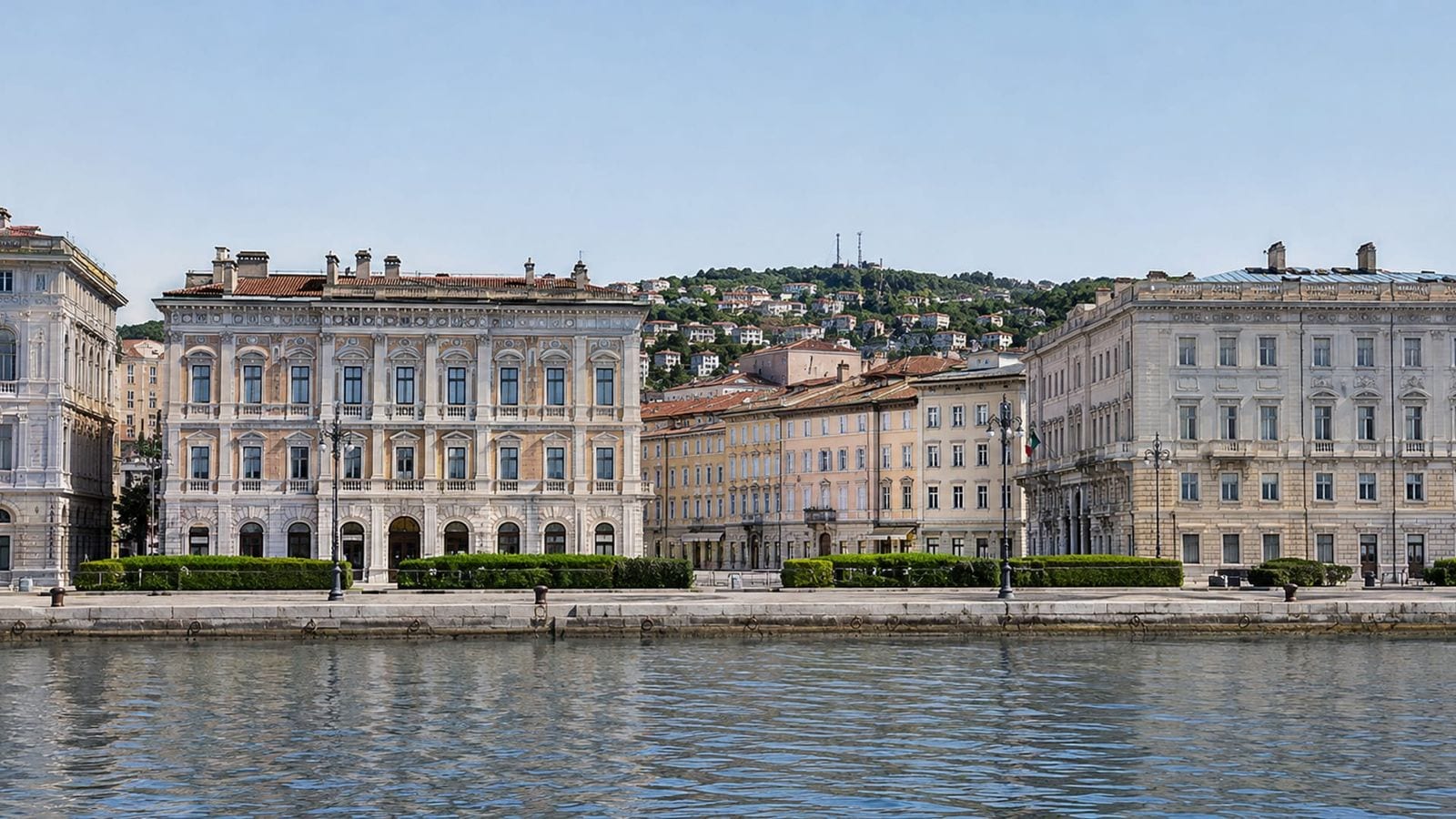
Trieste’s historic center surrounds Piazza Unità d’Italia and the waterfront, with cafés, shops, restaurants, and major sights close together. It suits first-time visitors who want to explore central Trieste mostly on foot.
Best for: First-time visits, sightseeing, and staying close to the waterfront
What to expect: Busy sidewalks by day, with steady restaurant and pedestrian activity into the evening
Hotel prices: Well-rated hotels generally cost €140 to €260 ($155 to $285) per night.
Distance to major sights: 5 to 10 minutes on foot to Piazza Unità d’Italia and 15 minutes to Canal Grande
Quietness: Livelier during the day and early evening, then quieter after shops and restaurants close
Main trade-off: Central rooms cost more, and street-facing rooms can pick up late-night noise.
Good to know: Choose this area if you want easy access to restaurants, the waterfront, and public transport without relying on a car.
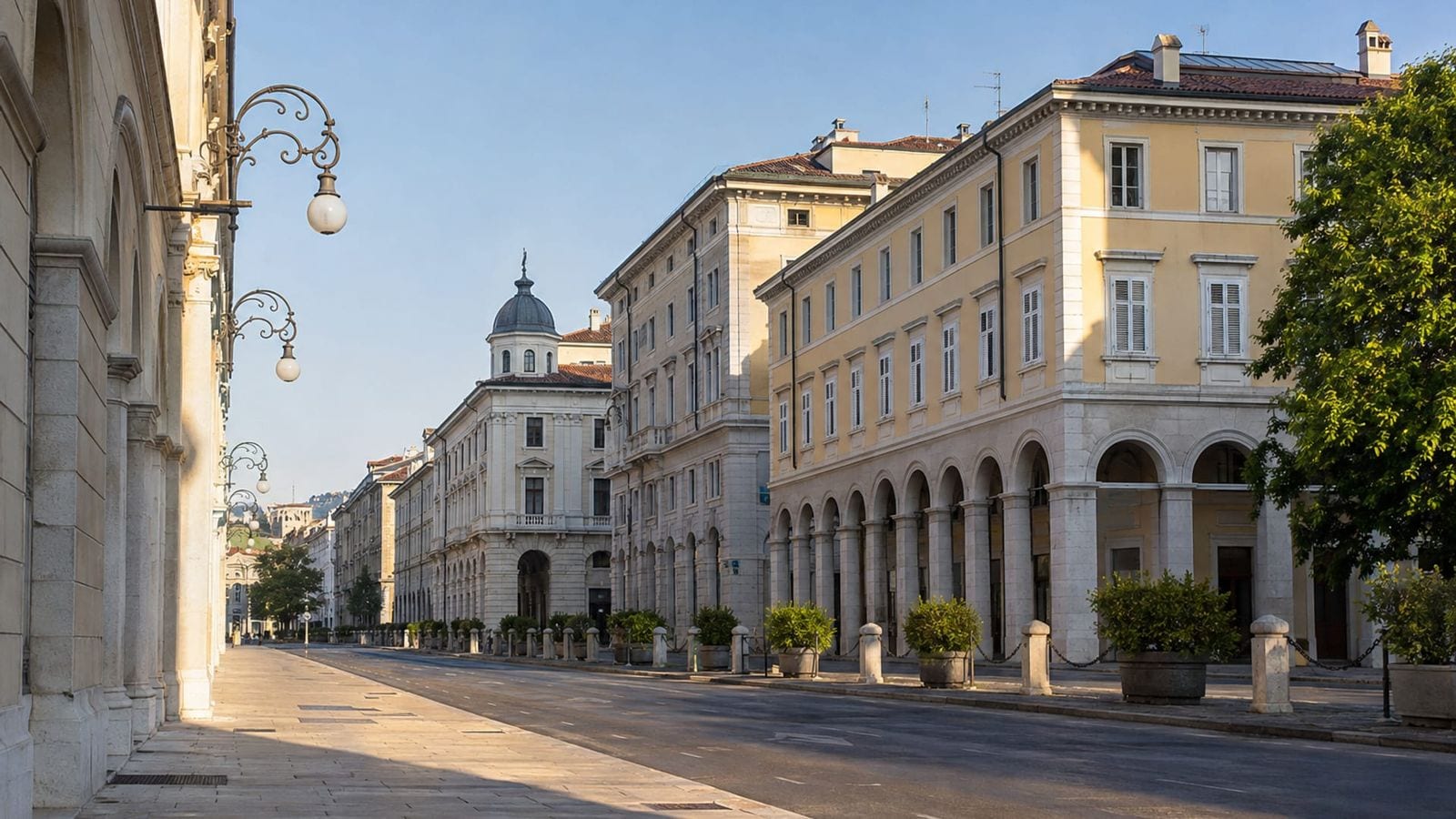
Borgo Teresiano is located between Trieste Centrale and the historic center, with the Canal Grande, neoclassical buildings, cafés, and wide streets at its center. It suits travelers who want easy station access without giving up a central location.
Best for: Train arrivals, short stays, and travelers who want easy access to the center
What to expect: Active streets, cafe traffic, and steady movement around the canal and main avenues
Hotel prices: Well-rated hotels generally cost €120 to €220 ($130 to $240) per night.
Distance to major sights: 5 to 10 minutes on foot to Trieste Centrale and 10 to 15 minutes to Piazza Unità d’Italia
Quietness: Busier during the day, with quieter side streets later in the evening
Main trade-off: Main roads can feel traffic-heavy during peak hours.
Good to know: Choose a hotel on a side street if you want less traffic noise while staying close to the station and center.
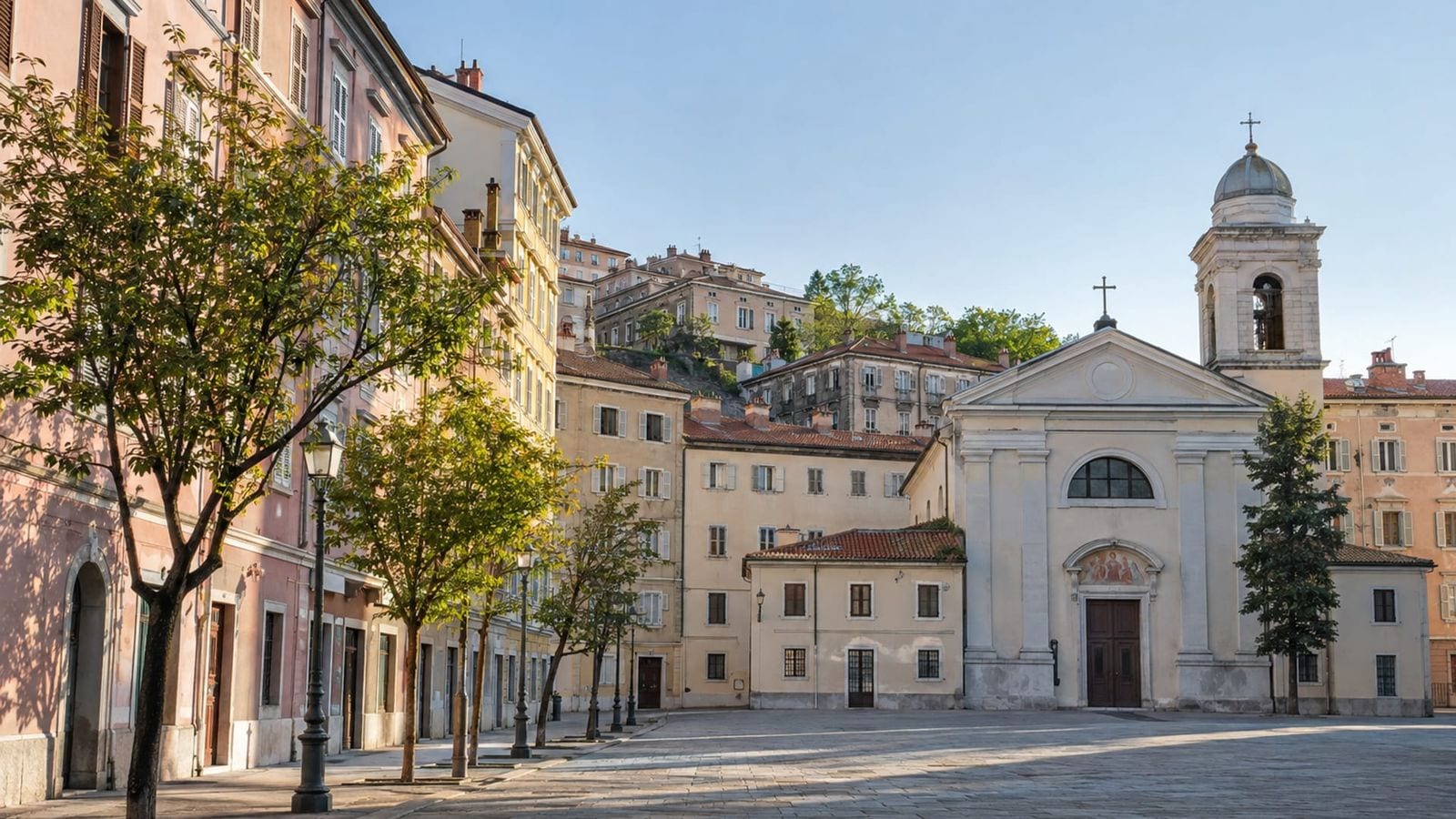
San Giacomo is a residential neighborhood southwest of central Trieste, with bakeries, local bars, small shops, and fewer tourists than the waterfront. It suits longer stays and travelers who want lower hotel prices without moving too far from the center.
Best for: Budget-minded stays, longer visits, and travelers comfortable using buses
What to expect: Local street life, neighborhood restaurants, and fewer tourists than central Trieste
Hotel prices: Expect to pay €80 to €150 ($87 to $165) per night for well-rated stays.
Distance to major sights: 20 to 30 minutes by bus to Piazza Unità d’Italia and 10 to 15 minutes by bus to the edge of Centro Storico
Quietness: Generally quieter than the center, especially on residential side streets
Main trade-off: Reaching the waterfront and major sights takes longer than from central neighborhoods.
Good to know: Check evening bus times before booking if you expect to return late from the center.
Muggia, Opicina, and Barcola are less convenient for short stays because they are outside the historic core and add travel time to central sights, restaurants, and nightlife venues.
Hotel deals
How to get around Trieste efficiently
In Trieste, most visitors use buses, taxis, and regional trains, depending on whether they are staying in the center or heading farther out.

Train
for longer regional trips
Regional trains from Trieste Centrale are useful for reaching destinations beyond the city. Short regional journeys typically cost €3 to €7 ($3 to $8), depending on the destination. Trains run to small scenic towns close to Trieste and to major tourist cities like Venice.

Bus
for city travel
Trieste Trasporti buses cover the center, station area, hillside neighborhoods, and outer districts. A 60-minute ticket costs €1.50 ($1.70), while a 75-minute ticket costs €1.85 ($2.10). You can buy tickets through the TPL FVG app or pay onboard with contactless payment methods.

Taxi
for convenience or late hours
Licensed taxis use meters. A ride from Trieste Airport (TRS) to central Trieste can cost €75 ($88), depending on traffic and the destination, while shorter city rides often cost €7 to €17 ($8 to $18). Use the airport rank, a local taxi company, or hotel dispatch.
*Prices are based on rates updated as of June 2026 and may change at the time of travel.
Use buses for most city trips, regional trains for destinations beyond Trieste, and taxis for airport transfers, late arrivals, or places that require several connections.
Iconic landmarks
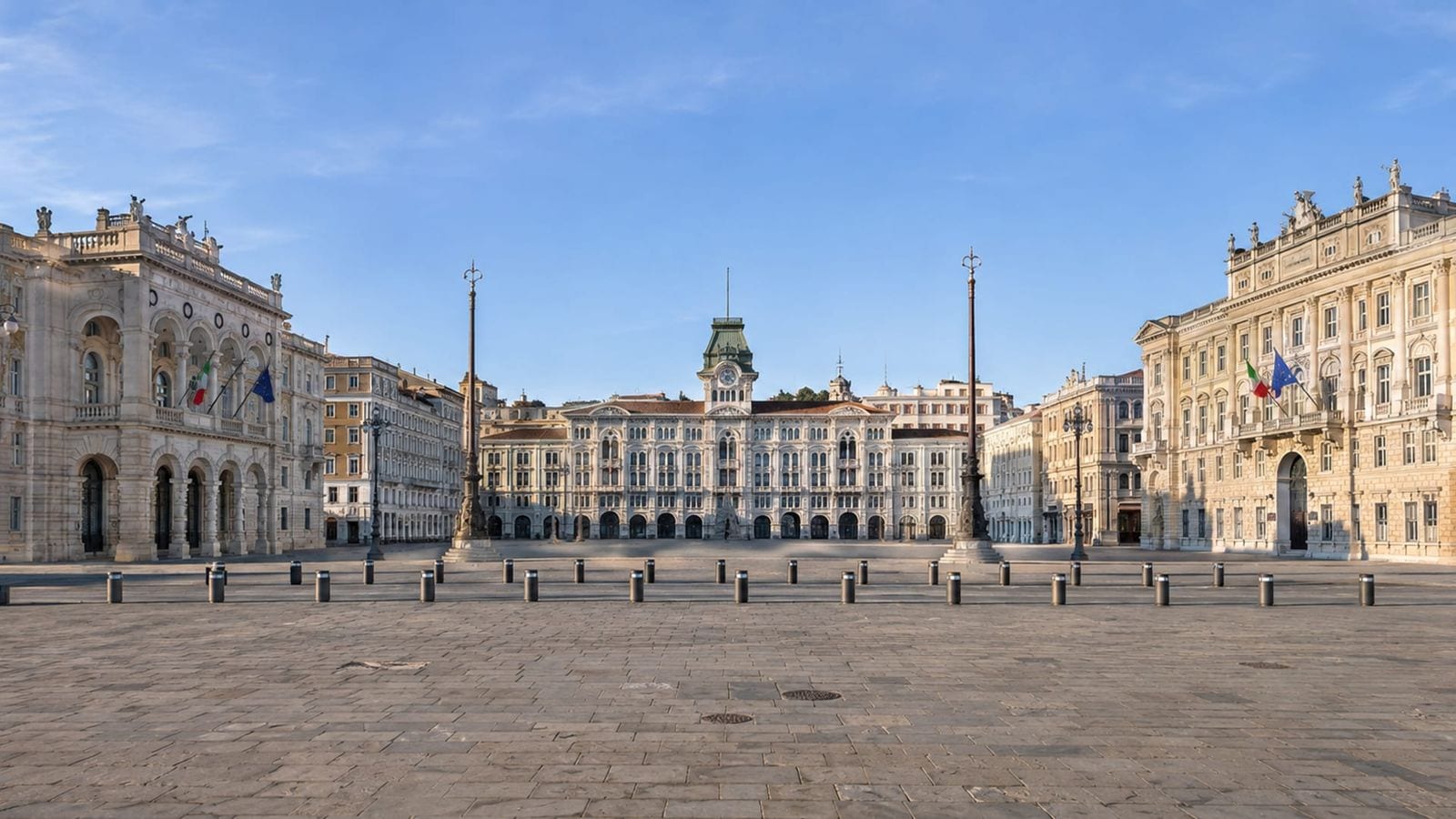
Piazza Unità d'Italia
Piazza Unità d’Italia opens directly onto the Gulf of Trieste and is framed by grand civic buildings on three sides. The Fountain of the Four Continents, historic façades, and open harbor views make it the natural starting point for the city center.
Time needed: 45 to 60 minutes
Entry: Free
Tip: Visit in the late afternoon, then stay to see the illuminated façades after sunset.
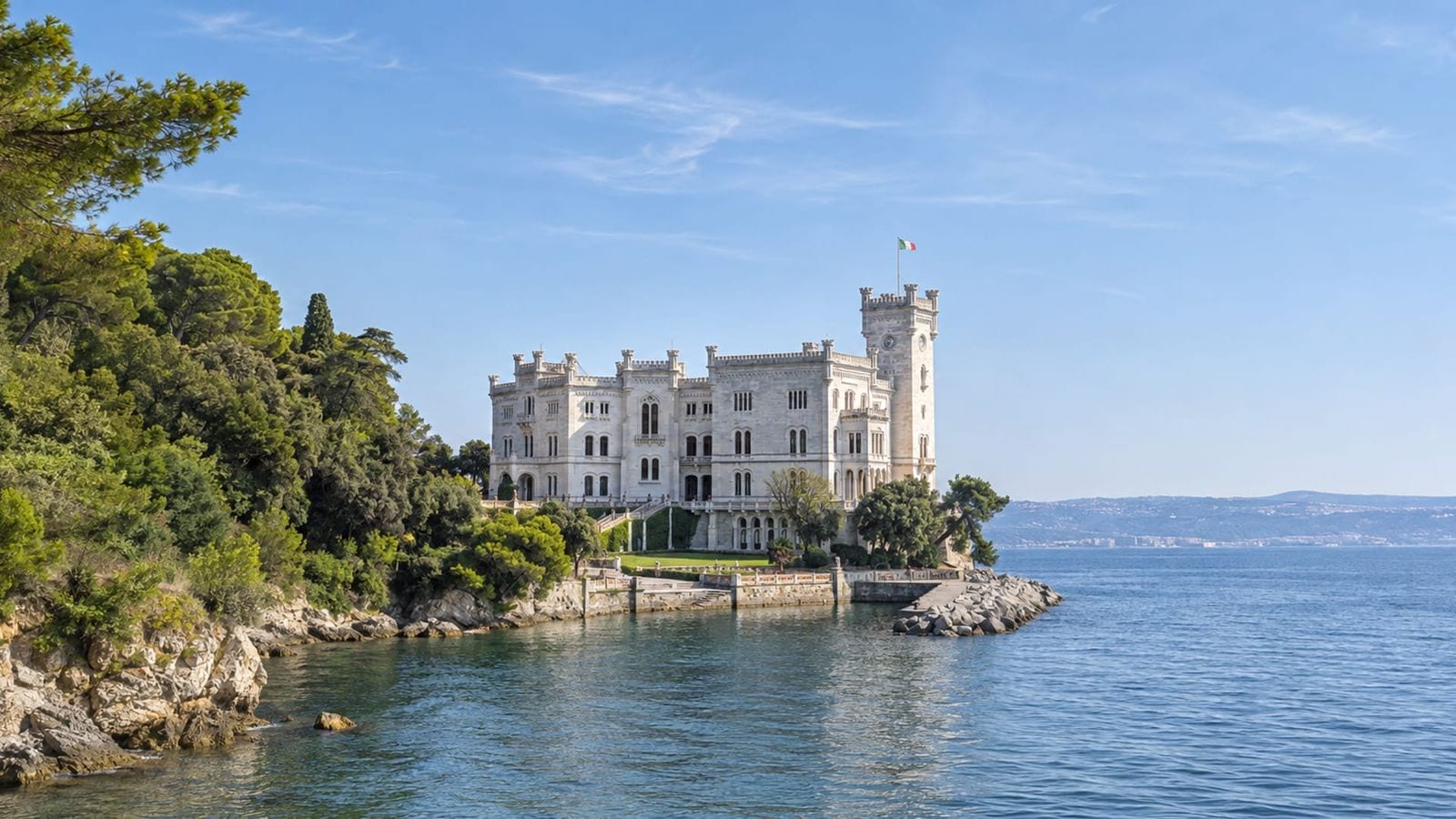
Miramare Castle
Miramare Castle overlooks the Gulf of Trieste from a rocky promontory north of the center. Built for Archduke Ferdinand Maximilian of Habsburg, it preserves furnished 19th-century rooms and is surrounded by a 54-acre (22-hectare) coastal park.
Time needed: 2 to 3 hours
Entry: The surrounding park is free to access. Admission to the castle and its exhibitions costs €17 ($20). Visit the official site for details.
Tip: Arrive early, visit the castle first, then leave time to walk through the coastal park.
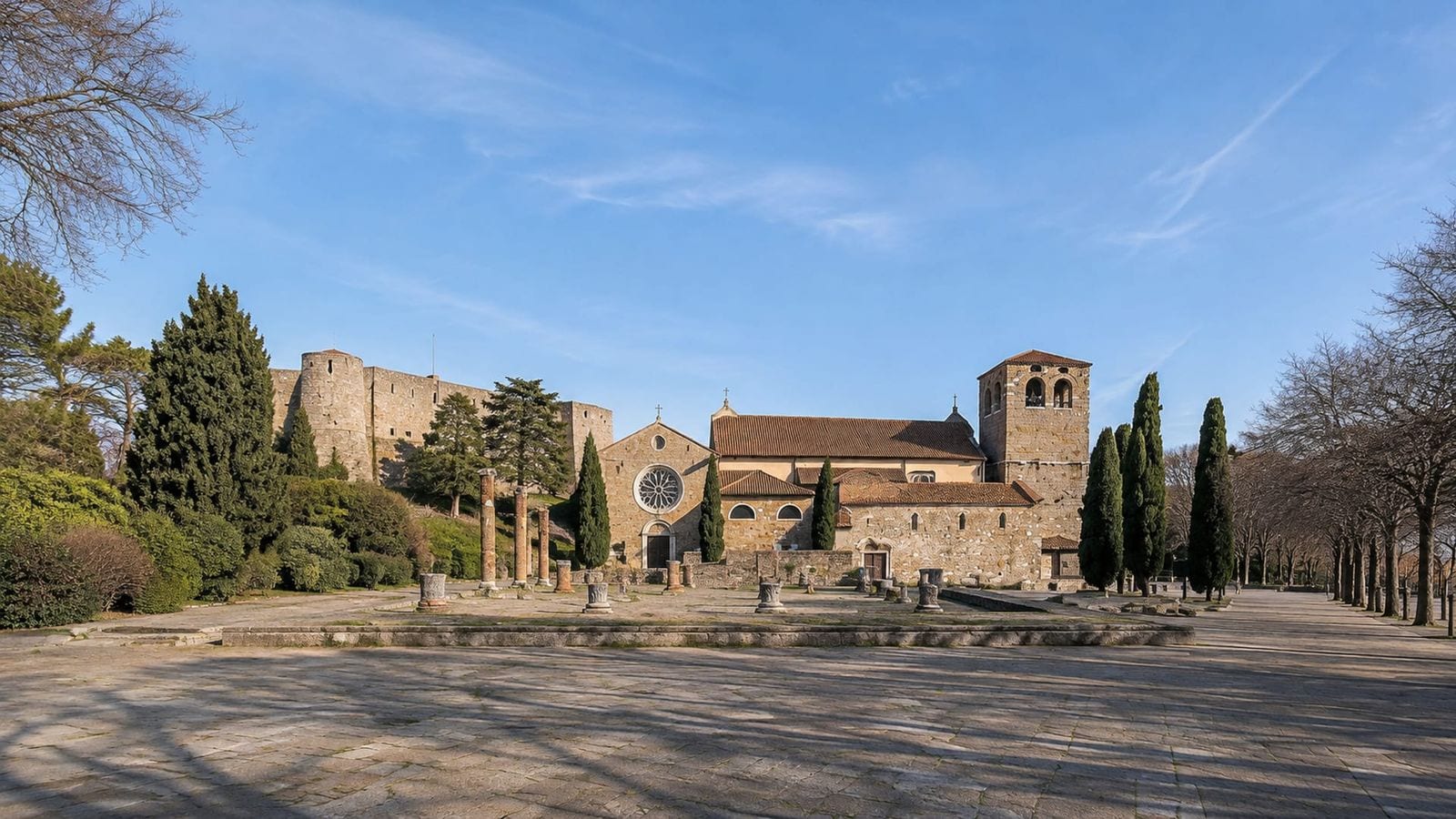
San Giusto Cathedral and castle hill
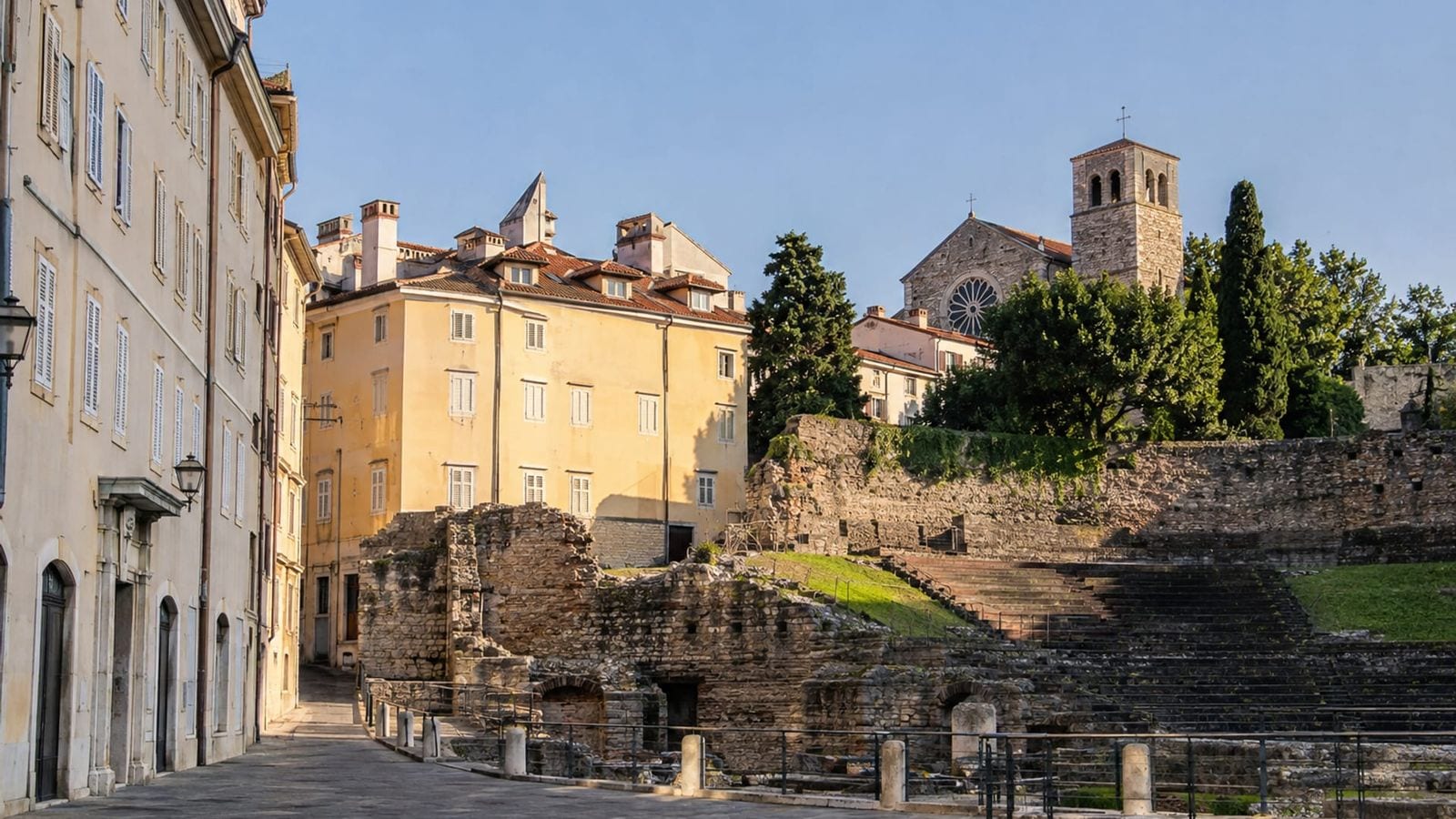
San Giusto Hill brings together Trieste’s cathedral, castle, Roman remains, and views across the city and gulf. The cathedral preserves medieval mosaics, while the neighboring castle gives access to ramparts and museum collections.
Time needed: 1 to 2 hours
Entry: Cathedral entry is free. Admission to Castello di San Giusto costs €7 ($8). Visit the official site for details.
Tip: Visit in the morning, then walk the castle ramparts for views toward the waterfront.
Overlooked sites worth visiting

Risiera di San Sabba
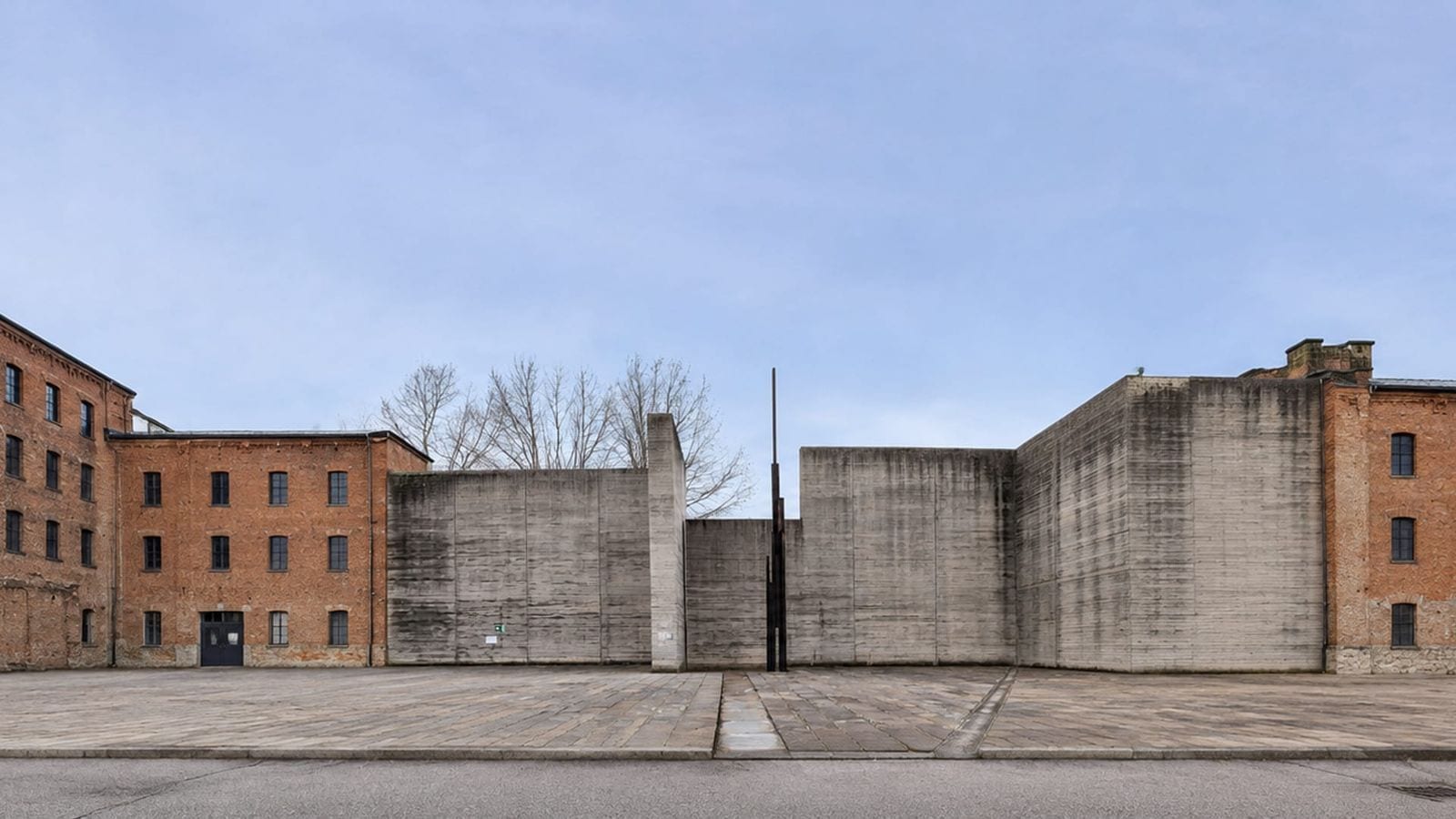
This former rice-processing complex became a Nazi detention and concentration camp during World War II and now serves as a national monument and museum. Preserved cells, exhibition spaces, and the memorial courtyard document persecution and deportation from the region.
Time needed: 1 to 1.5 hours
Entry: Free. The site is open daily, with seasonal opening hours. Visit the official site for details.
Tip: Allow enough time to read the exhibits and survivor accounts throughout the memorial.

Museo Sartorio
Museo Sartorio occupies an 18th-century villa filled with original furnishings, porcelain, paintings, and a notable collection of Tiepolo drawings. Its preserved rooms offer a quieter look at Trieste’s wealthy merchant life.
Time needed: 1.5 to 2 hours
Entry: Free. Opening hours vary seasonally. Visit the official site for details.
Tip: Walk the outer paths near sunset for the clearest Gulf views.
Traditional food
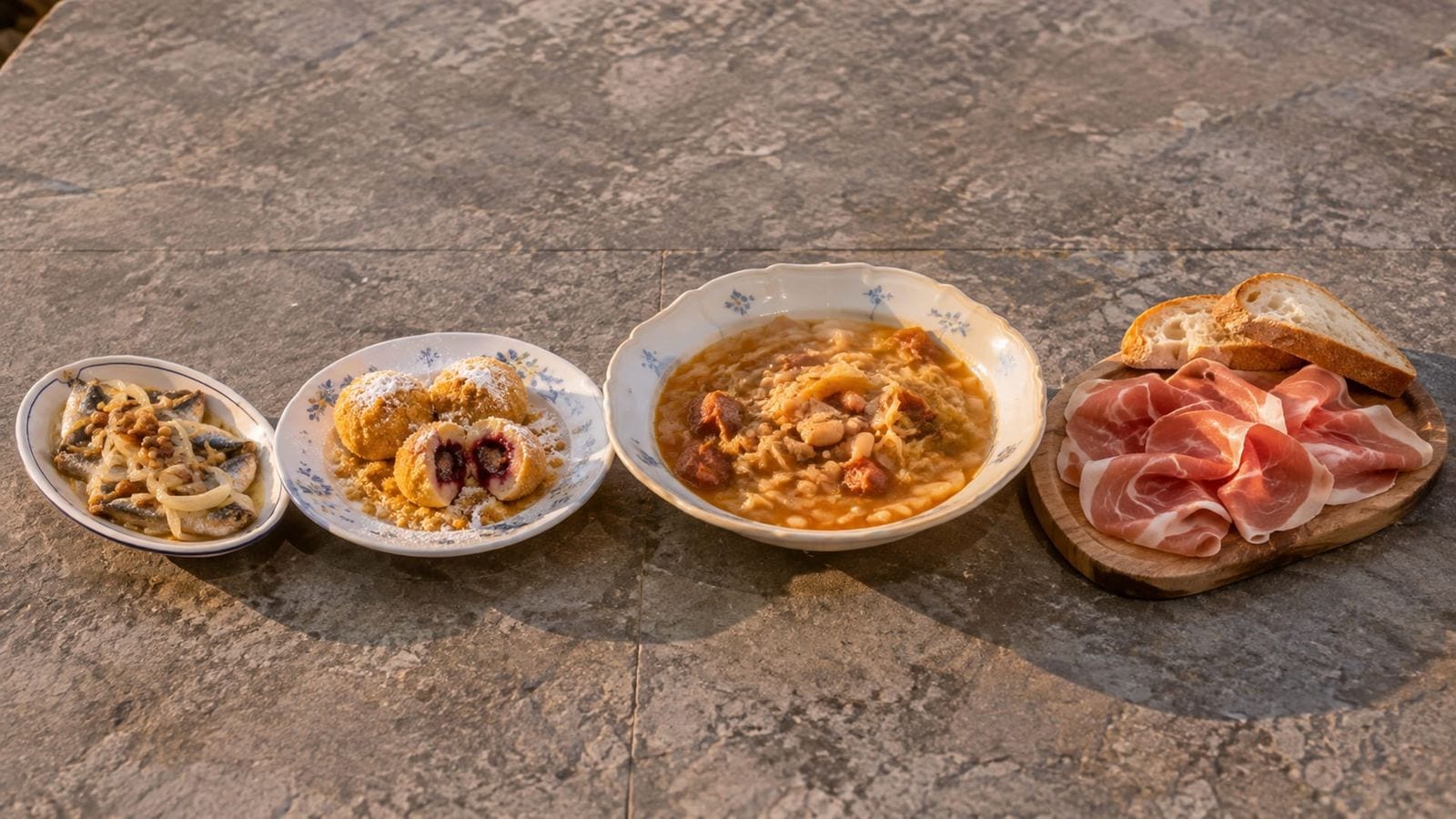
Trieste’s cuisine combines Adriatic seafood with Central European and Friulian influences. Jota, prosciutto di San Daniele, gnocchi di susine, and sardoni in savor are among the regional dishes to look for.
Jota
Jota is a hearty soup made with beans, sauerkraut, potatoes, and often pork, reflecting Trieste’s Central European culinary influences. Antica Trattoria Suban serves jota alongside other traditional Triestine dishes.
Prosciutto di San Daniele
Prosciutto di San Daniele is a cured ham from Friuli, sliced thinly and commonly served as an antipasto with bread or other regional products. Magna Bistrò Italiano includes it among its regional charcuterie options.
Gnocchi di Susini
Gnocchi di susine are potato dumplings filled with plums, then typically finished with breadcrumbs, butter, sugar, and cinnamon. Antica Trattoria Suban serves them with butter and cinnamon in a traditional style.
Sardoni in savor
Sardoni in savor pairs small local fish with onions, vinegar, and other sweet-sour seasonings. Pep’s Trieste serves the dish with red onion and apple-cider vinegar, keeping the preparation close to the local Adriatic tradition.
Best time to visit Trieste
Trieste has four distinct seasons, with spring and fall bringing the most comfortable walking weather and summer favoring longer waterfront evenings.
Best for: Harbor walks, castle visits, and comfortable sightseeing days
What you get: 50°F to 68°F (10°C to 20°C), with mild weather and moderate visitor numbers
Trade-offs: Rain can interrupt a day outdoors.
Best for: Seafront evenings, outdoor cafes, and Miramare Park
What you get: 68°F to 86°F (20°C to 30°C), with warm days and the largest crowds around major sights
Trade-offs: Midday heat can make hill climbs tiring.
Best for: Food stops, city walking, and museum visits
What you get: 52°F to 72°F (11°C to 22°C), with cooler weather and lighter crowds after early September
Trade-offs: Rain and strong Bora winds can affect outdoor plans.
Best for: Museums, cafes, and short sightseeing days
What you get: 37°F to 50°F (3°C to 10°C), with lighter crowds and cooler, often windy weather
Trade-offs: Short daylight hours and Bora winds can limit longer outdoor visits.
A realistic 5-day plan in Trieste
Five days gives you time to separate Trieste’s waterfront, hilltop historic sites, Miramare, and quieter museums without repeating the same routes. The longer coastal outing stays on its own day, while the final morning remains close to the center.
Land at Trieste Airport (TRS), then travel to central Trieste by regional train, bus, or taxi. A taxi to the city center costs roughly €75 ($88), while regional trains and buses offer lower-cost transfers. Check in near Centro Storico or Borgo Teresiano, then keep the evening light with a walk to Piazza Unità d’Italia and dinner near the waterfront.
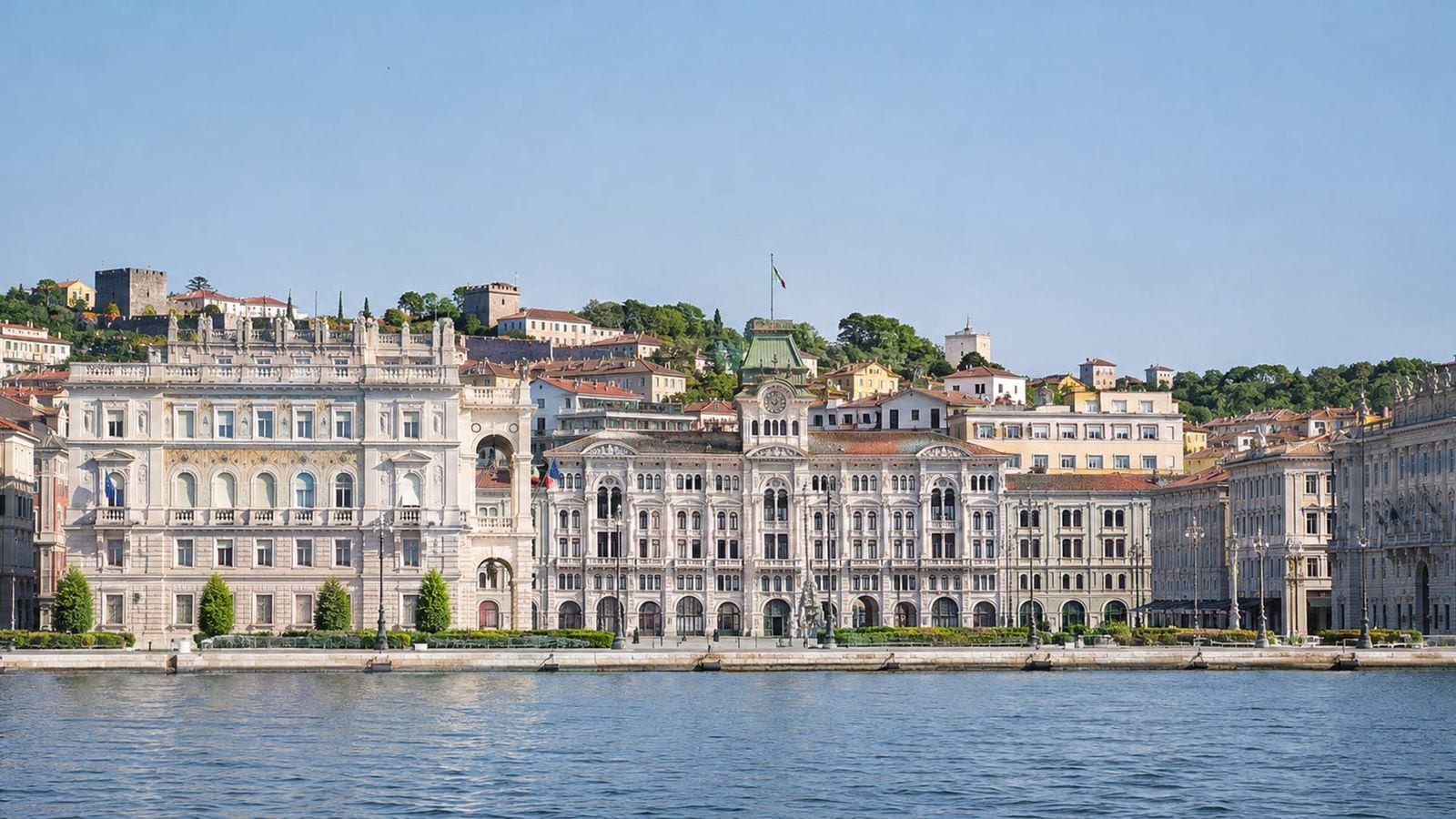
Start at San Giusto Cathedral and Castello di San Giusto, allowing 1 to 2 hours for the cathedral, castle, Roman remains, and harbor views. Walk downhill into Centro Storico for lunch, then continue to Piazza Unità d’Italia and the surrounding waterfront. Stay nearby for dinner rather than adding another cross-city trip.
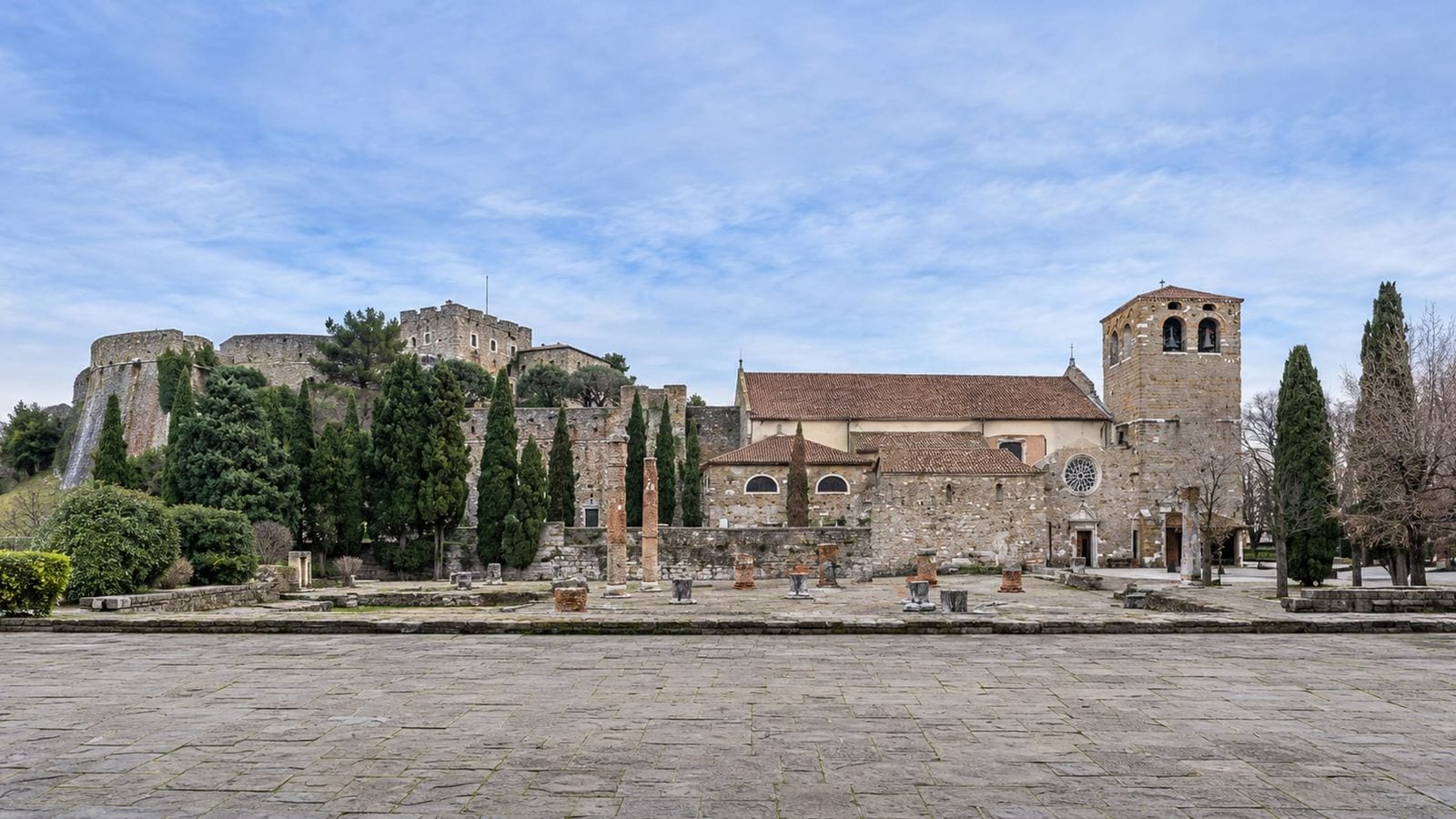
Take a regional train from Trieste Centrale to Miramare in under 10 minutes, or use bus 6 or 36. Allow 2 to 3 hours for the castle and surrounding park, then spend another hour on the coastal paths and sea-facing gardens. Return to Trieste in the late afternoon and have dinner in Borgo Teresiano.
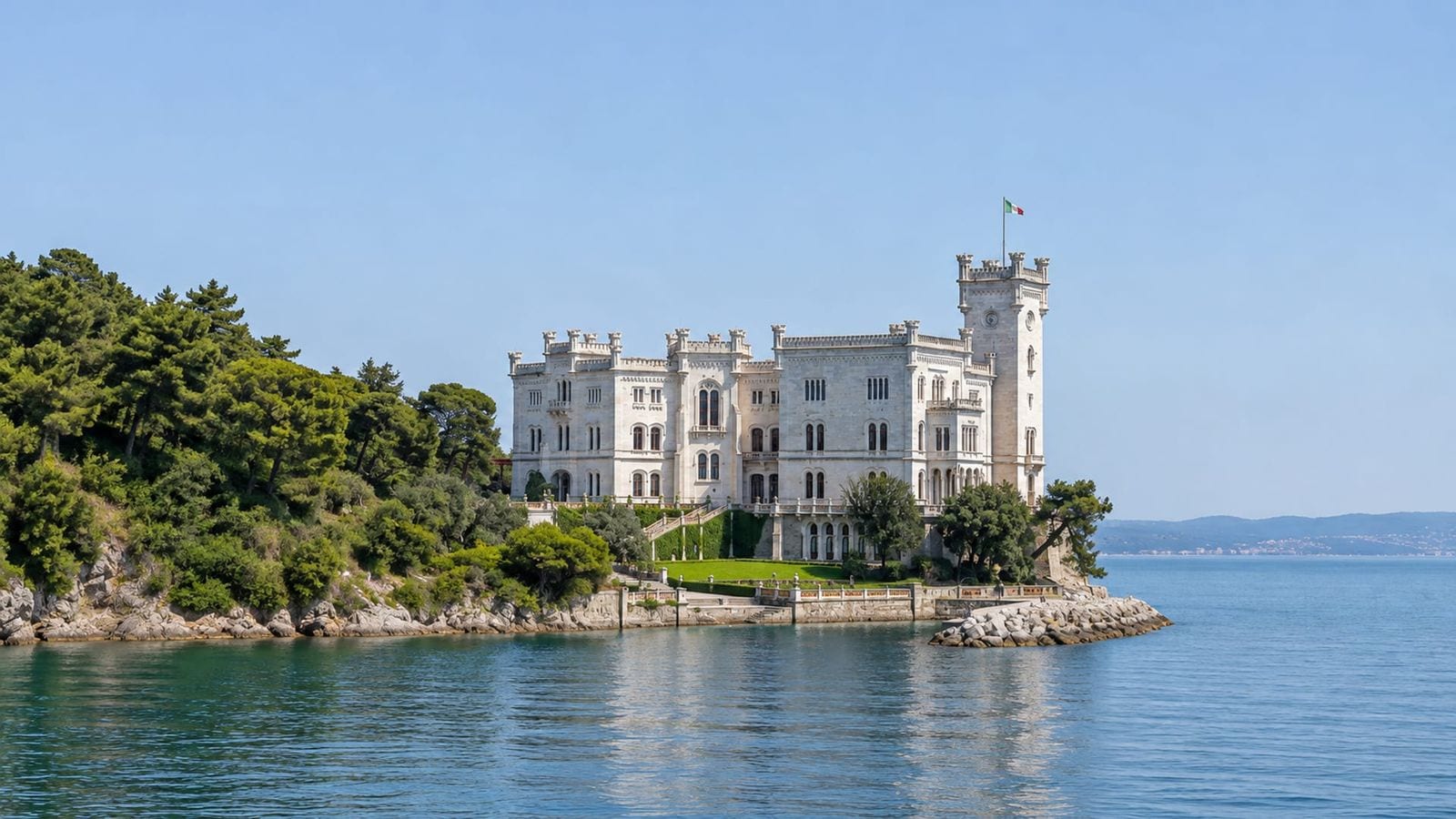
Spend the morning at Risiera di San Sabba and allow 1 to 1.5 hours for the museum, preserved detention spaces, and memorial courtyard. Return to the center for lunch, then spend the afternoon around Canal Grande and Borgo Teresiano. Finish with dinner in San Giacomo or Centro Storico.
Keep the final morning central with a visit to Museo Sartorio, allowing 1 to 1.5 hours for its period rooms, furnishings, and Tiepolo drawings. Continue toward Piazza Unità d’Italia or Borgo Teresiano for coffee and last-minute shopping, then collect your bags and head to Trieste Centrale or Trieste Airport.
Business-class flights from the US to Trieste
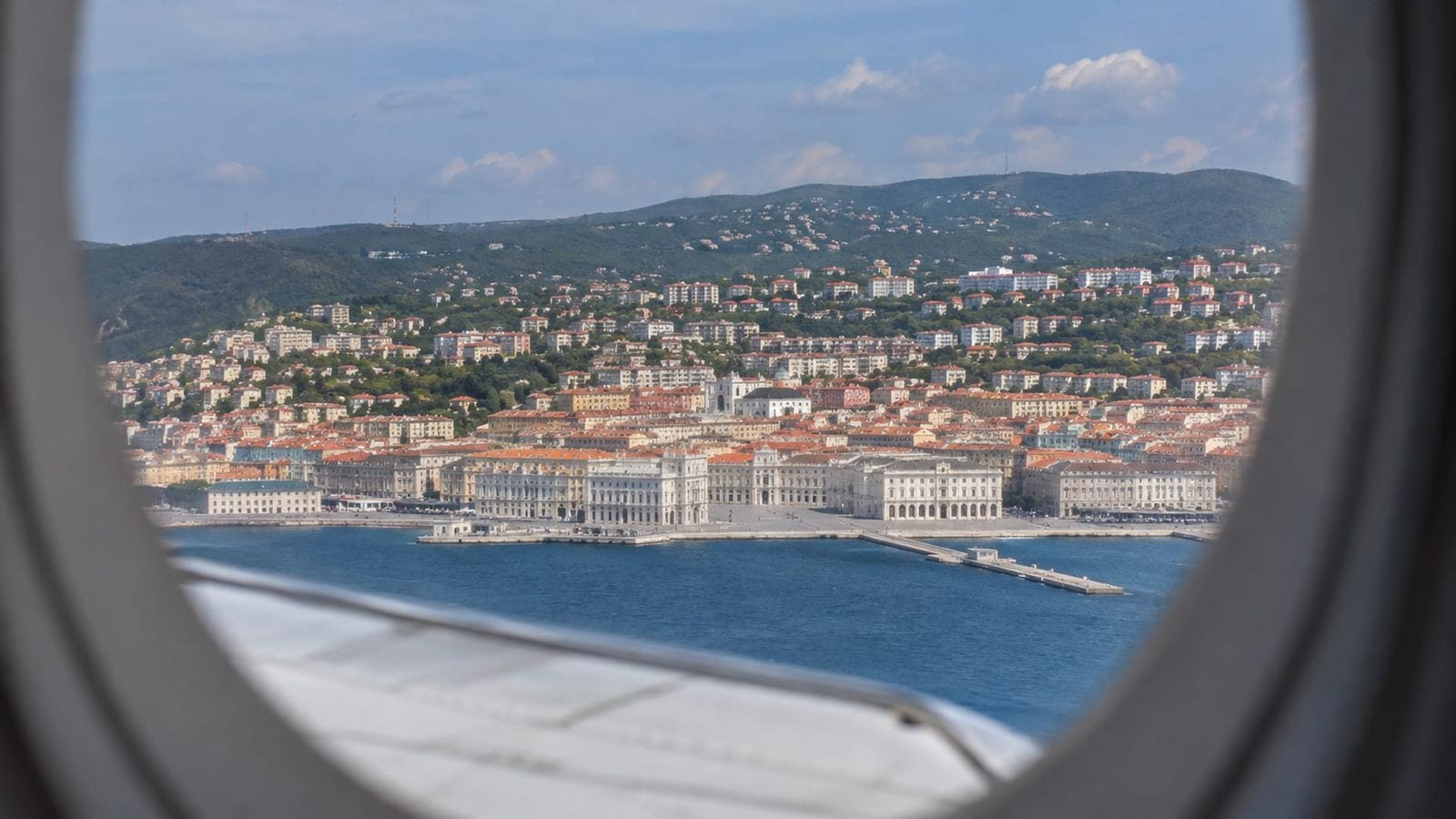
Reaching Trieste from New York or Los Angeles usually means a one-stop itinerary, so the main choice is which European hub fits your schedule best. The airline mix is broad enough that you can prioritize timing, connection length, or fare.
From New York, ITA Airways, Lufthansa, Swiss International Air Lines, Austrian Airlines, Air France, and KLM all appear on one-stop itineraries, with connections usually routed through FRA, MUC, ZRH, VIE, CDG, or AMS. The trip takes about 11 to 15 hours overall, and fares from $2,700 to $5,200 round-trip give you a wide band to compare once you see the layover length.
Los Angeles travelers usually see Lufthansa, Swiss International Air Lines, Austrian Airlines, Air France, KLM, and British Airways on one-stop itineraries, with typical connections through FRA, MUC, ZRH, VIE, CDG, or AMS. Expect about 14 to 18 hours in transit, and round-trip fares usually start at $3,200 and can reach $6,500.
Trieste feels different when you slow down
Trieste feels more manageable when you stay near Centro Storico or Borgo Teresiano, give San Giusto its own uphill visit, and keep Miramare separate from the waterfront day. Buses and taxis cover the longer links, while the center is easy to explore on foot. AranGrant experts can help you find business-class flights and hotels that fit your dates and preferred location.







