

Chapters:

Need help with your trip?
Our support team is available 24/7. Request a callback or call us directly at (833) 619-0908
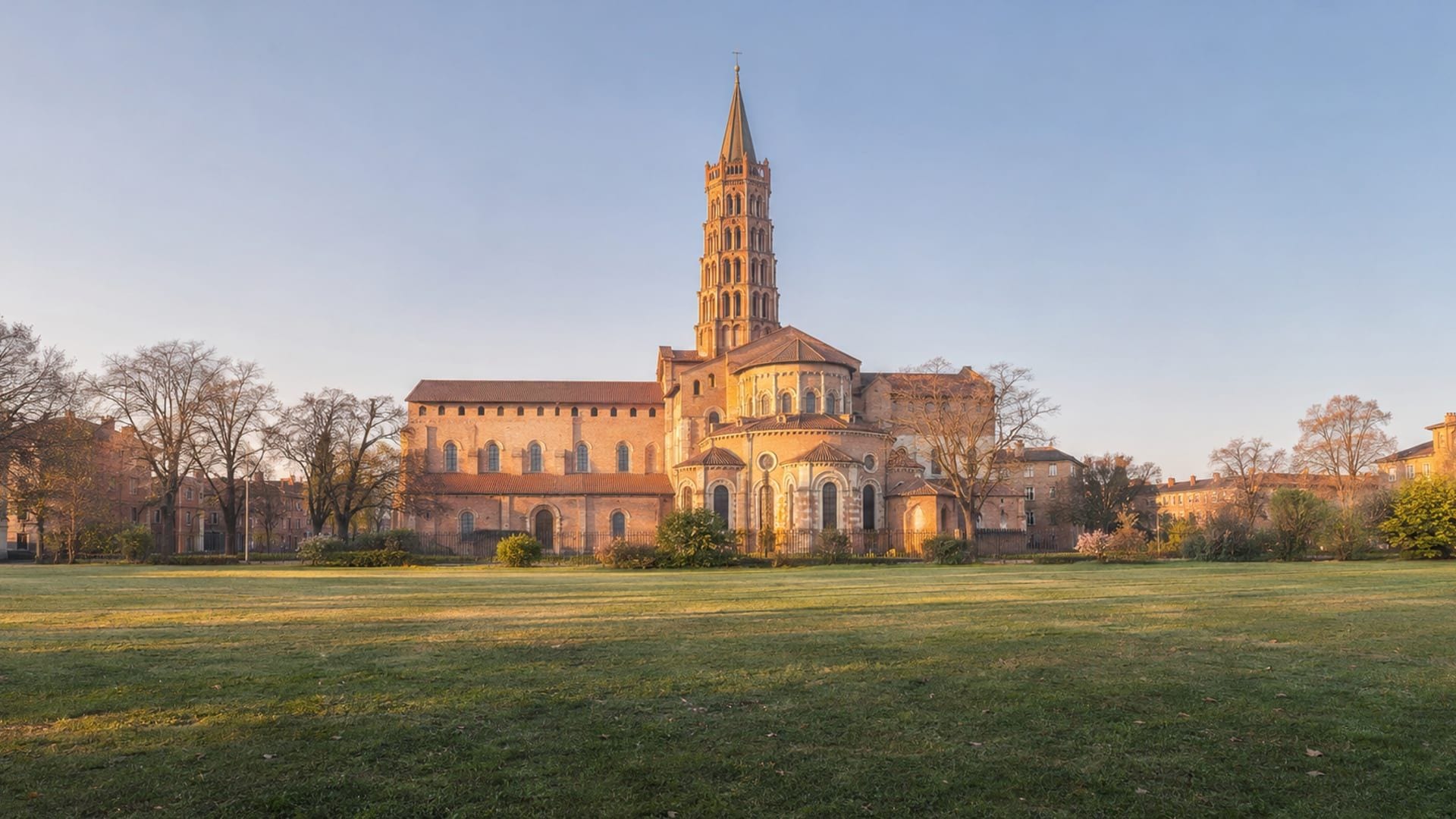
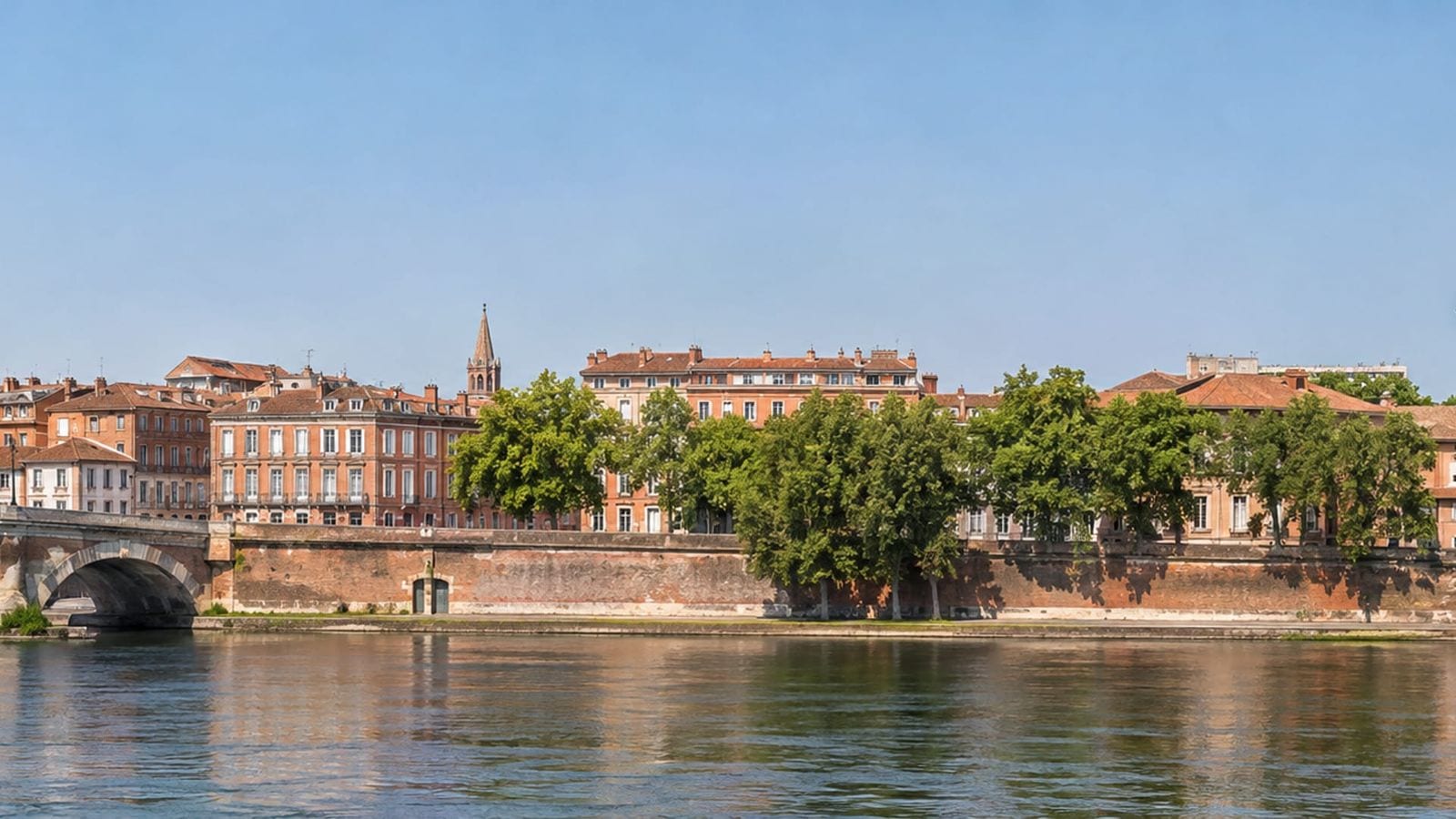
Toulouse is defined by its terracotta brick architecture, which gives the city its name, La Ville Rose. Place du Capitole, the Basilica of Saint-Sernin, riverside paths along the Garonne, busy food markets, and a deep connection to aviation all shape the city in different ways.
The contrast is part of the appeal. One part of the day can revolve around Romanesque architecture and café terraces, while another takes you out to Cité de l’espace or the aerospace district. This guide brings those pieces together with practical advice on where to stay, how to move around, what to eat, and how to plan five days without making the schedule feel repetitive.
Useful things to know

Main language(s): French
Bonjour (bohn-zhoor) – Hello
S'il vous plaît (seel voo pleh) – Please
Merci (mehr-see) – Thank you
Parlez-vous anglais? (par-lay voo ahn-gleh) – Do you speak English?
C'est combien? (say kohm-byen) – How much does it cost?

Currency: Euro (EUR, €)

Cash and cards: Cards and contactless payments are widely accepted. Carry €20–€40 ($22–$44) for markets, smaller cafés, and other places where cash may be easier.

Tipping: Service charges are included in restaurant prices, so tipping is optional. Round up the bill or leave a small extra amount when you receive particularly good service.

Traditional food: Cassoulet, Toulouse sausage, duck confit, foie gras, and Black Bigorre pork are among the best-known foods associated with Toulouse and southwestern France.

Water and coffee costs: Bottled water and an espresso at a central café commonly cost €2–€3 ($2–$3).

Taxis and ride apps: Uber and Bolt operate in Toulouse, alongside regular city taxis. Rideshare services can be useful late in the evening or for journeys outside the tram and metro network.

Plug and voltage: France uses Type E sockets with a 230V supply. Travelers from the US may need a plug adapter.

Dining and shop opening hours: Lunch runs from 12:00 pm to 2:00 pm, and dinner starts at 7:30 pm. Some restaurants and shops close on Sunday, Monday, or between lunch and dinner.

Emergency number: Call 112 for general emergencies, 15 for medical emergencies, 17 for police, and 18 for firefighters.
Where to stay in Toulouse
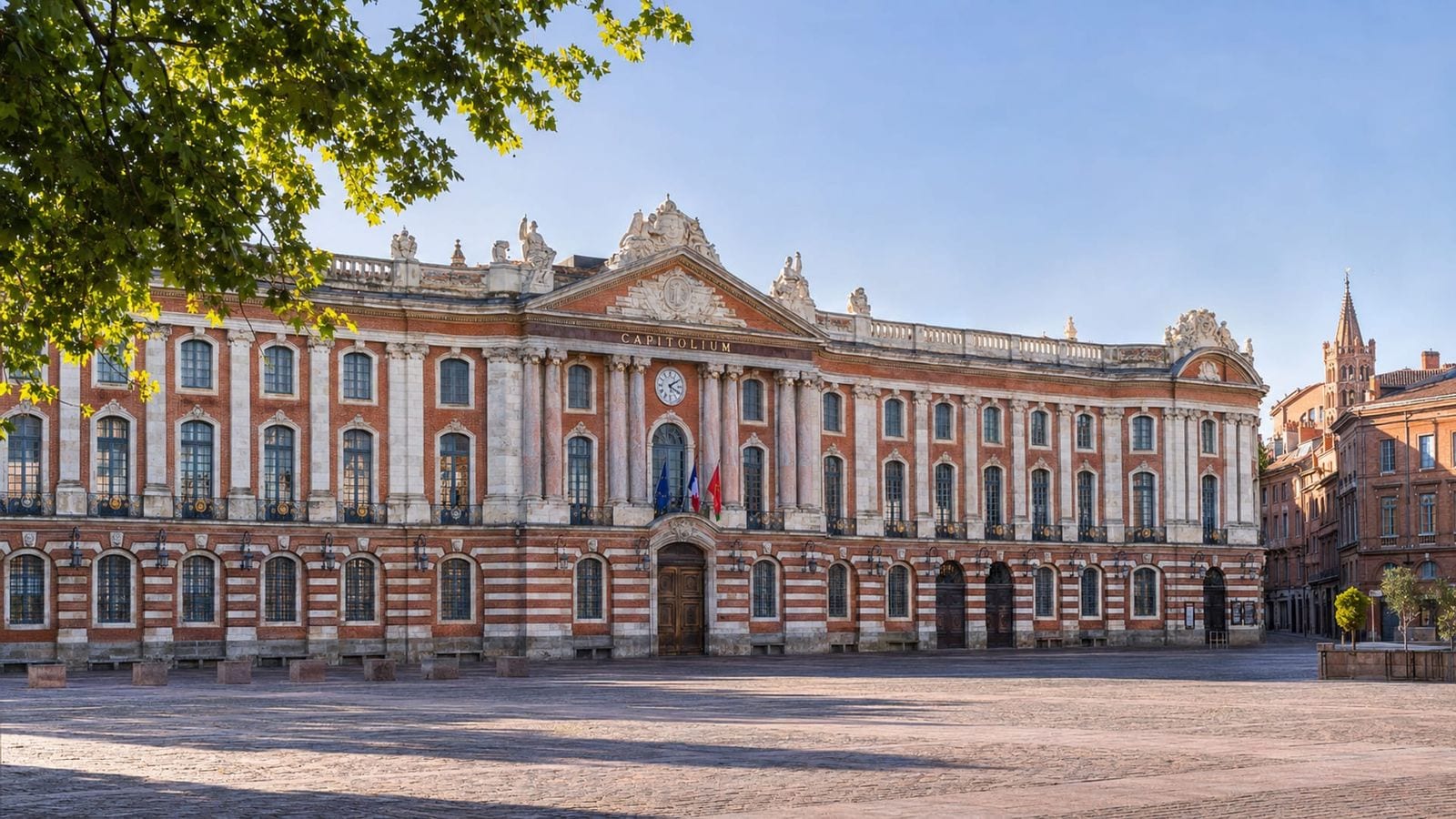
Capitole places you among Toulouse’s main squares, shopping streets, restaurants, and historic landmarks. Place du Capitole, the Jacobins, Saint-Sernin, and the Garonne are all easy to reach on foot, while nearby metro stations make trips farther across the city easier.
Best for: First-time visits, sightseeing, shopping, and short stays without much transit planning
What to expect: Busy sidewalks, late-opening restaurants, and the most concentrated foot traffic in the city.
Hotel prices: Usually about €130 to €230 (~$143 to ~$253) per night for well-rated stays
Distance to major sights: 5 to 10 minutes on foot to Place du Capitole; about 15 minutes on foot to the Garonne riverfront
Quietness: Lively by day and early evening, with more street noise and activity after dark.
Main trade-off: Hotel rates run higher here, and rooms facing the main streets can pick up tram and pedestrian noise.
Good to know: A side-street room gives you central access with less noise than accommodation directly on a major square.
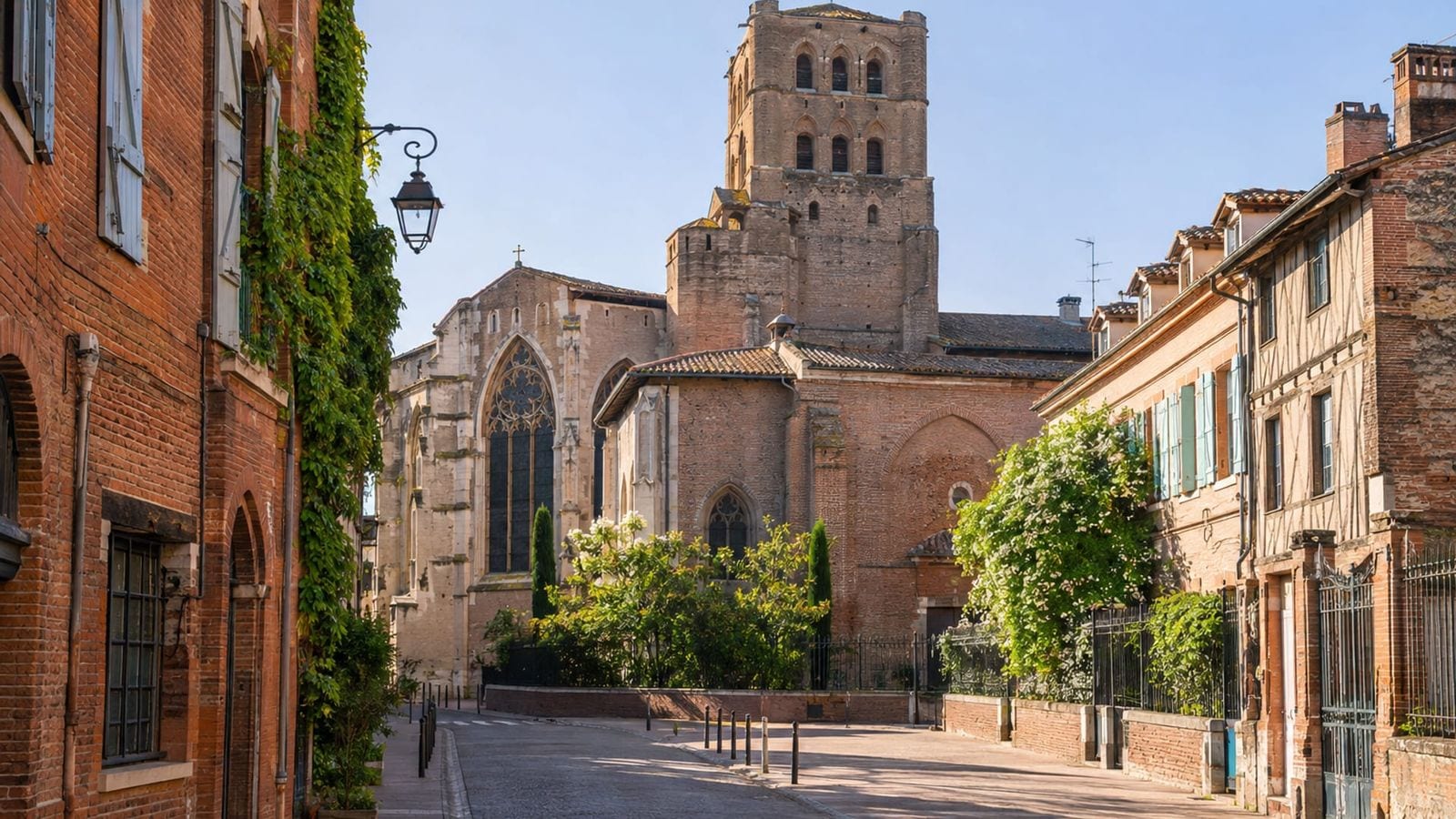
Carmes and Saint-Étienne bring together food markets, historic streets, elegant townhouses, independent restaurants, and small squares south of Capitole. These neighborhoods suit visitors who want a central location with more local dining and less commercial activity than the main shopping streets.
Best for: Dining, historic streets, boutique stays, and travelers who want a central but calmer base
What to expect: Compact streets, terrace dining, and a mix of locals, students, and visitors in the evening.
Hotel prices: Usually about €120 to €210 (~$132 to ~$231) per night for well-rated stays
Distance to major sights: About 10 to 15 minutes on foot to Place du Capitole; about 12 minutes on foot to Saint-Sernin Basilica
Quietness: Quieter than the hyper-center in the morning, then livelier at dinner and on weekend nights.
Main trade-off: The best addresses book early, and some streets are narrow enough that drop-offs and luggage handling take extra time.
Good to know: Check vehicle access at your hotel before arrival if you plan to arrive by taxi.
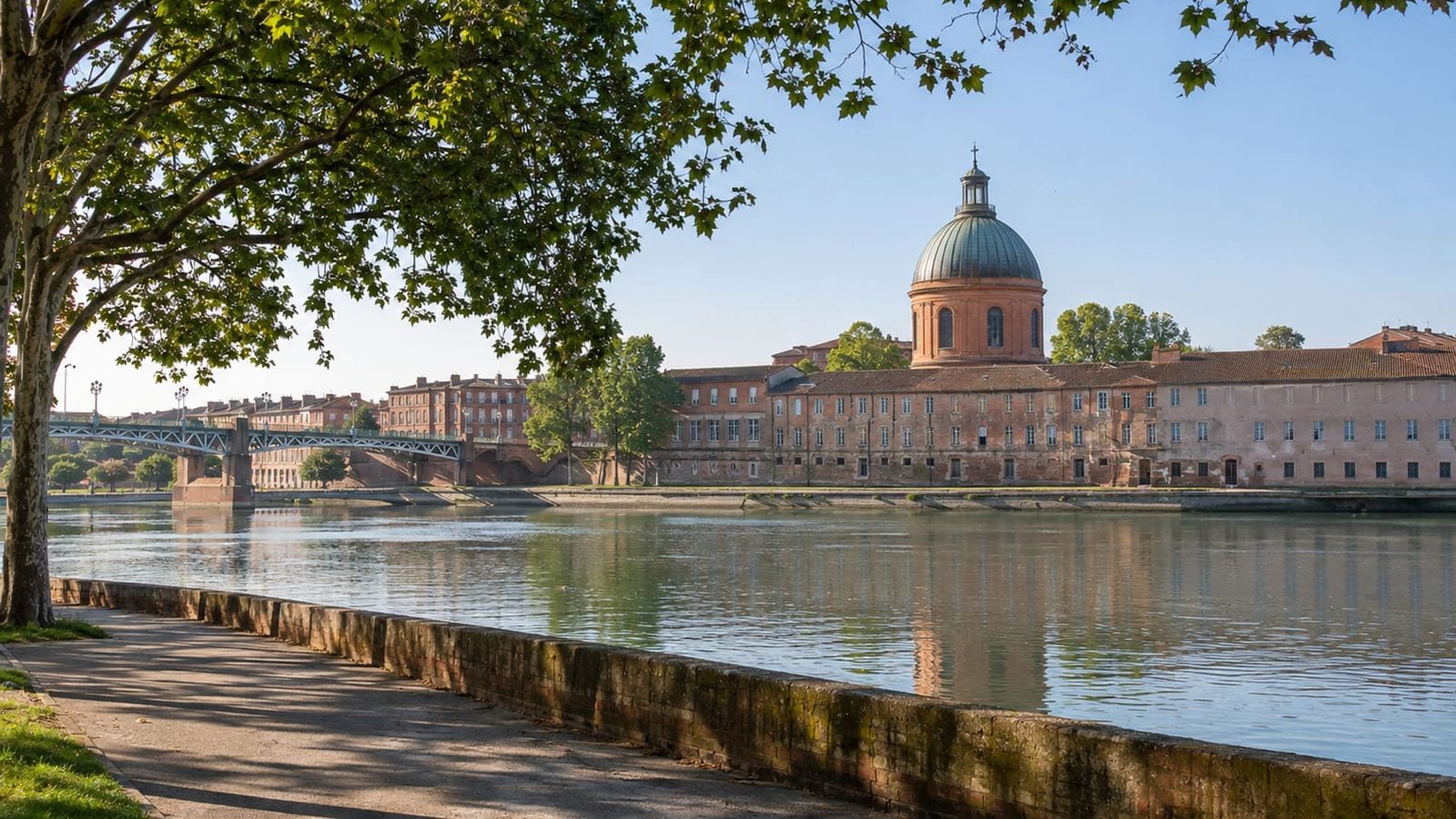
Across the Garonne, Saint-Cyprien combines a neighborhood market, restaurants, riverside views, and cultural sites such as Les Abattoirs. It has a more residential character than Capitole but still offers convenient access to the historic center by metro or a walk across the river.
Best for: Longer stays, market visits, river walks, and travelers who prefer a neighborhood feel
What to expect: Active daytime streets around the market and more relaxed evenings away from the main center.
Hotel prices: Usually about €100 to €180 (~$110 to ~$198) per night for well-rated stays
Distance to major sights: About 10 minutes by tram or 20 minutes on foot to Place du Capitole; about 8 minutes on foot to the Garonne riverbanks
Quietness: Generally calmer than the center during the day, with a modest evening scene near bars and restaurants.
Main trade-off: You will cross the river for the main monuments, so late-night returns take a little more planning.
Good to know: Lodging near Saint-Cyprien–République metro station makes trips into the center particularly easy.
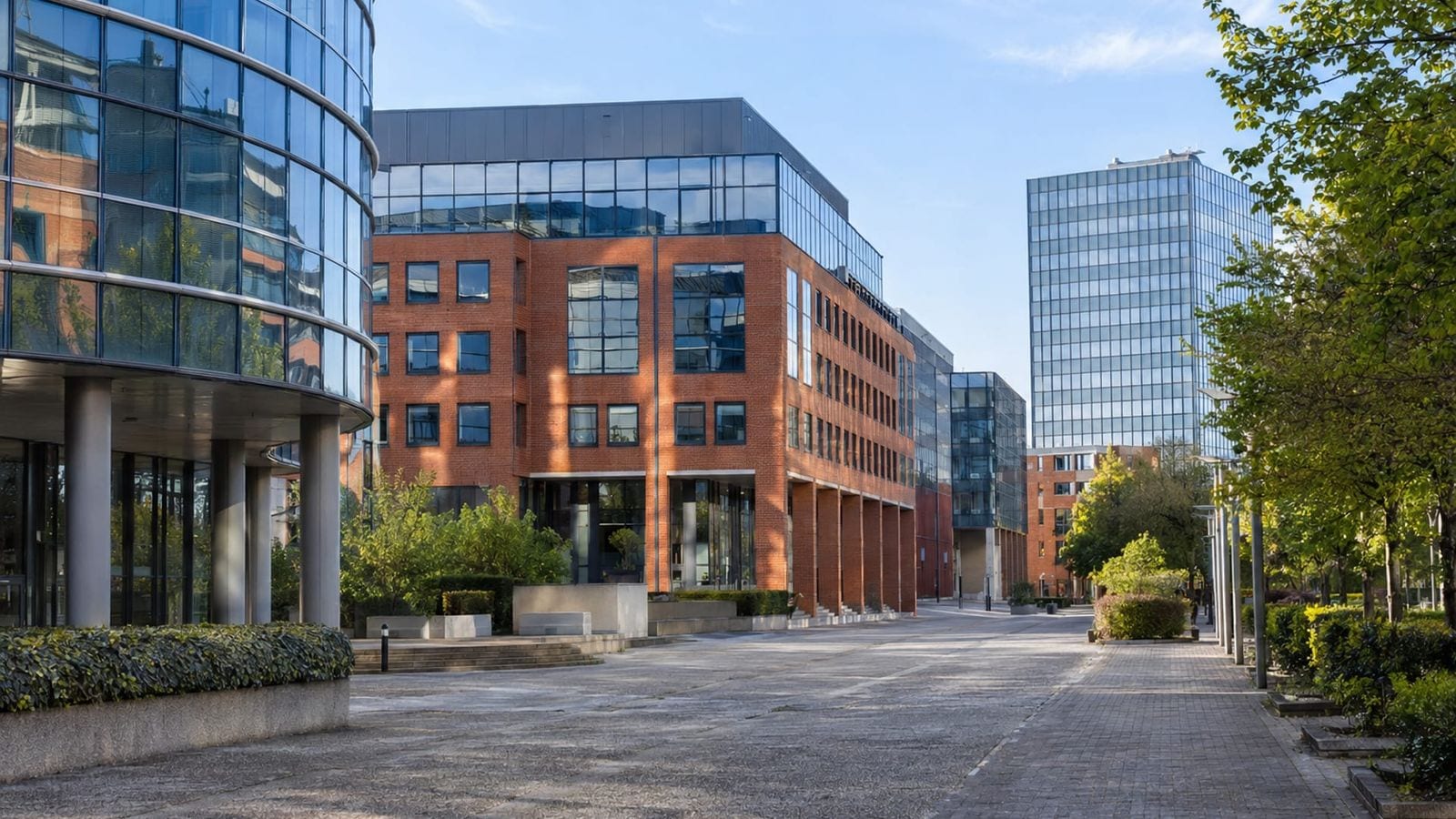
Compans-Caffarelli combines business hotels, offices, metro access, green space, and the Japanese Garden just north of the historic center. Its broader streets and quieter evenings suit business trips or visitors who prefer modern hotels and easy access to the Capitole by metro or on foot.
Best for: Business trips, reliable metro access, and travelers who prefer newer hotels
What to expect: Office-hour foot traffic, fewer late-night crowds, and a cleaner, broader-street feel than the old center.
Hotel prices: Usually about €110 to €190 (~$121 to ~$209) per night for well-rated stays
Distance to major sights: About 10 minutes by metro to Place du Capitole; about 5 minutes on foot to the Japanese Garden
Quietness: Busier on weekdays during office hours, then noticeably quieter after work and on weekends.
Main trade-off: The neighborhood has fewer classic Toulouse streets and less evening life than the historic core.
Good to know: Staying near Compans-Caffarelli metro station keeps the historic center easy to reach.
If sightseeing is your priority, choose a hotel near Capitole, Carmes, Saint-Cyprien, or a metro stop with a direct ride into the center. Montaudran and the airport area suit specific plans, but they add extra travel time to most central sights.
Hotel deals
How to get around Toulouse efficiently
Toulouse has a two-line metro, trams, buses, an airport shuttle, and taxis, so most city trips are easy to manage without a car.

Metro
for longer distances
Metro lines A and B connect central Toulouse with areas such as Compans-Caffarelli, Saint-Cyprien, and Matabiau. A single Tisséo ticket costs €1.80 ($2), while a one-day pass costs €6.90 ($8). Buy tickets from station machines, Tisséo agencies, or the app.

Bus and airport shuttle
for convenience
Tisséo buses and trams go through neighborhoods; the airport shuttle connects Toulouse-Blagnac Airport (TLS) to Compans-Caffarelli, Jean Jaurès, and Matabiau. Tickets cost €1.80 ($2); the airport shuttle costs €9 ($10). Buy tickets from station machines, Tisséo agencies, or through the Tisséo app.

Taxi
for convenience or late hours
Licensed taxis operate 24/7 from Toulouse-Blagnac Airport and use fixed prices for trips to Toulouse. Airport fares range from €15 to €47 ($17 to $52), depending on the destination zone; supplements may apply. Most taxis accept cards.
*Prices are based on rates updated as of June 2026 and may change at the time of travel.
Use the metro for most city trips, buses and trams for outer areas, and taxis when you travel with luggage, at late hours, or need a direct ride to the airport.
Iconic landmarks
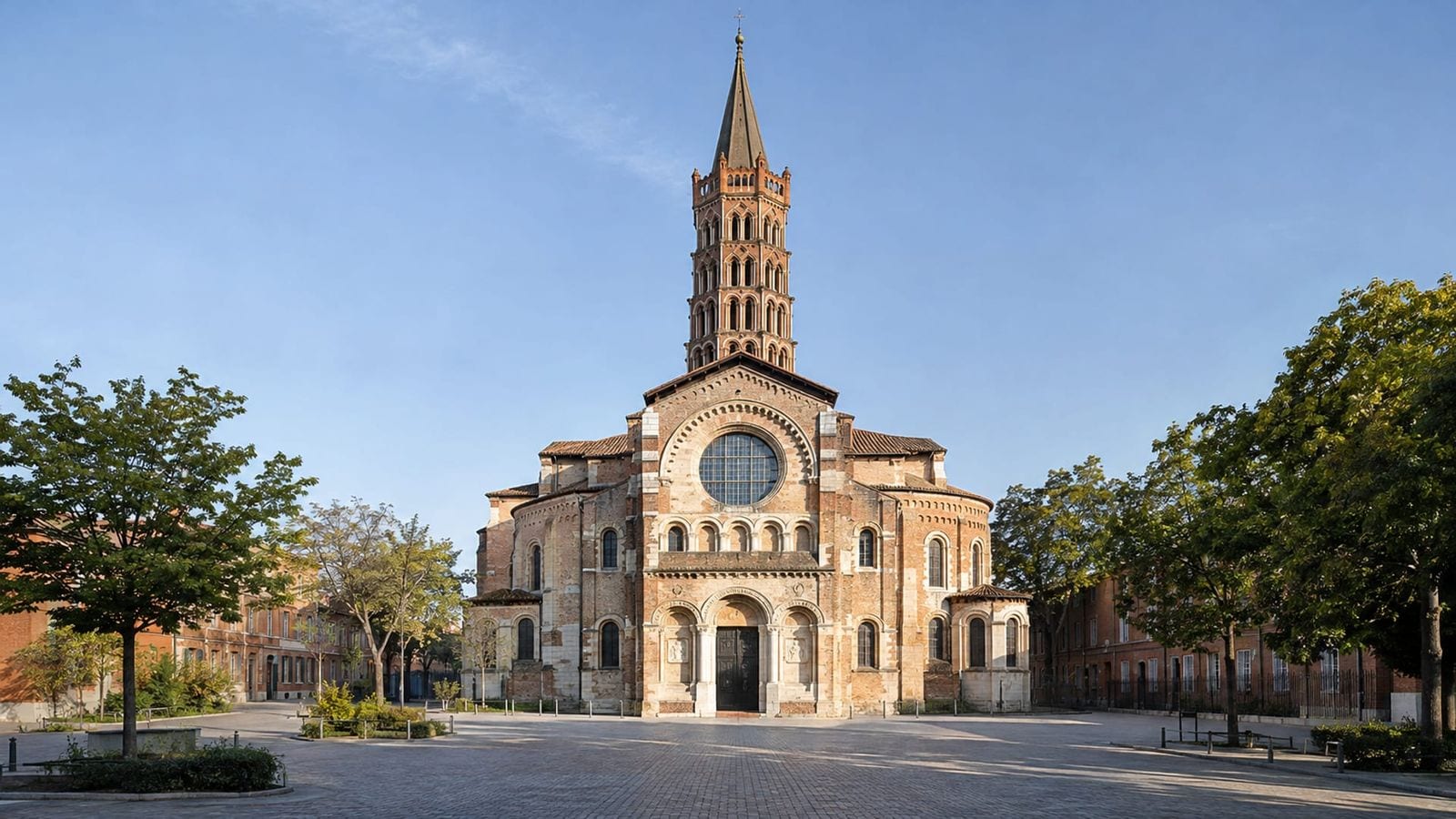
Basilica of Saint-Sernin
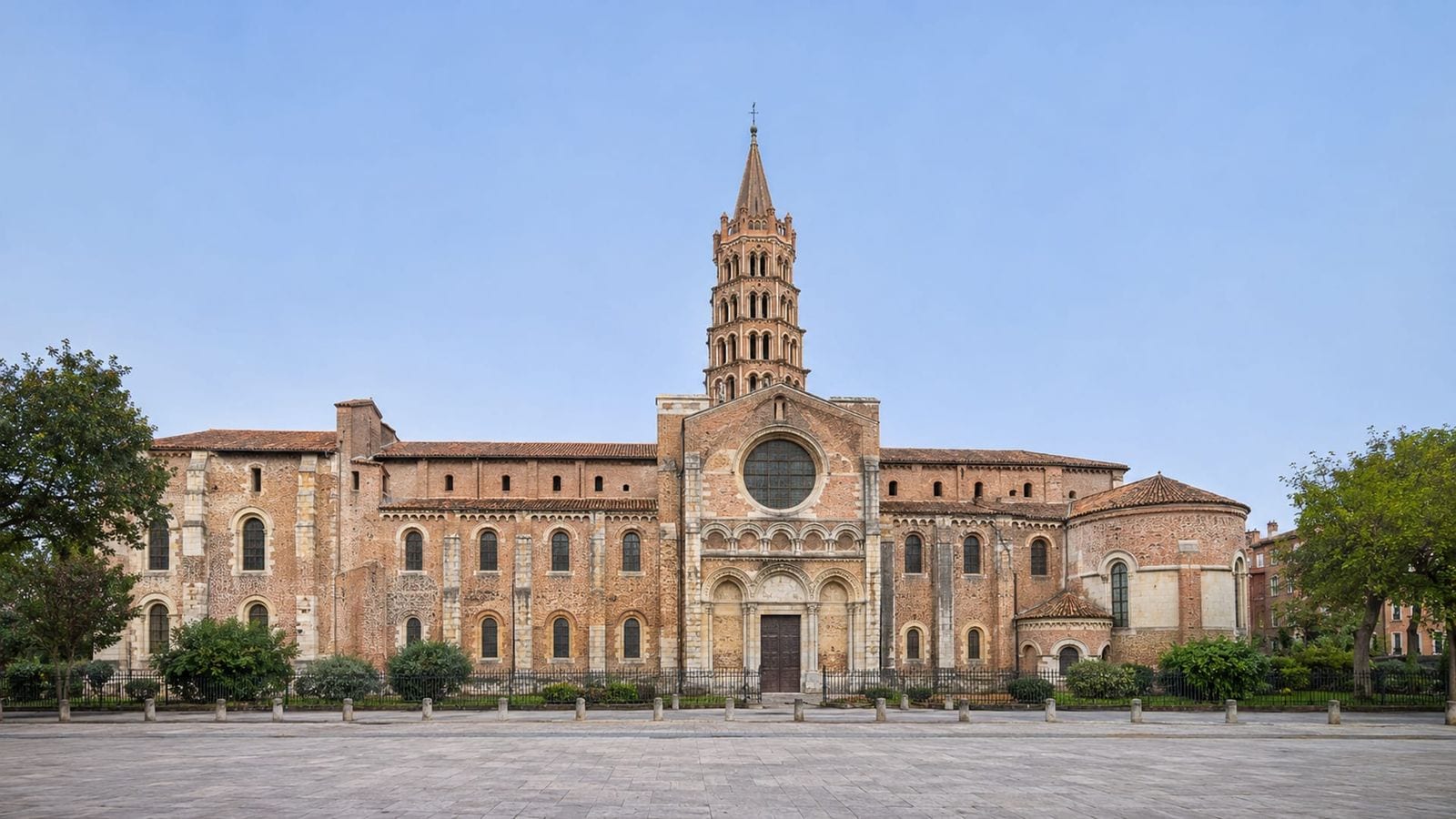
Saint-Sernin is one of Toulouse’s defining landmarks and one of Europe’s great Romanesque churches. Its brick-and-stone exterior, octagonal bell tower, vast nave, radiating chapels, and role on the Santiago de Compostela pilgrimage route give it exceptional architectural and historic importance.
Time needed: 45 minutes to 1 hour
Entry: Basilica entry is free; access to the crypt may follow separate visiting conditions. Visit the official site for details.
Tip: Visit earlier in the day for a quieter interior and clearer views of the nave.
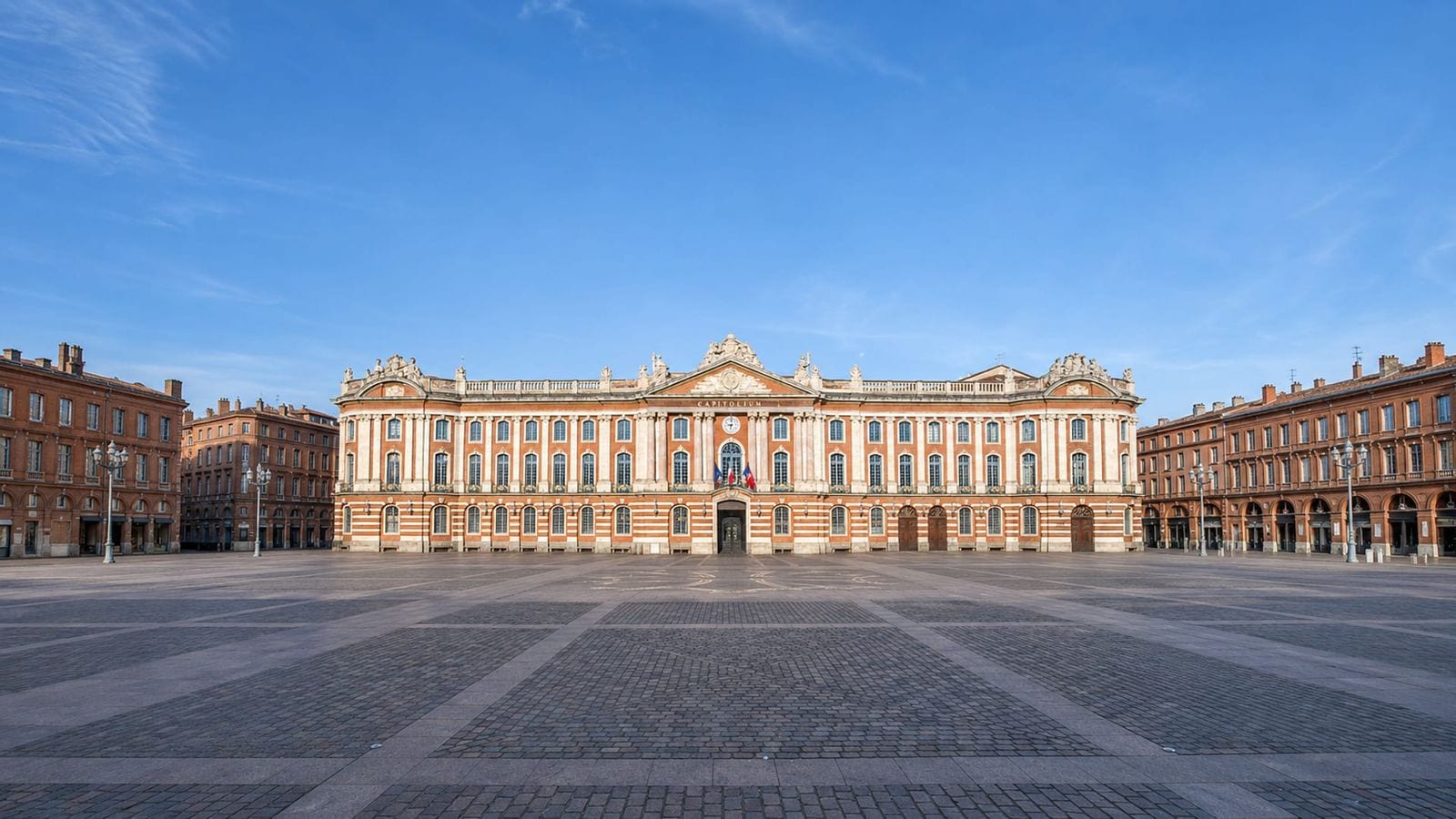
Capitole de Toulouse
The Capitole dominates Toulouse’s main square with its long brick-and-stone façade and eight marble columns. Inside, the Cour Henri IV, painted ceilings, and richly decorated Salle des Illustres show the building’s civic importance and historic character.
Time needed: 1 hour for a full visit
Entry: Entry to the historic rooms is free. Access is restricted during ceremonies and municipal events. Visit the official site for details.
Tip: Check access before visiting, especially on Saturdays when weddings can close rooms.
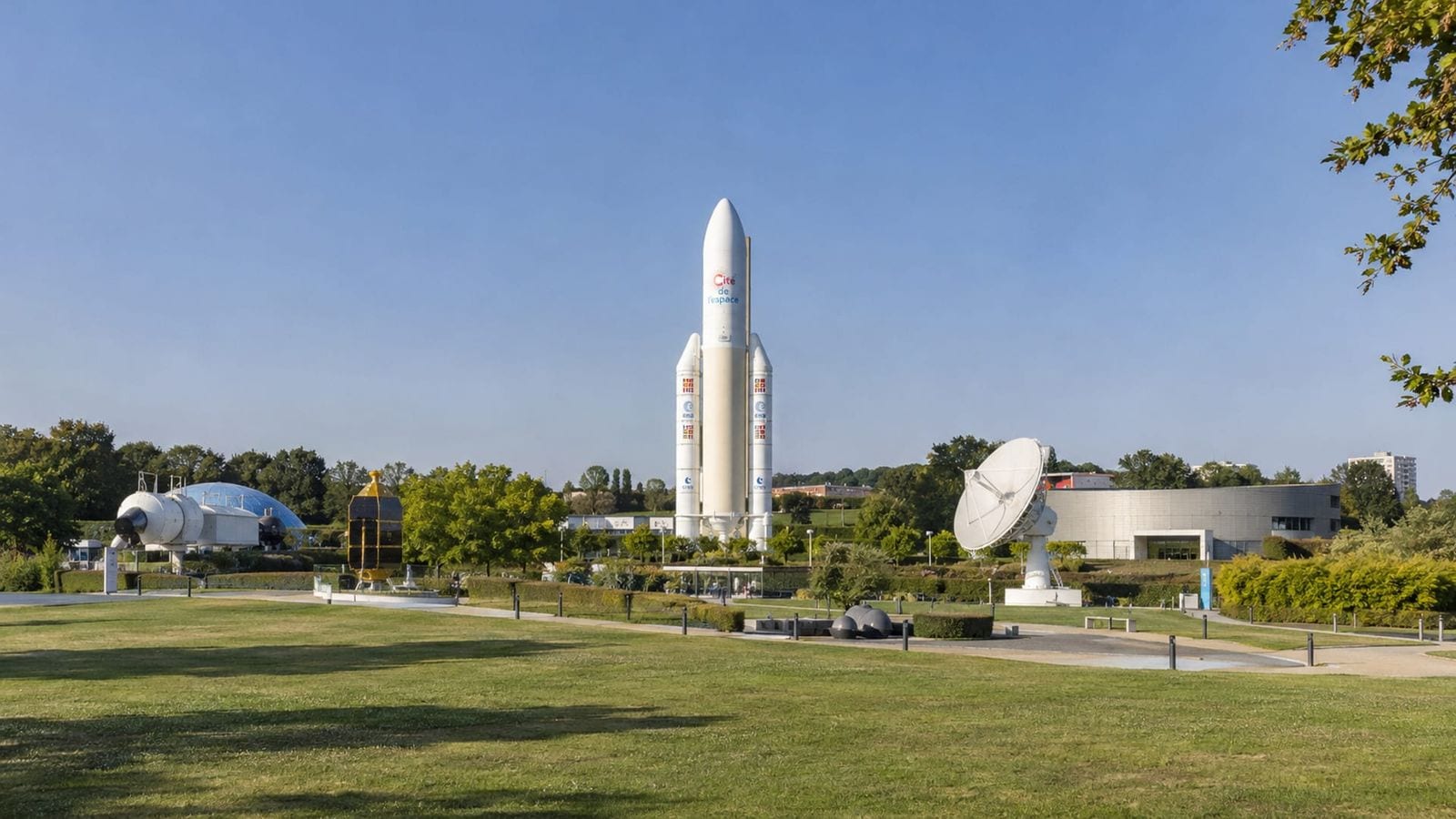
Cité de l'espace
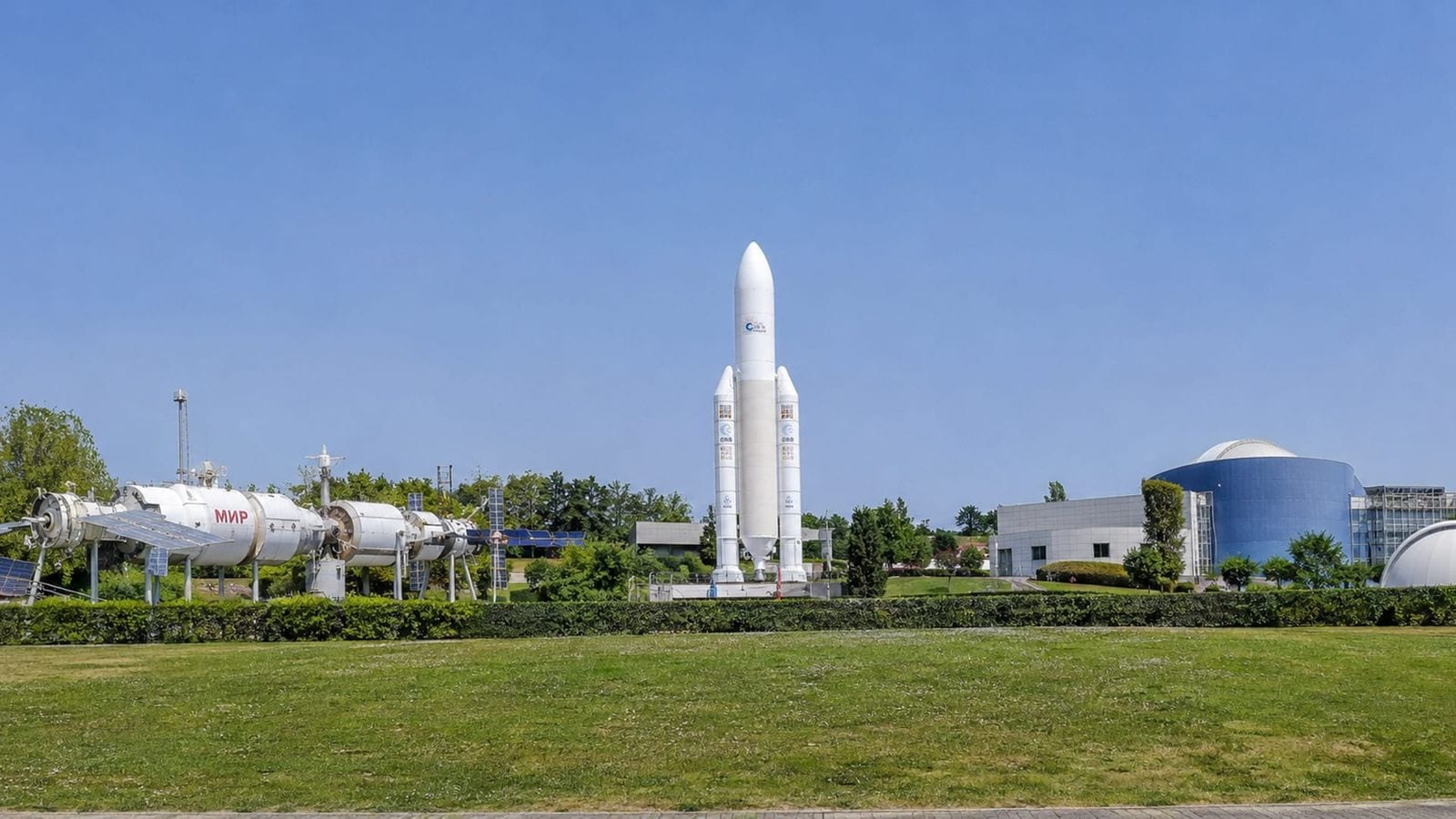
Cité de l’espace explores Toulouse’s aerospace identity through full-size rockets, spacecraft replicas, interactive exhibits, planetarium shows, and displays devoted to astronomy and space exploration. The large site east of the center underscores Toulouse’s major role in Europe’s aerospace industry.
Time needed: At least 4 hours; a full day suits a more complete visit.
Entry: Standard admission costs €21 to €27 ($23 to $29), with reduced rates for children, students, and selected family tickets. Visit the official site for details.
Tip: Arrive near opening time if you want to see the exhibits and attend several scheduled shows.
Overlooked sites worth visiting

Jardin des Plantes
This central botanical garden has shaded paths, mature trees, plant collections, and ponds. Footbridges connect it with Grand-Rond and Jardin Royal.
Time needed: 1 to 2 hours for an in-depth visit
Entry: Free to access
Tip: Visit in the morning for cooler paths and softer light.

Le Castelet
This former entrance to Saint-Michel Prison explores Toulouse’s prison history through its preserved 19th-century architecture and exhibitions.
Time needed: 45 minutes to 1 hour
Entry: Admission costs $5 ($4.50) to $8 ($7) Visit the official site for details.
Tip: Check the exhibition schedule before visiting, as displays change.
Traditional food
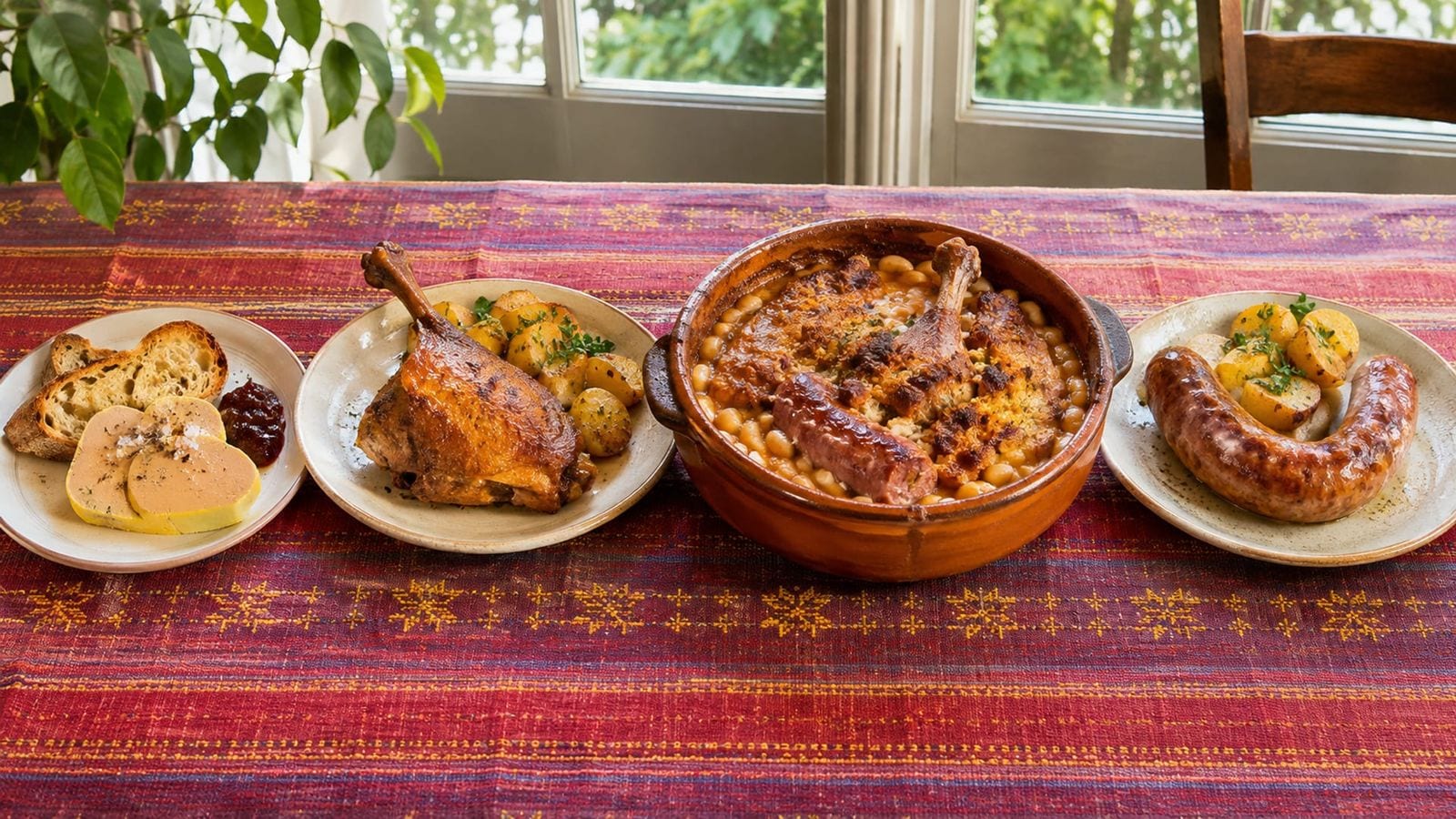
Toulouse cuisine draws on duck, pork, white beans, and rich slow-cooked dishes. Cassoulet and Toulouse sausage are the best-known local specialties, but duck and foie gras also appear widely on menus.
Cassoulet
Cassoulet is a rich casserole of white beans, Toulouse sausage, duck confit, and pork, baked slowly until the top forms a light crust. Le Colombier specializes in traditional cassoulet.
Duck confit
Duck confit uses duck legs slowly cooked in their own fat until the meat becomes tender and the skin turns crisp. Restaurant Emile serves it in traditional southwest French dishes.
Toulouse sausage
Toulouse sausage is a thick, coarse pork sausage seasoned simply with salt and pepper. Restaurants grill or pan-fry it and serve it with potatoes or aligot. Aligot Bar serves it with regional sides.
Foie gras
Foie gras has a smooth, rich texture and a mild buttery flavor. Restaurants usually serve it chilled as a terrine or seared and paired with bread. Michel Sarran includes foie gras on its menus.
Best time to visit Toulouse
Spring and fall bring the most comfortable conditions for exploring Toulouse, while summer suits evening plans and winter favors museums and quieter streets.
Best for: Garden walks, café terraces, sightseeing, and longer days outdoors
What you get: Temperatures rise from 50°F to 72°F (10°C to 22°C), with blooming gardens, mild afternoons, and increasingly long daylight hours.
Trade-offs: Rain can interrupt outdoor plans, especially during March and April.
Best for: Festivals, river walks, outdoor dining, and long summer evenings
What you get: Expect 61°F–86°F (16°C–30°C), warm afternoons, late sunsets, busy terraces, and more activity along the Garonne.
Trade-offs: Heatwaves can push daytime temperatures higher and make afternoon sightseeing tiring.
Best for: Food-focused trips, city walks, markets, and quieter sightseeing
What you get: September can reach 77°F (25°C), while November falls closer to 48°F (9°C), bringing cooler days as summer crowds fade.
Trade-offs: Rain becomes more frequent later in the season, and daylight shortens noticeably.
Best for: Museums, long lunches, indoor attractions, and calmer city breaks
What you get: Temperatures usually stay between 38°F–54°F (3°C–12°C), with cool mornings, quieter streets, and occasional mild afternoons.
Trade-offs: Shorter days and periods of rain can limit longer outdoor walks.
A realistic 5-day plan in Toulouse
Five days give you time to see Toulouse’s historic center, aerospace attractions, riverfront, and quieter neighborhoods without rushing. Most central sights fit easily into walking days, while Cité de l’espace needs a separate trip.
After landing at Toulouse-Blagnac Airport (TLS), take a taxi or the airport shuttle into central Toulouse and check in before heading out. Spend the first afternoon close to your hotel. Walk to Place du Capitole, continue through the surrounding pedestrian streets, and stop for coffee if you need a break. For dinner, stay in the center and try cassoulet or duck confit instead of crossing the city on your first evening.
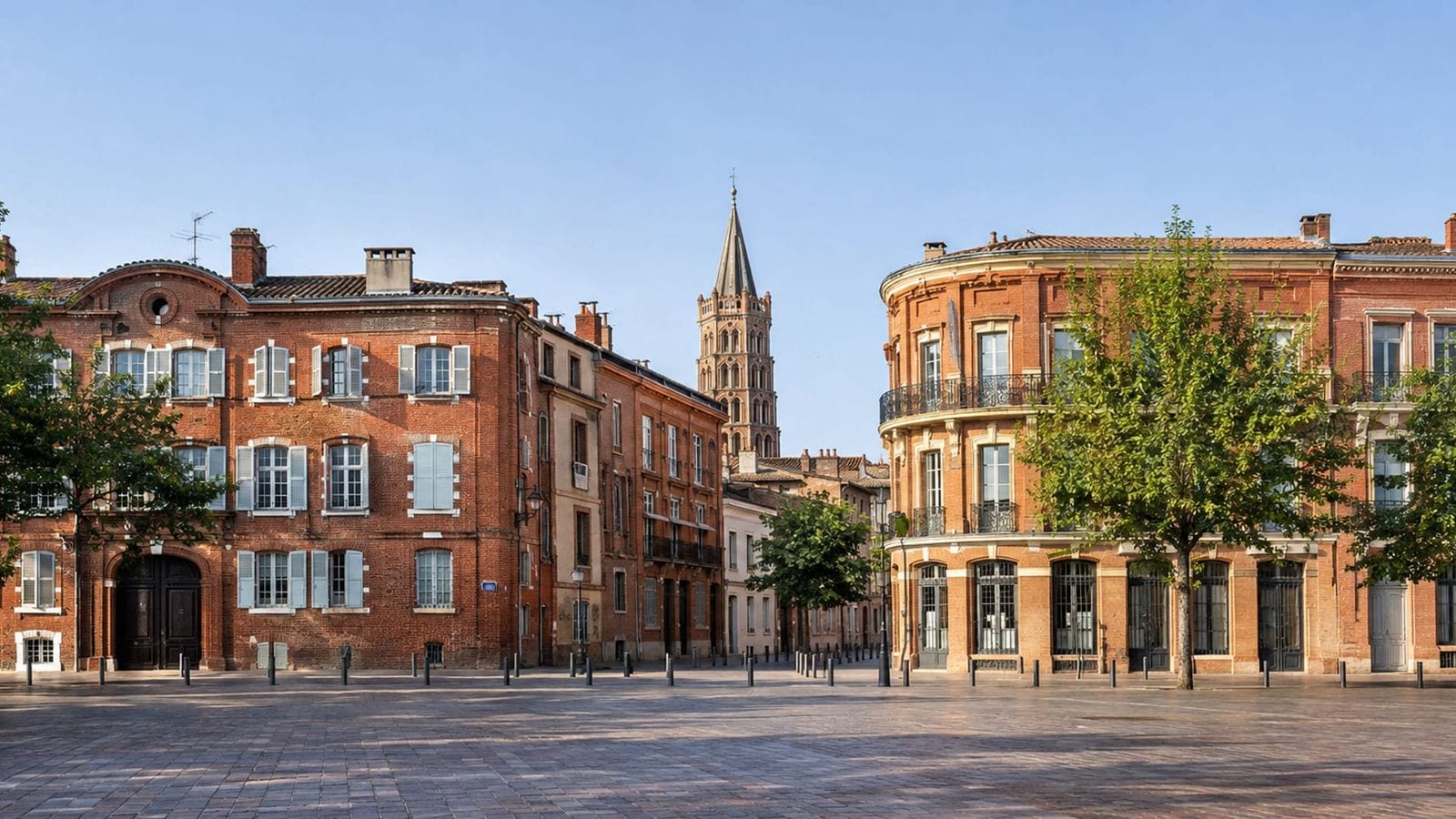
Start at the Basilica of Saint-Sernin in the morning and allow 45–60 minutes inside. From there, walk roughly 10 minutes toward Place du Capitole, then continue to the Jacobins Convent for its cloister and distinctive palm-shaped vault. Have lunch nearby, then spend the afternoon around Carmes and Saint-Étienne. Both areas are easy to explore on foot, so you can stop at cafés or shops without planning another transfer.
Give the morning and early afternoon to Cité de l’espace, which needs more time than most Toulouse attractions. Allow 3–4 hours for the spacecraft displays, exhibitions, and planetarium, plus travel time from the center. Return to your hotel afterward for a break instead of adding another major museum. In the evening, head back toward the historic center for dinner and a slower walk around Place Saint-Georges or Saint-Étienne.
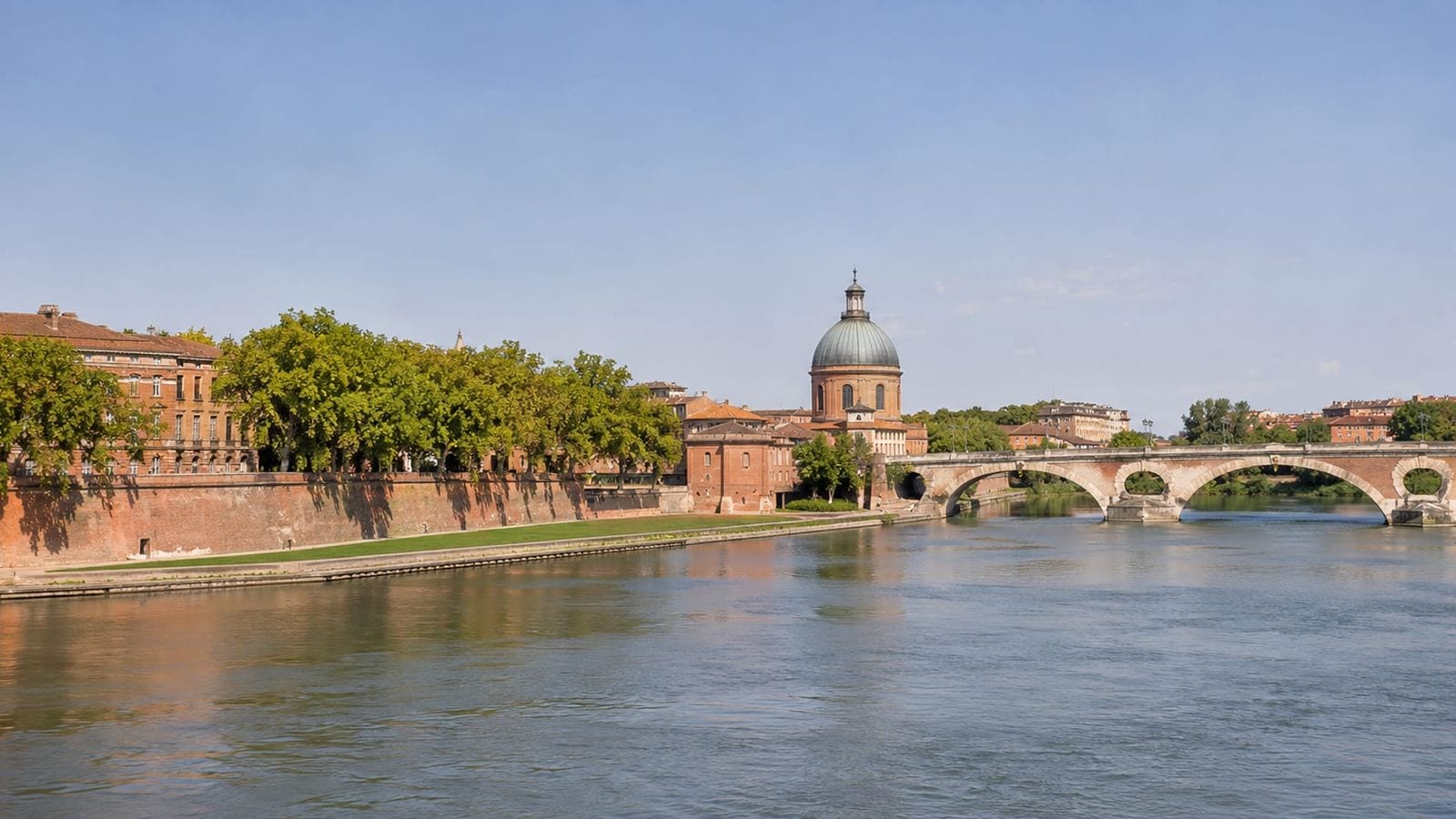
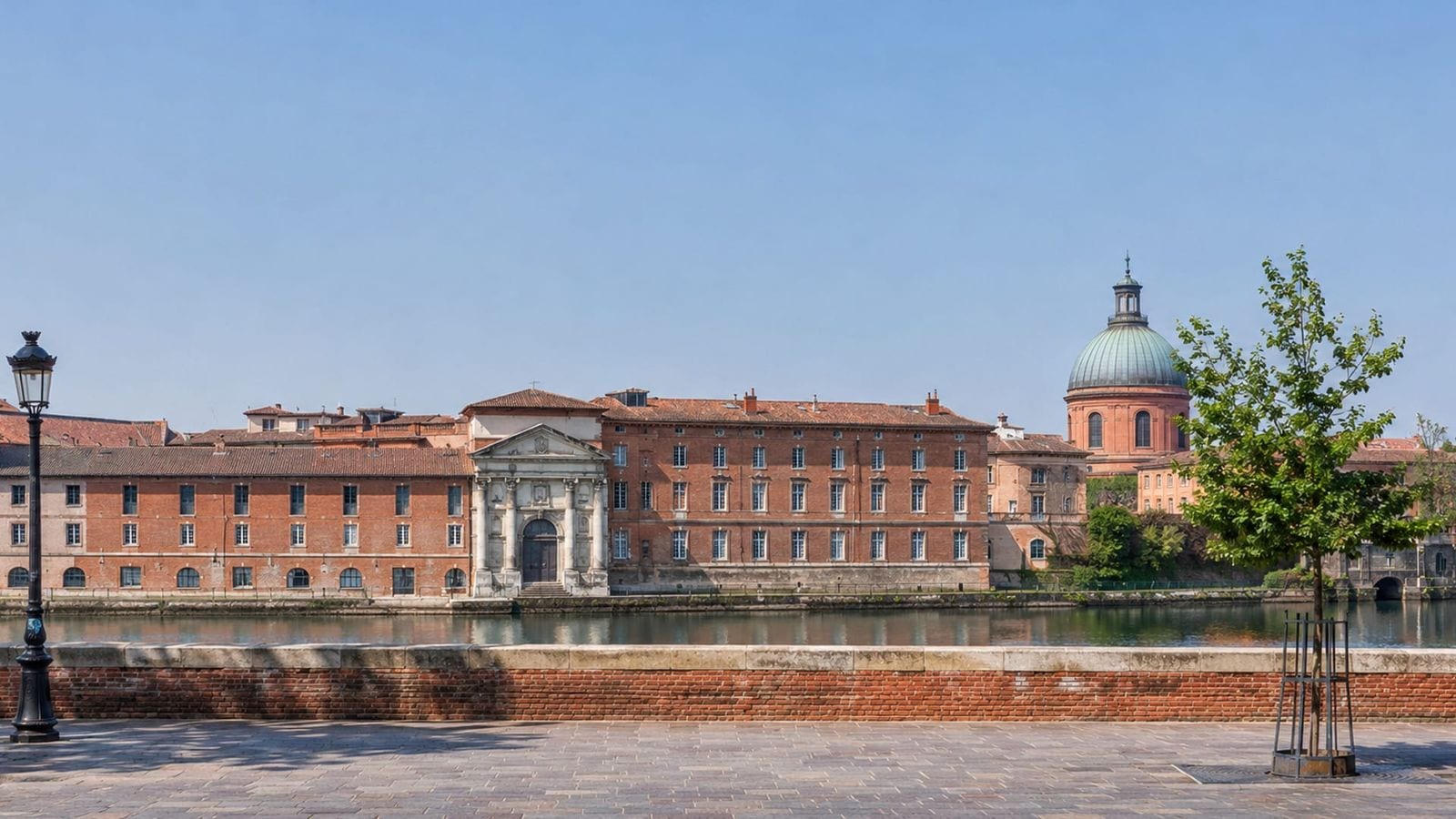
Spend the morning in Saint-Cyprien, starting around the market area before walking toward the Garonne. Cross Pont Neuf into the center and follow the river toward Place de la Daurade, where you can stop for lunch or coffee near the water. Keep the afternoon flexible for nearby streets or a short museum visit. Later, walk to Carmes for dinner, giving yourself time to explore the neighborhood instead of treating it only as an evening restaurant stop.
Keep the final day simple, especially if you have an afternoon flight. Start with a walk through Jardin des Plantes and allow 45–60 minutes for the paths and gardens. From there, return toward the center for breakfast or coffee and any final shopping along Rue d’Alsace-Lorraine. If you still have time before checkout, make one last stop at Place du Capitole, then collect your luggage and head to Toulouse-Blagnac Airport.
Business-class flights from the US to Toulouse
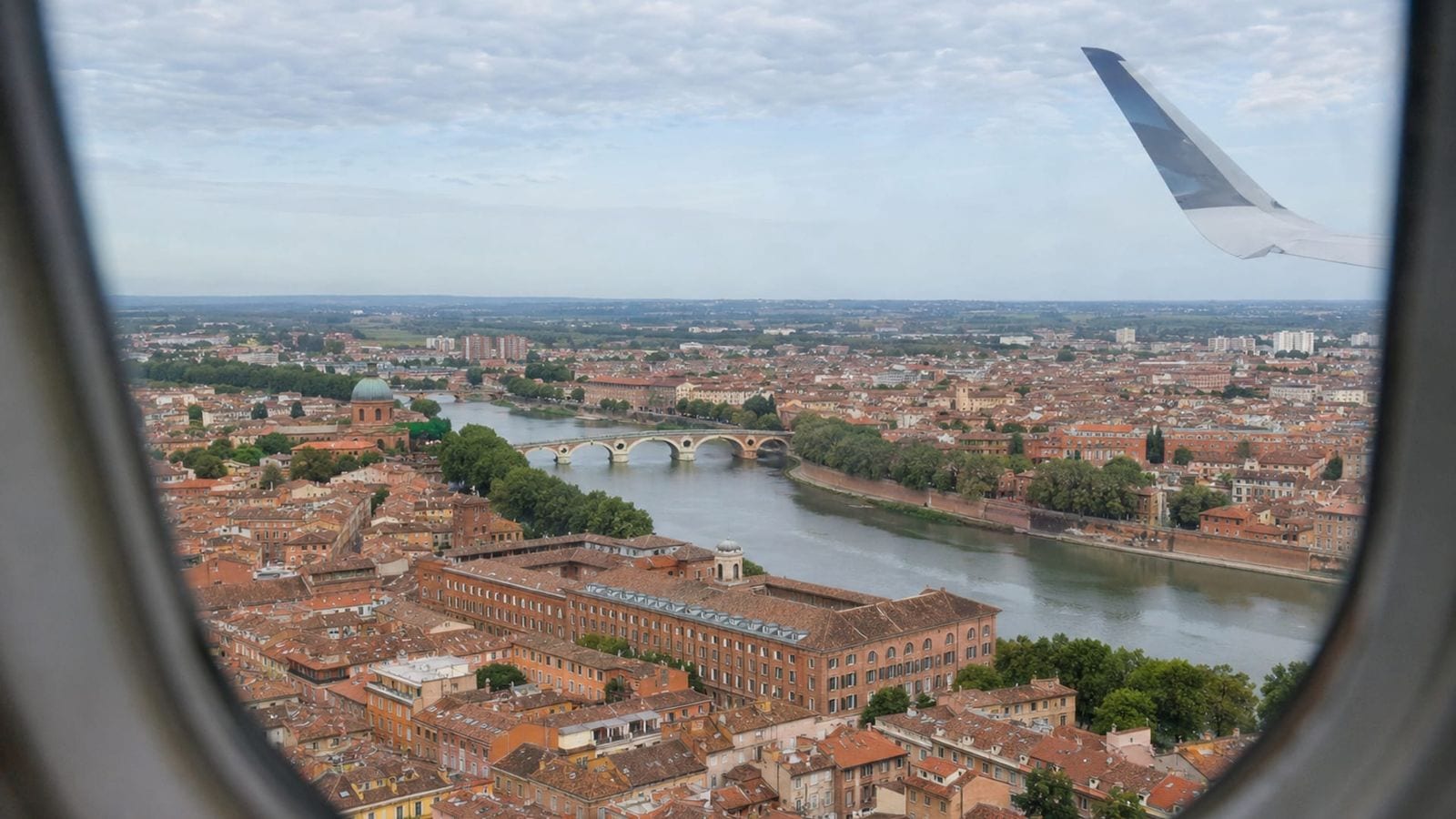
Toulouse has no nonstop flights from the US, but several European airlines offer convenient one-stop business-class routes.
New York (JFK) to Toulouse (TLS)
Air France, British Airways, Iberia, Lufthansa, and TAP Air Portugal offer one-stop flights between New York and Toulouse through hubs such as Paris (CDG), London (LHR), Madrid (MAD), Frankfurt (FRA), and Lisbon (LIS). Most journeys take 10–14 hours. Round-trip business-class prices generally start near $2,800 and can reach $5,500 depending on dates and demand.
Los Angeles (LAX) to Toulouse (TLS)
From Los Angeles, Air France, British Airways, KLM, Iberia, Lufthansa, and TAP Air Portugal provide one-stop flights through major European hubs. The quickest itineraries take roughly 13–17 hours. Business-class round trips often start near $4,300, with higher prices during popular travel periods and on shorter connections.
Toulouse feels different when you slow down
A well-shaped Toulouse trip ties the center to its edges: Saint-Sernin in the morning, the Capitole in the afternoon, then a tram or taxi out to Cité de l’espace when you want a bigger contrast. Carmes, Saint-Cyprien, and the Garonne riverbanks give the city its best pauses between meals and walks. If you want help matching neighborhoods, flight timing, and a five-day stay, AranGrant experts can build the route around your arrival window and departure plans







