

Chapters:

Need help with your trip?
Our support team is available 24/7. Request a callback or call us directly at (833) 619-0908
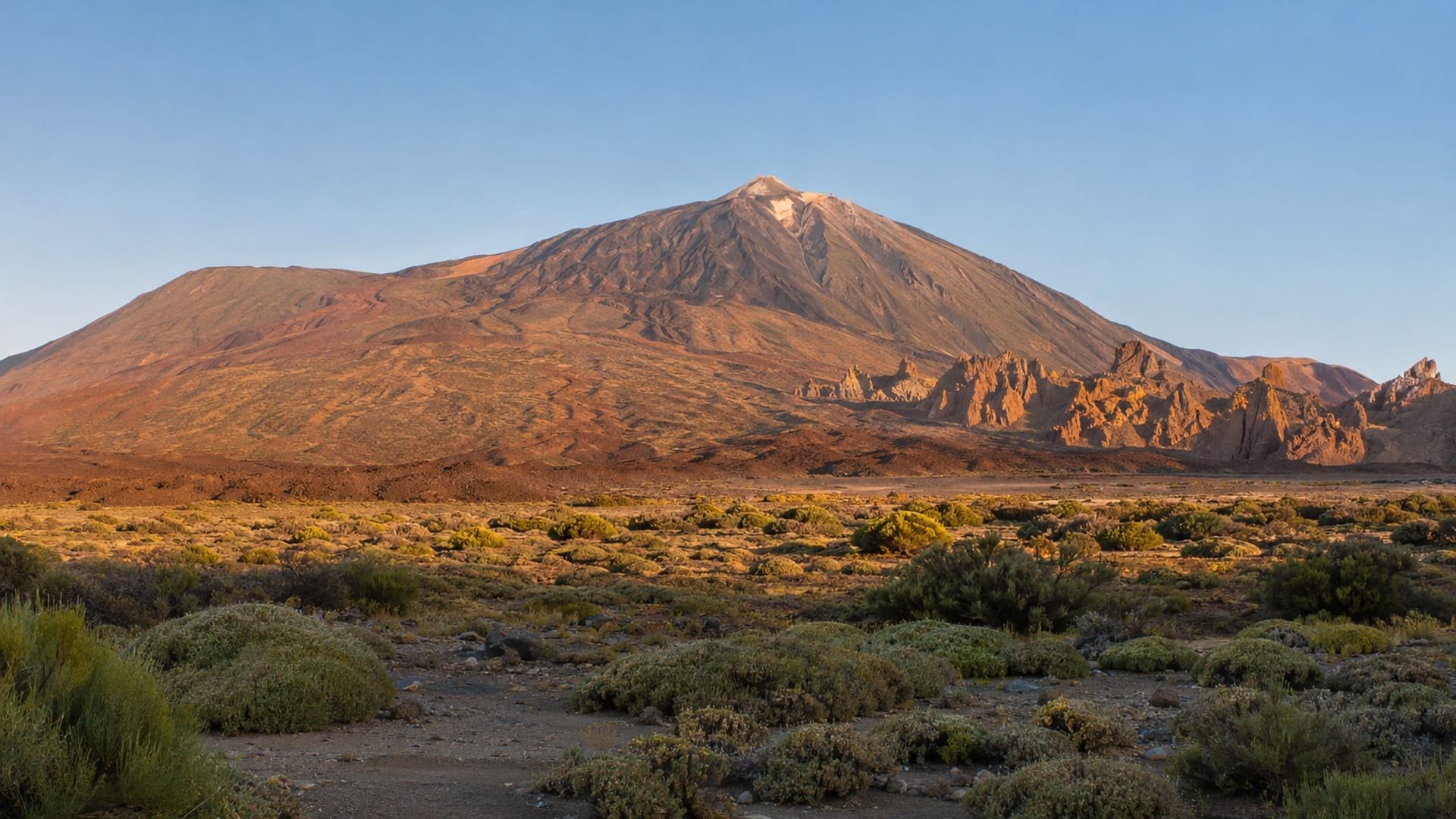
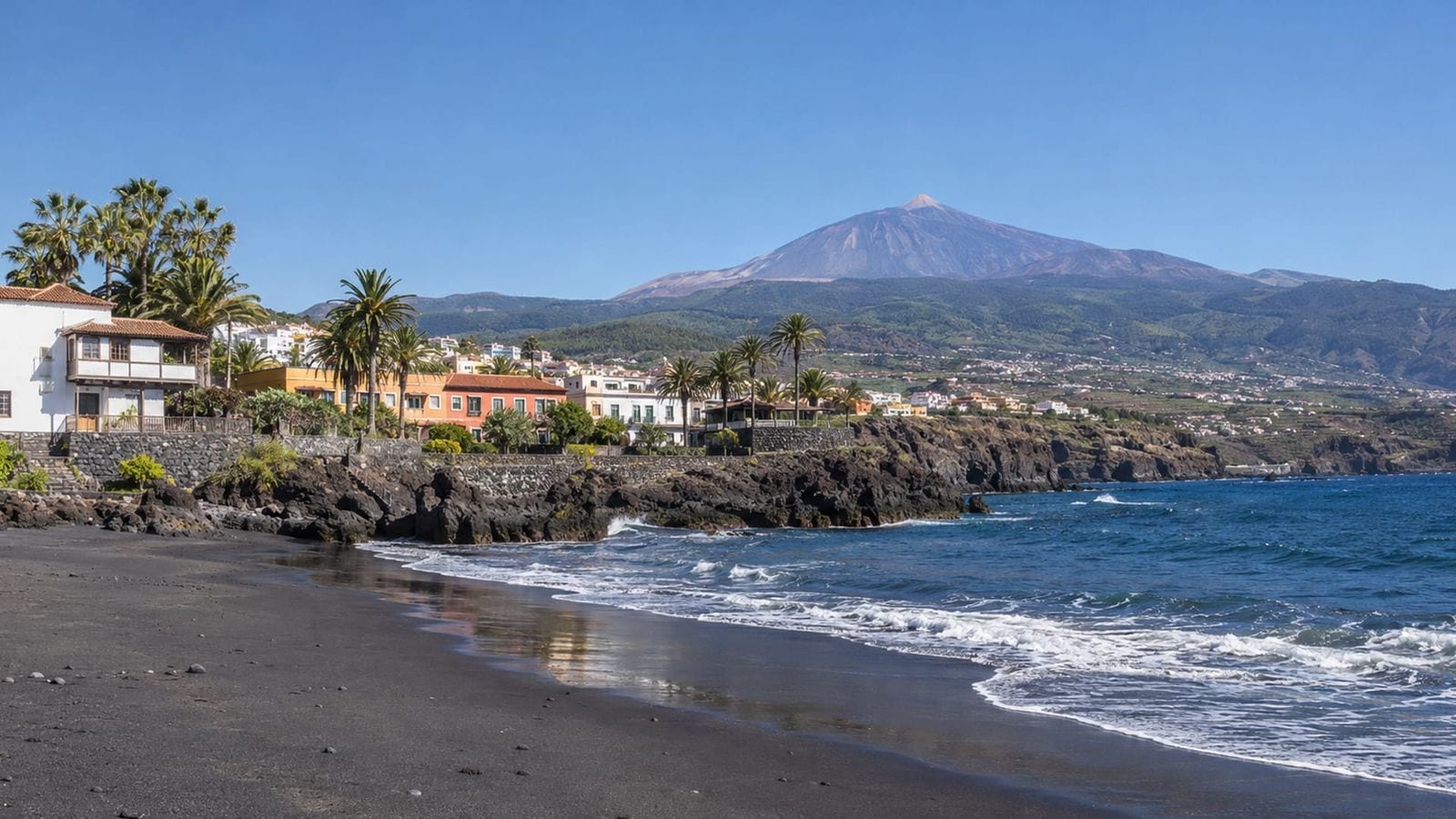
Tenerife changes quickly as you move across the island. The south brings resort beaches and long evenings by the coast, while La Laguna, Santa Cruz, and the roads toward Mount Teide introduce historic streets, museums, pine forest, and much cooler air at altitude.
Those contrasts make planning more important than distance alone. A beach morning, a city afternoon, and a mountain visit can all fit into one trip, but not always comfortably into one day. This guide helps you divide Tenerife into practical sections, with enough time for meals, scenic stops, and the longer drives that come with crossing the island.
Useful things to know

Main language(s): Spanish
Hola (OH-lah) – Hello
Por favor (por fah-VOR) – Please
Gracias (GRAH-seeahs) – Thank you
¿Habla inglés? (AH-blah een-GLAYS) – Do you speak English?
¿Cuánto cuesta? (KWAN-toh KWES-tah) – How much does it cost?

Currency: Euro (EUR, €)

Cash and cards: Cards are widely accepted in tourist areas and cities. Keep €20–€40 ($23–$46) for markets, small cafés, and rural stops.

Tipping: Tipping is optional. Round up taxi fares or leave a small amount in restaurants when you receive particularly good service.

Traditional food: Papas arrugadas, mojo rojo and verde, gofio escaldado, vieja sancochada, conejo en salmorejo, and local goat cheese are Tenerife staples.

Water and coffee costs: Bottled water usually costs €2–€3 ($2.30–$3.50), while coffee ranges from €1.50–€3 ($1.75–$3.50), depending on the venue.

Taxis and ride apps: Licensed white taxis use meters across Tenerife. Uber operates in Santa Cruz, but taxis are more widely available across the island.

Plug and voltage: Tenerife uses Type C and F plugs with a 230V supply. US travelers need a plug adapter and should check device compatibility.

Dining and shop opening hours: Lunch often starts from 1 pm and dinner from 8 pm. Shops may open 10:00 am–1:30 pm and 5:00 pm–8:30 pm; tourist areas often are open longer.

Emergency number: Dial 112 for police, fire, medical emergencies, rescue, and other urgent assistance anywhere in the Canary Islands.
Where to stay in Tenerife
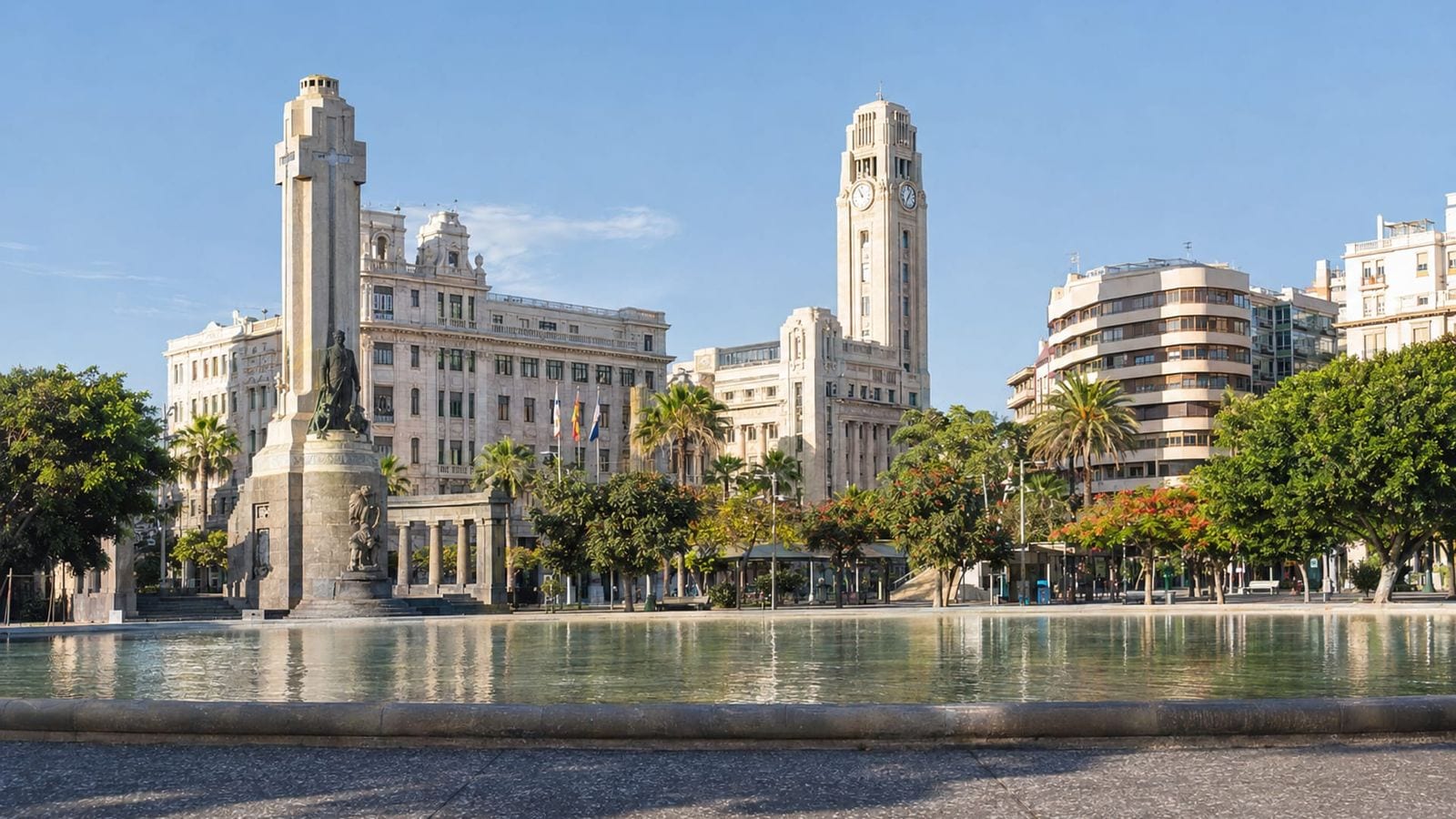
Santa Cruz de Tenerife is the island’s capital and main urban center, with plazas, shopping streets, markets, museums, parks, and a busy port. It suits travelers who want city life, reliable transport, and easy access to La Laguna and northern Tenerife without staying in a resort area.
Best for: Central sightseeing, restaurant access, and travelers who want the most connected base
What to expect: Busy sidewalks by day, especially near Plaza de España and Calle Castillo, with more local foot traffic than resort-style resort crowds.
Hotel prices: Usually about €90 to €170 (~$99 to ~$187) per night for well-rated stays
Distance to major sights: 5 to 15 minutes on foot to Plaza de España; about 20 minutes by tram to Auditorio de Tenerife
Quietness: Daytime is lively and active, while evenings calm down quickly away from the main shopping streets.
Main trade-off: You get the best transit and city convenience, but beaches require a bus, taxi, or tram connection.
Good to know: Look near Plaza de España or Parque García Sanabria for easy access to restaurants and transport.
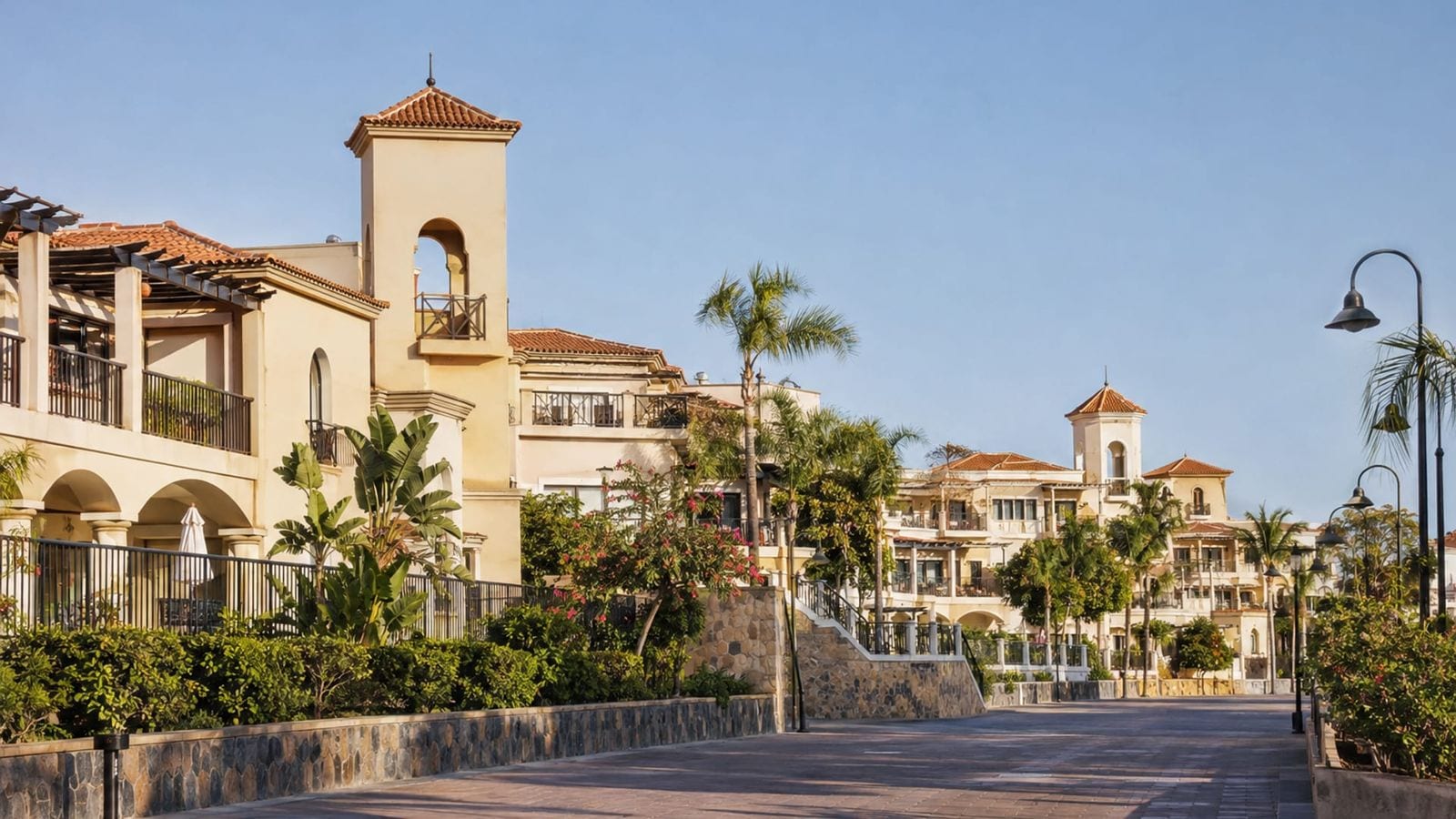
Costa Adeje stretches along Tenerife’s southwest coast, where beachfront resorts, promenades, sandy coves, and Atlantic-facing restaurants shape the area. Playa del Duque feels polished, while La Caleta is smaller and more relaxed. Stay here if beach time and hotel comfort are your priorities.
Best for: Quieter stays, longer walks, and travelers who want green space near the center
What to expect: A residential area with wider sidewalks, steady but modest traffic, and more apartment life than nightlife.
Hotel prices: Usually about €100 to €180 (~$110 to ~$198) per night for well-rated stays
Distance to major sights: About 10 to 20 minutes on foot to Plaza de España; about 15 minutes on foot to Auditorio de Tenerife
Quietness: Quieter in the evening than the downtown core, though main roads stay active during the day.
Main trade-off: It is less convenient for quick late-night dining, and the best hotel selection is smaller than in the center.
Good to know: Playa del Duque and La Caleta feel less hectic than the busier resort areas farther south.
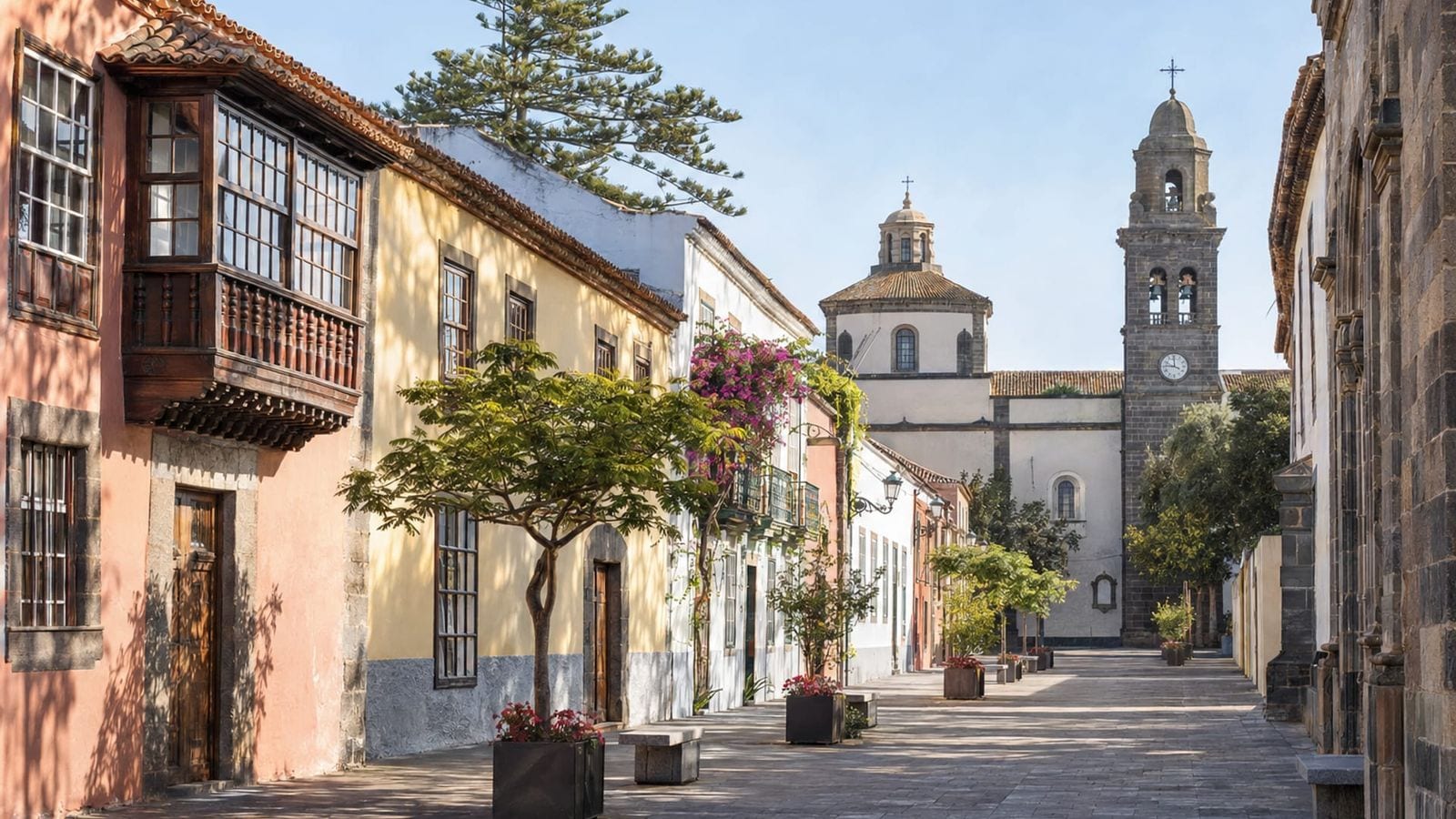
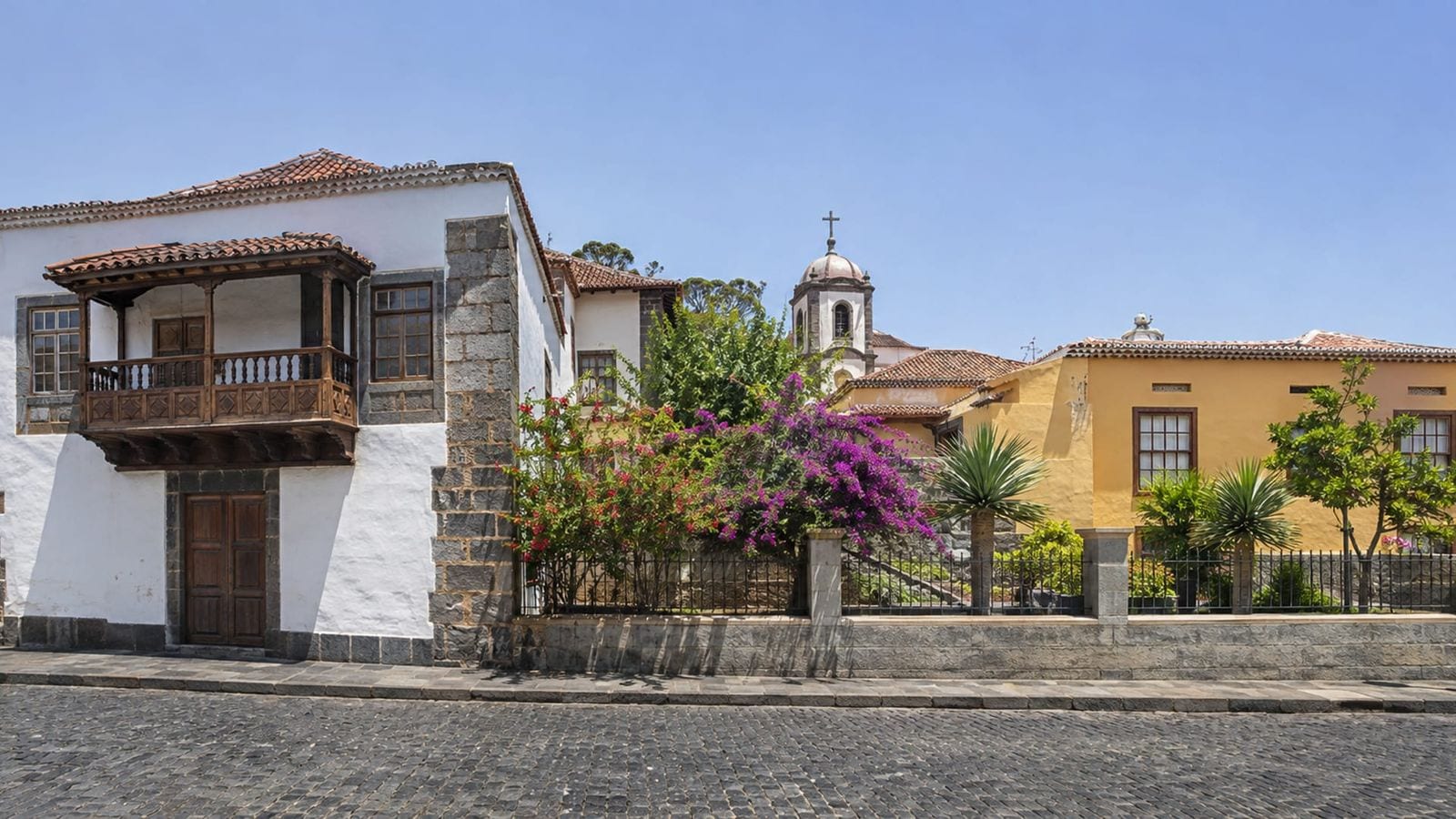
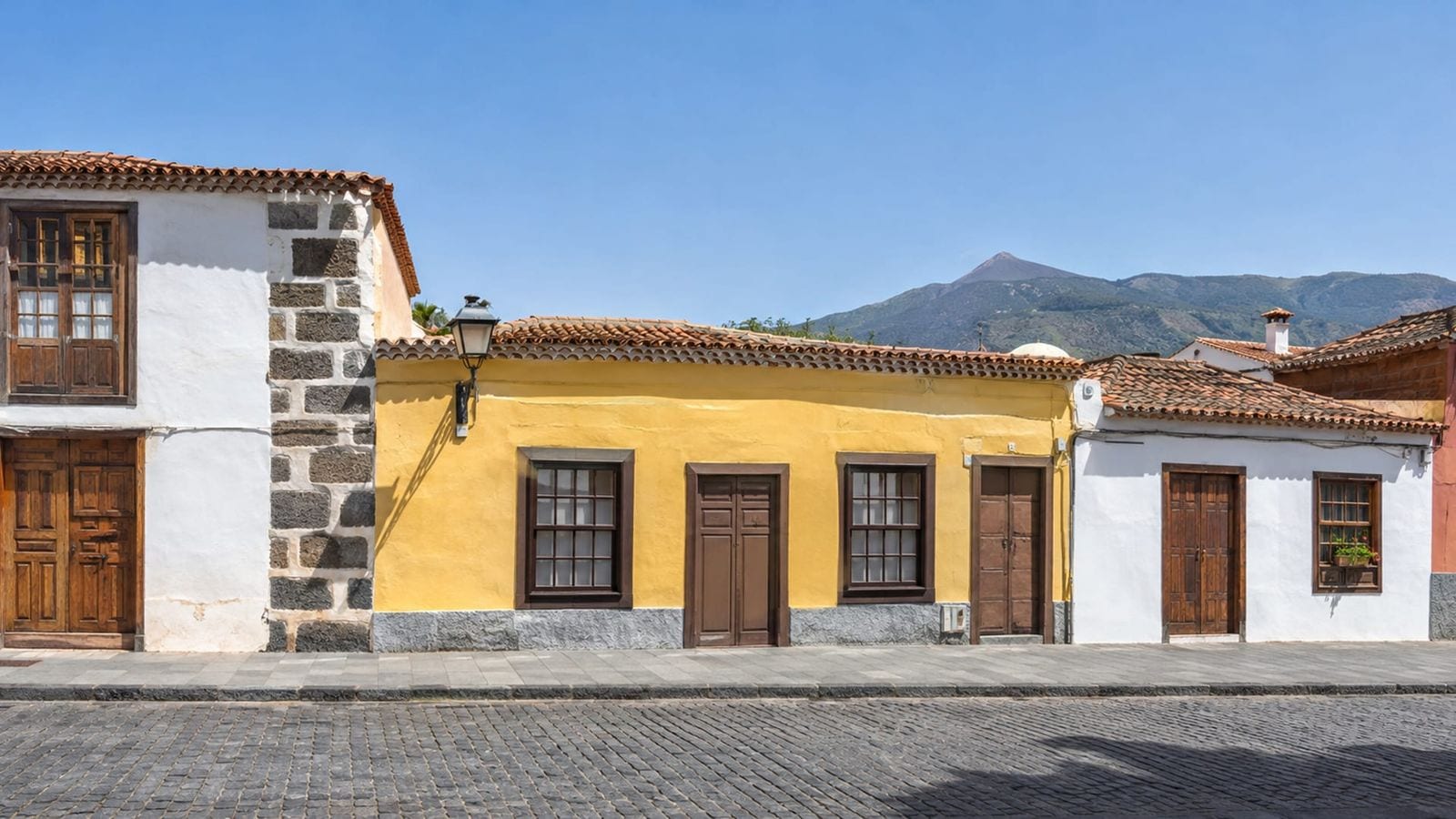
San Cristóbal de La Laguna was Tenerife’s former capital, and its UNESCO-listed center still reflects that history through colorful mansions, churches, courtyards, and straight colonial streets. A large student population adds cafés and evening activity without giving the city a resort feel.
Best for: Beach time, coastal walks, and travelers who prefer a village feel over a city center
What to expect: Near the beach you will see relaxed daytime movement, then a quieter evening scene centered on local cafés and seafront promenades.
Hotel prices: Usually about €80 to €150 (~$88 to ~$165) per night for well-rated stays
Distance to major sights: About 20 minutes by bus to Plaza de España; roughly 5 minutes on foot to Playa de Las Teresitas from San Andrés
Quietness: Quieter than Santa Cruz city center at night, though the beach area becomes active on sunny weekends and holidays.
Main trade-off: You will need transport for museums, shopping, and most nightlife in Santa Cruz.
Good to know: A hotel inside the historic center keeps La Laguna’s main churches, plazas, and restaurants within walking distance.
If most of your trip centers on beaches and resort facilities, Costa Adeje is a better choice than hotels near the airport. For museums and city dining, stay in Santa Cruz, while Puerto de la Cruz gives you better access to northern Tenerife.
Hotel deals
How to get around Tenerife efficiently
Tenerife relies on buses, trams, and taxis, with public transport covering the main towns, airports, resorts, and the Santa Cruz–La Laguna area.

Public bus
for longer distances
TITSA operates Tenerife’s island-wide bus network, linking both airports with Santa Cruz, Puerto de la Cruz, Costa Adeje, and other towns. Single fares vary by route, while a 24-hour Ten+ pass costs €10 ($12). Buy tickets by card or cash, or use a Ten+ card or app.

Tram
for convenience
Tenerife’s two tram lines operate only in the metropolitan area between Santa Cruz and La Laguna. A single journey costs €1.35 ($1.55) with a Ten+ card or €1.10 ($1.30) through the mobile app. Buy tickets from tram machines or through Ten+ Móvil.

Taxi
for convenience or late hours
White licensed taxis operate across Tenerife and use meters from the start of each ride. From Tenerife North Airport (TFN), indicative prices are €18 ($21) to Santa Cruz and €34–€36 ($39–$42) to Puerto de la Cruz. Use airport ranks or book with a local taxi company.
*Prices are based on rates updated as of June 2026 and may change at the time of travel.
Use TITSA for longer island journeys, the tram between Santa Cruz and La Laguna, and taxis when direct travel or luggage makes public transport less practical.
Iconic landmarks
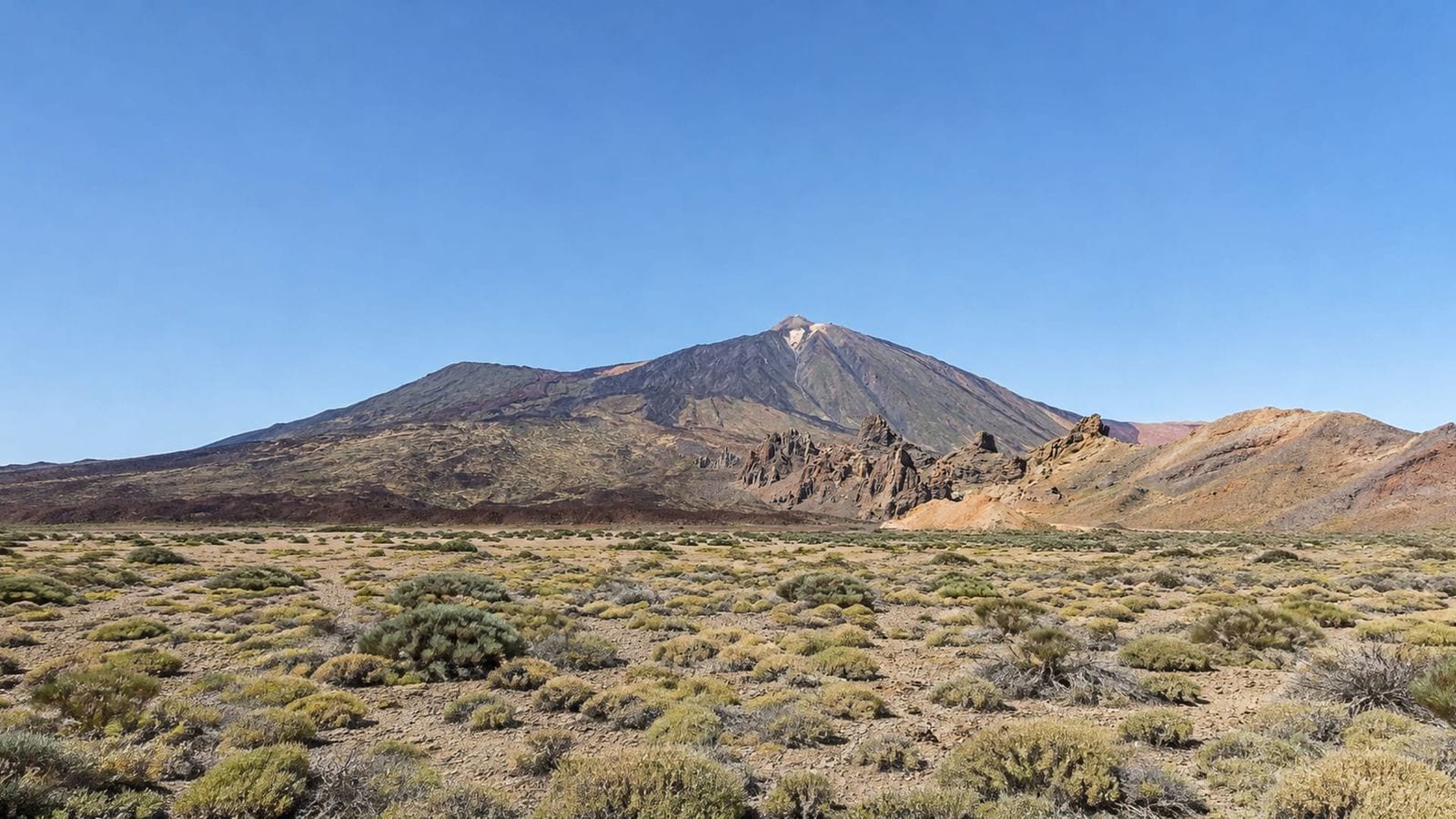
Teide National Park
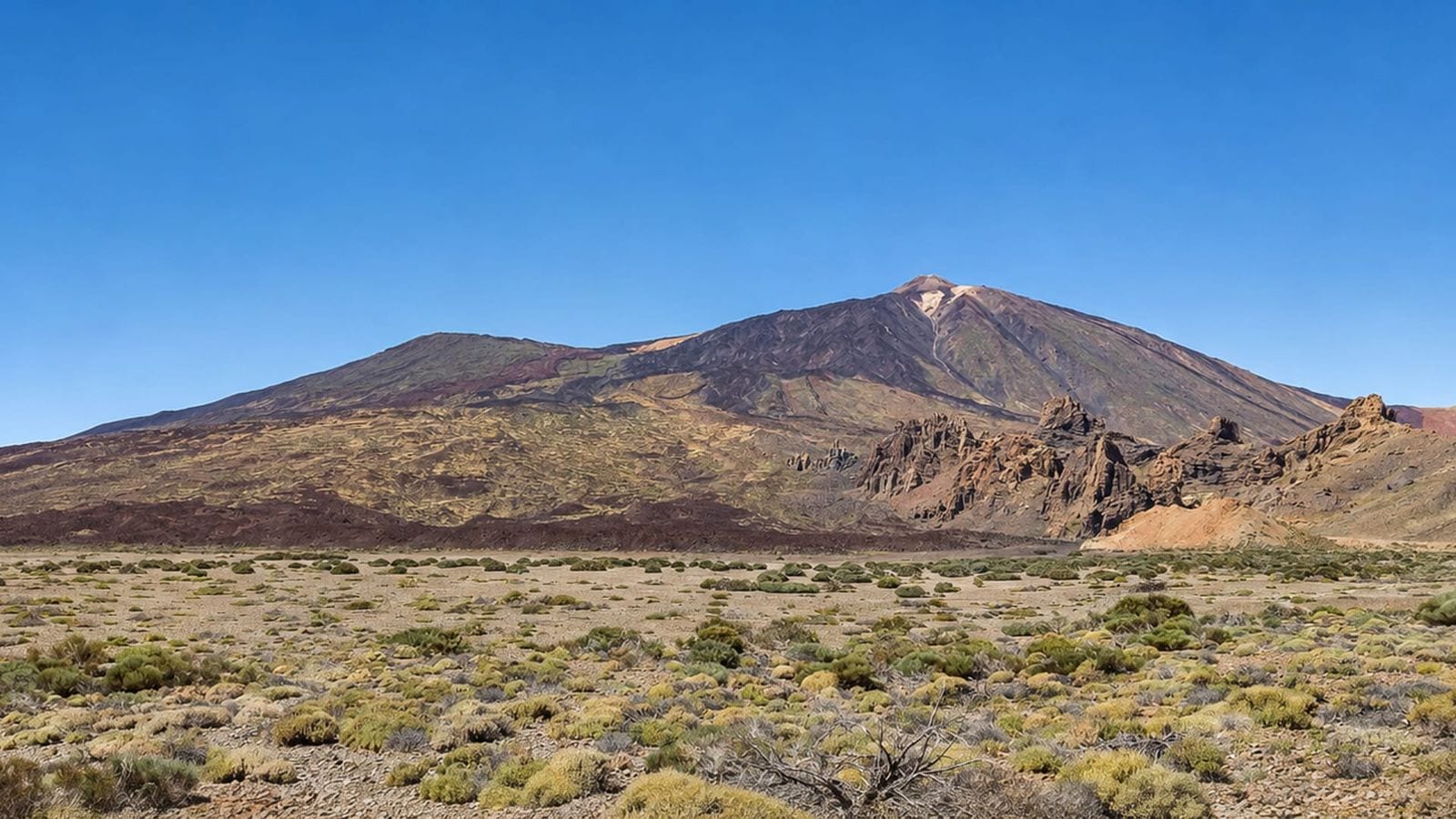
Teide National Park surrounds Spain’s highest peak, with vast lava fields, volcanic cones, pumice slopes, and high-altitude views across Tenerife. Mount Teide rises to 3,718 meters, and the cable car carries visitors close to the summit across one of the island’s defining landscapes.
Time needed: 4–6 hours
Entry: Free to enter the park; cable car tickets cost about $48 (€45) to $58 (€54), with summit permits separate for restricted routes. Visit the official site for details.
Tip: Go early, bring warm layers, and check cable-car conditions before driving up.
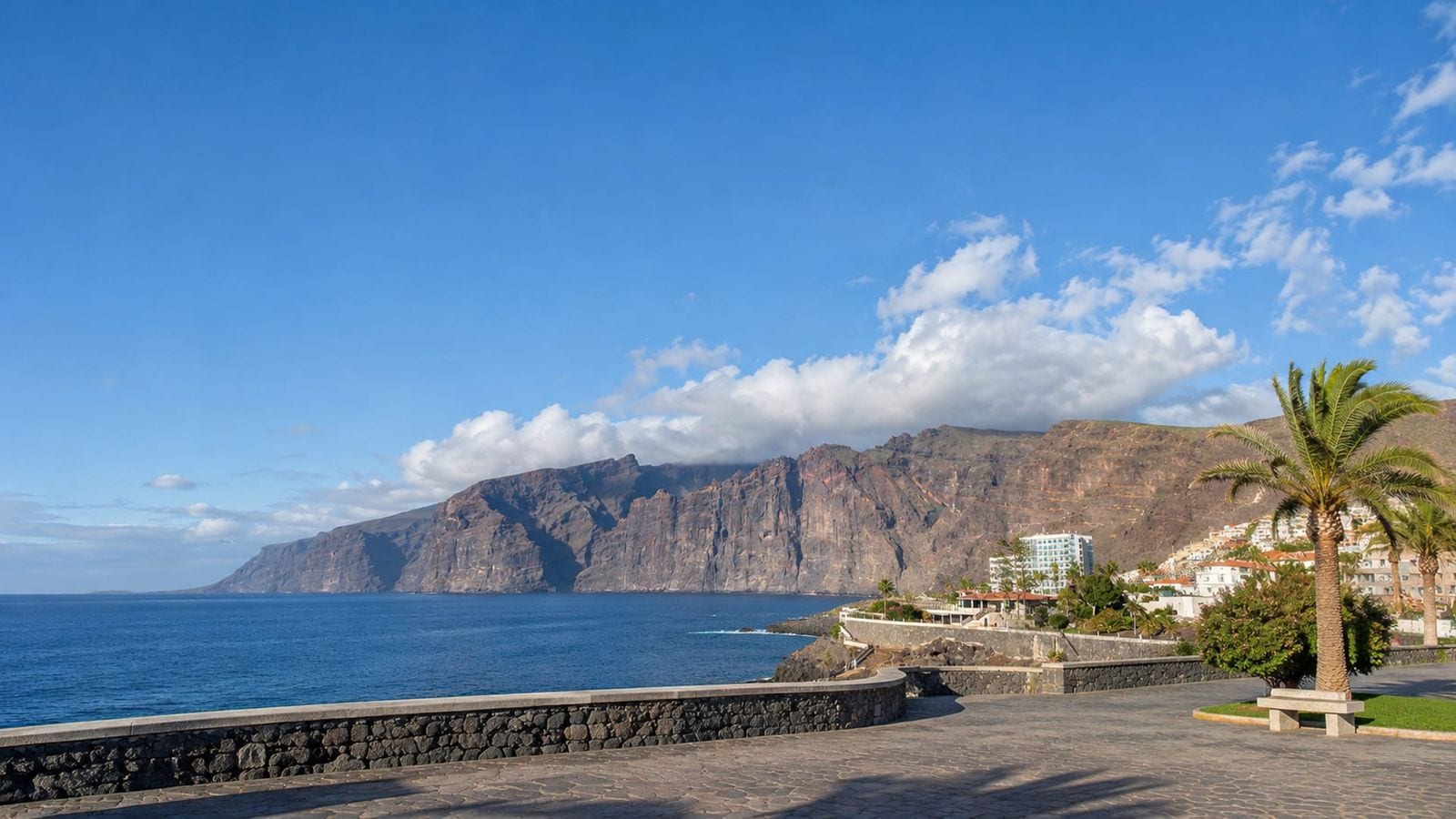
Los Gigantes Cliffs
Los Gigantes rise almost vertically from Tenerife’s west coast, reaching up to 1,968 feet (600 meters) above the Atlantic. The dark volcanic walls form one of the island’s most dramatic natural landmarks, with some of the strongest views from Puerto de Santiago, Punta de Teno, or the water.
Time needed: About 1 to 2 hours
Entry: Admission costs about $6 (€5) for adults, with reduced rates for students and free access for some worship hours. Visit the official site for details.
Tip: Visit after the morning rush, when the plaza and nearby streets are easier to explore.
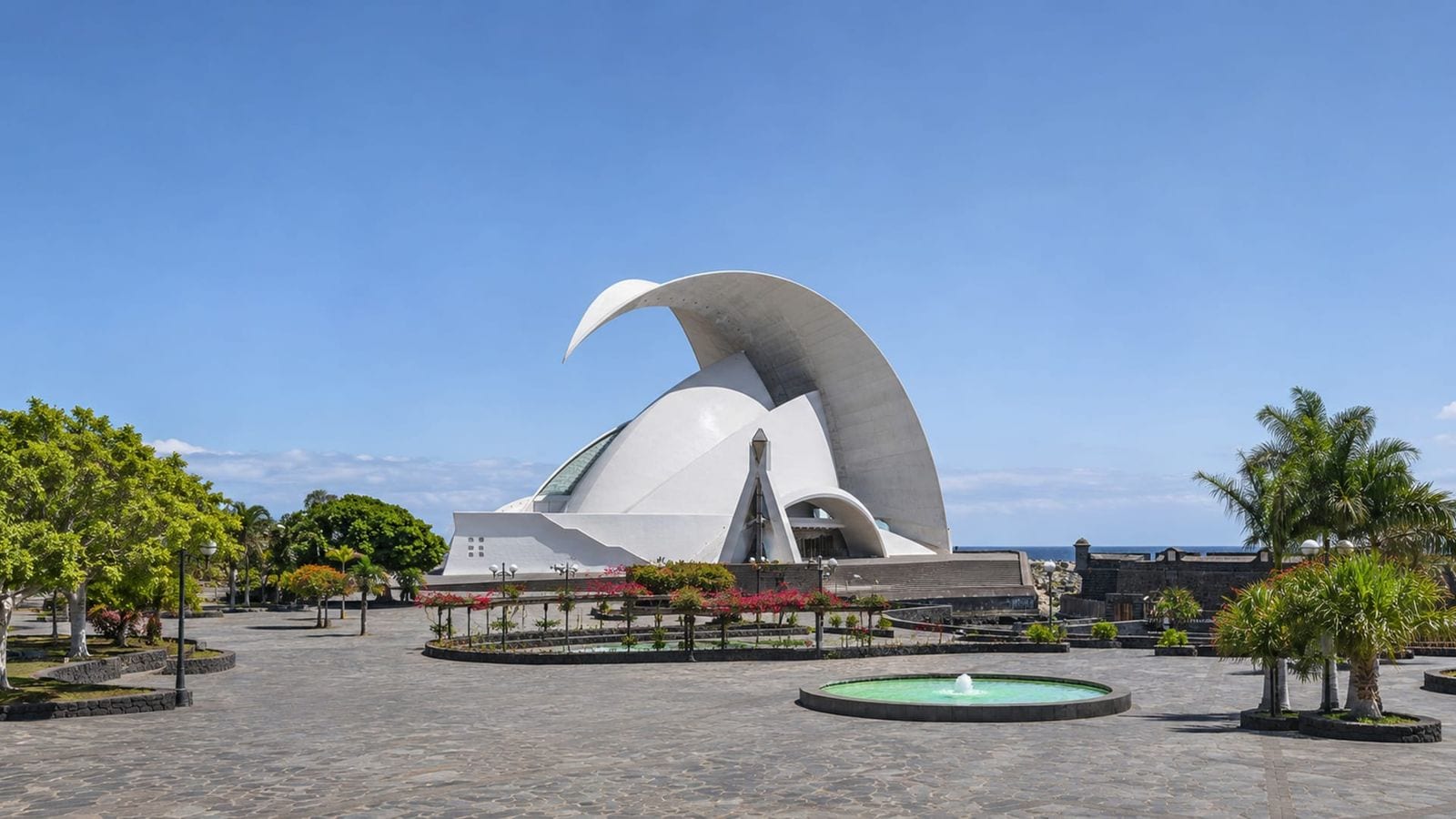
Auditorio de Tenerife
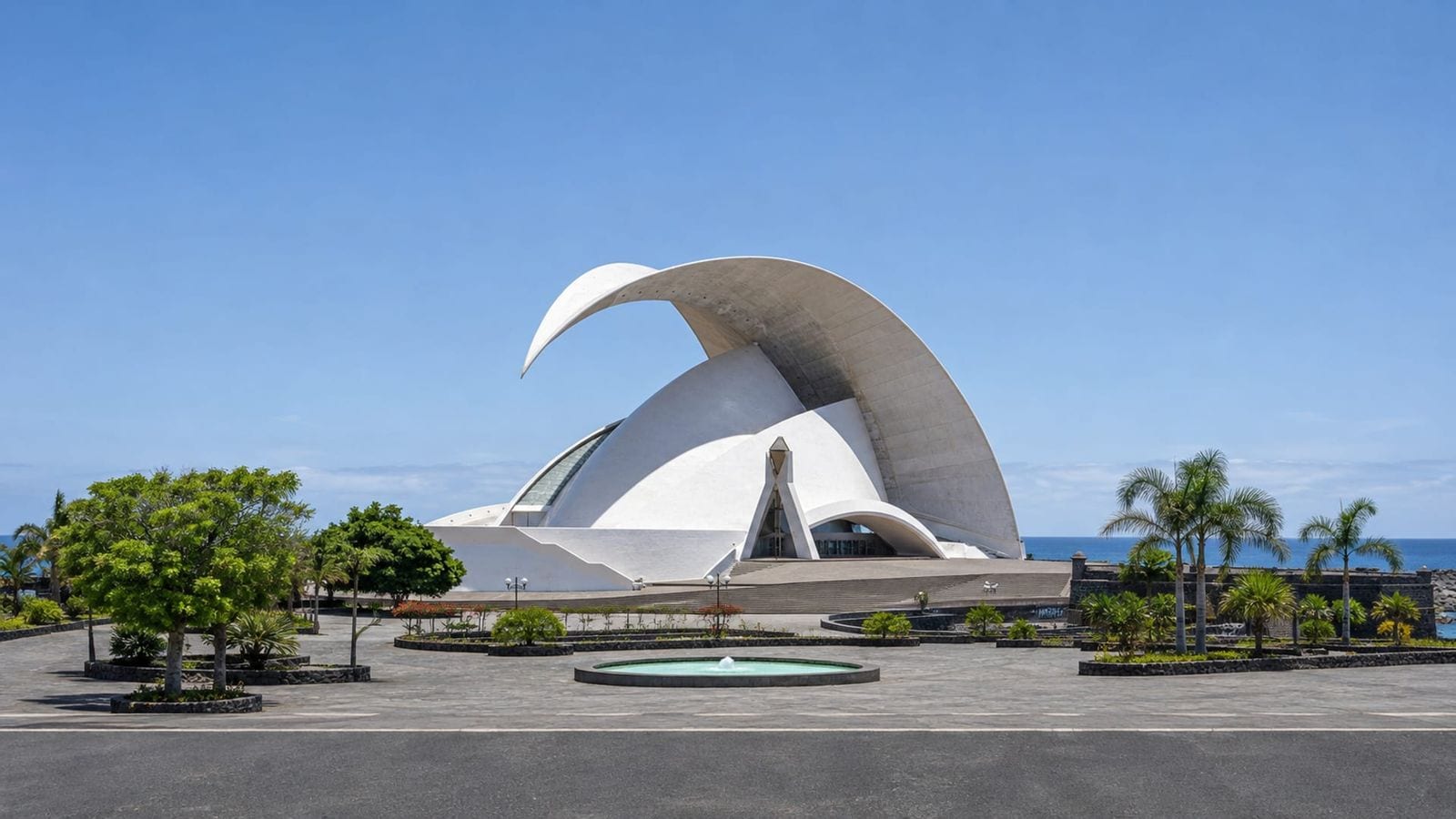
Santiago Calatrava designed the Auditorio de Tenerife as a sweeping white concrete structure beside the sea in Santa Cruz. Its curved roof and waterfront position have made it one of Tenerife’s most recognizable modern buildings and a major venue for opera, music, and dance.
Time needed: 45–60 minutes
Entry: Exterior access is free; performance tickets vary by event. Visit the official site for details.
Tip: Late afternoon gives the best light on the white shell and the harbor backdrop.
Overlooked sites worth visiting

Cueva del Viento
Time needed: 2 hours
Time needed: About 2 hours
Entry: Adults pay €25 ($29). Advance online booking is required. Visit the official site for tickets.
Tip: Wear closed shoes and a light layer; bags and backpacks cannot enter the cave.

Ermita de San Telmo
Ermita de San Telmo stands beside the sea in Puerto de la Cruz. Founded in 1780, the small chapel honors the patron saint of sailors and houses an 18th-century religious image.
Time needed: 30–45 minutes
Entry: Free to access; the chapel is typically open only at limited hours, and visits depend on local schedules rather than a ticket desk. Plan a brief stop with time to walk the nearby path, since the draw here is the chapel interior and the coastal view from outside.
Tip: Pair the chapel with a walk along Paseo de San Telmo and the nearby waterfront.
Traditional food

Tenerife’s cuisine draws on potatoes, toasted grains, local fish, goat cheese, and slow-cooked meats, with mojo sauces appearing across many traditional dishes.
Papas arrugadas
Papas arrugadas are small potatoes boiled in heavily salted water until their skins wrinkle, then served with red or green mojo. El Escaldón lists them with traditional Canarian sauces.
Escaldón de gofio
Escaldón de gofio combines toasted grain flour with hot meat or fish broth until it thickens and becomes savory. Sabor Canario Extra serves a traditional version made with gofio and meat broth.
Conejo en salmorejo
Conejo en salmorejo uses rabbit marinated in wine, garlic, herbs, and spices, then slowly cooked until tender. Sabor Canario Extra includes the dish on its Canarian menu.
Vieja
Vieja is a local parrotfish with firm white flesh, often grilled or boiled and served with potatoes and mojo. Restaurante La Vieja specializes in fresh Atlantic fish and Canarian seafood dishes
Best time to visit Tenerife
Tenerife stays mild year-round, but the south is drier and warmer, while the north and higher elevations are cooler and wetter.
Best for: Teide trips, mild coastal weather, hiking, and winter sun
What you get: Coastal temperatures are usually 68°F–73°F (20°C–23°C), while Teide can bring frost, strong wind, and occasional snow.
Trade-offs: Mountain roads and cable-car access can change quickly when weather turns.
Best for: Walking, city visits, mountain drives, and quieter beach days
What you get: Temperatures generally range from 64°F–75°F (18°C–24°C), with greener northern landscapes and comfortable conditions for sightseeing.
Trade-offs: Cloud and occasional rain remain more likely in northern Tenerife.
Best for: Beaches, swimming, boat trips, and long evenings by the coast
What you get: Days often reach 77°F–83°F (25°C–28°C), with very little rain, strong sun, and warm evenings along the southern coast.
Trade-offs: Beaches and resorts become busier, and exposed areas can feel hot by midday.
Best for: Warm sea temperatures, hiking, coastal stays, and fewer summer crowds
What you get: September is near 82°F (28°C), October is around 80°F (27°C), and November falls closer to 75°F (24°C) as rain gradually returns.
Trade-offs: Late fall brings more cloud and rain, especially across the north.
A realistic 5-day plan in Tenerife
Five days let you see Tenerife’s cities, volcanic landscapes, and northern coast without crossing the island several times a day.
After landing at Tenerife North Airport (TFN) or Tenerife South Airport (TFS), head to Santa Cruz and keep the first afternoon light. Walk around Plaza de España and Calle Castillo, then continue toward the waterfront if you still have energy. Stop for coffee or an early drink before dinner in the center, where you can settle into the rhythm of the city without committing to a long visit. If you arrive late, save the sightseeing for the next morning.
Give Santa Cruz a full day before heading farther across the island. Visit Auditorio de Tenerife in the morning, then return toward Plaza de España for lunch and time around the central streets. Later, walk through Parque García Sanabria and the avenues around La Rambla, where the atmosphere becomes more residential. The contrast works well in one day because you see both the waterfront side of the capital and the neighborhoods that shape daily life away from the port.
Teide deserves a day of its own. Leave Santa Cruz early and drive into Teide National Park, where pine forest gradually gives way to lava fields, volcanic cones, and wide high-altitude views. Spend several hours around the main viewpoints and cable-car area, allowing time for short walks and weather changes. Stop for a late lunch on the return journey, then keep the evening easy. The altitude and drive can make this one of the more demanding days of the trip.
Spend the morning walking through La Laguna’s UNESCO-listed historic center, where colorful houses, courtyards, churches, and pedestrian streets make it easy to explore at a relaxed pace. Stop for lunch before driving toward Icod de los Vinos for your prebooked visit to Cueva del Viento. The guided cave tour adds a completely different side of Tenerife, moving from colonial streets into volcanic tunnels. Leave enough time afterward for the drive back without rushing into another evening plan.
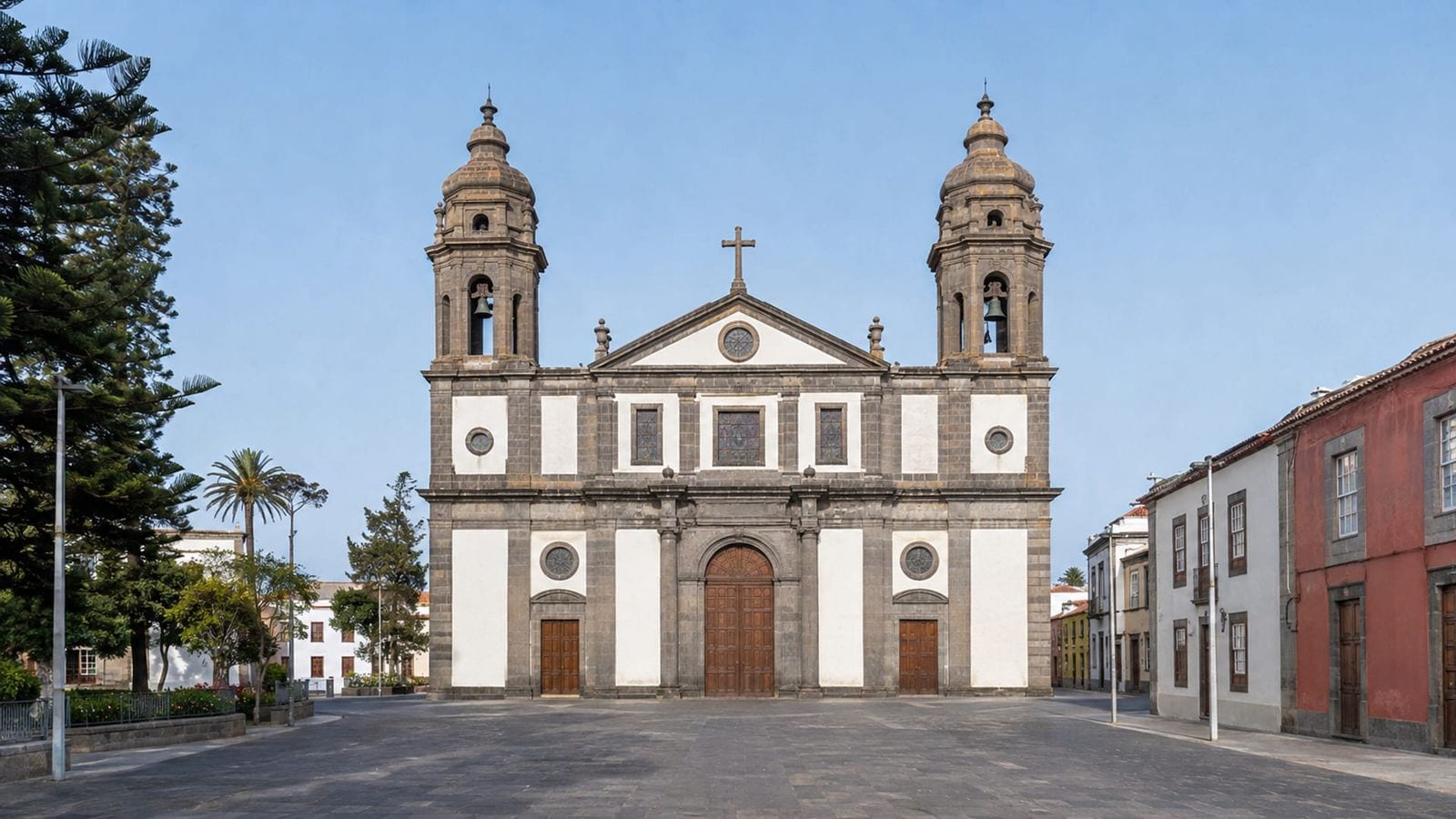
A final morning in Puerto de la Cruz keeps the last day lighter without making it feel empty. Walk along Paseo de San Telmo, stop at the 18th-century Ermita de San Telmo, and spend some time by the black-sand coast before coffee or an early lunch. If your flight leaves later, add a short walk through the historic streets nearby. Then collect your luggage and head to the airport, leaving extra time if you need to cross the island for a flight from Tenerife South (TFS).
Business-class flights from the US to Tenerife
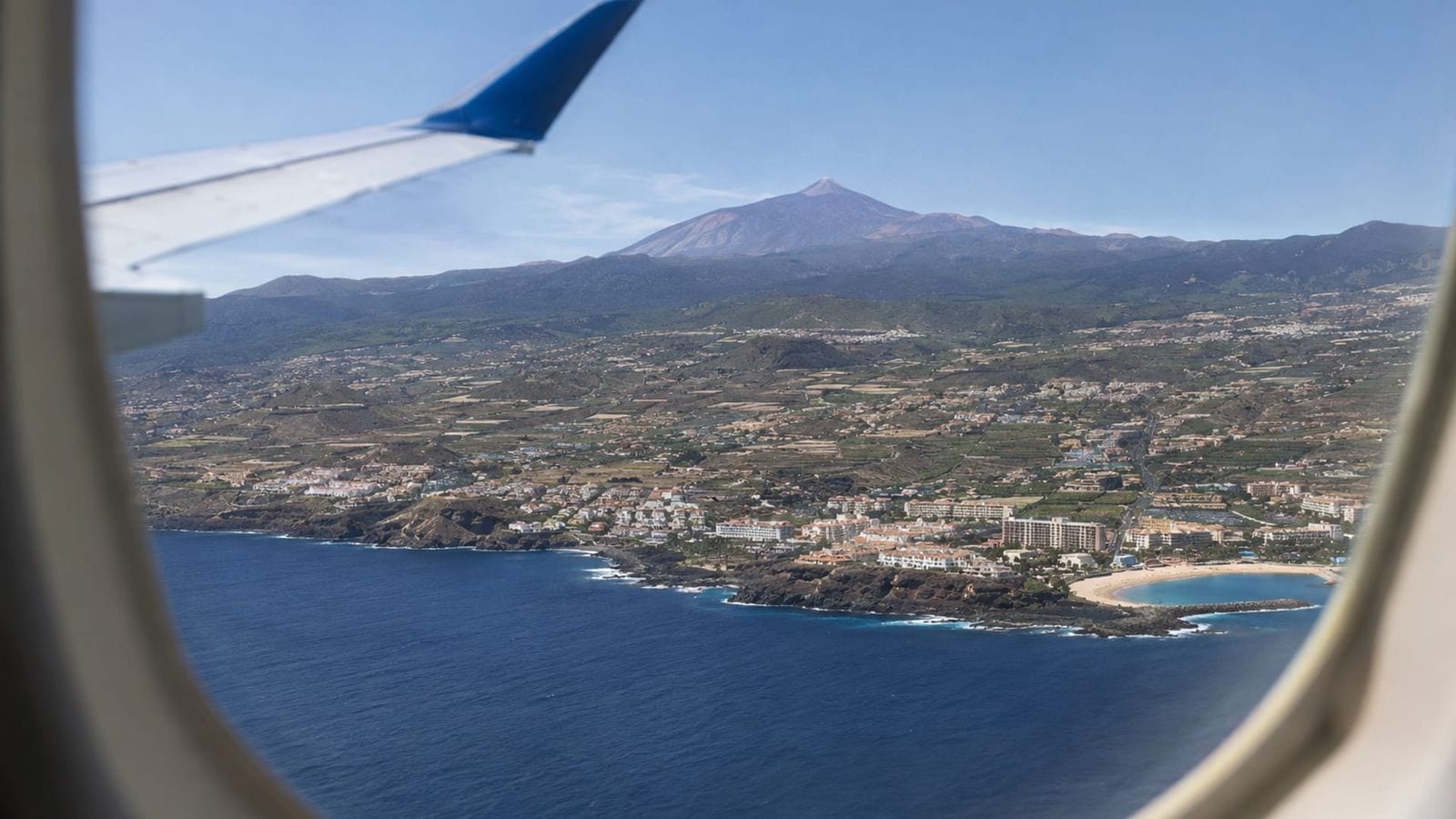
There are no nonstop flights from New York or Los Angeles to Tenerife, so most business-class trips connect through Madrid, London, Lisbon, or another European hub.
New York (JFK) to Tenerife (TFS)
From JFK Airport in New York, Iberia, TAP Air Portugal, British Airways, Aer Lingus, and Royal Air Maroc offer one-stop options to Tenerife South Airport (TFS). Connections include Madrid (MAD), Lisbon (LIS), London (LHR), and Casablanca (CMN). The quickest journeys start at 9.5 hours, while trips with longer layovers can exceed 15 hours. Round-trip business-class tickets generally range from $3,000 to $6,500.
Los Angeles (LAX) to Tenerife (TFS)
From LAX, Iberia, British Airways, Air France, TAP Air Portugal, Air Canada, and Royal Air Maroc offer one-stop itineraries to Tenerife South Airport (TFS). The layover cities include Madrid (MAD), London (LHR), Paris (CDG), Lisbon (LIS), Toronto (YYZ), and Casablanca (CMN). The fastest trips take roughly 14.5–16 hours, while longer connections can exceed 20 hours. Business-class tickets on this route often fall between $4,500 and $7,500.
Tenerife in five days
Tenerife works best when the trip has a clear rhythm, with enough space between city time, mountain scenery, and the coast. That does not mean planning every hour. It means knowing which parts of the island belong together and where to leave room for weather, longer meals, or an unplanned stop. With the main parts of the trip planned, our travel experts at AranGrant can help you compare business-class flights and hotels that fit your dates and travel preferences.







