

Chapters:

Need help with your trip?
Our support team is available 24/7. Request a callback or call us directly at (833) 619-0908
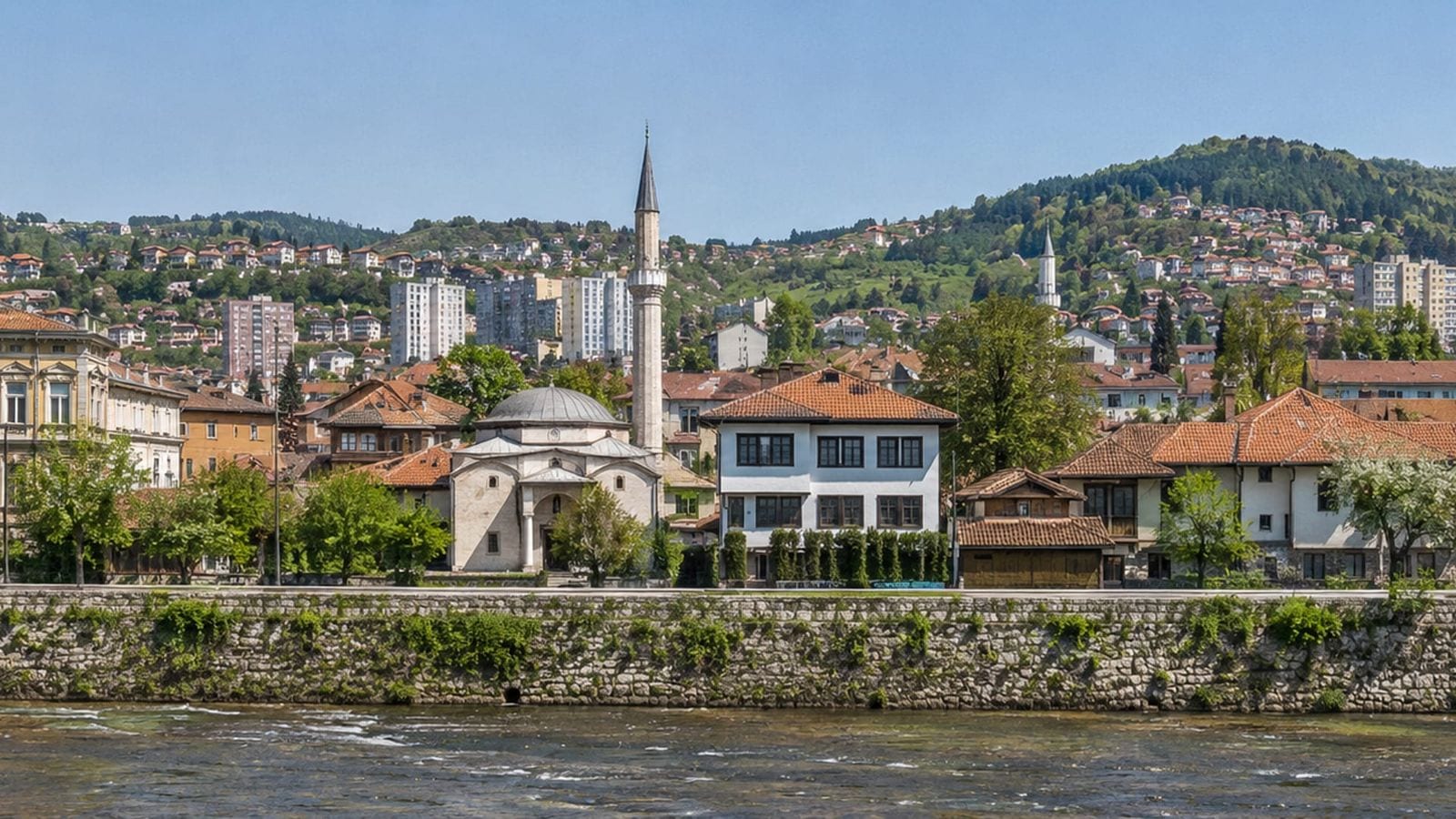
Sarajevo stretches through a narrow valley, with the Miljacka River and the city’s main roads running between steep hills on both sides. In the center, Baščaršija brings together Ottoman-era streets, mosques, cafés, and traditional shops, while Austro-Hungarian buildings appear only a short walk away.
That contrast shapes much of the city. You can spend the morning around the old bazaar, stop for Bosnian coffee, then continue toward museums, riverside streets, or neighborhoods farther west. Some attractions lie well beyond the center, so a little planning helps you balance sightseeing with longer meals, tram rides, and quieter time between stops.
Useful things to know

Main language(s): Bosnian, Croatian, Serbian
Dobar dan (DOH-bar dahn) – Hello / Good day
Molim (MO-leem) – Please
Hvala (HVAH-lah) – Thank you
Govorite li engleski? (GO-voh-ree-teh lee ENG-lehs-kee) – Do you speak English?
Koliko košta? (KOH-lee-koh KOSH-tah) – How much does it cost?

Currency: Bosnia and Herzegovina mark (BAM, KM)

Cash and cards: Most hotels, restaurants, and larger shops accept cards. Keep BAM 30–BAM 50 ($18–$30) for cafés, markets, transport tickets, and small purchases.

Tipping: Tipping is optional. Round up smaller bills or leave 5%–10% in restaurants when you receive good service.

Traditional food: Ćevapi, burek, sarma, bosanski lonac, sogan-dolma, and tufahija are among the best-known Bosnian foods you can try in Sarajevo.

Water and coffee costs: Bottled water commonly costs BAM 2–BAM 3 ($1–$2), while Bosnian coffee or espresso costs BAM 3–BAM 5 ($2–$3).

Taxis and ride apps: Uber and Bolt do not operate in Sarajevo. Use licensed taxis or order Sarajevo Taxi through the mojTaxi app.

Plug and voltage: Bosnia and Herzegovina uses Type C and F plugs with a 230V supply. US travelers need a plug adapter and should check device voltage.

Dining and shop opening hours: Restaurants commonly serve lunch from 12:00 pm and dinner from 7:00 pm. Many stores close near 8:00 pm, while shopping centers often stay open until 10:00 pm.

Emergency number: Call 122 for police, 123 for firefighters, or 124 for an ambulance. Bosnia and Herzegovina has not yet introduced 112 nationwide.
Where to stay in Sarajevo
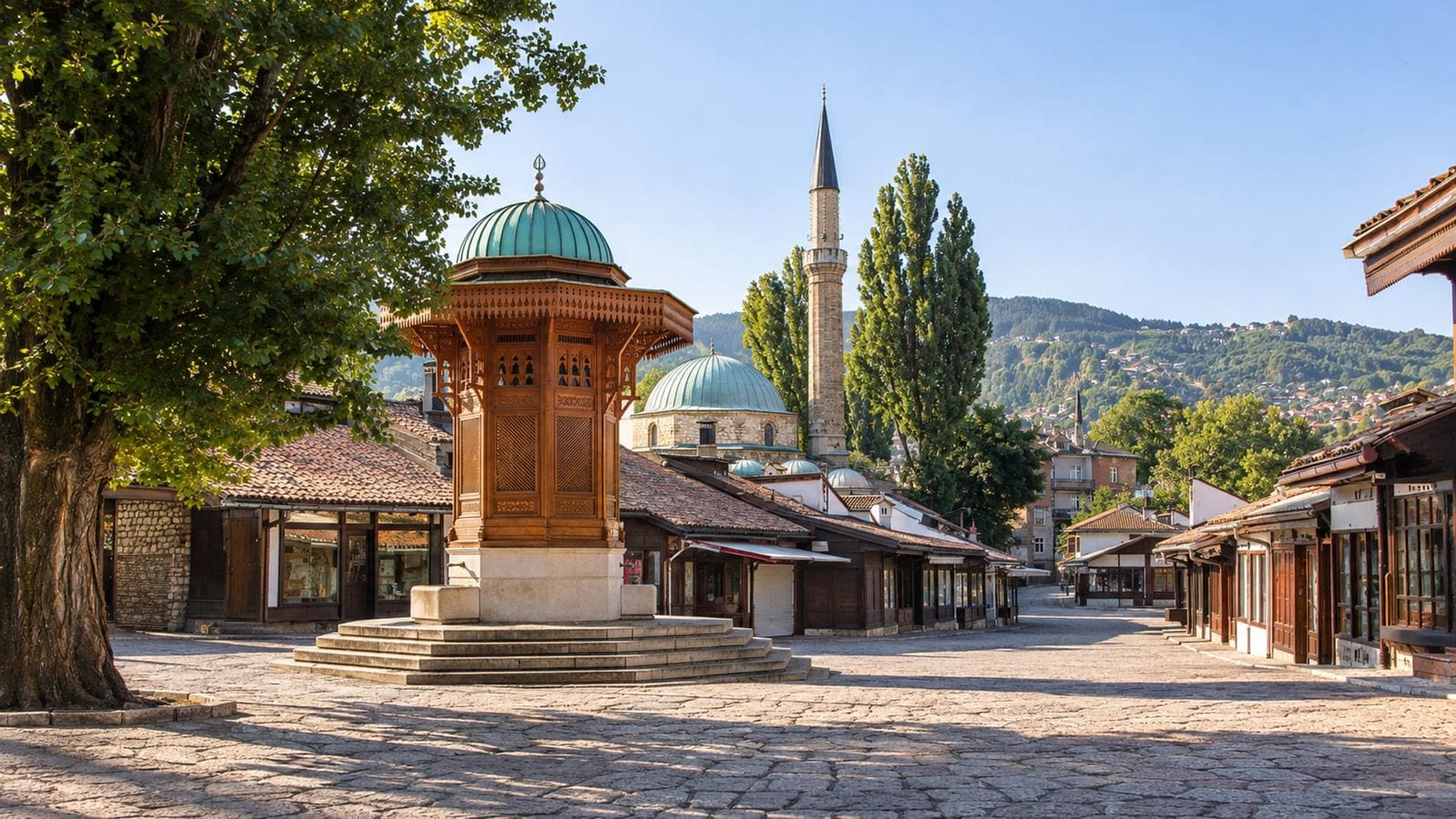
At the eastern end of central Sarajevo, Baščaršija feels compact and intensely historic. Stone lanes wind past mosques, coffeehouses, bakeries, and copper workshops, while the Miljacka runs just below the quarter. Most of the old city’s headline sights are only a few minutes apart.
Best for: First-time visits, historic sights, and travelers who want to stay in the oldest part of the city
What to expect: Narrow pedestrian streets, steady daytime foot traffic, and the busiest concentration of visitors in the city center.
Hotel prices: Usually about €90 to €180 (~$99 to ~$198) per night for well-rated stays
Distance to major sights: On foot, about 5 minutes to the Gazi Husrev-beg Mosque and about 10 minutes to Sebilj Square
Quietness: Busy through the day, then noticeably calmer late at night once day visitors leave.
Main trade-off: The most central streets can be noisy in the morning, and some rooms sit in older buildings without elevators or generous soundproofing.
Good to know: Choose a side street if you want old-town access without staying directly above the busiest lanes.
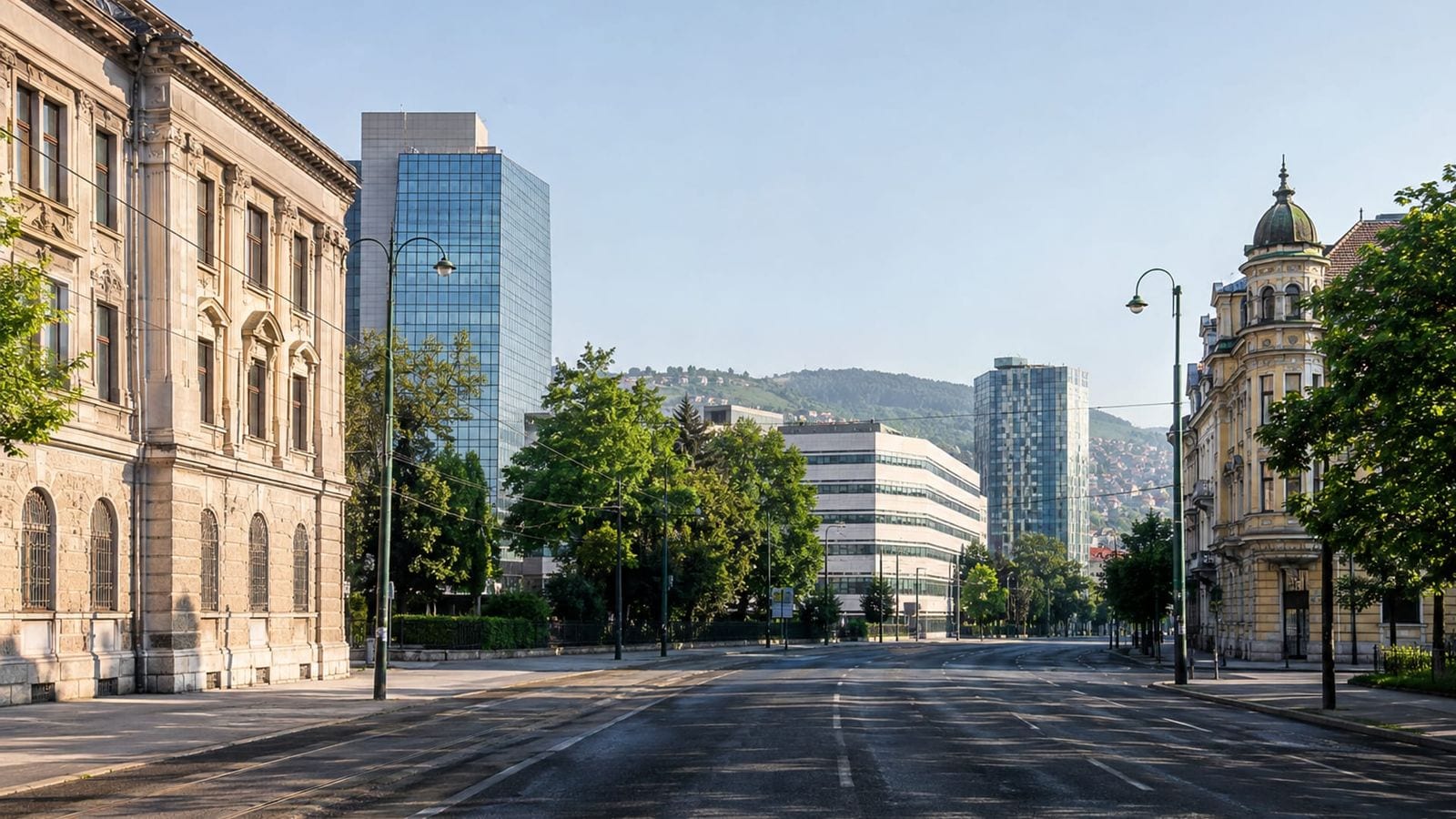
Marijin Dvor marks the point where historic Sarajevo gives way to a broader, more modern cityscape. West of the old town, its avenues are lined with museums, offices, malls, embassies, and larger hotels. The National Museum and frequent trams make it an easy area for longer stays.
Best for: Business trips, tram access, and travelers who want an easier split between the old town and newer districts
What to expect: Broad avenues, commuter traffic, and more locals moving through than sightseers after office hours.
Hotel prices: Usually about €80 to €160 (~$88 to ~$176) per night for well-rated stays
Distance to major sights: About 15 minutes on foot to the National Museum and about 20 minutes by tram or taxi to Baščaršija
Quietness: Quieter at night than the old town, but traffic stays noticeable during the day.
Main trade-off: You gain easier parking and larger hotels, but you give up the compact, atmospheric streets that many visitors want after dark.
Good to know: A hotel near the tram corridor makes trips east toward Baščaršija especially simple.
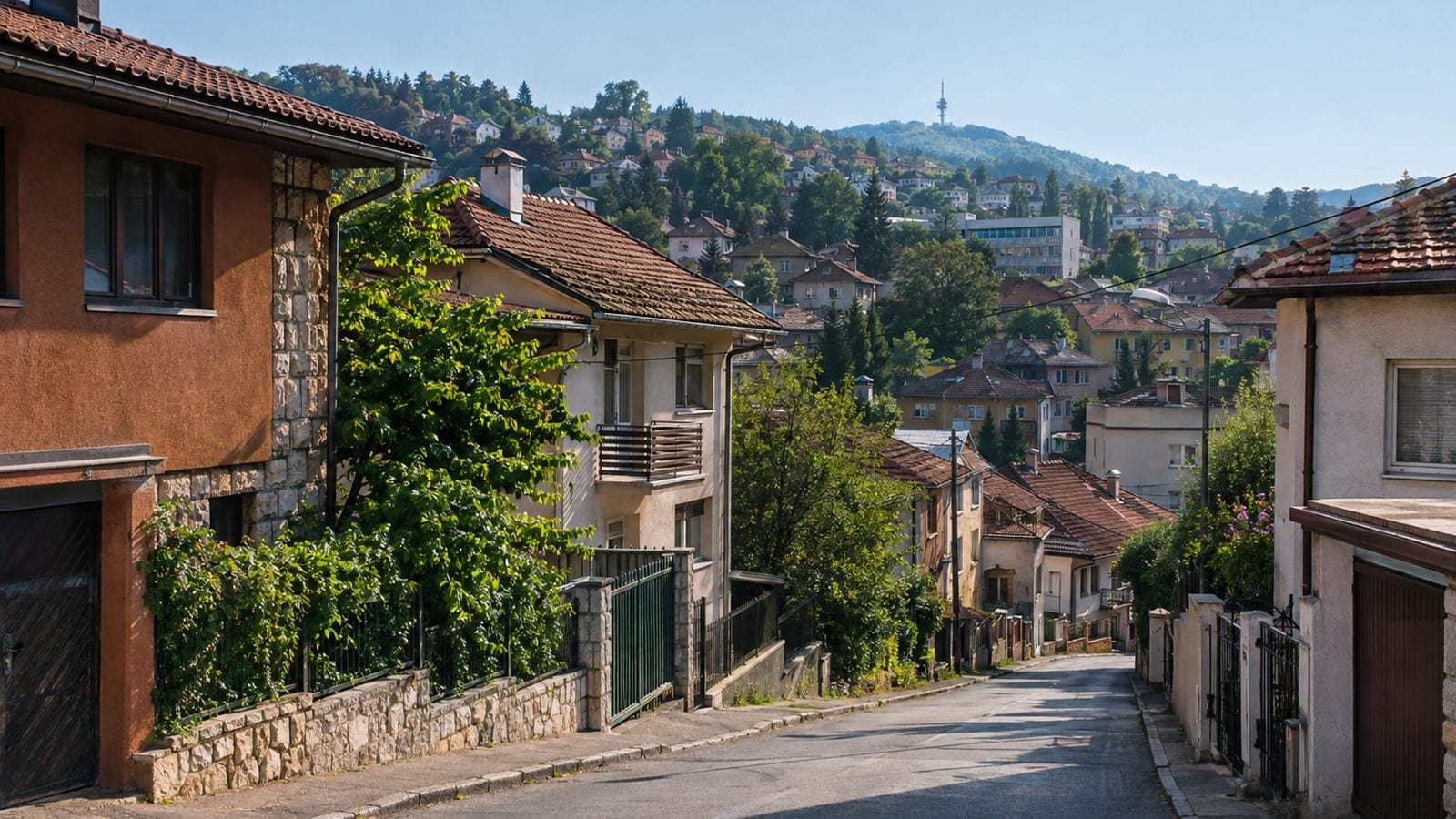
North of the center, Bjelave climbs onto Sarajevo’s lower slopes and feels noticeably more residential. Older houses, apartment blocks, local shops, and hillside streets replace the tourist traffic of Baščaršija, while higher points open up views across the valley and city rooftops.
Best for: Longer stays, quieter nights, and travelers who want a more local residential setting near the center
What to expect: Apartment blocks, neighborhood shops, and lighter street life than in the tourist core.
Hotel prices: Usually about €60 to €120 (~$66 to ~$132) per night for well-rated stays
Distance to major sights: About 20 minutes on foot to Baščaršija and about 10 minutes by taxi to the Latin Bridge
Quietness: Calm in the evening, with more weekday movement during school and commuting hours.
Main trade-off: The hills can make walking back from the center tiring, especially with luggage or after a long day out.
Good to know: Check the exact street before booking, since elevation changes quickly across the neighborhood.
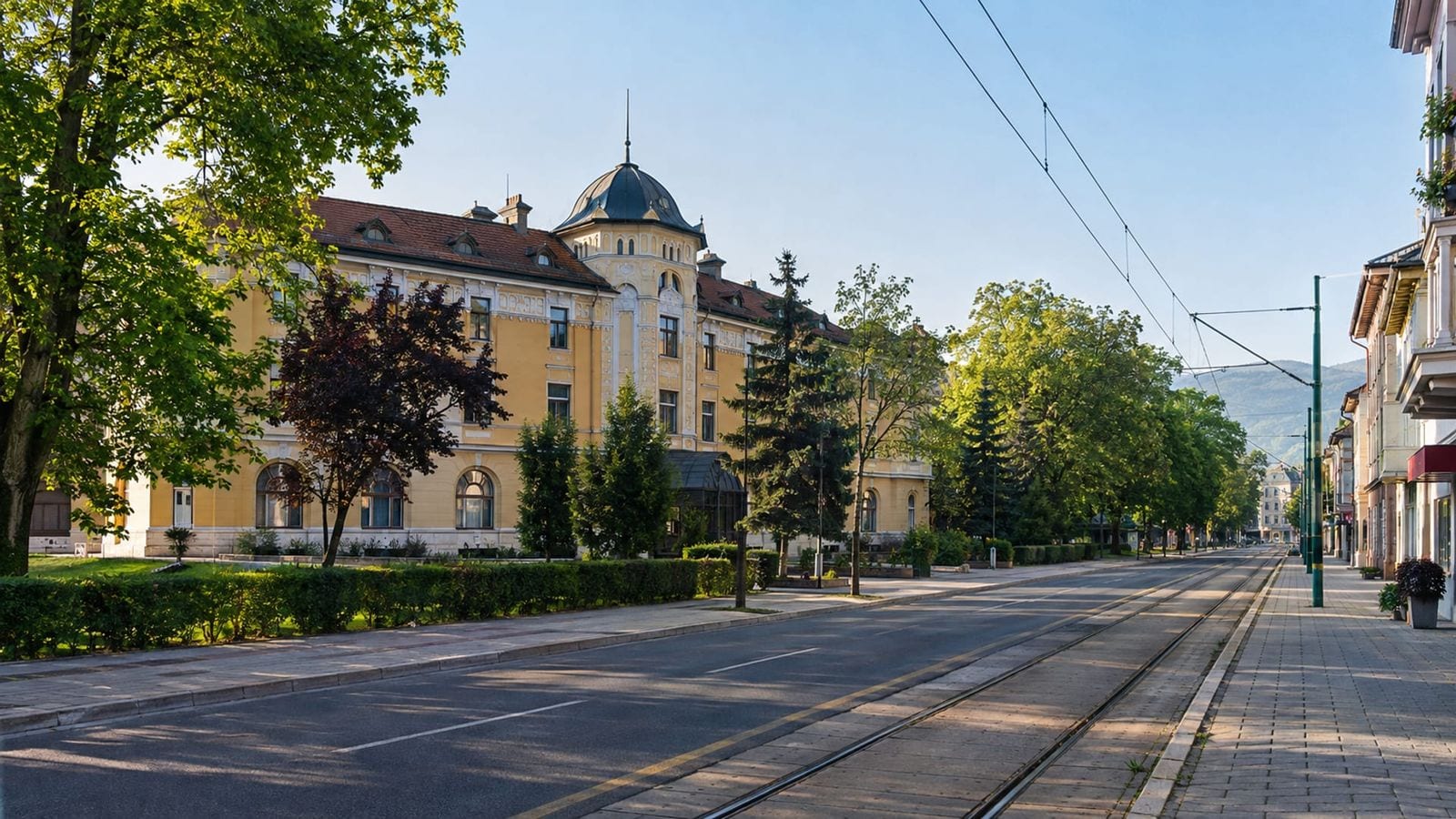
Ilidža offers a greener, more open setting on Sarajevo’s western edge, close to the airport and the foothills of Mount Igman. Spa hotels, broad avenues, and parks shape the area, while the long, tree-lined Velika Aleja leads toward Vrelo Bosne, one of the city’s favorite outdoor escapes.
Best for: Airport access, larger hotels, and travelers who do not mind staying outside the historic core
What to expect: Wide roads, resort-style hotels, and families using the parks and river paths, especially on weekends.
Hotel prices: Usually about €70 to €140 (~$77 to ~$154) per night for well-rated stays
Distance to major sights: About 25 to 35 minutes by tram to Baščaršija and about 10 minutes by taxi to Sarajevo (SJJ)
Quietness: Generally quieter than the center at night, though some hotel zones stay active with airport and weekend traffic.
Main trade-off: You will spend more time reaching the old town, so evening outings often need a taxi or a longer tram ride.
Good to know: Ilidža makes more sense if parks, spa facilities, or airport access is more important than proximity to the old town.
If Baščaršija is your priority, choose a central hotel over Ilidža or the airport side of Novi Grad. Those western districts suit early flights or spa stays, while central areas give you easier access to historic sights and evening dining.
Hotel deals
How to get around Sarajevo efficiently
Sarajevo’s trams cover the main east-west corridor, while buses, airport coaches, and taxis handle districts beyond the central route.

Trams and city buses
for longer distances
Tram line 3 links Baščaršija with Ilidža, while buses and trolleybuses reach hillside neighborhoods and districts beyond the tram network. A single GRAS ticket costs BAM 2.20 ($1), and a day ticket costs BAM 7.10 ($4). Buy tickets at GRAS kiosks and validate them after boarding.

Airport bus
for convenience
Centrotrans runs direct buses between Sarajevo International Airport (SJJ) and Baščaršija/Bentbaša. A one-way ticket costs BAM 5 ($3) and includes one bag up to 51 pounds (23 kg). Buy your ticket from the driver or through the CentroCard app, and check the timetable before your flight.

Taxi
for convenience or late hours
Licensed taxis make sense for airport transfers, steep neighborhoods, and journeys after public transport becomes less frequent. Most start at BAM 1.90 ($1) and charge BAM 1.20 ($1) per kilometer. Use an official rank or taxi company and make sure the driver starts the meter.
*Prices are based on rates updated as of June 2026 and may change at the time of travel.
Use trams and buses for most daytime trips, the airport bus for a low-cost arrival, and taxis when luggage, hills, or late hours make a direct ride easier.
Iconic landmarks
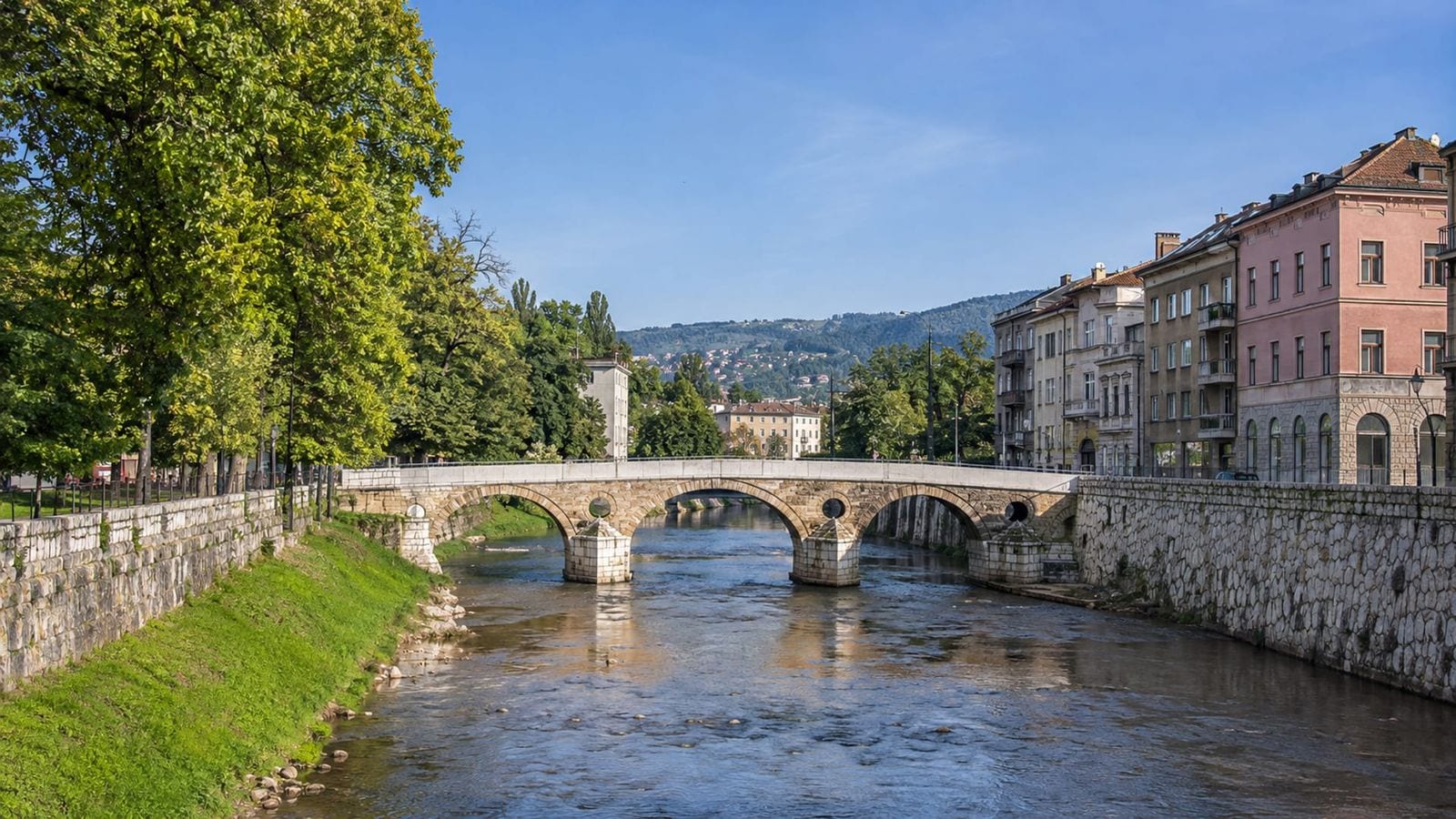
Latin Bridge
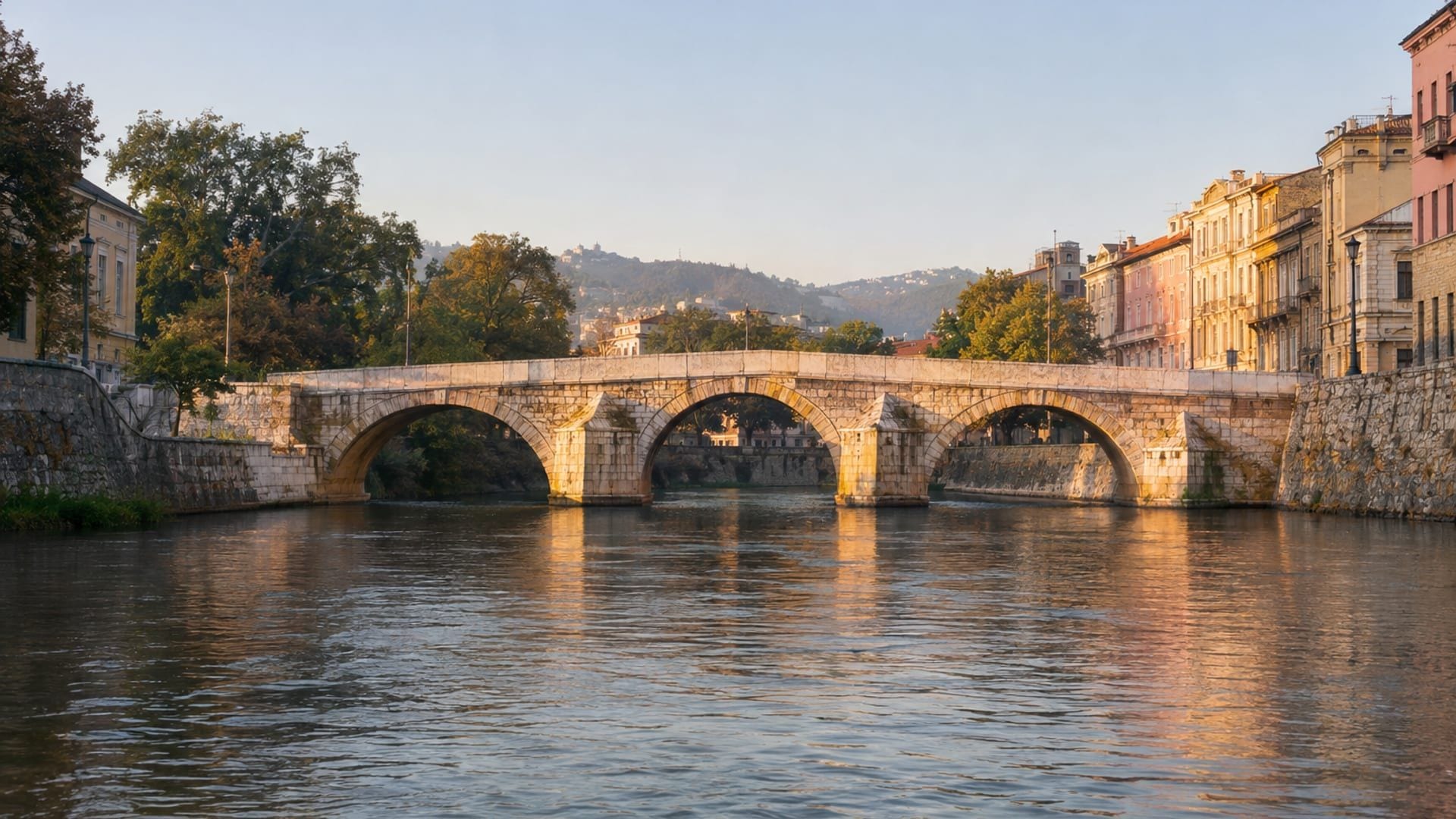
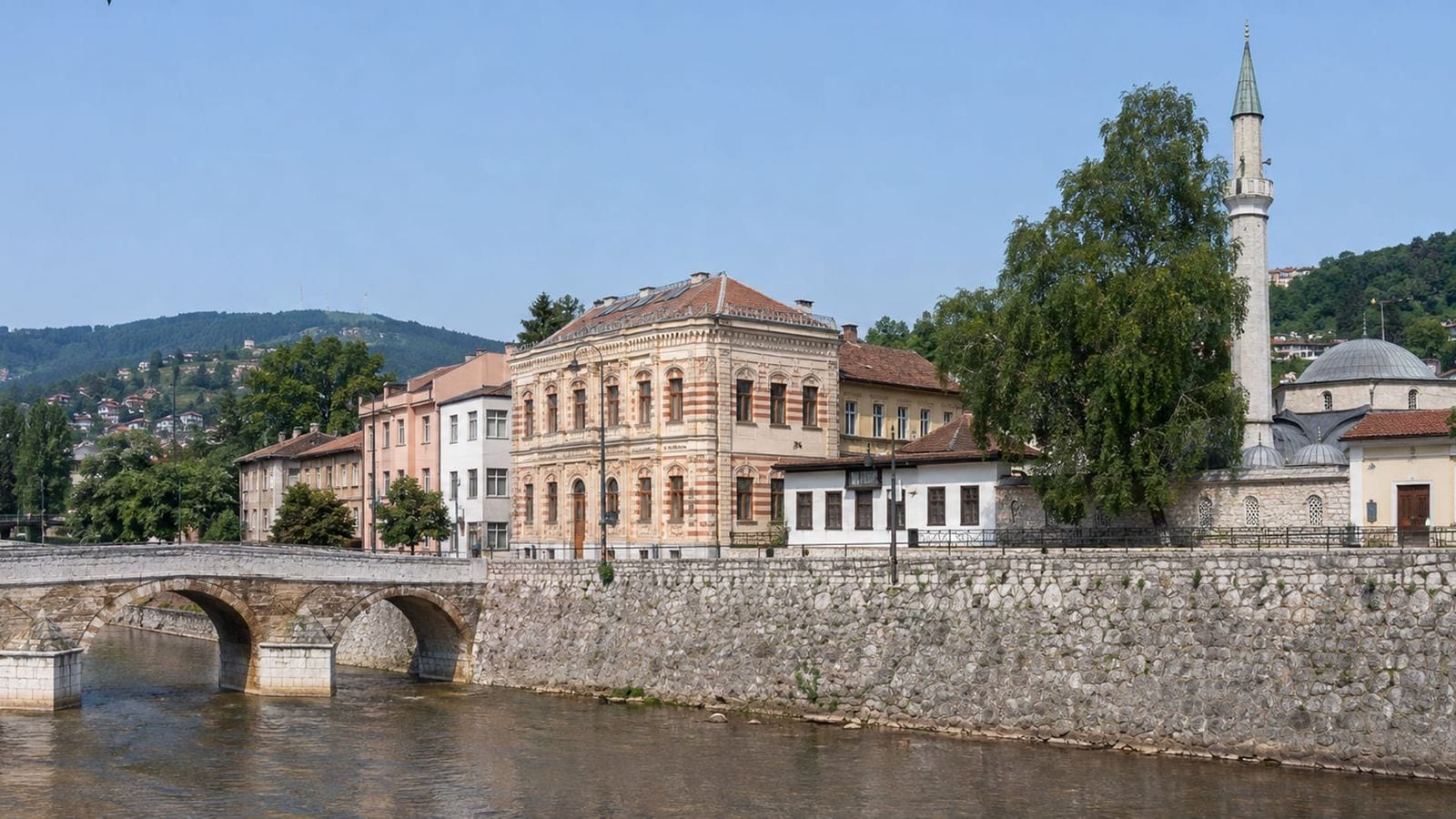
Latin Bridge crosses the Miljacka beside the site where Archduke Franz Ferdinand and Sophie, Duchess of Hohenberg, were assassinated in 1914. Its stone arches and riverside setting connect central Sarajevo with the event that helped trigger the First World War.
Time needed: 20–30 minutes
Entry: The bridge is free to visit, and you do not need a ticket or advance booking.
Tip: Cross to the opposite riverbank for a clearer view of the bridge and nearby buildings.
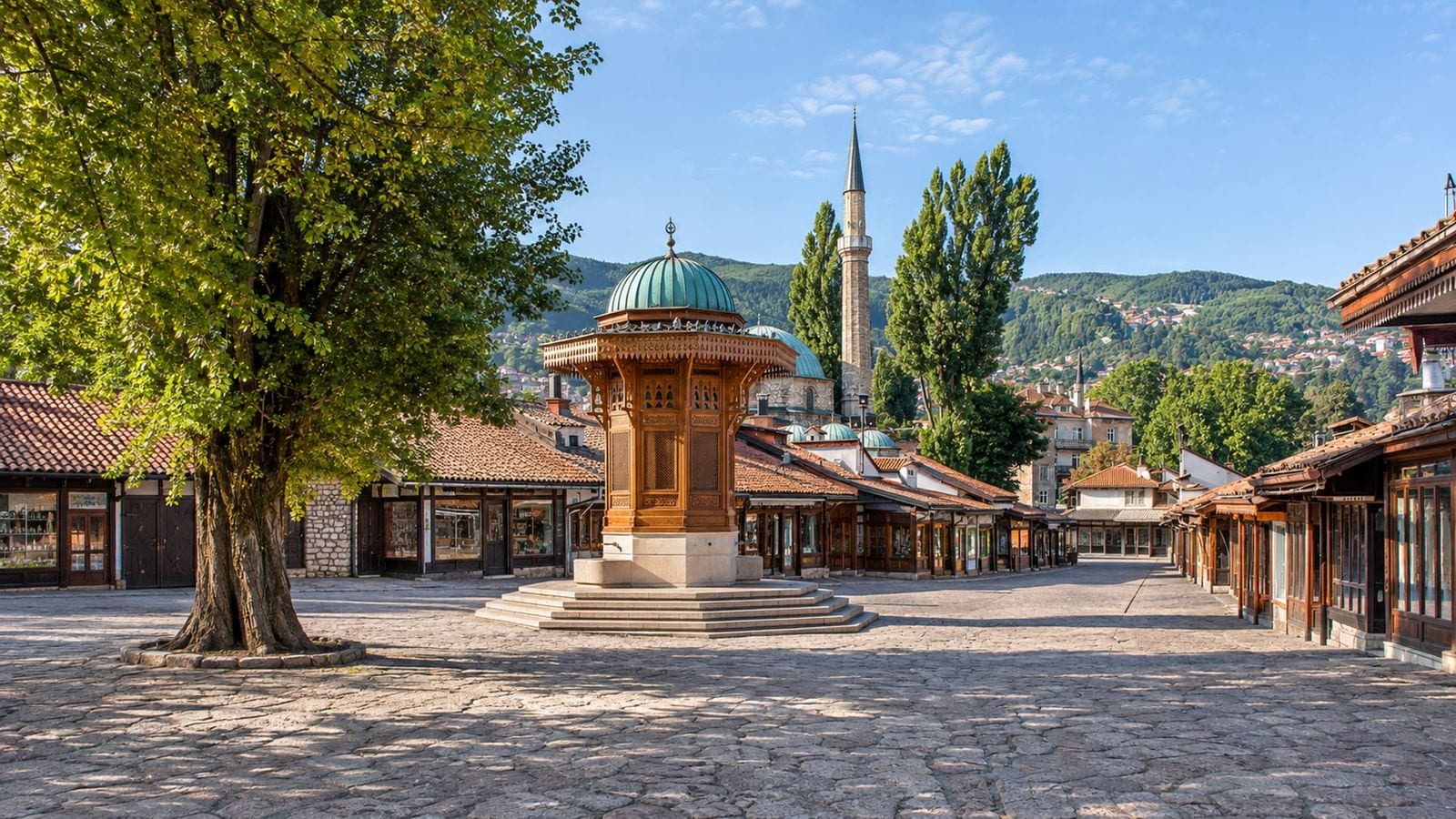
Bascarsija
Baščaršija forms Sarajevo’s historic center, where Ottoman-era lanes lead past mosques, fountains, coffeehouses, bakeries, and copper workshops. The quarter grew around trade and craftsmanship, and its narrow streets still preserve much of that character today.
Time needed: 2–3 hours
Entry: The bazaar entry is free, while museums and religious sites charge an entrance fee. Visit the official site for details.
Tip: Visit in the morning for quieter lanes and more time to browse the craft workshops.
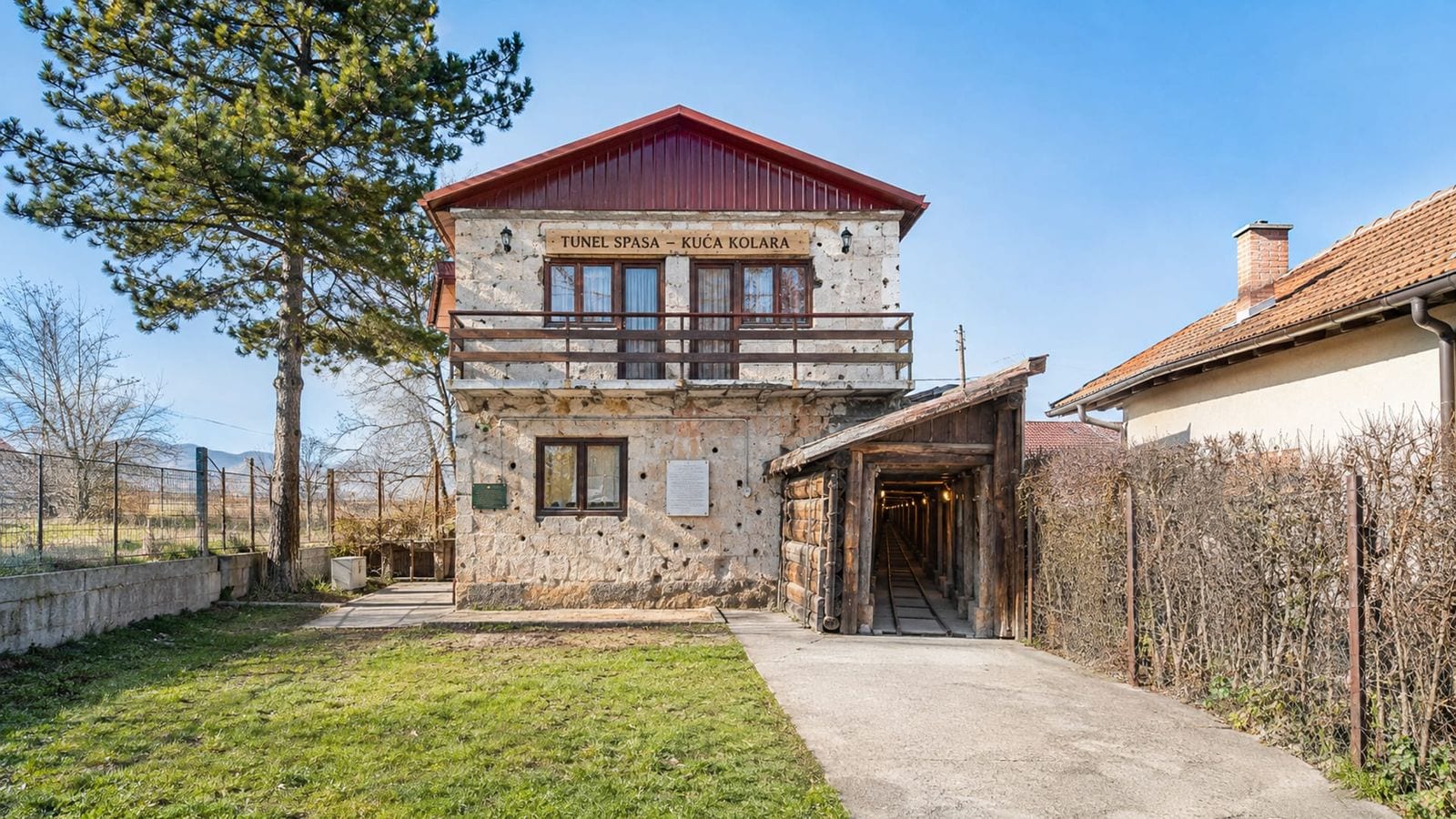
Tunnel of Hope
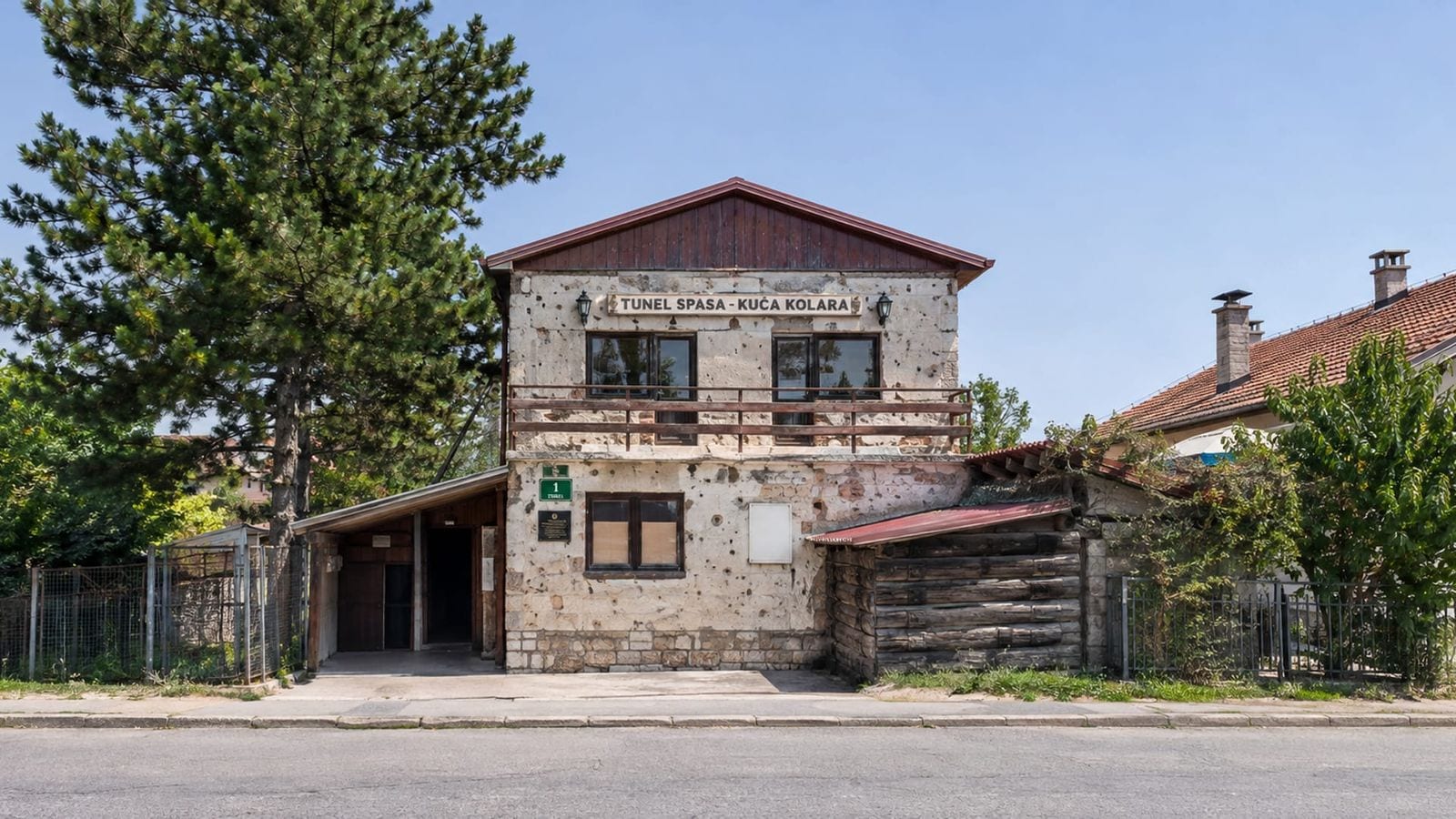
The Tunnel of Hope preserves part of the passage dug beneath Sarajevo Airport in 1993 to connect the besieged city with territory outside the siege line. Exhibits, photographs, wartime objects, video footage, and a surviving tunnel section explain how people and supplies moved through it.
Time needed: 1–2 hours
Entry: Adults pay BAM 20 ($12), students pay BAM 8 ($5). Children under 6 enter free. Visit the official site for details.
Tip: Bring BAM in cash because the museum does not accept cards or foreign currencies.
Overlooked sites worth visiting

Svrzo’s House
Svrzo’s House preserves an 18th-century Bosnian Muslim home with courtyards, gardens, family rooms, and traditional interiors that show how a wealthy Sarajevo household once lived.
Time needed: 45 minutes–1 hour
Entry: Adults pay BAM 5 ($3); students pay BAM 2 ($1). No advance booking is required. Visit the official site for details.
Tip: Visit earlier in the day so you have more time to explore the courtyards and rooms.

Vrelo Bosne
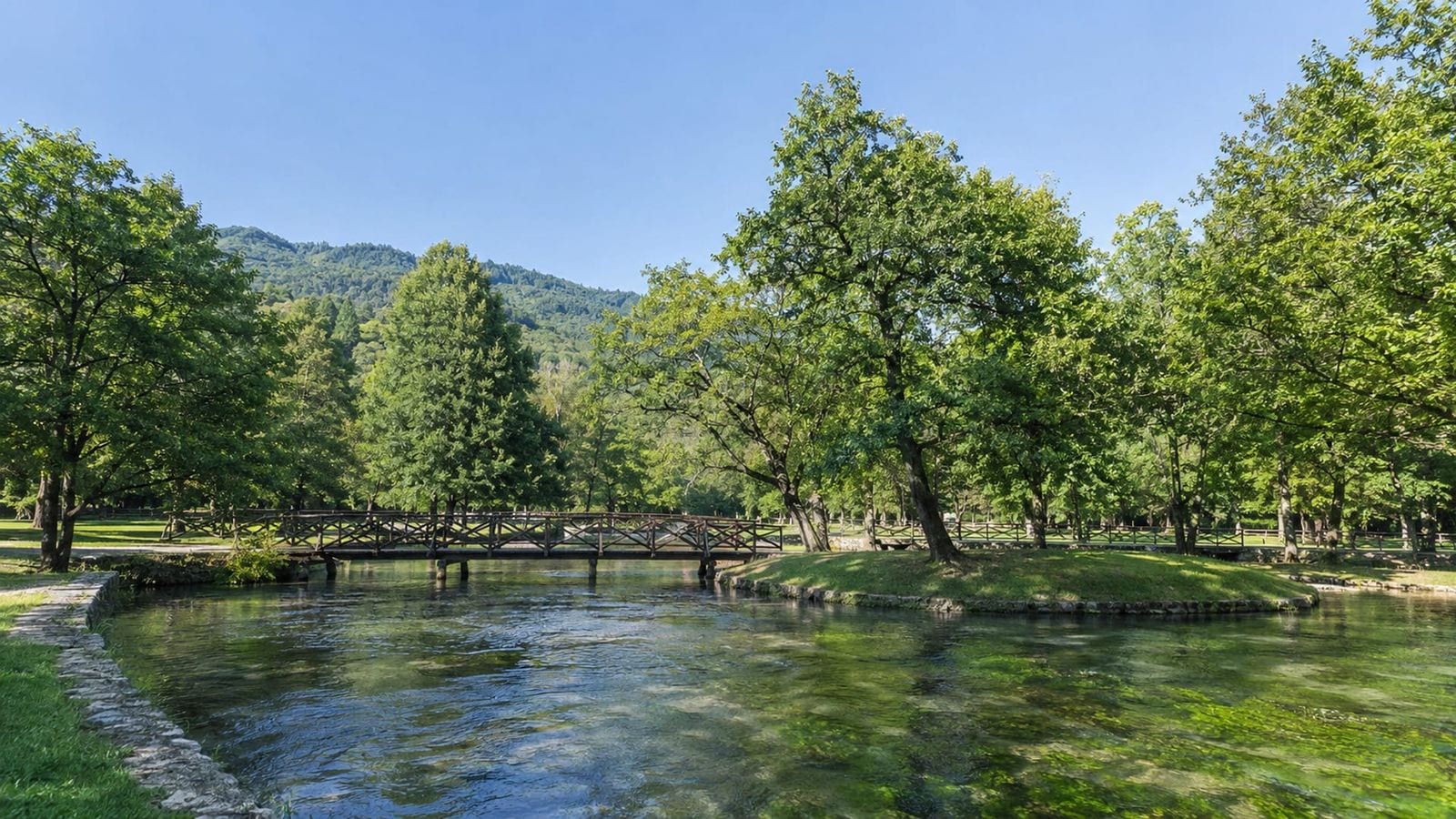
Vrelo Bosne surrounds the source of the Bosna River with wooded paths, streams, small bridges, and ponds near Ilidža. Velika Aleja leads toward the park beneath rows of mature trees.
Time needed: 2–3 hours
Entry: Park admission costs BAM 3 ($2) for adults; children aged 6–18 pay BAM 2 ($1). No booking is needed.
Tip: Pair the park with a walk along Velika Aleja and visit before the afternoon gets busier.
Traditional food
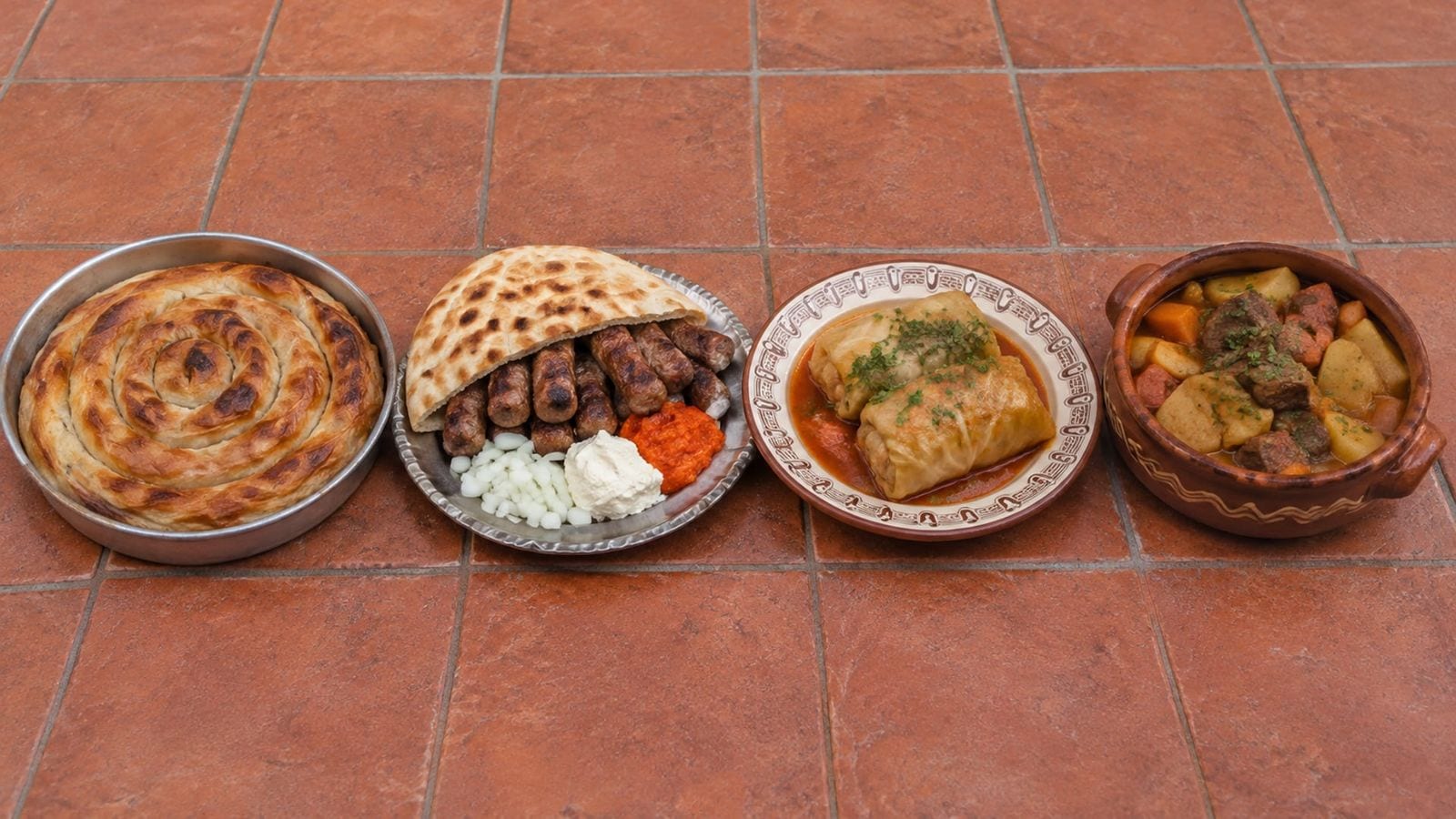
Sarajevo cuisine centers on grilled meat, filled pastries, slow-cooked vegetables, and rich stews, with recipes shaped by Ottoman and Balkan traditions.
Burek
Burek wraps seasoned minced meat in thin, flaky pastry, then bakes it until the pastry is crisp on the outside and soft on the inside. Buregdžinica ASDŽ serves burek and other traditional Bosnian pies in Baščaršija.
Ćevapi
Ćevapi are small grilled beef sausages served in warm somun bread with chopped onion, while kajmak often comes on the side. Ćevabdžinica Željo in Baščaršija serves the traditional Sarajevo version.
Sarma
Sarma is minced meat and rice wrapped in cabbage leaves, then slowly cooked until the filling is tender and the cabbage softens. Nanina Kuhinja serves it alongside other traditional Bosnian dishes.
Bosanski lonac
Bosanski lonac is a slow-cooked stew of meat and vegetables layered in a pot until the ingredients turn tender and the broth develops a rich flavor. Aščinica ASDŽ lists the dish on its current Sarajevo menu.
Best time to visit Sarajevo
Late spring and early fall bring comfortable sightseeing weather, while summer favors long evenings and winter brings snow and colder days.
Best for: Baščaršija walks, Vrelo Bosne, café terraces, and longer sightseeing days
What you get: March starts near 34°F–52°F (1°C–11°C), while May reaches 48°F–70°F (9°C–21°C), with greener parks and milder afternoons.
Trade-offs: Spring brings frequent rain, especially in April and May, so outdoor plans need some flexibility.
Best for: Long evenings, outdoor dining, hillside views, festivals, and day trips
What you get: Expect 55°F–83°F (13°C–28°C), long daylight hours, warm evenings, and the liveliest period for outdoor events and cafés.
Trade-offs: July and August can bring hot afternoons and larger crowds in Baščaršija.
Best for: Comfortable city walks, museums, Bosnian food, and quieter historic streets
What you get: September can reach 73°F (23°C), but November highs fall near 51°F (11°C), bringing crisp weather and noticeably fewer visitors.
Trade-offs: Rain and shorter daylight become more noticeable from October into November.
Best for: Museums, Bosnian coffee, winter scenery, and skiing in the nearby mountains
What you get: Daytime highs hover near 39°F–45°F (4°C–7°C), while nights often fall below freezing and snow can cover the city and hills.
Trade-offs: Snow, ice, and short daylight hours can make hillside walks and outer sights harder to reach.
A realistic 5-day plan in Sarajevo
Five days give you enough time to see Sarajevo. You can explore the historic center, spend time with the city’s wartime history, head west toward Ilidža, and still leave room for coffee, long meals, and quieter afternoons.
After landing at Sarajevo International Airport (SJJ), take a taxi to Baščaršija, Marijin Dvor, or your chosen hotel. Once you have checked in, an easy first evening makes sense. Walk through the old center, stop near Sebilj for Bosnian coffee, and have dinner nearby. Ćevapi or burek make a simple first meal. If there is still daylight outside, wander toward the Miljacka before returning to your hotel.
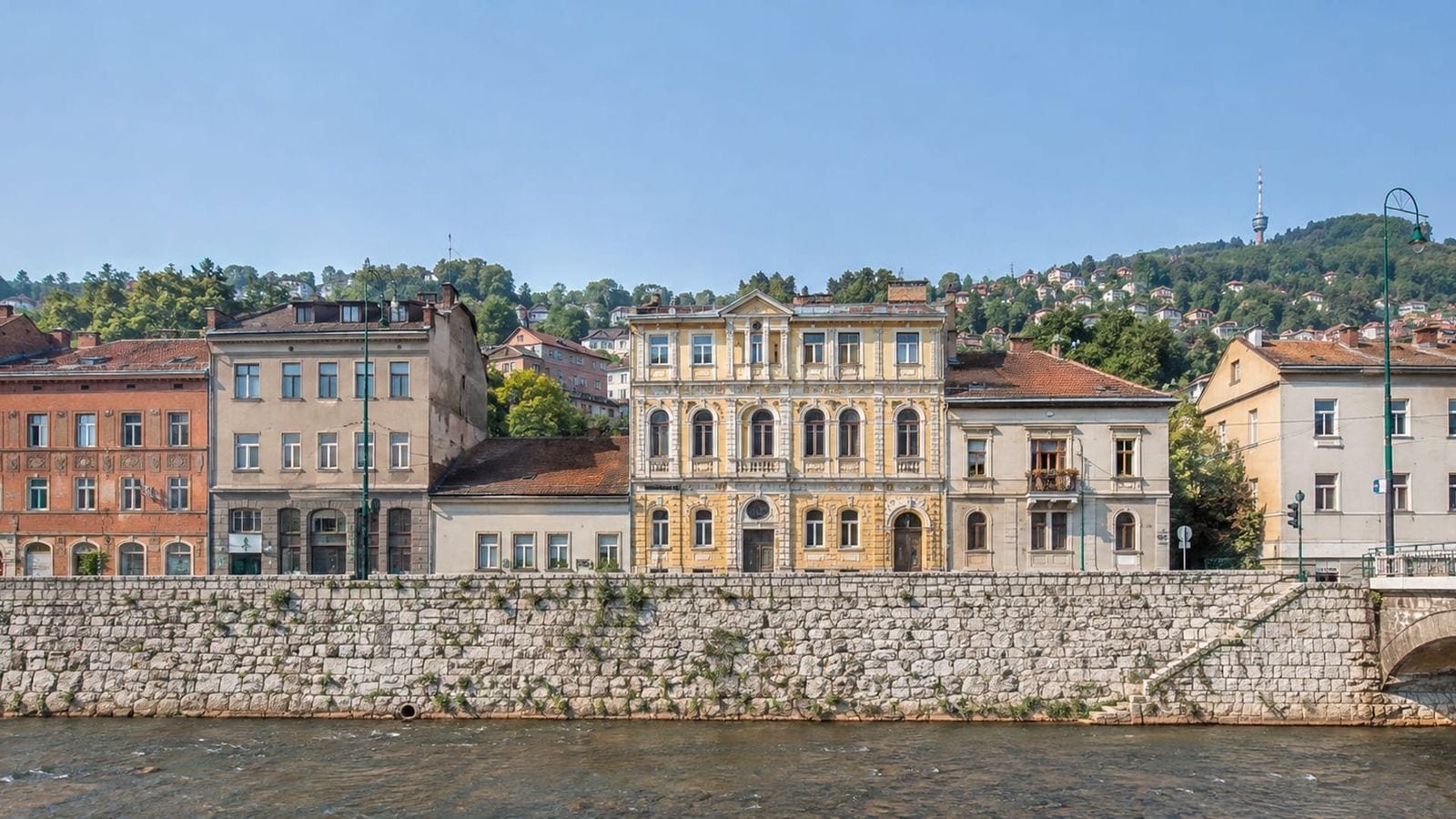
Sarajevo’s oldest streets deserve most of the second day. In Baščaršija, allow time for Gazi Husrev-beg Mosque, Sebilj, the copper workshops, and a coffee stop between them. After lunch, walk toward Sarajevo City Hall and follow the Miljacka to Latin Bridge. The short distances leave plenty of time to browse the bazaar, step inside historic buildings, and linger over dinner.
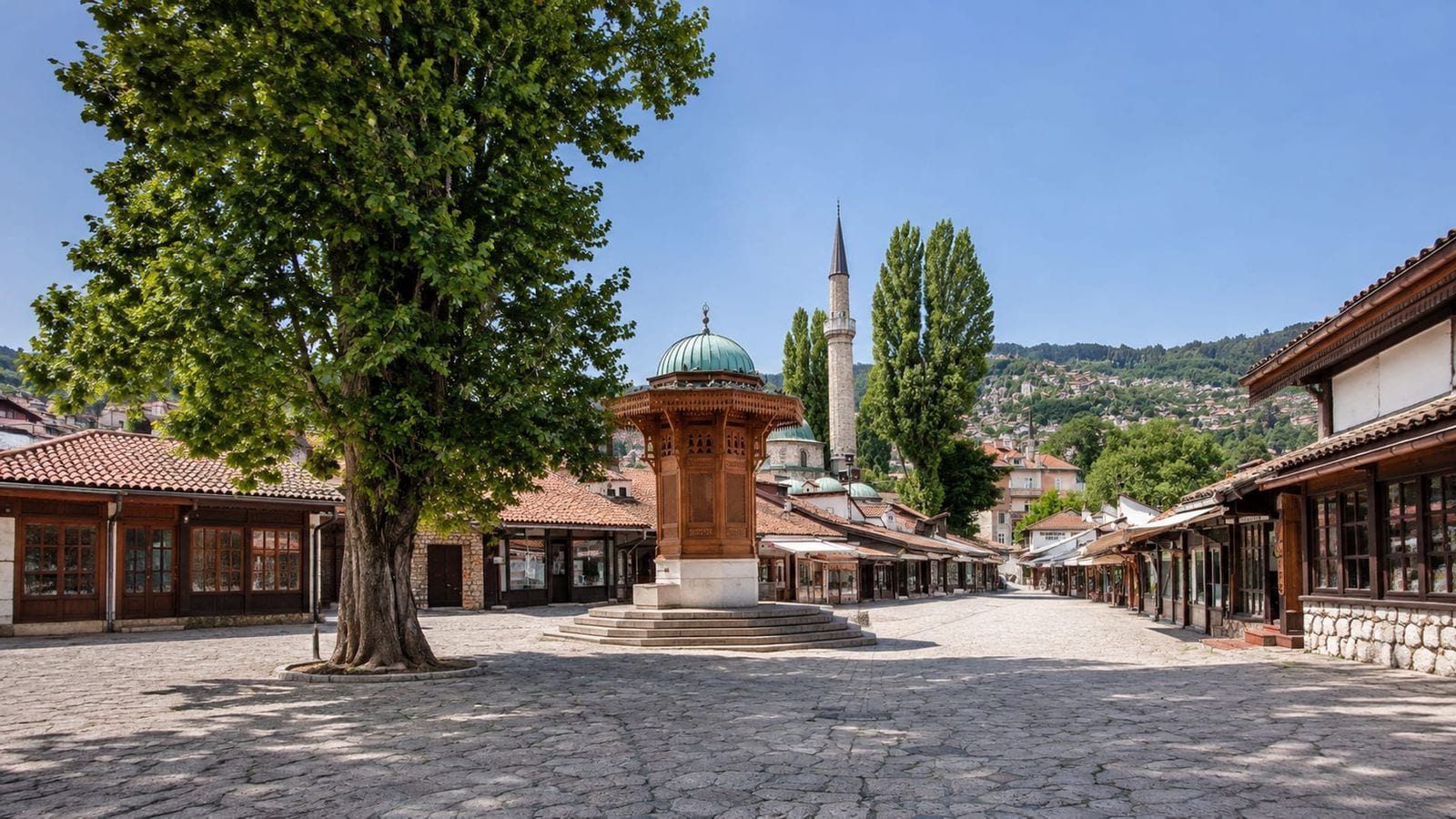
For a deeper understanding of Sarajevo’s recent history, head to the Tunnel of Hope in the morning. Allow 1–2 hours for the exhibits, wartime objects, footage, and surviving tunnel section. Later, return toward Marijin Dvor for lunch and visit the History Museum of Bosnia and Herzegovina if you want more context on life during the siege. A relaxed dinner in the center fits naturally after a heavier day.
Sarajevo looks very different on its greener western edge. Take the tram toward Ilidža, then continue to Velika Aleja and Vrelo Bosne, where wooded paths, streams, bridges, and springs stretch beneath the surrounding mountains. Allow 2–3 hours in the park, followed by a late lunch in Ilidža. On a warm, clear day, staying longer outdoors makes more sense than adding another attraction.
If your flight leaves later in the day, the National Museum gives the final morning a clear focus without making it rushed. Allow 2–3 hours for its archaeology, ethnology, natural history collections, and the Sarajevo Haggadah, then stop for coffee or lunch nearby. If the museum closes that day, choose Svrzo’s House or a final walk through Baščaršija before collecting your luggage and heading to the airport.
Business-class flights from the US to Sarajevo
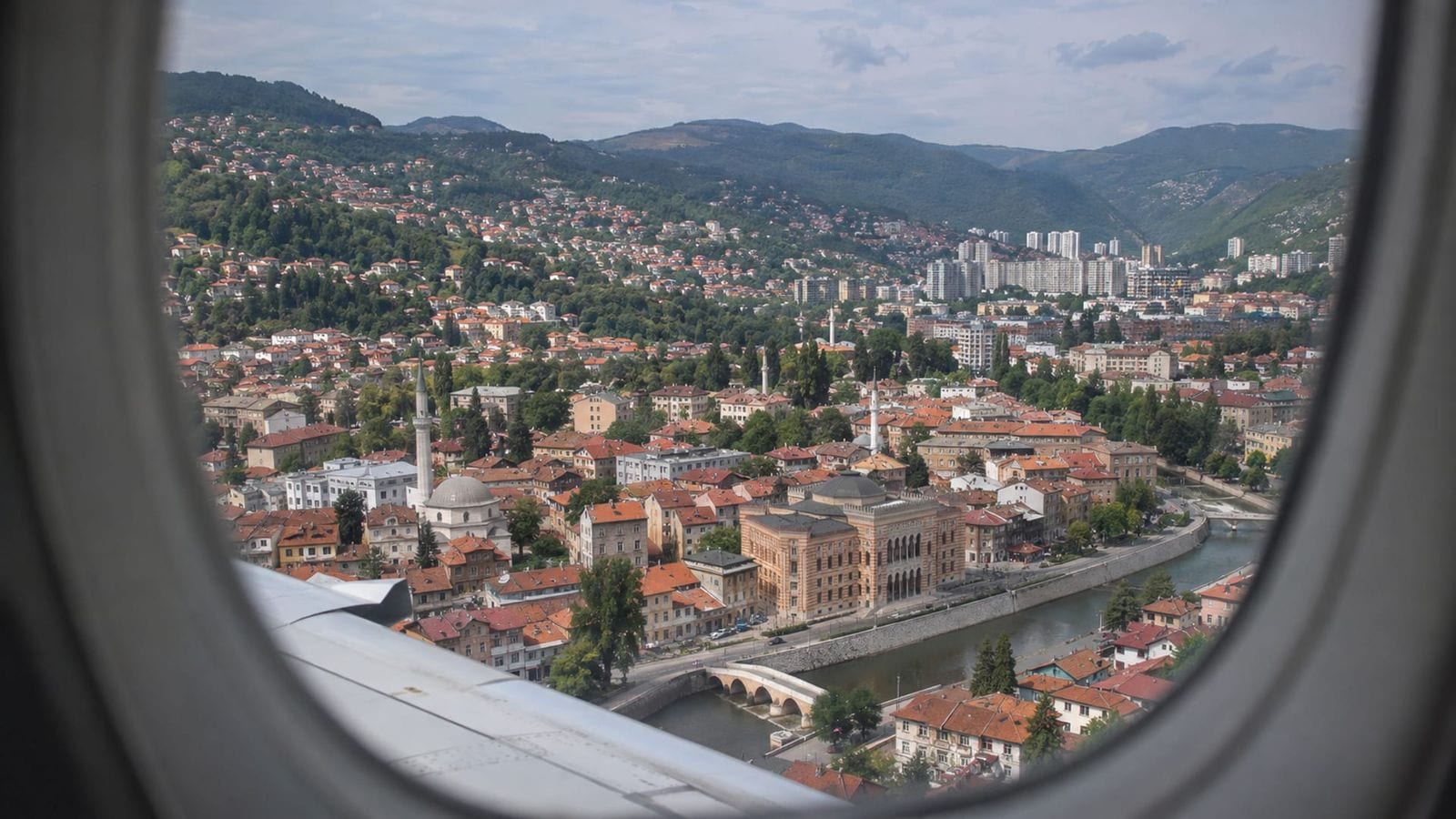
There are no nonstop flights from the US to Sarajevo, but several airlines offer one-stop business-class options.
New York (JFK) to Sarajevo (SJJ)
From John F. Kennedy International Airport (JFK) in New York, SWISS, Austrian Airlines, Lufthansa, LOT Polish Airlines, Air Serbia, and Turkish Airlines offer one-stop flights to Sarajevo. Layovers are usually in Zurich (ZRH), Vienna (VIE), Frankfurt (FRA), Warsaw (WAW), Belgrade (BEG), or Istanbul (IST). The quickest trips take 10–11 hours, but flights with longer layovers can take up to 18 hours. Round-trip business-class tickets on this route generally cost $2,800–$6,500.
Los Angeles (LAX) to Sarajevo (SJJ)
From Los Angeles, Austrian Airlines, SWISS, Lufthansa, LOT Polish Airlines, and Turkish Airlines offer one-stop flights to Sarajevo. These flights include layovers at major airports like Vienna (VIE), Zurich (ZRH), Frankfurt (FRA), Warsaw (WAW), or Istanbul (IST). Travel times start at 14 hours, but flights with longer layovers can exceed 20 hours. Business-class tickets on this route range between $3,750 and $7,500.
Sarajevo leaves room for both history and everyday life
One of Sarajevo’s strengths is how easily a serious museum visit can be followed by coffee, a long lunch, or an evening walk through Baščaršija. That contrast gives the trip its character, so it helps to leave some space between fixed plans. When your sightseeing plans are in place, the next step is getting the practical side right. AranGrant can help you compare business-class flights and hotels that fit your dates and travel preferences.







