

Chapters:

Need help with your trip?
Our support team is available 24/7. Request a callback or call us directly at (833) 619-0908
Samarkand is a city where the monuments are close enough to tempt you into doing too much at once. Registan, Shah-i-Zinda, Bibi-Khanym Mosque, and the old trading streets can all fit into a short stay, but each area deserves more than a quick stop between taxi rides.
The city is easier to understand when its Timurid architecture, markets, mausoleums, and quieter neighborhoods are given separate time. Heat, busy pedestrian areas, and the scale of the main complexes can make even short distances feel slower than expected.
This guide groups Samarkand by area, helping you build five days around realistic sightseeing blocks, local meals, and shorter transfers without turning every day into a race between monuments.
Useful things to know

Main language(s): Uzbek; Russian is also widely spoken.
Salom (sah-LOM) – Hello
Iltimos (eel-tee-MOS) – Please
Rahmat (rah-MAHT) – Thank you
Siz ingliz tilida gapirasizmi? (seez een-GLIZ ti-lee-dah gah-pee-RAH-seez-mee) – Do you speak English?
Bu qancha turadi? (boo KAHN-chah too-RAH-dee) – How much does it cost?

Currency: Uzbekistani sum (UZS, so’m)

Cash and cards: Visa and Mastercard are widely accepted at hotels, restaurants, and larger shops. Carry UZS 300,000–UZS 500,000 ($25–$42) for smaller purchases.

Tipping: Tipping is not customary, but it is appreciated. Round up or leave a small amount for good service, and check the bill for a service charge first.

Traditional food: Plov, samsa, lagman, and shashlik are among the best-known dishes associated with Samarkand and Uzbek cuisine.

Water and coffee costs: Bottled water often costs UZS 5,000–UZS 12,000 ($0.40–$1), while an espresso commonly costs UZS 20,000–UZS 25,000 ($1.70–$2.10).

Taxis and ride apps: Yandex Go operates in Samarkand and shows the fare before booking. For street taxis, agree on the price before starting if no meter is used.

Plug and voltage: Uzbekistan uses Type C and F plugs with a 220V, 50Hz supply. US travelers need an adapter and should check device voltage.

Dining and shop opening hours: Lunch starts around 1 pm, and dinner around 7 pm. In tourist areas, some markets and malls stay open until 11 pm or 12 am.

Emergency number: Call 112 for police, fire, ambulance, and other emergency services.
Where to stay in Samarkand
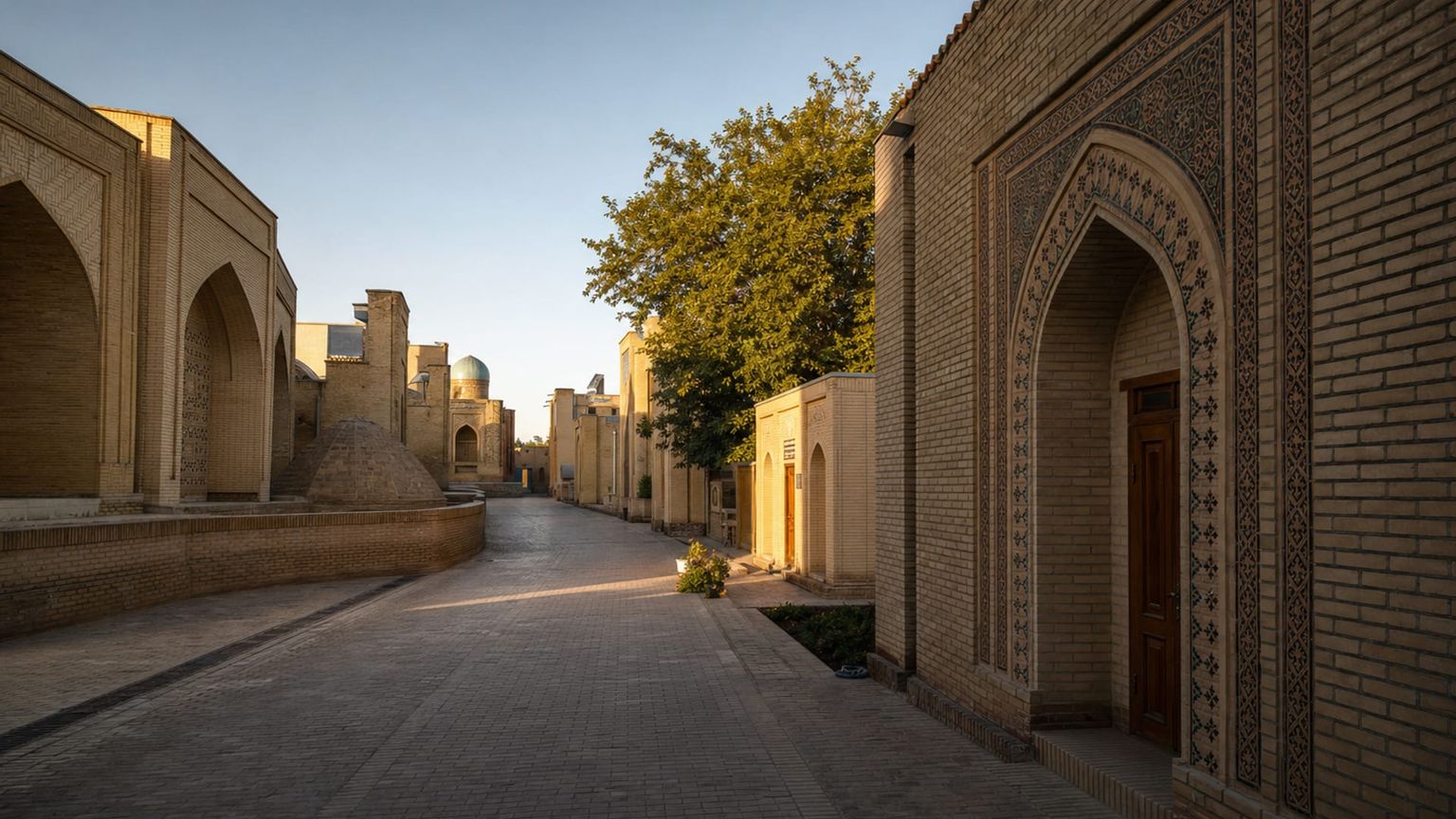
The historic center is Samarkand at its most atmospheric, with Timurid monuments, tiled facades, mahalla lanes, small guesthouses, cafés, and souvenir shops around Registan and Bibi-Khanym. Much of this district preserves the medieval city that flourished under Timur and his successors.
Best for: First-time visits, monument hopping, and short stays focused on major sights
What to expect: Busy by day with tour groups, souvenir stalls, and steady pedestrian traffic; evenings thin out after the landmarks close.
Hotel prices: Usually about $40 to $120 per night for well-rated stays
Distance to major sights: 5 to 15 minutes on foot to Registan; about 10 to 20 minutes on foot to Shah-i-Zinda
Quietness: Daytime is lively and crowded, while evenings are much quieter once the sightseeing peaks pass.
Main trade-off: You pay more for the location, and some streets bring tour buses, group arrivals, and late foot traffic.
Good to know: Stay near the pedestrian axis if you want easy access to Registan, Bibi-Khanym, and Shah-i-Zinda.
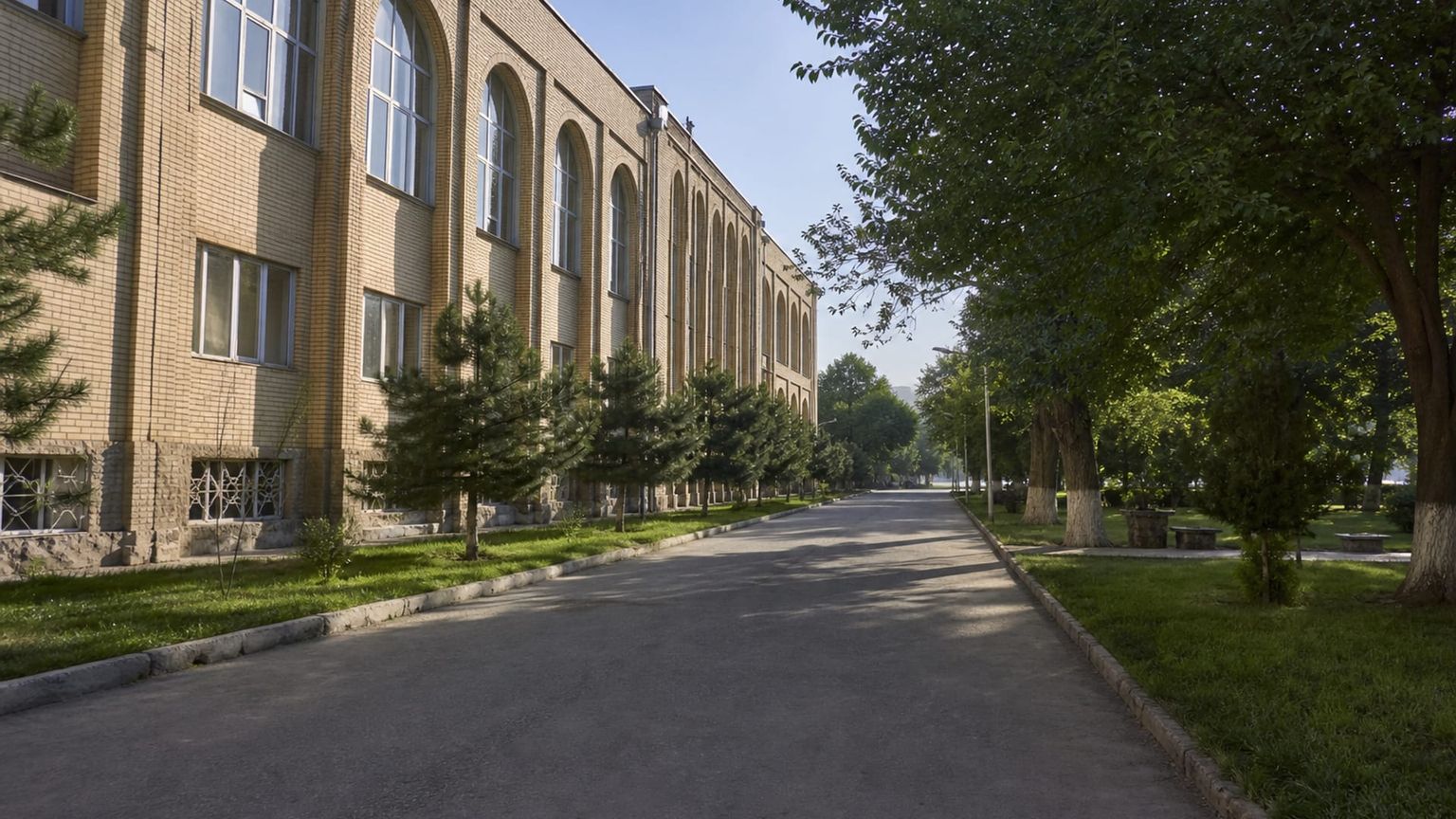
University Boulevard belongs to Samarkand’s 19th- and early 20th-century European quarter, shaped during the Russian expansion of the city. Broad tree-lined avenues, parks, university buildings, restaurants, and older civic architecture give it a calmer, more spacious character.
Best for: Travelers who want lower rates, local cafes, and a base near the center
What to expect: More local than touristy, with student traffic, neighborhood shops, and a steady but not intense street scene.
Hotel prices: Usually about $25 to $70 per night for well-rated stays
Distance to major sights: About 10 to 20 minutes by taxi to Registan; roughly 30 to 40 minutes on foot
Quietness: Daytime brings student movement and neighborhood activity, while nights are generally quieter than the historic center.
Main trade-off: You save money, but you will depend more on taxis or longer walks to reach the main monuments.
Good to know: This area suits longer stays if you want central access without staying inside the busiest tourist streets.
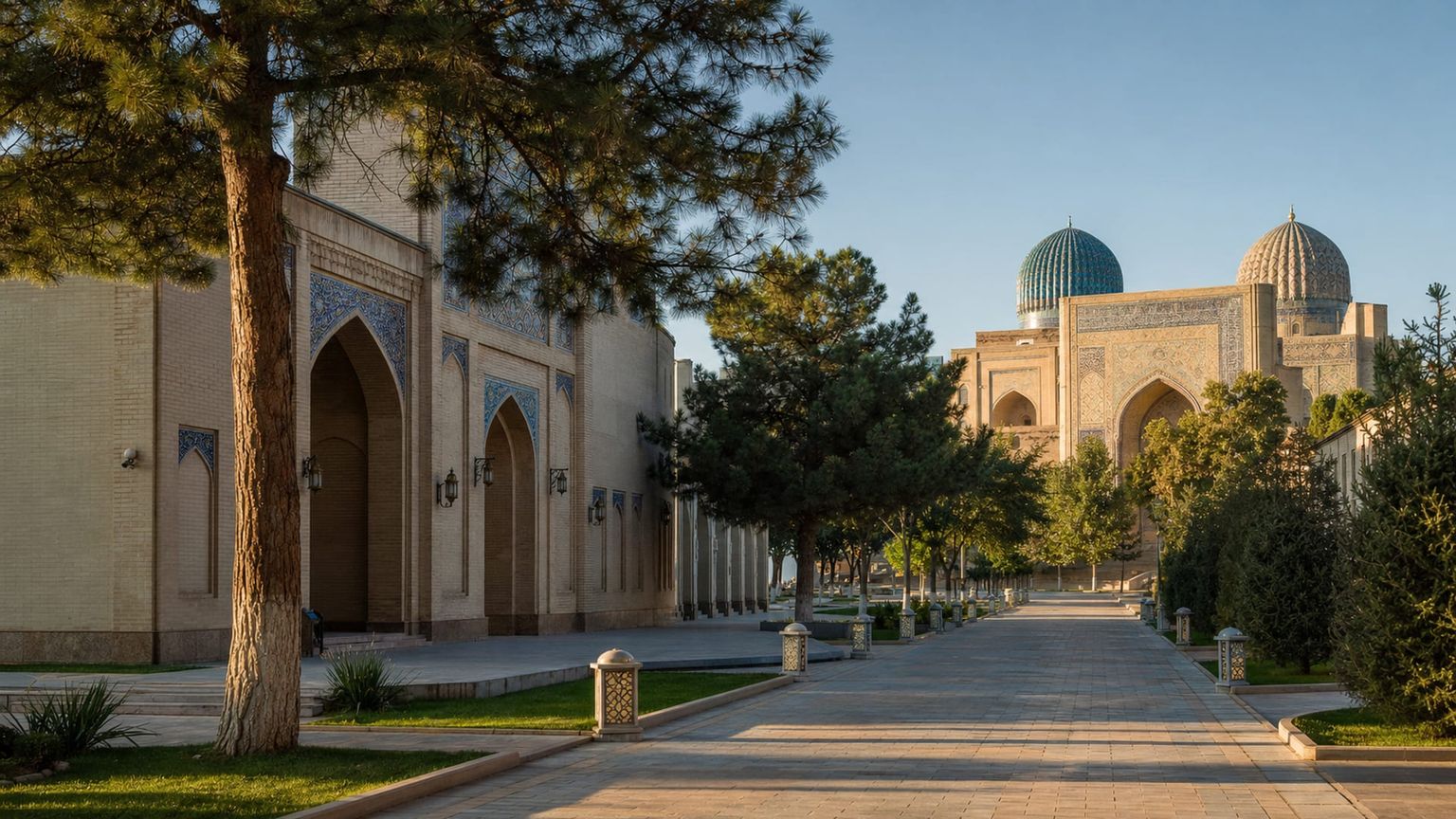
Silk Road Samarkand is the city’s modern resort district, built around a 1.4-mile (2.2 km) rowing canal in Konigil. Large hotels, landscaped promenades, restaurants, wellness facilities, and the Eternal City complex create a polished setting that feels completely different from historic Samarkand.
Best for: Travelers arriving by car, business visitors, and guests who want central access without old-town congestion
What to expect: Broader streets, more traffic than footfall, and a mix of mid-range hotels and local dining spots.
Hotel prices: Usually about $30 to $90 per night for well-rated stays
Distance to major sights: About 10 to 15 minutes by taxi to Registan; roughly 20 to 30 minutes by taxi to Shah-i-Zinda
Quietness: Daytime traffic is noticeable, but evenings are calmer than the historic core and main bazaar streets.
Main trade-off: You gain easier vehicle access, but the setting is less atmospheric and you will usually need transport for sightseeing.
Good to know: Foreign guests pay a separate tourist fee of UZS 66,000 ($5.55) per person, per night.
Stay in the historic center for easy access to Samarkand’s main monuments; choose University Boulevard for quieter streets and easier road access; and consider Silk Road Samarkand only if resort facilities matter more than staying near the old city.
Hotel deals
How to get around Samarkand efficiently
Samarkand’s main sights are spread beyond the historic core, so buses, airport services, and taxis are useful for longer trips and luggage.

Buses and trams
for longer distances
Buses, electrobuses, and trams cover the main city routes and are useful for reaching the railway station, outer neighborhoods, and sights beyond the old center. A ride costs UZS 3,000 ($0.25) in cash or UZS 2,000 ($0.17) with a bank or ATTO card.

Airport bus
for convenience
Buses M1 and 256 connect Samarkand International Airport (SKD) with the central railway station from 6 am to 9 pm, running roughly every 15 minutes. The fare is UZS 3,000 ($0.25) in cash or UZS 2,000 ($0.17) with an Uzbek bank card.

Taxis and Yandex Go
for convenience or late hours
Taxis and Yandex Go are the easiest choice for trips with luggage, late-night rides, and rides between monuments. Yandex Go shows the fare before booking, while Taxi OK charges UZS 100,000 ($8.40) for an airport transfer; street taxi fares should be agreed upon before departure.
*Prices are based on rates updated as of June 2026 and may change at the time of travel.
Use public transport for inexpensive cross-city trips, the airport bus for SKD transfers, and taxis or Yandex Go when luggage or direct access matters.
Iconic landmarks
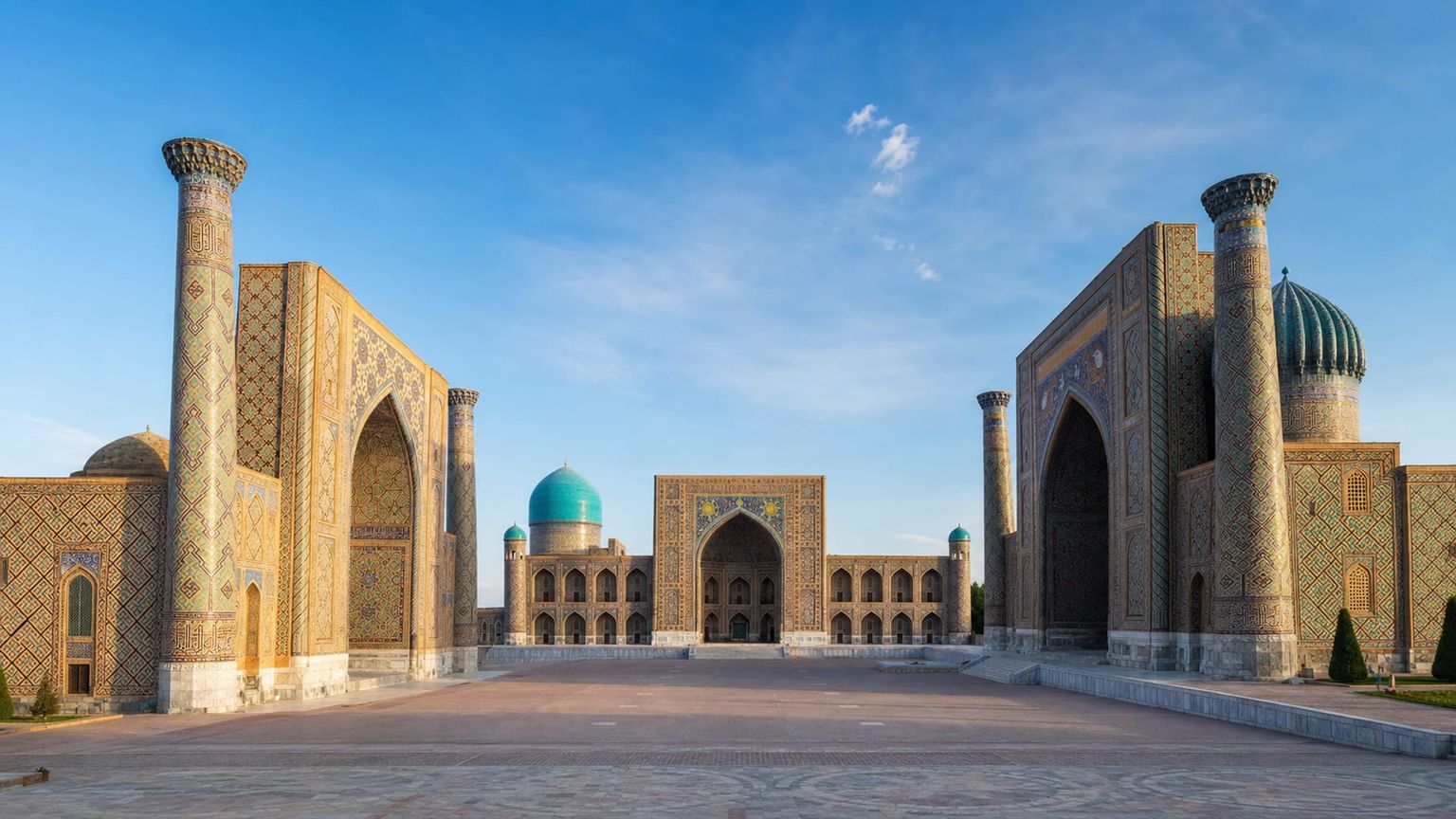
Registan Square
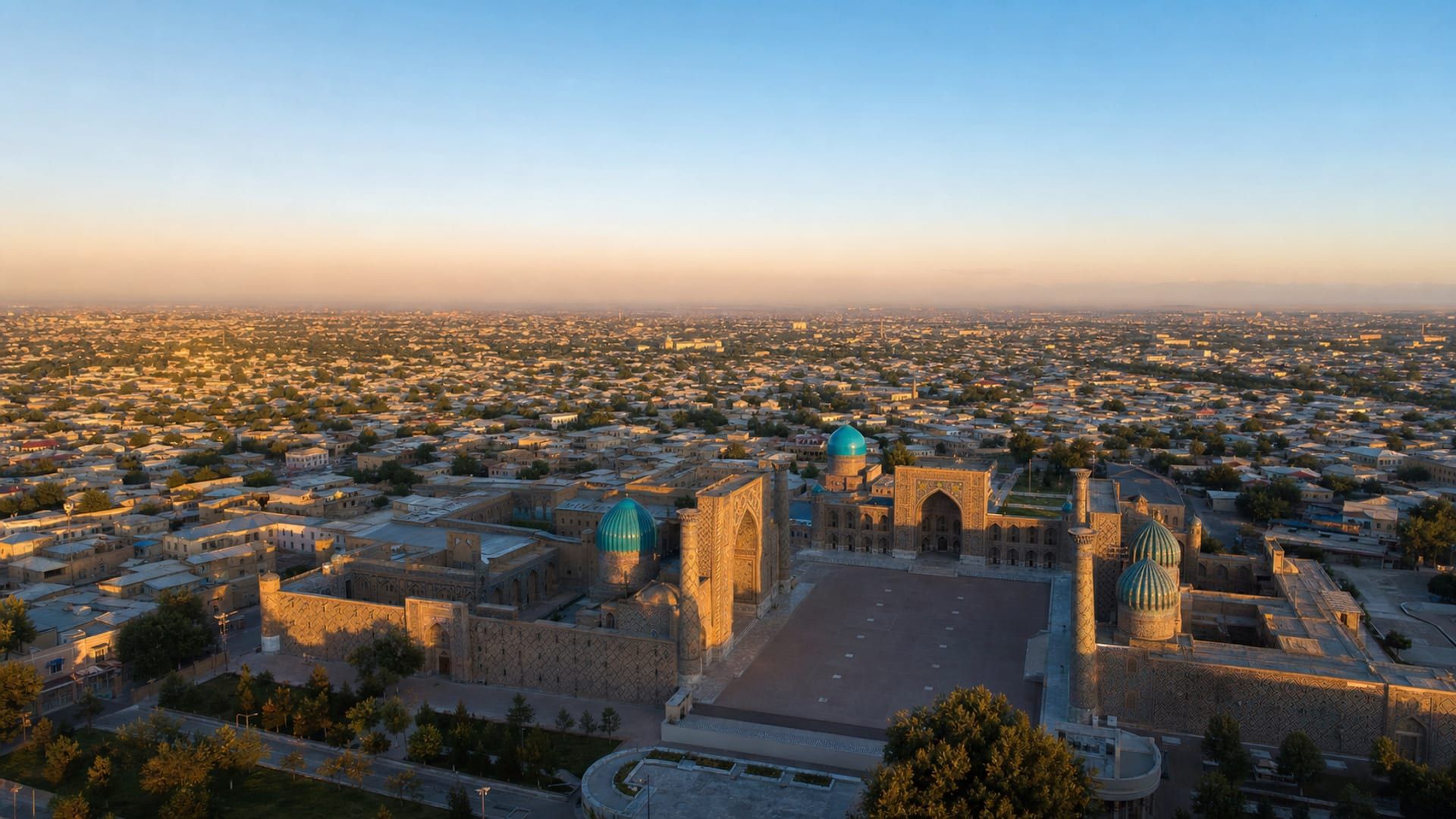
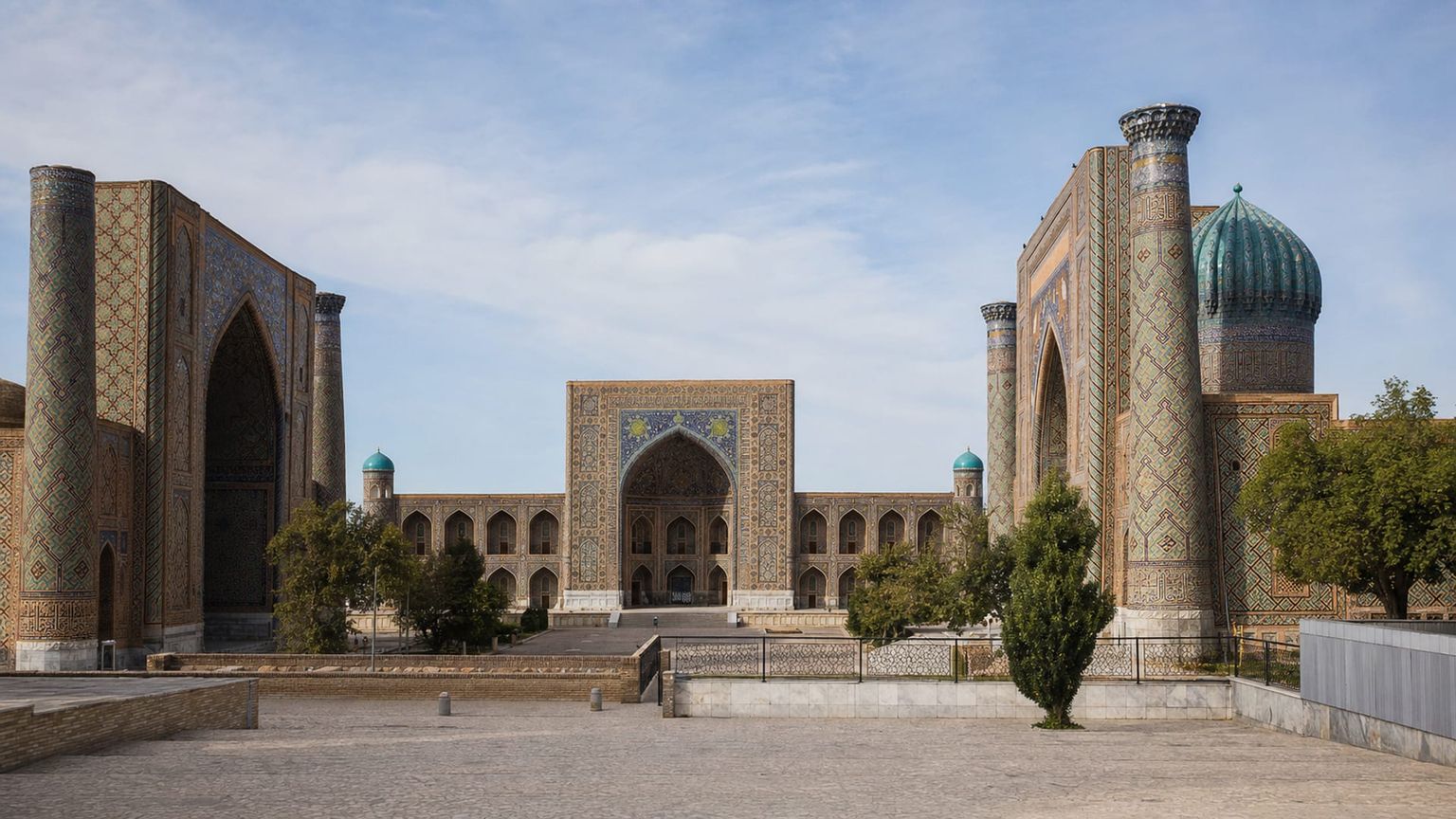
Registan Square brings together the Ulugh Beg, Sher-Dor, and Tilya-Kori madrasahs around Samarkand’s former civic and commercial heart. Their monumental portals, blue tilework, calligraphy, and domed interiors make this the city’s most recognizable architectural ensemble.
Time needed: A visit takes 2–3 hours.
Entry: Foreign admission costs UZS 100,000 ($8.40). Visit the official website.
Tip: Visit late afternoon to see the tilework change as the light softens.
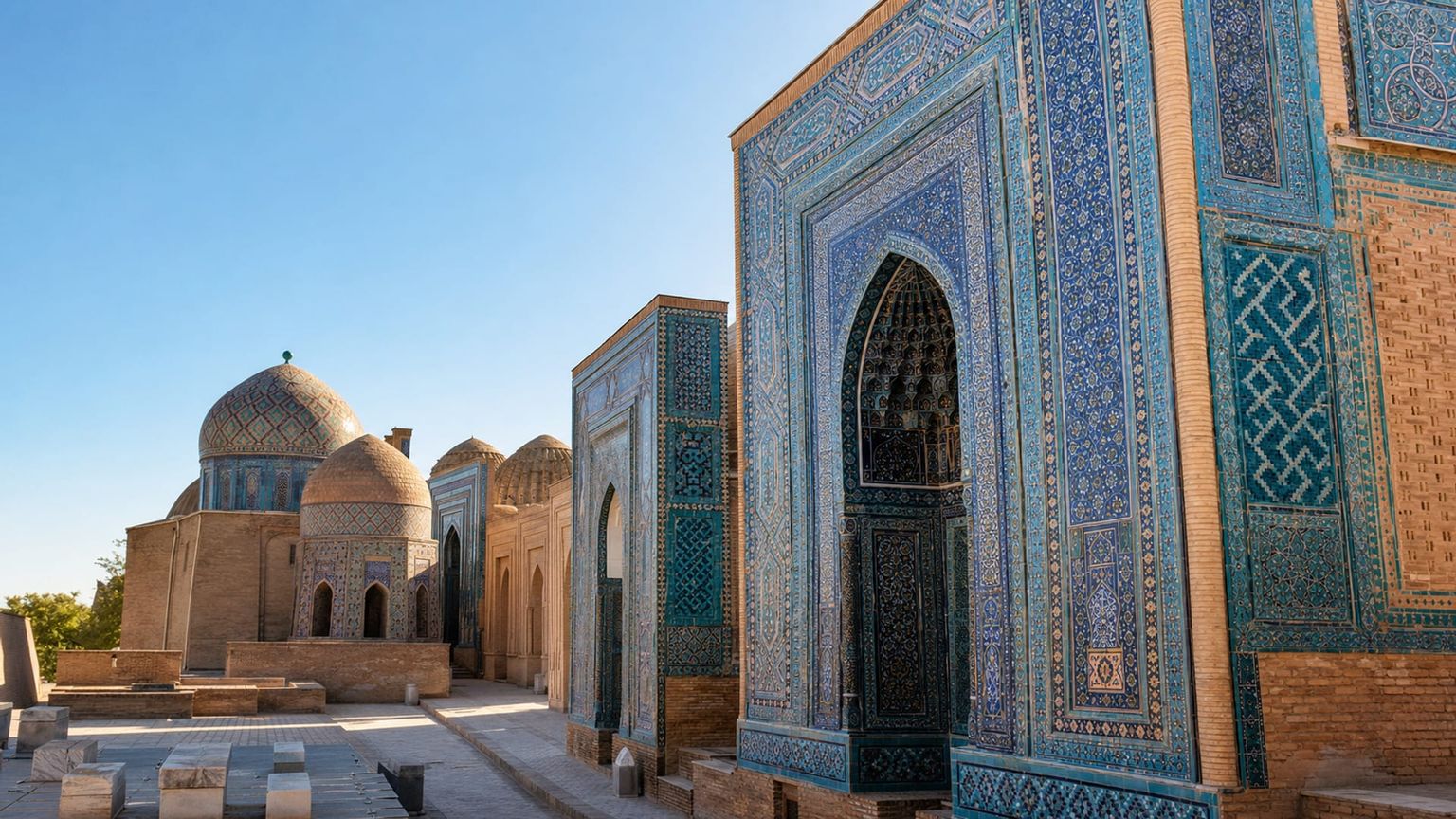
Shah-i-Zinda
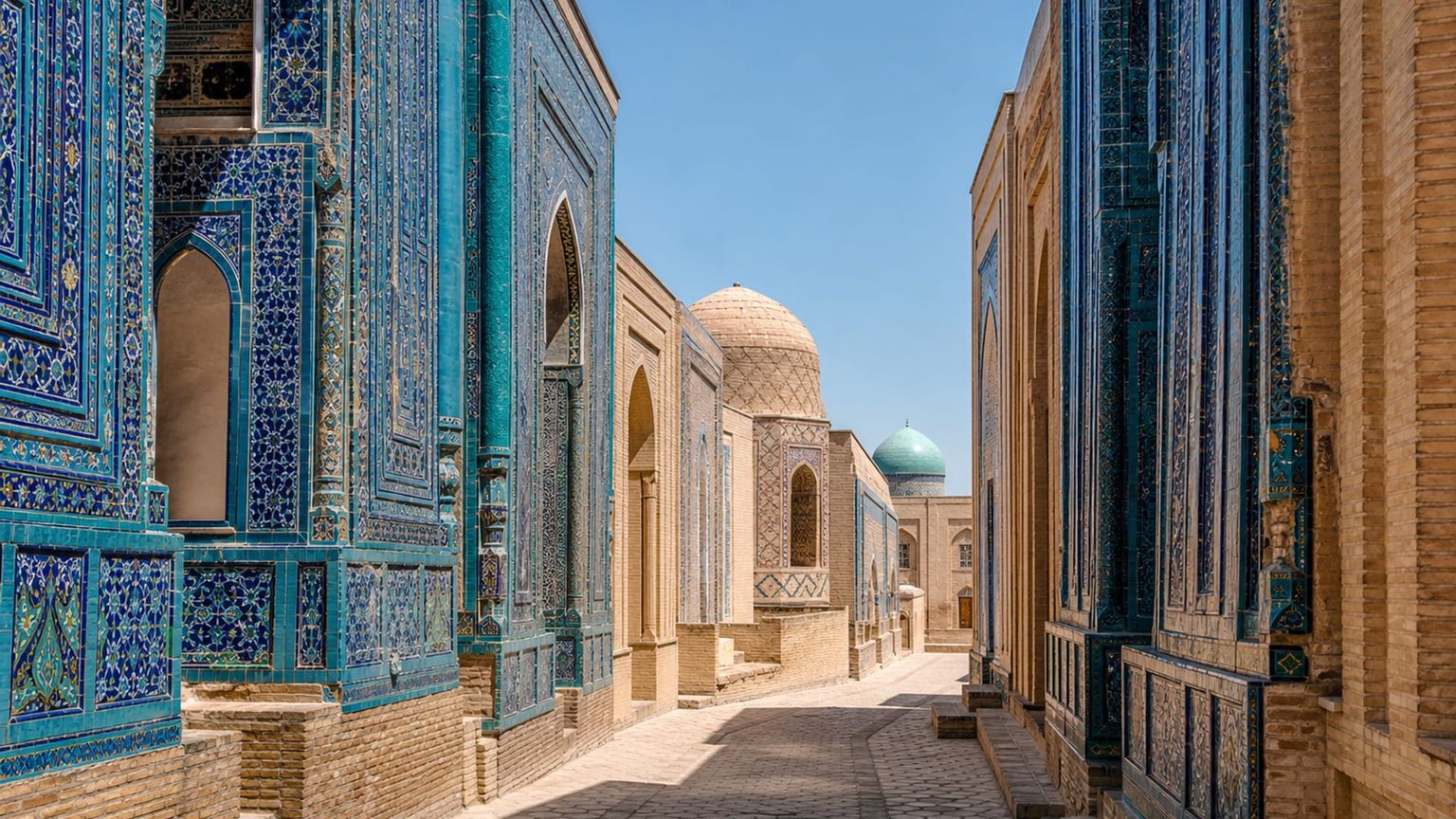
Shah-i-Zinda is a narrow avenue of mausoleums built between the 11th and 15th centuries, with some of Samarkand’s richest glazed tilework. The complex grew around the shrine of Qusam ibn Abbas and became an important religious and funerary site during the Timurid period.
Time needed: One visit takes 1 to 1.5 hours.
Entry: Foreign admission is UZS 80,000 ($6.70); booking is not required.
Tip: Go early, when the narrow passageways are easier to explore at a slower pace.
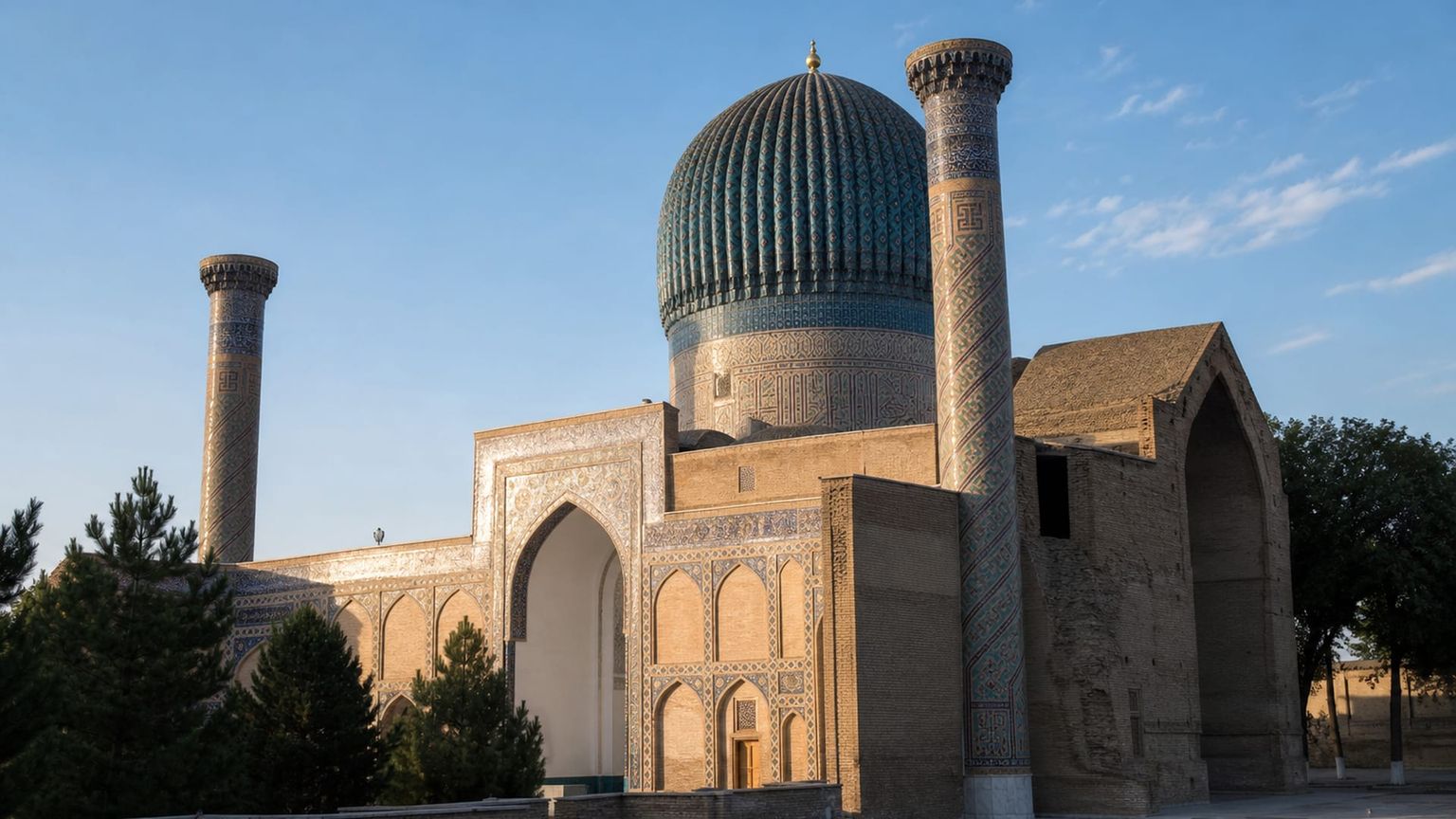
Gur-e-Amir Mausoleum
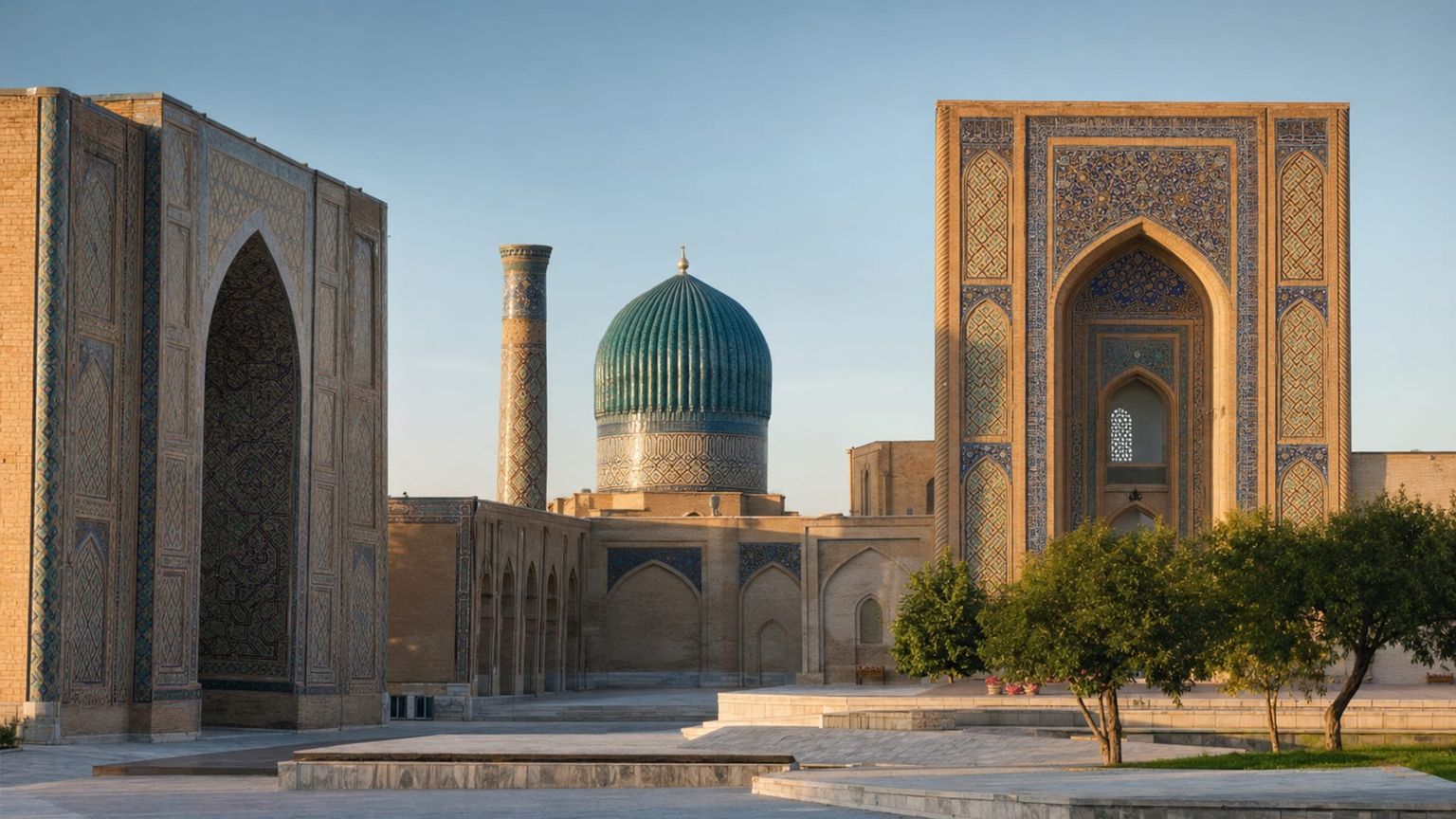
Gur-e-Amir is the dynastic mausoleum of Amir Temur and several members of the Timurid family, marked by a tall ribbed blue dome and richly decorated interior. Marble, gilding, painted ornament, and Temur’s dark jade cenotaph make the compact complex one of Samarkand’s most important monuments.
Time needed: A visit takes 45–60 minutes.
Entry: Online admission costs UZS 71,500 ($6); booking is optional. Visit the official website.
Tip: Look up inside the dome, where the gilded decoration is one of the main highlights.
Overlooked sites worth visiting

Khoja Ahrar Ensemble
Khoja Ahrar Ensemble grew around the shrine of the influential 15th-century Sufi leader Khoja Ahrar and later gained the ornate 17th-century Nodir Devonbegi Madrasa.
Time needed: A visit takes roughly 1 hour.
Entry: Nodir Devonbegi Madrasa tickets start at UZS 27,500 ($2.30); booking is optional.
Tip: Look closely at the madrasa portal, which draws on design ideas seen at Registan.

Afrosiyob Museum
Afrosiyob Museum explains ancient Samarkand before the Timurid era through archaeological finds, models, and its celebrated 7th-century Sogdian wall paintings.
Time needed: A visit takes 1–1.5 hours.
Entry: Foreign admission costs UZS 30,000 ($2.50); booking is not required. Visit the official website.
Tip: See the wall paintings before walking onto the neighboring Afrosiyob archaeological site.
Traditional food
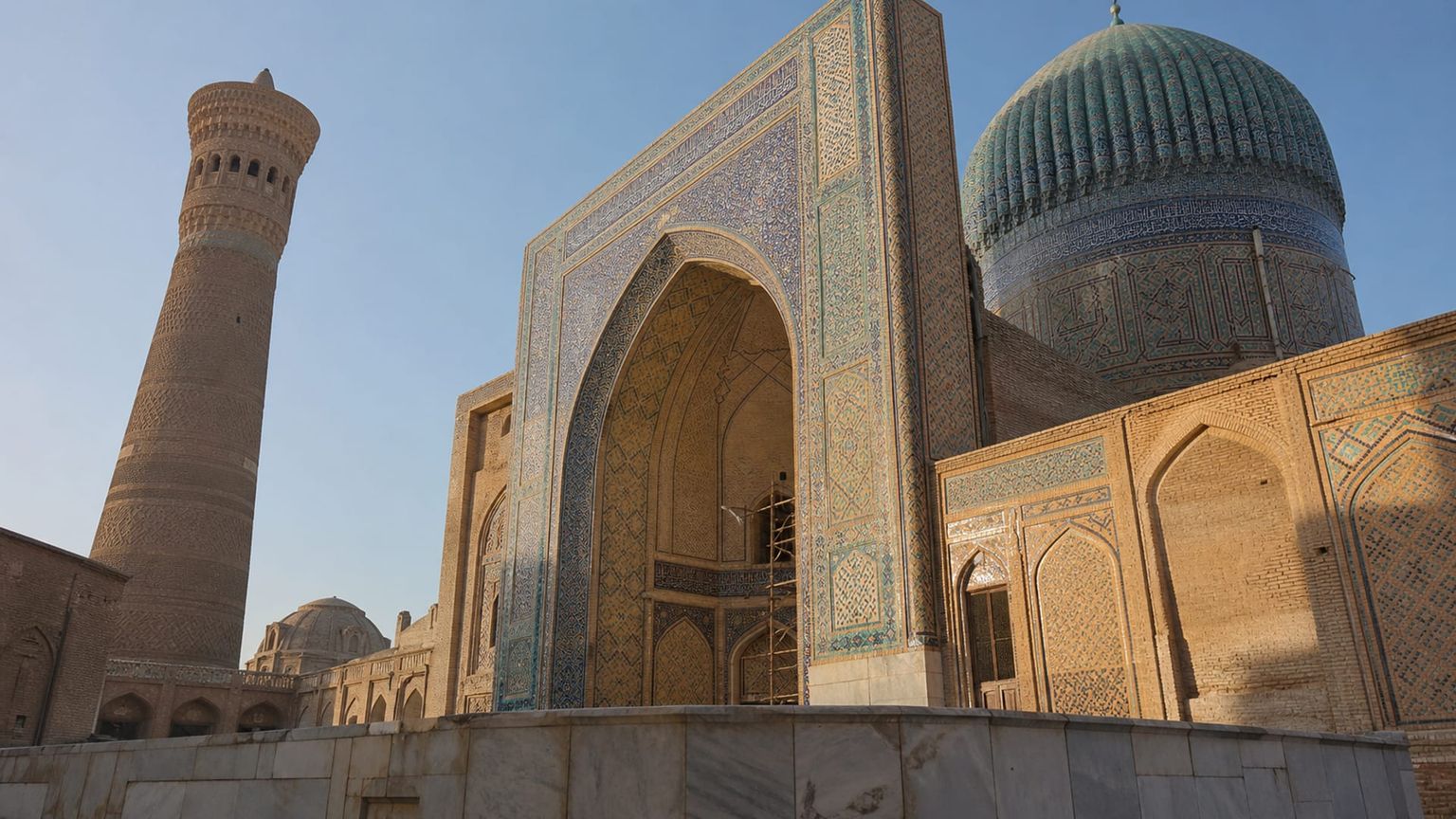
Samarkand cooking is built around rice, meat, dough, and fire, with plov, samsa, lagman, and shashlik appearing in teahouses, markets, and traditional restaurants across the city.
Plov
Samarkand plov layers rice with yellow carrots, chickpeas, meat, and spices instead of mixing everything. Samarqand Osh Markazi N1 specializes in the dish and is one of the city’s best-known places for a traditional lunch.
Samsa
Samsa is a crisp pastry filled with seasoned meat and onion, then baked against the hot wall of a tandoor. The Bakery at Eternal City prepares Samarkand bread and samsa in traditional ovens.
Lagman
Lagman combines hand-pulled noodles with meat, vegetables, and a rich broth or sauce, giving it more weight than many local soups. Old City Restaurant serves lagman and also offers a vegetarian version.
Shashlik
Shashlik is meat threaded onto skewers and grilled over hot coals, usually with onion and simple seasoning so the char stays central. Karimbek serves several versions, including lamb, beef, chicken, and minced-meat kebabs.
Best time to visit Samarkand
Spring and fall bring Samarkand’s easiest sightseeing weather, while summer is hot and dry and winter brings cold mornings and shorter days.
Best for: Registan, Shah-i-Zinda, gardens, and long days outdoors in mild weather
What you get: March starts cool, then spring climbs to 35°F–79°F (2°C–26°C), with greener streets, longer daylight, and the year’s wetter stretch.
Trade-offs: Rain is more likely in March and April, and temperatures can shift quickly between morning and afternoon.
Best for: Early monument visits, shaded courtyards, evening walks, and slower lunches
What you get: Dry heat defines summer at 60°F–92°F (16°C–33°C), with intense afternoon sun, very little rain, and long evenings for later sightseeing.
Trade-offs: July and August heat can make exposed squares and long walks uncomfortable after midday.
Best for: Photography, long walks, outdoor meals, and comfortable monument visits
What you get: September stays warm and dry, then 34°F–82°F (1°C–28°C) gives way to crisp October days, cooler nights, and a much colder November.
Trade-offs: November cools fast, so late-season trips need warmer layers after sunset and early in the morning.
Best for: Museums, tea houses, quieter monuments, and shorter daytime sightseeing
What you get: Winter temperatures vary between 25°F–48°F (-4°C–9°C), with frosty mornings, short daylight, and cold evenings that favor museums, mausoleums, and tea houses.
Trade-offs: Freezing nights and shorter daylight reduce the time you will want to spend outside.
A realistic 5-day plan in Samarkand
Five days give Samarkand enough room to unfold beyond its headline monuments. Keep the Timurid core, ancient Afrosiyob, and market streets on separate days, then use the final morning for something lighter before the airport.
After landing at Samarkand International Airport (SKD), head to your hotel and resist the urge to start collecting monuments straight away. A first evening near the historic center is better spent over tea, dinner, and a short walk toward Registan once the daytime groups begin to disappear. If your flight arrives late, skip even that. The tiled facades will still be there in the morning, and Samarkand is easier to enjoy after you have slept, unpacked, and settled into the city’s slower rhythm.
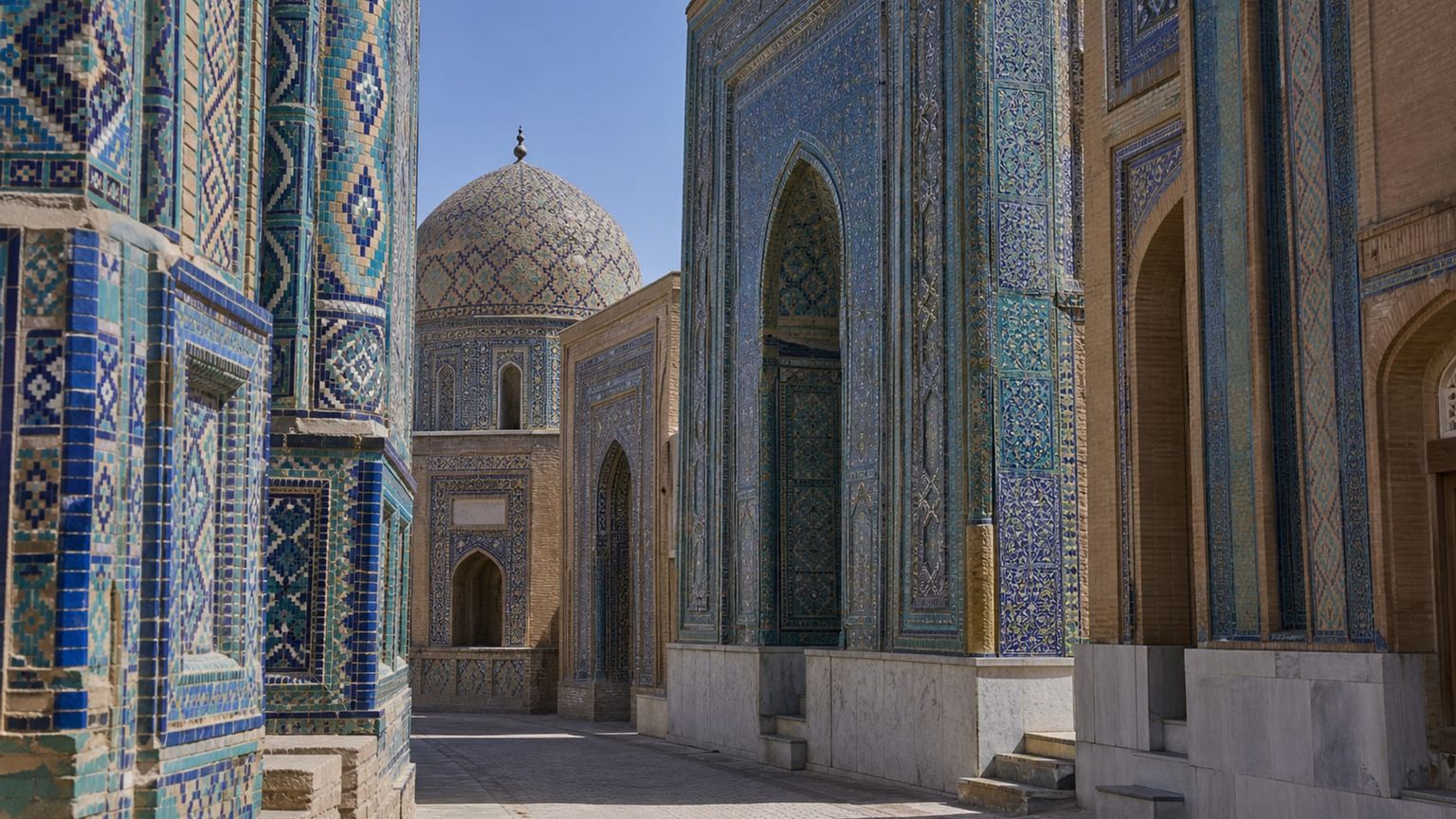
If Registan is the image that brought you to Samarkand, give it the time it deserves. Begin at Gur-e-Amir, where Timur’s mausoleum introduces the dynasty behind much of the city’s monumental architecture, then continue to Registan for the Ulugh Beg, Sher-Dor, and Tilya-Kori madrasahs. Stay through the afternoon instead of treating the square as a photo stop. The changing light brings out different details in the tilework, and keeping dinner nearby avoids another cross-city ride after a full day.
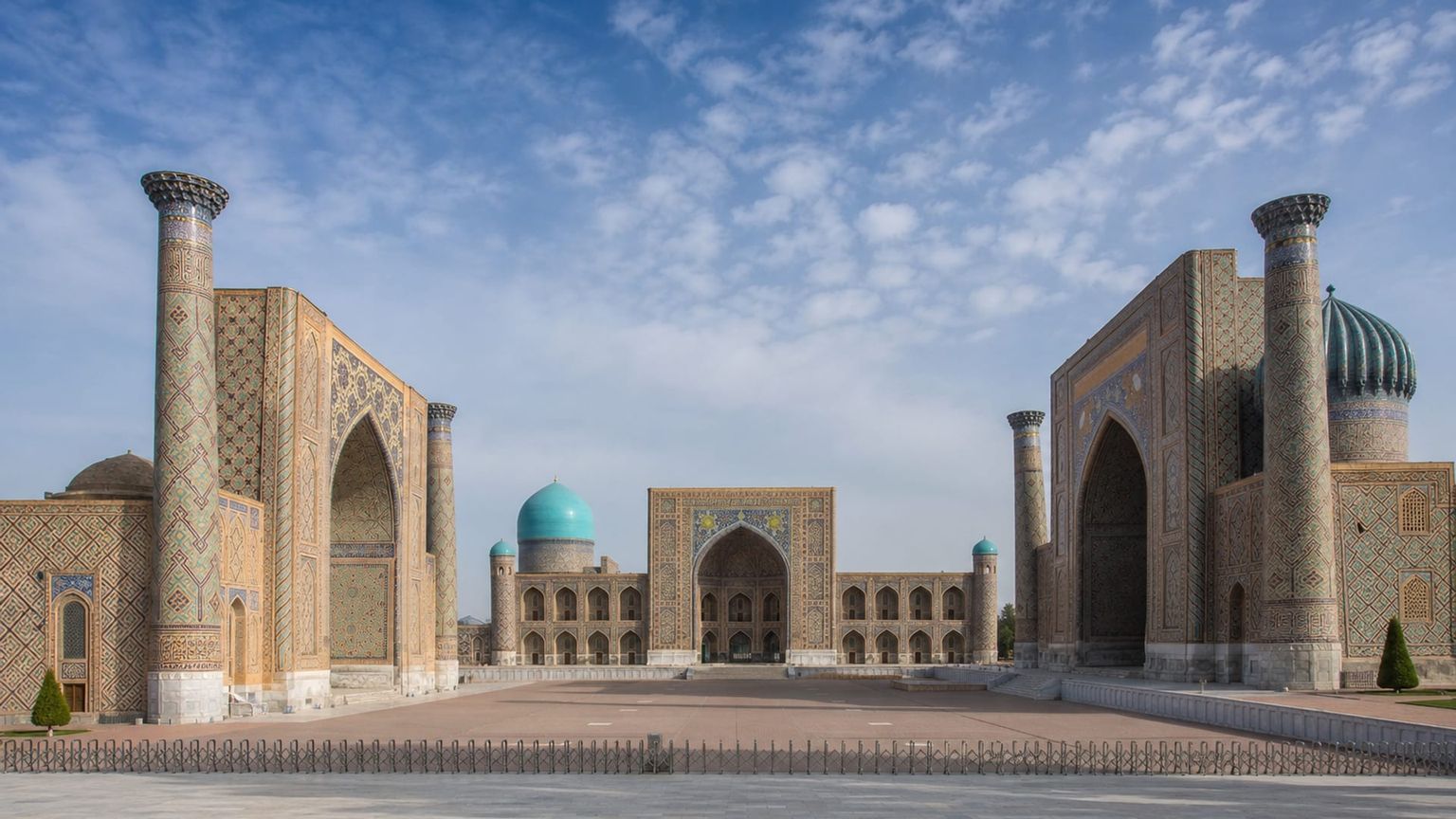
Samarkand’s story reaches much further back than the Timurids, and this is the day to see that older layer. Start at the Afrosiyob Museum for Sogdian wall paintings and archaeological finds from ancient Marakanda, then continue to nearby Shah-i-Zinda. Its narrow avenue of mausoleums shifts the focus toward the medieval city through some of Samarkand’s finest tilework. Take your time here, then return to the center for dinner instead of adding another major monument after two history-heavy stops.
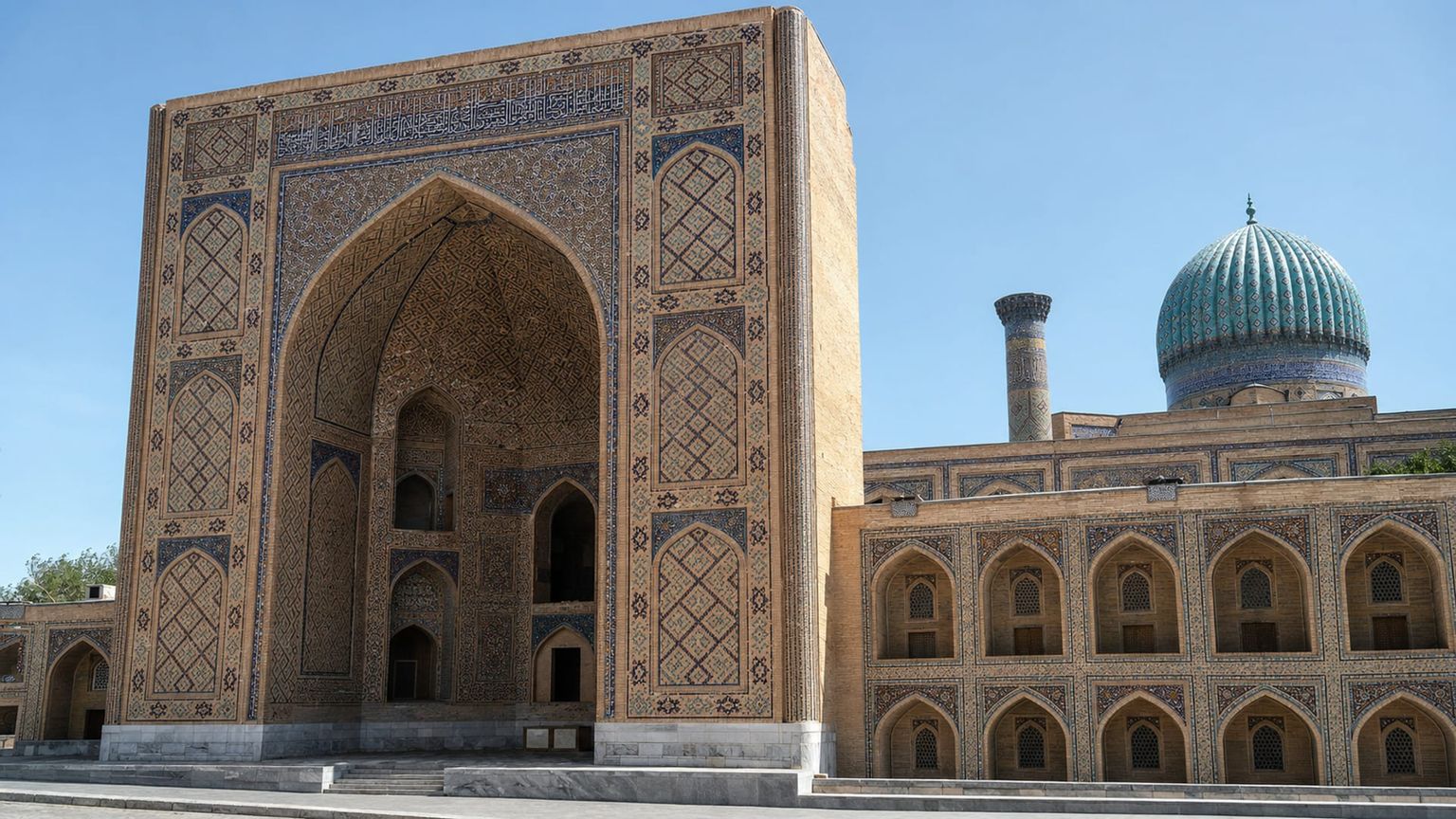
Spend the fourth day where Samarkand still feels like a trading city instead of a sequence of monuments. Begin at Bibi-Khanym Mosque, then cross to Siyob Bazaar for bread, dried fruit, nuts, and the everyday bustle that has long shaped this part of the old city. From there, continue on foot through the surrounding streets and smaller religious sites. A longer lunch nearby gives the afternoon a different rhythm from the previous monument-heavy days and keeps the whole route compact.
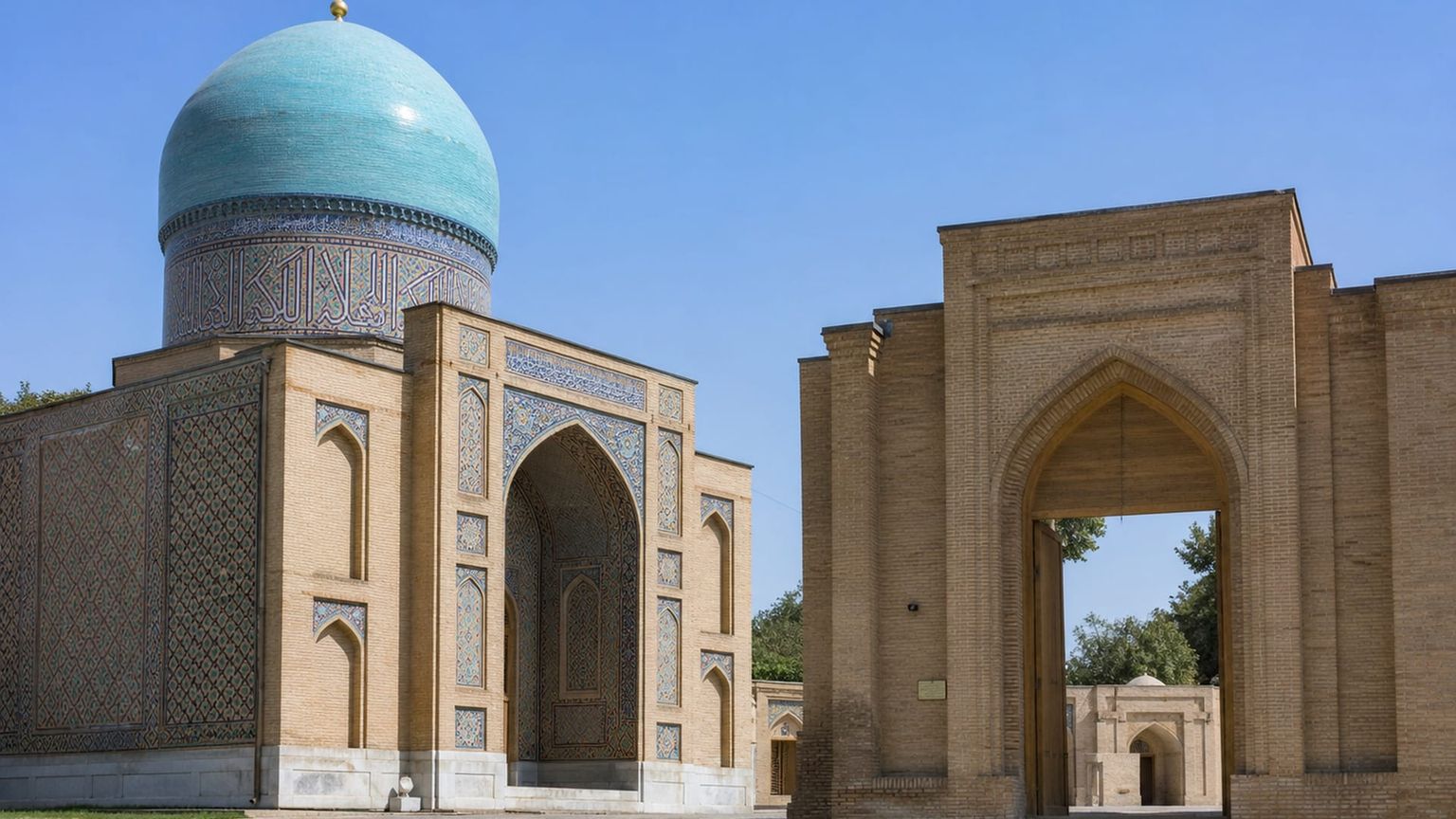
Keep the final morning simple with Ulugh Beg Observatory, a compact stop that shows another side of Timurid Samarkand through astronomy rather than palaces and mausoleums. The surviving section of Ulugh Beg’s giant meridian instrument is the reason to come, and the visit does not need most of the day. Afterward, return toward University Boulevard for coffee or a final meal, collect your bags, and leave for Samarkand International Airport (SKD) without squeezing in one last cross-city circuit.
Business-class flights from the US to Samarkand
Samarkand has no nonstop service from either coast, so business-class trips usually connect once in Istanbul, Tashkent, or Dubai.
New York (JFK) to Samarkand (SKD)
From New York, Turkish Airlines offers one-stop flights through Istanbul (IST), while Uzbekistan Airways connects through Tashkent (TAS) before a short domestic flight to Samarkand. There is no nonstop JFK–SKD service. Shorter itineraries usually take about 16–21 hours total, depending on the layover. Round-trip business-class fares range from $4,200 to $7,000.
Los Angeles (LAX) to Samarkand (SKD)
Flights from Los Angeles to Samarkand take longer, but you still have one-stop options. Turkish Airlines flies through Istanbul (IST), while Emirates and Flydubai connect through Dubai (DXB), with Flydubai operating the final leg to Samarkand. The shortest journeys take roughly 20–25 hours, and business-class prices on this route range from $4,500 to $8,000.
Samarkand rewards a slower look at its history
Samarkand is easier to appreciate when Registan, Shah-i-Zinda, Afrosiyob, the old market streets, and Ulugh Beg’s scientific legacy are not compressed into one monument-heavy route. Giving each area its own time keeps the city’s history clearer and leaves room for meals, quieter streets, and slower evenings. When you are ready to plan the trip, AranGrant experts can help you compare business-class flights to Samarkand and hotels that match the way you want to stay.