

Chapters:

Need help with your trip?
Our support team is available 24/7. Request a callback or call us directly at (833) 619-0908
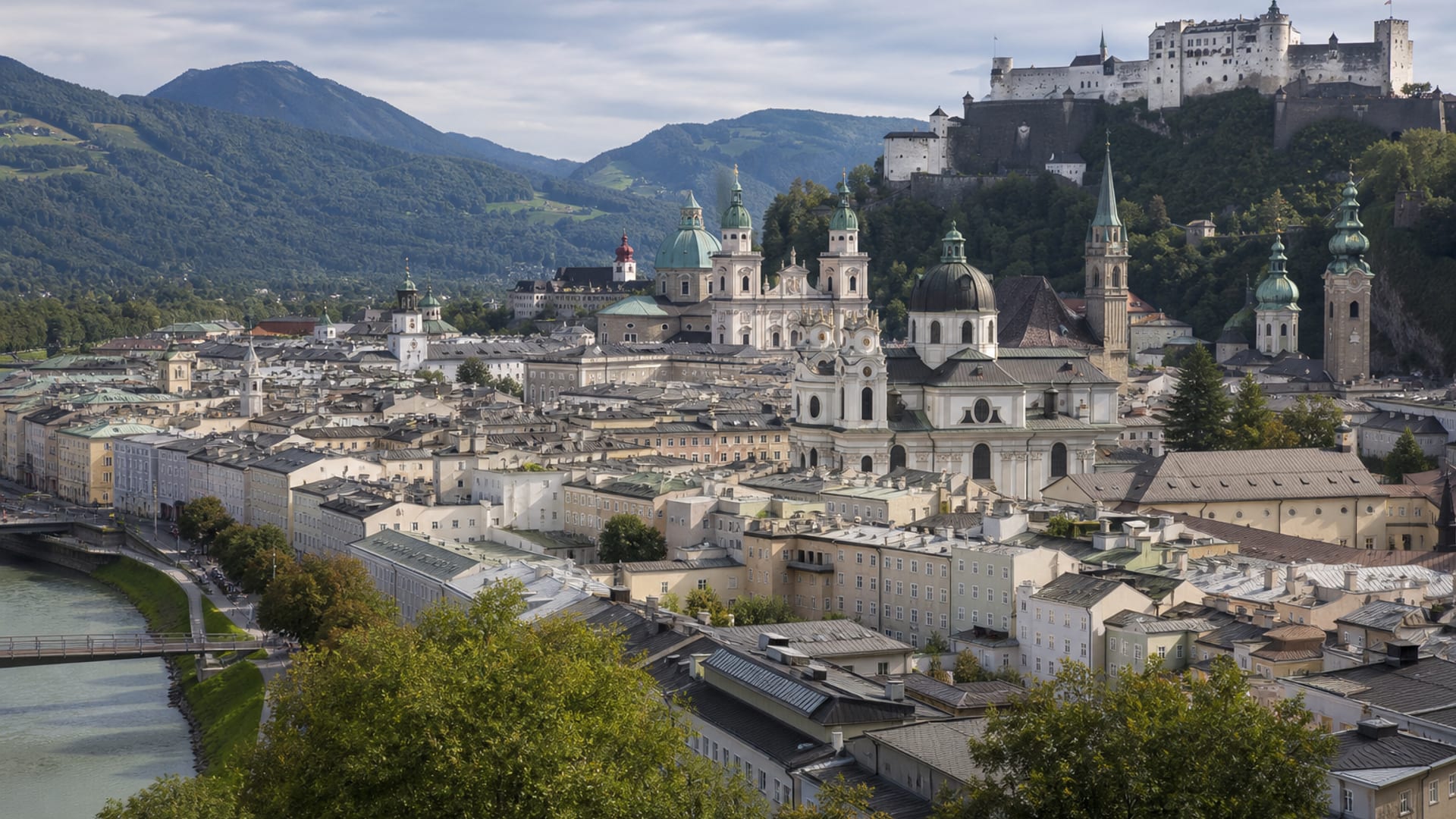
Salzburg brings together a compact Old Town, baroque landmarks, riverside neighborhoods, and hillside sights that are easy to combine when you plan them by area. The historic center covers many of the essentials on foot, while places farther south and north require a little more thought.
The city’s layout makes it possible to pair nearby sights without repeatedly crossing the Salzach River or retracing the same streets. Fortress visits, gardens, museums, and longer trips beyond the center each fit more naturally into separate parts of the day.
This guide covers where to stay, how to get around, what to eat, and how to organize five days in Salzburg with practical routes and manageable travel times.
Useful things to know

Main language(s): German
Grüß Gott (grooss got) – Hello / good morning
Bitte (BIT-uh) – Please
Danke (DAHN-kuh) – Thank you
Sprechen Sie Englisch? (SHPREH-khen zee ENG-lish) – Do you speak English?
Wie viel kostet das? (vee feel KOS-tet dahs) – How much does it cost?

Currency: Euro (EUR, €)

Cash and cards: Cards and contactless payments are widely accepted, but carry €20 to €40 ($22 to $44) for smaller shops and cash-only purchases.

Tipping: Round up the bill or leave 5% to 10% for good restaurant service.

Traditional food: Salzburger Nockerl, Kasnocken, Tafelspitz, and Wiener Schnitzel are among Salzburg’s best-known dishes.

Water and coffee costs: Bottled water usually costs €2 ($2.30), while an espresso typically costs €3 ($3.50).

Taxis and ride apps: Bolt and Uber operate in Salzburg. You can book local taxis by app, phone, or at taxi ranks.

Plug and voltage: Type F socket, 230V, 50Hz

Dining and shop opening hours: Restaurants commonly serve lunch from 12:00 pm to 2:00 pm and dinner from 6:00 pm to 9:00 pm.

Emergency number: Dial 112 for general emergencies, 133 for police, 122 for fire, or 144 for ambulance.
Where to stay in Salzburg
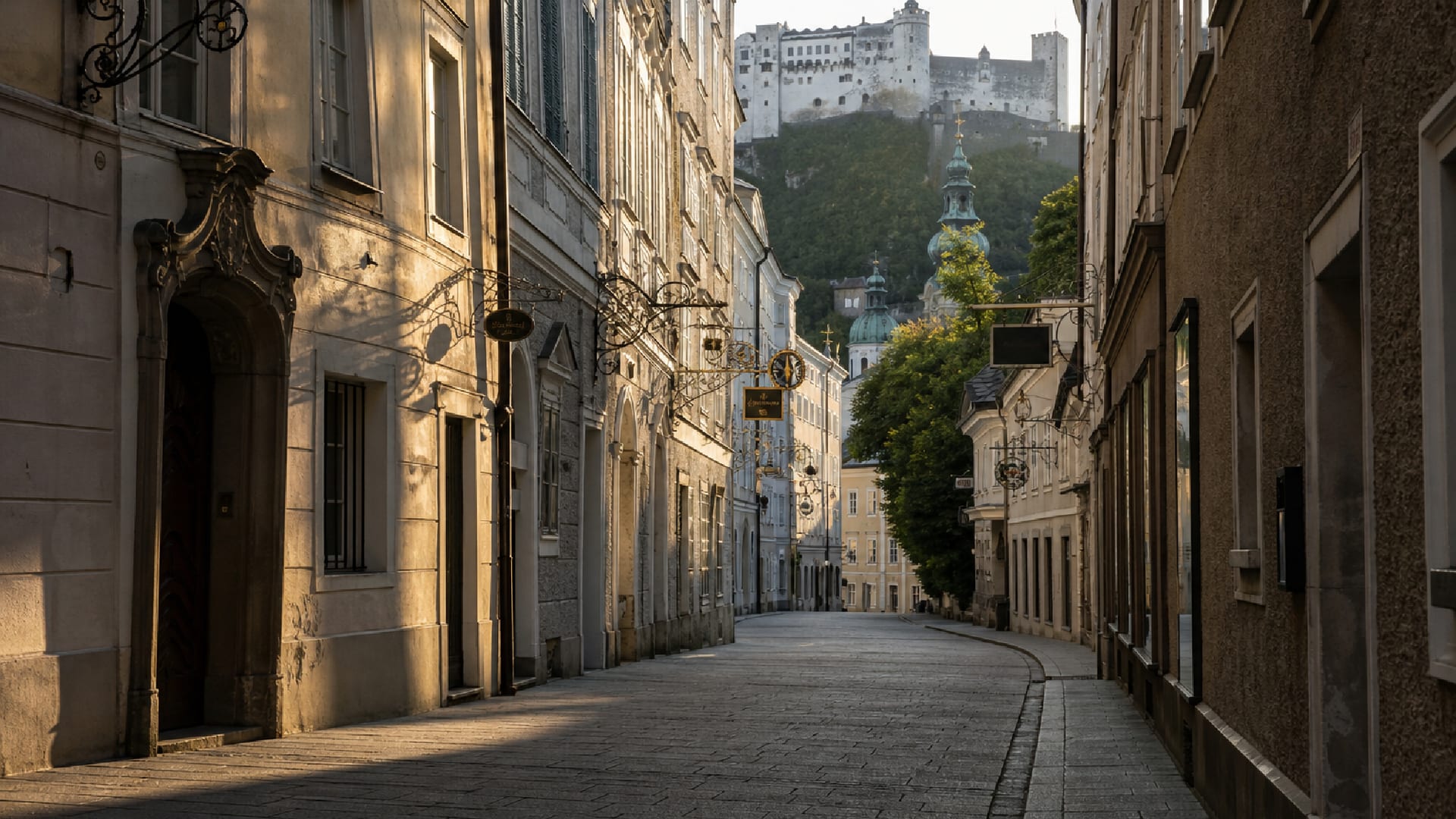
Salzburg’s Altstadt, the UNESCO-listed historic core, features baroque streets, courtyards, churches, museums, and shops. It suits first-time visitors who want the major central sights within easy walking distance.
Best for: First-time visits, short stays, and walking to major sights
What to expect: Historic streets, busy shopping areas, restaurants, and steady visitor traffic during the day
Hotel prices: Well-rated hotels generally cost €180 to €320 ($210 to $375) per night.
Distance to major sights: 5 to 10 minutes on foot to Salzburg Cathedral and 15 minutes to Mirabell Palace
Quietness: Busiest during the day, with less foot traffic on side streets later in the evening
Main trade-off: Rooms cost more here, and historic properties can have smaller layouts and limited parking.
Good to know: Car access to the Old Town is restricted, so check your hotel’s arrival instructions if you are driving.
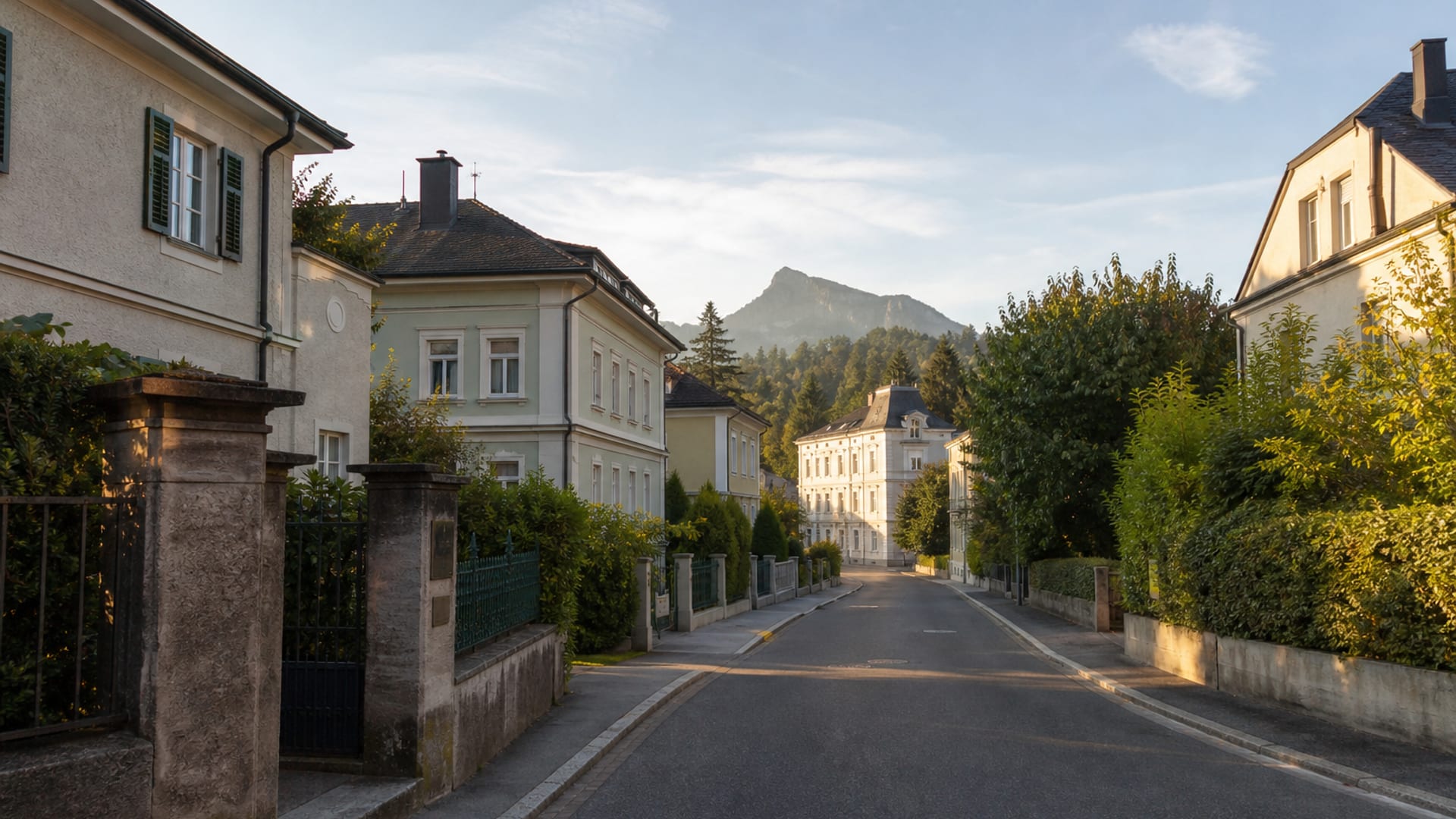
Nonntal lies just south of the historic center, with residential streets, university buildings, and nearby green spaces. Salzburg Cathedral and the Old Town are within walking distance, while the neighborhood sees fewer visitors than Altstadt.
Best for: Residential surroundings, moderate hotel prices, and easy Old Town access
What to expect: Local cafés, university activity, residential streets, and fewer tour groups than in Altstadt
Hotel prices: Rooms in well-reviewed properties generally cost €130 to €240 ($150 to $280) per night.
Distance to major sights: 10 to 15 minutes on foot to Salzburg Cathedral and about 10 minutes by bus to Mirabell Palace
Quietness: Less busy than Altstadt, particularly away from the main roads
Main trade-off: Some central sights require a longer walk, and parts of the neighborhood slope toward the surrounding hills.
Good to know: Check the exact hotel location if you prefer flatter walks between your room and the historic center.
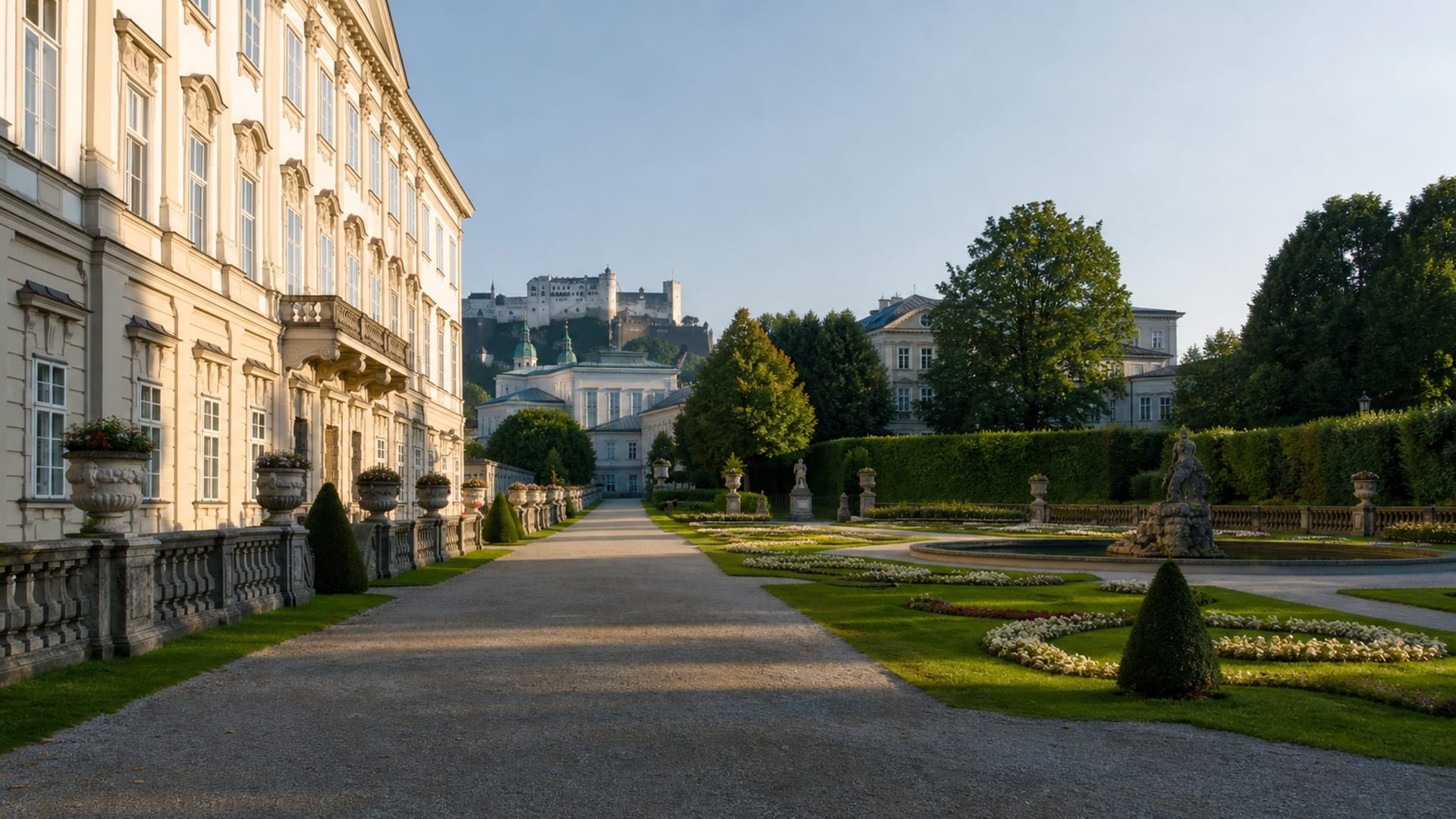
The Mirabell area places you beside Mirabell Palace and Gardens, north of the Salzach and within walking distance of Salzburg Hauptbahnhof. It suits travelers who want convenient rail connections while keeping the Old Town nearby.
Best for: Train arrivals, short city breaks, and convenient public transport
What to expect: Hotels, restaurants, commuter traffic, and frequent activity around Mirabellplatz and the station
Hotel prices: Nightly rates typically range from €120 to €230 ($140 to $270).
Distance to major sights: 5 to 10 minutes on foot to Mirabell Palace and 15 to 20 minutes to Salzburg Cathedral
Quietness: Busier around transport corridors, with less activity on side streets later in the evening
Main trade-off: The streets closer to the station have a more functional character than the historic center.
Good to know: This area is particularly convenient if you are arriving by train or planning day trips by rail.
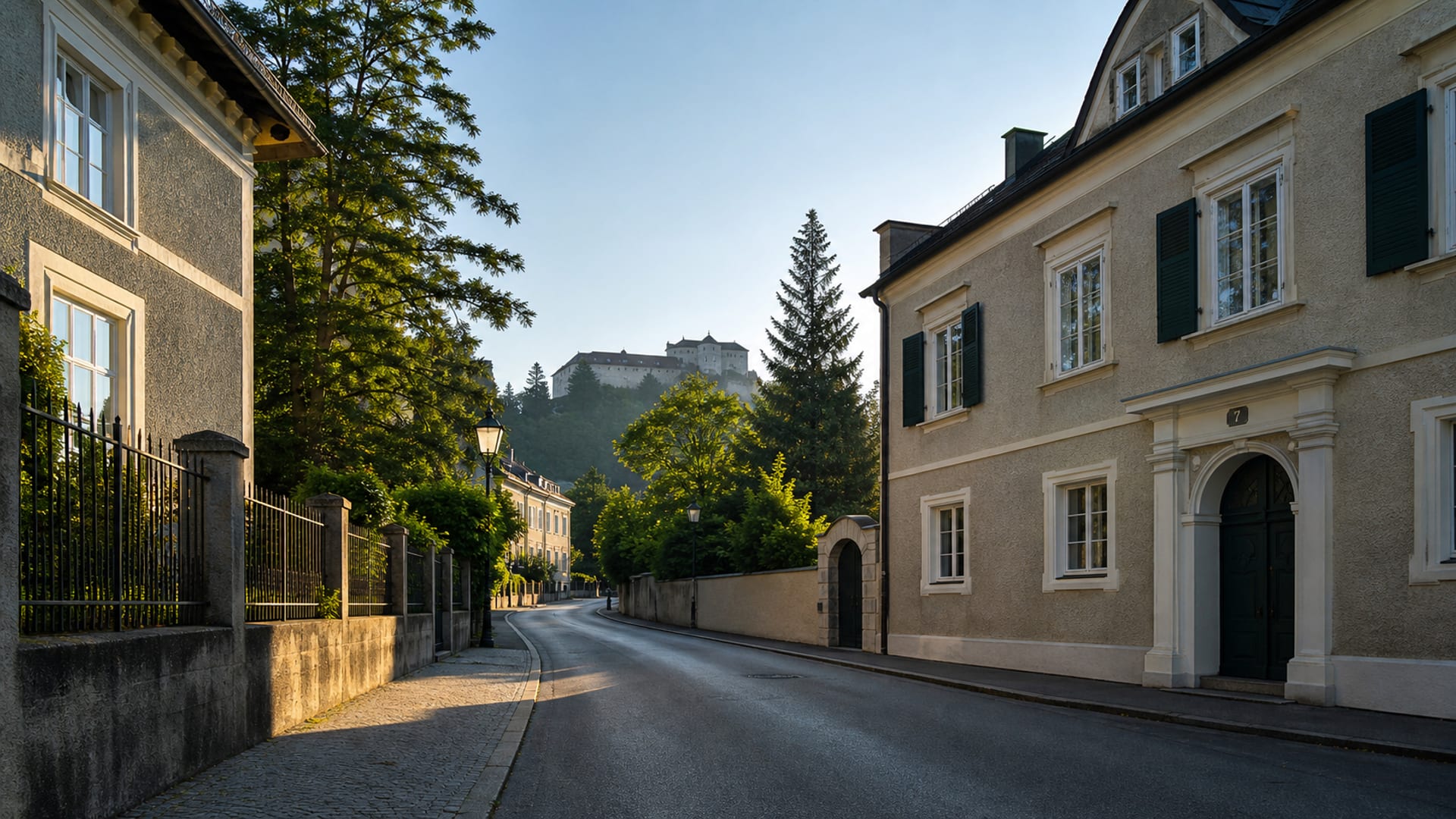
Aigen extends southeast of central Salzburg between the Salzach and Gaisberg, with villas, residential streets, and green spaces. Hotels here are farther from the Old Town but offer a quieter setting with bus and rail connections into the center.
Best for: Longer stays, residential surroundings, and travelers who do not mind using transit
What to expect: Villas, tree-lined streets, local restaurants, and considerably fewer visitors than central Salzburg
Hotel prices: Expect to pay €110 to €210 ($130 to $245) per night for well-rated accommodation.
Distance to major sights: Roughly 20 to 25 minutes by public transport to the historic center
Quietness: Residential streets see considerably less evening activity than the central districts.
Main trade-off: Trips to the main sights take longer, and nearby late-night dining choices are more limited.
Good to know: Aigen station provides another option for reaching central Salzburg without relying entirely on buses.
Liefering, Taxham, and the airport area are less convenient for a first sightseeing-focused stay because they add regular transit time to the historic center. Parsch is closer but still less practical if you want to walk to Salzburg’s main landmarks, restaurants, and evening attractions.
Hotel deals
How to get around Salzburg efficiently
In Salzburg, buses handle most city journeys. Regional trains and taxis cover longer trips.

Metro
for longer distances
Bus 2 links Salzburg Airport (SZG) with the main train station, Salzburg Hauptbahnhof, in 23 minutes. Bus 10 reaches the city center in 15 minutes. A 1-hour city ticket costs €2.60 ($3), while a 24-hour ticket costs €5.20 ($6) when bought in advance or digitally.

Bus and tram
for convenience
Regional trains from Salzburg Hauptbahnhof connect the city with destinations across the Salzburg region and neighboring Bavaria. Regional fares start at €2.60 ($3) for one zone and increase with distance. Buy tickets at machines, online, or through the Salzburg Verkehr and ÖBB channels.

Taxi
for convenience or late hours
Licensed taxis use meters, and a ride from Salzburg Airport to central Salzburg costs roughly €12 ($14), depending on traffic and the destination. Taxis are available at the airport rank, by phone, or through local booking apps. All licensed cars accept card payments.
*Prices are based on rates updated as of June 2026 and may change at the time of travel.
Use buses for airport and city trips, regional trains for destinations beyond Salzburg, and taxis when luggage, late hours, or several transfers make public transport less convenient.
Iconic landmarks
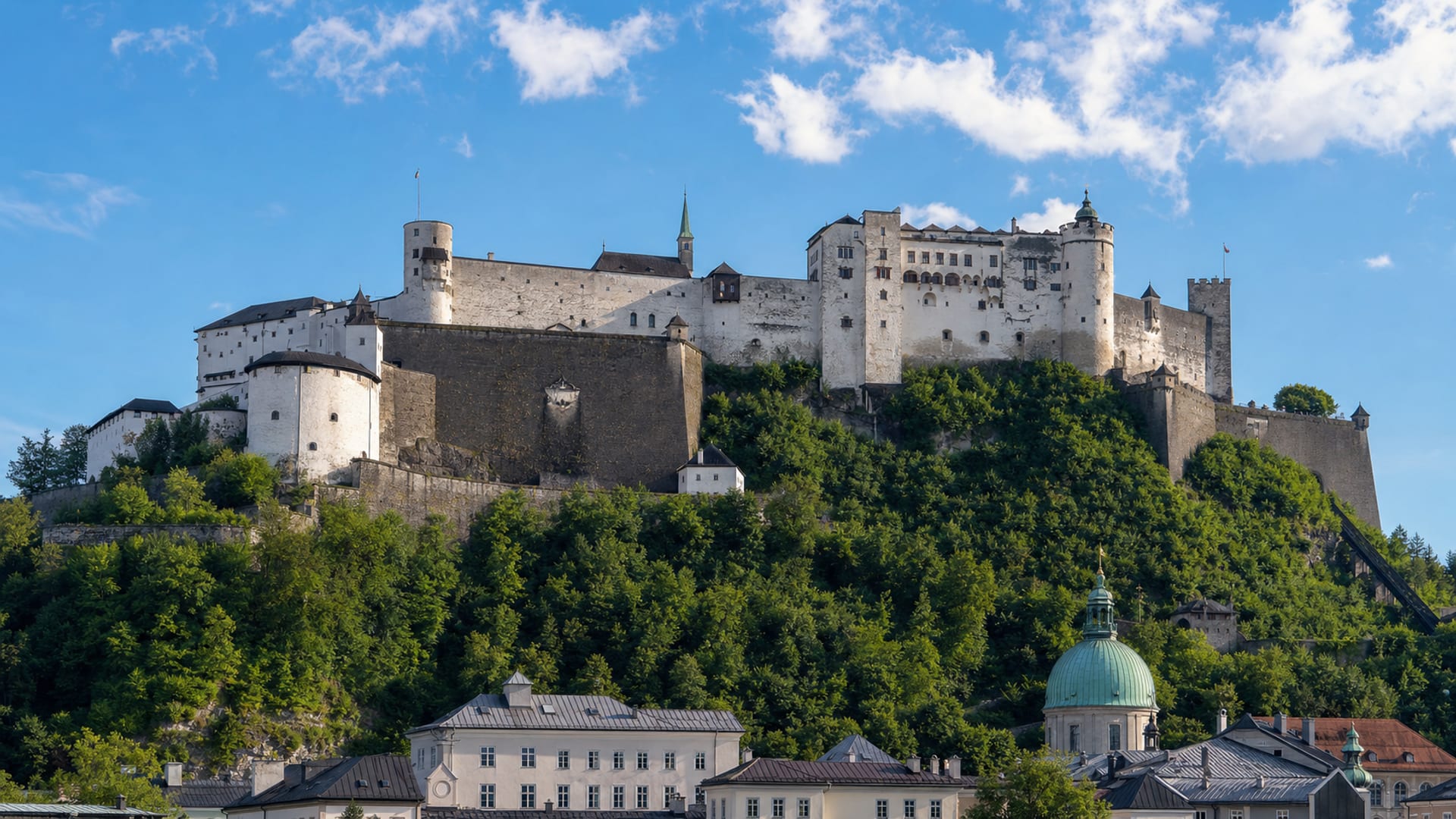
Hohensalzburg Fortress
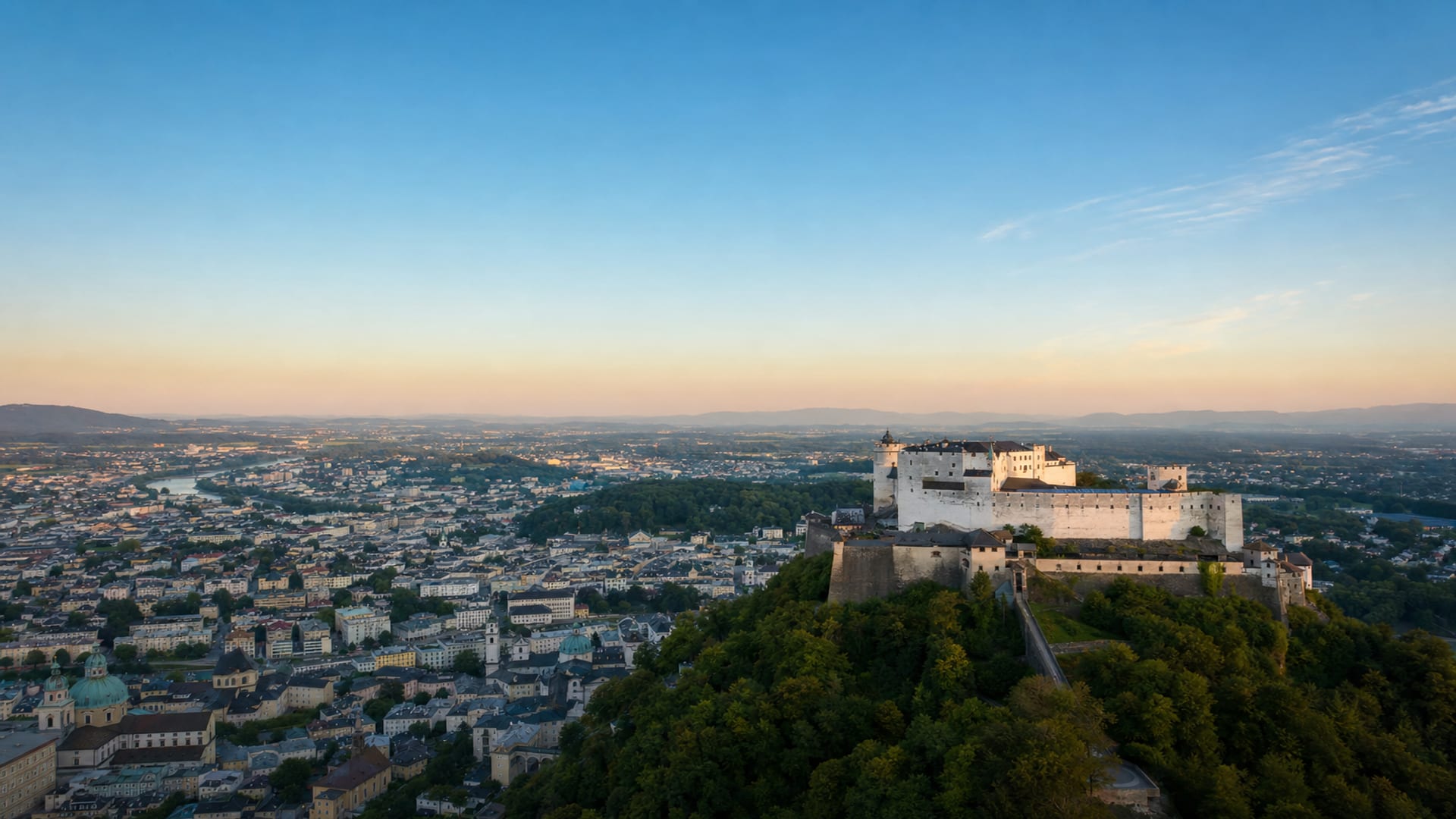
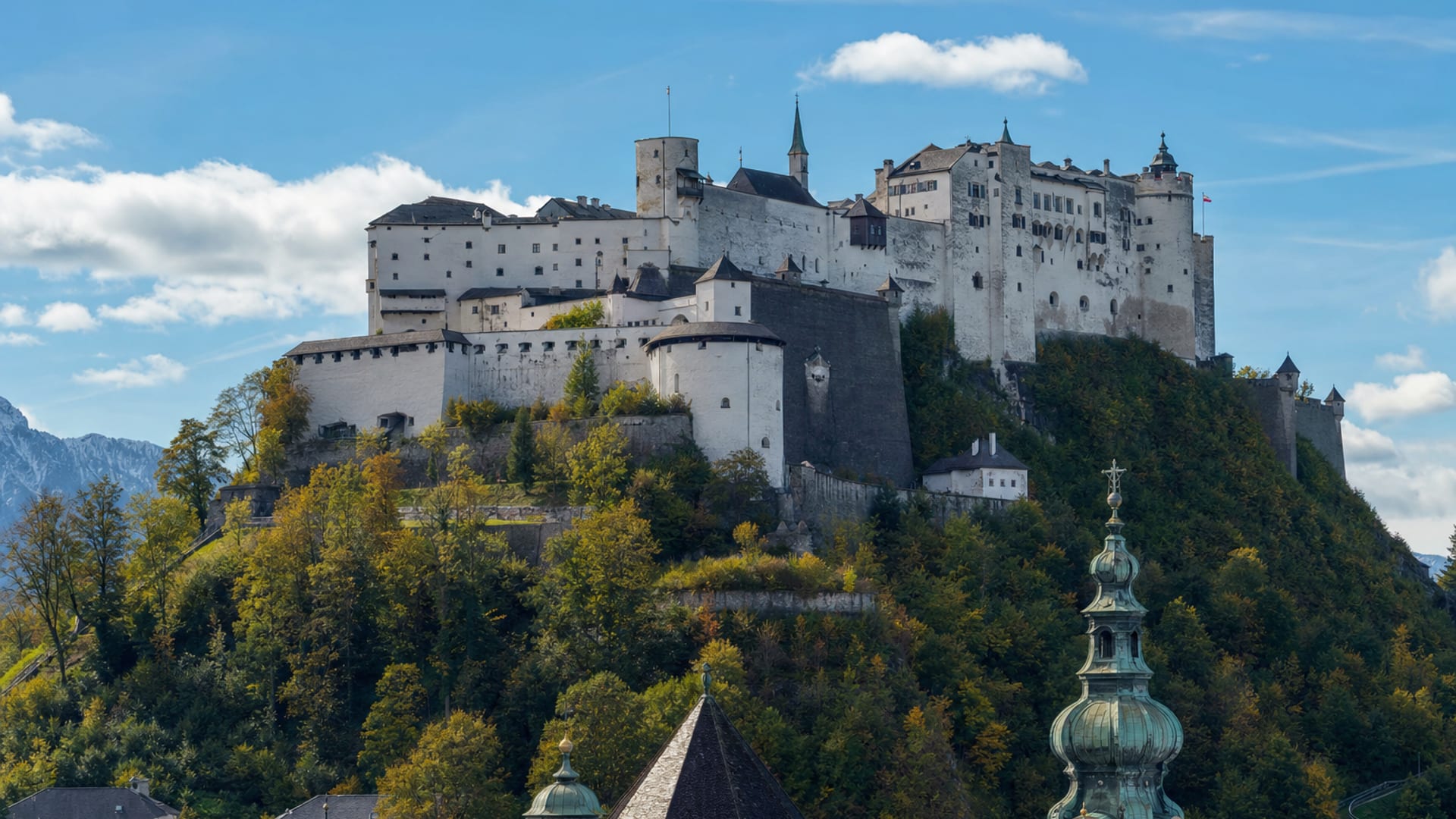
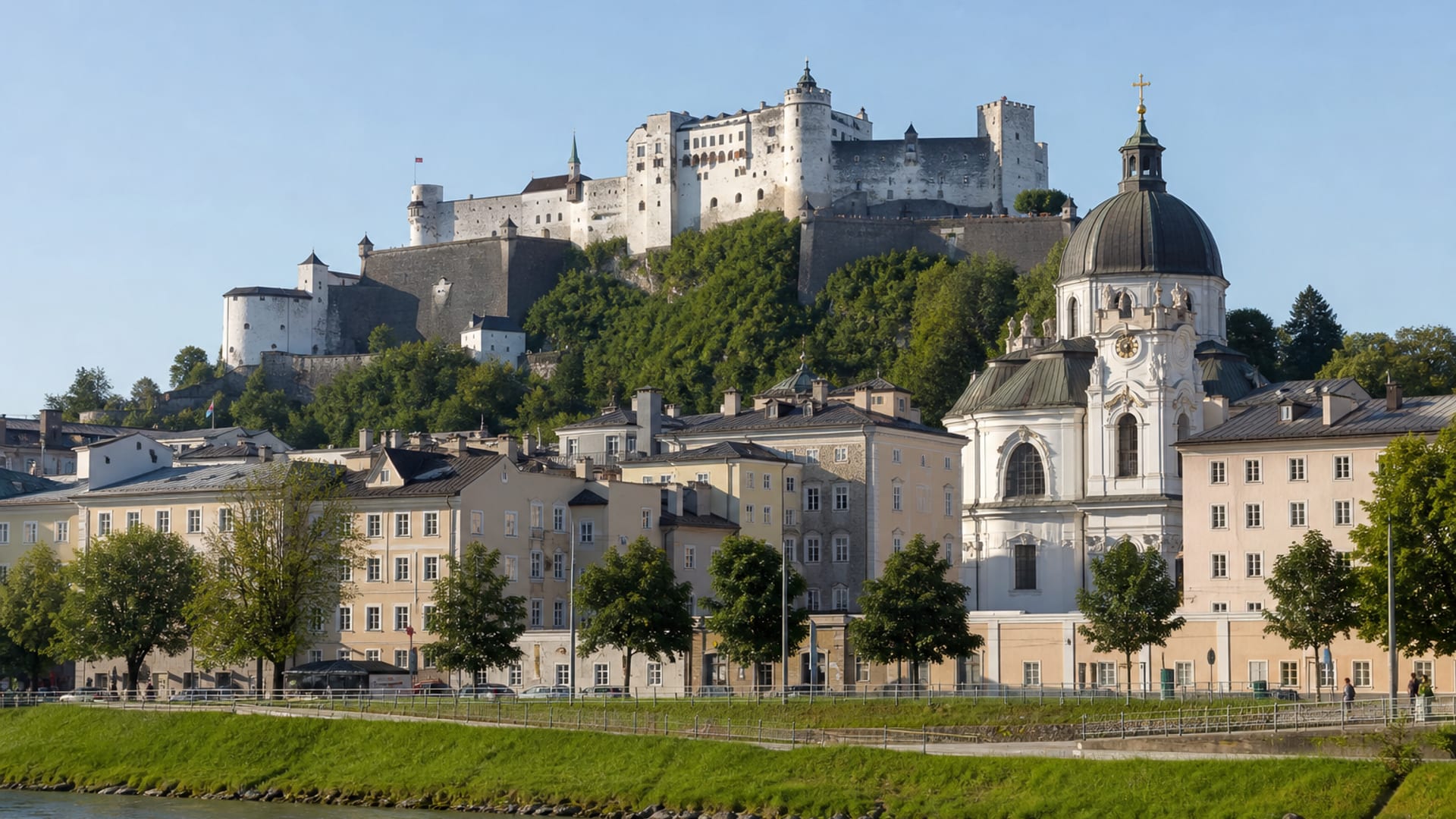
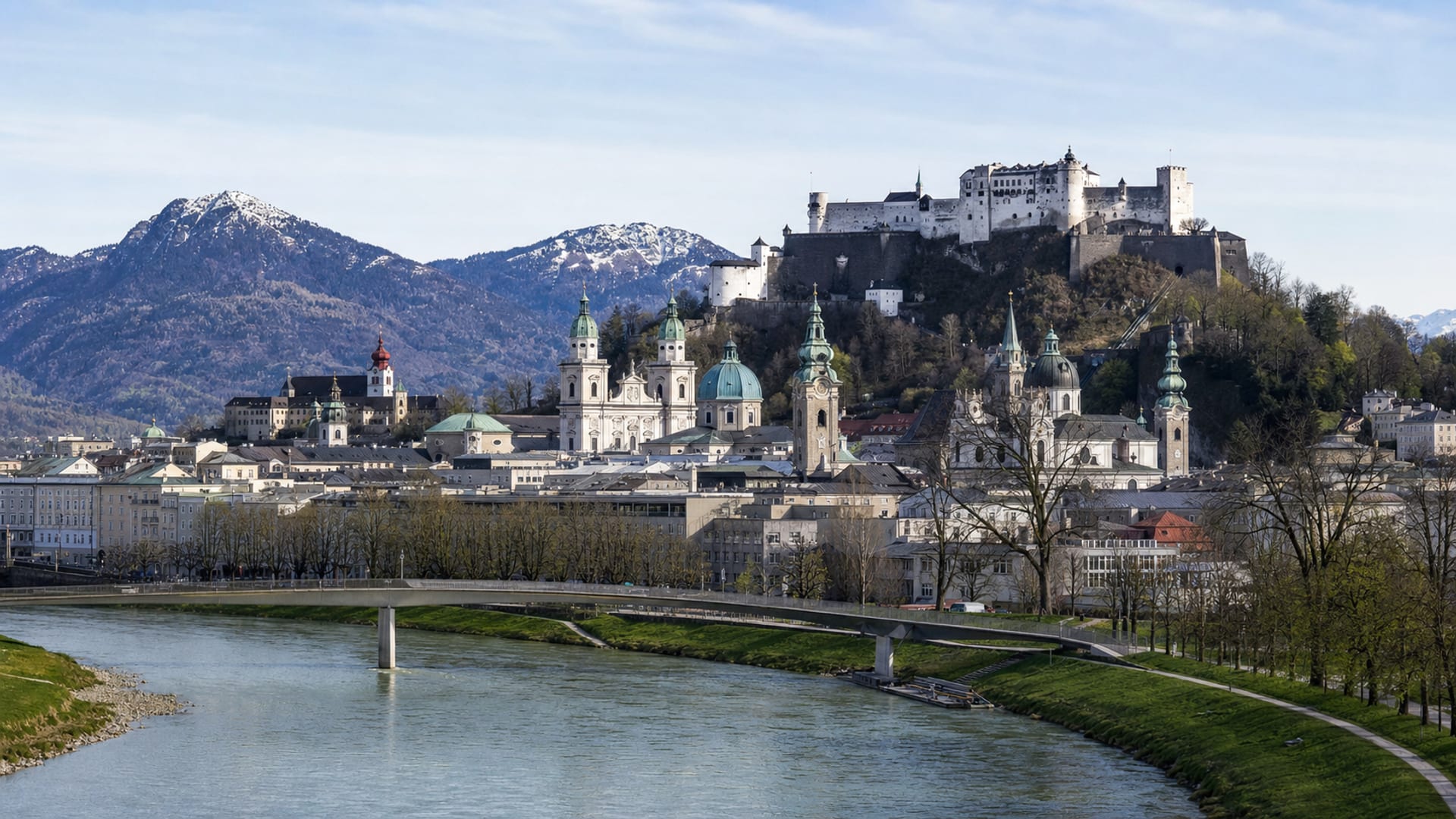
Hohensalzburg Fortress crowns Festungsberg above the Old Town, with medieval courtyards, museums, State Rooms, and broad views across Salzburg and the surrounding mountains. Its long building history stretches from the 11th century through later defensive expansions.
Time needed: 2 to 3 hours
Entry: Basic tickets for adults cost €15.50 ($18). All-inclusive access is €19.20 ($22). Both include funicular rides. Visit the official website for details.
Tip: Visit early or later in the day for shorter queues and clearer terrace views.
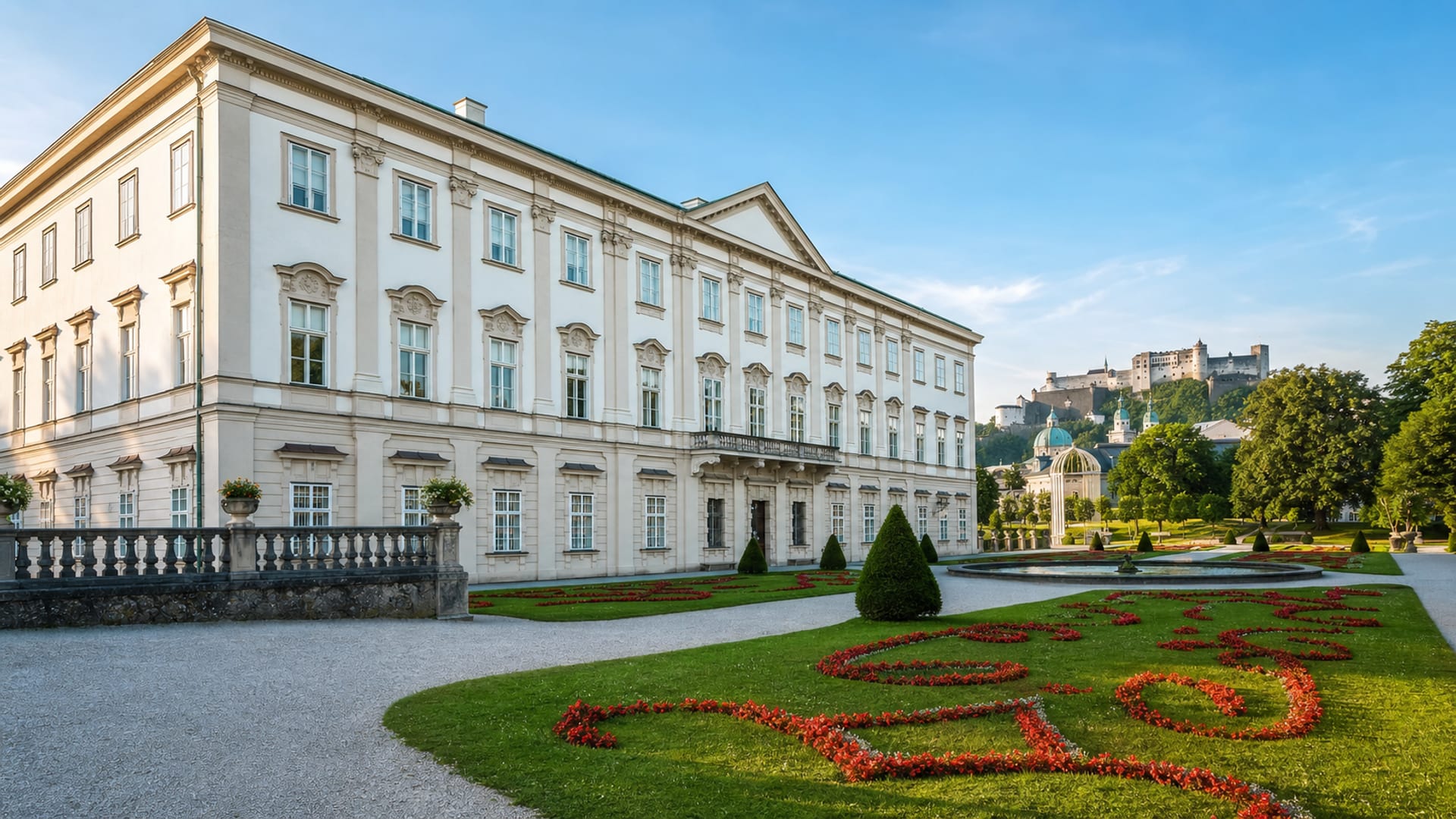
Mirabell Palace and Gardens
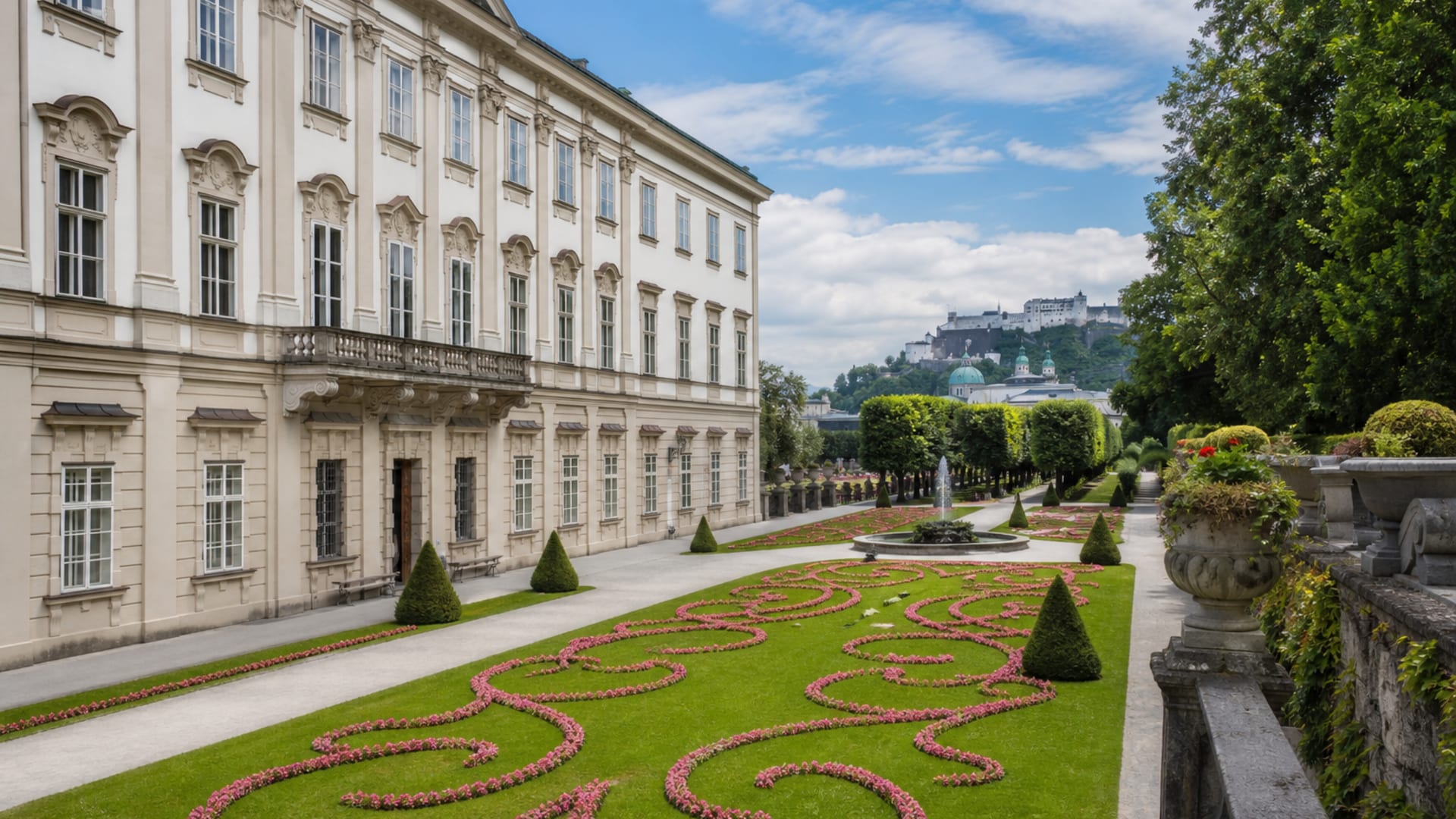
Mirabell Palace stands beside formal gardens filled with fountains, sculptures, clipped parterres, and views toward Hohensalzburg Fortress. The Marble Hall and Angel Staircase add historic interiors.
Time needed: 1 to 2 hours
Entry: Palace and garden admission is free. Some rooms may close for official functions or private events. Visit the official site for details.
Tip: Visit in the morning for softer light and fewer groups in the gardens.
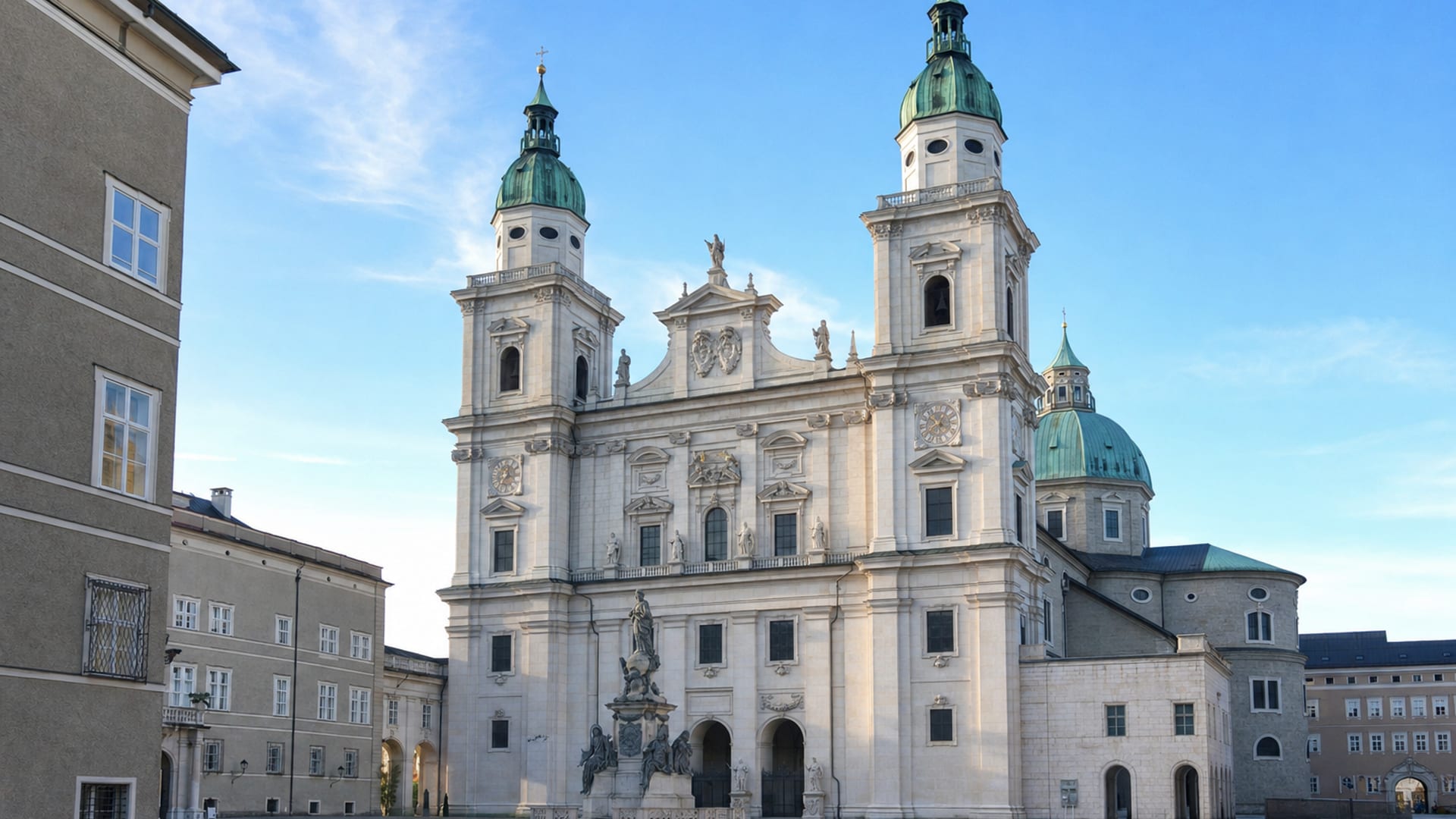
Salzburg Cathedral
Salzburg Cathedral dominates the historic center with a Baroque façade, vast dome, bronze baptismal font, and richly decorated interior. The present building dates largely from the 17th century and remains one of Salzburg’s most important churches.
Time needed: 45 minutes to 1 hour
Entry: Tourist visits require a timed admission ticket, with separate arrangements during services and liturgical events. Visit the official website for details.
Tip: Check the Mass schedule before visiting so you can plan around worship times.
Overlooked sites worth visiting

Augustiner Bräu Mülln
Augustiner Bräu Mülln has brewed beer in Salzburg since 1621 and combines historic drinking halls with a large beer garden and food stalls serving regional dishes. Beer is collected directly from the serving area, while food stalls and communal tables fill the adjoining halls and garden.
Time needed: 1 to 2 hours
Entry: Free Visit the official site for details.
Tip: Visit on a weekday afternoon for easier seating before the evening crowd arrives.

Untersberg cable car area
The Untersberg cable car climbs from Grödig to a high mountain station above Salzburg, opening onto viewpoints and marked walking routes across the limestone plateau. On clear days, the summit area gives wide views over the city and surrounding Alps.
Time needed: About 2 to 3 hours
Entry: Adult round-trip cable car tickets cost €34 ($40), with reduced rates for seniors, youth, students, and children. Visit the official website for details.
Tip: Go early on a clear day, since clouds can reduce visibility later in the afternoon.
Traditional food
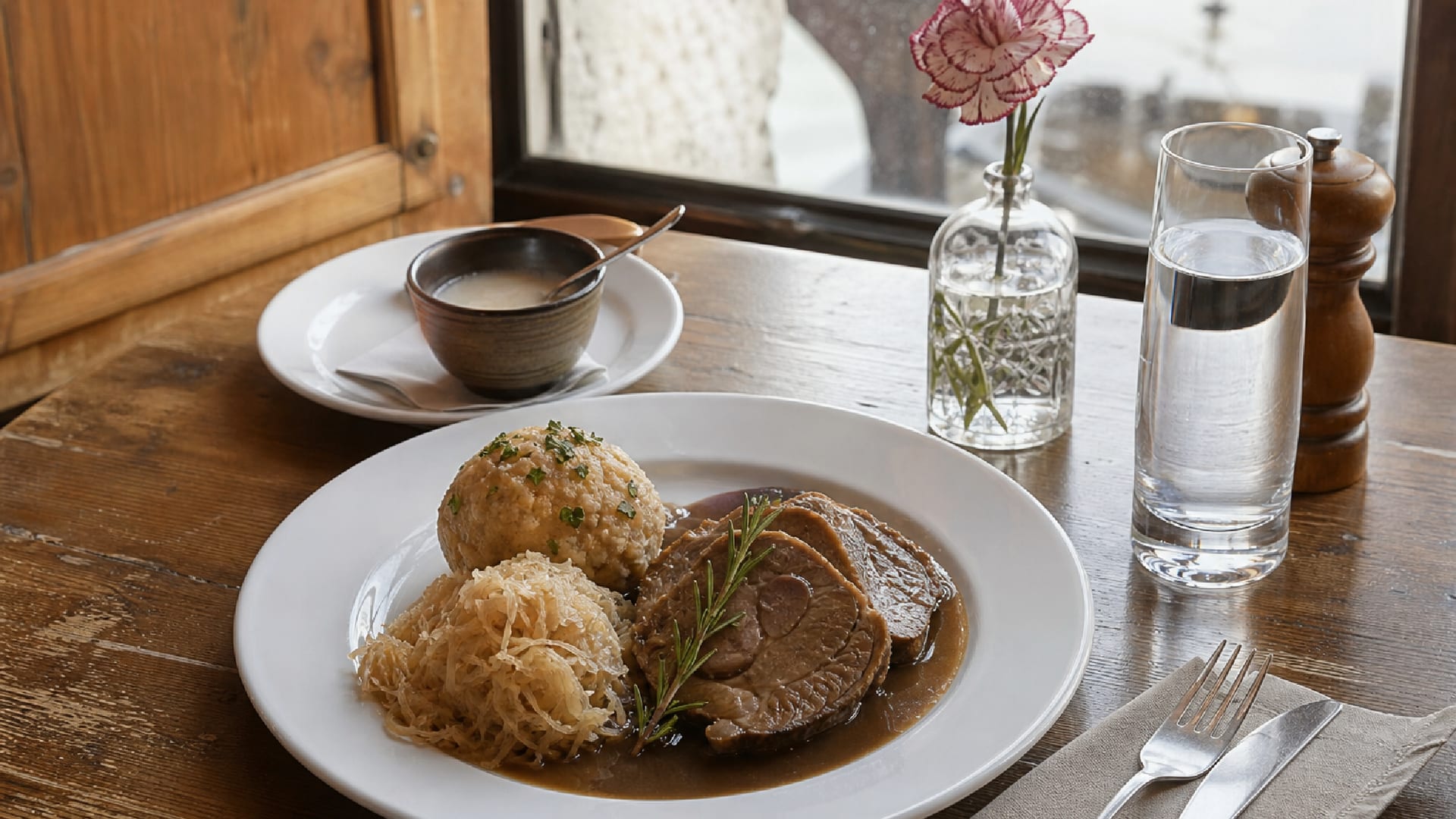
Salzburg cuisine combines Alpine dishes with Austrian classics, from cheese-rich Kasnocken and Salzburger Nockerl to Tafelspitz and Wiener Schnitzel.
Salzburger Nockerl
Salzburger Nockerl is a light baked soufflé traditionally served warm and often shared at the table. St. Peter Stiftskulinarium serves a classic version with lingonberry cream.
Kasnocken
Kasnocken are soft dumplings mixed with melted cheese and usually finished with fried onions. Zum Zirkelwirt serves them among its regional Salzburg specialties.
Tafelspitz
Tafelspitz is slow-cooked beef served with broth, vegetables, horseradish, and classic Austrian accompaniments. Gasthof Goldgasse serves a traditional version in the Old Town.
Wiener Schnitzel
Wiener Schnitzel is a thin veal cutlet coated in breadcrumbs and fried until crisp and golden. Meissl & Schadn on Getreidegasse specializes in the traditional veal version.
Best time to visit Salzburg
Salzburg has four distinct seasons, with spring and fall bringing the easiest sightseeing weather, summer drawing the largest crowds, and winter centered on markets and indoor attractions.
Best for: Fortress views, garden walks, and comfortable sightseeing days
What you get: 39°F to 68°F (4°C to 20°C), with temperatures rising steadily and crowds building around Easter and late spring
Trade-offs: Rain can interrupt hill visits and longer walks.
Best for: Long daylight, outdoor dining, and full garden color
What you get: 52°F to 76°F (11°C to 24°C), with warm days and the largest crowds around the Old Town and major sights
Trade-offs: Festival season brings longer queues and higher hotel demand.
Best for: City walks, museum visits, and views from the fortress and surrounding hills
What you get: 37°F to 68°F (3°C to 20°C), with cooler weather and visitor numbers easing later in the season
Trade-offs: Shorter days and wet weather can affect late outdoor plans.
Best for: Christmas markets, museums, cafés, and snowy mountain views
What you get: 25°F to 42°F (-4°C to 6°C), with lighter crowds outside the Advent and holiday periods
Trade-offs: Cold mornings and limited daylight shorten outdoor sightseeing windows.
A realistic 5-day plan in Salzburg
Five days give you time to separate Salzburg’s Old Town, fortress, Mirabell, Nonntal, and Untersberg into manageable sightseeing days. Central sights are grouped together, while Untersberg gets a separate day for the longer journey outside the center.
Land at Salzburg Airport (SZG), then take bus 10 to the city center, which takes 15 minutes, or bus 2 to Salzburg Hauptbahnhof, which takes 23 minutes. A taxi to central Salzburg costs roughly €12 ($14). Check in to a hotel near Altstadt or Mirabell, then keep the first evening light with dinner close to your hotel and a short walk nearby.
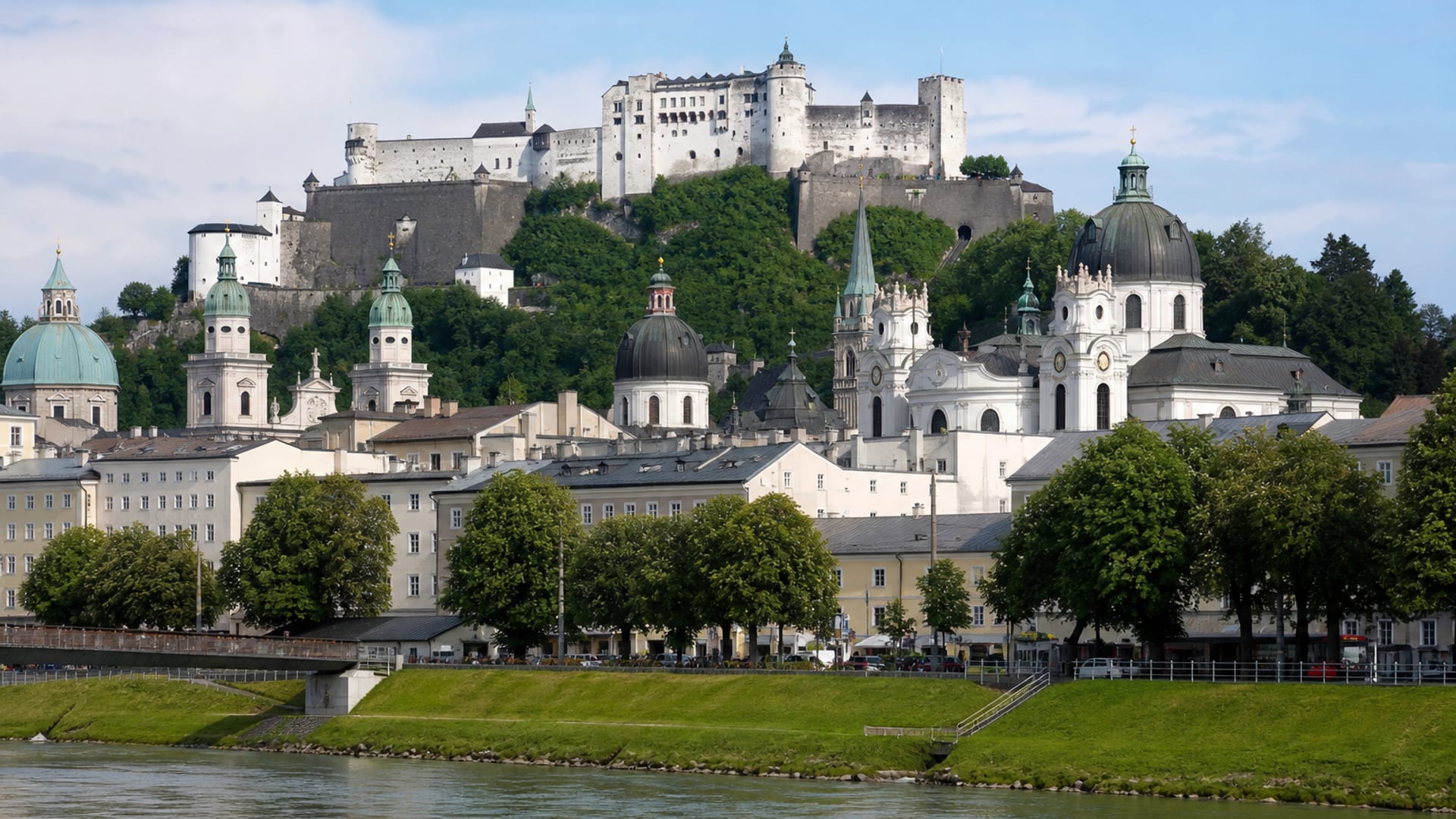
Start the day at Salzburg Cathedral, where the early Baroque interior, Mozart’s baptismal font, and the cathedral crypt take about 1 hour to visit. From the cathedral square, a short walk along Festungsgasse leads to the Festungsbahn funicular station; the funicular reaches Hohensalzburg Fortress in 54 seconds. The all-inclusive ticket costs €19.20 and covers the Prince’s Chambers, the armory, and the panorama terrace. Allow 2 hours to explore the fortress.
Begin at Mirabell Palace and Gardens, where the formal gardens, fountains, and the Pegasus fountain steps take about 1 to 2 hours to explore. The Marble Hall inside the palace is one of Salzburg’s finest Baroque interiors. From there, follow the Salzach River path northwest for about 15 minutes to Augustiner Bräu Mülln, an authentic brewery where you can have lunch. Spend the afternoon along the river or cross back into Altstadt via the Makartsteg, a pedestrian bridge lined with padlocks, for cafés, shopping, and dinner.
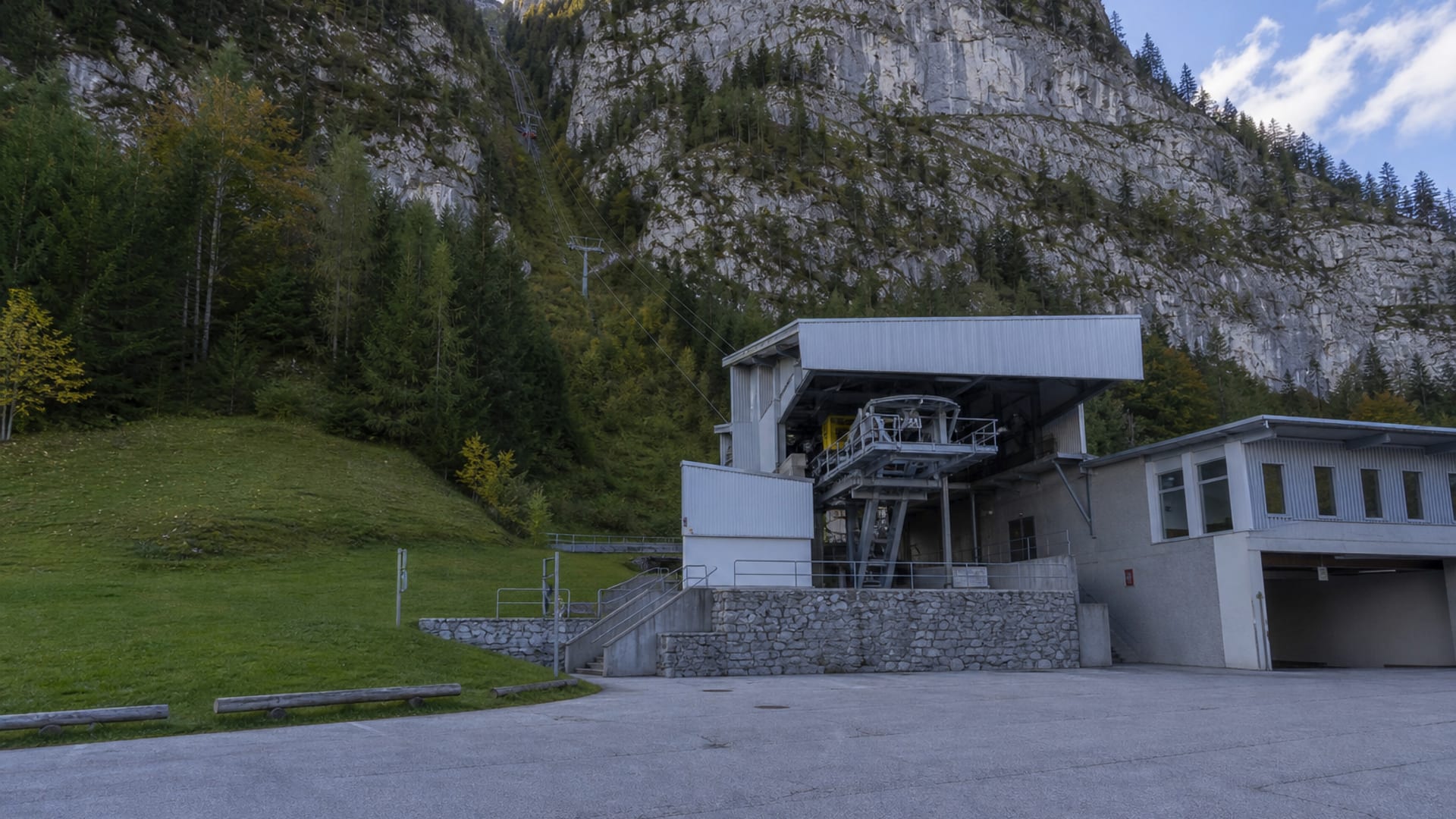
Take bus 25 from central Salzburg to the Untersbergbahn valley station at St. Leonhard. The cable car runs every 30 minutes and rises into high alpine terrain with wide views over Salzburg, the surrounding valleys, and the Bavarian plain on clear days. Bring warm layers and closed-toe shoes regardless of the weather below. Geiereck, the highest marked viewpoint on the eastern side, is a short walk from the top station. A restaurant at the summit serves food and beer.
Spend the final morning in Altstadt with shopping, a café stop, or a museum you have not visited earlier in the trip. Collect your bags, then take bus 10, bus 2, or a taxi back to Salzburg Airport (SZG), depending on your departure time.
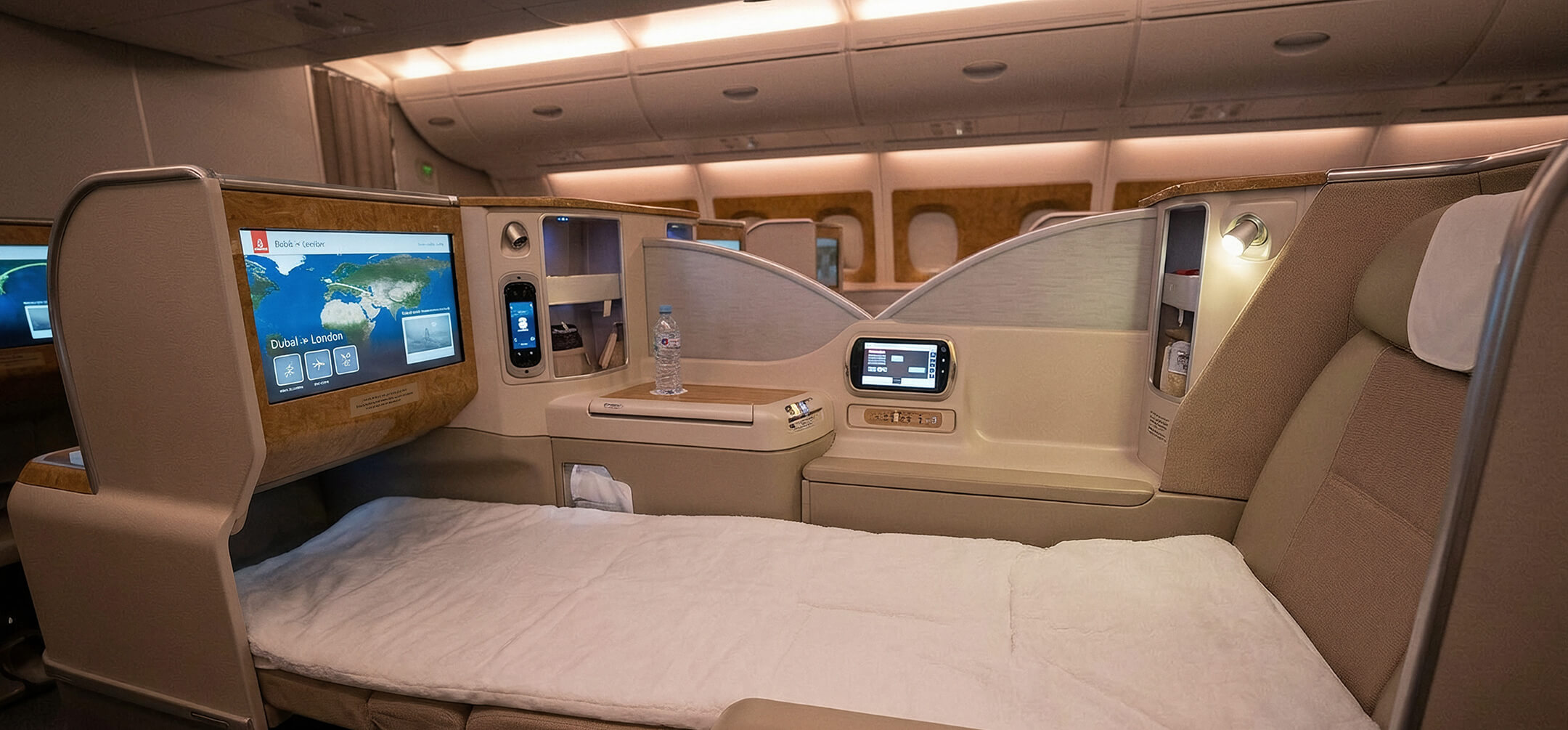
Business-class flights from the US to Salzburg
Reaching Salzburg from New York or Los Angeles usually means a one-stop itinerary, and the useful comparisons come down to carriers, hub choices, and how much time you want to spend en route. The price spread is wide enough that the layover point can change the fare materially.
From New York, Lufthansa, Austrian Airlines, SWISS, Air France, KLM, and Turkish Airlines commonly cover the route, with total travel time usually about 8 to 9 hours nonstop unavailable, so most itineraries connect through FRA, MUC, ZRH, VIE, CDG, or AMS and take about 11 to 15 hours. Round-trip fares for this route usually start at about $2,200 and can climb to $5,500.
Los Angeles itineraries usually run through FRA, MUC, ZRH, VIE, IST, or LHR on Lufthansa, Austrian Airlines, SWISS, Turkish Airlines, British Airways, or Air France, and the total journey often lands about 14 to 20 hours. Round-trip fares often begin near $2,900 and can reach $6,200, and if you do not mind a layover, common routings via FRA or MUC can bring the price down.
Salzburg feels different when you slow down
Salzburg feels more manageable when Altstadt holds the main landmarks, Mirabell has its own morning, and Untersberg stays separate from central sightseeing. Buses and taxis cover the longer links, while most Old Town sights are easy to reach on foot. AranGrant experts can help you find business-class flights and hotels that fit your dates and preferred location.