

Chapters:

Need help with your trip?
Our support team is available 24/7. Request a callback or call us directly at (833) 619-0908
Piura’s cooking brings together fish, green plantains, and the sharpness of lime in Peru’s northern desert. Ceviche and seco de chavelo give lunch a distinct regional character, while malarrabia links ripe plantains, cheese, and fish to the city’s Friday meals during Lent.
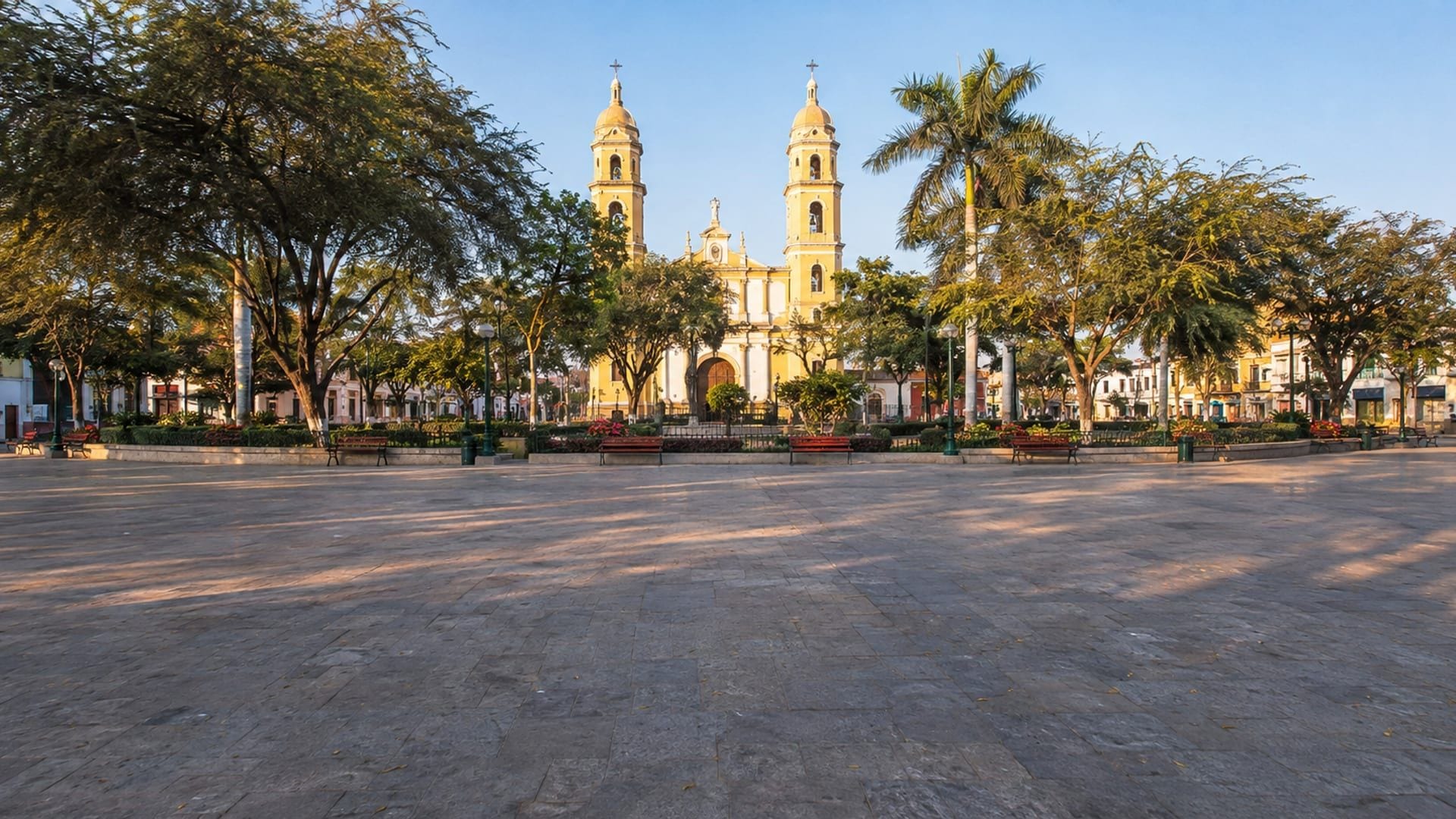
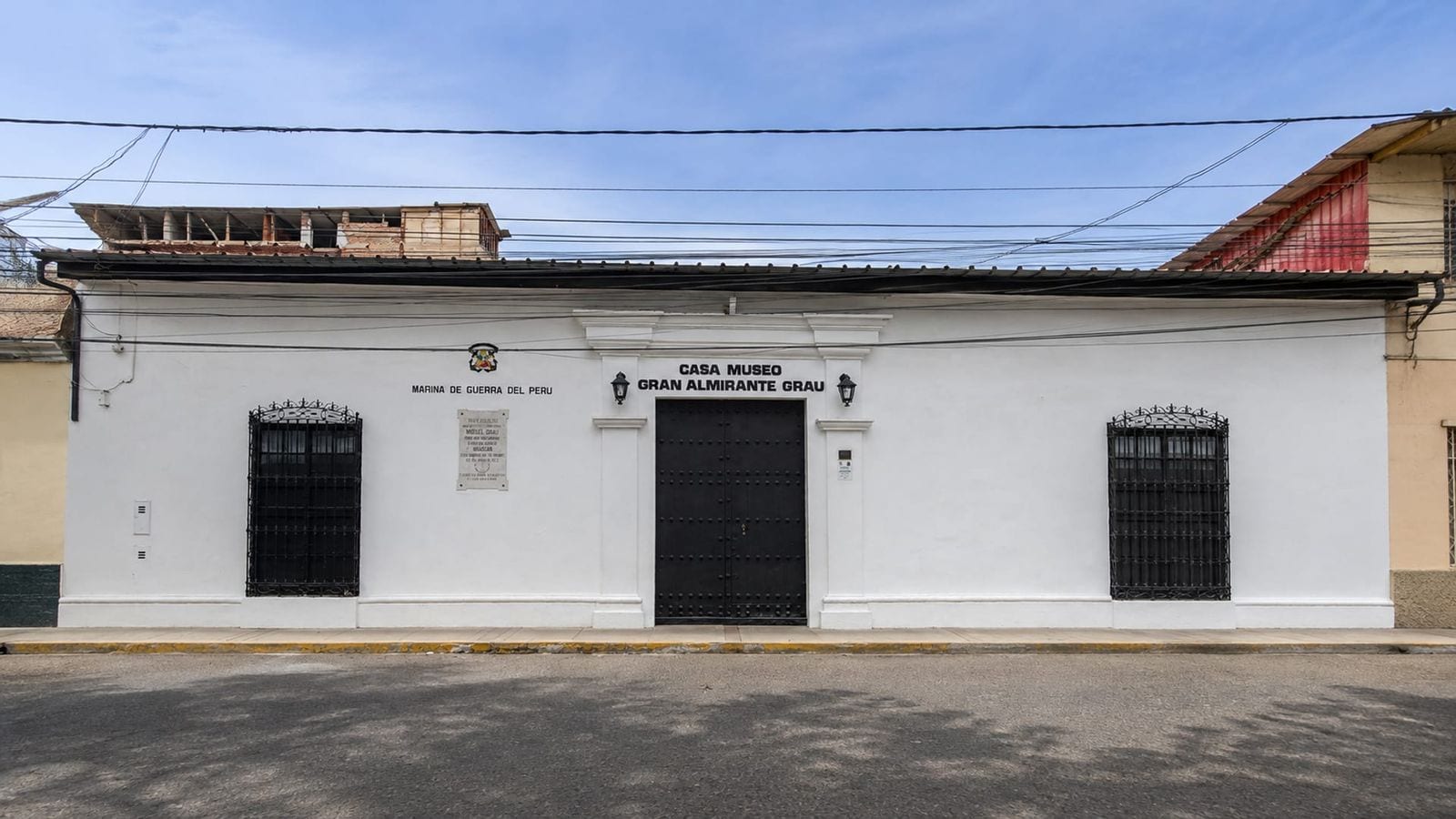
That food culture accompanies a compact historic center. Explore Plaza de Armas de Piura before lunch, step into Catedral de Piura between Masses, and follow Miguel Grau’s childhood and naval career at Casa Museo Gran Almirante Grau.
Five days leave time for these short outings and meals beyond the central streets. San Eduardo offers hotels with pools between excursions; June through September brings cooler conditions for morning walks, with taxis connecting the neighborhood to the center.
Useful things to know

Main language(s): Spanish
Buenos días (BWEH-nohs DEE-ahs) – Good morning
Por favor (por fah-VOR) – Please
Gracias (GRAH-syahs) – Thank you
¿Habla inglés? (AH-blah een-GLEHS) – Do you speak English?
¿Cuánto cuesta? (KWAHN-toh KWEHS-tah) – How much does it cost?

Currency: Peruvian sol (PEN, S/)

Cash and cards: Cards are common in hotels and larger restaurants; carry about PEN 100 to PEN 200 ($30 to $60) in cash.

Tipping: Leave 5% to 10% at restaurants for good service; tipping is optional.

Traditional food: Ceviche, seco de chavelo, malarrabia, and sudado de pescado are among the classic dishes of Piura.

Water and coffee costs: Bottled water PEN 2 to PEN 4 ($0.50 to $1); espresso PEN 6 to PEN 10 ($2 to $3).

Taxis and ride apps: Ask your hotel to arrange a licensed taxi; confirm the fare before departure.

Plug and voltage: Type A/C socket, 220V

Dining and shop opening hours: Breakfast is usually 7 am to 9 am, lunch 12 pm to 3 pm, and dinner 7 pm to 10 pm. Shops typically open 9 am to 8 pm; some close for lunch.

Emergency number: Police 105, ambulance 106, fire 116.
Where to stay in Piura
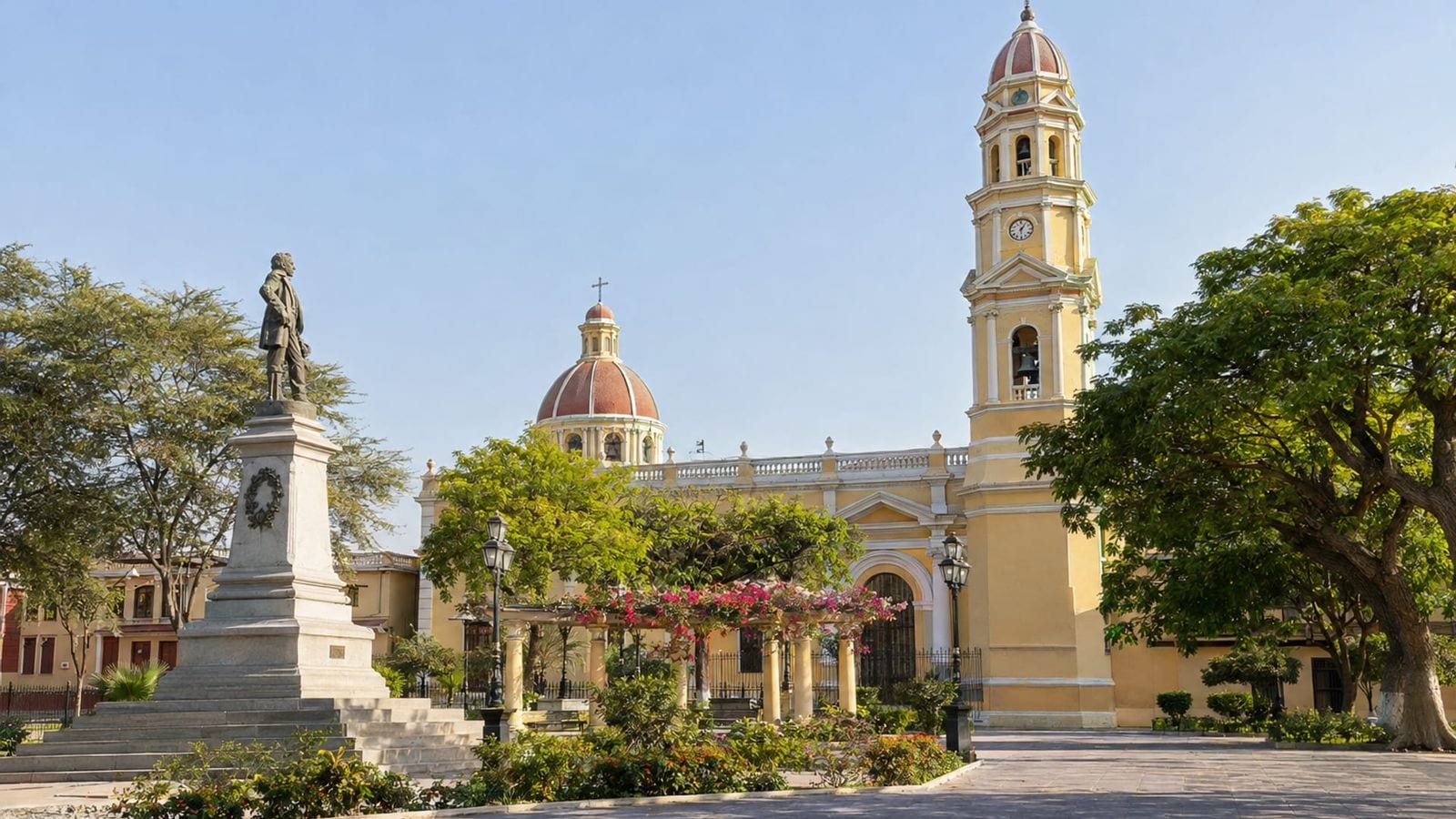
Centro is Piura’s historic downtown, with hotels near Plaza de Armas and the city’s main shopping streets. Staying here puts the cathedral and central restaurants within walking distance, making it convenient for short stays, though traffic and commercial activity continue through much of the day.
Best for: Walking to historic landmarks, central dining, and short stays
What to expect: Shops, taxis, and pedestrians keep the central streets busy during business hours.
Hotel prices: Well-rated hotels cost PEN 180 to PEN 360 ($50 to $100) a night.
Distance to major sights: Most central hotels are a 5 to 15-minute walk from Plaza de Armas.
Quietness: Busy shopping hours give way to quieter evenings, although traffic continues on main streets.
Main trade-off: Central convenience brings more traffic noise and fewer spacious hotel grounds.
Good to know: Choose a room away from the street if traffic noise interrupts your sleep.
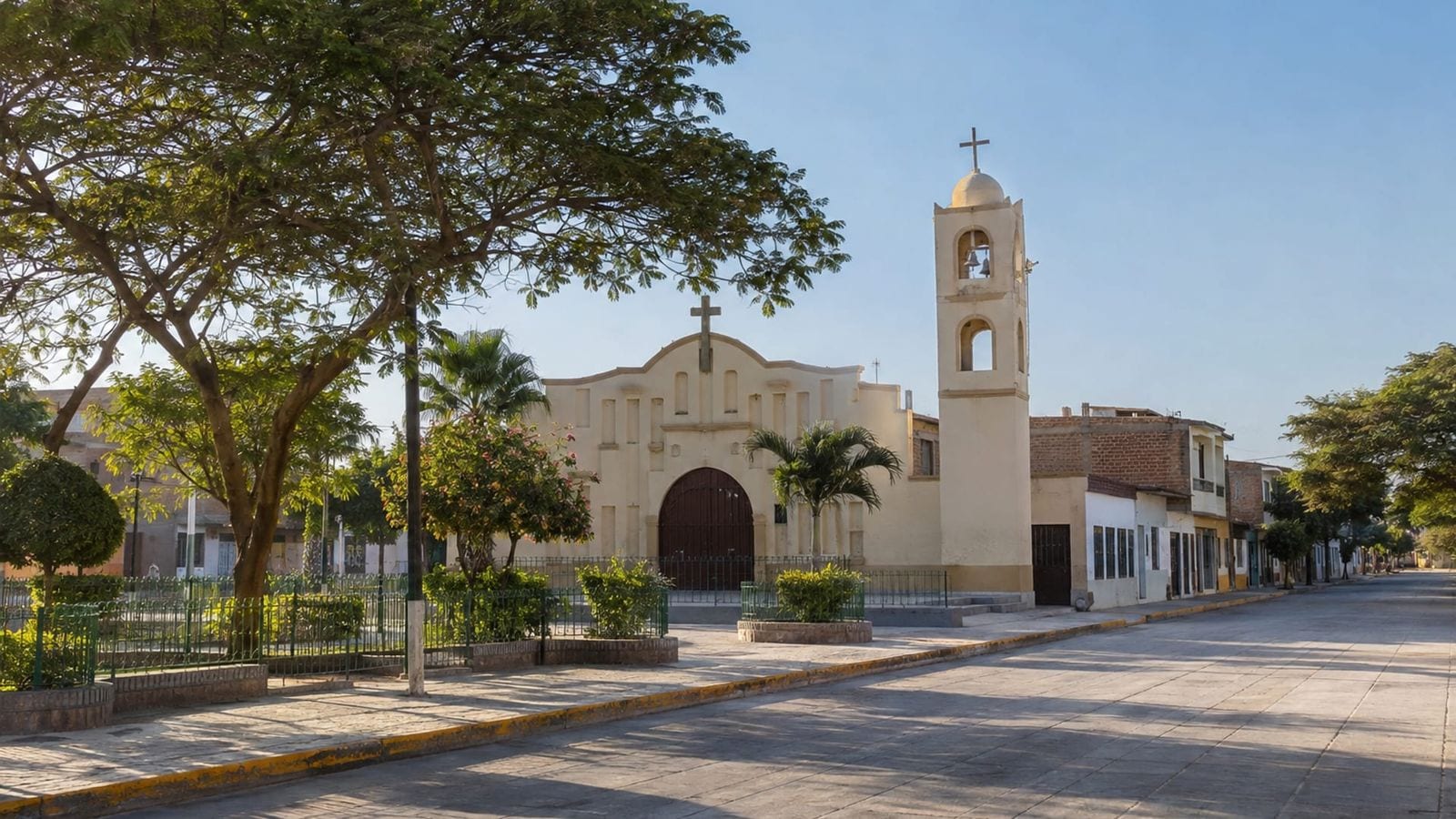
San Eduardo is a residential neighborhood in northern Piura, with established hotels and more space than the historic center. Visitors stay here for hotel pools and a quieter setting between outings, accepting taxi trips to Plaza de Armas and the concentration of sights in the city center.
Best for: Pool time, hotel amenities, and a residential location
What to expect: Residential streets and hotel properties draw fewer sightseeing crowds than downtown.
Hotel prices: Allow PEN 200 to PEN 480 ($55 to $130) nightly for a well-rated hotel.
Distance to major sights: Plaza de Armas is roughly 10 to 20 minutes away by taxi, depending on traffic.
Quietness: Daytime road traffic eases in the evening, with quieter conditions on interior streets.
Main trade-off: Reaching the historic center usually adds taxi costs to your stay.
Good to know: Compare room categories carefully: hotels here range from simpler accommodation to larger properties with pools.
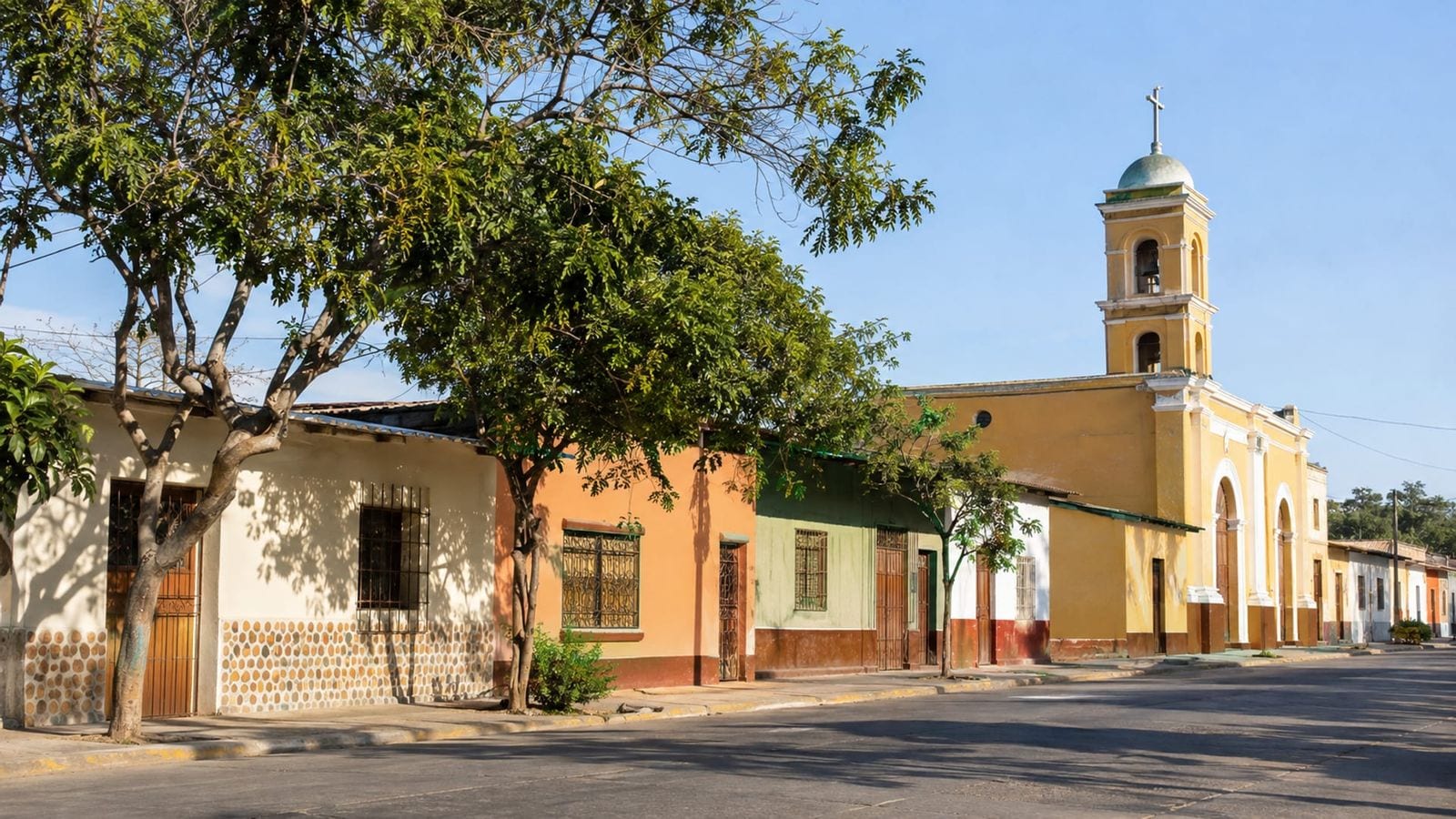
Santa Isabel is an established residential neighborhood north of central Piura, where smaller hotels place visitors among local streets and restaurants. It suits travelers who prefer accommodation outside downtown’s busiest blocks while keeping the historic center within a short taxi ride.
Best for: Local dining, smaller hotels, and proximity to the center
What to expect: Local traffic, neighborhood restaurants, and residential streets shape daily activity.
Hotel prices: A well-rated hotel generally charges PEN 140 to PEN 280 ($40 to $75) per night.
Distance to major sights: Allow 10 to 15 minutes by taxi to Plaza de Armas.
Quietness: Local activity fills the daytime; evenings are calmer away from restaurants and larger roads.
Main trade-off: Hotel facilities tend to be more limited than at larger properties in San Eduardo.
Good to know: Confirm whether your room has air-conditioning, since Piura’s heat can make fan-only accommodation uncomfortable.
Los Polvorines, Nueva Esperanza, and San Martín are less convenient for sightseeing stays: these outlying residential neighborhoods put you farther from Piura’s central sights and restaurants.
Hotel deals
How to get around Piura efficiently
Walking links Piura’s central sights, while taxis and local buses connect the center with residential neighborhoods and Castilla.

Taxi
for convenience or late hours
From Piura (PIU), taxis reach central Piura in roughly 15 to 25 minutes. Fares are negotiated, not metered; expect PEN 20 to PEN 35 ($5 to $10). Confirm the total before departure. Taxis suit airport transfers and trips after dark.

Walking
for short central distances
Plaza de Armas anchors central Piura, where short blocks make walking convenient for trips between the cathedral, shops, and nearby restaurants. Allow 5 to 15 minutes for short central hops, with no fare; favor early mornings before the midday heat.

Bus and tram
for convenience
For journeys between central Piura and Castilla, local buses offer inexpensive transport along fixed routes. Expect PEN 2 to PEN 3 ($0.55 to $0.85), paid in cash onboard. Ask the conductor about your destination before boarding; allow 15 to 30 minutes.
*Prices are based on rates updated as of November 2026 and may change at the time of travel.
Explore central sights on foot before 10 am, take buses for daytime trips to Castilla, and choose taxis for airport transfers or journeys after dark.
Iconic landmarks
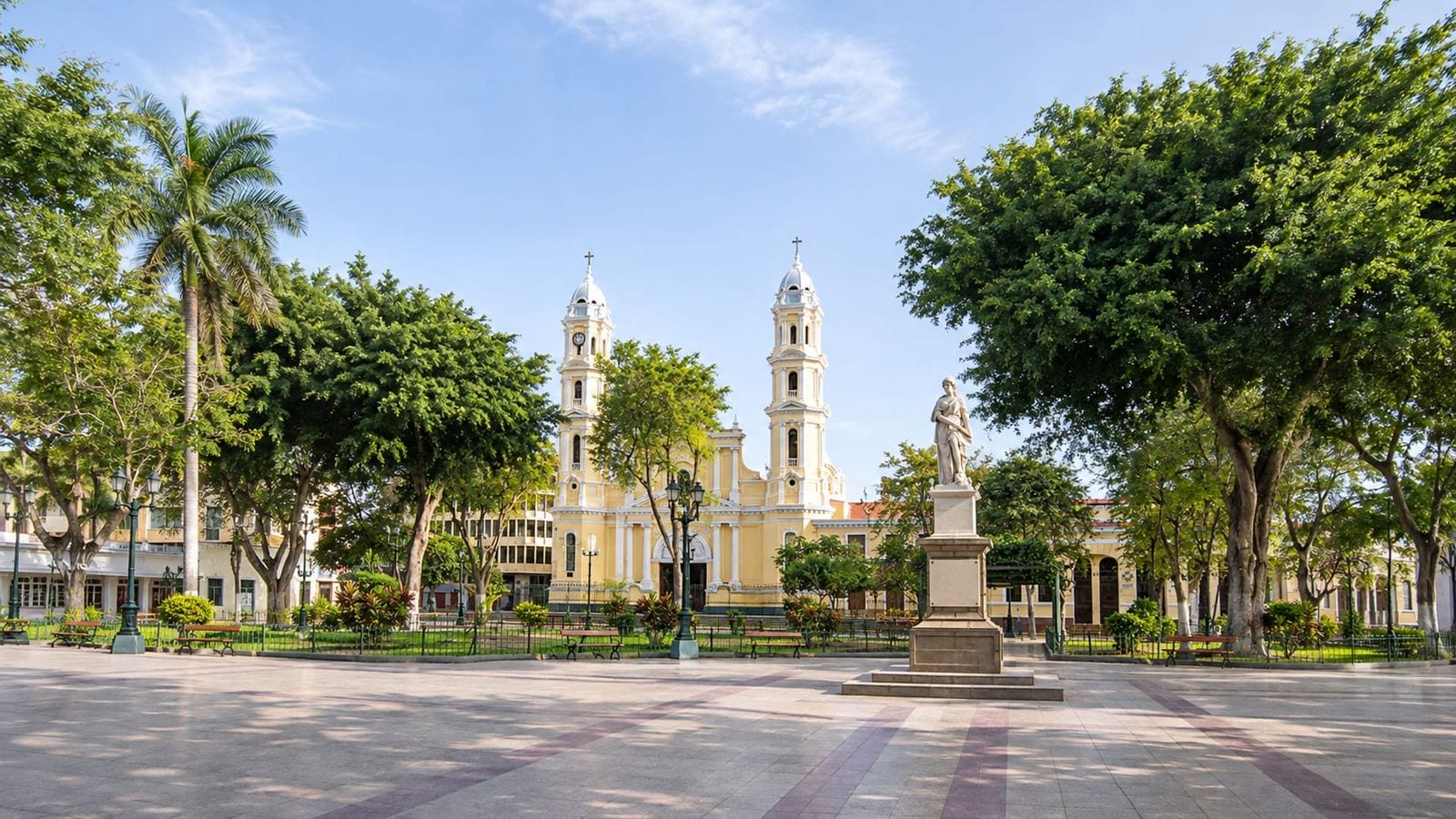
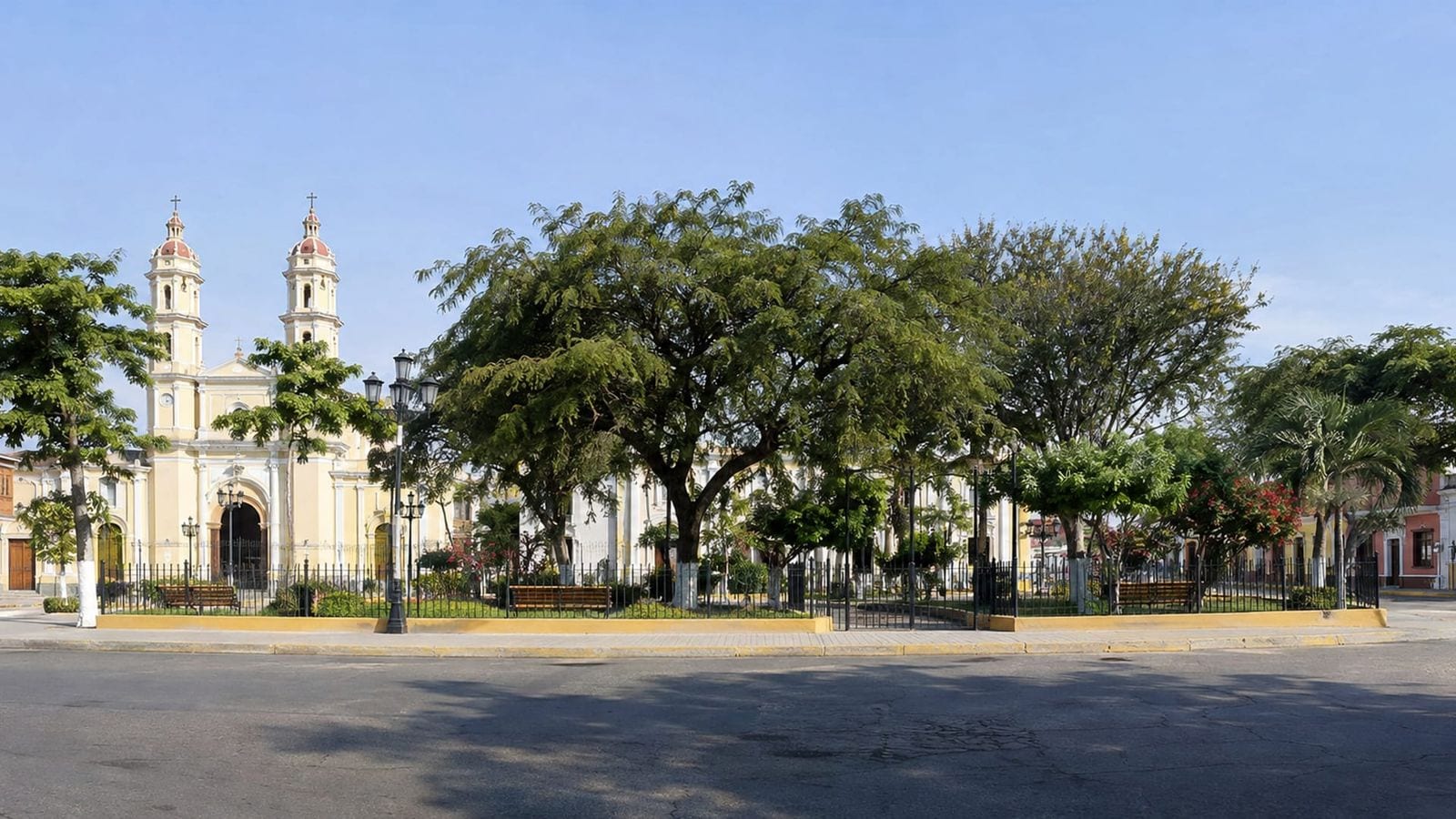
Plaza de Armas de Piura
Piura’s central civic landmark brings together shaded paths, a marble monument to liberty, and views of the cathedral. The plaza anchors the historic center and offers a compact introduction to the city’s public life and colonial origins.
Time needed: About 30 to 45 minutes
Entry: Free
Tip: Come before 10 am for cooler conditions, then walk across to the cathedral.
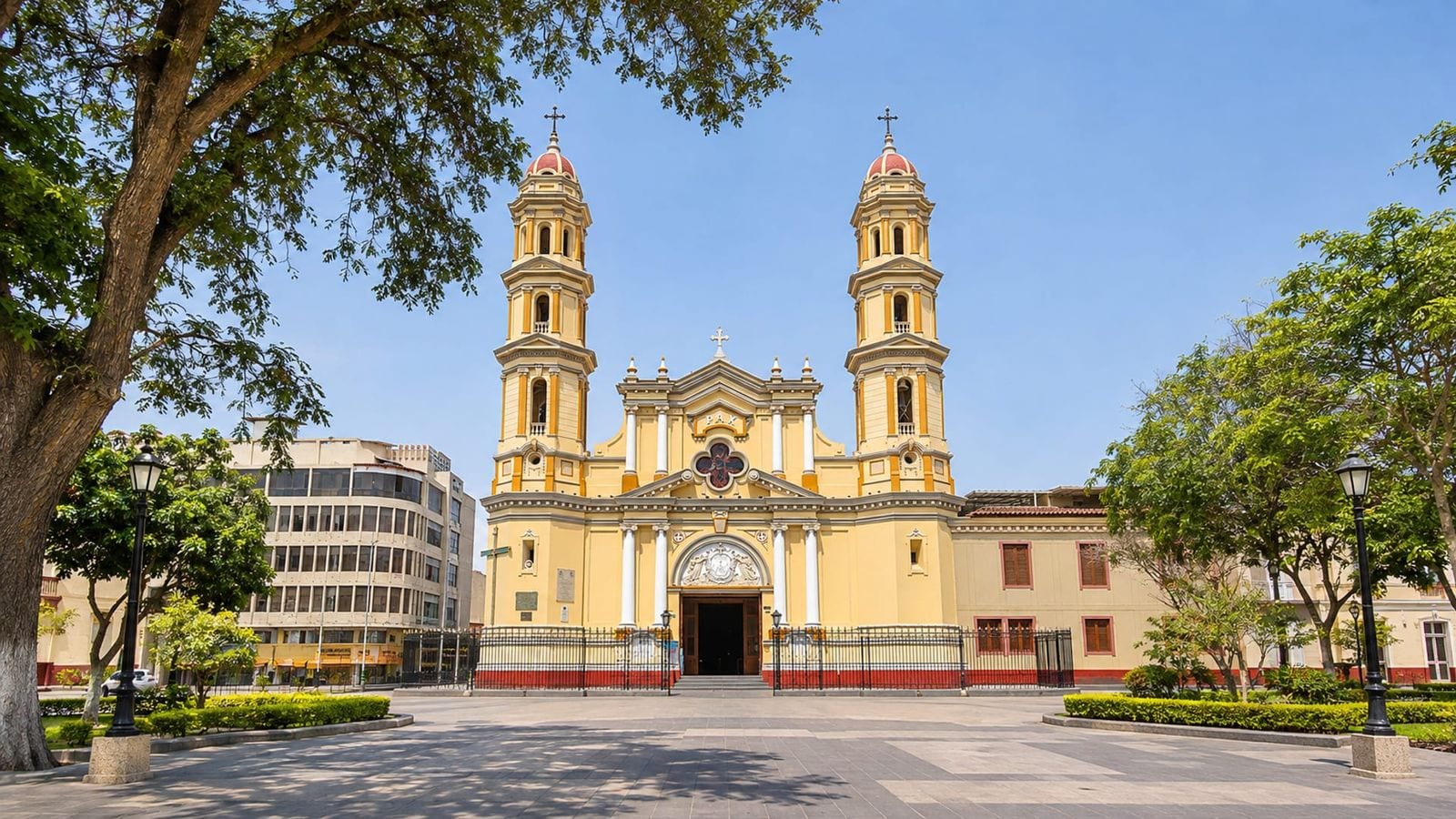
Catedral de Piura
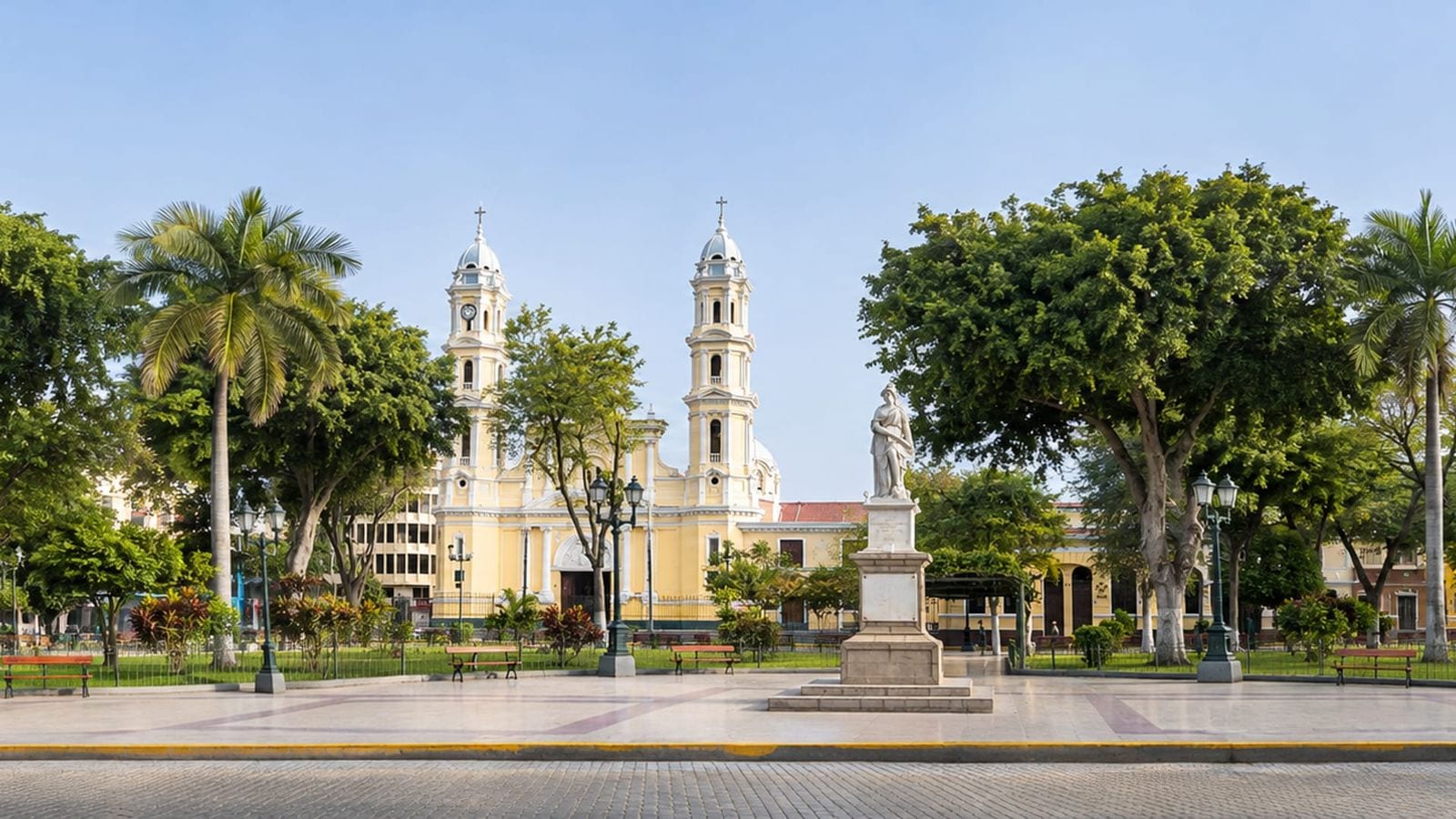
Facing Plaza de Armas de Piura, the city’s cathedral pairs a pale facade with twin towers. Inside, devotional images and the main altar introduce Piura’s Catholic heritage, while its position makes it the historic center’s visual anchor.
Time needed: About 30 to 45 minutes
Entry: Free
Tip: If Mass is underway, save your look at the main altar until worship ends.
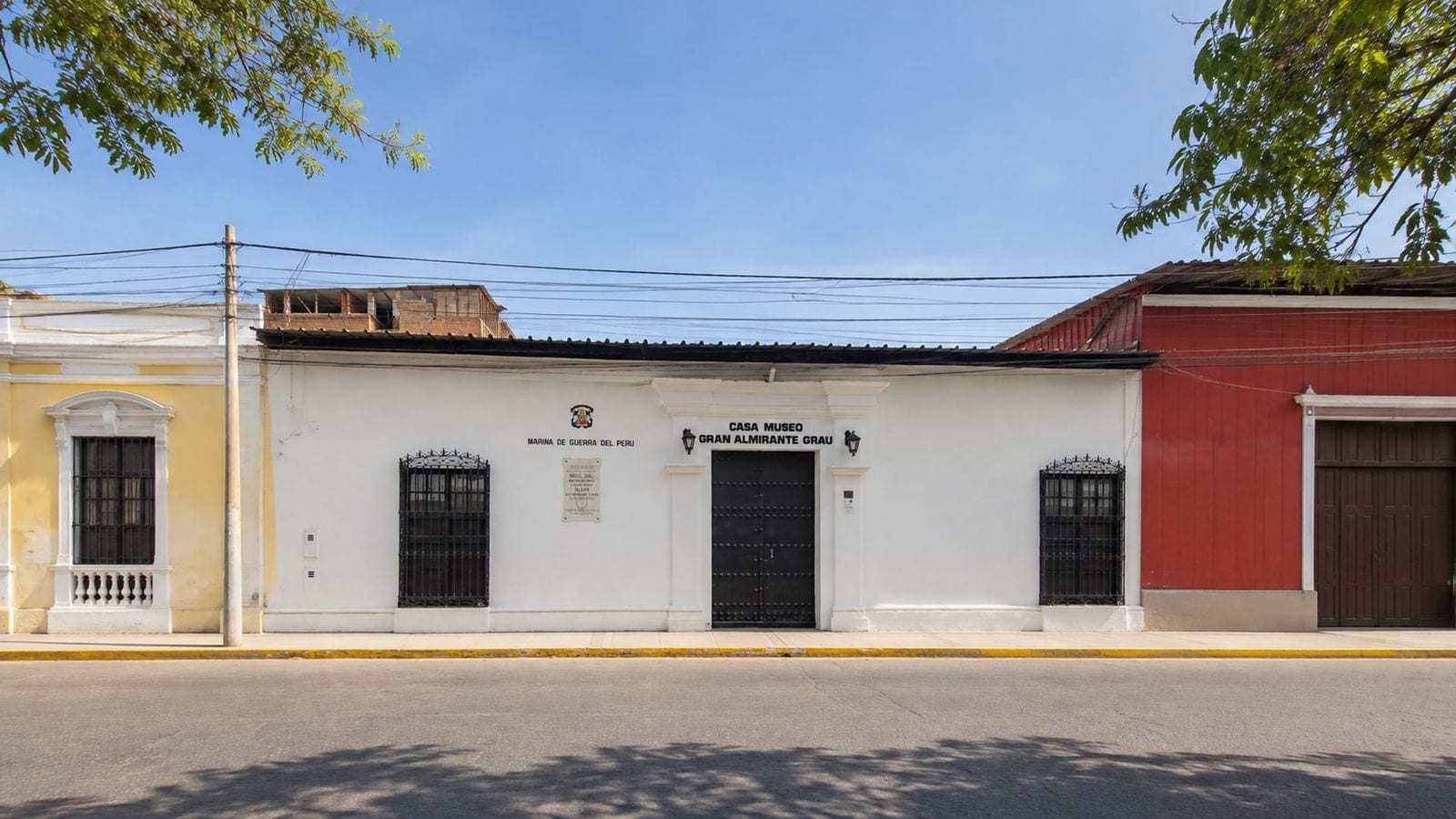
Casa Museo Gran Almirante Grau
The childhood home of naval hero Miguel Grau connects Piura with one of Peru’s most celebrated historical figures. Rooms present his life and naval career through portraits, documents, and maritime displays within a traditional courtyard house.
Time needed: About 30 to 45 minutes
Entry: Low-cost
Tip: Pair the museum on Calle Tacna with the cathedral, a short walk away on foot.
Overlooked sites worth visiting

Cementerio San Teodoro
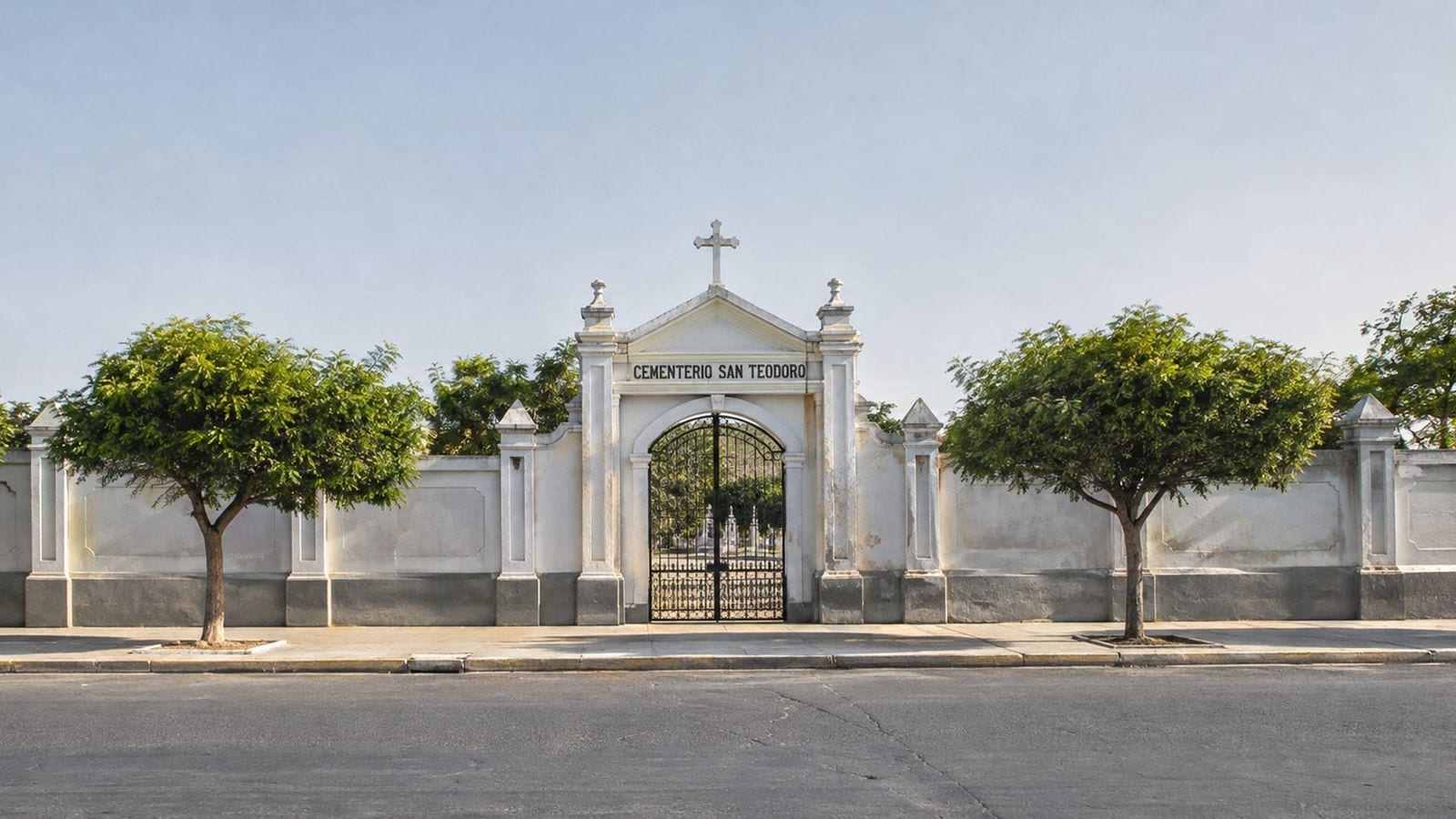
Piura’s historic cemetery brings together rows of aboveground burial niches, family tombs, and religious sculpture. Its older sections offer a quieter look at the city’s memorial traditions.
Time needed: About 30 to 45 minutes
Entry: Free to access
Tip: Go before 10 am to explore the outdoor sections before midday heat.

Iglesia San Sebastián
Iglesia San Sebastián is a neighborhood Catholic church in central Piura. Its modest scale offers a compact stop to see local religious life beyond the city’s principal square and cathedral.
Time needed: About 15 to 20 minutes
Entry: Free to access
Tip: Enter between Masses to view the interior without interrupting worship.
Traditional food
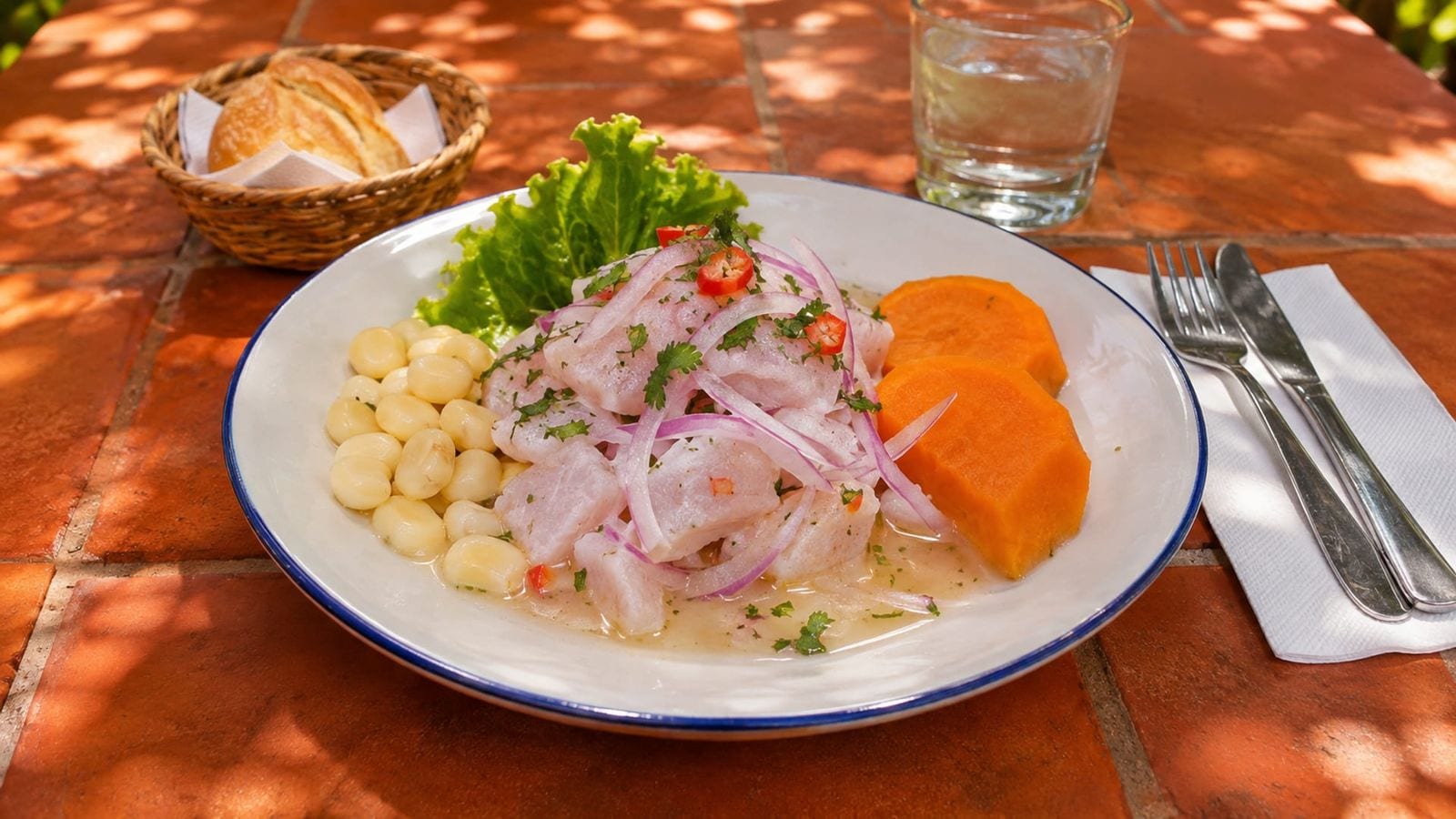
Piura’s cuisine pairs fish with lime, cilantro, and chilies, while green and ripe plantains give regional dishes their substance. Lunch brings ceviche, hearty meat dishes, and fish stews.
Ceviche
Fresh fish cures briefly in lime juice with chili, salt, and sliced onion, creating a tart seafood dish commonly accompanied by corn and sweet potato. Try Piura’s version at El Caracol Azul for a seafood lunch.
Seco de chavelo
Fried green plantains are crushed and mixed with beef, onion, tomato, and seasonings to make this substantial Piura specialty. La Tomasita serves the dish as part of its regional cooking, making it a choice for lunch.
Malarrabia
Mashed ripe plantains combine with cheese and an onion dressing, traditionally accompanying fish, rice, and beans on Fridays during Lent. Seek this seasonal specialty at La Santitos in Catacaos during the Lenten period.
Sudado de pescado
Fish cooks gently with tomato, onion, cilantro, and chilies, producing a fragrant broth usually accompanied by rice. Order sudado de pescado at Eduardo El Brujo, where seafood cooking offers another way to explore Piura’s table.
Best time to visit Piura
Piura stays warm throughout the year, with the greatest heat and rain risk early in the year and cooler, drier conditions from June to September.
Best for: Regional lunches and hotel pool breaks between short early morning walks
What you get: Expect 73°F to 95°F (23°C to 35°C), the year’s strongest heat, and mostly local crowds; rainfall varies sharply with El Niño conditions.
Trade-offs: Heavy rain during El Niño can disrupt Piura’s streets and airport transfers.
Best for: Exploring the historic center as daytime heat gradually eases toward June
What you get: Typical temperatures span 66°F to 91°F (19°C to 33°C), with rain generally easing and modest sightseeing crowds across the city center.
Trade-offs: April afternoons can still feel very hot on the center’s exposed streets.
Best for: Longer morning walks between Piura’s central landmarks and neighborhood meals
What you get: Days generally bring 63°F to 84°F (17°C to 29°C) and little rain; late July’s national holidays can increase domestic travel into Piura.
Trade-offs: Late July holiday demand can raise flight and hotel costs.
Best for: Combining early sightseeing with regional lunches before the hottest months
What you get: Temperatures rise through 66°F to 91°F (19°C to 33°C), with generally dry days; Christmas travel brings more domestic arrivals to Piura.
Trade-offs: December heat shortens comfortable walking time, and holiday travel increases demand.
A realistic 5-day plan in Piura
These five days combine early walks through Piura’s historic center with regional meals and time in San Eduardo. Short outings leave the hottest part of the day available for lunch or a hotel break.
From Piura (PIU), take a taxi to your hotel in San Eduardo, allowing 15 to 25 minutes and PEN 25 to PEN 40 ($7 to $11); confirm the fare before departure. Have a light dinner at Casa Andina Premium Piura, then spend the evening at your hotel.
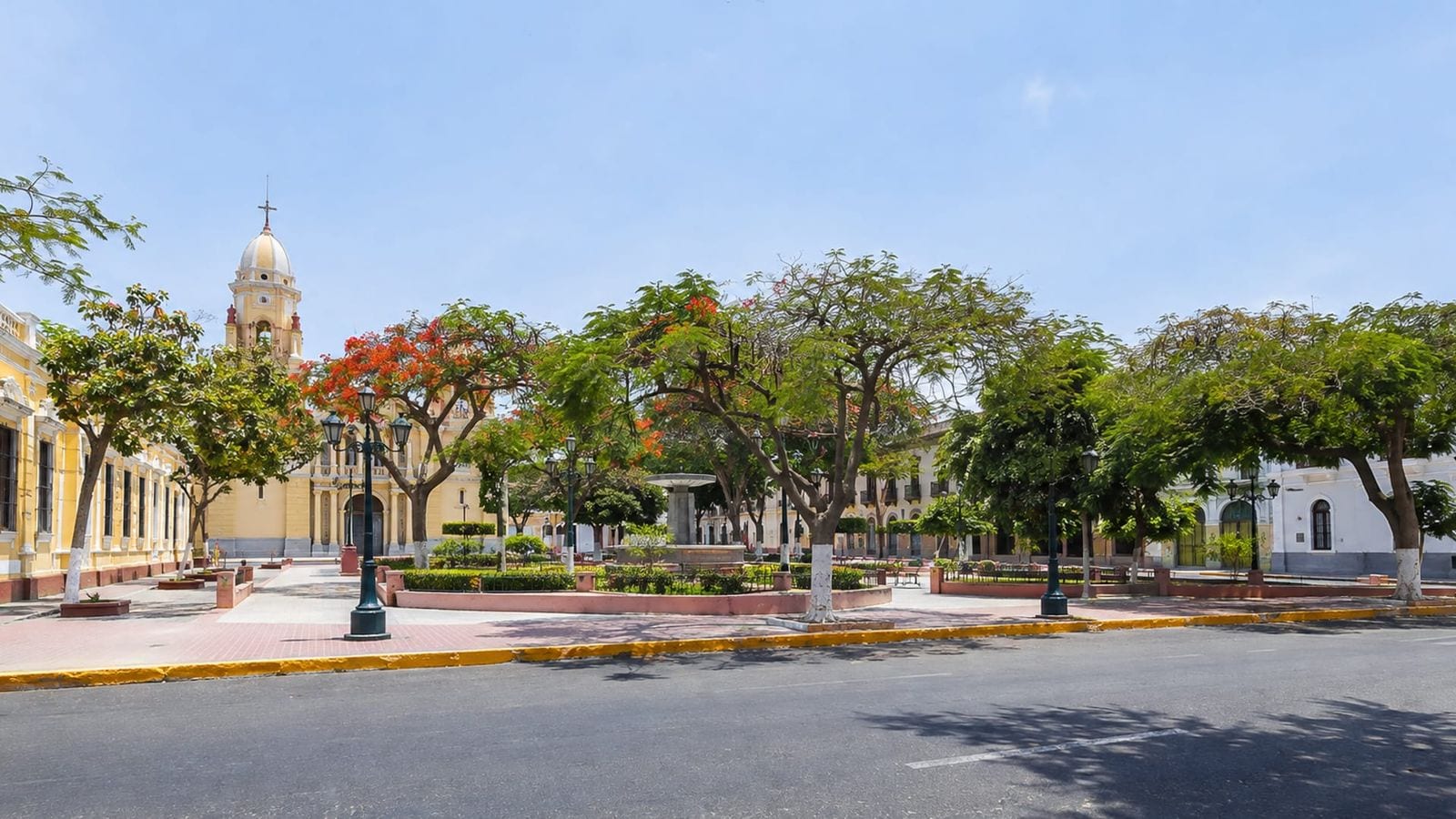
Before 10 am, explore the shaded paths and liberty monument at Plaza de Armas de Piura for 30 to 45 minutes. Walk 2 minutes across to Catedral de Piura for its devotional images and main altar, allowing another 30 to 45 minutes and entering outside Mass.
Rows of burial niches and religious sculpture make Cementerio San Teodoro the morning’s first stop; arrive before 10 am and allow 45 minutes. Continue by taxi to Santa Isabel, allowing 10 to 15 minutes, for a neighborhood walk and lunch among its residential streets.
Miguel Grau’s childhood and naval career introduce the morning at Casa Museo Gran Almirante Grau; allow 45 minutes for its portraits and maritime displays. Walk approximately 15 minutes to Iglesia San Sebastián, then spend 20 minutes inside between Masses before lunch in Centro.
A final breakfast and short walk in San Eduardo keep departure morning close to your hotel. Choose a neighborhood café before collecting your bags, then allow 15 to 25 minutes for a taxi to Piura (PIU), with additional time for traffic and airline check-in.
Business-class flights from the US to Piura
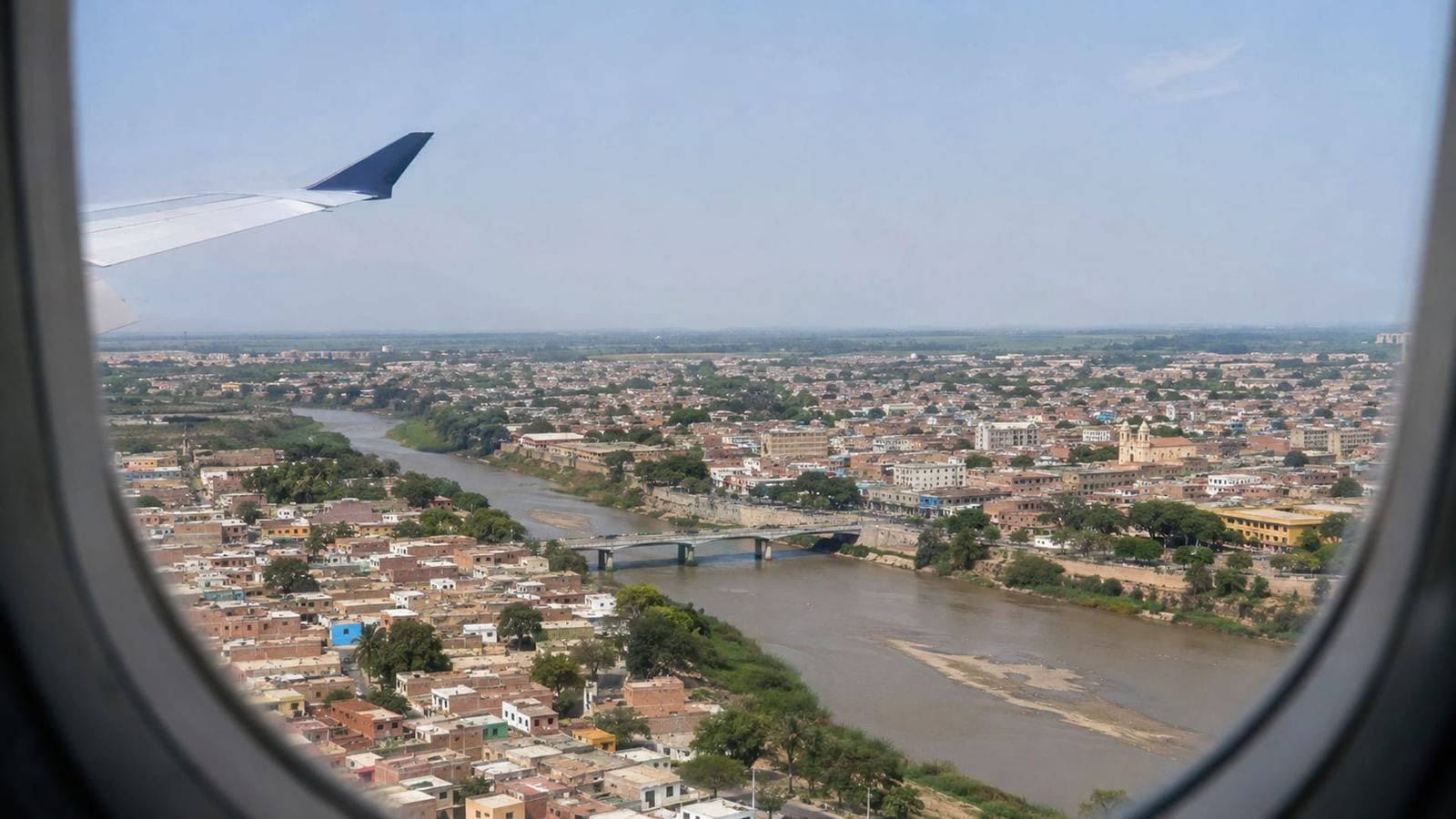
The New York and Los Angeles examples connect through Lima (LIM), followed by a domestic flight to Piura (PIU).
From New York, the journey to Piura (PIU) connects through Lima (LIM) with LATAM Airlines. Round-trip fares range from $2,500 to $5,000, with a total one-stop journey time of 11 to 16 hours, including the connection.
Travelers leaving Los Angeles reach Piura (PIU) through Lima (LIM), with the one-stop journey taking 12 to 17 hours. LATAM Airlines offers this connection, and round-trip fares range from $2,800 to $5,500.
Piura feels different when you slow down
A Piura trip takes shape through specific choices: an early walk at Plaza de Armas de Piura, time with Miguel Grau’s story, and lunch built around fish or plantains. Staying in San Eduardo adds taxi journeys to the center but leaves room for a pool break during the afternoon heat. June through September offers cooler conditions for exploring on foot. Ask AranGrant experts to shape your flights to Piura around those months and your preferred stay in San Eduardo







