

Chapters:

Need help with your trip?
Our support team is available 24/7. Request a callback or call us directly at (833) 619-0908
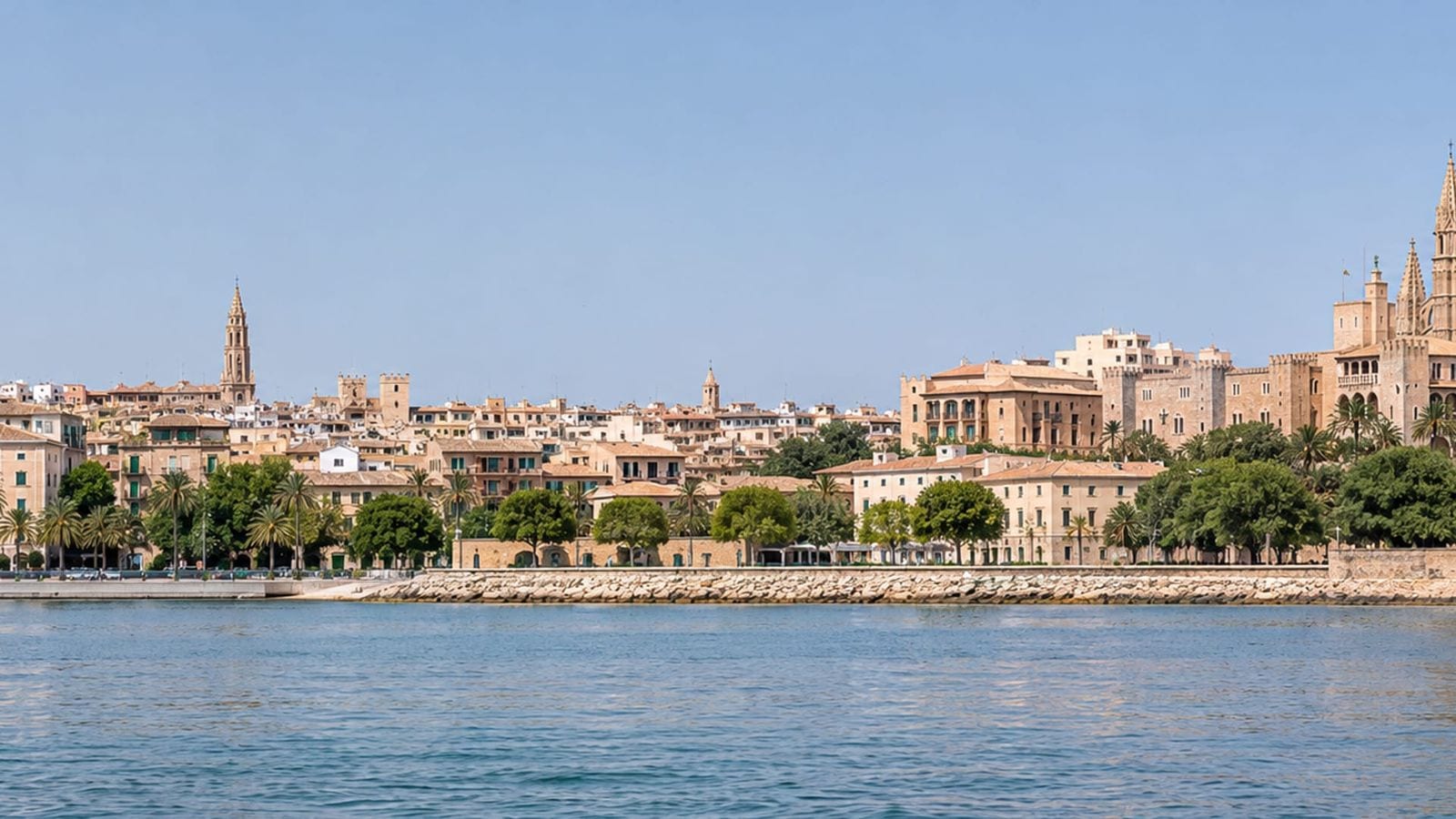
Palma began as a Roman settlement beside a natural harbor and later became an important city under Islamic and Christian rule. Today, the Mallorcan capital has a compact historic center, a working port, residential neighborhoods, and beaches along the bay.
This article explains where to stay, how to get around, what to eat, when to visit, and how to plan five days in Palma. It also covers the main landmarks, overlooked sites, and business-class flight options from the US.
Useful things to know

Main language(s): Spanish, Catalan
Hola (OH-lah) – Hello
Por favor (por fah-VOR) – Please
Gracias (GRAH-thyahs) – Thank you
¿Habla inglés? (AH-blah een-GLEHS) – Do you speak English?
¿Cuánto cuesta? (KWAHN-toh KWEHS-tah) – How much does it cost?

Currency: Euro (EUR, €)

Cash and cards: Cards and contactless payments are widely accepted. Carry €20 to €40 ($23 to $46) for small purchases and businesses that prefer cash.

Tipping: Tipping is optional. Round up small bills, or leave 5% to 10% in restaurants when the service is particularly good.

Traditional food: Ensaimada, sobrasada, tumbet, frito mallorquín

Water and coffee costs: Bottled water usually costs €1.50 to €2.50 ($1.70 to $2.90). An espresso at the bar often costs €1.50 to €2.20 ($1.70 to $2.50).

Taxis and ride apps: Uber and Free Now operate in Palma. At Palma de Mallorca Airport (PMI), follow the app directions to the designated pickup point.

Plug and voltage: Type C/F socket, 230V

Dining and shop opening hours: Breakfast is usually from 8:00 am to 10:30 am, lunch from 1:30 pm to 3:30 pm, and dinner from 8:00 pm to 10:30 pm. Most shops are open from 10:00 am to 8:00 pm.

Emergency number: 112 for police, fire, and medical emergencies.
Where to stay in Palma
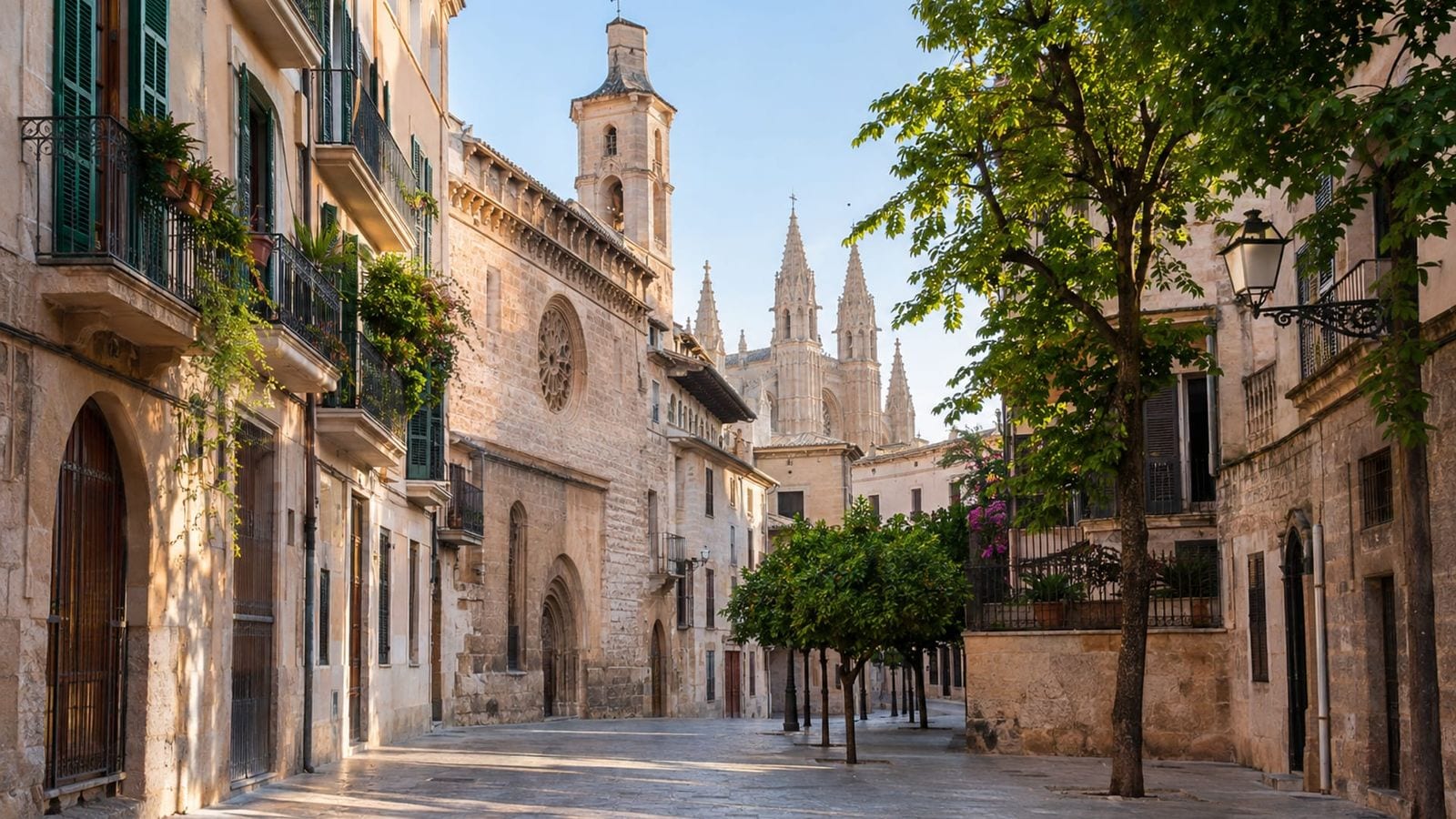
Palma’s Old Town developed within the medieval city walls. The cathedral rises above a maze of stone streets, noble houses, shaded courtyards, churches, and small squares built over centuries of Roman, Islamic, and Christian rule.
Best for: First-time visits, sightseeing, and travelers who want to walk to major landmarks
What to expect: Cobblestone streets, busy restaurant terraces, and steady foot traffic from morning through late evening.
Hotel prices: Usually about €180 to €320 (~$198 to ~$352) per night for well-rated stays
Distance to major sights: 5 to 10 minutes on foot to Palma Cathedral and the waterfront, about 15 minutes on foot to the main museum cluster
Quietness: Busy in the day and lively at night, with the noisiest streets near bars and squares.
Main trade-off: Rooms can cost more here, and street noise is common on weekends and near popular dining streets.
Good to know: Many Old Town streets restrict vehicle access, so you might need to walk after a taxi ride if your hotel is inside the pedestrian area.
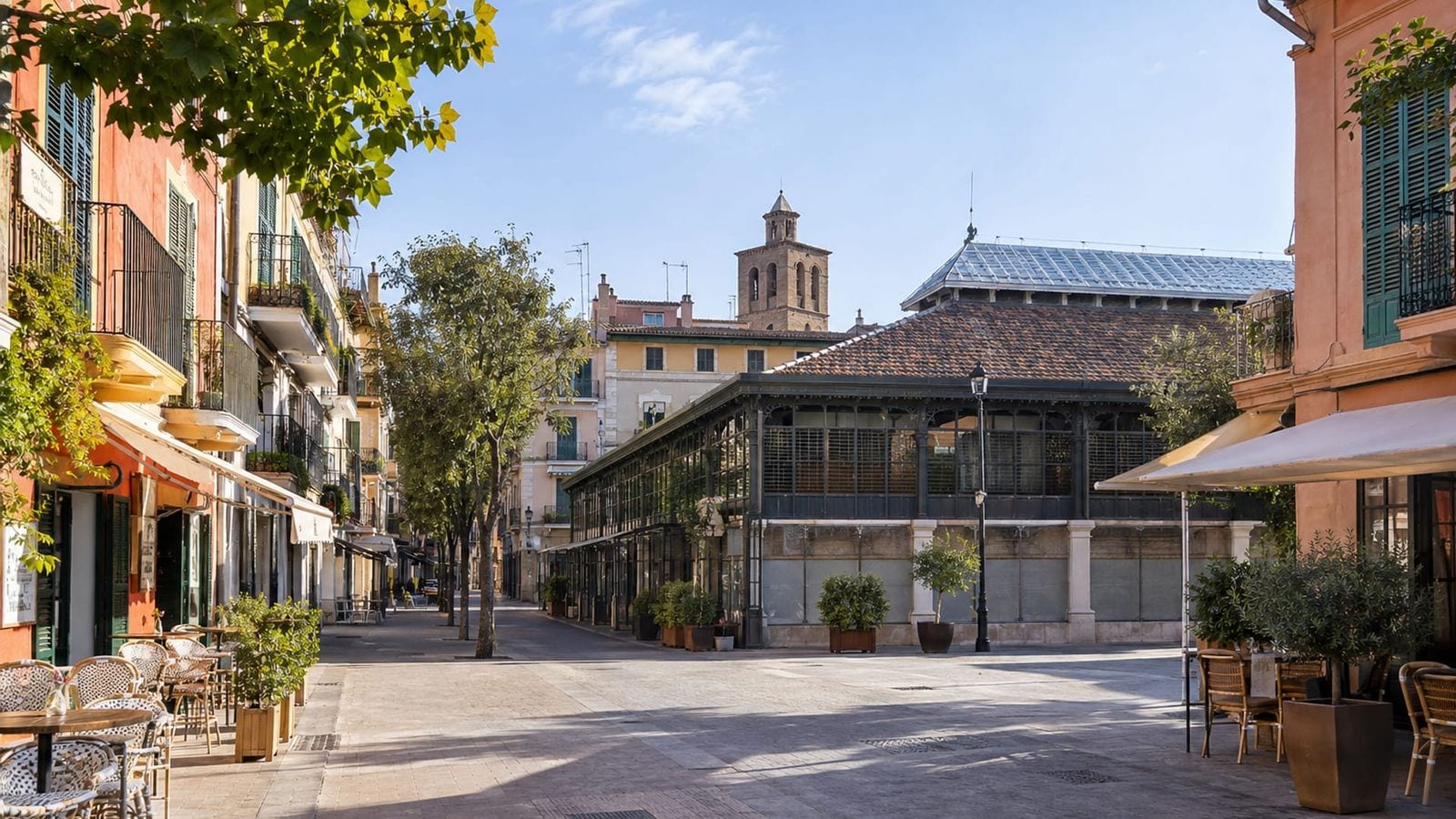
Low houses, old windmills, and the Mercat de Santa Catalina mark this former fishing district west of the Old Town. Its market, restaurants, cafés, and bars now draw both residents and visitors throughout the day.
Best for: Dining, nightlife, and travelers who want a lively neighborhood with quick access to the center
What to expect: Busy sidewalks, packed terraces, and late activity near the market and bar streets.
Hotel prices: Usually about €150 to €280 (~$165 to ~$308) per night for well-rated stays
Distance to major sights: 10 to 15 minutes on foot to Palma Cathedral, about 10 minutes on foot to the waterfront
Quietness: Calmer in the morning, then notably louder after dinner and into the late evening.
Main trade-off: You get plenty of dining choice, but the busiest blocks can feel noisy well past midnight.
Good to know: Carrer de la Fàbrica is a restaurant street that closes to traffic in the evening, allowing tables and terraces to spread across the roadway.
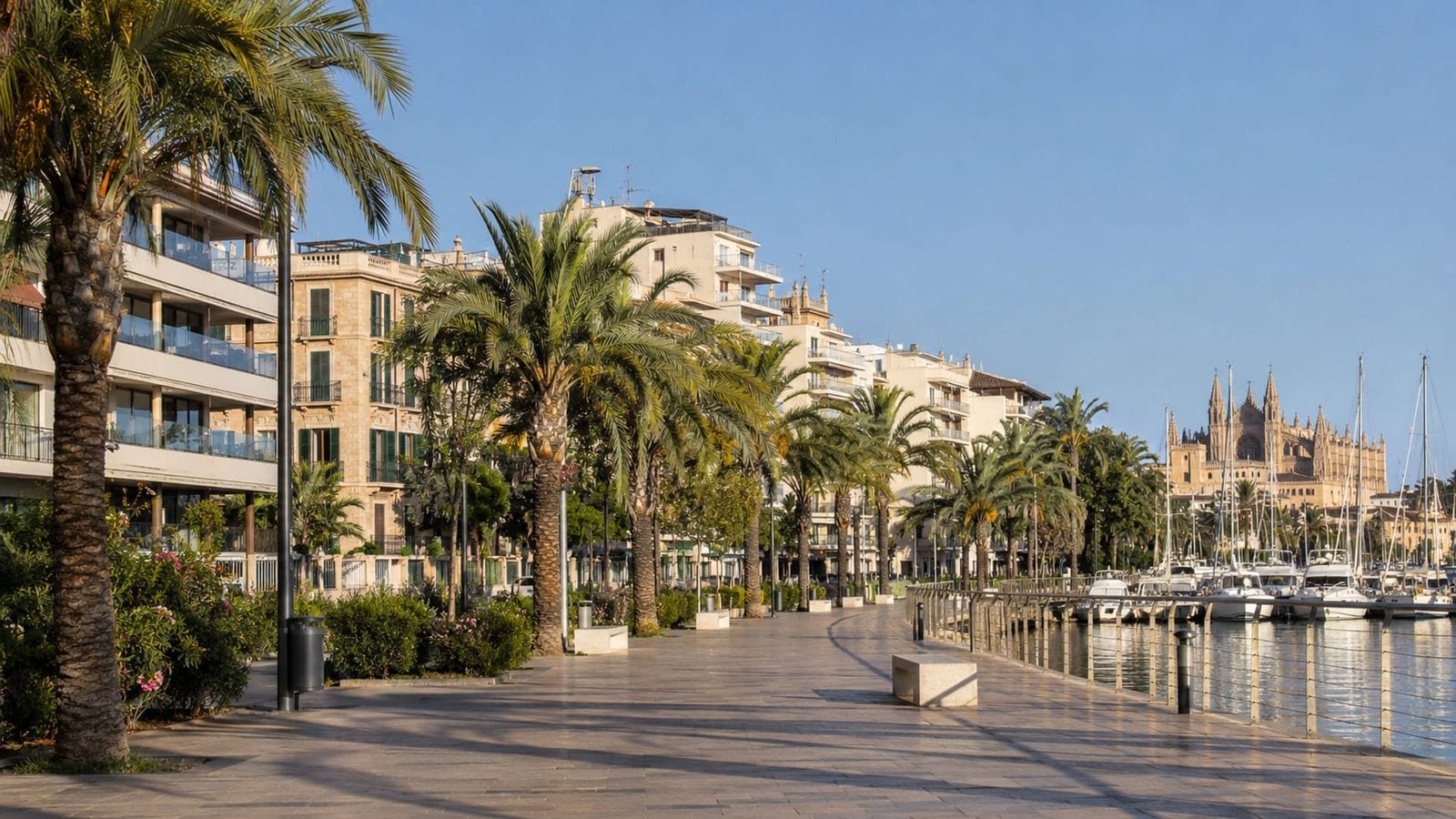
Palma’s main waterfront stretches west from the Old Town beside the city’s marinas and port. Hotels and apartment buildings overlook the bay, while the broad promenade below draws walkers, cyclists, and runners throughout the day.
Best for: Harbor views, waterfront walks, and travelers who do not mind a longer stroll to the historic center
What to expect: Wide sidewalks, traffic along the boulevard, and steady activity from marina visitors and hotel guests.
Hotel prices: Usually about €140 to €260 (~$154 to ~$286) per night for well-rated stays
Distance to major sights: 20 to 25 minutes on foot to Palma Cathedral, about 10 minutes by taxi to the old town
Quietness: Active during the day and early evening, then quieter late at night away from the marina bars.
Main trade-off: The setting is open and scenic, but you will need transit or a longer walk for the cathedral and old-town sights.
Good to know: A continuous bicycle path follows much of the waterfront, and several nearby hotels rent bikes.
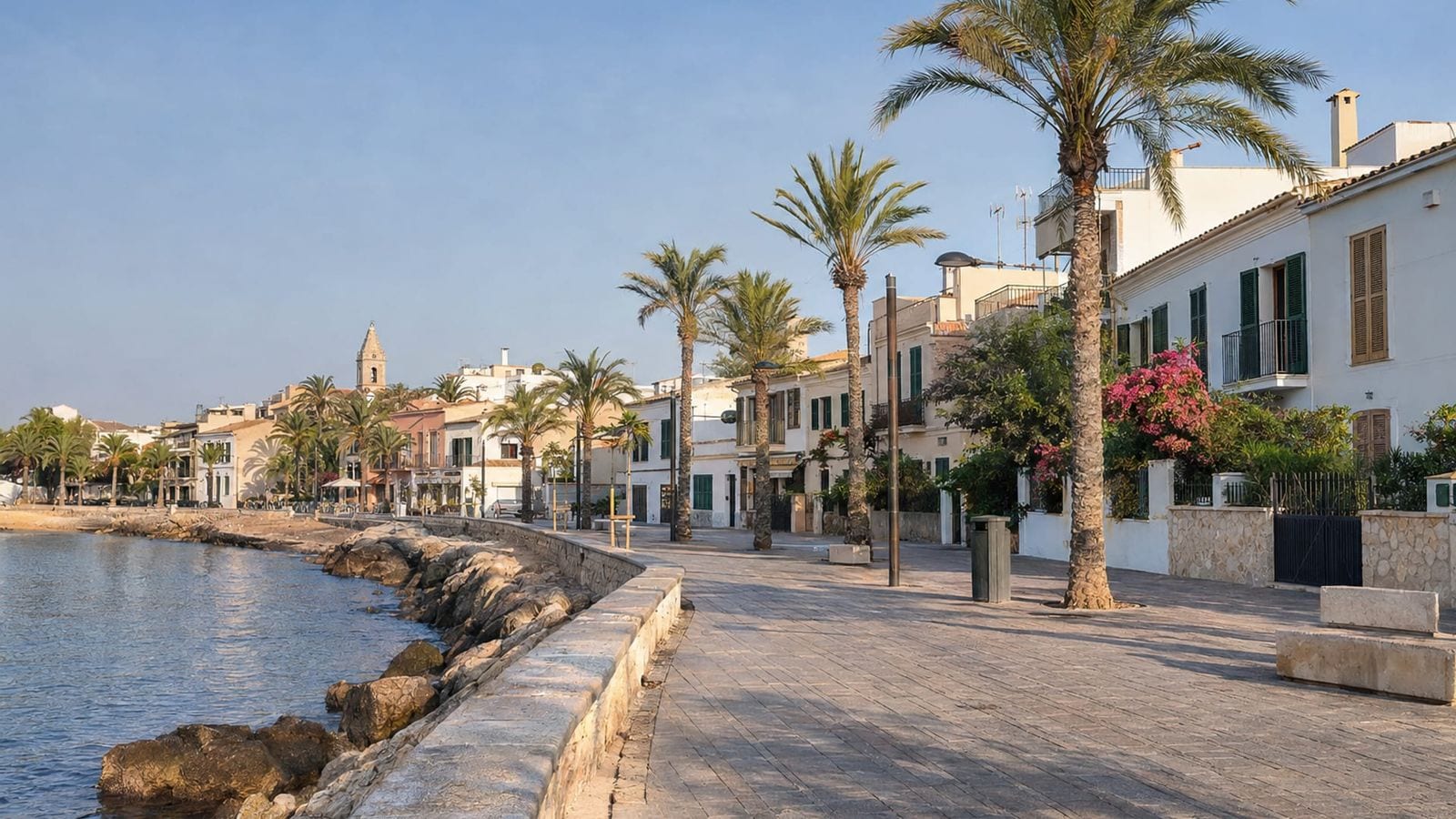
Portixol and El Molinar are two neighboring waterfront areas east of central Palma. Portixol has a small harbor and a sandy beach, while El Molinar has low-rise homes, swimming coves, restaurants, and a long seafront promenade.
Best for: Beach access, cycling, and travelers who prefer a residential waterfront base
What to expect: Morning walkers, cyclists, neighborhood cafes, and a quieter seafront than the central marina zone.
Hotel prices: Usually about €130 to €240 (~$143 to ~$264) per night for well-rated stays
Distance to major sights: 20 to 30 minutes on foot to Palma Cathedral, about 10 minutes by taxi to the center
Quietness: Generally calm in the day and quieter at night than central Palma, with only local restaurant noise on the seafront.
Main trade-off: You gain sea access and more space, but dining and late-night choices are thinner than in the center.
Good to know: The bike path beside the seafront continues into central Palma, making the trip into town easy without using a taxi.
Avoid Son Ferriol, Sa Indioteria, Marratxí, Portopí, and hotels near the airport if sightseeing is your priority. These areas are farther from the Old Town, and you may need a bus or taxi to reach central restaurants, bars, and cultural venues.
Hotel deals
How to get around Palma efficiently
Most visitors use buses and taxis within Palma. Trains and intercity buses are more useful for day trips elsewhere on Mallorca, while the metro mainly serves the university area.

Train and metro
for trips beyond central Palma
Regional trains leave from Palma’s main transport station at Plaça d’Espanya and travel to towns elsewhere on Mallorca. Fares usually range from €1.80 to €5.40 ($2.10 to $6.30). The metro uses the same fare range but mainly serves the university and nearby business districts.

Bus and intercity bus
for city and island trips
EMT buses cover Palma and the airport. Route A1 connects Palma de Mallorca Airport (PMI) and the city center, while A2 serves Can Pastilla and S’Arenal. Tickets from the airport cost €5 ($5.80); regular tickets cost €2 ($2.30). TIB buses leave from Plaça d’Espanya for other towns and cost €1.80–€5.40 ($2.10–$6.30).

Taxi and rideshare services
for convenience or late hours
Licensed taxis wait outside Palma de Mallorca Airport (PMI) and operate throughout the city. A ride into central Palma usually costs €20 to €30 ($23 to $35) and takes 15 to 20 minutes in light traffic. Uber and Free Now also operate in Palma.
*Prices are based on rates updated as of June 2026 and may change at the time of travel.
Use EMT buses for airport and city trips, taxis when you want a direct ride, and regional buses or trains when you plan to explore more of Mallorca.
Iconic landmarks
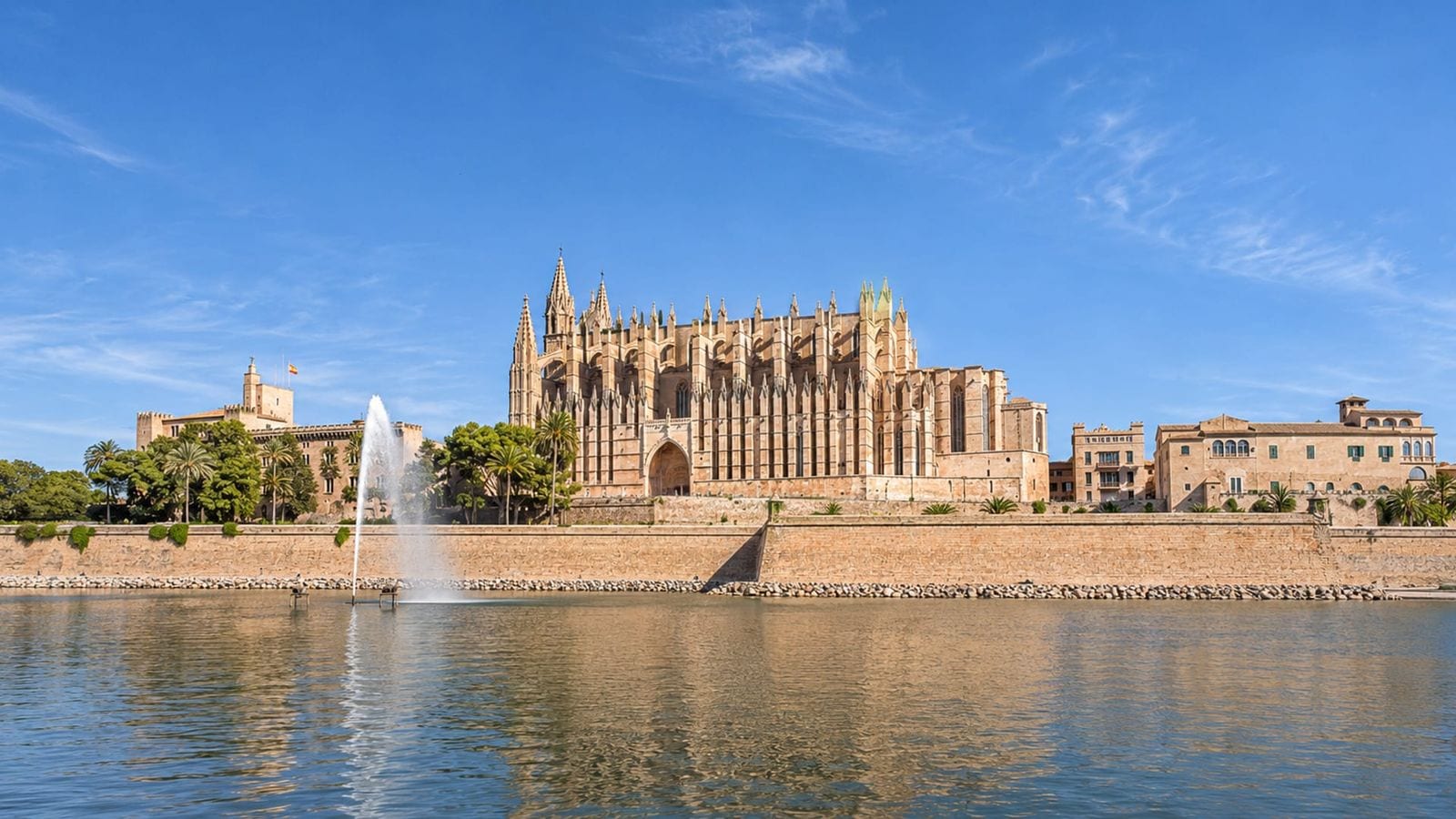
La Seu Cathedral
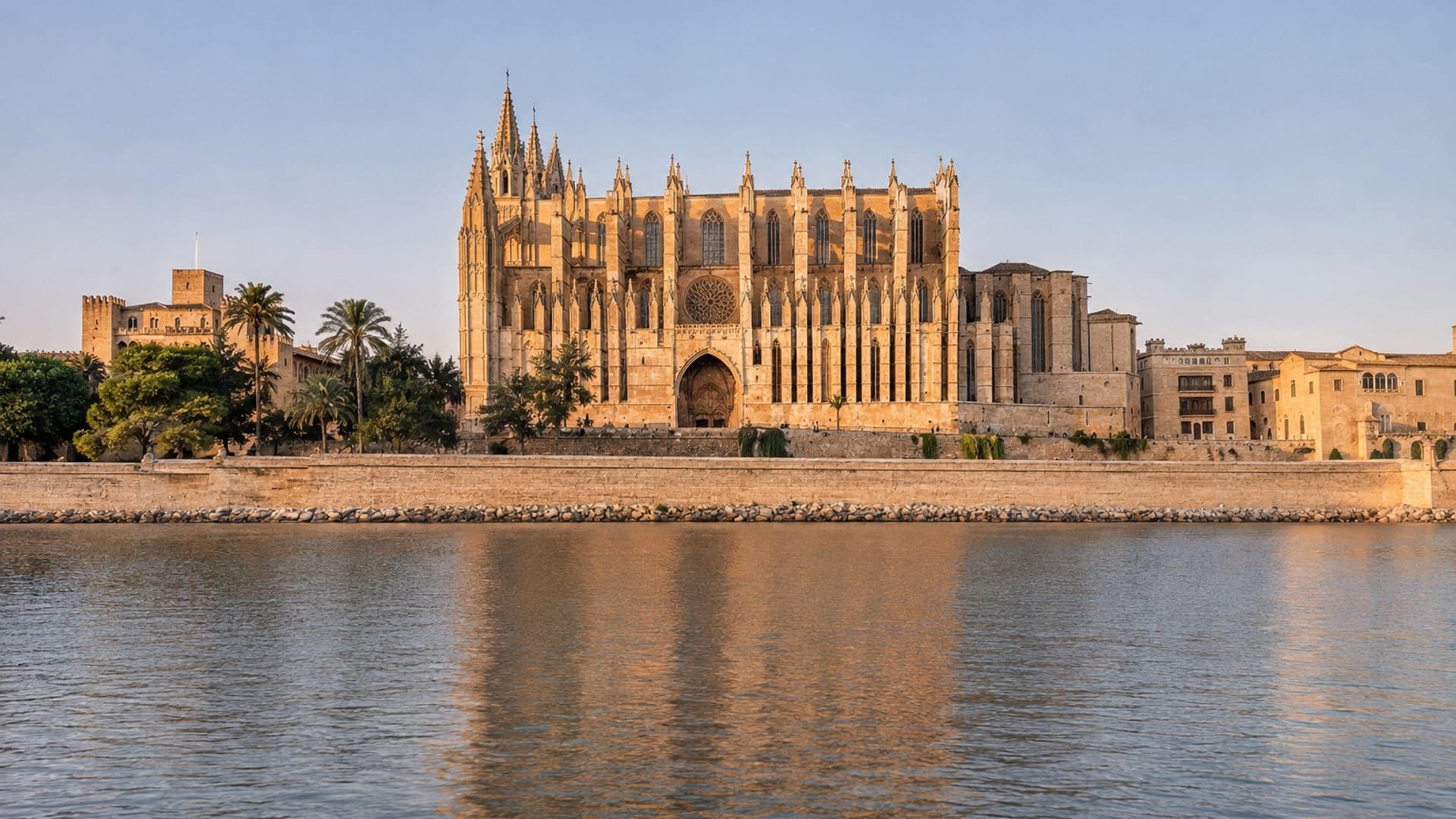
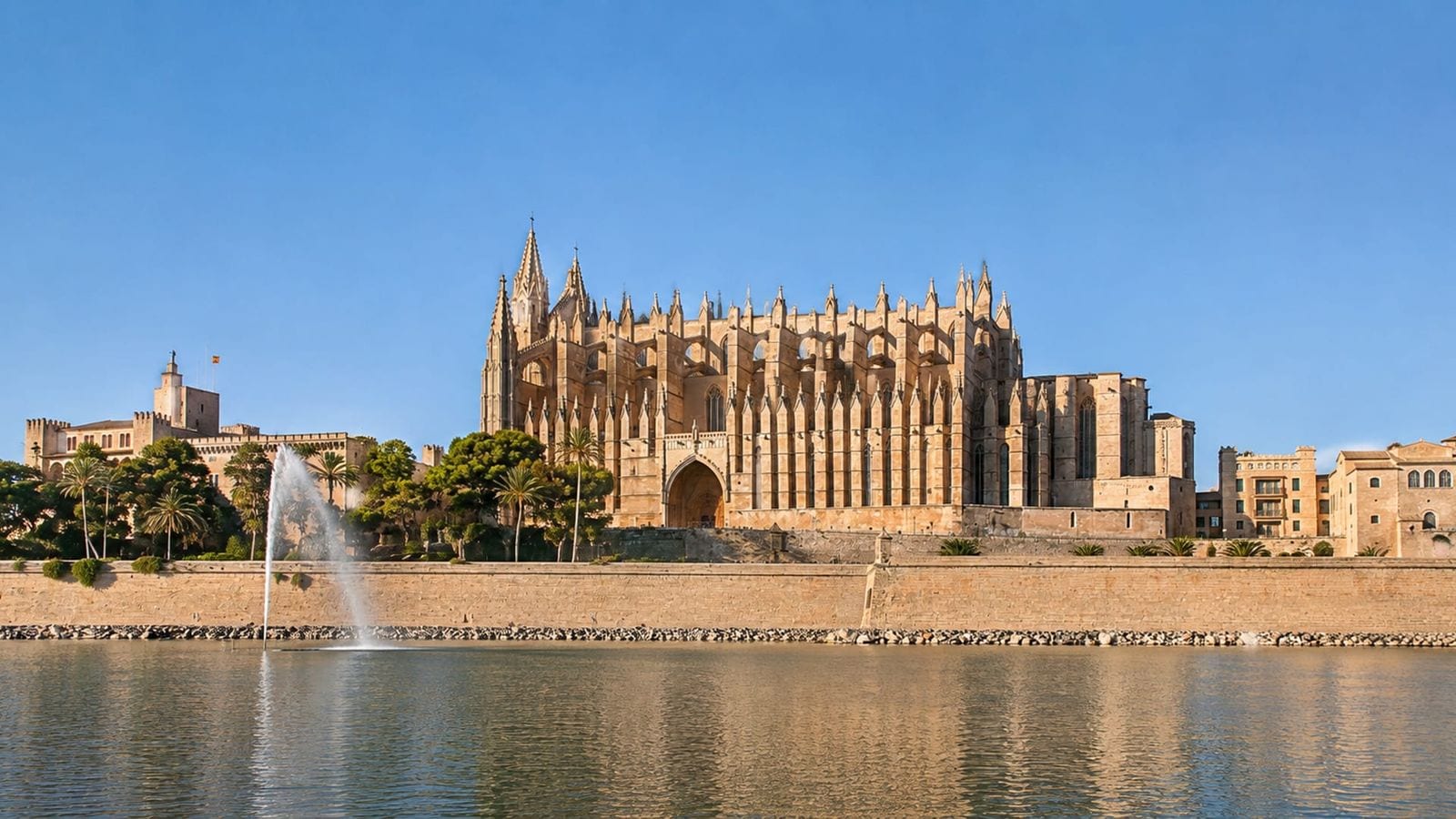
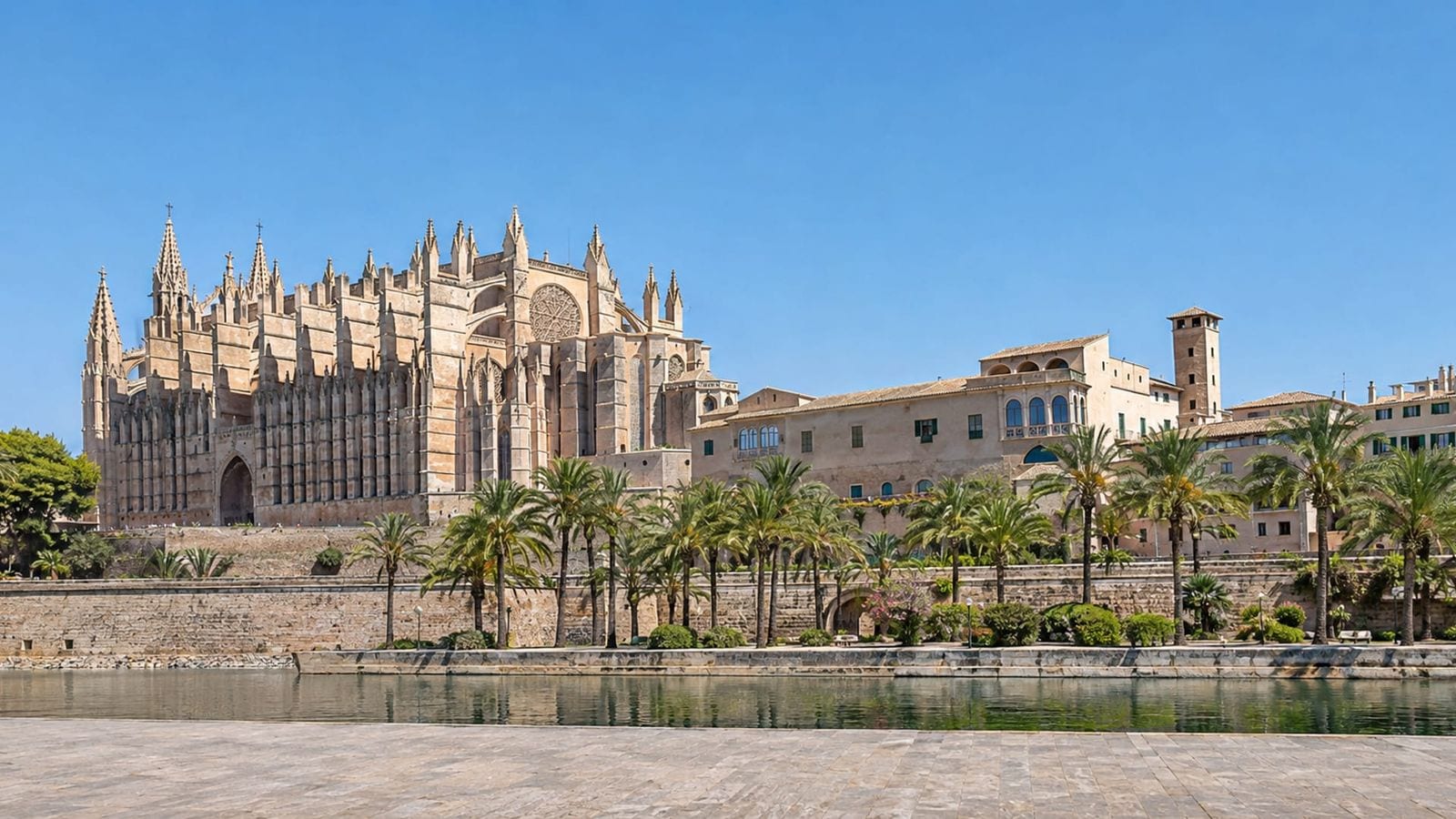
Palma’s Gothic cathedral crowns the old harbor wall, with a huge rose window and Gaudí’s restored canopy inside. The terraces open broad views over the bay and the historic center.
Time needed: About 1 to 2 hours
Entry: Standard admission costs about $11 ($10), with terrace access priced separately and reduced rates for children, students, and some residents Visit the official site for details.
Tip: Reaching the cathedral’s terraces requires climbing steep stairs and going through exposed sections high above the city. Book it only if heights and a long climb will not be a problem.
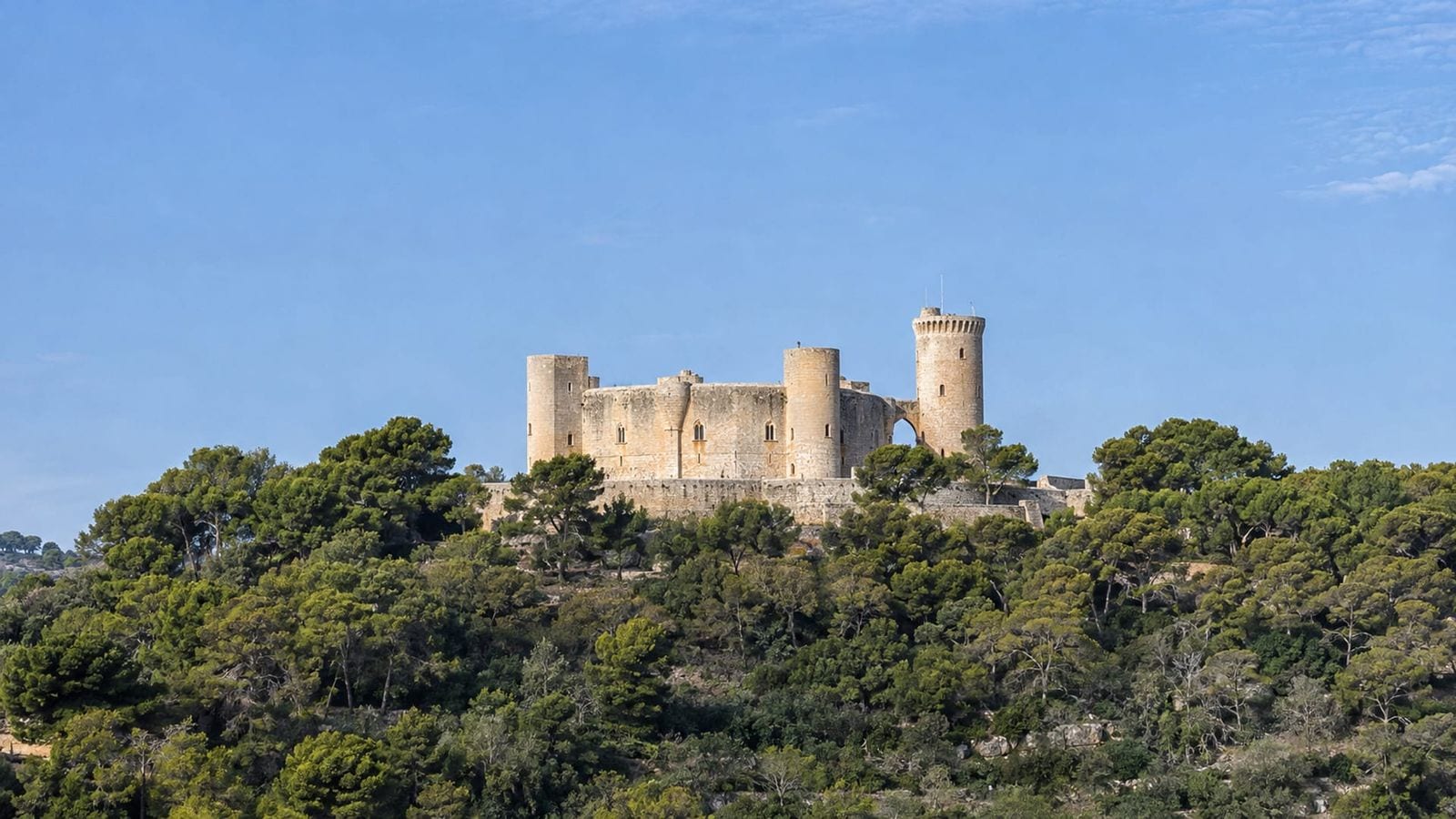
Bellver Castle
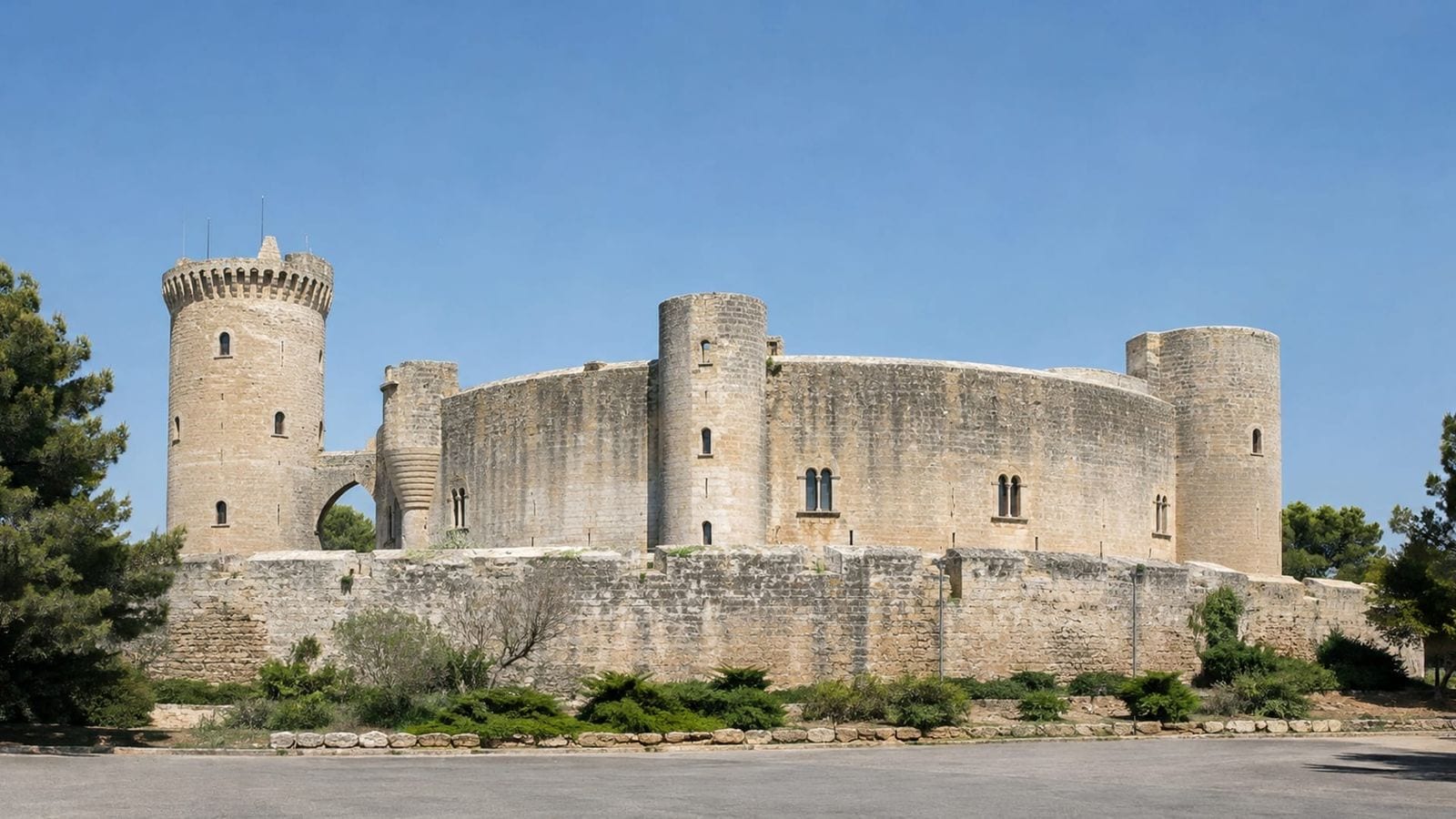
Bellver Castle is a 14th-century circular fortress on a wooded hill west of central Palma. Its round courtyard, towers, moat, and upper walls overlook the city, bay, and port.
Time needed: About 1 to 2 hours
Entry: Admission costs about $5 ($4), with reduced prices for students and children; some Sundays and public holidays offer free entry Visit the official site for details.
Tip: After visiting the museum rooms, continue upstairs to the castle’s upper terrace. This is where you can see Palma, the port, and the bay.
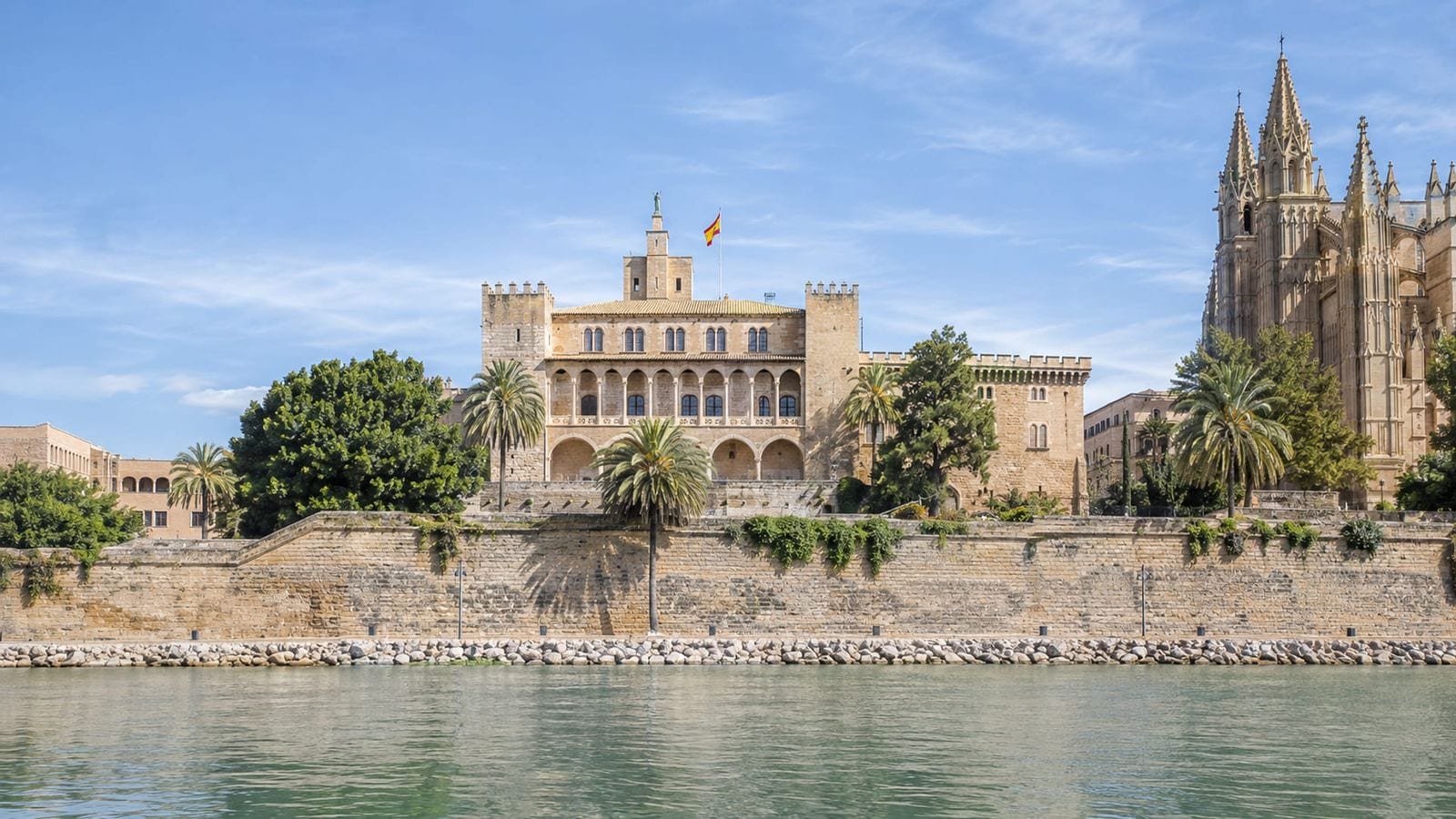
Royal Palace of La Almudaina
The Royal Palace of La Almudaina began as an Islamic palace and later became a Gothic royal residence. The throne room, chapel, courtyards, and state rooms show how the building changed under successive rulers.
Time needed: About 1 hour
Entry: Standard tickets cost about $8 ($7), with reduced admission for eligible visitors and free entry on some weekdays for residents Visit the official site for details.
Tip: Check the palace schedule before visiting, as official events can affect public access.
Overlooked sites worth visiting

Es Baluard Museum of Modern and Contemporary Art
Es Baluard occupies part of the Sant Pere bastion, one of the surviving sections of Palma’s Renaissance period walls. It has modern galleries, open courtyards, stone ramparts, and terraces overlooking the harbor.
Time needed: About 1 to 2 hours
Entry: Standard tickets cost about $10 ($9) for adults, with reduced rates for students and seniors. Temporary exhibitions may be included or priced separately, and admission is free on some public holidays; check the museum calendar before you go Visit the official site for details.
Tip: After visiting the galleries, continue onto the ramparts and terraces to see how the museum was built into the old city walls.

Arab Baths (Banys Àrabs)
This bathhouse has a low brick dome that rises above the square bathing room, where horseshoe arches rest on mismatched stone columns. It is one of the few surviving remains of Palma’s Islamic period.
Time needed: About 30 to 45 minutes
Entry: Standard tickets cost about $3 ($2.70) for adults, with discounts for children, students, and older visitors. Opening hours vary by season, and the site uses a timed entry window on busy days; check current hours before you visit.
Tip: Look closely at the columns inside the main chamber. Their different shapes and capitals show that builders reused stone from Roman structures elsewhere in the city.
Traditional food
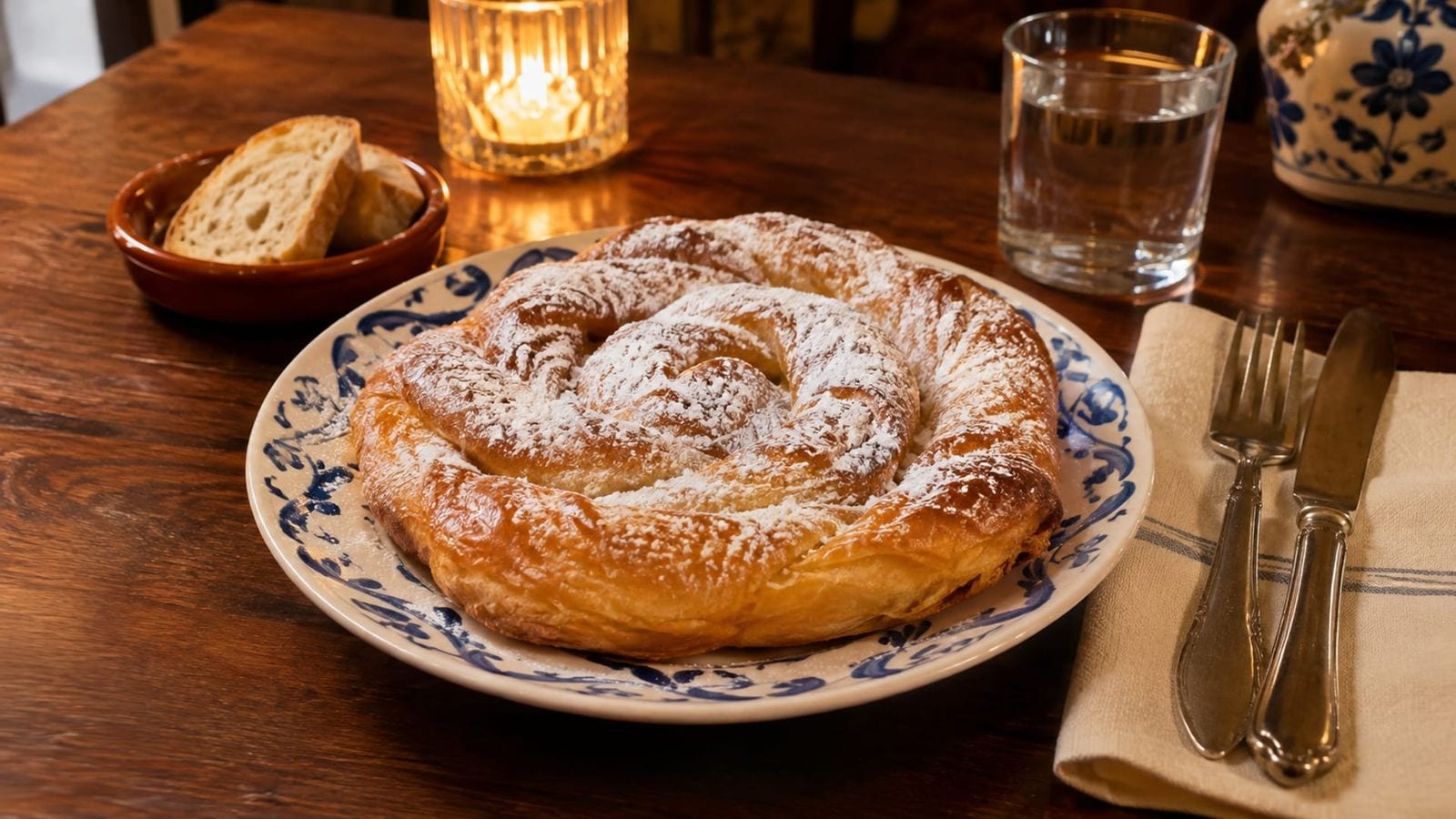
Mallorcan cooking uses pork, olive oil, seasonal vegetables, local seafood, almonds, and bread. Many dishes developed from ingredients that families could preserve, grow, or raise on the island.
Ensaimada
Ensaimada is a soft spiral pastry made with flour, sugar, eggs, and pork lard. Some versions have cream, chocolate, or pumpkin jam inside. Try one at Fornet de la Soca.
Sobrassada
Sobrassada is a soft cured sausage made with pork, paprika, salt, and spices. It is served on bread, cooked into dishes, or paired with honey. Celler Sa Premsa is a good place to try it.
Tumbet
Tumbet contains layers of fried potatoes, eggplant, and peppers covered with tomato sauce. It can be served on its own or beside meat or fish. Try it at Celler Pagès.
Frito Mallorquín
Frito mallorquín is made with meat or offal, potatoes, peppers, onions, and fennel. The ingredients are fried separately before being mixed. Bar Joan Frau is a good place to try it.
Best time to visit Palma
Palma has hot, dry summers and mild winters, while spring and fall bring cooler temperatures and more rain.
Best for: Walking through the Old Town, visiting Bellver Castle, eating outside, and spending time along the waterfront
What you get: Daytime temperatures range from 64°F to 75°F (18°C to 24°C), while nighttime temperatures range from 41°F to 52°F (5°C to 11°C). Easter brings more visitors.
Trade-offs: Rain can interrupt outdoor plans, and hotel demand increases during Easter week.
Best for: Swimming at Portixol or El Molinar, evening walks along the Paseo Marítimo, boat trips, and dinners on outdoor terraces.
What you get: Daytime temperatures range between 82°F–88°F (28°C–31°C); nighttime temperatures range from 60°F to 66°F (15°C to 19°C). Rain is uncommon, and daylight lasts well into the evening.
Trade-offs: Midday heat can make long walks through the Old Town uncomfortable. Hotels, beaches, and waterfront restaurants are also busiest during this period.
Best for: Visiting food markets, taking day trips across Mallorca, and joining local harvest and cultural events
What you get: Temperatures range from 66°F to 82°F (19°C to 28°C) during the day and from 47°F to 62°F (8°C to 17°C) at night. September is often warm enough for swimming.
Trade-offs: October and November bring the most rain.
Best for: Christmas markets, indoor concerts, and visiting Palma’s churches and landmarks without crowds
What you get: Temperatures vary from 59°F to 61°F (15°C to 16°C) during the day and from 39°F to 42°F (4°C to 6°C) at night. Visitor numbers are lower outside major festivals.
Trade-offs: Some beach businesses close for the season, and cold evenings make waterfront dining less appealing.
A realistic 5-day plan in Palma
Five days allow enough time for Palma’s main historic buildings, museums, markets, waterfront neighborhoods, and beaches.
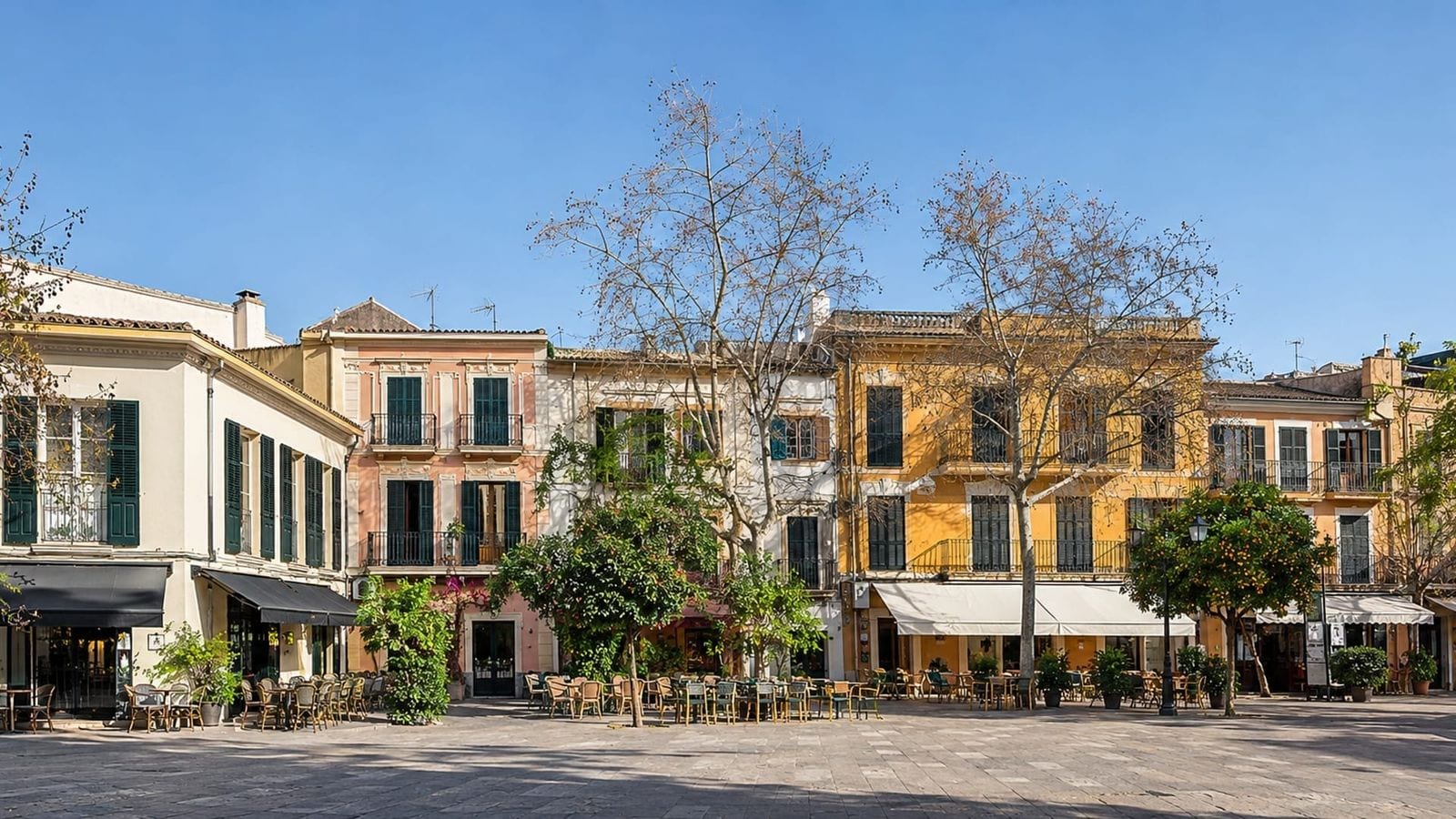
Begin with a walk along Passeig del Born and the nearby streets of the Old Town. Stop at Plaça de Cort to see the city hall and its centuries-old olive tree, then continue toward the cathedral and Parc de la Mar. Have dinner in the Old Town or Santa Catalina and keep the first evening light after the flight.
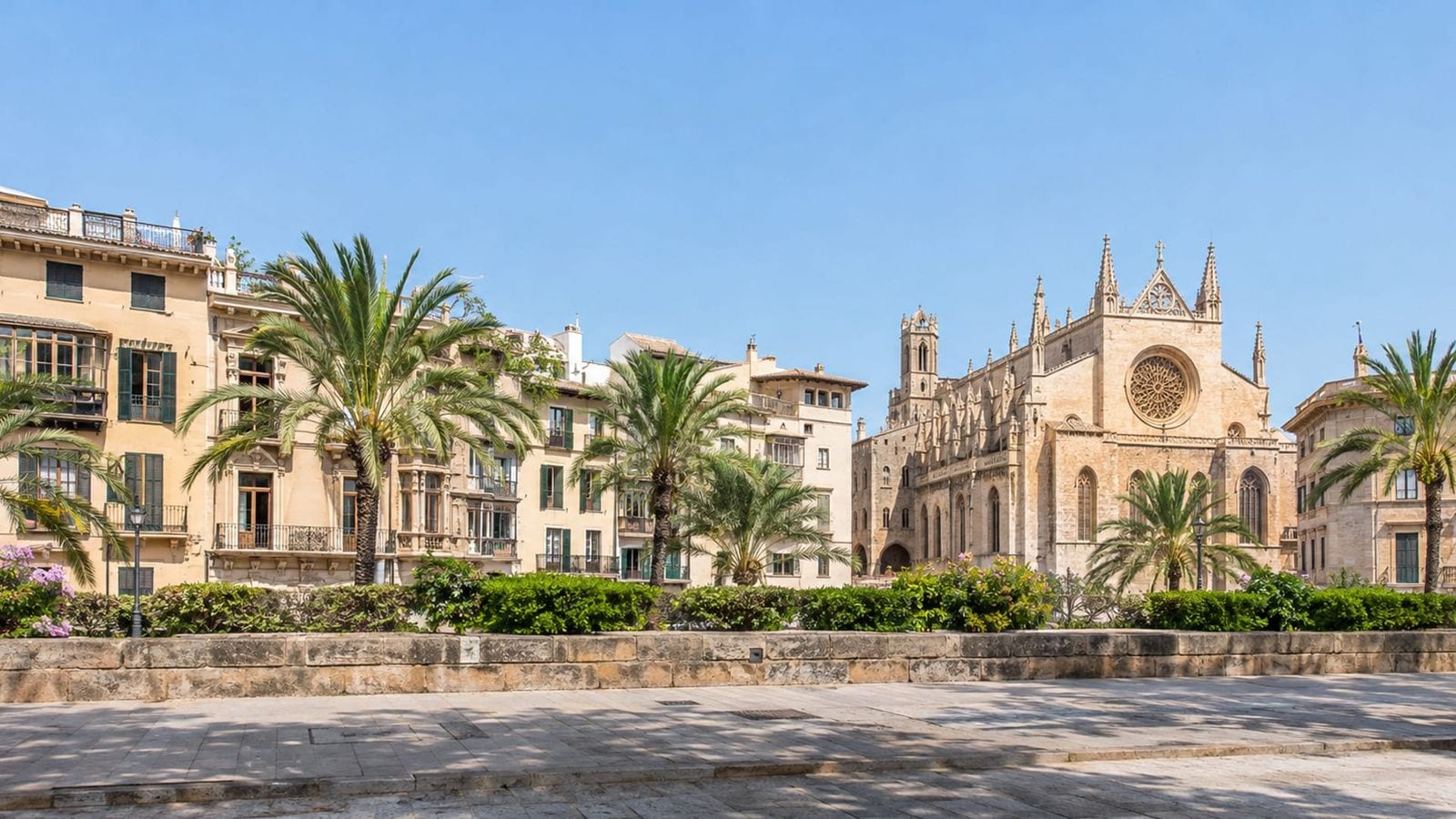
Visit La Seu Cathedral and the Royal Palace of La Almudaina, then walk through the former Jewish quarter to the Arab Baths. Continue through the streets between Carrer de Can Serra and Plaça Major, where you will pass churches, courtyards, and old stone houses. Finish at Mercat de l’Olivar, where vendors sell fish, meat, produce, cheese, and Mallorcan specialties.
Spend the morning at Es Baluard. Visit the galleries, walk along the old defensive walls, and step onto the terraces above the harbor. Continue into Santa Catalina for lunch, then browse the food stalls inside the municipal market. During the afternoon, explore the neighborhood’s low houses, surviving windmills, small shops, and the streets near Carrer de la Fàbrica.
Visit Bellver Castle and the history museum inside. After the museum, go up to the terrace for views over Palma, the bay, and the port. Spend the rest of the day along the Paseo Marítimo, then continue east to Portixol and El Molinar for a walk by the sea, a swim, or dinner near the small harbor.
Keep the final morning close to your hotel. Return to a bakery for an ensaimada, browse the shops near Passeig del Born, or walk through Parc de la Mar. Leave enough time for breakfast, packing, checkout, and the trip to Palma de Mallorca Airport (PMI).
Business-class flights from the US to Palma
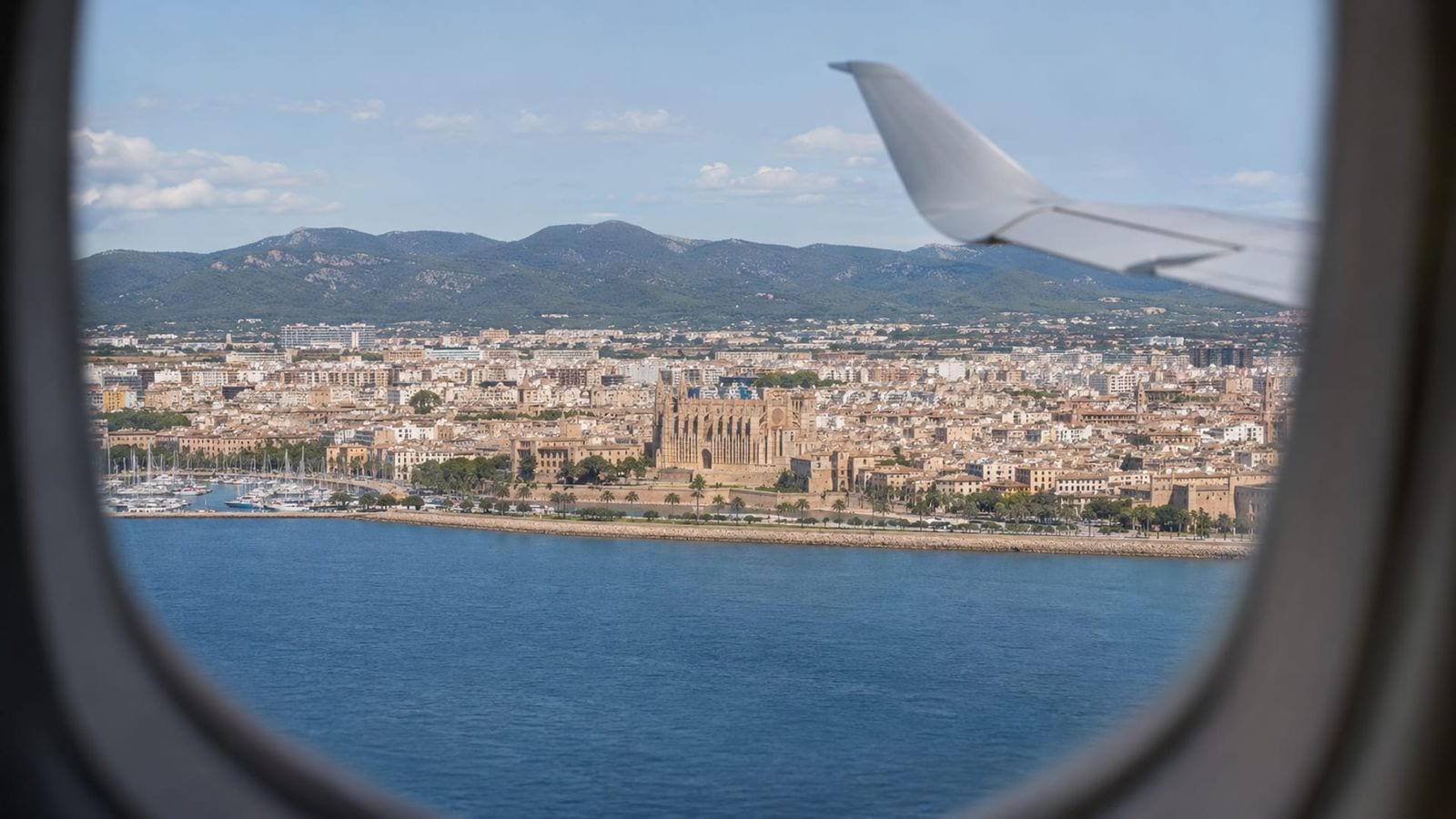
Reaching Palma from New York or Los Angeles usually means a one-stop itinerary, and the fare spread changes with the hub you choose. The examples below show how route length and layover city affect both time and price.
From New York, airlines such as Iberia, Lufthansa, British Airways, Air Europa, Air France, and TAP Air Portugal typically price round trips from about $2,100 to $5,800. Nonstop time sits at about 7 to 8 hours, while common layovers via Madrid, London, Frankfurt, Paris, or Lisbon can bring the fare down to roughly $1,300 to $2,200 if you are open to a longer trip.
Los Angeles itineraries usually come with Iberia, Lufthansa, British Airways, Air France, KLM, or TAP Air Portugal, and round-trip fares start at $2,800 before rising to about $6,500 on peak dates. Expect about 13 to 14 hours nonstop, or roughly 15 to 20 hours with a stop through Madrid, London, Frankfurt, Paris, or Amsterdam.
More of Palma to uncover
Palma has more to see beyond its cathedral and Old Town, from waterfront neighborhoods and local markets to museums, beaches, and the rest of Mallorca. AranGrant can help you find the right business-class flight, so you arrive comfortably and ready to spend your time exploring.







