

Chapters:

Need help with your trip?
Our support team is available 24/7. Request a callback or call us directly at (833) 619-0908
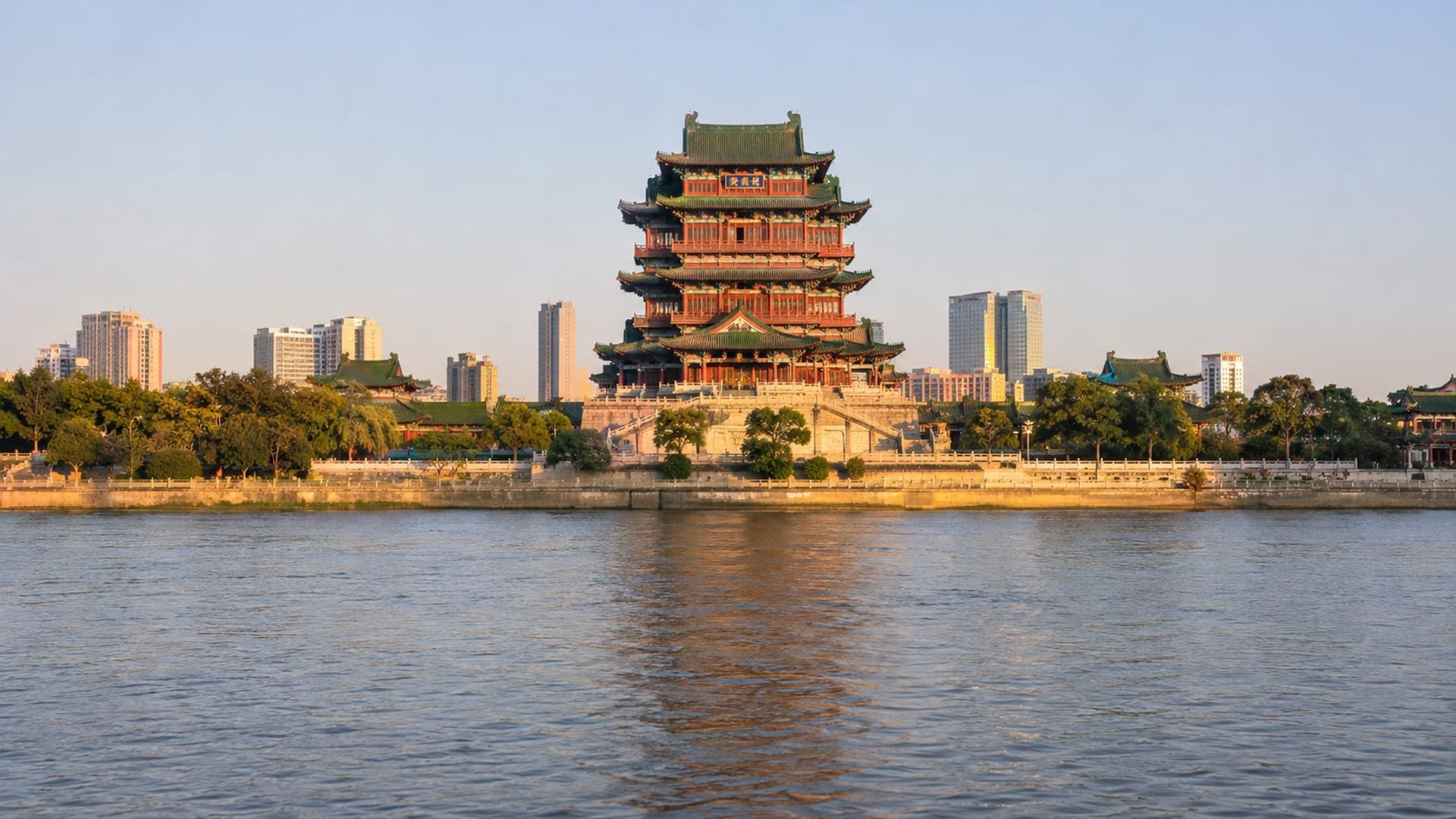
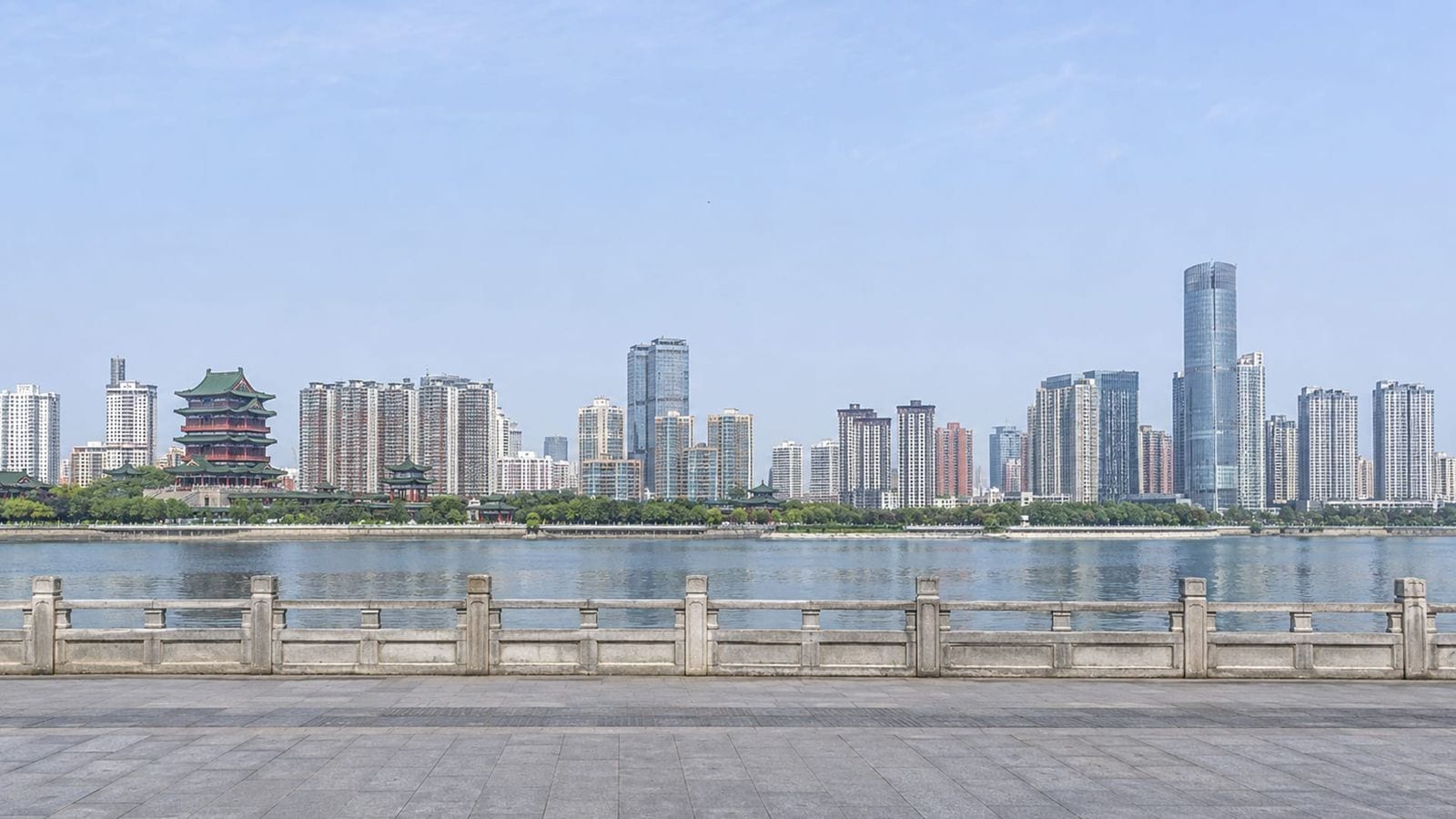
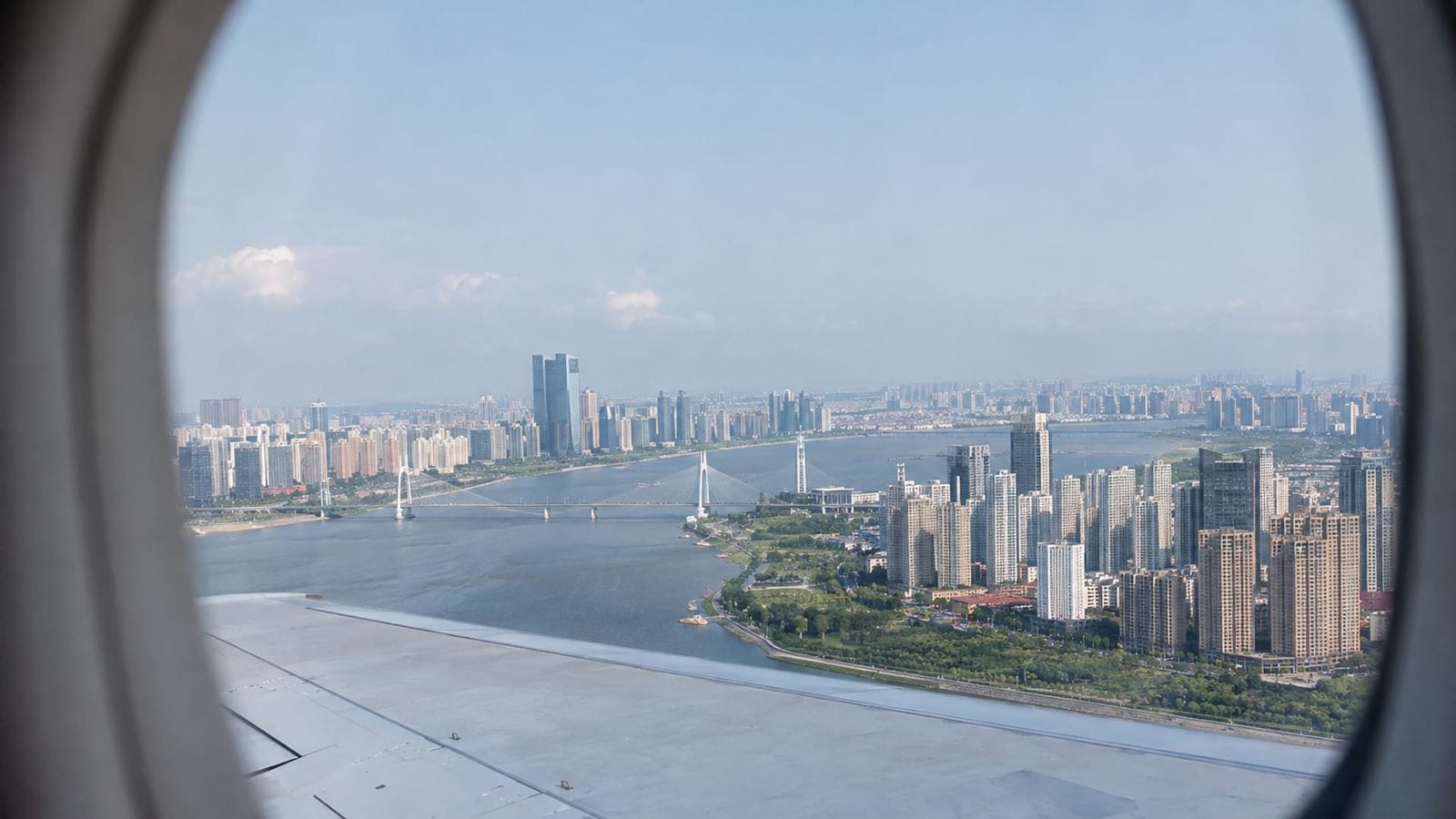
The Gan River separates Nanchang’s older center from the broad avenues of Honggutan District. Along its banks, the city presents two distinct skylines: the stacked roofs of Tengwang Pavilion on one side and modern towers across the water. River views connect landmarks from very different periods.
Climb Tengwang Pavilion for a view across the water, then cross to Honggutan District for a waterfront walk. The Star of Nanchang adds another perspective, lifting its enclosed cabins above the riverbank and the surrounding buildings.
Give the riverfront a full day within a five-day stay. Keep the older center’s sights together in Donghu District, then reserve a separate outing for Honggutan District, where broad roads and larger blocks lengthen walks.
Useful things to know

Main language(s): Gan Chinese, Mandarin Chinese
你好 (nee how) – Hello
请 (ching) – Please
谢谢 (shyeh shyeh) – Thank you
你会说英语吗? (nee hway shwaw ying yoo mah) – Do you speak English?
多少钱? (dwaw shaow chyen) – How much does it cost?

Currency: Chinese yuan (CNY, ¥)

Cash and cards: Foreign cards have limited acceptance; mobile payments dominate, so carry ¥200 to ¥400 ($28 to $56) in cash.

Tipping: Skip tipping in Nanchang’s restaurants and taxis; staff do not expect it.

Traditional food: Mixed rice noodles, clay pot soup, steamed pork with rice flour, and white sugar cake are among the classic dishes of Nanchang.

Water and coffee costs: Bottled water ¥2 to ¥5 ($0.30 to $0.70); espresso ¥15 to ¥30 ($2 to $4).

Taxis and ride apps: Licensed taxis use meters; a short ride typically costs ¥10 to ¥20 ($1.40 to $2.80); DiDi also operates.

Plug and voltage: Type A/C/I socket, 220V

Dining and shop opening hours: Breakfast is usually 7 am to 9 am, lunch 11:30 am to 1:30 pm, and dinner 6 pm to 8 pm. Most shops open 9 am to 9 pm; malls often stay open until 10 pm.

Emergency number: Police 110, ambulance 120, fire 119.
Where to stay in Nanchang
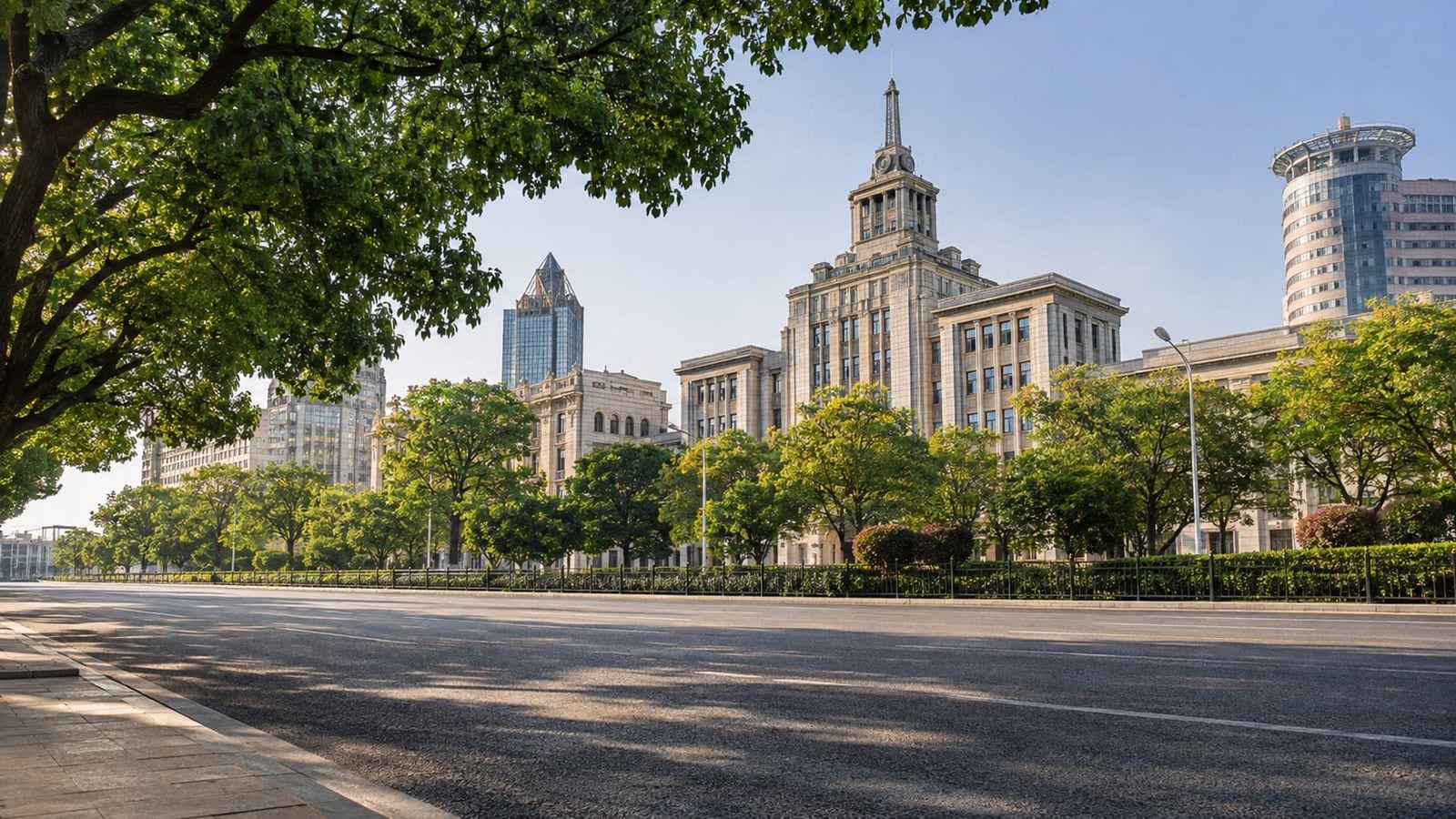
Donghu District covers much of Nanchang’s older center, with established shopping streets, lakeside walks, and hotels near major historic sights. Stay here for access to Tengwang Pavilion and a broad choice of local restaurants, accepting heavier traffic on the district’s main roads.
Best for: Historic sightseeing, local dining, and exploring the older center
What to expect: Busy shopping streets and traffic give way to quieter lanes and lakeside paths.
Hotel prices: Well-rated hotels cost ¥300 to ¥650 ($42 to $91) a night.
Distance to major sights: From central hotels, allow 10 to 20 minutes by taxi to Tengwang Pavilion.
Quietness: Shopping streets stay active by day and evening; rooms facing smaller lanes are generally quieter.
Main trade-off: Older streets bring traffic noise, and hotel room quality varies considerably between properties.
Good to know: Choose a room away from the main road if you expect to sleep before evening traffic subsides.
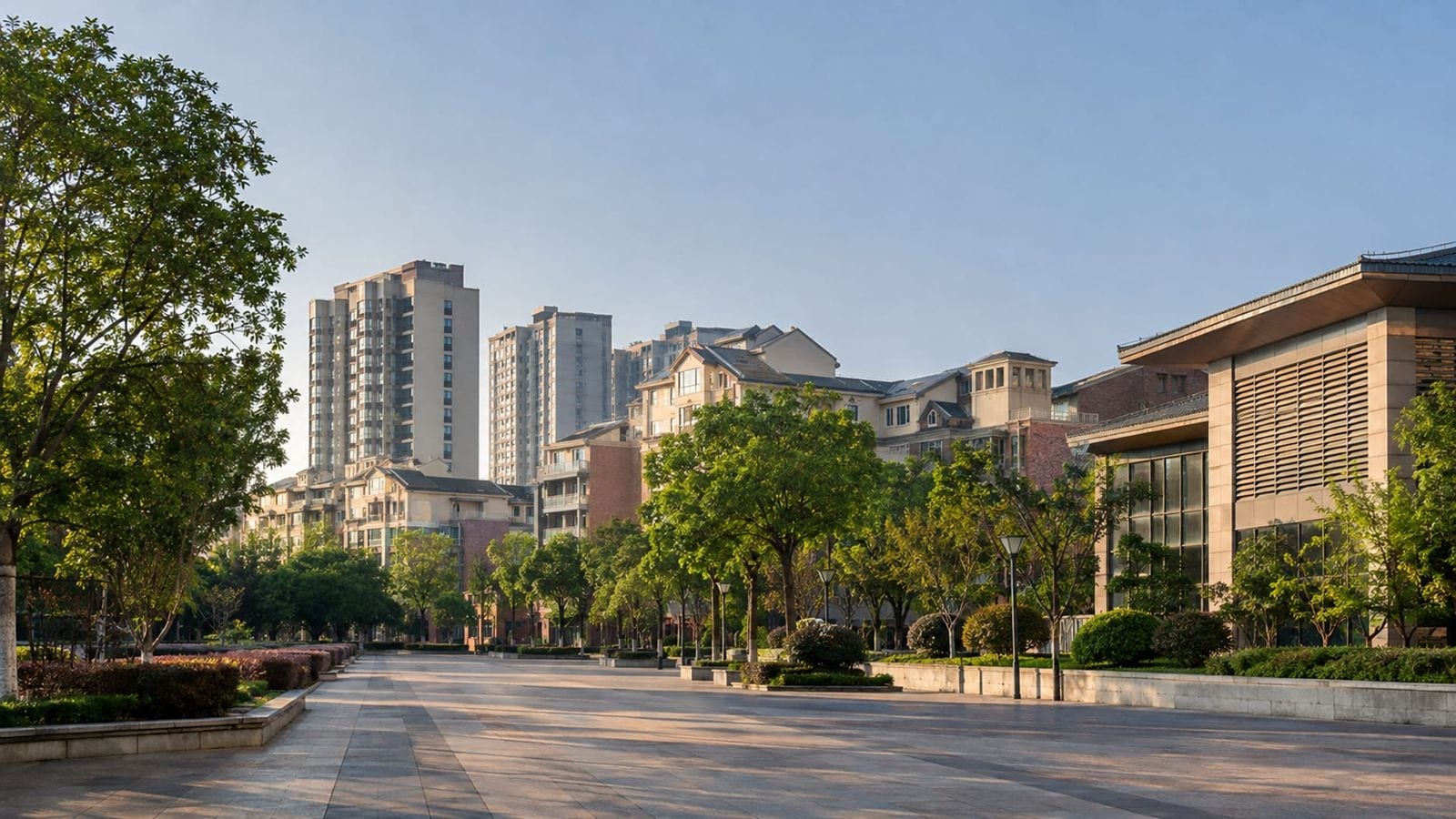
Xihu District occupies the southern part of central Nanchang, combining older residential neighborhoods with shopping and hotels near Nanchang Railway Station. Visitors stay here for rail connections and local dining, while choosing between busy station streets and quieter residential blocks.
Best for: Conventional rail connections, neighborhood dining, and moderately priced stays
What to expect: Station traffic, neighborhood shops, and local restaurants create a busy everyday setting.
Hotel prices: Budget ¥250 to ¥500 ($35 to $70) nightly for a well-rated hotel.
Distance to major sights: Hotels near Nanchang Railway Station are typically 15 to 30 minutes by taxi from Tengwang Pavilion.
Quietness: Station approaches are busy during the day and into the evening; residential side streets are calmer.
Main trade-off: The station area favors transport convenience over immediate access to the city’s principal historic sights.
Good to know: Match your hotel to your ticket: Nanchang Railway Station and Nanchang West Railway Station are separate stations.
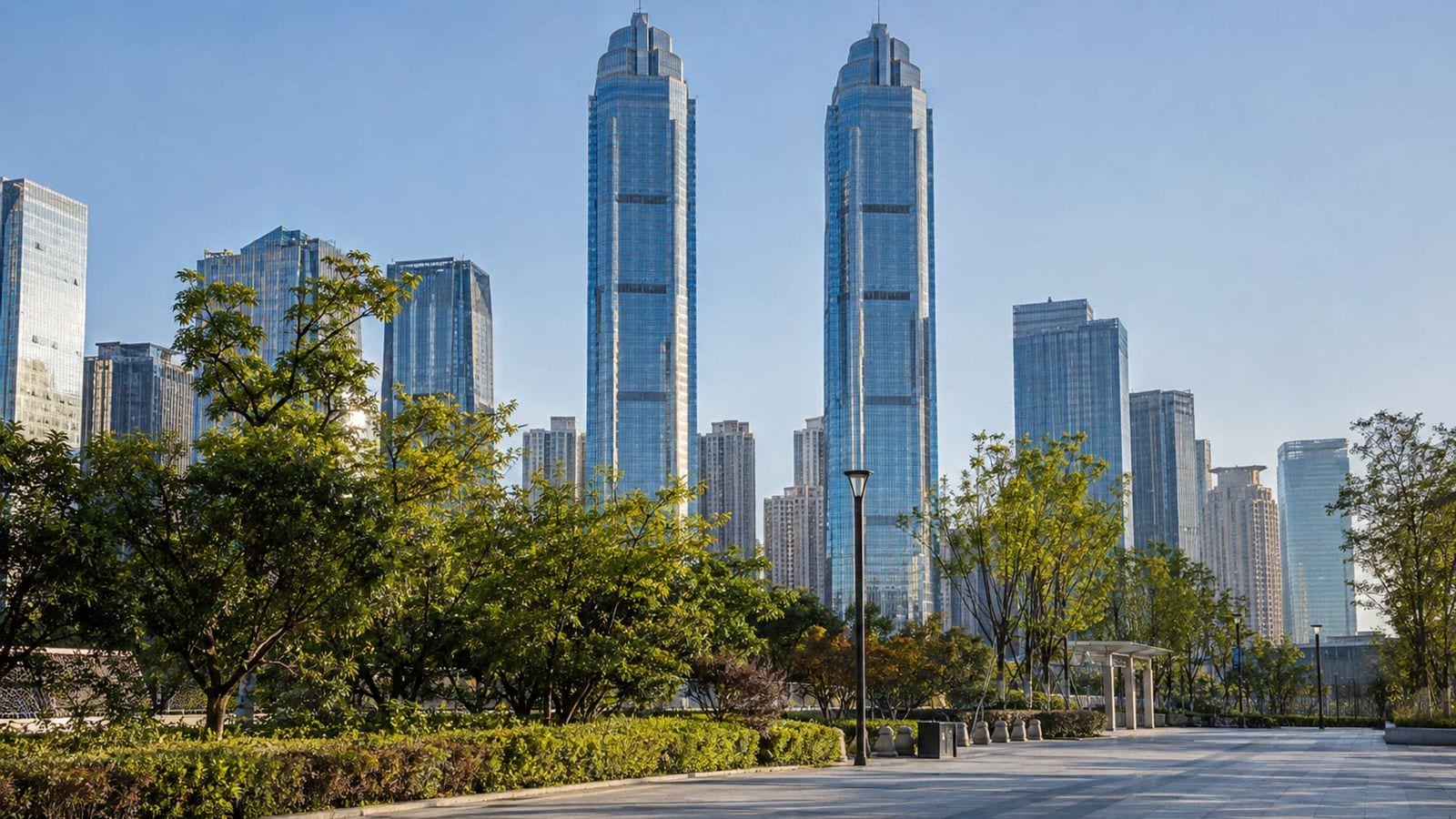
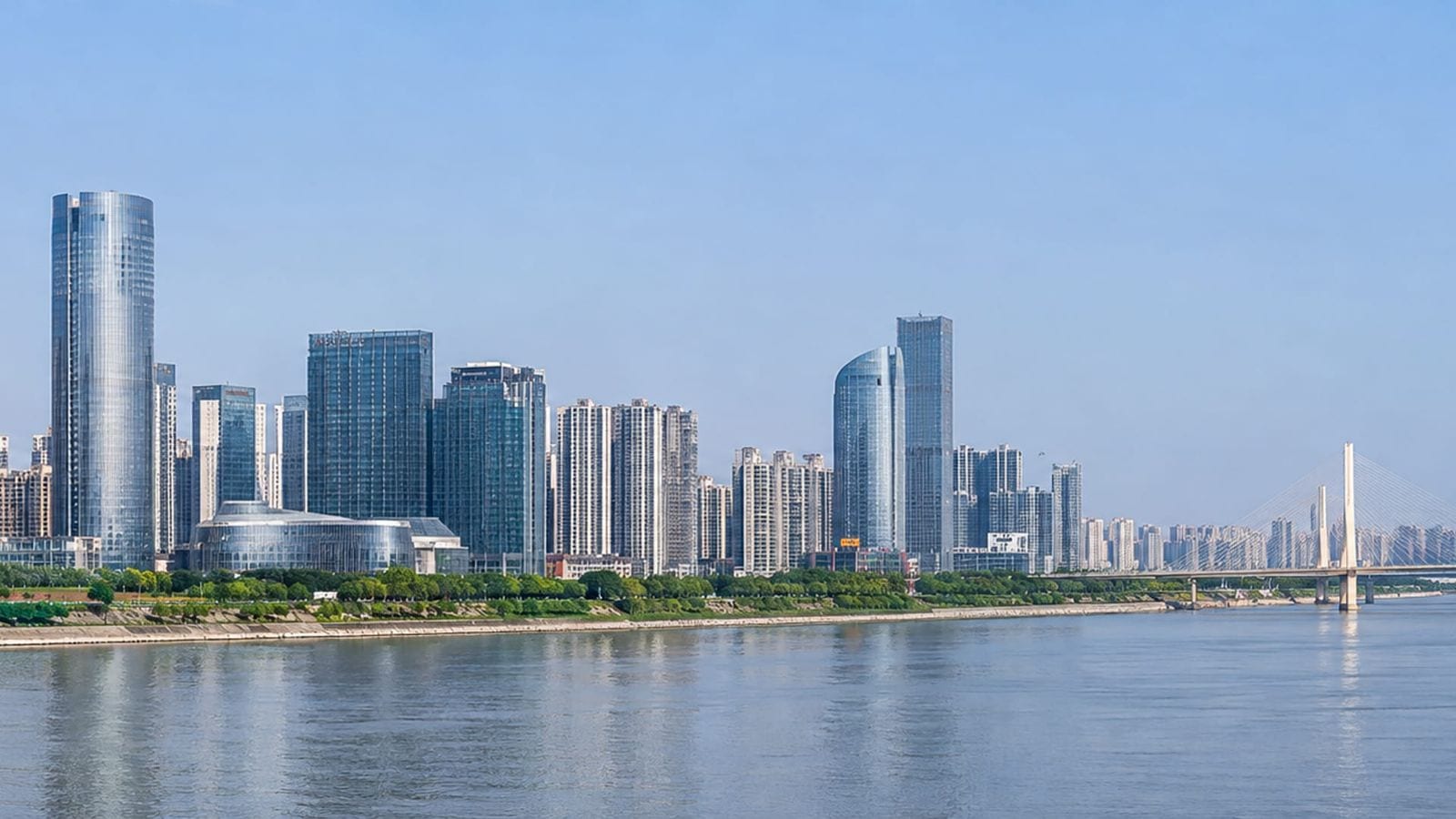
Honggutan District extends across the Gan River from Nanchang’s older center, with modern hotels, apartment neighborhoods, and broad avenues. Choose its central riverfront section for skyline views and newer accommodation, with metro connections across the river to older shopping streets.
Best for: River views, modern hotels, and exploring the newer city
What to expect: Wide avenues, high-rise buildings, and riverside promenades define the central riverfront.
Hotel prices: A well-rated hotel generally ranges from ¥400 to ¥900 ($56 to $126) per night.
Distance to major sights: Allow 15 to 30 minutes by taxi from central riverfront hotels to Tengwang Pavilion.
Quietness: Main avenues carry daytime traffic; riverside walking areas attract more people in the evening.
Main trade-off: Broad roads and large blocks can mean longer walks between your hotel, restaurants, and metro entrances.
Good to know: Choose a hotel near a metro entrance; a river view alone can leave you with a lengthy walk to trains.
Wanli, Wangcheng, and Liantang are less convenient for central sightseeing: their outlying locations mean longer journeys to Tengwang Pavilion and Bayi Square.
Hotel deals
How to get around Nanchang efficiently
Nanchang’s metro connects Bayi Square with Nanchang West Railway Station, while buses, taxis, and DiDi extend your reach.

Metro
for longer distances
Line 2 connects Nanchang West Railway Station with Bayi Square, making the metro useful for station transfers and cross-city trips. Short central journeys cost ¥2 to ¥4 ($0.30 to $0.60); allow roughly 30 to 40 minutes between these stops.

Bus and tram
for convenience
For trips between Bayi Square and neighborhoods beyond metro stops, Nanchang’s public buses offer broad coverage. Ordinary city fares generally cost ¥1 to ¥2 ($0.15 to $0.30) per boarding; allow 20 to 40 minutes for central trips, depending on traffic.

Taxi
for convenience or late hours
From Nanchang Changbei International Airport, a metered taxi to central Nanchang typically costs ¥100 to ¥150 ($14 to $21), with tolls potentially additional. Allow 40 to 60 minutes; taxis suit luggage-heavy arrivals and trips after metro operating hours.
*Prices are based on rates updated as of November 2026 and may change at the time of travel.
Use the metro for Bayi Square and rail connections, buses for streets beyond stations, and taxis or DiDi for airport luggage and Honggutan District.
Iconic landmarks
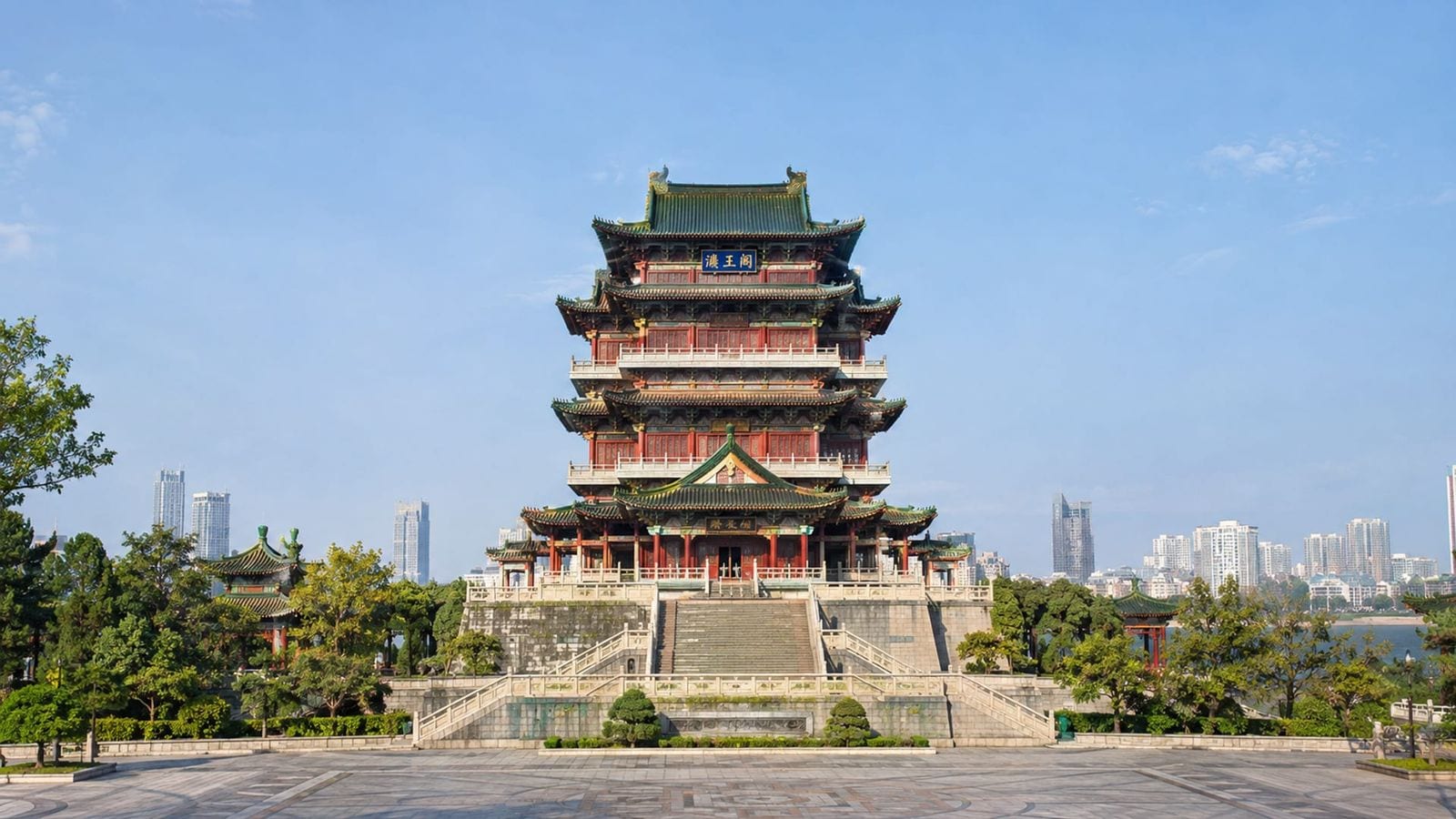
Tengwang Pavilion
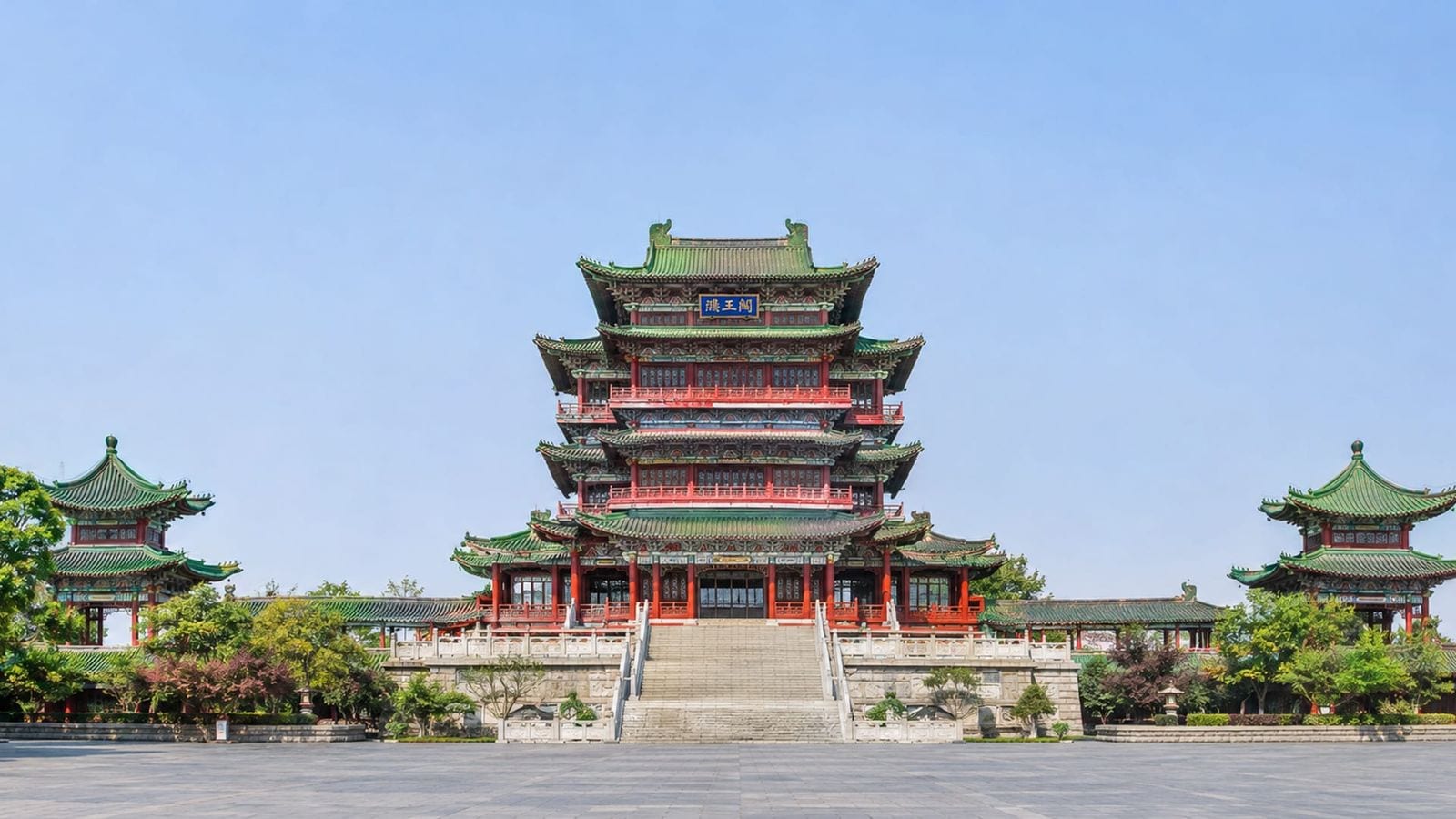
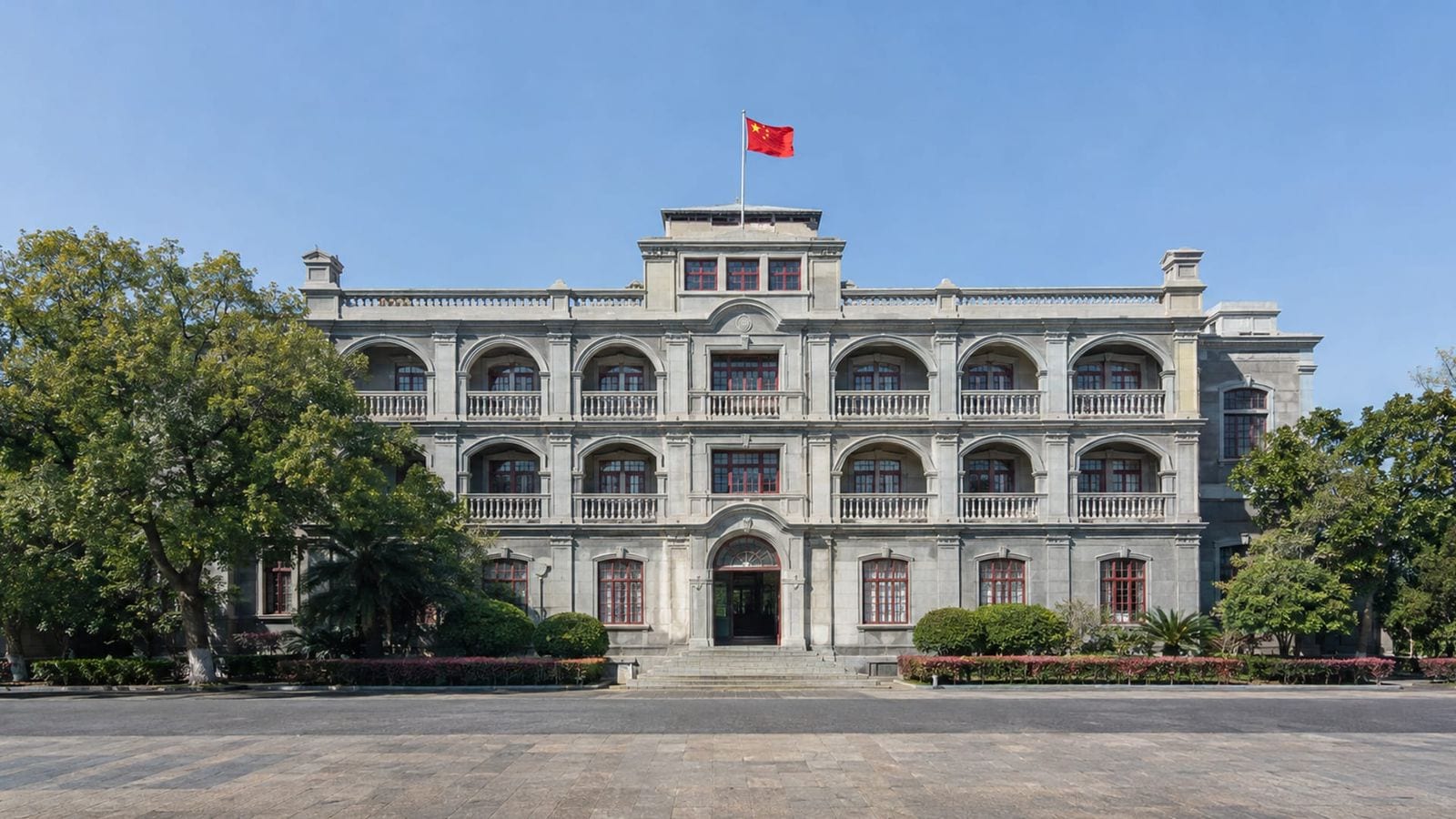
Overlooking the Gan River, Tengwang Pavilion is Nanchang’s signature landmark, celebrated in a famous Tang dynasty essay. The present tower recreates historic architectural forms, with stacked roofs and upper floors overlooking the waterfront.
Time needed: About 1 to 2 hours
Entry: Low-cost: standard adult admission
Tip: Use the upper floors for views across the Gan River before heading outside.
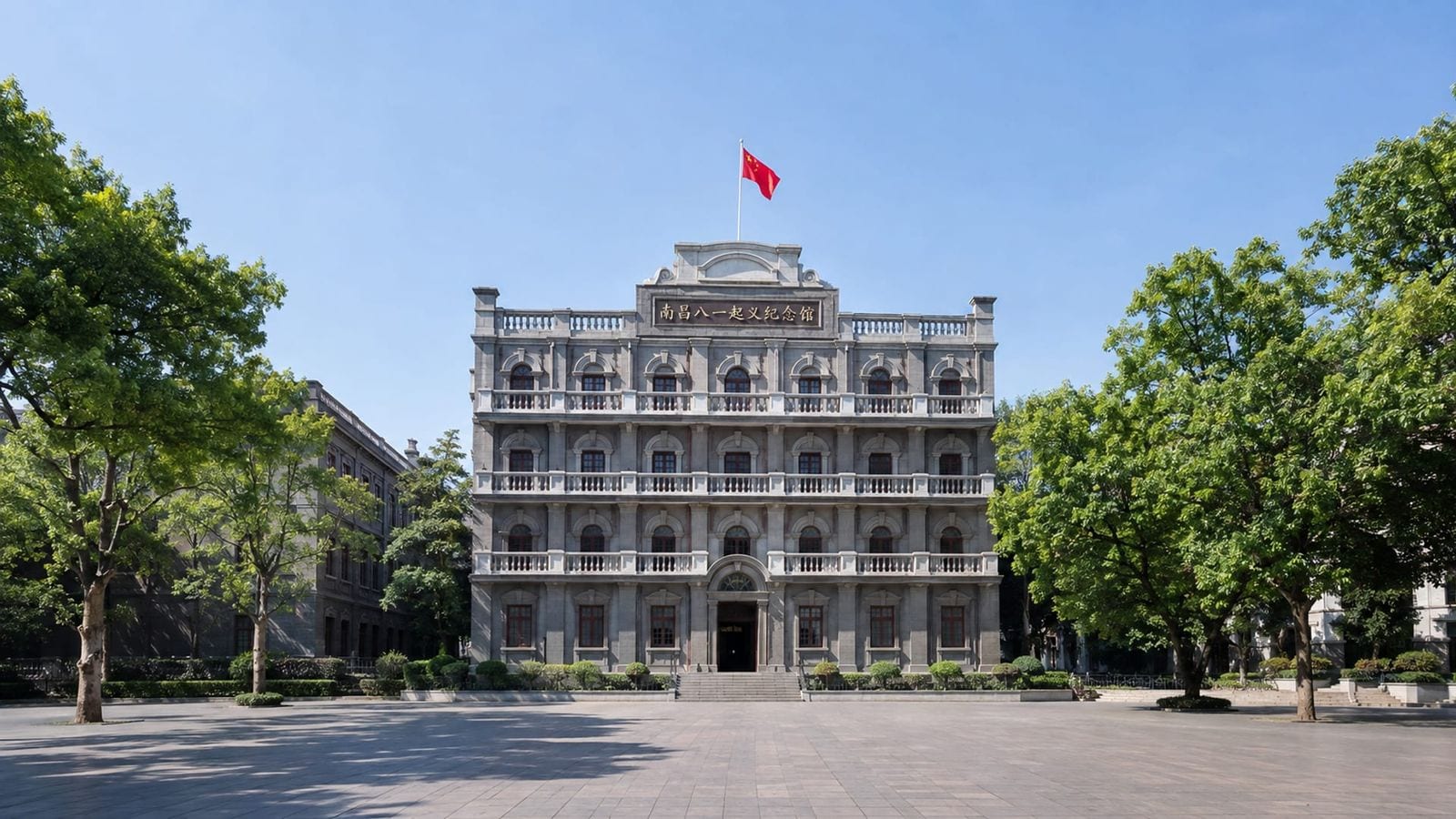
Nanchang August 1 Uprising Memorial Museum
The former headquarters of the 1927 Nanchang Uprising anchors this museum, which explains the event’s role in the founding of China’s armed forces. Historic rooms and exhibitions connect the city’s revolutionary identity to a specific address.
Time needed: About 1 to 2 hours
Entry: Free: standard adult admission
Tip: Allow time for the exhibits as well as the former uprising headquarters.
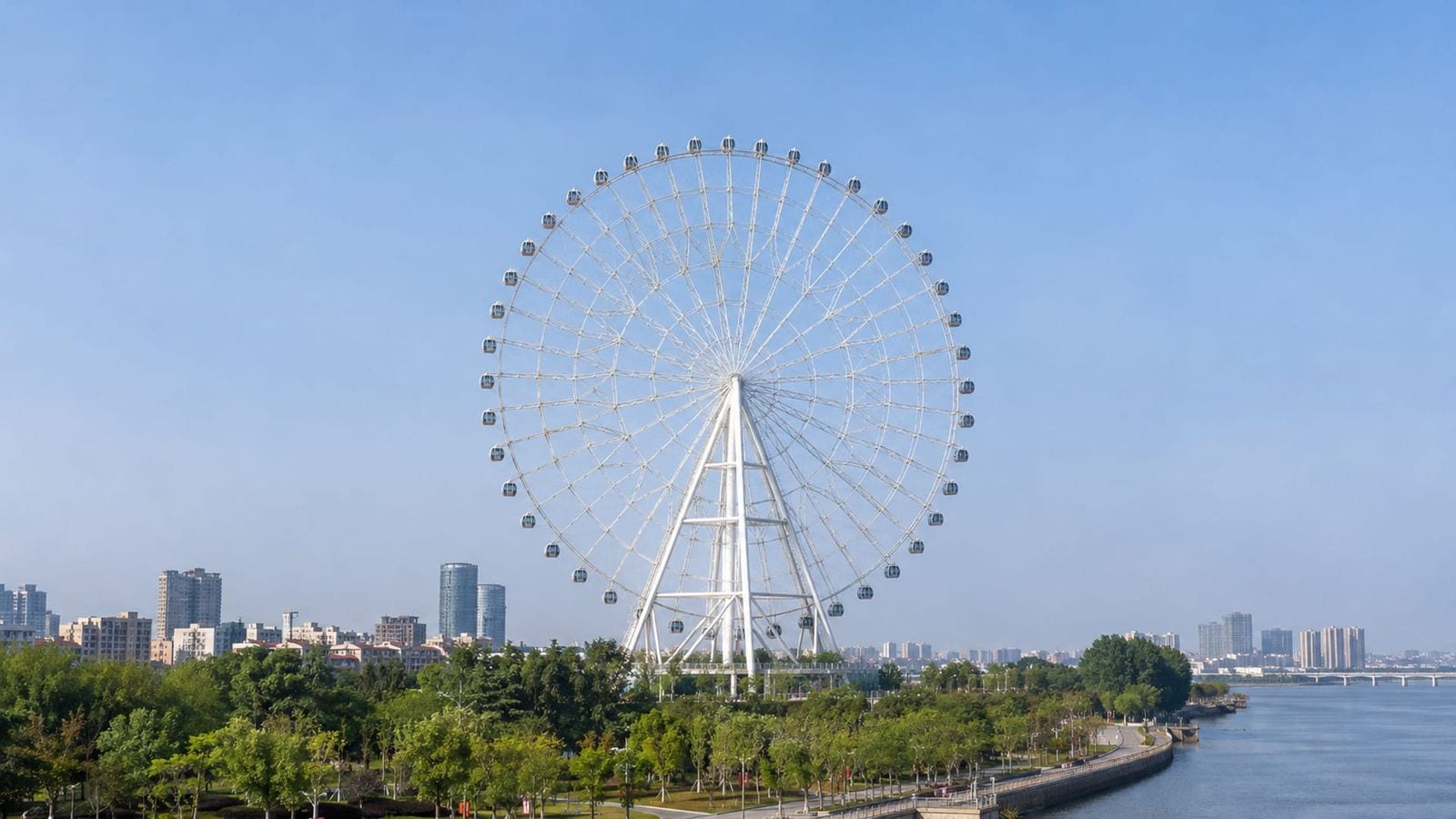
Star of Nanchang
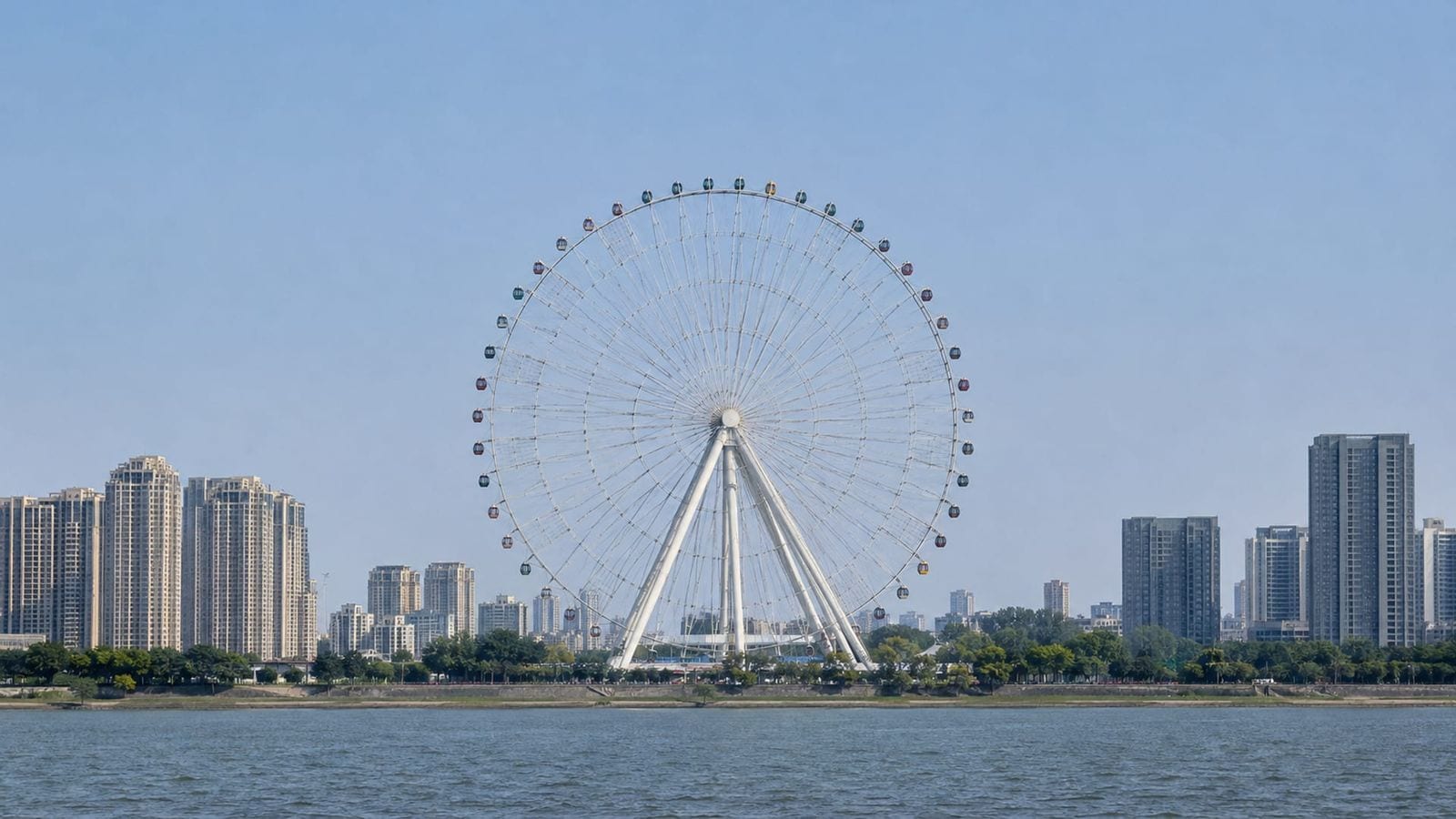
Recognizable across the Gan River, the Star of Nanchang is a giant observation wheel in Honggutan District. Enclosed passenger cabins carry visitors above the riverfront, revealing the breadth of the river and the city’s expanding skyline.
Time needed: About 1 to 2 hours
Entry: Low-cost: standard adult admission
Tip: Choose a clear evening for river views and the lights across Honggutan District.
Overlooked sites worth visiting

Nanchang People's Park
Tree-lined paths and lakes give this long-established city park its appeal. Flower beds and waterside walks offer a slower afternoon within Nanchang’s densely developed central districts.
Time needed: About 1 to 2 hours
Entry: Free to access
Tip: Choose a weekday morning for a quieter walk along the park’s lakes.

Nanchang New Fourth Army Headquarters Site
A former compound on Xiangshan South Road traces the New Fourth Army’s early organization in Nanchang. Period rooms and historical displays connect the buildings to China’s wartime history.
Time needed: About 45 minutes to 1 hour
Entry: Free
Tip: Use the Xiangshan South Road entrance to reach the historic compound.
Traditional food
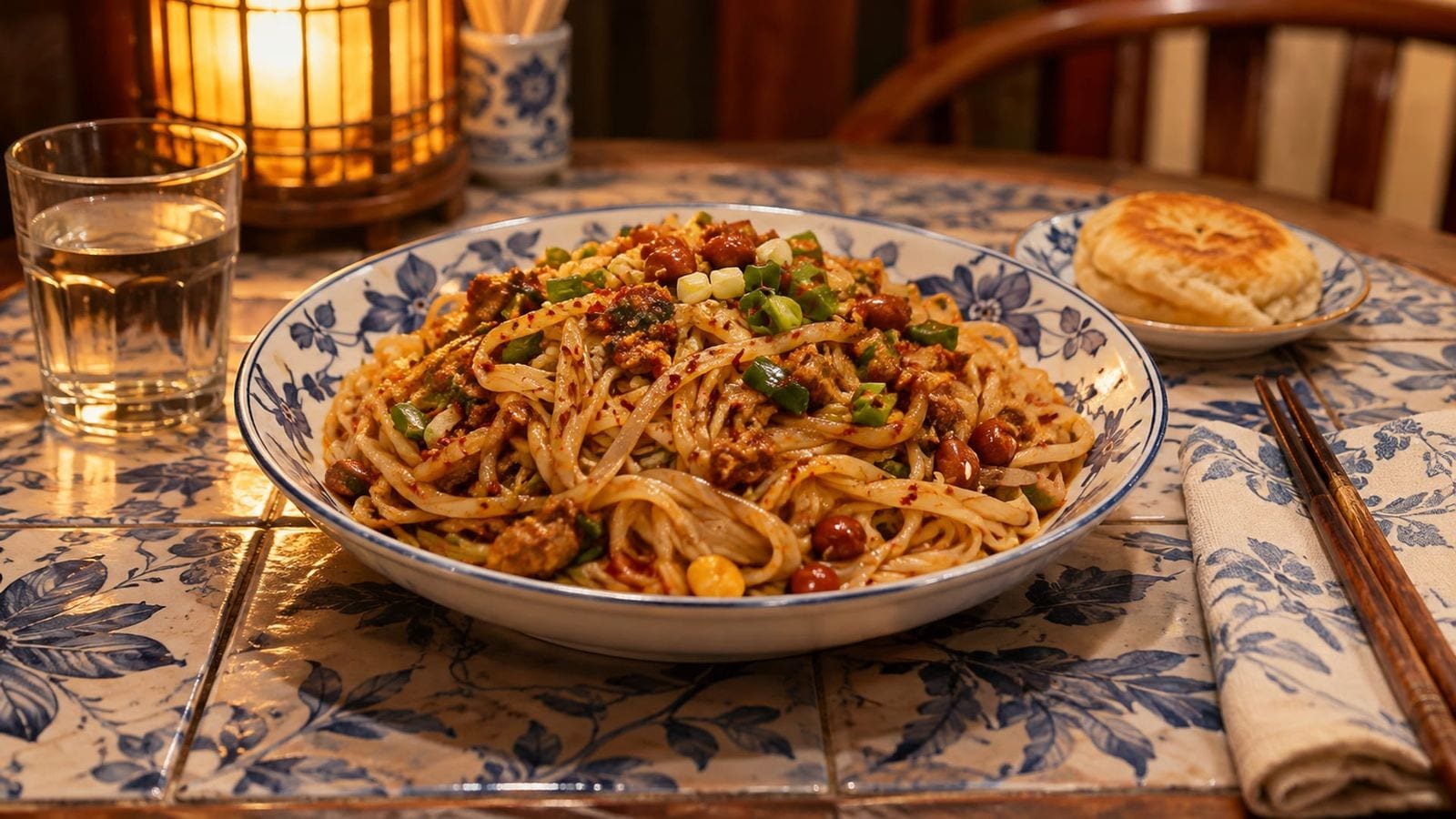
Rice shapes Nanchang’s table, from mixed noodles to steamed pork coated in rice flour. Chili brings heat, clay pot soup accompanies breakfast, and white sugar cake offers a sweet, chewy finish.
Mixed rice noodles
Rice noodles tossed with chili, oil, and savory seasonings form a familiar Nanchang breakfast, often accompanied by soup. Try them at Zhou Zhenzhen, where the noodles introduce the city’s preference for bold seasoning.
Clay pot soup
Individual clay pots hold slowly cooked broth with meat and other ingredients, producing a concentrated accompaniment to rice noodles. Long Laowu is a Nanchang restaurant associated with this breakfast pairing.
Steamed pork with rice flour
Pieces of pork steam beneath a coating of seasoned ground rice, which absorbs the meat’s juices and softens during cooking. Order this substantial Jiangxi dish at Lao Sanyang as part of a shared Nanchang meal.
White sugar cake
Rice flour and sugar become a pale, chewy fried cake, with a lightly crisp exterior and a soft center. Hongdu Damu offers a place to try this traditional Nanchang sweet alongside the city’s savory rice dishes.
Best time to visit Nanchang
Nanchang’s humid summers favor evening river walks, while spring and fall bring milder conditions for the older center.
Best for: Lakeside walks at Nanchang People’s Park and exploring Tengwang Pavilion
What you get: Temperatures span 46°F to 81°F (8°C to 27°C), with greener park paths; holiday crowds increase at Tengwang Pavilion during early May.
Trade-offs: Frequent rain can interrupt park walks and obscure the Gan River views from Tengwang Pavilion.
Best for: Evening Gan River walks and museum visits during the hottest midday hours
What you get: Expect 73°F to 93°F (23°C to 34°C), humid afternoons, and school-vacation visitors; the Honggutan District waterfront attracts evening crowds.
Trade-offs: Heat, humidity, and heavy rain make extended daytime walks across Honggutan District tiring.
Best for: Clearer river views, longer neighborhood walks, and Honggutan’s waterfront
What you get: Days range from 48°F to 86°F (9°C to 30°C), cooling through the season; early October holidays bring larger crowds to major attractions.
Trade-offs: Early September can stay hot, and the early October holiday brings busy sightseeing days.
Best for: Revolutionary history museums and warming meals between shorter outings
What you get: Conditions reach 36°F to 54°F (2°C to 12°C), with damp cold and fewer outdoor visitors; Lunar New Year can bring bursts of holiday travel.
Trade-offs: Cold wind along the Gan River can shorten waterfront walks and reduce time outdoors.
A realistic 5-day plan in Nanchang
Five days connect the older center with the Gan River waterfront: arrival, parks and pavilion views, revolutionary history, Honggutan District, and a final neighborhood lunch before departure.
From Nanchang Changbei International Airport (KHN), take a taxi to Donghu District, allowing 40 to 60 minutes and ¥120 to ¥180 ($17 to $25). Have a light rice-noodle dinner in Donghu District before a 15 to 25-minute taxi ride to your hotel in Xihu District.
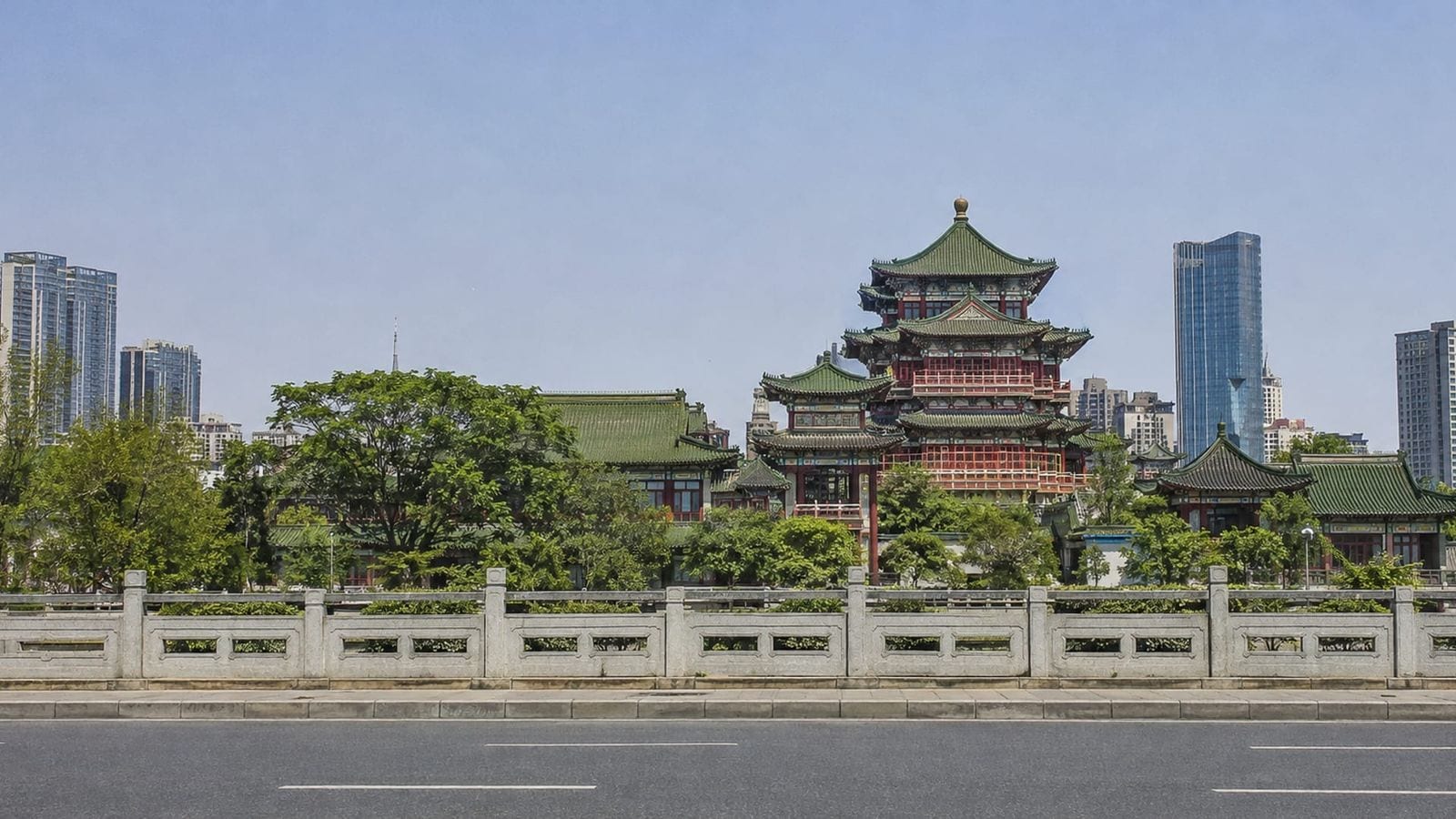
Tree-lined lakes at Nanchang People’s Park fill the morning before a 15 to 25-minute taxi ride west to Tengwang Pavilion. Allow two hours for the park and two for the pavilion’s exhibitions and upper-floor Gan River views, with lunch in Donghu District between them.
The revolutionary history of Xihu District connects Nanchang August 1 Uprising Memorial Museum with Nanchang New Fourth Army Headquarters Site. Schedule this day Tuesday to Sunday: spend two hours at the first museum, walk south for 25 to 35 minutes, then explore the second compound for an hour.
Across the Gan River, Honggutan District pairs a riverfront walk with the Star of Nanchang. Spend the morning exploring the district’s broad avenues, then take a 15 to 25-minute taxi ride to the wheel. Allow two hours for the attraction and a further hour along the adjoining Gan River waterfront.
Before your flight, browse neighborhood shops in Xihu District and have lunch near your hotel. For Nanchang Changbei International Airport (KHN), allow 50 to 70 minutes by taxi and budget ¥130 to ¥190 ($18 to $27); leave additional time for airport check-in.
Business-class flights from the US to Nanchang
Compare connections from New York and Los Angeles to Nanchang (KHN) through Beijing (PEK) or Shanghai (PVG).
One-stop journeys from New York to Nanchang (KHN) cost $4,500 to $9,000 round-trip. Options include Air China, China Eastern Airlines, and China Southern Airlines, with connections through Beijing (PEK) or Shanghai (PVG) and total journey times of 19 to 30 hours.
From Los Angeles, connecting flights to Nanchang (KHN) take 18 to 28 hours, with round-trip fares of $4,000 to $8,500. Air China, China Eastern Airlines, and China Southern Airlines offer options; connection hubs include Beijing (PEK) and Shanghai (PVG).
Nanchang feels different when you slow down
A Nanchang trip brings several distinct outings together: lakeside paths in Donghu District, revolutionary history in Xihu District, and an afternoon across the Gan River in Honggutan District. Metro journeys connect parts of the city, while taxis shorten the longer transfers between sights. Leave room for mixed rice noodles and clay pot soup before the day’s first stop. Ask AranGrant experts to shape your flights around a fall stay and time beside Tengwang Pavilion