

Chapters:

Need help with your trip?
Our support team is available 24/7. Request a callback or call us directly at (833) 619-0908
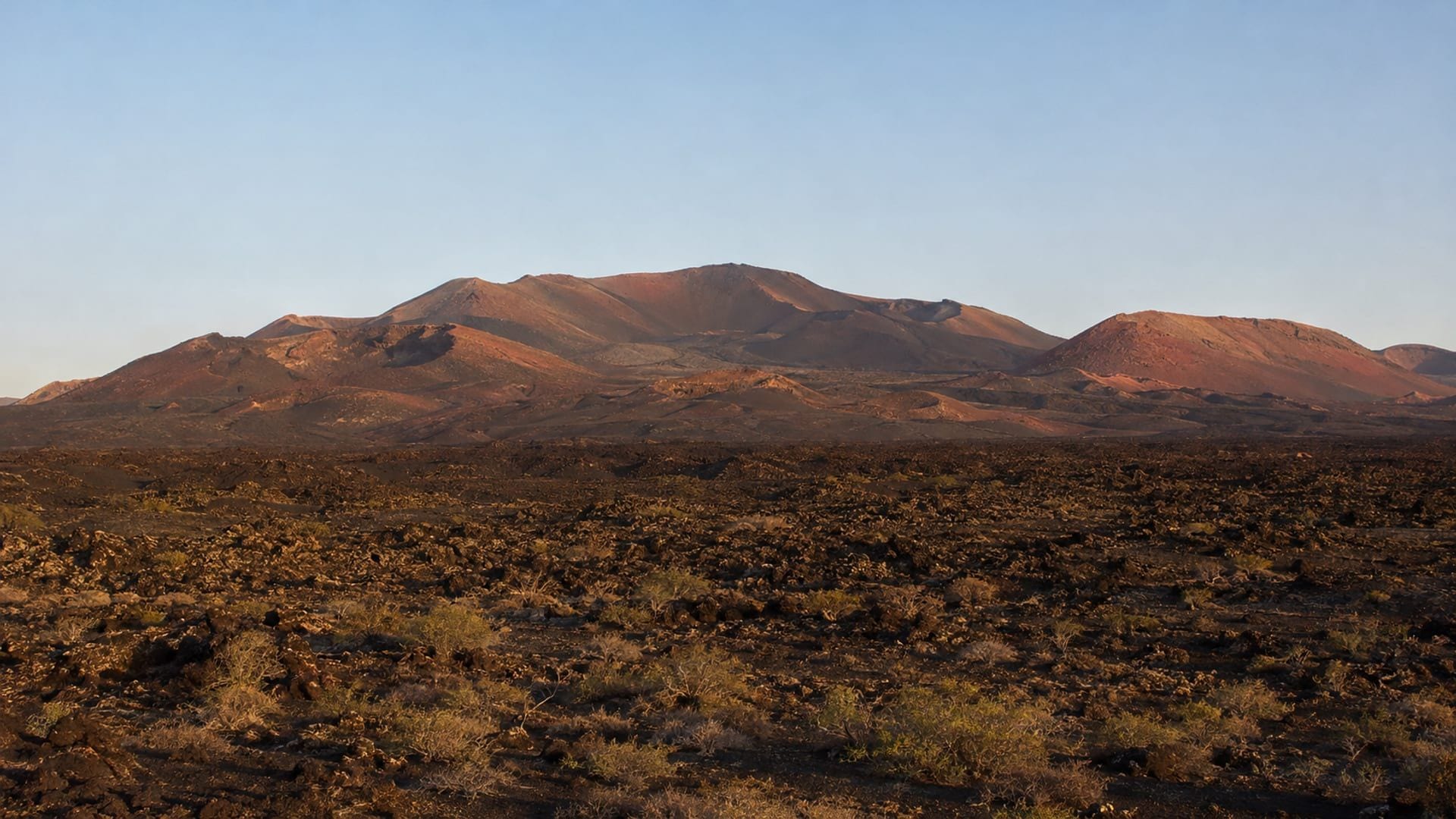
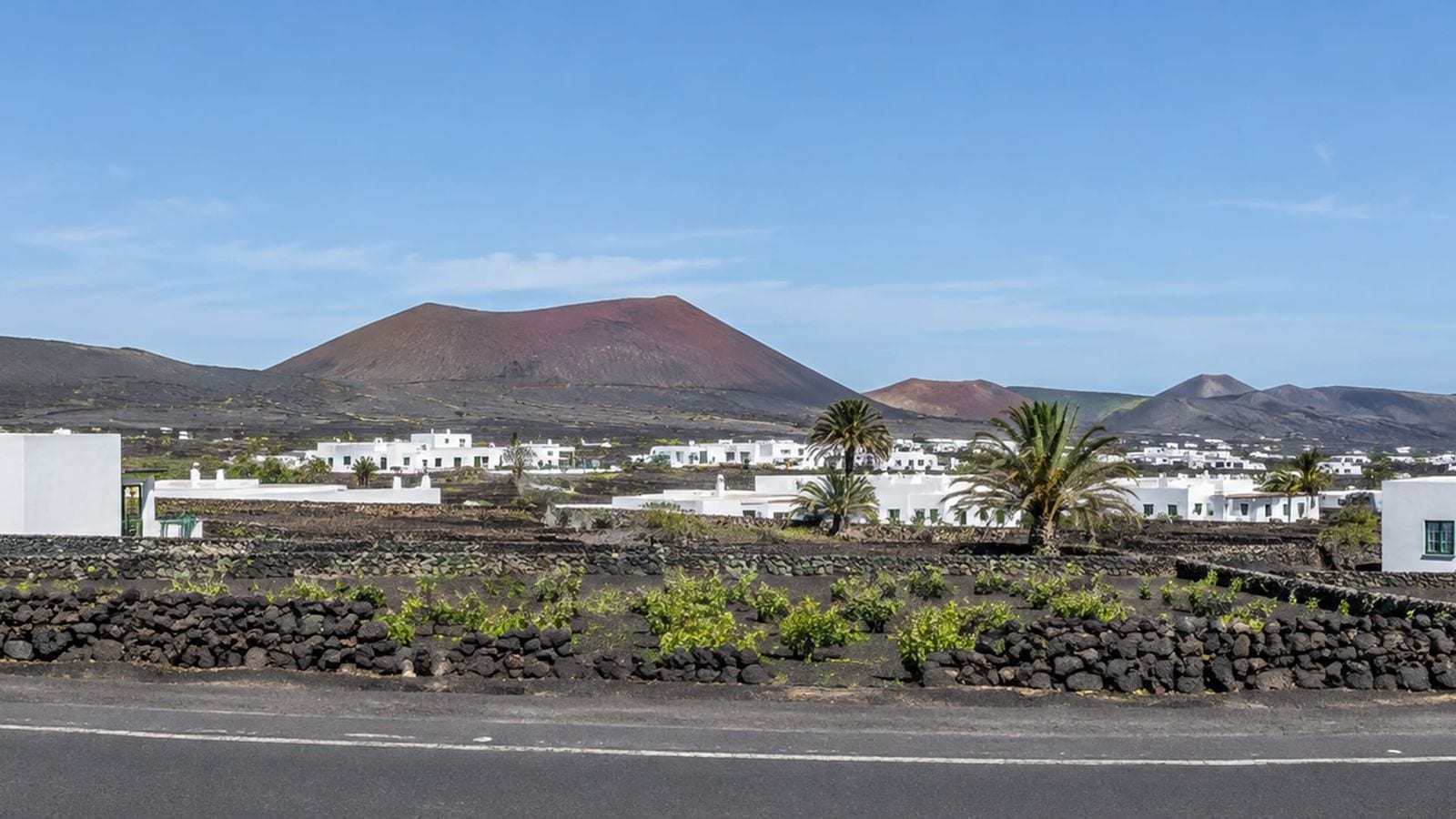
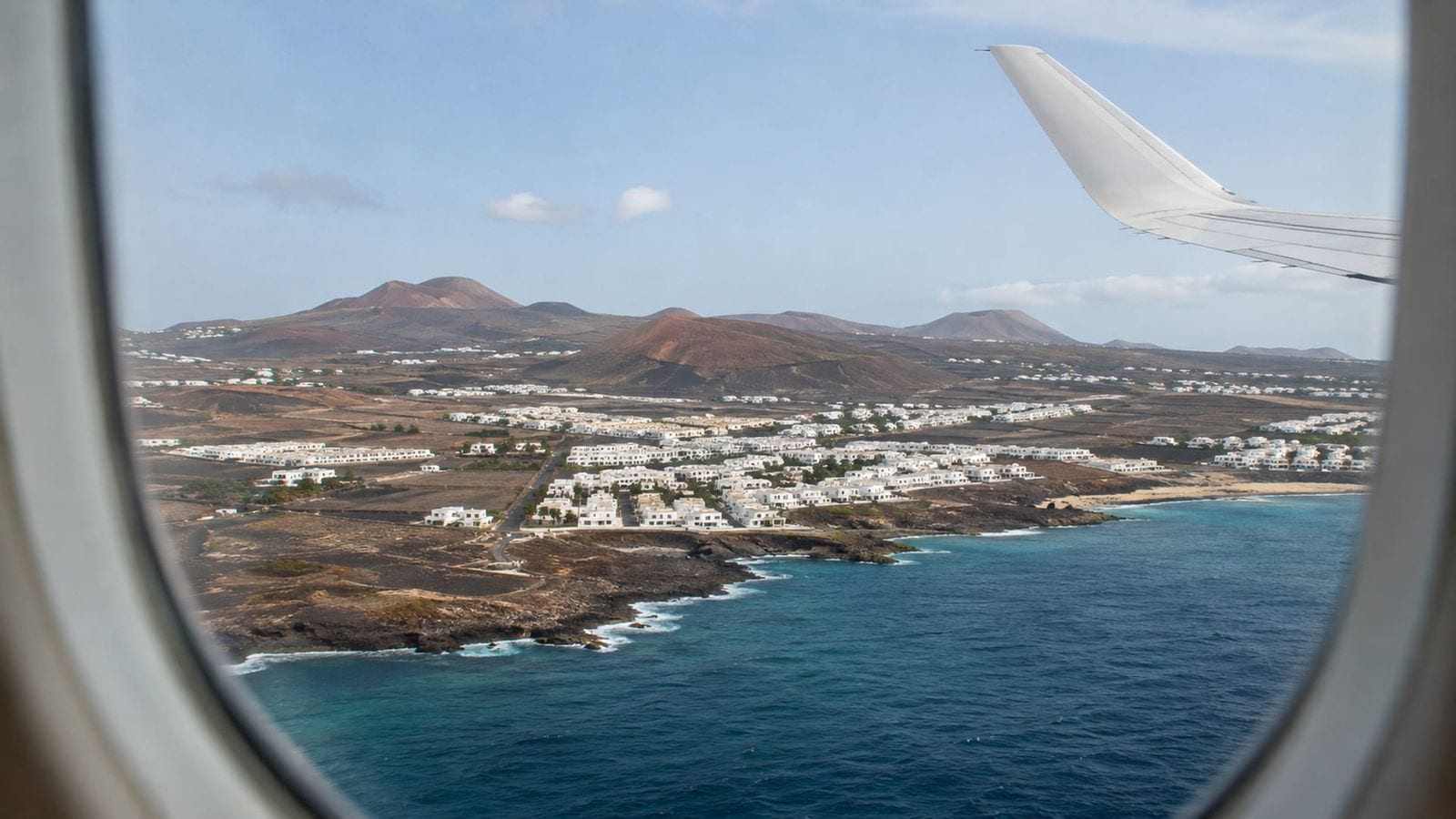
Lanzarote’s eruptions of 1730 to 1736 reshaped the island, leaving lava fields and volcanic cones across land once used for farming. That history still defines the view: dark rock meets white buildings, and the Atlantic borders a landscape with little shade.
At Timanfaya National Park, the Volcano Route crosses terrain formed by those eruptions. Farther north, Cueva de los Verdes leads underground, while Jameos del Agua shows how César Manrique brought gardens and terraces into a lava tube.
Five days allow time for these volcanic landscapes alongside the coast. Arrecife offers waterfront walks and bus connections; excursions into the volcanic interior require separate journeys, with beach afternoons in Puerto del Carmen balancing the longer outings.
Useful things to know

Main language(s): Spanish
Hola (OH-lah) – Hello
Por favor (por fah-VOR) – Please
Gracias (GRAH-syahs) – Thank you
¿Habla inglés? (AH-blah een-GLES) – Do you speak English?
¿Cuánto cuesta? (KWAHN-toh KWES-tah) – How much does it cost?

Currency: Euro (EUR, €)

Cash and cards: Cards and contactless are widely accepted; carry about €40 to €60 ($45 to $70) in cash.

Tipping: Round up the bill or leave 5% to 10% for good restaurant service; tipping is optional.

Traditional food: Papas arrugadas, sancocho canario, ropa vieja, and caldo de millo are among the classic dishes of Lanzarote.

Water and coffee costs: Bottled water €1 to €2 ($1 to $2.50); bar espresso €1.50 to €2.50 ($2 to $3).

Taxis and ride apps: Find licensed, metered taxis at airport and resort taxi ranks; confirm the fare before departure.

Plug and voltage: Type C/F socket, 230V

Dining and shop opening hours: Breakfast: 7 am to 10 am; lunch: 1 pm to 3 pm; dinner: 8 pm to 10 pm. Small shops typically open 9 am to 1 pm and 5 pm to 8 pm; many close Sundays.

Emergency number: 112 for police, ambulance, and fire.
Where to stay in Lanzarote
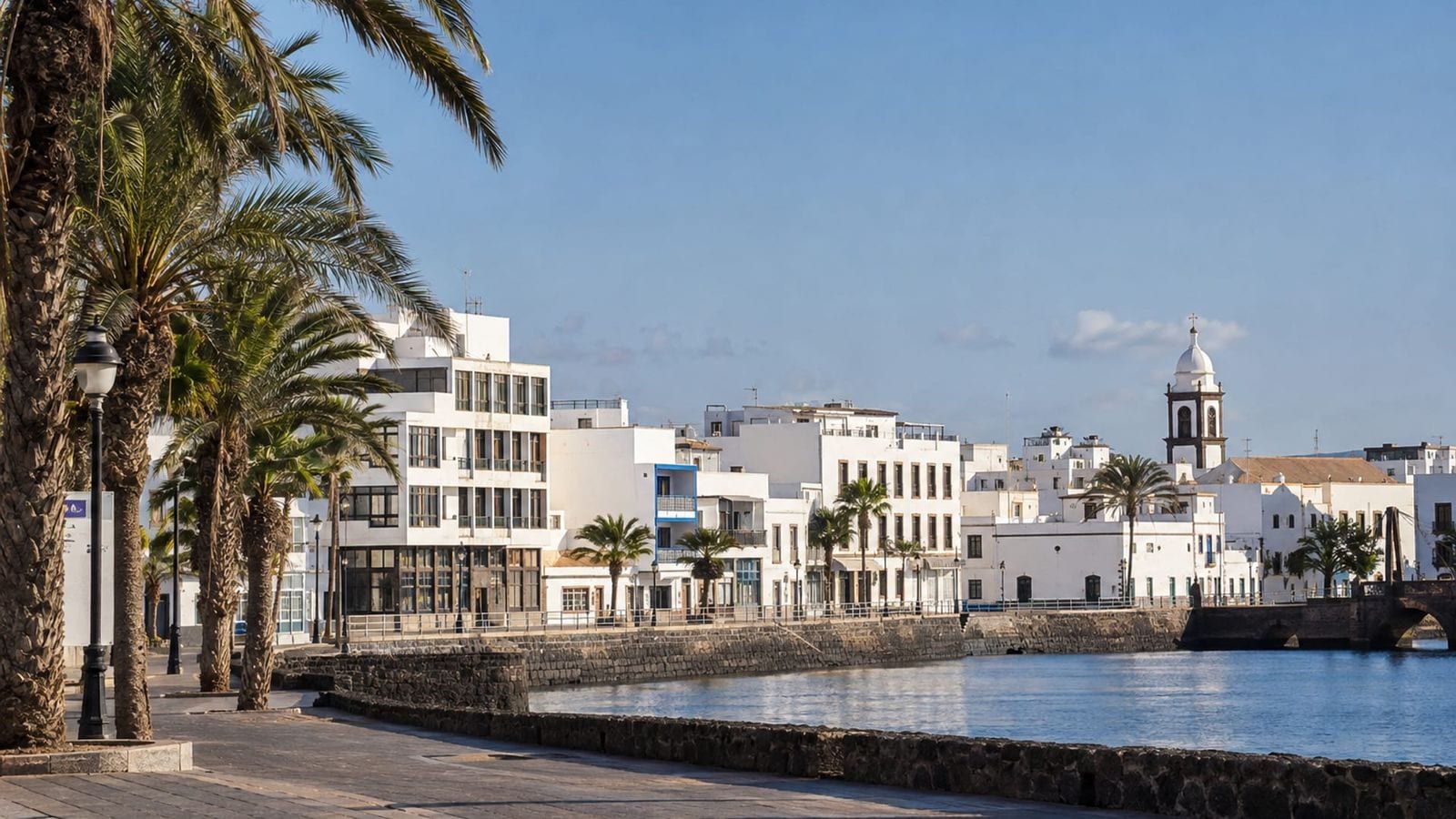
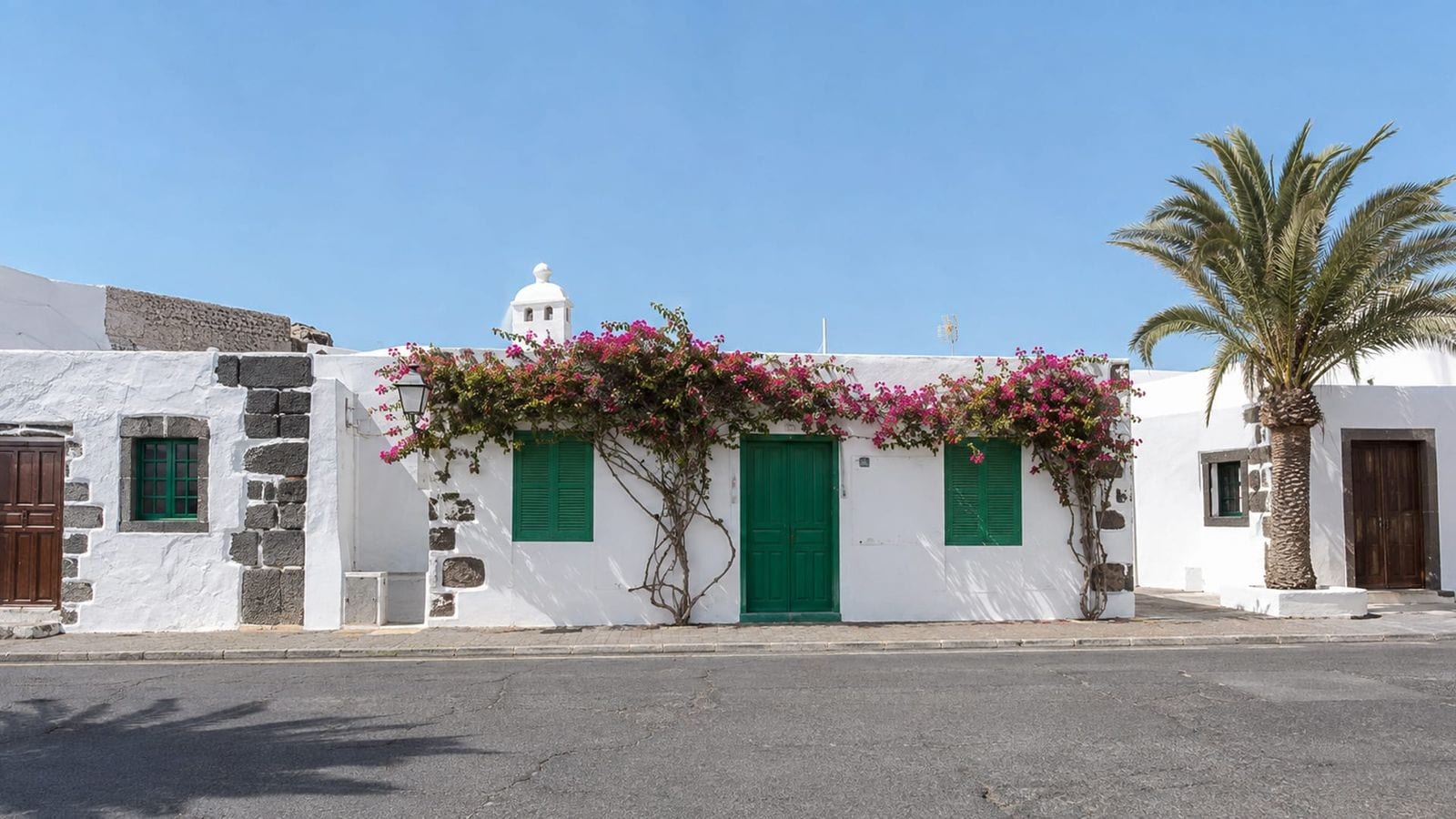
Arrecife is Lanzarote’s capital, with a working waterfront, a sandy urban beach, and hotels among residential streets and shops. Stay here for waterfront walks, restaurants serving local residents, and a city setting with bus connections to several other towns and resorts across the island.
Best for: Waterfront walks, urban beach days, and exploring by public bus
What to expect: Shopping streets draw daytime activity, while waterfront restaurants attract evening diners.
Hotel prices: Well-rated hotels cost €90 to €170 ($105 to $195) a night.
Distance to major sights: Hotels near Playa del Reducto are a 15 to 25-minute walk from Castillo de San Gabriel.
Quietness: Central streets are active by day; waterfront dining brings evening conversation and traffic.
Main trade-off: The capital has more traffic and fewer resort facilities than the main beach towns.
Good to know: Choose a hotel near Playa del Reducto if direct beach access is a priority.
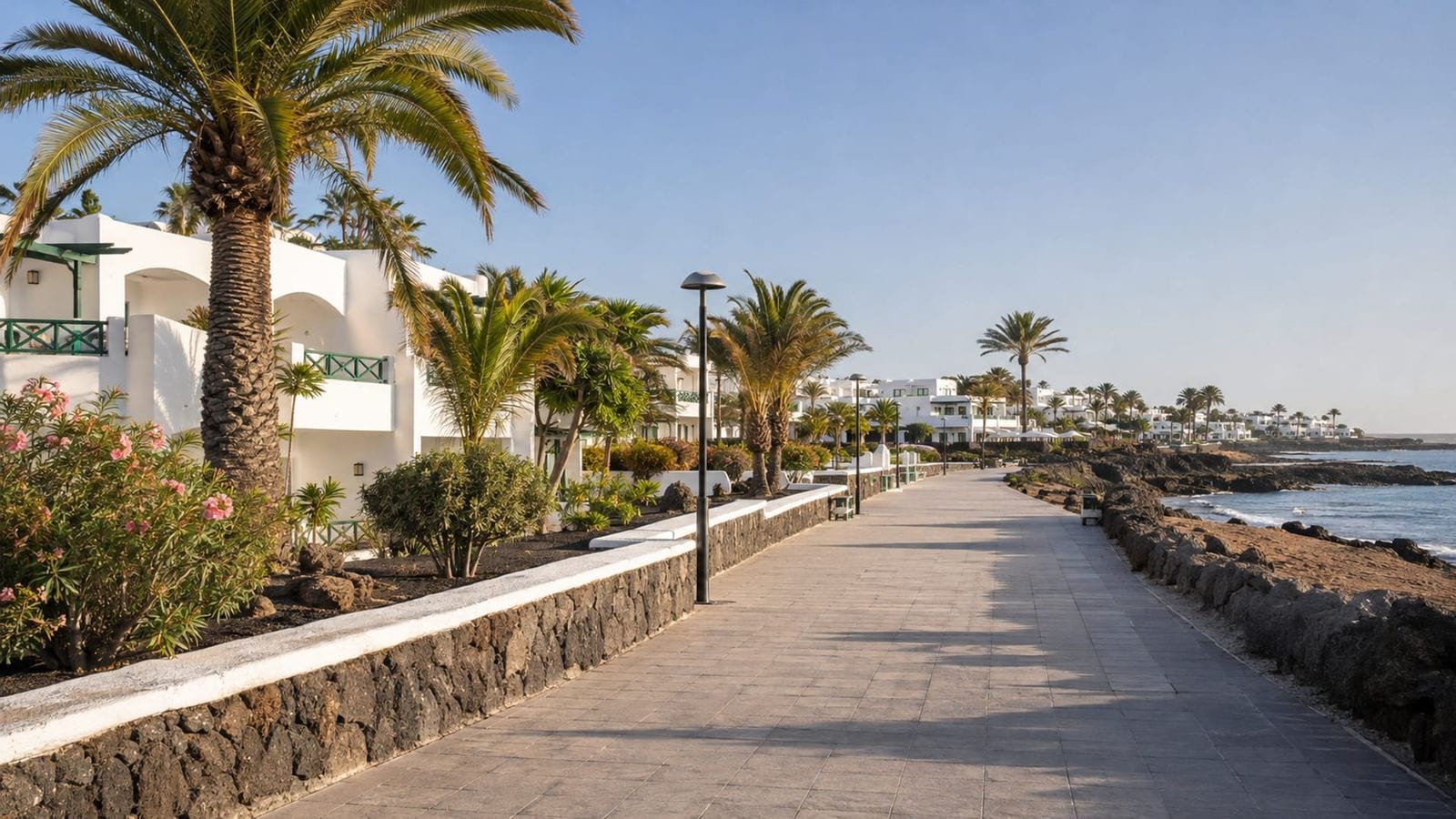
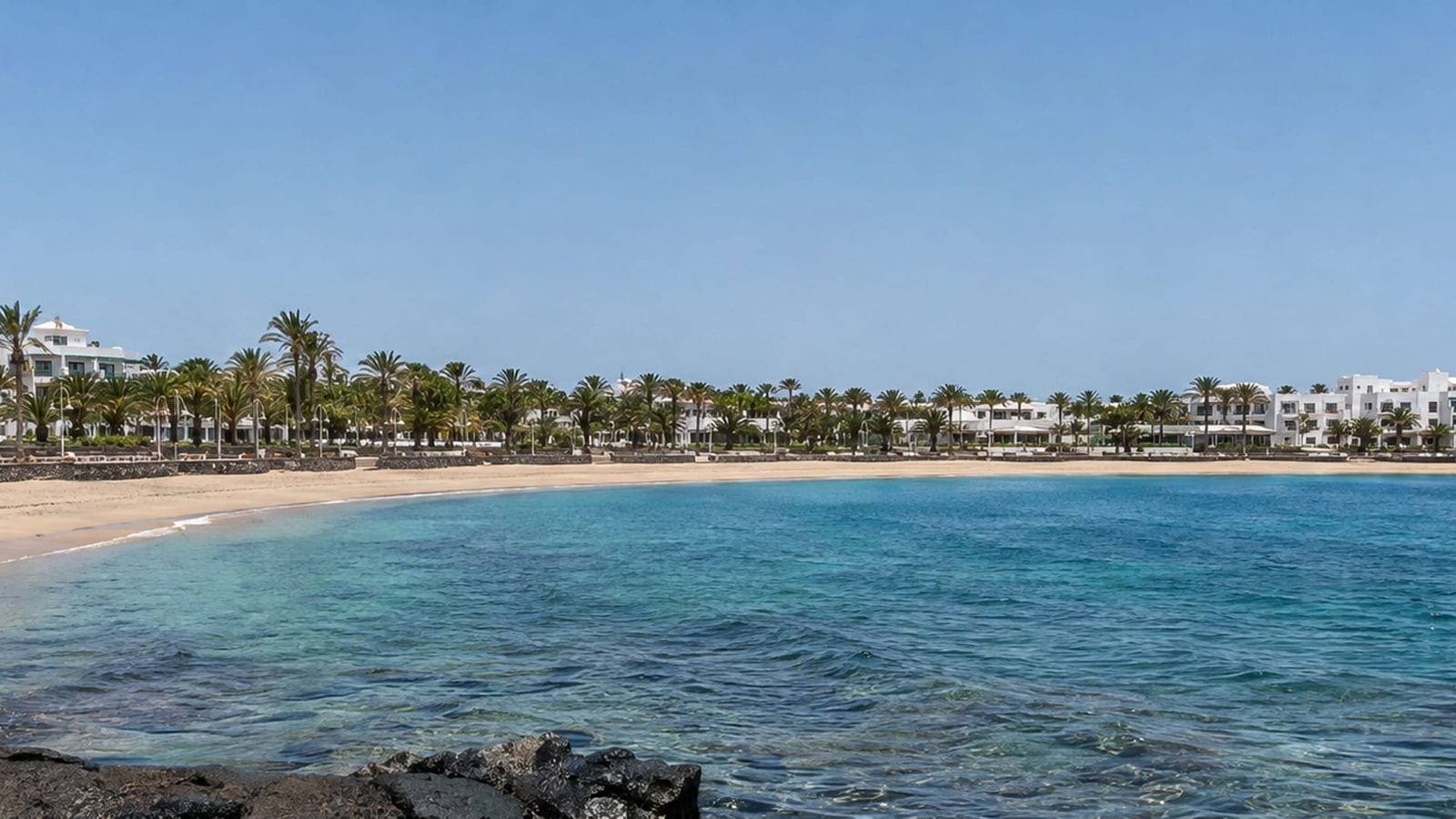
Costa Teguise is a purpose-built coastal resort with sandy beaches, apartment complexes, and hotels spread along the shore. Its waterfront paths and concentration of restaurants make it appealing for beach vacations, while the exposed coastline attracts windsurfers and brings frequent breezes.
Best for: Beach vacations, windsurfing, and waterfront walking
What to expect: Beachfront restaurants and vacation apartments shape a resort atmosphere with plenty of families.
Hotel prices: Budget €110 to €230 ($125 to $265) nightly for a well-rated hotel.
Distance to major sights: From hotels near Playa de las Cucharas, the beach is a 5 to 15-minute walk.
Quietness: Beach activity fills the daytime; evenings are calmer away from restaurant clusters.
Main trade-off: Wind can make beach lounging less comfortable, particularly along exposed stretches.
Good to know: Compare the hotel’s walking distance to Playa de las Cucharas; properties spread well beyond the beachfront.
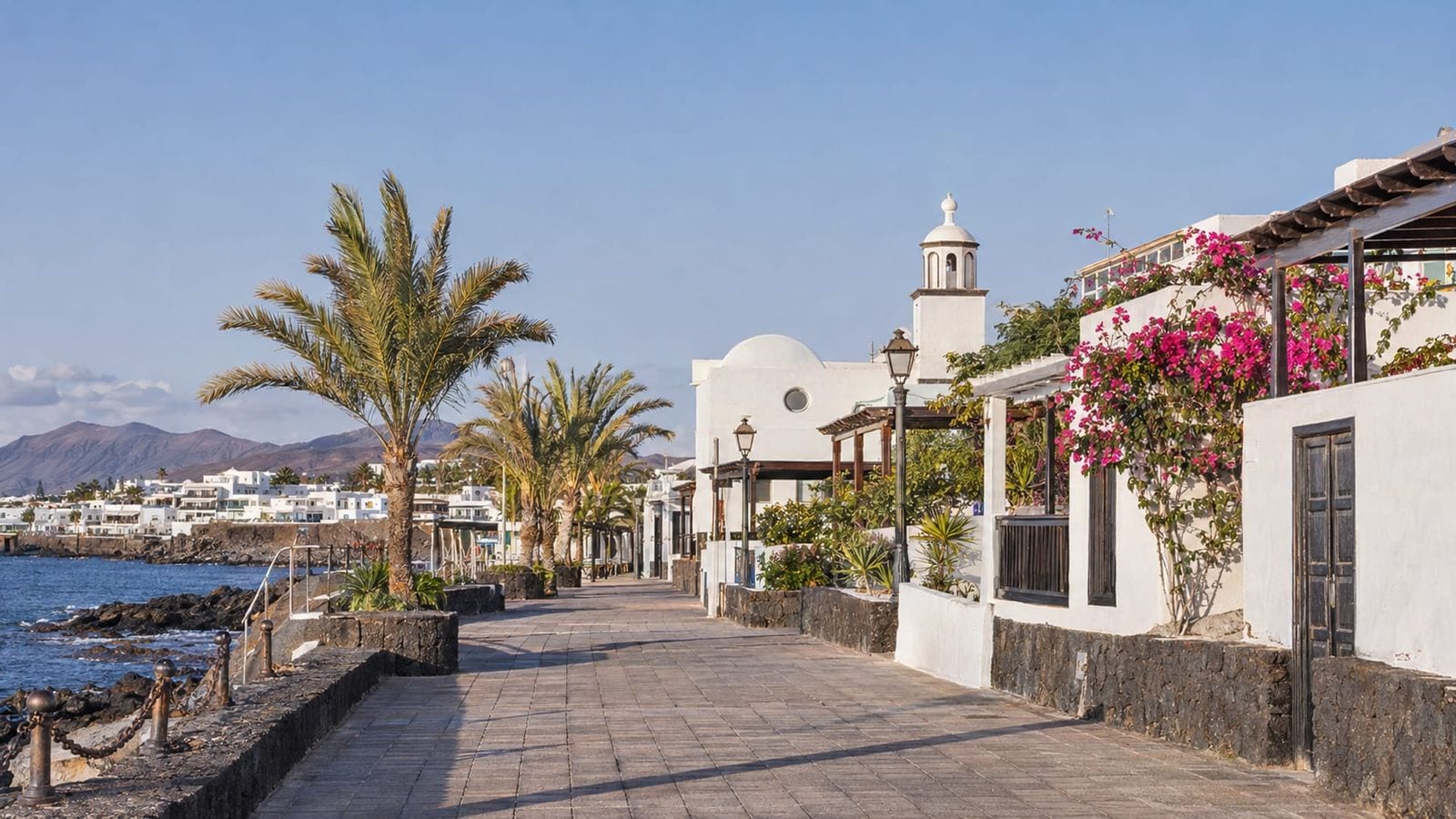
Puerto del Carmen stretches along Lanzarote’s southeastern coast, combining long sandy beaches with a dense choice of hotels and apartments. Travelers stay for swimming, waterfront dining, and evening entertainment, with enough restaurants nearby to spend several days without needing a car.
Best for: Swimming, restaurant choice, and evening entertainment
What to expect: The beachfront draws sunbathers by day and diners and bar patrons after dark.
Hotel prices: A well-rated hotel generally costs €120 to €250 ($140 to $290) per night.
Distance to major sights: Accommodation near Playa Grande is a 5 to 15-minute walk from the beach.
Quietness: Beach roads stay active during the day; bars extend the noise into the evening in central stretches.
Main trade-off: Some inland accommodation requires an uphill walk back from the waterfront.
Good to know: For fewer slopes, choose accommodation close to the beachfront and confirm whether its entrance requires stairs.
Less convenient for beach vacations: Argana Alta is inland, Maneje has fewer visitor amenities than the coastal resorts, and Argana Baja has industrial premises instead of a resort beachfront.
Hotel deals
How to get around Lanzarote efficiently
Island buses connect Arrecife with Lanzarote Airport (ACE) and coastal resorts, while taxis and waterfront walks cover shorter journeys.

Taxi
for convenience or late hours
From Lanzarote Airport (ACE), metered taxis reach Arrecife in about 10 to 15 minutes for €15 to €25 ($17 to $28). Use the terminal taxi rank; night and holiday supplements increase fares. Taxis suit late arrivals and trips with luggage.

Bus and tram
for convenience
Bus 22 links Lanzarote Airport (ACE) with Arrecife on weekdays; bus 23 covers weekends and public holidays. Allow about 15 to 25 minutes and €1 to €3 ($1 to $3) each way. These buses suit daytime airport trips with light luggage.

Walking
for short central distances
Between Charco de San Ginés and Playa del Reducto, Arrecife’s waterfront offers a free walk of about 20 to 30 minutes. Follow the seafront for short trips between the lagoon, downtown shops, and the beach; use buses for journeys between towns.
*Prices are based on rates updated as of November 2026 and may change at the time of travel.
Choose buses for daytime journeys between Arrecife and the resorts, taxis for airport luggage or late arrivals, and walking for Arrecife’s waterfront.
Iconic landmarks
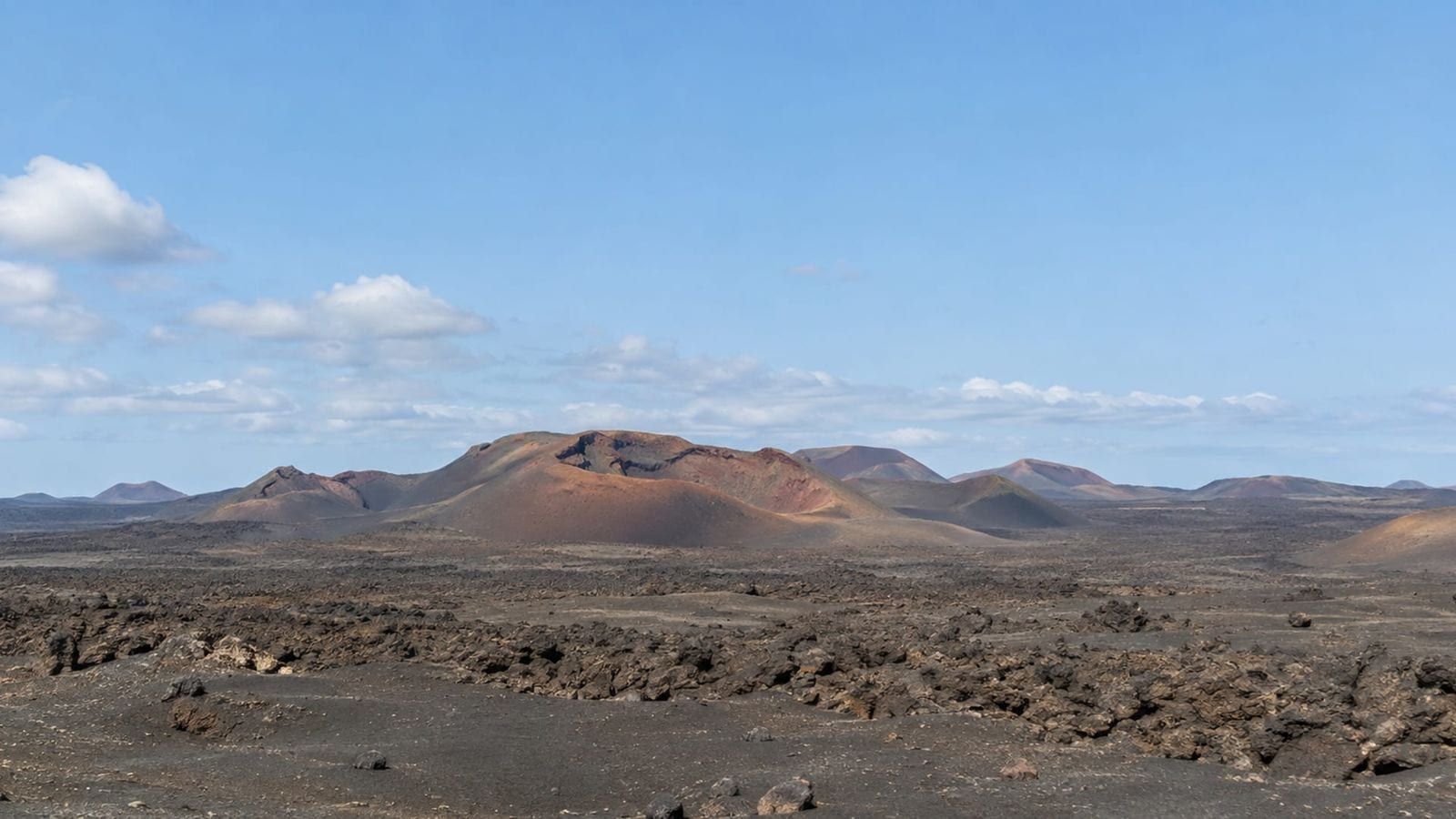
Timanfaya National Park
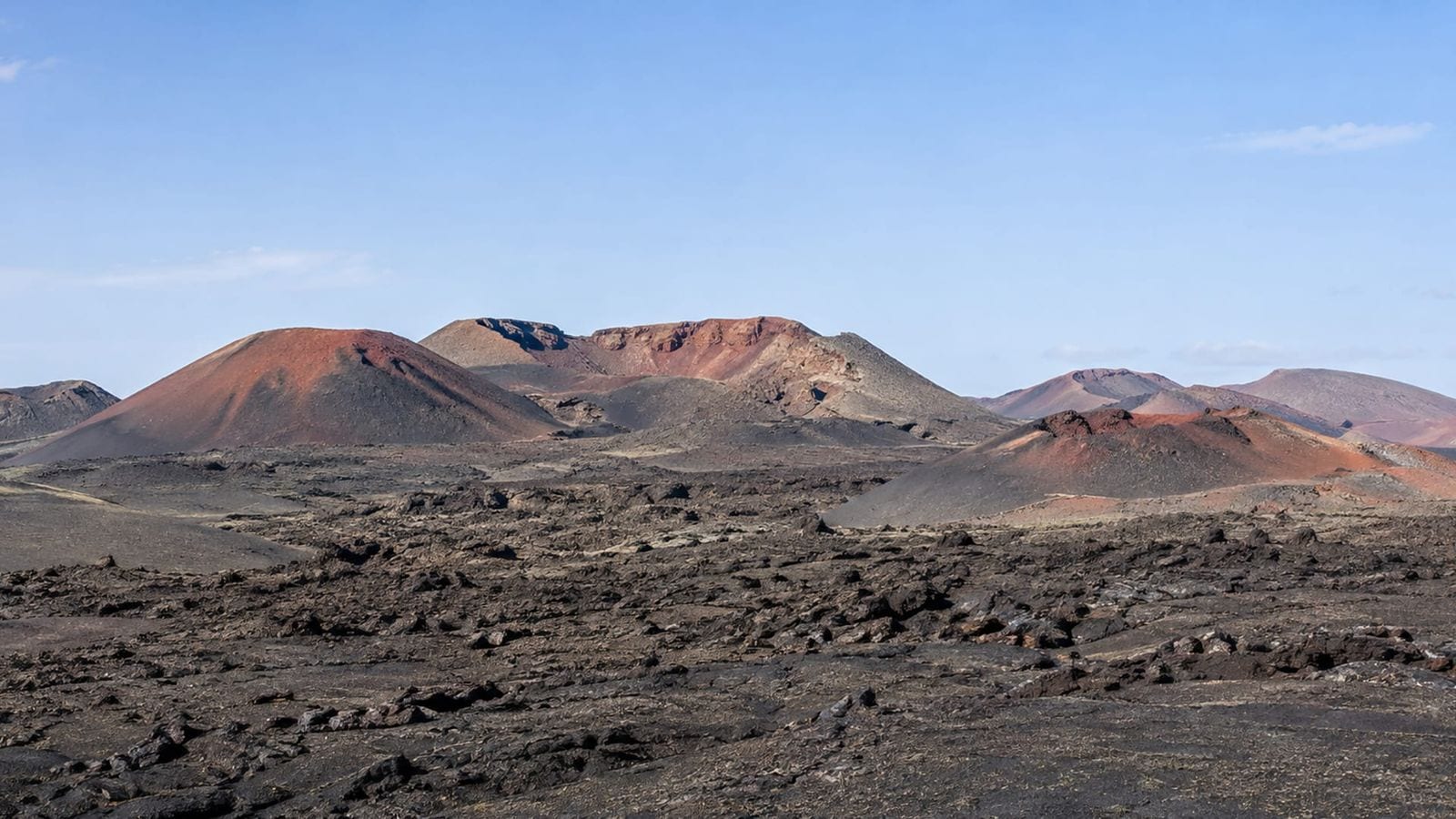
Vast lava fields and rust-red volcanic cones define Timanfaya National Park, where eruptions transformed Lanzarote in the 18th century. The included bus circuit follows the Volcano Route, while geothermal demonstrations reveal heat below ground.
Time needed: About 2 to 3 hours
Entry: Expensive: includes the Volcano Route bus circuit and geothermal demonstrations
Tip: Arrive at the entrance before 10 am to reduce time in the vehicle queue.
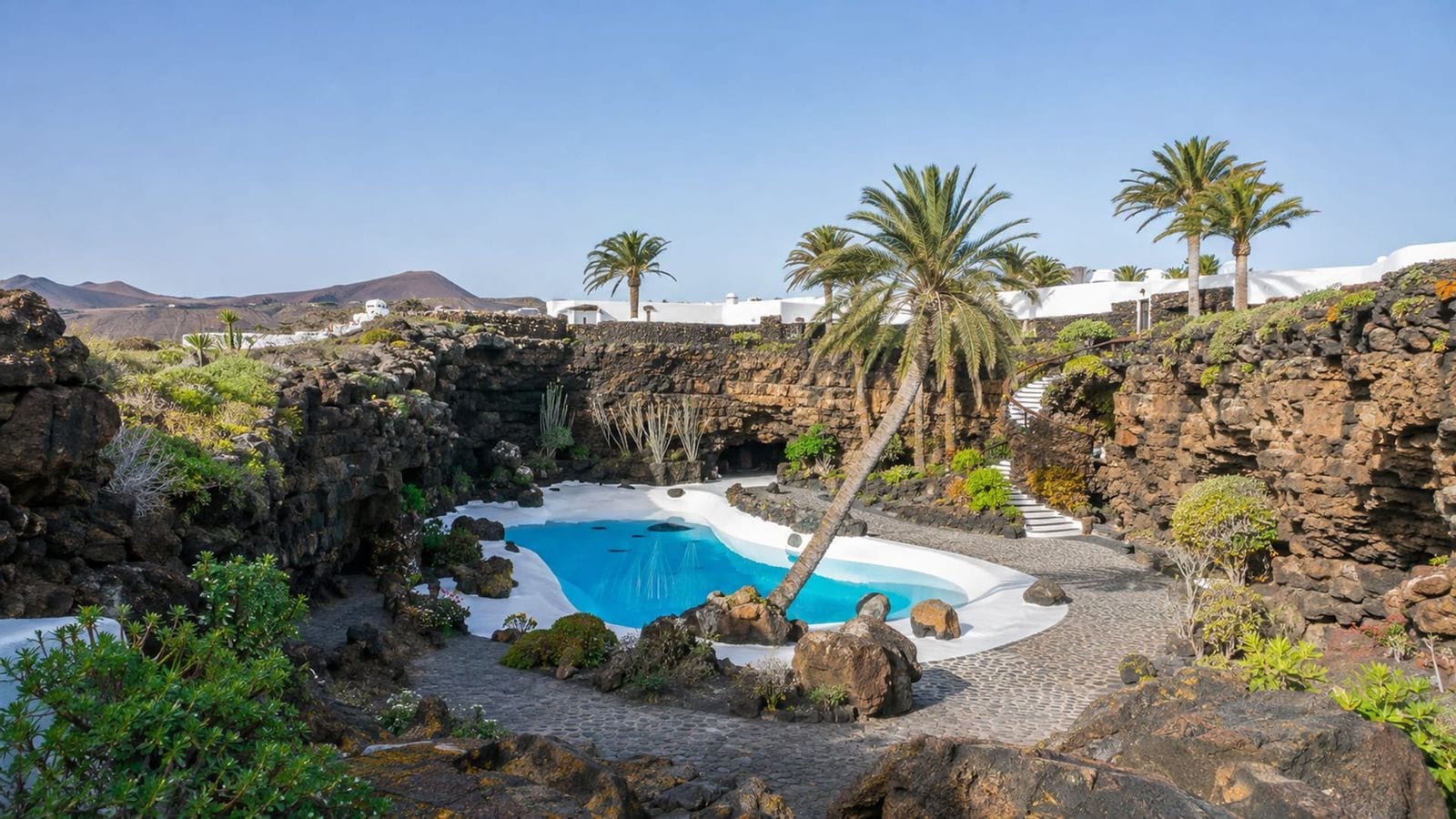
Jameos del Agua
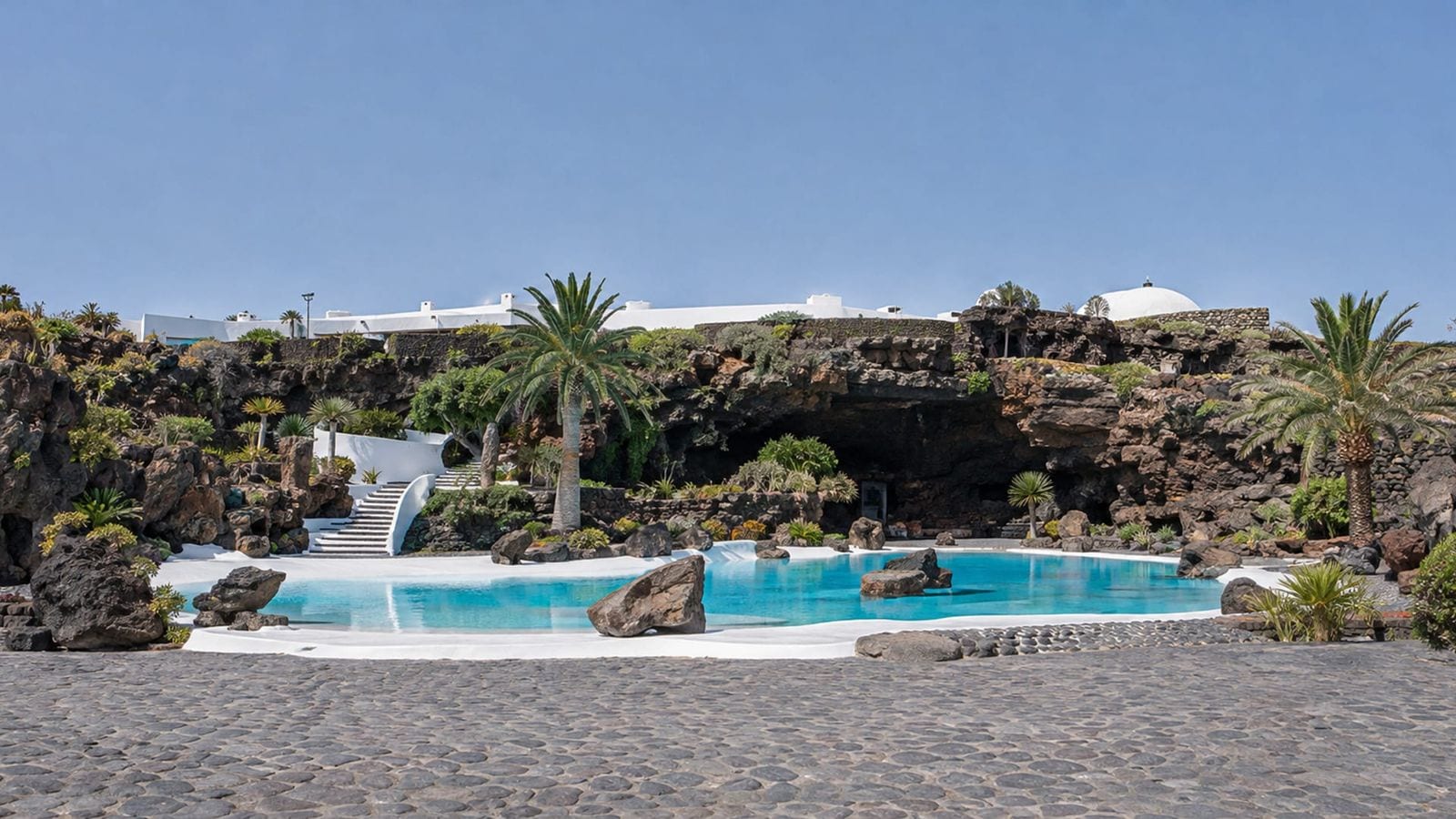
Inside a lava tube, César Manrique paired volcanic rock with white terraces, gardens, and a turquoise pool. Jameos del Agua also shelters a saltwater lagoon inhabited by tiny blind white crabs, one of Lanzarote’s distinctive natural spectacles.
Time needed: About 1 to 2 hours
Entry: Expensive: includes access to the lava tube, lagoon, and gardens
Tip: Keep coins out of the lagoon: dissolved metals threaten its white crabs.
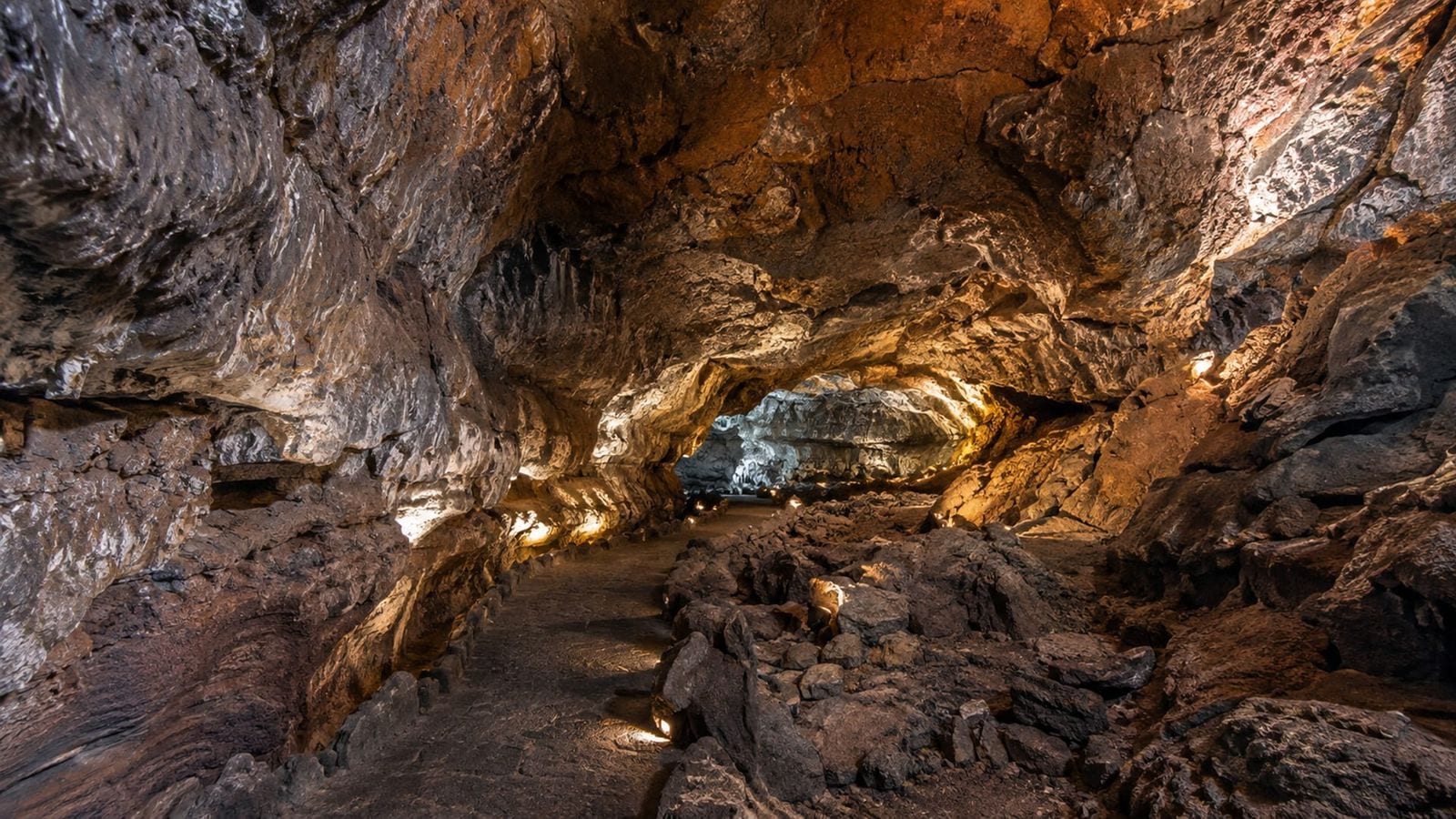
Cueva de los Verdes
A guided underground route threads through Cueva de los Verdes, part of the lava tube formed by La Corona volcano. Lighting designed by artist Jesús Soto reveals folded rock, cavernous chambers, and the changing colors of the volcanic walls.
Time needed: About 1 to 2 hours
Entry: Moderately priced: includes a guided tour through the lava tube
Tip: Choose closed shoes for the cave’s uneven steps and low, narrow passages.
Overlooked sites worth visiting

Parque Temático
Parque Temático pairs seafront paths with outdoor sculptures and a skate park. This waterfront park offers a quieter stop for Atlantic views, with space to watch local skaters practice.
Time needed: About 30 to 45 minutes
Entry: Free to access
Tip: Follow the waterfront path west for views toward the airport.

Museo Aeronáutico del Aeropuerto de Lanzarote
Museo Aeronáutico del Aeropuerto de Lanzarote traces the island’s aviation history inside the former passenger terminal. Historic photographs and equipment recall the airport’s years.
Time needed: About 45 minutes to 1 hour
Entry: Free: aviation exhibits in the former passenger terminal
Tip: Allow extra time to find the former terminal, separate from departures.
Traditional food
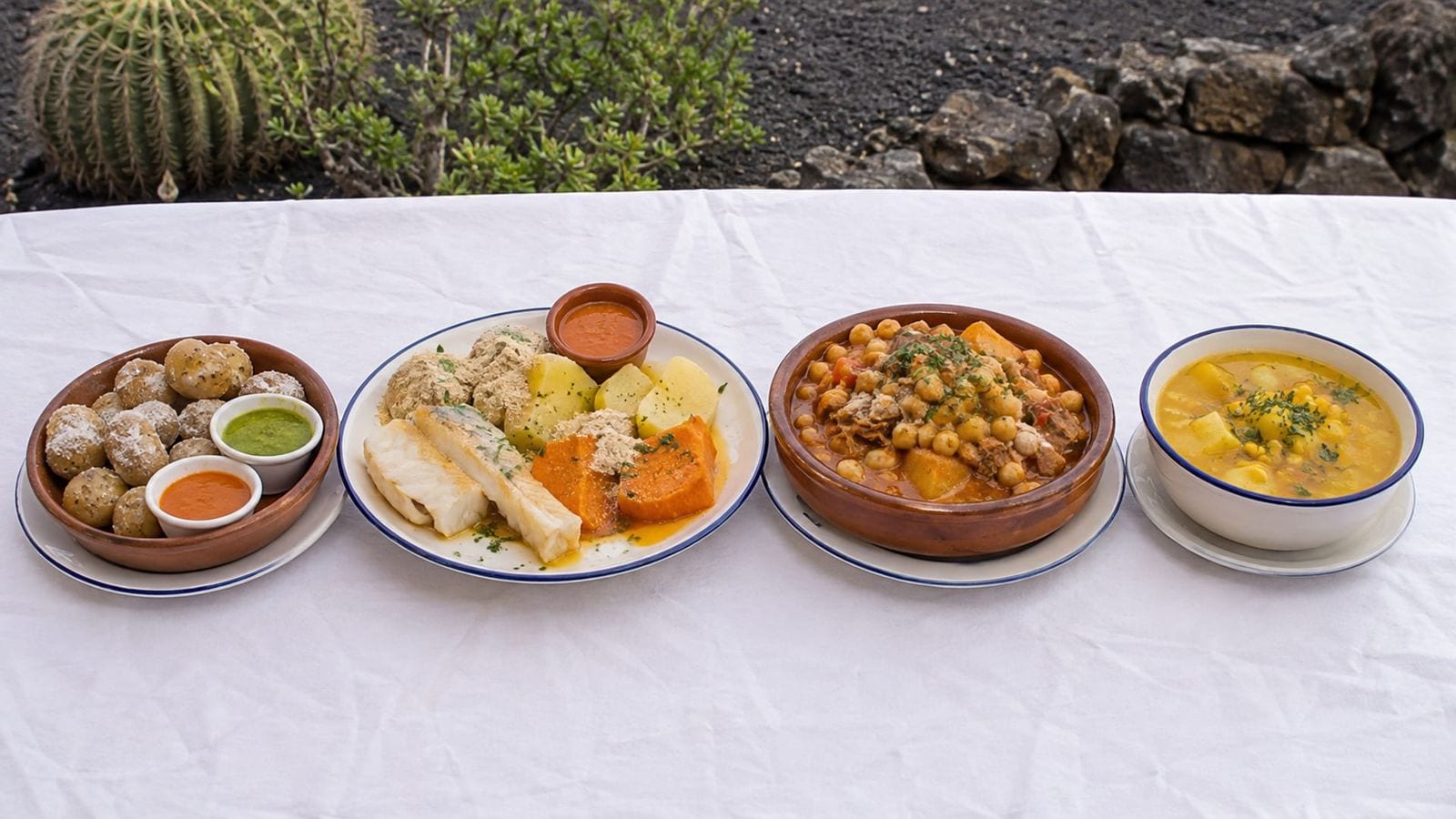
Lanzarote’s cooking draws on potatoes, salted fish, chickpeas, and corn. Papas arrugadas bring salty skins and peppery sauces, while fish dishes and slow-cooked stews anchor traditional lunches.
Papas arrugadas
Small potatoes cook in heavily salted water until their skins wrinkle, then arrive with red or green pepper sauces. Try papas arrugadas at El Risco, where they accompany the restaurant’s fish-focused cooking.
Sancocho canario
Salted fish joins potatoes and sweet potatoes in this traditional dish, usually accompanied by pepper sauce and toasted grain flour. Casa Torano serves sancocho canario as part of its Canarian cooking.
Ropa vieja
Chickpeas, shredded meat, potatoes, and vegetables come together in a substantial stew, with garlic and spices seasoning the sauce. Look for ropa vieja among the traditional dishes at La Era in Lanzarote.
Caldo de millo
Corn kernels and potatoes give this traditional broth its sweetness and substance, with onion adding savory depth. Try caldo de millo at the restaurant within Monumento al Campesino, devoted to island cooking.
Best time to visit Lanzarote
Lanzarote stays mild through winter, while summer brings stronger trade winds and autumn offers warmer seas for swimming.
Best for: Volcanic excursions and coastal walks before the summer beach crowds grow
What you get: Expect 59°F to 77°F (15°C to 25°C), with mild afternoons for Timanfaya National Park; Easter brings a noticeable increase in vacation crowds.
Trade-offs: Atlantic water can feel cool, and exposed coastal paths catch the wind.
Best for: Long beach afternoons in Puerto del Carmen and windsurfing in Costa Teguise
What you get: Temperatures reach 66°F to 84°F (19°C to 29°C), and school vacations bring busy beaches and more families to the island’s coastal resorts.
Trade-offs: Trade winds affect exposed beaches, while lava landscapes offer little shade.
Best for: Swimming in warmer seas and pairing beach afternoons with volcanic sights
What you get: Days bring 63°F to 84°F (17°C to 29°C), with warm seas after summer; September generally has fewer families than the peak school vacations.
Trade-offs: Rain becomes more likely toward November, and daylight shortens.
Best for: Mild daytime sightseeing and waterfront lunches during a winter island stay
What you get: Winter brings 57°F to 72°F (14°C to 22°C), attracting travelers seeking mild weather; Christmas and New Year bring busier resort periods.
Trade-offs: Cool evenings and Atlantic winds make long beach days less comfortable.
A realistic 5-day plan in Lanzarote
This five-day sequence starts in Arrecife, pairs Timanfaya National Park with a beach afternoon, then turns north for lava caves before returning to the coast and the airport’s aviation museum.
From Lanzarote Airport (ACE), a taxi reaches your hotel in Arrecife in about 10 to 15 minutes; budget €15 to €25 ($17 to $29) and confirm the meter before departure. Settle in, then head to Naia for a light dinner overlooking the waterfront, leaving the island’s longer excursions for tomorrow.
Timanfaya National Park fills the morning with its Volcano Route bus circuit and geothermal demonstrations; reach the entrance before 10 am and allow 3 hours. Drive about 30 minutes southeast to Puerto del Carmen for lunch and an afternoon on Playa Grande, pairing volcanic scenery with a long beach stop.
Beneath northern Lanzarote, Cueva de los Verdes reveals volcanic chambers on a guided tour; allow 1 to 2 hours for the visit. A 5-minute drive brings you to Jameos del Agua for another 2 hours among lava formations, gardens, and the lagoon’s tiny white crabs. Keep coins out of the water.
Begin beside the windsurfers at Playa de las Cucharas in Costa Teguise, allowing the morning for the beach and waterfront paths. Drive about 20 minutes to Parque Temático for its sculptures and coastal views, then walk 10 minutes east to Playa del Reducto for lunch and an afternoon beside the water.
On the route from your hotel to Lanzarote Airport (ACE), Museo Aeronáutico del Aeropuerto de Lanzarote offers a final look at the island’s aviation history. The former passenger terminal opens Monday to Saturday, 10 am to 2 pm; allow 45 minutes, then take a taxi to departures before your flight’s check-in deadline.
Business-class flights from the US to Lanzarote
Flights from New York and Los Angeles reach Lanzarote (ACE) through Madrid (MAD), with different journey times and round-trip fare ranges.
From New York, Iberia connects to Lanzarote (ACE) through Madrid (MAD), with a total journey time of 12 to 16 hours, including the connection. Budget $3,500 to $7,000 round trip; your travel dates affect the fare, while the connection length influences the total travel time.
Reaching Lanzarote (ACE) from Los Angeles involves a connection at Madrid (MAD) on Iberia itineraries. Round-trip fares range from $4,000 to $8,000, with the complete journey taking 16 to 21 hours. Departure dates and the length of the Madrid connection affect your choices.
Lanzarote feels different when you slow down
A Lanzarote trip can connect the lava fields of Timanfaya National Park with an afternoon on Playa Grande, then give the northern caves a separate day. Arrecife adds waterfront walks between excursions, while island buses link the capital with coastal resorts and taxis cover airport transfers. Leave room for papas arrugadas and a long lunch beside the Atlantic. Ask AranGrant experts to shape your flights around five days of volcanic sights and time on Lanzarote’s coast







