

Chapters:

Need help with your trip?
Our support team is available 24/7. Request a callback or call us directly at (833) 619-0908
Kathmandu is Nepal’s capital and the largest city in the Kathmandu Valley. For more than 2,000 years, traders, rulers, pilgrims, and craftspeople have shaped the city, leaving behind Newar courtyards, Hindu shrines, Buddhist monasteries, old markets, and royal squares.
This guide explains where to stay, how to get around, what to eat, when to visit, and how to plan five days in Kathmandu. It also covers the city’s main landmarks and business-class flight options from the US.
Useful things to know

Main language(s): Nepali
Namaste (nah-mah-steh) – Hello
Kripaya (kree-pah-yah) – Please
Dhanyabad (dhan-ya-baad) – Thank you
Tapai angreji bolnuhunchha? (tah-pie un-greh-jee bol-noo-hun-chha) – Do you speak English?
Yo kati ho? (yo ka-tee ho) – How much does it cost?

Currency: Nepalese rupee (NPR, Rs)

Cash and cards: Cards are accepted at many hotels, larger shops, and restaurants, but carry NPR 2,000 to NPR 3,000 ($13 to $20) for taxis and small purchases.

Tipping: Check whether the restaurant has added a service charge to your bill. If it has not, leave 5% to 10% for good service. You can round up smaller cash payments.

Traditional food: Momo, dal bhat, sel roti, chatamari

Water and coffee costs: Water costs NPR 30 to NPR 80 ($0.20 to $0.50), while an espresso at a cafe costs NPR 250 to NPR 400 ($1.60 to $2.60).

Taxis and ride apps: Pathao and inDrive operate here. When using a street taxi, agree on the price before starting the ride.

Plug and voltage: Type C/D/M socket, 230V

Dining and shop opening hours: Many cafes start serving breakfast by 7:00 am. Restaurants in Thamel and other tourist areas often serve food into the evening, while smaller local restaurants may close earlier. Most shops open between 9 am and 10 am.

Emergency number: Dial 100 for police, 102 for ambulance, 101 for the fire department, or 1144 for the Tourist Police.
Where to stay in Kathmandu
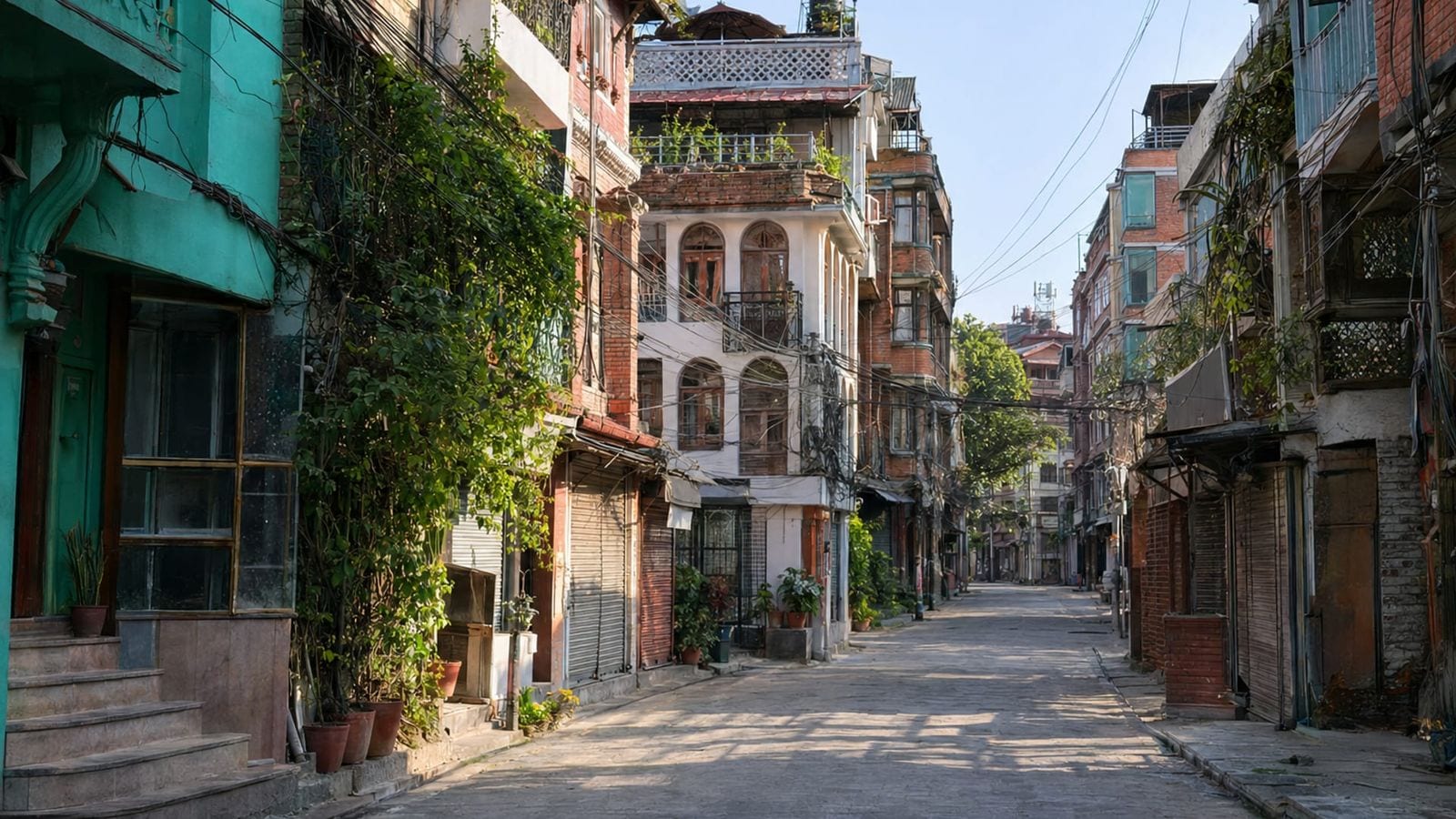
Thamel has narrow streets lined with hotels, restaurants, bars, trekking shops, souvenir stores, and travel agencies. The busiest part stretches between Tridevi Marg and the streets leading toward Durbar Marg.
Best for: First-time visits, nightlife, dining, and easy access to tours
What to expect: Narrow streets, heavy foot traffic, persistent sales pitches, and late evening activity, with the busiest blocks around restaurants and trekking shops.
Hotel prices: Usually about $30 to $120 per night for well-rated stays
Distance to major sights: About 20 to 25 minutes on foot to Kathmandu Durbar Square; about 25 to 35 minutes by car to Swayambhunath
Quietness: Busy all day and lively into the evening; quieter side lanes thin out after restaurant hours.
Main trade-off: You get the most choice for hotels and restaurants, but traffic, nightlife noise, and constant crowds can wear on light sleepers.
Good to know: Choose an upper-floor room or a hotel away from the main nightlife streets if you are sensitive to noise.
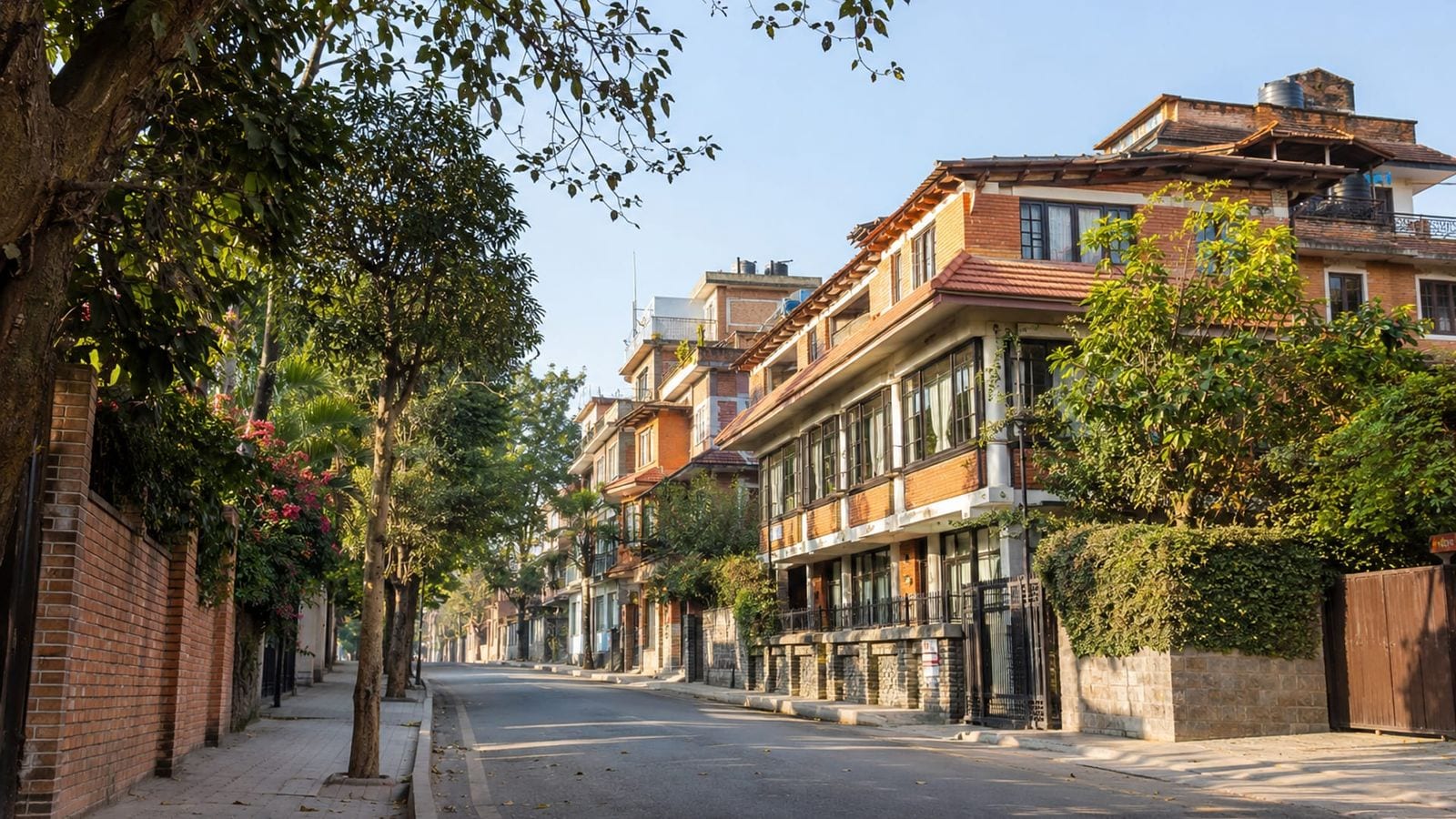
Jhamsikhel is a residential neighborhood in Lalitpur with cafes, restaurants, small hotels, apartment buildings, and quieter side streets. Patan Durbar Square, the Patan Museum, temples, and craft shops are a short drive away.
Best for: Dining, longer stays, and visitors who want a quieter base near Patan
What to expect: Mixed residential streets, local restaurants, and a steady but not overwhelming flow of diners and neighborhood traffic.
Hotel prices: Usually about $40 to $140 per night for well-rated stays
Distance to major sights: About 15 to 20 minutes by car to Patan Durbar Square; about 30 to 40 minutes by car to Kathmandu Durbar Square
Quietness: Quieter than central Kathmandu during the day and noticeably calmer after dinner, though main restaurant streets stay active at night.
Main trade-off: You will spend more time crossing the river for central sightseeing, and the best hotel options sit farther from the old city.
Good to know: Most evening dining is concentrated near Jhamsikhel Road and Sanepa, so check how far your hotel is from those streets before booking.
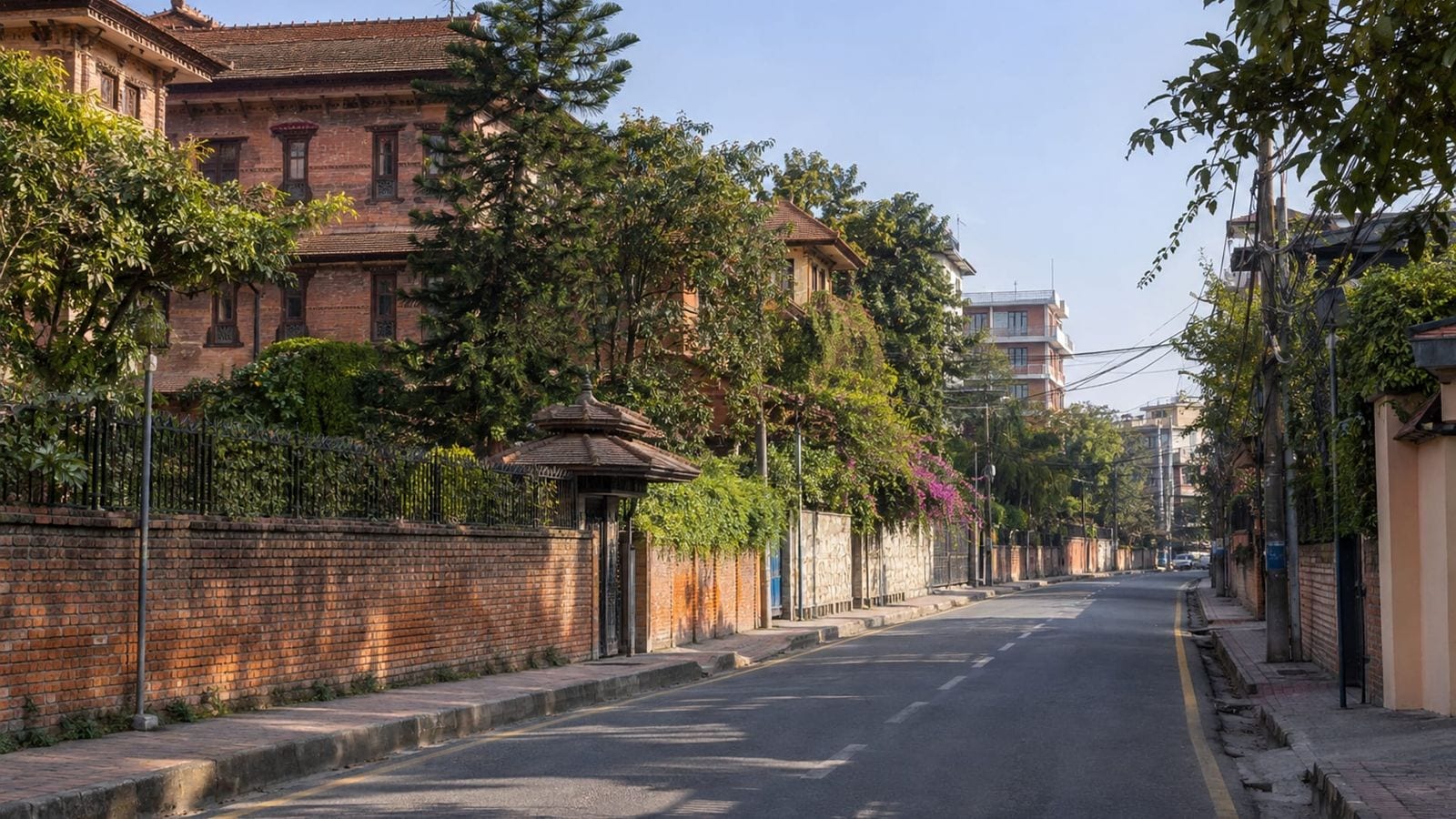
Lazimpat lies north of central Kathmandu. Its main street, the Lazimpat Road, has hotels, restaurants, offices, homes, and diplomatic buildings. The small streets behind it are mainly residential.
Best for: Business travel, embassy access, and travelers who want a central but calmer base
What to expect: Broad roads, steady traffic, and a more composed hotel strip than Thamel, with restaurant activity concentrated near the main junctions.
Hotel prices: Usually about $50 to $180 per night for well-rated stays
Distance to major sights: About 10 to 15 minutes by car to Kathmandu Durbar Square; about 20 to 30 minutes by car to Swayambhunath
Quietness: Quieter in the day than the tourist core, but traffic can build in the evening along the main road.
Main trade-off: You trade walkable nightlife for easier access to reliable taxis and a less chaotic street scene.
Good to know: Lazimpat has several full-service hotels with large rooms, elevators, and on-site facilities, which is more useful for longer stays than the small guesthouses found in older parts of Kathmandu.
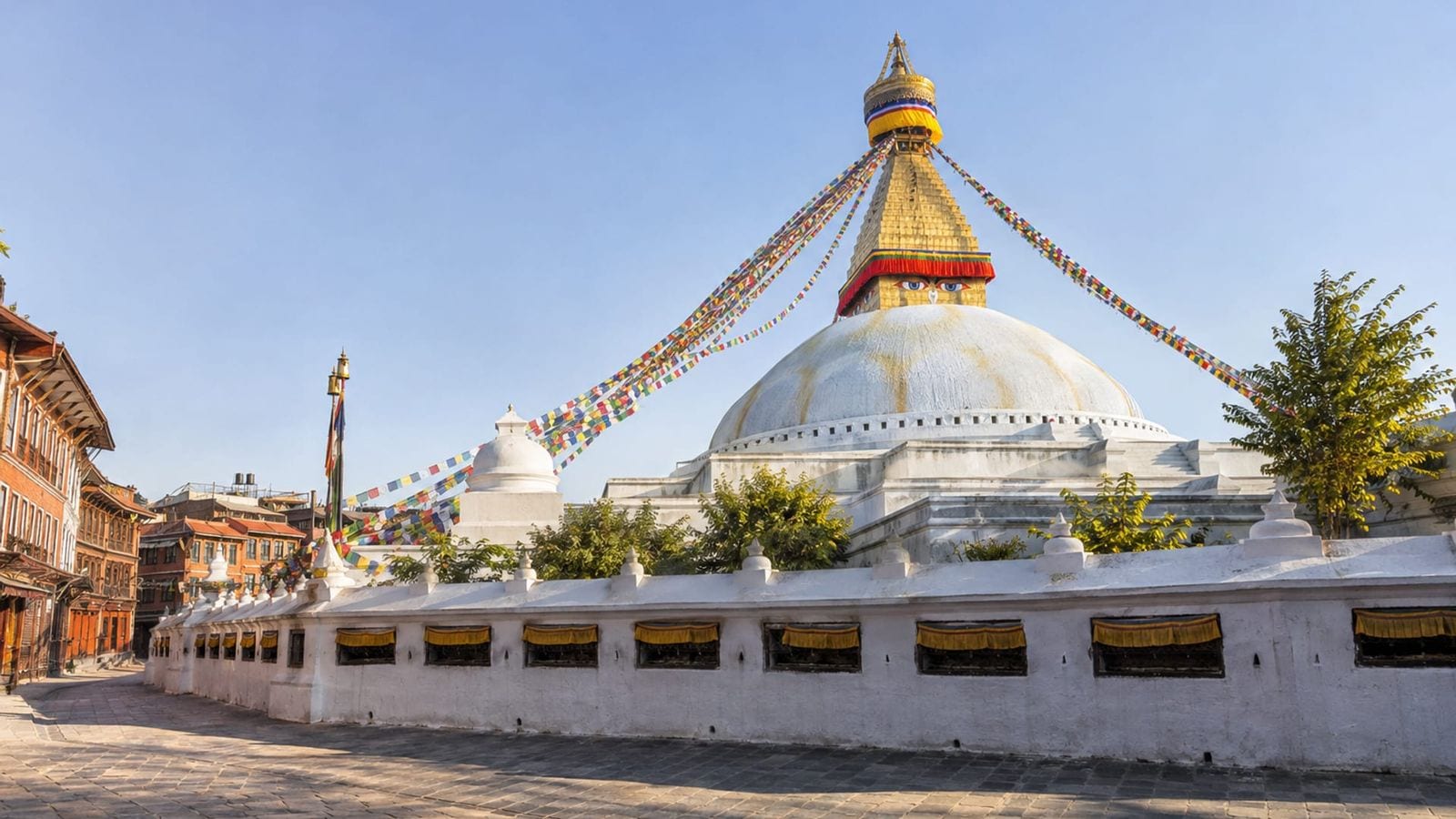
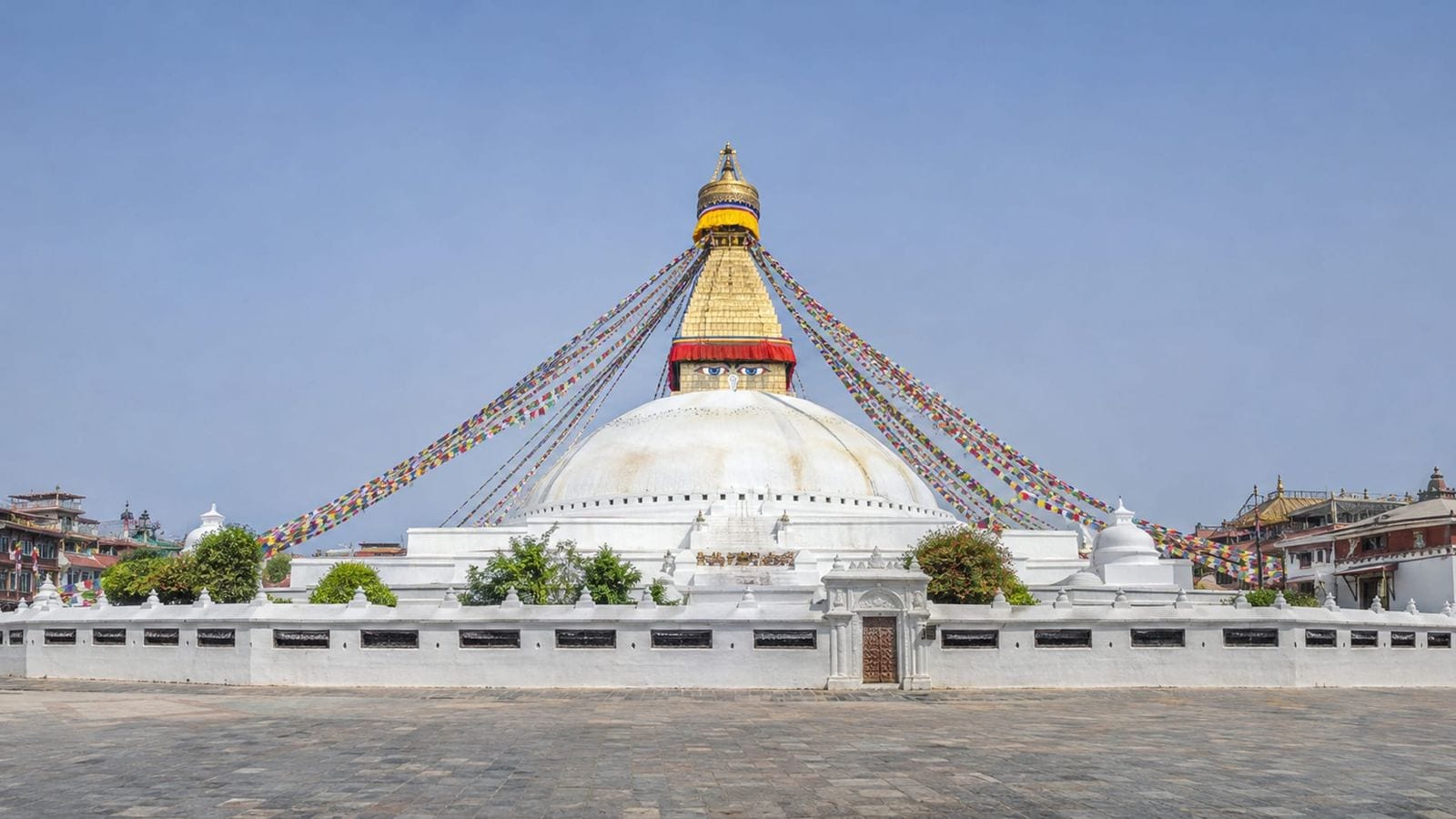
Boudhanath Stupa stands at the center of Boudha. Each morning and evening, pilgrims and local residents perform kora by walking clockwise around it. Monasteries, cafes, guesthouses, and Tibetan restaurants surround the square.
Best for: Monastery visits, contemplative walks, Tibetan food, and longer stays
What to expect: Pilgrims, monks, incense, prayer wheels, and a steady loop of visitors circling the stupa, with calmer side streets beyond the main ring road.
Hotel prices: Usually about $35 to $130 per night for well-rated stays
Distance to major sights: At the stupa itself; about 20 to 30 minutes by car to Kathmandu Durbar Square
Quietness: Calmer than central Kathmandu during the day, with gentle evening activity near the stupa and quieter lanes nearby after dark.
Main trade-off: It sits farther from the old city, so central sightseeing takes longer and traffic can be slow on cross-town trips.
Good to know: Many monasteries welcome visitors during the day, but some close their prayer halls during ceremonies or teaching sessions.
Avoid Gongabu and Balaju unless you have plans nearby. Both areas have fewer hotels and restaurants, and most major sights require longer taxi rides to reach them.
Hotel deals
How to get around Kathmandu efficiently
Kathmandu has no metro or tram system. Most visitors use taxis, ride-hailing apps, local buses, microbuses, tempos, and cycle rickshaws.

Taxi and rideshare services
for cross-city trips and airport transfers
Street taxis operate throughout Kathmandu, while Pathao and inDrive let you request a car through an app. Short trips cost NPR 600–NPR 1,200 ($4–$8), while longer journeys may cost NPR 1,200–NPR 2,300 ($8–$15). Tribhuvan International Airport (KTM) also has a taxi counter with fixed prices.

Bus, microbus, and tempo
for low-cost travel
Local buses, microbuses, Sajha Yatayat buses, and electric tempos connect the city with Patan, Bhaktapur, Boudha, and outer neighborhoods. Most fares are NPR 24–NPR 50 ($0.16–$0.33), depending on the distance. Pay on board in cash. Routes and stop names can be difficult to follow without local knowledge.

Cycle rickshaw
for short trips in the old city
Cycle rickshaws operate in Thamel, Asan, Indra Chowk, and the streets near Kathmandu Durbar Square. They suit short journeys through areas where cars move slowly or are restricted. Drivers usually quote a price before departure. A short ride often costs NPR 300–NPR 700 ($2–$5).
*Prices are based on rates updated as of July 2026 and may change at the time of travel.
Use taxis or ride-hailing apps for most cross-city trips, public transport when price is the main concern, and cycle rickshaws for short journeys through the old city.
Iconic landmarks
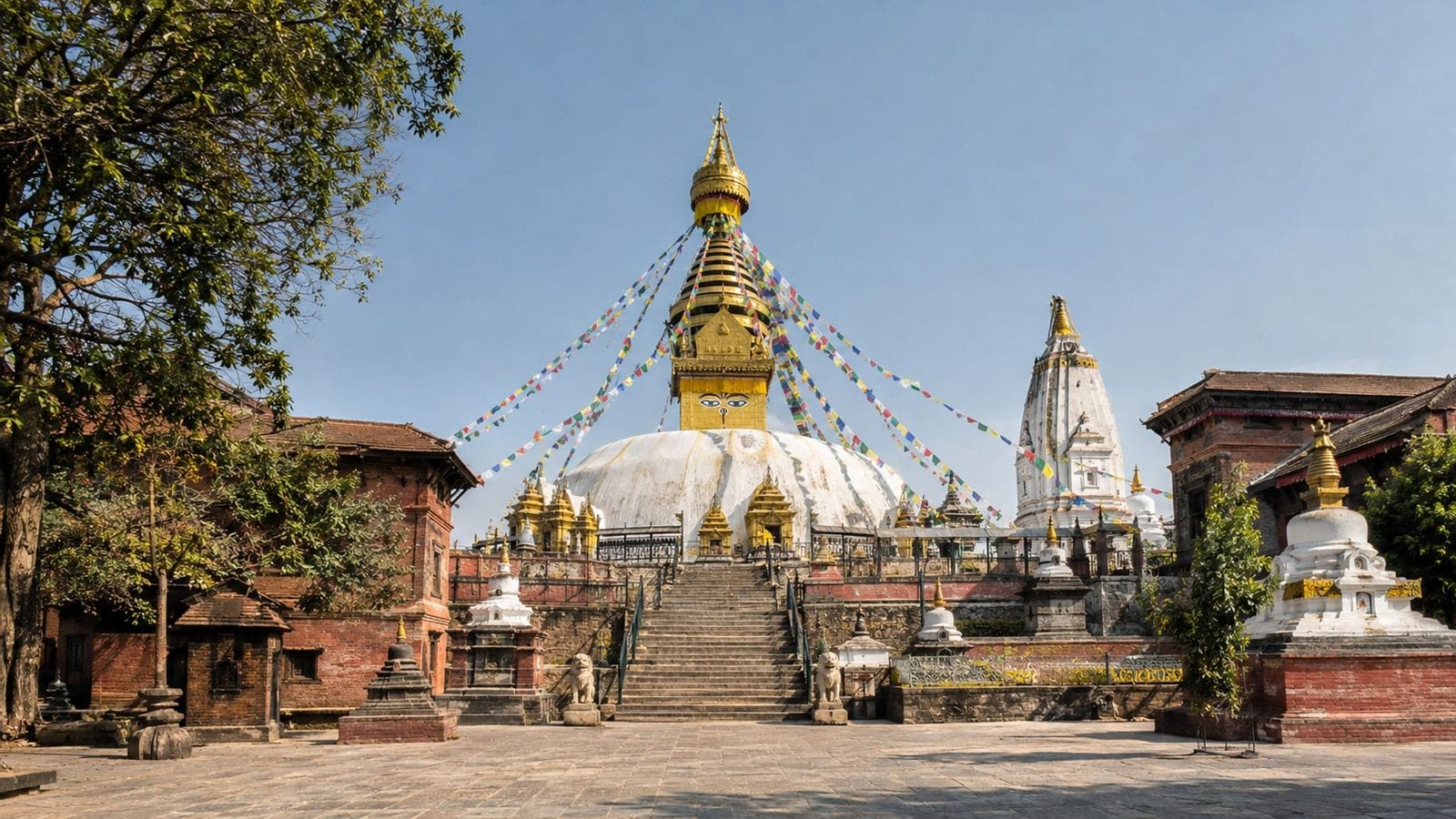
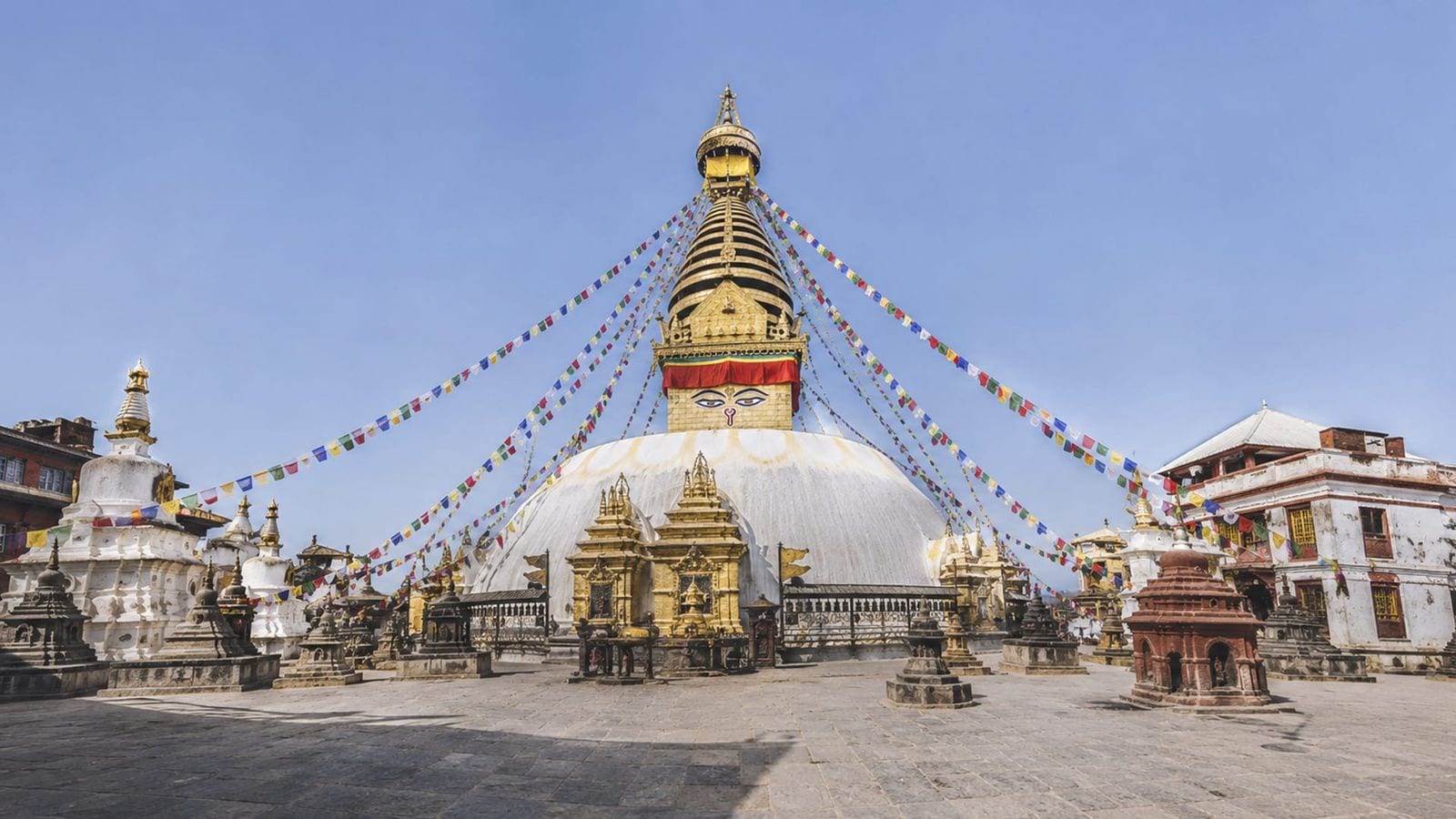
Swayambhunath Stupa
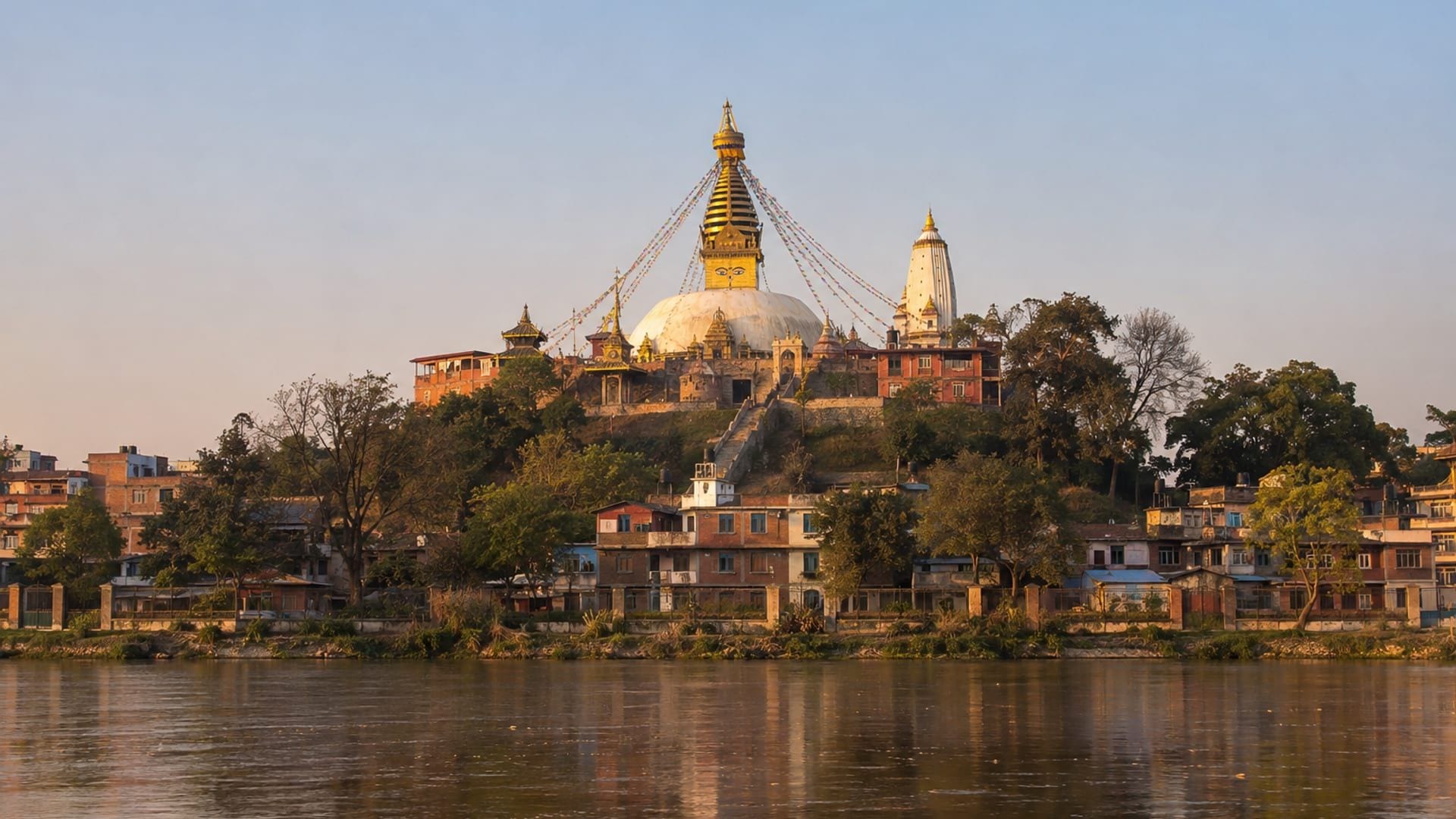
A white stupa stands on a hill above western Kathmandu, surrounded by shrines, prayer wheels, and prayer flags. Monkeys gather on the stairways, and the upper terrace has broad views across the valley.
Time needed: About 1 to 2 hours
Entry: Foreign visitors pay about $2 ($200 NPR) at the main gate; Nepali citizens and SAARC nationals pay less, and children under 10 enter free.
Tip: Visit early in the morning before the long eastern staircase becomes hot and crowded.
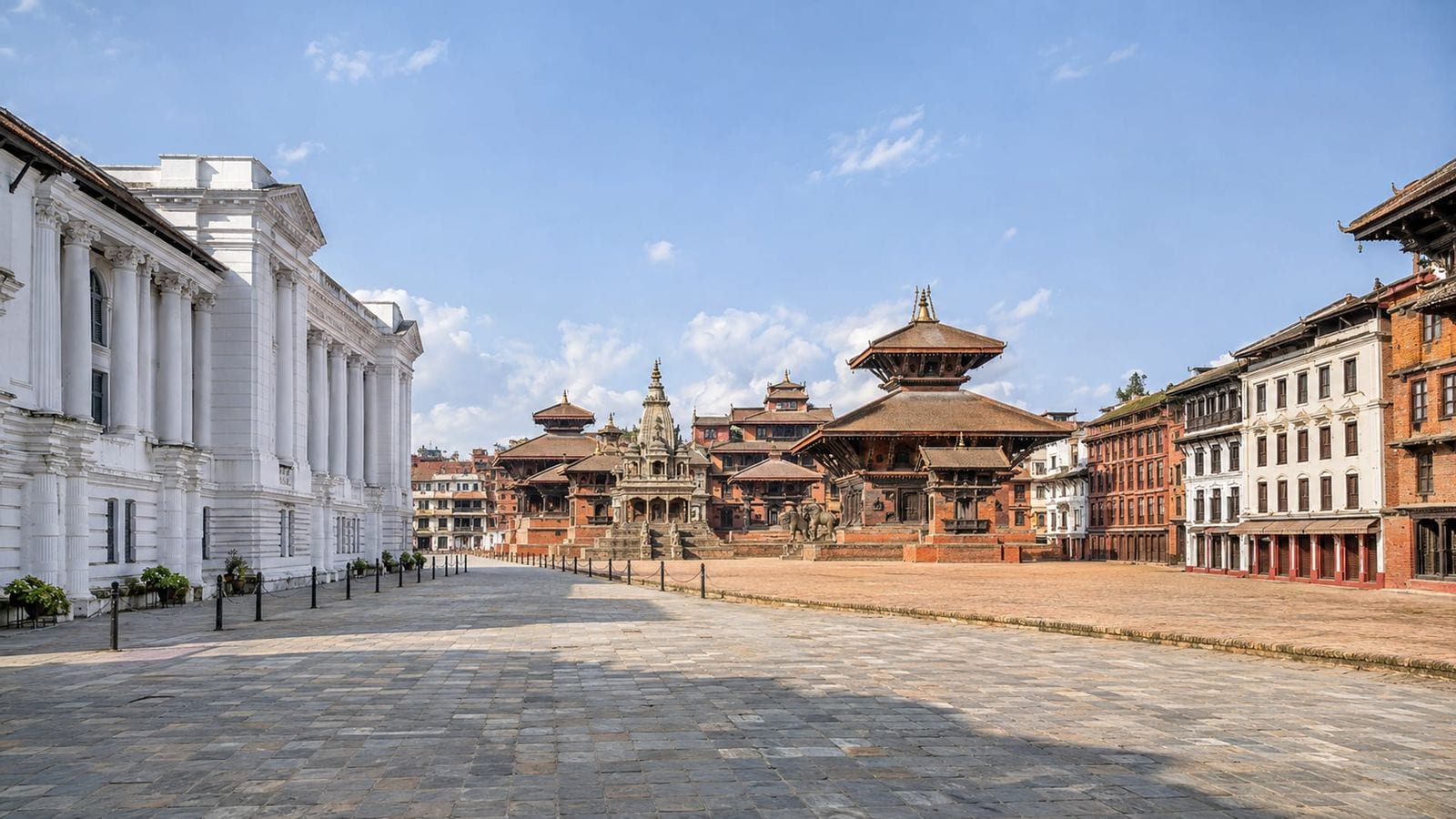
Kathmandu Durbar Square
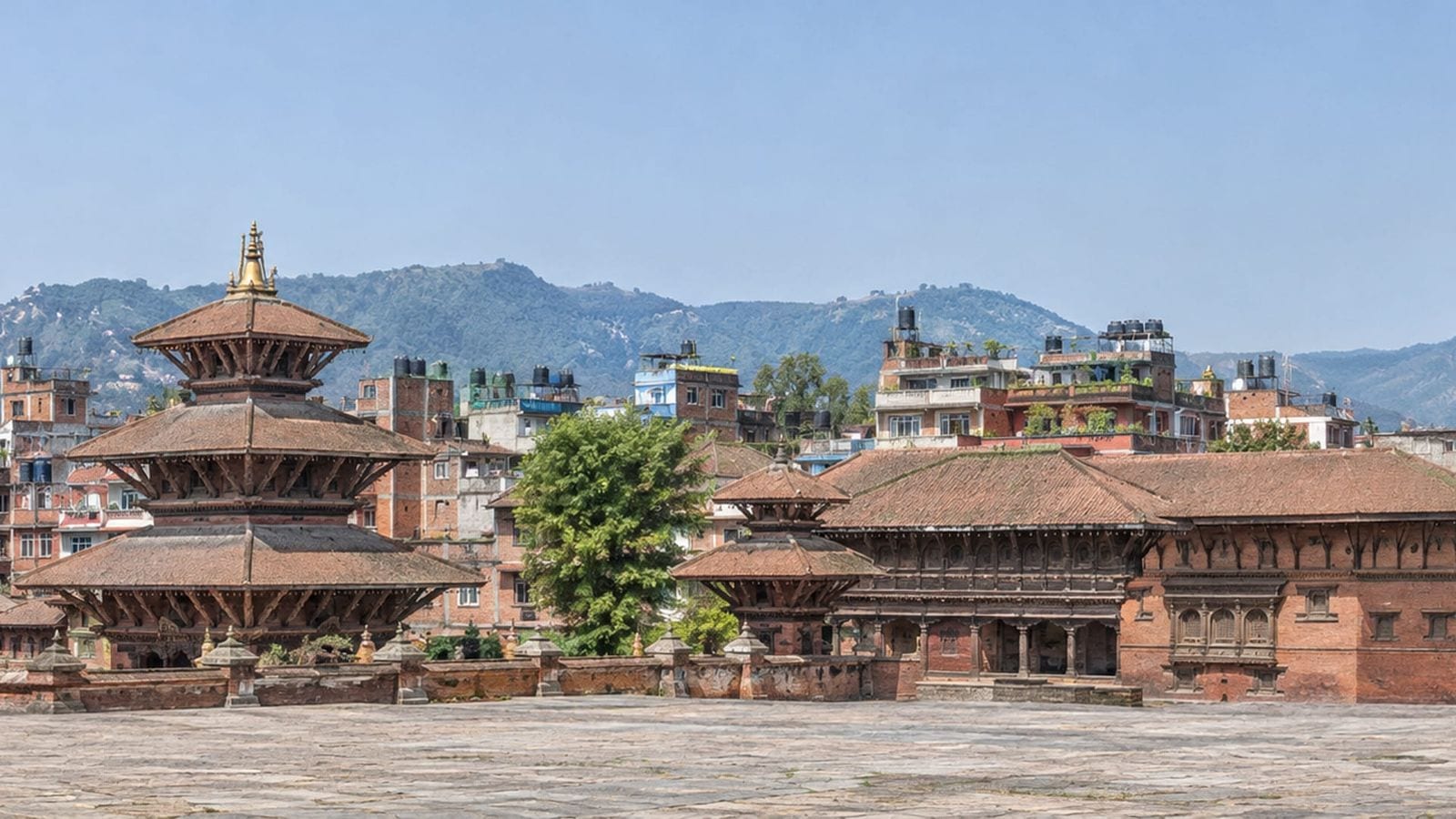
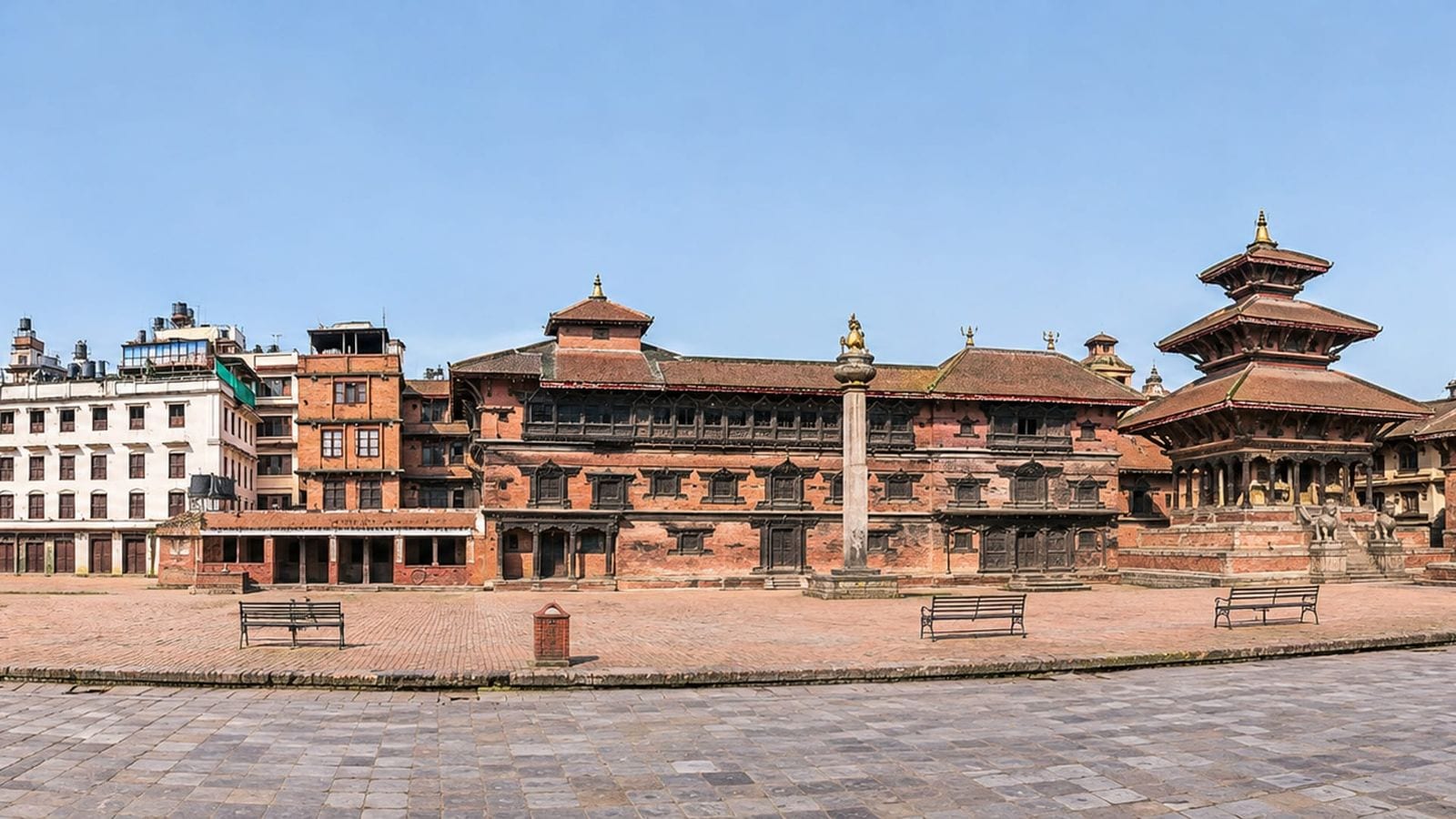
Kathmandu Durbar Square has carved temples, palace courtyards, and royal buildings from the Malla and Shah periods. Hanuman Dhoka and Kumari Ghar are two of its main historic structures.
Time needed: About 2 to 3 hours
Entry: Foreign visitors pay about $10 ($1,000 NPR) for the durbar square area; Nepali citizens and SAARC nationals pay lower rates at the gate.
Tip: Visit earlier in the day if you want enough time for Hanuman Dhoka Museum and the surrounding courtyards.
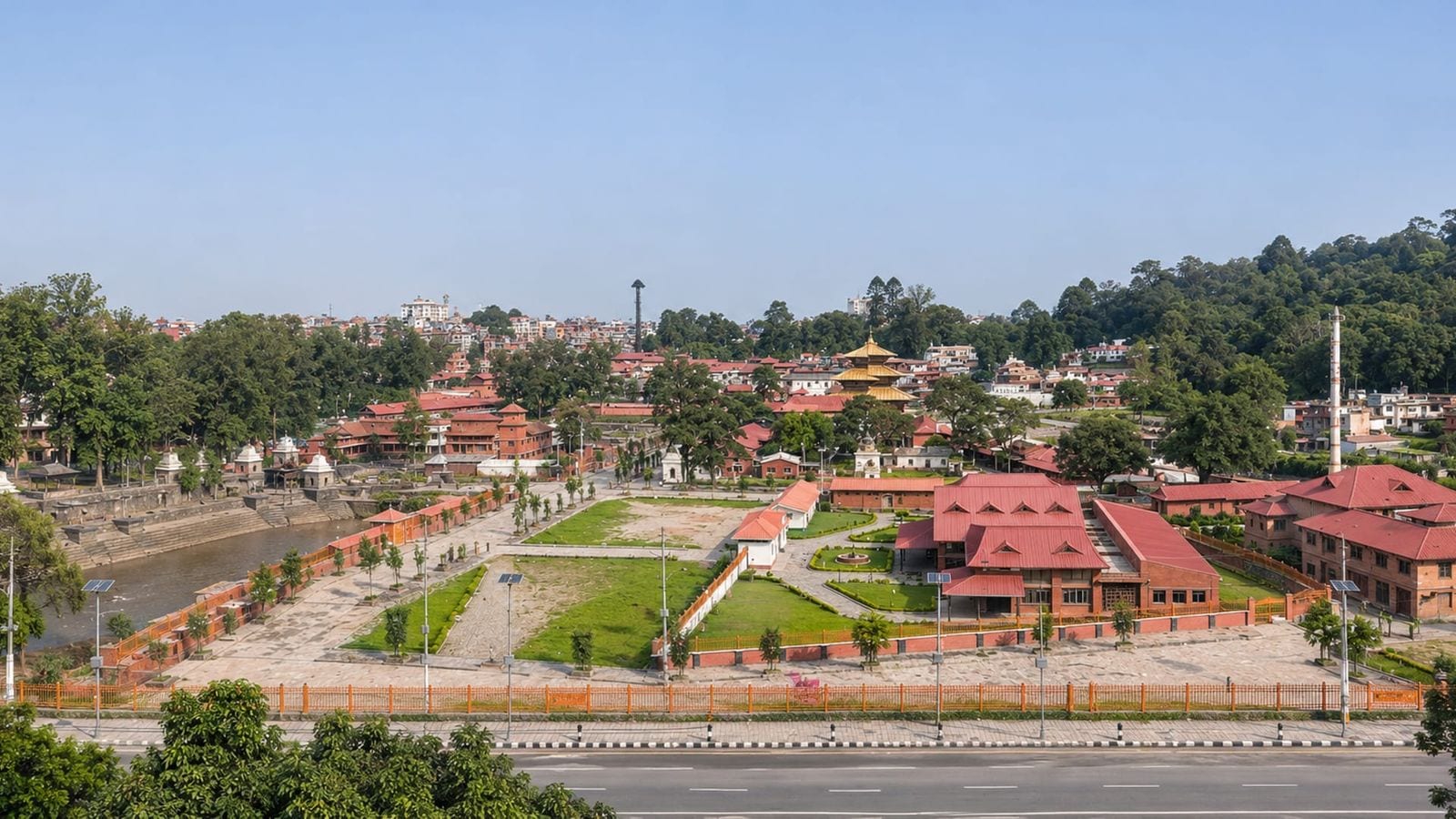
Pashupatinath Temple
Pashupatinath Temple covers both banks of the Bagmati River and includes gilded roofs, stone shrines, cremation ghats, and ritual platforms. Non-Hindus can visit the wider complex but cannot enter the main temple.
Time needed: About 1 to 2 hours
Entry: Foreign visitors pay about $10 ($1,000 NPR) for the temple complex; the main shrine stays closed to non-Hindus, and photography rules apply in some zones Visit the official site for details.
Tip: Visit in the late afternoon and stay for the evening Bagmati Aarti on the eastern bank.
Overlooked sites worth visiting

Garden of Dreams
A compact neo-classical garden near Kaiser Mahal, with pavilions, ponds, and shaded paths. It suits a quiet pause between Thamel and Durbar Marg, with benches, water features, and formal landscaping.
Time needed: About 1 hour
Entry: Admission costs $5 (NPR 665) for foreign visitors, $1.50 (NPR 200) for Nepali citizens, and is free for children under 10. Tickets cover the garden only, and opening hours vary by season and may change for events.
Tip: Visit soon after opening for a quieter walk and cooler weather.

Boudha Stupa viewing circuit
The lanes just outside Boudhanath Stupa offer a slower walk than the main circle, with rooftop cafés, monasteries, and side shrines. It is best for watching evening kora without the densest crowd.
Time needed: About 1 to 2 hours
Entry: Free to access. You can walk the outer lanes without charge, while cafés, rooftop seats, and monastery courtyards set their own prices if you choose to stop. No ticket is needed for the public walking route.
Tip: Visit in the late afternoon, then return to the stupa after dark to see the lamps.
Traditional food
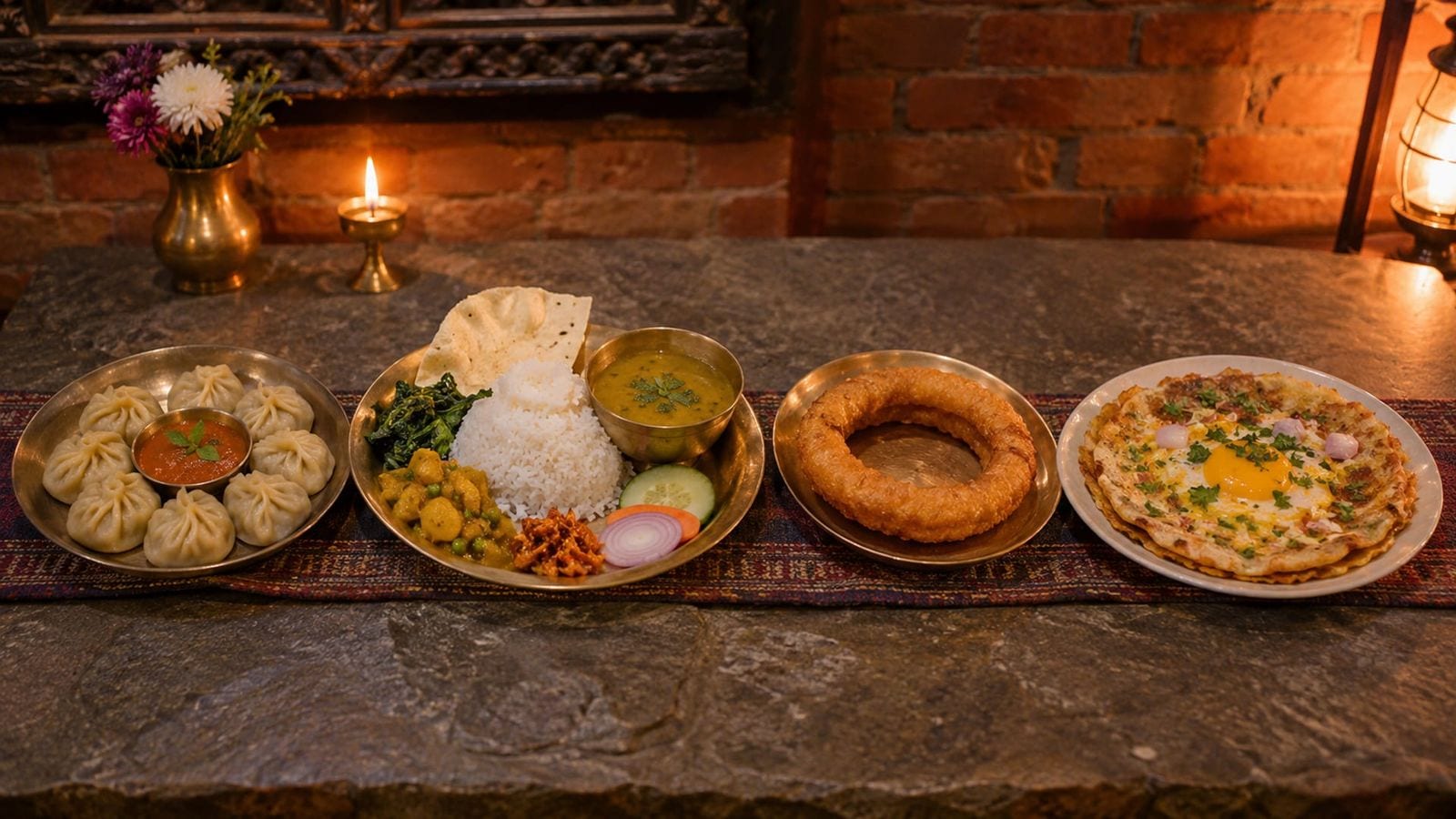
In Kathmandu, you’ll find Nepali, Newar, Tibetan, and other regional foods from across Nepal. Rice, lentils, dumplings, pickles, vegetables, and spiced meat appear often, but each community prepares them differently.
Momo
Momo are steamed or fried dumplings filled with meat or vegetables. They usually come with a spicy sauce made with tomato, sesame, or both. Try them at Bota Mo, which has several locations in Kathmandu.
Dal bhat
Dal bhat includes rice, lentil soup, vegetable curry, and pickles. Some versions also come with greens, yogurt, or meat. Tukche Thakali Kitchen is a good place to try it as part of a Thakali set.
Sel roti
Sel roti is a lightly sweet ring of fried rice batter with a crisp outside and soft center. Try it at Chautari Café & Marsi Thakali.
Chatamari
Chatamari is a thin Newar rice-flour crepe topped with egg, minced meat, vegetables, or spices. The Village Café in Pulchowk is a good place to try it.
Best time to visit Kathmandu
Kathmandu has warm, wet summers and dry winters, with mild daytime temperatures for much of the year.
Best for: Walking through Durbar Square, visiting Swayambhunath, spending time in gardens, and attending spring festivals
What you get: Morning temperatures near 50°F (10°C), daytime temperatures that reach 86°F (30°C) by May
Trade-offs: Haze and dust can reduce visibility in March and April. May can feel hot before the monsoon starts.
Best for: Visiting museums, exploring temples, eating in local restaurants, and visiting the green hills outside the city
What you get: Temperatures usually range from 68°F to 84°F (20°C to 29°C). Rain is frequent, humidity is high, and visitor numbers are lower than in fall.
Trade-offs: Heavy rain can flood streets, slow traffic, and interrupt outdoor plans. Clouds often block mountain views.
Best for: Walking between heritage sites, climbing to Swayambhunath, visiting Boudhanath at sunrise, and attending Dashain or Tihar celebrations.
What you get: Average daytime temperatures range from 73°F to 82°F (23°C to 28°C), while nighttime temperatures range from 45°F to 66°F (7°C to 19°C).
Trade-offs: October and November are the busiest months. Hotels and flights can cost more and sell out early during major festivals.
Best for: Visiting temples, walking through the old city, spending time in museums, and eating in traditional restaurants
What you get: Daytime temperatures are usually between 59 and 68°F (15 and 20°C). Nighttime and early-morning temperatures can fall to 37°F (3°C).
Trade-offs: Many hotels and restaurants do not have central heating, so rooms can feel cold after sunset. Fog or haze can affect visibility in the morning.
A realistic 5-day plan in Kathmandu
Five days is enough time to explore Kathmandu’s main religious and historic sites, spend time in Patan and Bhaktapur, and see how daily life differs across the valley.
Take a short walk through Thamel after checking in. Browse the trekking shops, small bookstores, and souvenir stalls, then stop at a cafe or restaurant for momo or a simple Nepali dinner. Keep the first evening light so you have time to rest after the flight.
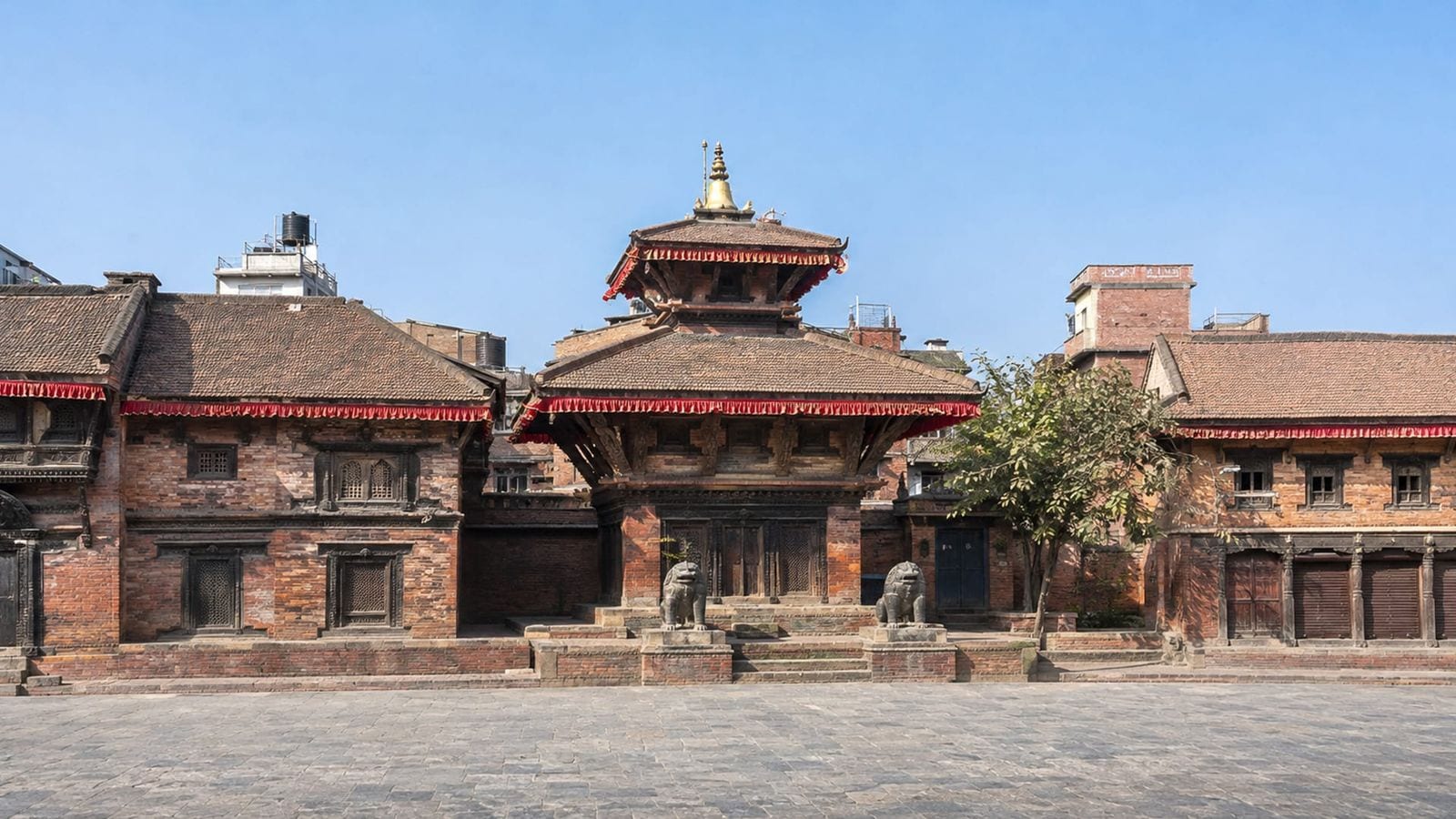
Start at Kathmandu Durbar Square and explore Hanuman Dhoka, Kumari Ghar, the palace courtyards, and the carved temples around the square. Continue through Indra Chowk and Asan, where vendors sell spices, vegetables, textiles, brassware, and religious items. End the day at the Garden of Dreams, with time to walk through the pavilions, lawns, ponds, and shaded paths.
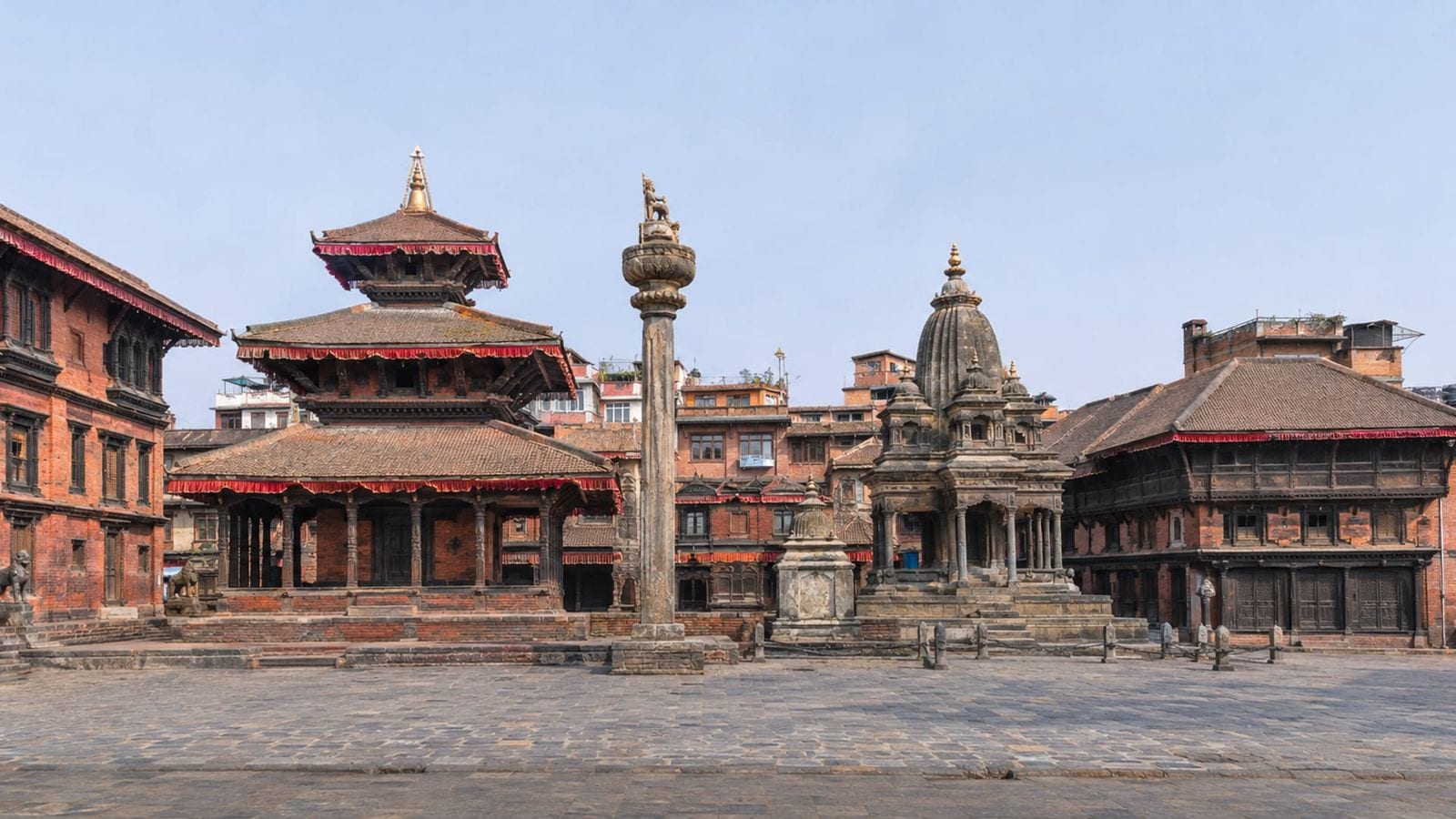
Climb the eastern staircase to Swayambhunath, walk clockwise around the stupa, turn the prayer wheels, and visit the smaller shrines on the hill. From the upper terrace, you can see much of Kathmandu Valley below. Spend the afternoon at Patan Durbar Square, where the Patan Museum, Krishna Mandir, palace courtyards, and metalwork shops explain the city’s long artistic history.
Visit the shrines, ghats, and ritual areas along the Bagmati River at Pashupatinath. Non-Hindus cannot enter the main temple, but they can watch ceremonies and daily activity from the eastern bank. Continue to Boudhanath Stupa, walk clockwise around it with local worshippers, visit one or two nearby monasteries, and stay into the evening when lamps are lit around the square.
Choose one short activity close to your hotel, such as breakfast in Thamel or a final visit to the Garden of Dreams. Keep the rest of the day open for packing, checking out, and reaching Tribhuvan International Airport (KTM) without rushing.
Business-class flights from the US to Kathmandu
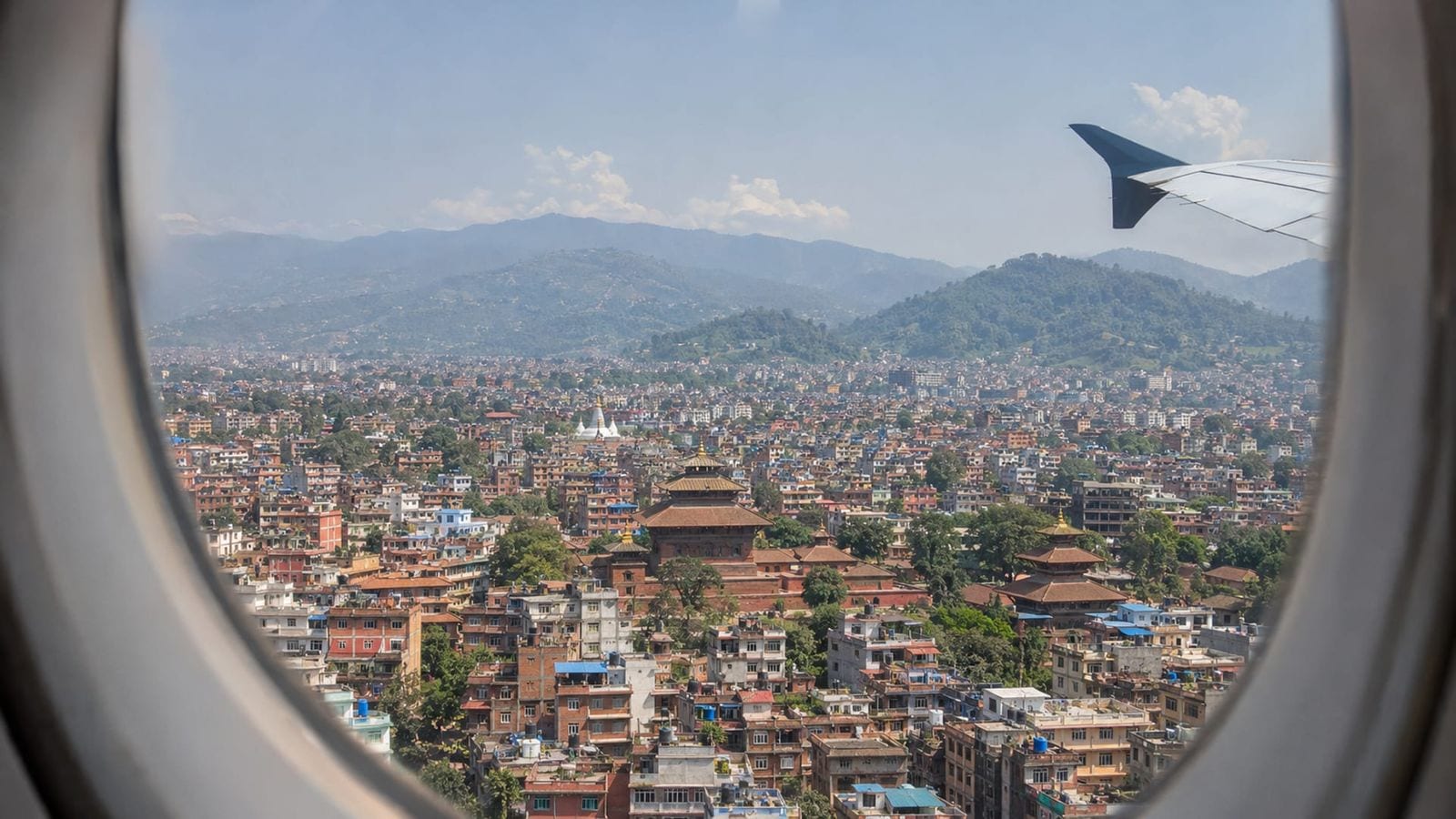
Flights into Kathmandu usually arrive on one-stop itineraries, so the route matters as much as the airline. From both coasts, the best fares tend to come through major Gulf or Asian hubs.
From New York (JFK), Qatar Airways, Emirates, Turkish Airlines, Cathay Pacific, Japan Airlines, and Korean Air are common choices, and the trip usually takes about 18 to 24 hours with one stop. Fares often start at about $3,200 to $5,800, while routes via Doha (DOH), Dubai (DXB), or Istanbul (IST) can bring prices down to roughly $1,500 to $2,800.
Los Angeles (LAX) travelers usually fly with Qatar Airways, Emirates, Turkish Airlines, Cathay Pacific, Korean Air, or Singapore Airlines, and itineraries typically run about 19 to 27 hours. Round trips usually fall in the $3,000 to $5,500 range in business-class, with higher prices during peak holiday periods.
More of Kathmandu to discover
Kathmandu cannot be reduced to a short list of sights. Its old neighborhoods, religious traditions, markets, food, and surrounding valley reveal different parts of the city’s history and daily life. A trip with this much to explore deserves a comfortable start, and AranGrant can help you find the right business-class flight to Kathmandu.