

Chapters:

Need help with your trip?
Our support team is available 24/7. Request a callback or call us directly at (833) 619-0908
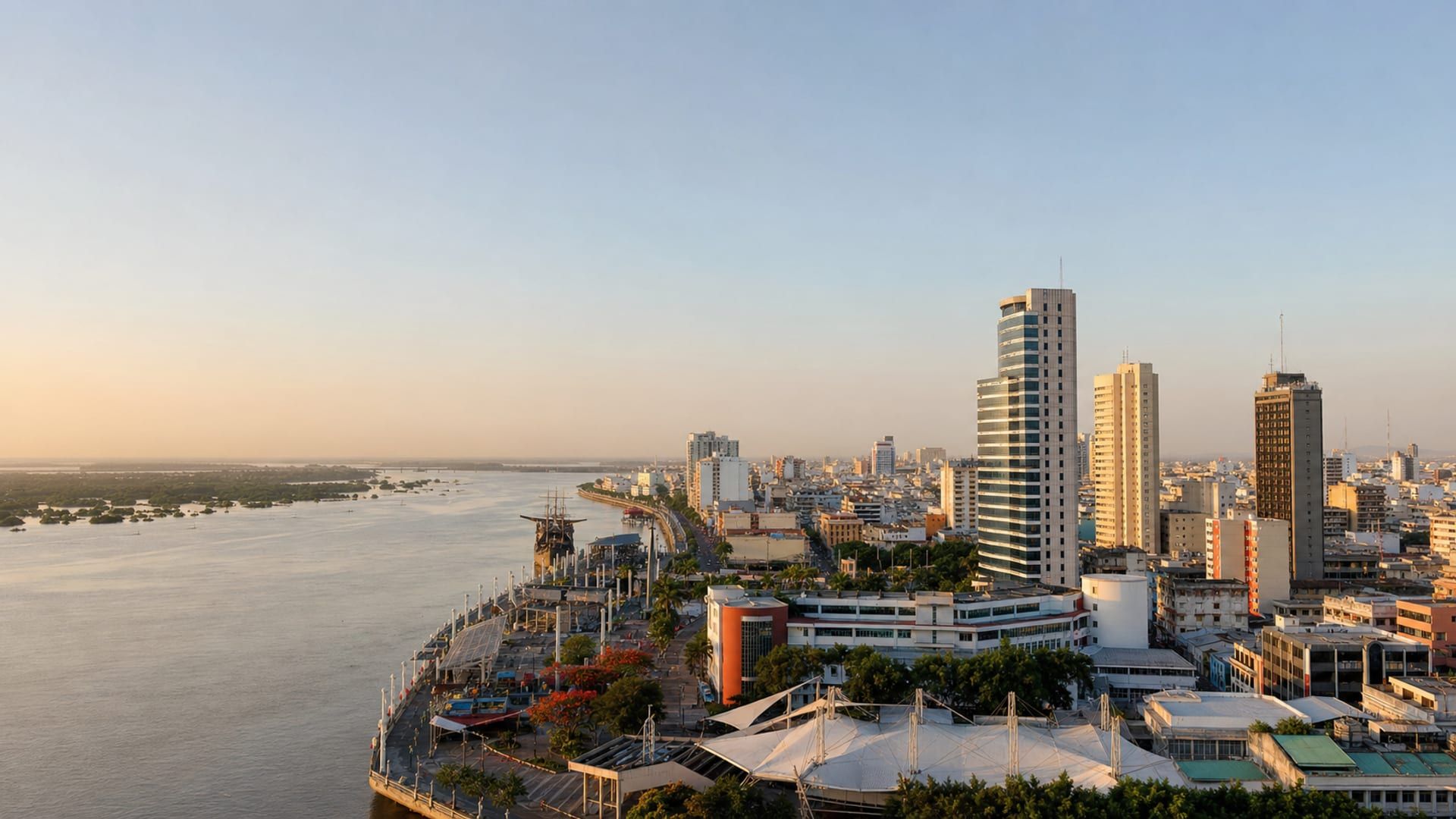
Guayaquil trips often start with the riverfront, then rush straight to the nearest landmark list. That route skips the details that shape the city, from neighborhood boundaries to the time of day when the promenade, hills, and squares work best.
The result is too much crossing back and forth, more taxi time than necessary, and missed stops that sit only a few blocks apart. It also leaves little room for the evening pace around Las Peñas or the quieter hours in Urdesa.
This guide maps the city in a tighter order, so the riverfront, historic core, dining streets, and airport links fit together without forcing you to backtrack.
Useful things to know

Main language(s): Spanish
Hola (OH-lah) – Hello
Por favor (por fah-VOR) – Please
Gracias (GRAH-see-ahs) – Thank you
¿Habla inglés? (AH-blah een-GLAYS) – Do you speak English?
¿Cuánto cuesta? (KWAN-toh KWEHS-tah) – How much does it cost?

Currency: The local currency is the US dollar (USD, $).

Cash and cards: Cards and contactless are widely accepted in Guayaquil; carry about $20 to $40 in cash for small purchases and taxis.

Tipping: Round up small bills; leave 5-10% in restaurants when service is good.

Traditional food: Encebollado, ceviche de camarón, bolón de verde, seco de pollo

Water and coffee costs: Water about $1 ($1), bar espresso about $2 ($2.50).

Taxis and ride apps: Uber and Cabify operate here; confirm the plate before you get in.

Plug and voltage: Type A/B socket, 120V

Dining and shop opening hours: Breakfast is about 7:00-10:00, lunch 12:30-14:30, and dinner 19:00-22:00. Many kitchens close between meals.

Emergency number: 911 for police, fire, and medical emergencies.
Where to stay in Guayaquil
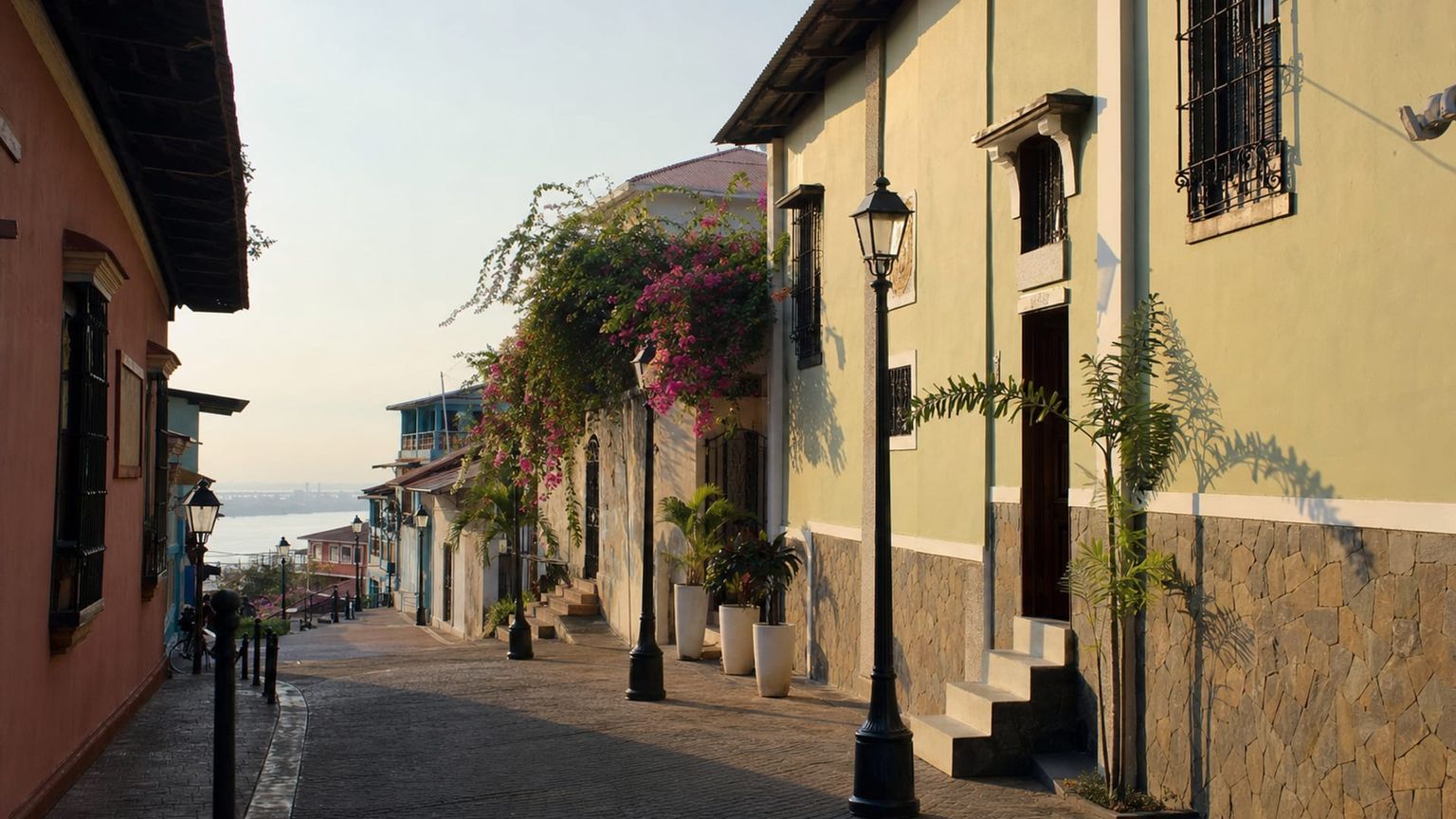
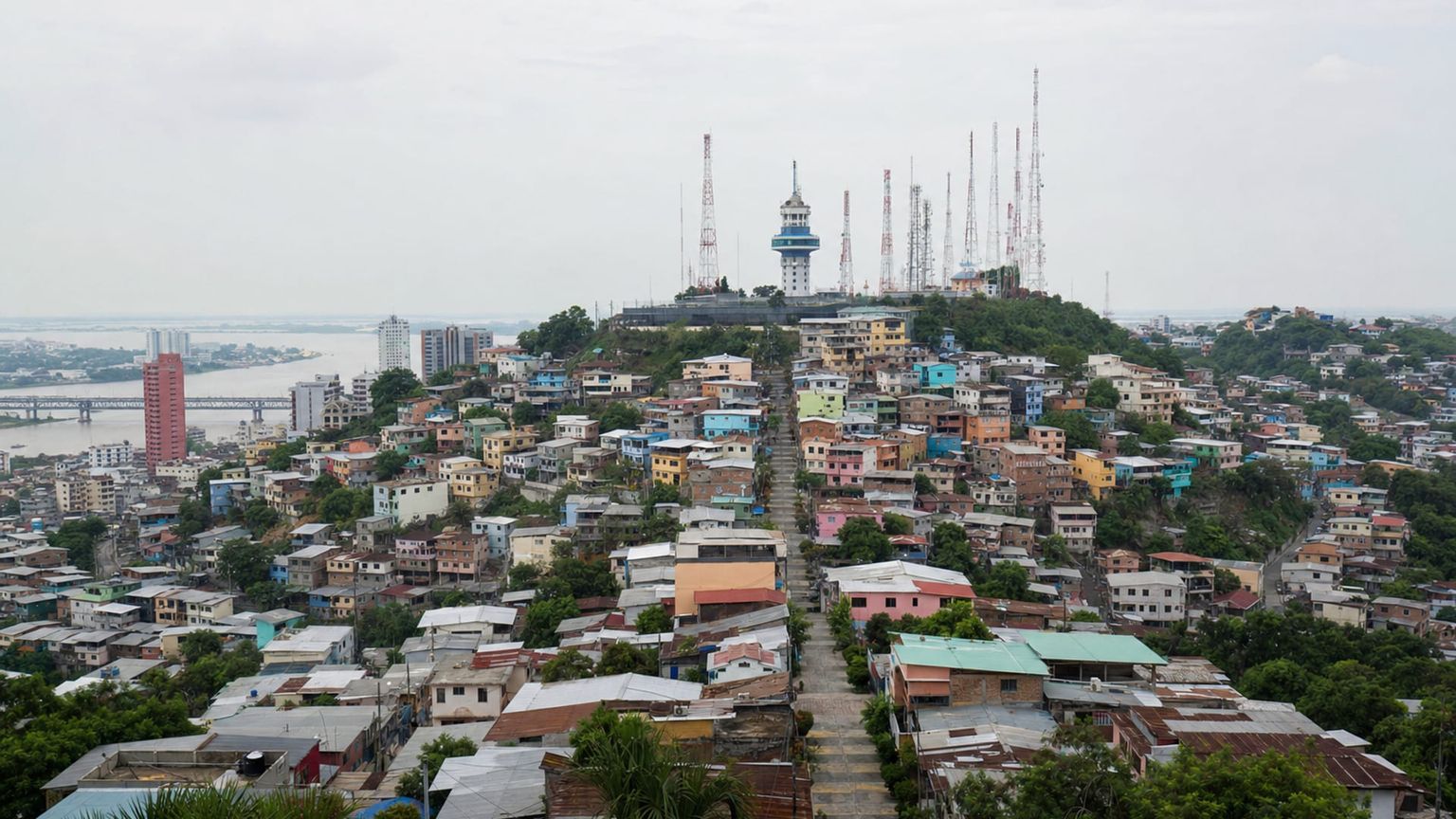
Guayaquil’s restored hilltop quarter, with colorful wooden houses, stairways, galleries, and some of the city’s oldest preserved streets. It suits travelers who want a historic base near the Malecón 2000 and the riverfront sights.
Best for: Historic character, riverfront walks, and short sightseeing hops
What to expect: Steep streets, light foot traffic, and more visitors in the evening when people come for views and restaurants.
Hotel prices: Usually about $60 to $140 per night for well-rated stays
Distance to major sights: 10 to 15 minutes on foot to Malecón 2000; about 10 minutes by taxi to Seminario Park
Quietness: Quieter in the morning and early afternoon, busier at night near the dining strips and viewpoint steps.
Main trade-off: The hill setting means stairs and uneven walks, and the most atmospheric blocks can cost more than nearby inland streets.
Good to know: Plan on taxi or rideshare returns after dinner if you dislike climbing the steep lanes after dark.
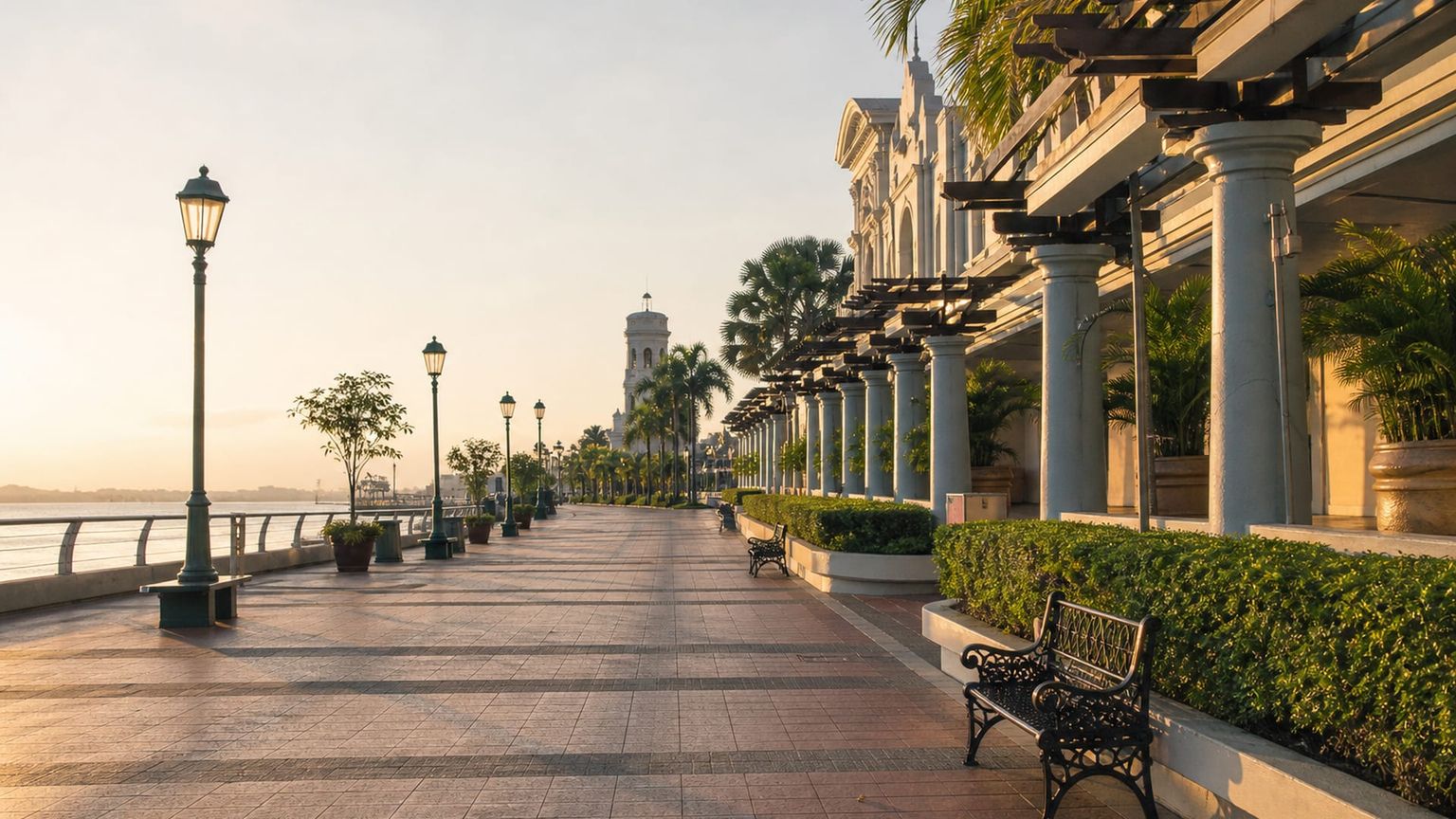
The central riverfront strip along the Guayas, lined with parks, museums, monuments, and walking space. Staying here puts you next to the city’s main sightseeing corridor and makes it easy to cover downtown on foot.
Best for: Riverfront walks, museums, and being close to central sights
What to expect: Busy pedestrian areas by day, with families, tourists, and office workers moving through the promenade and adjacent streets.
Hotel prices: Usually about $70 to $180 per night for well-rated stays
Distance to major sights: On foot to the Iguanas in Parque Seminario in about 12 minutes; about 15 minutes to Las Peñas
Quietness: Lively through the day, then much calmer after the promenade crowds thin out in the evening.
Main trade-off: Rooms near the main strip can be pricier, and some blocks feel empty once the riverfront closes down for the night.
Good to know: Choose a hotel with secure entry, since the best location here puts you close to the busiest pedestrian stretches.
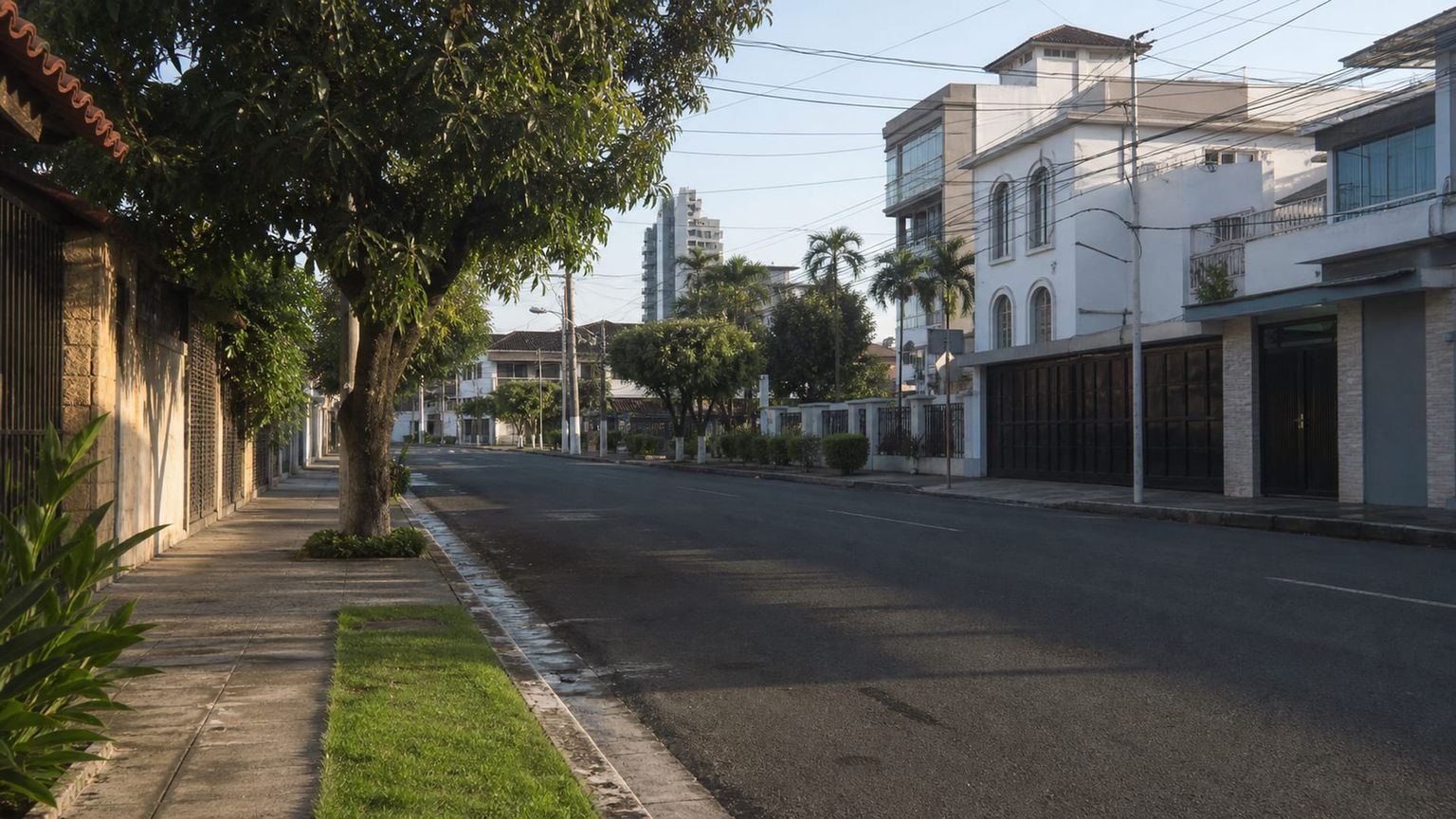
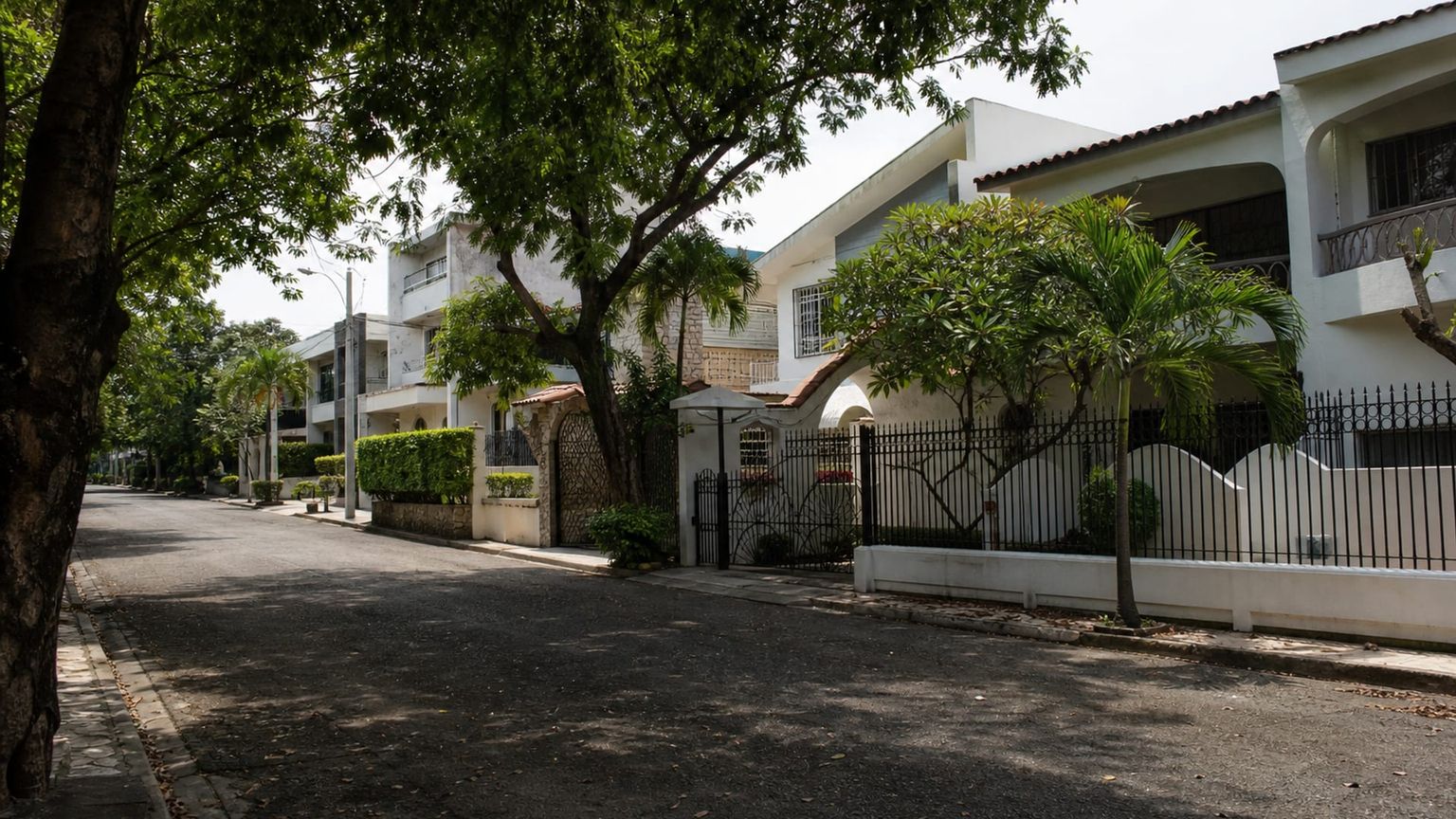
A residential and dining district north of the center, known for tree-lined streets, restaurants, and a local feel that is more spread out than the riverfront. It works well if you want easier parking and a wider choice of eateries than downtown.
Best for: Dining, longer stays, and travelers who prefer a neighborhood base with parking
What to expect: Moderate street activity, especially around restaurant blocks, with a calmer pace on residential streets.
Hotel prices: Usually about $50 to $120 per night for well-rated stays
Distance to major sights: About 20 to 25 minutes by taxi to Malecón 2000; roughly 15 minutes to José Joaquín de Olmedo Airport (GYE)
Quietness: Quieter than the center during the day, then livelier in the evening around the restaurant clusters.
Main trade-off: You will rely on taxis for most sightseeing, since the area’s appeal sits more in dining and daily convenience than in walkable landmarks.
Good to know: Traffic can slow evening rides back from the center, so allow extra time if you are heading out for dinner or a show.
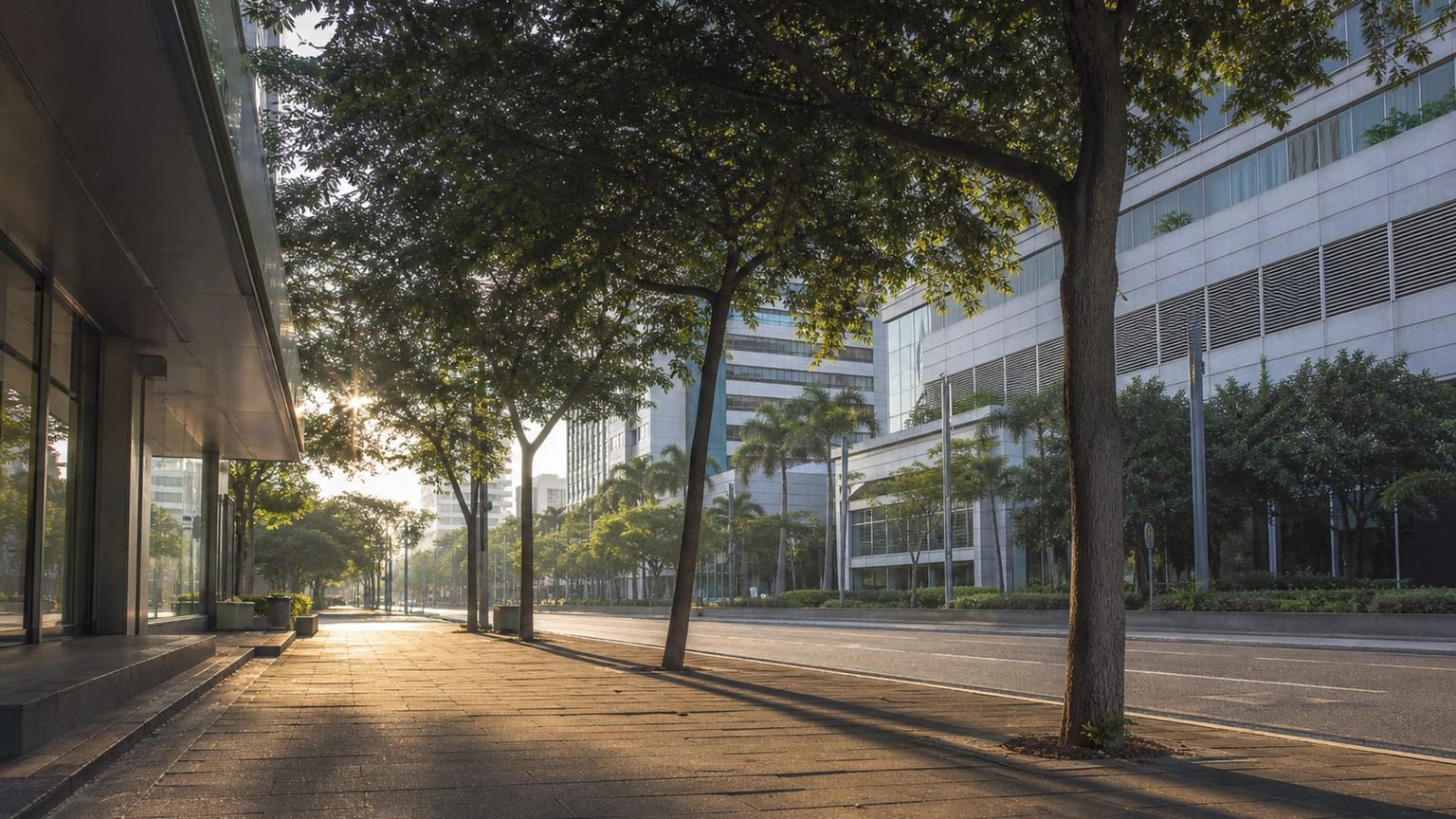
A modern business and hotel district near the airport, with malls, offices, and newer apartment towers. It is a common choice for short business stays or late arrivals because it offers quick airport access and plenty of nearby amenities.
Best for: Business trips, airport access, and travelers who want newer hotels
What to expect: Active daytime traffic, hotel movement, and restaurant activity, with less of a neighborhood street scene than in older districts.
Hotel prices: Usually about $55 to $150 per night for well-rated stays
Distance to major sights: About 10 to 15 minutes by taxi to José Joaquín de Olmedo Airport (GYE); roughly 20 minutes to Malecón 2000
Quietness: Busy in the day, then quieter at night except near the malls, hotels, and major roads.
Main trade-off: You gain airport convenience, but you will spend more time in taxis for the historic riverfront and older sights.
Good to know: If you have an early flight, this area cuts down on morning transfer stress, but it is not the best place to base a walking-heavy itinerary.
Travelers usually avoid staying in Durán, across the Guayas River, because it sits far from Guayaquil’s main sights and adds an extra river crossing for evening plans. Parts of the outer industrial zones near the airport and the port area are also less convenient for visitors, since they have fewer hotels, restaurants, and tourist-facing amenities than central neighborhoods like Urdesa, Kennedy, and the Malecón area.
Hotel deals
How to get around Guayaquil efficiently
Guayaquil does not have a metro, so most visitors pair walking with Metrovía corridors, taxis, or ride-hailing for the longer links between the riverfront, Urdesa, and the airport.

Metro
for longer distances
Guayaquil has no metro, so the closest citywide option is the Metrovía bus rapid transit network, which runs in dedicated lanes on main corridors. A single ride costs about $0.30, with reloadable cards used for entry and rides typically lasting about 15 to 40 minutes across central routes.

Bus and tram
for convenience
Metrovía and the feeder buses cover the airport area, downtown, and major neighborhoods through trunk lines and connecting services. Fares are about $0.30 per boarding, cards are required for the main system, and most riders use it for trips that take about 20 to 50 minutes depending on the corridor and transfers.

Taxi
for convenience or late hours
Licensed taxis in Guayaquil use metered fares in the city, while airport pickups often follow set rates; short trips commonly cost about $3 to $6, with airport-to-central-area rides usually about $6 to $12. Hail official yellow taxis or use hotel dispatch, and keep small bills ready because cash is common, although some drivers accept cards or transfers.
*Prices are based on rates updated as of June 2026 and may change at the time of travel.
Walk the center when the sights cluster together, use Metrovía for low-cost cross-town rides, and choose taxis or ride-hailing for evening returns, airport transfers, or any hop that would otherwise require a long bus connection.
Iconic landmarks
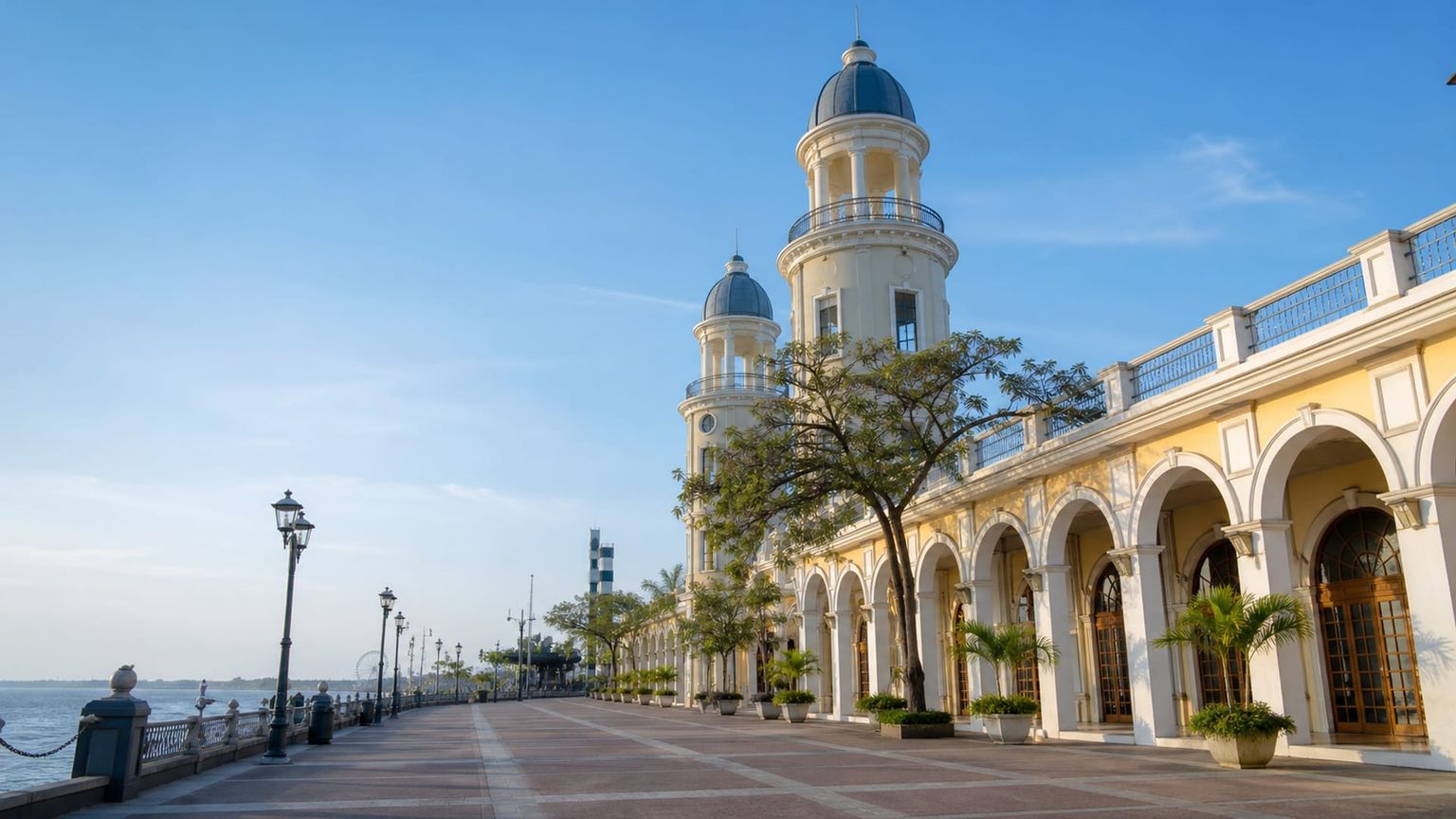
Malecón 2000
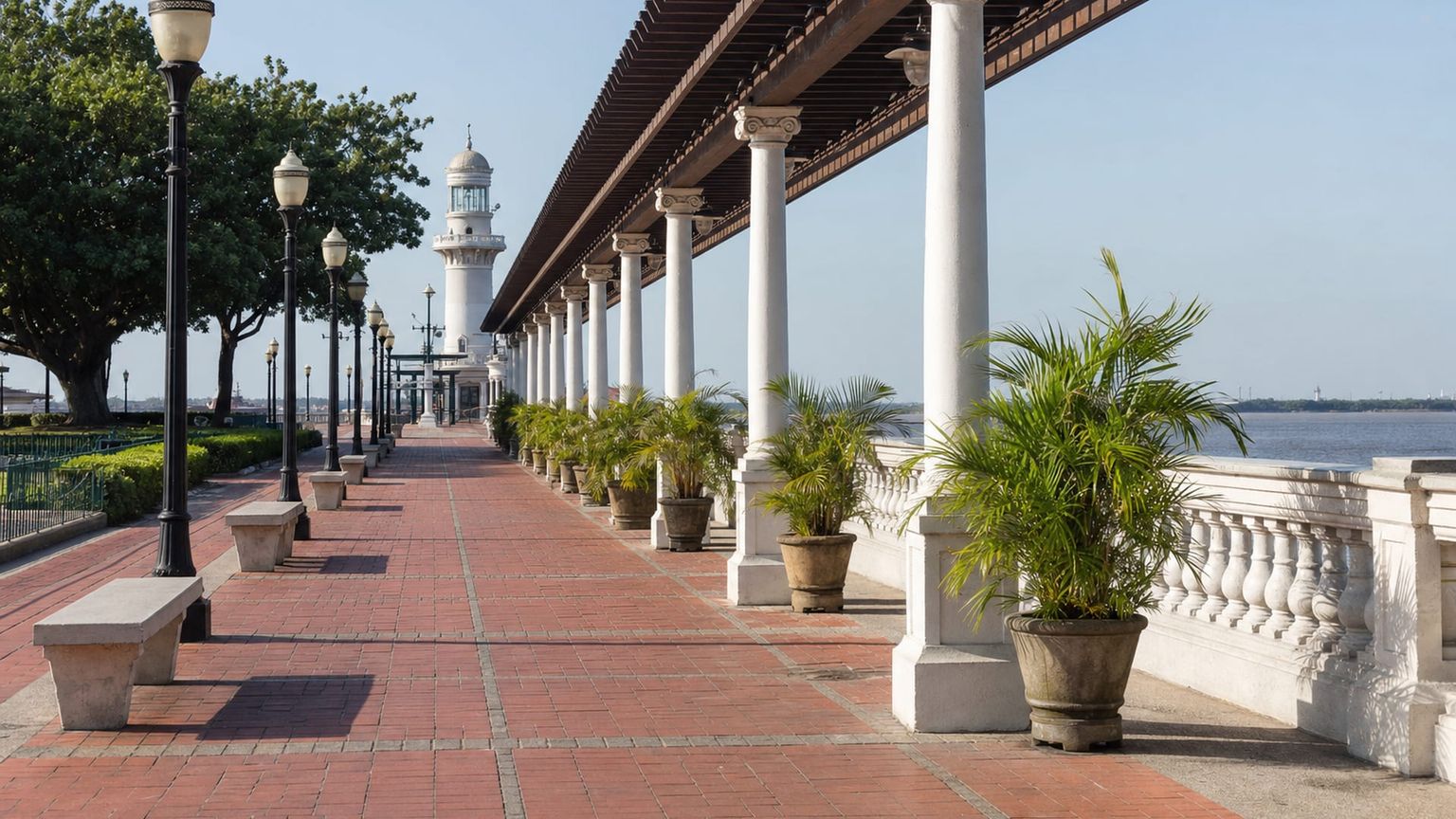
This riverfront park lines the Guayas with gardens, monuments, museums, and food stalls, all linked by a long promenade. It is one of Guayaquil’s most visited public spaces and a good place to trace the city center on foot.
Time needed: About 2 to 3 hours
Entry: Free to access; some museums and attractions inside the promenade charge separate admission Visit the official site for details.
Tip: Go late afternoon, then stay for the city lights and cooler river breeze.
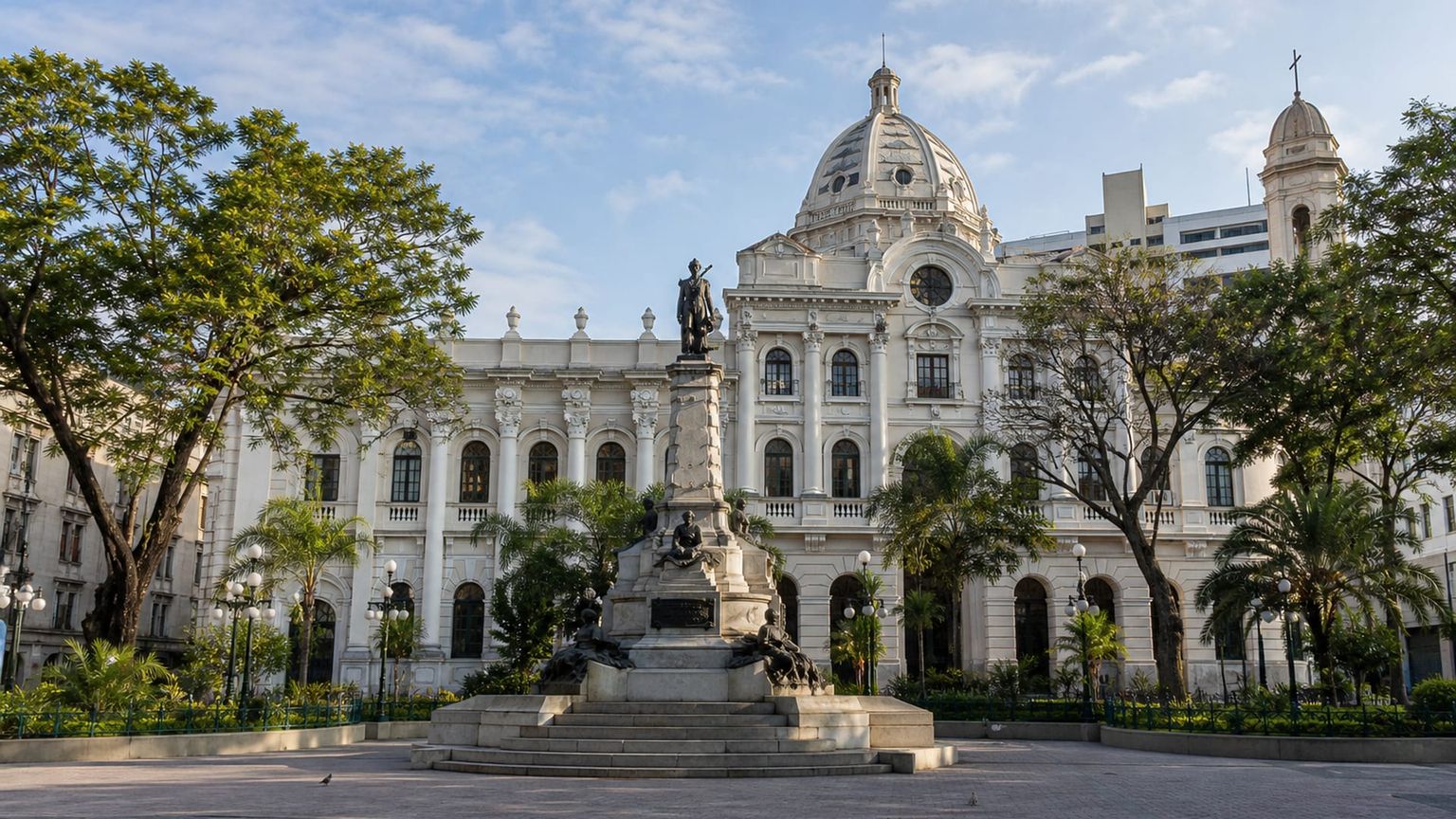
Parque Seminario, Iguana Park
This small central square sits beside Guayaquil Cathedral and is famous for its free-roaming green iguanas. Benches, shade trees, and steady foot traffic make it a quick stop within the historic core.
Time needed: About 30 to 45 minutes
Entry: Free to access, with no timed entry or ticket required
Tip: Visit in the morning, when the iguanas are active and the square is less crowded.
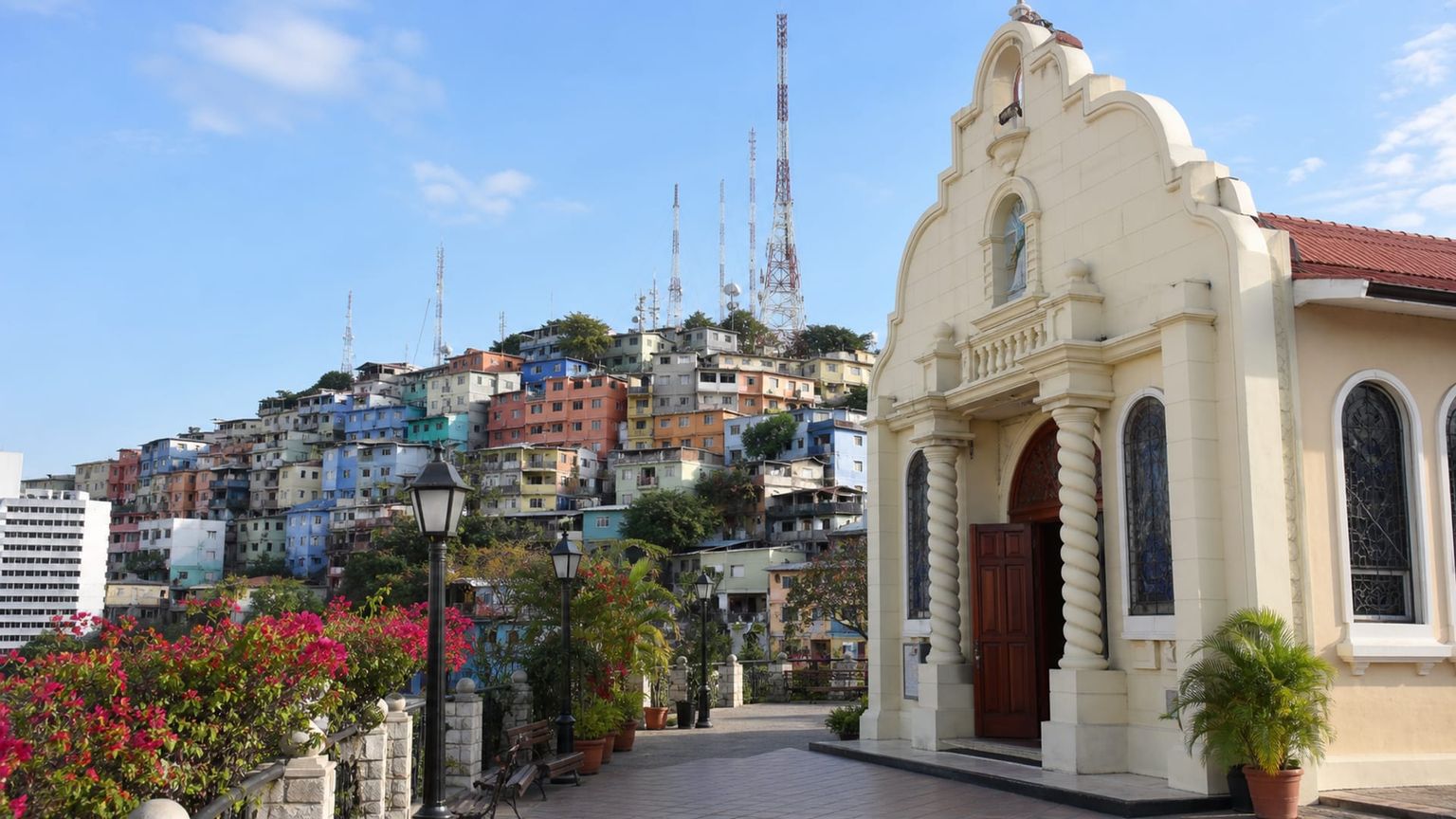
Las Peñas and Santa Ana Hill
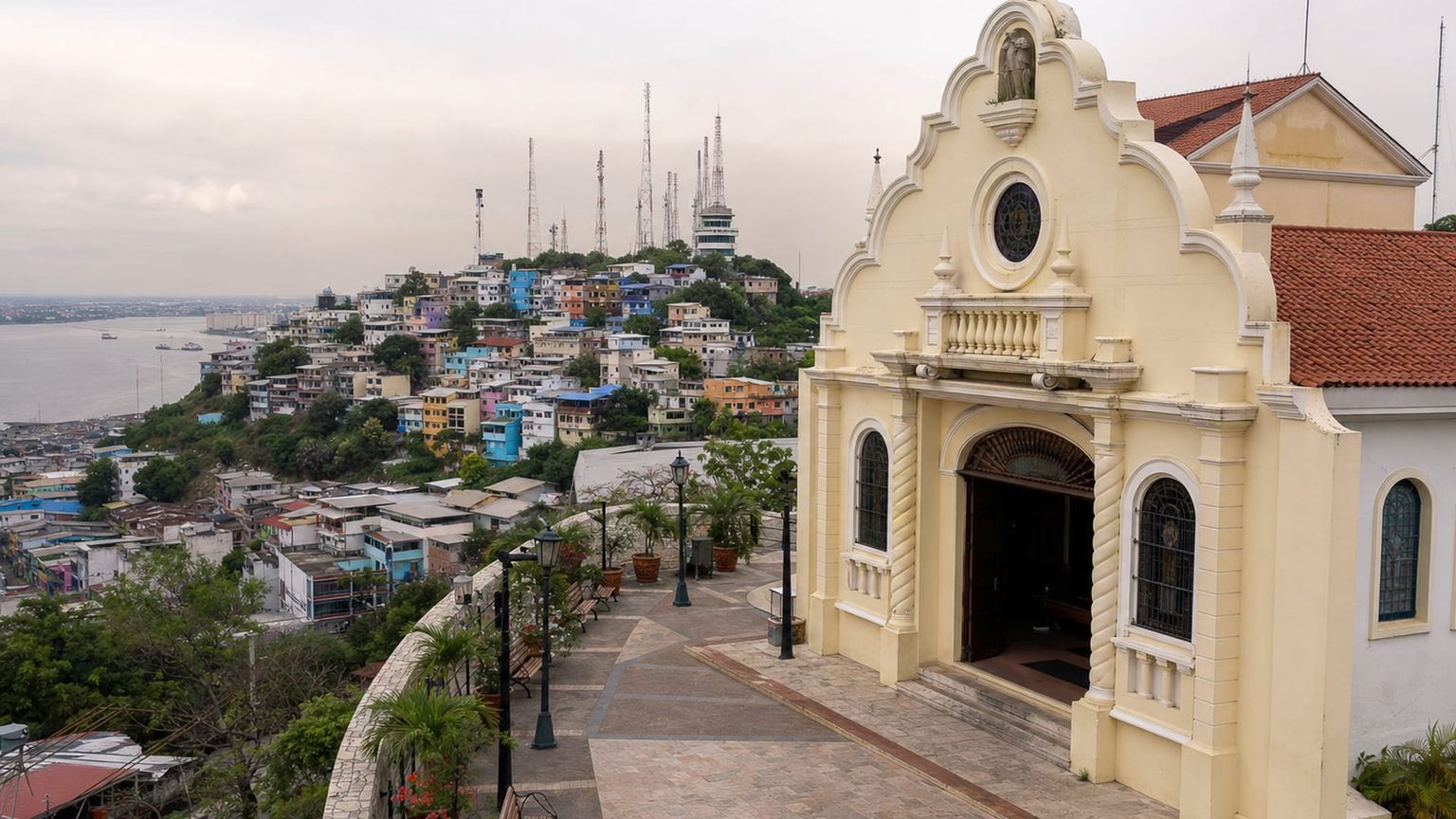
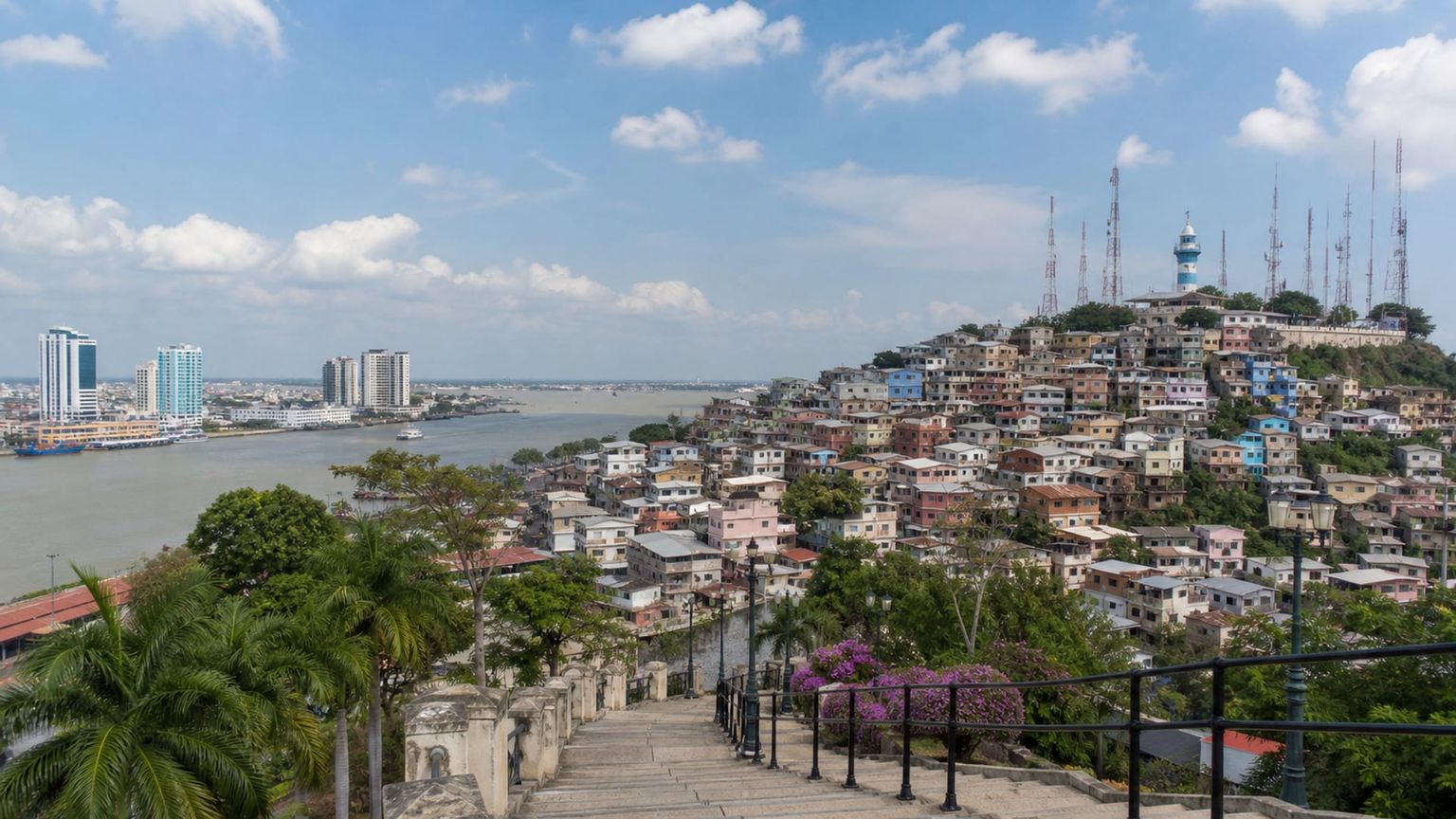
Colorful wooden houses, steep stairways, galleries, and hilltop viewpoints define this historic neighborhood on Cerro Santa Ana. The climb gives wide city and river views, and the lower streets add cafés and local art.
Time needed: About 2 to 3 hours
Entry: Free to walk the neighborhood; some galleries and viewpoints charge small admission fees
Tip: Wear shoes with grip, since the stairways and upper paths can be steep after rain.
Overlooked sites worth visiting

Parque Seminario
This compact plaza draws iguanas to its lawns and benches, with the Cathedral of Guayaquil on one side and the city’s main civic buildings nearby. Visit for a short stop, not a full outing.
Time needed: About 30 to 45 minutes
Entry: Free to access; no ticket is needed for the plaza or its iguana-filled grounds, and visitors can walk in during daylight hours. Nearby cathedral visits may have separate hours or charges depending on services or events.
Tip: Go in the morning before the paving heats up.

Museo Presley Norton
Set in a restored house, this small museum shows Ecuadorian pre-Hispanic pieces, colonial objects, and rotating exhibitions. The scale is modest, which makes it easy to pair with other stops in central Guayaquil.
Time needed: About 1 hour
Entry: General admission is usually about $2 to $4 ($2 to $4), with possible discounts for students, seniors, and children. Hours can vary by exhibition or holiday schedule, so verify the current timetable before you go.
Tip: Check opening hours first, since they can change for exhibits.
Traditional food
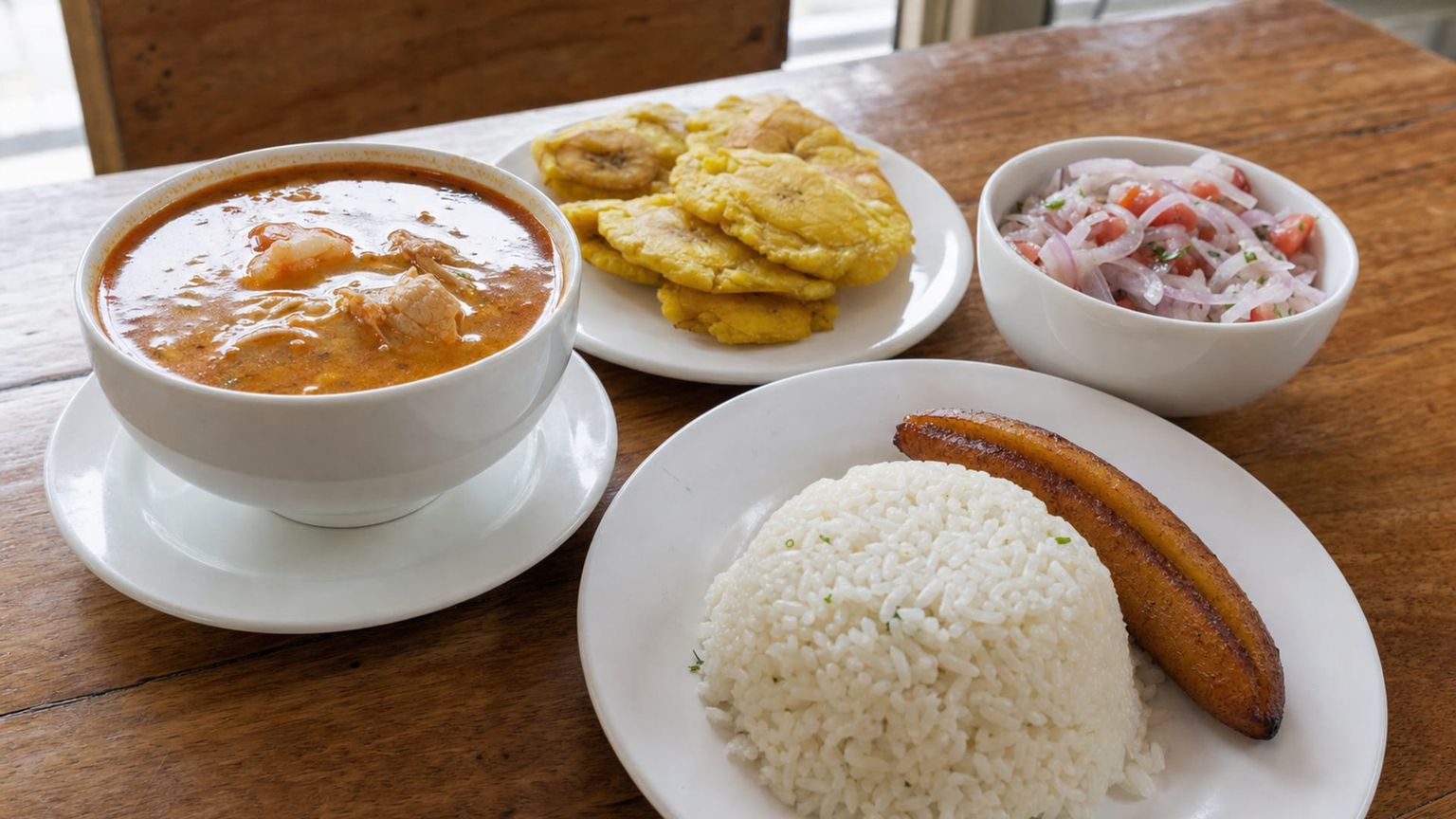
Guayaquil’s table leans on seafood, green plantains, and bright acids, especially in encebollado and ceviche de camarón. Breakfast and lunch matter here, and many kitchens close between meals, so timing shapes where you eat as much as the menu does.
Encebollado
This tuna and cassava soup arrives with pickled red onion, cilantro, and lime, and it is one of Guayaquil’s classic morning dishes. La Casa de Encebollado is a solid city reference for it.
Ceviche de camarón
Shrimp ceviche in Guayaquil usually comes with tomato, citrus, onion, and a light broth, often with plantain chips on the side. Noe Sushi Bar in Guayaquil serves a widely liked version in a polished setting.
Bolón de verde
Mashed green plantain shaped into a dense ball, often filled with cheese, chicharrón, or both, makes a common breakfast or snack. La Canoa serves a version that fits the city’s traditional repertoire.
Seco de pollo
This chicken stew uses cilantro, beer, tomato, and spices for a savory sauce, usually served with rice and fried plantain. Rincón de Tere is a dependable place to order it in Guayaquil.
Best time to visit Guayaquil
Guayaquil stays warm year-round, but humidity, rain, and riverfront crowds shift enough by season to change when the city is most comfortable on foot.
Best for: Riverfront walks in the clearer, brighter mornings
What you get: About 74 to 88°F (23 to 31°C), with warm days and lighter tourist flow outside holiday weeks
Trade-offs: Afternoon showers can interrupt outdoor plans
Best for: Museum time, neighborhood dining, and flexible sightseeing
What you get: About 74 to 89°F (23 to 32°C), with humid weather and moderate crowds
Trade-offs: Rain becomes more frequent as the season progresses
Best for: Longer sightseeing days and easier walking between central stops
What you get: About 71 to 85°F (22 to 29°C), with warm conditions and steadier visitor traffic
Trade-offs: Popular spots can feel busier in the center
Best for: A quieter visit with good access to major sights
What you get: About 72 to 87°F (22 to 31°C), with warm weather and fewer peak-season crowds
Trade-offs: Cloudier stretches and intermittent showers can still appear
A realistic 5-day plan in Guayaquil
A five-day stay in Guayaquil works best when the riverfront, the historic hill, and the dining districts each get their own turn. The plan below keeps the center walkable, then widens the circle only when a taxi or ride-hail saves time.
Land at Guayaquil’s José Joaquín de Olmedo Airport (GYE), then take a taxi or rideshare to Las Peñas or Malecón 2000 in about 10 to 20 minutes for roughly $8 to $15. Check in near the riverfront if you want the easiest start, then drink water, settle in, and keep dinner close by, with an early meal on the Malecón or in Las Peñas so you do not need a long return after dark.
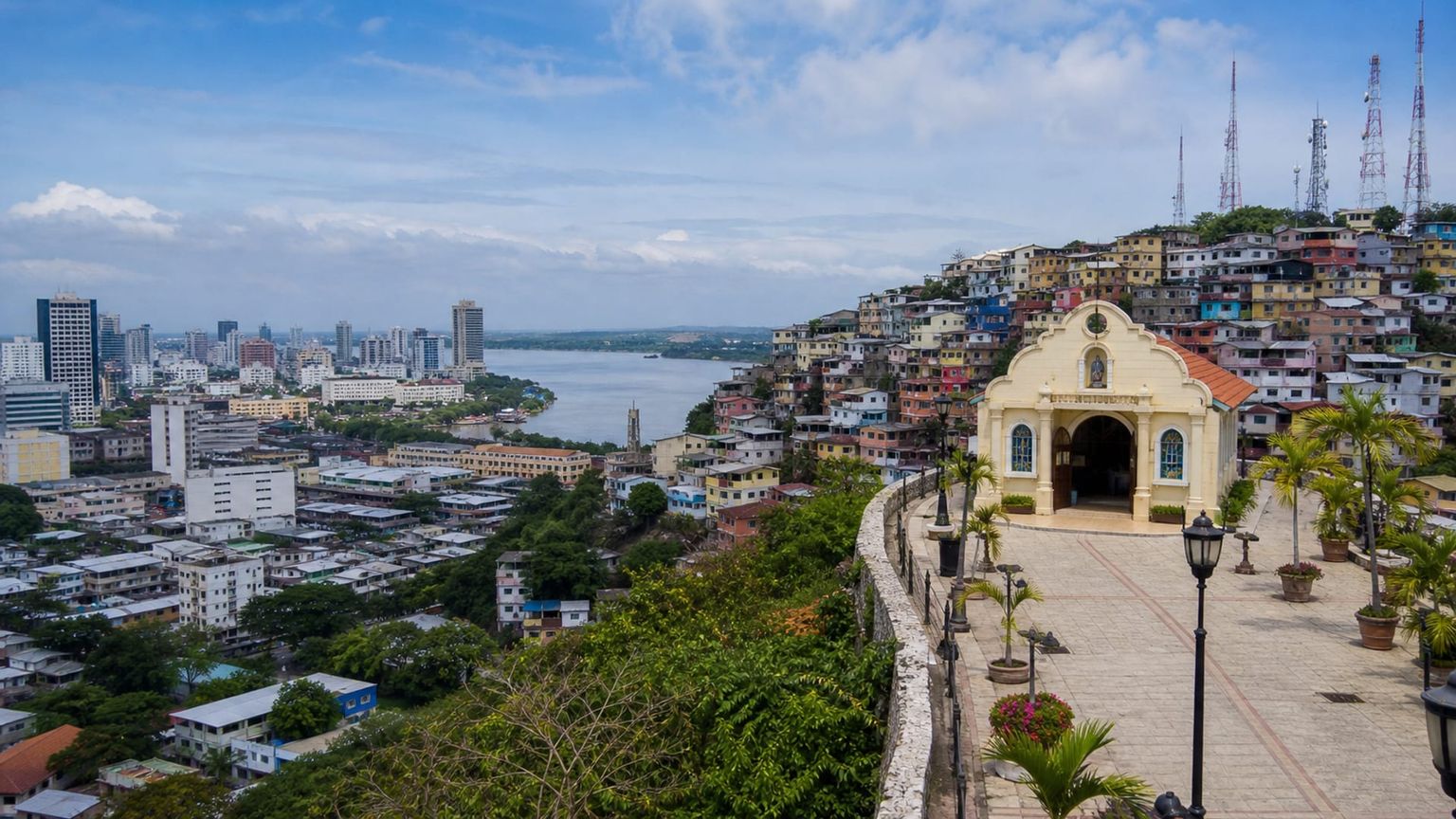
Start in Parque Seminario, Iguana Park, where the iguanas are most active in the morning, then walk about 10 to 12 minutes to the Cathedral of Guayaquil area and continue about 10 minutes farther to Museo Presley Norton for a compact museum stop. From there, a taxi to Las Peñas takes about 10 minutes, and the climb through Santa Ana Hill rewards you with city and river views before dinner in the neighborhood’s cafés and restaurants.
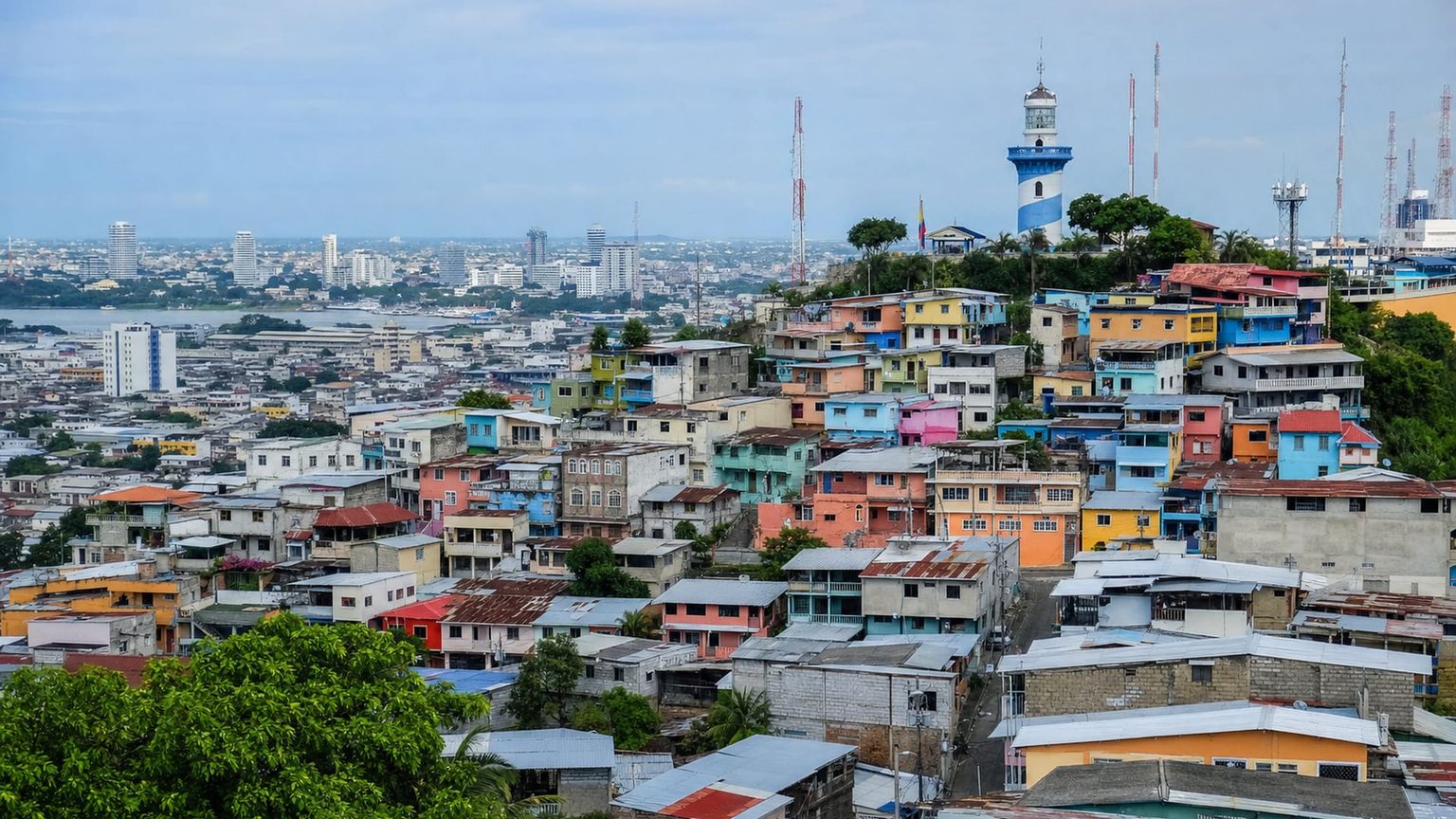
Begin with a late morning walk along Malecón 2000, spending about 2 to 3 hours on the promenade, gardens, monuments, and river views, then continue on foot to Parque Seminario, Iguana Park in roughly 12 minutes for a short pause among the iguanas and the cathedral frontage. In the evening, return to Las Peñas for the stairways, galleries, and viewpoints, which are especially photogenic once the light softens over the Guayas.
For a quieter fourth day, head north to Urdesa by taxi from the center in about 20 to 25 minutes and plan a relaxed lunch on one of its restaurant blocks before browsing the neighborhood’s shops and cafés. Later, return to the riverfront in about 20 minutes if you want a second look at Malecón 2000 after sunset, or stay in Urdesa for dinner and an easier ride back to your hotel.
A final morning pairs well with one last short museum stop at Museo Presley Norton, which takes about 1 hour, followed by café time in Urdesa or a low-key walk through Las Peñas if you want a last look at the painted houses. If your flight is later in the day, keep luggage at the hotel, have an early lunch near Malecón 2000, and leave enough time for a taxi back to José Joaquín de Olmedo Airport (GYE), which usually takes about 10 to 20 minutes from the center depending on traffic.
Business-class flights from the US to Guayaquil
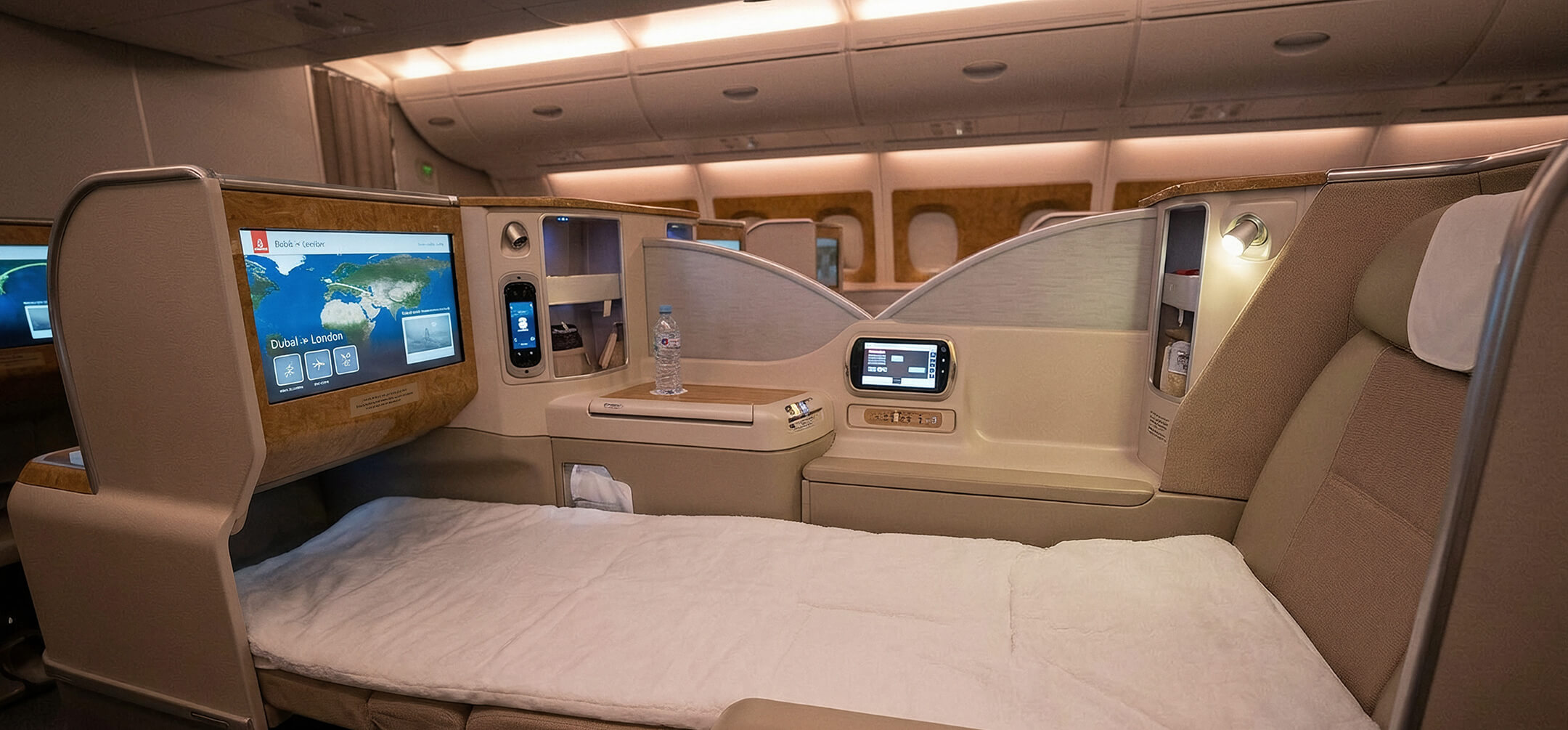
Business-class examples to Guayaquil usually come through a mix of nonstop and one-stop options, depending on where you start. From New York and Los Angeles, the schedule and fare band shift enough to make the route choice worth checking before you book.
From New York, Avianca, Copa Airlines, LATAM Airlines, American Airlines, and United Airlines all appear on the route, with nonstop flying time at about 5 to 6 hours. One-stop itineraries via Bogotá, Panama City, or Miami often price lower, while round-trip fares usually start at $1,500 and can reach $3,500.
Los Angeles itineraries usually run through Avianca, Copa Airlines, LATAM Airlines, American Airlines, Delta Air Lines, or United Airlines, and nonstop flying time sits at about 6 to 7 hours. If you are open to a connection, hubs such as BOG, PTY, MEX, LIM, and SCL can bring the fare down, and round-trip prices usually run from $1,300 to $3,000, with nonstop options near the top of that range.
Guayaquil feels different when you slow down
A deliberate Guayaquil trip gives each district a clear role, from the iguanas at Parque Seminario to the long walk on Malecón 2000 and the stairways of Las Peñas. Taxis, Metrovía, and short neighborhood walks each fit a different part of the day, while Urdesa handles the evening meal and the airport side keeps departures calm. If you want help shaping that mix into a trip that fits your dates, let the AranGrant experts build it around your stay near the riverfront or your last morning in the city