

Chapters:

Need help with your trip?
Our support team is available 24/7. Request a callback or call us directly at (833) 619-0908
Florianópolis is the capital of Santa Catarina in southern Brazil. Most of the city occupies Santa Catarina Island, with another section on the mainland. The island has more than 40 beaches, along with lagoons, dunes, hills, residential districts, and fishing communities.
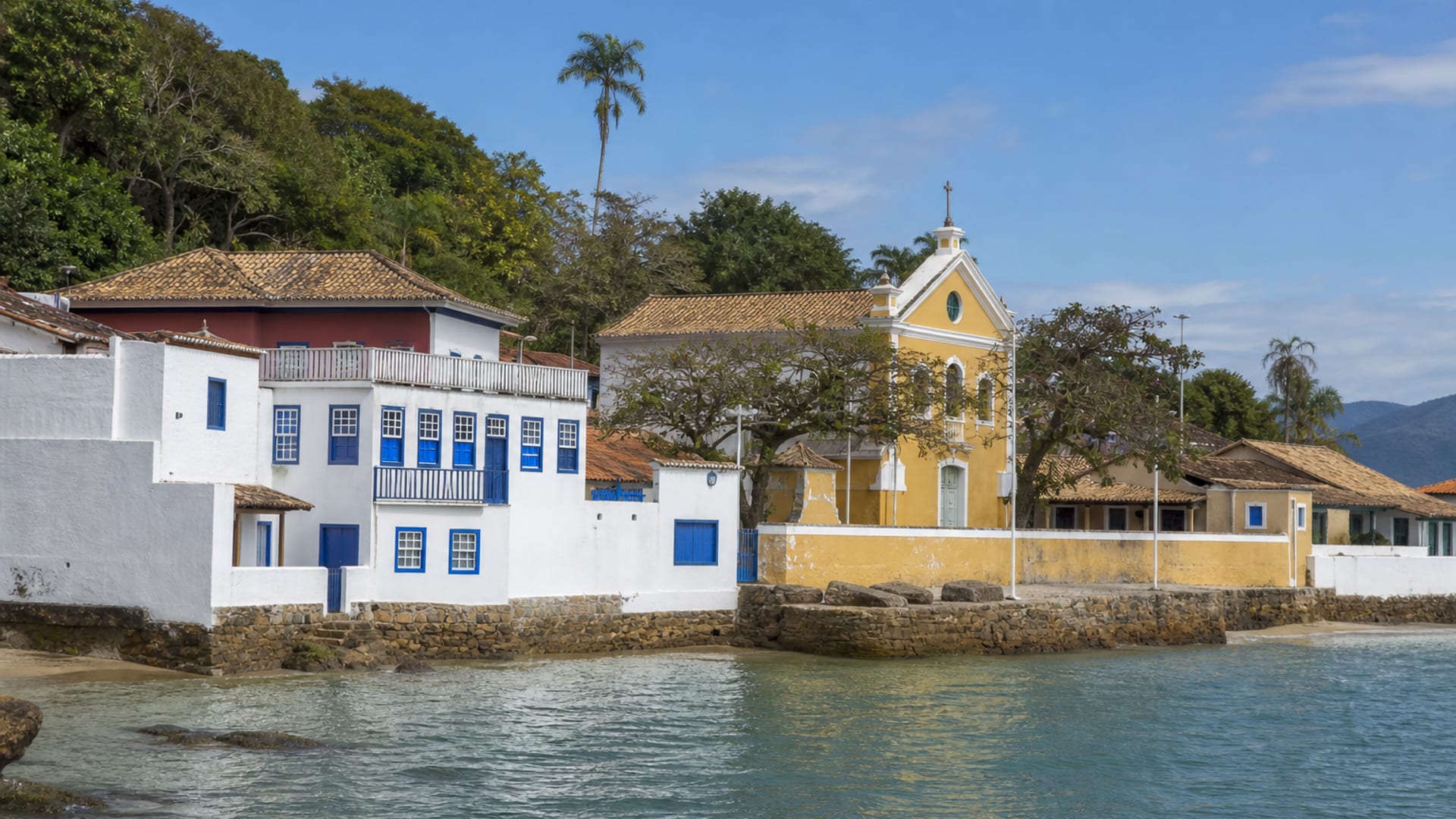
Azorean influence is still visible in places such as Santo Antônio de Lisboa and Ribeirão da Ilha, where historic churches, traditional houses, and seafood restaurants reflect the communities established here from the 18th century onward.
With so much of Florianópolis spread across different parts of the island, it helps to know where to stay, what to eat, how to get around, when to visit, which places to see, and how to plan five days in the city.
Useful things to know
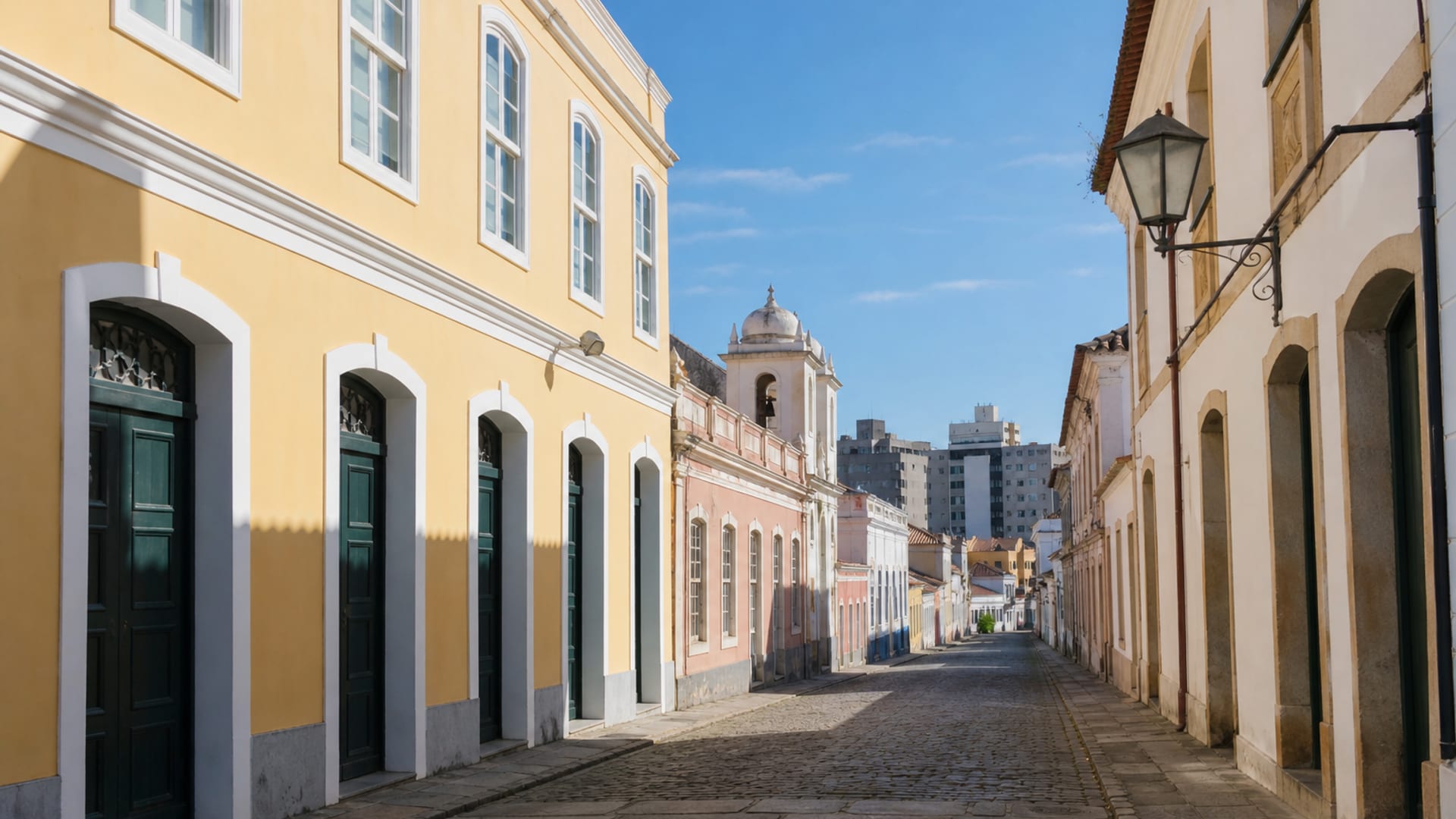

Main language(s): Portuguese
Olá (oh-LAH) – Hello
Por favor (pohr fah-VOHR) – Please
Obrigado (oh-bree-GAH-doo) – Thank you
Você fala inglês? (voh-SEH FAH-lah in-GLEHSS) – Do you speak English?
Quanto custa? (KWAHN-toh KOOS-tah) – How much does it cost?

Currency: Brazilian real (BRL, R$)

Cash and cards: Most places accept cards and contactless payments. Keep R$50 to R$100 (US$10 to US$19) in cash for small purchases, markets, and beach vendors.

Tipping: Restaurants often add a 10% charge to the bill. Check before leaving anything extra.

Traditional food: Tainha assada, sequência de camarão, oysters, and other seafood dishes are common in Florianópolis, especially along the coast.

Water and coffee costs: A bottle of water usually costs R$5 (US$1), while an espresso often costs R$8 to R$12 (US$1.50 to US$2.30).

Taxis and ride apps: Uber and 99 operate in Florianópolis. The airport also has an official taxi rank outside the terminal.

Plug and voltage: Type C and N sockets. Voltage may be 127V or 220V.

Dining and shop opening hours: Many restaurants serve lunch from noon to 3 pm, then reopen for dinner at about 6 pm or 7 pm. Shops usually open between 9 am and 10 am and close between 7 pm and 9 pm.

Emergency number: Call 190 for police, 192 for medical emergencies, and 193 for fire rescue.
Where to stay in Florianópolis
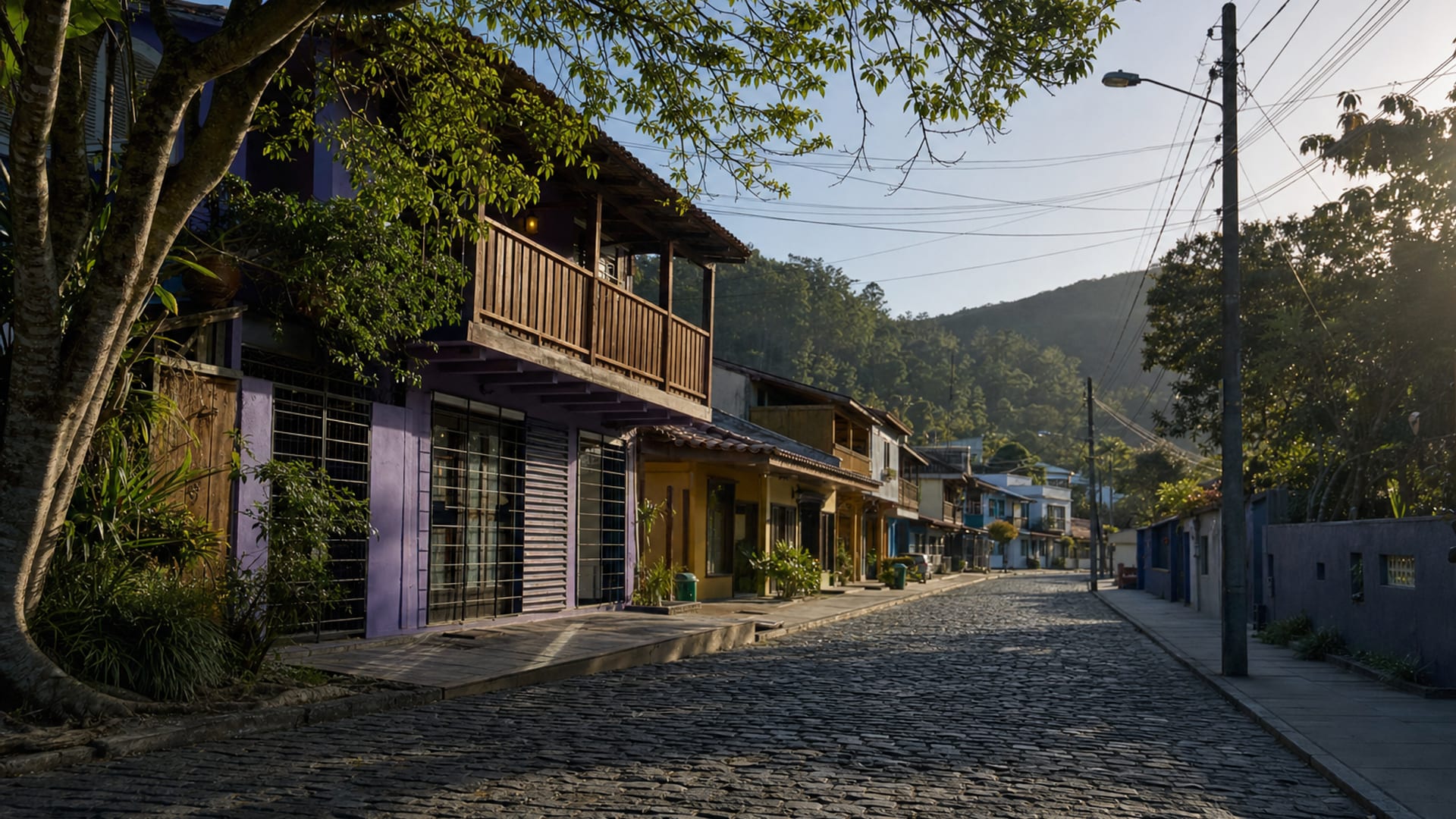
Lagoa da Conceição has developed beside the island’s largest lagoon and is one of Florianópolis’s main residential and leisure areas. The neighborhood stretches between the water and surrounding hills, with roads leading east toward Joaquina, Mole, and Barra da Lagoa beaches.
Best for: Beach days, dining, nightlife, and travelers who want central access to the east side of the island
What to expect: Expect busy sidewalks near the lagoon, steady restaurant traffic, and more people in the evening than during the day.
Hotel prices: Usually about R$350 to R$800 (~$70 to ~$160) per night for well-rated stays
Distance to major sights: About 20 to 35 minutes by car to Centro and roughly 15 to 25 minutes to Joaquina Beach
Quietness: Daytime is active with traffic and visitors; evenings get louder around the main dining streets.
Main trade-off: Rates rise near the lagoon and parking can be limited on peak weekends.
Good to know: Several eastern beaches are within a short drive, including Joaquina, Mole, and Barra da Lagoa.
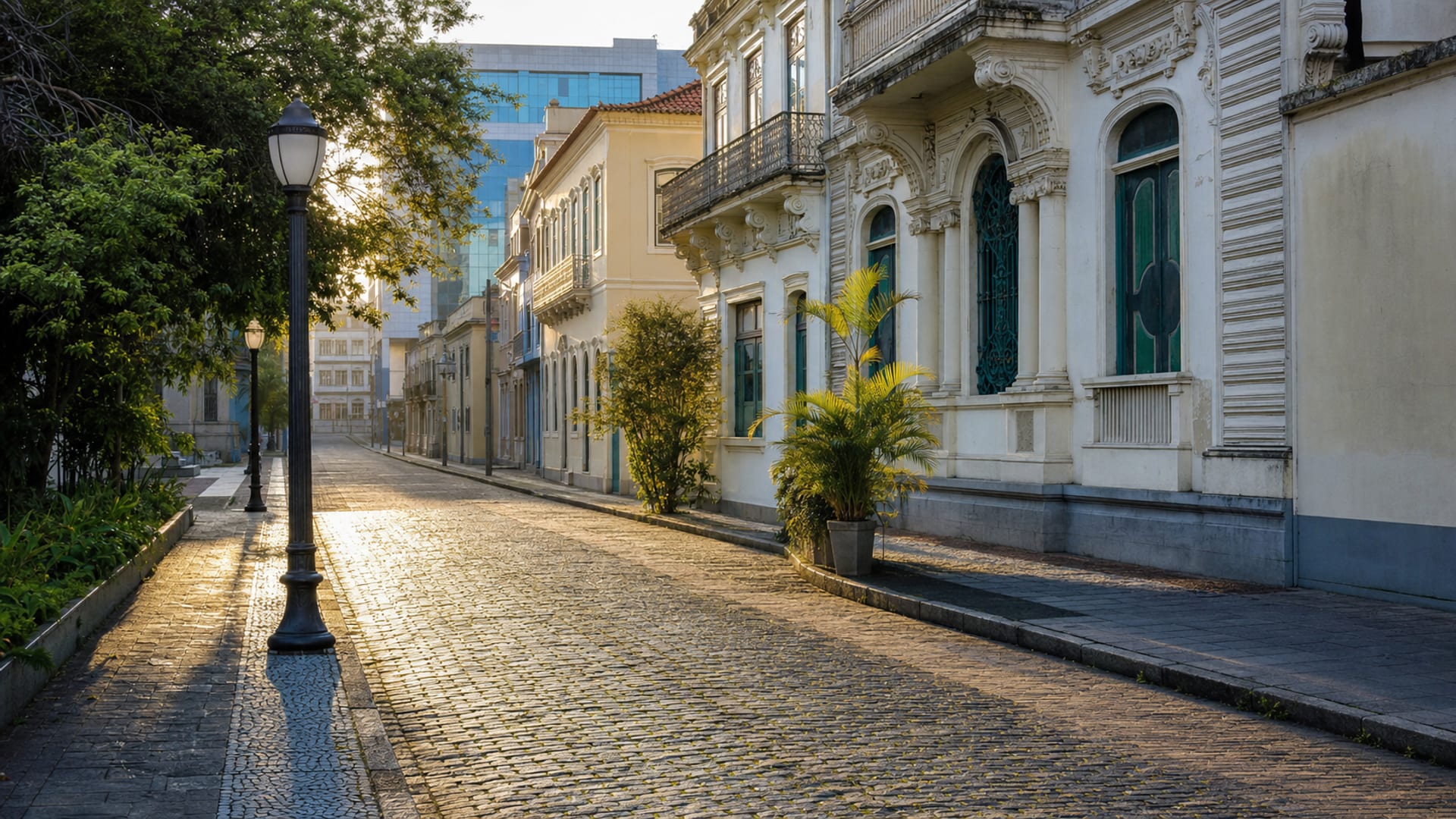
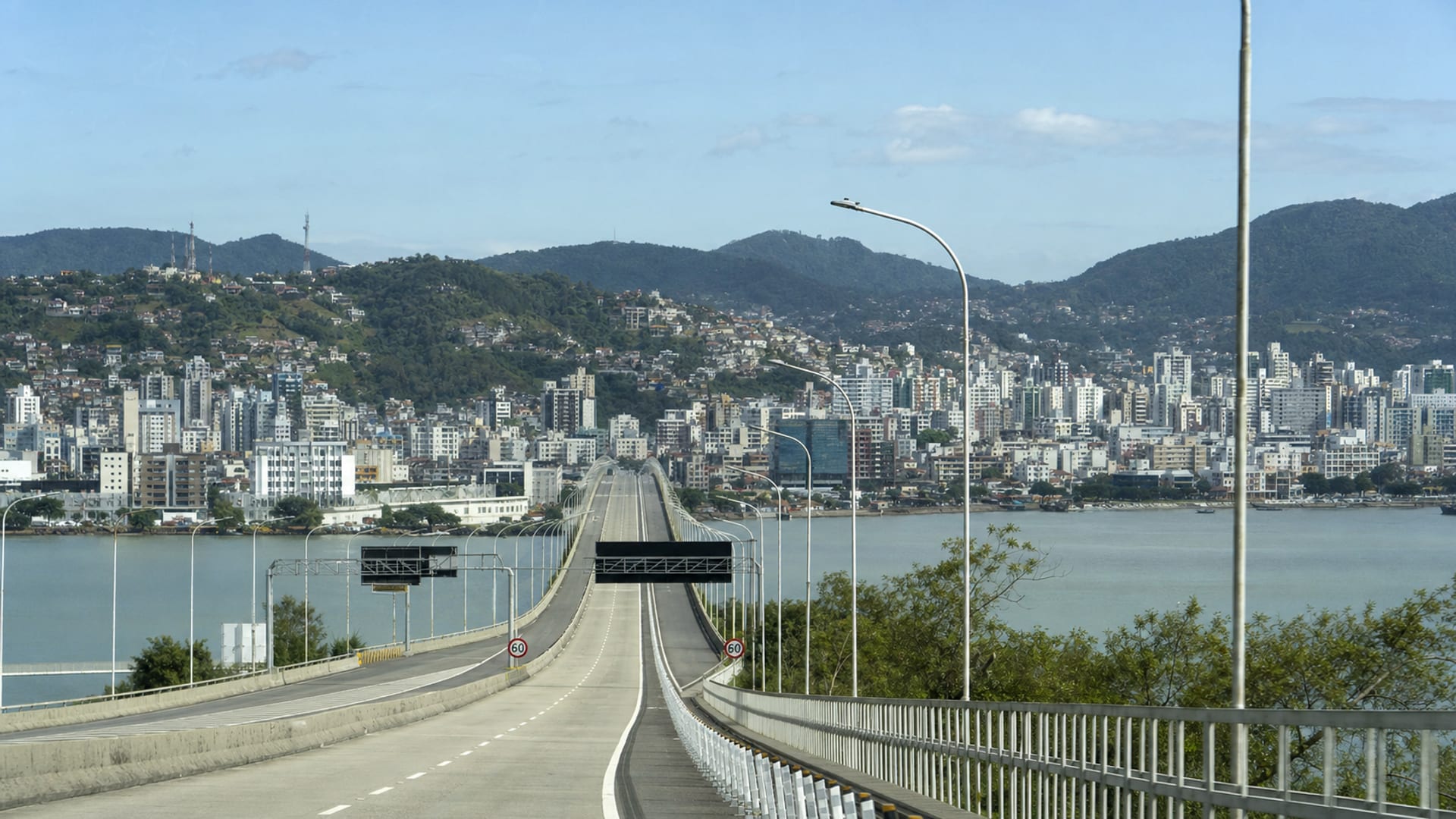
Centro is Florianópolis’s historic and administrative district on the western side of Santa Catarina Island. The Public Market, Praça XV de Novembro, museums, offices, and the old waterfront are here, while the main bus terminal links the district with other parts of the island.
Best for: Business trips, short stays, transit connections, and easy access to markets and historic sights
What to expect: Expect weekday foot traffic, office workers, and a busier pace around commercial streets than on the residential blocks nearby.
Hotel prices: Usually about R$300 to R$650 (~$60 to ~$130) per night for well-rated stays
Distance to major sights: About 10 minutes on foot to Mercado Público and roughly 15 minutes by car to Hercílio Luz Bridge
Quietness: Daytime is active and practical; evenings quiet down quickly outside the restaurant strip.
Main trade-off: You trade beach atmosphere for easier transport and fewer late-night options.
Good to know: The central bus terminal is useful if you plan to rely on public transport for trips across the island.
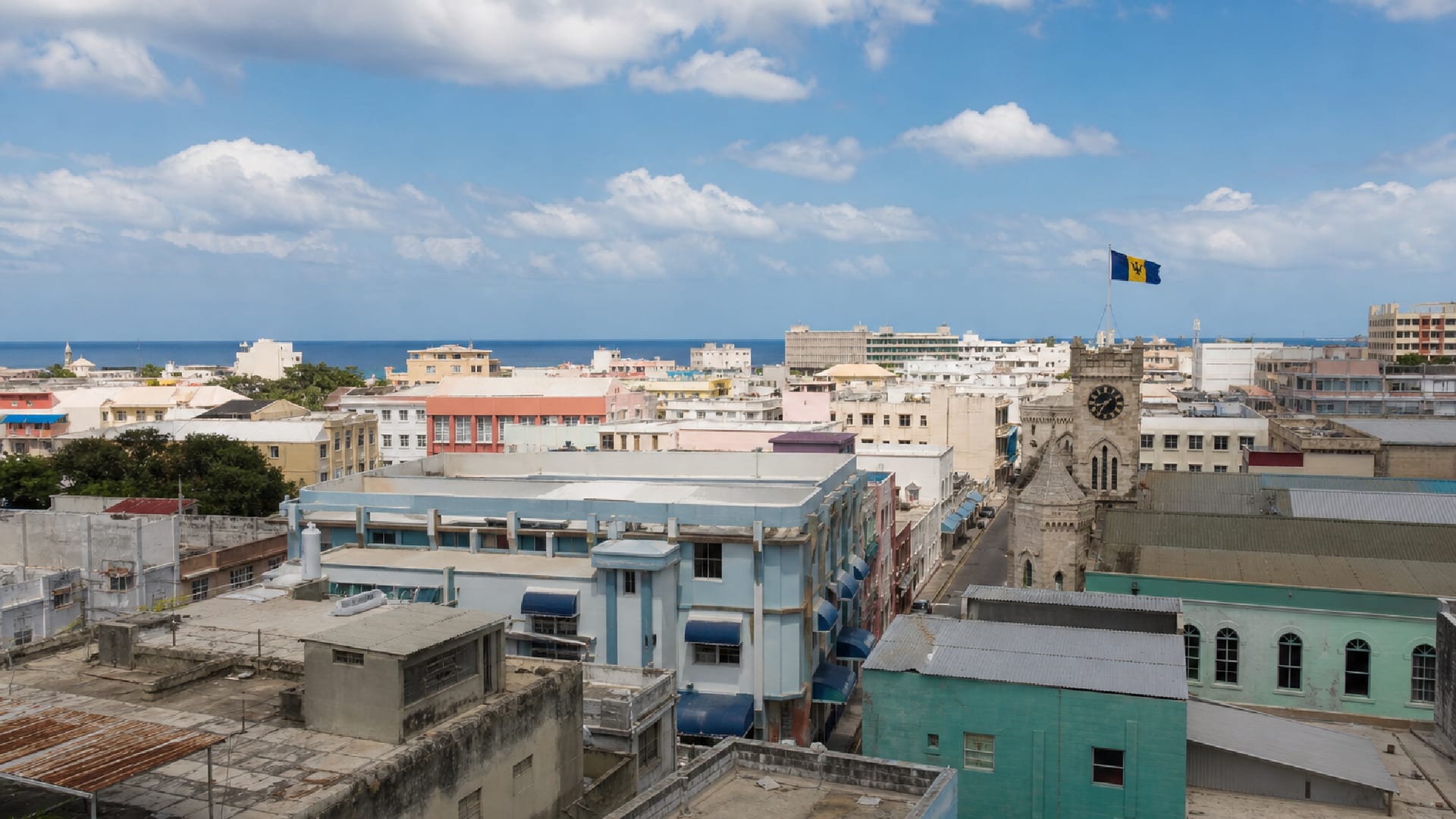
Canasvieiras is a beach district on the north side of Santa Catarina Island. The area grew beside a sheltered bay with shallow water and became one of Florianópolis’s main holiday districts, especially for Brazilian and Argentine visitors during the summer season.
Best for: Families, beach vacations, and travelers who want a more resort-like north-island base
What to expect: Expect heavy seasonal crowds, beachwear on the main streets, and a tourist-focused strip that stays busy in summer.
Hotel prices: Usually about R$280 to R$700 (~$55 to ~$140) per night for well-rated stays
Distance to major sights: About 40 to 55 minutes by car to Centro and roughly 25 minutes to Jurerê Internacional
Quietness: Daytime is crowded on the beach and commercial streets; nights are calmer than the shore itself but still active in season.
Main trade-off: You gain easy beach access, but long rides into Centro or the south side can take time.
Good to know: Canasvieiras is busiest during the Brazilian and Argentine summer holiday period, so hotel rates and traffic can rise sharply from late December through January.
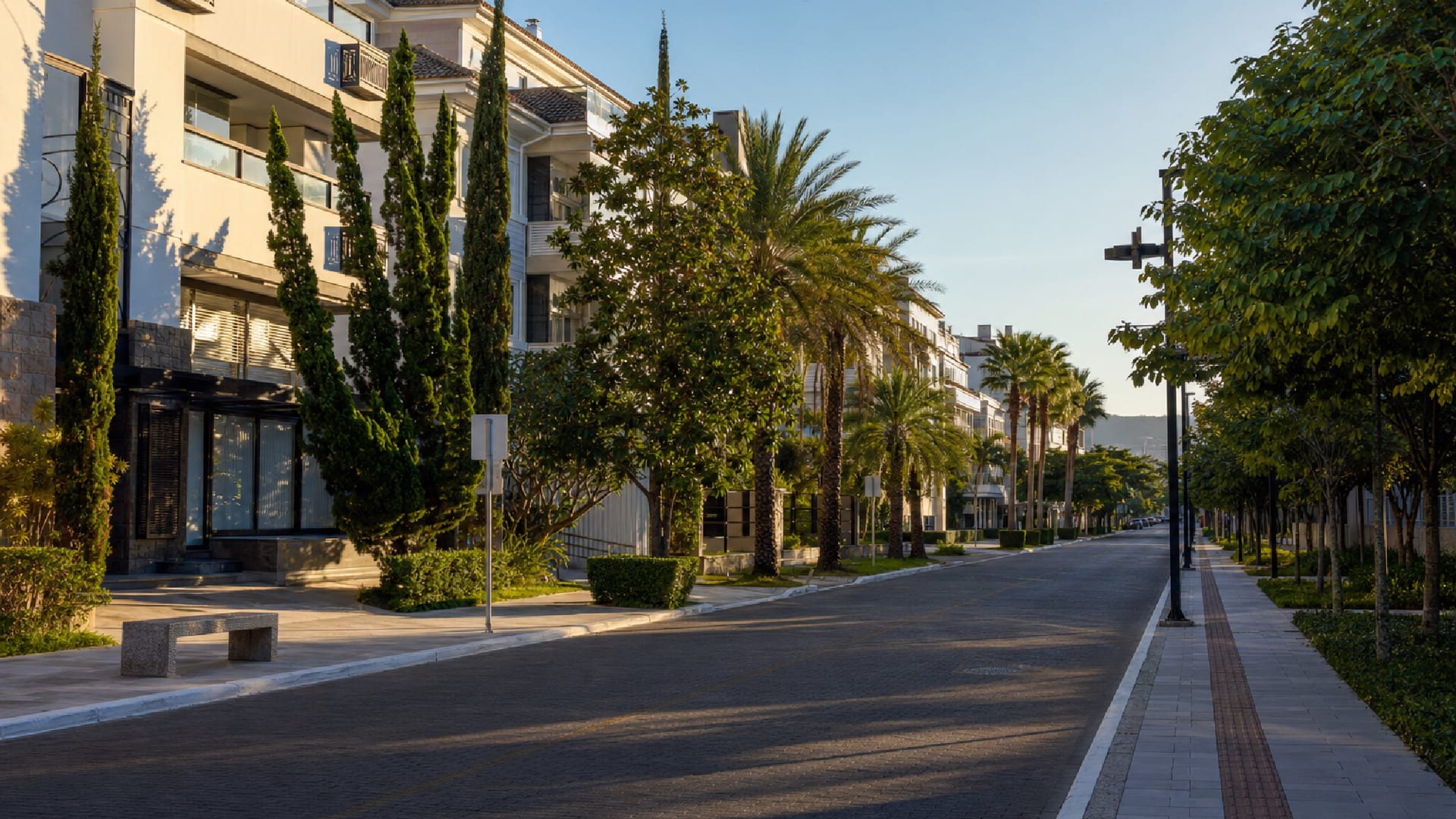
Jurerê Internacional is a beachfront district on the north side of Santa Catarina Island that was developed from the 1980s onward. It has wide streets, large homes, apartment buildings, beach clubs, and a long stretch of beach lined with restaurants and hotels.
Best for: Upscale beach stays, couples, and travelers who want a quieter north-island address with premium hotels
What to expect: Expect orderly streets, well-kept beachfront blocks, and a crowd that grows around beach clubs, restaurants, and holiday weekends.
Hotel prices: Usually about R$500 to R$1,400 (~$100 to ~$280) per night for well-rated stays
Distance to major sights: About 35 to 50 minutes by car to Centro and roughly 10 minutes to Fortaleza de São José da Ponta Grossa
Quietness: Daytime is active near the beach clubs; evenings are calmer on residential streets once the clubs wind down.
Main trade-off: You pay a premium, and the area works best if you are comfortable spending more for a beach-led stay.
Good to know: Fortaleza de São José da Ponta Grossa is nearby and can easily be added to a north-island beach day.
Canasvieiras and Jurerê are less practical if you want to see several parts of Florianópolis on the same trip. Both are in the north of the island, so trips to Centro, Lagoa da Conceição, and the eastern beaches can take a significant amount of time, particularly in heavy traffic.
Hotel deals
How to get around Florianópolis efficiently
Florianópolis covers a large island, and distances between beaches can be significant. Buses, taxis, and ride apps handle most trips outside compact neighborhoods.

Bus
for longer distances
Florianópolis has an extensive bus network linking Centro with the airport, Lagoa da Conceição, and beach districts across the island. A standard cash, Pix, or QR-code fare costs R$7.70 (US$1.50), while a Tourist Card fare costs R$7.20 (US$1.40).

Taxi and rideshare services
for convenience
Taxis, Uber, and 99 are useful for direct trips between the airport, Centro, and beach districts. A taxi from Florianópolis Airport to Centro typically costs about R$65–R$80 (US$12–US$15). Ride-app prices vary with traffic and demand, with the fare shown before booking.

Car rental
for convenience or day trips
Renting a car can make sense if you plan to visit several parts of the island and want more flexibility than buses provide. Premium cars average about R$175 (US$33) per day, while larger models can cost about R$425 (US$80). Localiza, Movida, and Foco are available at or near Florianópolis Airport.
*Prices are based on rates updated as of June 2026 and may change at the time of travel.
Choose buses for trips along established routes, taxis or ride apps for direct travel and luggage, and a rental car if you plan to visit several parts of the island.
Iconic landmarks
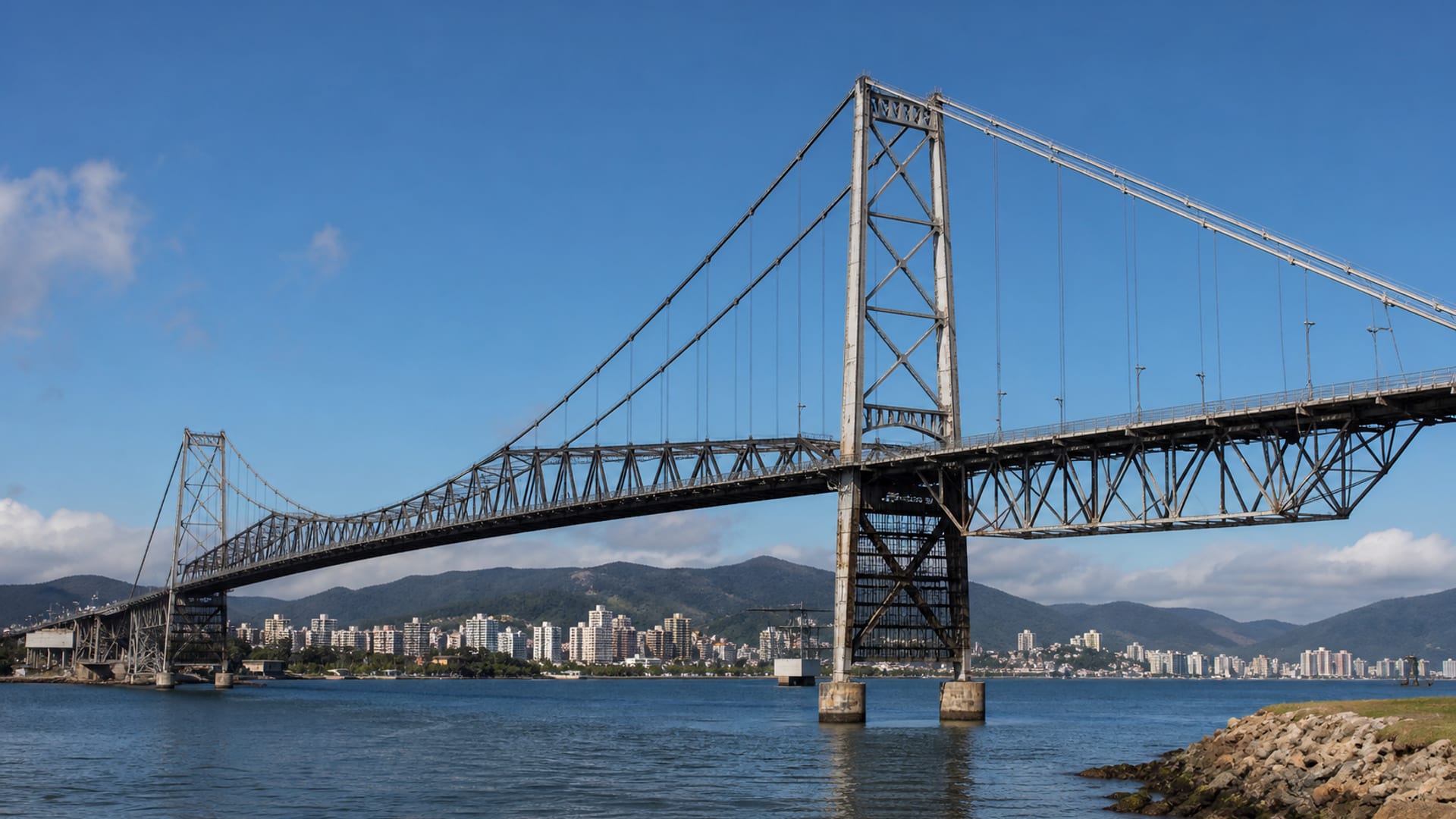
Hercílio Luz Bridge
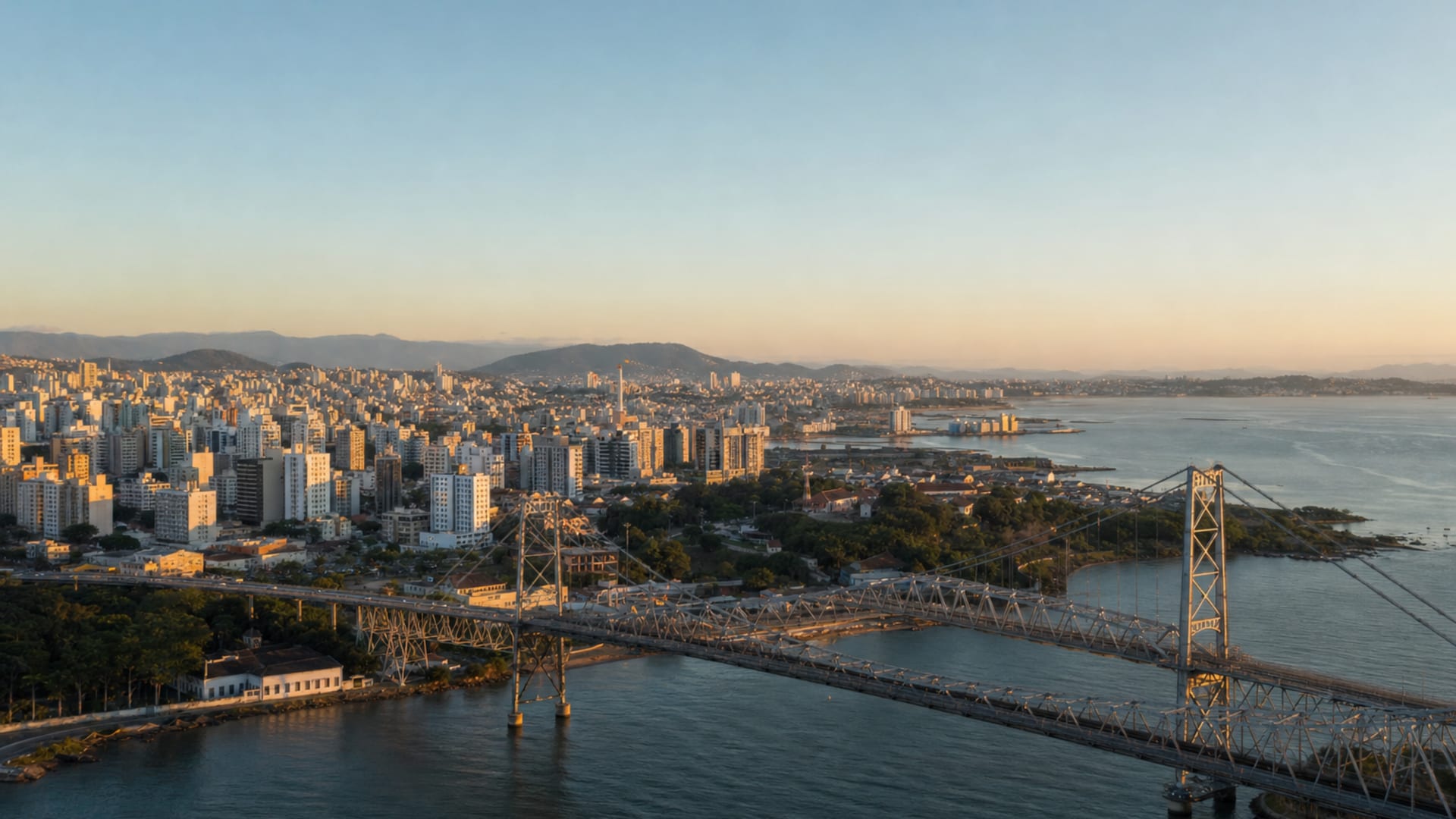
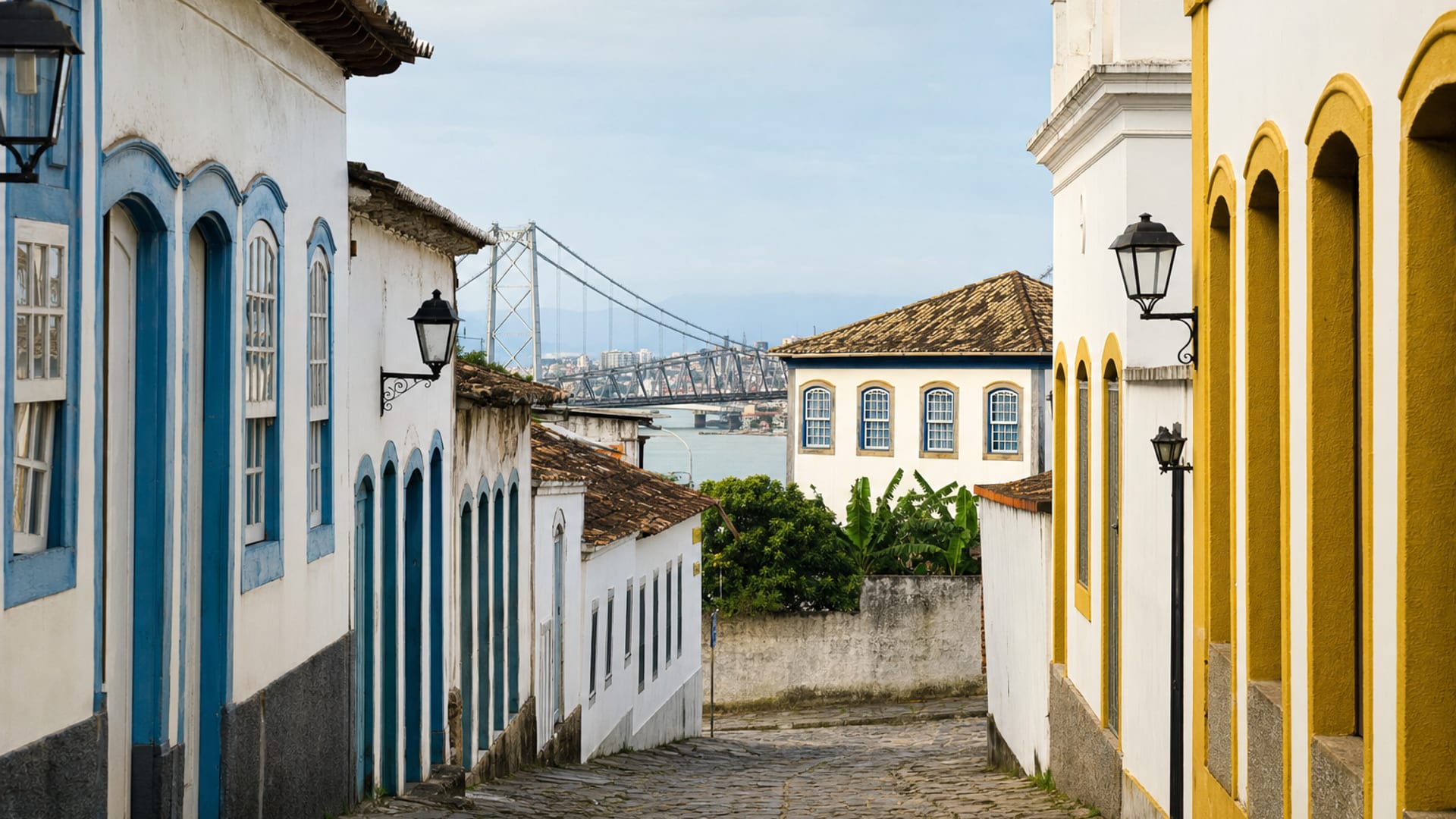
Hercílio Luz Bridge opened in 1926 as the first permanent road link between Santa Catarina Island and the mainland. The 2,694-foot (821 m) suspension bridge was restored and reopened in 2019.
Time needed: About 1 hour
Entry: Free to access; pedestrians and cyclists use the bridge on selected days, while vehicle access depends on current closures and traffic rules. Visit the official site for details.
Tip: Walk through Parque da Luz for a clear view of the bridge before crossing it.
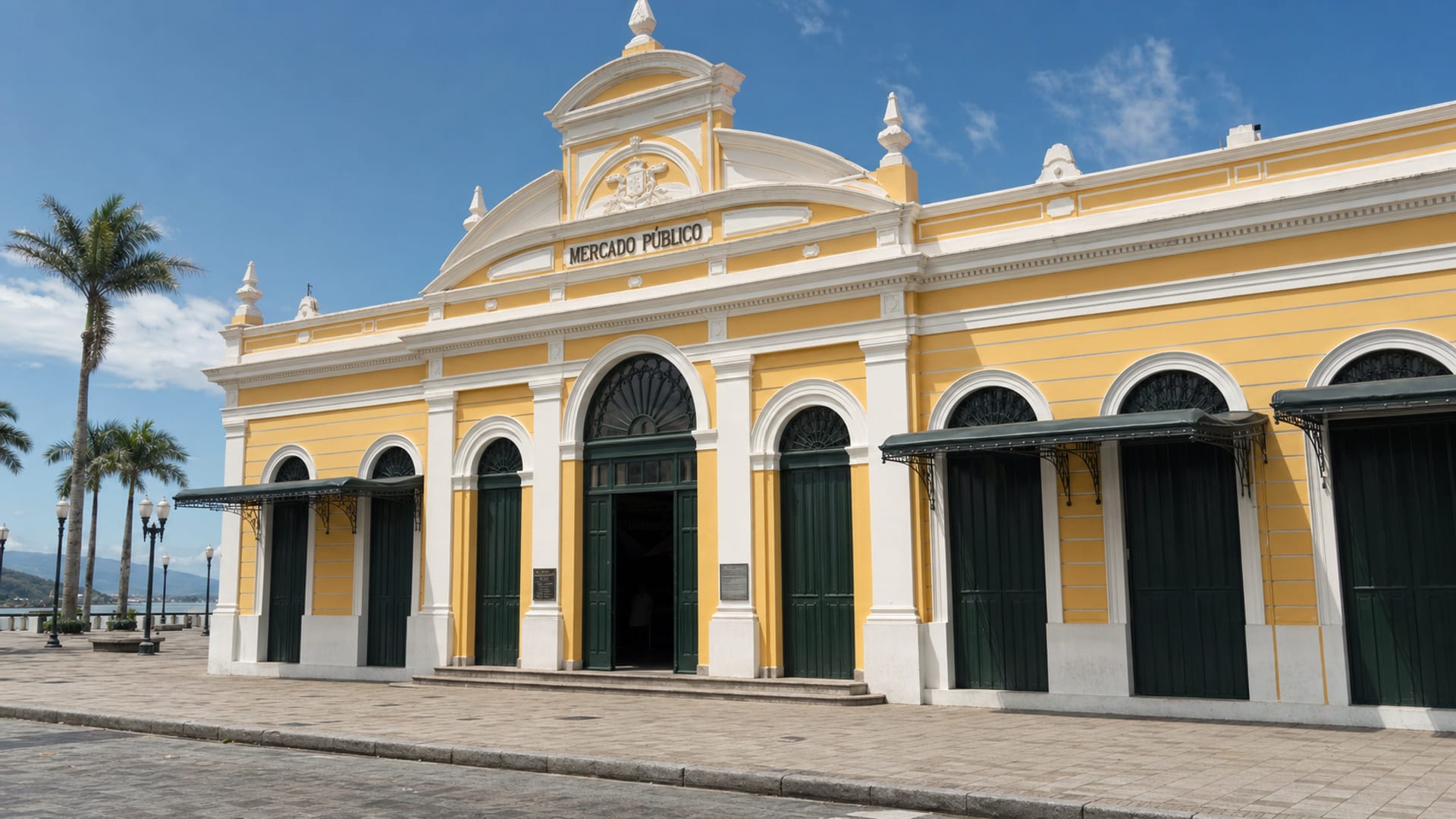
Public Market
Florianópolis Public Market dates to the late 19th century and occupies a historic building in Centro. Its halls contain produce stalls, fish sellers, shops, bars, and restaurants.
Time needed: About 1 to 2 hours
Entry: Free to enter; food, drinks, and market purchases are priced separately, with most snacks and dishes charged by item or portion. Visit the official site for details.
Tip: Try the oysters or shrimp at one of the market restaurants, since both are closely associated with Florianópolis and its seafood culture.
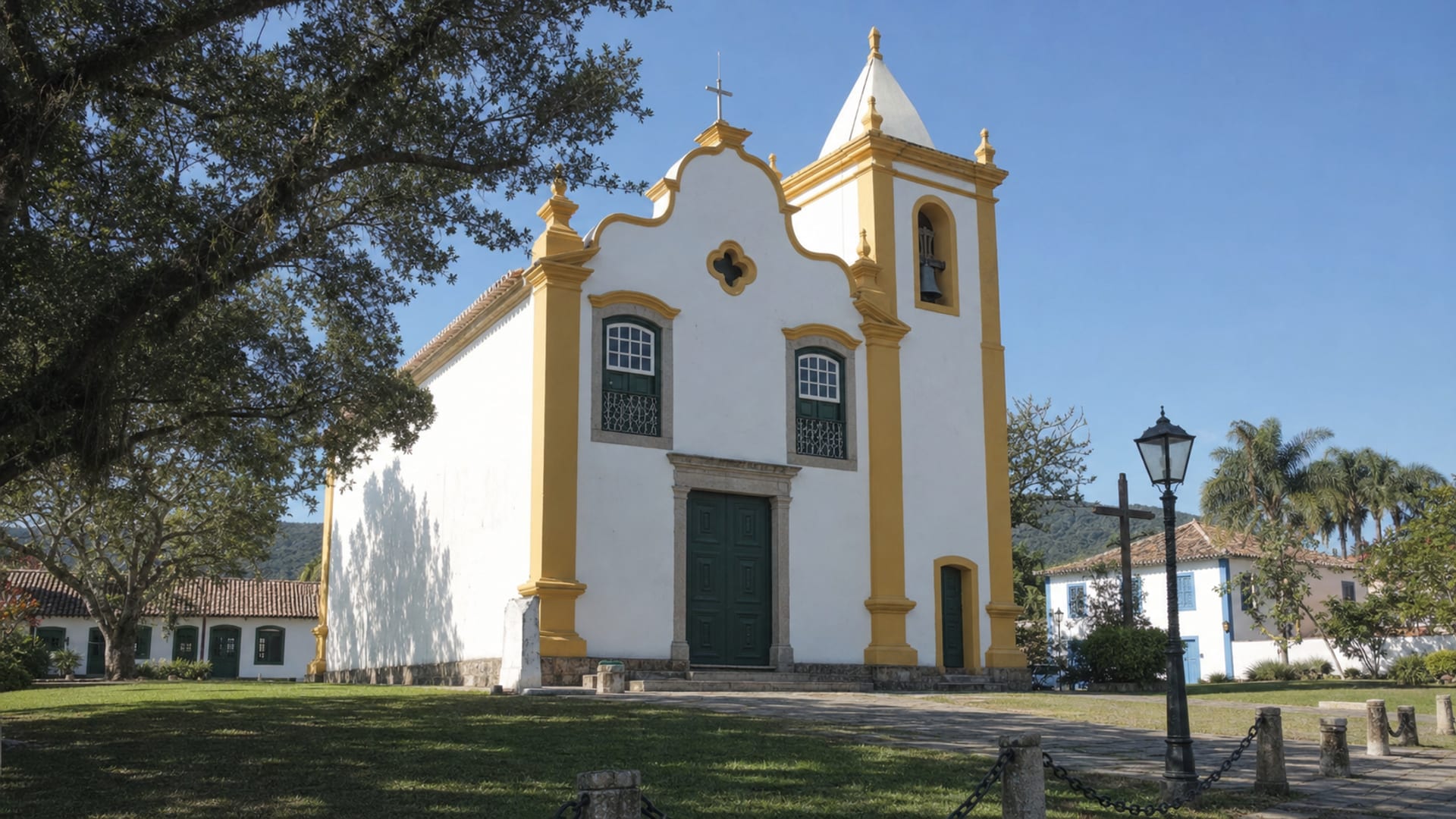
Santo Antônio de Lisboa
Santo Antônio de Lisboa is one of Florianópolis’s oldest districts and still shows much of its Azorean heritage. The small waterfront area has preserved colonial houses and the 18th-century Church of Nossa Senhora das Necessidades.
Time needed: About 2 to 3 hours
Entry: Free to walk the neighborhood; meals, drinks, and boat rides along the waterfront are priced separately by venue or operator.
Tip: Step inside the Church of Nossa Senhora das Necessidades to see its carved wooden altars and painted ceiling.
Overlooked sites worth visiting

Joaquina Dunes
Joaquina Dunes form a large field of white sand between Lagoa da Conceição and Joaquina Beach. Visitors can walk across the dunes, see the Atlantic coast from higher points, or rent a sandboard.
Time needed: About 1 to 2 hours
Entry: Free to access. No admission fee applies for the dunes, and visitors can walk the marked paths, watch the surf from the ridge, or pay separately only if they rent a sandboard from local operators near the beach entrance.
Tip: Bring shoes that feel comfortable on hot sand if you visit midday.

Santa Catarina History Museum
The Santa Catarina History Museum occupies Palácio Cruz e Sousa, an 18th-century former government palace in Centro. The museum focuses on the political and social history of Santa Catarina.
Time needed: About 1 hour
Entry: Admission is free for permanent exhibits, with occasional paid special shows or events that vary by schedule. Check the museum’s posted hours before you go, since access depends on opening days and room availability inside the palace. Visit the official site for details.
Tip: Praça XV de Novembro is right outside, so you can also see its century-old fig tree.
Traditional food
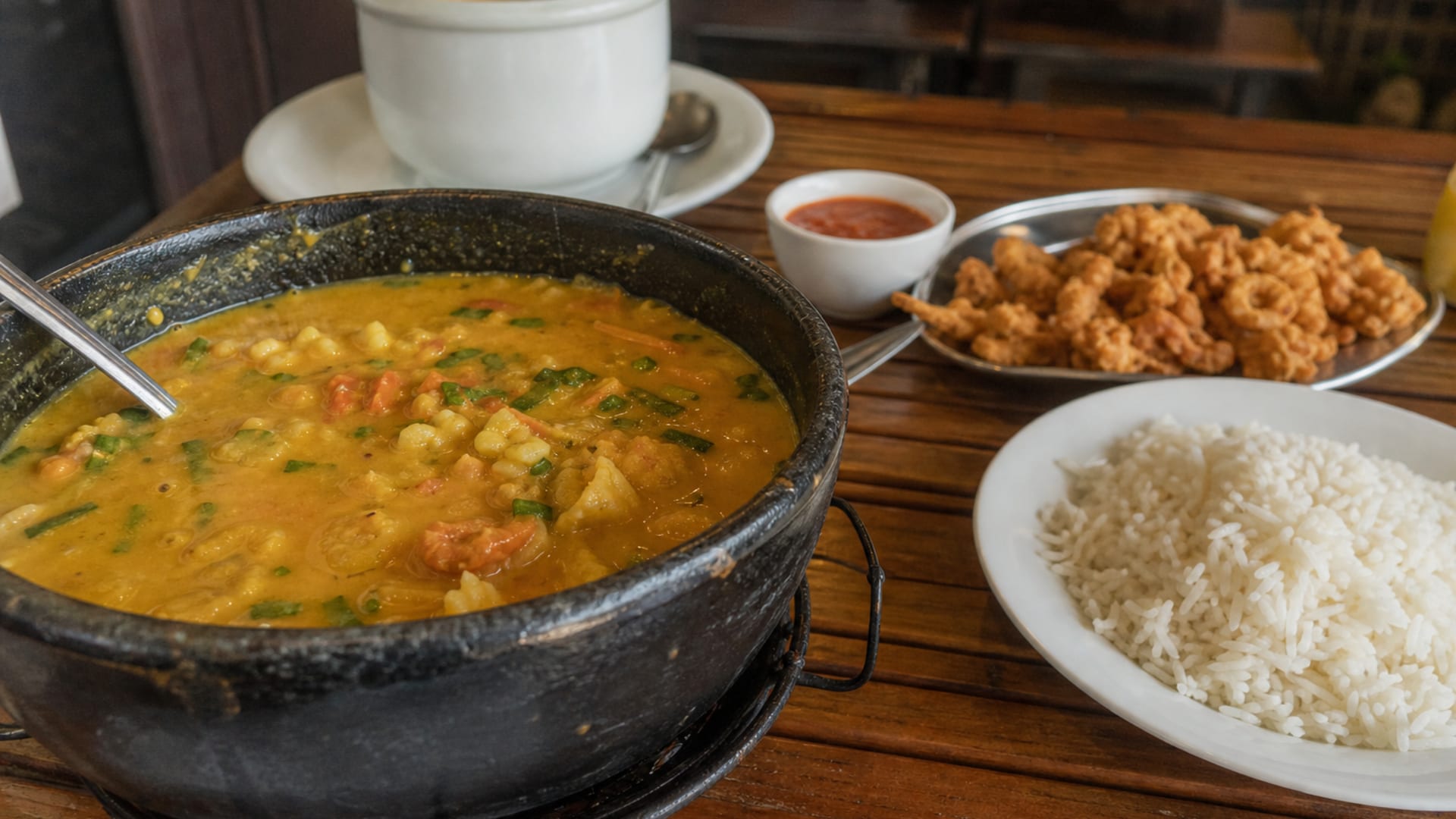
Florianópolis is known for seafood, especially oysters, shrimp, and mullet. Many traditional dishes reflect the fishing communities and Azorean influence found along the island’s coast.
Pirão de peixe
Pirão de peixe is made by thickening fish broth with cassava flour until it becomes smooth and creamy. Restinga serves it with fish and shrimp sauce.
Tainha assada
Tainha assada is whole mullet grilled or roasted and usually served with rice, salad, or pirão, a thick cassava-flour accompaniment. Rancho Açoriano is a good place to try it.
Sequência de camarão
Sequência de camarão is a meal with shrimp served in several ways, often with fish, rice, fries, and other sides. O Timoneiro serves breaded, garlic, and steamed shrimp.
Ostras
Florianópolis oysters are commonly served raw, steamed, baked, or gratinated. Ostradamus in Ribeirão da Ilha serves several oyster dishes, including options with cheese, herbs, and sauces.
Best time to visit Florianópolis
Florianópolis has warm summers, mild winters, regular rainfall throughout the year, and humid coastal weather. Sea temperatures and rainfall also change through the seasons.
Best for: Swimming, beaches, boat trips, Lagoa da Conceição, and outdoor dining
What you get: Daytime highs usually reach 82°F to 86°F (28°C to 30°C), with warm water, long days, humidity, and frequent summer rain.
Trade-offs: December through February brings heavy demand for hotels, restaurants, parking, and beach roads.
Best for: Beaches in March, Centro, lagoons, trails, and sightseeing across the island
What you get: Daytime highs fall from about 81°F (27°C) in March to 72°F (22°C) in May, with mild evenings and regular rain.
Trade-offs: Water temperatures fall later in the season, and some beach businesses reduce their hours.
Best for: Centro, museums, historic districts, seafood restaurants, and coastal walks
What you get: Daytime highs usually reach 68°F to 72°F (20°C to 22°C), with cool nights and periods of rain and wind.
Trade-offs: he sea is cold for swimming, and strong winds can affect beach plans.
Best for: Beaches, trails, Lagoa da Conceição, dunes, and sightseeing before summer
What you get: Daytime highs rise from about 70°F (21°C) in September to 79°F (26°C) in November, with warmer days as summer approaches.
Trade-offs: Rain and wind can interrupt beach plans, especially early in the season.
A realistic 5-day plan in Florianópolis
Five days is enough to see several parts of Florianópolis without spending every day crossing the island. This plan mixes beaches, history, food, and outdoor activities, while keeping each day focused on places that are close to each other.
After landing at Florianópolis Airport (FLN), take a taxi to your hotel. If you are staying near Lagoa da Conceição, walk through Praça Bento Silvério and see the nearby Church of Nossa Senhora da Conceição and Casarão Bento Silvério. If you arrive early enough, rent a kayak or paddleboard on the lagoon. Before dinner, stop at the Morro da Lagoa viewpoint for views over the lagoon, Joaquina Dunes, and the coast.
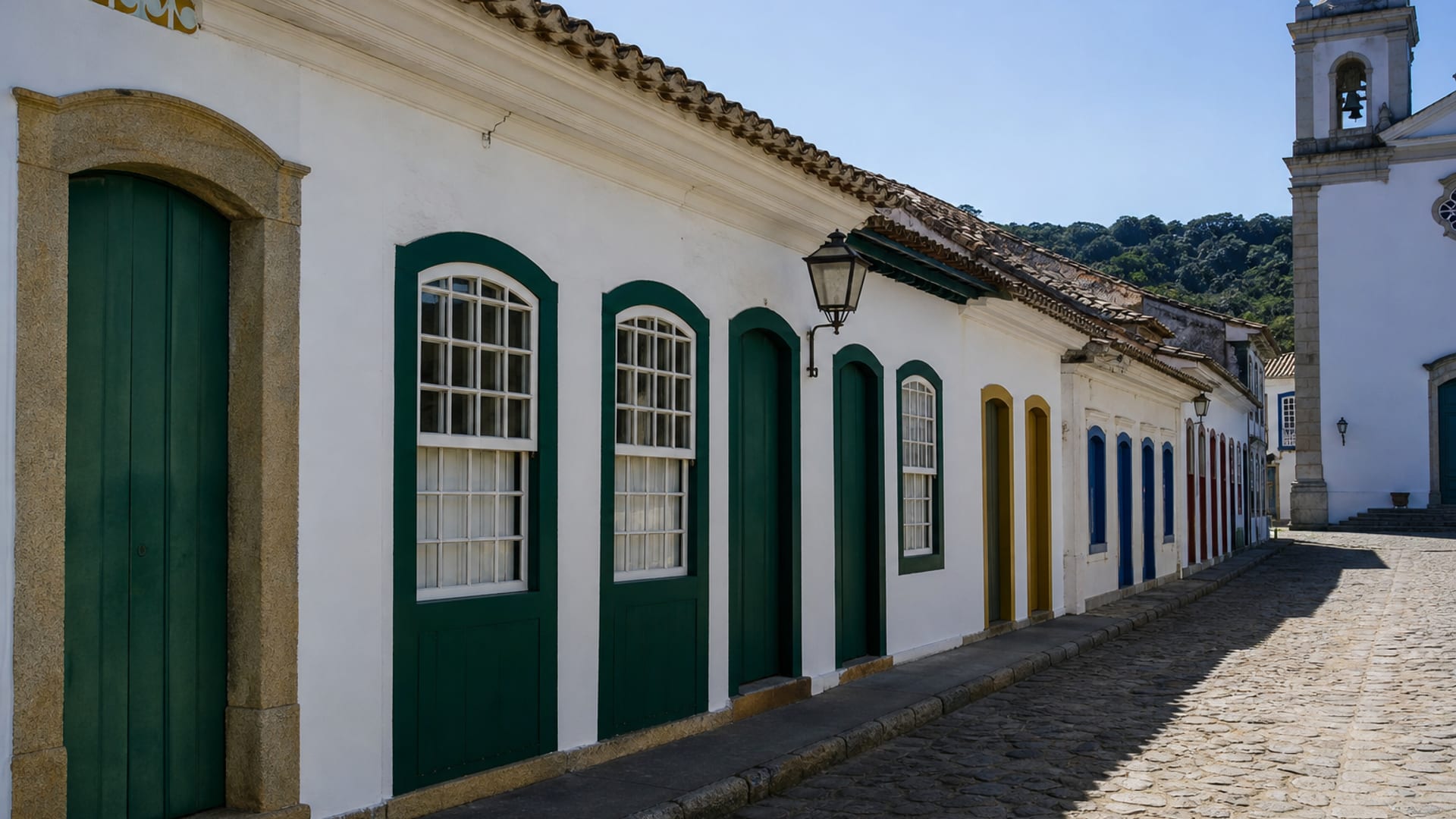
Begin at the Public Market, then walk to Praça XV de Novembro to see its century-old fig tree and the Metropolitan Cathedral. At Palácio Cruz e Sousa, the Santa Catarina History Museum explains the state’s political and social history through the former government palace and its collections. You can also visit the nearby Museum of Florianópolis, which has exhibits on the city’s history, geography, and development. Later, head to Parque da Luz and walk toward Hercílio Luz Bridge for views across the bay.
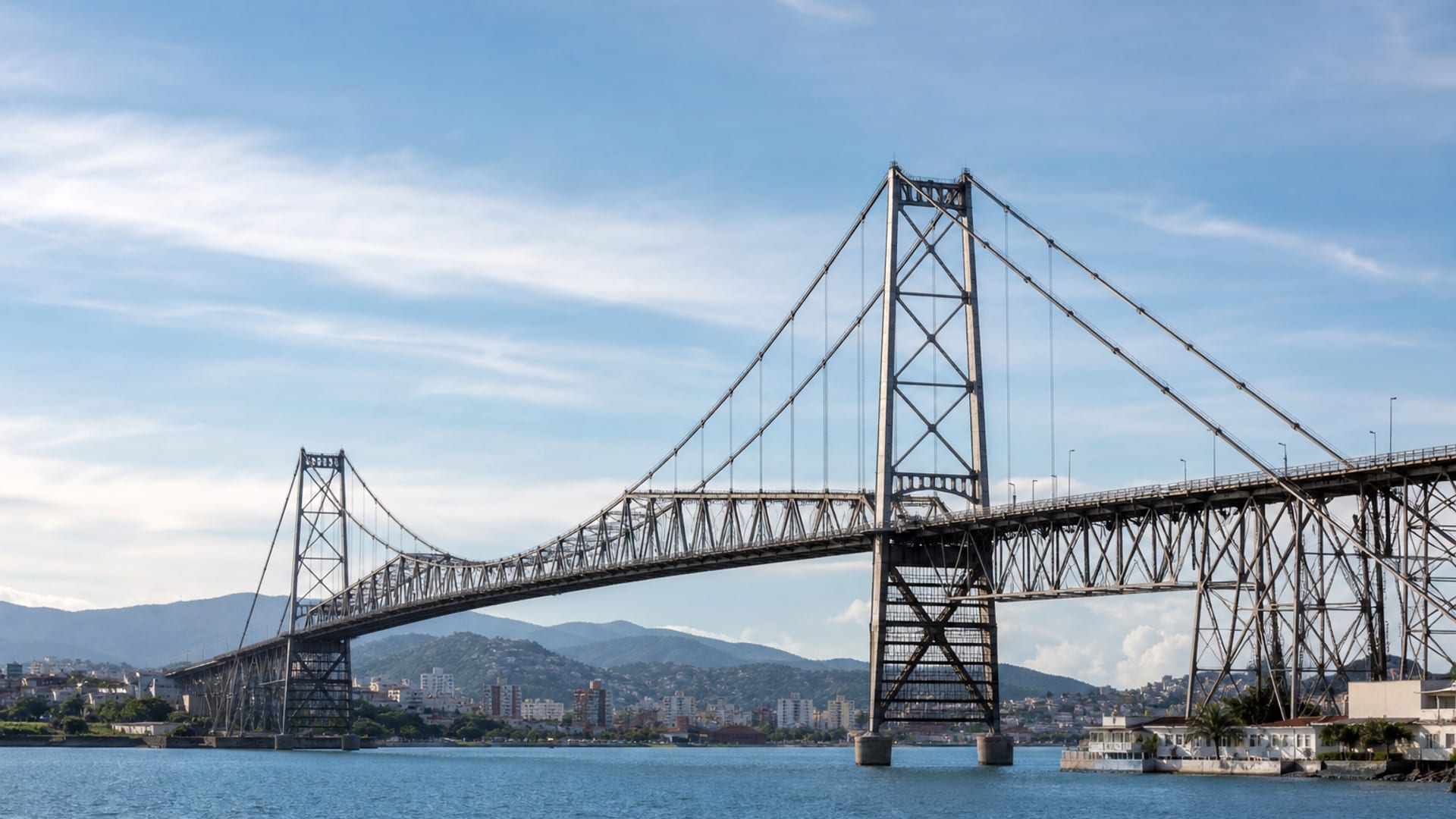
Spend the morning at Joaquina Dunes, where you can climb the dunes for views of the ocean and Campeche Island or rent a board and try sandboarding. Continue to Joaquina Beach afterward for lunch and time by the water. The beach is one of the island’s best-known surfing spots, so you can watch surfers or book a lesson if you want to get in the water. On the rocky sections near the shore, look for archaeological stone-polishing marks left by Indigenous communities that lived on the island centuries ago.
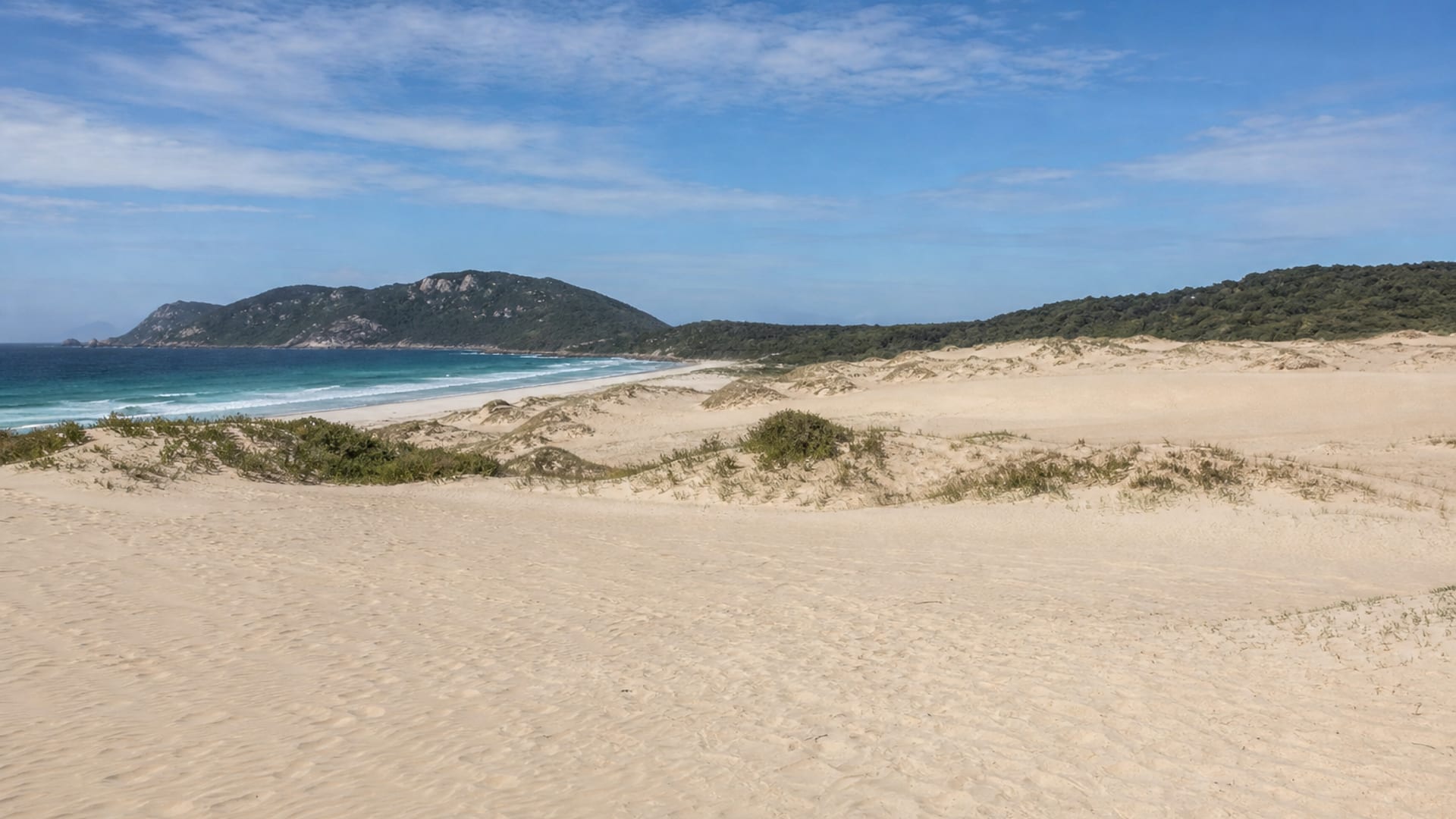
In Santo Antônio de Lisboa, visit the Church of Nossa Senhora das Necessidades and walk through the streets near the waterfront, where colonial buildings reflect the area’s Azorean history. Have lunch by the bay, then head to Fortaleza de São José da Ponta Grossa. The 18th-century fortress has three cannon batteries, old military buildings, and a chapel, with views across the North Bay from the terraces. Finish the day at nearby Praia do Forte or Jurerê, where you can spend time on the beach before dinner.
Keep the last morning simple. Have breakfast near the lagoon, then spend an hour or two on the water with a kayak or paddleboard. If you prefer to stay on land, walk along Avenida das Rendeiras and stop at one of the cafés facing the lagoon. Have lunch nearby, then collect your luggage and head to Florianópolis Airport.
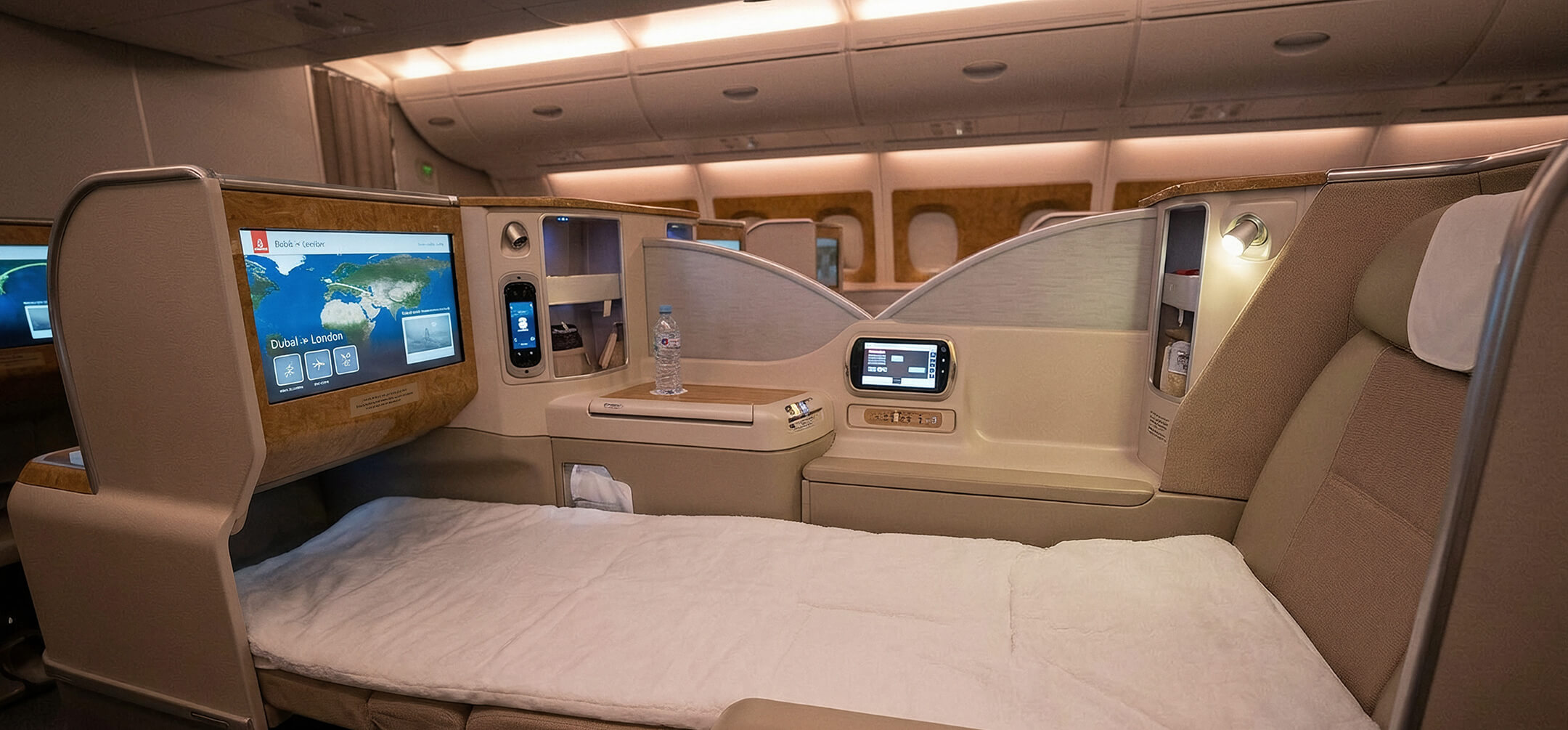
Business-class flights from the US to Florianópolis
For long-haul arrivals, the flight examples below show how fares and routing tend to vary between the East Coast and the West Coast. The nonstop option is shorter from New York, while Los Angeles usually calls for a connection.
From New York, American Airlines, Delta Air Lines, LATAM Airlines, Azul Brazilian Airlines, Copa Airlines, and TAP Air Portugal appear on typical itineraries, with nonstop flying time of about 10 to 11 hours. One-stop options commonly connect through GRU, GIG, BOG, MIA, or PTY, and the trip often takes about 13 to 18 hours overall. Round-trip fares from New York usually start near $2,800 and can reach $6,500.
Los Angeles travelers usually see American Airlines, Delta Air Lines, LATAM Airlines, Copa Airlines, and Air Canada on the route, with one-stop itineraries through GRU, GIG, BOG, PTY, or MEX. Total travel time commonly lands in the 17 to 24 hour range, and round-trip fares from Los Angeles usually run from $3,200 to $7,200.
Florianópolis beyond the beaches
Florianópolis is not just a beach-and-resort destination. Its history, Azorean heritage, food culture, and everyday city life give the island much more depth than its coastline alone suggests.
Once you are ready to go, AranGrant can help you compare business-class flights to Florianópolis and choose an itinerary that fits your travel dates and schedule.