

Chapters:

Need help with your trip?
Our support team is available 24/7. Request a callback or call us directly at (833) 619-0908
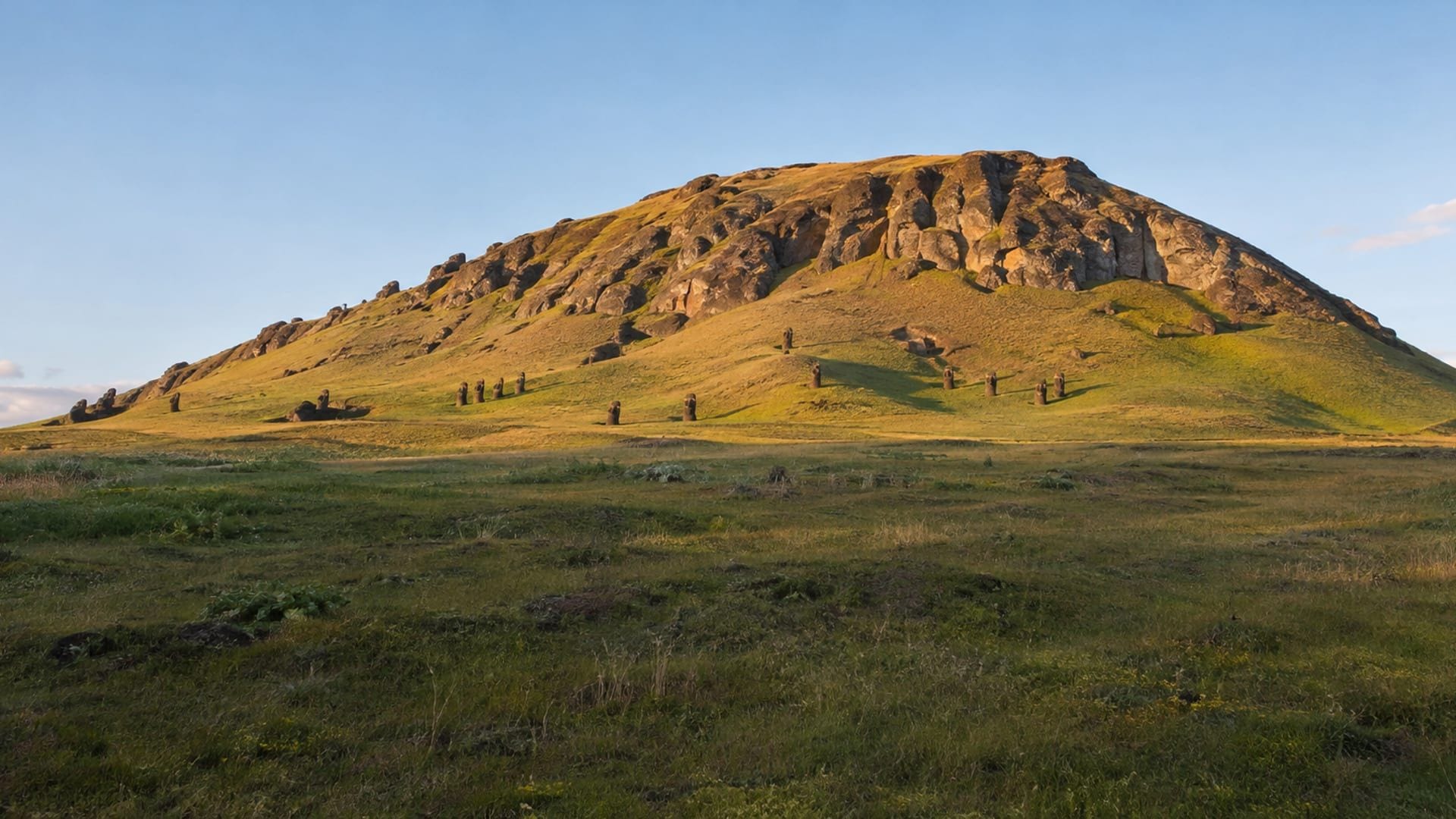
Easter Island’s volcanic stone connects its moai to the landscape that produced them. Sculptors carved most of these figures at Rano Raraku, leaving unfinished statues attached to the rock and hundreds of others along the quarry slopes.
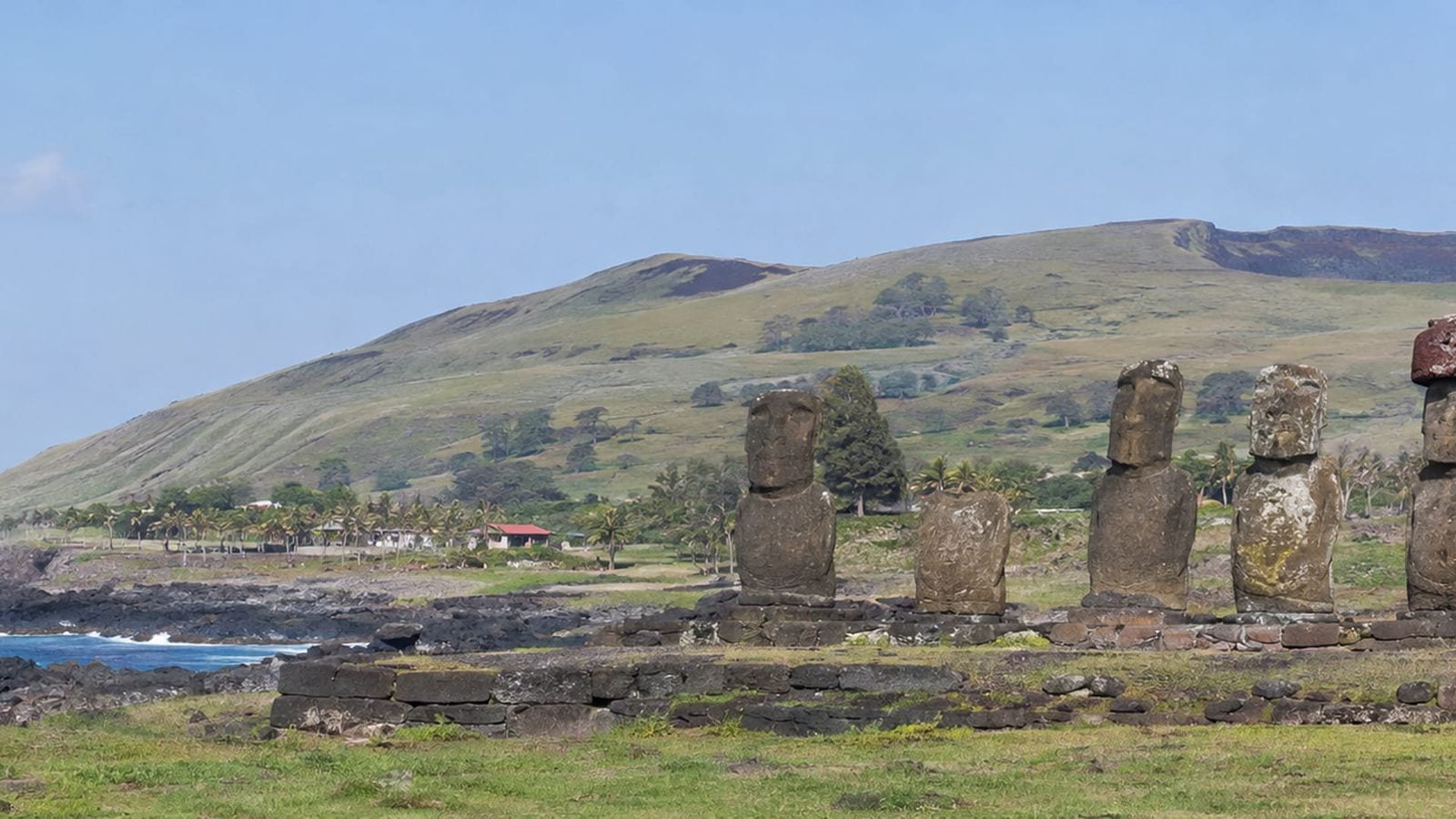
At Ahu Tongariki, fifteen restored moai face inland with the Pacific behind them. Rano Raraku reveals the stages of their creation, while Orongo’s stone houses introduce the birdman traditions that followed the island’s great era of statue building.
Five days allow time for these different chapters, with Hanga Roa providing restaurants and lodging on the western coast. Arrange an accredited guide and Rapa Nui National Park admission for the main archaeological sites, then group excursions by location.
Useful things to know

Main language(s): Spanish, Rapa Nui
Hola (OH-lah) – Hello
Por favor (por fah-VOR) – Please
Gracias (GRAH-syahs) – Thank you
¿Habla inglés? (AH-blah een-GLEHS) – Do you speak English?
¿Cuánto cuesta? (KWAHN-toh KWEHS-tah) – How much does it cost?

Currency: Chilean peso (CLP, CL$)

Cash and cards: Cards are widely accepted in Hanga Roa; carry CLP 30,000 to CLP 50,000 ($30 to $50) for small purchases.

Tipping: Leave 10% at restaurants if satisfied; the suggested tip is voluntary.

Traditional food: Umu Rapa Nui, po’e, tuna ceviche, and tuna empanadas are among the classic dishes of Easter Island.

Water and coffee costs: Bottled water CLP 1,500 to CLP 3,000 ($2 to $3); espresso CLP 2,500 to CLP 4,000 ($3 to $4).

Taxis and ride apps: Find licensed taxis at the airport and confirm the fare before departure; Uber.

Plug and voltage: Type C/L socket, 220V

Dining and shop opening hours: Breakfast: 7 am to 10 am; lunch: 1 pm to 3 pm; dinner: 7 pm to 10 pm. Shops generally open 9 am to 8 pm; some close for lunch or on Sundays.

Emergency number: Police 133, ambulance 131, fire 132.
Where to stay in Easter Island
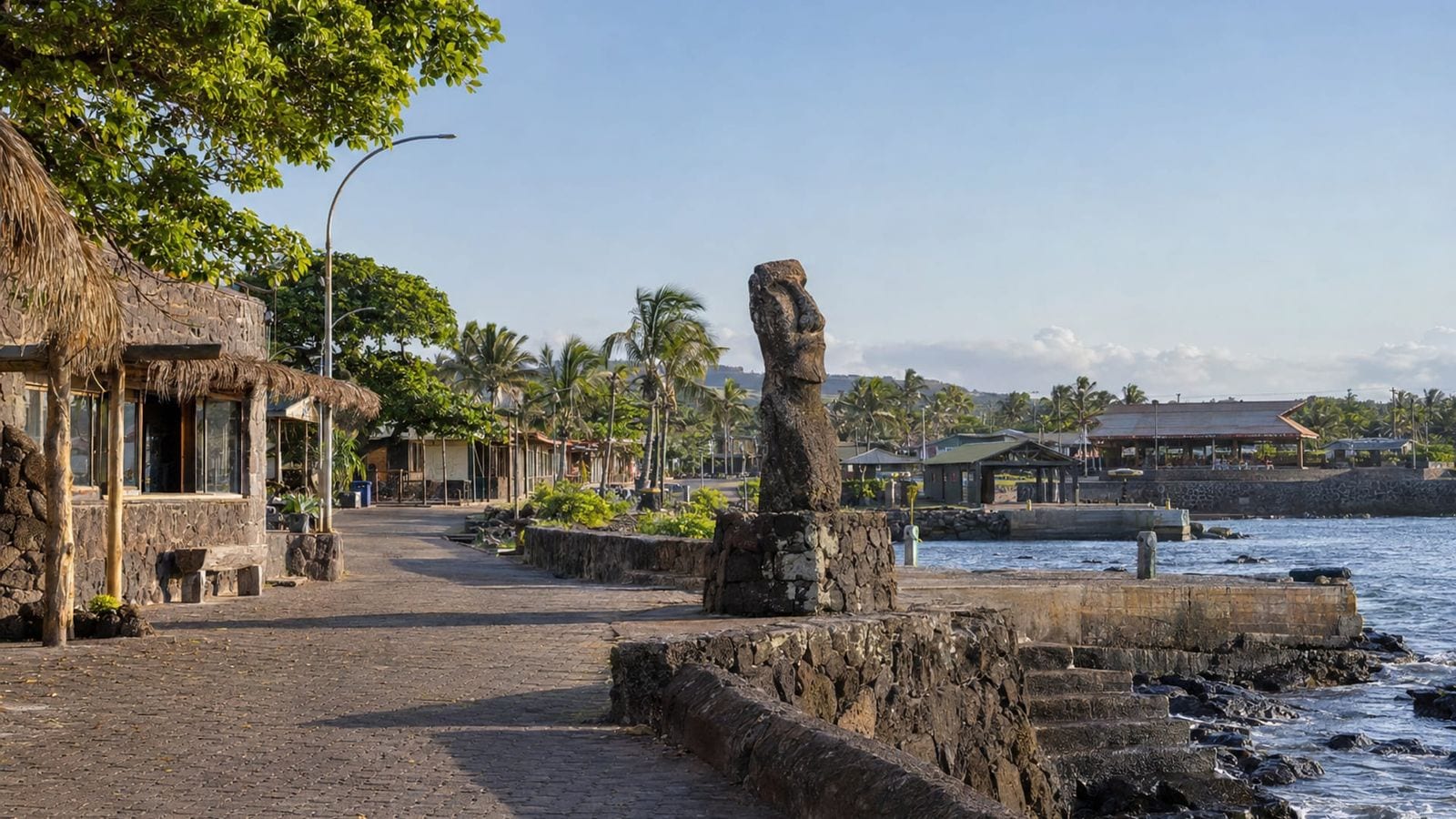
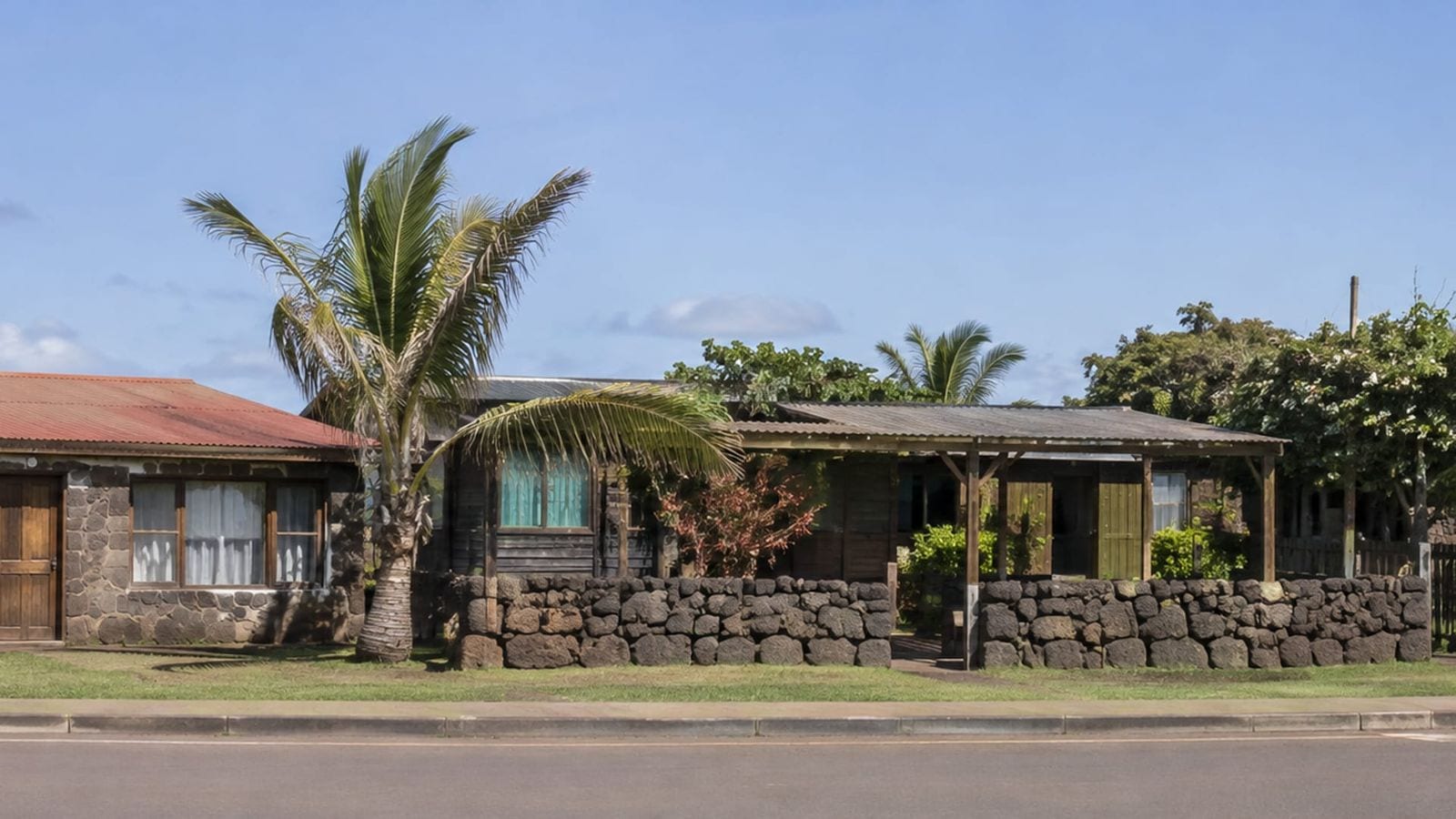
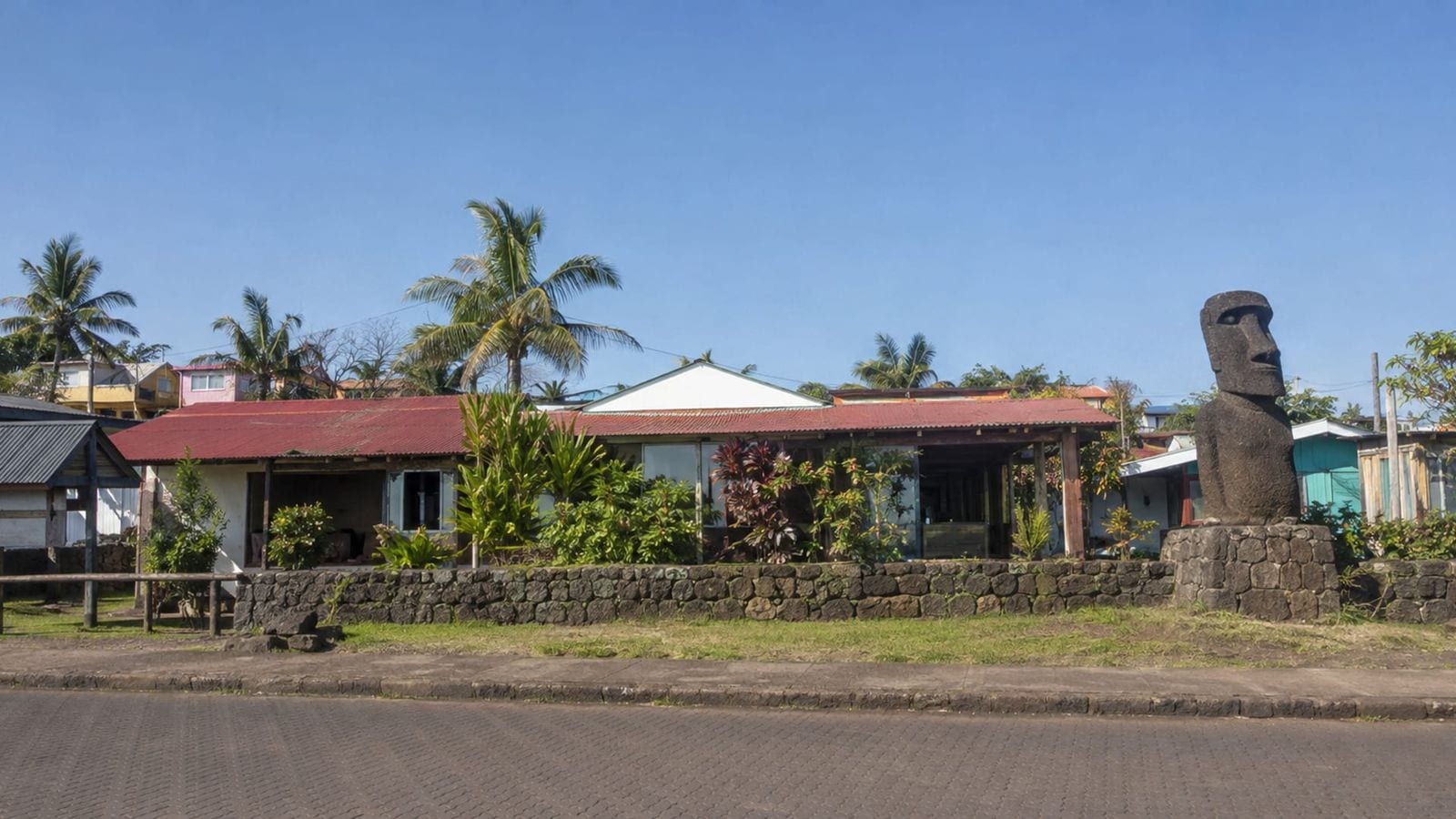
Hanga Roa is Easter Island’s main town, where guesthouses, small hotels, restaurants, and shops cluster near the island’s western coast. Stay here for the island’s widest choice of places to eat and sleep, with waterfront walks and access to Tahai without a drive across the island.
Best for: Dining choices, coastal walks, and access to shops and tour departures
What to expect: Small hotels and restaurants line residential roads, with more activity near the waterfront.
Hotel prices: Well-rated hotels cost CLP 100,000 to CLP 250,000 ($105 to $265) a night.
Distance to major sights: Tahai is a 15 to 30-minute walk from central Hanga Roa.
Quietness: Central roads have daytime traffic; evenings are quieter away from waterfront restaurants.
Main trade-off: Reaching archaeological sites across the island requires transport, even from the town center.
Good to know: Compare the hotel’s map location before booking: properties on the town’s outskirts can require taxis for dinner.
Lodgings far from Hanga Roa’s center are less convenient: most restaurants and shops are in town, and staying outside walking distance means arranging transport for evening meals.
Hotel deals
How to get around Easter Island efficiently
Walking connects Hanga Roa’s restaurants and waterfront, while taxis and rental cars reach Easter Island’s more distant archaeological sites.

Taxi
for convenience or late hours
Within Hanga Roa, taxis charge agreed fares, typically CLP 3,000 to CLP 6,000 ($3 to $7). Confirm the total before boarding. Trips from the airport to central Hanga Roa take 5 to 10 minutes; taxis suit luggage transfers and evening trips.

Walking
for short central distances
From central Hanga Roa, the walk to Tahai takes 20 to 30 minutes along the waterfront. Walking costs nothing and suits trips between town restaurants, shops, and the coast. Carry a flashlight for the return after sunset, as lighting is limited.
Rental car
for day trips and flexibility
Reaching Anakena from Hanga Roa takes about 30 minutes by car. Rentals typically cost CLP 60,000 to CLP 100,000 ($65 to $110) per day and suit trips beyond town. Arrange a rental in Hanga Roa; archaeological sites can also require an authorized guide.
*Prices are based on rates updated as of November 2026 and may change at the time of travel.
Choose walking for Hanga Roa’s waterfront, taxis for airport transfers and evening meals, and a rental car for trips to Anakena and distant archaeological sites.
Iconic landmarks
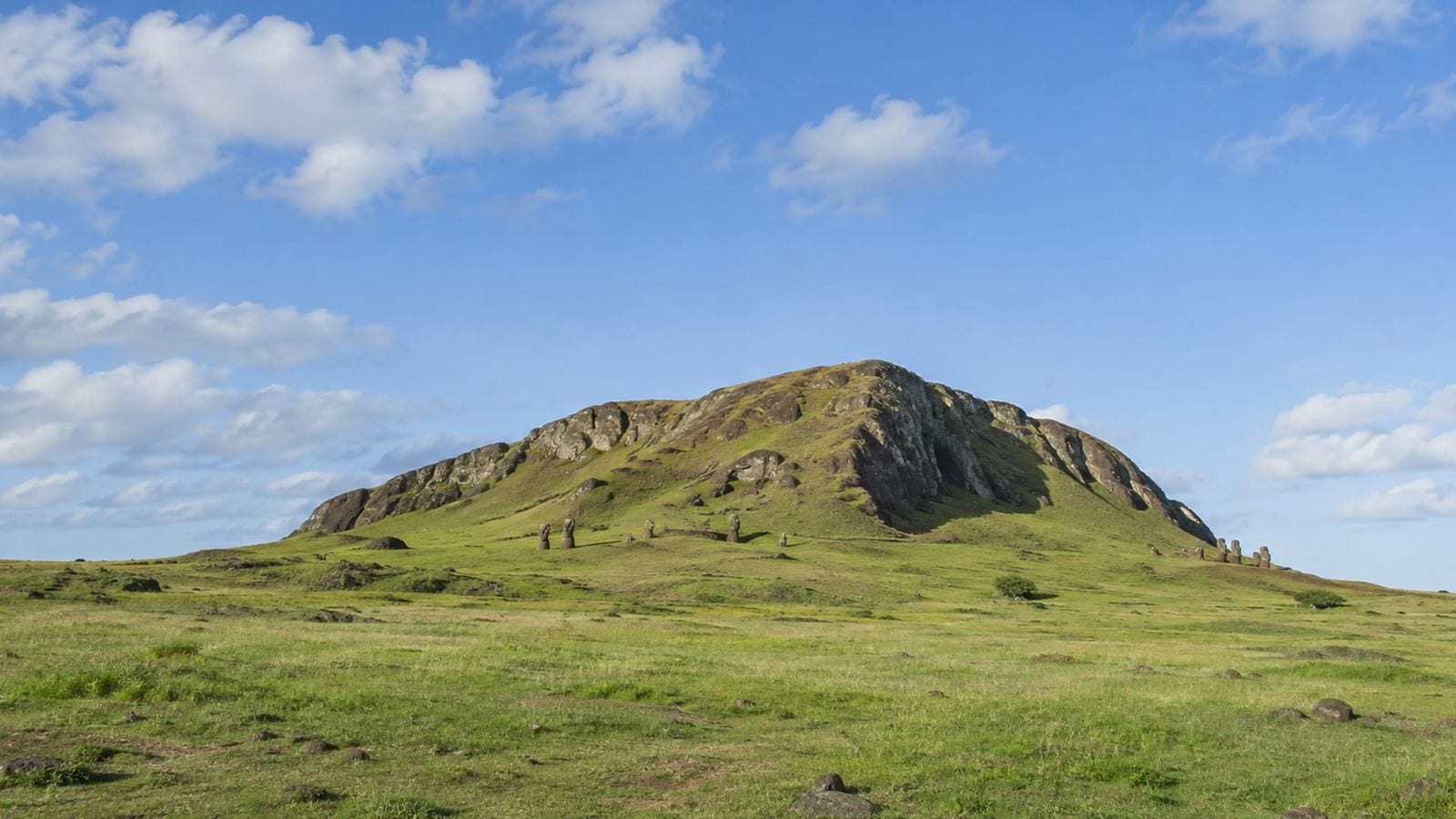
Rano Raraku
Hundreds of moai mark the slopes of this volcanic quarry, where sculptors carved most of Easter Island’s stone figures. Unfinished statues still attached to the rock reveal stages of production, while upright heads emerge from the grassy hillside.
Time needed: About 1 to 2 hours
Entry: Expensive: requires Rapa Nui National Park admission and an accredited guide
Tip: Follow the marked quarry paths; entering the crater depends on site access.
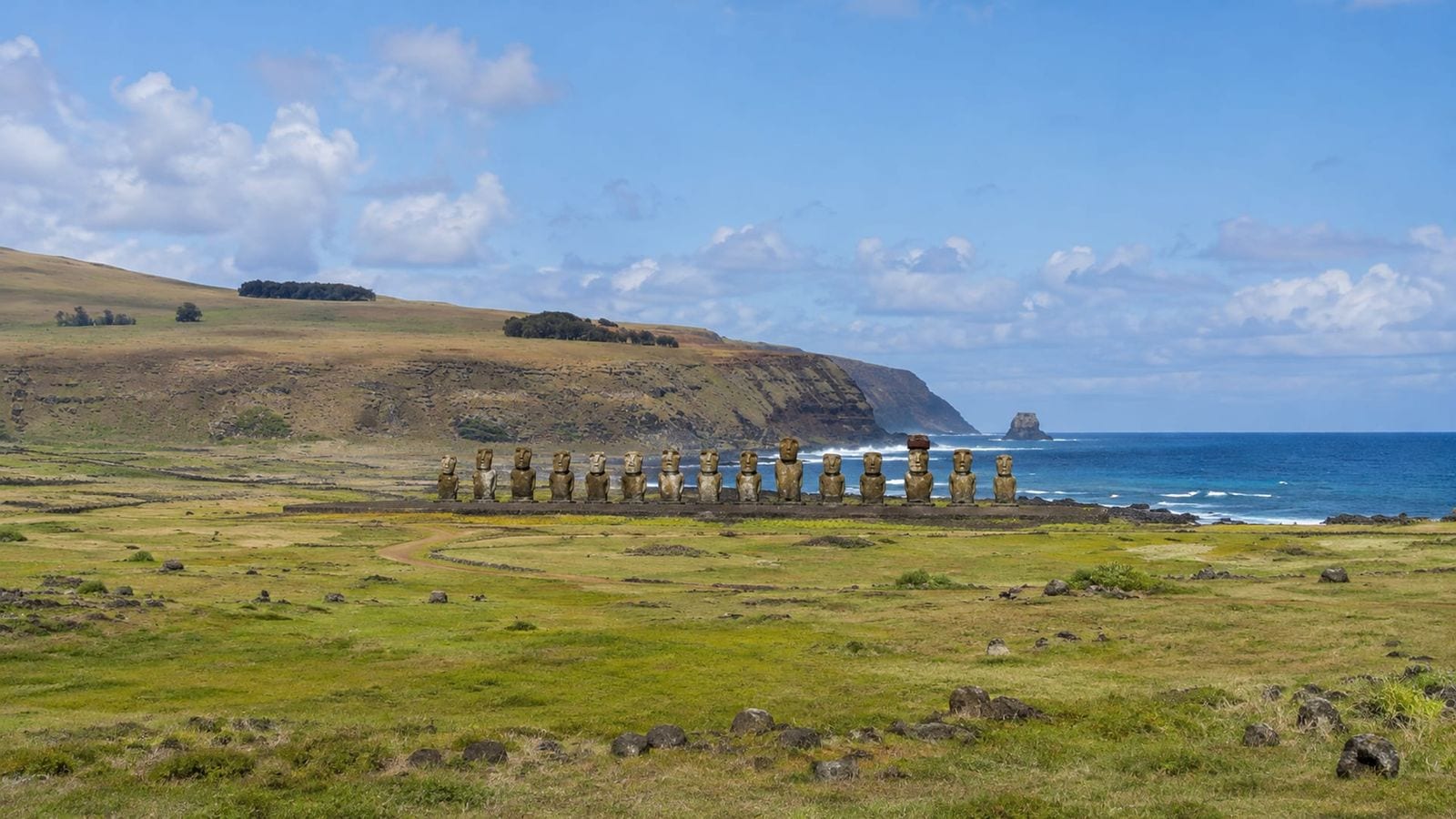
Ahu Tongariki
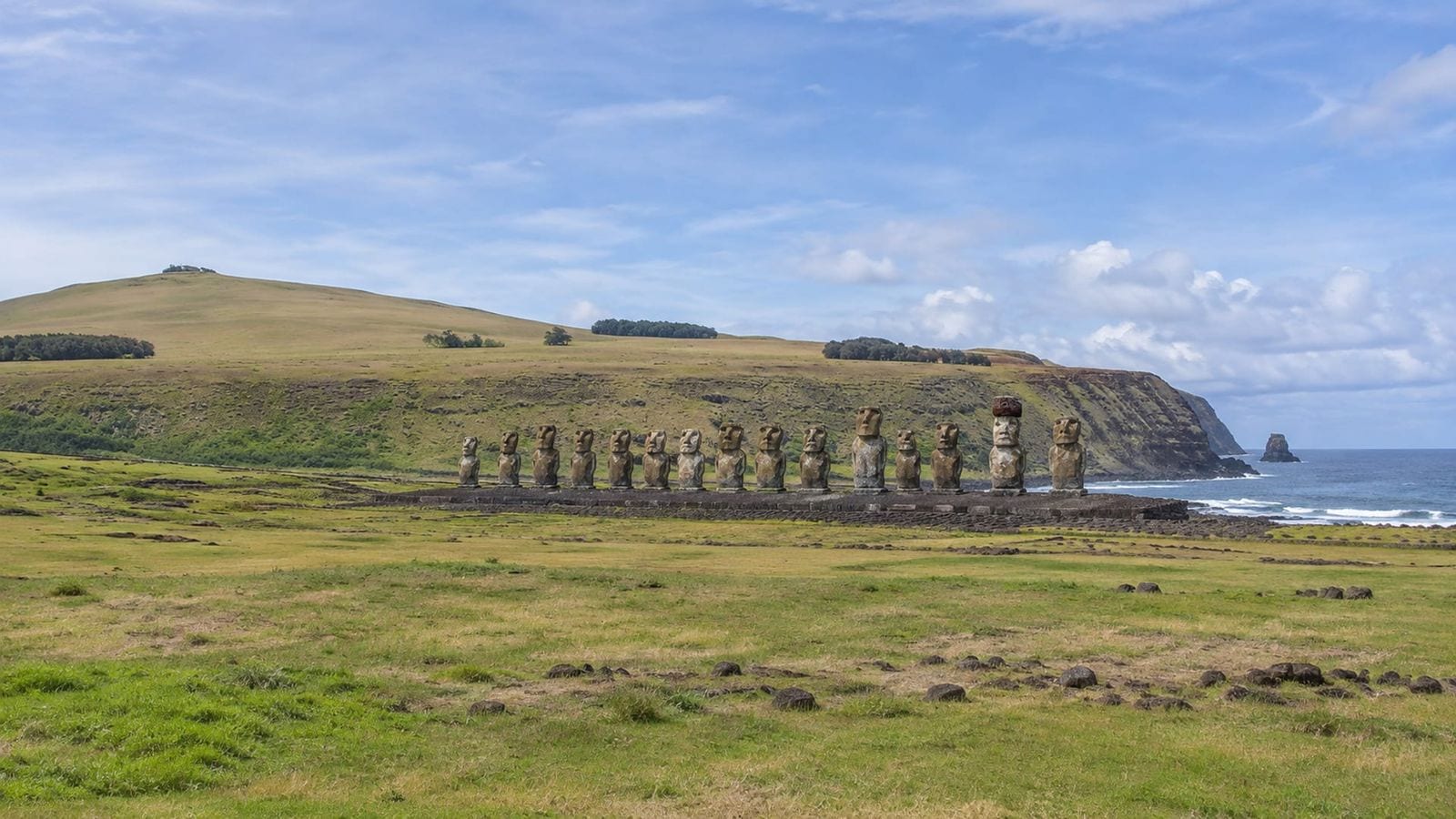
Fifteen restored moai stand shoulder to shoulder on Easter Island’s largest ceremonial platform, facing inland with the Pacific behind them. A tsunami toppled the figures in 1960; their restoration returned this extraordinary lineup to the coast.
Time needed: About 1 to 2 hours
Entry: Expensive: requires Rapa Nui National Park admission and an accredited guide
Tip: Choose a sunrise excursion to see the fifteen moai against the morning sky.
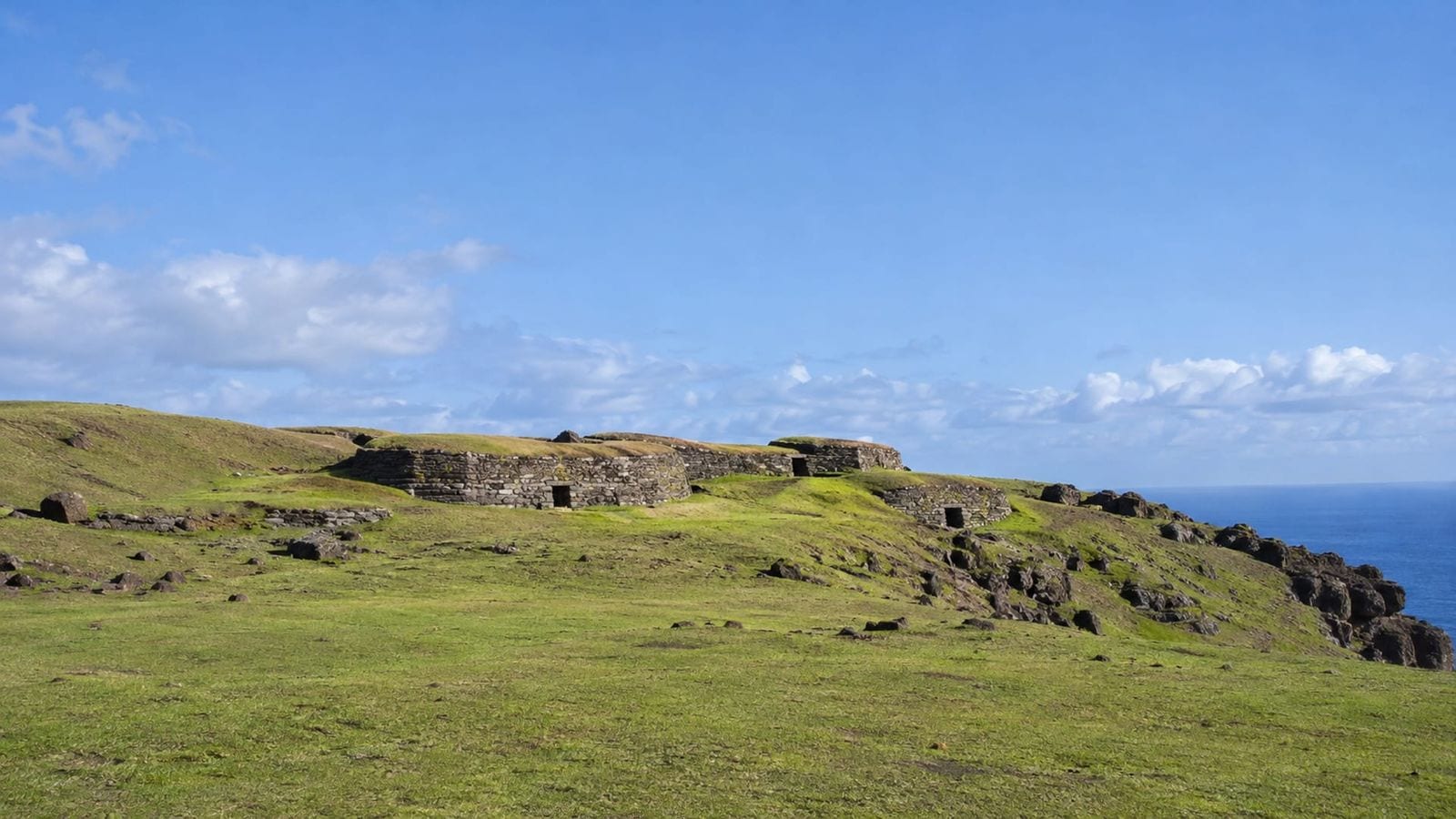
Orongo
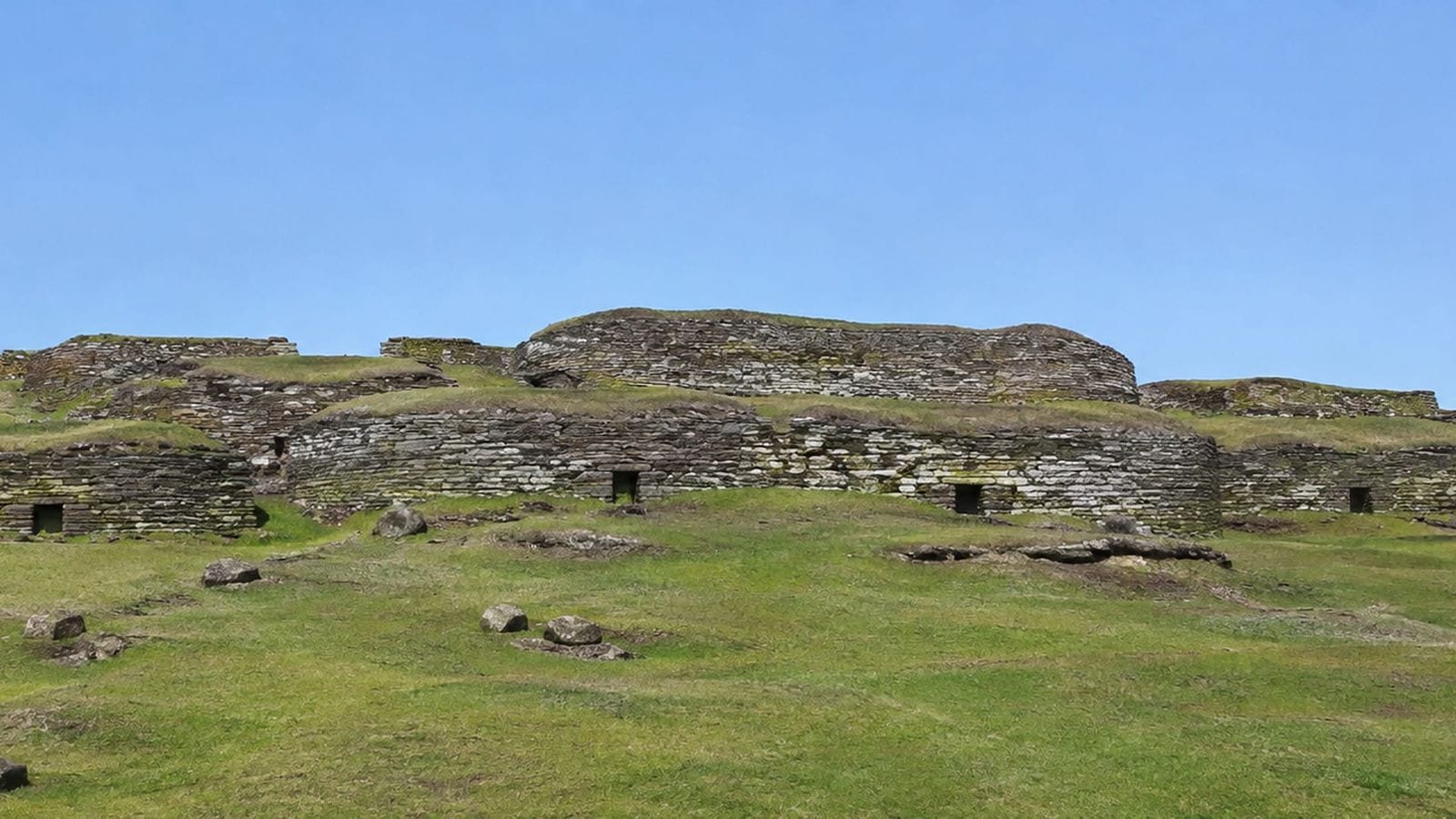
Along the rim of Rano Kau, low stone houses preserve the ceremonial village associated with Easter Island’s birdman competition. Offshore islets and carved birdman figures connect the dramatic setting with the island’s later religious traditions.
Time needed: About 1 to 2 hours
Entry: Expensive: requires Rapa Nui National Park admission and an accredited guide
Tip: Bring a windproof layer for the exposed path along the high rim of Rano Kau.
Overlooked sites worth visiting

Ahu Huri a Urenga
Ahu Huri a Urenga has a solitary moai with four hands, an unusual detail among the island’s statues. Its inland platform offers a quiet stop away from the better-known coastal monuments.
Time needed: About 20 to 30 minutes
Entry: Free to access
Tip: Look at the moai from the front to distinguish its four carved hands.

Holy Cross Church
Holy Cross Church blends Catholic imagery with Rapa Nui carving, including wooden figures inside. The carved entrance offers a compact introduction to the island’s religious traditions.
Time needed: About 15 to 30 minutes
Entry: Free to access
Tip: Photograph the carved entrance before entering; avoid photos during Mass.
Traditional food
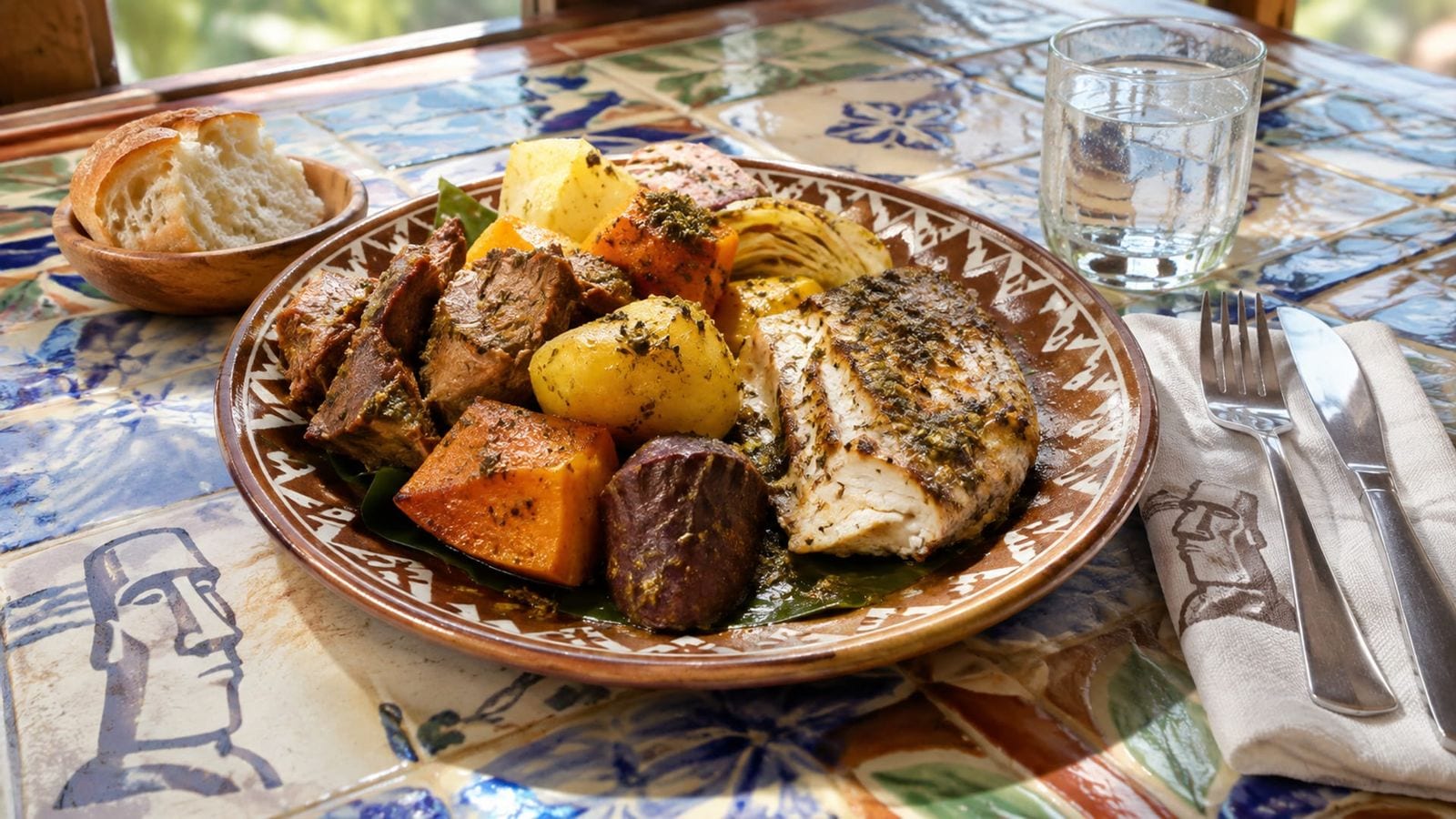
Pacific tuna, sweet potatoes, and bananas shape Easter Island’s cooking. Tuna ceviche and empanadas feature alongside umu Rapa Nui, cooked with heated stones, and po’e, a dense, sweet island cake.
Umu Rapa Nui
Heated stones cook meat, fish, and vegetables in a covered earth oven, giving umu Rapa Nui its communal character. Te Ra’ai offers this traditional meal as part of an evening that also includes Rapa Nui dance.
Po'e
Bananas or pumpkin give po’e its sweetness, while flour creates a dense cake that accompanies island meals or becomes dessert. Ask for it at Haka Honu, where the menu also reflects Easter Island’s seafood traditions.
Tuna ceviche
Fresh tuna meets citrus juice and chopped vegetables in a ceviche that puts the island’s Pacific catch at the center of the plate. Try it at Te Moana, a waterfront restaurant featured in the arrival-day plan.
Tuna empanadas
A pastry shell encloses tuna, sometimes paired with cheese, for a filling lunch or snack between excursions. Tia Berta is a familiar Hanga Roa stop for these empanadas, which bring island fish into a Chilean staple.
Best time to visit Easter Island
Easter Island has warmer summers and cooler winters, with rain possible throughout the year and the busiest travel period in summer.
Best for: Warm beach afternoons at Anakena and long days for guided moai excursions
What you get: Temperatures of 68°F to 82°F (20°C to 28°C) bring warm coastal days; summer attracts more travelers, with February festivities adding demand.
Trade-offs: February’s Tapati festival increases demand for Hanga Roa lodging and guided excursions.
Best for: March warmth for coastal outings and fewer travelers after summer’s peak
What you get: Expect 64°F to 81°F (18°C to 27°C) across the season, with fewer travelers after February; rain becomes more frequent as autumn progresses.
Trade-offs: May can bring substantial rain, affecting exposed quarry paths and outdoor excursions.
Best for: Quieter archaeological excursions and cooler walks along Hanga Roa’s coast
What you get: Winter brings 59°F to 72°F (15°C to 22°C), cooler evenings, and fewer visitors at the moai sites; wind can make exposed viewpoints feel chilly.
Trade-offs: Wind and rain can make the exposed rim at Rano Kau uncomfortable.
Best for: Milder walking weather at Rano Raraku before the summer travel peak begins
What you get: Days warm through a range of 61°F to 77°F (16°C to 25°C), while visitor numbers generally stay below summer levels at major archaeological sites.
Trade-offs: Exposed stops such as Orongo can still feel cool in strong wind.
A realistic 5-day plan in Easter Island
The five days move from Hanga Roa to the eastern moai sites, then Rano Kau and the inland platforms. Arrival and departure leave time for meals and shopping in town.
From Mataveri International Airport (IPC), take a taxi to your hotel in Hanga Roa, a 5 to 10-minute ride costing roughly CLP 5,000 to CLP 10,000 ($5 to $11). Settle in, then choose a light fish dinner at Te Moana before an early night.
Sunrise at Ahu Tongariki reveals fifteen moai against the morning sky. Continue 10 minutes by car to Rano Raraku, allowing 1 to 2 hours for its quarry paths and unfinished statues. Arrange an accredited guide and Rapa Nui National Park admission for both stops.
The crater of Rano Kau introduces the island’s volcanic landscape before Orongo’s birdman history. Explore the crater viewpoint, then drive 5 minutes to Orongo for 1 to 2 hours among its stone houses. Bring a windproof layer; Orongo requires park admission and an accredited guide.
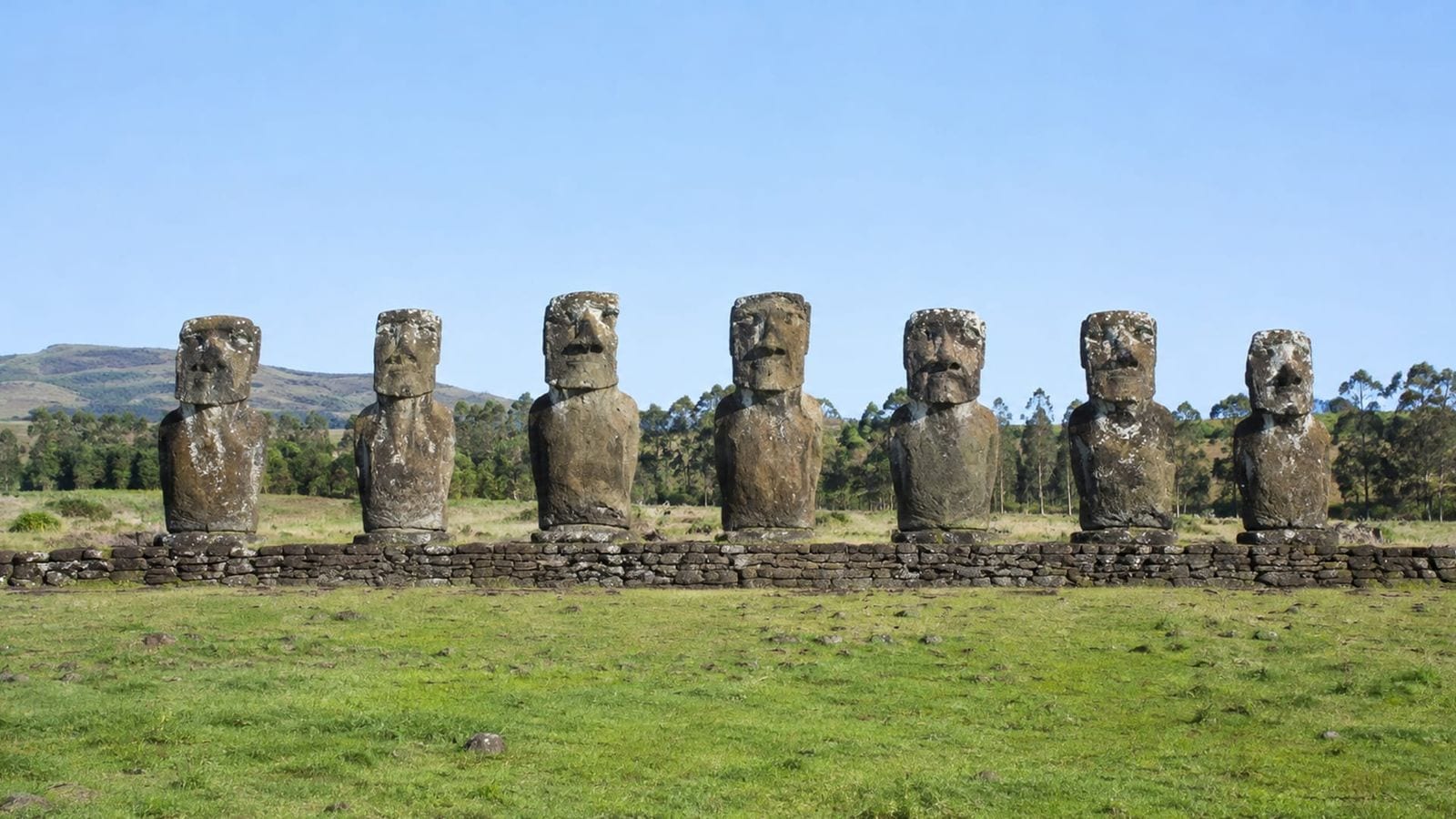
At Ahu Huri a Urenga, examine the solitary moai’s four hands before a 25-minute drive toward Ahu Akivi and its seven figures. Allow time at both platforms for your guide to explain their inland settings. Arrange park admission and an accredited guide for Ahu Akivi.
Before departure, browse Hanga Roa’s shops for locally carved wooden figures, leaving purchases until you can compare craftsmanship in person. Have an early lunch in town, then take the 5 to 10-minute taxi ride to Mataveri International Airport (IPC), following your airline’s check-in deadline.
Business-class flights from the US to Easter Island
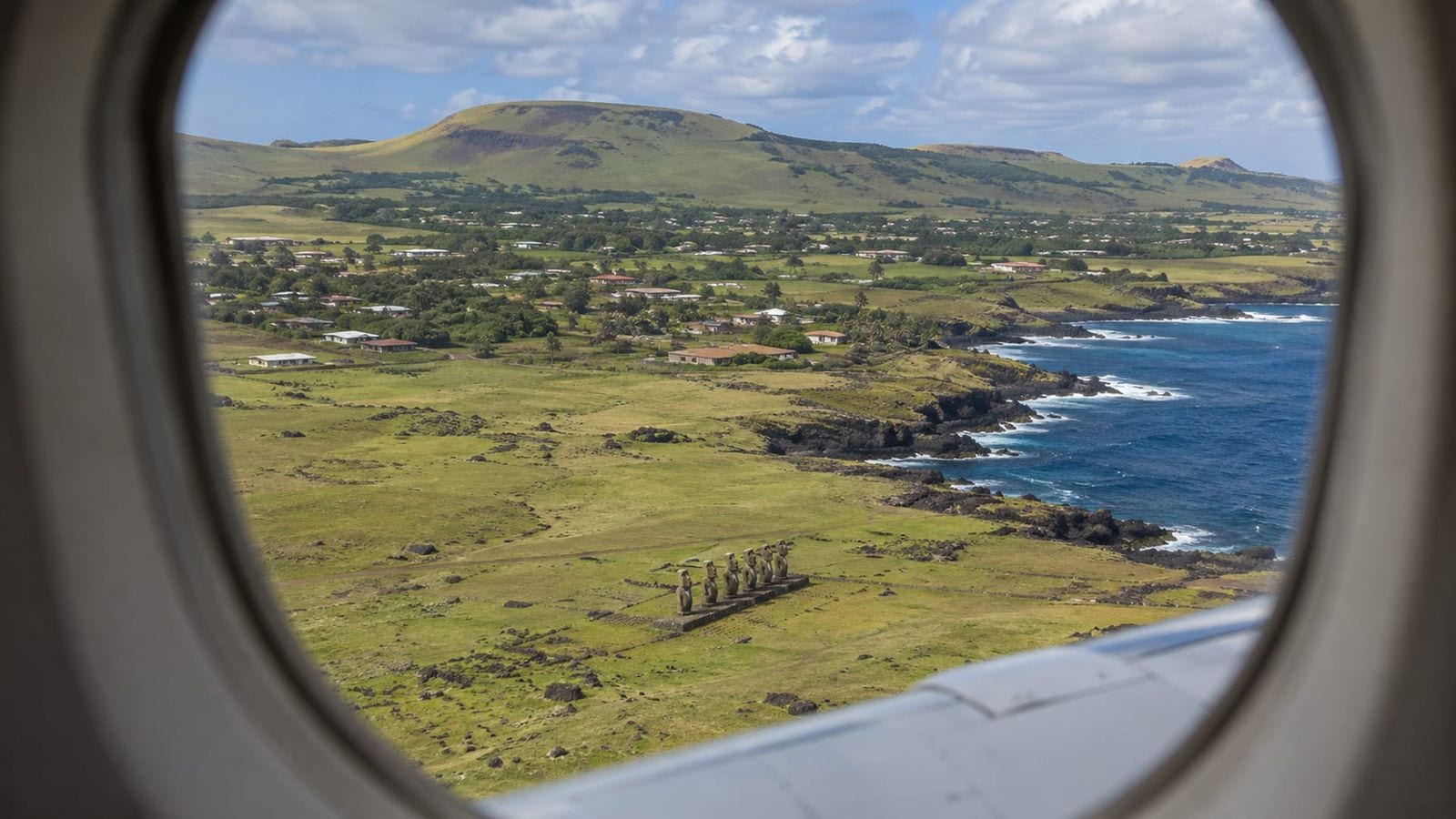
New York and Los Angeles journeys to Easter Island connect through Santiago (SCL); the two examples below compare fares and total travel times.
From New York, LATAM Airlines connects through Santiago (SCL) to Easter Island (IPC), with a total journey time of 19 to 28 hours. Round-trip fares range from $4,500 to $9,000 for this one-stop journey.
Traveling from Los Angeles to Easter Island (IPC) takes 20 to 30 hours with LATAM Airlines, including a connection in Santiago (SCL). Allow $4,500 to $9,500 round trip for the itinerary through the Chilean capital.
Easter Island feels different when you slow down
A five-day Easter Island trip leaves room for sunrise at Ahu Tongariki, the quarry paths of Rano Raraku, and the birdman history of Orongo. Staying in Hanga Roa keeps evening meals within walking distance, while guided excursions connect the island’s scattered archaeological sites. Arrange park admission alongside your guide, and leave the arrival evening for dinner at Te Moana. Ask AranGrant experts to shape your flights around five days exploring Easter Island from Hanga Roa